💰 Get Funded! Founder Interviews by Serac Ventures w/ James Chapman, CEO @ Plain Sight 08-16-2024
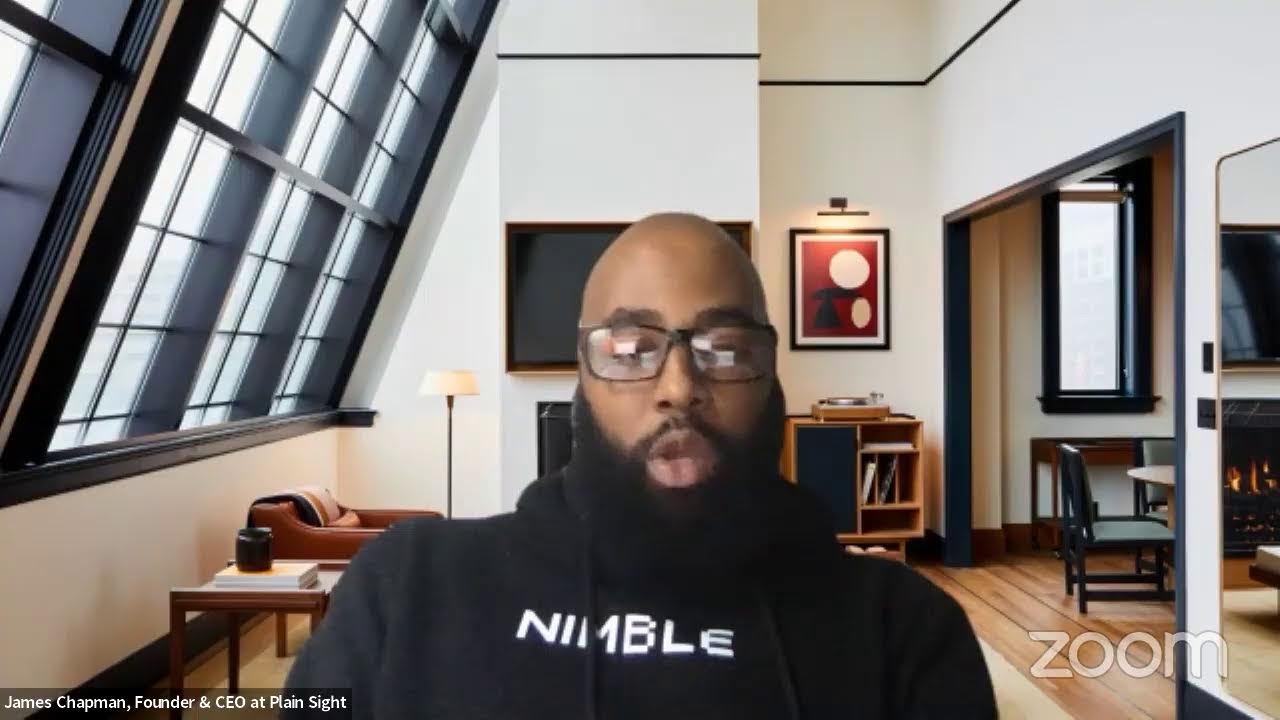
James Chapman's Plain Sight connects corporate sponsors with event creators through a marketplace that matches sponsors to events and provides post-event analytics on attendee demographics. The platform makes money three ways: fees on ticket sales, markups on sponsorship deals, and financing fees. Plain Sight has done over $500K revenue in 12 months and raised $1M pre-seed from investors including Dan Gilbert.
Chapters
All right, we are now live for another week of the Get Funded Office Hours. We're here with the pre-show where we interview promising early-stage founders. For those that do not know me, my name is Darrel Frater. I am Senior Associate at Sirach Ventures. We're a seed stage venture capital firm that invests in companies ranging from building in B2B SMB SaaS, fintech, commerce enablement, future of work, creator economy, the gig economy, writing checks at the seed stage. B2B SMB SaaS. Sorry about that. We're investing at the seed stage and pre-seed stage, writing checks anywhere between $250K and $1 million. And we do these weekly office hours to connect founders in our network with people within our ecosystem, whether you're a founder listening, whether you're an investor, Whether you're someone in the ecosystem. All right, sorry about the technical difficulties, had some noise in the background, but we're going to keep this thing rolling. So at this time, we're going to introduce our founder here, James Chapman, who's the founder and CEO at Plainsight. James, sorry about those technical difficulties, but we'll love for you to jump right in and tell us a little bit about what you're building and what your company is. You're currently on mute.
First off and foremost, thank you for having me. I'm glad to be here. This is my first time going on LinkedIn Live. I've never even done LinkedIn Live before. For those of you who don't know Darrel, Darrel is definitely a great guy, a connector. And ever since I've had the pleasure of meeting him, we've had nothing but great conversations and building some future things and collaborations together. So that's first and foremost. As he mentioned, my name is James Chapman, founder and CEO of Plain Sight. We are an event technology company. At our core, we work with corporate sponsors to help them find events that will lead to new business opportunities. And really, the problem that we're solving is customer satisfaction. Sponsors are investing a lot of time, money, and energy into events, and they're not always getting that ROI that they're looking for. So we, we kind of bridge the gap between event creators and corporate sponsors. We also have ticketing attached to our platform, as well as a mobile app for event goers to be able to make connections. And so That, that's me. I've been in the event space for as long as I can remember, and I get up excited every day that I get a chance to work on this thing.
That's awesome. So let's dive deeper a little into the logistics of Plain Sight and how it works. So you're saying that you connect corporate sponsors and event creators. Tell us a little bit about, like, the pain point that you're solving for and tell us a little bit about how the platform works and kind of who you've been able to serve to date.
For sure. So Corporate sponsors don't have a hard time finding events whatsoever. But they do have a hard time finding the right events that make sense for them. Very similar to how founders are pitching investors, that's the same way that these event creators are pitching to corporate sponsors. It's very random. They just want them to sponsor their event because they think they've got the best thing ever, not knowing that on the other side of that coin, corporate sponsors, they're very particular about the things that they're looking for post-event specifically, but then also the type of audiences that their brand shows up with. And so what we do is we allow those corporate sponsors to sign up with us, they give us details on the type of events they're looking to sponsor, the budget that they have for those particular events, any geographic focuses, etc. And then we do the matchmaking from there. And they know that whenever they get a lead potentially from Pointing Site, Not only is it gonna be curated to the type of events that they're already looking to sponsor, because those event creators can use our platform, we can extract the data that's gonna allow those corporate sponsors to be able to even better measure their ROI. So the skills, the interests, the professions, the companies represented of all the people that actually attended that event is a huge— the data is a huge problem solved for really both sides of that marketplace. And then on the event creator side, they don't know what they don't know. They don't have the relationships. They can't necessarily get in contact with these folks, but they may be great at what they do. They're great event creators, but they don't necessarily have the network to be able to get in front of these corporates, not necessarily knowing how to speak the language even all the time to be able to secure corporate sponsorship. And so we're really excited about what we're doing and bridging the gap and the money behind being able to help these event creators get paid. One of the things, one of the things that I'll pause. that we recently just layered on is financing. So gap financing for these event creators. If you know you've already secured a sponsor and they're not going to pay you out until mid-'60s, but your event is in 30 days, we can help expedite those funds so you can put that money right to work. So, and then last, I think you asked some of the folks that we've worked with already— Microsoft, Cadillac, AWS, Capital Connect over at JPMorgan. So we've worked with a number of of large corporate sponsors and organizations already, and definitely looking to serve more.
That's exciting, man. I would love to hear what's like the typical, you know, ticket size of these sponsorships that you're able to collaborate with for the event creators. And then also, like, what are the corporate sponsors getting out of these events? Is this like an untapped way for them to get access to, you know, particular people and experience? Um, they're a brand. Like, tell me a little bit about, you know, that ticket size, and then as well as, uh, what the value proposition that these corporate sponsors are getting.
For sure. So we're seeing, um, them write checks anywhere as small as, call it, $2,000 for an event, all the way up to as large as $100,000 for an event, just depending on the type of activation. We've also worked with corporate sponsors that will sponsor series, so there might be an event creator that can come up with a custom series for that corporate sponsor or is already doing an event series like a monthly or quarterly meetup that, that corporate sponsor wants to get behind and things of that nature. So that's a bit on the, on the size of the checks. And then when it comes to that, that ROI that you were mentioning for these corporate sponsors, yes, a lot of it is the alignment with the brand recognition, but also A lot of it is the data. Post-event, they want to be able to measure if this is a real lead or not. So we really associate ourselves as like a sales development representative for this organization, allowing them to be able to get quality leads that post-event, once they start to reach out to those event organizers, they've been able to hit their mark at a higher clip than they would be without us, right? Because we're going to do a lot of that vetting for them on the front end. And so That's, that's the real benefit that they're, that they're getting from us. And then also we can even do the onboarding for those event creators. A lot of times the onboarding just to even get paid from one of these corporate sponsors takes so long, right? And so we can expedite that as well, but we'll handle all the onboarding and then we'll, we'll allow that cash flow to go through us directly to the event creator.
That's awesome. And I didn't know the self-development tool piece. Um, and how you kind of position yourself in that way. So when you're talking to like the Microsoft and the Cadillacs, what budget is this coming out of? Is it coming out of the sales budget or is it coming out of their marketing spend? Just to get some inside baseball on how these conversations are going so founders can understand B2B sales in this niche.
Totally. I, I, I think that's extremely important as a, for a founder to be able to know exactly what departments these dollars are flowing from regardless of what it is that you're building. For us specifically, a lot of times it is coming out of either the marketing department, so the budget has been approved by the CMO, or it's coming out of like the talent and recruitment department, because a lot of times corporate sponsors are sponsoring events so that they can get in front of new talent, right? And so, you know, the HR budgets and things of that nature, or it could be coming out of like the community development budget. If you're a large corporation or organization and you've kind of put your flagpole into one particular city and you're looking for the right opportunities to sponsor, uh, that we'll be able to help them as well. So those are probably the 3 primary, uh, departments that we're working with, I would say, is, um, the, the corporate responsibility, uh, the, the marketing, uh, and then the talent and recruitment.
That's awesome. We spoke a lot about the corporate side. I want to dive deeper onto the event side now. What kind of events are you seeing on the platform? Like, who are the typical event creators? You know, we work at a— I work at a venture capital firm. We host a lot of events in VC. I would love to hear, you know, what are the most attractive types of events that you're seeing and what events that, you know, may have demand for but not much supply? So I'd love to get some insight on those 2 things.
Yeah, absolutely. So we see specifically because of the type of corporate sponsors that we're working with, we do see events happening frequently on our platform. That are attracting high net worth individuals. And then also a lot of tech specifically. I know that AI is a hot topic right now. And so we are seeing a lot of our corporate sponsors wanting to sponsor AI events, which has been great to see. And then some of the, I would say like the differentiators between which event creators may get passed on and which event creators may actually get funded. I would say if you have like experience hosting this event. Like you can show that corporate sponsor a history of success with that particular event that you're running, as opposed to you looking for them to sponsor a first-time event. You know, that, that usually doesn't work well. Again, going back to that analogy between like the investors and the founders, right? Like investors like repeat founders, they like founders that are willing to put their own coin in first before they get on board and that and those types of things. And so Same thing on the event side, I think, is what we've been able to see. The sweet spot around attendees for success, we're usually seeing anywhere around 250 to 1,000-person events. So small meetups all the way up to like summits and things of that nature. We haven't to date worked with a lot of like large conferences. And I think that's just because those larger conferences already have a full playbook and a history of sponsors that they've been working with. But when you think about like an activation like a South by Southwest, right? Where there's gonna be so many side events that are gonna be happening around South by that people are really wanting to go to. That's where we can really get in and, and help some of these event creators be able to find the right opportunities based around those, those common themes. And so Art Basel's a hot one for us. South by Southwest is definitely a hot one for us where we see a lot of side events that we get funded.
That's awesome. And I feel like you're, you're tackling the middle market. The people that are doing these large-scale events, they already have their own, funnel and pipeline in a way for curating events and sponsorships. But, and the smaller people, they're not large enough to where they'll be attractive to a potential corporate sponsor. But these middle market event sizes are decent, but they don't have the pathways to get and land those sponsorship contracts. You come in and you provide pretty much that access to that kind of—
That's it. If a corporate sponsor has a $5,000 budget, it might not even make sense for them to sponsor South by Southwest proper, but that it would make sense for them to sponsor a brunch or a dinner that's happening around South by Southwest at the same time. They're still getting in front of the same attendees and a lot of the same impact.
That's wonderful, man. Congrats. I think that's super amazing. I think it's much needed. Events are a unique way to be able to generate revenue, to build your network, especially if founders are even interested in hosting events or VCs are interested in hosting events. Um, it's a really great way to build community, to build your brand and build trust. So I'm definitely going to double down on doing some events myself. Yeah. Also partnering with you with our upcoming event that we'll be having in Tulsa. Uh, tell us a little bit about the event that you brought me in on and I am, you know, helping you expand to the Tulsa region.
Absolutely. So of course, as an event technology company, we host our own events. That works really well for us. One of our signature events that we've been hosting is this Sports Tech and Venture Summit in partnership with The Players Company, which was started by Richard Sherman, Sheldon Day, and Tom Zhang when they were all at the 49ers back when. And so The Players Company are new investors of ours. And so one of the ways that they want to help impact the business is doing all of their events through us and in partnership with us. And the first time that we did this was earlier this year during the NFL Draft in Detroit. for the Sports 2 2nd Venture Summit there. It was phenomenal. And so many people were asking us post-event, when are you going to do the next one? What city are you going to be going to next? And when you and I got connected and just started to learn a little bit about some of the energy that Tulsa already has, and I didn't even know how much of a sports town Tulsa actually is, and then got connected with the Tulsa Sports Commission, some of those folks, and started to learn and do some findings that this makes perfect sense for us to bring this, this opportunity to Tulsa. So that's going to be coming up in about 3 weeks on September 6th and 7th. Uh, if you guys don't have your tickets for that, you definitely should go ahead and get that. Just go to sportstechadventure.com and be able to get your tickets. It's a free event, but it is a private event, and so it'll be intimate and, and select, uh, but it'll definitely be meaningful and impactful for the next, uh, for those 2 days coming up in Tulsa. So we're excited to be working with Uh, Serac on that as well as some of the other partners in the local as well as national ecosystem that, that we'll be working with for this event.
Super excited, man. I heard we're gonna be playing some sports with some professional athletes.
Yeah, yeah, man. Uh, Sheldon specifically is looking forward to, uh, to, to getting out and competing with folks who might not be professional athletes in basketball. And, uh, we got some flag football lined up potentially and BMX and everything. So I'm, I'm really geeked about that too, man. Just a different way to build community outside of like your corporate way of just networking and going to bars and things of that nature. All of that, that's fine. And you know whatnot, and we'll have some aspects of that as well. But I really wanted to mix it up and let folks get outside, explore Tulsa, and also just build community around specific sports that they love.
And I think it's super interesting what you're doing with this summit. And one of the reasons why I was so attracted to it is there's a lot of energy, attention, and excitement around sports. These professional athletes are going to the NFL, the NBA, MLB, all these professional sports, are making a lot of money and have a lot of influence while they're there playing these sports. But once they're out of it, you know, trying to figure out what to do with their newfound wealth Sometimes there's a challenge and there's a unique opportunity in venture capital and investing in startups and really understanding how to leverage technology to really help those athletes and the ecosystem around them to get involved at this level. We'd love to hear some of your insights from connecting with so many of the players of what— and also what The Player Company is doing in regards to activating athletes to become investors. Can you tell me a little bit about that?
That's spot on, actually. And exactly what they're doing. When Richard and Sheldon and crew decided to start The Players Company, initially, it was to help with financial literacy for these players so that they can learn better ways to be able to invest their dollars. Because as you can imagine, when you are a professional athlete and you've got this spotlight on you and you have this newfound wealth that you come into very quickly, you get a lot of friends overnight and folks that are pitching you ideas and your family members that are coming to you about investment opportunities and things of that nature. And it's probably better not to make those investment decisions with your emotions. You want to, you want to have somebody who can, who can vet those opportunities for you that you actually trust and feel like you relate to. And that's all what The Players Company does. So they are a collective of over 500 athletes, entertainers, and investors that help each other with financial literacy. They get in on deal flows together. They promote the different deals that they're currently working on with one another and be able to help share the knowledge and the resources that are currently out there for athletes so that they can start to think about what life might look like for them beyond the field, beyond the court, even while they're playing, like in real time, to be— to kind of get ahead of some of those things. And so when I heard about their mission, I kind of fell in love with it. I'm a former athlete myself. I played more international, didn't— wasn't talented enough to go to the NBA, but I know what that grind is like to be able to just be like, oh my gosh, like I've gone from college to actually having real money in my bank account that I can do something with. And being naive and being young and not necessarily knowing all the things that are out there for you to be able to take advantage of, for you to be able to extend that wealth further. So super excited and motivated by what The Players Company is doing.
That's incredible. And I think that it's much needed both for them in terms of building and maintaining the wealth as well as for the ecosystem. You know, a lot of founders could use a source, a strategic investment from these athletes that have tremendous networks and insights that can help them in their company. So yeah, I'm excited to get to know more of the players and really get more engaged with what you got going on with the sports team. Tech and Venture Summit. So keep an eye out for that.
Absolutely.
Bringing it back to, to Plain Sight, you know, right now you're matching or you're, you're creating a connection between corporate sponsors and event creators. Can you tell me a little bit about like the big vision of Plain Sight? What does this company look like in the future if all goes well and you're wildly successful?
Yeah, we want to be the number one way that event creators get paid. And to do that, we have to align ourselves with the core sponsors, get a great understanding of their needs, make life easier for them to be able to find opportunities, educate event creators on what to do, what not to do with their sponsorship decks. There's a lot of naivete when it comes to being an event creator. I was talking with one just the other day, and they were like, okay, I need anywhere between $250,000 and $500,000 in sponsorship money for this event idea that I have, and we're doing it within the next 4 to 6 weeks. I'm like, bro, that's just not even realistic. Like, you gotta kind of— and, you know, and you may be a great event creator, and I'm sure it's going to be a wonderful event, but you don't understand how the other side of that works. And so you're ultimately not going to have success just because you don't have that understanding. And we don't do a lot of education right now because we're young in this business ourselves, but that's definitely going to be something. That, that will make an intentional effort behind educating event creators on what it's really like to actually go after sponsors, what it's really like to be able to host a successful event, and the business side behind hosting an event and the options that you might be able to have. And so when Plain Sight wins, we will be the number one way for event creators to get paid and the number one source for these corporate sponsors to be able to find opportunities. That makes sense for their business. And, you know, we'll let the chips fall where they fall after that.
Man, what are some of the biggest mistakes you've seen from event creators when it comes to corporate sponsorships?
I think timeline is one for sure. So like reaching out to a corporate sponsor when your event is in 3 weeks, and you're cold, and you don't have a relationship with them whatsoever. So they're just seeing you and the event opportunity for the first time. Putting too much information in your sponsor deck— again, going back to that analogy with the investors and founders— this— your sponsorship deck should just be an introduction of what you're doing. Get me excited about it enough to be able to get on a call with you to learn more, right? And so putting too much information in your sponsorship deck, by the time they get to the 4th slide, they probably checked out. if they're not excited about what you're doing already. Another thing that I would say is just like the post-event follow-up. It's one thing to get a sponsor, it's another to keep them, right? And if you don't hold up your end of the bargain post-event by providing them with the data, the media, the things, all the things that you said that you were gonna do when you did the sponsorship agreement originally, you're not gonna get that sponsor to come back. They're not gonna answer your phone calls, things of that nature. And so So those are some of the things that I would say. And I would say the last point, which is why we've introduced the financing piece, do not harass these corporate sponsors around when they're gonna send your payment. They don't like that. They're gonna send it as fast as they can. Their corporation pays for the computers, the desks, and everything else, including your event sponsorship. Net 60, net 30, whatever that net is gonna be, you aren't gonna be a special case. That is what it is. And so— If you harass or if you don't take the proper measures for following up with these corporate sponsors around payment processes, that's just going to turn them off. They want to be able to work with folks that can actually execute this event even without them, right? And not execute this only if they'll be able to participate. Again, just like investors, right? So I would say those are some of the things that come to mind initially.
And on that last point, that's probably why you now offer financing for these sponsorships so that way people that do need the money to get the event off the ground are able to do so and have the backing of, you know, your company to finance those things. And of course, since, you know, the sponsorships are going to pay out, you know, you get your money and I assume you get a fee on that. So tell us a little bit about Plain Sight and how you make money, man.
Yeah, yeah. So you hit one of them on the financing side. Uh, we definitely get a, get a fee whenever we expedite funds between sponsors and event creators, even if it's not a sponsor that we sent them. Uh, the other piece is ticketing. Uh, so just like any other ticketing platform like Eventbrite, uh, we're gonna charge a percentage on your paid, uh, tickets that you sell. Uh, if you're wanting to do a free event with us, there's no charge for that. Um, we only, uh, charge you, uh, if you're actually selling tickets. And with the ticket sales piece, you can actually decide if you want to incur fees or if you want your attendees to incur those fees. And we also pay out faster. You don't have to wait until after your event is over with when you're selling tickets through us. And then last but not least, of course, is the corporate sponsorships, right? So we take a percentage on all of those deals. We have a markup on any corporate sponsor transactions that happens between the event creators and the sponsors themselves. So those are our 3 primary ways for 3 primary ways for generating revenue.
Wonderful. And you've raised capital in the past. Tell us a little bit about your fundraising history.
Yeah, we've raised capital. We're making money. So we're a profitable business. We've generated over half a million dollars over the past 12 months. Uh, we raised a million dollars in our pre-seed round from, uh, investors like Dan Gilbert, owner of the Cleveland Cavaliers, Jason White from Fanatics, and Sapolsky Ward, minority owner of the Chicago Sky. Uh, and now we're raising, uh, a seed round of funding to be able to continue to scale the business and our operations. We're really looking forward to that. Uh, we have terms set, so we're excited that we're— we have an active term sheet. Uh, it's a price round, and so if anybody wants to learn more about our current raise that we have going on in real time, we've got some commitments and we'd be, uh, we'd be happy to talk to, uh, aligning investors.
That's wonderful. I'm excited to learn more about this round and what you're building. So we'll talk more offline. We have a lot of founders that listen to this as well. Could you give us some inside baseball? What are some of the key things that led to your success with your pre-seed and now leading to your success with your seed?
Uh, I, you know, what's very interesting about us, uh, Darrel, we originally tried to launch Plain Sight 4 months before the start of a global pandemic. Right? And so we started, immediately stopped, and then had to get back into the game and dust ourselves back off again. And so what I would say to founders is your ability to pivot is everything. Things are going to change. Things are not going to go exactly according to plan. Investors don't even expect for things to go exactly according to plan because if they've been doing this for a while, they know how it goes. But your ability to take a fast and hard look at what's going on around you in the market with your competitors, whatever the case may be, and make savvy pivots whenever you need to make those savvy pivots, especially in these early stages when you don't have a lot of capital. Your burn rate is everything. Cash is king. When money's gone, money's gone. You have to be willing and able to make savvy pivots whenever that time comes. And I think that that has been what has been the saving grace for us. specifically to be able to, uh, go from high highs to low lows to some highs again. Uh, and, and I think that, uh, I would give that same advice to other early-stage founders. Be willing to pivot. Don't, don't be so married to your strategy. Don't be so married to your approach or technology, uh, that you're not willing to take a close and educated look at the market and make pivots when you need to.
Really great advice. I love it. And having that resilience in the pivots is super important as well. And it's clear that you've had a lot of resilience through your journey and are now thriving and doing a really great job. Super glad for you to be here on the program today, man. James, you're an incredible founder, and I look forward to seeing you in person in Tulsa for the SportsTech and Venture Summit. What's the best way for us and the audience to stay in touch with you? Who should be reaching out to you, and how do they do that?
For sure. On social media, I'm Plain Sight CEO. So just how it sounds, like Plain Sight. That's LinkedIn, Twitter, Instagram. You can email me james@plainsighthq.com if you're an event creator that is wanting to host an event coming up and you need ticketing services, sponsorship services, or advancement services. And if you are a corporate marketer or somebody that does sponsorships, Please reach out because we can definitely work with your organization and find curated opportunities that will lead to new business leads for you. And of course, as we're raising right now, if you're an investor that invests in this space and thinks what we're doing might have some legs, please reach out, james@planesighthq.com.
Awesome. Y'all heard him, folks. Corporate sponsors, event curators, Investors, reach out to James. He's an amazing founder and amazing, incredible human being. And, uh, definitely reach out to him on LinkedIn, email, etc. Uh, but thank you so much, James, for being here for the Get Funded Office Hours, our pre-show. Um, I learned a lot about what you're building and the space that you're in, and I'm sure our audience got a lot of value out of it as well. So at this time—
I really, I really appreciate you having me, and thanks for anybody who watched.
Awesome. And at this time, we're going to transition to our Twitter Space office hours. We'll have 2 1-hour sessions where founders can pitch VCs in my network. For our first session, starting in about 30 minutes, we have George Darden, who is a venture partner at High Street Equity Partners. They are a venture capital firm that invests in early-stage, high-growth technology companies led by underrepresented founders. Check size is $350,000. And for our second session, we have Sydney Wong, principal at Venture X Capital. They are a family office fund that invests in industry-agnostic pre-seed and seed companies, writing checks anywhere between $50K and $150K, and are investing across the country and internationally. So see you guys on Twitter Spaces for our Get Funded Office Hours, and we'll see you next week. Take care.
More from Darrel


Plaza 210: Catalyzing Faith, Business, and Community in North Tulsa | Accelerate North Tulsa Pitch

💰 Get Funded! Founder Interviews w/ Preston Troutt, Founder and CEO at Crowdsurf 🚀 09-27-2024

💰 Get Funded! Founder Interviews by Serac Ventures w/ Rumaiza Ali, CEO at Wedy 🚀 08-30-2024

💰 Get Funded! Founder Interviews by Serac Ventures w/ Naveed Iqbal, Founder & CEO at Dol 08-09-2024

💰 Get Funded! Founder Interviews by Serac Ventures w/ Serge Amouzou, CEO and Founder 🚀 07-26-2024