Powerful Tips to Get Your Spouse to Truly Listen
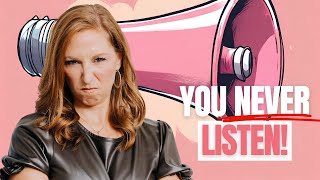
YouTube episode (Naked Marriage podcast) in which Dave and Ashley Willis introduce a communication series and discuss how to get a spouse to truly listen. They mix personal stories (zoning out at meals, premarital listening exercise) with practical tactics: use gentle curiosity instead of accusation, ask if your partner needs time to process, prefer side-by-side activities (walks, drives) to disarm and encourage male partners to open up, and show attention via eye contact and active listening. The hosts reference neuroscience (women may process language faster) and recommend counseling resources (ExoMarriage team, Christian counselors) for persistent issues.
Chapters
When women talk to one another, the amount of words that shared is significantly higher than. Yes, like, very significant with one another. And this is just how God made us.
Hey, there. Welcome back to the Dave and Ashley Willis YouTube channel. We have another great episode of the Naked Marriage podcast for you. Today. We are starting a new series all about communication.
Communication in marriage. Like we've said, it is pivotal, it is foundational. And this first episode in the communication series is how to get your spouse to listen.
Because I believe listening is even more important than talking. Right.
Sorry, what'd you say?
I know exactly. Well, haven't you heard the little cute little saying, like, well, we have two ears and one mouth, so we need to listen more than we talk, you know? And I'm one of those where growing up, I got talking marked on my report card more than one year. Okay. In school, in grade school, because I wanted to talk more than I was listening. Okay.
You got so many great things to say.
I just really. I really felt that way as a kid. I was very boisterous. I wanted to talk and, like, I was the kid raising my hand, like, me, me, me, me, me, and waving it, and like, the teacher probably getting annoyed, like, oh, Ashley, again, wanting to answer this question just because I was. I was really just a very spirited child and wanted to talk a lot. And I remember kind of through the years realizing that if I wanted to have good relationships, really, with my family, with my friends and. And then with dating relationships and then my future husband, then I needed to learn how to listen better. Right. And I think that by the time we met each other and we were communication majors at Georgetown College, shout out. Go, Tigers. Go, Kentucky.
Yeah. Georgetown College. That's where I first laid my eyes on this beauty.
And we were in. We were in acting class of all things, which was part of our communications courses, the communication arts.
This is not Georgetown University.
No. A lot of people think that. I would love that.
We're not the Hoyas. This is a little school in Georgetown, Kentucky, where I grew up.
Yep. Townie.
I was a townie. I went to college in the same town where I grew up. And then since then, we've, like, gone all over the place. But for the early part of my life, you know, I was in the.
Early part of our marriage.
We were. Yeah, we were kind of in one geographical. We were location from third grade till, like, mid-20s. I was in.
You were there.
I was there.
And I was in a neighboring town called Lexington, Kentucky. And I remember when we met and then our relationship Was pretty accelerated. Like, we. We knew we wanted to marry each other within weeks of meeting each other. Well, not meeting each other, I guess within weeks of dating each other.
Yeah.
And. And we did date, you know, a bit. We were engaged for 10 months and eventually getting married. And I remember thinking, well, we know how to listen. We're communication majors. And very quickly into our marriage, we both realized we are not listening very well. You know, And I remember distinctly them having, you know, our. In our premarital course, they had us do this listening exercise where they said, we just want you all in this exercise of communication to listen to your spouse telling you something for, like, one minute. Okay. Which is not much time at all.
And then. And then repeat back to them what they said in your own words, showing that you listened and understood. And it seemed like a really simple kindergarten level activity.
It did. And we were supposed to say after listening, because they said, listen intently. Don't think about what you're going to say. Just listen. You're supposed to say what I hear you saying is, and then say what you think you heard them saying. And so we did this exercise, and both of us completely botched it up. Okay. We were like, no, that's really not what I was saying. I mean, you got a few details. Because what we tend to do when we're listening to our spouse a lot of times is we assume we know what they're going to say.
So we zone out a little bit.
Exactly. Like, we'll listen to the beginning of it, maybe the end of it, but somewhere in the middle, we're zoning out.
Right.
And I remember early in our marriage, I did this. But I remember, too, we would be eating. And do you remember this?
Right. I had this bad habit when we were eating where I just, like, went to another world. I turned into a caveman, where I just. My eyes sort of crossed and I was just eating and chomping.
Well, they went. And you would just look off into.
The zone in a different world, like, I'm just not here. And Ashley wanted, and rightly so, our mealtime to be a time to connect in communication. And I don't know what my deal was, but she would be like, where are you right now?
I'm like, come back to me, sweetie.
And I would. I would just get in this trance, eat my Mac and cheese or whatever, and just zone out. And so I think we all have those areas where we're more likely to zone out, and we need to be intentional about saying, no, I'm gonna be present whenever My spouse is around. I think phones obviously make it more difficult when you're in the same room to be present. Cause if we're scrolling, we're training ourselves to never give our full attention to anyone or anything.
It's so true.
And I'm guilty of this, you know, it's like, you know, I can carry on this conversation and scroll and do this other stuff too. But very few things show our love and commitment and respect as much as giving our full attention to someone. Eye contact, active listening, nodding our head, asking questions that are clarifying. And if you're listening to this, you're like, yes, I know I can't get my spouse to do that. I feel like I'm doing it, but I can't get my spouse to listen. What do we do in that situation?
Yeah, well, I would say, like, specifically, like for us, for the example we just shared with you, kind of zoning out. I mean, there were times where I was kind of snapping at you and I'd be like, where are you? Why aren't you listening? You know? But I found that that didn't do any good. You know, most of the time we don't like the slap on the hand approach, so to speak, with getting reckoned, you know, for what we're doing wrong. But what I did find is if I would just say very gently, like, hey, sweetie. And then you kind of snap out of it and be like, hey. And I'd be like, hey, is something on your mind? Like, I remember if I could shift it to being less about me and more about you and being curious about what is going on, like, why are you zoning out? It was like a wake up call for you that was more gentle. And I found that with most people, I mean, every now and then there is a time for a reckoning when it's been perpetual and like, they're not listening. I totally get that where it needs to be a little more pointed. But I found that if I can be gentle with you and not ambush you, but just be like, hey, what's on your mind? What's going on? Is there something on your mind? And just being curious about why you might be zoning out, it gets you to wake up and say, what do you mean? Because I remember sometimes you would be like, what do you mean? There's nothing on my mind? I'm fine. I'm like, well, you were kind of zoning out there, you know, it's not an attack on you. It's just being curious, you know?
Yeah, it is. And when you start like, that instead of, like, just because it takes the defenses down.
Right.
It takes his defenses down. It's like, you know, this communication tactic. I was reminded of this when I got pulled over recently for speeding. And so, like, I'm all, like, on guard, on defense. Cause it's middle of the night. I'm, like, out in the middle of nowhere. I'm like, oh, man. You know, I'm all nervous. And the officer came up and he said, is everything okay?
Yeah.
And I was like, what? What do you mean? He said, well, you were doing this speed in this, and so you were going so fast, and I just want to make sure there's not, like, an emergency.
Right. Like, are you going to the hospital?
Right, exactly. You know, so it started with that, and that kind of, like, took me back.
Like, it's disarming.
It's disarming. Yeah, yeah, it was disarming. And I was like, yeah, everything's fine. I was just speeding.
Because then you want to own up to it because you're like, he cares about me.
Maybe it was entrapment. Maybe he wanted to trick me into saying that I was speeding.
No, but I really do think when you take that posture of concern and curiosity as opposed to blame, then it's disarming. Yeah.
Like, it's hard to be mad at that question.
Yeah.
Because, you know, it's like, well.
And then you paused and thought, well, is it okay?
Is it okay?
Am I stressed? What am I doing? You know?
Yeah. No, but the way you did that was masterful.
Because it took me a little bit to get there.
Right. Well, you know, we're all learning in the early years of marriage. We're actually learning through every year of marriage because life keeps changing, circumstances keep changing, you and your spouse keep changing.
Right.
And we have to keep learning each other. I think some of the miscommunication in marriage happens when, like Ashley said earlier, you just assume you know what they're going to say because you're basing it on maybe a way they responded in the past, and you're not giving them the freedom to have new perspective. And, you know, you have to always be leaned in and connected, or else you're going to just drift apart. You know, one kind of sad statistic I saw recently was that couples who are least likely to know what their spouse is thinking, accurately, know what their spouse is thinking, are the ones who've been married the longest.
Yeah.
And the research said it's because they realize that the longer a couple's married, the more they assume they know what the spouse is thinking without actually communicating.
So they don't ask. So they don't ask and they don't listen.
And they don't listen. They just kind of zone each other out because they go, oh, yeah, I know all there is to know there. I'm just gonna zone out. The couples who really thrive, though, are the ones who stay married a long time and keep growing, keep learning. And that's the goal, that your marriage keeps getting richer because your friendship and your communication within the marriage keeps growing stronger through constant intentional connection. And if you're listening to this, you clearly desire that you're listening. Of all the things you could be watching or listening right now, you're tuned into a podcast episode specifically about communication in marriage. So first off, good for you.
So we commend you.
You're being intentional. Good, that's great. But maybe you have a frustration that you're like, I'm listening to this alone. I'm watching this alone, and I can't get my spouse to zone out of their world. Like, maybe they tried what Ashley tried.
And it didn't quite go.
And you're thinking, give me some tools here. What do I do to really get them to listen? And I think what Ashley modeled when I was kind of going through a hard listening phase was a great, great thing. It worked with me. It might not work with everybody, but you've got to keep. You got to keep intentionally letting your spouse know. This is important. Yes, I want to connect with you and at first, try to not do it in an accusatory way. Assume the best in them. Don't assume they don't care about you. Don't assume that, you know, don't assume.
They don't want to listen, because that's not necessarily true.
But just kind of keep trying to find, let them know, like, listen, I just want to connect with you. I'm not trying to interrogate you. I'm not trying to harass you. I want to connect with you. I want us to grow in our friendship, in our love, and on every level to be connected. I'm fascinated by you, by what you have to say. I want to hear from you, and I want you to hear from me and try to keep it as positive as you can. And there might be a time, like Ashley said, where a reckoning has to happen where all that positive affirmation hasn't really worked. And you say, listen, this is now.
It can't keep going.
A crisis. Like, we can't keep going down this road.
Ye, and hopefully you don't get to that point because you're trying to take these other steps where it's a little bit more of a gentle reckoning, so to speak. But I think that, you know, another tactic. So we have the tactic of being non accusatory and you know, just having curiosity and asking them if they're okay, like, you know, where are you, you know, what's on your mind? Because a lot of times when people aren't listening, it's because maybe they are riddled with other things on their mind. Like they might be depressed, maybe there's something stressing them out, maybe they're distracted by something else and they're worried. I mean, there's all kind. And we want to know that as a spouse, even when we feel neglected from our spouse not listening. Well, when we can be curious about what's going on with them, it tends to be reciprocated. But for those of you who are watching, listening right now, who are like, yes, I get this, but it's not being reciprocated. I would say this. A lot of times we hear, and I don't want to generalize, but I will say, and there's like neuroscience on this. A lot of times we hear from wives who were like, I just, my husband doesn't want to talk or listen. Like, and you know, I just feel like he'll sit there, but I don't feel like he's listening. Cause he never really offers any kind of response. And it's just kind of like a one sided conversation. What do I do with that? And I would say, and again, we shared this before, but I wanna share it again in this episode. Cause it's just, it's great. And I was reminded of this because I did a reel recently on Instagram, avanashleywillis. You guys can follow us there. We put all kinds of new content there daily. But I did a reel where it was showing Dave and I in the car just talking after church. Okay. And I put, you know, basically, like, if you're having trouble getting your spouse to communicate, try this. Like, try doing an activity and being side by side. Because there is neuroscience that when it comes to men specifically, men are more likely to listen better and open up better and communicate better when they are side by side as opposed to face to face and when they are doing an activity instead of just sitting. Okay. And so that activity could be walking, that could be driving, that could be doing, you know, a sport, or it could be all kinds of things, right? And what we found in our marriage, we found this to be true. Like, our best conversations happen when we are on a walk, when we are on a drive, when we are maybe doing something fun where it's disarming. Early in our marriage, I would do this thing where I would either call Dave or text Dave and be like, hey, we need to talk later. And like, that would just stress you out.
Like, oh, my gosh, about what?
Like, and it could be about, like, nothing, you know, but for some reason I would do this. This very, like, gloom and doom. I didn't mean it that way.
No, you didn't.
But, like, I just was like, hey, I just want to make that you make time in your schedule to talk. And then the thought of just sitting down, even though I know you love me and want to hear from me, but the thought of sitting down and having this pow wow. For most men. For most men, it's very stressful.
It's emotional.
Emotional. Maybe for some of you women, too.
But when you said, like, hey, let's go on a walk.
Yes.
Then be like, yeah, that sounds good.
Or drive.
Yeah, get outside, be moving. And then naturally we would talk and have our best conversations when in motion.
Exactly.
And most men are wired up that way to open up more in that way. And like, as you said, the neuroscience supports that. That's just how God made us. And so instead of trying to. For wives, I think some of the frustration is they talk to their husband like he's a defective woman, instead of talking to him, realizing that he's. No, he's different. And likewise with husbands, you know, husbands. Guys, listen. Your wife is not a defective man. She's a woman created in God's image with that beautiful femininity and with that perspective that is different from your own. And honor that and learn to just be captivated by her and let her know that you're captivated by her by the way that you give her your attention and your focus. And that's a way that you show your love that is going to be so tangible to her. She's going to feel so close to you when you do that, when you'll open up, when you'll talk about what you're feeling, when you'll truly listen when she's talking like this. This is what she needs.
And don't dismiss.
Yeah, don't be dismissive. Don't.
Or feel like you have to solve it. You know, And I know you all have seen there's been funny videos and memes about this, but a lot of Times when we come home from a hard work day or for you, stay at home, moms, you've been, you know, at home all day with the kids or whatever the scenario is when we come to our husband and we're just talking about our day and maybe we have some kind of problem that happened. And, you know, sometimes we are asking, like, do you have a way to solve this? We'll literally ask you that. Like, if we really are looking for a solution, we will pose the question. But a lot of times we just want to talk about it. Like, Dave teases me. I'm in a master's program, you guys. Thank God. I'm almost finished with my master's in biblical counseling. But through this process, I'll do this every week. I will. Out loud, I'll really talk into myself. But I need Dave as a listening ear. I'll be like, I'm not going to be able to get to my methodology class today. I think I'm going to do it tomorrow. But I will finish it.
I will finish it. I'm going to do this. And I'm like, who are you talking to? I don't know what any of these means. Like, I don't care. Like, I mean, I care in that it matters to you, but, like, what? I'm not like, checking off your assignments or.
But, well, you said that at first, but now you just look at me with this kind of goofy grin and.
You'Re like, okay, okay, you're gonna be great.
And it's like, I'm not looking for you to fix anything. I don't really need a response, but I can know you're listening by a smile and your eyes.
She's inviting me into her world and.
It makes me feel good.
And I realize that she's inviting me into her world. And I receive that invitation with love and just look for ways to invite each other into one another's world and enjoy the deep connection that happens there. And if you need help, if you need maybe a third party to come alongside you and really help you with some new listening tactics, communication. Like I said at the beginning, our mediators here at Exomarriage are gifted and trained to help you do that. You don't have to always figure these things out on your own. Find a good Christian counselor in your area or reach out to our team@exomarriage.com help. Ashley's given me the cause.
I have one more thing I wanted to talk about before we land the plane. I could tell you were getting ready to land.
The plane.
And I love it. You're such a good pilot in that way.
Plane lander. But she likes to take another lap around the Runway.
Well, I just really wanted to mention this because in all the years marriage ministry and just in my. In Dave being a pastor and me, you know, becoming a counselor, there's all these studies that are done on how men and women are different. And I don't think as Christians, we need to discount this, because this is studying how God wired us, right? And I find it so fascinating because there's one thing in particular, and we shared this recently in a sermon with our dear friends at Grace Church in Kentucky. Shout out to Grace Church. Anyway, Grace Christian. I'm saying it wrong, but we talked about how. And I could tell this really resonated with the audience about how there's research that's been done where a lot of times women, you know, wives will be like, why? When we're having, like, a serious discussion, like, I'm pouring out my heart. I'm saying, I need you especially to listen to this, because this is an issue in our marriage, how the husband sometimes, and we dealt with this, too, will not be quick to respond back. You know, and it can be frustrating for a wife because she assumes if you don't have a quick response back, then you're not listening or you don't care, or you don't care. And I used to remember in our early years, I thought that. And I'd be like, you don't have anything to say. You don't have anything to say about this. And you're like. You're like, give me a minute. Well, there's neuroscience that says that this is not an intelligence thing. I want to make this very, very clear. But women have more neurons in the parts of the brain that process language than men do. Okay? In essence, that means we just process it faster. We're able to process our thought, thoughts, and feelings, like the facts and the feelings at the same time. Whereas men are not. Most men take a little more time.
A higher word count. Significantly, on average, per day, when women talk to one another, the amount of words that shared is significantly higher than conversation with one another. And this is just how God made us, right?
Exactly. And so when I learned that and I realized that, okay, Dave's processing, and he might need to go take a walk or go on a run or go on a drive or go just take a moment to process this. It doesn't mean he's not listening. It means he really is listening. And instead of Giving just some random response that he hasn't really thought about. He wants to give me a better response, then I need to give him that time. And I think for a lot of you wives watching and this again, this is probably in. What would you say, like 85%? Probably 85% of couples.
Not every marriage.
Certainly not every single marriage.
Not a weirdo if you're.
Sometimes it's flopped. Yeah.
Flipped flopped either.
Flip flopped.
But most of the time, this is the dynamic.
It is. And I would say that when you give your spouse, like, make sure they're listening. You know, how you show you're a good listener is you give your eyes, you give your attention. You're not zoning out, and you are show some kind of body language or even a verbal sign that you are listening. But then if you need time to process, ask your spouse for it. And then I want to say to the spouse who feels like, gosh, I can't get my spouse to listen, give them that time. And you might even say, if they don't have any response, you might say, hey, do you need a moment to just think about this? That's okay. You know, can we come back to this tomorrow? Because I just really want to finish this. But I get that this is a lot to think about. Don't make them feel stupid if they need time to think about it. Again, it's not an intelligence thing. This is just how we're wired. But give them that time, and I'm telling you, it really can revolutionize your relationship.
So good. Yeah, I'm glad you saw me. That's probably, like, the most helpful. Just stuff that we've shared this whole episode. Great stuff, guys. I hope this has been helpful to you. Stay tuned. Over the next few weeks, we're going to be talking more about communication and hopefully, hopefully you'll be able to put these into practice and see a real difference in your marriage. We appreciate you. You can find us on Instagram aveandashleywillis if you want to send us a specific question there or just connect with us there. We love hearing from you. God bless. We'll see you next time.
Bye, Gu.
More from Dave


Healing Together: How Trauma Affects Your Marriage | Marriage Minute | Dave & Ashley Willis

Make It Your Goal to Gross Out Your Kids 😂 | The Naked Marriage Podcast | Dave & Ashley Willis

Don't Let Your Broken Marriage Break Your Kids 💔 | The Naked Marriage Podcast | Dave & Ashley Willis

What Will Your Marriage Be Known For? | The Naked Marriage Podcast | Dave & Ashley Willis



You Are Not Your Addiction 🙏 | The Naked Marriage Podcast | Dave & Ashley Willis



Your Morning Greeting Is Telling on You 👀 | The Naked Marriage Podcast | Dave & Ashley Willis