David Belle argues that keeping large cash balances in a bank is a mistake. UK savings earn around 4% while inflation sits at 3.8%, leaving almost no real return. He recommends a three-to-six-month emergency buffer, warns against exceeding the £85,000 FSCS protection limit, and suggests investing the rest in stocks and index funds for real wealth growth.
Chapters
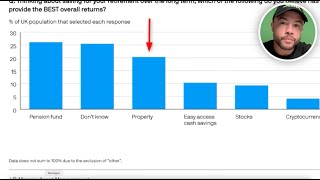
More money you have sitting in your bank, the better. But what if I told you there's a point at which having too much money in your account actually starts holding you back? There's a specific number you should never really go past, and it's probably lower than you think. And in this video, I'm going to show you exactly what that number is and why keeping more than that in your bank could be one of the biggest money mistakes you are making. But first, why is saving so bad? And if it's so bad, why the fuck do we do it as Brits? Well, number one is because everyone is told saving is safe or good. Our parents, for instance, were able to buy houses. For very, very cheap. Mine and probably yours were anyway. And so they had their investments set, whereas now a house price is 10 times to 12 times the average salary. It's out of reach. And so we have to try and achieve wealth in a faster way, absent from the housing market. We're not seeing the same real returns from the housing market as those who bought their houses in the '70s, '80s, and early '90s have done. Saving also feels smart or responsible when it's the complete antithesis of that. If you look at our US counterparts, they don't save money, they invest money, and then they'll take income, which then goes into their savings from those investments. That's the way it works. And those savings will be held in money market funds returning maybe 4.5% per year. Now, there's two main problems with savings. First problem is that £10K today is not going to be £10K next year due to inflation. But on top of that, most Brits don't understand that there's a massive opportunity cost that they are experiencing when they have their money parked in a cash ISA, a savings account, or whatever. Because while that savings account right now might be making making 4%. Inflation's at 3.8%, which means that you're only making a real return per year of 0.2%. Now, the S&P 500 this year has done 15%, which means you've actually made a real return of 11% already year to date. And this is known as opportunity cost because you're costing yourself the opportunity. There is a cost to every action that you do with your money because while it's deployed in one place, it could be earning more or losing more in another place. You just have to make a probabilistic bet that the stock market is going to return you more money than that Cash ISA that is held in very, very safe government bonds. And in the UK's case, I'm not sure how safe we are anymore. So now you know what the problem is. Here is the number you don't want to go over. If you go over this amount, then you're throwing money down the drain. Now the rule of thumb is just hold 3 to 6 months of living expenses, which is a safe zone. Anything above that, you're wasting your money. And anything above the FSCS limit of £85,000, you're also wasting your money, since if that bank or depository institution were to go kaput, and blow up, then you will lose anything above that $85K number. But I'm not suggesting everyone just keeps or has $85K to keep in a bank account. Banks are paying in most high-interest savings accounts 3 to 4% while making maybe, you know, 6 to 9% through lending your money in loans, in mortgages, etc., etc. So here is what to do instead. In the short term, keep 3 to 6 months of a buffer for peace of mind, perhaps in a cash ISA or something super, super safe, high-interest savings account, whatever. Over the medium term, move to stocks and shares ISAs, but also while you're doing that 3 to 6 months sort of emergency fund thing, also buy things like the S&P 500 in a stocks and shares ISA or your SIP and just make sure you have some cash in there invested anyway. Then use our bank statement method to slowly invest into companies you use every single day. Check out the video on this channel after about this method. Over the long term, you want to be putting money into index funds. A little more than you would have done during the emergency period in the short term. And also stocks that you really, really have a strong, strong view on that are thematic, that are hot topics, that are really going to drive a load of your growth in your portfolio. And you can check out our academy to see how to do this from a systematic perspective. So you take away all the anxiety, all of the stress, and we focus purely on the long term, but enabling you to know exactly when to cash out and exactly how to manage your risk properly. So we want to focus on leveraging money, greasing that cog, and not hoarding it. So the main takeaway of this video is this: cash in the bank equals temporary safety, long-term jeopardy. Your bank account is a waiting room for money and not a final destination. And the goal is to keep money working and being productive. If you found this video useful, then check out my video on the Bank Statement Method, because it's exactly how I'd learn investing again. If I didn't know anything but knew that keeping my money parked was a bad idea. I'll see you inside there.