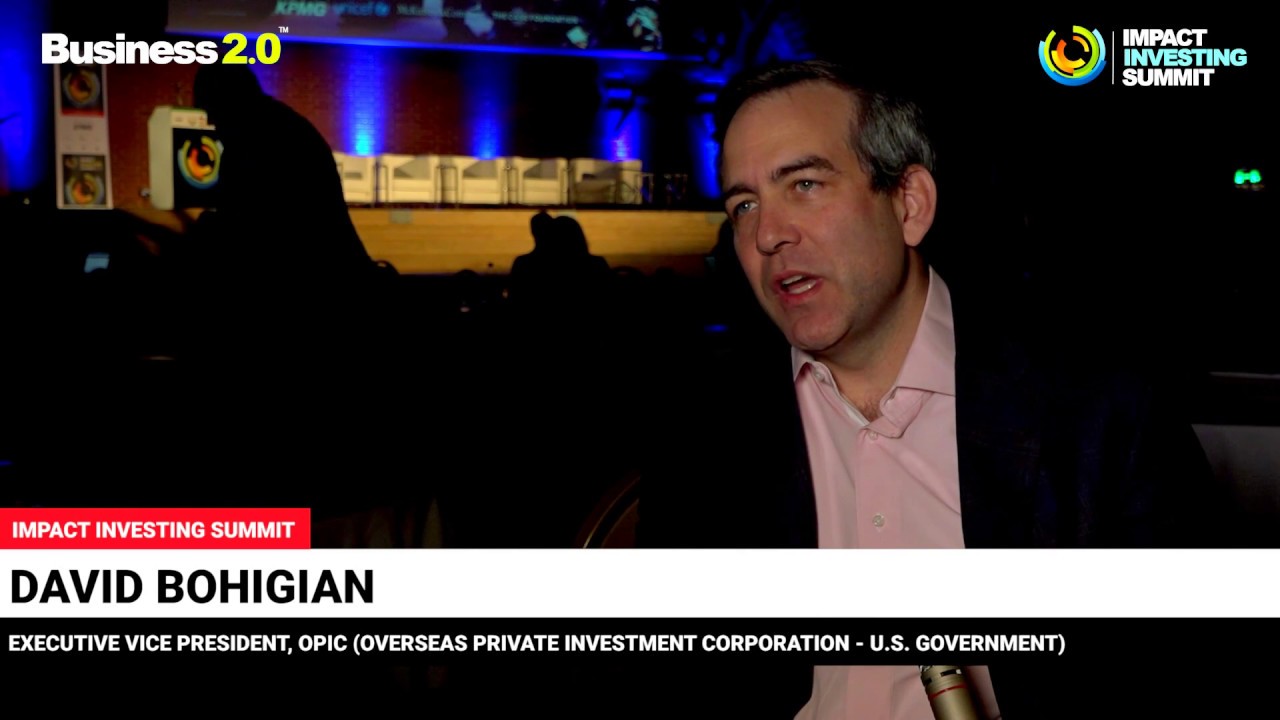
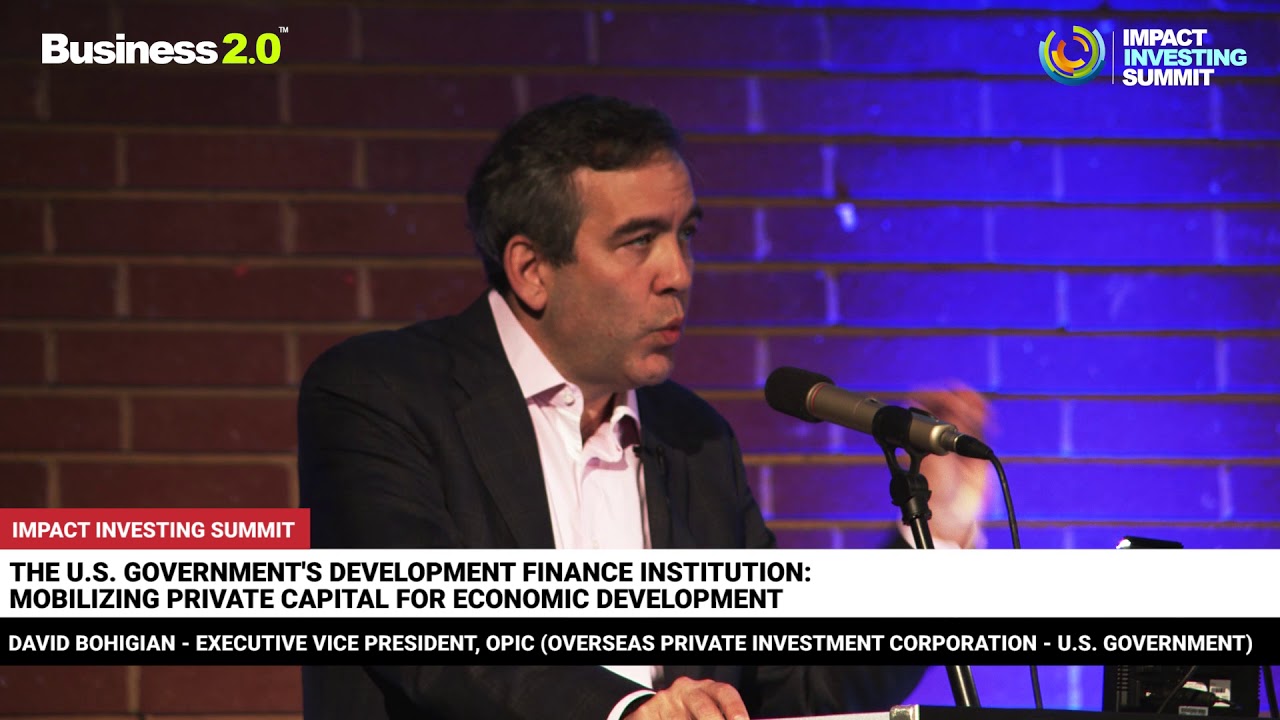
OPIC's executive VP explains how the U.S. is using a Marshall Plan approach to build infrastructure across the Indo-Pacific, working with Japan and Australia on ports, airports, and renewable energy. The agency manages a $23 billion portfolio in 90 countries and frames competition with China's Belt and Road as a choice between free societies with strong labor standards versus unsustainable debt.
Chapters
Sure, Nancy, thanks. Maybe I'm part of the charm offensive for the United States government as we look to increase our investment in infrastructure throughout the Indo-Pacific. So it's great to be in Singapore, which is truly right now the core of what's going on in ASEAN. And as we look to the dynamism of the Southeast Asian region, a great place to have this discussion with our Japanese and Australian counterparts about how to develop ports and airports and roads and other infrastructure to continue the growth that we've seen here.
When you talk about those initiatives, I can't help but think this seems straight out of the playbook of the Chinese at the moment, working on ports, infrastructure developments, not just in Southeast Asia, but across a huge part of the region. As you know, how difficult does this make your job when it comes to competing with the Chinese, helping private investors, corporations compete for the same projects?
Well, I think the playbook was really developed in the Marshall Plan after World War II. The United States, one of the proudest programs they've had, is helping create stability stability and prosperity throughout Europe and in the world in really an economic and altruistic miracle. So building those societies is really the playbook.
Yeah.
And OPIC, the Overseas Private Investment Corporation, which is the United States development finance arm, was founded in 1971 and has a portfolio of over $23 billion in 90 countries around the world in project finance. So we've been doing this for almost 50 years as OPIC and even longer as a country.
When you talk about going back to the Marshall Plan, we think of that as a time where the U.S. was really reaching out, expanding influence around the world. Today we face somewhat of a new reality. There are many concerns about the U.S. withdrawing and looking in. If you look at what's going on in the trade fight with China alone, is that something that concerns you?
I think you've seen more and more investment and businesses working overseas. Just a few years ago that the Fortune 500 companies started to get the majority of their revenues from overseas.
Mm-hmm.
And trade and investment flows are up since then. And in development finance, being able to help countries go into— or companies go into countries they might not otherwise go is what the Overseas Private Investment Corporation is trying to do. To attract companies to Indonesia, for instance, where I was earlier this week, to be able to put a wind farm in to help the Indonesians become more prosperous.
Do you worry, though, that the current battle we're seeing with tariffs— I know it's concentrated around the US and China at the moment. There are fears, though, that it could stretch beyond those 2 powers. Could the next step be investment restrictions? Could we see a China that makes it much more difficult for US corporations to do business there?
We're working in emerging markets throughout the world that are typically under $15,000 per capita GDP. So we're helping great American businesses expand markets. whether that's in Indonesia or Thailand, where I was earlier this week, or across Africa, Latin America, throughout Eastern Europe, and really helping to create stable societies and stable families based on investment that these countries welcome.
I just have to ask you one more question on the trade issue, referring to Ray Dalio, who I know you know from your time at Bridgewater. He had something very interesting to say on Facebook recently, talking about his own concerns around the China trade concerns with the US. That is, if we can just pull up those comments, because he was referring back to the late 1930s. And he said he spent enough time in China to believe that this type of approach slash war has a significant risk. Do you share any of those concerns?
Well, Ray's a brilliant guy and I learned a lot working at Bridgewater. But what the U.S. government is trying to do is to create free and open societies and provide connectivity throughout the ASEAN region and throughout the world to make sure that we've got a global economy that can move into the 21st century. And so we think it's important to maintain and raise environmental standards, to make sure that local labor is being trained for jobs of the 21st century, to make sure that procurement is thinking about not just the initial cost but the entire cost, and to make sure that countries aren't going into unsustainable debt. So I think when we're working with our companies in the private sector to catalyze investment in these markets, That's really the answer to driving prosperity.
Hey everybody, it's Hadley Gamble from our new CNBC Middle East bureau in Abu Dhabi. Thanks for stopping by. Now to watch more, you can try one of the videos that just popped up on your screen. And don't forget to subscribe.