Investing in Women for a New Economic Future
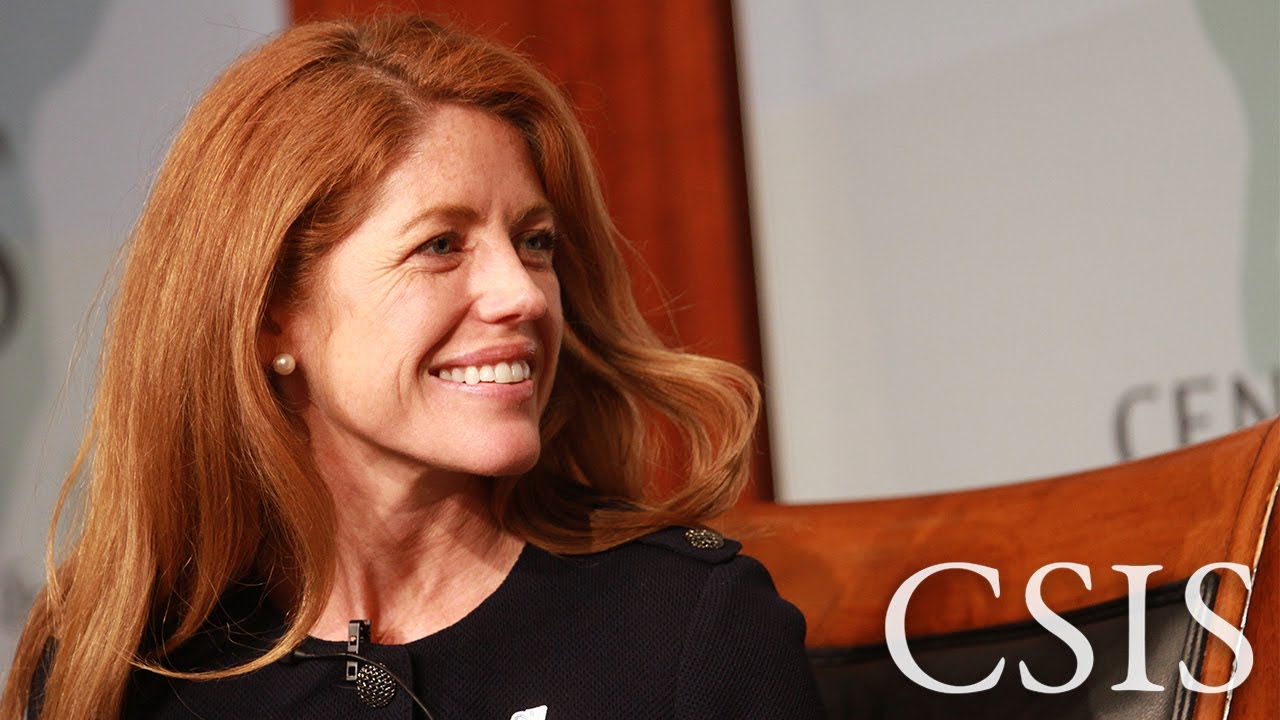
The CSIS event, moderated by Dan Runde and introduced by Kathleen Hicks, featured Katie Kaufman, Managing Director for Global Women’s Issues at the Overseas Private Investment Corporation (OPIC). The discussion centered on the business and development case for investing in women, the design and impact of OPIC’s 2X Women’s Initiative, and the transition to the new Development Finance Corporation (DFC). Kaufman presented data showing that women represent a $28 trillion economic opportunity and that investments in women‑owned enterprises generate roughly twice the revenue per dollar compared to male‑owned firms. She explained how 2X, launched in 2017 with a $1 billion target, aims to mobilize private‑sector capital at a 2:1 ratio, defining women‑owned (≥51% ownership), women‑led (≈30% C‑suite representation), and women‑supporting enterprises. OPIC shifted from a purely demand‑driven loan model to proactive sourcing, partnering with local banks, micro‑finance institutions, and civil‑society NGOs, and using tools such as guarantees, equity authority, and technical assistance. The panel highlighted concrete projects in Paraguay, Latin America, Southeast Asia, Africa, and India, including clean‑water, agriculture, and jewelry enterprises that empower women. EDGE certification was adopted to ensure gender‑equitable internal practices. The conversation also covered the G7 2X Challenge, harmonizing definitions of women‑focused investment, and leveraging the DFC’s larger capital cap, equity authority, and local‑currency risk‑taking to scale impact. Audience questions explored grassroots outreach, gender‑based violence, women’s health, youth empowerment, and coordination with other U.S. agencies (USAID, MCC) and international DFIs. Overall, the panel argued that gender‑focused finance is both a moral imperative and a high‑return investment strategy that can drive stable economies, reduce poverty, and advance U.S. foreign‑policy goals.
Chapters
Good afternoon, everyone. Thank you for joining us here at CSIS. I'm Kathleen Hicks. I direct the International Security Program here. And I also have the pleasure and honor of overseeing the Smart Women, Smart Pro— Smart Women, Smart Power Program. Excuse me. We're very pleased today to be joined by Dan Runde, who's my counterpart here on the Project on Prosperity and Development, in hosting Katie Kaufman from the Overseas Private Investment Corporation for a conversation about the importance of investing in women. We're very eager to hear more about OPIC's initiatives, which have just recently finished the first anniversary on the, on the 2X Women's Initiative. And we're co-hosts here today, but I want to acknowledge our Smart Women, Smart Power corporate sponsor partner, Citi. And it does so much, Citi, to help us amplify the voices of women in foreign policy, national security, international business, and international development. So please take a moment to join me in welcoming Kristin Solheim, who's the Director of Federal Government Affairs at Citi.
Thank you.
Hi.
Thanks for being here. It's strange being here in the middle of the day instead of, you know, 5:00 PM like our normal events. But thank you very much for being here. We have a great speaker today, and I can't wait to hear what she's going to talk about. But Katie Kaufman has carved out quite an interesting career that combines both public and private sector, and that is really what this series has been about. all kinds of women from all walks of life and all different types of positions around the world, just trying to make the world a better place. So, Citi's been— it's been a real honor to support this series. The Overseas Private Investment Corporation, better known as OPIC, at Citi, we've had a longstanding relationship with them as well. And we actually, just at the end of last year, teamed up with OPIC for a $5 million microfinancing project for women in Jordan. That's just one example of the kind of work that we've done with OPIC innovation— innovative public-private partnerships to help businesses and local microfinance institutions in emerging markets. So far, we've funded 65 institutions in 50 different countries, providing more than $480 million in capital. So, we're trying to do our part to make a dent in the more than 1 billion women around the world that remain unbanked, and I'm sure we're gonna hear more about that. So, again, thank you for being here. Thank you for being interested in these really important topics, and I'm excited to hear about— from our speaker. So, I'll turn it back to Kathleen.
Thanks again to Kristin. So, our guest speaker Our first speaker today, Katie Kaufman, is the Managing Director for Global Women's Issues at OPIC. She oversees the 2X Initiative, which has a goal of funneling $1 billion to women-owned or women-managed businesses, and it recently surpassed that goal. The 2X Initiative is currently committed to supporting more than 40 projects around the world. Our moderator for today's event, as I said, is my colleague Dan Runde. He's the Senior Vice President and Director of the Project on Prosperity and Development, and he's also the William A. Schreyer Chair in Global Analysis here at CSIS. Please join me in welcoming Dan and Katie to the stage.
Thanks, Kath.
Great.
Thanks, everybody. I'm really pleased to be doing this. Thanks for agreeing to do this, Katie.
Thanks for having me.
So I want to start with making the case for investing in women. I think— I don't think I have to explain to this audience why this is good business and good development, but I think it would be useful that we make sure that we're all on the same page about why this is important. Can you just talk a little bit about some of the research? I'm happy to talk about it too, but I suspect you probably know the research really well. Why don't you share for this group what is the business case for investing in women?
So this is my very favorite question. Thank you so much for asking.
You're welcome.
Before I launch into it and you have to cut me off— I won't. I promise I won't. I really want to thank you, Dan, for having me. Not only is it such an honor to be here at CSIS, I'm from Washington, D.C. I did my time as an intern. I've come to CSIS and taken notes and reported back. And it's a real honor for me to be on this stage and especially with you. You've spent a career doing so much for foreign policy, but especially speaking out for women's empowerment, I think well before some of your colleagues. So I really appreciate it.
Thank you.
All right. The business case for investing in women. Well, let's start with the $28 trillion economy that women represent. So according to McKinsey, if women were just to participate as equal as men in this economy, they would add $28 trillion to global GDP.
Mm-hmm.
If they were just to live up to the best peer in their region, they would add $12 trillion. So that doesn't cost us any money. That's just bringing women into the economy and seizing their potential. So we know there is a huge opportunity that we need to take advantage of. On the development side, that is almost more compelling from a foreign policy standpoint. When a woman earns a competitive income in an emerging market, she reinvests 90% of that back into her family, her child's education, her aging parents' healthcare. Any guess on what a man might reinvest?
50/50?
30 to 35%. So when we are looking for the most efficient—
Not so great.
Not you, of course.
No, but—
But when we are looking for the most efficient ways to create stable economies and also foster prosperity, encouraging women and empowering women to be part of their economy is the most efficient thing we can do. I am going to throw one more data point out there. This relates to women being a smart investment. When you're an investor and you invest $1 into a woman-owned enterprise, she'll generate $0.80 of revenue off that dollar invested. By comparison, a man will generate closer to $0.40. Can you imagine if you're an investor and someone walks in your office and says, I have a strategy for you that will double the revenue per dollar invested in this enterprise. Don't you think you would take advantage of it? Unless it kind of takes into question the power dynamics that exist around the world. So, yeah.
In minor detail.
Yes, I think that the case for investing in women, it's not only the right thing to do, it's a smart thing to do, pretty much well accepted by policymakers around the world.
So when I was at the World Bank, we had these wonky economists who would do these analyses looking at regulations and laws And they would sit with countries who said, our goal is to grow at 6% or 7% a year, and they're growing at 4% or 5% a year. And they'd say, well, if you made several changes to your laws and rules, you could grow at 2% or 3% more a year. Wouldn't you want to do that? And so that was the way you got the kind of conversation along the lines of what you're talking about for policymakers to think about why this was good for— not only good for women, but also good for an economy or good for a society. So there's significant upside for all of us as part of investing in these sorts of policies and in these sorts of initiatives.
Absolutely. And unfortunately, there are still over 100 countries around the world that have laws restricting women's employment.
It's really— yeah, exactly. So let's talk about 2X. What is 2X and how did 2X come about? Because I think this is— I think it's really important because I think there's— Several initiatives over other administrations, but I think this is sort of at another level. It's sort of been supersized, if I can put it that way.
I like that description. So 2X was launched in really in 2017. The gentleman that was tapped to run OPIC, Ray Washburn, fantastic individual and my former boss at OPIC, he's recently moved on. When he came on board, he asked me to come meet with him in Dallas. I had pitched him to invest in one of my portfolio companies previously, Previously I was in venture capital and project development. And I think he called me because I may have been the only woman to ask him for more than a $10 million ticket. But it didn't matter why I got the call. I got the call to come interview for a position at OPIC, which I thought was an oil cartel.
Is that like the IFC, which is the Independent Film Channel, as opposed to the International Finance Corporation?
Or my husband who thinks it's something to do with fraternities. I don't know. I went to Dallas to tell him no because anyone who has been in the public sector and then the private sector and then gotten used to a certain lifestyle in the private sector is not itching to get back. So I went to go tell him no, but he really talked to me about, A, the power of OPIC. So OPIC has been around since 1971. It has a mission of promoting private sector growth in emerging markets where it otherwise wouldn't go. The private sector in these markets creates 9 out of 10 jobs. So if you want to give people the dignity of work and a better life, there's no better way to do it than to encourage strong, stable private sector growth. And that's OPIC's mission. It's sort of a successor to the Marshall Plan. Very compelling. Promote economic prosperity, foster global stability through the private sector. So he did give me a great education in that. And then talked to me about the importance of women and the role that they play in economic prosperity and global stability. Some of those statistics we talked about in the very beginning of our conversation. And that was so compelling. To improve the lives of 51% of the population around the world, you know, whatever was going on in venture capital wasn't going to compare with that. So we decided to launch— at that time we were calling it a women's initiative and we were thinking maybe a $200 million fund would do the trick. But then, of course, I got in the building and realized we put out $4 billion a year, so every single one of those dollars was going to need to go to women. And we wanted to do sort of what we described as the single largest financing commitment the United States government has ever made for global women's empowerment. And that was $1 billion. And, of course, Ray, my boss that I mentioned, was a Texan. He's like, oh, oh, yeah, okay, you know, great, you do it. And, yeah, we went about launching that single largest financing commitment that the United States has ever made to women's empowerment. And we branded it very intentionally as 2X. We branded it as 2X to represent that multiplier effect of investing in women, that they reinvest in their families. We wanted to encompass the fact that for every dollar OPIC will put in, the private sector will put in at least $2. Slight nod to the female chromosome. And most important— well, 2 important things. Number one, no more acronyms in Washington. We didn't want one more acronym that would be difficult. And number 2—
Yeah, there are a lot of them.
We wanted Republican men to be able to say 2x comfortably.
I can say it. 2x. I can say it. I'm very comfortable saying it.
Right?
Instead of saying gender or women or any—
2x. This is great.
It feels good.
It's feeling good.
So what— how does 2X— what is 2X? How does 2X work? I think it's a fabulous goal, and you've exceeded your goal a year into it. What exactly does it mean? So OPIC lends money, and it also, when it becomes the new DFC, is going to be able to make equity investments and provide technical assistance. Talk about what exactly is 2X. What has it been? What has been this billion-dollar commitment, and how have you made it? And I know there's a whole series of examples. Give us some examples of that.
Absolutely. So when we launched 2X and we wanted to be big and bold and we picked this billion-dollar target, well, then I went back to the office and I looked at 2016 commitments that OPIC had made. So of the 137 commitments to different distinct projects that OPIC had made in 2016, of those, how many were women-owned or women-led? How many do you think, Dan?
You're killing me because you're putting me on the spot. I'm guessing it was not as high as we'd want it to be. No.
So then I thought, well, we are never going to make this billion-dollar target, but we'll do the Washington thing and we won't put a timeline on it. And so we did that and we launched it. And then we also started getting a little bit smarter internally at OPIC. So OPIC has traditionally been a demand-driven organization where there's a very transparent process for applying for an OPIC loan. It's a website application and we're sitting there waiting for you to apply.
Right.
We decided to be a bit more proactive and we did a lot more going out and talking about the type of investments that would have the highest development impact and seeking the type of businesses that we wanted to support. So A, we were doing a bit more outwardly facing work. And then B, we were training our investment officers to value women, value them as entrepreneurs and employees and consumers. And we just— we took a really intentional effort to lend and to support women-owned, women-led, and women-supporting enterprises. So if a company is women-owned, it has more than 51% women ownership. If it's women-led, it has about 30% women in the C-suite. It's all evidence-based. So we looked at it by a sector-specific basis. So if you're in education, you need to have more women. If you're in large infrastructure, or you need to have maybe just a little bit less. And then women supporting means you have an enterprise that specifically targets and empowers women. For example, women in Africa are spending hours and hours every day collecting water. I think about this so much now every time I turn on my faucet and just clean water comes out of it. And I think of these women in Africa that are spending their entire days getting the clean water that their family needs. On the way to get that clean water, they are getting raped because they are walking down certain paths.
Sorry.
And there are also a lot of things like they are going to brackish water where there are snakes, they are getting bit. There is just a whole host of reasons and that is just one thing which is clean water. So we are financing things like access to clean water. And once we made it— once we were very intentional about it, we actually changed the way that we do business. And as Dan mentioned in the introduction, we this year surpassed our goal and have deployed $1.4 billion to women-owned, led, and supporting enterprises.
Amazing. That's amazing. Up from 4%. That's pretty darn good.
We're really, really proud.
You should be.
Tell—
but how— so you— when I think about OPIC, it's highly unusual for OPIC to be so proactive. What did you—
did you—
were there certain sorts of, I don't know, conferences that you went to? How did you source all these transactions? Because historically, I'm going to be a little simplistic for this conversation just because this is how my brain thinks, but in essence, if I want to— you and I want to set up a car dealership in Malawi, we kind of knock on the door over at New York Avenue and say, I've got this idea for a car dealership in Malawi. How does— how did you sort of suggest that investment officers go to certain kinds of conferences? How did you go out and source all these deals?
So I should say that the culture change at OPIC has been steady for a while, moving from simply large infrastructure to more impactful. And they recently have developed a small-medium enterprise team and a portfolio for impact team. So we were— and we were doing amazing work, and we were beginning to attend conferences like SoCap and various ones where you really do get to reach out to the impact investing community. Let me give you an example of how we first started 2x, and I'll use my Citi partner since we're so proud to be working with Citi, and thank you so much for co-hosting this event. Recent project in Paraguay. So one thing that OPIC does, because we are a large government institution and we do have environmental and labor and all these other requirements to make sure that our capital is used appropriately, we don't do really small enterprise loans. We don't do anything under $500,000. And even, I think, in the history of OPIC, we've done 2 or 3 deals in the $500,000 range. We've done multiple in the $400 million range.
Mm-hmm.
And that's quite a big scope in between. So when we want to give loans to small and medium enterprises, which are the backbones of these economies, we do that through local financial institutions. So there's a partner bank on the ground, and we'll go in and provide them either a loan or a loan guarantee and we will ask that bank to on-lend to local borrowers so that they can have the capital they need to grow their business and hire their employees. And Citi is a fantastic partner with us. We have a framework agreement with them where we can go into a bank and do this together. So we went to a bank in Paraguay and we underwrote it as we would have done since 1971. But now we have 2X. So now we have a few more questions to ask the bank. Do you collect sex-disaggregated data? You would be surprised how many banks don't. And that's a— that's just really tough to do business with someone who doesn't really know their customers, right, from an investment perspective.
Yeah.
So then we're asking them and supporting when they do— when they do collect sex-disaggregated data, and if that amount of female borrowers is less than 30%, they're missing a huge business opportunity. Women own 30% of SMEs in emerging markets. And they represent a very small fraction of the total credit market because banks require collateral that men control, or there is a lack of financial literacy, or there is this unconscious bias when a woman walks into the bank that she is a more expensive, higher-risk customer, even though all the data says exactly the opposite.
Exactly the opposite.
Yeah. So what we are now doing is we are going to this bank and we are saying, okay, here is the OPIC $200 million guarantee. We want at least 30% of this to go to female borrowers. And not only that, we are going to reduce our fees by the amount it costs your bank to join the Global Banking Alliance for Women, which is a fantastic organization that teaches banks the business opportunity that women represent. And it teaches banks how to market to women, how to create products that women need. And it is one of the ways that instead of having a one-off initiative, Like, okay, 30% of this goes to women and then the bank is off doing business as usual. The bank has now changed the way it does business for eternity going forward. So that is sort of what I think of as an amazing 2x deal because there is a $300 billion credit gap for women around the world. So we are not going to do that through one-off initiatives.
No.
We are going to do that through the private sector changing the way they do business. Recognizing that women control 80% of consumer decisions, it's like $12 trillion. This is just a huge business opportunity.
This is great. This is fabulous. Tell me, Katie, talk about— the United States is not the only country interested in this issue. I think there have been a number of— as a result of OPIC and the 2X initiative, there have been a number of other countries that have said, I want to be a part of this. Talk a little bit about that. How did that happen and what does that look like?
Okay.
So when we launched 2X, we were overwhelmed by the challenge and— by the challenge of deploying the billion dollars, but also overwhelmed by the magnitude of the need. So every one of our sister G7 nations has a development finance institution, or a DFI as we call OPIC. So what we decided to do in the run-up to the G7 Canadian presidency in Charlevoix was to ring up our sister development finance institutions around the world and almost like— I don't know if any of you remember, we're like getting old, but the ice bucket challenge?
Yes.
Yeah.
So we sort of asked them to take the 2x challenge. Which was dumping the bucket over your head and saying, I'm going to invest in women. And just taking the large step to say you were going to do that and join us. And we set a target of mobilizing $3 billion. What we also set was a target of harmonizing the definition for what it means to invest in women. So as Dan knows, getting Italy and Germany to agree to the same definition on anything It's hard. It's hard.
It's hard.
And Japan.
And hard.
And the U.S.
Hard.
So there's this—
Harder.
So we had— first of all, in an amazing feat, all G7 DFIs took the 2x Challenge and we made a big announcement in Charleroi. It's the first time ever that the G7 development finance institutions have come together for a common aim. The fact that that aim was women's empowerment, I think, says a lot about where we are in the movement.
It's a win.
It's a big win. And then we spent 6 months negotiating the definition. What's the criteria for investing in women? And again, it is all evidence-based. It's all about moving the private sector in the right direction. But more importantly, what we're trying to do is define it for capital markets so that we can get pension funds and sovereign wealth funds and large capital allocators to invest in creative financial instruments like gender bonds. And there will be a common definition with common indicators, and then, you know, we'll mobilize the billions to trillions.
So Canada has what they describe as a feminist foreign policy. So I suspect when you knocked on the door of Canada, they were probably more than enthusiastic to be a part of this.
They were. My— yes, they were. Canada and the UK Were easy. Very much helped lead the charge.
Sometimes it's about a sequencing exercise, and some of them may have been more challenging than others, not because they weren't supportive of women, but maybe because they were just thinking about— they had other agendas, or they had other things they wanted to do, or—
Yeah, and you also have to lie, right? So we had to tell the Japanese, you're the last one, and then we had to call the Germans and say, you're the last one, you don't want to be embarrassed. You know how it works.
I do. I do actually know. That's— it's true. It's true. So talk about what is WGDP, because 2X within OPIC is— there have been— the U.S. government has taken on sort of a larger commitment to gender, supporting gender activity, women's economic empowerment activities. And 2X, I think, is probably the central pillar, but I think it One could argue that there are several other initiatives that have been, in essence, I don't want to call it built around it, but it's sort of, in essence, maybe it's not fair to say this, but it's taken advantage of the success of 2X. But I think, is that maybe—
Okay, those are all Dan's words.
Those are all Dan's words, not anyone else's words.
Okay, so WGDP is an initiative that was recently spearheaded by Senior Advisor to the President Ivanka Trump. It was her effort to operationalize the President's National Security Strategy. So the Canadians have a feminist foreign policy, and you may not know it, but for the first time ever, our National Security Strategy includes empowering women as key driver to growth and stability. So we should all be very proud of that.
Yeah.
And a lot of times in Washington, as you also know, words on paper mean one thing, but how do you operationalize it? operationalize it. And I'm also very proud to help support Ivanka in her effort to operationalize that. What WGDP does is take a whole-of-government approach to women's economic empowerment. And it brings us all together. It's not very sexy. We have to go over to the NSC. It's a pain. And we get together and we talk about what our different initiatives are to empower women. We're trying to harmonize here at here in the United States, what our different metrics are, and basically prioritize in each of our agencies what we're doing to empower women. So it's actually a really significant initiative and one that, of course, OPIC, State Department, USAID, Labor, we're all working very hard to support it.
So what does— I mean, I think this has been tremendously successful given, you know, I think you weren't sure what was going to happen. I mean, I think this is a tremendous success. What would you— what do you hope to see 5 to 10 years from now in terms of the way women engage in the global economy? I mean, you were talking— we were talking earlier about EDGE, for example. There's been a series of initiatives, whether it's research, whether it's training, whether it's changes in policy, whether it's providing finance. There's been a series of— there's been sort of percolation over a 10-plus-year period. We're in a period that's moving in the right direction. What do the next 5 or 10 years look like? I hope you're optimistic. I suspect you're optimistic. So tell us about that.
Okay. I'm going to start on the optimistic point.
Yeah, let's go with optimistic.
I am so optimistic. I am so optimistic because for the first time we are using finance as a system to address gender equality. So we've used systems of law. We've used systems of policy. We've used all these systems that create behavioral norms and how we act. But we have never used money. And like, what could be a more powerful lever to affect human change than money? And I can give a myriad of examples of how we are using money at OPIC to affect that change. I am going to give one really quickly, which is agriculture. We invest quite a bit in agriculture. In emerging markets, women make up 70%, roughly, of the agriculture employment workforce? You think they are in management or ownership?
No.
Of course not. Women make up even in the— they are almost in the informal sector. They are getting paid nothing and they are getting really abused. And forever that has just been the way it is. Well, OPIC, when we are making investments, we are actually saying that that is a financial risk that we don't want to take. Well, we know that when women participate in boards and in ownership and in decision-making, that you get to better decisions, you have higher employee retention, and you have better employees because you're looking at a bigger pool of people. Well, it's also just a fact of life that if you want to be the most productive farm and 70% of your workforce may be experiencing sexual or other violence as they're leaving the work, You're not going to be as— aside from all the wrong things that it is, you're not going to be as productive a farm.
Right.
And unfortunately around the world, 1 in 3 women is experiencing some sort of abuse or sexual violence. So it's a huge epidemic that we just don't talk about enough. It's a horrible epidemic in our own country. So we're saying as investors, that dynamic doesn't work for us because we want a higher IRR. And we know you'll be more productive if you have more women in management and more women in leadership, and we want to see you get there.
So talk about what is EDGE. Talk about some of the— talk about why we had a conversation earlier about what is EDGE and how is— what's going to happen for OPIC and the new DFC vis-à-vis EDGE.
Okay, so EDGE certification is like LEED certification for a building. It's an internationally recognized standard. It's based out of Switzerland, and it looks at your enterprise from the bottom up and makes sure that all of your policies and the culture and the hiring practice and everything that goes into running an effective organization is a gender equitable place. And the reason OPIC has decided to get EDGE certified— and by the way, we will be the first U.S. government agency to get EDGE certified— is because when I presented to our 16-person board that we would be launching 2X, I did so to an all-male board with one woman who was rolling off. So part of 2X is asking companies in Nigeria to make sure that they have 30% female board representation.
Yeah.
So yeah, we have to be able to hold that mirror up to ourselves. And yeah, EDGE certification is really easy to do. It's very inexpensive. It takes not too much time. Your HR person will learn a ton from it. We've learned so much from it to make ourselves Basically to live up to what the data is telling us, that we're going to be better investors. We're going to be a better organization if we have a gender equitable place. And this is a really easy way to get there.
Awesome. Great. Well, you've all been a patient audience. I'd love to get some questions from this thoughtful audience. I've got a number of folks that I know have views and thoughts. Otherwise, I'll call on them. So I'd like to get some— see some hands. Yes, my friend here. This woman here? No, right here. Chris, over here. Chris here.
Thanks.
Thank you.
Thank you. This is very exciting. My name is Dr. Mindy Reiser. I'm vice president of an NGO called Global Peace Services. We work in peacebuilding, and I've worked in the developing world. Tell us a little bit about some interesting projects in sub-Saharan Africa. I'd love to hear what is going on in countries that have gone through conflict, let's say like Rwanda. South Africa has had its challenges too. So maybe a little focus on that part of the world.
Great. Let's bunch them together. Let's have this gentleman here and then this woman here.
Thank you very much. I'm Raghuveer Goyal. I'm a journalist outside the White House. This is a very timely event, and thank you. I've been asking this question for the last 25 years everywhere. Women are suffering in many countries, including in the Middle East. What are we doing today for those women who want to be free, who want to be just like in the U.S. or in India? And finally, what project you have for the women in India, or how are you working there? Thank you.
Okay.
Especially in Saudi Arabia also, in the Middle East.
And this woman here.
Thank you very much. My name is Angèle Kouémo. I'm the founder and president of Believe in Africa. It's a Washington, D.C. organization who focus on the private sector and then economic development. And thank you very much for your leadership in bringing this women finance topic in the limelight, because it's not just a gender issue or equity issue, it's a business proposition. So coming back to sub-Saharan Africa and women in agriculture, I'm glad you mentioned that, because the past 2 years we're launching— mobilizing close to 100,000 women in agriculture from Nigeria, Benin, the Sahel, to Morocco, and I didn't know the issue. They get paid 40% less than men. No access to credit, no access to land, no access to market, and even though they produce, they process, and they market.
Right.
So, and now that I have a platform, it's been 2 years I'm working, I find myself accidentally in that environment because I did one meeting and I got trapped into the passion of it, and I'm almost doing that full-time. But my GBV The biggest challenge is they are from rural areas. Here in Washington, you talk about billions of dollars, all these things, but how do you translate what they need from the ground to what is available here at this level?
How do we reach the grassroots?
How do you reach the grassroots?
Okay, great. All right. Great. So let's take those 3.
So 2— Okay.
Africa.
Africa and the grassroots.
Saudi Arabia, the grassroots.
Yeah.
Okay. So Africa. Thank you so much. When we launched the 2X Challenge, which was that $3 billion global commitment, we didn't have a geographic focus. When we launched 2X at OPIC, we actually did make an initial geographic focus. Ivanka Trump, at the Summit for the Americas, announced something called 2X Americas, which said of the billion we're going to invest, $500 million of that is going to be in Latin America, where the access to credit gap is the largest.
Hmm.
Now that we are reporting on 2X Challenge and where that money is going and how it's coming in, we've got about $300 million in Latin America. We've got about another $350 million in Southeast Asia and the Pacific, which is a— we define that very broadly. And then we had $40 million in Africa. There are more female entrepreneurs in Africa than anywhere else in the world. So this was a huge miss.
Sub-Saharan Africa or whiteboard Africa?
Africa the continent. Now I'll get down to— So what we did is almost like 2x where once we were intentional about investing in women, well, then we weren't missing them anymore. So this idea of intentionality. So we went to Africa and we announced We've surpassed the billion-dollar global thing. We're gonna do a billion dollars in Africa. So we just announced that 2 weeks ago— I'm sorry, I'm not sure how long ago— 3 weeks ago in Addis. Again, Senior Advisor Ivanka Trump went and she actually met with one of our hopefully investee companies that we had sourced that, again, only employs disenfranchised women.
Fantastic.
That's great. fantastic story. The company is called Moya. So we are absolutely now going forward being really intentional about Africa. And if I could just share my favorite story about one of our investee companies, it's called Akola. It was started by a woman in Dallas who went to Uganda to start an orphanage and then she realized that the kids that were coming to the orphanage have parents but they don't have the means to support the children. I mean, there is nothing more heartbreaking.
That's heartbreaking.
And so she started a company to employ these disenfranchised women. They make gorgeous jewelry, which of course I'm a huge— I own all of it. And you should also all buy it, Akola. How do you spell it? A-K-O-L-A, akola.com. And yeah, so now this is this beautiful company and we will— to the example of how 2X works, we're going through the due diligence process now. I think we'll hopefully provide close to a $5 million loan to this enterprise. They will expand their workplace. They employ hundreds of women. Just think about that. Those women have children. Those children will have children. I mean, the impact of one disenfranchised woman who previously couldn't care for her children is now empowered and contributing to society and making her children's lives better. So amazing work that is going on in Africa. I can't wait to report back and tell you that we have reached our billion-dollar commitment there. In India, we also have a lot of exposure in India. There are, of course, millions of talented women in India. We recently did a deal with IndusInd, $100 million deal. 100% of it is going to female borrowers. And it will get used up because when you are intentional and you say you value women, it is not a surprise we are 51% of the population. We're super smart, super dedicated, and doing really good work so that that money will all get deployed quite quickly. My other kind of passion project in India is also related to water. We've invested in quite a bit of clean water in India and I've had the chance to go out and meet with some of those women whose lives have been transformed because of that. So a lot going on in India. We do not— are not open in Saudi Arabia. It is too high income.
So Katie, when I think about grassroots, I think— so If I go to New York Avenue, I want to go to— there's not an ATM machine for OPIC, right? And if I want to get— I can't get a car loan at OPIC. But the way you reach individuals is oftentimes, as you were saying earlier, through banks or microfinance institutions. So I'm sure that in addition to the sorts of, like, Akola, which sounds fabulous, I'm sure many of the things that you're doing, whether you're providing guarantees or providing loans through— you must be— I'm sure you're providing loans through microfinance institutions or—
Yes.
Or banks that are reaching these SMEs?
Yes, we have a huge exposure to microfinance institutions, nonbank financial institutions, and that really is our best way to access the most borrowers worldwide.
To reach the grassroots.
Yes. I will say we also do— we have an amazing relationship with civil society here in Washington. The amount of expertise and gender expertise— my background is in U.S.-China defense policy and venture capital. So I don't have a lot of gender expertise, and I really rely on civil society here to help us, hold us accountable, and they actually end up being a lot of good pipeline development because they are in the field. They have offices all over these emerging markets.
So they're helping you source— so the civil society here in Washington are sourcing deals for you at New York Avenue?
Oh, yeah. Plan International. International, CARE, all these amazing organizations that know the real needs on the ground. And there has been, I would say, a shift in turning from direct aid to more sustainable investing, impact investing. And we are a great partner for that.
Oh, absolutely.
Absolutely.
Okay. Let's get some more questions.
Okay.
This woman here, this gentleman here, and this woman there.
Okay.
Thank you.
My name is Catherine O'Neill, and I'm at Millennium Challenge Corporation. And my question is, you talked about— you mentioned the percentages of what constitutes women-owned, women-led. Do you see, being optimistic, an opportunity for you to— for the work of 2X to increase the percentages of what constitutes I mean, I know first you have to get a baseline and get people to actually buy in at that level, but do you see in 5 years we're hoping that when we're investing in women-led, it actually means 60% women, or as a way to increase— do you know what I mean?
Absolutely. And yes, we've talked about that as a G7 working group and what increments do we need to be measuring that, and we absolutely are optimistic about that. It is really difficult when you look at the statistics that are coming out of McKinsey today. The gender biases that exist and the stubborn fact that we just can't budge on our participation in C-suites and our participation in senior management, it's really tough. Those statistics are not moving quickly enough. But I think now that we're using money to change that, I do hope that that can help move it quickly, and we're very optimistic that we will. And over time, yes, let's make, you know, women in senior management mean you have to have 50%, because again, we just want equal— like a level playing field.
Okay.
Thanks. Hi, thanks for the really inspiring talk. I'm Jonathan here from the Global Alliance for Improved Nutrition. We work with small and growing businesses in the food system to increase access to nutritious foods. When we talk to women-led businesses, women-owned businesses, they're more sensitive to the nutritional needs of the local community. So it'd be interesting to hear your reflection on that, given the focus of OPIC on agriculture. And just quickly, my other question is around— we work with many women-led businesses who are too big for microfinance but too small for the big innovative finance mechanisms that are out there, companies seeking $100,000 or up to a quarter of a million dollar investment. Are we going to see more experimentation from OPIC and potentially from 2X to really target that missing middle? which is also a growing focus of U.S. agriculture policy across the world. Thanks.
All right, let's get this one back here. Hi, Christina Hardaway. I'm a Foreign Service officer currently on assignment at the U.S. African Development Foundation. My question is kind of related to his. We know that you give loans right now as OPIC. How will your funding mechanisms change under the DFC? How will you deploy funding? What innovative mechanisms will there be? Okay, and I have views on that too, but I suspect you—
they've heard enough from me.
You've heard enough? Well, just why don't we, why don't we, uh, just take— why don't you take those 2 and then I'll add my, my color commentary?
Okay, okay. First of all, thank you for your service in the Foreign Service. That's amazing. Um, so the BUILD Act, which changes OPIC— so once you've learned that acronym, get rid of it— it's going to be the Development Finance Corporation. Or the DFC. And the main changes between current OPIC today and DFC are first our investment cap. So we're currently capped at $30 billion. We have about $24, $23.8 billion currently invested around the world. So doubling our investment cap to $60 billion. We're also getting equity authority. The size of that equity authority and the parameters or guidelines on how it will be deployed We'll get some technical assistance and feasibility study money. And again, we're putting together the guidelines on how that gets deployed. We'll have some ability to take local currency risk, which is really important for the markets that we do business in. What else am I missing?
So you're going to have more tools.
More tools.
You're going to have a bigger credit card limit. You're going to have a higher impact. Bigger credit card limit, longer lease on life. It's a 7-year authorization. So that's good because OPIC's been going through 12 one-year authorizations. It's very painful. It's sort of like getting a car with leather seats and a V6 engine and a moonroof, as opposed— you know, it's like it's a step up. It's sort of souping up the car, right? Is that a way to describe it?
Yeah, and you know what it does? It allows us to participate more closely with our sister development finance institutions. So it sort of brings us into the 21st century. You know, you heard I'm really interested in China these days, and I think that this new DFC will allow us to partner with our sister like-minded DFIs to have a better impact around the world.
So OPIC has a hard time being a good partner with its other— think of it like Lego blocks. And so the ability for us to plug in and be a partner as equals with the other DFIs has been very difficult. And so OPIC has had to contort itself for several decades as it's gotten into more development markets. And so one of the things that they've needed is something called equity authority, the ability to take small ownership shares in companies, because a lot of the other DFIs, they all have funny acronyms. We were talking about acronyms earlier. So OPIC and IFC, the Danish one is called IFU. And I told them they really need to work on that, that they needed to like, I don't know what it means in Danish, but we need to work on that. I told the CEO that. Anyway, so they all have funny acronyms like that. But the point is, is we— it's very important, I think, in a world where we're going to be doing a lot more investment. We're still going to need traditional foreign aid. I'm a big believer in traditional foreign aid. And we've done a number of studies here about development finance and foreign aid. And if you look at— there's been almost a 7 or 8 times increase in the all of the global alphabet soup of DFI investment activity since the year 2000. And there's been a doubling of traditional foreign assistance, the kinds of traditional foreign assistance that the MCC or AID provides. And our argument has been sometime in the medium term— and I said maybe by 2020, and that's perhaps too optimistic— but sometime in the medium term, I believe that there'll be more DFI activity than there will be traditional foreign aid activity. And so it's a great thing that the new— I think OPIC has gotten these sort of these new capacities. So it's going to continue to do the kind of work that it's done, but with these other add-ons, really important add-ons on several different levels.
And just the last point on this, because I think it will hit both this woman's question in the front and your question on agriculture and on that scaling capital, that $100,000 $1,000 ticket size. We're also mandated to partner more effectively with our sister agencies here at home. So USAID, for example, we're working much more closely with them to understand where they're making impacts. In particular, I hope I'm not ruining some big announcement, but the Bureau of Food Security is seconding—
There's something coming.
There's something—
yeah, that's a better way to put it. There's something coming to help us be more coordinated Particularly in agriculture because you're right, health, those things are so intertwined with agriculture and creating stable communities is absolutely at the heart of agriculture investing.
Where's my friend from the Belgian Embassy? Okay, Team Belgium. I want to hear from Team Belgium. I want to hear from my friend Michael Levitt. So, class.
Can we have Michael Levitt first?
Okay.
Of course.
I know, you're welcome. Michael, you know I always call on you.
Thank you.
So, Michael, you're the first— you were the founder— you were the founding director of Business for Social Responsibility. You ran one of the most interesting social enterprises in Washington that's now called Pixera. It used to be called— it had several other names that you can explain.
Many other names.
Many other names. You're on the board of SEAF, the Small Enterprise Assistance Fund. You've been on it for 25 years.
You really forced me not to ask the question.
No, come on now. And you're an affiliate here at CSIS.
I love SEIF, so ask me something about SEIF.
Well, really there's 2 parts to the question. One, will the equity authority allow you guys to drop into the $250,000 to $1.5 million range, or are you going to use your convening authority or whatever to get others to do that more? So that's one question. The other is, you referred to Saudi Arabia as too high income to invest in. Do any of the rules, regulations, or cultures of any countries might keep you out of working in them?
Yes, so let me—
Yes, and let's get— let's hear from class too.
Thank you. First of all, great to be here and great to hear from you, Katie. We had an event, Dan, you remember, with our Minister for Development Cooperation here at CSIS. What was the Global Development Forum? And he participated. He's been very adamant to focus on women's rights across the globe as well.
This is the Deputy Prime Minister.
Deputy Prime Minister.
called BIO, which is much better than IFU, I've decided. So that's good. Thumbs up on the branding.
Thank you. I have no personal credit to take for that, but yes. What BIO and the Belgian Development Corporation have been doing for quite a few times— quite a long time corresponds to some extent with what you're doing now, and investing in women and investing in SMEs has been really a cornerstone of our development cooperation, of course at a smaller level, but I think still for— speaking on behalf of a small country, I think if you look at what you've done with the G7 now, probably a logical question would be, shouldn't this be something that we take a step further and try to see globally if we can get other countries involved in this?
So just using— let me just use classic this point. So for example, there's something called EDFI, which is kind of the—
EDFI?
Yeah, which there's a little bit of a— it's like a tomato or tomato because I've said EDFI and they say, oh no, it's EDFI. So it's like tomato. So I'm going with— I'll go with EDFI. But they're kind of the Major League Baseball Commission of the DFI world other than us. We're sort of observers. The Japanese are observers. But mainly it's the European ones. There's like 17 Bio is a member, all the alphabet soup, CDC, ProParco, KFW, Norfund, blah, blah, blah, blah, blah, blah, blah. All those guys and ladies are members. So there could be— that could actually be a very interesting idea to present that to EDFI or EDFI. Is that something you've thought about?
Well, I'm sorry, I'm just laughing. I'm not sure if you guys are setting me up, but there's a signature ceremony going on right now. We're working now to bring Swedfund, Finnfund, and FMO into the 2X Challenge.
So we're waiting for bio.
We've had tons of amazing, amazing— you know, the Nordic countries are enlightened, right? You guys know so much about this stuff. I think that a lot of your growth, and you attribute that to the strong inclusion of women in your economy, right? So we have a lot to learn from our Nordic colleagues.
And European colleagues. I mean, given Belgium, of course, is, you know, the Deputy Prime Minister who was here was quite vocal and quite, you know, quite thoughtful about what he had to say about women's economic empowerment. And so there's a, you know, I think there's a very open door in Europe for these issues. I can imagine it's probably been a pretty easy sell.
It has been great, and we are going to learn so much from from them. I'm hoping we get a significant chunk of DFIs joining us beyond those 3 I just named, and that will be something that we will announce in Biarritz at the next G7. It's a great idea. Yeah.
So, so Michael's comments and questions.
Okay, I think the first one was about the size of the equity investments that we're looking to make. Is it going to be in the million-dollar range, or are we going to be crowding in others to make that size? investment, and the truth is that we're sort of, again, just working out what the guidelines would be. We don't exactly know how much equity authority we're going to have. Obviously, that's a different calculation if we have $500 million, if we have $25 million. But that's also a very different risk profile and expertise from an investment perspective. We currently do not have the expertise to make $2 million equity investments. We have a funds department. that participates in private equity funds. But that's again a very different risk profile and a very different set of expertise that would go into that. So we'll have to wait to see what the size is that we are authorized and then build guidelines depending on that. I'm sorry, I forget what your other question was.
So Katie, you are— OPIC currently operates in about 100 or 100 or 80 or 100 countries. All those flags when I go into the New York Avenue. There's like, there's about 100 countries where you, you all can work. And I think, Michael, what you were getting at was, are there any countries where you currently are able to do business that for a variety of reasons it's just too tricky or too complicated? Was that sort of what you were getting at, Michael?
I'm sorry, that was the first question. So we, we invest in, I think, 160 countries. They have to be emerging markets, so that's low-income countries, medium-low-income countries, and with the new BUILD Act, we will be restricted in the medium-income countries that we invest in. We'll be much more focused on the low and lowest-income countries around the world. But of course, there are countries that have untenable political situations or other human rights abuses, other things that would keep us from doing business there. We're a soft power foreign policy tool. So we're not going to support a country that is not living up to the best standards of the United States.
Good.
All right. So a couple more questions. Okay. So my friend from CSIS, and then this woman here, and this gentleman here. Okay. And these are the last 3.
Thank you very much. My name is Janet Fleischman with the CSIS Global Health Policy Center. We put out a paper in December, which I will make sure you get, on women's economic empowerment and access to women's health services, because clearly the things that you're describing are also linked to the enabling environment and what kind of opportunities do women have to access maternal health, family planning, children's health, et cetera. And I wonder how you see OPIC 2X and its future sister, whatever it will be, in aligning with these sorts of women's health programs intentionally so that those women that you want to get to be in the C-suite and in management are able to do that because their lives are more than just the investment piece? How can you align and see that bidirectional impact?
Absolutely.
Can I just take that one while they're walking?
Sure.
So first of all, women's health is absolutely critical to women's empowerment. Obviously OPIC is a U.S. government agency, so we have to abide by the rules of U.S. government taxpayer regulations. So there are certain things that we cannot finance. But we are dedicated to women's health. In fact, I'm giving away all my announcements, but next week— 2 weeks from now at Women Deliver, we're about to announce with Merck one of the largest blended finance platforms to invest in maternal health. We believe women should have control over the timing and spacing and number of children that they have. And, you know, in Nigeria, women have on average 7 children.
Wow.
This is not sustainable from an economic perspective, from a foreign policy perspective, and this is a huge issue that people need to be talking about. We are absolutely focused on it. It's critical for women to have access to quality and affordable healthcare, and we are doing our best to participate in that given the parameters that we have as a U.S. government agency.
And I think one of the things, Katie, to think about— when I think about healthcare, oftentimes I think there's a mental model that healthcare in places like Africa are delivered either by governments or even by NGOs. But there have been some really interesting studies by the International Finance Corporation and McKinsey— this is about 10 years old— Some very large surprising percentage of the healthcare value chain, if I can describe it that way, are run or delivered through for-profit companies. And a lot of healthcare is paid for by out-of-pocket expenses by the consumer. And so as a result, if you're actually not providing technical assistance to these healthcare institutions or you're not lending them money, they can't actually borrow the money to get the latest sonogram machine or the latest X-ray machine or these sorts of things. So actually the health— we need to do a better job of lining up and thinking about healthcare not just as something that's delivered by government. It certainly has— there's an important public component to it, but even in the poorest countries in the world, one would be shocked by how much healthcare is actually delivered by the for-profit private sector. And so OPIC absolutely has a role in that. This woman here. I think it's on. Technology is great when it works.
Okay, great. So I'm Jen and I'm a Girl Champion. I actually started in the Bush administration championing girls. And I heard you say pipeline. And given that so many of the low and middle income countries are huge youth population. I'm wondering if there's anything that's focusing on girls and young women, especially when World Bank just released a report that even giving equal access to girls' education, we're losing $15 to $17 trillion into the global economy. So I'm wondering if there's any focus on the younger generation.
Great question. And this gentleman here.
Thank you. Yes, there we go. Hi, Justin Fugle, Plan International. You were talking earlier about the laws. There are all these laws that restrict women from being employed. You were talking about the amount of violence in the workforce. Is there some way to combine the DFC's work with USAID's work or MCC's work to work on changing some of those laws, right, to have a policy effect? of all of this work as well? Maybe it wouldn't fall within the projects you're doing, but by linking directly with USAID and MCC to have a policy effect?
Yeah, that's MCC's job. No, I'm just kidding. Yeah, no, I think it's a really great question, and it's not in OPIC's mandate to be a mover of policy for the countries where we invest, but certainly we are a tool of the United States government. We like to talk to our clients and say that with the dollar you invest with OPIC, it comes with an ambassador. I've been in the rooms with head of states and my CEO where they have said, if you don't change this behavior, we're out. I've been in meetings with folks where we've said we'd love to do business in your country, but you need to change these things. So I do think that we have— we have a carrot and a stick. Do we use it as effectively as we we should, probably not, and that's probably because State Department and USAID and OPIC aren't talking to each other enough. Sometimes I think that our sister agencies don't know enough about what it is that OPIC does and the huge lever that we represent. So we're trying to be better about that, and it's a great point. I think we could be better at it.
Well, I would say just on that, Katie, I think— 2 things. One is I think that the DFI world is a subfield, a very specialized subfield.
Field.
So most people in the international development community, when they think about equity, they think about equality, whereas in the DFI world, when you think about equity, you think about share ownership. So there's actually a whole linguistic issue, and it's a, you know, you start talking about capital stack and first loss, and sort of there's a whole specialized lingo that many of the folks who are in that business find impenetrable. Now, I also think there's a sin in the traditional aid community of speaking in technocratic gobbledygook too. So as a result, it's— you know, I think sometimes you need the ability to cross-translate across different kinds of languages, subfield languages. So I think it's an important thing. I do think, though, that AID and MCC, the World Bank does some of this in the sense that they can provide research that says, don't you want to grow 2% more a year? And there are certain— I know that AID does certain kinds of regulatory reform work around supporting economic growth, so I'm confident that MCC looks at things like constraints to growth. I don't know when I think about the constraints to growth analysis, I'm not sure whether they have— they must have a gender component to the constraints to growth analysis.
Girls' education, kind of they look at how much— How many girls— whether there are laws restricting certain things. And the indicators are flexible. We have fixed ones, but sometimes we add in ones based on what makes sense.
Right. So you're saying the constraints to growth analysis, which is sort of the key way in which MCC works, looks at what's holding a country back. And so one of the filters that it uses is looking at a variety of gender indicators, including girls' education and and other things. So I do think there are ways in which to do this. I do think it's powerful to say, if you change these laws, you're going to get this economic growth. But I also think it would be particularly powerful if an ambassador, a U.S. ambassador came to a country and said, change these laws and here's OPIC or the new DFC and they're going to invest $200 million in your country into small and medium-sized enterprises that happen to be run by women, that that's a particularly even more powerful conversation than just having kind of a policy dialogue, which is sort of the lingo of the traditional aid community. So good question. But this woman here had a question as well about— On youth.
Youth.
Yes, obviously youth is a critical component to growth in these emerging markets. Just to, again, sort of reiterate what Dan just mentioned about USAID and some of our other counterpart agencies. is a commercial financial investor. We return $300 million back into the U.S. Treasury every year. We are a net deficit reduction agency. So we are investing with the private sector. We have to have a return. We have to protect our principal. So how we target youth— youth is not a core investment strategy for us. I will just mention, last Thursday and Friday I was in Paris for the G7 Ministerial on Gender Equality. We talked a lot about gender-based violence and how that is affecting youth, and particularly how it's affecting youth online. The United States has been a leader in gender-based violence. We were the first country to pass the Women Against Violence Act in 1994, which basically called on lawyers and counselors and and police enforcement and everyone to be more educated and fund housing and do all of these really tangible things to protect women that were victims of gender-based violence. And here we are in 2019 and youth is getting attacked online. And it's actually a very serious problem and we need new mechanisms to deal with it. So kind of a random tangent on your question, but I do think youth is incredibly important and I think the government agency as a whole is doing a lot.
And let me just add something else. We did a series of reports here on workforce development. And if I think about either basic education or higher education or vocational technical training, many of those institutions, some of them are for-profit slum schools in places like Africa that actually need to be run like— are run like businesses, are actual businesses. There are universities, both nonprofit and for-profit universities. I'm on the board of a nonprofit university in Africa that's gotten, for example, IFC loans to build infrastructure at the university, but also vocational technical training. So I think one of the things that DFIs like OPIC can do, and I think the new DFC can do, is both provide advice and capital so that we can scale these sorts of challenges Government— we're going to need governments to provide basic education, but they're going to be— what I worry about is that there are going to be some children that are falling through the cracks through government-delivered basic education or education in developing countries, in very poor countries. And I think we— there is a role for the private sector in these spaces, especially with this very large youth bulge. And for us to— for these societies to take advantage of these young people, they have to be educated.
Especially girls.
And especially girls. Okay. I think we're going to end it here. Katie, thank you very much. Please join me in thanking Katie Kaufman. Thank you so much.
You're welcome.
You're welcome. Good. Good.
Good.
More from David

Meridian International CEO David Bohigian at Aspen Ideas Open Diplomacy Needed




OPIC, David Bohigian - Why the US Government is Funding Emerging Market VC with $22B