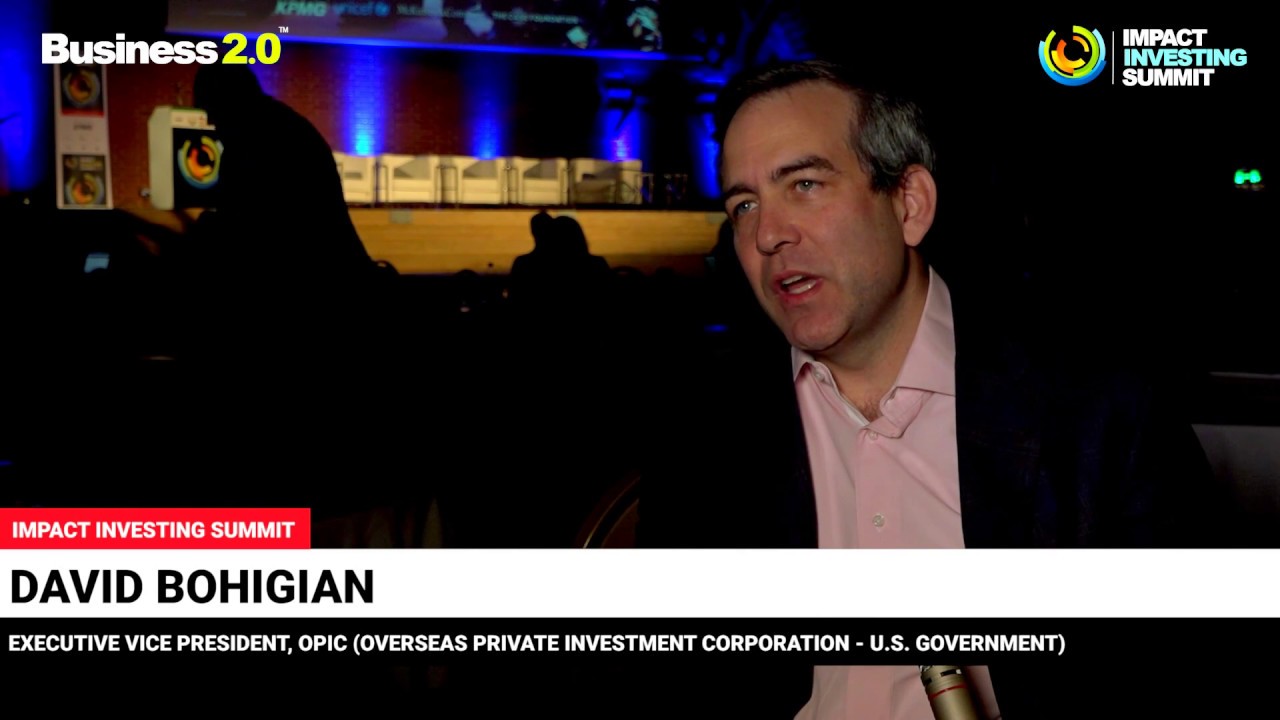
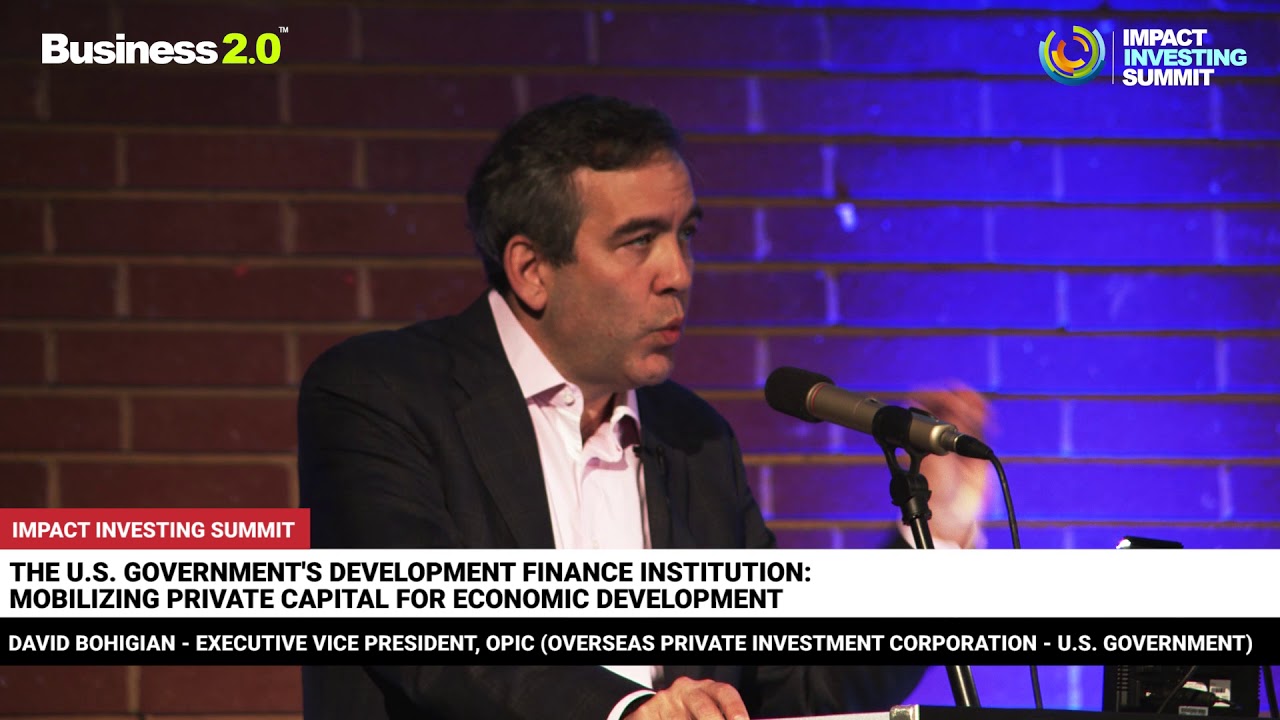
David Bohigian announced OPIC's new $22 billion venture capital fund for emerging markets across Asia, Africa, and Latin America. The government agency is positioning itself as a strategic partner to VCs, offering capital plus geopolitical insight and on-the-ground presence. OPIC has already funded telecom in Sierra Leone, broadband in Colombia, and cocoa-farmer market access in Indonesia.
Chapters
And for almost 50 years, the Overseas Private Investment Corporation has been putting money into project finance and political risk insurance, which we invented, and $3 billion into private equity. And I'm excited to share an initiative about venture capital with you today. It's great to come from the capital of the United States to the capital of innovation. And working together, I think, is how we're going to solve many of the world's great challenges. I'd like to know who in here wants to change the world. A few of you think it's perfect. Okay, that surprises me. I would have thought some of you— some more of you wanted to make changes. Well, we want to give you money to help you change the world. The Overseas Private Investment Corporation has been working with private partners to invest money to work on foreign policy and development outcomes throughout emerging markets, as I said, for almost 50 years. We've been in Latin America and Africa and Southeast Asia, as well as the Middle East, in the world's poorest countries, in the world's most difficult regions, and those are the places that are most in need of investment in entrepreneurship. And I know that's why many of you are here today. Because I truly think that you are ambassadors for America. We might be coming from Washington, D.C. with the titles, but you are the ones who are on the ground in emerging markets showing what the best of America can be. When I was in venture capital, where I began my career, I used to think about the 3 Ms: money, markets, and management. But I'm going to add E's to each one of those for the crowd I'm here with today. Early money, entrepreneurial management, and emerging markets are what's going to change the world together. And I think you and the people that I've worked with in venture capital are among the most innovative and inspirational people in the world that really embody the American dream. I've been to over 50 countries in the world. and every single one of them wants a Silicon Valley. They say, we are the Silicon Valley of fill-in-the-blank country. So we are truly blessed to be here today, and I'm thrilled to be here today. And I've seen how finance can make a real impact in the world. When I was Assistant Secretary of Commerce in the Bush administration, I was able to launch the Entrepreneurship Initiative, which today has entrepreneurs in over 100 countries that you're operating in, talked to presidents and prime ministers about the policy environment, which is a great backdrop for you today, but I think even more exciting when I get to the money part for you guys. But as Steve Jobs would say, one more thing first. All right, I truly believe that the development outcomes that we're having are at the core of impact investing. In many ways, the Overseas Private Investment Corporation invented impact investing. when we started to work on problems in Southeast Asia and beyond in the early '70s. We've tackled some of the world's toughest challenges across hunger and across disease and across building infrastructure for the 21st century. And while we're inclined to focus on some of those small issues, I want to help all of us understand the difference between how Washington is thinking and how you are thinking today, because I think the transition that we're undergoing in the 21st century is going to dwarf other economic transitions we have. So here's what Washington and New York like to talk about. All right, blue line, stock market since the turn of the century is up 70%. The global labor force up 25%, and global GDP up more than 100%. If you tune into some of the media out east, or if you talk to Washington policymakers as I do every day, that's what they're talking about. What you guys are talking about isn't linear, it's exponential. It's Moore's Law, or the price of a semiconductor dropping by 95%, or in this case, That over this century, computing power is up 40,000%. So let me stack those 2 graphs up for you to talk about what kind of change we're going through. Can you see the lines we talk about in Washington? No. No. The lines that you're talking about here are phenomenally important. And earlier this year, I was nominated and had to wait for a Senate confirmation hearing. And when I did that, I tried to talk to people about how can capital do the most good in the world. I've talked to philosophers, I've talked to priests, I even talked to politicians, and believe it or not, I have not found a unified answer. The answer is not going to come out of Washington. It's not going to come out of capitals. It's going to come from combining your values and your capital and taking that overseas. And it's going to take everything you've got because these are the world's hardest markets. When I was in venture capital, the joke always was nobody wanted to invest beyond their area code. And you guys are going into places that don't have phones. And I truly believe that VC is one of the great ways to support development. So today I want to announce the Overseas Private Investment Corporation's Venture Capital Initiative. We're going to build a global portfolio of venture capital funds, a fund of funds, to be able to provide technological solutions for health, for hunger, for housing, for education, for energy in Asia, the Middle East, Africa and Americas and beyond. So we are here to talk about how to get you guys money so that you can get it to the most people most in need in the world, right? We're also going to be trying to unleash the power of women entrepreneurs. The women's economy is larger than China and India combined, and obviously half the world's population. If we can start to unlock those problems, I know that we can make the world a better place. And when I was in venture capital, people would incessantly talk about need smart money. So why is the U.S. government here to be smart money? Right? I think that we know geopolitical challenges better than anybody in this room. Yesterday spent some time with the director of the CIA. Our board members include the Secretary of the Treasury, the Secretary of Labor, the Secretary of Commerce, Treasury, USTR. Those are hard boards of advisors to find for you guys. And when we work on a deal, ambassadors are intimately engaged in how we do it. So in West Africa, we supported a private equity fund that's doing telecom and internet in Sierra Leone and Guinea. In Colombia, we've helped deploy a wireless and optical broadband network. In Indonesia, we've helped small cocoa farmers reach global markets, and there's so much more that we can do together in these tough, tough markets. So as I introduce the initiative, I also want to introduce— where's Adil? Adil Kabbani with OPIC. Thank you. The father of the initiative here. He's going to be hanging around for all day. I know we're going to do a some time later. But I think working together, that's where we can really make a difference. And I want you, if you're a fund looking to raise money in those markets at any stage, we want to be able to talk to you. And if it's not you, then talk to your friends because we all share the same mission in making a more peaceful and prosperous 21st century. Einstein said, we can't solve our problems with the same thinking that created them. All right, and I'm here from government knowing that we created many of them. But I believe that a partnership with the people in this room who have phenomenal hearts, phenomenal minds, are going to be able to solve the problems of the 21st century as we live by our values and create value. So thank you very much. I appreciate the opportunity today, Ryan, and everybody else. And thank you. Let's do some business.