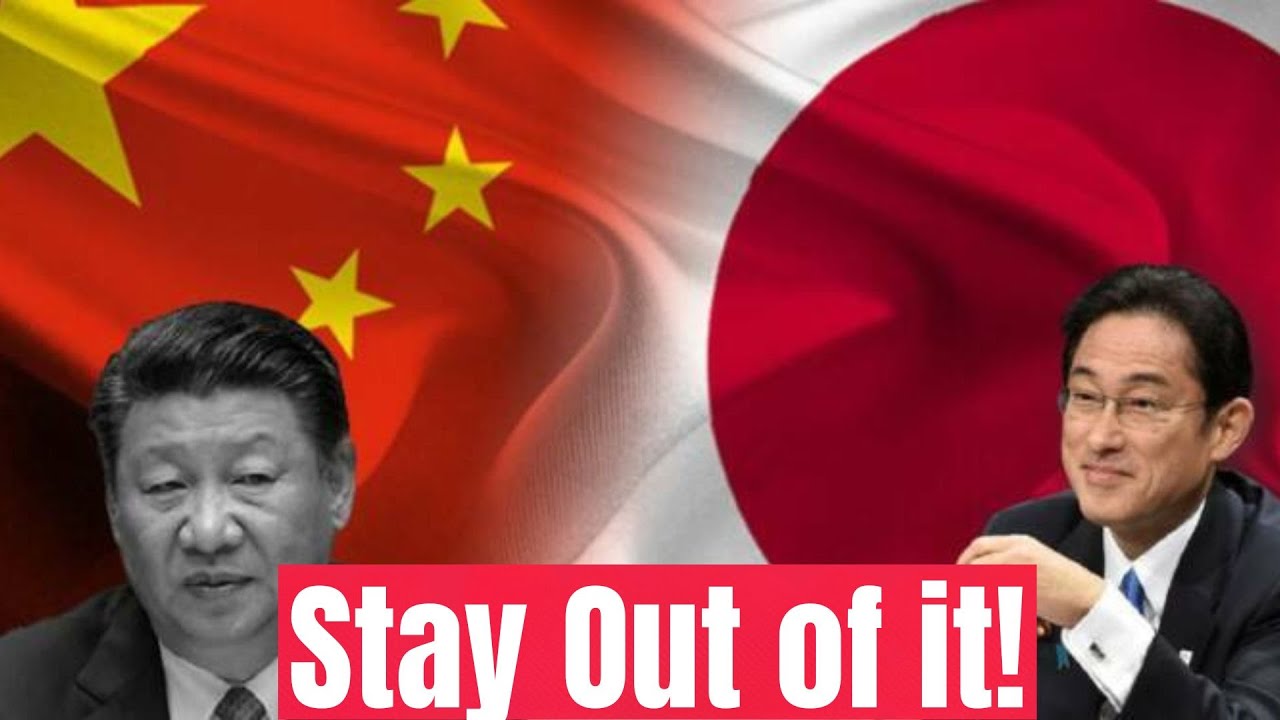
This content was created by David Oualaalou. This content was uploaded by David Oualaalou. This is a YouTube video titled "80% of Japanese Worry Japan Will Be Dragged Into US-China War Over Taiwan! Here’s why?" (published June 21, 2023) featuring David Oualaalou as the sole presenter. It is a solo geopolitical commentary in English that discusses a recent Asahi Shimbun poll showing about 80% of Japanese prefer Japan to "stay out" if China attempts to take Taiwan, with ~56% favoring limited JSDF support (aid/fuel/medical) and only ~11% favoring full military cooperation. The presenter contextualizes the poll with remarks on Japan’s defense spending, Okinawa opposition (citing activist Shinako Oyakawa), right-wing voices (e.g., Hiromichi Motegi), the potential role of NATO in Japan, and doubts about U.S. domestic support for entering a conflict. The piece is an opinion/analysis video rather than a multi-speaker conversation.
Chapters
Hello everyone and welcome to Geopolitical Trends. My name is David Oualaalou. So good to be with you as always. Japanese people do not want a war when China takes over Taiwan. Surprising, huh? In this video, I'm going to provide you insights based on the result of a recent poll conducted inside Japan. You will be surprised to find out what they are saying. But before I'll go or delve deeper into this, I'd like to extend my sincere thanks to the channel's members and supporters. And for you, if this is your first time landing here on this channel, please make sure to subscribe and smash that notification button so you would be notified every time I upload a new video or do a live stream session. Let's dive in into this. And here's what I'm gonna start with. I start with quote: "Stay out of it." This is the quote. Why am I saying this? Based on this, 80% of Japanese do not want Tokyo to get involved if— or to have Japan rather get itself involved if China decides to take over Taiwan. Basically, the question was, do you want Japan to get involved? And 80% of those people that they were polled said stay out of it, 80%. So out of the 3,000 people surveyed, 56% said that support from Japan's Self-Defense Force, is known also as the JSDF, should be limited. Now they're saying not a full support, but it should be limited to, for example, assistance with fuel, food, and medical aid. That's about it. This is about 56%, while only 11% think that Japan should join forces with the US in the possible event of a conflict. Ah, both Japan and the US I'm gonna tell you this based on my understanding of how geopolitical landscape is in that part of the world. Both in Japan and the US, the population have no clue what are the ramifications of a conflict with China is going to entail. And I am not suggesting that we should be scared of China or we are scared of China. That is not what I'm saying. All I'm saying is that the consequences of a military conflict with China will be far beyond what anybody has anticipated. And this is what both populations in Japan and the US, they don't grasp. They don't grasp the severity of what a military conflict with China will entail. And by the way, the survey was conducted by the Japanese daily, it's called Asahi Shimbun. Now, Asahi Shimbun, and I did the research on it, to make sure. It's one of Japan's oldest and largest national daily newspaper. The Asahi Shimbun, believe it or not, began its publication back in 1879. That's how far back it goes. So it builds a reputation and credibility. So otherwise it would have been out of business if it was not doing a good job. Well, what they found in their survey, because those are the ones who conducted the survey, found that 80% really expressed, 80% of Japanese expressed their concern that their country's military will get caught up in the conflict ensued by Beijing if China decides to take over Taiwan. So the interesting aspect of all this is that Taiwan, I'm sorry, Tokyo, rather, has always maintained a neutral stance on the ongoing conflict between China and Taiwan. But that was back then. This seems to be changing their position, some members inside the government. So it has also warned that the— this is the Tokyo, rather, or the current administration of Fumio Kishida. Warned that China's involvement in or taking over of Taipei will affect Japan. This is where they are expressing their concern. Why would it impact Japan? Because it will put Beijing in control over the sea lanes that are used by Japan. And the big concern for Japan is— it's a legitimate concern, but I just don't see the justification for why Tokyo is making this particular argument. And the sea lanes, uh, because Tokyo uses those sea lanes to transport about 90% of its energy needs and 60% of its food supplies. And this is why also Japan would have to think twice before engaging in any sort of, uh, uh, modification of its stance regarding its neutrality regarding the Taiwan issue. So why are they allowing themselves— well, you all know that NATO is going to be opening an office in Japan. Why do you think that's going to be for? An administrative? No, it will go beyond that. And I always believe that in case of a conflict, Japan will be put first, South Korea will be put first, Philippines will be put first in front line, not the US. This is what I see. All while this happening, there is a widely understood— yeah, don't get me wrong on this— there is widely understood that the US will back Taiwan in such conflict. Well, not necessarily, because here is the thing: if the US government will do this, it will have to have the backing of the people. Otherwise, we will see a repeat of the Vietnam War. We all know what happened back then. Let alone we were kicked out of Vietnam. You know, that's why I don't see— despite what you hear, it still— it will be an uproar here in the US if we get in a war that has nothing to do with our interests, let alone against China. So, and the thing is, the assumption that the US will back Taiwan— yes, the administration, the US government that has been saying this— will the population support that? I have my doubts. So Japan, however, has not leaned towards either of sides of an increased defense spending, according to, uh, sort of the recent information coming out of, uh, Tokyo. But Japan also decided to increase its military spending. What will be for? And that's why I asked the question last time, and I'll ask you Is Japan rearming itself and we are allowing it? We all know the history of Japan. You know, I don't need to get into that. That's another conversation for another day. So, but here is where the kicker is. Despite what you hear, 80% of the Japanese, the, those numbers that were polled, remember, that's not a representation of the entire country. 3,000, uh, sample, it's a small— let's just say straightforward. So, but there is an element inside Japan that will support the US, and those are the rare echelon inside the government. So, and how do you understand this? You understand it by the defense, the increased defense expenditure in Japan, which has triggered domestic debate on how Japan should respond to the crisis. And there is one person that's been vocal about this. Her name is Shinako Oyakawa. This is a person who is aware of the local politics in Japan's most southerly prefecture. She said, and I quote, people in general do not want war, and I would say that most people in Okinawa are opposed to the Japanese military getting involved in any conflict over Taiwan. End of quote. Well, we all know the distance between Okinawa and Japan and Taiwan. It's not that far. So, so, and by the way, who is this activist? Activist Shinako Oyakawa. You know, as a matter of fact, I remember her speech at the UN in 2018 or '19. Don't quote me on this because— and I think it was 2018, I'm sure, in 2018, she used her first participation at the United Nations gathering in New York to highlight Okinawa's issues in the context of a broader struggle for the rights of the indigenous people around the world, when she said, and I quote, "We really have to make it." 'an international issue,' end of quote. And we all know the history of Okinawa, you know, that was independent at some point in its history from Japan. So she added, and I quote, 'Fighting there,' meaning in Taiwan or against China, 'fighting there will have a direct influence on people here as Taiwan is just 1-hour flight from Okinawa.' And the people of Okinawa experienced just how brutal war can be back in 1945. No one wants to see that happen again, but if Japan became involved, that is exactly what will happen. End of quote. Yeah, we all remember. I mean, if you read the history of what happened to Japan after World War II, so Let alone now, and of course the atrocities on Japan in China. Uh, China today is not China of back then, you know, and nobody has forgotten the atrocities of Japan. And as I always say, Japan never came forward and apologized. Yes, horrific atrocities were committed, but at least step forward, take responsibility, and apologize. You might be surprised how forgiving people can be, but they are not gonna forget. Chinese not gonna forget what the Japanese have done to them. So if they are looking for a fight, Japan that is, it won't be pretty. You know, I am sure China can level Japan, and we all know what it means. The US will get involved, nuclear weapons get, you know, used., and we, we all know what the outcome. I hope some cool heads will prevail to prevent that from, from happening. So like I said earlier, the overwhelming majority do not want Japan to get involved in any conflict, let alone against China. But you have some right-wingers inside Japan thinking otherwise. This is why the assassination of Shinzo Abe sort of happened, because where he was taking Japan versus what some inside Japan wants the country to go. So they kind of neutralized the guy. So could, uh, what's his name, Shinzo— or not Shinzo, I'm sorry, uh, uh, Fumio Kishida experience the same fate? I don't know, what do you think? So, and here's why I am saying, or I'm sharing this with you, why some sort of right-wingers inside Japan are calling for sort of the support of Japan being involved in a conflict with China in defense of Taiwan. Well, you have the acting secretary of the Society for the Dissemination of Historical Facts. His name is Hiromichi Motegi. I hope I pronounced it correctly. Hiromichi Motegi. He said, and I quote, "I absolutely believe that Japan should work with the Americans to assist Taiwan," end of quote. And he explains and I put it in quotes, "These are both democratic nations that are our friends and allies, and if Japan does not come to their assistance in time of need, then we will lose their confidence, and who will help Japan when we are threatened?" End of quote. Does he realize that it will be too late if they get involved in a conflict? That almost reminds me of, uh, UK, the United Kingdom, arguing about we need to attack Russia and all that. Does UK understand that Russia has supersonic missiles that can hit, uh, UK before they even dispatch or deploy their own fighter jets? That, that's where I see the stupidity, or so, of certain individuals not understanding the ramifications of their statements. So they can say— they are saying just whatever. So here is my conclusion for you, because I always like to keep this short and concise. The entry, or the possible— I should say the possibility of the entry of the US into any Sino-Japanese conflict will be strictly conditional. Of course, Japan will have to be the victim of armed attack and request American military assistance. But once he did and treaty conditions were adequate— were adequately met, it would mean virtually the entire US military machine, from the nuclear attack submarines at Guam to the B-2 bombers based in Missouri, will be committed on behalf of Japan? I don't think so. Will the American people agree to such war? I don't think so. But what do you think? Leave me some answers and we can even discuss this further in a live stream if you like. So, and by the way guys, if you like the content of this video, please hit that like button and subscribe if you have not done so, and I truly appreciate your support. Well, I hope you find it very informative, and as always, remember, geopolitics impacts your daily life in more ways than one. Till next time, guys. Bye-bye.