A Geopolitical Thriller: China’s 'Manhattan Project (EUV Machine)'! W/Einar Tangen& Warwick Powell
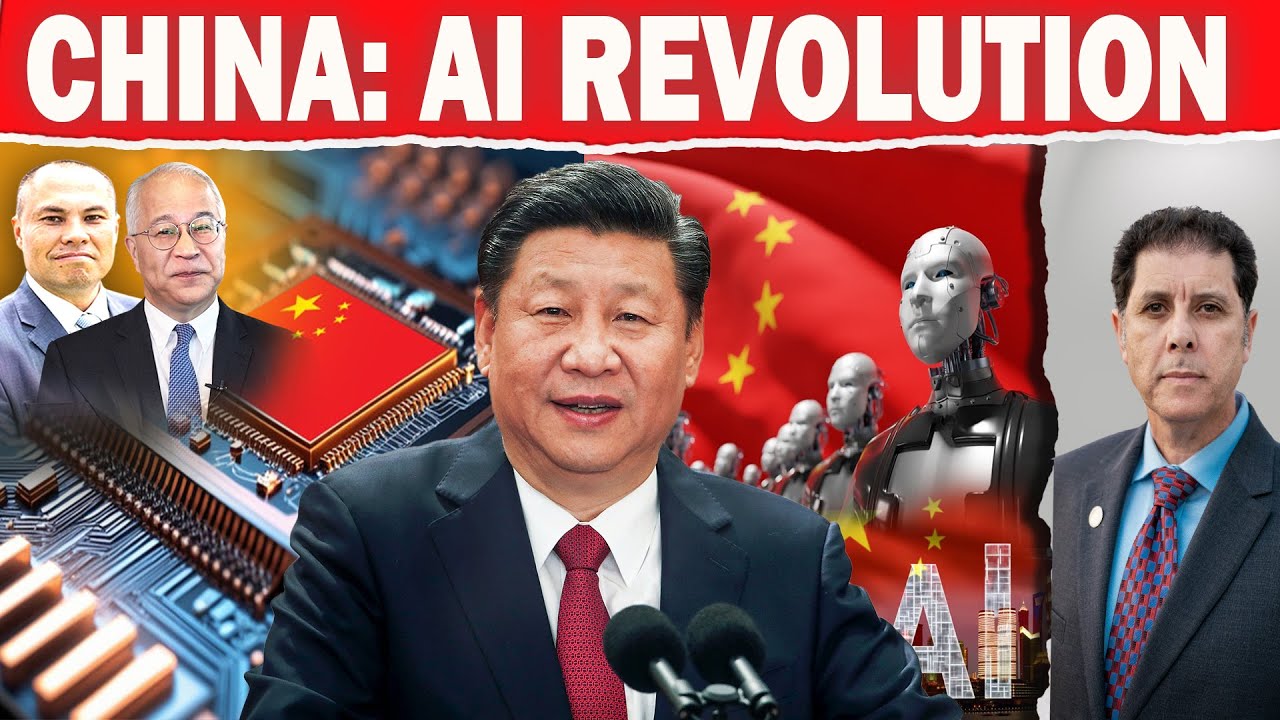
In this episode of Geopolitical Trends, host Dr. David Oualaalou convenes a panel with senior fellow Einar Tangen (CIGI) and adjunct professor Warwick Powell (QUT) to dissect China’s reported breakthrough in extreme‑ultraviolet (EUV) lithography – dubbed a Chinese “Manhattan Project”. The conversation moves from the technical significance of the prototype EUV machine and the failure of U.S. export controls, to the broader economic ramifications such as China’s $1.08 trillion trade surplus, its dominance in electric‑vehicle (EV) batteries, micro‑processors, and machinery, and the impact on global supply chains. The panel examines geopolitical fallout: U.S. and EU policy responses, tariffs on Chinese goods, farmer protests in the United States and Europe, and Mexico’s new tariffs. They discuss China’s self‑described role as a “great enabling power”, its strategy of co‑development with the Global South, and the shifting balance of power as the West’s political and economic authority wanes. The dialogue concludes with forward‑looking assessments for 2025 and 2026, highlighting the likely continuation of U.S. pressure on China, the intensification of “war‑without‑war” tactics, the erosion of EU cohesion, and the upcoming U.S. mid‑term elections as a catalyst for further geopolitical tension.
Chapters
Hello everybody and welcome to Geopolitical Trends, where truth matters. I'm your host, Dr. Oualaalou, excited to be with you once again. But I'm even more excited because my dear two friends, Ina Tangan and Warwick Pao, are here for our monthly conversation. So get some popcorn and get yourself comfy because you are in for a treat, especially with what we're going to be talking about. So let me bring my 2 friends here and we're gonna have a conversation. Hi, Einar. Hi, Warwick.
Hi, David.
How are you?
Good to see you. Good to see you both. Let me just, for those who do not know who my guests are, which, you know, you should by now, I'm going to start with the, with the Einar first. You know, Einar is a senior fellow at CIGI, which is a Center for International Governance Innovation. He is also an international commentator on geopolitics and the global economy. He's based in Beijing and of course specializes in China's role in global governance and urban developments. Warwick Bao is an adjunct professor at Queensland University of Technology in addition to being a senior fellow at the Tahi Institute. He is the author of China, Trust, and Digital Supply Chain Dynamics of a Zero Trust world. I got a picture of it for you guys just to see that one here. Let me get to the picture right here, right here. Okay, and, uh, so in addition to being the host of the TIO Talks show, which I will provide you— as a matter of fact, here is the link for it if you guys want to check it out. So make sure you take a look at this. I'm going to put it in a link for you and you can subscribe to that. So, all right, let me delve into what we're going to be talking about. So first of all, I want to get your take, both of you. I'm going to start with you, Einar. I want to take your— I want to like to have your take on what just happened in China regarding the scientists, which they were working in a top secret facility. Have built what Washington has spent years trying to prevent. We're talking about the, the equivalency of the Manhattan Project for the EUV machine. How significant is this, Einar?
Well, I don't know. It's significant, but it was expected. I mean, this isn't something where you can baffle it up. I mean, the United States seems, or Washington seems convinced that it can stop ideas. It doesn't matter if you're talking about geopolitically,, uh, situation in Gaza or, um, in terms of technology. So you have a situation where they said, oh, by denying you, um, access to the ASML, which remember is a Dutch company, not an American company, so they reached out, put pressure on them and said don't send machines there. China had no alternative. It was quite happy to buy ASML machines. It was efficient, they were doing a very good job. They were at the very forefront of technology in that area. Um, but you know, that, that wasn't good enough, uh, for the US, as it's— because they sought a level playing field. So what they did is they said, yeah, no, we're going to deny you that. And China invariably had to respond by developing their own technology. And now we see that happening. You know, the, the real danger that Washington for some reason in its short-sighted policies doesn't understand is that this is a juggernaut that is not going to stop. Uh, it's not that, you know, the Chinese are going to simply say, oh well, okay, we've, we've achieved little success, let's stop. You know, we've seen, uh, what happens. They're going to continue. Um, they're going to be able to make these machines at less expensive prices and invariably going to improve the technology. Um, you know, In essence, you know, ASML might have signed its own death warrant by, in essence, going along with the United States.
Warwick, how do you see just this specific development that China just achieved? How do you see this breakthrough economically and geopolitically? Before we get into the details of how do you see it playing out?
Well, as I mentioned, it really does mean that China is continuing down the path of ensuring that it is not exposed to the risks of key technologies being weaponized. The United States, over the course of the last 10 years or so, has sought to cut China off from major technologies through a range of direct and indirect export restrictions. Now, these restrictions concerning the EUV machines go to technologies that are actually manufactured and supplied in the Netherlands, but nonetheless make use of some United States-based intellectual property. And that is the foundations upon which the US has sought to extend its secondary export restrictions. Like most of the other restrictions, it certainly had a short-term effect, but, um, but the longer-term effect is that it catalyzed efforts in China to develop their own capabilities So at the beginning, beginning of this year, according to the Reuters report, a prototype machine was successfully developed and tested to produce, uh, the, the, the light rays, which is the foundations of the manufacturing process. I suspect that the Reuters report undercooks the extent of advance and development that has actually occurred. This seems to be a pattern for how Western mainstream media has ultimately reported upon developments in China. They tend to ignore them for a long time, and when they do finally report them, they tend to be a little bit, um, out of date and undercooked. In other words, I think Chinese, uh, capabilities, scientific and technological, as well as the overall supply chain ecosystem, are probably a little bit more advanced than the Reuters article implies. I will say though that I think that we are likely as a result to see a commercial implementation probably closer to 2 years away. I mean, I think that there are some industry observers who suggest that it might be as far away as 2030, but I think prudence would suggest that it's best not to underestimate how quickly Chinese enterprises and Chinese supply chains will be able to get their act together. That's not to say that in 2027 towards the end of 2027, they'll achieve, um, global best-of-breed benchmark levels of productivity and accuracy. But I think they'll certainly reach a level that will, um, deliver chips to some target industries, um, and target uses, whether they're in defense or in some of the other strategic areas. And of course, the iteration cycles will be relatively short in China, as we've seen in other technology areas. Once the foundations are laid, the processes of continual improvement are incredibly fast. Geopolitically, this pulls the rug out from under the feet of another dimension of containment. I suspect that as a consequence of that, the anxiety effects that it will cause will go into overdrive, and rather than cause Washington to reflect on its strategic posture and perhaps consider long-term collaboration as being a more sensible pathway forward for both countries. Most of the intelligentsia, so to speak, in Washington will see this as another reason to double down, and that will mean an intensification of not just rivalry, but I think, um, a kind of war without war., and we're likely to see, as a result of Chinese progress in these sorts of areas, um, uh, you know, uh, more, even more challenging times ahead.
Indeed. I make more sense. By the way, uh, uh, just for the community, to all of you, I put the link, uh, to what, uh, uh, Warwick mentioned regarding the Reuters article is in the chat box. You can look at it. Uh, I wanna pick on one particular point you mentioned, Warwick, but I'd like, Einar, if you can make a comment on this regarding now how Washington is going to react with this development. What do you see the impacts on, for example, the AI or the military technology, for example? How do you see it moving forward?
Well, I agree with Morik on this. What you have is a situation where the US has failed, uh, to obtain their objective, which is to suppress China in a critical area. And as a result, those who are reasonable will say, look, this dream of being, you know, of separating things, we live in a world of interdependency. If you don't understand that, you know, simply start thinking about, you know, rare earth elements and so many other things that are shared. Those who are not, who are ideologically driven, will say, hey, it's time to double down. We need to, you know, erect, to raise the bridges and and, you know, heighten the walls and sit here and pretend that the world revolves around us. It's a kind of a siege mentality, and I fully expect that to be enforced, especially given the people that are around Trump. I think he has adapted— adopted a policy of not going directly at China, but actually trying to nibble around the edges, use indirect power, indirect pressure through proxy entities, in essence, trying to cut China off from the rest of the world, given that the US was not successful in cutting China off from its technology.
Warwick, how do you see the impact on the auto industry, especially now you have this advance chips that's going to be essential, or they are already essential for the EV industry?
Yeah, look, I mean, China is clearly the global leader in this particular sector, in large part because of its leadership in battery technologies. And, you know, but by and large, most of the challenges in electric vehicles is actually in the capacity to store energy and to recharge quickly enough and deliver sufficient power to, to keep people going long enough, right? And China's mastered that, and we're going to continue seeing ongoing developments in, uh, in battery technologies, which is the foundations of electric vehicles. The other interesting thing about EVs, and this is a mentality issue as much as, um, as anything else, is that in some respects EVs are seen by many Chinese manufacturers not really as cars, but really as extensions of lounge rooms. That was certainly the comment made to me last year when I visited the R&D facility at Huawei in Shenzhen, where the entire design intent was to deliver a seamless experience between the office, the lounge room, and the car. And when you do that, the capacity of advanced chip technologies to support a whole range of seamless digital services and experiences, I think, will continue to enhance the overall value proposition. So you combine these two things together, which is continued leadership in battery technologies as well as progress on the ecosystem to deliver domestic high-end chips, and you're going to see an industry that will continue to lead the world. One of the useful things I think out of all of this is that these capabilities will also spread across the world. So we are already seeing many Chinese EV manufacturers reach overseas and establish production and assembly facilities in other parts of the world, many of which have never had automotive manufacturing before. So this is a significant leg up for these economies and a significant transformation for the developing world as far as economic complexity is concerned. All of this, I think, is a good thing for the Global South. As for the economies that have long held the dominant position in terms of transportation technologies, namely the North Atlantic economies, which have dominated vehicle manufacturing together with Japan, you know, they are obviously starting to feel the pinch as EVs begin to replace internal combustion engine-based transportation.
Very, very interesting. Let's move on to talk about the surplus, the historical surplus that the Chinese have achieved, the $1.08 trillion. It's historically, in my opinion, based on the readings that I've done, I looked at some data. If this was ever recorded in the history, It's not. This is the first time that China did. Einar, how do you see this surplus? You know, how significant this is when it comes down to the global financial setting, if I may use the term?
Well, I think the UNDP covered it pretty comprehensively. What they said is China by 2030 will be 45% of the world's manufacturing. U.S. will be 11%. Uh, that marks a decline by about 4% for the U.S., meaning they have no faith that Donald Trump is going to reindustrialize America and that China will continue to build on its ability to reduce costs and produce higher quality or higher value goods that are desired in the world. Uh, we're, you know, we're just talking about card chips and things like this. Remember, card chips are about a 24-nanometer market. They don't need the super small chips. And this is going to be the area where China— it's a sweet spot because the vast majority of chips, whether it's in your, you know, Roomba, uh, what do you call it, automatic, uh, floor sweeper or your car, uh, or your electric iron, um, all, all of these things are, uh, this is where the, the chips are most necessary. So, uh, they're really, uh, going to continue to advance the technology and reduce the cost. So what does that mean? It means that the U.S.— I mean, that China will continue to have a surplus. Now, how are they dealing with it? It's not that China is jumping up and down over the fact that it has a $1 trillion surplus. Um, this is the only country in the world that has a Chinese International Import Expo, meaning that they gather tens of thousands of people from all over the world and say, look, we want to import your goods, come to China, uh, people will be lining up, uh, to, you know, be your distributors. And let's get this moving. China isn't interested in the kind of warping effects economically that the U.S. underwent with its dollar hegemony. It really does see this as a shared future. Now, it's very pragmatic. The more economic activity that is created in countries, especially those who are willing, like in the Belt and Road Initiative, the more jobs that they have. The more jobs, more disposable income. More disposable income, the more they're able to buy goods from China and export. So it's a virtuous cycle where all sides are win-win. The U.S. doesn't believe in this. They believe that it's still a zero-sum game. And this is the, the major irritant that we face right now behind everything out there. It's just a worldview where China says we can make the pie bigger and share it, and the United States says there's only so much pie and we're going to take as much as we can.
Yeah. I, uh, Warwick, if we are to think in terms what this, uh, uh, what this surplus, what does it mean for, for, for sort of the big picture, if we are to think in terms In your opinion, does this signal, for example, a focus on the manufacturing? That is, some sort of China demonstrated resiliency in that area. Does it sort of suggest that, no, the focus is more on the auto industry or some other sectors despite the unfair trade that it's been exposed to with the US? What do you contribute this surplus to?
Well, I think the first thing to remember is trade is a consequence of the distribution of productive capability, okay? So you can't sell what you don't make, that's the first thing. And I mean, you will obviously buy things that you don't make as insufficient quantity or at a sufficient price point or an adequate price point for what you need. So that's the first thing to remember about these systems of trade. The second thing to recall or to note about this surplus is that it's largely driven by a combination of two main things. One is a geographical evolution of China's trading relationships, meaning that as China's trade with the United States in particular, and especially this year on the back of the uncertainty caused by the comings and goings of Trump's tariffs, trade with the United States has fallen dramatically. The, uh, the overall trade picture has seen the continued expansion of China's trading relationships with, uh, the developing world, whether it's the countries who are participants in the Belt and Road, um, initiative, or whether we're talking about the Global South more broadly. So trade with Africa has expanded significantly above the average growth in trade globally, as well as trade with, um, the countries of Southeast Asia through the Association of Southeast Asian Nations. So there's a geographic dimension to China's growth. And what that speaks to is the continued resilience of Global South economies in the face of global uncertainties. So despite the fact that many of these global uncertainties are causing certainly political consternations in the North Atlantic economies, the Global South is able to continue marching forward, so to speak, because it is going through a process of its own development, where Chinese capacity is actually contributing meaningfully to the transformations of their own economies, which leads to the second dimension. And that is what exactly is driving the surplus. And the surplus principally is being driven by growth in 3 or 4 main areas. And they're all related, by the way, to, to developments in clean energy. So we're talking about electric vehicles, as we were touching on earlier. We're talking about battery storage, solar PVs, and also microprocessors. The other area where there is also substantial growth in parts of the marketplace globally is in machinery and equipment, where Chinese exports, um, agricultural machinery and also other manufacturing machinery to other parts of the world, is helping transform those parts of the world as they build their own industries. So these are the main areas where Chinese export growth has taken place. And, you know, if it wasn't for those areas, in fact, China's export patterns would largely be the same or growing much slower in terms of the, of the Global South. The other last point that I'll mention in all of this is that people often forget that China continues to be a significant importer as well, and Ina touched on that. By referencing the way that China runs these import expos with the aim of creating pathways for enterprises in other countries to access the Chinese marketplace and to create an efficient place where buyers and sellers can intermingle and identify opportunities of mutual gain. Chinese imports, of course, are heavily tied to China's own exports, so these two things go hand in hand, and that's because in a world of complex interrelated global value chains, many of the inputs that Chinese manufacturers need to make the things that ultimately get exported, either as intermediate goods or as final goods, depend upon imports from other parts of the world. So when Chinese industries actually grow their exports, that actually helps the, the exporters in other countries export things into the Chinese marketplace.
Place.
Um, so let's not forget that as well. Um, and, and probably one last little, um, anecdote, one last little anecdote on the import side, because this is a gripe that comes from the West, you know, that China doesn't import enough. Actually, on all of the key things, China imports more by volume today than it did last year and the year before and the year before that. Certainly what China imports now in volume terms compared to 10 years ago is substantially higher, and that is even in the area of microprocessors, right, or semiconductors, which have been subject to numerous export controls from the United States. Had that not been in place over the last 7 or 8 years, China would have probably imported somewhere in the region of $60 billion more a year than it currently does. So, you know, in some respects, the patterns that we're seeing reflect an ongoing evolution in global economic structure. It reflects the fact that China is enabling other parts of the world to develop their own industries, both through energy capabilities as well as machinery and technology. And lastly, of course, through Western restrictions, which ultimately shoot Western exporters' feet. So I think that they're the main dynamics at play.
You are absolutely correct on this, Warwick. I had a chance to read two policy papers came out, one of them from Brussels, one of them from Washington. And I'm going to address this to you, Einar. One of them addresses specifically the idea that this surplus masks some serious domestic vulnerabilities inside China, which according to this report from Washington, it could destabilize the bilateral relations. They're referring to US-China, that is. And what surprised me the most was the idea that they are pushing for the narrative that China's weak domestic consumption, this one could create or reduce its trade surplus. How accurate is this assessment in your opinion?
Einer?
Well, I, I wouldn't say it's very accurate. I think they're misreading the cards in a direction that they think is most favorable to themselves. The fact is that China is the one who's concerned about domestic demand. They see that as something that they can, can control and that they can use this to run their economy. Washington has seized upon this to say that, oh, they're concerned about it, therefore their economy is about to collapse. I, I just wish these, uh, people would come to China, uh, wander about everywhere and make a determination of whether or not China is collapsing, and then compare that to what's happening in Europe and America. I think they would come away with a very, very stark and different picture if they're willing to listen. So, you know, these policy papers are wishful thinking. I, I'd love to say that they were, you know, they're based in some sort of fact, but they're not. This is just Washington and EU wringing their hands over the fact they've lost the competition race, and they're looking for reasons to undermine, um, you know, confidence in China. They're alarmed by the fact that China has made inroads into the Global South, uh, developing markets, growing their markets at a time when they, uh, were anticipating that they were going to shrink, you know, China's economy, that it was all going to be a containment policy that would, you know, kind of roll out very smoothly, teach those little yellow people. And I, and I, and I say that because I do believe that there's an element of racism here, um, that, you know, this idea that Asian people aren't creative and all this type of stuff. There'll be people in the U.S. who, who still, uh, despite everything that China has shown in terms of EVs, um, next generation, almost everything. They're saying, well, you know, Americans, you know, we, we really have it where we're superior. Um, you know, superiority is a demonstrated, uh, issue. So you have a, a lot of wishful thinking on these two parts. Does China need to increase its domestic, uh, consumption? Yes, as part of its economic planning. Um, but remember, exports will remain a very, very important part I'm going to digress slightly on this point to add something. Back many years ago, there was a gentleman at Acer Technologies, a Taiwanese company, who invented this idea or this concept of what he called the smile. And basically what it says is that what you need to do is to, on one hand, all right, compensate those who develop technology compensate them very highly. And then on the other hand, you have to compensate those who sell this thing to, you know, give them an incentive to do it. And then at the bottom, what you have is the production. Production is just a low-cost thing that you can, you know, sub out to other entities. Now obviously, being Acer in Taiwan and over 20 years ago, This was very advantageous to him because he was looking for this kind of OEM work and things like this. So it was very nice. But what they call was the smile curve, the idea that, you know, only selling and making technology was a, you know, a part of the process that mattered, and therefore you compensated. But you switch forward to today, you have as a situation where manufacturing is not a low-cost, low-tech industry. It is extremely advanced. It is site and industry specific, as the US is finding out as it tries to replicate these chip fab entities in the United States, and they don't have the engineers to make them, they don't have the engineers to run them, and they don't have the cost basis to keep them competitive. So all of a sudden, uh, this has become a fallacy, this idea that you can somehow, um, throw out manufacturing to, you know, these little people overseas, and, you know, the big guys can soak up all the profits at home for selling, um, you know, technology developed for themselves. So that, that is, uh, the real, um, situation that we face today. It has fallen down But there are those in Washington who still cling to this idea that, you know, manufacturing doesn't count unless it's made in the United States. So you want to poo-poo all of these areas.
Wow, that's very insightful, and you are absolutely correct, Einar. There is still that mindset in Washington. One last part on this, Warwick, on this topic before we move on into something else, because I just want to follow up on this one with one other aspect. And this one has to do with the arguments coming out of those white paper analysis, whatever we want to call them. The reliance is that the Chinese reliance on exports for growth, in the opinion of this analyst in Washington and Brussels, suggested that China might have a limited flexibility to reduce its trade surplus even if it's politically pressured to do so. In your opinion, hypothetically, hypothetically, if we are to go with this argument, does this mean that this creates a mismatch and the US will continue demanding concessions from China? Is there any possibility to that?
Nobody is forced to buy anything from anybody else. Let's not forget that. So whenever Washington bloviates about Chinese exports, they forget to tell you that Chinese exporters can't force anybody to buy their products. Those products sell globally because they are competitive and they meet the needs of enterprises and households in other parts of the world. Just ask American households why it is that they buy Chinese-manufactured furniture, Chinese-manufactured bed fittings, clothing, and those sorts of things. It's because they're affordable. This is why Chinese exporters of electronic goods— televisions, computers, radios, and those sorts of devices— find markets in North America, in Europe, and in other parts of the world. Why is it that Apple devices, for example, continue to sell incredibly well in the United States? Well, it's because they're of a high quality and they meet a certain need, right? Nobody makes anybody buy anything. So every time Washington talks about Chinese exporters somehow, you know, exporting the world to death, let's not forget that nobody is compelled to buy anything from anybody. The second point to note is that Chinese exports, particularly in terms of manufactured exports, represent about 20% of output. In other words, 80% of Chinese manufactured outputs are absorbed by the domestic economy. This has been roughly steady state now for the past 5 or 6 years, having declined from a much higher level around 2004-2005. So that's the second point to remember— Chinese manufacturers are actually far less dependent, if you will, on global markets as they once were. The third point, and that's related to this issue, is that this export ratio takes place in the context of continued output growth. So we see clear data that manufacturers are increasing the volume of their outputs, and Chinese consumers are actually consuming a higher volume of things than they have ever done before. We also see as evidence of the, the balance, if you will, in the economic system by levels of capacity utilization of hovering around 73 to 75% on average across the board. This is consistent with an economy that actually is operating at a high level of capacity utilization. There's no excess capacity, um, and, uh, and Chinese capacity is actually delivering public goods to the global marketplace that historically have been denied access to most of these things before. These markets that China is exporting to, particularly those in the Global South, as I touched on earlier, have been markets there that have been ignored for decades by Western companies. They've been ignored because they've been treated not as markets to cultivate and to develop and for capacity to be transformed by the provisioning of manufacturing and energy technologies, but as placeholders of natural resources to be exploited. So I don't take any of Washington bloviating and complaining seriously at all, right? They've had centuries of exploiting the Third World and the developing countries of the world, um, and they've done nothing about them. And now they're complaining that Chinese manufacturers are providing capability to these communities that have long been denied by the West. So in terms of China's own development and its own domestic, um, demand, let's not forget that when people speak about demand, they're actually speaking about two things. One is investment demand and one is consumption demand, right? Most commentators confuse the two. They think that demand equals consumption. That's not the case, right? In economics, demand is understood to comprise investment demand and consumption demand. And interestingly, people who actually understand economic systems as dynamic systems also appreciate the fact that one is connected to the other and that they are inseparable. So you can't go about talking about boosting domestic consumption unless you're also interested in how you're going to boost domestic supply capability, and you can only do that through continued investment and augmentation of your production base. So Washington and Europe— and I understand Europe's predicament, right? It's had 20 years of of trade surpluses in a bunch of these high-tech areas, and now it's under pressure. Its traditional manufacturing advantages, to the extent that they existed— let's not forget, this issue of deindustrialization in Europe goes back almost 40 years. I remember reading books written in the 1970s that were already talking about the industrialization of the UK and parts of Europe, right? Going back into the 1980s when, you know, Charles Sabel and his co-author wrote the book on, you know, the great industrial divide, which was also about the emergence of flexible specialisation and the decline of Fordist mass production in Western economies, right? So deindustrialisation has been part of the Western story for a long, long time, well before China came on the scene, and it has a lot more to do with the political economy structure of those places than it does with China's emergence onto the world market. So these countries need to stop complaining so much, stop blaming other people for their own problems, and focus on the reasons why their own political economies and social settlements are under stress.
Well, I'm very grateful that both of you gentlemen provided these explanations, because I know no one is addressing these kind of aspects of the argument. That is the reason why I brought it up, so the community, at least my community here, have a better understanding of what the argument is. So I'm very, very grateful to both of you.
David, if I, if I can add one point onto this.
Sure, sure, go ahead.
Uh, first off, I, I would refer back to this virtuous cycle. And, uh, you know, as Warwick had said, as, as China, um, develops— I mean, as it develops and sells technology, it's buying more things from other places. But at the same time, China is, uh, the only, uh, country that is actively out there trying to push co-development. They're actually pushing their companies outside of China and trying to even the playing field. And this goes back to this idea of trying to not build bigger and bigger surpluses but to have a world that's more fair. But in terms of exports, remember this: Chinese consumers are very, very value-conscious. Now, there is an economy of scale that goes along with developing things. For instance, one of the new areas is going to be robotics, and China is just pushing along on this area. And I'm sure it'll be added to the litany of other things about how unfair it is that China has the brainpower and manufacturing power to dominate an industry like this. Especially one that's going to be very, very crucial. So these are the types of complaints that are continue to come. Just remember what the reality is, that China gets economies of scale that lower its cost, that helps its own consumers be able to afford these things, but also it's a co-development process which is going and extending around the world, something that is completely new to, you know, these kind of imperial powers that have been pushing the world around for the last 600 years.
Very, very insightful. Uh, before we, we address the— I would like to, because of course, have your insights and inputs about what's going on in Europe right now regarding the farmers, which we will detail more. I want to ask one specific question, and I'll have for you, Warwick, talk about Mexico, and for you, Einar, talk about France. My reference to this, Ayner, or I'll start with you, Ayner, on this one here. The last visit by the French president, Emmanuel Macron, to China, only to turn around and stab China by imposing taxes. Where that came from? What was the motives behind really coming all the way to Beijing only to turn around and issue statements by imposing tariffs on China?
Well, this isn't going to be a long conversation. What you have was on display this kind of colonial attitude. He came to China and saying that you must do this, you must do that, you have to buy our planes, you have to lower things. He did not offer one thing in return. And this is kind of this imperial, you know, we've decided that you need to change some things and, you know, you should just kind of follow along. Going back to the realities of domestic policies in France, he was confronted with farmers who feel the world is slipping away from them. They're concerned about the agreement with South America, you know, the whole of South America, this that they've been working on for 20 years and which is now being held up, much to the consternation of South America, which is under intense pressure by the U.S., which is reasserting a Monroe Doctrine. And, uh, you know, they have to make a decision what they're going to do, uh, rather, you know, Washington is no longer reliable and neither is, uh, Europe. So, uh, I wouldn't put a lot in this. This is going to be standard practice. You're going to have European leaders who come to China and just say, you have to do these things, we're not going to give you anything, this isn't a negotiation, we're telling you what's good for you, and then they'll go back and try to appease their domestic constituents who feel the world is slipping away from them.
Will the same case apply to Mexico, Warwick, since Mexico decided recently to just impose between 5% up to 50% tariffs on China? Suddenly, I was really— I was shocked by the decision. In Mexico City?
Well, the first thing you've got to remember, and I'll say this again in relation to tariffs, tariffs are imposed on the buyers, they're not imposed on sellers. The aim is to make products from a certain country more expensive, and that is likely to have a number of obvious effects. One is to reduce demand for them, right? That's one. And the second one is that somehow there's a hope that this will boost the production of domestic alternatives. In terms of EVs, which is one of the main areas where Chinese products have been coming into Mexico in growing numbers, there is the prospects ultimately of an expanded Chinese manufacturing or Chinese enterprise manufacturing capability in Mexico insofar as EVs are concerned. In any case, I don't take this 15 to 50% all that seriously in the longer term because ultimately Chinese competitive advantages will overcome some of these barriers regardless. And secondly, you know, if the aim is to encourage Chinese enterprises to invest in domestic production capabilities instead of exporting, then, you know, that was a pattern that was starting to emerge in any case. And I wouldn't be surprised if that continues. Now, there are some other issues in, in terms of that. They go to questions around risk and, and the extent to which there may be regulatory risks in the short term, particularly against the backdrop of Trump's intensified pressure on Latin America to play ball with Washington, which may slow down some large-scale capital investment decisions from Chinese enterprises. But certainly prior to Trump 2.0, Chinese EV manufacturers, amongst others, you know, there were PV firms and others who were going into Mexico and setting up production facilities, you know, not, not by the way simply to sell into the US market, which is what many people say, but actually as a gateway to, to Central America and ultimately into the Latin American market. I'll mention one other thing in relation to Mexico. As we know, Mexico is one of the largest producers of food in the world, and interestingly, it's also one of the most significant importers of agricultural equipment from, guess who, from Italy. So, you know, just as French farmers are complaining against Mexican agricultural products, I'm sure that Italian manufacturers would dearly love to be able to boost their exports of farm machinery into the Mexican Latin American sectors. So trade's one of those things where there are swings and roundabouts, which are based on, you know, national and regional capabilities amongst other things. And, you know, I understand why farmers get upset, right? They got upset when Ukrainian grains were starting to enter the market too, let's not forget, which has been a sore point over the course of the last 3 years. And there are other problems too with European agriculture, and they go to the increasing costs of fertilizers, amongst other things. And that's a direct function of failed European energy policy. So Europe's got some deep structural problems, and these are just symptoms of those problems.
Well, we're going to be talking about Europe in a second.
If I could just add one more point.
Sure.
I just remember that NAFTA negotiations are coming up shortly, within the next month, and as a result, both Canada and Mexico are trying to position themselves in a more favorable position. So, uh, and also anything that Mexico does at this point is to its loss, and perhaps Brazil and other countries that are working with China's gain, as a lot of companies will say, okay, let's— if we do need to be in South America, the question The question is where, or I should say Latin America. The question is where, and they're going to make decisions that are going to have long-term repercussions.
Absolutely correct. I'm starting to get the notion that this issue that's going on now in Venezuela has nothing to do with Venezuela. It has to do with China. This is all about China. It's because Latin America is expanding. So Mexico was kind of like It was just shocking to me that all of a sudden Mexico will embark on this initiative, given that they've been talking about wanting to join BRICS. So, but that's, that's a conversation for another day. Let's turn over to address the issue of the farmers, and mainly not only in Europe, but right here at home. There are now farmers turning on Donald Trump. So I'm going to share a clip and I'd like to have your take on it. So let's take a listen here, please.
We're just absolutely fucked as farmers, guys. Everything is so fucked, and I do not see anybody surviving this farm crisis that we're in, guys. Like, one of the best corn crops that I have ever raised in my life, and because the tariffs, China will not fucking buy it, and they are the only the only country in the world other than— well, they are the only country in the world that buys spore. And for now, I'm literally just chopping it and blowing it on the fucking ground because it's fucking useless. It's valueless. There's nothing I can fucking do to it. I am going to need government assistance to make it through this fucking crisis until these tariffs end. Look, I've never faced a spore crop like this, guys. And this is just fucking heartbreaking to me. I don't know how I'm going to survive. You know, Trump said he fucking loved us farmers, and here I am just blowing my sploren crop all over the ground. Hopefully he works a deal out where Antarctica and Mars will start buying this sploren and save the farmers.
Yeah, that's, uh, wow, that's, that's, uh, that's heartbreaking. That's heartbreaking. It's, it's hard to listen to something like this. How do you see it, Einar, especially for farmers in the US?
Well, I've seen a number of these clips, and unfortunately the truth is, you know, it was best summed up by a lady who said, I voted for Trump, and my husband and I voted for Trump every afternoon we could. He says, we're coming to the hard reality that we voted to, in essence, go bankrupt. He said the farm labor that we depended on was in many cases undocumented, but they were the only ones who would work for us. Not that we paid them sub, you know, below normal wages. We paid them the minimum wage. But they're gone, and now our markets are gone, and we voted for him. And it's just really hard to come to terms with the fact that we voted for our own demise.
Warwick, how do you see the developments in Europe regarding this aspect? The farmers now, that they are blocking the EU Parliament in Brussels and setting tires on fire and so forth. So are we looking at the beginning of the end for the EU?
Look, firstly, I think the situation in the United States and elsewhere is heartbreaking. And if you can't feel for the people who are directly affected by the policies made by politicians in pursuit of their own aggrandizement, then I think you've lost all sense of your humanity. The challenges of agriculture as a political problem go back, of course, many, many decades. This is not the first time that farmers across a number of European Union member states have protested at various policies that they believe will lead to the undermining of their livelihoods, and their historic protests have actually been quite successful, you know, through not necessarily the introduction of, you know, traditional forms of trade barriers insofar as tariffs, for example, are concerned, but the introduction of other kinds of requirements that make market entry difficult such as labeling requirements and compliance with a whole range of food safety and biosecurity standards, right? So the EU has had running for a long time some very strict biosecurity requirements for food products entering into that market. I wouldn't be surprised if once again the protests by farmers will resonate both in national capitals and ultimately through national capitals into Brussels, and it will cause a further spanner in the works to any attempts by the European Union to conclude trade agreements with other parts of the world. Agriculture is one of the sticking points always in just about all trade agreement negotiations, and there is a sensitivity, unsurprisingly, around this question of food security on the one hand, because a society that doesn't have food security doesn't have security at all, but also because there are emotional and political dimensions to the agricultural sector. You know, agriculture and the farm sector, the rural areas in general, do garner a certain level of political empathy and sympathy in many of these countries, you know, from people who live in cities. They might not buy all the things that they produce, but they certainly have an empathy towards people who work the land. The other thing is that they also represent a very concentrated and vocal, well-organised voice, which gives them a certain amount of political asymmetric influence, you know, greater than perhaps their actual numbers would imply. The— look, given the turmoils that exist now in Europe, it certainly wouldn't surprise me one bit if these protests ultimately led to the stalling for an indefinite period of time any further moves on the comprehensive trade negotiations that have been on the way for a couple of decades now. Now, that might not mean an end per se to all the discussions with the Latin American countries, but it certainly is going to be a spanner in the works. And it's just a symptom of a European political economy and social settlement that is falling apart, right? That's, you know, Brussels is seen by many across Europe to be out of touch. We have three levels of conflict, basically, or contradictions really intensifying in Europe. One is between nation states, member states, and Brussels itself. We also have disquiet between nation states, and we see that in recent times in relation to questions of the application of the Schengen migration rules. We see that in terms of recent negotiations concerning the financing of Ukraine And of course, we also have conflicts in a domestic sense between different segments of society that are affected in different ways by the unfolding realities, you know, which are the realities of war and dysfunctional public policy in the face of war. You know, it's a— these are just symptoms of a place that simply has lost its direction. And currently doesn't have a way out of the quagmire.
Well, it certainly looks very chaotic. I just talked to my family overseas in Europe. They live in Europe, Paris, Germany, Holland, London, Spain, and some in Italy as well. And it's just not pretty given what's going on, especially now in France with people asking for France to get out of the EU altogether. So whether it's going to happen or not—
I should say, David, one last thing. I mean, you asked a broader question, and I think I avoided it, and maybe that was just a subconscious desire for personal safety. Um, but the, but the question was, you know, in a sense, is will the EU survive? And I think one of the, the real questions now is whether or not these forces that are building up pressure within the EU as a result of the conflict, as a result of clearly failing social and economic institutions, as to whether or not the EU as an institution itself can ultimately hold it together. I'm increasingly doubtful that it has the ability to hold it together in any meaningful sense. It's not to say that it'll shut up shop tomorrow. Bureaucracies have a way of clinging on for a long, long time. But insofar as it being an institution that has heft, that has influence and has efficacy, I think we're going to start to see over the next 5 years some very serious doubts emerge., and, um, and in many practical senses, uh, member states are going to try and find ways of circumventing the EU in the pursuit of their own, um, what they define as their own national self-interest.
Yeah. Now, Einar, how do you see it? Do you see any possibility of not only a breakout of the EU but also from a monetary aspect?
Well, I, I see an underlying problem which is, uh, leading to other problems, and that is the EU is supposed to be a consensus generating, uh, as a consensus entity, you know, you have all these countries coming together, but they've abandoned that in favor of this kind of US put pressure on you, e.g., if you object to something here, uh, we're gonna come after you on some other, um, aspect, something that you want. So as a result, this is leading, uh, to everything that Warwick is talking about. When you have a you know, kind of an imperial policy coming from the EU, both in terms of farmers enforcing unfunded mandates in terms of how they, you know, nurture their crops and the costs of it and things like this, but also on states themselves. It points to a real problem. Now, that leads to the second issue. By creating this gap, what you've done is, you know, laid the fertile fields for populists, especially on the right wing, who are promising that they have the magic elixir for fixing everything. And they, they obviously don't. But, you know, when voters get completely frustrated, as they did in the United States, they will vote for anybody who says, look, the system's no good, I'll tear it down and build you a new one, regardless of whether they have the capabilities doing that. So for the next 3 years, remember, we're living in dog years. For every day that Donald Trump is in office, the rest of us live literally 7 days. I mean, it's, you know, if you just think we are not even a year into his second term, and yet we— the days are filled with outrageous statements, lies, uh, you know, shifts without policy or endgames. And this is going to have a knock-on effect. It's obviously affecting Europe and the rest of the world. Uncertainty is there. Investment is down. Obviously, what's happening in the US— and I'm not trying to be a doomsayer. The US will survive. But the issue here is that you've set the fertile fields for a lot of negative activity. And that's going to play out for a while.
Yeah, well, I know, I know you are being realistic. That's the reality, especially when I live here. I see when the White House is saying that, by the way, the prices went down of commodities and so forth. I go to grocery store like everybody. I see, I'm not blind. Every citizen are struggling. I talk to people out. So you are being real, you are realistic in this assessment. And like you said, for every day Donald Trump's still in power, more problems are emerging for the average citizen. So before we tackle our last part of this conversation, I want to ask, uh, uh, uh, Warwick about an article you had. I had a chance— by the way, just for the community, I do read, uh, uh, Warwick, uh, articles. And there was this recent article that titled A Great Enabling Power. So this one has to— I'm going to put the link for you guys if you want to read it.
It is—
I recommend that you read it if you want to educate yourself about the real issues. What is that article, the, the theme of that article, Warwick? And, and, and does it sort of reflect the reality on the global stage?
Well, well, I hope it kind of reflects some reality. Um, look, The, the idea, the big idea is, is really about, um, what China is, uh, is looking like as an emerging great power. And I was asked this question actually about 18 months ago, and my answer to that was that as part of China's own feeling of the ways as it emerges as a great power again, it is seeking to be a great power in a very particular way, and that is to be a great enabling power. And I meant by that this idea that China saw the, the idea of being a great power again as one that came with responsibilities, not just insofar as its own narrowly defined national interests are concerned, but also in its responsibilities to others in the globe, and it draws on a number of threads, I guess, within Chinese thinking in terms of statecraft, its place in the world, as well as a broader cosmology. From a cosmology perspective, it really draws from, you know, thousands of years of Chinese thinking about the world, which sees the world as an interconnected place where each each element within the world is connected to other elements directly or indirectly, and that it is impossible to think about yourself without actually thinking about how you relate to others and vice versa. In terms of sort of the last several decades' worth of geopolitical thinking, this idea of a great enabling power draws on the principles of peaceful coexistence, which China articulated in the 1950s, and that sought to frame a way of thinking about China that saw it as part of a global community, that its interests were intimately tied to those of others, and that it couldn't think of its own interests without, um, at the same time understanding what that meant as far as others are concerned. So that was the second idea, and that really related to a bunch of themes at the time, whether it was the Non-Aligned Movement that really coalesced around Bandung, and then in the West, the idea of indivisible security that became embodied around the 1975 Helsinki Declaration. So there's a whole series of sort of core ideas there. And ultimately, what does that mean in practice? Well, it means in practice, as China has emerged as arguably the world's largest economy, that it has an important role to play. Both in terms of maintaining global stability at an institutional level, but also in terms of enabling others in the world, particularly those who've been denied opportunities for decades, if not centuries, to also embark on their own sovereign development. So China is seeking to be, and is continuing to find ways, to explore ways, that it can be a great enabling power, whether whether it's through its contributions of technology, whether it's through its trade relationships and making available Chinese technologies to others, whether it's through expanding its education and training opportunities that provide pathways for those in the Global South in particular to gain new knowledges and new skills. So this broad idea of a great enabling power tries to encapsulate all of that into, you know, one simple idea.
Wow, that's, uh, thank you for that, uh, uh, Warwick, because it's, you know, the community, just make sure you read that article. It'll give you a better perspective in understanding where things are, are headed. And the reason, the reason I wanted to share this with you, the community, is because I'm going to be asking both Einar and, and Warik about the outlook for 2026 in a second here. But, but to understand the essence of what this article is all about will give you an idea in understanding what lies ahead. So whether you need to prepare yourself for whatever, at least to be informed about it. So, uh, the last part I'm going to be addressing with you gentlemen has to do with an interview that, uh, uh, Warik conducted with you, Einar, in which you guys talked about the rearview mirror of 2025. So it's my turn now to ask you, both of you, the question, and I will of course like to conclude this with your outlook for 2026. So I'll start with you, Einar, for how do you see 2025 ending if you look at in a rearview mirror?
Well, as I said, you know, we're living in dog years. It's been a very eventful year. I think the lessons to take away from it is It's a myth that you can, you know, extricate economies from each other. It's a global supply chain, and unfortunately, you know, the kind of head-on approach that Donald Trump took towards China hasn't worked, and he's now going back to, you know, sniping at it through proxies, whether it's the Philippines, Japan, etc., going into South America. All of a sudden, South America counts. He wasn't very interested at the first time. He just said they're a bunch of druggies and criminals who are coming to America. But now, uh, you know, in his latest strategic, uh, policy paper, he says, oh, we're going to kick China out of South America. Well, it's— unfortunately, it's just kind of more of the same. Um, it's, you know, if at first you don't succeed, just try, try again. But in this particular case, you know, as they say, the definition of insanity is doing the same thing over and over again and expecting a different result. So in the rearview mirror, this will be a time of uncertainty. People will say, you know, there were pushes by the United States to, you know, dominate the global economy using tariffs.
It didn't work.
China kicked back, and as a result of that, they provided a template for other countries, not necessarily stand up and fight with the U.S. They're not capable of it, but they're starting to arbitrage against both powers, trying to seek out a middle ground for themselves. It's unfortunate that they have not come together and simply marched on Washington as a whole. For instance, if BRICS, the Belt and Road countries, EU and the African and South American entities were simply to say, you know, Donald Trump, you're free to tax your people through tariffs as much as you want, but you're not going to put us all into a cynical game where we're trying to vie for your favor. That's not going to work. So you're going to have to have a uniform tariff policy for everybody, and that's fine. But they haven't done that. Uh, it remains to see whether that'll be done. I think that is, uh, a Pollyannaish hope on my part to put an end to this kind of insanity, uh, rather than waiting 3 years for him to continue his kind of indirect and direct passive-aggressive policies.
Uh, Warwick, before I turn it to you, I want to just let the community know Uh, here is the— I'm posting the link to the TIO talk where, uh, Warrick interviewed, uh, Arno Tengen about this particular topic. So take a listen, uh, to that video and subscribe to that channel, by the way, if you really wanted to learn really how 2025 is going, and in which only about a week and a half, and looking into the future. So, uh, Warrick, how do you see in a rear view mirror. How do you see 2025 in your perspective?
Yeah, I'm never quite sure, to be honest, other than— well, certainly not in terms of having a singular view about what the last 12 months possibly tells us, other than perhaps to say that firstly, that the more things change, the more things stay the same. So plenty of things have changed, And those changes are part and parcel of medium to longer term historical forces that have been unfolding now for quite some time. And they revolve, of course, around the continued resilience of the Chinese economy, because it is the strength of the Chinese economy that has underpinned and has made possible the progressive unfolding of multipolarity, as we begin to understand it today. Uh, without the Chinese economy as, um, as the, as the fulcrum, uh, both in a trade and an investment sense, as well as in an ability to act as a bulwark against American coercion and bullying, uh, it would be difficult for, um, the institutions and the relationships that we speak of as being part of this multipolar world, um, you know, being able to sustain themselves and we saw that manifest in a few different arenas, whether it was through the meeting of BRICS, the SCO, and those sorts of institutions. So in that sense, um, you know, the, um, 2025 was a continuation of many of these much broader forces at work that are shaping, uh, the way that the world is unfolding. Um, the, the things that seem to remain Constant though is that the United States, particularly the neocons that dominate the machinery of government and the permanent state, if you will, continues to view the world in zero-sum terms. It remains anchored to the idea of American primacy, even if it necessitates— the realities of the world necessitates a change of means. And perhaps a little modification of rhetoric, but nonetheless the United States remains anchored by the idea that it is the exceptional country and that it functions somehow as the shining light. And we see this in particular in the way that the Vice President continues to berate Western Europe, for example. You know, there's clearly a view that the United States represents some kind of a civilizational apotheosis, you know, the West, the peak of human civilization remains embodied in the United States. One of the other things though, I think, is that all of that notwithstanding, the transformations that are taking place, particularly economically, but ultimately feeding also into political and cultural spheres, is that the West's moral, political, and economic claims to authority have been quite significantly diminished in 2025. The attacks on the global economy by the Trump administration through its tariffs war has shaken the attitudes of countries around the world, including many allied countries to the West as to whether or not the United States is as dependable as perhaps it once might have been. Yeah, we're starting to see the shaking of the American, um, authority in relation to its ability to extricate itself from the conflict in Europe and its ability to persuade its subordinate partners in Europe to also bring an end to that conflict. The Europeans themselves, as part of the broader political West, have also, in my view, lost quite a lot of their political authority at a global level, in part because of the persistent hypocrisy that seems to now dominate the ways in which they engage with the rest of the world. It is certainly one rule for me and another for thee. And I think the capstone on all of that is the situation in the Middle East. Yeah, there is no doubt that the slaughter that was overseen by the United States and that was given political cover by the political West has significantly tarnished the West's broader authority position globally. There is nothing that says more about your deep sense of hypocrisy and your lack of humanity than by your willingness to aid and enable the prosecution of ethnic cleansing of a group of people simply because of who they are and where their traditional homelands are. And that, to me, continues to define 2025.
That's spot on. That's spot on. Before I'll give you last word about your outlook for 2026, I'm gonna take one question from, uh, as my facts, some of them have put in now a super, super sticker here. And, and so I would like to ask one question, uh, this one from Kevin Baptist. It's an avid supporter of the channel. So here's the question quickly: does the panel feel that other than what they have already mentioned, that China economic foundation stands superior to the US because foundationally US economy is based on inflation. Uh, who wants to take this? You want to take it, Einar?
Okay.
Uh, yeah, um, I, I think the superiority comes from planning, uh, and, and, uh, execution. Uh, it's not on one any particular factor. Inflation on all these things are basically the result of, you know, the economic activity and fiscal monetary policies of government. So I think you have to go back to the basics of this. China was seen as an underdog, you know, all these many years ago, and now it is seen as a rising entity that is able to do it. To, to get things done. Inflation is going to be a factor, but it's going to be more of a factor from the United— for the United States, given the fact that they're unable to sustain their own needs internally and have to look to outside markets where they're imposing tariffs, which increase the price. And at the same time, by increasing prices and having tariffs, uh, in their international goods are no longer competitive because the price inputs that they the goods import— imports that they put into their products are more expensive.
Uh, Warwick, you want to answer that question?
Yeah, I'll be pretty brief. Um, the prices rise disproportionately in direct relationship to the extent to which there is scarcity, and vice versa. So where you have abundance, you don't have, um, you know, outrageous inflation. It tells you something about Chinese economic priorities. It is to provide material abundance to the people of China first and foremost, and to ensure that people are able to enjoy a rising standard of living. And this is all the more important given that China has come from— and people need to remember this— a long period of, you know, economic backwardness and poverty across many parts of the landscape. And, and so the first priority of the government is to ensure that those circumstances are, are not repeated. So, you know, if you want to talk about inflation in the United States, I'd actually put it the other way. I'd talk about scarcity versus abundance. American inflation is actually not hard to solve if it focused if the political class focuses its economic policies on creating conditions for abundance. It doesn't do that because it's interested in creating conditions that promote asset price increases and rent-seeking from a small number of oligarchs.
Indeed, spot on. That's exactly where the issue in the US is. So once again, Kevin Baptist, thank you very much for your Super Sticker. Bébotak, Thank you very much for your Super Sticker. And EFU, thank you so much for your Super Sticker. Uh, I want to give, uh, uh, Einar and Warwick last word here, and I'll start with you, uh, Einar, with your outlook for 2026, especially, especially when it comes down to US-China relations.
Uh, more of the same. Uh, the United States under Donald Trump will continue to try to chip away at the periphery of China's influence globally. They're already doing that in South America. Expect that to continue. Africa, maybe to a lesser extent. Trump is not going to the G20 in South Africa.
South Africa.
And he's made disparaging remarks about Somalia and so many other countries. It is really difficult to see that he's going to see it. But from his global point of view, It is, you know, about taking the Western Hemisphere and putting it under US domination from Greenland all the way down to, uh, Argentina. He's, you know, he's just trying to mark out the world, trying to do some sort of post-World War II, uh, Yalta agreement where, you know, the US says this is ours and the rest we don't care about. Um, but I, I think the, the real issue is going back to what Warwick was talking about, and that is you have two very, very different examples. 85% of the world is not developed, and now it is developing at a faster pace, uh, you know, in terms of percentages than the developed world. This has been an inverse situation. Back in the days of the G8, they would say, well, we are entitled to lead because we are economically leaders. We make a lot of money, our GDP is great, so therefore you need to listen to us. Apparently, that lesson does not go the other way. As soon as the G8 and the rest of the G7 now are unable to produce, they're still saying, well, morally, you should be listening to us. I think the US continues to decline in terms of everything that Warwick said, by not leading by example, but by trying to force countries onto it. So this year, you saw a lot of appeasement by Global South countries, uh, even, you know, in Europe and things like that, you know, calling him Daddy and giving him presents and things like this. Anything— baubles made of gold seem to be the, the main thing that made him happy. But underneath it is a very real steel, uh, steeled, uh, resolve that they can no longer, um, rely on the United States, that it— the bookends have moved regardless of whether Trump is there, there just is not the trust levels, and this is going to further erode US respect until the point where the United States realizes that it does not rule the world, but it is just part of it, and starts engaging with other countries as, you know, sovereign entities that it has to respect.
Much appreciate you, Einar, for that. And the question is whether the US will accept that reality or not. So, remain to be seen. So, uh, Warwick, how do you see it? How do you see 2026 moving forward?
Well, observe 3 points. Firstly, I think the, um, the loss on the battlefields of Ukraine will become increasingly, or even more evident, regardless of one's own views as to the morality or otherwise of that particular conflict. And as the political West experiences the strategic defeat that is unfolding on that particular battlefield, a whole range of potentially unpredictable reactions will be catalyzed, one of which of course will be the intensification of the contradictions that I highlighted in relation to Europe itself. But it also says something to the rest of the world, and that is that the political West as a project is starting to run its course, and that the ability of the political West to bully its way across the world is substantially diminished. Which leads me to my second thing, and that is that that doesn't mean that the political West will suddenly pull up stumps and stop seeking to impose itself across the globe. In fact, I think that we're likely to enter into a period where dirty wars, if you will, and wars without wars will become more prevalent. And that includes an intensification of terrorism, particularly in Europe. And it will also include, I think, the rise of, in some ways, what you would call a kind of terrorism, but it's a form of economic terrorism by the expansion of, of piracy. We've already seen in recent weeks the American willingness to engage in acts of piracy by interdicting oil tankers coming in and out of Venezuela, and many of these ultimately are aimed at disrupting the, the oil market and the energy market that impacts on both Russia and also on China, right? So the United States, I think, will continue to look for ways in which it can apply intensified pressure, um, in a war without wars. Now, having said that, let's not forget that these sorts of interdictions are actually acts of war. And I think one of the, uh, issues that we need to be very mindful of heading into 2026 is that, uh, the Chinese, particularly if it starts to affect their oil supplies are not going to sit idly by. Mm-hmm. And we're likely to see as a result of that, firstly, some intensive diplomatic efforts, particularly in the lead-up to, um, Trump's, uh, visit to China in April, um, to try to calm these issues down. Now, of course, we know that Trump is very transactional as well, which means that in some regards, these sorts of actions are part of creating a negotiating terrain, right, as part of, you know, establishing new points of leverage as far as his ability to engage with China are concerned. And the last thing that I'll sort of highlight is that 2026 is a midterm election year in the United States. Yes. And, and that dynamic, which will see elections held in November, is likely to see the intensification amplification of divisions in the United States rather than any attempts or ability for what is already a very divided country to become more unified. And as those divisions become amplified during the course of the election campaign, America's foreign policy, even though it's never really a decisive factor in domestic vote, nonetheless is one area where we're likely to see intensified rhetoric and perhaps even in time some actions, you know. So, you know, whether it's the conflict in, in Europe where there are significant forces in the North American body politic which continues to support the prosecution of that war, of course the conflict in the Middle East, um, you know, it's doubtful that, that the American body politic, particularly those inside the Beltway, see anything other than the continued support of their allies in Israel to see the, uh, to see this particular situation through. Um, and, uh, and, and, and of course, um, you know, the question of China, um, never ceases to animate those inside the Beltway, particularly those who are facing reelection and who want to appear tough on, um, on, on America's so-called adversaries. So they're the things that I think, um, at least some of the things that are worth looking out for during the course of 2026.
Well, gentlemen, truly, truly appreciate you sharing your insights, your wisdom. Uh, it's always, it's always a learning opportunity with you both. So on behalf of the entire community, I say thank you so much, uh, and, and truly look forward to next time when we interact here.
So, always a pleasure.
My pleasure. My pleasure. Uh, for the community— pardon me here— for the community, I hope you all enjoyed listening to Einar Tengen and Warwick Pao. It's always a treat to have them here. Remember, they're busy people. They were kind enough to allocate time for us here. So once a month, the, the, the— I'm very, very grateful to them for this because you end up learning a lot from, from them. So, uh, remember to join me tomorrow. I will be doing a live stream tomorrow. And do my analysis about Europe. I'm going to put the link for you in the chat box, and I'll just see you tomorrow. As always, remember, geopolitics impacts your daily life in more ways than one. Till next time, bye-bye.
More from David


Beyond the Single Actor: Why the Gulf Isn't Choosing Between the US and China


Iran, Iraq's Militias, and the Houthis Are Coordinating! This Changes Everything




Who Controls the Next Decade's Resources? Latin America and Africa's Geopolitical Crossroads

The Chokepoint Trap: How Washington's Stupidity Triggered a Cascade That Now Controls the World

Trump Spooked as IRGC Unveiled dual-use SLV, Deployed Ghadir Mini-Subs & Hinted at Tactical Nukes!
