A Staunch US Ally, Saudi Arabia, Trades in Non-US -Dollars!!!
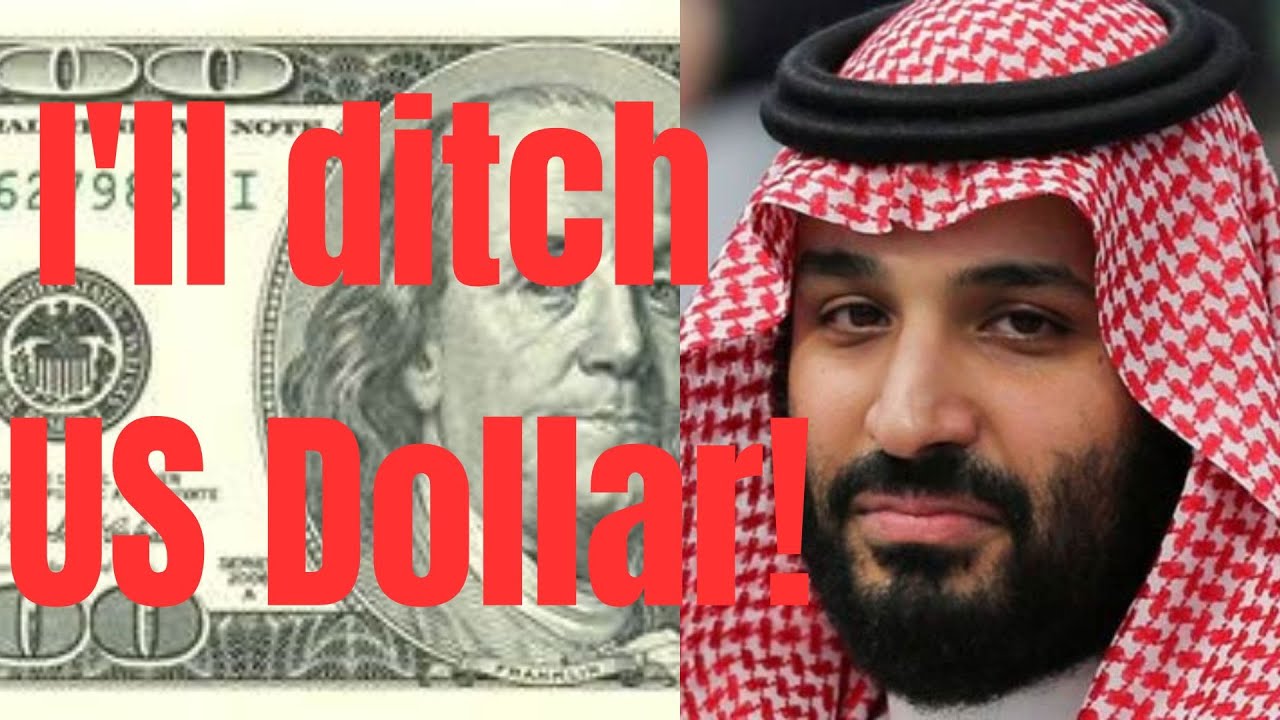
David Oualaalou breaks down Saudi Arabia's openness to trading in non-dollar currencies, announced at Davos. He examines what this shift means for US dollar dominance and connects it to broader geopolitical moves involving China, Russia, and Iran.
Chapters
Hello everyone and welcome to Geopolitical Trends. My name is David Oualaalou. Good to be with you as always. Saudi Arabia just announced in Davos, Switzerland, during the World Economic Forum meetings, or panels that is, that its consideration of trading in non-dollar currencies will enter into effect soon. So, so the question we need to ask is what impact this may have on not only the US dollar but also global financial market. In this video, I am going to provide you, uh, a brief analysis about this topic given my familiarity with it based not only on my academic research but also the publication of my book about Saudi Arabia in which I addressed this issue few years ago. So And also to address the impact, the financial impact this venture basically could have once Saudi Arabia and China are embarking or embark on this venture, shall we say, and how it will impact the financial market. So, so if you like the content of my videos, by the way, and you would like to support this channel, consider becoming either a member or supporter, whatever you feel comfortable with. And I am very thankful for your support. Also, if this is your first time, uh, visiting my channel here, make sure to subscribe and hit the notification button so you will be notified every time I upload a new video. And by the way, regarding, uh, my next live stream, which is going to be next weekend— it's, it's the— I always said it's going to be towards the last weekend of the month, so Thank you so much to all of you who have suggested the topics to talk about. And yes, I am leaning towards addressing the topic of space. Yeah, space, because it has a geopolitical dimension to it. I will also address some other aspects into this. I will post the note for you. I will post it for you as soon as I finalize a few things and the dates and the time and so forth, and we go from there. So let's dive in into this topic. It's an interesting topic, not only because I know a little bit about— well, not a little, because I wrote about it— but, uh, the way I see it is the impact is going to have on the financial markets moving forward. So Saudi Arabia announced during a panel discussion in Davos, which was just like, uh, uh, yesterday. So by the time you see this video, most likely they World Economic Forum meeting is going to be ended by then, and so it would be 2 or 3 days as always. So anyway, here is what the Saudis said during the panel. It says, and it is open to discuss trading in non-dollar currencies. So the Saudi Finance Minister, Mr. Mohammed Al-Jadaan, I looked up his background. Said, and I quote, the kingdom is open to trading in currencies aside from the US dollar in order to improve trade, end of quote. That's not a simple statement if you read between the lines. So if I am to put my geopolitical analyst hat, I will say Saudis are sending a strong message to Washington that, you know, we do— we can play hardballs as well by dumping the dollar altogether. Of course, they are not going to do it in all their transactions. It will be enough to do it just in oil, and you see what's going to happen to the US dollar. So the finance minister said also, Jeddah, that is said during an interview with Bloomberg at the World Economic Forum. And if you know about Bloomberg, it's a business publication. Usually they are accurate in their reporting. I read their stuff and it's very, very accurate, and I like what I read. So he said during the interview, and I quote, there are no issues with discussing how we settle our trade agreement, or arrangements rather, whether it is in the US dollar, whether it is in the euro, whether it is in the Saudi riyal. End of quote. So, so the question becomes to you is why it matters. Because like I always say, guys, you have to put this within the global context. You know, you know, I know in, in YouTube now we have so many— I've been hearing a lot of people spewing nonsense about geopolitics and global affairs, you know, they are entitled to their opinions. It's just when they start saying the wrong things that have nothing to do with reality, I kind of, you know, you have to call them on it. So, and again, they are free to say whatever. So, so to those who may not be familiar with my background, let me tell you something about what qualifies me to talk about geopolitical issues. Um, so I am an adjunct professor of government. I am also award-winning educator, geopolitical consultant, a veteran, an author of many books including the Saudi book here, and also over 147 articles. So I kind of build my credibility on the research that I've conducted over the years on being on the ground in those countries. And I traveled over 26 countries around the world. So I kind of had firsthand experience to understand the geopolitical landscape because I've seen some comments that, well, this guy doesn't know what he's talking about. You know, it's kind of no need for those kind of stupid comments. That's what I will call them. They are entitled to express their opinion. There's nothing I can do about it, you know. I don't care. So here's the thing. Back in 2015, when I was doing the research for this book, because this book was published in 2016, I think, or 2018, but I started writing it in 2016. Took me 2 years to write because that's how long it takes to research the topic. And back then I argued that the interesting aspects, you know, is whether Saudi Arabia will proceed or process payments for oil shipments to China in the Chinese currency, the yuan, instead of the US dollar. So I raised this question back then. So the yuan— because at that time when I wrote this, I argued that the yuan was already circulating as a global currency since it joined the IMF's Basket of currencies, you know, in 2016, that's when they joined that. And I put the question in my book, actually you can find it on page 101 if I'm not mistaken of the book, if you care to read it. And I put the question: should Saudi Arabia decide to proceed with the payments in the Chinese currency, I wonder what and how these dynamics may impact the US-Saudi relations. And this is exactly what we are seeing today. Like I said again, if I am to put my geopolitical analyst hat and analyze that first statement by the finance minister, Al-Jadaan, that's basically the strong message to Washington saying that we can also play a hard ball if we choose to do so. So, and this is why the, the finance minister, the Saudi finance minister, uh, uh, Jeddah, his comments are the latest indication, in my opinion, that some Middle Eastern countries are also moving away from the US dollar. No, and again, like I always say, look for the trends. Last year, what happened last year? Wall Street Journal reported that Saudi Arabia was was considering pricing oil sales to China in the Chinese currency, the yuan. You know, elsewhere in the region, Egypt announced its plan to issue bonds denominated in yuan, not the US dollar. And they announced this just a few months ago, in August to be exact, of last year. Even Israel, a close ally to the United States, has added the yuan. Get this, guys, they added the yuan, the Canadian dollar, the Australian dollar, and other currencies to its foreign reserves just last April, on April 2022. So it just tells you where the trends are headed. Even Iran is particularly— was and is still is interested in reducing its use of the US dollar due to US sanctions because the transactions with some other countries, uh, uh, uh, that might take place. Well, you take two countries, Iran and Russia. Both of them has announced last year they start using their own currencies, the rial and the ruble. Okay, so for bilateral trade between the two countries, you know, because Iran and Russia are also working on a digital coin backed by gold, not the US dollar. So this is what I'm saying. You have to put this within a global context to understand it, where it's headed, because it will impact you financially one way or another, especially if you happen to be an American. So, uh, by the way, if you guys like this video so far, please make sure to hit the like button and subscribe if you have not already done so. And thank you all for your support. So here is my brief analysis or my take on all this. So I am convinced that the emergence of, uh, should we call them the Axis of Oil? You all remember that expression from, uh, George W. Bush, Axis of Evil. So I, I use the term Axis of Oil, which consists basically of Russia Okay, a major producer. China, a growing and a major consumer. And Iran, a major producer. Will compel— all this will compel Saudi Arabia to reconsider its geopolitical and economic options. And one of those options is whether time has come for Saudi Arabia to break away from the United States Economically speaking, and when considering— because again, you are not going to look at it only from this aspect, you have to look at the other side of the equation, the geopolitical equation, that is. When you look at it, the other side is that Saudi Arabia will have to consider also that China's biggest suppliers are Russia and Saudi Arabia. So as China's demand continues to grow for for energy, that is, its dependence on Saudi Arabia's oil shipment, it will only increase. And you can just see why it will make perfect sense, strategic one that is, for Saudi Arabia to say, well, we can consider the transactions with the Chinese in the Chinese currency, you know, but also sending a message to Washington saying We can play hardball as well. I mean, you're all aware of the tensions that exist between Saudi Arabia and the United States, and I disclosed some of this here. By the way, there are some parts that are redacted. That was the government, so unfortunately I couldn't disclose that. So it was considered classified or sensitive, that is, whatever the case might be. So you'll find the book very, very interesting. And I'll put a link for you at the description if you, if you care to read it. So, so here's my conclusion for you. It is my belief that, again, put in my geopolitical analyst hat, it is my belief that Russia and China's success in influencing the direction Saudi Arabia has already embarked on— because this didn't happen in a vacuum— both countries have convinced Saudis to sort of pivot, Lel East. You're seeing it now with other countries— Turkey, Iran, of course, India. So Saudi Arabia has already embarked on and will be a blow to the already declining US influence in the greater Middle East and around the world for that matter. So more and more Saudis are thinking in terms of their geopolitical calculations in the— not only in the Middle East but beyond. At the same time as Russia and China grow their economic and political presence in a fast-changing world, it's fascinating how these geopolitical dynamics are, are moving. So one will have to have a grasp and an in-depth understanding. This is where the problem with the politicians, the so-called leaders, whatever— they just don't possess the depth of understanding these dynamics. Yeah, they read a report and base policy on a report. You are not on the ground to see, and that's something I had a chance to do. I am very grateful that I had an opportunity to be on the ground. For me to write this book on Saudis, I spent few months Saudis back and forth. So I am very familiar with their culture and understand how the Saudis think politically speaking and why they are making the decisions they are making. So, so here's my question for you for today: is the US dollar hegemony coming to an end? Let me repeat this: is the US dollar global hegemony coming to the end? Make sure to leave me some comments And I look forward to reading your comments as always. And remember, geopolitics impacts your daily life in more ways than one. Till next time, guys. Bye-bye.
More from David


Beyond the Single Actor: Why the Gulf Isn't Choosing Between the US and China


Iran, Iraq's Militias, and the Houthis Are Coordinating! This Changes Everything




Who Controls the Next Decade's Resources? Latin America and Africa's Geopolitical Crossroads

The Chokepoint Trap: How Washington's Stupidity Triggered a Cascade That Now Controls the World

Trump Spooked as IRGC Unveiled dual-use SLV, Deployed Ghadir Mini-Subs & Hinted at Tactical Nukes!
