A Tragedy Waiting to Happen: Singapore Considers Importing Indian Workers!
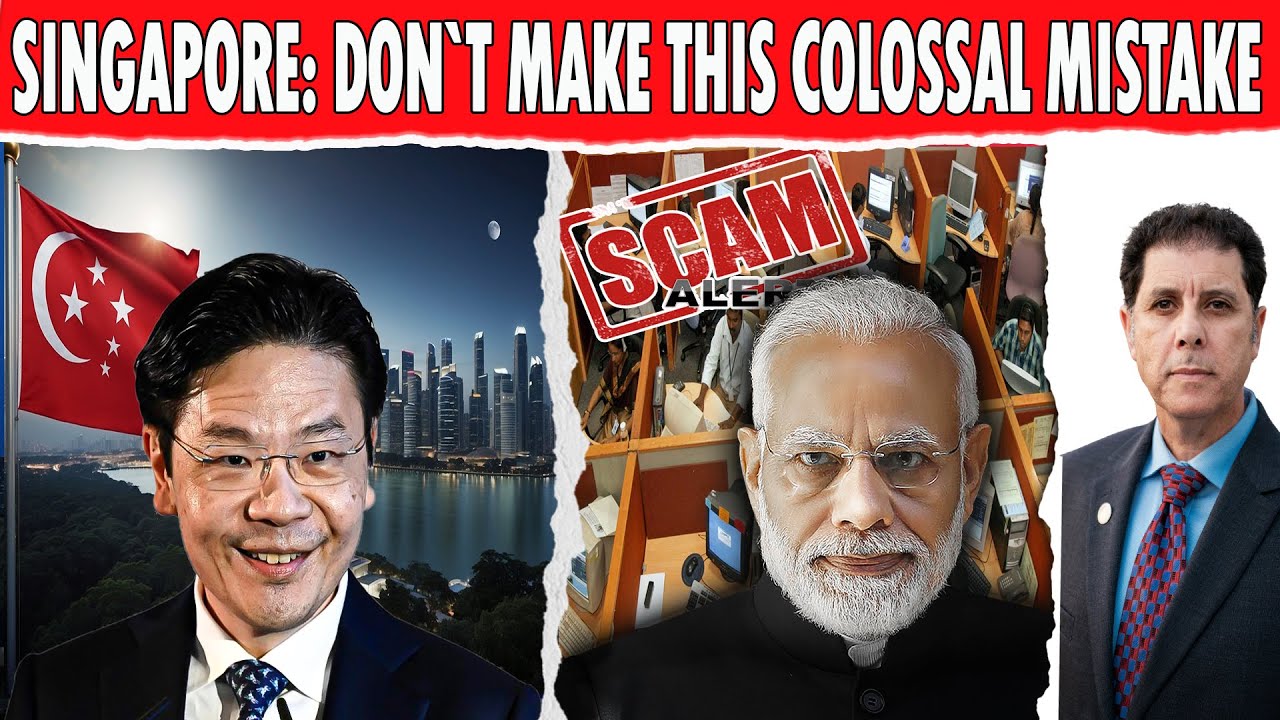
In this livestream, Dr. David Oualaalou examines Singapore's recent policy shift to expand foreign labor, focusing on the influx of Indian workers. He outlines the government's stated economic rationale, the involvement of Prime Minister Lawrence Wong and President Tharman Shanmugaratnam, and the public backlash. Oualaalou raises concerns about widespread fake diplomas and credential fraud originating from India, citing a scandal involving Manav Bharti University that produced tens of thousands of forged degrees. He links these credential issues to recent global deportations of Indian nationals, highlighting cases in Saudi Arabia, the United States, and other countries, and discusses the potential social integration challenges and class tensions that could arise in Singapore. The host also contextualizes the debate within broader geopolitical trends, mentioning Japan‑China relations, US actions in Greenland and Venezuela, and the upcoming Japanese prime ministerial provocation. Throughout, he intersperses live chat acknowledgments, news clips (including a semi‑truck crash), and personal anecdotes, concluding that importing Indian workers without robust verification could become a "tragedy waiting to happen" for Singapore's social cohesion and economic stability.
Chapters
Hello everybody and welcome to Geopolitical Trends, where truth matters. I'm your host, Dr. Oualaalou, excited to be with you as always. Today's topic, as promised, I will be talking about whether the Singaporean government, including the president and the prime minister, are making a mistake by importing Indian workers. I know some probably from India watching this, they're gonna see what this guy doesn't like Indian, whatever, has nothing to do with that. Indian people like you and I, like everybody around the world, deserve better than— and what I'm arguing is completely different, especially what I'm going to be disclosing today as far as what the government is doing behind the scenes, especially when it comes down to allowing certain fake diplomats to be issued. So we'll get into that as I move forward. So let me first of all let you know about what's coming coming up. Well, let me see who is here. As always, Hanging G, good to see you. Multipolar Future, good to see you here. Uh, Master Four, okay, uh, all right, who is here? Let me— Taiwan Steel, Willie Homan, as always. Phil, as always. Soccer 088, good to see you. Uh, Speaking Truth, good to see you here. Hangying Ji. Who else is here? Liang, good to see you here. So, uh, Say It Like It Is, good to see you here. And Dave, Dave H, good to see you here. Ah, let me talk about some housekeeping items. Uh, I'm gonna be doing a video for you. I'm just waiting to confirm certain information regarding the Prime Minister of Japan, whether she's going to embark on another provocation or not. So I can't, I can't say anything for now yet till I confirm it. So that's why, but I am working on it. That will be the next, because to me, if that moves forward, that's another provocation towards China. So we'll, we'll see how it goes from there. Uh, I'm still gonna do the, uh, Middle East for you. I'm gonna be addressing another topic regarding Iran and Israel, so I didn't forget about that. For headlines today, I have only one headline for you, and this has to do, of course, with Donald Trump's statements. Yes, this is regarding Greenville— yeah, Greenville— Greenland. I'm sorry, not Greenville, Greenland. Greenville, it's, it's a city here in the US. So Trump's threat to annex Greenland now sparks fear in Europe and expose European sort of incompetency. That's the only— it's not a laughing matter. So, so because what you're looking at, sort of the French, the Germans, the British are just talking. Canadians also are just talking. All of them, are they going to take any action against the US? Is unlikely. So because what the US just did with the Venezuela raid It's opened the Pandora box. Yeah, because you will start to think some other countries might behave that way. Of course they won't, because the rationality— what the US is doing is because the fear of losing its influence on the global stage as the world has moved on into a multipolar order. So, all right, let's get into our analysis. That's all I have for the headlines. So we're going to be talking today about whether Singapore is making a mistake by inviting Indian workers, which is, by the way, just to let you know, is a subject of an ongoing public debate that exists now within Singapore. And of course, given what the rest of the world just did by deporting Indians back, you know, that just fueled the tensions. So this is now a longstanding point for some social and economic tensions in Singapore. And that's what I'm saying. What I did not get a confirmation of is whether the Singaporean president, who is just a figurehead, uh, uh, Tharman— I, I can't pronounce his name— uh, Sanmugarthanam, pardon me for not pronouncing it right, uh, whether he has anything to say about this, or was it the decision just of the Prime Minister Lawrence Wong. I couldn't confirm the, the, the involvements of the president, but I could confirm the president of Lawrence Wong, which a lot of Singapore— people in Singapore are pushing back against it. So, and here is the thing, because this— it was a recent meeting of the, the president of Singapore with the labor individual, a labor minister of India. So And with this, the government issued the statements, and here is what it's— I'm paraphrasing here— what it's saying basically: the Singapore government view these foreign workers, mainly from India, that is— I'm sure they are viewing other workers as well, but we're talking about India here for right now— as essential for economic growth. So, so, however The public sector— this is what the government is saying— but the public sector expressed many concerns about especially the Indians coming in. And this is why I have to think of it in terms: is this a tragedy waiting to happen for Singapore? Because Singapore, as I mentioned, recently announced the significant update to the foreign worker policies. And I am— what I'm saying here, I am sure this applies to other nationals as well. But when you see, because what I read is that the conversation between these two— and by the way, just to let you know, the, uh, and no judgment here, guys, we're just talking here openly because that's what we do in this channel. We put the facts on, on, on, on the table. The current president of Singapore, which was— he was elected in September 2023. His name is Tharman Shanmugaratnam, so who has an Indian heritage. He's from a Tamil descent, and he's an economist. I was aware of him when I was in DC. You know, when you work in the intelligence community, you know who's who. It was a former Deputy Prime Minister, and this is where he is. And this is where, again, where my concern is, because he's continuing the tradition of Indian-origin leaders in Singapore politics, which means you're going to push it towards the direction. So he's the 9th president to bring extensive, some sort of, uh, uh, uh, policy towards this area, especially with finance and central banking and so forth. Once again, we're not judging here. Again, like I said, I'm just putting the facts on the table. And this is what I'm saying: is Singapore government considering this, uh, policy of importing workers, especially from India, a tragedy waiting to happen? And what they're gonna be doing, the Singapore government now is going to be removing some sort of a maximum employment period gaps. They intending to raise some salary caps and they expand the job workers outside. Once again, I am looking at the big picture here. So, and especially when you consider, and I'm focusing on the workers from India, why is this? It's because I'm tying it to the trends that's taking place around the world by having countries deporting Indian back. So because what Singapore did on July 2025, past year even, what they end up doing is they modified the permit, the work permit holders now who can stay indefinitely in Singapore. Which to me, but, but at the same time, they are limiting this to basic labor, you know, the cooks, the heavy vehicle drivers, manufacturer operators, and so forth, which will become more available to Indian workers following the visit of the labor minister of India. But if we are talking about heavy vehicle drivers, I am sure I'm going to share a clip with you. What just happened in, in a highway in California, and this is from an Indian driver. So take a look here. Let me show once again, uh, just need to put things in perspective for you. Take a listen here. So which, by the way, the person is going to be— he has already been indicted and they're going to figure out what's going to be happening. All right, let me, let me do this for you here.
Now take a look, this is exclusive dash cam video, uh, that is now the subject of several law enforcement investigations. Shows the moment a red semi-truck plowed into a number of vehicles on the westbound 10 Freeway in Ontario just after 1 PM yesterday. The CHP told the LA Times the driver of this big rig is a 21-year-old man who is now under arrest on suspicion of driving under the influence of drugs. A total of 4 semis were involved and also 4 passenger vehicles, one of them exploding in flames. 3 people were killed and 4 others were taken to local hospitals. This horrific crash happened just east of the 15 freeway and shut down all westbound lanes for more than 12 hours. Thousands of drivers were trapped in the gridlock just as the evening commute was getting underway. It also happened near the Ontario airports. The crash likely delayed people that were trying to get to their flights.
Okay, now the idea is that if Singapore is, uh, bringing drivers, they're gonna have to think about it. Okay, once again, no judgment here. And by the way, uh, I did check on this, believe it or not. You know, there were no drugs involved. I thought the person was intoxicated, but again, so far I reached out to check on this and was informed that no drugs were involved. But the person is going to be investigated, of course, and he might end up being— if he's illegal, I don't know his status, uh, he is going to be deported. But beside the point of all this, so we think about the strategic context within what Singapore is thinking of doing. Of course, there are those who will argue, well, Singapore is approaching— this is a reflection of the labor challenges it has in Singapore. So, but on the other hand, the logical question to ask, can they bring on workers from some other country that at least can be closer to understanding the culture inside Singapore? I worked with some of my former colleagues in Washington who were stationed in Singapore, and they all had to say nothing but good things about Singapore. But you're talking about 15 years ago, 20 years ago. They said, we couldn't believe how clean Singapore is. So, and the question will become, you know, are you gonna pave the way? Because we all know how conditions are in India, you know. There is no— I'm, I'm not putting down India here, I'm stating the facts. And this is why the idea for what the Singapore government is arguing to its people is that we shouldn't be restricting foreign workers. But on the other hand, are you going to open the doors and just bring whomever? Which will be a problem. That's going to end up impacting the culture. That's going to end up creating more problems inside the country. That's going to end up limiting certain opportunities for the people inside Singapore. So, and again, they can decide whatever they want. So, but you already have noticed that for Singapore, uh, the employment— so, so the employment, the foreign employment, that is, in Singapore, it grew only by about 38,000. That's about it. So, and this again makes me wonder Was it a decision of, of the Prime Minister only, uh, Lawrence Wong, or was it the involvement of the president since the president is just a figurehead? And I couldn't answer this one here because I do not know about the extent of his involvement into this. Suffice it to say, for Lawrence Wong, which I'm more digging into this especially after what happened, as I explained to you yesterday regarding his call for trusting Japan at the expense of China. Because— and I forgot to share one link with you yesterday, which I will do here. Because here is what happened. What Laurent Wong argued is that we hope that both countries, meaning Japan and China, can de-escalate and find ways forward. Look at Southeast Asia. It took time and new generations, but we've put the painful history with Japan behind us and moved on. Today, survey after survey shows— this is what Lawrence is saying— shows that Japan is not— I'm sorry, today Survey after survey show that Japan is the most trusted major power in Southeast Asia. This is why Singapore and our neighbors welcome Japan playing a bigger role here, including in security, because it helps keep our region stable and balanced. End of quote. Uh, I'm gonna have to push back against Mr. Lawrence's statements here, so I'm gonna put the link for you. You can read it yourself. Later on. So my point in all this, tie it to what we're talking about today, because for me, as an outsider looking in, because I'm starting to see— I'm seeing the problems here in my country. Again, it's Singapore, they can decide for whatever they want. I am not from Singapore, I don't live in Singapore, but I can see the concern. I know people in Singapore that I trust and I talk to. I can see the concern about the, the Indian workers, or foreign, general foreign workers, but mainly from India. So there are legitimate concerns about this kind of labor policies in Singapore. And the issue, in my opinion, what prompts me to address this is because of the political, the political implication and significance of it. Because you also have the public discontent is simmering regarding the issue of bringing Indian workers or some other foreigners for that matter. So, and the government sort of has to— government in Singapore has so far to adjust repeatedly, has to adjust the rules. That's why they went ahead recently to those who are living in Singapore, familiar with it, have raised the salary threshold to address the workers' concerns inside Singapore. So, and you think about the systems of how it's gonna work. No, it's gonna become very, very concerning. So what I'm gonna do, I'm gonna play again for you the idea of, especially when it comes down to the Indian workers, why my concern is is because what I found out about the fake diplomats, you know, diploma for college which is fake, that's been issued in India. So I'm gonna play a clip for you and I'm gonna provide you insights about it. Because here's the thing, it used to be somebody inside the— and on, on, uh, that shared this with me by the screen name Brotherhood. And here is what he argued, or she You can't tell here. I reported that Indians were selling fake diplomas a while ago. This bust is just the tip of the iceberg. They have— they also have fake creden— uh, uh, fake credential industries that are much harder to shut down. The fake references, publications research, etc., so that you qualify for advanced visa. The Indian government is also— is on this, as the nation labor pipeline and remittances are an enormous part of their economy. They need to be treated as a hostile state actor. Basically, the government, Modi's government, You know, they are aware of this and pushing behind the scenes. So I'm going to play the clip for you, let you judge for yourself. Okay, let me share screen. And once again, I'm just putting the facts on the table. You know, I, I know some's not going to like it, but hey, truth hurts. But that's what matter. This channel, that's what it's about. Take a listen here. Of course, they speak in Hindi. And look at the fake diplomas. All right, I'm gonna stop it right there, guys. It just, it tells you, it tells you the idea of now you have this, this once again fake credentials when it comes down to industries, you know, fake references, fake publications, fake research, and yet the Singapore government is thinking about bringing in Indian workers. So the Saudi case is different, which I will address regarding why the Gulf States end up deporting all the, the Indian workers in a minute here. So, and I'm going to share the source with you for that info so you can check it out once again yourself. Now, there are those who are saying, well, no, no, no, no, uh, Singapore appears to be pursuing some sort of a balanced approach, which is great. And I'm not against it, and I'm not even against— because who am I today? I'm not judging here, you know. I'm just reporting to you the way I see the trend, where the trend is headed. You know, there are some good people in India. I'm not— you know, there is— it will be wrong of me to generalize that the entire— no, it's not right, and I will not do that because it's not right. But what I'm saying is, so far the trend has been that they are scammers, that they are fake diplomas, fake research, fake publications. Even the government is stating numbers regarding, for example, the potential growth, economic growth for India in 2026 is going to be at a certain numbers that defy logic given the reality on the ground. So what I'm saying is that, yeah, Singapore, we need to pursue a balanced approach. So they need to fill some sort of the labor gaps with sectors that— but as long as they know who they're bringing into the country, you know, look what's going on right now in England, you know, we're starting to ask people who live in Canada, especially in Toronto We're starting to see right here in the US. So this is what I'm, what I'm talking about. And this is where that— why many countries around the world are now deporting and not considering hosting Indian workers. So the deportation reality, which I already disclosed this for you before, for those who are not aware of it, I'll share it again, is that in 2025 the year in 2025 saw about almost 25,000 Indian citizens deported from 81 countries. Of course, Saudi Arabia topped all those countries by about 11,000 deportees from India. They were removed from the country. Of course, in the case of Saudi Arabia, it's slightly different from others because the concern of espionage was very, very, very realistic. Not all of these 11,000 involved in espionage, that's not what I'm saying. All I'm saying is the fear of the Saudis, because the Saudis will be vulnerable to espionage. And like what Qatar happened to it when the 8 former Indian, uh, uh, uh, naval officers were spying on behalf of Israel. So So, and this is again, we have to think in terms of, are those countries, all of them, rejecting Indian workers? Not necessarily, not necessarily. Yeah, there were some specific violations. The question is, can Singapore learn from what happened this past year? And I am sure the government in Singapore is aware of it. So So of course, the, uh, the, uh, uh, idea of what Indian government is saying, oh, the deportations from the Gulf region, oh, it's only about visa overstays. I don't think so. I don't think so. So it's because the idea of you bringing in into the country elements that you have no no idea about who they really are. You know, here is one thing I can tell you that I didn't see when I was in China. I didn't see many Indian people in China. I ran to one and I kind of checked him out. You know, he freaked out when I talked to him. That my point is because China has strict— you want— do you know who's coming in into the country? And do you know who's going out? You know, I truly liked that process. They check you in first time, put your fingerprints, you put your bio stuff or whatever, and you start moving with your passport. But I did not see as many Indian faces in China as it is in other countries, including mine. And this is why the Indian government, of course, will have to say, oh, this just has to do with violations of work permits, whatever. But it's beyond that. So it's beyond that. We're talking about, you know, workers that claiming to have skills that they are not qualified for. So, and this is why you're seeing that mixed pictures from different countries. For example, in the Middle East, you know, versus the United States. This is why Donald Trump went ahead and restrict, and maybe they might ban H-1B visa altogether. I am in support of that. I won't deny it because, you know, do I agree with Trump? No, I don't. But you're gonna have to know who's coming into the country, you know, especially when it comes down to the IT stuff, because if the person is just faking the diplomas, we got a problem here. We got a serious problem. So, and this is why even in certain developed nations And I looked at the numbers and I'm gonna share with you the student deportation from those countries. We're the highest from the UK, okay, followed by Australia, followed by Russia and the US. And I'm gonna provide you the link, and you know where the link is from? Is from ASEAN. So you can read the article yourself. All those developed countries are deporting this. Why? Most likely they found out that the credentials are not real. And just for us in the US, just for us in the US, just this morning actually when the news broke out, so two Indians were caught with about 300 pounds of cocaine worth $7 million inside their truck. And this was, by the way, which I verified, it was in Indiana, state of Indiana. It was just a routine stop. Once again, are we judging all Indians with that? No, we're not. No, we're not. And I'll be the first one to push against that one. But at the same time, for someone like this, you know, involving drugs, we all know what the punishment ought to be. You know, first of all, now you're going to have to deport this individual, remove them from the US permanently. Maybe India will deal with— I don't know, and I don't care. It's their country, they can deal with as long as they are not here. So, are being used by some drug traffickers? Most likely the case. So, but again, you pay for your own, you know, every action has a reaction, so you pay for that. So the real issue, when we go back to Singapore or even for those countries, is that most countries around the world are coming now to their senses regarding Indian workers, especially when you consider the latter have no respect for the local laws. The local norms, the tradition, the culture. You all remember what I shared with you last time about this individual, an Indian national, defecating in public. And by the way, you know what he said? Oh, he said that it's normal behavior in India and that people in Singapore should respect his culture. You know, that's insane. And yet what Singapore end up doing, just finding him $400. And I think it's a mistake. That person should be deported permanently. You have to set an example. And again, that doesn't go against all Indian people. No, no. But when you behave like that, when you behave like that in a foreign country, then you no longer belong there, you know. And even if you had the urgency to go to the bathroom, couldn't you run to fast food place and use their bathroom or something. You know, and this is again where, you know, I put things in perspective here because we need to be realistic about it. So, so the case of Singapore, this, this policy of considering— because by the way, they are just considering now, it's, it's some sort of legal expansion of workers categories. It's gonna back— it's gonna backfire, especially this comes on the heels of the fake diploma that has been exposed, which the Indian government is behind it also. Now it's legitimate concern, so, you know, and I'm raising this concern because again I have decent and good friend in Singapore. So, so, and I'm— we talk, we talk. But I do believe that Singapore is making a huge mistake. You know, the fake diploma problem is real. So, because one of the universities, which by the way I had to track the coordinates and I found the coordinates for this particular university, And the university is Manav Bharti University, known as MBU. This is a private university which is located in the village of Ladakh near Komartati in Solan district in the Indian state of Himachal Pradesh. And by the way, to those who are familiar with geolocations and so forth, you're looking at the coordinates, of, uh, 30.78 north latitude and 77.18 longitude. And what happened with this university? So I don't know if you can see it here. Uh, yeah, I, if you know the coordinates, then you will be able to pinpoint it exactly. So what happened? They sold 36,000 fake degrees over 11 years. And now they're finding out, meaning they— some entities inside India, they're finding out that 41,000 degrees issued and only, only 5,000 degrees were authentic. So I'm gonna provide you the link, you can read this yourself and decide. Most recently, that's where the, the, the clip that I shared with you earlier about the authorities uncovering the network that issued over 1 million fake certificates using seals, uh, holograms almost identical to those of the 20, uh, real ones. So I'm gonna show you Uh, let me show you here. Not this one. Uh, just bear with me here, guys, because I did, uh, I did get a picture of where those, uh I don't know where I put it, but anyway, I'll keep an eye on it if I ever see it. It was the image of all the stamps, everything you can think of you will need to forge a document. And Singapore's response, it seems to be sort of not clear. Even in light of this information. So, and by the way, the site that I had is no longer accessible. So that is very, uh, you know, I am determined to find this for you. Because you need to see it. Oh, I found it. I'm gonna share, I'm gonna share the, the, the link, but not the link, but rather the screen with you. So for you to see, check this out right here. Look at all this. The, the what they use in the stamps and all that stuff, so they can, uh, they can fake the, the, uh, certificates and, and, and so forth. So, and that's again makes you just wonder, makes you just wonder, is Singapore taking into consideration this idea of the fake IDs. And again, it's their— it's their country, they can decide. So, and when, uh, when you have, uh, uh, Singapore, of course the government, Lawrence Wong, is going to say, oh yeah, yeah, we are aware of it, we are not ignoring this, and all that stuff. When the MBU, that's university in India, scandal surfaced. So of course, Singapore's Ministry of Manpower, known as MOM, so also launched an investigation inside Singapore. 15 people from India who presented the qualifications from that university. So, so, and this is again why I put that question: is Singapore about to make a strategic and a major mistake. So, so of course, if you know anything about Singapore, Singapore has a multi-layer verification process, which means unqualified individuals cannot easily exploit fake credentials to secure jobs. How good that is? I don't know because I, I don't know, I don't live there. So, so the bigger, the real issue is that the bigger challenge for Singapore is going to be about not only now the fake credentials that exist and not only in Singapore but also in other parts of the world, especially from India, is that how this is going to impact now other countries. So, but at the same time, the major challenge for Singapore is whether it can clearly adjust sort of, or change its verification system. So, because now you're running into some serious, serious problem. So the Indian government, Modi's government, is also on this as the Indian labor pipeline. Because remittances are an enormous part of their economy. Then I'm saying to Modi's government, why don't you allocate funding inside India to improve the living conditions of average Indian citizen so he or she does not have to go and fake IDs, fake diplomas, fake certificates to go look for work elsewhere only to be deported. That becomes the problem on the government. On the other hand, you look at Singapore, if its president is aware of this and just ignoring it, which will be a problem because the president's supposed to serve the interest of the citizens, or is this a decision by just Lawrence Wong alone? I don't know. So, so far, so far what I know is that he is— the decisions coming through his office, whether the president, since he's a figurehead only, I don't know. The bigger question that looms large is, do you want to turn this into this if you bring in Indian workers? Choice is clear. But there is the economic realities, and economic realities where in India, India receives an estimated $125 billion in remittances in, uh, received rather in 2023. So, and has become the world top receiver of, uh, remittances, uh, sort of claiming more than 12%. Now, when I read that and I went and looked into the website, it looked shady to me. It looked shady. But again, it's not my place to judge. I'm going to share the link with you and you can decide for yourself if you get a chance to read it. So Most recently, what India saying is that the home record set at $135 billion. I don't know, I don't know. Are you going to trust what the Indian government is saying? You decide, you decide. One thing for sure is that if the government also— certain elements inside the government facilitating these fake IDs and so forth, that tells you right there that the Indian government is actively working to facilitate the labor export by any fashion. So, so, and this is why it was just brought to the surface, the unveiling of a legislative draft regarding overseas mobility bill, which by the way was done quietly. Not everybody in the government knew about it inside government of India. That tells me right there the Indian government, certain elements, are facilitating these fake IDs, these fake certificates, diplomas, in conjunction with working with universities. So because there is an incentive, there is an incentive. And the incentive is— so the key purpose for India's labor exports program is to maximize inward flow of money into India. So this is why they're saying about to increase its GDP from 2.5 to 4.5%. Uh, that's kind of stretching it, so because they're talking about $300 billion now, which I don't, I don't buy. I don't trust what the Indian government is saying. So, and this is where you got the problems that's going to be moving forward for Singapore. So, so despite all this, Singapore still engaged into all this despite this legitimate concerns. Singapore In my opinion, and based on what I read, is most likely to move forward, which is only gonna make it even worse because that will be a tragedy waiting to happen. It might be too late by then. So the better— the reason I wanted to do this video is to bring this to the surface. The purpose of my videos, as you know, is to keep you informed, to raise awareness and to address the issues that I see will become a serious problem. To those who said, well, Singapore needs people, whatever, workers. Yeah, I'm not denying that. But also Singapore is realizing that the dynamics in that part of the world are changing, especially with its now major ports and no longer hold the same value as once did 15, 20, 25 years ago. Why? Because you got other deepwater ports being established. So, so, and as to the Indian government's commitment to labor exports, this is Modi's shortcuts. Instead of focusing on developing the economic infrastructure inside India with basics, you know, you look at a picture like this. You look at a picture like this and you see to your— you say to yourself, what's preventing governments from at least cleaning this up, which is a basic thing? So, and that's why you're seeing this massive deportation of Indians from around the world back into India, because nobody wants to deal with that anymore. And rightly so, and rightly so. Now I'm going to conclude with this. I have this just a short video for you here. So you're looking now at the public concerns inside Singapore because this is leading now to social tensions. Ask people who live in Singapore to be honest with you in their assessment and they'll tell you because the problem they foresee is the social integration. So because what you're going to have, you're going to have especially in the case of Indian workers. If they end up— if the government ends up opening the gate for them, it's going to become a problem. So because it's going to become a class attitude, because what am I referring to? I am referring to the class attitude within Singapore. You have an upper class of Indians living there. So those are high-class Indian immigrants. They're going to be looking down at the local Indians who just came in. So as a contributing to the society, this is where you're going to have these tensions exist within. So why Singapore will allow itself for all this to begin with? So, and this is why when you think about, uh, I had a chance to read a posting, uh, of someone, uh, who argued, and I'm going to provide you the link for it, who said, I'm just posting here, just saying out loud Maybe we all need, and I'm quoting here, maybe we all need to give Singapore back to India since all the talents there these days are Indians. And our Garmin seems to agree to this more than anyone. This will help India become a superpower sooner and rupees may one day equal to the greenback. Don't even need to try to win Singapore dollar first, and all Singaporeans will be so lucky to have benefited from their spit and saliva. Should we all not support such a good strategy? You know, that was an incredible post by this individual. And by the way, the post was about this Because that's exactly what the President of Singapore was discussing with the minister, the Labour Minister of India. So I'm going to put the link for you in the chat box and you can read it later on. Now I'm going to conclude with just my conclusion, in essence, the way I see it. So of course, the Singapore government see the invitation of Indian workers as a pragmatic economic necessity, so, and sort of a benefit to the nations. You know, you're talking about a massive, uh, sector of the, a massive portion of the Singapore, uh, Singaporean public people. They're seeing this as a potential social and economic risk, and rightly so. So the mistake, in my opinion, is a matter of kind of policy or strategy. So yes, I'm not denying Singapore needs to balance its economic strategy, but also has to consider its domestic social cohesion and public opinion. And when you have a country like this could turn into a country like this, then you're going to have to really question the judgments of the policymakers. All right, that's all I have to say on this. Let me say thank you for, uh, who is Suzanne Yang? Thank you for becoming a YouTube member. Truly appreciate you and appreciate your support. And Flying Bear, good to have you here. Indian economy is the fourth largest in the world, world, soon to overtake Germany. But you keep saying India is going backward. That is not what I'm saying. Let me, let me just put things in perspective here. First of all, I appreciate your super sticker, but I have to disagree with you on this one here. All I'm saying is that for the government, if it is the— for the government of Modi, you know, wouldn't it make pragmatic sense for them to allocate the resources towards improving domestic infrastructure That's all I'm saying is, you know, whether India is gonna go forward, yeah, nobody's denying this, but I will have to push back against those even scholars here in the West, even in the United States, even Jeffrey Sachs himself, which I have great respect for, but I push against for him about claiming that India is going to take over the global economy. No, it won't. Since my days in Washington, I've been hearing about this and I'm going back over 2 decades plus. It's because the palace— I'm going back to when Atal Bajpai, when Manmohan Singh were in charge and I didn't notice much. And that's all I'm arguing about. This is not about— I'm arguing about the possibility for Modi's government, which by the way, if you are from India and I'm assuming you are,— if you are, won't you ask yourself the logical question: what has Modi achieved since came into power in 2014 till now? You know, ask an average Indian citizen. And that's my argument. And again, I'm just— and I'll do the same for my own country here. Do you think I support what the Republicans are doing or what the Democrats are doing? No, because I look at also the infrastructure is not being improved on. You still have old system in New York City from the early, uh, uh, 20th century. The pipes, old pipes, nothing has been upgraded.
Why?
Because we are allocating money towards defense, military stuff. We're going into military ventures around the world. So I'll criticize my own country. And that is my point, what I'm coming at. But nonetheless, I want to say thank you so much for your Super Sticker. Truly appreciate you for that. I also take this opportunity to say thank you to John Law for buying me many cups of coffees in support of the channel. Very, very, uh, grateful to you for that. And I also want to say thank you to Sylvia for buying, for buying me few cups of tea in support of my upcoming Asia trip. And speaking of my upcoming Asia trip, here is the link for you if you want to support the channel, uh, or support the upcoming Asia trip, that is, uh, because I do plan on going to Asia at some point in the near future. So I'm going to put the link for you in the chat box should you decide to do so, and greatly appreciate you for that. Once again, here is the link, and I already posted in the chat box. Uh, tomorrow, remember to join me on the other channel, uh, for Geopolitics and Money. I'll be talking with Elizabeth about some other issues, especially economic aspects of really what's behind the US venture in Venezuela. It wasn't— FYI, it was never about Venezuela. It was never about Venezuela. So, so remember to join me tomorrow. And on Friday, I'm gonna be working on a particular case for you about the Prime Minister of Japan, which I am very concerned, and I hope she doesn't embark on another provocation. So as always, remember Thank you very much, by the way, for keeping the chat civil in the chat box. Truly, truly appreciate you for that, and I'm very grateful. I did see some remarks here for some individual, what I can tell, but again, what do you do? You know, they can express their opinion as long as they are respectful, and they were. Let's just be honest. Do I disagree with that? Yes, I do. But that's what we are for here. You don't have to agree with me. We'll disagree and we can learn from each other. So as always, remember, geopolitics impacts your daily life in more ways than one. Till next time.
Bye-bye.
More from David


Beyond the Single Actor: Why the Gulf Isn't Choosing Between the US and China


Iran, Iraq's Militias, and the Houthis Are Coordinating! This Changes Everything




Who Controls the Next Decade's Resources? Latin America and Africa's Geopolitical Crossroads

The Chokepoint Trap: How Washington's Stupidity Triggered a Cascade That Now Controls the World

Trump Spooked as IRGC Unveiled dual-use SLV, Deployed Ghadir Mini-Subs & Hinted at Tactical Nukes!
