Africa Shocks the US & Joins Russia in a Multipolar World!
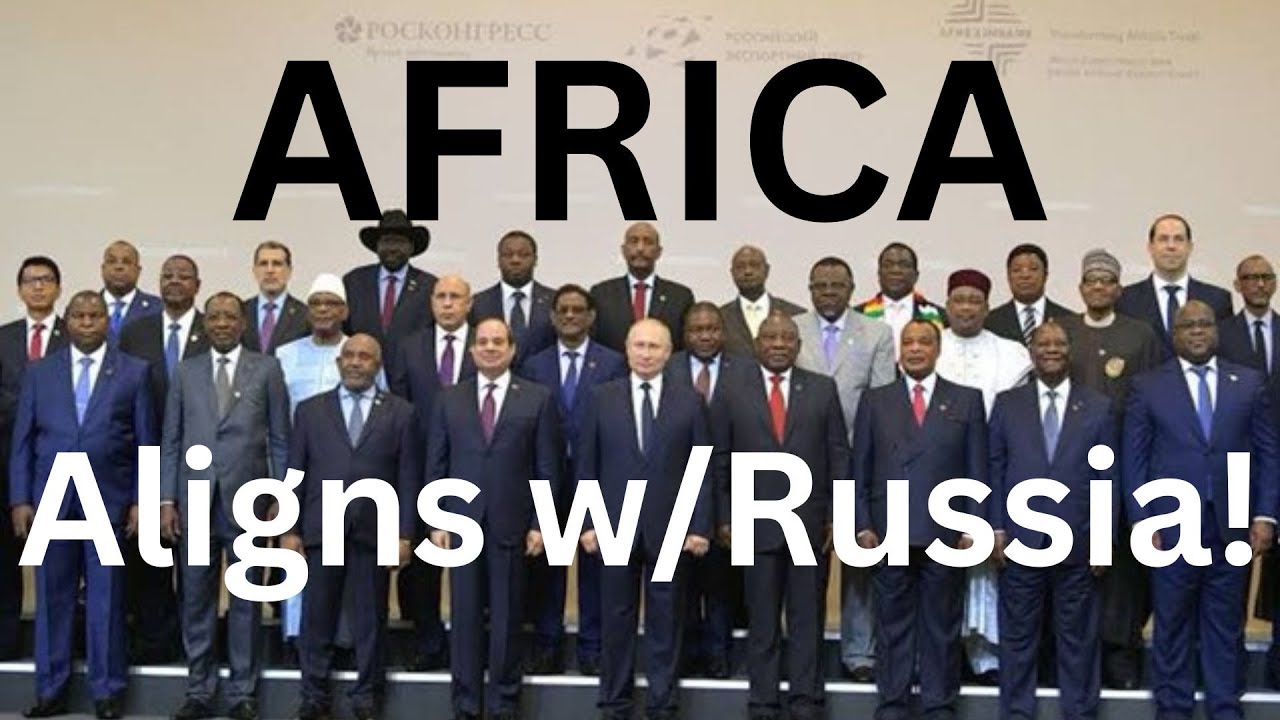
In this live‑stream, the host (David Oualaalou) examines the geopolitical ramifications of the recent Russia‑Africa summit where President Vladimir Putin met with 40 African delegations. He outlines Russia’s strategic offers – a $20 billion debt write‑off, arms and nuclear power assistance, and continued grain shipments – and frames them as part of a broader eastward pivot by African states away from the United States. The discussion weaves together Africa’s vast natural‑resource endowments (diamonds, cobalt, copper, oil, gold, etc.), the continent’s infrastructure and corruption challenges, and the competing influence of China’s infrastructure investments versus Russia’s military and energy aid. The host critiques Western double standards, especially France’s domestic unrest, and highlights the United States’ diminishing presence, citing congressional hearings that reveal over 15,000 U.S. troops training for coups in Africa and the location of AFRICOM in Germany. He argues that the world is moving from a unipolar to a multipolar order dominated by economic blocs such as BRICS, SCO, and RCEP, and predicts that future U.S. policy will be reactive and constrained. Throughout, the host engages with a global audience, answers questions on topics ranging from currency strategy to health tips, and emphasizes the need for African leaders to harness their resources, improve governance, and shape their own destiny.
Chapters
Hello everybody and welcome to Geopolitical Trends live stream. So, so excited to be here with you as always. Uh, we got an interesting, uh, uh, show or conversation we're going to have today and mainly has to do with, of course, Africa and what just happened in, uh, uh, Russia during the summit with the Russian President Vladimir Putin. Before I'll get into all this, I know some of you, not all, there were two individuals last time, they said, well, we don't like it because you talk about other stuff before you get into the topic. That just shows me you're gonna have some patience, you're gonna have to develop some patience a little bit. You know, life is too short, no need to waste your energy on stuff like that. So anyway, I'd like to extend my thanks as always to the channel's members for the continued support, for all of you subscribers. And, and if this is your first time landing on this channel, please make sure to subscribe and smash that notification button so you will be notified every time I upload a new video. Speaking of members, of the channel's members, I will be doing a live stream next week for members only. And again, just to let you guys know, let the members know, if there are all of you there, then I will end up doing a presentation for you. That depending again how many of you will show up, if there's only few members that show up, depending again on the time and whatever, but I would announce it for you because it's only fair. I need to do something special for the members, but That, that's a normal practice anyway. So, so just be on the lookout for that when I'll do that next, uh, next week. Next week, that's when I will do. And of course, I'll do a Q&A for you guys, for the members. So now there is another viewer by the name Kevin from London. He posted something, a comment which I truly appreciate it, so I wanted to share it with you guys. He wrote, and I quote here, I am on the bus in London watching this lovely analysis. Thank you, Dr. David. You are most welcome, Kevin. It really means a lot. So anyway, what I'm gonna do here is I'm gonna be— as I mentioned to you, what I'm gonna be talking about today is Russia hosting an African summit. It's not about just that, it's about the geopolitical and economic implications of how now Africa is shifting East. When I say East, I'm referring to China, and I'm also referring to Russia. Even Russia is not East. Russia is in part of, uh, of Europe, that is, so Central Asia, that is. So, uh, uh, Euroasia family, uh, the idea of why is that important, because this is what you need to know. What are the geopolitical calculations from both ends, from Africa and from Russia? And this is what I'm gonna be talking about in detail after I go through certain things. So, well, like I always do, I do a tour around the world for you guys just to have an idea of what's going on. So let me share some, uh, and by the way, why I'm not able to see your comments here? Uh, okay, where are the comments? Okay, I'm not able to see that one here. No, here it is. Here's the comments, as always. So, uh, like I said last time, I'm gonna be sharing a few pictures with you because of part of what's going on around the world. And the first one has to do with, uh, the, uh— let me get my images here for you guys. For this one right here. This is an article, and I'm going to post the link for you guys. This is an article that was issued by, uh, the Chinese, uh, Foreign Ministry, and I'm going to get you guys the link because, uh, if you get a chance to read it, it's worth your time and understanding the perspective as to where China is coming from regarding that. So, uh, copy the link. Here is the link for you guys, and I'm gonna just share it with you at the comment section there. You can take a look at it. So when you have a time to look at that. So, uh, the next thing I would like to share with you, it has to do with what's going on in France. Well, France is, uh, France is, uh, You know, I have family lives there and I, you know, usually talk to them and all that. Uh, France is what they called— what just happened yesterday, actually on Thursday, they call the Black Thursday. Now the whole country is paralyzed. You're not going to be hearing that about here. And here is what's sort of, uh, the, the double standard. Why now the West is not saying to the French authorities that they are acting like savages? Because that's what it is. This riot police, what they are doing to the people. How come the other Western countries not criticizing that? Oh, human rights and so forth. This is where the double standard is, you know, and this is what France is descending into. Uh, it was another image here for, uh, uh, what's his name, President Macron. This is a bad sign in French culture. What did you put? The ears pointing out from the top of the head. That's culturally, it's very insulting too. My thinking is that what France is getting into now, because it's paralyzed— as a matter of fact, even the monarch of UK, his trip had to be canceled. He was supposed to go to France. It was canceled, and rightly so, because French people deserve better And the, you know, Macron is acting like a dictator, basically forcing the law, the pension. This has to do with the, the pension stuff down their throat. So, which is not right. That's not right. So the other one I want to show you, another tour around the world, is from Clown Bojo, who's— who lied to Parliament, by the way, about that he didn't know about the COVID stuff, which was a lie. Now here is the thing for you, that why isn't he in jail if he lied? Usually it should be a rule if you are a public official, a high-ranking officer in the government, whatever, and you lie, you go to prison, end of story, because you are in position of trust. So now you're seeing Bojo clown, it's— he needs to be in jail, end of story. That's the way I see it. You know, got to call a spade a spade. So then the last one I will share with you has to do with North Korea. Yes, North Korea. Now they are, uh, sort of, uh, now reported that as of yesterday, yeah, uh, they tested the new submarine capable— get this, guys— submarine capable of launching a nuclear attack. And all this is in response to the US-South Korea's joint military exercises. That's what this is all about. And, and you can just see where things are headed. So, so that's to me where the challenges that's going to be. And from a health perspective, well, today I am going to share something with you that I always do. This is my mug for my, my cup or for my shots that I take No, no, no, no alcohol. I don't drink alcohol, but it has to do with apple cider vinegar. Apple cider vinegar, it's good for you if you can take it, uh, like 10 minutes, 15 minutes before every meal, you know. And there is a reason for that. Apple cider vinegar is a— it's very acidic. Of course, you can either dilute it in water So I don't— I do it both. Sometimes I take a straight shot, you know, as, as bitter as it is, but it's good for your body. And sometimes I just add water to it. So it's— vinegar is excellent source of potassium, magnesium, calcium, and phosphorus, you know. And some— and that depends again on the type of, uh, the, the vinegar, uh, you can get. It's considered also a good, good source of antioxidant. That is what's important for all that. So, so this is what's, uh, for the health section that I always say I would be always sharing with you. So let's, uh, let's jump in into our topic here because there's a lot to cover about Africa. Well, this comes on the heels, the hills, the heels of, uh, the meeting between uh, the Russian president Vladimir Putin and the 40, uh, representatives, some leaders included in, in, in, in the African 40 delegate delegates that were in the, at the Kremlin. And I released the video for you this morning, guys. That's the reason why I released it today. Usually I don't release videos on Saturdays, but well, the reason being because now you're going to be seeing, like I said a year and a half ago, Africa is becoming the geopolitical competing ground between the US and Russia and China for that matter. And there is a reason for that, and this is what we're going to be detailing in this live stream. Uh, like I always do, I'll provide you a brief analysis on this, of course engage you with it, and open the floor for some of your questions, and, and, and we'll just go from there. So, so what was interesting, like I said in the video, is that, uh, the president, President Putin reminded Africans for the relationship that existed between the Soviet Union and Africa throughout the, the, the decades prior to the fall of the Soviet Union, you know. And, and, and President Putin was very shrewd and, and smart in addressing it from that perspective, like I mentioned in a video. And there is a reason for that. But here is the good in information that you need to know. And the good news for Africa is that the Russian president decided officially to write off— get this, guys— to write off $20 billion in debt to African countries. That is important. $20 billion, it's a lot of money for Africa, for any country for that matter. You look at just what happened in Sri Lanka. Okay, you look what's going on right now in Argentina, being sinked in into debt because of the IMF loans that is now grown to about $44 billion. That's the last stats that I looked at. So for, uh, let me silence the phone here. Uh, so for, uh, Africa, for, for the Russian president to go ahead and announce the cancellation of $20 billion debt is crucial. Second thing, Russia also promised, promised to, uh, to provide arms. Arms, because why need arms? That's just part of— for any country without having a standing army that is well equipped, you will be vulnerable, you know. And, and that's what Russia is going to provide. But they provide them also nuclear power. Because Russia can build nuclear power plants. As a matter of fact, they are going to be helping now Iran building a nuclear power plant. So, and the third key element that is so crucial is just Russia, it's going to keep sending grains to Africa. That is very crucial. That is very, very, very crucial. So, because regarding the exports of grains The Russians, so, said they're not gonna miss the opportunity to not send the grains despite whatever happens about the deal of the 60 days that's going on. Because there are some, you know, I'm sure you're aware of the what's called the Black Sea Grain Deal that was necessarily, sold as a, a tool by which to prevent famine in Africa. So, and this is what Russia decided to do. So, but here is the big picture of all this, and the big picture is this: why Africa is so important now geopolitically. And it is for a wide range of reasons. And I'm gonna state few things, a few, uh, of those reasons just for you to get a perspective. So Africa has a wide range of sort of natural resources that includes diamond, sugar, salt, gold, iron, cobalt, uranium, copper, uh, silver, petroleum, and, and cocoa beans. Yeah, you take for example— and I looked around, uh, uh, I've traveled to Africa, of course, for when I was in Washington at that time. Uh, you take for example Botswana, you know, a country that a lot of even Westerners would never know where it's located. I should have put up the map for it, but anyway, Botswana ranks number 1 in Africa for the production of gem quality diamond used in jewelry, you know. This is why they use that term black diamond or blood diamond, whatever, is that it's because Western countries are using the resources in Africa, like in this case in Botswana, and, and, and giving them peanuts basically for that. France been doing this, Germans been doing this, Dutch has been doing this, Belgium has been doing this. You know, the Portuguese and Spaniard, not too much to my knowledge, but historically those are the countries that have been involved. Now this is why you see now the US, just like I did a video for you guys about the trip for the former— the not the former— the Secretary of Treasury and the Secretary of State, you know, paving the way for more visits for US officials. And the reason why more US officials is going to be going to Africa, it's because of this, not about Botswana, but about the geopolitical competition in, in, uh, because Africa basically is ditching the US. That's the bottom line to it. They are ditching the US is because they are not seeing any sort of infrastructure. They're not seeing anything. African leaders always say When the US comes to Africa, it always talks about China this, Russia this, China this, Russia that. And yet they don't forget— they, the American delegation, when it goes— that the roads they are driving on was constructed by the Chinese. The airport they landed at was built by China. You know, it's kind of fair to call— it's, it's the right thing to do to say what's factual and what's truthful. And that's what it is. So you take also, for example, South Africa, and I'm gonna give you some stats here. South Africa generates the most money from its mineral resources at about $125 billion a year, you know. And I'm gonna list few countries for you guys. South Africa first, you know. Nigeria comes second. With about $53 billion a year, okay, followed by Algeria, $39 billion a year, Angola, $32 billion a year, and Libya, believe it or not, despite the chaos that's going on there, $27 billion, uh, $27 billion a year. You know, speaking of Libya, you know, with the chaos that was created, we We contributed to that, and you go— you guys know why, right? It's because the, the late Libyan leader called for a unified currency in Africa and also to trade the— the— to trade the oil with gold instead of dollar. Yeah, and the West went ahead and took him out. So that just shows you where the, the resources that exist in Africa, and, and I'm gonna get into What's hindering that? So then you get also the top, uh, the, the 10, 10 top rich countries in the Sub-Saharan Africa. That includes Nigeria, okay, South Africa of course, Angola, Equatorial Guinea, Gabon, Sudan, Tanzania, Zambia, Botswana, and the Republic of Congo, or the Democratic Republic of Congo, you know. And all those countries have an aggregate natural resources endowments that surpasses any other country. Yeah, you know, you take the example— and I have one of my viewers here put a comment when he said, and I quote here, don't forget, sir, which country have the most acquired the rare earth mineral mining rights in the Democratic Republic of Congo. So whether the Americans or the Chinese, yeah, yeah. Well, here's the thing, more than 70%, yeah, 70% of the world cobalt is produced in the Democratic Republic of, of, of Congo, you know. And about, uh, you look about 10— I'm sorry, not 10, about 15 15 to 30% of the Congolese cobalt is produced by artisanal and small-scale mining. You know, this is why the DRC has substantial— the DRC, the Democratic Republic of Congo— has substantial untapped gold, cobalt, and high-grade copper reserves. But equally significant sort of to other countries, because cobalt is one of the key— if you know anything about cobalt, cobalt is one of the key metals to produce electric vehicles, believe it or not. And this is why it places now DRC as a strategic location for energy transition. Yeah. That's what part of what that geopolitical competition between the United States and China and Russia is all about. China has more presence in Africa through its economic incentives. Russia is doing the same. But even between Russia and China, believe it or not, yeah, they have partners, they're friends, whatever, they're still competing in Africa. And again, I'll tell you this based on my experience when I traveled back in a few years ago, uh, when I was still in the government in, in Washington, DC. And I could just, you know, see the— when you go on the ground and see with your own eyes, you'll get a different feel. This is to me what a real analyst is all about. Becoming an analyst is all about something. So here's the thing, uh, uh, The Democratic Republic of Congo produced about 95,000 tons, or nearly 41% of the world cobalt. Yeah, that's what it is. You know, it was the, the, the DRC— the Democratic Republic of Congo was the 6th largest producer of industrial diamond in 2020. With the production of about 3.7 million carats. You know, like I said, cobalt is very, very important. So, but here is the thing, here is what I'm going to share with you. Uh, uh, it was a hearing in Congress, and I usually pay attention to those stuff, especially when it comes down to two main 3 main ones. One has to do with Foreign Affairs Committee. The other one has to do with the Subintelligence Committee, even though those are the classified one. We— what I listen to is the, the redacted version of it because, you know, I, I don't work there. And the third one is with the Armed Services Committee. Well, the Armed Services Committee is very important. And what was interesting is that, uh, the 4-star general of the Marines was asked by members of Congress during a hearing about the US military presence in Africa. Well, of course, we have what we call Central Command, but I'm sorry, Africa Command. But Africa Command is not located in Africa. As a matter of fact, the United States reached out to Morocco and asked that the headquarters for the AFRICOM, or African Command, to be headquartered in, in Morocco, and the King of Morocco said no. Smart move. Why attract attention to your country? So where the Africa Command ends up being headquartered, you will be surprised. Actually, can you tell me, can anybody of you type in where the Africa Command is headquartered? Yeah, if, uh, if you happen to know, let me see, just, uh, because I like to engage you too, to be involved in this. In Germany, you're absolutely correct, Timmy, it's in Germany, in Stuttgart. But, but what's significant about it is that the idea that we already have 50,000+ troops in Germany, okay, and the bases in, uh, in, uh, Ramstein. And, and now you add another cent— another, uh, command center in Germany. Doesn't this raise a flag for you as an observer that maybe Germany doesn't have any sovereignty? Because that's what it will be, you know. I think Morocco was smart enough not to agree to allow the US to have the African Central Command. So, but that is— anyway, so when this 4-star general was asked, you know, it's because the argument was the government wants to protect its core values about democracy and the rule of law. You all know the narrative, as always, you know. But the represent— the, uh, the, uh member of Congress, uh, his name is Gaetz from Florida, and he said, what about the military coups that we do conduct in Africa? How many are we training there? You know, and the 4-star general was hesitating to say, and his— and the representative told him, just give me a ballpark. You know, ballpark number, whatever. Oh, he said, are we looking at 1,000, uh, 5,000, 10,000? It was over 10,000, you know. As a matter of fact, he disclosed— the 4-star general disclosed— that is over 15,000. That's how much we have as far as training that are involved in military coups in, in regime changes and so forth. You all know by now, and I am sure you do, I hope you do, what's going on in Kenya right now, the demonstrations that's going. Those didn't happen in a vacuum. And this is the whole idea about Africa. It needs to get its acts together, and it is getting its act together by now, focusing on the economic developments, because that's where prosperity is. Conflicts do not bring any prosperity. Look no further than what happened to Iraq, you know, which by the way, we just— it was 20-year anniversary a few days ago, you know. And if anybody with, with a common sense would ask the question, what did Iraq gained from that? How that turned the life upside down for Iraqis? How many children died? And when you have the, the former, the late Secretary of State Madeleine Albright saying, oh, 500,000 children, it's just a casualty of war— shame on her, even in her grave. Usually I have respect for dead people, but I don't hold back even for dead people because he wasn't right. It was not right because that is not the right thing to do. Lover of the Russians, I want to say thank you for your super sticker. I truly appreciate it. Oh, uh, also I want to say thank you to Jack Dang. Jack, thank you so much for— and you're a new member for the channel. Truly appreciate your support. It means a lot. So, so here's the thing. Yeah, when you're saying 500,000 children up in there I saw, you know, I, I did my best. Like, I did talk about this before, and I get a little emotional over this because it's not right. I don't do well with injustice. It's not right. It's same what took place in Yemen. And as I always say, if you only, guys, know how wonderful those people are. They don't have much, and yet they'll share with you whatever. They used to invite me for having to eat a bite with them. I trusted them. I'll sit down with them and eat. That's how wonderful people are. And yet we turn their life upside down. Like I always say, you know, when my country does wrong, I'm gonna speak up because that is the right thing to do. You can— it's like when you evaluate a leader, are you gonna evaluate a leader only during a good time? What about that time? Because that's what leadership is all about. You have to step in when it matters, you know, not when everything is good and all that. Yeah, who cares about that? So, and the same thing, so Africa is gonna have to think about it in terms of— they have resources, they have massive resources. Oh, Sandy, uh, Sandy, I want to say thank you so much for your Super Sticker. I truly appreciate it. Uh, you think about, uh, the idea of Africa, the amount of, the amount of resources it has. You know, Africa could challenge Europe if they truly want to because they do have the, the ingredients. They have the natural resources, they have the manpower, they have the drive. What they're lacking is the infrastructure and of course get rid of the corruption. You know, corruption is massive. And again, we're not pointing fingers at Africa because we have corruption right here at home. It's just the people that involved in corruption wear suit and tie in Washington. That's what it is. So if Africa can really get together, you know, bury their differences You know, it's like now for what just happened with the deal that China brokered between Iran and Saudi Arabia, you know. And I did an analysis, by the way, I hope you guys get a chance to listen to it on the big channel. I did an analysis about that, you know. Can you just imagine the economic and geopolitical implications of that rapprochement between Iran and, and Saudi Arabia? Two top oil producers to— I mean, for Iran has massive gas reserves in addition to oil. Saudi Arabia has massive oils. You know, if you only know— and here is the thing, the United States government, you know, and this is not classified, I'll share it with you. Usually if we were on a Rambo, we will be talking differently, but I'll share whatever I could here. You know, the United States government has been after Saudi Arabia to find out the exact reserves of oil reserves that the Saudis have. And Saudis never disclose that exact number to the Americans because they don't want the Americans to know, you know. So if I can only tell you that the Saudis almost sitting over 112 billion barrels of oil, it might shock you. Yeah, so Africa has a lot of natural, uh, natural resources also, but they need to figure out a way of working together, figure out a way of how to tackle corruption. You know, you know, if I am to take you back in history to the era of Idi Amin, you all know what happened back then. But you compare that to the era of, uh, what's his name, uh, Nelson Mandela, the late Nelson Mandela, and how South Africa was, you know, the guy that, you know, spent his years in prison, and when he became president, it didn't matter to him. It wasn't about the status, it's about— it was about the people. And that is why I'm, I'm seeing, I'm seeing the opportunity only if Africans get together. And this is what the Russian president tapped into by sharing the historical ties between the Soviet Union and Africa. Mark my word, President Putin, uh, did it for specific reasons. It was a strategic move, and that's how a smart and shrewd politician will have to think, you know. On the other hand, he also canceled $20 billion in debt, you know, if— and, and that hints to you at how now the sanctions imposed by the West on Russia are worthless. They are backfiring. This is where the difference comes in regarding why the Russian president said what he said. So, so you put this together as far as Africa's resources. And Africa now is in the position of saying to itself, okay, we have the Russians, we have the Chinese, and we have on this end, and we have the Americans on this end. What do the Americans bring us? What do the Russians and the Chinese bring us? What we are looking here, this is African, I'm just putting myself in the mind of the African leaders, because that's how an analyst usually approach a certain issue. Emmanuel, uh, Emmanuel Belton— Beltran, I am sorry. Emmanuel Beltran, thank you so much for your super sticker, truly appreciate it. Uh, if I'm to put my, my myself in the minds of the African leaders and saying, hey, with this, with these two countries, we getting infrastructure Okay, we got in support, we got in assistance. With this country, we get in regime change. Okay, we get in chaos, we get in conflict. And all this— and again, I am not badmouthing my country here. It's my country after all, you know. Like I said before, I will defend my country at any cost, but I will also speak out when my country does wrong. I don't— I, you know, because to me that's the right thing to do. That is the right thing to do. And if you look at why, why we have failed to consider Africa, because Africa has always been— and I'll say it— Africa has always been ignored when it comes down to American foreign policy because we never had a foreign policy towards Africa. We always looked at Africa as just you know, a sort of, uh, a source of access to natural resources if we can, if we want it. Yeah, we never looked at— you look at just what our previous president said about Africa using the term. You can, you can say something like that, you can behave like that. Those are Africans, are human beings like you and I. They just happen to have dark skin and that's it. Who gives you the right to differentiate yourself from them by elevating your status, thinking you're high and mighty when you are not? None of us is. We all even, we all equal. And this is why for the United States, the foreign policy that was structured towards Africa was meaningless because it was useless He did not understand the structure of the, the culture. I'll give you another example. Now the US is threatening Uganda, okay, with sanctions if they, uh, impose— if they move forward with the legislation against LGBT. Well, it's their country. Who are we to dictate to them what to allow in their legislation or not to allow? And with already threatening sanctions. Why? And you wonder why Africa's ditching the US for China and Russia? Because China and Russia, when they go there, they don't tell Uganda, they don't tell South Africa, they don't tell Botswana, they don't tell Kenya or Senegal or Egypt or whomever in Africa what to do. That is where the difference And the problem for us is that our foreign policy establishment, as I always say, is amateur. You get no smart people there. You know, it used to be one smart guy. You might not like him because of his evil approach to certain things, and that is Henry Kissinger. I don't like the guy, but I respect him. You know why I respect him? Because of his understanding of the global landscape. He was a smart diplomat, understood the dynamics, understood how to engage countries. And if it weren't for him, and of course Nixon that opened up to China, we probably will be in a different, uh, ball game altogether. And yet we screwed that up. We screw it up. Instead of working with China, now we are fighting, competing with China. And the, and the hard truth is this, guys: it's too late to contain China. We won't succeed. That's the bottom line to it. This is why we are looking at Africa. Like I said a year and a half ago, it's the next competing geopolitical ground. And here it is with this— excuse me— with this meeting of President Putin with the 40 delegates, which is, by the way, like I mentioned in the video, is preparation for the upcoming Russian-Africa summit in July in Saint Petersburg this year. So here's a question for you, and you guys can just, if you want to answer it on the chat or, or between all of you, it's You know, what do you think the next move of the United States towards Africa will be? If you can just type in your answers, because I always like to engage you with the conversations here. So, uh, uh, what do you think? Because it will be a next move one way or another. The US is not going to sit idle. What do you think the next move, politically speaking— and we're talking foreign policy here— the United States move Africa is going to be, knowing that now China's increasing infrastructure, increasing projects, investments in, uh, in Africa, because China, uh, uh, so overtook now, uh, US when it comes down to investments. And Russia also, by doing this deal, canceling the debt, $20 billion, sending grain, okay, and also providing money and military assistance. And energy power. So let me just see if some of you— and, uh, sabotage. Yes, yes, that's true, that's true. A coup in Zambia, I won't be surprised. But at the same time, Africans are waking— African leaders, that is— are waking up to the reality. It's because the world is changing and the West is having a hard time accepting. You know, the US is scared. You guys might not read this anywhere, might not hear about it on the media, the, the, uh, media outlets and so on. But I'm here to tell you, as one who used to work in Washington, I consider myself insider. I understood how things work and all that. Uh, the US is scared. And when I say scared, not into the sense of, uh, physically here, but is scared about this change in the global order because nobody likes change. And the US wants to remain at the top of every pecking order, and, and that's not going to happen. It's not happening because the shift is already happening whether we like it or not. And Africa is seeing where that trend is headed. This is why it's pivoting into that direction. Like I said before, it's because they're realizing, okay, we can't just be from one conflict to the next. And as I said, uh, if you want to really have a glimpse into, you know, the, the, the, the historical aspects in Africa Look no further than during the era of Idi Amin, Uganda. And there's a lot of changes that's happening, but Africa has a lot of— I always look at Africa, you know, the way I look at Africa, and this is just my personal analogy, I look at Africa as a, as a piece of clay. Okay, what happened when you have a clay? When you have a clay, you can mold it in any shape or form you want based on whatever you want to achieve. You know, you want to build a tower with the clay, you're gonna form a tower. You want to build a small castle with the clay, you're gonna build a castle. That's how I see Africa. It's like a clay, a mold of sort, but it is up to them to shape that in any form they want, whatever they want. And I hope they use their brains to mold it into something that will benefit African people. You know, you look at the idea of it should be no starvation in Africa with the resources they have. Yes, it's dry climate, whatever, that's, that's, that's back then. There are now technologies that they can benefit from. Because they have the resources. France, France used to take advantage of Africa big time. Not anymore, given where France is going. France is gone, by the way. The era of France is gone, you know, with what Macron is doing, the French president. It's, it's gone. So Belgium recognized its dark history and abuse in Africa. The Dutch, the Germans, to a degree, they all recognize the Western colonialism in Africa. It's emerging to the surface, to the point of saying, we've had it, enough is enough. And there are— they— Africa is looking now out of ways of how to, how to become prosper, because there are ways of making it happen, given that they have the real ingredients which are the natural resources that sometimes you can't find anywhere else. Africa has a lot of them. It's hard to get to, but with technologies that exist now, they can. And this is where I see Africa can play its strategic cards the right way. And with this shift, it's now or never, because that's how I see it for Africa It's now or never, because we, we are, by the way, guys, living in a historical time. Consider yourself lucky. I wasn't born in a world during World War II, so I didn't see that shift of global order. So, but now I'm witnessing it. Consider yourself lucky. You are living in a historical era by which you are witnessing the shift of the global order from a unipolar to a multipolar. And the multipolar, well, it's not going to be managed or dictated by only 3 or 4 countries. No, no, no, it's going to be collective. And like I'll say, as geopolitical analyst, I've argued this many times, that the new multipolar system, it's not going to be based on ideology, it's going to be based on economic blocks. This is where blocks like, for example, BRICS comes in, you know, SCO, RCEP, the EU to a degree, because give it time and one of those three will overtake the EU, because even Europeans now are waking up to the reality of how they have been screwed, and I will use the term Economically, because the US wants that. We wanted to screw the Europeans because we never want them to get closer to Russia for economic reason, because we want to keep them all— we keep our thumb on that. It's no different than Canada. We're always gonna keep our thumb on Canada. It's no different than Australia. We're always going to keep our thumb on, on Australia. It's no different than Japan, it's no different than South Korea, you know, Philippines to a degree. I, I have big question marks on two other countries, Singapore and Malaysia, Indonesia also. So, so same thing with Pakistan. We wanted to put our thumb— look what happened to Imran Khan, the former PM, which I believe he will come back if he survived an assassination. He just survived another assassination. Attempt. Yeah, because he said no to the US when we wanted to open a drone— a base for drones to overlook in Afghanistan, or to watch over Afghanistan. And he said, no, I don't want to use the Pakistani territory. So, so Africa is going to be in the same fold in understanding where those dynamics are coming. And Mike, my word on this, I bet you the next BRICS meeting, which is going to be in May, I believe in May, uh, in South Africa, you're gonna be noticing a major shift from a political perspective that's going to be happening because they will be welcoming other countries, and it's about time for them to engage other countries. Yeah, they have to grow carefully. I'm not, uh, I'm not saying they shouldn't, but it just, they have to be they have to grow, to grow carefully. So, so this is where I just wanted to touch on this topic here, because you don't hear much about Africa, and you're going to be witnessing a lot of trips from US officials to Africa because we are realizing, uh, uh, the tide against US in, in Africa. Even Egypt, you, you take Egypt, North African country, uh, that is a close ally to the US, and yet when they decided to join the New Development Banks of BRICS, they didn't care. They give a hoot about what the US thinks. Yeah, it's, it's, it's just the way it works, you know. You're gonna have— you as a head of state, you're gonna have to think about the welfare of your people. Sadly, our leaders here in US, which I don't even call them leaders because they don't deserve that term, you know, those are, those are just weak mind Say straightforward. This is why, especially when it comes down to foreign policy, I can't speak of some areas I am not qualified to talk about. But when it comes down to foreign policy issues, you know, I don't see any well-qualified individuals. Gone the era of Henry Kissinger. That era is gone, you know. To a degree, we had the former Secretary of State James Baker. Is my fellow Texans here? So, but that's about it. Anybody who came after him, they were just useless. They were just yes sir, yes ma'am individuals. And in foreign policy, you can't be that, you know. You know, and when I say foreign policy, I'm also referring to presidents, you know. You might not like, you might not, you might dislike Nixon for what he was, as crook as he was, and he was, but it wasn't for him. The relationship with China would have been different completely. And yet he opened up the path to relations with China, you know. And again, instead of working together, the whole idea was about this Soviet Union back then. A lot of people, a lot of Westerners, they don't understand the relationship that existed back then. And this is where Henry Kissinger was smart enough to understand how to read the geopolitical landscape. He didn't confront the Russian— the Soviet Union back then, but rather tried to work together. And when they opened up— when they, the United States, or Nixon at that time, opened up to China, the idea was to put the three— the US, China, and the Soviet Union— to work together, which means they all sit at the same table and cooperate. Instead, we got a national security advisor by the name of Brzezinski back then, who's the one who created the problems with the Soviet Union to begin with, created the Afghanistan invasion to begin with, which wasn't an invasion to begin with for when the, the Soviet Union went in. And this is in comparison to what we have today. And again, I have nothing against the current, for example, the National Security Advisor, uh, Jake Sullivan. The guy is not qualified for that. He used to deal with telecommunications. Phone policy is not his area. You know, you got the Secretary of State, you know, that's not his forte, because in those kind of positions you can have emotions. You can appoint somebody just because oh, he's a nice guy, or— it doesn't work that way. And this— the reason I'm saying this, because you are witnessing the results of how America, or the United States, is behaving on the global stage. Our foreign policy is as fragmented as it can be. And that's the reason why I put that question for you: where do you see the United States, uh, uh, moving forward? So All right, let me see. Uh, first of all, I want to see where some of you are joining me from here. Then I'll take a look at a few— some of your questions. So then I'm gonna get off here because, uh, I have to go and plant the veggies for the next 3 months. Yeah, yeah, like I said in the video, you have to be prepared from all aspects. And you can do it too. You don't have to be a millionaire because I'm not, so, but you can do it. And anybody who tells you you can't, just ignore them. Uh, okay, Tushar Yonkey, Bangladesh. Speaking of Bangladesh, be on the lookout for a video that I'm gonna release next week, something major, guys. And again, The type of videos that I do, the content that I do, this is not for entertainment, just to be straight. You all know this by now. So it's because, again, that knowledge that I've acquired over the years, I'm trying to pass it on to you, you know, for no reason, just because it's my responsibility, it's my duty, and that's the right thing to do. So I did a video, I'm gonna release it soon, about what's coming up with Bangladesh and India. So be on the lookout for that. Very, very interesting, to the point that I will not be surprised that Washington is gonna do something to India. Yeah, and I'll let you finish the, the thought yourself. All right, from, uh, uh, uh, Tushar Yunke from Bangalore, good to have you. Tanvir from Bangladesh. Uh, Nadia, as always, from New York City, good to have you. Taleh from UK. Uh, let me see who else from— yeah, if you can just type in where you're from. I'm gonna go all the way to the top just in case I missed something. Of course, Jack Roberts from London. Jack is, is an avid supporter. Thank you very much, Jack. Uh, okay, let me see here. Greetings to you too, Yan. Good to have you here, man. Appreciate it. Uh, let me see. Hello to you, Michael. Uh, Myanmar! Oh my gosh, wow, wow, wow, wow. Sayongkwin. I'm sorry, I can't pronounce it. Myanmar! Oh my gosh, whoever thought so. I've been following up on Myanmar at some point when Aung San Suu Kyi was arrested, but also I had a very problem with her when she turned a blind eye on certain Rohingya minorities. So I didn't forget that one. So, but Myanmar is very, very interesting. So, uh, there's all the introduction. Uh, oh, E Walker, thank you. You speak like an educator. Well, I am an educator, but yeah, it frustrated me when it was a comment from this individual saying, well, it took you more than 10 minutes to get into the topic. Like, man, be patient. No need for that. No need for that. Maybe this, this channel is not for you. Go elsewhere and watch the crappy nonsense stuff. No, and I kind of answered back and let him have it because I don't tolerant— I have no tolerance for stupidity. I'll say straightforward, you know, if, if, if he's watching and doesn't like the channel, unsubscribe and, and move on. So, but you're absolutely correct, E Walker, you know. Uh, uh, Hong Kong, Anto Crazy from Hong Kong, good to have you. Uh, let me see who else here. Skywalk from London, good to have you, good to have you here. Uh, TL from New York, uh, the economy is slowing down. It is indeed, it is indeed. And, and most Americans, sadly, and I always say this, most Americans are clueless as to what lies ahead. They don't know. That's why I'm trying to help you guys you know, not only share the knowledge with you but also give you pointers. I can't tell you what to do because I don't know your circumstances, and I can't. You are the best judge of your own circumstances. But what I can tell you is make sure you have a Plan B. Make sure you are aware and have plans preparing. Like I said, I'm gonna be done here, I'm gonna go and work. Put in the veggies for the next 3 months because it's just how I think. I think down the road. I think down the road. Uh, let me see here. Anybody else from whatever parts? Oh, oh, uh, what's your name here? Graham McDonald, the Raw Ginger. You're absolutely correct. I do eat ginger also on a regular basis. Ginger tea is good, you know. Stay away from soda. Stay away from soda no matter what— the diet soda, whatever they call that. Stay away from soda. My best advice to you: your health is worth more. So, uh, okay, I'm gonna scroll down here just to see, then I'll go back up and go to your questions. See whoever has a question from you, or whoever has a question. All right, all right, all right, all right, let's go, let's go. Uh, oh, William, William, you're in Iraq, you know. Oh, good to have you, an Iraqi. Good to have you. Okay, uh, oh, oh, uh, Rainier M from Iceland, good to have you, man. It's good to have you from Iceland. I, uh, I only flew over Iceland. I've never been in Iceland. I've been in Sweden, of course. I think I had a layover in Norway. But that's about it. But I've never been in Iceland, so— and I like to go to Iceland because I want to try the, the hot springs in, in, in, in Iceland. So, so good to have you. Uh, let me see who else here from— all right, uh, From Columbia, Maryland. Napoleon, good to have you from Maryland, Columbia— oh, Columbia, Maryland, rather. So, so I used to live nearby. I used to live in DC. Of course, it was closer. I was always a short drive to the big building there. You know what I'm referring to. So, uh, where can, uh, somebody, uh Oh, Angar Kabara, where can we buy your books? They are on Amazon, uh, usually. Let me see if I can, uh, pull up a link for you. Uh, Amazon. Books. Yeah, I do have them on Amazon. Here, let me— I got the link for you guys so you can, you can have that. You can have that. There's the link for the books if you are interested. So I posted the link there, uh, Angar. You can see it there, uh, and depending again what part of the world you're in, I don't know, there are some places where they don't have delivery of Amazon there and so forth. Who else here? All right, so I'm gonna go back and take a look at your questions. So if you want to just put Q and I'll answer some of your questions there. So all right, let me see who has a question here. Uh, I saw something saying— all right, let's see. Question, question, question. I'm scrolling down, guys, just to see, to make sure. Uh, all right, E Walker, here you are. Question: is it all right to share this on other social media? Uh, of course, of course. Yeah. No, I, I don't know one thing that I can't talk classified stuff because I signed a 75-year— believe it or not, it's the law. It's not like they are— it's the law, and I, you know, I, I observe the law, I respect the law. So I, uh, but that doesn't hold me back from, uh, saying what's wrong with the country without It's like in my books, you're gonna see some stuff redacted there. It's by regulations and so forth. So, so yeah, you can, of course. And because of you guys, your support, that's why the channel is growing. So it's moving, uh, I do— we like to reach the world, for that matter, to help people wake up. That's the whole objective of it, because people do not they are lost with so much information and misinformation and disinformation and lies by governments and so forth. So that is the whole objective of this all. So, uh, uh, oh, Charles K from Germany, good to have you here. Yeah, uh, G, G-W-Y-D-E from New York. Good to have you. Okay, let me see if there is question at the bottom here, and I'm scrolling down here just to see, guys. Uh, and I truly enjoy doing live streams here because, you know, that's our way of, of connecting. And like I said earlier, for the members, I will be doing a live stream next week So I hope you can get in there. And, uh, and I'll see, depending again how many shows up, if, if there's all of you guys, then I'll do a special presentation for you, one of those private presentations I used to do, and I still have all that data and information. So, okay, I am going all the way down here to see, and I truly appreciate you guys engaging each other. In a civilized way. I truly, truly appreciate that, and thank you. I thank you for that. It's because it highlights, you know, the type of audience we have here. And, uh, and, uh, uh, that's just the way I see it. I see David K, because that is an interesting statement, uh, David K. Uh, Brzezinski was known as the great chessboard. Yeah, he did talk about this one, but he's the one who got us into Afghanistan to begin with, got the Soviet Union there and broke, broke the— instead of working with the Soviet Union back then, especially when it comes down to the, uh, the Strategic Armament Limitations talks, used to be the reduction one, but because it was that lack of trust that was fomented by the mindset of those foreign policy back then saying Or you're only going to have to, uh, to focus on the Soviet Union as the enemy. This is why, and here is where you need guys to understand, this is why we have to always— we in the West, in the US, we always have to have an enemy. We always have to have an enemy. Look just how we shifted from, for example, we had the Soviet Union back then. Soviet Union disintegrated. What did we move to? The war on terror. What we move after the war on terror? China. You know, you always have to create enemy. Now we're creating the Ukraine aspects of it, you know, the soon-to-be. That's why the Pentagon, the Pentagon now is working about preparing the mindset of the military higher-ups and all that for the war with China. Why? And that gives you right there an idea of that. The foreign policy establishment, or those who convince the president to embark on A or B action, whatever, they don't understand. National Security Council is made of just loyalists, because this is what happened back, how we end up in the problem to begin with, when Richard Perle was in charge back during Reagan time and end up creating problems. That's how we lost the trust with the Soviet Union to work on ensuring that the Strategic Arms Reduction talks was supposed to be with inspection on the ground. The Russians said— the Soviet Union back then said, how can we trust you when you are doing whatever you're doing? You know, the IMF Treaty, you know, the US saying that it was the Russians that withdrew from it. It wasn't. We did. So yeah, just so I see your point. I see your point in that. Okay, let me see any questions here. All right, here's a question here from, uh, Alba. Good to have you, by the way. Alba is always here from Canada, if I'm not mistaken, right? You know, question: is it a good idea to buy foreign currency now? Oh man, you're putting me on the spot. I'm not a financial advisor. I, I would be— I, it's hard for me to, because I can't speculate, you know. That's, that's where my concern. I can give you my thinking, but it's under no circumstances I'm qualified to give financial advice once again I don't know what your circumstances are you're so-so or so it will be hard for me too what I can tell you is given where the global order is going even with the financial aspects because uh the president the United States President signed an executive order 14067. You can look it up, 14607. That's executive order, and this has to do with the CBDC and all that. But the, the big picture behind all this is the concern about the dollar could become useless. So if you are holding— this is why China is liquidating US debt. As a matter of fact, they are not liquidating it, They are exchanging it into gold, which is a smart move. What does it tell me personally as an analyst? It tells me that the next currency, whatever that currency is going to be, is going to be backed to the gold. So if you are to buy foreign currency, you buy a foreign currency of a kind— like for example, now you can go here in the US, at least you can go to the bank and buy rubles, you know, even though for me I And again, this is for me, uh, Alva Beck, this is for me. If I were— if, if I want to, I can go and buy ruble right now because I can just see what's coming. But you can't get rubles here anyway, so it will be hard to tell which currency depending again of how your circumstances is. My best suggestion, or my suggestion, is, uh, you know, uh, don't keep too much money in the bank. That's one. You also with the collapse of 3 banks in US. And the third— second one is consider hard assets. Hard asset, gold. Uh, as a matter of fact, you are in Canada, be on a lookout tomorrow for a video I'm gonna be released for part of the investments. Believe it or not, you guys gonna see a video tomorrow. Listen to it carefully and, and make your own decision. So, and it's pertaining to an investment in Canada that you could consider. So, all right, uh, let me see one more question here. Oh, uh, let me say thank you here to The World Is Watching News. Thank you so much for your Super Sticker. See, by the way, guys, it was one of our viewers who helped me to learn how to pronounce the name of the Chinese president. I was pronouncing it wrong. I used to say President Xi. No, it's wrong. I was told through the comment that the Xi, the XY, is pronounced as a C in a letter, in English letter. So the Chinese president's name is Xi Jinping. Xi Jinping. So, so thank you to that person who did that. So what you're saying is that, see, now there are changes that haven't happened In 100 years, when we are together, we drive these changes. Putin responded, I agree with— what does that mean? What, what, what does it mean? Well, what it means basically is, to me, that's President Xi's indication that the world is already shifting, and it's up to you now, you, whatever country, to decide which direction you want to go. That's how I interpret this one. It's because, like I said earlier, Africa is looking now at two things: one on the right, one on the left. When Africa looks on the right, it sees Russia and China. When it looks on the left, it sees the United States. When it looks on the right, it sees the infrastructure, it sees the economic opportunities, he sees the prosperity. When he look at left, he looks at a conflict, he looks at more, more tensions and so forth. So Africa will have to decide. It's the same thing that I see. We— I see with the statement of President Xi. That's the way I look at it, and that's in my opinion what it meant. Oh, Napoleon, I want to say thank you for your super sticker. Truly appreciate it. I truly appreciate that. So, all right guys, well, I wish you guys a good day, wish you a good afternoon, whatever part of the world you're in. And as always, it's truly a pleasure being with you on a live stream. Remember, I will be releasing one video tomorrow. You might want to take a look at it, just listen at least. And there will be a video next week about Bangladesh and India, something major that is happening the West is staying mum about it. So I wish you guys a good day, and as always, remember, geopolitics impacts your daily life in more ways than one. Till next time, guys, bye-bye.
More from David


Beyond the Single Actor: Why the Gulf Isn't Choosing Between the US and China


Iran, Iraq's Militias, and the Houthis Are Coordinating! This Changes Everything




Who Controls the Next Decade's Resources? Latin America and Africa's Geopolitical Crossroads

The Chokepoint Trap: How Washington's Stupidity Triggered a Cascade That Now Controls the World

Trump Spooked as IRGC Unveiled dual-use SLV, Deployed Ghadir Mini-Subs & Hinted at Tactical Nukes!
