Alert: Nasrallah’s Speech: A Strategic Deception or a Betrayal?
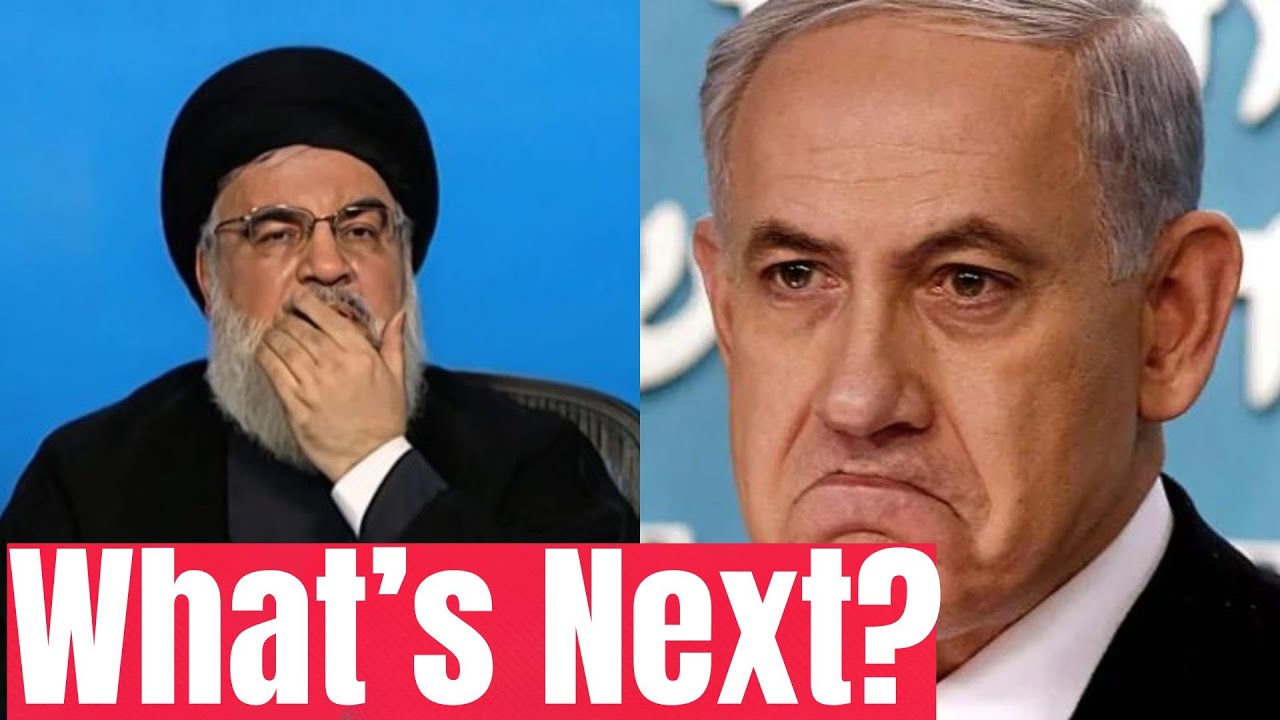
In a live‑stream titled “Alert: Nasrallah’s Speech: A Strategic Deception or a Betrayal?” the host, a self‑identified geopolitical analyst who speaks Modern Standard Arabic and has lived and worked in the Middle East and Washington, offers a close reading of Hezbollah leader Hassan Nasrallah’s recent Friday address. He frames the analysis around three core questions: (1) does the speech betray the Palestinian cause, especially in light of Saudi Arabia and Jordan’s decision to bar missiles over their airspace; (2) does the speech meet expectations, or is it a calculated diversion; and (3) what are the broader strategic ramifications. The presenter translates key Arabic phrases, highlighting Nasrallah’s deliberate ambiguity—referring to a “legitimate battle” without naming Israel—to keep adversaries guessing, a tactic he labels as psy‑ops. He argues that Hezbollah’s silence on an outright war declaration preserves operational surprise and protects its extensive missile stockpile (claimed >150,000 missiles supplied by Iran, including precision‑guided, medium‑ and long‑range systems). The host links this capability to potential U.S. strain: if Hezbollah fully engages, Israel may request U.S. air‑defence and missile supplies, diverting ammunition from Ukraine and the Indo‑Pacific theater. He further contextualises Saudi and Jordanian airspace bans as moves to safeguard monarchical survival rather than genuine Palestinian solidarity, drawing on his personal experience, a book on Saudi politics, and observations of how monarchies use wealth to quell domestic unrest. Throughout, he critiques Western media narratives, warns of possible escalation (including nuclear rhetoric from an Israeli far‑right minister), and calls for a measured, emotion‑free assessment of the speech’s strategic intent. The stream ends with community interaction, reminders to subscribe, and a promise of future deep‑dives into Saudi and Jordanian policies.
Chapters
Ah, hello everybody and welcome to Geopolitical Trends. So excited to be with you on this November 5th. Uh, today's topic, as I promised you, I will do or provide you an assessment about the Hezbollah leader's, uh, speech which was on Friday. I had to read it in its original language, the MS Modern Standard Arabic, and I'm going to provide some translation but also my own assessments and provide you a big picture about all this. So, uh, this live stream is gonna be short today because I have some other, uh, events I need to attend to, and I will take about 2 questions. That's it, because I don't have a lot of time here, guys. So, uh, I decided to do this because I gave you my word that I will come on the air and share this with you. So before I launch further, I thank all— like always, I thank the supporters, the channel members, channel supporters, the subscribers and ever for those who've been, uh, uh, uh, buying me coffee. So I can't thank you enough for your support. It means a lot, guys. And please do me a favor, if this is your first time, please subscribe to the channel. And also, I'd like for you to type in where you are joining me from, what part of the world you are joining me from. Remember, this is a community, and this is why we are here, to learn from each other. So it would be nice to know where everybody is joining me from. So I will— I always like to know what part of the world everybody's joining me here. So, so this is what I'm going to be talking about today, is the idea of, uh, uh, uh, the speech of the Hezbollah leader Hassan Nasrallah. But we're going to start with the key questions, and the key questions is: could the speech be considered as a betrayal to the Palestinians? There are some who said this already, and I read in some other media sources from overseas in the Middle East in Arabic language that some have considered that. Second question is, did the speech itself live up to its expectations? Because a lot of people were anticipating to see what the conversation is going to be about. And the third key question, and this is more of a strategic Could the speech itself be nothing but a diversion as far as the content of it? Okay, and this is what I'm going to be providing you in addition to one particular aspect, and this aspect falls under the geopolitical, uh, uh, analysis. That is, you know, not a lot of people talking about, they don't even know about, and that's what I intend to share with you. Well, just to give you a background here, The head of the— let me share his picture with you— the Hezbollah, the head of Hezbollah, Hassan Nasrallah, that is, gave a speech on Friday after Friday prayer in Arabic language. So, and this is what I intend to share with you as far as some of the content of that speech. Now, uh, and as I said, a lot of people in the Arab world, in the region, in the Middle East and outside, they were waiting for this much anticipated speech. Now, there are those who said they were very disappointed with the speech, you know, uh, that's just part of it. Even from within Lebanon, there are those who saying, well, they were concerned. I, I, I, I came across some that they didn't want to disclose their names, of course, because the fear of retaliation in there. But none of them 100% supporting, because they supporting Hezbollah, because they know what the war will entail. Okay, could it be the reason why Hassan Nasrallah didn't say much? Yes, he did hint here and there, but didn't came, uh, sort of, uh, unequivocally by saying we are at war with Israel. You know, to me, uh, as, as geopolitical analyst, It doesn't make sense for him to disclose, because if you say you are at war openly, that means you are, uh, prepared. You're already prepared, but you're already counting on some other systems. You already have the hardware you need for that. And second, why would you want to give a heads up to your enemy? That's the way I see it. Some in the Arab world didn't see it that way. Especially— this is, this is the key that I need you to understand, and I might do a live stream for you about this— especially with what Saudi Arabia and Jordan just announced. What did they announce? That they will not allow any missiles or rockets, whatever, flying from Yemen to cross their own airspace. What the way I look at this, a betrayal to the Palestinians. Yes, the Saudis and Jordanians But why that is? Why do you think that is? It has to do with the survival of the monarchy. They, they give a hoot about the Palestinians. I'm telling you this from one who understand the culture, spend a lot of time in the Middle East. I was on the ground and I understand the mindset. So to the monarchies, it's the survival that matters the most. So I was surprised. I really was surprised by the decision of the Saudis and Jordanians. Now let's go back to our, uh, conversation here about, uh, about, uh, uh, Hassan's speech. The, the first thing that, that sort of surprised me is that the wording— and I'm going to share it in Arabic and translate it quickly for you here— what he said basically, and I'm gonna just paraphrase here, What he said basically on his speech on Friday, that al-Ma'arakat idha Israel kamila tu shar'iyya, which means what in a simple language is that, that we look at the battle against the Israelis as a full legitimate fight or battle, whatever you want to call it. The key, the keyword is about legitimacy. Another word, if the word legitimacy is given to the battle, that means You are— you have to fight it. So this is how I see it. And he added once again, there is nothing— there is no— rather, there is no battle— and I'm translating here, guys— there is no battle like fighting against the Zionists. He didn't say against the Jewish state. He didn't say against the Israelis. So these are keywords because you have to understand, it is my understanding and my belief, and based again on my own assessments, that for him, a head of a very— a group that is supported by Iran, we all know it's not a secret, it will be foolish of him to come forward and disclose everything. It's a tactical move. It's strategic approach. We do the same, just in a different setting. That falls under what we call psyops. I'm sure you guys familiar with the term psyops. You take, for example, uh, uh, uh, you spread the word that, uh, let's say there is a fighting in Area A. So what you do in a psyops, you, you spread the word about, oh, there is famine coming to this area because of the fighting. So you already create a psychological panic within society or in that particular region, and that's part of what psyops are all about. Now, could Hassan Nasrallah be doing the same or did the same? I, I believe so. I used to read some of his stuff way back then, even when I used to travel to the Middle East, and, and try to read between the lines. So this is why a lot of people who jump in quickly saying they're disappointed completely Well, take a step back, take a step back, because the reaction emotionally will of course lead you to that. But take a step back and think about it. And that's why I put that keyword on the thumbnail, disappointed with question mark. And here is the thing, what, what he mentioned that gives me an idea that they are involved just in a subtle way as of now. As of now, could it also be a way for them waiting, meaning Hezbollah waiting till they see what Israel has to bring to the table as far as the, the, the Gaza? Then Hezbollah can launch its attack, do a surprise attack, whatever term it might be. Those are all possibilities. Except now that I am putting big question mark the timing of the speech and the statement by Jordan and Saudi Arabia. So, because remember, it has always been the fear in those two countries. Yeah, and I'm telling you this based on experience. I wrote the book about the Saudis and I detail in it exactly where the fear of the monarchy is the monarchy will have to play on both sides because they can afford— yeah, if you only know during the Arab Spring how many billions the Saudis put forward to calm down society. They bought the silence of the people, you know, because Saudi citizen, based on my research, is catered to by the government from, uh, uh, from his birth or her birth till death, till they die, whatever. So because the government wants to buy their silence, wants to buy their obedience that way. Now they're seeing these tensions going on, that could trigger something for the survival of the monarchies. That's why they came forward with that. So now here is what Hassan said that I found also interesting, and I put this in quote, guys, it's his word. Operations on the border have created a state of anxiety, anticipation, and fear among the enemy leadership and even Washington. Why is this important? It is important because it's the ambiguity of it that doesn't say anything as far as we are there or not there. And that's the point. Hassan Nasrallah wants to make sure that keep the enemy guessing. That is what it is. They're not going to disclose, and I'm going to share with you later on as to the capabilities of, of Hezbollah, and you reach your own conclusion. So here is another one, and I'll say it to you in Arabic and I'll translate it. Uh, uh, Hezbollah— I'm sorry, Hassan Nasrallah, It translates basically, Hezbollah has forced dozens of Israelis to flee 43 settlements in northern occupied Palestine. So again, why is he saying this? He's saying this to highlight that there is action taking place. Might not be as, as, uh, uh, not exposed, but rather, uh, as advertised as you might think. Because you have to think, if it weren't the case that Israel won't fear Hezbollah, why didn't they go to southern Lebanon? Because Israelis know it ain't gonna be an easy cakewalk. And second, they don't know what's been prepared already. As a matter of fact, Hassan Nasrallah already disclosed that they already have the plans in place. And he said, he said it in a subtle way, even as far as American targets. So of course you're gonna hear the interpretation in the West slightly different, uh, but you're gonna have, like I always say, I, you have to read the text in its original, uh, language because I think gets lost in translation. That's sometimes what happens. Another key that I found he mentioned has to do with, uh, and this is quote from him, our front is a front of solidarity with Gaza and, and evolves and moves according to developments there. That means what? Basically all the possibilities are open. You know, we're seeing, we're watching for how it is for now, but we keeping the, the, the, uh, the possibilities open. There are those who will argue, what's the point when civilians are being slaughtered and you are sitting in the back and watching? What's the point? And it's legitimate question, there's no doubt about it, but To me, the, the content of the speech, he was trying, he was walking a fine line not to raise the emotions, not to be subdued, not, but rather provide an ambiguous content that will leave the other side guessing. That's the whole objective of it, because there's another line that he mentioned, and, and I quote here, The enemy's behavior towards Lebanon is a determinant of our movements, and this will return us to the civilian versus civilian base. I do, I do find the, the wording very, very strategic, very methodical and measured. You know, as one, he's been around long enough He understands the dynamics of it, but also the Israelis understand, uh, the how fierce Hezbollah can be and can get if they want to. For now, what they're saying is, uh, as he addressing the Americans— yeah, because he did, and I quote here— whoever wants to prevent the expansion of France in the region must stop the aggression against the Gaza Strip, end of quote. All this highlights that we are part of it. It just might not be the way you might think about. And again, there are those who say, what's the point? Others will say it's a strategic move. Yeah, of course you have civilian casualties. Yeah, major ones, especially the children. Because so far, the 9,000+ civilians that have been killed on the Palestinian side, majority of them are children. And again, if you are, uh, uh, you have a right to defend yourself, well, against children, that just doesn't bode well. Optics of it are very, very bad. What makes this even worse, worse, worse, is the, the statement by the recent, uh, a minister in, in, in Israel. His name is a far-right minister. His name is Ami Elahu. He's the Israeli minister who called for bombing Gaza with the nuclear bomb. Here's the image of this guy. This is a far-right minister. Now, of course, there were a lot of anger around the world for him even mentioning that, but makes you just wonder And I did run that possibility. What if— this is where my concern— it will— the conflict, if it expands, is going to expand outside, far beyond what you can imagine. And if the nukes are used— oh, Israel, of course, we all know it's not a secret they have nukes. And if they use that, that just is going to change the equation for everybody. And I do believe there will be retaliation from some other countries, not in the West, of course. The West is so weak anyway. No, so this is where I see, uh, of course the US has to say that they were aware of the speech, whatever. It's nothing but hypes. They weren't aware of anything. Enough of these lies from the State Department. They just pretending like we were aware of this and that. It's nonsense. It is nonsense. The problem for us Americans— when I say Americans, the government is that now we are bogged down into that conflict. We own it whether we like it or not, whether we admit it or not. We are part of the problem, straightforward. There is no other way around it. Pretending otherwise, it's stupidity, you know, it's ignorance, and it's, it's, it's flat-out lies. That's basically what it is. So this is why Uh, we have to, like I said, you have to take step back for those who speak Arabic and understand the language, because the interpretation right now, it's already, it's like a betrayal for the Palestinians. Well, the Palestinians cause has always been a useful tool for the Arab leaders to use to justify whatever. When it suits the agenda, they push for the narrative about the Palestinian issues. When it doesn't. That's why I said I, I, I don't trust Arab leaders anyway. Heck, if I don't trust my own government, why would I trust them? And to me, that's the explanation of why the Saudis and Jordanians did it. And I intend to do a deep, deep dive into this because I do have enough information to address on both kingdoms, you know. Mind you that there is an upcoming summit in Saudi Arabia for the Arab League, which is nothing but hype. It's going to be just talks, photo ops, emergency summits, and all Arabs do is talk. I say it straightforward, and I'll challenge whomever. Because you think about it, with all the massive amount of weapons they have, you know, you know, sometimes, sometimes when you have to push back, you have to push back hard. That's like in your relationship with someone, and when someone start bullying you, whatever, at first you will be patient and all that, but at some point you're gonna push back, and you're gonna push back hard. Otherwise, the other parties will never understand that you mean business. It's exactly the same. So, but for the Saudi— for Saudi Arabia and Jordan, it's about the survival of the monarchy. Mike, my word on it. Now becomes the question of, uh, uh, the strategy for Hezbollah. Okay, well, the strategy is straightforward based on, uh, on, on, on the leader's statement, which basically that the group will continue as it has since the beginning of the war in Gaza, and that will neither expand the conflict because that's how Hassan wants to leave it. It's the ambiguity of it, which is a strategy. Don't misinterpret this as, oh, it just talks, whatever. No, the ambiguity in conflict is part of the strategy. And this is why saying we will neither expand the conflict nor fully activate the second front. There is, there is some subtle messages in this speech. If only people take step back, remove the emotion side, and think logically. Think logically about this. It's because Hezbollah military capabilities, they do have a full military capabilities, and it will be convincing, and it will make Israel think twice. Especially when you enter long-range, long, uh, short-range, long-range missiles into the equation. Gone the era now of using just, uh, uh, some sort of, uh, uh, RPGs or rockets, what— uh, we moving now to a different level altogether. And as a matter of fact, if I am to assess all this, I am convinced that the Israelis won't be able to They won't, and I'm going to tell you why. The reason they won't is because once you enter long range or medium range into an equation, military-wise that is, you have to change— it changes the calculus for every— for everyone. So, so that means basically, in a simple language, we'll go with the option that Hezbollah officially when I say officially declaring its entry into the war, all it would mean that something else will has to change. What am I referring to here? Something that most analysts for now have not thought about hard. I had to anticipate, in my opinion, and this is my personal stuff, uh, my personal assessments, I have to anticipate what lies ahead now that the conflict is on. We have to think further. That's like they say, you don't look at the end of your nose, you have to look very far. What I'm looking at here, I am looking at, should now Hezbollah gets involved officially, that means the Israelis will have to ask the US for the missiles and Patriot systems. Which means what? That means it will have to be taken away from the support of the United States for the Asia Pacific. Because remember, don't forget, there is something over there called the South China Sea tensions, Taiwan tensions, and the tensions between US and China. Don't ever forget that, because there are those who saying right now that the US is able to manage Ukraine and manage Israel? Ah, I don't think so. I don't think so. And the reason being is when you consider that the Hezbollah is thought to possess over 150,000 missiles. Of course, where those missiles come from? Iran. It's no secret. Oh, everybody knows this. So this is where I see the concern in Washington are mounting. Why? It's because also the thinking, uh, the thinking that is, is that the war in Ukraine and the war of Israel— because it's a war, what would you else— what, what else would you call it? Now we know Ukraine is a failed state. It's over. It's over for Ukraine. Now the issue of Israel, what is going to be? It's going to be now If and when officially, once again, Hezbollah declared the war, that means the supply of weapons to Israel is going to deplete the US stockpiles of weapons and ammo to the Asia-Pacific theater. That is what it means. And mind you, and I'm just talking out loud here, a confrontation with China Ain't a cake and a walk, or a cakewalk, that is, or walk in a park, whatever term you want to use. We all know what it means. So you think about it, Hezbollah is well armed, well armed. And I know this based on the research that I conducted. I read into some military think tanks that deal specifically with that, not, not in the, just in the US, outside. So I kind of collaborate the information to make sure it's accurate. It's well armed, okay? And of course, what you need to understand is that why this is now, it's becoming more problematic. This is why the US now behind the scenes wants to push for the ceasefire, because they are realizing it's not going to bode well. Why it will not bode well? It's because a war on the ground or on the land, it differs from war over the waters and so forth, which is what it will be in Asia Pacific. So, or you look at the land, uh, war in Ukraine, because the weapons needed for this to either offshoot like range rockets from Gaza, whatever, it's going to be differ or different rather from what it will be in a maritime conflict. This is where I see the difference. And could it be to think, could it be that Hezbollah didn't want to even mention a thing? You leave the enemy confused, perplexed as to which direction is going to go. And mind you, it's going to be a pushback inside Saudi Arabia and Jordan. Mike, my word on it, we might not hear much about it, but knowing how that tribe mentality is, it's going to be a pushback there. So here's the thing, because Hezbollah entering into the fight overtly, openly, officially, whatever term you want to use, okay, this is going to now create some sort of, uh a change in the tactics and strategy for the United States regarding weapons, we won't be able to do it on both front— or three fronts, that is, right now. And just to give you an idea, I'm going to create, uh, not create rather, but share, uh, basic information. We just think about it this way, so for the sake of comparison. You take Ukraine as it happens, you know, if you can guess about how many, how many rounds of ammo is used. What do you guys think? How many rounds of ammo is used on a daily basis in, uh, in, in, uh, Ukraine? Just type me the link— I'm sorry, type me the answer on the chat box. And I just want to see. Okay, Al from Singapore, good to see you as always. So yeah, just, just tell me if you guess, if you guess what are we looking at. Oh, I want to say thank you to Rafael. Thank you so much, uh, Rafael. I feel like Russia wrote the speech. No, that's what you feel, then I, I disagree with you. I respectfully disagree with you. Because I don't see Russia will, uh, sort of, uh, go that length. What Russia can do, and he will do, is just provide them the weapon. Russia will have to stay back. We have nothing to do with it. Uh, this is different setting that, like, for example, when Ukrainian comedian president will give a speech, that speech we give it to him. When the Prime Minister of Australia, Albo, we give him the wording what to say. When Japan South Korea, or even Marcos Jr., for that matter. Now, those guys, yeah, those— it's easy, you just give them the script and say read it. You know, in the case of Hezbollah, it's slightly different. And this is again based on my, my understanding of, of the group. I've been aware of it for a long, long, long time. So, so let me see how many rounds you guys put in here, uh, Oh, Scott Davis, thanks for becoming a channel member. Truly appreciate it. Thank you. Uh, and I'm scrolling, guys, down to see how— if there are any answers. It takes a while for this to show up here, but, uh, it's okay. Just to give you an idea, because I'd like you to be part of the conversation. Like we always say, we're here like a community. We learn from from each other. That's the whole idea. So I just want to see, how many rounds do you think on a daily basis is used in Ukraine? Because I want to place this within the context of, uh, the, the, the, um, the Israeli-Palestinian conflict. So, okay, 150,000, 250,000. That's a lot, but because they don't have that amount 40,000 to 60,000. They don't have that amount. I mean, surprising, huh? You're looking at about 6,000 to 8,000 rounds of ammo could be used on a daily basis. Now, this is just an estimation, by the way. You think about it. And the reason I'm doing this is to compare. You look at Ukraine and you look at Israel, and this is if and when Hezbollah officially declare its entry into the war. The IDF, Israeli Defense Force, use about 5,000 ammo a week. You look at the comparison: Ukraine, 5,000 to 6,000 a day; in IDF, 5,000 a week. Okay, and this will create an issue if Hezbollah gets involved to the US, because the US won't be able— they can't. We, we, we are even running out of the ammo ourselves. Europeans do the same. So, and this is why I'm saying if the war in the, in, in the Gaza expands, that's going to become a major now issue for the United States. And like I mentioned earlier, Hezbollah has over 150,000 missiles, and really it could fire those at a rate that Israel won't be— that will be almost the way I see it, it will be almost like using 5,000 to 6,000 ammo a day. The Patriot system or the Iron Dome ain't gonna cut it. And once again, I am convinced behind the scenes there was a strategy for how the speech was crafted. Marked by the element of ambiguity for a reason, for a reason. One thing also you need to know about Hezbollah, Hezbollah believe that it has, it has in its possession advanced precision guided missile in, in addition to the short range ballistic missiles. This is what I'm saying. And those, by the way, and again, it's not a secret, it's if you know where to look for information, those were provided by Iran. So those high-end missiles truly will be a nightmare for Israel Iron Dome because they won't be able to, to deal with that. And we're only talking about one group, Hezbollah. We're not talking the Houthis, we're not talking Hamas, we're not talking some other elements inside the Middle East, because remember They are almost about 17 to 18 militia groups. Those are well-funded, well-trained, and they've been there for a long time. So, and this is where I see that— that's why now the US is behind the scenes pushing, you're going to need to stop this, because Israel is going to ask the United States to provide air defense systems. Like, for example, which we all know, we have the Patriot, which Patriot system, which, you know, this is where I see the shortcomings. But even with the Patriot, it's already in a short supply. We, we saw what happened. I, I was aware of it. I wrote some article about it in Saudi Arabia during the war in Yemen. The Patriots couldn't shut down the missiles coming out of the Houthis targeting the oil refineries in Saudi Arabia. They failed even though the Saudis lied and said, well, we shut down the— I don't buy that argument. I used to work in Washington. I understand how the system works. So this is where I see the difference, and this is what, uh, uh, you guys need to understand. The long-term objective of why the speech was delivered, or what the content of the speech was the way it was. So you think about all this and you say to yourself, there is no way we can support all this. We, the United States, support Ukraine, support Israel, and of course deal with the South China Sea or Taiwan, whatever you want to call it. This is why the Taiwanese that think the US is going to come to their defense They must be hallucinating or living in some parallel worlds if they couldn't see the images. I don't know, I don't know, because it doesn't take a genius to figure this out. And also, if you are just to consider hypothetically, which I don't foresee, the military conflict in the East, we can— we're not ready for that. Mind you that China, when it comes down to its long-range missiles, air defenses, you know, they are good, they are very good. That in my estimate, based on some reports that I read, no aircraft could get close enough to drop any short-range ammo or munition, that is even stealth fighters. They couldn't come close. And that gives you the idea right there where the dilemma is. So, but the, the, the reality of it is that we are— our neck is deep down into the conflict now in Gaza, and we own it. The atrocities we're seeing, we are part of it. You also— the image I put for you guys on the, on the community when I posted that, uh, short message for you guys when Blinken was giving the testimony, I think in Congress or something, with the bloody hands behind him, you know. And now he is in, uh, going to meet with the Mahmoud Abbas. He's the head of the PLO, which is another weak leader anyway, because remember, even within Palestine there are factions, there's over control fight over control. That's why all, all they do is just talk. But in the case of Hezbollah, I am certain there is a, there is a strategy behind why things weren't declared openly. Of course, some in the Arab world will disagree with me, and of course I respect their opinion because they looked at it as a betrayal, and I can see why. But again, those individuals might not possess the depth of understanding really, uh, what's behind the scenes when it comes down to, uh, strategies and tactics. And because that's how part of how geopolitical landscape is, you have to navigate— you as a player, you have to navigate through that landscape without, you know, drawing attentions or becoming a targets and so forth. So this is why it is a foregone conclusion now for Israel. Israel is is done, basically. When I say Israel, I'm referring to the government here. So, uh, it's, it's, it's, it's a reality. It is a reality that that's just part of how the ugliness of conflicts— they didn't calculate this very well. But Netanyahu, when you think about him as a far right, once a while— because remember, guys, once this settled, you know, of course he's going to be kicked out, but he might end up in jail because of the corruption scandal. The whole reason why he run into the office, because he's shielded right now from the justice system. That is the reason why he wanted to amend the judiciary in, in Israel. And Israelis saying, heck no, ain't gonna happen. So the idea of understanding those dynamics will provide you now a clear picture as to why certain countries behave the way they behave. And again, I'll fall back to Saudi Arabia and Jordan. Just you read between the lines. The survival of the monarchy is a priority. Forget about the civilian. Even with the king's wife, what's her name, Rania, gave a speech to CNN— gave an interview to CNN saying the world is— oh, come on, you know, I have nothing against her, but come on, because she is of Palestinian origin. Uh, but, but it's all hypes, it's all hypes, it's all hypes. You know, you look at now Qatar. Qatar is staying what many other Arab countries couldn't because Qatar was never a follower of the GCC. Yeah, it's part of it, but it never was a follower. This is why Saudi Arabia and other Gulf— United Arab Emirates, which is one of the most corrupted one anyway, Uh, they care less for whatever. So, but Qatar at least taking stand and saying, no, this is what's need to be done and we're going to push for it. And they are not going with the same trend of the narrative, per se. Other countries— this is why, you know, Saudi Arabia wants to host the emergency summit. It's all about optics, no more, no less. Because this way, the MBS, the de facto leader, will show that I am caring for the the Palestinian cause? No, you don't. Let's just be honest about it. You know, MBS himself is not even qualified for the positions, because how come all of a sudden we turn the blind eye on what he committed, the atrocity when he ordered the assassination of Jamal Khashoggi, the Washington Post journalist of Saudi descent? He was a Saudi, he was a resident here in the UN. And what did even our incompetent president said when he was running for office? We're gonna hold MBS, uh, uh, accountable and bring him to justice and all. Oh, there was nothing but hype. It shows you in international politics, it's all about interests, and politicians will switch in no time to justify whatever. This is what I see. Oh, Pilate. Oh, Pilot— oh, Pilot Tracker, thank you so much again for your— oh man, I truly appreciate it. Thank you so much. Oh, that's the second time this supporter here put a super sticker like that. I really thank you so much. I truly appreciate it. Wow, that's so kind of you. So this is where I see the difference, guys. And again, for me, I I, I don't talk emotions because I wanted to present— I provide you the facts, you reach your own conclusion. Do you see the statement, the, uh, statement by the, uh, by, by Hassan as, uh, sort of, uh, disappointing, or do you see it as a strategic? Only you reach your own conclusion. For me, I'll provide an assessment like I said I will, but I will not reach, uh, uh, uh, a conclusion for you. And knowing what I know about the Arab world, as I said, I worked in Washington, I spent a lot of time in the Middle East, used to travel there a lot for work. I speak the language, I understand the culture, I understand the political structure of certain countries there. It's always been the norm that way. Like I always said, there is a saying in the Arabic language, I'm just going to translate it directly: Arabs agree not to agree. That's the bottom line to it. So all this hype about the Arab League summits and all that, what for? It's, it's a window dressing, no more, no less. Saudis are concerned themselves because the monarchy will have to ensure its survival. Because literally, you ask the questions, how come only the monarchy controls the resources of the country, especially in the southeast part, which is mainly Shia dominant? Well, that oil belongs to them also. This saying a fraction of it, let's say straightforward, for Jordan, the monarch, you know, King Abdullah, it's all about the survival of monarchy because he has now to prepare his son to take over. It's a reality. I mean, we used to work with their special ops. Those are what we call them the King Boys. Those are just the the special ops for the king to protection and so forth. But all this about Palestine, it's nothing but, you know, if really Arabs wants to do something, they will do it physically. Otherwise, it's going to be just talks, no more, no less. Oh, hello to you from Beirut! Good to see you, you know. Good to see you. Thank you for being here, truly appreciate it. Yeah, and then, and again, how things is going to move forward I do not know. I'm keeping my eyes on it because that's my area of concentration, and I'm going to keep you updated, uh, as I move along here. Oh, I want to say thank you so much to Java Joe. Thank you so much for your Super Sticker. You wrote, Dr. O, what do you think of the Qatari minister saying that an oil gas embargo may be necessary to make the West contain Israel? Yes, he did say that. I concur with you. It was the same arguments that was echoed by none other than the Turkish president regarding gas, because the gas that goes to Israel has to cross through Turkey. So that becomes clear to me. There are certain tools out there if they really want to exercise this. Instead of— you got the prime minister or so-and-so meeting with the Secretary of— US Secretary of State. All this nothing but follow-ups. It's nothing but for us. I guarantee you this, because if they want to do it, they would have done it. You know, when you're going to do it? When the casualties reach 20,000 civilians, most of them are children. Come on, you know, you call a spade a spade. Shame on my country for allowing all this. By the way, because we are part of it. Shame. That's why I say both Democrats and Republicans are two faces of the same coin. Because where is that fairness? Where is that rule of law? Where is that humanity? Where is dignity? Where is this so-called democracy? Is this what democracy is? Where is the ICC? Do you hear anything from International Criminal Court? Where is it? What happened? Yeah, that's to me where the, the, the double standard— and it becomes now more evident. But also, this is a reflection of the cracks inside the international system, one that has been dominated by the West, mainly the United States, that order since World War II. And it's, it's the cracks now are, are getting bigger, becoming more visceral, more visible. It's just a matter of time before that system crumbles. And this is why the need for a new system that will be a multipolar one, and one that I believe— I've always believed in this for the last 15 years when I was following the trends— that is going to be based on economic trends. Not ideology, not financial dominance, not military and all that. Economics, that's what's going to be. Thank you so much, uh, Java Joe, truly appreciate your support, it means a lot. And this is where I see, guys, the difference. This is where I see the difference in understanding, uh, uh, uh, before you jump to conclusions, once you start reading the English translations of the speech, just take a step back and think. Just try to put yourself in, in, in a position of a leader, one that will be now responsible for the lives of not only the group but the civilians in, in Lebanon also. Because remember, if these two go that direction, we're talking about entire Lebanon. So one will have to think strategically. So, and I still— it is my belief that the, the, the speech was crafted in a way to ensure ambiguity. Ensuring ambiguity is part of that psyops, if you may, if we may use the term, or a strategy. That is, Israel understands the capability of, uh, of, of Hezbollah, but now you're seeing the far-right minister in Israel calling for nukes. That tells me something else. So, and I intend to keep an eye open on this because I am gonna provide you, uh, uh, an assessment about Saudis and Jordanians' statement not allowing their airspace, and yet they will allow the US and Israel airspace. Very problematic. Very, very problematic. Hey, hey, thank you so much for your support. I appreciate Hedy's been here with me for quite a while here, so thank you so much, Hedy. Truly appreciate it. Appreciate you being here. Um, okay, I'm gonna scroll quick here because I have to leave, guys. I have, uh, some events to attend to and also some preparations to do. And if I get a, a chance to come on the air either tomorrow or after tomorrow, I will, because I am— I'm, I'm I'm, uh, trying to confirm some information regarding the statements in both Riyadh and, uh, in, uh, uh, in, in Amman, the capital of Jordan. So I'm going to scroll back up once again, guys. Please, please, please hit the like button right now. It's because I'm noticing we had the— when we did live stream yesterday or the day before, we got over like 70,000 views on it, and it only had about like 2,000 2,000 likes on it. I don't know, can anybody explain this to me? I'm sure you guys hit the like button. Is it the algorithm intentionally suppressing that, or, or what is it? If anybody can help me out, leave me a comment. I will look it up later on because I don't get it. You know, we got 60,000, 70,000 views, doesn't translate to— and as you know, guys, is the algorithm that can push the video for more, uh, for people to see it. So this is the whole idea of spreading the word about it. So please hit that like button and, and subscribe if you are not already a subscriber. Please do so, and I would really, really appreciate it. So I'm going to look quickly here. Oh, Boon! Here is Boon. Hi, Boon! Wish you a good trip. Thank you so much, Boon. I truly appreciate it, and good to see you as always. And appreciate your continued support. It means a lot. Oh, I see something very interesting here. The geopol— uh, from Alan Roy: $180 a barrel of oil would show down the war. You're absolutely correct. You're absolutely correct. But how this is going to happen if that embargo is applied? If Qatar moves forward, if Turkey moves forward— Saudis, I don't see them doing that because they are wishy-washy. Remember, the prince, the MBS, the de facto leader, is after the support of the West, meaning being embraced by the West. That's why he won't be able to do it. King of Jordan, uh, he's always been that way. They'll say one thing in front of the Arabs, they'll say another thing in front of the Western audience. So that will be very interesting, and I won't be surprised you'll see it If once it hits $129, it will be going into that direction. So, so I can, I can see that happening. All right, let me— I'll see. Oh, oh, Aswat, Aswat, uh, thank you very much. You're most welcome, truly appreciate it. So, and thank you all for your kind comments, guys. I truly appreciate it. Uh, this is why I like our community here. It's, it's, it's the conversation. In a civil way, civilized, if I may use the term. And I truly, I, I give you credit. Credit is to you all keeping it civil here, because that's the whole idea of learning from each other. And that is one of the reason also why I ask you, please type in where you are joining me from, uh, uh, just to, to see what part of the world, uh, everybody joined me here from. So, so once again, guys, I thank you all for your support. Uh, I really, really appreciate all those 4 who posted the Super Stickers. Once again, truly appreciate it from the depth of my heart, and I look forward to seeing you soon. I will see you soon. So, uh, I'm just trying to confirm some information, and, and we just go from there. And I'm also seeing— I'll see one question if I see it here in front of me, uh, if it is one. And sometimes there's a delay, you all know this, guys. There is a delay. Okay, uh, I see one here from Iftar. Yes, yes, you did mention this on Friday comment, I remember. He said Hezbollah is the wrong number. The same goes for Yemen firing missiles to the Israeli nuclear plant. The whole tactic to get Saudis involved. Saudis will have to do their own calculations. And one of the key— as one who worked there, as one who wrote a book about him, I, I, I wrote many articles— I always argued the point that the Saudis' key is to ensure there is no domestic unrest. This is why they put billions of dollars in 2011 during the Arab Spring. That's why there was no Arab Spring in Saudi Arabia. They shut down the population with money, and they have money. So the Saudis, most the fear, the major fear of the Saudis, it has to do with the southeast part of Saudi Arabia. This is a dominant, uh, area by the Shia. Those are Shia, uh, uh, Saudis. There's Shia in Saudi Arabia as well. That is where their fear if they will rebel against the central government, because a lot of oil is there. So this is why the Saudis will have to trade carefully, and, and, and I won't be— I won't be surprised if they flip-flops quickly. Survival of the monarchy, you guys remember this one. So, all right guys, I really appreciate you being here. I thank you for your kind support. And I look forward to seeing you next time. As always, remember, geopolitics impact your daily life in more ways than one. Till next time, guys. Bye-bye.
More from David


Beyond the Single Actor: Why the Gulf Isn't Choosing Between the US and China


Iran, Iraq's Militias, and the Houthis Are Coordinating! This Changes Everything




Who Controls the Next Decade's Resources? Latin America and Africa's Geopolitical Crossroads

The Chokepoint Trap: How Washington's Stupidity Triggered a Cascade That Now Controls the World

Trump Spooked as IRGC Unveiled dual-use SLV, Deployed Ghadir Mini-Subs & Hinted at Tactical Nukes!
