Are India & Pakistan Facing a Nuclear Showdown? Geopolitical Trends
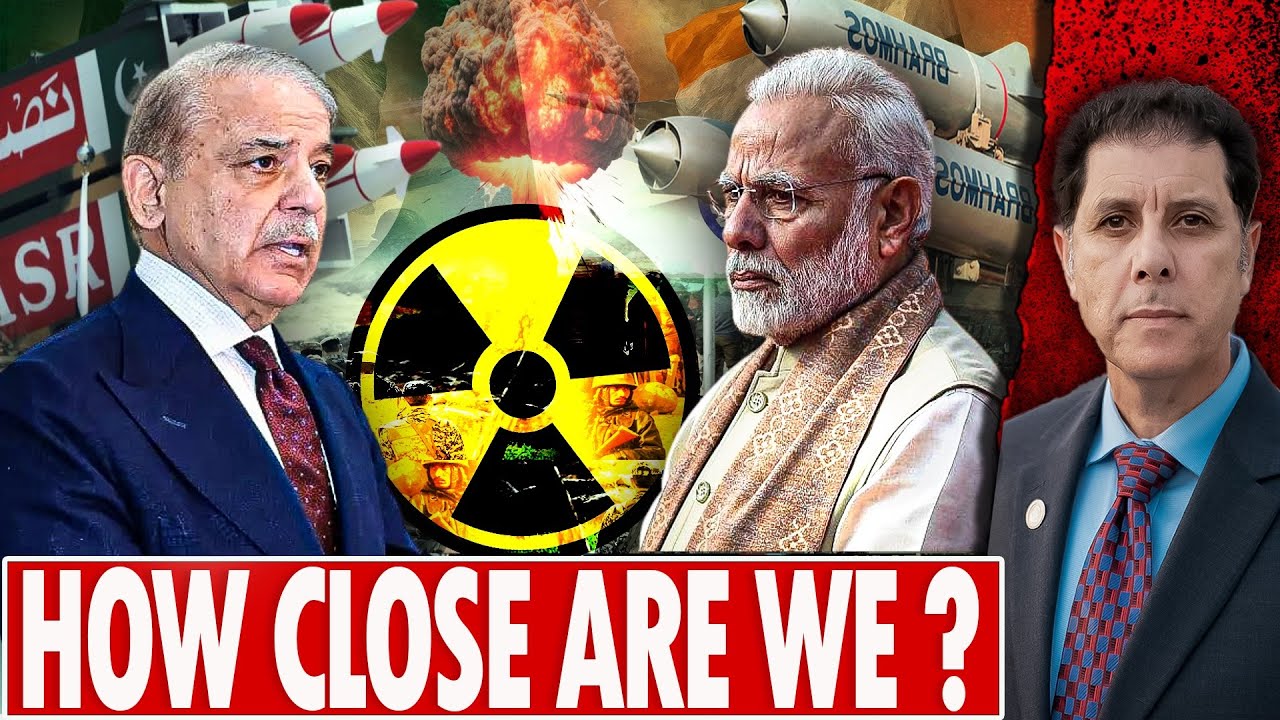
This content was created by David Oualaalou. This content was uploaded by David Oualaalou. This is a YouTube video titled "Are India & Pakistan Facing a Nuclear Showdown? Geopolitical Trends" (uploaded May 8, 2025). The content appears to be an explainer/analysis on geopolitical tensions and nuclear risk between India and Pakistan. No transcript or speaker details are provided in the excerpt, so participants and format (lecture, interview, or panel) are not specified.
Chapters
Hello everybody and welcome to Geopolitical Trends, where truth matters. Excited to be with you as always. Uh, we're going to be talking today about what's going on between India and Pakistan. Uh, to those who understand the history of the conflicts between those two neighbors, uh, this shouldn't come as a surprise or a shocking to you. Uh, the key question we're going to have to ask is, will this escalate to to a nuclear level. This is where the big concern is. And of course, you always have to remember there are outside players who will have, uh, some sort of, uh, the benefit seeing the tensions between those two neighbors. So this is what I'm gonna get invol— uh, get, uh, provide you today rather with my analysis about. But before I'll do this, let me say hi to our wonderful community quickly here. To all of you, Truth Seeker, good to see you. Amanda, good to see you. Timeline Dunkley, as always. Vlad Ivanvisky, I hope I pronounce it correctly. Uh, uh, Biswatek, I'm sorry, uh, Biswas Tikz, good to see you as always. Uh, Christian, good to see you. Uh, Lee Jumpy, good to see you. Liang, good to see you as always. Here, look, I haven't seen you for a long time, friend. Where have you been, man? Hope all is well. Matt Becky, as always, truth seeker here. Vera, good to see you. Tom Saya, as always. All right guys, let's, uh, let's get into our conversation here because there's a lot to cover. So in this episode here today, I'm gonna be doing a little bit of geography and a history. You have to understand the history of how things evolved regarding especially the Kashmir region. And, uh, there are a lot of emotions into all this, so I'm not going to get into that. What I'm going to provide you is the facts, and of course you reach your own conclusion. So, uh, before I do this, I have two headlines I need to share with you that you need to be aware of. Uh, first one has to do with the, uh, trip of the interim president, Zulani, Uh, remind me, was he a terrorist at some point? So anyway, he is in Paris. Yeah, go figure, right? So Giuliani in Paris. So, and this, uh, begs the question, uh, what kind of deal France is going to be cutting with Giuliani. So, and it was Giuliani himself who said in Paris during a press conference that, uh, uh, uh, he would like to have indirect negotiations with Israel to calm the situation. Come on, man, Israel is bombing Damascus. What, what could he do? Squat. Nothing. Because we are the one who put him in. And when we say we, that means with the approval also of the Israelis. So this is why, uh, uh, despite what you hear It was by design where he came to power because we put him in, into that zone. And anyway, this came during a joint press conference between Giuliani and France President Emmanuel Macron, who welcomed him into Paris. All right, second one has to do with Denmark, and I'm gonna share a picture of the foreign minister, Lars Rasmussen. This is a picture— that's his picture from 20— I believe 2018, 2017, an old one. I looked into it and get that one. In any event, uh, Denmark summons now US Ambassador over Greenland because of a spying report. What's new there? So the Danish shouldn't be surprised at that. So, so the Danish Foreign Minister Lars Rasmussen said yesterday that he will summon the acting US Ambassador to Denmark after Wall Street Journal reported that the Trump administration has ordered US intelligence agencies to intensify spying on Greenland. And Rasmussen told reporters during an informal meeting of the EU foreign ministers, which took place on Wednesday, by the way, yesterday, in Warsaw, that he was concerned about the report, saying, and I quote, It worries me a lot because we don't spy on friends, end of quote. Yeah, good luck with that. If you only— if only know what we did to Angela Merkel as far as listening to her, uh, cell phone and so forth. So anyway, this is what I wanted to share with you. So let's get into our, uh, conversation today regarding, uh, what took place, uh, or what's taking place between India and Pakistan. So It's very concerning. Nobody should underestimate the possibility that things could get out of hand. You know, of course, the Pakistani Prime Minister, uh, Shiraz, is saying, well, we, uh, I'm sorry, the defense minister who said that we will welcome international intervention for peace, that is. Yeah, but you need to understand, I just cut my finger with a knife yesterday. So, uh, what you need to understand is that Pakistan is as corrupted as it can get. You know, during my days in Washington, we used to deal with them, and when I say them, I am referring to the ISI, because that's the one that controls the decisions inside Pakistan. And I'll get into all this as I move forward. Well, the question now is that the idea of this— not the idea, but rather the concern regarding the threat of a nuclear war It's looming large now. Yeah, because you never underestimate, because there could be some, uh, elements will want to see that outcome. So because tensions are continuing to escalate, however, there are reports suggesting that things have calmed down after each party retaliated. So, but you have to put this within the context of the long history of conflict and rivalry between the two nuclear-armed neighbors. So, and again, all of them centered on one key aspect, and this one has to do with the region of Kashmir. And I have some pictures here, which by the way, uh, this particular map here, you know, it's, it's kind of very, very interesting, uh, uh, because I have different maps I'm going to be sharing with you. So, so, and I'm going to get into the detail of the geography as I move forward. So So now the question becomes, you know, what are the chances of a nuclear war breaking out between India and Pakistan? I hope it never gets to that because that would be very, very concerning. And this is where we're going to be detailing some aspects as to, of course, with the decision of Narendra Modi, the Prime Minister, which announced on Tuesday that cutting off the water to Pakistan. Uh, he has no right of doing that because that water is under treaty that both countries have signed. Yes, there's tensions, but you don't cut off water. That just doesn't make sense, you know, uh, because we have to, to, uh, sort of, uh, uh, be aware of what's going on. So, so I'm gonna play a clip for you first. Then I'm moving into the geography and history, but I need you to listen to this one here, and I'll do the translation for you guys because it's in Arabic, not in Urdu. So take a listen here, guys. Thank you very much, Salma. We will give full details as to what's really taking place Uh, the region you, uh, you are looking at, the picture you are looking at right now, this is Pakistan, this is India, and this is the region, the region where with the dark color here, this is what the ones that is controlled or under the control of India. This is Kashmir, and it's about 55%, this dark-colored region that is under the control of India. The ones that is in lighter color, which is about 35%, that is controlled under Pakistan. And the one in a red color here on the corner, that is under the control of China. So yes, this region is divided between 3 countries: China, India, and Pakistan. And China controls about 15%. So you got 35, 55, and 15. This is usually where the conflict has always been concentrated. So what it started with, and this is, by the way, from the day before, what it started with, it started with the artillery shelling or the missile launching of the Indian forces. The one here you see is Kashmir, and this is the Pakistani territory here. So the attacks of the Indian on the Pakistanis focuses on different regions. However, there was one particular location. It was particular one is in Punjab region. That's the location of where the attack— makes you wonder, why will India go all the way to attack this location? And the Pakistani have announced that the Indian have attacked a mosque. Now there is one thing I need to share with you before I move on here. You have to understand one thing now, that there will be a war of information. Who controls the narrative? This is nothing new. It has always been— anytime there are tensions between India and Pakistan, the information becomes the, the key. I mean, you look at it, all countries do that. So, but this is something you need to be aware of. And let me continue. And as a matter of fact, I do have, uh, I think I have a picture of the mosque that was attacked, but that was another location Um, hold on a second here, guys. Yeah, it's right here. This is the mosque, but I believe this is in different location. I think it's in Lahore. That's what the text about. Anyway, let's continue our listening here. All you see, the one he's pointing out, those in red, those are the locations that India attacked, and those are inside Pakistan. Here is Lahore right here at the bottom. He's not pointing at it, but— So India said it was 9 locations. Pakistan is saying otherwise. Pakistan is saying only 6 locations have been attacked. The civilian casualties were about 26. And 43 injured. I know that I read in one report that it was a 3-year-old female kid. She was killed. Of course, India is saying this is in retaliation to a terrorist attack. On the tourists. And India added that we were trying to avoid targeting civilians. Let's look at closer here into the Kashmir with, with the response of the Pakistanis. Like we said, after India attacked locations like Mudafarabad, another region called, or a city, Kotli, and those, by the way, locations within, under the control of the Pakistani sovereignty as far as Kashmir. Of course, Pakistan responded by targeting locations inside the territory under the control of India in Kashmir. For example, there is this location here called Bunch, which is under the Indian control in Kashmir. Another location is Rajouri, which is under the control of India. And those locations, by the way, are military locations. And it says that it has destroyed a platoon, I believe. Uh, there's also additional information from the Pakistanis saying that they have downed 5, uh, fighter jets, which by the way I read elsewhere that it did confirm that indeed 5 Indian fighter jets were downed. Uh, it was also, uh, I think a drone However, on the Indian confirmation regarding this, they said only 3. And this is again my point, guys, you're gonna be dealing with the, uh, the information campaign. Now they said India said something, Pakistan will say something else. However, the Indians are saying yes, indeed, the plane, uh, the, the fighter jet fell down, but for some other technical or other reasons. And by the way, the, the, the exchange of fire still, uh, going on. As a matter of fact, last night I got a word from inside Pakistan that just last night the Indian fire something else again. And this is where, on, on the Kashmir border area region there, that's where the tensions or the exchange of fire. Of course, Pakistan have announced that now the, uh, work at the airport has stopped completely, come to a complete halt. The airports in Lahore and Sikkim, the same thing India is going through. And this based on the development that's taking place in this contested region of Kashmir, between the two countries. Okay, I'm gonna stop right here because that's all I have to do with this one here. Then we'll move on into our own, uh, conversation, uh, regarding where this is going. So, and like I said, India is going to be saying one thing, Pakistan is going to be saying some other things. And again, for us just to, uh, uh, get the information, then we reach our own conclusion and, and we go from there. So like I said, I'm going to do geography for you. First of all, let me share a map with you, and this is a part of, uh, uh, where Kashmir is. And as a matter of fact, I don't need to share, uh, this because it's the same picture I have right here. So, but you need to understand Kashmir. Now Kashmir is geographical region that forms, the, the northernmost part of the Indian subcontinent. So, okay, it is bordered by the Tibet region in the east, Uyghur region of Xinjiang in the northeast, Pakistan in the west, Afghanistan in the northwest, and the Indian states of Punjab and Himachal Pradesh in the south. So you can see why it is very, very, uh, contentious location that is. So, so the region of Kashmir has been in dispute between India and Pakistan since they gained independence. Does anybody know what year both countries gained their independence? Was it the same year? Let me see in the chat box. If you guys can type in that in what year that was. Of course, the British made a mess out of all that, the same thing they did in West Asia or Middle East. Let me see what year since the independence. Uh, M, 1947. AF Corleone, '47. Shane Graves, '47. Uh, Moonlight, '47. Taiwan Steel, '47. Yan Su, Uh, Alistair, you meant, uh, '47. So that is correct, it was 1947. So the northern and western part of Kashmir, when you look at the map— I'm gonna put it back up here, uh, just, uh, when you look at the northern part and the western parts of Kashmir that are currently administered by Pakistan, are referred to— they are referring to it for a specific reason, historical one, that is. It's known as Azad Kashmir. Okay, and, and Gilgit-Baltistan, that's how it is on the map. That is the reason why I wanted to show this map, because it's— look, it's named this way right here in green, as you see it, Gilgit-Baltistan. So, and the southern and southeastern part are administered by India, which is under the Union Territories of Jammu and Kashmir and Ladakh. So of course, the eastern part of the region is under the control of China, and that's known as the Trans-Karakoram Track, and the Aksai Chin. So that is the important things about understanding this one here. So now let me move into the history here, then I move into my own analysis here. So One thing you need to understand about the history of, uh, I have some pictures here I need to that I looked at into the, uh, archives and came up with some pictures. If I can get it now, I don't know what it is. Jammu. Okay, let, let me pull it up for you guys. Sorry for this, because I, I thought I uploaded it, but I didn't. It's right here. Why is this important? Because you have to go back in understanding the Kashmir dispute. You have to go back into history, and I'll take you back to 1846. Why 1846? Why is this important? Because that was the year when Kashmir was sold to a Hindu warlord. This is what the British did. The British colonial rulers of India at that time sold the territory, that including its population, which by the way, they were majority at that time Muslims. So, and here is the thing, the sale deed by which the sale was conducted, it was called the Treaty of Amritsar. So And of course, when the British provided that treaty or the document in return for sums of money, and it to the Hindu warlord who had no roots there— now, the Hindu world has no— now, so this warlord who bought himself into royalty, including its populace, uh, and, and styled himself to be known later on in history as the Maharaja of Jammu and Kashmir. The Maharaja, or I'm sorry, Maharaja of, uh, Jammu and Kashmir. So one thing was known about this particular individual is, was the act of brutality that existed during his regime. His tenure have left bitter memories and some of which persist till present day. This is why you see in what India is doing to the minority Muslims in Kashmir. So you have to, you have to understand, and again, we're not pointing fingers here, we're just providing the facts. So why, why the brutality? Because back then several mosques were closed and occupied by his forces, and that's exactly during this era when the slaughtering of cow was declared a crime punishable by death, still till today in India. Of course, it's their culture, they can do whatever they want. Who are we to judge? We have no place in judging, but we just provide the facts as they are. So now move to, or fast forward to, 1925, between 1925 and 1947. Why is this important? Because this is where the discrimination against the Muslims majority became, you know, as evident as it can be. Maharaja Hari Singh continued his policy of discrimination against the 94% Muslim majority. This is what you need to understand about the region of Kashmir. That's why India is acting the way it acts regarding the, uh, uh, uh, the, the targeting of Muslims in, in, in that part. So I thought I had the map here. I think I deleted it. Let me see if I can get it back. Uh, no, I don't know, it's gone. Anyway, let's move on. And that is part of where that problem is. So then you move into 1931, that's when Kashmiris themselves organized their first protest. So the people in Kashmir made their first organized protest against Maharaja Hari Singh's cruelty. So then you move into 1940. Why 1940? That's when that resolution, uh, uh, sort of passed. And which resolution are we talking about? The Pakistani resolution that was passed exactly on March 23rd, 1947. And this, by which Pakistani resolution, is passed in Iqbal Park in Lahore. And that's the purpose of it, was demanding the establishment of an independent state in the area in which the Muslims are majority, you know. This is what I'm saying. Maybe to solve this issue, let people in Kashmir decide who they want to be part of. Yeah, why not? And, and by the way, even that 15% that is under China, include that one and do a referendum and let people decide. I think it's fair. Now, if they decided to be with India,, then the case is closed. If they decided to be with Pakistan, then the case is closed. If they wanted to be with China, then the case is, is closed. So that's just my opinion. So now you move into 1946. Why is this important? Because that's when Azad Kashmir came into being, meaning it became independent. So, so the Muslim Conference adopted the Azad Kashmir resolution in 1946, calling for the end of autocratic governments and claimed the right of people to elect their own constituent, constituent assembly. And of course, the other one was the Quit Kashmir campaign, took also place in 1946. And it came 1947, that's when British accepted the Pakistan's plan. The British did not accept the Indian plan. It was the Pakistani plan which the British government announced that it accepted the demand of the Muslims for establishing, or the establishment of an independent state of Pakistan in an area where Muslims are in majority. And that includes, by the way, Kashmir also was part. All the political parties including the Muslim League, which represents Muslims, and the Congress, represented the Hindu, accepted the plan. And of course, 1947, that's when the state of Pakistan came into being as far as independence. And, uh, and you know the history after this, it's, it's a long one. I'm going to provide you the link, uh, here, guys, should you, uh, decide to read this later on, because I got a lot to cover And I have to move on with other aspects, so it is a link in the description, uh, for you. So now there is another, uh, and of course what's important for you to understand is the 1947-1948, which is the first war between India and Pakistan over Kashmir. So India and Pakistan were at war over Kashmir from 1947 to 1948, and an early UN Security Council resolution contained admonition for both countries demanding an immediate ceasefire, which will be followed by, by UN-directed, uh, uh, sort of, uh, uh, ceasefire there. So, and 1948, the resolution was confirmed by the UN Security Council. And of course, in 1964, this is where the problem started, in my opinion. Why is this? Because in 1964, where India failed to keep her promise. So what happened? India reneged from its, uh, her pledge, and the Indian representative tells the Security Council, and I quote, because I had to look for the quote here, 'I wish to make it clear on behalf of my government that in no circumstances we can agree to the holding of a plebiscite in Kashmir,' end of quote. And that's what the defense minister, uh, Kirshnan Minan, gave the reasons. Kashmir will vote to join Pakistan, and no Indian government responsible for agreeing, uh, to this. So that's part of where the problem started. And of course, following that, 1965, India claimed Kashmir. So that begs the question, is India legally controlling Kashmir? What do you guys think? Yes or no? Based on what, what I shared with you so far, is India— again, I repeat the question— is India illegally controlling Kashmir? Yes or no? And of course, 1966 That's when the Tashkent— Tashkent is the capital of Uzbekistan— Tashkent Agreement was signed. And this one, it was under the auspices of the Soviet Union at that time. Soviet Union arranged talks between Pakistan and India, and that's where the Tashkent Agreement was signed. And that mediation, it was, uh, conducted at that time by none other than Alexei Kursnik or Kurskin. So, so the agreement basically reaffirming that the dispute should be settled by peaceful means and the armies are to be withdrawn to their original possessions. Well, that begs another question: what was the original possessions? The demarcation wasn't as clear as it could— the British left a mess. So And that's when, again, 1971, this is where the banning overflight of Pakistani planes by India— in other words, India banned the flight of Pakistani planes. So the Indian intelligence arranges a plane hijacking of an Indian plane to Pakistan from Kashmir, and on that pretext, bans overflight of Pakistani planes to disrupt communication between the two parts of Pakistan. And that's exactly the question: was this a setup? What's going on right now, set up by the Modi administration? It's just question to ask, because when Modi made the decision to cut off water, violating the treaty, that makes me just, uh, Entertain that question. And again, I'm not saying it is. So, and once again, 1971 marks what? What happened in 1971? That's when Indian Army attacked East Pakistan. So, and of course, something major happened in 1971. Can anybody tell me what was it? And I'll, I'll give you a hint. Out of all this, another country was born in 1971. Does anybody know which one? And once again, guys, it's just— I want you to be part of the conversation. Let me see. Uh, I think I saw it. Uh, uh, Muzir, you got it. Multitam, Bangladesh. Uh, where is Moazir? I saw Moazir right there. Yeah, thank you, Moazir. Uh, Moaz, Bangladesh. That is correct. So it was Bangladesh that was established. This is why you need to understand one key aspect as to why India still has an influence till today on 3 countries in that region. We're talking about Nepal, We're talking about Bangladesh and we're talking about Bhutan. So, so India should not be interfering with those countries. And I know what's going on because I've been in Kathmandu and I talk to people there. When I say people, I'm referring to those inside the government because I was in Washington, I was traveling on behalf of the government. It's not tourism. So I talk to the people who are in the know. And it's like, yeah, we have to free ourselves from the shackles of India. But any event, Bangladesh was established 1971, and of course, uh, a new Kashmir resistance began, and that was 1987. So, and, uh, the rest is history till we get into the late '90s. And that's when the nuclear, uh, testing of India followed by the one of, uh, Pakistan. So, so the history is quite a long one, but, but it's worth your time if you ever get a chance to, uh, read it. So like I said, Kashmir history, uh, you have to go all the way back to the 3rd century That's how far back. And do you guys know how many empires and dynasties have existed? So, so the rise and the fall of so many. And I give you just quick example. You have the Sultans, they were ruling from 1346 all the way to 1580. Then you have the Mughals, 1580 all the way to 1750. Then you have the Afghans from 1747 all the way to 1819. Then you have the Sikhs from 1820 all the way to 1846. Then you have the Dargah from 1846 all the way to 1947. And of course, what's after that was the— of course, the— all this was— has to do with the, the British also presence in that. So, and of course, what you need to understand also about Kashmir is that also witnessed some sort of, and has been the epicenter for growth and emergence of the largest world religions. That includes Buddhism and Christianity. Islam came later on, of course. And that's why Kashmir is geographically and strategically very, very important and attractive. So, and I still, I believe, give them the referendum, let them decide who they wanted to be associated with. India will not let it be, but India will have to be forced into allowing a referendum. That's, that's the way I see it. So, and that's why you have now the first, uh, you have the territories Uh, because here's the thing, what you need to understand also is that Kashmir proximity to Russia. So all this makes it very, very important. You don't want a, a nuclear war there. So it's very, very important to understand this dynamics because without it, it's just not gonna make sense to us. So Uh, what else? Yeah, so understanding this, uh, this is where if you understand the Azad Kashmir to the west and the Gilgit-Baltistan to the north, then actually can the whole regions becoming— and despite being surrounded by the Himalayas, by the way, and being renowned for its natural beauty, which it does I, I got some pictures for you guys just to see certain locations. Uh, it just makes you wonder, makes you wonder as to what will become of, uh, what will become of Kashmir, uh, moving forward. So by the way, this is like a picture of the snow leopard. So the Kashmiri— this is again an old temple Yeah, I just want you to be aware of, of all this one here. So, liking this video so far? Don't just be a watcher, go ahead and hit the like, share, and subscribe button. And don't forget to tap the bell so you will not miss any of my videos or live streams. This way you will be supporting a channel that stands for the truth and objective reporting. The choice is yours. Thanks for your support. Now let's get into some analysis here in understanding really how this all of a sudden appears. As I said before, I had a chance to deal with the— when I was in DC, we're dealing with the ISI, the Pakistani side of of course we're dealing with the Indians as well. We play both sides, that's nothing new here. So what I want you to understand, something about the events of the April 22nd, the so-called terrorist attack in, in, in, uh, Pahalgam, which sits on the Indian-controlled region of Kashmir, that left 20— 22, I believe, 22 or 24 tourists dead. So Why, what's— why is this important? Becomes— because it comes right after the visit of none other than, uh, uh, JD Vance to the region. Let me see if I can get his, uh— I thought I had a picture of JD. Uh, no, I didn't. Anyway, I don't have a picture. I thought— no, I do, I do, I do. GD Vance. Yeah, so he went to India, right? Because we have to not shy away from saying the uncomfortable, the, the, uh, the, uh, the inconvenient truth that right after his visit, all of a sudden tensions flared up. That begs the question, did we have to do anything with it? And when I say we, I am referring also to the coordination with the British, the intelligence service. It's because we have a history of events that we have been involved in, you know. As a matter of fact, the defense minister of Pakistan, he stated publicly in his interview that we have been doing the dirty work for the Americans for the last 3 decades. You know, I was aware when Pervez Musharraf took over what we used to do behind closed doors with the ISI at that time. So, and this one, now you start to ask these questions that requires an answer for us to understand. And the logical question you have to ask is, was this like a, a sort of a flag up by the Indian, or was by Modi in this case, because that's how he maintained his control, uh, or was it like this is coordinated by the intelligence services? And if it is the case, what is the objective? What will it be? So why will it be? Because there are two things, two, two main events that comes to— two main outcomes that come to mind right away. Who is the third country involved in Kashmir? Is China, right? Why would you want to create tensions near China's border? That would be one thing to consider. Second thing is India is part of BRICS. You know where BRICS is headed, right? You know who's in BRICS, who's leading the BRICS is China because of its economy. Then you know what's going to happen if you create tensions to undermine both directions. One is creating tensions near China's border, and second, because we don't worry about Pakistan, there's no worry about— we maintain Pakistan, we keep Pakistan down. By design. You know, all the money that we've been giving to Pakistan— I was aware of a $10 billion was transferred to the Pakistanis back in early 2000s, right after, uh, 9/11. And that was— the money never end up staying in Pakistan. This is why majority— not all, I shall not generalize— majority were corrupted. Prime Ministers of Pakistan with their assets in England. That's by design, including the current one, which by the way I'll get into that as I move forward. So, and this is why you have to understand, uh, when you have, for example, a defense minister, Asif, and I think I have a picture of him. Yeah, right here. This is Pakistani defense minister. So when you have the defense minister himself, uh, just going about— of course, like I said, it's an information war. He's gonna have to say that, oh, the Indians staged this, uh, false flag. Yeah, of course, the ISI might not say a word. ISI usually don't make comments on this, but ISI will work behind the scenes, you know. Because remember who trained the mujahideen back then. That's something you have to keep in mind. And who fund them, by the way? Who funded the mujahideen? Does anybody know, by the way? Let me see in the chat box if you know which country that funded the mujahideen during this Soviet presence in Afghanistan. Let me see in the chat box. Remember, not training, funding. Uh, no, no, not the 3-letter agency. No, no, no, not Russia. Uh, Mayo, you got it, it was Saudi Arabia. David King, you got it. You know, YT, you got it. Carleon, you got it, Saudis. TT, you got it. Saudis. Yeah, Amanda, you got it. It was the Saudis. Yeah, it was under, at that time, a coordinated effort between, at that time, the late King, King Fahd, and Reagan. That was the decision was made. We will provide the training, but the Saudis will provide the funding. And the training, even though we were involved, it went through a third party also. By the ISI. This is why the Taliban were under the control of the ISI, and now they having problems inside Pakistan. Yeah, it's because the— sorry guys, uh, it's because the idea of— I gotta put some Band-Aid here on Sorry. So that was the whole idea. You need to understand those dynamics because you won't— otherwise it won't make sense to you. So when the defense minister is saying, oh, that's false flag, or no, no, no, no, no, no, we have to take step back, because later on he came and stated that— and I quote here because I, I got it through his interview— said, and I quote, doing the dirty work for the United States and the West, including Britain. And that's why makes you just wonder about what happened in Kashmir. Was it orchestrated by the two agencies, one in the US and the other one in Britain? And that's something you just have to acknowledge. So, you know, of course Pakistan end up holding the end of the stick because they suffered mainly. But again, because the corruption runs rampant in Pakistan. So I mean, look what we did to Imran Khan because he said no to the US drone base on Pakistani soil. I had a chance to— I had a chance to read in Arabic language An analysis actually was done 3 days, 2 days ago by Usaid Siddiqui. So, and, uh, sort of he, he got some really spot on because you have to understand about who's gonna be now shaping the narrative after India strikes. Inside Pakistan. And you know what the casualty is going to be? And I couldn't agree more with him about this. The casualty is going to be the truth, because no entity will want you to know the truth. Unlike everything else in life, some of us— not all, I shall not generalize— some of us are not willing to face the truth, because if you face the truth, it will force you to start reconsidering your options. Your assumptions, your assessments. And that is uncomfortable for some of us. The same concept applies when it comes down to political decisions. So, and this is why you're gonna— you are already seeing the competing news and information briefings and so forth, diversions in claims, you know, conflicting narrative and misleading. That's like what our Donald Trump said last— yesterday or the day before, and I post this for the community, that, oh, the Houthis were backing us. No, no, no, no, no, no. The head of the Houthis just confirmed we never backed the Americans and we are not stopping. That is my point, guys. That's what I need you to understand. But this doesn't allow us to just sideway from the key question. And the key question is, are we on the verge of a potential nuclear exchange between the two nuclear armed powers or nuclear neighbors? So, because that's very concerning. So if the Pakistanis were able to down 5 fighter jet— Indian fighter jets, Of course the Indians are going to respond. India will have no options but to respond. But if they respond, and they already did, Pakistan will also have no other option but to respond. And this is why you have to understand where this is heading. So of course India said, well, our forces targeted the terrorist infrastructure. I put this in quote. Which infrastructure are we talking about? So, and you have also the, uh, the defense minister of India, and I got a picture of him because he made one statement that really made me— his name is, uh, Rajnath Singh, you know, make me just shake my head. His statement was that we will make India a developed country by 2047. I think back in the early '90s I heard similar statement, but that by the turn of the century India is going to become a major power and it will overtake China. So, but again, we're not talking about that. Just to keep this in perspective for you. So of course, what he's saying is that we are trying to avoid and not harm civilians. Well, civilians will always be— I mean, look what the Israelis are saying in Gaza. Oh, we're not targeting civilians. No, there will always be the civilians as the collateral damage. That's always been the case. Always been the case. So now, it was one question that, uh, the article raised, or the analysis raised at the time, was— has to do with whether India hosted the white flag, uh, or not. Because here's what the Pakistani government is saying, and the Pakistani government is saying this on its official site account, X account. That Indian soldiers raised a white flag, a common symbol of a surrender. And this is— was at the Line of Control, which is the de facto border that divides India-administered and Pakistan-administered Kashmir. So it's up to you whether you're going to believe what they are saying is true. I don't— I'm not aware of any white flag being raised or waved. I'm not aware of this. So the same arguments can be made about what type of plane the Indian fighter jets that were downed, so within the Indian territories. And all this leads us to Wonder where this is headed. And again, my big concern, if things get out of control, will both countries resolve or result to using nukes? Because each of them has in its doctrine, and I'm going to share it with you, regarding how, how and when to deploy tactical nukes. So, and this is why the Pakistani government authorizes its army now to respond to India and does not rule out a nuclear war. Now, is this for domestic consumption? Most likely it is the case, because I mean, let's face it, and I, uh, I did, uh, of course I read the statements by the Pakistani Prime Minister uh, what's his name, Shebaz Sharif, which by the way was involved in a money laundering case with his son. They said he was acquitted of that, but that, that's anyway, that's his, his problem with that. So what he's saying is that the, uh, the attack by India is unjustified, cowardly, and illegal, end of quote. You know, his argument is that now India— uh, Pakistan, I'm sorry— reserves the right to response because under international law it has that right to do so. But where this is going to lead us, you know, India is not going to tolerate that either, and it's going to be this tit-for-tat. And that's why I go back to my original statement. How about doing a referendum and allow people inside Kashmir to decide which entity they want to belong to? I think it's fair. If we are to say India is a democracy, then let's show it. And the same apply to Pakistan. Let's show it through actions. Of course, for us, we're not going to want that. Because we wanted to maintain chaos in the region for a reason. And that's why I'm saying my big concern— Pakistan is going to make the argument is that according to UN Charter, and it is true, it has the right to respond at a time and a place of its choosing in order to defend itself. Because that's what it's going to be. And that is why I am now wondering what, uh, the, the, uh, what's his name? His name is Amir Asim Munir. I need to— yeah, right here, Asim Munir. This is the head of the army. Uh, I'm, I'm wondering what will he be thinking right now? What will he be doing? How will he proceed? I, I'm not sure yet. I'm not sure yet. This is him giving a speech only 3 days ago, 3 or 4 days ago. So, and by the way, Asim, uh, uh, Asim Munir is of Indian descent, but he was born in Pakistan, his family. So makes you just wonder. And once again, this is where you're going to have to think in terms of how this is going to play out. I am being realistic here, you know, for one reason and one reason only: when I compare the military strength and capabilities of India versus those of Pakistan. So let me share some pictures with you here that shows the numbers, and I have some articles where you can take a look in great detail as to how this is going to be. So let me share a screen and we'll go over it piece by piece just to put it in perspective for you, and you can decide for yourself how this is gonna— is gonna play out. Hold on a second, guys. All right, share screen. Pakistan and India. Okay, take a look here, guys, and I'm gonna go line by line to share it with you. So let's start with the— let's start with the military budget. They have India on the left, Pakistan on the right. India spends about $74 billion in its defense budget. Pakistan spends about 10. That means that's 8 to 1 ratio, 8% versus 1%. Uh, manpower, just look at the numbers here. Million and a half almost versus half million for Pakistan. The reserves You have over a million for India, half million for Pakistan. And those available for the military, you have about 319 million versus 48 for Pakistan. Then we get to the hardware, the tanks. For example, India has twice the amount, almost twice the amount of what Pakistan The fighting vehicles, armored one that is, India has about 8,000 plus, Pakistan has about 5,000 plus. Artillery, 4,000 plus for India, 4,000 plus for Pakistan. Actually, on this one here, Pakistan has slightly more than, uh, India. Self-propelled artillery is the same. As the same, I mean Pakistan has more. Pakistan has about 742 and India has 100. Air Force, total aircraft. When I say aircraft, it's a reference to, uh, the, the, uh, the aircraft for the the military. 2,000+ for India, 1,000+ for Pakistan. Fighter jets, India has almost 100, Pakistan has 60. The multi-role fighter jets, India has 1,400, Pakistan has 300. And the attack fighter jets, India has over 50— 115 or 115, and Pakistan has 60. Helicopters, big difference. Uh, Navy, that's where one of the main advances for India. And again, the reason why I want to share this is because you need to see the capability, uh, and, and make sense out of it. Total naval assets, India 287, versus 104, uh, uh, Pakistan. Aircraft carrier, India has 2, Pakistan has none. Destroyers, India has 13, Pakistan has none. Frigates, India has 14, Pakistan has 9. And corvettes India has 18, Pakistan has 9. And don't forget the submarines. India has 18, Pakistan has 8. Then comes the, uh, and later on I'm going to talk about the— once again, guys, you have to understand these differences because otherwise it's just not going to make sense. We have to realize where they are regarding the, uh, nuclear, uh, regarding their military capabilities, but also have to think in terms of the nuclear aspects of it. Now, regarding the nuclear deterrence, and I'm going to share, uh, I think I I thought I had a picture of highlighting to you. Oh yeah, I do, but let me, let me pull it up for you guys if I got it. No, I don't. So I'm gonna share the screen so you'll see it. And this one provides an idea, and I provide you the link of all this later on, guys, just for you to see. So here's what we look— we looking at. Uh, we don't worry about other countries, but look at where Russia is. Even versus the United States. We stand no chance with that. But again, it'll only take one or two. Uh, look at India and Pakistan. India— and this is as of 2023 now— this is an unknown amount that was announced at the time for this one here. But, but any event, they are almost closer, India and Pakistan. And that's how it's all started. And there are now only 9 countries that have the, the possessed nuclear weapons: Russia, United States, China, France, UK, Pakistan, India, Israel, and North Korea. And they are in this order because of the amount. So Pakistan, I believe Pakistan has about 5 or 10 extra over India. Will it make a difference? Maybe, maybe not. So that's, uh, that's remain to be seen. And once again, understanding these differences, because here is the thing: if the nuclear is deployed, which I hope it never gets to that, you're looking at over 100 million people being wiped out. Actually more than 100 million people. So if just in that region, just in those two. I had a, once again, to understand all this, you do a lot of reading. In understanding where this is going to be headed towards. You know, is the deployment of tactical nukes a foregone conclusion? And I am still leaning more towards it's unlikely. It's unlikely because both countries understand what the ramifications is going to be. Now, within all this leads us to a key question, and the key question is: which country, in your opinion, do you believe will step in to mediate between the two? Already one country is taking the initiative, and the country is Iran. But the more concerning is that China— I was thinking China is going to step in, intermediating between the two, because China will have a lot— it will impact China indirectly if the exchange takes place. But so far, uh, uh, Iran is taking, uh, this, uh, uh, initiative. And as a matter of fact, the, the representative of Iran government just went over to, uh, uh, to India, yeah, for this particular reason. So, so here's what I'm going to share with you guys. I'm going to share with you a particular analysis that was done regarding this particular scenario. And I usually kept a record of all this. And this one about a hypothetical nuclear war. So, and this research paper, uh, was conducted in Washington, believe it or not. So, and for the purpose of, of just understanding what lies ahead. Because here is the kicker to all this: the study was conducted in 2019 with the possibility of a conflict in 2025. That's what I found very interesting about all this. Even though is, uh, theoretical in nature, however, the scenario is based on realistic dimensions or parameters that highlight some sort of, uh, the fragility of the nuclear deterrence between the two, you know. And, and for that matter, it would be the whole region, Southeast Asian region. So, so let's just, for the sake of arguments, on the first day of this hypothetical nuclear exchange. So Pakistan uses about 10 or 15 tactical nukes or nuclear bombs. So each one of them with about, let's say, 4 to 5 kilotons, which is less than half the power of a Hiroshima bomb, by the way. And this one will be targeting the Indian armored concentrations inside Kashmir. So this is on day 1. On day 2, after 15 or 20 additional tactical strikes by Pakistan, India moves beyond now sort of the wait and see what the, what the phase next one is going to be. Where are they going to move into? They're going to move into activating its nuclear doctrine. And if you know about India's nuclear doctrine, there is one particular word in there, in that doctrine, for those who had a chance to read it. It says, in quote, credible retaliation. Credible retaliation. Because to India now, this scenario, and we are talking only hypothetical here, this is now credible retaliation, which means India will have to activate or launch about 20 strategic nuclear strikes. Except that for India is going to be using larger warheads to completely cripple Pakistan's military infrastructure. They going big. Because what India is going to do in this hypothetical scenario is that it's going to go for the city of Bahawalpur. Why is this? It's because Bahawalpur is the major home to Pakistani forces, as well as airports, as well as nuclear weapons depot. I have to challenge that notion. First of all, no one knows where the Pakistanis hold their nuclear weapons. We've been after them for years and years to figure that out. ISI keeping its mouth closed regarding this. So I don't know what makes me— what makes India think, but on the other hand, the possibility is there. And herein lies the difference between the strategic and the tactical, uh, nuclear weapons. The former are used to deliver devastating strike which will be targeting urban centers, or it could also target the strategic infrastructure. And what is the purpose and intent of it? The intent is to cause total paralysis. That's for the former. The latter are used to achieve localized military gains on the battlefield. For example, when you destroy battalions, when you destroy tanks or runways and so forth. Then comes the third day. The spiral of escalation goes beyond control now. Pakistan responds by using 30 strategic nuclear missiles, 20 of which will be aimed at major Indian cities, and that includes New Delhi, while the remaining 10 will target naval bases. Why? Because India has major naval, uh, assets in comparison to Pakistan. So Pakistan will also target airports, urban cities. And by the way, the additional— in addition, the 15 new tactical nuclear warheads are launched against advanced Indian forces. And at the same time, with this tit-for-tat, India launches an air launch nuclear barrage against 10 vital Pakistani cities or sites. That includes the military, the naval, and air bases. And by the way, all of them within local— within located urban population centers. And that becomes what we call— it's known in the military jargon— the escalation ladder. So the escalation cannot be stopped now. We beyond, you know, because what you have now, you have people panicking, you have people frustrated, angry, chaos in both, both sides, on Pakistan and India. For India, of course, given the mass population it has It will even be more than what it is now as far as the— its crumbling infrastructure, poverty, and, and so forth. So, and of course, over the next 3 days— and we're all talking about scenarios here, guys— I told you the first one, the first day, second day, third day. And over 3 days after that, Pakistan will use all its remaining strategic arsenal. That would include about, give or take, 100 to 130 nuclear weapons for the sole purpose of destroying and leveling Indian cities. Of course, India is going to respond by using about 70 to 80. That's again just a hypothetical here. Nuclear weapon. But for India, using the 70 but maintain about 100, give or take, in its arsenal. Why? It's because he wanted to make sure to deter any potential attack by China. Yeah, this might shock you and surprise you. Because that's what always India is thinking in its back. This is why you see in what India is doing vis-à-vis China. You know, I've always argued, would it make more sense for India to reach out to China for assistance economically, for infrastructure, for this, for that? No, because India has a different idea. Should be a conflict there, they're gonna have to keep some that will target China. And once again, we're not even talking about human loss. And the human loss, that will be between about 65 to almost 130 million people that will die within the first week. I'm not talking a month or whatever, within the first week. No. And when you have— because, you know, this is why I'm hoping I never get— I hope we will never witness this, guys, in our lifetime, you know. Uh, yeah, you can see now why we controlling which countries we don't want them to have nuclear weapons, but we do. So it's kind of double standard, if I may use the term, because within this context, you know, you have to think in terms of the, the, the destruction of the cities, the, the fire that's going to be caused, uh, by, by, by this detonation of, uh, so many, so many nuclear warheads, because you'll be looking at about, according to the study between about 16 to 36 million tons of black carbon into the atmosphere. And of course, once that happened, it will rise to the stratosphere, and you all know what it means. That means blocking the sunlight and leading to a significant drop in global temperature. So, and once again, I'm just sharing with you because you need to understand, you know, who wants to talk about this negative stuff, whatever, but it's reality, is the truth. This is the problem with us human beings. We, we tend to have this notion of— and I intend, by the way, on our community discussion at the end of the month, I'm going to address this particular point, how us humans We don't want to face the truth. Some of us, we do not. We'll avoid it by any means because truth hurts, because truth awakens some sort of your inner voice, makes you realize and start questioning yourself. Who am I? What am I doing here? Where do I stand on issues? How do I proceed? Am I playing games with myself? That is the reason why we don't want to hear the truth. And the same things apply to this idea of a nuclear scenario. As a matter of fact, India— uh, Pakistan, I'm sorry, you know, they just tested a specific type of missile. Of course India is not gonna hold back either. I am hoping some cool heads will prevail, and that's why I go back to my argument: give the voice to the people inside Kashmir and let them decide, and everybody should abide by the result of that referendum. You know, India likes it or not, No, they will have to. And Pakistan the same. I don't think so China will oppose to that because China has already a Muslim population within its own borders. They live in peace, there is no issues there. I forgot to show you a picture here. This is from women from Kashmir back then. So, and that is the harsh reality that we need to, uh, understand. I hope it never gets to this, but again, takes us back to the fundamental question: who was really behind this and why? Because everything was fine till JD Vance visited India. I'm not saying it was, you know, all I'm saying is how odd a coincidence, you know. Will Modi go for something like a false flag? Yes, he could. To this extent, maybe not. And again, I, I mean, for me, just the moment he got the order to stop water flowing to Pakistan based on the treaty, that tells me the guy is not thinking straight. You depriving an entire nation of access to water, doesn't matter, small village or a town or whatever, is the same thing that Israel is doing in Gaza, preventing food and water and aid from getting in. I mean, it's inhumane. And if Pakistan is going to have patience, till when? But also Pakistan is as corrupted inside the government. You have to understand the history of Pakistan also. Very complicated society. I mean, you have to go all the way back to the era of Zia-ul-Haq, you know, and of course Bhutto that came after him and so forth. And there is a lot, a lot It's not an easy society to understand. It's tribal. And the ISI, their inner service intelligence, was the one that controls the aspects of what's going on with the decisions on the country. You know, I mean, like I always say, look what they did to Imran Khan. Which, by the way, I'm going to reach out to someone who knows a great deal about this, and I might ask him to come on on the, on the show here. So anyway, guys, that's all I have to share with you. I just wanted to provide you some insights, some understanding, uh, before you start seeing the narrative, uh, sort of being spin-off as to— and again, we are not here to blame India or Pakistan. No, no, we provide the facts. You guys are smart enough, you can reach your own decisions. It's just once you hear the information you have at least some sort of a background, uh, that I hope I provided you with, and it can help you out. So, so let me first say thank you to, uh, Pandemonium. Thank you so much for your support for the channel. I'm very, very grateful. Speaking of that, guys, for those who want to support my upcoming Asia trip, you all know the analysis you are hearing here It's unique to this channel. So, and again, this upcoming Asia trip is for some specific reason. I usually won't discuss this at this time. Uh, in due time I will, uh, because there are certain information you guys need to know, and, uh, media is intentionally, especially here in the West, refraining, uh, from wanting you to know this particular information. Which is by design. So to those who wants to support the channel, here is the link here, and I'm very, very grateful to you for all this. All right guys, I hope you enjoyed, you learned something, and I look forward to seeing you next time. As always, remember, geopolitics impacts your daily life in more ways than one. Till next time, bye-bye.
More from David


Beyond the Single Actor: Why the Gulf Isn't Choosing Between the US and China


Iran, Iraq's Militias, and the Houthis Are Coordinating! This Changes Everything




Who Controls the Next Decade's Resources? Latin America and Africa's Geopolitical Crossroads

The Chokepoint Trap: How Washington's Stupidity Triggered a Cascade That Now Controls the World

Trump Spooked as IRGC Unveiled dual-use SLV, Deployed Ghadir Mini-Subs & Hinted at Tactical Nukes!
