Are US Forces About to Be Kicked Out from Iraq? Geopolitical Trends
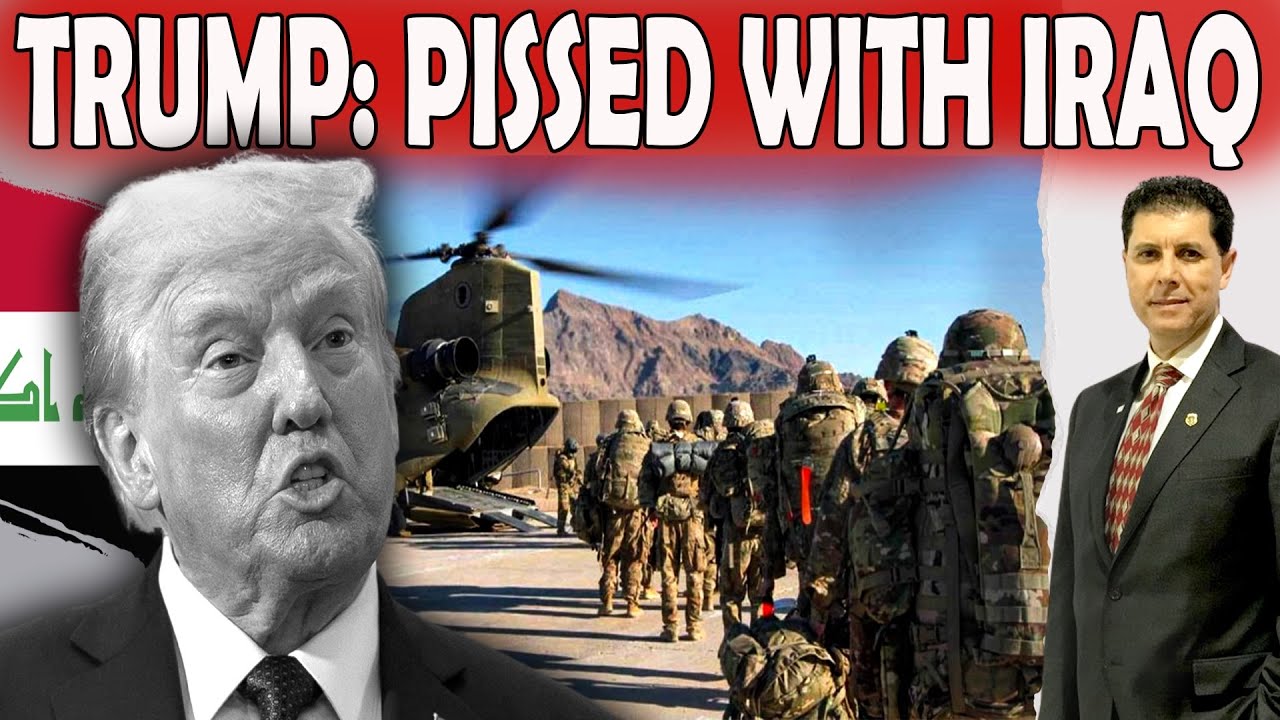
David Oualaalou examines whether the U.S. military presence in Iraq is at risk. The video analyzes current geopolitical shifts and what expulsion would mean for American interests in the region.
Chapters
Hello everybody and welcome to Geopolitical Trends, where truth matters. Excited to be with you as always, always, and I mean it when I say it. So I have an interesting topic for you, something I'm very, very familiar with. I spend a lot of time in Iraq, so we will be talking about, uh, is Iraq preparing, uh, sort of for the US to pack and leave its territory? Looks like it, or looks like that way, and it is way overdue. So this is what I'm be going to provide you my analysis about. I'll share with you some excerpt from one of my books when I talked about, uh, particularly the Iraq-US relations and what lies ahead moving forward. But first, let me say hi to our, uh, uh, inquisitive, uh, uh, community, as one of you mentioned this term. Uh, so let me say hi quickly. Just 22, good to see you. Lane 8532, good to see you. Oh, thank you Miles Anderson for becoming a channel member. Good to have you here and welcome to our community. Uh, Francis Tango, as always, I haven't seen you for a while, Francis. Hope all is well. Uh, Mazahardin, uh, good to see you. BSG10, hello to you. Uh, welcome, uh, to a live stream here. American Citizen, good to see you. Taiwan Still Same, Samir Karim, good to see you. Wow, from Iraq, you're joining us from Iraq. Good to have you here. So, uh, okay, let me, uh, get on with what I'm going to be talking about, but first I want to give you some, uh, heads up regarding what's coming up tomorrow. Remember to join me tomorrow for my conversation with Melissa Camp— uh, Park, I'm sorry, Melissa Park. So I will be talking with her tomorrow regarding nuclear disarmament. It, it's something you truly want to hear about. It's a conversation— it's not a lot of— usually it's in internal, uh, uh, uh, circles, but she was kind enough to agree to come on the channel, and she's going to be sharing with us her insights regarding this topic. Also, uh, on, uh, on the 22nd, uh, I will be, uh, conversing with my dear friend Carl Zah. He would be here, so we will be talking, uh, about a host of issues, usually our monthly conversation. And also, I'm preparing a particular, uh, topic for you for Friday, uh, this one has to do with the European countries specifically. Uh, and the reason why I want to do this, because a year and a half ago I warned about this particular country, and, and it just sort of— my, uh, my, uh, my prediction, uh, materialized now. And I'll be sharing this with you. I don't want to get ahead of it, but, uh, but, uh, first I want to share this picture also. Take a look at this picture and tell me, please, what do you see? Like they say, picture is worth a thousand words. Oh, I mean, if this is not humiliation and loss of dignity, I don't know what is. Europeans have no backbone whatsoever. They are spineless, sitting like in a principal's office you know, being schooled, and none of them had the gut to stand up and say, listen, Mr. President, this is not even a right or appropriate setting to be negotiating or talking with us. But again, that's Europe for you. So what do you guys think? Just leave me your comments once again on this picture, just in one word or two. So, all right, let's get into our topic. And again, and by the way, hope you enjoyed my conversation yesterday with Ina Tengan and Warwick Pao. For those who missed that very, very informative and enlightening conversation, I'm going to put the link in the chat box for those who missed it, and you can listen to it later on. It's, it's a, it's a, it's an hour and 30 minutes conversation, but it's worth listening to it. So now, as I mentioned, today's topic, we'll be talking about, uh, Iraq checking out US forces, and that is Is this why Washington is so furious? It's so pissed. Like, who cares if Washington is pissed or not? So, well, let's just say, uh, at least, uh, the US is saying, well, Iraq cannot have a deal with Iran because this is all about a security deal between, uh, Iraq and Iran. So, and under this security deal Iraq will not allow any group— that means Americans included— to use its territory, uh, against Iran. And rightly so. Iraq is within its right to ask the US. Actually, it's overdue. We, we overstayed our stay over there, so let's just be honest about it. So, and, and this leads us to the question of why is the US angry about this security deal between Arab and Iran. You know, we are entering into security deals with Japan, uh, South Korea, Philippines, Australia, and, and the, the Europeans, the incompetence and so forth. So why nobody else is so upset about it except that the US now is very upset? So this is what I'm going to be focusing my analysis on And I'm going to be reacting to an article was written by, uh, by, uh, uh, a publication called WANA. And it was a particular author by the name of R. Hijazi. Uh, she wrote this very, very interesting, uh, piece, and I had a chance to read it. That pertains to what I do usually for my reading from around the world. I don't focus just on what's coming out of Washington because I don't Trust it, simple as that. So, well, just to let you know, uh, uh, just to give you a brief, brief background here before I'll get in, into the nitty-gritty of it. Right after the end of the Iran-Israel military conflict, which is the 12 days right after it, about 2 or 3 days later on after that, Baghdad hosted a visit by an Iranian official. Usually this was not some sort of a political figure, it was a military individual, and by the name of Brigadier General Ismail Qaani. I'm going to share a picture with you of General Ismail Qaani. Oh yeah, it's right here. He's the head of the Quds Force. So now, this is not an ordinary visit. Why? Usually because usually you will expect a diplomatic, uh, visit from— as a routine exchange of, uh, visits between the government of Iraq and the government in Iran. This one is very different. Why is different? Is because during this trip, Brigadier General Qani exposed certain scenarios that revealed the footprints of the Mossad inside Iraq. So the Mossad not only penetrated Iran, it also penetrated Iraq. So, and this one gives you an idea as to why the US is pissed, because the next move, it's going to be the official request by Baghdad or the Iraqi government to ask the US to pack and leave, the same way Niger did with the US. It got the US 3 months, said by the end of these 3 months we want you leave, and we end up leaving because it's a sovereign state. They have the right to do that. And I'm just wondering how this is going to be, and this is what I'm going to be sharing with you, my own analysis about. So But I'm going to do geography and history to put things in perspective for you. So let me share a map with you here, and I'll give credit to World Atlas. This is where the map is from, uh, and I wrote extensively on Iraq, so I'm kind of familiar with the, the country. Let me make this bigger here, full screen for you. Okay, let's look at geography here just to put things in perspective. Well, Iraq is, is like an independent and a sovereign, uh, Western Asian country. Um, it is located in the northern and the eastern hemispheres of the Earth. It is bordered by 6 countries. Those countries are Iran, to the east, Kuwait to the southeast, Turkey to the north, Syria to the west, Jordan to the southwest, and Saudi Arabia to the south. And the country, I mean in Arab, that is, has a sort of a coastline of about 50 kilometers, 56, somewhere around that, about 36 miles. Along northern end of the Persian Gulf. This is very, very interesting to understand when you look at the, the countries surrounding Iraq. So all Kuwait, uh, Saudi Arabia, then you have Jordan here and Iran on the east and Turkey on the north. But this is on the Persian Gulf. This is again with that coastline near al-Basra and so forth. This is what's important to understand about this one here. Now, regarding the geography of Iraq, it is very important to understand— is, I'm sorry, regarding the history of Iraq. So, and I'm gonna be touching briefly on this because once one thing comes to mind regarding the history of Iraq is that a lot of people do not know in the West that Iraq has a really long and rich history. No, because if you do not know, is that Iraq is considered the cradle of civilization. I know one fact about Iraq and, and how old and how influential Iraq was, is that the grammatical rules, the grammar in the Arabic language, were set in Iraq. That's how important Iraq is. So, and this of course, being the cradle of civilization, was due to Iraq's location in ancient Mesopotamia. That's how far back ago where some of the world's earliest civilizations emerged. I mean, we're talking about Sumerians, we're talking about Babylonians, and we're talking also up to the Islamic empires that took place. And of course, when you move forward into the modern era, a story in of innovation, conquest, and yes, resilience as well. So, so I'm going to take you back to a few historical epochs or eras, that is, then we'll move on into our analysis. So, so let's start with the 3000 BC to 637 AD. And this era was known for Sumerian. Sumerian, whereabouts? The 3000 BC era. And Sumerian established the first civilization that existed in the region. So, uh, this is what it's known for because in Sumerian time they developed urban centers like Uruk. It was known, and there is a record and historical facts about it. Then in 2000 BC, who came after them was Babylonians. Babylonians rose to prominence, uh, to those who know a little bit about history in this part, with none other than King Hammurabi, which is well known, who set the rules and so forth. Hammurabi established the code of laws. I remember when I studied history back in in, in even certain parts in high school I had to study about Hammurabi. That's why I was— I remember. So the code of laws. Then after that came Akkadians and Assyrians. They appear around almost the same time. These empires also flourished in the region and contributing to the well-known Mesopotamian advancements. And after that came the Persians the Greek, and of course the Roman influences. All those three— the Persians, the Greek, and the Romans— had an influence on Iraq, on modern-day Iraq, that is. So why? Because Iraq at that time became part of a major and a larger empires, not just the Romans, not just the Persians. So, and this was experiencing, as I mentioned earlier, the three sort of empires of the Persians, of the Greeks, and the Roman rule. So fast forward to the Islamic period, and this one goes between 637 AD to about 1534 AD. And this, of course, marked the Arab conquest. So Arab conquered Persia, as you know, and that's when Islam, the religion of Islam, Islam. It was introduced to the region, and of course, this is when Baghdad, the capital of modern-day Iraq, was established as a major center of the Islamic culture and learning. Once again, I had a chance to visit Iraq on many, many occasions. I used to go downtown Baghdad. I went to, for example, uh, what's his name? He was a well-known poet. Jeez, I draw a blank on his name. Anyway, it'll come back to me. It was well known in Iraq, and they even had an entire block or a boulevard named after him. So why? It's because Baghdad played a major role in advancing the civilization from that time. Then what came after it was the Abbasid Caliphate. That's the one when Arab conquered, sort of, when Baghdad became the capital of the Abbasid Caliphate, al-Abbasiyun as known in Arabic. So, and that one, it is known for what's called in the historical record as the Golden Age of intellectual and cultural development. And that's why I wish a lot of people in the West really dig into history and understand the role of Iraq. And the reason I'm sharing all this with you, just to make a point as to why, for example, when some of us back in the day we were arguing against the invasion of Iraq, is because we were arguing that we do not understand the history because we're gonna turn things upside down. And that's exactly what ended up happening. So there was, however, one major event that took place around the 1258 AD, and this one has to do with the Mongols' invasion. Yes, it took place. The Mongols' invasion led to the destruction of Baghdad and a decline in its prosperity. So, and of course, right after that came the Ottoman and the British rule. This one extended from 1534 to 1932 AD. Of course, the Ottoman Empire, and there, and the Ottoman Empire, or Ottoman, or Ottoman Empire, came under this rule which lasted for centuries, by the way. So, and, uh, and that one was known with a brief, uh, time frame for the Safavids interlude. And I wrote about this in, in my Iran book Sabadids, uh, played a major role in really, uh, shaping the, the trajectory of history in that part of the world. And after that came the British Mandate. Of course, the British always made a mess of every place they were, uh, they were at. So following World War I, this is when the British gained control of Iraq, establishing what's called the Mandatory Iraq Uh, which to me was like, it was nothing but to take control of its resources. So modern-day Iraq started from about 1932 all the way to today, because 19— 1932 marks the independence of modern-day Iraq. Or of course, that's when Iraq gained its independence from the, the, uh, as the Kingdom of Iraq. It used to be a kingdom, by the way. 1958, and I'm moving briefly here. What happened? It was the revolution led to the establishment of the Republic of Iraq. Because if you think about this time frame, the 1950s, some other Arab countries like in Syria, like in Egypt, and so forth, were, were known for the revolutions that were taking place as under the Arabism or nationalism at the time. Uh, led by at the Jamal Abdel Nasser for Egypt, Hafez al-Assad at the time in Syria. And of course, what came after this was Saddam Hussein. And Saddam Hussein era and the Ba'ath Party seized power, leading Iraq through wars with Iran, Kuwait, and of course paved the way for the 2003 invasion of the US of Iraq. And of course, all you know what happened after that post-invasion is that Iraq faced challenges of rebuilding, sectarian violence, and the rise of some extremist groups. So, and I will be touching, uh, uh, one more thing before I'll, I'll, I'll move on to the analysis. There is one thing you need to know about the ethnicities, the languages, okay, and the religions inside Iraq. Iraq is like a mix of, of all this. And yet everybody was living peacefully. So, so, uh, Iraq today is about, uh, give or take about 40 million, uh, uh, people, if I'm not mistaken, give or take. So 75, uh, uh, to 80% of Iraqi population comprises of ethnic Arabs, not the 100% as some people might think. So then you have the Kurdish ethnic groups, which represent about 15 to 20%. Of the population, and the rest includes Turkmen, Yazidis, Romani, Assyrian, and other minorities. So Arabic and Kurdish language are the official language or languages of Iraq. I remember when I was in Baghdad, you speak Arabic there. When you go to Kurdistan, you speak Kurdish there. So Of course, I don't speak Kurdish. And the distinct ethnic communities inhabiting Iraq also spoke their own, and still speak till today, their own dialects. So as to religion, Islam is the— Islam is the official religion of the state. Around 69% of the Iraqi Muslims are Shia. 69, almost 70%. While the rest are Sunni. Now, don't ignore that there are also Christians, account for about 1% of the population inside Iraq. So very, very interesting. Liking this video so far? Don't just be a watcher, go ahead and hit the like, share, and subscribe button. And don't forget to tap the bell so you will not miss any of my videos or live streams. This way you will be supporting a channel that stands for the truth and objective reporting. The choice is yours. Thanks for your support. And indeed, thank you for your support. Now, before we delve deeper, we need to at least provide, uh, some sort of an understanding how many US troops are on the Iraqi ground as of today. So back then when I was there, you know, the whole, uh, I mean, actually the brigade, uh, or, or the, uh, yeah, it was Fort Hood and Fort Gordon. Those two were sending in addition to, uh, uh, the divisions from New York and so forth. So basically there were a lot, a lot of units back then, but as of today, they're approximately between 2,500 to 3,000 US troops stationed in Herat. You know, they are part of what's called the Joint Task Force Operation. Uh, uh, this is, uh, it's, it's the Pentagon is saying, oh, the mission of this is to advise, assist, and enable partner forces in the fight against terrorism. Well, yeah, we all We all know how it usually ends up, you know. And the thing is, when they say this mission is designated, uh, uh, areas of Iraq and Syria, we're not only in Iraq, we are also in Syria. So, and the US also maintain a military presence in Syria with around 2,000. So when you combine the two, you're looking at about, uh, 6,000. Those are announced. We don't talk about special forces, we don't talk about the Al— because usually there are some. And this is the idea of why is this important at this point. And again, when I read the article, which was very, very interesting, the idea that, uh, when the visit by the Brigadier General, the Iranian, to, uh, uh, visit Iraq, sort of the question of rebuilding the security structure between Arab and Iran start to take shape. And as a matter of fact, is not limited to just Arab, that includes also Lebanon as part of it, and maybe Yemen to a degree, but Yemen is going to be on a different trajectory altogether. So, and the idea of this security continuum, that's going to be sort of the idea of it, was reinforced by share the intelligence. This is where it's going to be. And the pro— not the problem, but Iran runs to a major problem regarding the penetration of its intelligence service. Well, Iraq also did. And as a matter of fact, during the 12-day war between Israel and Iran, Iraq was used for— to, to that end. Because that's what the Israelis do— did, rather. Mossad had operations in Iraq. So, and this is when you had the visit currently by this, uh, gentleman here. This is Ali, uh, Laranjani. Ali Laranjani played a major role in the Iranian government. So, as a matter of fact, I remember him during the negotiations regarding the nuclear deal back then. Ali Laranjani also was a member of the parliament But currently he is the, the Iran's, uh, the Secretary of Iran's Supreme National Security Council. So, and this is why his visit means a lot. It's because it forces— this is his, uh, meeting with his counterpart, the head of the Iraqi intelligence service, uh, that is. So the important thing about this is that This visit signals the sort of the moving forward of the, uh, uh, formal security agreement, and that is one that Washington is openly angry about. Well, we're going to ask ourselves, who cares if the US is angry about it or not? Isn't Iraq a sovereign state? Isn't Iran a sovereign state? Aren't they allowed to enter into whatever bilateral agreements they want to enter into? So why will the US be so angry about it? Because Washington is furious. As a matter of fact, they staying mum about it. That is the reason why I wanted to bring this to your attention. So, so, and as a matter of fact, just by having Iran visited Hera and started the conversation, uh, uh, uh, conversation and the formal structure of this intelligence alliance. They were able, as their first tangible outcome, they were able to foil a terrorist plot during the massive al-Arba'in pilgrimage. So to those who are familiar with the Arab culture and Islamic traditions, the Arba'in pilgrimage. This is a major for the Shia community and also some of the Sunnis, but majority is known for the Shia. So what is the Arba'in pilgrimage? Arba'in means 40th, 40, 4-0. This is a massive annual Shia Muslim event And this one marks the 40th day after the Ashura commemoration of Imam Hussein's martyrdom. This is one of the things Shia sort of celebrates. So because— and I remember when I was in Iraq, I witnessed this during the time frame. A lot of, a lot of Shia come over to Karbala. It's known for that. So to those who are familiar, uh, with the, with the tradition. So, so millions of pilgrims, predominantly Shia Muslim but also including others from other faiths, also travels to the city of Karbala in Iraq. And the reason for that is to participate in this pilgrimage. So the event is known as the world largest peaceful gathering. So now it is significant, so because the Arba'in is, as I said, is a major religious observance for Shia Muslims. So, and that is where they commemorate the end of the mourning period. In the Arab and Islamic traditions, you mourn for 40 days. That's usually the tradition. And the mourning period of Imam Hussein Who, who is Imam Hussein? To those who are familiar with the religion of Islam, Imam Hussein is the grandson of the Prophet Muhammad. So this is why you just need to understand the background to put things in perspective. So, so now let's talk about this security agreement between Iraq and Iran that is pissing off Washington. So Larjani, the individual, the head of the Secretary of the Iran Security Council, this one right here, uh, it was an interview that he explained that the core agreement, uh, for this is to establish some sort of shared security space between the two countries. Now, when you think about this, you're going to have to think outside the box Does this mean that Iran is thinking about something major about to happen and you want to prepare? When I say something major, I am referring to proba— possibility another military conflict with Israel. That is exactly what I'm referring to. The possibility is there because for Iran to go ahead and set all this up this fast, in addition to testing its air defenses and all that, that, that gives me pause to think about they are— must be preparing. They know something is coming and they want to be ready for it this time, once for all. So, and the thing is that Lajjani, the, the head of the, uh, the Secretary of Iran's National Security Council, is that he expressed that during the experience of this 12-day when the US uh, attacked the nuclear facilities and Israel conducted the airstrikes and so forth. Uh, it showed in parts that Israel's operations have relied heavily from or on third countries. That includes also Iraq, without even Iraq knowing it. But one thing Iraq knew, that its airspace was used Otherwise, how will, uh, uh, Israel's, uh, uh, fighter jets move into Iran? They have to cross through airspace. This is why I'm saying some other countries have— I did a video for you guys about the, especially the Sunni, the Sunni corrupted, uh, uh, uh, countries in the Arab world, the Sunni ones: Jordan, Saudi Arabia, Kuwait, United Arab Emirates, Bahrain, Qatar, and Egypt. I will add Egypt to the mix to that. All of them contributed and supported Israel, uh, against Iran. Make no mistake about it. So, so, and the idea that one thing that I found very interesting is that Lajjani is presenting this argument not in terms of fighting the Americans or the Israelis, whatever. Rather, he used specific term, common understanding of the Islamic Ummah. End of quote. Islamic, meaning the ummah, the, the, the whole, the faith of the Muslim countries. So is Lajani playing on the, uh, that, that aspect? Possibly, possibly not. And most likely it is the case. Nonetheless, in his argument, this is not about just security, it is about also uniting the Muslim ummah. But how can you do that? How can you do that when For example, what's taking place in Gaza, you know, are there any Muslim countries taking stand beside Iran and Ansarullah or Yemen? That's about it. So I mean, do you see Saudis challenging, uh, uh, what's going on in Gaza? Do you see Jordanians, Egyptians, uh, uh, and others? No. Even Turkey. Turkey just talks but no actions. And this is what I'm trying to present to you, the idea of you have to transcend the political factions, you have to transcend the ideology and focus on the unity. And this is exactly what's pissing off Washington about this. So when you think about, uh, the idea, the reports that coming out, which have surfaced by the way, and I'm going to provide you a link to all this in the description. And those reports, of course, they were coming, uh, uh, from Iran's intelligence agencies. Iran has handed now a list of about, to my knowledge, about 300, 350, 380, uh, names. This list has the names of individuals and those and the units also that were affiliated and still are affiliated with Mossad in Iraq. So, and again, we're not going to jump to conclusions. If this is true, the implications are enormous. So, but also it is becoming clear as to what Iraq needs to do. It's to need— it needs now to conduct a massive purge of its intelligence service. I'll share personal story with you during my time in Iraq. So, and again, I had a chance to be part of certain talks with high-ranking officials inside the Iraqi government at that time during Nouri al-Maliki, who was— is as corrupted as he gets. I never trusted the guy even sitting, uh, uh, uh, uh, during the meeting, whatever. I never trusted the guy. So, but anyway, the idea that— and we were dictating the terms to the Iraqi government, by the way. It wasn't Nouri Maliki. Nouri Maliki was stating what we are giving him the talking points to say. So what you have to think about Iran's approach to all this is this now by creating this security alliance that's not going to be limited only to, to Iraq, it is also going to extend to Lebanon. Why is this important, especially for the two countries, for Lebanon and for Iraq? Because there is now one particular call from the governments in both countries asking for factions to disarm. In other words, to turn this these weapons. Uh, it will be a huge mistake if they ever do that. You know, I don't see Hezbollah is going to turn over its weapons. That would be a mistake. And Iraq, Sudan, the prime minister of, of Iraq is kind of calling on factions to turn in their weapons to disarm. No, no, they're not going to do that. They're not going to do that. So Because once you strip— this is exactly the mistake Australians made. This is the same mistake the Canadians made. The Canadians and the Australians went in and turned in their weapons. The only thing they are allowed to keep is a hunting rifle or something. That's about it. Even in America here, the government, when Biden was, uh, was in, in charge, the incompetent Biden was trying to, you know, allure the, the Americans to turn in their weapons. And we were like You must be out of your mind, because if you go inside every home in US, you will be— you will find the minimum of 3 to 4 weapons inside. So, so, and this is again where you think about, uh, uh, the, the concern the US is having all this, you know. And this is the obvious reason why Washington is so pissed about this. Why? It's because if this intelligence alliance is established between Iran, Iraq, and soon to be Lebanon— but for now Lebanon is out, it's just Iraq— this is going to be the closing of Israel's infiltration routes to Iran. So, and of course, not only Israel but also the United States intelligence shrinking inside the country, inside Iraq. This is why the US is pissed, and this is why to me it's like overdue, you know. Uh, Iraq established its own government after the fall and all that stuff. All it's done is the past. Now it's time for the US to pack and leave. And yet the prime minister of Iraq didn't have the gut He was in Washington, I think a year ago or so, you know, didn't have the gut to say, you know what, we need to sign a pact for you to pack and leave. It's exactly what Niger did. So, and this is where you need to understand where this is headed. Think about the bigger picture, and the bigger picture is we wanted to maintain our presence in, in Iraq because our presence in Iraq paved the way for us in Syria and also paved the way for us to deal with Iran one way or another. Remember, when you think on the other side, there is Azerbaijan, which is the back door for Israel into Iran, but also Iraq was also another back door that the Iraqi government was not even aware of. Mossad were operating, uh, over there. And this is one of the issues the United States is very, very concerned, and that now to the point of being upset, which in my opinion shouldn't. Why should we be upset if Iraqis don't want us there? Then that's it, you just pack. That's like when you invite a guest, if a guest extends his stay or her stay, you know, politely you're going to say, you know what, time for you to pack and leave. Straightforward. So there is nothing, nothing strange or weird about it. So because the longer the US remain, the, the less likely Iran will be viewed as a sovereign state. Give you two examples— three— Germany, South Korea, and Japan. And as a matter of fact, I read yesterday, uh, uh, some reports from Japan that there is a conversation now about Japan wanting to cut off this dependence on the US. I don't know if it was just political stunt. Can they go forward with it? I don't know. But for now, suffice it to say that the presence of troops, whether it's 1,000 troops or 30,000 troops, the optics of it That sends the message that you have no sovereignty. And again, look at Germany, how many, uh, how many troops in US. And this picture gives you an idea right there. That just to me was again humiliation beyond belief. It's almost like when you come over to the principal's office. So, but that's the European for you. So And here is the thing, the problem— why the issue why the Iraqi government want to disarm factions, because there were some conflict, armed clashes between two brigades inside Iraq, the 44th, the 45th Brigade, I remember reading that one, and the 48th, or the 48 or 46, one of those, don't quote me on this. I know for a fact it was the '45 and either the '48 or '46. So, and those are what's called the PMF, the Popular Mobilization Forces. The issue with the US, the US has been pressuring Sudanese, the Prime Minister of Arab, pressuring him to dissolve the PMF. You know what it means if you dissolve that? That means you have no— because in my opinion, Soudani, the prime minister of Iraq, is too weak. It's too weak. It's the same that I say about Europeans, I say about some Arab leaders, you know, it's too weak. I mean, you compare that to what Ansarullah are doing, no comparison whatsoever. So But the point that if we pressure him to disarm the PMF, that'll pave the way for us to do so. So, and this is again where you have now inside the era, there is the argument. There's one camp that favor direct confrontation with the US. Yeah, it's their country. You're, you're almost like invading their country. They want you out. You pack and leave. If you don't, they're gonna fight you. And even this camp, according to the article that I read, and it's accurate, they are willing to fight even at the expense or at the cost of instability in Iraq. That's, that's, that's how much they are believing in, are convinced about their cause. So then there is the other camp, and the other one, as the article mentioned, and rightly so, This sort of thinking in terms of political stability, they want to preserve the, the political stability, but that political stability only feeds into corruption. It's because obviously to those who are pushing for that, they want to steal benefits from the system. Because remember one thing, and this might shock you or surprise you, do you know that Iraq's oil revenues are not going to Iraq. They come into New York account at the New York, uh, uh, Reserve. That's where they are. We are the one holding the account for Iraq's energy profits. Why? And this is why when you see why the US is pissed, because this is going to pave the way for the Iraqi government to have some sort of independence. And that independence will come with possibly making arrangements or agreements with some other countries like China, for example. Why am I mentioning China? Because I was aware of one particular case while I was in Iraq, and later on I learned about something else. And that something else was that China was building so many schools for the Iraqis. The US didn't do it. The first incident was when I was in Iraq. The Iraqi government gave a contract for oil exploration to the Chinese, not to the American ExxonMobil, because the Chinese will build the infrastructure, because this is what those countries are lacking, and this is what— where we want to see them. We don't want them to improve. So it's the same argument I've made about the countries near India, like Bangladesh, like Bhutan, like Nepal. So, and once again, I know there are those— I've been reading the comments, uh, you know, it just doesn't make any sense. Those people are not understanding that I'm not saying that you, you know, you ban India, whatever. No, no, no. All I'm saying is You know, you cannot trust India till it proved that is trustworthy. Simple as that. So in the case of Iraq, it will be better off with the Chinese than it will be with the Americans. Simple as that. Because I know what we do versus what the Chinese do. And this is exactly one of the key points that is now why there are two camps inside Iraq. One that favors confrontation with the Americans even at the expense of instability, and the other one that said, no, no, no, no, no, no, we want to preserve this political so-called stability. Yeah, and here is the thing, we already called the— used the name of resistance axis. So, so you, you, you know, this term's been repeated Washington. So, but there is also another argument is that US strikes on Iran, the nuclear facilities, uh, uh, this one has kind of paved the way for Iran to think in terms of an energy— for an energy war. What am I referring to here? And this is according to the article also. There was— it's a good point A good point. I did not read anywhere else where they have addressed such a key, very key, uh, strategic point here. And the strategy suggests that in response to pressure on Iran's, uh, nuclear program, American oil and gas infrastructure in the region could be targeted. It makes perfect sense. Because who— now we're going to be selling gas to LNG to Europe at 5, 6, 7 times the price, you know. Where do we get our oil from? We get it from the Saudis. Yeah, we get it also from Iraq to a degree. So, so Iran is saying no, this strategy will have to be also implemented and be part of that. And this is why you have to think on the big picture from a security perspective when you think about regional security, or even international for that matter. But for now, we'll focus on the region, that is. So, uh, uh, Tehran sees this security agreement with Iran as part of a much larger strategy, and rightly so, rightly so. And this is why, in my opinion, and I couldn't agree more with the content and the premise of the article, is that Iran strategy, it's on a larger scale. This is why it is moving into that direction of reorganizing this resistance that exists around the region. We're talking from Lebanon, Iraq, and Yemen. Because you have to think about in terms of reorganizing these components in one condition, and that condition is you give them the freedom of decisions. In other words, they don't have to wait for the green light from Tehran to act. Exactly what Ansarullah or Houthis are doing. As a matter of fact, Ansarullah just launched another missile uh, like towards the end of last week in, in, in Tel Aviv on Ben Gurion Airport. So, so, so be they in Iraq, be they in Lebanon, be they in Yemen, so that means these groups can operate independently. So this is one thing that the US is concerned, and this is precisely what the United States and Israel fear the most. So, because when you think about— and I, I mentioned this before— when you think about the coordination of these entities together, so the real, real connection, the real linkage, you know, so this will allow them to operate independently, yet they are coordinating a much bigger picture. So, and when you think about currently, if you are to have a bird's eye view on the region and you said to yourself, let's just pinpoint exactly where the battlefields are, you know, you're gonna pull up three. You're gonna pull up Gaza, you're gonna pull up Lebanon, and yes, you're gonna pull up Iraq. So Because in Gaza, you're looking at the blockade that is continue, uh, over there. And what is the reason of it? Is to eliminate the resistance altogether. When you look at in Lebanon, what is the issue right now with the US envoy has been going to Beirut to pressure the Lebanese government to force Hezbollah to disarm. So in Lebanon, under political and international pressure, to disarm Hezbollah. And when you look at Iraq, so this is where you see the media and the political campaign against the PMF with internal crisis moving in a different direction. This is exactly why the US is pissed at Iraq. The question we need to ask ourselves is whether Iraq will take stand Like I said, I did a video about 2 years ago, uh, I'm gonna get a link for you right here, uh, because I, I kept it somewhere. Yeah, 2 years ago, uh, when, when Iraq made the decision to ditch the US dollar. I know I was criticized for that. I'm gonna put it in the chat box for you, uh, you can watch it later on if you choose to. And interesting enough is that video, I was surprised, it got like 100, 90,000 views, whatever. I was, I was even surprised, but it wasn't about that. I questioned at that time, was it— why now? But what surprised me the most is that here is Iraq decide to go on that route, but they couldn't ask the US to leave. So that just doesn't make sense unless some hierarchy inside the Iraqi government was bribe, you know. I'm— I was there, I saw as it was going on. You can't trust them all, and not all of them are bad. Let me just be clear about that one. And this is one of the reasons why the United States is very, very concerned about this. So, uh, and as I argued in my book, I think I wrote this one It's not I think, it is. I wrote it in the Eran book. Eran book, yeah, yeah, that's what it was. Even back then, and I'm paraphrasing here, I think I kept one excerpt, but let me just start with what I'm thinking about back then. At that time when I did the research regarding the Eran book, remember that was after I came back from Iraq and a few years later and so forth. So, and even back then I argued that I do not subscribe to the notions regarding the Iran post-nuclear, uh, agreement, uh, advances either, uh, its ideology or religiously speaking. Iran had narrow, uh, or even to those who argue, oh, it's Iran's attempt to dominate the Muslim world. It's nonsense. Literally, it's nonsense. No. And even before— that's what I remember— even before the nuclear agreement. So the invasion of Iraq, you know, the American foreign policy double standard, the civil war in Syria that was taking place at that time, and still, by the way, going on, especially in Sueda right now, and the upheavals that were taking place in Yemen with the support of the US and some Arab countries, including United Arab Emirates and, uh, Saudi Arabia. They were bombing fellow Muslims. So, and of course, I didn't forget about the military coup that took place in Egypt at that time. And of course, the failed state of Libya, which we created, uh, by the way. And all this, I argued back then, that demonstrates that religious differences are exactly what divides West Asia or the Middle East, that is, in religious terms. In other words, you got the Sunnis, you got the Maronites, the Druze, the Shiites, the Christians, the Arabs, and so forth. So, and this is why, in my opinion, I argue back then, and I still believe, I still stand by my statement. It was back then, and I still do today, that it's because Saudi Arabia is unwilling to relinquish the so-called religious leadership. This is what it's all about. I mean, tell me exactly what the Saudis are doing for Gazans right now, what the Egyptians are doing for Gazans, what the Jordanians, the United Arab Emirates, Qatar, Bahrain, Kuwait, you name it. Yes, there were some demonstrations in Morocco. I remember seeing that in Casablanca, major one. You know, yeah, demonstrations are good and all that, but that just doesn't change things on the ground. And here is what I argued, uh, regarding Iraq in, in, in— and I think I wrote it in the Iran book. So, uh, let me just share this clip with you here. History shows that certain conditions indeed preceded and provided an opportunity for the reemergence and revival of Iran's Shi'ism ideology. Chief among them is the 1979 Iranian Revolution. If the Iraq invasion revived Shi'ism after its long dormant era, the 1979 revolution laid the foundation on which the ideology could withstand the test of time. For this reason, I assert Iran strengthens its ideology ties and maintains its support to the Shia communities in Lebanon, Syria, Iraq, and Yemen. The objective always has been and continues to be for Tehran to enhance its political influence, and rightly so. This is what it's all about. We do not want— see, there is a convergence of a unity that is emerging, because that's going to prevent access for Israel and the United States. So, I mean, tell me right now, I'll take you back to the Sahel region with the, with the, uh, US being asked to leave and they left, uh, Niger. Do you hear anything? Of course there were few hiccups here and there from some armed groups that are funded by the West. We all know this, it's not a secret. So, and this is exactly where the issue in, uh, why Washington is furious about, uh, uh, Iraq entering into this security deal with Iran, because Mossad and the US and CIA for that matter will not be able to operate freely. Because remember, there are a lot, a lot of the list of that, uh, 160 individuals and entity— 360, uh, uh, individuals that include the double agents inside those countries. So it'll be interesting to see how they're going to move forward on this. That's all I have to say. That's all I have to share with you guys. So let me see if there are any questions here. First of all, I want once again, Miles Anderson, thank you very much for becoming channel, uh, members of the channel, and welcome to our wonderful community. So good to have you here, uh, Rafael. As always, your support and your generosity is greatly appreciated. I want you to know that. So you wrote, Prof, serious question: can Putin walk and chew gum at the same time? Is this man too naive and too pacific? Pacific, okay. Uh, for the moment, uh, not right man for this time. I see your point. It's just, once again, uh, uh, Rafael, is that for Putin, he is calculating his moves strategically speaking. He didn't want— he doesn't want to jeopardize because there is also the other side of the argument. And the other side of the argument is that if he doesn't do what he's doing now there could be a rebellion. In other words, the Russians could turn on him, and he's not willing to risk this, in my opinion. This is how I see it, uh, uh, knowing that, you know, I've been following, of course, Mr. Putin since he came to power back after Yeltsin and so forth. And methodically, his moves are very, very calculated. So suffice it to say, now we shall see. The meeting between Trump and Putin was nothing but a, a disaster because it was a winning, uh, uh, uh, moment for Putin, not for optics of it. That's all, that's all. So, oh, you got another, uh, super sticker from you. Once again, thank you so much. You know, Russia retook control of Syria. Yes, there are some talks between the, uh, the Syrians, Zelensky's government, and envoy and support and the Russians, and they have come to some sort of an agreement regarding the Russian interests inside Syria. Yes, I'm aware of that, and that's going to change the game also. This is one thing Washington does not want to see, and this is why Washington is concerned about what's taking place in Iraq right now. So it's going to be interesting if Iraq, Baghdad, will make the final decision by having the US sign and set a deadline for the US to leave completely. I doubt it, but I am hopeful. Let's hope it will happen. So in any event, uh, to those who have been supporting the channel, I want to say thank you very much for, uh, uh, supporting my upcoming Asia trip, which by the way I intend to leave by the end of the month. So you probably will not see me for, for, for a while, but, uh, I'm gonna reach out to you in my own way. Let me send the link, uh, uh, on the chat box, uh, for those who wants to, uh, support the upcoming trip. And, and thank you for that. And let me show you where we are as far as the, uh, where we are as far as the fundraising for that, because I keep track of all this one. This is where we are as of today. So I, I have another week most likely. I hope we can at least cross over 50%. If it is, if it's not, life goes on. It's not the end of the world. So, but I'm very, very grateful for your support. Uh, to those who wants to support the channel, uh, here is the link in the chat box, uh, for the geopolitical Trends. This is if you want to support the channel. I'll be very, very grateful to you. You can also, uh, get copy of my books, uh, go to Buy Me a Coffee. That's where you buy books there, uh, if, if you want to learn a lot more. And I'd be happy to answer any questions for you once you read the books, or if you have any, uh, things that needs to be clarified, I'd be happy to do it, uh, for the community. And the last thing is my speaking engagement. So I want to share this with you once again. To those who might know someone that is interested in having a speaker, uh, you know, I'm not that type that just go anywhere. No, no, no, no, it's my credibility in line. So you, you know what I cover, you know what I talk about, and I'll be happy to, uh, engage with whomever you know that is interested in having a speaker. So In any event, uh, remember tomorrow to join me again for my conversation with Melissa Park. It's a conversation you do not want to miss, and I have some really, really interesting questions for Melissa. And, and she's a former politician in Australia. She's also a lawyer by trade. She works at the UN lawyer— as a UN lawyer— and now she's the head of the ICON organization. Very interesting entity, and I look forward to my conversation with her. And on Friday, as I mentioned, I, I have one particular country in this European knuckleheads that I'm going to be talking about, and I tie it back to what I said a year ago, and I warned against this particular country. Only now it's coming to fruition as far as what I predicted. So, so I look forward to that conversation. As always, remember Geopolitics impacts your daily life in more ways than one. Till next time, bye-bye.
More from David


Beyond the Single Actor: Why the Gulf Isn't Choosing Between the US and China


Iran, Iraq's Militias, and the Houthis Are Coordinating! This Changes Everything




Who Controls the Next Decade's Resources? Latin America and Africa's Geopolitical Crossroads

The Chokepoint Trap: How Washington's Stupidity Triggered a Cascade That Now Controls the World

Trump Spooked as IRGC Unveiled dual-use SLV, Deployed Ghadir Mini-Subs & Hinted at Tactical Nukes!
