As Tensions Flare up, Xi Travels to Europe! You Won't Believe what he Has in Store!
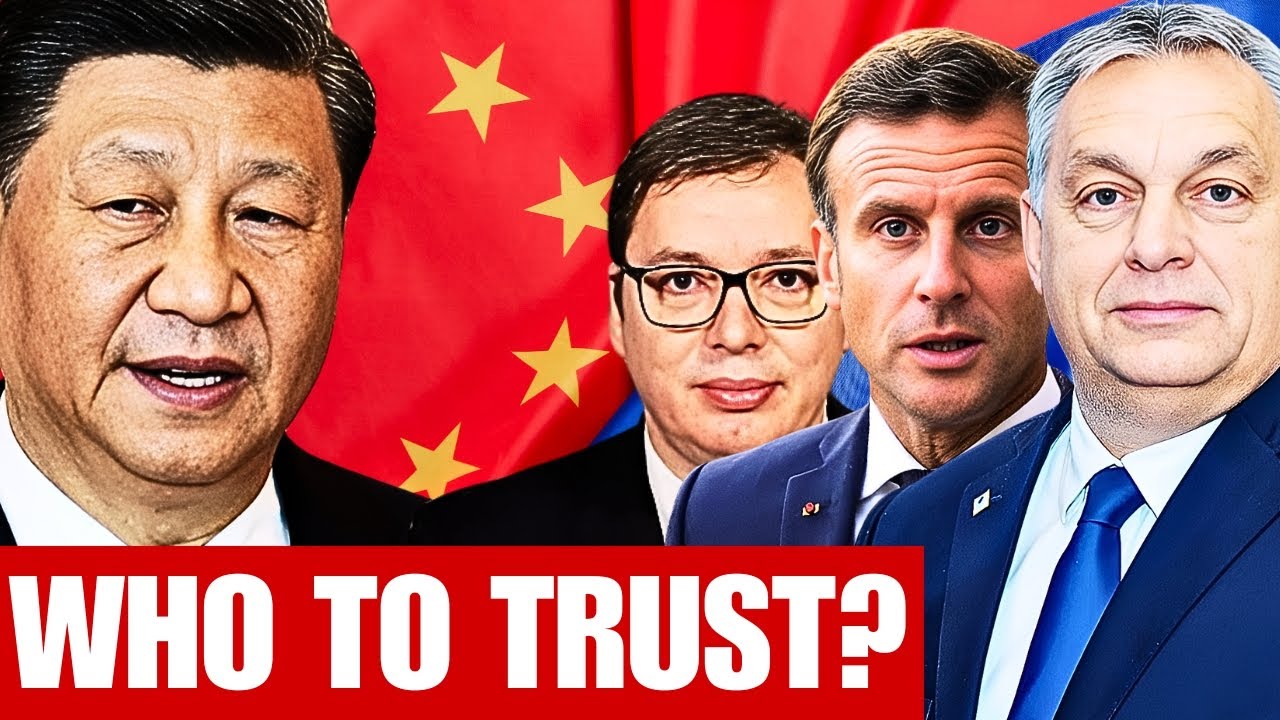
This content was created by David Oualaalou. This content was uploaded by David Oualaalou. This is a YouTube video titled "As Tensions Flare up, Xi Travels to Europe! You Won't Believe what he Has in Store!" (published May 3, 2024). Based on the title and metadata, it appears to be a news/commentary piece about Chinese leader Xi Jinping's trip to Europe amid rising geopolitical tensions. No transcript or speaker information is provided in the excerpt, so participants and exact format (news report, analysis, or opinion piece) are not specified. Thumbnail and creation timestamp are available in the metadata.
Chapters
All right, hello everybody and welcome to Geopolitical Trends, where truth matters. Very excited to be with you as always. Uh, I got an interesting topic for you, is the upcoming trip of the Chinese president, presidency, to Europe. So, uh, I did find out about it a few days ago, but I decided not to, to do the show on it till I verify some information and make some calls and, and, and to ensure the accuracy of the information. So, uh, this is why I'm excited to be talking about it, because there's very, very interesting, uh, a trip, the timing of it. So this is what I'm gonna be addressing for you today, provide you my own analysis, and I'll answer a question or two towards the end. So just prepare a question or two and we'll do that. Let me first say hi to everybody like I always do. Uh, uh, so Marjan Rich, I first time I said his name here, so well, welcome. Phil, good to see you as always. Uh, Avengers to Rescue USA, interesting one. Uh, Cheesecake 99, good to see you. Masian Dorier, Francis Tango, Truth Seeker, Caracolak, Hong Kong, uh, Seymour Fact. Hey, interesting one. So Rampage 01, good to see you. Farhad Razavi, good to see you as always. You too, Z Super, good to see you as well. Hamid City, Amando, good to see you. Uh, all right guys, Timeline Dunkley from New York City, good to see you guys. All right, let's, uh, let's talk about— before I'll do this, I need to give you a heads up on Monday. Remember to join me for my, uh, interview or conversation. I don't like it, I I don't like to call them interviews— conversation. I'll be having a conversation with Larry Johnson, especially after what his presentation at the UN Security Council. So I got 3 topics to address with him. So don't miss that, uh, that, uh, that live stream on Monday, uh, uh, the 6th. As a matter of fact, I do have a link for you. I'm gonna put it in the description. And just, of course, I will post it a day or two before, and you guys can see that one. So, so here I post the link for you, uh, for the, uh, for the 6th, that is. All right, today's topic, as I said, I'm gonna be providing you my own assessments, my own analysis based on what I confirmed, the information that I confirmed regarding the upcoming trip, which will start, I think, on Sunday. Not I think, it is scheduled on Sunday. For about 6 days. So, uh, what is important about this? Of course, as tensions flares up between the US and China— but when I say US forward slash collective West, not all of them of course, but majority— you all know who the, the weak players are. Some. And, uh, so the question that's actually— I do have questions for you, uh, that we need to ask before we delve deeper into this. So here's the first question: why is President Xi going to Europe now? Because remember who was in Europe recently, right? Second, what is expected of this trip? So if he's going now, if he's going at this time, what is the objective? The third question is, why is President Xi bypassing— and I use the term bypassing heavy— I use the term heavy hitters but they are not like Germany and the UK. Well, if you only know what just happened in the UK now, the Labour Party sank the incompetent Sunak. You know, it's bad in England. You know, to those guys, please, if you are from England, just share with, with the community here how things are economically speaking. So the question we ask within this context is, why is presidency bypassing Germany and, uh, uh, the UK. And the last question, which is very, very important to ask, because you cannot assume, uh, that, uh, oh, the US will not be paying attention. Okay, so the question is, what must the US be thinking? Because they is think And here is where the concern for the US is. The US will be looking, for example, at, uh, whether the visit— because it's going to be closely watched here in Washington, believe it or not, except for France. Well, France, of course, France will have to toe the line with the US. But I'm talking about a much bigger picture. And the, the answer to this last question, I'm going to answer it for you guys here. It's because Washington will be watching this closely for specific signs of diminishing support from key US allies in Europe. This is what they're going to be looking for because— and that, of course, when you think about it this way, you're going to have to put this within the perspective of what is the objective of President Xi's trip to Europe. Is it politics? I don't think so. I don't think so. And we're going to get into the details of all this, and of course you reach your own conclusion. So I have two headlines to share with you, very important. The first one, I don't have pictures yet because it just came up, and I intend to do a video for you, uh, soon about it. Russian forces entered a base in Niger where the US forces are. So in other words, it's not fighting. No, no, no, no, no. It's just Russia will be in one side and the US is in another. It's all in the same base. But here is what Western media is not disclosing, is that— and I listened to the, uh, to the, uh, uh, hearing by the Defense Secretary, uh, uh, uh, to Congress, which is useless Congress anyway, uh, What he's saying is that the— what, what it's not disclosed is that Niger has already asked the US to leave permanently. And this is why I decided to do this for you next week. There is a lot going on in that part of Africa, the Sahel region, including Sudan and Chad and Algeria to a degree. So I'm gonna be, be on a lookout for that one, so because it's very, very important. Uh, second one, uh, second headline, I have a picture. Of course, I am not surprised. What are we looking at? We're looking at Saudi Arabia now cracking down on its citizens if they are expressing anti-Israel sentiments. I mean, to the point of arresting citizens. It is, it is. I'm not surprised. As I always say, and I don't shy away from it, Arab leaders and Muslim leaders are so weak. They care less for religion, they care less for Palestinians, they care less for their own citizens. What they care about is the survival of their regimes. Simple as that. So now the citizens of Saudi Arabia have been increasingly arrested for sharing anti-Israel sentiments on social media. So, and by the way, I checked the information. It's not just Bloomberg. I checked from overseas and confirmed the information. I'm going to put the links for you, both from two separate sources, including one inside Israel, and you read the articles if you choose to, and you reach your own conclusion. So, well, here is the thing. Now, there is a concern inside the Riyadh that the Hamas-Israel war, uh, uh, because it's concerned about it. Were they concerned about the fear that the regime in Saudi Arabia might be toppled? So this is where the issue is. Like I wrote in my book, the, uh, the, the Saudi book, uh, uh, Beneath the Veil: The Fall— I titled it the fall of the House of Saul. Just a matter of time. So, so, and this is where I found it very, very interesting. Uh, third topic, which I'm not going to address— I'll address it next time anyway— but it has to do with Indonesia. Malaysia confirmed— Singapore confirmed that Indonesia has acquired spy software from Israel. Very troubling. So I intend to address this one. Next time. So just for you to know about Arab and the Muslim world, what they say versus what they do are two opposites. All right, let's get into our topic here. So now we're gonna have to sort of put a framework for how do we frame the upcoming trip of President Zelensky to Europe, you know, and it's very, very important Why? It's because Western media now is going to be reporting— I know I already read some articles already mentioning Europe's growing appetite to investigate what they view as China's unfair trade practices. So this is what the Europeans are saying, of course in conjunction with the US. Uh, however, if we look at the big picture as to where presidency is headed, it will give you an idea as to what the focus is on. So we're gonna do 3 countries, and I'm gonna start by France first. Second one is Serbia, and third one is Hungary. So I'm gonna address one at a time with some details, and this way put things in perspective. For you. So the first trip, it's gonna go to right here to France to meet with Macron, the weasel Macron. Now speaking of this trip to France, by the way, the commissioner of the EU, the liar Ursula, has been invited. Now I don't know if she was invited or imposed herself. Because I don't trust what the media— I, I know what to look for. When they said she's been invited, no, she's not been invited. She forced herself into— well, because Macron will report to her as part of the EU. So that's why when they said she's been invited, no, she's not. No, because if you recall, when Macron went to China, you all remember who went with Macron. Can anybody remember who did go with Macron the last time he visited China? Let me just see in the chat box if you guys can type in. And, and I was surprised that here it is, he wanted to go to push for France's interest Indeed, Truth Seeker. Indeed, Ursula von der Leyen went with him, but she was overlooked during the trip. And this is why— it's because the concern France, the reason why the stop of, uh, uh, presidency to France, there's of course the trade. There's the French one, that's one, but that's not a major one. The major aspects of this, it has to do with the EVs, electric vehicles. France does not want to be left behind, especially after what France noticed China did to Germany by dropping the car deal. I did a video on this for about 6 months ago or so. All of a sudden China dropped one particular automobile deal that was supposed to be with Germany and the EU writ large. This is what Macron is after, the interest of France, not the EU. Second thing is France wanted to take advantage of this time by asking Xi, President Xi, to step in regarding the Ukraine-Russia conflict. Well, because here is the concern. France announced, oh, we're gonna be sending troops to Ukraine, which you and I know it's a horror. They won't survive. I mean, look, Russia now is doing a display, a parade inside Russia of all the weapons they got a hold of from the West, including the US Abrams tanks. And this is one issue I'm going to address with Larry on Monday. So, so to France, it realized it dug a hole for itself. But if, let's say hypothetically, this is just hypothetical, let's say a deal works out between now and maybe, let's say, July, who do you think is going to take credit? China? No, it would be France, because they say, yeah, we convinced President Xi to convince the Russian President Putin to reach a— now the West is pushing, believe it or not, is pushing behind the scenes for settlement. They really want the Russians to stop, but Russia say no, too late for that, and rightly so. So, and this is why Macron looks at this visit by President Xi sort of to leverage or as a leverage rather for the presidency to use his relationship, of course for Macron to benefit from it. But, uh, no, no, no, it ain't gonna work that way. So now there are 4 key areas that one thing, at least based on what I found, that the conversation between President Macron and President Xi is gonna be focused on. One is Ukraine, but that's going to be just on the surface because the West, including France, they, they won't be able to sway China from not supporting Russia. It's China support whomever it wants. Well, it's the same arguments we can make. Why China is not saying, well, the US, you need to stop supporting Ukraine? China's not saying that. But, but that's one of the issues. Second one has to do with the Middle East or West Asia. It's because France is realizing the influence of China in that part of the world. And third one, a third one has to do with the French wine, believe it or not, because there is a lot of export of French wine to China and they want to make sure that market is still open especially after what just ha— what happened between Australia and China. So, and the fourth item, which to my surprise, and I bet you this, this was just added to the last minute to make it, uh, look like we are pressing on with the human right issue. Yeah, human rights is going to be addressed. Well, shame on France to even be saying this. After what they doing to their students now in Sorbonne University, the same way what we are doing to our students right here in Texas at UT. It is just about an hour and a half, 2 hours away from where I am in Austin. Shame. So what is this democracy? What is this human rights? We say one thing and do another. It's the opposite. And yet France has the audacity to be talking to China about human rights. No. Now, speaking of human rights, it came to my attention, and I am going to confirm this— I saw, uh, one video that came out of Africa as a Chinese employer beating on some African. I'm gonna check on this. I won't trust what I saw because I know how these things work. And I am gonna be, uh, I'm gonna share it with you guys because you know me, I don't sugarcoat things. I don't care what it is because it matters for you to know. But I just do not buy this yet. And I am gonna reach out to some of my sources because couldn't find a link where this came from, couldn't find the author of this, couldn't find the exact location. It will be the same argument that was made about Xinjiang. You all remember, turns out to be nothing but a lie. Nonetheless, I am going to share with you because I need you to see. And again, it is not confirmed. So, okay, let's see here. Full screen. And I just— I don't, I don't buy this. I just don't buy it. I don't buy it. Yeah, there is no way. There is no way. And it says right here, this disturbing footage of a Chinese employer in Africa treating his employees like transatlantic slaves. I don't buy that. So, but I am gonna check into it. I have my own sources to find out and, and go from there. So we're— for France to be talking about human rights, it's kind of like, no, no, no, no, no, no. Oh, France or Germany or the US or UK or Canada or Australia, oh, talking about human rights? Ah, you know, look, look, just what's going on in our own right now. So this is one of the four areas they're going to be talking about. And remember, one key you need to understand: the EU, European Union, and China have not reached another agreement regarding trade. So another free trade, that is, there is no free trade between China and the EU. And at the same time, makes you wonder, why will China even care for that. When you look at the other markets, I'm talking about SCO, I'm talking about ASEAN, I'm talking about BRICS. So why would it bother? Because like we argued before, in a matter of a decade, EU will be— the European Union will be useless. It won't be able to compete because the massive, uh, uh, uh, the massive consumer base in other economic blocks. This is one of them. So, and when the Europeans were saying, oh, we're gonna have to de-risk from China, that, that just hypes, no more no less. France is looking at it differently. While France said, yeah, that's what the EU saying, they were trying to cut a deal for themselves. That's what we called national interests. This is why this so-called unity, it's nothing but a bravado. There is no unity in Europe, there is no unity in NATO, there is no unity in whatever, despite what you hear and read. And this is where the idea of why, uh, uh, uh, the French— the Chinese president, President Xi, is going to make a stop in France first for about a day and a half. So from— he's flying the 6th, of course, will arrive on his— he's flying the 5th, arrive the 6th, and leaves on the 7th in the morning. Next step will be to Serbia, to Belgrade. Now here's question for you: why do you think President Xi made decision to go in that order— France, Serbia, and Hungary? Especially for Serbia, that's going to fall on the 7th. Can anybody tell me why? What is the significance of that date? Why is this significant, the 7th? Let me see. Uh, I know it takes a while to show up here. Uh, yes, there is an economic aspect to this. I saw some of you already here on the chat box, uh, uh, that mentioned about the, uh— oh, oh, see, see, Liu, you're right, the bombing of the Chinese Embassy. You guys got it because it's the, uh, the, uh, uh, anniversary, the 20— I think the 25th anniversary. So this is what happened, uh, with this one. Now on this, I'm gonna— I have a lot to cover on this one. So, uh, and of course it happened, the bombing of the Chinese embassy happened on May 7th. What year, guys? Do you know? Let me just see. And again, I just want you be part of the conversation, guys. I know some of you like me to do this one here because that's how I engage with you. Uh, uh, C Drive 300, you got it, 1999. That's when exactly it happened. So, and what happened at that time? NATO went ahead, 5 US Joint Direct Attack Munition guided bombs hit the PRC's embassy in Belgrade at the time, killing 3 Chinese. Journalists, and outraged the Chinese people, and rightly so. It's because any embassy is a sovereign territory. So why am I highlighting all this, guys? Is to bring a comparison. Look what happened with Israel attacking the Iranian embassy in Damascus. Look what happened with NATO attacking the Chinese embassy in Belgrade. So, and that is one of the strongest— listen carefully— strongest message presidency is sending to the West. I am going to visit Belgrade on May 7th, the anniversary when you, NATO in this case, did wrong by our people or our embassy and so forth. So, so I got few, uh, there, there is a little history that I need to share with you. First of all, I'm gonna— oh, I don't have it. Yeah, no, I do. Uh, picture of Aleksandar Vucic. Aleksandar Vucic is the president of Serbia, so he's close ally to Russia. He's, he's, uh, even though they are in conversation with the EU, they, they, they don't— they are not leaning into whatever the EU is saying. So, so, but you need to know a little bit of history about, uh, this particular part of the world. So I'm going to share a map with you just to put things in perspective for you, and of course give credit to World Atlas for the map. All right, let me share the screen with you, then I'll do a very, very brief, uh, history. All right, here's the map. Bill Gray, that's what you're looking at, guys. So first of all, let's, let's talk a brief history here. You know what, you have to go back to the relationship between, uh, the PRC and the, uh, back then the Federal Republic of What was the name of it? Let me, let me ask you guys here, because you, again, just to engage you here, you know, what was the name prior to NATO's involvement in, in, in so-called Serbia or Belgrade? It was a formal name. Uh, Jane Huang, you said, uh, you're partially right. That is correct, it was that name. It was that name. There was a full name I'm looking for. If, if you come across it, because the first word is very important to understand. So, because that was the name during the Kosovo War, specific name for it. Yes, it's Yugoslavia, I agree, but, but there is, there's a keyword I'm looking for. Okay, we're going to move on here. If It's called the Federal— that's the keyword— Federal Republic of Yugoslavia. So, and that was during the Kosovo War at that time. And of course, of course, China at that time opposed NATO airstrikes targeting Serbia and Montenegro at that time. Yeah, China opposed that. So, so what happened? The PRC at that time believed that Slobodan Milosevic back then was acting to prevent the secession of Kosovo by Albanian separatists from the, the, the, the, the fray at that time. So what he end up doing, he end up supporting, or his action supported, uh, to preserve the, the fray territorial integrity. That was the arguments back then. And this is when China opposed NATO's intervention to begin with. Because NATO made a mess out of a whole thing. Intervention in Kosovo, because NATO's intervention was on the basis that it sets dangerous precedent, because that was also what China argued. It's because China believed back then this is going to pave the way, okay, it's going to pave way for more problems inside the continent. So how did NATO and Europe end up hitting back at China? They brought two issues, or two geographical locations. This is why I use the term Federal Republic of Yugoslavia. Okay, so what did NATO and the EU collective West end up saying to, to, uh, pushing for, even some to the point of some incidents inside Xinjiang and Tibet at that time. And because of China's stand on this, the opposition to NATO's action, this is where the bombing happened when the attack— they, NATO, attacked the Chinese embassy at that time. This is what you need to understand, this part of history. So That's why it's important to put this in perspective, uh, to understand it. So now this comes the idea now of the trip. Of course, the last time President Xi was in, in Serbia— do you guys know what year was it the last time President Xi was in Serbia? Let me see if you guys can type it. What year? Why your president visited, uh, Serbia? Oh, Ita, you're correct, 2016, for a specific reason. And that reason is— let me move the map. Well, no, I need to keep the map here because I need to show you a city there we're going to be talking about soon. Uh, in 2016, why? It's because it was President Xi himself decided to go to participate in two main events. One of them is the acquisition, and second is the opening of a steel mill in the city of Smeredevo. Smeredevo, if you look at the map, I'm pointing at it but you can't see the cursor. Look at where Belgrade is and go southeast, uh, it's right there. It says Smederevo. That is the city where China opened the, uh, uh, uh, uh, a factory there. And by the way, it was the Chinese HBIS Group, one of the largest, which is the second biggest steelmaker. This is why it's important to understand the, the, the strategic thinking of China, why they pick specifically Serbia and Hungary. And, and we'll talk about Hungary as we move forward. Now you're gonna have to think about it from an economic perspective. Let me remove this here because I need to share some other pictures with you. Stop sharing here. There we go. Uh, I need to— where is it? Of course, this is an image of the embassy that was attacked. That's the Chinese Embassy in Belgrade, okay? And the Chinese went ahead and built a memorial site, and it is right here. This is a memorial site, and I digged into the archives to pull this out, and that's what it was. It is there. So now here is the important thing that I need you to understand. I need you to understand that China is the single— yeah, Listen carefully. China is the single largest investor in Serbia. It's not the Germany, it's not the EU in general, it's not the US, it's not Canada, it's not Australia— is China. And one of the reasons also why President Xi is going there also to further this conversation regarding more investments Now you may ask yourself why. This is where the changes on the geopolitical landscape become very important for you as a head of state to start to think about the economic decisions as to where you want to move forward. And this is nothing new to Chinese culture. That might be new to us because we don't think long term. We look at the— as they say in French, 'il faut jamais regarder le bout du nez'— don't ever look at the end of your nose. We look at the end of our nose. In other words, we only think about the next 3 months, next quarter, and so forth. Chinese think long term. This is why presidency intend to address, based on what I found out, address future investments. Why? Because they saw where Serbia is standing regarding the conflicts in Ukraine. And by the way, prior to President Xi's trip in 2016, the last time there was a trip by a Chinese official was about 32 years ago, prior to 2016. So now you think about it from the perspective of Okay, if this is for— what's, what's in it for China, then what's in it for Serbia? And, and, and it's legitimate questions to ask. So what does Serbia want to gain from all this? Yeah, let me ask you that question. In your opinion, let's put economic or investments aside. What do you think Serbia wants to gain, or what does Serbia want from China? And I'm gonna say to help you out, politically speaking. Let me see what you guys come up with, because I like to have your input. And remember, we know about the trade. Okay, Kara Kulak, what type of security are we talking about here? So There's always— when you look for political support, it is a reason for that. Military protection, uh, to a degree. I— it won't go that far for that. You have to think about it in terms of international forums. In other words, institutions the like of UN, even though UN, I know UN is useless and toothless. But, but, but, but, but, it's very important to understand why Serbia is looking at China, because it wants political support from China on the international stage. And this has to do with one specific, uh, uh, I'm, I'm gonna bring the map back here because you need to see exactly what I'm going to be referring to here. As to why Serbia is aiming at. Uh, let me make this— hold on. Yeah, you might, you might be able to see it there. It's, it's too small. There are two locations that Serbia is wanted to have China support about. One has to do with Kosovo, and the second one has to do with Mitochija. There are two locations within former Yugoslavia. So that is one of the reasons for why also, uh, Serbia is aiming or hoping to gain something from, uh, Chinese president's visit. So, and of course comes the economic aspects of it, which you can't, you can't ignore the economic aspects of it. I'm gonna take you back to, uh, if I— my memory serves me well, it was on the end of last year, I think the beginning of December or so. I remember reading this one. What happened back then? It was the Central Bank of China, okay, gave the green light for the yuan clearing arrangements with Serbia. In other words, any bilateral trade will be conducted in the Chinese currency yuan, not the— and this will help businesses and financial institutions on both to use the currency for more cross-border transactions. This is the other economic angle for it. So, and this is why To those who say, well, China wanted to have its currency become the global reserve currency— no, no. To those who say this, mainly here in the West, is China's not aiming at that. What China's aiming at is the bilateral trade. This way they bypass the US dollar altogether. We are seeing, I mean, even now the candidate to presidency, it's Trump, that is He's already stated he will sanction countries that will not— that will stop using the dollar. So China was thinking ahead of time for this. But it's not about— and I, I always argue this with those who say, oh no, China's aim is to make its currency as global reserve. Well, it is part of the, uh, the, uh, the, the global currency baskets. Which was added in 2016, if my memory serves me well. It became part of that. But China has no, no, no, no desire for its currency to become the world global currency by which everybody— because it comes with a headache, it comes with problems, it comes with— I mean, look at us now. Look at us here in the US. Average American doesn't understand. For us to be holding this global status we had to go into massive debt by printing. China doesn't want that. But what China, as I mentioned, wanted to have is this bilateral trade. I even was hoping that when BRICS announced last time the possibility of moving forward with one currency, India automatically objected. I bet you India objected it because two main reasons. One, thinking about its own currency, which doesn't hold much around on the global stage. And second, it was pushed by the United States and the EU to object, uh, to the decision by BRICS. That, that's— again, I could be wrong, and if I'm wrong, it's my mistake. But my instinct, based on what I have acquired over the years the experience how to read this kind of, uh, signals and decisions and all. That's the way— the two possibilities that I see. So to go back to Serbia, why they decided— China and Serbia decided for the Central Bank of China to give the green light for the yuan to become the, uh, currency of bilateral trade with Serbia is also because China wanted to reduce the dependency on the dollar. Do you blame them? I mean, this is why now, uh, when Tony Blinken came back saying, oh, I issued a stern warning to China, that we're gonna even sanction that, you know, that's just, that's just hype. You won't be able to sanction China because if they retaliate, it's bad news here. The reason why some of us, me included, No, no, I'm not going to— me included, when I go and buy something that I can afford, it's because if it didn't— well, if it wasn't produced in China, I will be— I will have to make a decision. Do I buy this item, whatever that is, $200, $300, or just let it go? And most likely I will let it go. I don't just waste money. And that was the reason for it. So when both the Central Bank of China and Serbia signed that memorandum of understanding, that's when it established the yuan, the clearing arrangements with Serbia. So, and that was, that was strategic move in my opinion. So, so, but to those who say, oh, China aims at having its currency as the global reserve, no, no, they have no intention to my knowledge. And based on my conversation with people inside China and outside China, there is no desire for that. So, so now there is one aspect that we also have to consider, and is this, and I am sure the Chinese, uh, officials or strategists or whomever advising President Xi, I am sure they have considered this. Serbia has been in talks with the EU since 2014 to join EU, which in my opinion, uh, would not be a good idea. But again, it's the country that can decide, because Hungary now is finding out wasn't such a good idea. So on the other hand, Serbia, while is entering into these talks with the EU, it also decided to maintain its bilateral trade with China. And this, of course, was exemplified when the, uh, uh, Vucic— Alexander, uh, Vucic trip to China. Remember, he went in, in October last time. So yeah, and, and, uh, and that's very important to understand. So the Chinese in this case, and the Serbians in this case, thinking in terms of economics, because they're seeing, uh, how, how screwed up Germany has become. They shutting down economy, they going into, uh, they going into recession. They just not— they already in a recession, they just don't want to publicly disclose it. The economy in France, and I have family in France, I talk to them, you know, it's not doing well. You know, UK is a basket case. Their economy is in down the drains. So, and this is where, uh, the whole strategic thinking and also the message that presidency is sending to the West, but also hitting, uh, two birds with one stone, as the saying goes here. I'm going to send a message, but I'm going to also achieve economic opportunities. Then come the, the big elephant in a room And that is BRI. Yeah, remember, the Balkan state, in this case Serbia, is member of the BRI, the Belt and Road Initiative, which is the, as you all know, a Chinese investment and infrastructure project. So, so, and I'm not going to get into— you all know what BRI is. So there is another aspect within this, and this one has to do with the with the China, uh, ability to finance. Here is the— now there are those who will misread. Oh, the moment they hear finance, they go into debt trap. Not necessarily, not necessarily. What am I referring to here? I am referring to the finance and the construction of the 350 kilometers, about 217 miles, high-speed rail that's going to be linking Belgrade to Budapest. Very important, because this is where it comes— the role of Hungary when it comes down to relations with China. Now you guys start to see the big picture as to why presidency picked up those— mainly those two countries. France is It just— I, I think, in my opinion, it's just to make France feel good. That's all it is, because France is losing its relevancy. The whole Europe, we all know this. No need to beat the dead horse, we all know this one here. All right, let me get in into Hungary because it's very important to understand, uh, very, very interesting. I'm going to share a map with you again, the same. I give credit to World Atlas, uh, if I could find it. Uh, where is it? Yes. Uh, yeah, I have some images. No, not this one here. I have some images here I'm gonna share with you. This is the capital, Budapest, in Hungary. So the important things about Hungary is that its prime minister, Viktor Orbán— let me share a picture with you here— Viktor Orbán took stand against the EU, you know, and they even threatened to sink his economy. And why? You all know why, right? First of all, because of the issue of immigration. And second is because he wasn't willing to go with this blind funding of Ukraine at the expense of Hungarian citizens because taxpayers' money is going. You know, I respect a leader like this that takes stand in defense of his citizens. You know, you look at us here, for us, our taxpayers' tax dollars, that is, you know, it's kind of defies logic. So the EU threatened him. They even block the disbursement of certain amount of money that was supposed to go to Hungary because that's the deal. And I was even thinking at that time, maybe Mr. Orbán will start considering leaving this EU altogether. Why? Because he was getting, uh, he was getting a cheap energy from Russia. Remember, those two countries, Serbia and, uh, and, uh, Hungary, they depend on Russian, uh, energy. And to my knowledge, especially both of them, they still getting Russian energy. I mean, as a matter of fact, you all know that Europe still getting energy from Russia, right? Even the US, we buying oil from Russia behind the scenes. Yeah, what you see outside is not what's behind the scenes. So this is why it's important to understand the, the, uh, why President Xi is making it to Hungary. Well, as I said, because, uh, uh, Mr. Orbán, Viktor Orbán that is, uh, does have a, a good relationship, uh, I'll use the term friendly, but I can't compare his relationship to that of Russian president and presidency. That, that's two different levels, you know. The only importance is that Hungary in this case had just recently signed some deals with the Chinese companies. The first one that comes to mind is BYD, the Chinese largest electric vehicle. Why is because the latter, the latter is planning on building a, a plant inside Hungary. Now just think about how is that going to bring jobs to the local market. This is, I believe, why France was aiming at receiving presidency. But again, presidency was thinking in terms of why not, what's a day, have some wine with the French and all that, but that's about it. So the French will feel good about it. But France, Emmanuel Macron, is concerned about how the investments of the Chinese in Eastern Europe in comparison to Western Europe. That is one of the reasons to why, uh, that is, uh, this is another city in, uh, and actually that's part of Budapest. But what's important about this, if you notice that river You know what that river is? That's the Danube River. It goes all the way, all the way across, uh, Hungary, all the way to the east. Very, very interesting aspects of it. So now, uh, just to go back to the conversation about, uh, uh, BYD building the plants inside Hungary is because the economy aspects of it. And that gives you a hint about the, uh, electric vehicles market inside you. They couldn't compete. Europeans can't compete with the Chinese because the cost— even Tesla itself, its stocks went down. Elon Musk had to go to China. He was there last week. He didn't meet with presidency, he met with some delegation there for business and so forth. And the— he got the green light from the Chinese. Because he's realizing BYD is coming up. So, and you got another company, uh, uh, uh, also that is involved into this project is the, uh, uh, CATL. If you know this company in China that deals with the, the battery giant CATL, I briefly, briefly read. I don't know a lot about it, uh, but now it makes more sense. Makes more sense. Let me share another picture with you here for you to see. This is the square, uh, it's called, uh, what is the name of it? It's the famous Fisherman's Square, uh, or, or basin, that is. Uh, and what you see, that picture of the person statute on the horse, that's King Stephen I, if you know a little bit of history of Hungary. Because Hungary used to be a kingdom back then. So that's, that's very, very important. Uh, the idea of what's interesting about all this is that, uh, and I'm gonna test your knowledge once again. And again, this is in the future, not, uh, what's coming in July 2024 in Europe pertaining to Hungary. Can anybody tell me? Or just guess, you know, just guess. We just, we just talking here. All right, let me see. Major, major Olympics now. Yeah, beside down in France. Yeah, I'm talking about something else beside Olympics. A Czech tank mistake. Yeah, you might not know because it's not talked about a lot. It's not talked about a lot. What is coming in July is that Hungary is expected to take over the presidency of the Council of the EU. Big deal. Which means what? That means that Hungary is going to be now deciding for the half of the year between July till December meaning that president— I'm sorry, the Prime Minister Viktor Orbán will be in a formal in charge of the EU policymaking process. In other words, he can veto if something goes wrong. And to Chinese, they think about it in terms of the trade because of the odd hawks or, or the position of the hawks in Western Europe towards China. Because you all remember, most politicians in Brussels were talking about, well, we need to de-risk from the Chinese. It's wishful thinking. It's wishful thinking. You know, this is the reason why. And the Chinese also, of course, Chinese are being strategic here. There's nothing wrong with that. Being strategic is not bad. That means you think deeper, you think long term. That's to me the, the advantage of why presidency trip to Europe, mainly those three countries. But France, again, to me it's— I'll focus on those two countries. That is where the key. Then the other aspect has to do with the Chinese investments inside Hungary. Why is this? Is because China's investments in Hungary surpassed $16 billion, with one caveat, and that caveat is the focus is on electric vehicles, BYD, and of course the CATL, the giant battery companies. And why is this again? Is because the plan of them establishing a manufacturing inside Hungary. And of course, the big elephant in a room, the BRI. Hungary is the only country engaging in a BRI after Italy dropped under pressure from its masters. Italy, Italy, by the way, they never got— what's her name, that flip-flopper Georgina Meloni— never gave a real justification for why. Of course, it's a, it's a sovereign state, they can decide whatever. But at the same time, you can't change horses in the middle of the race. And, and again, I am left with one option, and that option is that Meloni was pressured. To toe the line. Because you all remember, right? You remember before she was running for office, oh, we're gonna— we're not gonna sanction Russia, we're not gonna do this and this and that. The moment she got in power, that's it. That's why you can't trust Western leaders anymore. I don't even feel comfortable calling them leaders because the term leader, it carries a lot of weight. So what do we call them? I'll let you choose the word, guys. Just put whatever you want in the chat box. So whatever comes to your mind. And like I always say, uh, like I always say, in every country, doesn't matter which one, if you want a country to move economically the right direction, what is one specific area that has to ensure access to and production of and so forth? Can you guys guess? I want— again, I want to have your input. I'd like to have your input. Vassal hairless apes, you're right. Yeah, absolutely correct. Yeah, correct. Abel Malcolm. Yeah, most businesses in America are collapsing. That's true. Uh, what are the two? Oh, oh, you got it, you got it! I saw Jane won energy. I'm sorry, not this one, is Jane right there. That's the first one I see. Energy, it's the key. And where this comes into play is that Hungary and Serbia are building a pipeline, an oil pipeline. And again, security of access to energy in the region. Of course, this is important after the fiasco of the failed sanctions against Russia, and second one after the attack on Nord Stream 2, which, by the way, I will be talking with my guest on Monday, Larry Johnson, because he gave a presentation in front of the UN Security Council Yeah, the permanent Security Council talks about this particular thing, and I have images, uh, that I got personally from satellites and some stuff that I'll share with you on Monday. Once again, energy. If you have access to energy, your economy will flourish. This is exactly— and again, I am not— I'm talking about facts here. Go back to after World War II. Why did Japan lost the war? Why did the US move forward and become this global power? Energy. Either you have access to it or you lack access to it. In the case of Japan, it lacked access to energy, lost the war. In the US, cut a deal with the Saudis, had access to, uh, the energy, and later on convinced the, uh, the, the, uh, uh, the the world to buy the Saudi energy because Saudi Arabia produces a lot. And of course, you know the history. Fast forward to the creation of OPEC. Then we saw an opportunity by imposing the dollar to be the only currency for transactions. But now things are changing. That's my point in all this. And this is a reason to why President Xi is going to the specific locations, you know. Its economic opportunities. That is the beauty of it. And to me, that's any leader who thinks in these terms of the welfare of your nation, of the welfare of your people. You don't let your people struggle. You don't let your people falling into poverty, homelessness. You don't let the infrastructure crumble. You don't let the education be, you know, so broken. That's what I mean when we use the term leader— the one who thinks in those terms of ensuring the welfare and the well-being of his or her, uh, citizens. All right, guys, I hope you find this informative. I am going to be, uh, answering few questions from you and, uh, uh, go. I have a lot to do this weekend. I am building a cover on a walkway in the back door, something nothing major, not concrete stuff, but it's just a, uh, minor body stuff. I need to build some stuff, then I need to fertilize the grass and take care of the garden for— oh, I didn't snap a picture of the last time I showed you one, but now the The, the plants are growing, so I'll take picture of it next time, guys. Uh, once again, just remember to join me on Monday for my conversation with Larry. I'll be, I'll be working on some, uh, uh, stories for you for next week, and I look forward to seeing you, of course. Uh, by the way, next, at the end of this month when I do the, the community conversation, I'm gonna give shout out to all members, to all supporters, because because it's the right thing to do. I know I don't have a lot of time to cover everything here, but when we do the community conversation, I like to give a shout out because it's the right thing to do. So, and speaking of that, I am very thankful and grateful to all those who, uh, support the channel, uh, support my content here. Uh, Drag88, that's Osiris, always buys me coffee every day. TC Quan, uh, Boon,, uh, Jules Liang, uh, Juniper Lee, uh, Stella. There's so many of you guys. This is why I need to give a shout out, and I intend to do this. So bear with me on that, and, uh, I'm sure you will understand why it is important. So, so those are the links for, uh, for the, uh, the channel if you want to support it. And this is the link for PayPal should you decide to do that. And thank you, thank you very much for your continued support. All right, let me see an answer here. I'm sorry, uh, a question, question or two. Uh, okay, I won't do it, I won't do it. Don't shout at me, thanks. Okay, so I, I just, uh, feel it's the right thing to to do. It's the right thing to do. Okay, let me see. Uh, yeah, YouTube Z, Mr. Dr. O, do you watch any US debates? I used to, I used to, not anymore. I stopped for the last, uh, literally about, uh, 10 years. Um, remember, I was in the thick of it inside Washington, and I knew back then, that's why I left. And, uh, no, I don't, because there's nothing to listen to. There is no substance. There is, there is nothing, you know. And, uh, to me, sitting in front of the idiot box, it's, it's the worst thing for me. So I don't. That's the answer for that, and I have no intention Uh, Francis Tango, are you still going to China? The plan is there. Uh, there are little hiccups with China, so, uh, China's, uh, process for visa is very, very tedious, but there are some hiccups and all that stuff. So once those things are worked out, uh, but the plan for Asia still there, of course, uh, because that's what I promised you. I gave you my word. My word is my bond. So, so the plan is there, uh, if not China this time, it will be next time. But Asia trip is there because I am also considering other locations as well. And, uh, of course I will not disclose to the last minute where I'm going, but just, you know how it is. All right, let me see another question. Uh, Yan Hakor, good to see you as always. Why is the US Empire often compared with the Roman Empire? What are the similarities? It's simple, at least in my opinion, uh, it's simple because the Roman Empire disintegrated from within, uh, because of what? Corruption. Yeah, corruption. And the politicians back during the Roman Empire start to get involved in their own, uh, interests and ignoring the citizens. This is why if you go back to the history, what does, what does the, uh, the emperor used to do? The games at the Colosseum. Why do you think that is? Is to keep the masses distracted, to keep them entertained so they won't pay attention to what's going on. The same scenario we are seeing. Corruption is run— corruption runs deep in our system, very, very, very bad. This is why I believe the punishment for it, you all know what it is, on Sunday after church. And I— it's not because I don't do religion, I'm just saying on Sunday because that's what it is. So that is the reason why we compare it to the Roman Empire. And it's gonna— it's going that direction anyway. As a matter of fact, I'm finding out now a lot of Americans and Canadian families are moving out of their countries, their respective countries, Russia— I mean, uh, Canada and the US. Yeah, surprising, surprising. Uh, and you know where they're going? Can anybody guess where those guys, where those people are living? Families, we're talking about large families of 6. One of them, I, I'm following about 10 from Canada, you know. Yeah. Oh, John Smith, and you're right, that's where they're going. They're going to Russia. So I, I, like I said before, I'll give it about 10 years. America will look different. So, and a lot of Americans— I mean, I live here and we talk— a lot of people are considering. I'm one of those. So, uh, as to where, I— no decision yet, but, uh, but that's what it would be. All right, let me see another question. And, uh, Oh, Jeffrey Lee. Hello, Dr. O. Good to see you doing some gardening. It's good for your health. That is correct, because of the, the food. A lot of people in the US have no idea. As a matter of fact, Tennessee, the state of Tennessee now just banned, banned chemtrail. You know what a chemtrail is, guys, right? When the plane goes and spray. What is that? That's chemicals. Now Tennessee is banning that. A lot of people here in the US have no idea what they're eating. So to me, I'd rather have my own and let it grow and eat because I know what I'm eating. That's why I don't eat in restaurants any— I cut it down completely. I won't eat outside. There is no need for it. So my advice to you guys, especially if you are here in the US, just rethink. Or even if you are overseas, reconsider going to that KFC and that Burger King and McDonald's stuff, or fast food. Stay away from that. Stay away from— my advice to you as, as a friend to friend, a human being to another human being: if you want to stay in good health mentally and physically, be aware of what you are consuming. Like I always say, money comes and goes, wealth comes and goes. What you are going to end up with is your health. That's the key. All right, let me see. Okay, I'm, I'm scrolling up just to see in case, but I won't see it at the top. I'll see it at the bottom here, and I'm, I'm going down here, see if there is one more question. One more question. I can't wait to do, uh, the live stream for you guys next week about, uh, what's going on in Africa. Oh, Cara Kulak, you know, you share on— I'm assuming it's okay with me to share this one here. I am at the airport, I bought my own food. Smart of you. Yeah, take your own sand— make your own sandwich, whatever you eat, do your own thing. No, all that junk stuff, you just have to be careful, have to be careful. Uh, two questions here, actually. No, it's right here, this one right here. Uh, Q7E, did you hear that Turkey cut ties with Israel? Not officially, not officially. Uh, Turkey will play both sides. Remember what I always say, I know Turks are not Arabs, almost— they are Muslims, but some of them, but not Arabs. The Turks, it just, uh, I know what's going on behind the scenes as far as the trade between Israel and Turkey. Uh, I, I won't go as far as saying officially diplomatically, uh, that will be just a show big. Here is what I feel might happen down the road, especially in the Arab and Muslim world. Maybe one day I'll do a video on it. At some point the masses in the Arab world will revolt, say enough is enough, because the leaders are so weak, so weak. For Saudis now to be arresting people, you know, because this guy is not— he cares less about the Palestinians. It's about the survival of the monarchy. And you know now why He has a rift with the CIA. Yeah, we don't want him in power because if he gets in power, we'll be looking at the next 50 years. The US doesn't want that. Of course, he didn't realize his phone was tapped by the CIA. That's how we found out that he was the one who got the order for— you all know what happened to the journalist Jamal Khashoggi. Yeah, it was him. That's him. So, so it's not about the Palestinians and all, it's all about the survival of the, of the regimes. That's usually what it is. And, uh, I'm, I'm, I'm not surprised to all this. I am not surprised at all. Uh, interesting, you said this one here, Ahmad. Uh, can Muslim country sanctions US by banning the dollar. I, I— very interesting that you said this one. And the reason I'm saying this is because I didn't want to talk about it yet because there are still some other details that I need to— till I confirm certain things before I say them. Uh, the reason I'm, uh, the reason why your question is important, because Iran now ran issue sanctions on US and British entities. Yeah, for their support for Israel. That's what just been announced, but I am yet to confirm this one here before, before I'll talk openly about it. So I found it very interesting. No, Arab countries can't. They just— remember, they just had a meeting in the Gulf States with Tony Blinken there and saying we're going to have to think about how to cease fire, whatever. How many times can you talk about ceasefire, you know? Because here's the thing, if the Arabs have any intentions of doing something, they would have done it back then. There is a saying in Arabic to those— I don't know if anybody who speaks Arabic here— there's a saying in the culture, it goes like this: Arabic. Basic translation is Arabs agreed not to agree, which is bad. It's jokingly bad, you know, meaning Arabs just talk. Arabs, Muslims, that is, they just talk. It's the same thing. So that is the reason why nothing's gonna ever— look what Jordan did, look now what Saudi Arabia is doing, you know. You're gonna— if there is a change, it's gonna be coming from really poor countries. In the Muslim world the like of Yemen. Now Yemen, even the Houthi group, now is going to extend— listen— is going to extend targeting now, uh, ships on the Mediterranean. Yeah, that's how far they're going. That tells me one thing: they have been provided with some long-range missiles. And did we defeat them? No, we couldn't. So, so this is why, uh, Arabs, it just, uh, uh, they just talk and I don't see any change. So, uh, all right guys, I want to say thank you for being here and I look forward to seeing— wishing you, by the way, a safe, good weekend. Enjoy it, relax, be safe, whatever you are going doing and all that. And I look forward to seeing you next time. As always, remember, geopolitics impact your daily life in more ways than one. Till next time, guys, bye-bye.
More from David


Beyond the Single Actor: Why the Gulf Isn't Choosing Between the US and China


Iran, Iraq's Militias, and the Houthis Are Coordinating! This Changes Everything




Who Controls the Next Decade's Resources? Latin America and Africa's Geopolitical Crossroads

The Chokepoint Trap: How Washington's Stupidity Triggered a Cascade That Now Controls the World

Trump Spooked as IRGC Unveiled dual-use SLV, Deployed Ghadir Mini-Subs & Hinted at Tactical Nukes!
