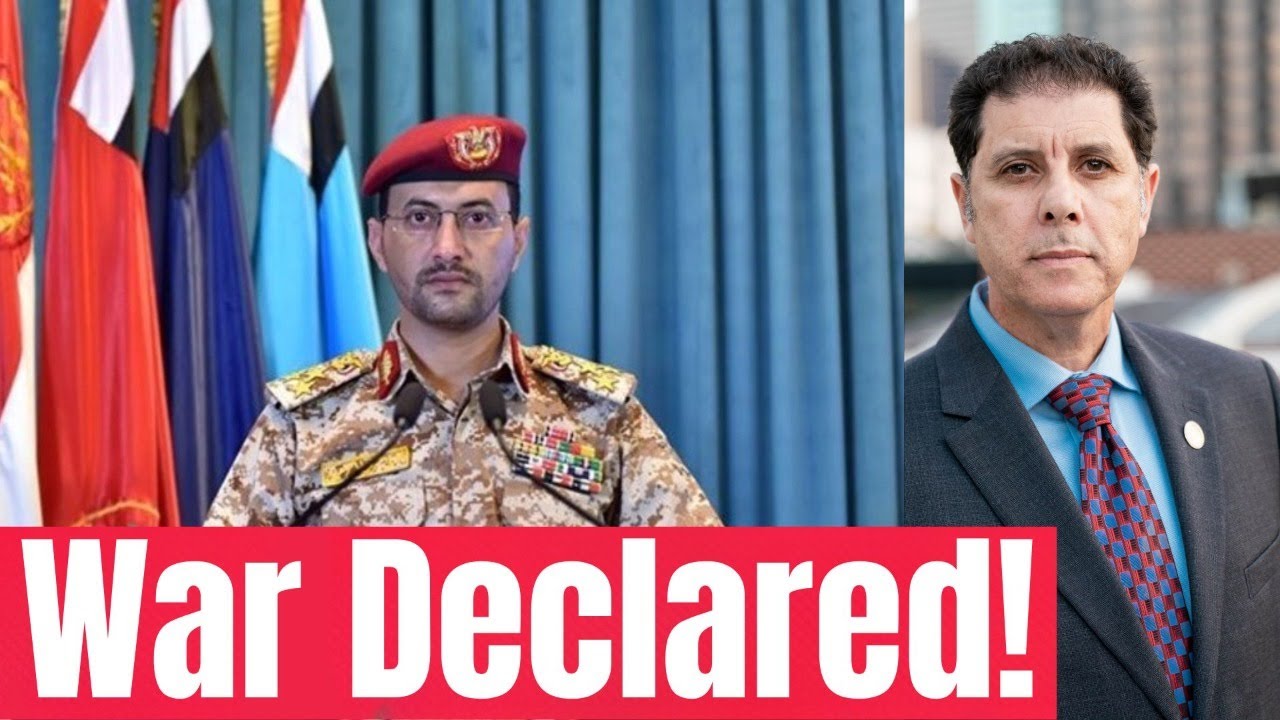
A former military officer and Yemen analyst examines the Houthi attack on Israel's Dimona nuclear complex as evidence the Israel-Hamas war is expanding into a regional conflict involving Iran, Saudi Arabia, Turkey, and potentially Russia and China. He discusses the strategic stakes of the reactor, shifting alliances among Gulf states, and why the UN and IAEA have failed to prevent escalation.
Chapters
Hello everybody and welcome to Geopolitical Trends. Very excited to be with you on this November 1st. Yeah, the first day of November. We got only about a month and a half or so for the end of the year. So funny how fast time goes. So anyway, so excited to be here. I got an interesting topic for you today. We're going to be talking about the, you know, the, the significance of now an attack on the Dimona nuclear power plants in Israel. That is very significant. But it's not about just that. It's about the idea now that Israel is going to be now dealing with attacks from different corners. And this highlights to the seriousness of, are things going to now go outside? In other words, and this is what I'm going to be providing you, my own assessments, my own analysis as one who spent time in Yemen. I'm very familiar with that country. I even have some pictures I'm going to be sharing with you, which was closer to the border between Yemen and Saudi Arabia. So, but before I'll do this, I like to extend my sincere thanks to the subscribers, the channel members, and supporters. I'm going to give a shout out to, uh, 3 new channel members and supporters. So I'll start with the supporters. Uh, Liberty Tax, thank you very much for becoming a channel supporter. Truly appreciate it. The second person is, uh, Chok Bang. Hope I pronounced it correctly. Thank you so much for becoming a channel supporter. And for the channel member, uh, by the name Sue Bernard, thank you very much for becoming a channel member. Speaking of members, at the end of the month I'm gonna be out of the country, but I should be back to the US by the end of the month. And this is where I'm gonna be doing the exclusive Q&A for the members, uh, and the supporters. I'm, I'm gonna figure out how I'm gonna do things for the members and things for the supporters. I also want to extend my thanks to, uh, the individuals— who they are 4— who bought me a coffee. Yes, I do have now a platform. If you really appreciate what I'm doing as far as content and you want to support the channel, I created the, the, the Buy Me a Coffee thing. And I truly do like coffee. I would love to sit down with you guys in real life and have a cup of coffee. So I'd like to give a shout out to Jennifer Lee, to Z Leong, and someone and someone— that's the, the screen name. So thank you all for your support. And for you guys, if this is your first time here, make sure to subscribe to this channel and also hit the like button as I go forward in, in, in discussion here. So, so let's get into our topic here. There's a lot to cover on it, and I'm gonna just provide you some, a bird's view, if I may use the term, but also highlight to you my own analysis as to where I see things going. But we'll start with the 3 key questions. Is the conflict now that is supposed to be between Israel and Hamas is widening? And the answer to— seems to me that is the case, especially with what I'm going to be sharing with you. Second question is the timing of it. What do you make of the timing of this in comparison to the statements from Saudi Arabia, uh, which I talked about yesterday on the other channel, then also by Turkey, that I found very, very interesting? Then the third, which is the element, which is the very, very important dynamics to it is now the preparation of the Egyptian military. Now, I'm a former military. My unit back then, when I was, uh, we used to rotate to Egypt. That's where I was. So I was very familiar with their military, uh, structure and so forth. Egypt has about 2 major armored divisions. They got about over 600 tanks, to my knowledge. Uh, so they are moving some to the borders, and that also signifies the interesting aspect of where things are headed. Now you add this new country entering the fray, which is Yemen. But if you only know the background story of Yemen— so this is what I'm going to be, uh, uh, tackling in this conversation. I will of course open up the floor for you towards the end for a question or two or three, whatever that is. I'll answer a few of your questions. So here is what just took place the day before, but I had to check on the information to make sure. Of course, the Houthis in Yemen— well, Houthis in Yemen are supported by Iran, but that's not the point. I'm gonna get into that. Here is the important thing to understand, is that now the Houthis have sort of entered into the fray of the fights between Israel and Hamas. And their argument is, we are here to support Palestine. So what makes the Houthis very interesting is because they are equipped with over a thousand— uh, they are about a thousand miles from the seats of power where in Yemen is in Sana'a. Houthis are located in the north. And I'm gonna do a geography on it as well and a little bit of history. And Sana'a is in the south, it's about 1,000 miles. And yet it was the Houthis that decided, not Sana'a, where the capital is there. So this is where the Houthis declared now that they have fired drones and missiles at Israel in attack that highlights the regional risk. But the attack in itself targeted specifically the Dimona, uh, plutonium or nuclear power plants. It didn't hit the power plants, and that wasn't the intention for it. Those are, to me, in my opinion, it's a signal for what comes next. Another word, that's, uh, an indication that, hey Israel, we do have missiles that can reach that particular facility and we can turn things upside down. That's to me what it is. So, so of course, uh, you look at now the Houthis as some, some literature has put it, or some argument, some, uh, uh, articles have put it as axis of resistance. You all remember the statements by the West, axis of evil. Now you have the axis of, uh, uh, resistance. And of course, because, and rightly so, we can't, we can't sugarcoat it here, Israel took it too far when you start to almost, you know, civilians. No, no, who gives you the right to do that? Yeah, you might have an issue with the group, but you don't target the civilians, you don't target the children, you don't destroy the infrastructure, buildings with people in it. I mean, you got to— and this is where you're seeing now this axis of resistance. Countries are— if the Saudis are telling the Americans, you better tell Israel to stop or we are getting in. Houthi is now saying we are getting in, into the fight. Turkey is saying, well, we better start to think about moving forward with stopping Israel. Egypt's preparing its own, sending its own military, and, and Egyptian military, it's strong by standards. So, so all this is suggest to you where things are headed. So Israel is not— by the way, Israel won't be able to fight alone anyway. Israel will be incapable. And I say this based on what I know. If it ain't for the United States, Israel can't move an inch. And this is why the US couldn't even— I mean, now when I say US, I'm referring to President Biden, the incompetent— couldn't even declare ceasefire. But it tells you also how weak the president, our president, is. So, so the Houthi military spokesperson, and I think I have an image of him, uh, that I am going to— yes, I do have one here. Quickly, I'm going to share with you. Uh, this is the spokesperson for the Houthis. His name is Yahya Sari, and he said in a televised statement that the group Houthi has launched a large number of ballistic missiles the missiles they launched, the equivalence to this, based on what I found. Okay, there are other ones that they've been provided with, but this— I don't think so that was the exact same one. They might be a short version of it, which means short distance. So this is where the difference in this one. But any event, drone is drone, missile is a missile, uh, and this— he declared that they have launched those towards Israel and there will be more such attacks to come. And I put this in quote, to help the Palestinian to victory. Yeah, basically because things have come into a sort of a point where we are turning a blind eye on the atrocities committed against civilians, which is not right. You know, I understand emotions run high when it comes down to situations like this. Yes, you know, the Palestinians have a right to exist. The Israelis have a right to exist as well. They are human beings like you and I. But we're talking about governments here. We're not talking about people. But why punish? Why the collective punishment? And this is what Israel is miscalculating. And if they think just because they have some nukes that they're gonna scare the rest of the Middle East, no, there will be other countries that they are part with the— that, that they will partnership with the Middle East and use their own nukes. You guys can read between the line here. I am very aware of countries in the Middle East that they do have nuclear weapon in an escrow account. So, so let me first share with— just to show you geographically where Yemen is. Because it will make more sense to you to see, uh, and, and understand the geography here. And I'm gonna share the screen with you so you'll be able to see this one here. All right, here is Middle East. Uh, let me make this bigger for you guys so you can see. There we go, full screen. So if you look at the Middle East here, uh, here is where Yemen is, and I'm going to provide you a specific map just for Yemen, the locations vis-à-vis where everything is. Yes, of course, the tensions in the Middle East is happening in this region here, right here. But if, if Yemen is launching missiles or, or drones whatever you want to call it, that tells you that they do have the means by which to reach these locations here of Israel. Okay, uh, let me share another screen here, which is— this is about Yemen itself, just for you to see. In fact, about Yemen. Here we go. So when you look at this, when you look at— here is Yemen, here. This is— it's called Bab el-Mandeb. This is a narrow strait, very, very crucial when it comes down to the transfer of goods, oil, and so forth, uh, which has, uh, links to the Red Sea and of course the, uh, Gulf of Aden. But they all go into the Indian Ocean. That is very, very important. But that's not what we are going to be talking about here. Why I wanted to mention this— I spend most of my time in Yemen in this location right here in the capital, Sana'a. I'm very aware of Aden, I'm very aware of Al Mukalla, uh, Al Ghaida also. But this is where the Houthis are located, right here in this city called Saada. Saada is in the north of Yemen, borders basically Saudi Arabia. And why is this important? Because you need to see this desert here. I've been there and I'm going to show you images from there called, uh, it's called Rub al-Khali. This is very important to understand, and there is a reason to why that is. Because if you don't understand the history of really what was going on in Yemen, you won't be— you won't be able to put this in perspective as to why all of a sudden Yemen— nobody saw this coming— all of a sudden launching missiles at Israel. So, uh, let me share, uh, this screen here so you will be able to see, uh, some images that I, I had before in that particular location. Yemen inbox. Here we go. Share. Yeah, those are where in the desert I had to go to the desert there because as I said, it's, it's, it's a large, large area there. So, so let me just show a few pictures here, but it's not about the pictures, is about the location in itself. Uh, and this one was on the Saudi side, uh, when I was over there. And but But here is the location that I wanted to say, to, to share with you. What are you looking at? You're looking at the Rub al-Khali, the same location I showed you on the map, which is closer to where Sa'dah is, where the Houthis are located. This geographical location here is nothing but a rugged terrain, some, some high elevations. There is no population there. Uh, as a matter of fact, we were at that time the only one in that region. Uh, that's just how it is. It— there is nothing there. It's just a desert, basically. But this is closer to the borders with Yemen. You know, somebody said, uh, why are you crazy to sit there? Well, you just sit, you don't move, so you won't fall. Simple as it is. If it was meant to be for me to fall, then that will be the end, and, and end of story. Life will go on. So This is one aspect for you to understand, the geography part. Then comes also the importance of understanding the history of Yemen. And briefly, I'm not gonna go into the early history of Yemen back then during the era of the, uh, what's her name, Queen Sheba, uh, which is in the Hebrew Bible. It was mentioned there. So we'll go back to 19th century, but mainly If you look at the Yemeni history, is so old. Yemen is an old, old country. As a matter of fact, if you think about the city of Hadramaut, Hadramaut, that's where Osama bin Laden ancestors came from. Yeah, that's how far back it goes. So you go back to the 1839, that's when usually, uh, uh, the part of when the British at that time were setting up a protectorate around the port city of Aden. Let me once again share, uh, this screen here with you because you need to see the locations I am referring to here, because it will make more sense to you guys as I, uh, detail briefly the, uh, the history of Yemen. Okay, full screen. And here we go. So fast forward to 1918. Well, 1918, that's when the Shia Imams, which is another branch within Islam, declared the kingdom in northern Yemen and gained independence from the Ottoman Empire. That was 1918. Fast forward, and I'm gonna, as I said, briefly, because that's not what I'm going to focus on in this here. 1960s. Why 1960s? That's when the military rebellion, uh, and the 6 civil war, uh, 6-year civil war in the 1960s in which Saudi Arabia and Egypt backed the opposite sides in the, in, in, in Yemen. 1970s, the People's Republic become the Marxist People Democratic Republic of Yemen, which was known as South Yemen. This is what it was, the north and the south. In 1990s, which marked also the end of the Cold War earlier, brings profound change in Yemen. Communists subsidized to the South Yemen evaporates. This is where the Yemen was separated, the north and the south. And this is where in 1994 the tensions simmered between the north and the south, very— it was bad. At that time, I remember because I was in Yemen later on, and the president Ali Abdullah Saleh, who died, uh, uh, was sending armed forces to crush the southern independence because they didn't want them to be independent. Fast forward to, uh, 2000, of course we set up shop there as part of the war on terror and so forth. It was till the, uh, 2011 '11 when the Arab uprising start to happen. And when that happened, uh, basically that's when, uh, uh, yeah, by the way, the South, the, the, the difference between the North and the South, this is the division that existed between the two. This wanted to be independent and this wanted to be independent. In the, in, in, in Taiz the city of Taiz. But in Saada, they were more of Houthis than, uh, they didn't want to have anything to do with the government in Sana'a. So 2014, of course, that's when the tensions start to back up in Yemen. We got involved because we end up supporting the, uh, the Saudis. This is why Even within Yemen, it's divided into two. The two groups that they were fighting, one of them was pro-government, the other one against the government. And, uh, and all this was when their president Hadi at the time fled to Saudi Arabia because they wanted to get the support from the Gulf states. Saudis had a reason why they got involved because they got concerned about the expansion of this. Remember, Saudis at that time was still having tensions with Iran. We find it, or we found it back then convenient to maintain tensions there because we never wanted the Saudis and Iranians to amend the relations. It was till China succeeded in bringing the two countries together. And this is why you see what you're seeing right now. As far as how all this is happening now. Really, the timing of it couldn't be coincidence, in my opinion, as geopolitical analyst, as one who was on the ground in Yemen and understand how this dynamics works. It was always the idea that the Houthis, which are backed by Iran— there is no bone about it, we all knew about it, it's been known— and to me what this says. This attack by the Houthis, it's a signal for Israel that, like what Iran suggested, the road to peace still there if you don't go to Gaza. This is why Israel now is going to have to think twice. But also, Iran is sending a message to Israel that we have many groups that if we launch them all at once, Israel will not know where things are coming from. Yes, they do have the Iron Dome, which is— I won't count on it if, if I were living there. I won't count on that. Of course, the Israeli media is going to say, well, we shut down this, we shut down that. The same thing the Saudis said back when they were still fighting in Yemen when Houthis launched missiles into one of the oil refineries. The, the, the Patriot system that protects the the, the, the, the, to counter missiles didn't work. So it was useless. And what we were saying, the Saudis were releasing information at that time that we shut down a missile from Houthis, which wasn't true. I was aware of it. It was not true. The same arguments the Israelis are making. But this is more about than just this. This one now has to do with really the scope of something like this, because Israelis probably didn't count on this. They didn't see this coming. And this is just one example. To my knowledge, there are about 16 or 17 groups in the Middle East that are funded, trained by Iran, and just on standby. And by the way, this doesn't happen last year, as I argued in my Iran book. This was since the revolution in 1979. When Iran embarked on building— that's why I always say, as one who works in the Middle East, spent years back and forth between Washington and those locations, whatever locations I was in— Iran is very wired in the Middle East. Their intelligence apparatus is very wired. Israel won't be able to handle this alone. Well, who's going to be with Israel? It's going to be the US, of course, and you add, of course, the Brits. France, most likely. But there is now the big concern is about, uh, why the Houthis sent the missile sort of near the, the Dimona, uh, uh, nuclear power plants but not Tel Aviv. That just shows you an idea of how important that is. Well, if you know anything about the Dimona, uh, uh, nuclear power plant Uh, this one, uh, is a heavy reactor. That's where Israel built its nuclear— it's no secret now. It's no secret that Israel has nuclear weapons. Heck, we're the one who helped them out with it, in addition to the French. But what is surprising about this— and by the way, uh, the, uh, just to give you an idea about the Daymona, uh, I think I have a picture of it. Uh, yes, I do. I'll, I'll share it with you here, guys, so you just see. This is the Daymona, which is really in a desert near the border, uh, for, uh, uh, borders of, uh, Egypt, I believe. Yeah, yeah. This one, uh, was irradiated— it was irradiated for processing to use to produce weapons-grade nuclear material. So there were approximately, to my knowledge at that time, was about 2,700 scientists, technicians, administrative staff, and other workers are employed in Dimona. So the facility in itself was built back then in the '50s, right after the end of World War II, of course, when the Allies and all that, that was when the decision— because remember, when was Israel declared officially as an independence, 1948. And we were the first one to recognize it right after, about 20 minutes after his declaration. Harry Truman was the first— that was the first order of business, right about, you know, not even 20 minutes, it was 10 minutes, uh, to some records. Records indicates that it was about 10 minutes after its declaration. So beginning in 1958 And you know who really pushed hard for this was the French, because French are good at building nuclear power plants. So, so French assistance also helped Israel construct, uh, uh, this natural uranium heavy water research reactor at Dimona, you know. And it is in the desert, it, it's in the, uh, Negev, uh, desert. And this is where It's very concerning now for Israel if Egypt is moving its own troops. No, this one is about, uh, the, the, the location of this, about 8.5 miles from the town of the same name and about 25 miles from the Jordanian border. That's why it's in, in a desert, in a desert somehow. So the Dimona facility was constructed in secret And is— here is the kicker— it is not, I repeat, it is not under international inspection safeguards. Here is the double standards with the IAEA, the International Atomic Energy Agency, why it's going to other countries to inspect their facilities but is not allowed to inspect the Dimona. Call a spade a spade. I won't shy away from it. So because we are saying so, and this is why I'm saying our credibility is shattered beyond— I think what just happened now with this conflict, it really puts Israel— that's putting a lid on Israel credibility. It's done. It's done for. Not the Jewish people. Do not, please do not confuse the two. You put Jewish people aside, and we're talking about the government. As a matter of fact, I'm going to be doing a specific video about Netanyahu himself, so you'll have a better understanding. So if we are to say, well, the rule of law— where is the rule of law when you couldn't put the Dimona nuclear power plant under the international inspection like every other location? Look what they doing in Iran. Why aren't they doing that in, uh, in, uh, in, in, in Israel? The facility was first noticed by American intelligence, believe it or not. Even the US was kept in the dark on certain things. This is why I'm saying, for you to understand why the 8 former naval Indian officers were spying on behalf of Israel, because Israel provides India with some military technology behind our back. There are technology we don't want to share with India. The last thing we will do is to do that. And yet Israel, for some other reason, is doing that, even though they might be Jewish people living in India. I don't know, I don't know. I just find it very odd. Even for us at that time, it was the intelligence that discovered this, uh, uh, uh, when at that time we still have, uh, uh, you spy— see that plane over there? That's a spy too. That's the SF-71 as part of the, spy program, uh, that flew over Dimona in 1958, you know. But here is what I found very also interesting is the list of nations that secretly sold Israel the material and expertise. Israel didn't do it on its own. Israel didn't have the, the know-how, the technology, and so forth. It was— or the material for that matter. So the list of the material and expertise to make nuclear warheads or to turn a blind eye. This list of nations, and I'm gonna share them with you, they either sold the nuclear technology or the material and also turned a blind eye, like what we are doing with the targeting of civilians in Gaza, because that's what we're doing, we're turning blind eye. Shame on Germany, shame on us. No shy, and don't shy away from it. It pains me to say it about my own country, but that's the damn government, not the people, not the American people. Mark my word on this, guys. American people are nice people like every other race. It's the damn government. So, so we turned the blind eye. We couldn't even vote for ceasefire. That's how much we wanted to go. I saw recently the idiot Hillary Clinton coming talking about no ceasefire. Yeah, ain't all right. That's not right. We shouldn't get rid of all these damn politicians altogether. But here's the thing, the list of these countries which includes today staunchest campaigners against the proliferation, they are— those countries are the ones saying no, no, no, no, no, we don't want any proliferation of nuclear weapons, we should stand strong together against it. Yet they were the same countries that proliferate and exchange the nuclear material with Israel. So, so that includes the United States, of course, France, Germany, Britain, and even Norway. This is what I found. Yeah, you would think Scandinavian countries are— Scandinavians are gone. The last time when I was visited as a tourist, I was back in the '80s when I went to Helsinki and Stockholm and Sweden. Wonderful. That era is gone. It's gone. Scandinavians are gone. Look just what happened with Sweden and Finland. They were living in peace with this, with the Soviet Union. Been in Russia for almost 50 years, never had to worry. All of a sudden they've been pulled into NATO. The same thing we are doing to Australia, the same thing we are doing to New Zealand. Not to NATO, but pull them into some trap of sort. Philippines, South Korea, Japan are gone. So, and, and this is where I see the double standards of the, the— well, no more credibility, it's gone. So And this is where the nuclear project in Israel, uh, that's why it never got off the ground without the enormous contributions from France. France contributed a lot. There are a lot of Jewish, uh, French Jews who live in France, but that doesn't mean— remember, there was, was back in 1950s. So, and this is where, uh, the importance of this, and I'm not going to get into the technical stuff about how much megawatt this, uh, it's not of importance right now. What is important for us to understand is really these dynamics as to what this all means, how this is now going to really reshape the, the ground for what might lie ahead. This is what's important to understand about all this. Uh, I've wrote extensively on this. I argued this before. As a matter of fact, uh, for both Yemen and— and I'm gonna post some links for you guys so you can read up the stuff later on when you get a chance— how much we were the one contributing to the fights in Yemen because we never wanted the Saudis and the Iranians to— when I used to write for the Waco Tribune-Herald, when I used to write for the Huffington Post, all of those, I argued this possibility. I even wrote back then, I wrote an article about the possibility, the dangerous possibility of a war with Iran. This is one thing that, uh, the American administration are blind to, because here is what's going to happen, guys. As an analyst, I'm seeing it coming. It's not a laughing matter. What I'm seeing coming is now they're gonna— they, Washington and some Western, uh, uh, capitals, they're gonna be now saying, oh, there is another terrorism attack, it's gonna be happening, or is brewing, whatever, and shift the blame to one group or another. That's what I see coming. Go back to 9/11 and think. I let your imagination just think. I see the same thing happening here, but now The game is different, the geopolitical landscape is different, the, the, the, the, the alliances are different, and there is new thinking in the Middle East. If we still thinking that we still have dominance in the Middle East, that era is gone, you know. As a matter of fact, I even find out that the Russians now are willing to send troops. North Korea, believe it or not, it was a report yesterday by the intelligence agency in South Korea, indicating that they got a word that North Korea leader Kim Jong-un did give, uh, he gives the, uh, what's the word I'm looking for, the, uh, authorization to start thinking about ways of helping the Palestinians. Is the same thing that North Korea did with Burkina Faso. Do you hear anything about the ECOWAS attack in Niger and all that? All that stuff is gone. The same arguments can be made here. Let me say thank you here to Anna Kiblis. Thank you so much for your support, truly appreciate it. And also want to say thank you to Jeffrey Lee. Thank you very much, man, appreciate it. Thank you so much. So this is where you see the idea of, of the game is changing, because to Israel, we're thinking they were invincible. The same thing we were thinking, oh, the global order will stay the same forever. No, there is no way. That's an illusion. And this is exactly what I see coming moving forward. Mind you, China, to my knowledge— and I have confir— I have not confirmed it yet— to my knowledge, China sent in extra warships to the Middle East. It makes you wonder. What is that for? And if Russia said considering or will be sending troops, if North Korea said will help, if now you got the Houthis declaring, uh, the war on Israel, then you got Turkey saying if Israel doesn't stop, we are stepping in. If you have Saudi Arabia saying to the Americans, you better tell them, tell Israel to stop or we are getting involved. You got now Hezbollah in Lebanon, Southern Lebanon, already firing at Israel. So all this, uh, World War III Daughter, thank you so much for your support. Does this have to do with building the Ben Gurion Canal? The possibility is there, but there's more into what's going on right now than meet the eye. I'm telling you this, guys, this is much bigger. I don't think so. I don't think so. Israel was counting that now is going to have to deal with different directions. Dealing with different directions means what? It can't fight alone. Israel has— just for the record, and I'm saying it on record— Israel cannot fight by itself. Straightforward. Without the US, Israel will not move an inch. Despite what you hear, despite— there is now a psychological, uh, dysfunctions within the military inside Israel. Of course we're not going to read about it. We're not going to hear about it. I have my own contact. You know, there is a division inside the Israeli government because they don't want— they want Netanyahu out immediately. You know, this is why I decided to do the video on him specifically, and it will be released next week sometimes. And one of the reasons also why I'm leaving on a trip is fact-finding. I usually will not disclose when I'm going, so I might be off the air for a while. I, I'll see how things are going out from a security perspective. If I, if I feel it's comfortable, safe enough to do a show from wherever I'm going to be, I will do it. Otherwise, if you don't hear from me for a while, is I'm out for a trip overseas. But the point is, you know, as I said, as one who spent much time in— and I'm very familiar with Yemen and how the Yemen is a tribal society. The central government in Yemen has no power. When I used to go to Yemen, and I'll go to, uh, uh, uh, uh, Sana'a, the capital, sometimes I will go out because I speak the language. They were kind to me. I mean, you don't harm them, they won't harm you, you know. They knew I'm a foreigner, they knew whatever, but at the same time, when you respect their culture, and I will go and eat salta. Salta is one of these national dishes in, in, in, in Yemen. So, but there were certain areas where I was advised, please, Mr. David, do not go over there. And I said, why is that? He said, well, they will kill you. I said, why? He said, they don't like foreigners, end of story. And you know what? I respected that. You know, I'm not gonna show I'm this macho tank because I have— I'm carrying whatever I'm gonna go— no. You respect the culture. They don't want to see the foreigners, they don't want to deal with foreigners. I gotta respect that. So it's the tribal mentality, that's what I'm referring to here. But the idea in understanding how they are— they are, by the way, they are fighters. They are fighters. They will fight to death. Missiles and planes, I ain't, I ain't gonna scare them. This is why I'm— I believe they are certain of what they are doing. But for them to come forward and declare a war on Israel and launch the drones and missiles near the demon, they didn't target the demon. It's not like they missed it. You might hear, you might read on some articles, oh, they couldn't even aim straight. No, no, no, no, no, it's not about aiming, it's the message. It's the message. You know, Yemeni people are very nice, but also they are very sort of, uh, uh, uh, uh, what's the word? Warriors. That's the word I'm looking for. Warriors. You know, they're wonderful. But what you need to understand right now is that the landscape is changing. Israel now doesn't know where to turn its head to. That just— it's not gonna know what to do. Nick, thank you, Nick H. Thank you so much for your Super Sticker. Truly appreciate it, man. Thank you very much. Israel is not gonna know, which means what, guys? That means we have to get involved. And if we are already hearing the commander of the Marines is saying, oh no, no, no, it's gonna be Israel decision, it's a lie. We are deep in it whether we want to admit it or not. That is the hard truth of it. Otherwise, if we are not in it, why the, the incompetent president, our president, couldn't even, uh, join other nations, 120 nations, and, and, uh, uh, approve the ceasefire? 14 countries objected. Starting with the United States, 55 abstained from it, 120 voted for humanitarian aid and also the ceasefire aspect. So it shows you right there that now the calculations for, uh, uh, Israel is gonna be very, very much different. Dino, Israelis know the, the, the group that they fear the most, which group, by the way, Israel fears the most. Can you guys leave me the answer on the, uh, on the chat box? Out of all the groups, and there are, there are many, many groups there, so, uh, which one do you think Israel fears the most? And by the way, the Houthis, just for you, FYI, uh, they, they considered Muslim, uh, but they practice what they call the Zaydi, a form of Shia Islam. In, in Islam, they are both Shia and Sunni. Uh, Iran is Shia, Saudi Arabia is Sunni majority. Uh, the Houthis are part of the Shia, but there is another sect within the Shia called the Zaydi. That's what they are. So, and, and by the way, this start this armed rebellion way back in 2004. That why? Because the, at that time, the government of Ali Abdullah Saleh, we told him you need to go and arrest Hussein al-Houthi. Hussein al-Houthi was the leader of the Houthis at that time. So, so they took over. This is why after that they said hell with the central government, they took over Sana'a altogether. They are fierce, they are, they are strong. And why do you think Iran is backing them up, or has been backing them up all this time? This is nothing new here. So it's, it's, uh, again, Israel is going to be shocked and surprised. Uh, oh yes, you're absolutely correct. I'm sorry, I can't read Chinese, the name there, but you're right. Hezbollah. Hezbollah is very strong, armed to the teeth. Those, those images that I showed you Yeah, they exist within Hezbollah arsenal. And this is why I'm saying Israel is not going to go the full-fledged, just to say, we're going to— because what they are embarking on, and let's just be honest, and again, has nothing to do with the Jewish people. I can't stress this enough, guys. I can't stress this enough. You, you, you separate the two. You, you can, you, because you're smart enough, you can't paint broad with a broad brush every human being, every, uh, Jewish citizens under the same, uh, connotation. No, no. Government by itself, people by themselves. There are Jewish people that they are not in agreement with what their government is doing. That's why they're protesting in Tel Aviv. They want Netanyahu out. So, but now this is going to change the calculations. And there are those— without even talking yet about Egypt, let me just give you a picture to keep in mind. Israel is saying to the Gazans, you need to go north. Why north? Because they want to push them towards the Sinai. But the Sinai, it's going to be on the Egyptian border. Egypt's saying no. First of all, how can you reallocate people from their own land? That just doesn't make any sense. But if you start attacking them, what do we call that? You all know the term, right? That's genocide. And if it is the case, we can't be turning a blind eye on that. I know, right? If we say we stand for the rule of law— this is why now when you hear an American president, or even both parties, the Republicans and Democrats, talks about the rule of law, you just shake your head. They're lying to your face. So here are the atrocities committed against defenseless civilians. Oh yeah, Israel has the right to defend itself. Yeah, nobody's saying otherwise, but not in this manner. Where are the military targets? You know, otherwise what you're going to be seeing is you're going to be seeing groups now coming out of the, the, the, the, the, the woods, per se, from different directions. You can have all the Iron Domes you have, they ain't gonna cut it. And even there are now conversation inside the Arab world that these Arabs are just talking. Can they act? There's a saying in the Arab world, if anybody here speaks Arabic, you will understand what I'm saying here. When the saying goes, uh, which means basically the translation is Arabs agree not to agree. The bottom line to it is they talk too much. And there is the saying that goes, watch what a man does, not what he says. Everybody can talk. It's in action that you'll find out about truly if people stand for something. And this is one thing about the Arabs. So the conversation that exists right now in the Arab world is that, what the heck are you storing these weapons for? And I'm not advocating for violence here. I'm not advocating for military stuff, because here is the thing: you have to think strategically. You get involved in that way, mark my word, it's going to expand beyond. Expanding beyond, that means what? As a geopolitical analyst, I'll tell you, the first order of business is for the major powers— no matter how you qualify those major powers they're going to have to step in because they have to protect their strategic interests. And if we say major powers, who are we talking about? Which countries are we talking about here, guys? Can you type in? Uh, you got it right, Bruce. Yeah, it's HZ. I know YouTube doesn't like this word, whatever. Uh, Turks— no, they won't fear. Well, they would fear Turks, is, you know, Turkey is a strong army. Sindero member, which means it has the capability. And, and as a matter of fact, Erdogan now is coming forceful into declaring straightforward, you either stop for Israel or we will get in as well. It's because now it's going to become— here is what it's going to become in the Arab world— it's going to become shame. Those leaders already, the 4 countries that have normalized relations with Israel Morocco, United Arab Emirates, Bahrain, and Sudan are already under the microscope, and there is a reconsideration of cutting off that ties. One country just did it yesterday, officially— Bolivia in Latin America. I was in Bolivia, I was in La Paz, and I knew from back then the government there ain't gonna listen to what Washington says or Tel Aviv or whatever. They don't care. They went ahead yesterday and officially asked the ambassador, get out. We cut off— they called their own ambassador, cut off the diplomatic ties. There are no ties between Bolivia. So they took stand when it matters. Saudis, yes, they went ahead and froze the relationship. United Arab Emirates is wishy-washy. That's why they normalized relations. Bahrain is so weak because that's where we have our Fifth Fleet. Those guys, meaning those guys, meaning the leadership, cares about their own survival. They care less about the Palestinian cause. You know, as one who understand the Arab culture, speak its language, and worked in the Middle East, those countries like Bahrain, it's so weak, they can't even sustain themselves. You take a, a in, in any just a simple conflict, they can be run over in a matter of week, a week or two. That's it. So the question now is what they're going to do. So, and this is where the difference is, where you find out as to why, why the expansion of this conflict now by having Houthis officially declaring war. Also, that's the message from Iran to Israel, because Mike Mauer, should this expand, which I hope it does not, major power is going to get in. Uh, you, you're right, you're right, Donna. That's two countries, then you have the third one. Oh, JF, thank you so much for your Super Sticker. Truly appreciate it. Thank you so much. Uh, yes, you're right, Russia, China, and the US, because no matter what, we still have our strategic interest in the Middle East. And now we're seeing the, uh, the, the China and Russia, and mainly China expanding its footprints. This is also because of the BRI. And not just because of that, because also the Middle East is reciprocating to China. They wanted to go east, no more tying the, the links with, uh, the West. I look at the best example I can tell you guys is now the conversations that's going on within GCC, the Gulf Cooperation Council, as far as opening a free agreement trade with ASEAN. They didn't want to do it with the EU. They didn't want to do it with G20. They didn't want to do it with the US. ASEAN East, they moving East, of course, because the Gulf, uh, the, the, uh, GCC, the Gulf Cooperation Council, will also— we may use the— it's not we may, we can use the term, well, yeah, they wanted to go with ASEAN because it's in the western side of Asia. I know there are two terms you hear, Middle East, but you also hear West Asia, which is true. That's the same argument like I've always made, is, uh, is the idea of, uh, uh, the Asia-Pacific and Indo-Pacific. So yeah, then beside the major power, you're going to have to think about our regional powers. Well, when do we think about regional powers in the Middle East? Who do we think about? You got about 3: Iran, Turkey, and Saudi Arabia. Egypt to a degree, but Egypt is now in some economic chaos given that its currency, uh, uh, uh, went down, or there just some issues with, with, with Egypt for now. Suffice it to say that the 3 other regional countries— well, if you think about those 3 regional countries. Who do you think they're gonna side with? The US? I don't think so. I don't think so. That era is gone, in my opinion. It's gone. This is why we are seeing now forcefully for groups like the Houthis— and Houthis are not going to do this without coordinating with Iran. Houthis are clients of Iran. Hezbollah is client of Iran. There are those who say Hamas are client of Iran. I don't think so. And by the way, I forget to mention this last time, Hamas group visited Moscow last week. It shows you the dynamics. Could it be the reason why Russia declared will be willing to send troops to Gaza? They didn't say to Palestine. To Gaza. And if you think— just think about it— if you think Russia's coming in, are they going to come in just with their, uh, guns? What? No, they're going to come with some heavy equipment, with some advanced tech stuff, and the possibility of jamming all the communications in Israel. That's what they're going to come with. Remember, Israel has— I'm sorry, uh, Russia has a naval base in Tartus in Syria, and he has another location And within those, Russia brought in the S-400 missile system. I even wrote in Huffington Post back then when Russia had to withdraw some of its forces. The West was saying, see, they can't even fight, they are leaving, which wasn't about that. It was a calculated move. And I even forced me to write an article about it because I saw how delusional Uh, some people were in the West thinking that it was Russia's weakness. It's not. That was a tactical move why Russia at that time decided to remove some of its troops, but they brought in some advanced systems. This is what I see moving forward, uh, uh, in this kind of context that Israel basically, basically dug a hole for itself. The, the calculation wasn't strategic, wasn't smart. Now, if you know the background of Netanyahu, even within the Jewish community there are different ideologies, you know. But if you also know his background as far as his brother who was killed in, in, in a war in Egypt, And even Netanyahu himself survived, uh, uh, uh, when he was in IDF because he was in the Israeli Defense Force and so forth. So, so he's traumatized. And this is why that idea of, you know, almost like civilians wipe them out and all that, I don't know. To me, that's so— because war is always, is, is, is a tragedy, you know. And if you get involved you get scarred. You get scarred psychologically, you know, unless people know how to handle. This is why, at least for me, with some of former colleagues, they end up— they became alcoholics, uh, that their lives been ruined. And it's just because it became too much. They didn't know how to handle the stress of the— because it was tragic. What, you know, unless you know how to handle certain things that. That's the way I see it, uh, uh, going. The idea of, uh, why I am seeing a change on the, on, on the tactical landscape— but if you have the Egyptian mobilizing their force, uh, Jordanians didn't do a thing. Jordanians, they talk. I'll say straightforward, I, I worked with the Jordanian forces Uh, there's their special ops. Uh, I know Jordanian people— again, people are wonderful, but the monarchy, it's for its own survival. This is what I'm saying about certain Arab countries, not all, certain Arab countries. Once again, I am not advocating that they just send in their military and— no, it doesn't work that you don't make a, a situation even worse. We're trying to figure out a way, first of all, how to stop this slaughter that is going on against civilians, you know. Then we'll figure it out what the next step is. And no matter how you look at it, the two-state solution is the only way. It is the only way, no matter how you slice it, no matter how you think about it, you know. Things will calm down and all that. Go 10 years from today, you're going to have some other right-wing individual in Israel is going to push for certain directions that even the Israeli people do not want. Jewish people who live in some Arab or Muslim countries, they have no issues there. And dare anybody to harm them, because first of all, it's not right. And second, throughout history, the Arabs and the Jews coexisted in peace. No issues there. So, so this is where I see the challenges that lie ahead as to how things going to move forward, and it's not going to be an easy, uh, task. Uh, I'm not even— I am not even getting into the conversation of the other three major Muslim countries: Indonesia, Malaysia, and Pakistan. I didn't even mention that yet. So, oh, let me say thank you here to Uh, Jess, thank you, Jess. I appreciate it. Yemenis are kind and strong people. I agree. I spent time in Yemen and I had sort of interacted with Yemenis, not only one day or two days. I was there for months at a time, back and forth. So, so they are wonderful people like every other race. We shall not, you know, put the two together. Like I said earlier, Oh, Liberty Tax, I want to say thank you so much for your Super Sticker. Truly appreciate it. Thank you so much. And by the way, Liberty Tax just become a channel members, and I look forward to having the members at the end of the month when I come back from overseas, uh, for the exclusive Q&A. Uh, we did one last time, it was very enjoyable, just relaxing and getting to know each other. And also, guys, if you want to— if, if you like what I'm doing with this channel here and you like the content, uh, if you want to consider, uh, supporting the channel, you can, uh, I set up the, uh, right here, guys. If you want to support the channel, uh, you can buy— I do like coffee, by the way, you know. And I hope in real life one day, if any of you end up visiting the US and you end up in Texas here, don't hesitate, send a note, and I'll really reschedule my, my things and to meet with you for a real life cup of coffee. But thank you all for your support because it, it, it shows your appreciation. Once again, what I share with you is not something on the top of my head. You know, I worked in Washington for years. I'm a former military. I'm an author and I wrote so much on the Middle East. You know, I'm a global speaker in addition to being a geopolitical and international security analyst. No, you acquire over 20, 30 years of experience, it becomes part of your daily life as far as reading the landscape on, on, on the, around the world and understanding where things might be going on. And this is what prompts me today to come decide— I decide on this last night because I said you need to understand and put this within the context of both geopolitical and security, uh, aspects of it. That will make more sense to you. Once again, if you want to support the channel, here is the link to, uh, Buy Me a Coffee. There, feel free to support whatever you want to, uh, support with, and I am very grateful to that because that will tell me how much you appreciate my content, what I'm doing. Uh, as I said earlier, I am not even including in the conversation yet Malaysia, Indonesia, and Pakistan, which will be another conversation by itself. And maybe I might do it some other time, so I will, I will consider that one. So, all right guys, I am gonna take a few questions here. And by the way, I am working on, uh, uh, China and Bhutan talks about establishing diplomatic relations. That is big. Why is that? Because India is going to be left in the cold, and India won't want that. So I'm digging into certain information that I need to confirm, and I will do— hopefully I'll do a live before I leave, uh, the US. Uh, I'll, I'll make— I'll do my best. I can't promise, but I'll do my best. So, all right, let me see. First, here's a question in front of me right here. Uh, question: would NATO invoke Article 5 of Israel? No, it can't invoke that. It's because Article 5 applies to NATO members, even if Turkey gets involved. But Turkey never get attacked. And even if Turkey gets involved, Turkey is not going to get involved openly. Remember, there are some— this is why Iran— Iran is smart enough to know they ain't gonna go openly. They have groups, they have militias, they've been investing in this since 1979. Those groups are well trained, well equipped. And I had to check 4 days ago, I had to check the, uh, the status of Iran's missile technology. As I said, I wrote a book about Iran and I detailed all this in the book, but I have to keep up with the updates. So that information that I did was in 2017. Well, we are in 2023, even though the stuff that I argued back then is still reflective today. But when it comes down to their military capabilities, it has evolved a major way. And I'm finding out, to the point that the confirmation of a hypersonic missile— you know what it means. This is what I'm saying. Iran has the ability to, uh, uh, uh, how they're going to move forward with this without being openly. So the answer to your question is no. And, and, and Turkey doesn't care for what NATO thinks or the US thinks, because to Turkey, it will be shamed if they didn't stop with the Palestinians. Because again, when you start targeting civilians, this is where the issue, guys, the issue is the, the demolition of the civilian quarters. Those are not military targets. You can't do that. That's a violation of international law. Well, if we are to say we stand for the rule of law and we have an organization called the United Nations, which is toothless in my opinion— I don't even know why we have the UN to begin with, it's useless. I don't know why we have the ICC, the International Criminal Court, it's useless. I don't know why we have the World Trade Organization, it's useless. If they can't take stand when it matters, what's the point? That's like when you do this, if you couldn't speak the truth, what's the point? You know, I'm not here to share hypes with you and, and do this just for the heck of it. It's my time spent here, it's my energy. As I always tell you guys, I gave up a full-time DJ position to this because I believe in it. Well, if you believe in something, you work hard enough in it, you put your heart and soul into it. And of course, because you're gonna emanate positive energy— this is why I have no tolerance for negativity. You can express your opinion, you're entitled to it, as long as it's done respectfully, because that can kind of draw that negative energy, and I tend to push that away. So Anyway, let me see another answer— another, I'm sorry, another question. I'm gonna go all the way up to the top. There, there, there's a lot here. So, but, but that's great. It's great to have you all here, guys. It's really, really great, and I truly enjoy doing this with you guys. Oh, that's an interesting comment. AG Silver Bullet, you said Uh, have to say, probably the Iranians, or more specifically those who are descendants of ancient Persia or Babylon, you know, they are the civilization in older than they are that they've never defeated them. Oh, that's interesting because yeah, they are certain there. And you think about, uh, even when Alexander the Great, how long it took him to defeat the, the Persians at the time, or even for the Persians themselves to take over. Uh, there is an old history out there, and this is why sometimes I find it very confusing to why decision makers do not learn from history. You know, makes you just wonder. I look at it in the case of Japan that is sided with, uh, the US and France and the UK, uh, rejecting the Russian proposal at the UN Security Council to allow humanitarian aid It's like history that happened in Japan didn't happen for them not to understand the reality of that, even though we dropped a bomb on them. Makes you just wonder. Makes you just wonder. So, all right, I'm gonna be scrolling down here and, uh, just to see— just put, just please put Q so I know it's a question so I can get to it quickly here. And for the members and supporters, at the end of the month— this is the reason also why I do the Q&A, and I'm going to be doing it for, uh, the, the members and so forth, and we go from there. Uh, Astrid, uh, would Saudi Arabia— SA stands for Saudi Arabia— close all US bases in the country? No, not they want. Remember, these are treaties. Sometimes when you enter into a treaty, we know that the Saudis won't go very, very far. Yes, the young prince, and yes, the de facto leader is shifting east. We are taking a notice. Of course he didn't like when CIA was spying on him. That's how they listened to the conversation when he got the order to take down Jamal Khashoggi. You know, there's no bone about it. You know, he wasn't never held accountable for it, and it wasn't the right thing to do just because Jamal Khashoggi criticized him. You know, some Arab leaders tends to be that way. If you criticize them, they don't like it. So I don't see that happening because there is a lot involved. And first of all, most of the Saudi weapons is American. So can you imagine just if we stop, they won't be able to function because you can't just go and buy Russian weapons. You have to buy the weapons, the parts, the training, which will take years to develop. That's why I don't see them closing. What I do see them is like what the Saudis did. Now they might be even more vocal on the global stage because this one was really a slap in the face, diplomatically speaking, for the US. Because where was it issued? It was stated during the visit of the Saudi defense minister to the US during his press conference with the National Security Advisor, who is, by the way, unqualified— our advisor Sullivan, unqualified to hold the position. The guy deals with telecommunications. How the heck he become National Security Advisor is beyond me, but that's not the point. So the context, that's why. But I don't see them doing this, uh, get just given the ties that exist, um, they're not gonna— they're not gonna do that. All right, let me see one more question here and I'm gonna sign off. Uh, oh, I just saw a new member here. Oh, Famida Nadiadi, thank you so much for becoming a channel member. I truly appreciate you. I, I am— by the way, I am hoping one day if I reach 500 I have something in mind. I won't share it because that's how I operate. I have something in mind if I reach 500 because I have to do a special, uh, thing about how I'm gonna— or even if I reach 300, you know, I'm thinking about it. I'm thinking about it. So thank you very much for becoming a channel member. Truly appreciate it. All right, let me Oh, Johnny Moo! Johnny Moo, thank you so much for your Super Sticker. Truly appreciate it, you guys. I want you to know, you know what it means to me? It means that you are appreciating what I'm doing, and that's, that's, that's, that really makes me want to do more, because that's how I see it, that's how I interpret it, you know. Not because of the just the sticker itself, but I read your comments. It's, it's very refreshing to see that some are appreciating what I'm doing, and also gives me an idea of, well, if they are appreciating and learning from what I'm sharing, then I need to do more. This is what I'm doing. So, so thank you so much, Johnny. I truly appreciate it. All right, I'm seeing, I'm scrolling all the way down. Down. Oh, oh, thanks for sharing this, uh, uh, Under Ismail, thank you for sharing. Hi, Doctor, tomorrow Iran's foreign minister is going to Turkey to talk with Turkish foreign minister regarding the Gaza situation. This is not normal between Turkey and Iran. You are absolutely correct, you are absolutely correct, and I can only imagine the coordination that could take place. Mind you, this is not about staging a military attack on— no, no, no, no. This is about strategizing, meaning they all get on the same sheet of music as far as the message. That's what it means. And they are— they, all of them, not just Iran and Turkey, most who have, uh, voiced They're concerned. They are drawing a line on the sand. That's how I interpret it. So that could also be that Iran will be talking to Turkey to tell the Americans, you better— that's the way I see it. Oh, I want to say thank you to Mellow Sound Entertainment. Thank you so much for your Super Sticker, truly appreciate it. And I like the screen name there, so I'm assuming you are involved in music. So thank you so much, really appreciate it. All right, it's, it's so many messages here and Uh, Vince, I want to say thank you to Vince. Uh, Vince Cow, thank you so much for your Super Sticker. You are, and you are most welcome. I truly appreciate it, really appreciate it. Uh, I have another sticker here, and I have to do this, guys. When I'm by myself, I do give a shout out. When I have a guest, I don't want to interrupt the guest. This is why sometimes when I have a guest, I don't, I, I don't interrupt the guest. But when I'm by myself, I can do this. Sue, thank you so much for your Super Sticker, truly appreciate it. Uh, uh, S— SC Lee, once again, thank you so much for your Super Sticker, truly appreciate it. Lee has been here before, so I kind of remember the names. Uh, uh, Ateen Wu, good to see you as always. Taiwan Steel, good to see you. Francis, good to see you. Francis Tango, that is. Good to see you. Oh, uh, Hussein, you are most welcome. Hussein Sidib, you said, Doc, I appreciate your take, very informative. Thank you very much. You're most welcome. We are here to learn from each other, by the way. You know, I, I know what I know, that's about it. There are things I don't know. I don't know. So, uh, oh, uh, hi Doc, anything— this is from Savuthy Pan— anything of interesting about Cambodia you may have to share? I tell you, since last— my last trip to Phnom Penh, I really enjoyed Cambodia and all that, but I was about to travel to the southern part, but, uh, I got the message from Washington, don't go. They didn't want me go at that time. But no, I don't— I, I don't know much, but all I know is that there is some, uh, conversation regarding some infrastructure with China that I'm— I'm— I didn't dig enough yet. I want to do this Bhutan-China, then I need to do another— there is some conversation about some major projects regarding, I think, Indonesia and China, then I will look into Cambodia. All right. Oh, I want to say thank you here to Timbo. Thank you so much, Timbo, for your Super Sticker. Doc, did Tel Aviv University do research and found that 98% of the Jews in Israel are from the Kingdom of, uh, oh, Khazaria? I do not know. I, I cannot, under no circumstances, I, I cannot say yes or no if I do not know. I do have people who are familiar with the university who are Israelis, Jewish, you know. I can reach out to them and ask them this question. So, so just give me a couple days, uh, till I reach out and I'll find out and I get you an answer for this. And thank you so much for your super sticker. So, oh, Rabbi, Rabbi Lee, oh, new member to channel. Thank you very much for becoming, uh, a channel member. Truly appreciate it, truly appreciate it. So, uh, I got a question here from, uh, uh, Cheetahs Ganda Lalak. Question: Is Iran, Saudi Arabia looking at USS Gerald Ford, wanting to destroy it with its hypersonic? No, no, and the hypersonic will not be— no, No, this is different than what China has developed. And there was a scenario that I'm aware of— it's just a scenario— by which, uh, the Chinese could sink in about 4 aircraft carriers. But also it will be some heavy loss on the Chinese part as well. But they will sink in 4 aircraft carriers? No, I don't see that. And Iran is smart enough not to go that far, you know. That there are sometimes before you get in into a military, you have to calculate, you know, this is what NATO, the idiot NATO's supposed pushed by the US. This is why we weren't at the front line. You know, we pushing other countries to do Ukraine and all that, but the whole NATO, why the NATO didn't get involved? Because they know capability-wise they will stand no chance against the Russians. That's a fact. If you only know how many tanks Russia has, if you only know how many missiles and ammo Russia has, if you only know how many nuclear weapons Russia has, you know, this is why, uh, the idea of Iran— Iran will think strategically. When I said last time Iran is well wired in the Middle East, my reference was also to how it can disrupt so many directions, we will know where to look at. This is why even Israel by itself cannot, will not, and will not be able to take on this by itself. You know, as you hear the rhetoric from, we're gonna wipe out this, wipe out that— oh, just nothing but rhetoric, no more, no less. But for this question specifically, the answer is no. I don't see that, because it will be, uh, it will be smart. It won't be, it won't be a smart move, you know. I'll, I'll share this with you quickly here, guys. Uh, back in the day when it was a conversation about hypothetically if we are to target Iran, how are we going to do it? Well, for us at the time, when I was in the military, we have what we call the menu. The menu is, uh, you know, what you're gonna do. You like a menu when you go to the restaurants. We got things here. Well, the first one we had on the menu was carpet bombing. Carpet bombing, basically where you level everything. That was right on the menu, the top of the order of business. But even with that, we knew ain't gonna work, because if the objective to destroy the bunkers— the bunkers are so deep. This is why Israel couldn't deal with, with the groups in Palestine, because they have bunkers very, very deep down, tunnels or canals, whatever you want to call them. So, so this is where things are. Oh, uh, now I can't even remember if I said thank you or not, Jeffrey. I'll say it again, thank you again for your Super Sticker. Truly appreciate it, truly appreciate it. Uh, I want to also say thank you to Manchu. Manchu became a YouTube member. Thank you for becoming a channel member. Uh, uh, truly appreciate it. I look forward to interacting with you at the end of the month for the, you know. Okay guys, I'm looking for one more question and I'm gonna have to sign off because as I mentioned to you, I will be leaving. I'm gonna go, uh, I won't say I'm going dark because I'm not. So I might, I might do live from whatever I'm gonna be if the conditions are permissible to that, and we will see. A question from Amber Spirit: Will Iran invite China and Russia to build military bases inside Iran? I wrote about it in a book back in the '17, uh, 2017. I won't be surprised. The question becomes which one. You could do both, but it had to be in separate locations. Uh, I won't be surprised given where the shift of the global order is. I would not be surprised, and, and I'll be the first one to come on the air if I even get a confirmation about that one. So I do have some circles where I can find that, but at this level, there is no way average people will ever know. You have to be inside. And, and, uh, so it will be, it will be an interesting outcome if that is, but I'm, I'm not, I'm not ruling that out. It will happen at some point soon. So, uh, hi Jack, good to see you, Jack. I haven't seen you for a while. I hope all is well where you are. I know London or England is getting, uh, uh, some, some heat now for their position on this Palestinian issue. Oh, JoJo, JoJo, thank you so much for your Super Sticker. Truly appreciate it, truly appreciate it. Uh, uh, and Vance Coel became a channel member. Good to have you. All right guys, I hope you find this very informative. I'm gonna have to sign out, sign off here, go work on some other stories because I need to finish a few things. Then, uh, I'm gonna be taking off, uh, for— you'll see. I don't like to disclose my stuff here. You You all know why. And, and, and till I see you again on the air. So hope you find this very informative. Please, please hit that like button. I would really appreciate it. I notice sometimes we will have about 17,000, 18,000 views on it, but it doesn't confirm to the likes. I would really appreciate it. You know how the algorithm works. Uh, and by the way, thanks to all your support for the other channel. We crossed over 100,000. It's because of you. Whether you are a supporter of the other channel or not, I want to say thank you because I am on the other— I'm the host of the other channel. I'm doing two channels here because that's how much I believe in this. So, so please hit that like button and also subscribe if you have not done so. And don't forget to share this with your friends or invite them to subscribe. I would really appreciate it. Thank you all, guys. As always, remember, geopolitics impact your daily life in more ways than one. Till next time, bye-bye.
More from David


Beyond the Single Actor: Why the Gulf Isn't Choosing Between the US and China


Iran, Iraq's Militias, and the Houthis Are Coordinating! This Changes Everything




Who Controls the Next Decade's Resources? Latin America and Africa's Geopolitical Crossroads

The Chokepoint Trap: How Washington's Stupidity Triggered a Cascade That Now Controls the World

Trump Spooked as IRGC Unveiled dual-use SLV, Deployed Ghadir Mini-Subs & Hinted at Tactical Nukes!
