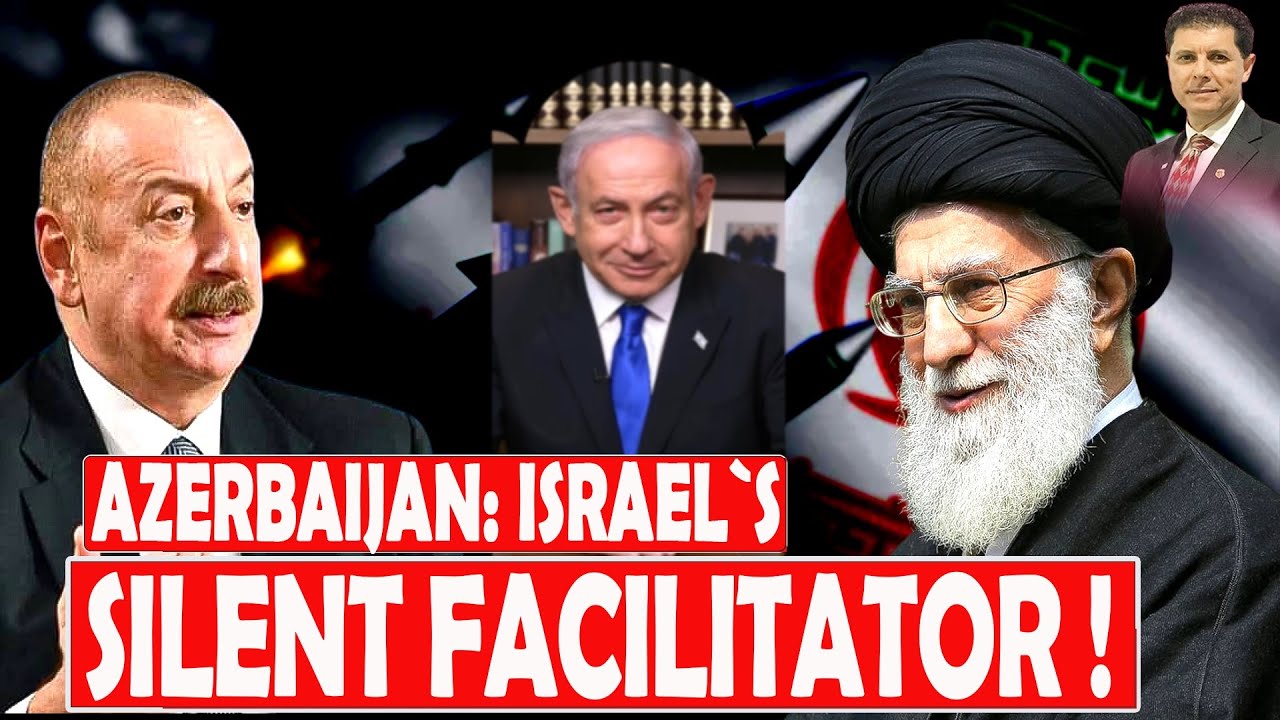
This content was created by David Oualaalou. This content was uploaded by David Oualaalou. This is a YouTube video titled "Azerbaijan: Israel’s Backdoor to Iran!" (published 2025-08-10). The excerpt is a single-speaker geopolitical commentary (SPEAKER A) that analyzes the Azerbaijan–Israel–Iran triangle. The presenter lays out five points—historical Azerbaijan–Israel ties, Iran's accusations and anxieties, Baku's perspective, Israeli strategic interests, and broader strategic implications (citing reporting such as Special Eurasia and the Jerusalem Post)—to argue that while there is no public proof of direct Azerbaijani military participation against Iran, Azerbaijan likely enables Israel's posture indirectly through arms sales, intelligence cooperation, geographic access, and permissive logistics. The video is an explanatory/analytical piece aimed at a general audience and ends with a call to like, comment, and subscribe.
Chapters
Hello everyone and welcome to Geopolitical Trends, where truth matters. Did Azerbaijan help Israel's war against Iran? It's a question that, that is capturing the attention of analysts, diplomats, and even intelligence watchers around the globe. On the surface, no, Azerbaijan has not joined a war. But beneath the headlines, in the shadows of drone deals, oil pipelines, and intelligence outposts, the story is far more complex than you can even imagine. In the volatile chessboard of the Middle East or West Asia and the Caucasus, alliances shift like desert sands, and behind-the-scenes maneuvering often matters more than what's seen in the headlines. One such undercurrent, stirring debate among geopolitical analysts, is the relationship between Azerbaijan and Israel, and whether it has played a role, directly or indirectly, in Israel's recent conflict with Iran. In this video, I explore the nuances of the Azerbaijan-Israeli partnership, Iran's regional suspicions, and the murky question: Did Azerbaijan help Israel's war against Iran? While there is no definitive proof of a coordinated military operation between the two against Iran, there is enough circumstantial evidence, geopolitical positioning, and mutual interests to warrant a closer look. There are 5 points I'm going to share with you. 1. Historical Context of Azerbaijan-Israel Relationship. To understand the present, we must look at the past. Azerbaijan, a secular Shiite-majority nation, shares a long, turbulent border with Iran, Since its independence from the Soviet Union in 1991, Azerbaijan has gradually built strong ties with Israel, largely based on mutual strategic interests. Israel, isolated in a predominantly hostile region, has long sought allies on the periphery of the Arab world and the Islamic Republic of Iran. Azerbaijan fits the bill perfectly: energy-rich, strategically located, and often at odds with Tehran. Over the past two decades, this relationship has grown quietly but significantly. Israel has become one of Azerbaijan's top arms suppliers, accounting for nearly 70% of Baku's weapons imports over a certain period. In return, Azerbaijan supplies Israel with about 40% of its oil needs via the Baku-Tbilisi-Chan pipeline. This is not just about trade; it's about strategic leverage. Israel benefits from proximity to Iran through its ties with Azerbaijan, while Baku receives cutting-edge Israeli technology and military gear, including drones and air defense systems. 2. Iran's Accusations and Geopolitical Anxiety. Tehran has long been suspicious of this partnership, and rightly so. The border between Iran and Azerbaijan is not just a geographic line; it's a fault line of ethnic, ideological, and political tension. Iran is home to over 15 million ethnic Azeris, a population Tehran worries could be stirred into nationalism by Baku, particularly with Israel's encouragement. This fear intensifies following the 2020 Nagorno-Karabakh War, during which Israel's drones played a critical role in Azerbaijan's victory over Armenia. Iran was unnerved by the Israeli footprint so close to its northwestern border. In recent months, these anxieties have reached a fever pitch. Iranian media, particularly outlets like the Tehran Times, have accused Azerbaijan of allowing Israeli intelligence and military assets to operate within its borders. According to the Tehran Times, Azerbaijan allegedly hosted Mossad operations targeting Iran's nuclear infrastructure and scientists. Iranian officials have even hinted that Israeli drones or aircraft could use Azerbaijani airfields to carry out operations against Iranian territory, though no hard evidence has been presented publicly. Tehran had responded with military drills near the border and diplomatic warning, signaling just how seriously it views this potential alliance. 3. The View from Baku, the Capital of Azerbaijan. From Baku's perspective, these allegations are exaggerated and politically motivated. Azerbaijan insists that its relationship with Israel is not aimed at any third party, including Iran. President Ilham Aliyev's government has emphasized that it respects Iran's sovereignty and wants peaceful, stable borders. At the same time, Azerbaijan has not denied its deepening military and intelligence cooperation with Israel, nor has it taken any visible steps to limit Israeli presence, influence, or potential operations near the Iranian frontier. The reality is that more pragmatic than conspiratorial. Azerbaijan is hedging its bets. With Russia's attention diverted to Ukraine and Turkey asserting itself more forcefully in the region, Baku is looking to diversify its security partnerships. And Israel offers high-tech support with few political strings attached. Furthermore, Azerbaijan's alignment with Israel bolsters its regional stature, enhances its deterrence against Armenia and Iran, and of course reinforces its image as a key energy and security hub between East and West. Number 4: The Israeli strategy. From Israelis standpoint of view, Azerbaijan is a geostrategic gold mine. Tel Aviv has long operated on the periphery doctrine, building alliances around its enemies to encircle and contain them. Azerbaijan's location, just a few hundred kilometers from Iran's key military and nuclear facilities, offer an ideal vantage point for intelligence gathering, cyber operations, and potentially even military strikes. According to reporting by the Jerusalem Post, Israel's military presence in Azerbaijan has expanded in recent years, with speculation about radar systems, surveillance outposts, and even airfields that could assist in an emergency. Whoever thought? Yet, Israel is careful not to overtly publicize these arrangements. The goal is plausible deniability—to maintain strategic ambiguity while sending a message to Tehran that Israeli eyes and ears are far closer than it might like. Number 5: Special Eurasia Analysis and Strategic Implications. A recent report from Special Eurasia further outlines how this tripartite dynamics is evolving. The Southern Caucasus has become now a geopolitical flashpoint. With Israel expanding its footprint, Iran's growing increasingly reactive, and Azerbaijan walking a fine line between pragmatism and provocation. Special Eurasia notes that while Azerbaijan may not be overtly involved in an Israeli war against Iran, its territory could serve as a silent a facilitator, whether by hosting logistics, providing intelligence, or simply looking the other way. This strategic ambiguity allows Azerbaijan to deny complicity while still reaping the benefits of its Israeli alliance. It's a high-stakes, high-reward game, especially in a region as volatile as this. Here is my conclusion for you. So did Azerbaijan help Israel's war against Iran? Not with boots on the ground, not with missiles, but with geography, access, and alignment. Maybe more than they admit. And in a region where silence is a strategy, So the answer depends on how you define help. There is no public confirmed evidence that Azerbaijani forces or leadership have taken part in any direct Israeli action against Iran. However, the depth of military cooperation, the strategic positioning and the intelligence infrastructure that exists between Israel and Azerbaijan strongly suggest that Azerbaijan has enabled Israel's posture towards Iran, even if only indirectly. Whether through arms, arms deals, surveillance coordination, or access to geography, Azerbaijan has become a quiet a subtle but powerful nod in Israel's regional strategy. And while Baku may insist on neutrality, its actions and its alliances tell a more complex story. As tensions rise across the region, the world would do well to keep an eye on the Azerbaijan-Israel-Iran triangle, where history Geography and politics converge in ways that could shape the next major conflict in West Asia. Is Azerbaijan a complicit or just caught in the middle of a much bigger game? Drop me a comment and don't forget to like, share, and subscribe. As always, remember, geopolitics impact your daily life in more ways than one. Till next time. Thank you.