Beijing's Proxy War: China's Secret Military Pipeline to Tehran
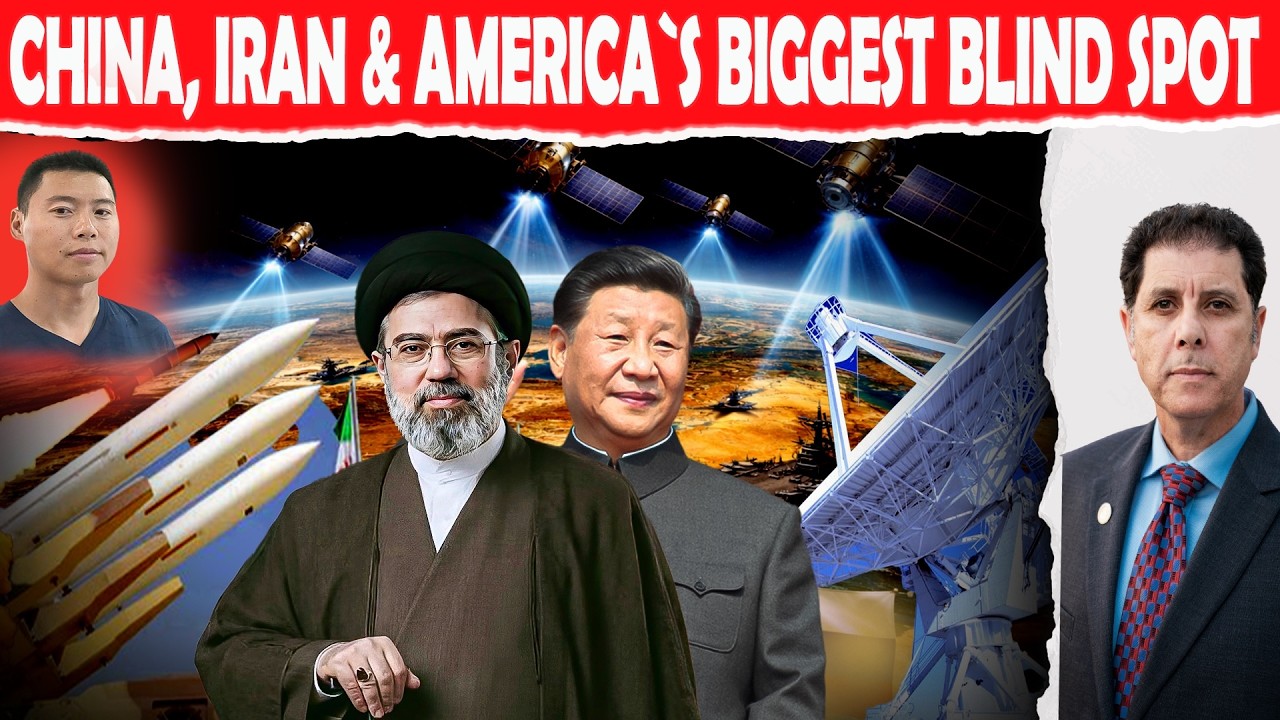
In this extensive live‑stream, host David Oualaalou welcomes Carl Zha, host of the Silk and Steel podcast, for a deep‑dive into the unfolding US‑Israel‑Iran conflict and its wider geopolitical reverberations. The conversation begins with an assessment that the United States’ security umbrella in West Asia is collapsing, as Iranian missiles and drones overwhelm US bases and deplete missile‑interceptor stocks. They argue that the US is forced to operate aircraft from distant carriers, inflating operational costs and exposing logistical fragility. The duo examine China’s covert assistance to Iran – from providing Beidou satellite data and advanced radar (e.g., JY‑27B) to supplying raw materials for missile production and potentially air‑defence systems – and argue that this support reveals Beijing’s sophisticated, low‑profile diplomatic and intelligence capabilities. They discuss the global energy shock: Iran’s oil flowing to China, China’s strategic oil reserves, and the shutdown of Chinese gasoline, diesel, and fertilizer exports, which threatens supply chains in Southeast Asia, Australia, and Taiwan. The removal of THAAD systems from South Korea and the disabling of THAAD radars by Iran illustrate the fragility of US‑aligned defense networks, prompting GCC states to reconsider financial commitments to the US and to explore legal avenues to pull $2.2 trillion from the US economy. The hosts compare the strategic importance of the Strait of Hormuz to the Malacca Strait, warning that a prolonged closure could cripple Asian economies. They explore Taiwan’s vulnerability, India’s shifting stance toward China, and the broader implications for US allies in the Indo‑Pacific. The conversation shifts to the upcoming (and possibly cancelled) Donald Trump visit to Beijing, interpreting it as a sign of US weakness and China’s “quiet strength.” Throughout, they critique US media blackouts, the open‑source AI and satellite intelligence boom from China, and the broader narrative of an American empire in decline. The stream ends with reflections on future escalation, potential nuclear considerations, and a call for community engagement.
Chapters
Hello everybody and welcome to Geopolitical Trend, where truth matters. Excited to be with you once again. I know we had the live stream earlier at, at 12:15, and now it's time with none other than Carl Zah. Let me bring him in right away. Hi Carl!
Hi David, how are you?
Good to see you, Carl. It's been a while. I know we missed you last month. I was a little busy with stuff, and, uh, really, really, we missed our monthly conversations, so we always do this one. Uh, to those who might be here for the first time, uh, I want you to know who Carl is. Carl is the host of the Silk and Steel podcast. I'm gonna put the link for you in the description— in the chat box, and I will highly recommend you go check out this channel if you really want to learn about Asia, China history, and so forth. So, uh, I look forward to looking into that. You, you also learn about culture as well. All right, Carl, we got a lot to cover into this, uh, live stream here, and I would like to start first with your assessment about the ongoing war between US, Israel, and Iran.
Yeah, um, I mean, I I have never thought the empire will crumble so fast. This is what Iran was able to demonstrate, what the real paper tiger United States is. The whole US imperial system in West Asia rests on the premise that you will be able to provide a security umbrella to its so-called allies. I'm talking about the GCC. But so far it shows that the alliance with United States is a liability, not an asset. As the Iranian missiles and drones were raining down on the US bases in those countries, with very little— there was very little US could do about it. And the US aircraft carrier, the symbol of American power, they have, you know, they have positioned themselves as far away as possible. Uh, right now the, the USS Lincoln basically put itself behind the mountains of Oman so you won't be able to be hit by, by Iranians. And another very telling statement by the Secretary of War Pete Hegseth, he said Oh, don't you understand? Do you understand how hard it— how hard it is for US pilot to fly 36 hours straight? And you got to think, why are US pilots flying 36 hours straight? Well, first of all, that, that, that means they have to fly very, very far away from Iran, outside the missile range of the Iranian missiles, because now, now Iranian missile and drones have a free rein, um, hitting all the US bases in the region. And this is, uh, and on top of that, US and Israel has been running out of missile interceptors. That was an issue back in the 12 Days War, and it's even worse now. Not, uh, you know, remember Wall Street Journal reported they spend about 25% of their missile interceptor arsenal back in the 12 Days War We're now in what, day 16, day 17 of the special combat operation against Iran. So they're not getting those ammunition replenished because China maintains its rare earth ban to the US military-industrial complex. So the more missiles they shoot, it's less they have, and they can't replace at the rate that Iranians have, have a lot of missiles, and Iran can also make those missiles and drones much more economically than United States. Those missile interceptors, uh, you know, cost upward millions, cost millions of dollars. Uh, those Iranian drones cost about, what, $30,000? Uh, this is asymmetric warfare that United States will not win. This is, this is why, um, The Donald Trump administration is really desperate, uh, you know, because they— this is not something they planned for. They went into this war with minimal planning because the whole Venezuelan operation had gotten to their head. They thought, okay, we'll just do the— we'll just replicate our success again against Iran. We'll do a decapitation strike and the rest of the Iranian government will fall into line. Well, that's not what happened because Iran is actually a regional power. And, and now Iran has demonstrated it is Iran that's controlling the oil flow out of Middle East, not United States. You know, Iran gets to decide which oil tankers can pass through the Strait of Hormuz. And, and Iran itself has been able to increase its oil export to China all throughout the war, and there's nothing U.S. can do about it because Like a lot of people like Gordon Chang were saying, oh, why are we allowing— yeah, well, first of all, right now US is do— is doing what it can try to increase oil global oil supply that was caused by the disruption of this war. So Iranian oil going to China is actually relieving, really relieving the shortage. Because the, the oil that China buys from Iran, that means the less oil China need to buy from elsewhere in the world, because oil is a good global commodity that's fungible. So this is also the reason the US has waivers, a sanction against Russian oil. Um, uh, Europeans apparently haven't received the memo because the Sweden— Swedish minister just a few days ago was boasting about seizing another Russian oil tanker. It's like, look, look, your master has already said let's not go after Russian oil anymore, uh, because, because US government is desperately now trying to increase the oil supply, uh, which has— it's going to have catastrophic consequences for the world economy because the, you know, oil is not only used in transportation but, um, anything from manufacturing of plastics and also fertilizers. You know, China already stopped their export of gasoline and diesel. Uh, you know, people might be surprised to learn that China is a big exporter of gasoline and diesel because China has a lot of refining capability, um, which is a, which is a big shift from when the time when I lived in China back in 1980s, because back then China didn't have enough refining capabilities. So So in the 1980s, China was a net oil exporter. China exported crude oil to Japan and imported refined petroleum products like, uh, like gas, gasoline, diesel, um, chemical fertilizers. Now China is the world's— one of the world's largest exporter of gasoline, diesel, and, and chemical fertilizers. Now, but China just said, we're going to stop that. We're going to stop our export because we're going to take care of our domestic— we're going to take care of our people's needs first. So this is going to have a ripple effect throughout the world economy. A lot of the places in Asia, especially Southeast Asia, where I live now, actually depend on those refined petroleum products coming out of China. Australia, for example, 32% of the jet fuel Uh, they depend 32% of their jet fuel from Chinese, uh, exports. And now that, that supply is cut. China said no, no, no, no, no exports from now on. And China also put a ban on export of, uh, nitrogen potassium, uh, you know, another one of those, uh, petroleum derivatives. And this, the nitrogen potassium fertilizer is very important for agriculture. And right now we're in the spring, right now this is the planting season. This is when the farmer is going to plant for this year. And so there's great need for fertilizers. And again, China have to take care of their own people first. So, so that's why they're putting the, the ban on export. Uh, but for the rest of the world, this is, this is pretty dire. We're looking at pretty, uh, uh, especially if the, the war drags on longer. Uh, you know, in many ways China is actually well positioned to weather the storm better than other countries because they, they're already 80, um, like somewhere from 84 to 86% energy self-sufficient. Uh, they just need to import 16% of their energy, uh, and half of that is in, in, um, in forms of oil, and then another half of that is from the Gulf region. And, and, but China can increase its intake from elsewhere. For example, China has the, um, you know, China has Russia right next door. China can increase imports from Russia. China also has locked long-term, uh, LNG contract from United States. You know, people don't realize that China had signed agreement back in 2022 to buy up, uh, uh, American LNG. But then what happened was, um, you know, this was basically United States want to increase Chinese dependency on American energy. But then what, what China did instead in the past few years, China has been reselling those LNGs to Europe at a premium, uh, because Europeans really need that gas. And now China has option either to redirect that LNG back to China or continue to sell to Europe at a higher premium. And so, yeah, so for Europe is getting screwed either way. I mean, they, they, they, they cut— first cut themselves on the Russian gas, and now they're getting cut off on the Qatar gas as well. Um, so they're gonna have to pay. And, and, uh, China is also less, um— I, I just saw another recent New York Times articles China— United States is 40% more oil, uh, dependent, you know, more oil-extensive, uh, economy than China is because China has diversified its energy source from renewable like solar, wind, hydro, um, and they're also building out nuclear like, like there's no tomorrow. Uh, China is— China, I think they have plans to build like upwards of 30 nuclear plants. Um, you know, they, they, they are doing a massive build-out of their energy grid, and they already electrified their country. You know, they have a massive push for EVs, and they already electrified their rail lines. So their transportation network is less dependent on hydrocarbons right now. Um, and on top of that, China has a massive, massive reserve of coal. And they do have the technology to turn coal into oil, given the right price. So this is why it's kind of ridiculous that Donald Trump is recently asking help from China to reopen the Strait of Hormuz. It's like, why? Why would they help you?
He's delusional. He's delusional, Carl. But you're right about the energy because I was— I mean,— it's in the public domain— that Iran's IRGC only allowed the Chinese-flagged oil tankers to cross. So that tells you right there where the relationship vis-à-vis Iran and China moving forward.
They have broadened that in more recent days. They said they will allow passage for oil tanker carrying oil that's paid in Chinese yuan.
Actually, that was the demand. That was one of the demands from Iran. And we all know what it means. We all know what it means. This is why the US now is tapping into wanting NATO to go, and NATO countries are saying, what are you, out of your mind? We're not going. We're not going there.
So Iran is decolonizing West Asia at the same time is de-dollarizing.
Yeah, hitting two birds with one stone. That's a smart move. On their part. Uh, on this aspect, Carl, uh, just while we're talking about this one, in your opinion, do you think the, the US and Israel badly underestimated Iran's capabilities?
I mean, total— I mean, I think some of the experts obviously know, but again, who listens to experts nowadays, right? I mean, who listens to the experts nowadays? Not in Washington. And we, we all know the, the primary impetus for this war Uh, is Israeli pressure, because for Israel, they realize this is one single opportunity, this is a once in a lifetime opportunity to drag United States into war against Iran. Uh, you know, because for Netanyahu was on record saying, oh, I don't care, I don't care what is this regime change or civil war or balkanization, it's all good for me. Of, you know, because the Israel's aim is to reduce the power of Iran, you know, preferably reduce to a non-entity so Iran no longer presents a viable obstacle to prevent the greater Israel project, uh, you know, for Israel to roll across Middle East. And, and so that, that has always been their goal. And but Israel by itself lack the capability to do it. This is why they need to drag in United States. Now people need to keep in mind, this Israeli pressure on U.S. to go to war with Iran has been constant for— but for the last 7 U.S. presidents, they all successfully resisted the Israeli pressure to go to war with Iran. So you, you make you wonder what kind of stuff was in those Epstein files they haven't released.
You know, you're right. You are right. I think— and I— it's not I think, I'm convinced Israel has something damning about Donald Trump regarding those Epstein files.
And this is why they got to do it now, because they finally got a president they could blackmail into do their bidding. And Donald Trump, from his part, he's probably getting some very bad advice from his advisor. I mean, right now he's already blaming his advisor. He's blaming his son-in-law. Jerry Kushner. He said, well, Jerry Kushner said it was gonna be a quick victory. And, and so, yeah, I mean, like, they probably told him, oh, it's— you, you'll be a, you'll be a walk in the park. It'll just be like, yeah, Venezuela, we do a quick, uh, special ops, and then boom, we, we do decapitation strike. Boom, we can declare victory, we're out of there. Because I don't think, uh, it's Donald Trump's instinct to be dragged into a long war, a quagmire, right? I mean, like, he— but he— it's his instinct to go for the low-hanging fruit where he can claim victory. And, and this is why he's, you know, in his press releases now, he's increasingly frustrated because he realized this is not a, a short war. Uh, they got— they, they, they bite way more than they could chew right now, and Iranian is showing that it, not the United States, actually holds the key to the Middle East stability.
Yeah, you're absolutely correct, Carl. Before we get into the Chinese capabilities, I want to go back to something you mentioned about the countries in Asia, especially I'm referring here to Japan, South Korea, the Philippines, and Australia, but mainly those two, Japan and South Korea, and even mainly is South Korea. And the reason I want to get your thoughts on this, it has to do with the US pulling out the, uh, uh, THAAD batteries from South Korea. How do you think this, uh, first of all, how significant that is and how in your opinion, Carl, North Korea is reading this?
Well, I think I, I said before on your show that this pivot to Asia thing is not going to happen. And, and so I was a little bit off because pivot to Asia did happen, but was pivot to West Asia, just not pivot to East Asia. And, and what happened is right now, um, you know, not only, not only Iranian missile and drones is showing that U.S. is a paper tiger in West Asia But you also show people the whole US alliance system is actually quite fragile. Um, you know, South Korea, you know, you would think this is a very important country, one among the top 10 economies in the world. But guess what? In order to save their golden boy Israel, United States decide, you know what, we're gonna need those THAAD missiles. By the way, US only have, I think, total of 11 THAAD missile system. Um, in the, in the, in the whole globe. And those are very expensive equipment. Like, each THAAD launcher is about— costs like upwards of a billion dollars. And, and what Iran has been very good at, uh, you know, in this, in this conflict is they, they went straight for the radars. Because without the radars, all this billion-dollar THAAD launcher is useless. They have no eyes, so there's no way they can intercept anything. And, and, and Iran was able to take out 4, 4, 4 THAAD radars, you know.
So they—
Iran managed to disable 4 out of 11 THAAD systems the United States have around the world. This is why US needed to move the THAAD system from Korea to West Asia. Now, South Korea actually nuked its own relationship with China back in 2016 and 2017 when the decision was announced that United States was going to deploy THAAD system in South Korea. And, you know, for this, China, you know, put, um, you know, China has put a lot of economic pressure on Korea. Uh, Korea lost billions of dollars in terms of business opportunity in order to host the THAAD missiles for United States, and now, poof, it's gone just like that. And And you also— another lesson for those US quote-unquote ally countries is that they can see what's happening in West Asia right now. UAE, Qatar, they're all getting hit by Iranian drones and missiles. US was not able to protect them, you know. US missile systems was not sufficient to protect them. And guess what? If a war, God forbid, that would break out over Taiwan, all those countries that hosting US, uh, bases in East Asia— I'm talking about South Korea, Japan, Philippines, Australia— all of them will be on fire. And China has magnitude more missiles and more advanced missiles than Iran. And this is the lesson really to be taken away from this. Is, you know, forget about war with China. United States cannot even handle Iran. And, you know, don't, don't even think about stirring up a conflict in the Asia-Pacific. And on top of that, in times of conflict, U.S. is not going to offer— is not going to be able to help to protect them. Um, so, so this, so this is— there's already a rethink among GCC countries right now. They, they have already got together and decided they're going to curtail their financial commitment in United States in order to save that money to devote to rebuilding in their own region. Now that have multiplication effect on the U.S. economy because U.S. was counting on all those Gulf Arab monies to find— continually finance the AI bubble, right? The, the, you know, like when they propose that $500 billion Stargate project They're not talking about $500 billion coming from United States or even Japan or these countries. No, no, no. They're aiming for those Gulf money, oil money. Guess what? That money can no longer be guaranteed. And remember, United States, if you take away all the investment into AI, its economy essentially hasn't grown. If you take away the AI bubble, the US economy will be in recession. And, and so this is, this is, uh, this is pretty bad. On top of that, all these US tech companies, they have been counting on the data centers that have been built in the Gulf countries because AI is very energy intensive. So they thought they're being smart by, okay, we'll move the, we move the, the, our AI center to where the energy is, we move it to the Gulf. Guess what? They're being lit up by Iranian missiles and drones right now. And so yeah, so this is gonna put a big, uh, this is, this is gonna put a big dent into this, uh, their, their whole, whole, um, plan for the AI economy. And yeah, and, uh, and again, this, this actually shows how little United States plan for this, um, you know, because you— US went into this war without even trying to fill up its strategic petroleum reserve, right? The US strategic reserve had been drawing down since the Biden years, uh, you know, because as an effort to calm down the inflation, to win votes. But Trump went— started the war without even bothering to store up some oil. China, on the other hand, they have 1.5 billion barrels of oil in their strategic oil reserve. One of— it's China's oil reserve is the world's largest. They have been stockpiling for the last 4 years, taking advantage of the historically low oil prices. Um, so they have, they have something to fall back on. Uh, you know, they have a rainy day fund that can last China 6 months even if they don't import any oil. But they, they do. They, they still— they're still getting oil from Africa. They're still getting oil from, from Russia. And, uh, so, so China will be relatively okay compared to countries like South Korea, like Japan, which is actually like 80 to 90% dependent on oil and gas from, from the Gulf. And, and this is another reason why United States had to waive the sanction against Russia. For Russia because they're just like, you know, they're— this also shows that the fallacy of, uh, you know, the proposed US blockade of Malacca Strait. US Navy has been talking about using Malacca Strait as a choke point against Chinese energy supply for the longest time. And what, what happened? Oh, oh, what happened right now. This is actually a, a preview. What's, what's really gonna— who is really gonna be choked off is the so-called U.S. ally countries, you know, Japan, Korea, Philippines, all very heavily dependent on oil coming from, from, from the Gulf. And so, so yeah, this is, this, this one thing, you know, if there's a silver lining out of this is that after this debacle, you know, they, they will have to think twice about starting trouble in the Asia Pacific because there's no way they will be able to take on China, um, given their poor performance against Iran.
Well, you're right about— let me first of all just make a, a note for the community about Malacca Strait. I am going to be working out— I am actually putting together an analysis Regarding this point, Carl, I will be, I will be sharing it with the community in a recorded video because it came under my attention what the US is planning on doing. But given what we see now in the Strait of Hormuz, the Malacca will be— it makes the Strait of Hormuz case like a child's play in comparison to the Malacca Strait. And I decided to do an analysis for the community. I will release it soon. Now I want to go back to GCC quickly just to confirm what you said, Carl. And I have it on good authority that there is now a legal conversations behind closed doors between 4 countries: United Arab Emirates, Kuwait, Qatar, and Bahrain, and the United States. The legal teams are trying to figure out, is there any, any clauses that would allow those countries to pull $2.2 trillion out of the US economy? And we all know what it means moving forward. You're absolutely correct. We do not think strategically long-term, and it became evident and clear that Donald Trump has been forced into this war because that's the orders given to him. So that, that just tells us, it told us where the story is. On the other hand, this also brings the other point you mentioned about Taiwan, and I'm going to ask you this question, Carl. How do you think Taiwan now is looking at the situation, and is it learning anything from the developments that's going on in the US-Israel-Iran war?
Well, I mean, Taiwan should see what's, you know, what is happening to all these countries aligned with United States. First of all, Taiwan itself is also highly dependent on oil coming from Gulf, you know. In fact, um, you know, Taiwan, uh, 60% of the helium supplies, uh, the Taiwan depend on to make semiconductors, to make chips, is coming out of Gulf. And so, so, so right now the continued blockage at Strait of Malacca is gonna, is gonna, uh, jeopardize the whole chip production on Taiwan. Uh, you know, like there's, there's a lot of, lot of consequences, a lot of fallout of this You know, there's chips and there's also agriculture, like I talked about earlier. Now it's planting season. If farmers don't get enough fertilizers, this is going to impact this year's harvest. Even if the Strait of Hormuz gets to open today, it will take them months to restore the oil production to the level prior to the war because, you know, there are oil facilities that have been damaged.. And you know, you can't— it's not a tap, it's not like tap water you can turn on and off. So you're right. Yeah, so, so, so this is, this is— and, and one thing they, uh, you know, I think if anything Taiwan can take away, a lesson can take away with this, is they better start making accommodations with China, start negotiating um, because they're at right now, right, late, sooner rather than later, because as the time drags on, their negotiation position will be less and less, you know, because, because, because right now every, every day, every month, every year that passes, the, the relative position of, of, uh, China vis-à-vis United States continue to strengthen. So for Taiwan, their best case is negotiate early, you know, to, to get to lock in, to lock in the gain right now rather, rather than later. Um, and, and, and this is, this is why, uh, you know, like, this is why the all the eyes of the world is on the Gulf right now, how this shaping out. I mean, this is really like the Can you imagine? Trump is now yelling at NATO for not helping, and, and just, just few days ago he was, he was saying, oh, NATO is useless. You have people like Marco Rubio and Pierre Steph says, oh, NATO is useless, they just take our money, uh, and now they're, they're begging NATO for help. First of all, United States is the largest military in NATO. If United States cannot open the Strait of Hormuz What's a couple more warships from, uh, from, from, from UK or France is gonna do? Uh, you know, not much.
And they are backing down. They are backing down. They're saying no, we're not gonna do it. We're not gonna do it. So the US now is stuck. Here it is, we are funding almost 75% of NATO's budget, and yet they said no, we're not gonna— you know, you, you created the problem, you deal with it. And even for us Americans, I speak for myself, I don't speak for all Americans. Even for me, I'm asking, why the heck are we getting involved in a war that is not ours? It's not my war. Why would I get involved? Why would I spend a billion dollars a day, a day basically? So far, that's how much we've been spending since day one. A billion dollars a day, Carl. Can you imagine taking that money and invest it in infrastructure here in the country?
I, I, I, I think it was yesterday or the day before I saw the tab was, uh, $21 billion. It's a total amount of money that has been spent so far, so far. And, and, uh, so I did a quick math for, for, for the high— Chinese high-speed rail, they— it cost about from $17 to $21 million to lay a kilometer 1 kilometer of track. So for $21 billion, you could build 1,000 kilometers of high-speed rail in China. You know, like, like, you know, you know, that, that high-speed rail that costs arms and leg in California that still hasn't been completed yet. No work. No work.
Where's the money? It's, it's, it's— the system is corrupted. Its core. You're right, if that money can be spent on building a high-speed road— when I was in China, I rode one from, uh, I took one from Shanghai to Beijing because I wanted to experience that. Oh my gosh, 342 kilometers an hour! I saw it, I recorded it, I did a video for the community, but it was about the experience of it to see. You look at where a government is spending money, it's not spending it on war, it's spending it on infrastructure that helps people move from Shanghai to Beijing to do business, whatever, and hop on the same high-speed train and get back home.
And it does not depend on expensive jet fuel that would need oil.
You're right, you're right, it does not depend on that. It's just, uh, and then this, by the way, Carl, leads me to ask this question about now the global energy. Where do you see this going now? We're talking about a global energy security now that is really, I mean, you got countries now that they are France, for example, France now might be, is having serious problems that economically speaking, or Germany, for whole Europe, that there is no access to oil now because the Strait of Hormuz is shut down.
Well, Europe is screwed anyway. You know, they're little. They're little, you know, like other countries, they can, you know, this is going to be a big push for solar, you know, for solar and Chinese EVs, you know, which benefit China. China is the main manufacturer of solar panels and manufacturer of EVs. For Europe, it's— I just don't see any good outcome because they're a little bit too far north in latitude to effectively get a lot of solar energy. They could still derive some benefit, but it won't be enough. But for countries like in Southeast Asia, where there's plenty full of sunshine, yeah, I mean, it makes strategic sense to do a huge rollout of solar now, especially now with the battery price for storing energy is a lot cheaper. And I'm going to get solar panels. Put on my, my own roof so I have my own energy independence. Uh, I don't need to worry about brownout anymore. And, and yeah, that, that's gonna happen everywhere. That's gonna happen everywhere. Um, so people— again, this comes down to long-term strategic planning. China has been doing this for years, but everywhere else, no, not so much. I mean, U.S. Itself is, you know, it's going to be good for the big oil company in United States. They're going to, they're going to make a lot of money with the rising oil prices. But if you don't work for those big oil majors, I'm sorry, you're going to have to pay at the gas pump. You're going to have to pay the toll.
That's true. And we're already seeing the prices going up. Let me play this clip quickly and we're going to continue with our conversation. Liking this video so far? Don't just be a watcher. Go ahead and hit the like, share, and subscribe button. And don't forget to tap the bell so you will not miss any of my videos or live streams. This way, you will be supporting a channel that stands for the truth and objective reporting. The choice is yours. Thanks for your support.
All right.
Let's get back now to a key topic to why we're gonna— why we are having this conversation to begin with, and it has to do with the Chinese technology, military and technological support, or technical rather, support to Iran. What does that suppo— first of all, we're gonna talk about this aspect. What does this support, in your opinion, Carl, says about Beijing's capabilities when, when we are witnessing the accuracy of the Iranian missiles hitting targets inside Israel—Tel Aviv, Haifa, Shemesh, and other locations—and pinpointing exactly at the US bases in Bahrain, Qatar, Kuwait, and the United Arab Emirates. What does this say about China's capabilities?
You know, there are a lot of people previously were criticizing China for not doing enough. To help Iran. Well, this is, this is because the way China conduct diplomacy is very different from the way United States conduct diplomacy. You know, the US diplomacy is Donald Trump putting out a tweet, or he stand, he stand in front of the camera, say, you, we're winning so much, you're going to be tired of winning, right? I think Chinese prefer quiet diplomacy. They don't like they like to speak with a soft voice, but they like to do things behind the scenes. And one of the things that they were able to help Iran was helping Iran get off the GPS system, right? You know, Iran realized, you know, even back in the 12 days— before the 12 Days War— they cannot rely on GPS because that thing will be jammed in time for war involving US and its proxies. So Iran has switched over to the Chinese Beidou satellite system. And we, we see a marked improvement in targeting, uh, this, this time around compared to the 12 Days War. The Iranians know what to hit, where to hit. And, you know, one, one thing it shows that Iran has very good human intelligence on the ground, but they're also getting very accurate satellite feeds. So they knew even the, the US person, military personnel who have run away from their bases, and knew which hotel room, which floor in the hotels are staying for the Iranian drones to strike. And, and they, you know, this, this is why I put out a tweet, uh, say, oh, all these people who said, who boasted that US has so much more combat experience than China, it turns out United States has never fought a country with access to satellite intelligence, you know, until today, until, until now, uh, and, and that, that shows. And, you know, you have, you have U.S., uh, refueling tankers getting destroyed on the ground in their, in the, in their bases. This is another reason why U.S. pilot had to fly 36 hours straight, because they now have to come in from much further further away. You know, I saw, I saw, uh, you know, this, this is why, um, you know, when, when Spain refused to let U.S. use its bases to, uh, on Spanish soil to fight the war against Iran, Trump got very, very upset. And then Portugal volunteers say, oh, okay, we welcome you to use our base in Azores. And I look at the map, Azores Island, that's in the middle of the Atlantic. But I mean, like, they do have some, uh, air Airbase there basically for the U.S. refuelers, for the U.S. tankers to, to, to, to, to make the, make the temporary stop across the Atlantic, and then from there they fly over to help refuel U.S. aircraft, uh, engaging in, in the fight against Iran. But it, it's very far. This is why U.S. pilot had to fly 36 hours straight. Because now they have to fly from much, much further away, away from the Iranian missile ranges. And, and, and, and yes, this is— and at the same time, there is a lot of disinformation right now on the social media, uh, at the time when the U.S. air defense was shown ineffective against the Iranian missile barrage. You are seeing a lot of posts on social media claiming that Chinese air defense system is useless. You know, this— I saw this started initially, started with a bunch of Indian accounts, and then that was picked up. It was even— they're still butthurt because of the India-Pakistan conflict where the Pakistanis use the Chinese jet J-10C to shoot down, uh, Indian Rafale jets. So, so they're, they're still butthurt about that. So they, they, they still claiming that, you know, Chinese air defense is completely useless in Iran. First of all, Iran do not have modern Chinese air defense system. The only, uh, you know, the only thing they have is from like 1957. Um, you know, they do not have anything, anything Chinese, uh, air defense system that's manufactured in this century. And, and now, you know, like, like there were talks before about Iran possibly acquiring, uh, the latest, but, but the delivery has never— has not taken place yet before Trump launched this latest, uh, around the aggression. So, so there's no confirmed Chinese air defense system in deploying Iran at all. And, and the— but the reason why those posts become viral on social media is because people desperately need to believe in the superiority of the US system, US weapon systems. Because what really happened is it shows the most sophisticated anti-air defense that United States put up to defend its golden child Israel has been shown effective. You know, no matter what, you know, what you have— David's Lean Iron Dome, THAAD system— Iran is still be able to hit Haifa, hit Tel Aviv. And, and, and it, it actually also shows it's actually very difficult to do anti-ballistic missile defense because you are basically trying to shoot a bullet with a bullet, right? And this is why those— that— this is why the THAAD launchers are $1 billion each, and each THAAD missile Interceptor is like tens of millions of dollars. Um, it's, it's very hard to do that. And, you know, you, you can maybe place some around like your most protective asset, but if the— if your opponent have tens of thousands of missiles the way that Iran does, it's, it's hopeless. It's hopeless. It's, it's, you know, they're gonna— they're just gonna either wear down your missile, uh, interceptors, uh, using wave and wave of missile and drone attack. Or, um, you know, that some of the— as long as they use enough missiles, enough will come through, enough will get through. You know, the whole claim of 90% interception rate in Ukraine, that's all bogus. Now everyone knows that's a lie. You know, when you see those— yeah, you want to see all these oil facilities, all these buildings, US bases getting lit up, you know, that, you know, they're not doing 90% interception rate, not even close. No, they're not.
Yeah. I think in the case of Iran, to my knowledge, Carl, and please correct me if I'm wrong, I do know or read on one capability of the new type of radars Chinese have developed, especially in reference here to JY-27B. I have a picture of it right here. This is a very, very highly sophisticated types of radars. To my knowledge, based on the readings that I did, this will have the capability of tracking, for example, the Spirit, the bomber, which is usually— or any other type of stealth, uh, that the US might have. Those kind of radars the Chinese have, uh, they are very, very advanced. Now you add another picture to this and it has to do with the Beidou satellite imagery. And I know it was a company in Shanghai that was authorized by the Chinese government to release the images and those, the satellites rather, to the— Meets Our Vision. Yes.
Yeah, Meets Our Vision is the name of the company.
That's the one, Carl. I know they were authorized to release those. And to my surprise was the deadly accuracy. Of pinpointing the target. We're talking about literally 10 centimeters from what I read. Even if you go by a meter, it's still deadly accurate. And I think this is what's helping Israel— Iran, I'm sorry— targeting precisely.
This is why the West is afraid of China, because China commodify everything, right? Before, you know, whether AI Satellite intelligence, those were exclusive domains of US and its allies. And now China just make everything for free. It's like, okay, here, here's the satellite intelligence you wanted, here's the, here's the open source AI, here's the source code, uh, for, for, for, you know, like, and this is, this is why they are so upset. They're so upset because it destroys their whole model. In terms of AI, the whole so-called OpenAI, their whole aim was to be able to monopolize, and then they're going to charge rent for you to use their services. That was the business model of OpenAI. Sam Altman, he was able to suck in all this knowledge, all those data for free, And now he's gonna turn around and say, okay, oh, by the way, you want to use ChatGPT, we're gonna charge you, and, and charge it. But when China come out with open source, uh, AI like Deepseek, when everyone can use for free, that destroys their business model. This is why all these tech bros in Silicon Valley hate China. Again, this is in terms of satellite intelligence, um, Now, now, uh, right after the war, a bunch of US satellite companies says they're gonna put like a 96-hour hold on the satellite updates to— so, so not— so, you know, not to offer information for the enemy, which is bogus because Iranians don't need that. Iranians get their satellite intelligence from Chinese and the Russians. And, and so what they're really trying to do is they don't want you to know how hard the Iranians are hitting the U.S. bases. And, and, you know, that's— that they're trying to withhold the information from the Americans, from, from, from, from the, from the, from the Westerners. Uh, but now thanks to the Chinese satellite company like Mizar Vision, everybody can see what's going on. Everybody can— yeah, everybody can see destroyed, uh, U.S. assets., uh, US bases in smoking ruins. And, and so it's a lot hard. And, and I also noticed a lot of the underground video footages of the tankers getting attacked or the oil facility getting attacked are coming from Chinese sailors in the Strait of Hormuz. So, and so makes me wonder, because I know those videos were first posted in Chinese social media and then reposted back on on Twitter and elsewhere. So it makes me think, why is it all mostly— or not all, but mostly— from the Chinese sailors? I think there's some kind of, uh, you know, intentional suppression on the, the US media platform. Uh, you know, like, like, unless you're, you're telling me 80, 90% of the workers are in the Gulf of Hormuz are all Chinese, right? But it just so happens that Then most of the videos that we're— most of the feed we're seeing, all these attacks are coming from the Chinese sailors. So I think, uh, you know, I think that there's some intention suppression of information on the US, in the US media platform.
Well, for sure. I mean, there is a media blackout here in both here and in, uh, in Israel, especially in Tel Aviv. I've been doing recently, uh, uh, the last videos that I did for the community What about the clips that I came across and I double-checked from overseas, not here, because they were in Arabic language and I did the translation for that and shared them with the community? Something I didn't see around here, and the US will not share that information. And this leads me to thinking terms. If we are, if we are thinking, Carl, uh, can you imagine now China just sharing— this is just intelligence— what would have happened If China, for example, end up sharing, for example, the YJ-15 missiles with the Iranians or the YJ-12 anti-ships, or for example, the YJ-12 Navy anti-aircraft missiles, where the conflict is gonna be? What will be the outcome of the conflict?
Well, actually, China is sharing more than intelligence because China is providing Iran with the raw material they needed.
I did learn about this.
Oh, you're right, they were providing the chemical precursors that's needed to— for Iran to build those missiles, which is— this is a difference. China is cutting off United States from the rare earth the US needs to build more Patriot missiles, but, but Iran is getting whatever raw materials they need from China to build its own missile system. Um, and, you know, through China and Russia can supply Iran over, over land, you know, through the railway. And, and Russia can supply Iran over Caspian Sea, right? They don't have— those places are out of the reach of the U.S. Navy. And, and this is a difference. And, and also right now, China, you know, because Iran has been pursuing, kind of like indigenous weapon, a weapon program. So, so this is why they try to, try to, um, they— Iran emphasize self-reliance, right? Which is fine, but is this— they're the— currently the Iranian technology, Iranian missiles already doing enough damage to the US asset, but China will provide Iran with all the materials they need to make that happen. You know, all the engines, uh, all the parts they need to make those, uh, to go into those drones, uh, China can provide that, you know. And, and that is, that is going to be a big difference.
And I wonder if this will extend also to the, uh, the air, the air power, as far as the Chinese sharing really some advanced technologies regarding their fighter jets like J-10, uh, as an example. I don't know if air What do you think, Carl?
Would China go that far? Well, the thing is, the thing is, uh, right now it's, it's too late because, yeah, uh, for China, for even, uh, for to train, uh, to train a jet pilot, you know, to, you know, it takes years of training to get them used to a new system. And, and, and the fight between India, Pakistan actually show the modern warfare is actually more than pit one piece of hardware versus another, uh, because, you know, Rafale is still a good jet. It's, it's, uh, but, but what happened is, you know, you know, war, you're pitting system against system. And Pakistan Air Force had a much better system integration. They had the J-10C work using the PL-15, uh, missile, and they were using the AWACS plane that will allow them to see much further and allow them to fire those missiles outside of the visual range. So they did that much better than, than their Indian counterparts. And for a system integration, it takes years. It takes years. You know, Pakistan Air Force said they were training side by side with the Chinese Air Force for years before that conflict happened. So So that would take time. Like, uh, I mean, it could still happen in the future, but it's a little bit too late for this conflict in particular because you, you— this is, this is the reason why, um, you know, NATO, despite all the equipment they give to Ukraine, you know, wasn't able to make too much of a difference because, you know, they just can't keep up with the pace of attrition. Um, you know, it takes years to to train, uh, Ukrainian pilots or Ukrainian, uh, ground forces to use NATO equipment. And, and so this is why— this is another reason why Iran kind of pursues indigenous, uh, uh, strategy in terms of weapon system. It does make sense, uh, but I, I, I, I'm not precluding a cooperation further down the road, but it's not going to happen right away. And even for— even I think the most, uh, the quickest, uh, the best return on investment is actually air defense systems, uh, because like I said, there were talks of Iran acquiring Chinese, uh, air defense systems, but, uh, we haven't seen, um, the deal finalized or delivery taking place because the, the air defense system can can't compare to the fighter jets, can, uh, has a shorter time of being, uh, kind of, uh, being, being deployed. But still, that's, that's even— that will take, take, you know, 6 months to a year of time for training, for deployment, um, you know. So, so that again, that I'm not saying that will not happen in the future, but it's a little bit too late right now to make a difference.
Wow, that's, that's, that's very, very interesting take, Carl. Thanks for sharing that one. So we're almost coming at top of the hour here. Uh, we still have 3, 3 other items we need to address. 2 of them I forgot to mention earlier. I would like to have just your brief, your take on, and we're going to conclude this conversation with the upcoming visit of Donald Trump to Beijing. I'm almost wondering why the heck are you going to Beijing for. What do you hope to achieve? So the— we'll keep that for the end, Carl. The first one I want to ask you is about India. You remember what happened when Indian University claimed the creation of the RoboDog?
You remember that?
I thought of you. I thought of you, Carl. And since we didn't talk last time, I kept it in mind and I said, when Carl comes back I am going to ask him what the heck was that all about when that professor was lying about the creation of the RoboDoc, claiming it as an Indian production, when in reality it was Chinese.
Well, actually what it shows is, you know, for, for right now, for another, for other countries in Global South, for them to kind of move up the value chain, to, to, to, to, to leap technologically, they will actually need help from China. They need material input from China. They're going to have to import Chinese machine tool, Chinese technology. Uh, India is actually switched, changing tunes in more recent months because before, they, they were the ones who first became the first country to ban TikTok and to ban Chinese investment. And now they're suddenly— yeah, now they suddenly changed their tune. Now they're suddenly left lifting their, uh, a ban on Chinese investment, saying, oh, we need, we need Chinese investment into the country, we welcome Chinese, uh, Chinese investment in our technological sectors, because they, they do realize they are behind, and, and they do realize they do need the, the both the technological know-how and also the Chinese capital to help them to kick-start, uh, their, their own, uh, effort of industrialization. And I mean, that's just a fact. This is, this is what India discovered when Apple trying to relocate more of their assembly line to India to make cell phone, to make iPhone just for United States. They still need to ship the machines, Chinese machines from China. They still need Chinese engineers to come to assemble them to make it work. Um, so Yeah, this is, uh, and India really played really bad, uh, a game in this latest round of conflict because, you know, Modi went to Israel right before the conflict started. And, uh, and, um, you know, India is somehow implicated in the sinking of that Iranian frigate, you know, because they invited the Iranian frigate to participate in a, in a, uh Indian Naval Review, and, uh, and which, which US was also present. And, and, you know, per protocol of the review, the ship must be unarmed, you know, they do not come with ammunition. So, so then later when that, uh, ship left Indian ports, it got sunk by a US submarine.
And that provided the coordinates, Carl.
And also, also the, you know, during the first 2 weeks of the war, India was offering solidarity with all the Gulf countries, with Qatar, with Saudi Arabia, with UAE, but they said nothing. They said nothing about US attack on Iran. They offer no condolences on the passing of the Iranian Supreme Leader. It's only when Iran closed the Strait of Hormuz and suddenly, suddenly you India start into kind of the, uh, a firefighting mode. They realize that they, they screwed up, and then, then they start to offer condolences for, for the, um, for the attack on the Iranian Supreme Leader. But yeah, it's too late now. Now they have to buy Russian oil, and now, and then they had to go seek permission from Washington to buy Russian oil. And so now they receive Russian and Washington permission. So before the war, Iran— India was buying Russian oil at about $50 per barrel. They get a $10 discount because, uh, at that time the international market price was about $50 per barrel. So India was getting $10, uh, per barrel discount from Russia. Now after they receive US permission to continue to buy Russian oil, they get to buy it at $90 per barrel. You know, they have to pay, pay the— yeah, they have to pay market price now.
Um, yeah, yeah, that's what's gonna go for the community. Just as a reminder, on the 19th I'm gonna be having, uh, uh, Jayant Bhandari, and we will be talking about India, just what I'm thinking about it. So, uh, one more topic here before— not topic, rather, I'm sorry, one more theme before I'll jump into the conclusion, uh, with the upcoming trip of Donald Trump. Uh, I'm sure you were aware of it. I'm going to show you a picture, Carl, and you're gonna laugh. You remember they defeated the American team as well. What do you make of that SWAT team, the female SWAT team? Chinese?
Yeah, I mean, that, that was just a funny meme on the, on the internet. I think there's separate competitions among female and male, but, but they just compare the time You know, the, the, the, the, the, the, the Chinese female team barely apparently compare, uh, completed their task under in time less than it took for the, for the men's team, uh, from the other countries. But yeah, it, it's India and United States are actually very similar. They're very similar in that they both like to boast a lot about their capabilities. But yeah, I mean, this is why that, that, that meme I think became viral the way it did, you know, because for people to making fun of them. Um, but yeah, the, the problem is India actually for the longest time they pursue the long alignment policy, which actually worked very well for them. They didn't choose sides. They just decide to become neutral. They maintain a good friendly relationship with Russia, with Iran, with United States. Uh, but it's really lately they thought by tilting, by, you know, fully jumping to the arms of United States, that they will get better preferential treatment. This is why Modi went to Israel, because they knew, understand the special power Israel has with United States. So they thought by getting cozy with Israel they're getting more favorable treatment with United States. Um, you know, this is just— this is like the counterexample to show it doesn't pay. It doesn't pay to be, to be, you know, to be puppy dog of the US. You know, this is just— this is just going to lead to humiliation after humiliation, as the other US allies have found out.
Yeah, well, since you mentioned the US, we're going to conclude with your take on your assessment about the upcoming trip of Donald Trump. I don't know if it's going to go through or not, but one thing I am certain of— Yeah, one thing I'm certain of, Carl, is that if Trump goes to Beijing, but on whose terms?
On whose terms?
I think this is one thing Donald Trump doesn't get. Here is what he doesn't get, and I'll give you the floor here. Is that the Chinese are masters of quiet strength. They do not telegraph intentions. They do not brag. They do not respond well to public pressure. This is what Trump, this tit-for-tat bluster, which has defined his foreign economic policy, has not served him well in dealing with Beijing. And time is running short for American consumers. How do you see it?
Well, that's exactly right, uh, David, because Trump thought he was going to go to Beijing with a lot of leverage over Xi Jinping. You know, he thinks he will have Iran and Israel in his bag. You know, like, this is what all these, uh, conservative think tanks like, uh, Hudson Institute was trumpeting. Oh, Trump is going to control most of the world's oil supply, you know, he will have Xi Jinping by the balls. But now, now he's begging China to come to open the Strait of Hormuz. This is— I, I think this is why he's now signaling that he— the trip, trip might not happen, because now he will go there and looking like a supplicant, you know, rather than a triumphant conqueror. And, and he— this is why he said, you know, if China is not helping us to— if China does not help us open the Strait of Hormuz, I might have to postpone the trip. Well, the real thing is it will be embarrassing. You'll be embarrassing for United States to, to take such a trip under such circumstances. Uh, it shows you what— Donald Trump has very weak hands, uh, you know, when it comes to beg essentially China to reopen, uh, the supply chain on rare earths and to beg China to help to resolve the issue in the West Asia, which United States itself started it. And, and this is why I think this, this, uh, this trip actually might not happen, because, uh, for China there's also not much to gain. It's just bad optics, you know, to have to host Trump while he was committing all these aggression in West Asia. Um, I, I, and, and, and again, you know, all these summit takes place usually is to, for them to showcase some kind of deal, then they can claim victory when, for when Trump comes home. Uh, what kind of victory can he claim? What kind of, what, what kind of deal can he bag? I mean, like under such circumstances, you know, he is, uh, this is why I think he's having second thoughts about going to Beijing, because, you know, he will look weak, uh, he will look, he will look ridiculous.
Yeah, let alone being on Epstein files. The Chinese frown on stuff like that. No, and I think there is one more issue for that, for him, is that he will, if hypothetically, Carl, if he goes He will arrive to Beijing, you know, with something to prove. What is he going to prove? But he doesn't have any leverage because the Supreme Court of the US ruling that his sweeping tariffs were unconstitutional. And that, of course, didn't just hand him a legal setback. It handed Xi Jinping, in my opinion, a negotiating gift, hypothetically, should this move forward. Forward. I just don't see it happening. But yeah, I think there's—
yeah, go ahead. I think there's a— I think there's a high chance this, uh, this trip will be either canceled or postponed. Yeah, yeah.
I was asked by a think tank in Central Asia to do an analysis about this, and I'm like, literally, I put it down in my report that the— we can say all we say, but we cannot guarantee that the trip will take effect to begin with, given the circumstances on the landscape have changed.
Beijing has never officially confirmed his trip, by the way. That is true.
How should we read that, Carl?
Because, because the only thing China said was before he— they were open, they were open to the idea, but they never confirmed that the trip— because, because for, for Beijing, that's very important, you know, with an official confirmation. That means everything is in place. You know, the fact that China have never officially confirmed Trump's trip means this could still be up in the air. It could be something like, uh, all these things that, that, that, that Scott Bessin claimed, that, oh, Beijing is committed to do this, Beijing is committed to do that. No, they didn't say none of that things. So yeah, wow.
Well, I'll give you a last word, my last word, my friend, about But literally, where do you see, once again we go back to our original topic about the Iran-Israel, how do you see this moving forward, Carl?
Well, I mean, Iran has really shown that the US empire is a paper tiger. I mean, by plunging US into this reckless imperial adventure in West Asia, Donald Trump is again accelerating the American imperial decline. I'm all for it. I'm all for it, you know. Trump for president forever. We still have 3 more years, David, 3 more years. Imagine the amount of damage he could do. Uh, but yeah, this is why, uh, you know, for China, Trump is actually the best president for the— of the United States for China. I mean, he— you cannot— it's really— I, I just put a tweet— I put a tweet on, on Twitter, I said the biggest shock to the Chinese leadership over the last 10 years was the dawning realization they have vastly overestimated intelligence and competency of American leadership. Because how could, you know, such a powerful empire be run by absolute morons? But that's— here we have it. I'm here for it.
As my friend Carl, uh, it's not confirmed, but it's just conversation inside the halls of power inside Washington, is that there's a conversation about invoking the 25th Amendment.
We'll have to see, you know, if that, that, that happens.
I mean, like, at least a conversation over there. So, well, my friend, uh, unfortunately I can't read your tweet because they just locked my account on, on Twitter, on, on X because they said I'm inciting violence by saying something. And all I said was somebody was committing a crime against children by, you know, the pedophile stuff. And I said, this guy needs to be H-A-N-G-E-D. And they said, no, you're inciting violence. I mean, that's ridiculous. But anyway, they said we're gonna lock it for a few days or whatever. So anyway, my friend, I can't thank you enough for— really, it's so good to see you again, Carl. I know it's been a long time, and I look forward to seeing you again. And on behalf of the entire community, we say thank you for sharing your insight and knowledge. I look forward to seeing you next time.
Thank you. Always a pleasure.
Wait for me, Carl. I'm gonna talk to you privately if that's okay. Just for the community, uh, I want— let me, let me first quickly here I want to say thank you, uh, to, uh, Narf 9113. Thank you for becoming a new channel member. Appreciate you being here. Army with Harmony, thank you for sharing your vote. Thank you for sharing your knowledge. Should Iran preemptively strike Israel nuclear facilities? Uh, what the knowledge— I got to give credit to Carl because that's usually always my guess, not me, my guess. But for this part of second part of the question should Iran preemptively strike Israeli nuclear facilities. To my knowledge, they have targeted Dimuna, but you need to understand Dimuna is just the facade. That's not where the nuclear stuff are. So, but yeah, it makes more sense. It is my belief that Iran is going to move forward now with probably having the bomb ready within a month. I won't be surprised at that. And the last person here, I want to say thank you to The Empire We Are. Thank you so much for your super sticker. You wrote, nukes, the following is not conjecture or speculation but firsthand knowledge. Do, do, do with it what you will. In the '90s, Israeli F-151I strike aircraft were built to carry and deploy American B-61 series nuclear weapons. He's referring to the B-61, the ones we have in Incirlik in Turkey. Those the types of bomb, those are nuclear ones. Uh, yes, I won't be surprised that there— and this is why last time I mentioned that there is a possibility that what I see over the horizon, that if it become a foregone conclusion that the collapse of Israel is inevitable, they're gonna resolve to using the nukes. I hope it never gets to that. So thank you all for, uh, your support and truly, truly appreciate you. And for those who wants to support the channel, there is a link here if you are interested in supporting the channel. I would be very grateful. Remember to join me on the 19th with Jayant Bhandari, and I will post it for you. And I might do a live stream tomorrow, maybe, maybe not. We'll see how it goes. As always, remember, geopolitics impacts your daily life in more ways than one. Till next time, bye-bye.
More from David


Beyond the Single Actor: Why the Gulf Isn't Choosing Between the US and China


Iran, Iraq's Militias, and the Houthis Are Coordinating! This Changes Everything




Who Controls the Next Decade's Resources? Latin America and Africa's Geopolitical Crossroads

The Chokepoint Trap: How Washington's Stupidity Triggered a Cascade That Now Controls the World

Trump Spooked as IRGC Unveiled dual-use SLV, Deployed Ghadir Mini-Subs & Hinted at Tactical Nukes!
