Beside Targeting Tel-Aviv, Houthis Declare a Naval Blockade on the Port of Haifa!
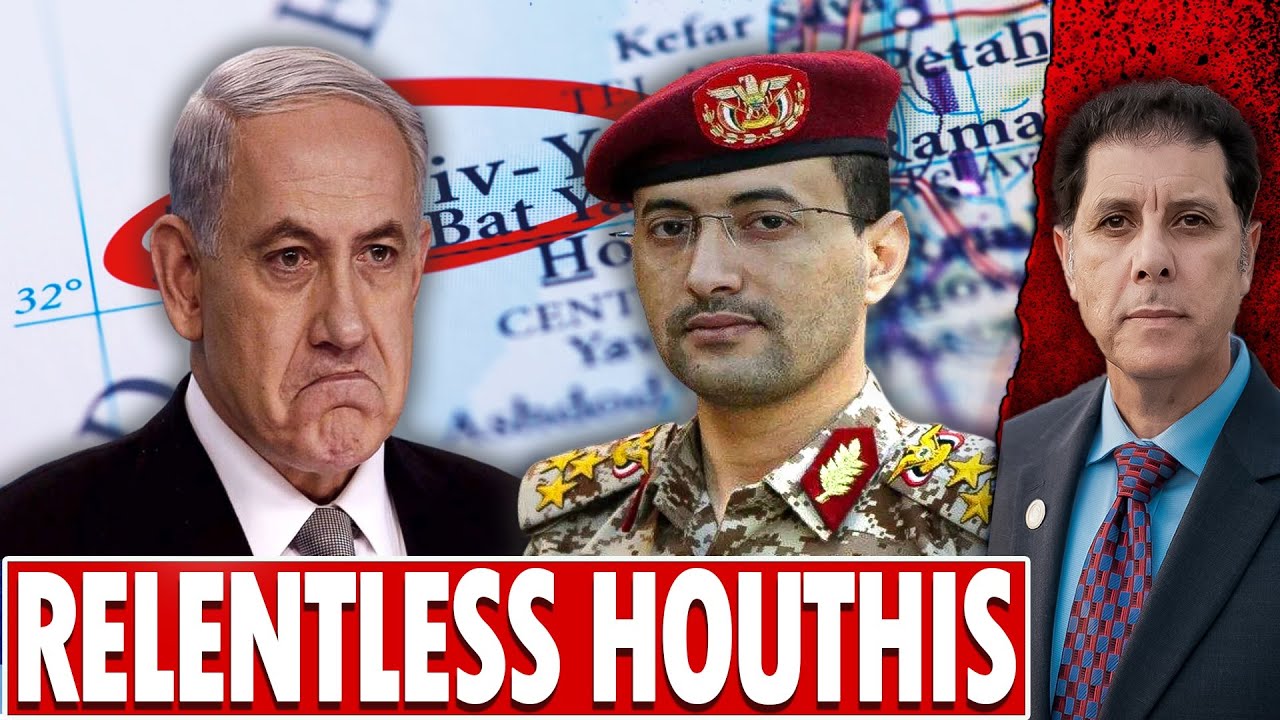
This content was created by David Oualaalou. This content was uploaded by David Oualaalou. This is a YouTube livestream titled "Beside Targeting Tel-Aviv, Houthis Declare a Naval Blockade on the Port of Haifa!" (created 2025-05-21). It is a geopolitics commentary/talk in which a single host addresses a live audience (naming viewers in the chat), analyzes the Houthi announcement of a naval blockade on Haifa and recent missile strikes (including impacts on Tel Aviv and Ben Gurion Airport), and discusses wider regional implications involving Iran, Israel, and the U.S. The presenter also critiques U.S. and Arab leadership, references intelligence reports and military capabilities, and promotes upcoming conversations with guests and channel support. Metadata: contenttype=YOUTUBE, createdtime=2025-05-21T18:17:50Z.
Chapters
Hello everybody and welcome to Geopolitical Trends, where truth matters. Excited to be with you as always. As promised yesterday that I will do the video for you, uh, livestream rather, regarding the announcements by the Houthis as far as, uh, placing a, uh, blockade on the Haifa port. Major, major announcements. So I'm going to be doing an analysis about this, and I'm also going to be sharing with you part of that analysis, the, uh, uh, concerns that is now the Israeli citizens have regarding, uh, the, uh, strikes by the Houthis that are going deep inside Israel. So no longer the, the, the missiles are what we're talking about now, targeting Tel Aviv. That's very, very major concern. So anyway, this is what I'm going to be providing you my analysis about or on this, uh, in this session here. So let's first say hi quickly to our wonderful community. Leanne, good to see you. Willie Hallman, truth seeker as always. Timeline Dunkley, uh, YT, good to see you and good morning to you from LA. As always, good to see you. Uh, F, good to see you. And Anna Jackson, good to see you from South Carolina. Good to see you here. Uh, Bobby, good to see you, and hello to you. All right guys, let's, uh, I got a lot of stuff to go over, a lot of moving parts, but before I do this, some housekeeping items. Remember to join me tonight at 8 PM for my conversation with my friend Rick Turan. To those who know, Rick is considered one of the top in the world regarding fintech, somebody who has an extensive knowledge about. So we're gonna be talking very, very, uh, uh, in-depth about some key issues that you need to be aware of. So, so it will be tonight at 8, uh, 8 PM. So as a matter of fact, uh, I'm gonna put the link for those just in case I'm gonna put the link for you guys, uh, in the chat box here so you at least you have it and just click on it when that time comes. So, uh, let me go to chat box. Here we go. And I'm gonna put it for you guys there. So it's right there. Uh, second thing is also I will be having a conversation with Carlza on Saturday. I know it's early because the end of the month till following weekend, but I am gonna be out of the country. So I wanted you guys to not to miss the opportunity because that we always have a conversation with Carl once a month. So we're gonna be having that conversation on the 24th, uh, and I will post it and, and share that with you. So, all right, let's do some headlines. There are some stuff going on. I'm gonna start with this first one here. And you all know who this person is. So now what's interesting about this one here is that some statements were coming out of the former US Ambassador. This is Robert Ford. So, and Robert Ford, uh, regarding this meeting, his meetings with Giuliani back then, why is this important? It's because It was the US that was providing training for Giuliani to transform from terrorism into the world of politics. So this is exactly what happened. So this is regarding his meeting, meaning Giuliani's meeting— I'm sorry, the former ambassador meeting with Giuliani in 2023. And this one now have sparked major controversy among Syrians on social media, with skeptics now accusing the ambassador of conspiring against Syria. What a former US ambassador, uh, uh, Robert Ford— that's his picture right here— uh, Robert Ford claimed that during a lecture he gave at a Baltimore City Council on Foreign Relations that a British— yeah, Britain was involved too— that a British non-governmental organization specializing in conflict resolution has invited him in 2023 to help, and I put this in quote, bring this man from the world of terrorism into conventional politics, end of quote. Meaning bringing this guy here. So, so, and, and as you know, guys, it's no secret. You all know how Zulani came to power and why. So we are not going to beat the dead horse over that one. So, so now you know, at least the, the, uh, your, your assumption was correct. How come this guy Zulani all of a sudden become an interim president of Syria? So, uh, second headline that you need to be aware of, and I can see the writing on the wall Geopolitically speaking, this one has to do with Ivory Coast. Ivory Coast, I've been there when I was still in Washington. I went to, uh, Abidjan. So it was, it was work related. So, but here is the thing, Abidjan, which is the capital of the, uh, La Côte d'Ivoire or Ivory Coast, is now preparing to host state-of-the-art US drone facility, a move that reflects, in my opinion, and I've been saying this, the growing military cooperation between the United States, particularly because the US is saying, oh, we want to fight terrorism in West Africa. You know the narrative. So, and the project was announced during a meeting between Ivorian Defense Minister Tini Ibrahim Ouattara. I have a picture of him. That's the guy right there. That's Ouattara right there. And the, uh, of course, during the, uh, but, but the picture on the picture, that's General Langley. That's the one here. So you all know what it means. That means now the US is shifting because they want to create the notion that there is this terrorism and so forth. It has nothing to do with tourism. It has to do with the independence of the Sahel region. You all remember, and, and I, I always keep this map for you guys just in case. Here it is. Look where Ivory Coast is, okay? And the idea of La Côte d'Ivoire right here at the bottom, if you see where, where Ghana is, that's where Ivory Coast is. But all this has to do with this region, the Sahel region, from, uh, Mali, Mauritania, all the way, all the way to Eritrea. So, and all this because they wanted to have independence from the West influence. This is what this is all about. So, so anyway, I just want you to be aware of it. So, all right, let's get into our topic here. We're going to be addressing now The idea of how all of a sudden you got now just the fact that Houthis announced a launching of a missile, things come to a halt. You know, and this is exactly what happened when traffic was halt completely, when people inside Israel start running into the shelters at that time. But what I'm gonna do in this livestream, guys, I'm gonna do the port of Haifa first, then I'll move into the targeting of Tel Aviv. So, so we'll do, we'll do the port of Haifa and start with that, then I'll move forward with that. So, but of course, the, uh, the spokesperson Yahya Saree, uh, of the Houthis, military spokesperson that is, uh, he announced that the Houthis will start working on imposing a naval embargo That is a major announcement, guys. Major embargo on the port of Haifa. And why is this? This is in response to the escalation of the Israeli war in Gaza. But at the same time, Saria is calling on all companies using the port to take this decision seriously. Now, this begs the question. Is this just bravado, or do you think— and a question for you guys— or do you think the Houthis will follow through with something of this magnitude? This is major, guys, because this port, you're talking about the heart of the economy inside Israel. And for the Houthis to announce that, either they must have something that they will sort of support this argument, this statement, or was he just bluffing? What do you guys think? Because we can always ask the question, can the Houthis just bluff? At least in my experience, I have never witnessed that, but things have changed. But I want to have your input into this. Do you think the Houthis will follow through with this, or Ansarullah, that is, or Uh, do you think they're just bluffing? Yes or no? Let me just see in the— oh, Irene, Irene, you're saying Ansarullah say what they mean. I agree with you on that because we've seen at least for the last year and a half. Uh, YT, you say yes, we've seen this during the last year and a half. Francisco, oh, Francisco, yeah, you say they follow through. Uh, Sam, you say they do not bluff. Julia, you say yes. So, so I concur with you. I don't see this as just a bravado or just to capture a headline. Houthis don't need that, or Ansar Allah, they don't need that. So this is why they are announcing these major, uh, aspects of, of, uh, putting a naval blockade on the port of Haifa. But of course, this is in response to what the Israelis have been doing recently in Gaza. If you follow what's going on in Gaza, there is some major escalation on parts of the Israelis in that part. So, and, but here's the thing. It was in a televised address, which was on Monday evening, which means the day before. And I didn't want to do this right away, guys, because like all you know by now, I always have to wait a day or two. Why? Because I need to confirm the information. So, and this is why they decided, the Houthis decided to implement the, the, this directive until beginning working on imposing a, this naval blockade on, on Haifa. So what I found very interesting is that the Houthis are also giving an opportunity to foreign companies to start planning or not bringing their, their, uh, their, uh, ships and, and, and commodities and so forth to— because remember, Israel imports a lot of stuff. Israel doesn't produce much, inside the, the, the state. So, so, and here is what they are saying, and I quote, we would like to inform all companies with ships present in or are heading to the port that the afor— the afor— the mentioned port, meaning Haifa, that is, has been included in the target bank since the announcements of the statements and they must take into consideration what is stated in the statements and what will be stated later. End of quote. So in other words, the Houthis are being— or Ansarullah— are being fair in giving early warning to foreign companies. Now the choice is yours. So we warned you, we told you Don't blame us on this. And of course, if you go back few weeks ago, and I'm going to be touching about the May 4th, it was a, it was a Saturday or Sunday if I recall, if my memory serves me well. But here's the thing, the Houthis also have announced the comprehensive blockade on none other than Ben Gurion Airport. Remember, they shut down air traffic on that airport. It was halted for at least 2 hours, to my knowledge. Wasn't, wasn't permanent. But the fact that a group— because Ansarullah, it's not a state, you know, of course many countries don't even recognize them— but, but the fact that we call them a group for now, the fact that a group was able to halt air traffic in one of the most secure airports in the world. Ben Gurion is— that tells you the story right there. And of course, the Houthis are saying all this is in response to what's going on, uh, in, in Gaza. If that stops, then the Houthis will, uh, stop their attacks on, on, on, uh, Israel. And that is why, because they were aware of that when the Israeli announced the new operation, which called Operation, uh, uh, uh, Gidon, or Gidon, that is. And that one, that operation, this is for the Israelis. What was the purpose of it? The plan was to occupy the entire Strip. So, and this, by the way, guys, and, and we're going to state the facts as they are. This comes despite the ceasefire negotiations that were still taking place in Doha. So it's not our arguments that, yeah, we still can negotiate, but the war goes on. So, and, and I'm not saying it's, it's not a new concept, guys. It's been happening throughout history if, if, if you look around. So, but this again, to go back to the, uh, uh, uh the, uh, blockade, the announcement about the blockade on the, uh, airport— on the, on the port, rather. I had a chance to read an article by a political, political science professor. His name is Gerard Dib. He's from the University of Lebanon, or Lebanese University, that's what I mean. So I concur with some of his assertions regarding as to really what does this imposing this comprehensive air blockades on Israel means. Because remember, they put now the Houthis are doing it on two fronts, just to, uh, or to clear up any confusions here. Houthis doing it on two fronts. They doing it on the air blockade That's Ben Gurion, and they doing it on a naval— that's the Haifa port. This is where you need to understand, it's a major announcement, but in my opinion, you don't announce something this— of this magnitude unless you have something to back it up with. So, so the same statement they saying about the companies that have ships going to the port of Haifa. They're saying the same about flights. This is about international corporations, airline, airlines corporation, airline corporations that fly to Ben Gurion. And this is exactly what Yahya Sariya said again, and I quote, we call on international airlines to cancel all flights to Israel to protect the safety of their aircraft and customers, end of quote. Remember I told you I will take you back to May 4th. That was for the May 4th, which makes you just wonder, because what happened after that? They were the major surprises that came after that, which was the launching of missiles by the Houthis, or Ansarullah. So, and, uh, what, what those missiles, the launching of these missiles exposed, because those are where ballistic missiles, what they exposed, they exposed the vulnerability and the failure of the air defense systems in Tel Aviv. This is why you see in this picture right there the moment when another missile This one here, by the way, was launched only about 4 days ago. All this light you seen in the background here, that's traffic, because everything came to a halt. People were running to shelters, and because they understand Houthis are not bluffing. And when you consider, because now the Israelis are and they're no illusion. They understand that the Houthis' missiles bypass the Israeli air defense systems. So it's almost, I feel comfortable saying, almost like the Israeli people sort of losing faith in the government that they won't be able to protect them. And this, by the way, was announced by Channel 12, which is an Israeli channel. So, and that was the whole idea of what took place after May 4th, the surprises that took place. Because remember, the Houthis have been sort of, uh, uh, uh, Yemeni strikes on, on Israel began on September All the way back then. Now, and I concur with the author of this, uh, uh, uh, uh, piece here, uh, that there is a message into all this. Because when you think about why the Houthis send the missile for, what messages are they sending? So, because it is not just one message, it's in a different directions. So, and this is why you can think in terms of what took place really. It's, it's like what's going to be happening now after being going on the first missile that landed? Because even back then you had to ask, because it will be now what lies ahead versus what took place in the past. The past is the past. Houthis already created, shut down the air traffic in Ben Gurion. The question we needed to ask back then, which now we are seeing the answer, is that what comes after that one? Well, what comes after it? It's now you have a naval blockade on Haifa Port. Once again, if you know and understand the importance of Haifa Port to the Israeli economy, it will make sense to you as to why Ansarullah or Houthis decided to issue this announcement. That is what's important, uh, to understand. And because also this— the, the ballistic missiles that the Houthis, uh, are, are, are, uh, launching, you know, is sending these messages beyond just the Houthi targets in sort of defending the Palestinians, whatever. That goes beyond. Because remember, in geopolitics, there is always the subtle messages. I look at it, for example, now with what China is doing. China's not doing much regarding what the US is doing with the status, whatever. China is sitting back and sending subtle messages. And the subtle messages while the US is crumbling, because remember, We just downgraded 3 banks here in the US today. Moody's, the one that does the rating. And by the way, tomorrow, guys, remember to join me and Elizabeth. We will be talking about this on the other channel, on the Geopolitics and Money. We'll be talking about this. But my point is that sometimes when you send messages, you send them in a subtle way. Houthis are doing the same through the launching of these missiles. And what's even more interesting, because here is what's interesting, the Houthis launched the missile, the missile on the 4th, if I am not mistaken. What came after that? On May 5th, Iran announced a new missile, and I'm going to share a clip with you guys because I want you to see it with your own eyes here. All right, let me share screen with you. Okay, let's do this. Iran has test-fired two new domestically made long-range missiles, according to the country's defense minister. The launch comes ahead of next week's talks with six world powers to try to reach an agreement on curbing Tehran's nuclear program. One of the missiles was said to have been a new-generation ballistic weapon with radar-evading capabilities. On Sunday, Iran's deputy foreign minister rejected US calls for its ballistic missile program to be included as part of any negotiated nuclear deal. Our talks with the six world powers are only about— Okay, I'm, I'm gonna stop it right there because he's talking about the negotiations, but I wanted to show you the launching of that particular missile that the Houthis— I'm sorry, that Iran launched on the 5th, the day after the Houthis. It's no secret, guys. You know the Houthis are funded by Iran. Iran provide the funding, provide some weapons, but not all of it, provide some training. You know, it's not a secret. It's just once again the subtle message and the timing of it. This is what I need you to understand and grasp. Liking this video so far? Don't just be a watcher. Go ahead and hit the like, share, and subscribe button, and don't forget to tap the bell so you will not miss any of my videos or live streams. This way, you will be supporting a channel that stands for the truth and objective reporting. The choice is yours. Thanks for your support. Now, when we think about this major developments, they are raising serious questions. And the questions about whom? Questions about the credibility of not only Israel but also the United States. Because what, what do you need to understand is that the US has its forces in the region. You saw how the pathetic Arab leaders, uh, welcome Trump and bribe him with the planes for Qatar and United Arab Emirates, Saudi Arabia. They're all pathetic anyway. I, I don't shy away from saying this, you know. I'll say it to their faces if, if, if I ever get a chance, because it's the truth, you know. You, you, you can be, you can be, you know, you give the proper respect. I'm not denying that. But you don't cherry-pick what needs to be said. And this is one of the points that I agree with the author, that Professor Gerard did, you know, on this point. Literally, is that the Ben-Gurion missile that the Houthis launched exposed to Israelis, the Americans, and the Arab leaders, all three. This is what I meant by the subtle messages. So, and what does it expose? It exposed the falsity of reports issued by the, especially the United States leadership. You all remember Trump? I'm gonna, uh, I'm, I'm gonna obliterate the Houthis. I'm gonna run them to the Stone Age. Where are you? Have to have you, Trump, in this case, I have to have the USS Harry Truman flee the the Red Sea or move out of the Red Sea, you have to have the Israelis now scrambling. Yeah, and this is what this kind of, uh, statements and the action of the Houthis exposes. As I said, Israel, the US, and the Arab leaders, because they always assert that, uh, because here's what the US always said Oh no, no, no, no, no, Yemeni missiles do not hit the aircraft carriers, or what have you. Really? What makes you just wonder about the F-18 Super Hornet which was reported to have crashed into the Red Sea, remember, on April 28th? Makes you just wonder. So was it hit by a missile? By the Houthi missiles? Those are legitimate questions we ought to ask. So that's just— I wanted to bring this up to you for you to think outside the box, because it's worth considering. So, and this is where you'll start to realize now, given where the— if you are to, uh, uh, look at the landscape geopolitically and militarily, uh, from the perspective of the Houthis. So, so everything is possible right now. Nothing is impossible. When you had the mighty US power, had the aircraft carrier move out, when you have the air defense systems of the Israelis couldn't stop the Houthi missiles, even the US missile systems, the defense systems couldn't stop So what is the conclusion? Is that everything is possible. So it's almost like you feel like now we have— the Houthis, not we— the Houthis have now, uh, sort of, uh, uh, what's the word I'm looking for, raised the stakes for all parties involved. And despite what you hear about, for example, statements from Benny Gantz within the Israeli government, and the guy is calling for a forceful response. But forceful response against whom? Not the Houthis. A forceful response against Iran. You all see how the Israeli government is also playing its cards to make sure that whatever he does, he pulls the US into a war with Iran. Because it became a foregone conclusion to the Israeli government that the dealings with the Houthis is a foregone conclusion. There is nothing you can do. They won, and they, meaning Israel in this case, won and bombed Hodeida Port. So what? Look what the Houthis were able to do. And this is where you see the shift into— now we're talking shifting from the Houthis into Iran. So did you see the maneuvers? That's exactly how it works. So because the idea that Israel sort of enjoys this independent decision-making— in other words, if they choose to go and attack Iran they will do it. But can they without the US support? They won't be able to. And the idea for them to go ahead and attack, attack Iran— because they associate Iran with the Houthis, meaning if you attack Iran, Houthis will stop, uh, launching missiles, which is a wrong assumption because Houthis do not take orders from Iran. Houthis do not wait for green light from Iran to launch a missile, what have you. But in the eyes of some members of the Israeli government, the Houthis and Iran are the same. This is where that confusion and the difference is, because here is the interesting aspects, uh, and I don't know if I have I'm going to share something with you, and this has to do with an intel information that was just released last night. And I want you to see the date for this. That's all I'm going to share with you here, the date. And I'm going to talk about it, of course, but I need you to see the date so this way you know not only the veracity of the information, but the, the timing of it. Look at the dates here. It says 5/21, May 21st, 2025. And by the way, this wasn't here in the US. So this is where the difference is. So what happened? It was a US intel information last night— the night, because it's in the morning And this intel reports that, or suggested that, Israel is preparing to strike Iranian nuclear facilities. Well, remember, they already tried and they couldn't go deeper inside Iran because their radars were— their, uh, their systems were jammed because of what Iran has as far as the air defense system. Once again, the way I see it— and again, if I'm wrong, I'm wrong— the way I see it, this so-called US intel report is manipulation. It is no accuracy or truth into this because they are citing US officials revealed that the United States has obtained recent intelligence indicating that Israel is preparing to strike Iran, to strike Iranian nuclear facilities. That's what it says there. Yeah, well, first of all, can Israel do it on its own? The answer is no. Just the basic— Iran will need to have refueling capacity to get into that. Second thing, you have to think about the airspace of the countries they have to go through. Look at the map here. To get to Iran, how are you going to get into Iran? Are you going to go through the Red Sea all the way through Djibouti and go around? The Houthis will not allow that because you're crossing through the Red Sea. So And that's what I meant. I am thinking about this so-called US intel report. It's, it's, it's not, it's not accurate. Because remember what we said about Iraq, Iraq back then, prior to the invasion. You all remember. So as a matter of fact, uh, there were some— even when, uh, when, uh, the terrorist groups. What was the name of it? Uh, the Islamic State at that time. You know, some reports, intel reports, have been altered right here in the US to justify whatever. And this is why I'm saying there is no, uh, uh, because if you think about the concerns about if we are to think that this report is accurate So is the idea that how the US will be dragged into this. Israel cannot do it on its own because Iran has some advanced capabilities. And that's why I don't— later along, the report comes through CNN. Uh, I'll let you— I'm gonna— I'll let you reach your own conclusion about CNN. So, so when you said that Israel is going to strike Iran, no, no, it's not. There is, however, a concern on part of the Israelis, and the concern has to do with the possibility of the US reaching a deal with, uh, with the— with Iran. So the action of Israel is to prevent that from happening, because if Israel attacks Iran, Iran will have to respond. Then Iran will have no other alternative, uh, will have no other incentive why to continue the negotiations for. This is again where you're going to have to think, uh, uh, uh, where this is going. Of course, inside the US government, there is this deep disagreement that exists. You know, there are those who saying, well, if Israel wants to do it, let them do it, and they'll face the consequences themselves. Others saying, no, no, no, we're gonna have to support, uh, uh, Israel under whatever circumstances. My question has always been, it's about the capabilities. Can Israel do it alone? My answer is no. That's just the way I'm looking at this. And again, it's my own opinion. So, and this is where I'm seeing, uh, uh, just to go back to my main topic here about where the Israeli government is thinking. I'm gonna keep this short, by the way, guys, today, just to see where the announcement of the Houthis fits in within the psyche of the Israeli citizens now. Because now each time, each time the sirens go off, you see massive hysteria in the streets because people They just will abandon even cars if they have to, because why? You have to get into the shelter. And usually in a setting like this, you don't think about your belongings and so forth. You seek shelter. That's what's the important. So the other aspects of this is that, uh, uh, a blockade on Haifa port. Again, the optics of it. The optics of it. This is what you need to understand. Why is this very, very crucial? And was this a calculated move by the Houthis? I think so. But again, I am convinced Houthis must have something. Really, they never played their— remember yesterday when I talked to you guys and I showed you that clip for when they were launching missiles back in 2015, '16, '17, and '18. They still have some. Back then they launched over 218 missiles. That tells you the story right there. So to me, the way I read it is that they must have something that is giving them absolute conviction to move forward with releasing the statement publicly, and because they have something to back it up with. That's the only way I read it. Uh, will they be bluffing? I don't see any reason why will they do that, because if they wanted to bluff, they could have bluff with something else. But you're going at the heart of where part of the economy of Israel, especially with the port of Haifa, because as I said, a lot— Israel imports a lot of stuff. Including energy. And this is again where you have to see the big picture of all this. So I will be keeping my eyes open on this to see how things will evolve and develop, uh, because something is in the works on part of the Houthis. They will not go with something like this if there is not a plan and strategy in place. It's because for both the US and Israel have come to the conclusion that despite a month long of bombing, nothing has been achieved. And we haven't achieved anything. I mean, like I said last time, it's another defeat for the US. So it's a reality. I think, I think, uh, Donald Trump has been exposed now on many fronts. So economically, militarily, politically, he's been exposed that he is not qualified, doesn't possess the depth and understanding of what geopolitics is all about. And when you don't grasp and have that understanding, it will be very hard and challenging for you to make the right decisions. It's becoming now clear and evident to the American people that they will be the one paying taxes, paying the tariffs, I'm sorry. When Trump announcing, oh, that's gonna be the foreign countries, they will pay taxes. The same arguments I'll make about the Houthis. Oh, we gonna obliterate the Houthis, there will be nothing left. And look where we are. You had to negotiate behind closed doors and asking the Omanis to step in so you save face. And now you praising the Houthis. You don't praise them because— you praise them because they defeat you. They are fierce fighters. And the Arab leaders, like I always say, those are spineless. You know, and again, we don't, we don't talk about the people. Arab people are different. We're talking about leaders, those in charge. It's no arguments that I've always made about Europe. Look where Europe is right now. There are now talks about, uh, the, the ship, the European ship is sinking. There is no way of saving it. And that is why I wanted to do this live for you before you start reading headlines because there will be a lot of headlines coming out on— and so forth to manipulate your thinking into oh they're just bluffing or this is a lie or misinformed uh this is misinformation no no no no no no Ansarullah or Houthi will not say something randomly like this just to capture a headline. Now, I understand about information warfare. I understand about that. They understand it very well. But again, they don't need to because now they proved that they can take stand and they have been taking stand. I mean, look around the Arab world. In its entirety, 22 countries or so. Tell me if there was any other country beside Yemen and Iran, of course, those two. Tell me if there was any country who had the guts to take stand. None whatsoever. So to the Houthis, no, they don't need praise. They don't need, they don't care for that kind of stuff. And as one who spent time on the ground in Yemen, I'm telling you, there is no way we will defeat them. And if we think we couldn't even subdue the Houthis, how do you think the outcome with Iran is going to be? It's reality. Washington is always, uh, living in denial. Because there is, as we do this, guys, there is a push in Washington, in Washington behind closed doors for a war with Iran. It's because that's all we, we do. We can't create, we can't innovate, we can't— no, wars. That's all it is. And now with the downgrading of the financial system The end is here. It's a reality. It's a fact. It pains me because it's my country, but on the other hand, we created it because American citizens across the board, educated or not, are allowing themselves to be brainwashed, allowing themselves to be misled instead of taking a step back and start to at least understand the basics. They're not willing to do that. So you don't just blame the government, you blame also the uninformed citizen. So he or she will end up paying the price for this. The world is moving on. In the case of the Houthis, they moving on. Whether we like it or not. They don't care because they have the upper hand. They made the point. They really— the optics of that USS Harry Truman leaving the Red Sea was enough, was enough. The same argument I can make about Afghanistan, the way we left. The same if I am take you back to the '70s, live in Vietnam the way we did, or Iraq. So we couldn't, we couldn't win any conflict. And remember, I didn't say a war, I said conflict, because we can't fight. That's one. Second, we've never been involved in wars. The only one we got involved in, and we didn't win it, is It was the Soviet Union, is World War II. And yet we claim victory. We didn't. History is out there for those who know where to look at. So you go back from the '50s, Korean War, Vietnam, Gulf War I, Gulf War II, Afghanistan, and now you have even Ukraine. And now the Houthis is part of this, you know. Which one did we win? None whatsoever. And this is again where you take step back and see the big picture. Well, if the objective was not to win, what is it? But the end is here. So like everything has an ending, and I feel comfortable saying, as again, it's my country, but it has to be said that the American hegemony is coming to an end. It is time to pull the curtains on the American century and let the new one, which is the Chinese century, which I've been saying since early '90s, just matter of time. And I kid you not, guys, I kid you not, back in 1993, a friend of mine that I told her, and I said, "Mike, my word, there will be about 20, give it 25 years, and you're gonna see the major change on the global state." And she told me, "What do you mean by that?" And I said, "You will see. Hopefully you'll be around." And here we are, because it's a foregone conclusion. We can win conflicts, we can compete economically, That means what? The end. And who's gonna be holding the end of the stick is the average American citizen. And when I say average, I'm referring to the person who does not have resources. This is the sad reality, and it's fact. And I will be addressing this tonight with my guest Rick Atteran when we talk about the especially on the finance aspects of it, to place it within the context of what we're going to be doing. So let me just summarize here, and I'm going to sign off, guys. Suffice it to say that the idea now of the Houthis, or Ansarullah, that is announcing the block— that they're gonna be— they are working on a blockade for the Haifa port, a major, major port when it comes down to the Israeli economy. That is very important. So that means, again, there is a plan, there is a strategy, and they have the means to do it. The same arguments can be made about when they were able, they, Houthis, that is, they were able to put an air blockade on Ben Gurion for 2 hours, an hour and a half or 2 hours. That's the last report I read. And no flights were coming in or taking off. So, and again, the optics of it, guys, the optics of that, very, very, very crucial. And, and I'm going to keep my eyes open on this. Uh, I do know some people I might talk to in Tel Aviv and, and, and ask directly because I don't trust what's been said here. You want to know how it is, then I will report back to you. So, all right, let me just, uh, I want to say thank you to Rafael. Gone as always. Israel will not do it. There is a reason why Putin tells everybody that he is going in person to visit Iran. US knows to stay off. Putin is serious. I see your point, you know, and I don't see Israel doing that. Thank you very much, Rafael, by the way. Thank you so much for your continued support. Yeah, I don't see Israel doing that. They don't have the means to do it. They can't do it alone. They will have to have the US. US being dragged into that, that means all the military, US military stationed in the region are within range of Iran's missiles. And if you think that will only be Iran dealing with this, we are mistaken because you're going to see, uh, the Houthis involved. You're going to see Hezbollah involved, and you're going to see some other groups inside Iraq involved as well. And speaking of Iraq, still till today you still have US presence there. Why? What are we doing there? It begs the question. So once again, thank you very much, Rafael. Truly appreciate you, uh, guys. Please make sure to hit the like button and share this video with others and subscribe. I, I don't know why the, the, the subscribers numbers are not going— I don't know, maybe, maybe they don't want this, they don't want this channel to grow. But in any event, so please share it with others. I will be grateful to you for that. So, and also remember to support my upcoming Asia trip if you choose to do so. I will— I'm always very, very grateful to your support in whatever capacity you can. Uh, so I will be traveling to the region in about 4 months. Uh, we're looking at May, June, July, August. Yeah, about 4 months. So, so I will be grateful if you decide to support the channel, uh, support my upcoming Asia trip. And this is for the channel. Uh, I would appreciate it if you could, uh, support the channel because the content you are hearing here is, is unique to this channel. So, so I would greatly appreciate it. I'll take this opportunity to say thank you to— let me see the name— eBeginner. It says someone, eBeginner. Thank you very much for becoming a member on Buy Me Coffee in support of the channel. I'm very, very grateful to you, uh, and I'll thank all those who bought me coffee and bought me tea, uh, from on both platforms. So, so thank you so much for your kind support. So I look forward to seeing you at 8:00 PM. And tomorrow, remember to join me on the, uh, Geopolitics and Money. We will be talking about the downgrading of the American financial system. Bad red flag. Very, very, very bad. So, all right guys, I hope you enjoyed this. And as always, remember, geopolitics impact your daily life in more ways than one. Till next time, guys. Bye-bye.
More from David


Beyond the Single Actor: Why the Gulf Isn't Choosing Between the US and China


Iran, Iraq's Militias, and the Houthis Are Coordinating! This Changes Everything




Who Controls the Next Decade's Resources? Latin America and Africa's Geopolitical Crossroads

The Chokepoint Trap: How Washington's Stupidity Triggered a Cascade That Now Controls the World

Trump Spooked as IRGC Unveiled dual-use SLV, Deployed Ghadir Mini-Subs & Hinted at Tactical Nukes!
