Bhutan Seeks Border Deal with China: What Will India Do?
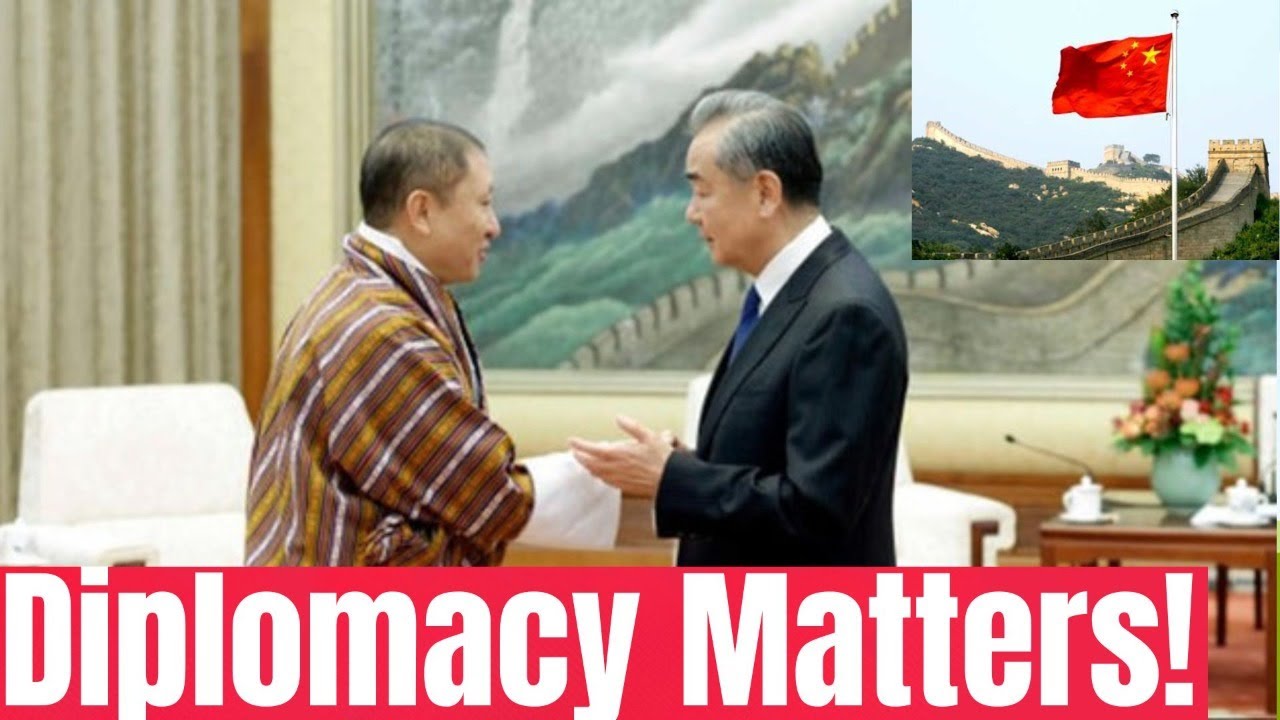
China and Bhutan are negotiating a border deal and formal diplomatic relations. India worries this threatens its influence and regional security, particularly around the Doklam Plateau and the Siliguri corridor. Bhutan likely seeks Chinese economic partnerships while balancing pressure from its larger neighbor.
Chapters
All right, hello everybody and welcome to Geopolitical Trends. So excited to be with you on this December 27th. I hope all of you who ever celebrate Christmas had a, had a merry, merry Christmas and, and, and enjoyed your time with your family and so forth. So very excited to be back here. And by the way, guys, I missed you. I, I'll say it straightforward. So it's so, so good to be with you., once again. Uh, let me see who is here first and, and, and we'll jump in into our conversation here. So, uh, Harbinger, happy holidays. Happy holiday to you too. Good to see you all. Oh, Full Tilt Boogie said, hi Dr. O, I will be at work when you are live, but we'll watch you, uh, on the replay. Many thanks in advance. You're most welcome. Jules, Jules Leung. Hello, Dr. O, welcome back. Did you have a good time with the family? I will be sleeping when you go live, so I will comment after watching the replay. I did have— it was a good time being with the family, a little bit away from the world of geopolitics, but, but I, I, I missed, uh, it's just part of my daily life. I have to keep up with what's going on, uh, on what's going on rather around the world. Also because I always like to think far ahead, and, and I intend to do probably something for you guys about what I do see in 2024, geopolitically speaking. So we'll, we'll, we'll decide on that as we move forward. Uh, I will save my thanks to all the new channel members, supporters, the super sticker givers, everybody who bought me coffee. I'll save all this towards the end because there's a lot I'm going to be covering on this topic. Well, it's an interesting topic, and I know this meeting took place a few weeks ago. I had it in my computer when I saved the information. I just didn't get to it because I had to check on others. Of course, I got sidetracked with other stuff, but I never forget it. There are some topics that I kept that I intend to address for you because this is not about— as somebody put a comment saying, well, this is an old news, and It's not— you don't get it, you don't get it. This is not old news because the negotiations are still going on between China and Bhutan regarding the establishment of diplomatic relations. That's why it's not old news. And second, to this person who put this comment, I am not a news outlet here, you know. If you want that, go watch whatever news channel you watch. I do analysis here, I don't do news. Because you guys can find that, all that information, uh, elsewhere. So that's where, uh, I see, or I saw the importance of it. I just had to save it for its own time. So, so here is what I'm going to start with, like we always do. I'll do the questions just for us to consider and think about, and second, I'll dive in, into this, start with the background of the, uh, the, the topic in itself Then I move into the history and geography of Bhutan. I'm not going to do the one about China this time around because you can't cover China in, in 5 minutes. You all know this, uh, but I'm going to do about Bhutan. Majority of the people, especially here in the West, they don't even know where Bhutan is and what it is. So then I'll dive into the analysis about, you know, why India all of a sudden is concerned and why does— what does India have to deal with Bhutan and China working together. So, so I'm gonna break down all this for you in an analysis format, and we'll just have a conversation, and I'll answer some of your questions at the end. So, so let's start with the key question, guys, here. And by the way, please type in where you are joining me from, I will greatly appreciate it. So here are the key questions, and again, as a geopolitical analyst, I have to think in terms of Does diplomacy, uh, works better than, than, than a military approach? It's no-brainer, but nonetheless, we're still going to have to ask that question. And the question I had is, can diplomacy triumph in, in this case, with this specific case? Second question, why is India so concerned about China's Bhutan deal? Why? You know, Bhutan is a sovereign nation. It's a small but it's sovereign nation. So is India was thinking about what they did to Nepal is going to do it to, uh, uh, Bhutan? Just another question there. Third question, is this a big test for India long term given the where India is? We all know, and again, I'm not badmouthing India. I already saw some, uh, uh, uh, comments on the, uh, on the community Well, I, you, this guy doesn't like India. No, that's a weak argument. We're beyond that kind of, you know, senseless thinking, because that's a weak argument. So it's, it has to do with the reality and, and whether India has a strategy or not. Straightforward. So that's why I asked the question, is this a big test for India strategy? And the last question I'm going to ask is, could India, okay, could India undermine this deal? And how, you may ask? Well, India has already been providing Bhutan with military and economic incentives. Why? So, and those are legitimate questions we ought to ask before we delve deeper into the topic to have a better, better understanding of it. So, uh, before I'll do this, also I need to do a headline. A tour around the world. So, so let's start with the first one here, guys. It was an explosion. Uh, let me share. Uh, well, hopefully YouTube doesn't put an age bracket on this. Uh, here's an image here, guys. This one is in India, happened in India, and this is an explosion near the Israeli embassy in India. So, so Indian and Israeli authorities did not add any information on to the extent of the— of this explosion or to the damage it caused. So why? I don't know. That's there. And by the way, that image you are looking at, I got to give credit to Reuters. Those are the one who posted that picture. Uh, next, next, next one is Oh yeah, this is a major— you all remember this, right? This has to do with the coalition in the Red Sea. Don't be surprised. You remember last time I told you the 6 countries, even though our Secretary of State of Defense said, oh, there are 20 countries, which was a lie. There were no 20 countries. There were only 6: Spain, Italy, the UK, US, Bahrain, and Canada. Well, guess what just happened? You got 3 countries now pulling out: France, Italy, and Spain. So this is a major setback for the US so-called maritime task force in the Red Sea, uh, and, and this is to protect the passage of Israeli-owned and Israeli-bound merchant vessels. So, so France, Spain, and Italy have officially withdrawn. Even though for us in the US, we're still reading in some parts, oh, they are now over 10 countries. It's a lie. It's not true. And by the way, the image you are looking at, which by the way, I give credit to the Reuters for that, that one is a US Navy, uh, uh, uh, Burke-class guided missile destroyer. That's the USS Carney, and that was an old one during, uh, a passage on this, uh, That was transiting, if I recall, the, the Suez Canal back in October of this year, 2023. I was following the movements of the, uh, US, uh, uh, uh, destroyer, that is. Excuse me. All right, let us talk about, uh, our— and like I said before, it's not going to work, this, uh This coalition, this coalition ain't gonna work. It's because countries have to think twice about the, uh, they're gonna be pulled into a conflict. Europe is already seeing what took place in Ukraine. And remember, those 3 countries are Europeans. They were speaking vociferously about the support for Ukraine, all that, and they saw where their economies end up. That's why they are not doing what they're doing. So, all right, let's get in into our topic here today. So I'm going to provide you the background. Well, as I said, this, this meeting took place about, uh, two— a month and a half ago. Yeah, it's a— but I just followed up on it yesterday to check on an update, and the update suggests that the negotiations are still going on between Bhutan and China regarding the establishment of diplomatic ties. That's the key word, guys. So China has asked— and it was China that asked, uh, uh, Bhutan to establish diplomatic ties with it and resolve the boundary issue, or the border issue, that is, as soon as possible. And why is this? Is because, uh, China and Bhutan looked at it from a regional aspects of it. And this is why it's so important. I got an image for you here, uh, of Mr. Wanyi, and that's the, I believe, foreign minister. Uh, there are two new ones, the foreign minister and the prime minister. So I'm going to talk about the foreign minister, Dr. Tandi Dorji. As I said, he visited, uh, Beijing a few weeks ago, and the purpose of that trip was to sort of, uh, negotiate the, the, the border talks between the two countries. But now, wasn't about just the borders, it was also about diplomatic ties, because as I said, in the world of diplomatic or, or global affairs, those relations will sort of serve the long-term interests of both countries. Now, when you see in both countries China and Bhutan, you can see why India now is on sort of alert, if I may use the term, uh, uh, hypothetically here. But it is concerned, and we're gonna get into why that is. So what Mr. Wang Yi said during the meeting— and I kept all this record because I had it, I just didn't get to it to do it for you guys at that time— what Mr. Wang Yi said at the time, he said, and I quote, The conclusion of boundary negotiations and the establishment of diplomatic relations between China and Bhutan fully serves the long-term and fundamental interests of the countries and nations of Bhutan. End of quote. Well, why is this important, you may ask? I'm going to ask you a question, guys. How many of you are aware of what happened in Nepal with China? What did China do in Nepal that Nepal is so happy about? Can you, can you guys type into me? I'm sure you can Google it and look that, but I just want to engage you in the conversation, you know, economic. We're talking about economics here. So what did China do in for Nepal, with Nepal, that now raise concern in India because India is seeing the rapprochement between Bhutan and China. Remember, in both countries— and I used to know someone from Kathmandu, I've been in Kathmandu myself, so— and I always asked him that question, and I said, can you tell me what kind of relationship Nepal has always had with India? I say, it was never good. I say, why is that? He said, because India was exerting some sort of influence on on the— Nepal is not a big country, you all know, we're near the Himalayan stuff. Well, Bhutan now, uh, India rather is seeing if Bhutan moved forward with the establishment of ties with China, diplomatic ties with China, it's not going to bode well for India. So let me see what you guys typed in, uh, for, uh— oh, you're absolutely correct, Hamad. Hamed CD, you're absolutely correct. They built a tunnel in Nepal. And this— why am I, why am I saying this, guys? I'm saying this one to highlight to you where the concern of India vis-à-vis the developments that will happen in Bhutan should this relationship moves forward between Bhutan and China. So, uh, so in response to Mr. Wang Yi's statement The Prime Minister— or the Foreign Minister, I'm sorry, not the Prime Minister, Foreign Minister, uh, uh, uh, uh, Dorji said, and I quote, China is ready to work with Bhutan in the same direction. Seize the historic opportunity, complete this important process as soon as possible, and fix and develop China-Bhutan friendly relationship in a legal form, end of quote. Very, very measured. I mean, the words of the foreign ministers are very, very measured, and this is very, very important to understand, at least the background here. By the time I'll get into the analysis, you'll understand what it is. So let me move into talking about geography. Because you need to understand this one and see where Bhutan is for those who might not know, and the history of it briefly to put this into the context. So I'm going to share the screen with you regarding the, uh, regarding, uh, uh, uh, guys, please, I'm gonna share this one here on the screen. Please keep it civil, please. I will greatly appreciate it. So I'm going to let this go this time, one time. So please, no need for that kind of conversation here on my platform here. So I will greatly appreciate it. So we have nothing against India, but you still have to show proper respect. I will greatly appreciate it. Thank you. So I let this one go this time. So let's move on into sharing the geography of, uh, of Bhutan, because you need to see. And, and I'm gonna provide just brief, brief, uh, descriptions about it. So, so let me share the screen with you. All right, present here, share screen. Bhutan map. I, I had to learn about Bhutan, believe it or not, guys. Really, I mean, I'm aware of it. I was in, in Nepal and all that, but you never, you never say you know. This is why those people who think because they acquire PhD, they are now know-it-all. No, as a matter of fact, it's just the beginning of learning. Learning never ends with the degrees and so forth. So, so here is Nepal— I'm sorry, Nepal— Bhutan. So I'm gonna share a few things with you. So Bhutan is known officially as the Kingdom of Bhutan. It is, as I mentioned earlier, a very small landlocked country which is located in Southern Asia. If you look at this map, what you are looking at— and I will provide you the big picture of— of— yeah, here it is on the southern part of Asia. Here is where it is. This is on the bigger map. But when you look at it specifically here, which what we are interested in, to give you an idea, so on the southern slopes of the eastern Himalayas, it is also located both in the northern and eastern hemispheres of the Earth. Bhutan is bordered by two main countries, Asian countries. So you have first of all China And by the way, and I'm gonna say, share it with you, in some historical record they are mentioning, uh, Bhutan is bordered by two Asian nations. This is how they put it, and I'm gonna provide both because we can't share a pic here. It says the Tibet Autonomous Region, China to the north. Some others it says China. So I just want to provide both of them so you know. Then you have the, the Chambe Valley of Tibet and the Indian states of Sikkim and West Bengal in the west, along with the Indian state of West Bengal and Assam in the south, and Arunachal Pradesh in the east. So to me, I could have just told you guys, yeah, it borders two countries, India and China, but you need to understand this part of it. So, uh, I am not gonna talk about, uh, there is another one. As you see, there is the, uh, the India here and there's the China in the top. I'm not gonna share with you this one here, guys. Those are the, the, what you call them, the districts. They are the ones that I'm familiar with is Timfu, which is another big city in the— so But the whole population of Nepal— I'm, I'm sorry, why am I keep saying Nepal? 1,000 people. Bhutan is the second least— yeah, second least populated nation in South Asia. It is located in western central part of the country surrounding the Timphu River Valley, which is a in, in Thimphu City, which is the capital and the largest city in Bhutan. So that is what's important on understanding about Bhutan, because they just— we need to understand a little bit on this. On the historical side, it's also important to understand the history of, uh, uh, uh, Bhutan. Bhutan early history It's known. I've learned about it when I went to Kathmandu, which was a few years ago, as far as understanding how far it goes. And even back then I was told, yeah, if there is one thing you need to know about Bhutan, I said, sure, what is it? They said, they told me it is very steeped into methodology. Yeah, mythology, that was part of its, its, it's a whole fabric. So, and it's, you can use the term, or Bhutan remains obscure to the outside world. A lot of people do not even know, as I said, some you ask, some here in the US, they want to, or the Western world for that matter, not all of course, but majority would not know. So some of the structures, uh, provides evidence that the region has been settled as early as 2000 BC. That's what's important. And I looked into the— some archives, just those are public knowledge, it's not that I have specific access, whatever, just public domains. And what I found, that according to legend, it was ruled by Kush Bihar King Sanghalidip, and this was around the 7th century BC. Other than that, but not much is known prior to the introduction of the Tibet Buddhism in the 9th century, which means what? Before the 9th century, the historical record is very limited. As to, uh, that, that's what I could find. And also when I asked some people when I was, uh, over in, in, uh, in Nepal a few years ago. So, and this is where when tensions arose in Tibet, as you all know, it's a part of the history and so forth, many monks fled to Bhutan. And in the 12th century, the Drukpa Kagyu school was established, which one of the well-known, and this remains till today the dominant form of Buddhism in Bhutan today. So when they say— some have said, well, Buddhism started in India, whatever. No, no, no, no, no, no, no, no. So the country's political history, Bhutan that is, is intimately tied to its religious history. And relations among the various monastic schools and monasteries. That's very, very, very important. So, uh, let me see if there is a picture here that I have, uh, I could share it with you. Yeah, I think I have some. Let me stop sharing this one here, uh, And let me show you this one here. And this is part of the historical methodology— or mythology, rather, not methodology, mythology. So I came across an article in the historical records, and this one was written by— it was published, rather written, maybe, I don't know. All it says— and I give the record, I give the credit to how I see it— and it says this was published by Shave Shaf Ahmad, A-H-M-A-D. So the whole idea why I wanted to share— and I will post the link for you guys to, to see all this— why is this important? It is important because you need to understand the, uh, let me close one here and open up, uh, the historical record. Uh, so what you're looking at is, uh Padma sambhava. So it's, it's an interesting image there that, that reflects back on the history of Bhutan. So, so from the outset of Bhutan's history, it is, as historians put it, enigmatic, you know, because its land was wrapped around in the mountains. When you look at that location that I shared with you, so the outside world called it with many different names. It didn't— wasn't always known as the Kingdom of Bhutan or just Bhutan. It was, for example, and I put this in quotes because that's how I found them, uh, according to the article by Sheikh Ahmed, but also some other records that I saw: the Hidden Holy Land. Another one is called the Lotus Garden of the God. So, and, and those are the two terms I came across. Another one, it says Bhutanese people have their own choice for their country's name. They call it Druk Yul, D-R-U-K-Y-U-L, which translates basically to the land of thunder dragon. This is why they have that image. So, and the word Bhutan itself has its roots from the Sanskrit word Bhutan, which means end of Tibet. That's what it means there. Due to Bhutan's obscurity, it was never ruled or conquered by any foreign forces, and it still maintains its cultural integrity. That is what's important, uh, for all that. So let me share another picture with you guys that I need you to see here. Uh, this one, this image here is, uh Uh, Zabdrang Ripoch. Zabdrang Ripoch was a monk and is considered to be the most eminent personality in the history of Bhutan. So, and again, I am not gonna go too much into the old history because it'll take us forever, because I need to get into the analysis part of all this. What you're looking at here is picture of Punaka Dzong. This one here is, uh, uh, where sort of the governance model, uh, where it was, uh, settled. And it was in the Tibetan style, per se. That's how, uh— and by the way, it was in this area where they introduced the system of chozi. To those who are from the region, you will know what I'm talking about, which basically segmented the central Bhutanese administration into two different factions. The one that was handled by, uh, Zabdrang, the one I mentioned for you earlier, and the second one will be under the elected leader called Desai. That's the one. Uh, next picture I want to share with you is this one here. Of course, who are those here, guys, in this red dress? What are they coming to do, some good? I don't think so. We all know what it is, right? Now, yeah, this one is of course, and we're gonna use it as is, British invasion. So the British involvement in Bhutan started when the ruler of the Kosh Bihar approached to the East India Company to wipe out the Bhutanese rule from their state, you know. And by the way, this one was an East India Company hesitated at first, but later, later agreed to the offer since the Kush Bihar king offered an alluring deal to them. So in other words, the East India Company got a better deal for them to move forward with this in support of the British invasion. Because why is that? Why do you think that was the case, guys? Why did India support the British invasion? If you can type in your answer, let me see what you guys wrote here. Yeah, because it was the— this Eastern or East Indian Company that has facilitated, uh, facilitated all this. Why do you think that was— that was the case? Because for the record, it mentioned that, you know, yeah, the East India Company wanted to wipe out the Bhutanese rule from their state. But why specifically England? Uh, India, you meant the British, right? Taiwan still, yeah, yes. So why do you think that is? Well, because India was a colony of Britain, so that makes it easier for them to do so. So you fast forward till about, uh, I think, uh, the Dwar Wars, which I'm going to share a picture with you here because you need to see, uh, the, the Dwar, D-U-A-R, the Dwar or Dwar Wars. So what happened here? So the open area of the, uh, uh, Brahmaputra River and the lower hills of Bhutan were considered as dwarfs. So the western region of the dwarfs was known as Bengal dwarfs. Now, do you guys see the link historically as to where, uh, uh, Bhutan vis-à-vis India, where Nepal vis-à-vis India, and why India will be concerned about Bhutan and China establishing diplomatic ties? And is this according to the historical record? It says it was slowly under the Bhutanese government. This particular area, the Eastern Dwar region, had joint ownership of Bhutan and Assam. After the Burmese War, the British took over the control of Eastern Dwar from Assam but didn't abide by the agreement with Butan. That is very, very important to understand. And while I'm thinking about, I'm gonna share with you, uh, uh, something by, uh, one of our viewers who shared it, uh, uh, uh, not just with me but with us all. That's why I read the comments, guys. Very, very informative. And I get the permission from the individuals, because I don't assume. Even though he said he was— oh, Dr. O, you don't have to ask us. No, I will ask. It's just my nature. I don't like to assume. So, so I wanted to share, and that's— he told him that will be okay to share the name. So the name is Vikesh Shah. That's the one who shared this with us. And I quote it word for word because this is part of a historical record. What it says, and I quote, under the 1949 bilateral treaty Butan was bound by India's guidance in regard to its external relations, although that provision was removed in a revised 2017 treaty. But to be frank, at this moment, diplomatic ties between Beijing and Thimphu—Thimphu is the capital of Burmese—increasingly appear inevitable. This is in quote: The Bhutanese leader is viewed as a China-friendly figure, is making India uncomfortable. Bhutan, known for its special ties with New Delhi, is the only country in Asia that does not have formal relations with Beijing. Settling the border issue, Bhutan's tilt towards Beijing and China inroads into South Asia could have implications for regional geopolitics for sure. This is not a matter of if, but when it is going to happen. India, for the last decade or more, has given less importance to their neighbors, and China has now basically, uh, and China has now basically encircled India. Let it be Sri Lanka or Bangladesh, Nepal, Maldives— and I did video for you guys about the Maldives when they kicked India out— or others. India has to go on a charm offensive and make long-term commitments to its neighbors rather than have false pretense of being a superpower. India will get there sometime in the future. And until it happens, it has to be realistic how far or how much power it has. Because if the Doklam Plateau issue is diplomatically sorted out between Bhutan and China, it will have major implications for India due to its proximity to the Siliguri Corridor, or as known the chicken's neck. And I'm very familiar with this term here that connects to India's northeastern states, and it can change the status quo in the tri-junctions area of India, Bhutan, and China, particularly in the Doklam Valley, where it could be advantageous for the Chinese military. India has to get realistic and work with its neighbors, not from a position of power, but as a peer whose decision can have major implications for India and to support northeastern states in case of any conflict. End of quote. Very, very interesting, and thank you, Vivek, for sharing, uh, uh, uh, uh, Vikesh. Sha for sharing this with us. So that's why it's very important, uh, for you guys to understand where this is all coming, uh, and I forget, by the way, there is one other picture I need to share with you. This is very important to, uh, to understand this one here. And this picture, I believe, uh, if it is that one— but no, that's not the one. Let me see where— history of Bhutan. That was the last picture I took. Uh, this is, uh, Sir Ogyen Wangchuck and his family. So this is after the death of the, uh, the, the Jigme Namgyal in 1907. Eugene, the one in the picture here, guys, was crowned as the King of Bhutan, which marked the beginning of hereditary monarchy in Bhutan. So that's, uh, I just wanted to share this with you for the record, and I'll post the link for you for all this. So, so for now, let us go back to really— we can analyze what this stuff is all about and why, uh, sort of, uh, especially when it comes down to India, is very, very, very concerned about all this. So here's the thing, as I mentioned earlier, China and Bhutan have no diplomatic relations, but they maintain contact through periodic visits by officials like what we witnessed. So of course, the boundary, uh, uh, or the borders, that is— this is one of the reasons why China initiated this call for the establishment of diplomatic ties to resolve that issue, because This is why I said in my original question, does diplomacy, uh, try— can diplomacy triumph over any other approach? The answer is obvious. Yeah, but here is what's interesting about all this. When you look at the map, uh, let me show you, because we need to understand this one within the context of the big picture here. Let me stop this one and share the screen with you. Bhutan's map right there. And this is just very, very, uh, on a small, smaller scale level. But, but what's important about this? What's important is that, uh, China has worked— yeah, listen to this carefully, guys. China has worked and resolved its— the law— the, uh, borders disputes with— oh, they were about 12 countries. I don't have the list here, but I've read this one. 12 countries. Well, guess what, uh, China end up doing? They figure out bilaterally with each country to resolve those issues of, of the border disputes. There were only 2 left. One is, is India, and the second one is Bhutan. So this is one of the reasons China reached out to Bhutan for the establishment of diplomatic ties, and Bhutan responded positively. This is why that foreign minister end up doing there. So, and this is, of course, there are— when you read some articles, especially from the West. And I am going to share with you, by the way, I do read up from some stuff from even Foreign Affairs magazines. That's part— I have to read both sides of the arguments because I usually subscribe to all this stuff to, uh, read up and try to compare the analysis from the West versus other ones. And that's where I draw my own conclusion. It's because the wording of certain— and I'm gonna share with you as I move forward. So So of course we all know that, that, uh, uh, back then in 2017 when China was trying to build a road in, in the Doklam Plateau, okay, and that's where India came in. You all remember this picture, uh, let me see if I can stop sharing here. Yeah, this picture here. Yeah, we all remember this one. I, I followed it closely because I was concerned that this stuff could escalate. You looking at, uh, uh, uh, it won't, it won't get to that point. But on the other hand, what concerns me the most, that if India end up being used by the West to push for this, this is exactly what I found in the analysis provided in the West, how much things are worth it in a way that suggest that China is illegally taking the land from those countries, and this is why India is standing up for the right of those. No, no, India is not standing up for the right of those countries because India wants to maintain its dominance of those countries. That's the reason why. So this is why at that time, 2017, India strongly opposed the construction of the road. By the Chinese military at that time. So, and, uh, because again, that junction, the tri-junction— remember the tri-junction I mentioned earlier, Bhutan, China, and India, because on the north, uh, eastern part. So because this one will have, according to India, will have a major, uh, security impact, uh, on its interest. Well, it's because this one runs, meaning this, uh, the Plum construction will run closer to the narrow Siliguri Corridor, known as the chicken's neck, which connects India to its northeast. This is one of the whole reason why the West was pushing. And as you know, the standoff of course ended when Beijing decided, okay, it's not worth the hassle here to go ahead and build the road. And, uh, uh, that's when it stopped. China stopped. So now when you look at the foreign policy or foreign policy analysis or foreign analysis regarding these issues, what do you find? Well, what you find is that the wording of it, the wording of all this, and I'm going to share it with you as is, you know, this is a— was an article In Foreign Affairs that I, that I read. Usually I do those reading when I fly out somewhere, whatever. I'll take all the stuff with me and read. On like last trip, it was like 7, 8 hours, so, uh, I had to take all this and read, and I keep everything. So that's, that's why I wanted to do this topic today. So there was an article written by a senior research fellow of the Asia Pacific Foundation here. It was written in Foreign Affairs magazine. So his name is Marcos Andropoulos. He wrote, and I quote, as tensions between China and India have grown in the last few years, the countries wedged between them are becoming more strategically significant. The two competing powers— which powers? First of all, let's define that one. You know, I don't know what he's referring to here. The two competing powers have sought a buffer between them ever since their founding in 1949. In the case of the— this is how they, they, they, uh, uh, refer to it in some analysis, but another one they will revert, they will change the word. One of them, they mentioned the word CCP, the Chinese Communist Party. That's how they refer to it. In other ones, when it doesn't suit the agenda, they will refer to it as the People's Republic of China, which what it ought to be. So, so as I said, I'm sharing with you how the article was written. So in this case, they're saying in 1949, in the case of the People's Republic of China, and 1947 for India, many scholars argue that it is their— it is this desire for a safety caution that led to China's 1950 invasion of Tibet. Today it is Chinese Communist Party. So instead of using the same term they used previously, People's Republic of China— when you do this in writing, just FYI guys, this is when you want to really highlight the negative aspects about what you're talking about to draw in the attention of the readers. Which basically what it is, is a manipulation. That's what it is. Instead of using the same terminology, the People's Republic of China, now they end up choosing the CCP. So in, in this case here, today, communist, uh, today Chinese Communist Party, uh, uh, efforts to manipulate— listen to this— to manipulate democracy in Nepal have succeeded in shaping a government in Kathmandu that is more receptive to Beijing than New Delhi. The CCP has also extended its reach to monitor and suppress the Tibet community there. End of quote. Excuse me. Once again, I had to read this to you how it is articulated, because somebody who might not have a better or a deep understanding of geopolitics They're going to read this and say, oh, China is doing bad things and so forth, when in reality China never manipulated any democracy in Nepal. It was because of the economic ventures. I was in Nepal, I was in, in Kathmandu, and I asked. I didn't see much at that time, uh, we got to be, be, uh, realistic here, but I did ask, and most of the conversation that I got was leaning towards China. Is because they seen where the economy was headed. So there's, uh, and, and the article goes on and on and on because to me I just wanted to highlight to you because there is an important quote here from the same article and I will post it for you guys to read, uh, if you like. So it says, and I quote, Chinese control. There's the key word, Chinese control. Of the disputed Doklam Plateau would allow Beijing unhindered mobilization and more access routes in the event of military conflict with New Delhi. Well, first of all, what make you think that there is a— will be a military conflict to begin with? But see, the idea is to plant the seeds in your thinking that, oh, there's a conflict, uh, already exist and it could lead to this and that. As a result, any China-Bhutan talks are not just a bilateral issue, but rather part of a Chinese strategy to gain crucial advantage over India. Why? Why will China care to take over, uh, advantage over India? For what? Because let's ask the real question: what does India have to offer? I mean, and again, I am not badmouthing India. I am stating the facts. As they are. So resolution between— and once again, they put the CCP and the government of Bhutan— would reverberate throughout India, threatening peace in the region and escalating the crisis along the Sino-India border. Well, hold on a second. Will this be any different than what the West is doing in the South China Sea? So once again, once you learn how to start to read analysis when it comes down to foreign policy, global affairs, and so forth, you will, you will develop that critical thinking to read between the lines what they're getting into. It goes on, the issue requires close attention from New Delhi. See, see what they mean by that. Pushing New Delhi towards— that's, that's subtle, in a subtle way pushing India, uh, India, uh, requires close attention from New Delhi as well as quad, uh, quad, quadrilateral security dialogue. That's the Quad, uh, the Indo-Pacific partnership that includes Australia, India, Japan, and the United States, end of quote. You all see what it means with all this. That's the whole idea of it, is how things are worth it, because you have to push India to the forefront subtly, in a subtle way. That's what we're doing. As a matter of fact, regarding this issue here, it was a visit by an Australian, a high-ranking officer— or high-ranking official, not an officer. Official in the government to, uh, uh, uh, um, Bhutan at some point. Why will Australia even be interested in going there for unless it was ordered to show? So here is another aspect of it about why Bhutan is interested in really moving forward with establishing diplomatic ties with China and resolving the border issue. The, uh, Foreign Minister Dr. Tendi Dorji, as I said, who visited Beijing, uh, to take part into this conversation. During that time, and I watched all this because I was reading on it and I saved all the information, I know it's a little bit old, few weeks ago, but that it is what it is, had a chance to meet also with the Chinese Vice President Han Zeng and said that— Han said that both, uh, or, or Zeng said, uh, both sides agreed to accelerate the boundaries demarcation process and the establishment of diplomatic relations between the two countries. That is for why it is important to understand Han also said, and I quote, China always respected Bhutan independence, sovereignty, and territorial integrity, and is willing to strengthen exchanges on all levels— that's your keyword right there— and in all fields, expand practical cooperation on the economy, trade, culture, and tourism, and accelerate the boundary demarcation process and the establishment of diplomatic relations with Bhutan to bring more benefits to the two countries and to the people. End of quote. And how did the foreign minister, uh, Dr. Tendi, uh, uh, responded? Tendi Dorji, he responded by saying, and I quote, the Bhutanese government attaches great importance Once again, guys, is the wording. It will make more sense to you to, uh, understand all this. Great importance to the development of relations with China and abides firmly by the One China principle. Both sides have firmly determination, uh, have firm determination and a sincere desire to demarcate their boundaries, establish diplomatics, and so forth. So, and this is why it's important to understand why all of a sudden India will be very, very concerned, uh, uh, uh, sort of— it's almost like preventing this deal from moving forward. Of course they won't be able to anyway, because if that's what Bhutan wants, that's what China wants, they moving forward with it. So that, that's just not gonna— nothing's gonna change there. So it becomes just the idea of Would you want to promote economic stability and ventures, or would you want to promote tensions and so forth? That is only where the difference is going to be. And I don't see how, uh, sort of, uh, uh, uh, India is going to influence that trajectory. Yes, they are sending economic and military aid to Bhutan, but Bhutan's looking at a big picture. You know, if you are sending us economic and military aid just for this year, we're looking at the next 15, 20 years. And China might end up doing exactly just that. And this is why, uh, for India, his concern is misplaced. That, that's the way I see it. That is the way I see it, because uh, for India is, is more problematic than anything else. Let me see, uh, yeah, it's all the, all the, uh, the analysis that I read, and I have one particular one that I need to show you, uh, uh, even though, let, let's be clear here because we shouldn't, uh, uh, ignore this aspect. Bhutan depends or relies to a degree on India for most of its trade. Yeah, mainly oil. Yeah, and of course, as I mentioned, military aid. But why would Bhutan be worrying too much about military aid? So this is where China's coming in, when with economic ventures more so than a military thing. So, because here's the thing, if Bhutan opened up with China and if we started doing marketing and have an economic partnership with China, Bhutan can develop at a greater pace. This is what India is concerned about, because when you look at China, is an economic powerhouse on the global stage, not in the region, on the global stage. So, so the benefit for Bhutan You know, it just doesn't take a genius to figure this out. Uh, let me, let me share a screen here with you because I need you to see this particular, uh, map to why China might be— or India, I'm sorry— why India is, is very concerned about this. There we go, full screen. Yeah, right here, guys. Can you see this? This is the location, the Doklam Plateau, that India is very, very concerned about. So for, for, for Bhutan, it makes more sense to engage with China in economic ventures. I'm not talking military, because there is no need for China to sort of provide military aid to Bhutan and all that stuff. What for? What for? What you can do is the same thing they did in Nepal to a degree, because remember, all this will be a part, or it is already in certain parts part of the BRI, the Belt and Road Initiative, which is something, uh, in India made its own decision, doesn't want to be part of that, and they are free to choose whatever they want. They there, there's nobody is arguing that otherwise. It's just the idea of why all of a sudden, uh, let me stop sharing this one here, uh, why all of a sudden, uh, India is very concerned about, you know, why Bhutan and China wants to settle their, uh, border, uh, uh, disagreement. Do you call it a dispute? Do you call disagreements? Whatever term you want to use, because that's to me makes a perfect sense. So, so the idea becomes if, if, if, if once— and I'm keeping an eye on it, guys, by the way, because it's going to be announced, uh, probably give it a few months and it will be announced officially, if not sooner. That's why I'm keeping an eye on this topic. I had it back then, same with some other topics that I kept. And, uh, it will be a big change for the region, for that, that, that tri-junction there for the three countries. But India is going to end up holding the end of the stick because India is doing the Western bidding. Because this is not about India, this is about being pushed through the West. And let's just say it as is, because there is no other way around it. We're not gonna sugarcoat that one. So, and this is why, if you noticed, when the meeting took place between uh, uh, Dr. Dong Jie and the Chinese, uh, former Mr. Wang Yi, what do you always see in the background? You all can see, guys, right? Yeah, the Great Wall. It was always that idea. You take this one, you put this one here, same arguments. And this in itself, by the way, is sending a message right there in a subtle way. This is how it is in the world of diplomacy. You, you don't, you don't, you don't speak loud and you don't get so loud and this and that. In a subtle way, because that's what diplomacy is all about. It's exactly what China is doing with Bhutan in a diplomatic setting. China doesn't need to flex its military muscle. What for? Because it won't make any sense whatsoever. It's the economic ventures. You always remember what I told you guys last time. Would you take $100 billion in joint ventures, economic one, or would you take $100 billion in conflicts? Choice is clear. Uh, same with this image here. There's the wall. All right guys, let me, uh, say thanks to some— to all of the members, supporters, and so forth, and I will answer some of your questions. By the way, for the channel members, remember to join me on Saturday, uh, for the exclusive Q&A. I'm, I'm gonna be doing one. It's your time more so than mine. It's just a way for us to know each other better, but also answer your questions. So just prepare your questions, for that. And we're going to be meeting. I know, unfortunately, the time, guys, doesn't work for everybody because of the time zones. Whoever can make it, that would be greatly, uh, appreciated for that. Uh, oh, I saw something here. Where is the picture? I do have it somewhere. I— well, darn it. I wrote an article— I read an article about it, but I saw your picture here. Uh, Farhad, I saw your picture here. Uh, interesting. Why is this important? Is because I did have— I misplaced it somewhere. This is the meeting that took place during the defense ministers when, when China and Russia jointly issues a statement saying that there are foreign players provoking tensions in the region for the sake of destabilizing the region. So I see your point in that one. I see your point. All right, let me say thank you to the channel, uh, uh, members. And please, if this is your first time here, please make sure to subscribe. And I would greatly appreciate it, guys, if you hit the like button, uh, for those who truly wanted to support this channel here. Uh, you can do it through here, either, whatever your way you feel comfortable with. Uh, I'm gonna give a shout out to the new members in the Buy Me Coffee here because there are some members there already. Uh, once we get to a certain number, I'm gonna do something exclusive for those members as well. So if you want to feel comfortable enough to support this channel, like I always say, the information that I bring you, it's not something that you're gonna You all know, I don't need to beat the dead horse for this. We talked about this enough, so you, you know the quality of the work that I do here. So, all right, let me say thank you to few, uh, names here, and I'm gonna start with the new channel, uh, supporters by the name— the first one is Alvin NG. Thank you very much for becoming a channel supporter. Second person is The Strong Organization, thank you very much for becoming a channel supporter. And the third person I'm gonna give a shout out to is, as a supporter, is Maria Tania. Thank you so much, Maria, truly appreciate it. Uh, the last person I'm gonna give shout out to as a member is Joby. Joby, by the way, become a member also in Buy Me Coffee. As a gold member. So thank you so much, Joby. Truly, truly appreciate it. So I'm going to give a quick shout out to the members here on the Buy Me Coffee who become a member. As, as a gold member, uh, Joby, I want to say thank you for your continued support. It means a lot. Uh, uh, then I have, uh, Fana Family as, as a, a, a basic member. Salim Akil as a gold member. Thank you so much for your support. Uh, Vanessa Martini as a basic, uh, member, uh, supporter. Thank you so much, Vanessa. A.N. as a, as a gold supporter, thank you so much. Ken Schaefer as a member also. And Demodos Cutter, as Demodos Cutter was the first member of the Buy Me Coffee membership. So, so I want to thank you all, guys. And to all of you, of course, it goes without you. Without you, there will be no, no channel. We won't be where we are today. Yes, we want to grow it. Yes, we all know what happening with YouTube and all that, but you know, we think positive. We're gonna think positive. So, uh, so you are most welcome, Gina. You're most welcome. I'm sorry, that's not you there. Where is Gina? Here. There we go. Gina, thank you very much. As always, very good analysis. Thanks from Scotland. Good to have you. Thank you so much for being here. All right, let me take a question for you guys, or from you rather, and, uh, uh, then, then, then I'm going to sign off because I gotta do some other stuff here soon. All right, let me take this from Poseidon. I like that name. You all know what a Poseidon is, right, guys? So question: are there still any generals in communication with the Kremlin at this point? Uh, from where? From where? From where? Here, the US? Or— so I don't know from— yeah, the question is not clear a little bit to me. Are there still any generals in communications with the Kremlin at this point? So if I know from where, I will be able to answer that one. So Uh, next question, and I'm gonna be scrolling up here. Uh, here's a question from— oh, Doggy 5, good to see you, man. Good to see you. Question: do you think India will invade Bhutan to stop them from implementing the deal with China? Well, it does not— I won't use the term invade because that's a very strong word, but at the same time, that's the word we, at least for us in the West, understand the context of it. So that's— this is why sometimes I do use the term invade when I'm challenging some thinking, because in the West they won't understand when we talk about, for example, China and Taiwan. Why will China invade Taiwan? How can you invade your own country? That just doesn't make sense. But for some Western audience, if you don't put that term, they won't understand it. They won't understand the context within the military aspect. So militarily Yeah, they could, but why would they do that? Because they'll attract too much attention to themselves, one. Second, I don't think so regional countries will allow something like that to happen. Remember, India is marred by its own ethnic tensions that goes beyond. We don't hear much about. I mean, if you look at certain provinces or, or, or, uh, states, if I may use the term, They want to be independent from, from New Delhi. I don't see that happening. What I do see is the creation of tensions or hurdles and so forth, uh, but, but a full invasion like you and I understand it, I, I don't see that happening. And it won't be a smart thing for India to do because that would be a waste of resources instead of using their resources to think about, uh, dealing with their country. Uh, Oualaalou, Valto, David, do you think Putin will like to take Kiev? No, no, he has no interest in that, at least based on the research that I've done. And not, not because of last, uh, the military operation. No, I'm talking about the research that I've done for the last 10 years regarding Russia. That's what I've been— well, that's why I wrote that book. It's because it took me about 3 or 4, even 5 years just thinking through stuff, and nothing that it came to me indicates that the Russian president have any interest in taking Kyiv because the Soviet Union system exists and there is no need for, for rewinding history. Of course, in the West, there's the argument we say, oh, the Russians wants to rebuild the Russian Empire. Now Russia doesn't have any desire for that, nor the interest, nor the resources for that. Russia has— Soviet Union— oh, Russian Federation has changed from what the Soviet Union used to be. They, they have no interest. What they will not allow is for the encroachments of West. When you say West, you can think about it any way you want— US, Europe, NATO, you name it— uh, the encroachment, uh, eastward. That they are not going to allow. They're going to stand I'm seeing now already in Finland that the US troops going to be stationed in Finland. We all know what it means, you know, but Finland has no clue what is getting itself into. So, so I don't see that happening. I don't see that happening. Oh, TNT, good to see you, TNT. Uh, you wrote India wants to be a player, but they have serious internal issues. Couldn't agree more. And usually, I know when we say something like this, we end up being the bad guys. No, all we're saying is the facts, the facts on the ground. When you look at the poverty level, when you look at the crumbling infrastructure, when you look at the healthcare, when you look at, you know, people, the massive population, uh, what, that doesn't have job opportunities and so forth, you know, a government will ought to think about the welfare of its citizens first before getting into, uh, why will India get involved in Quad and, and, and whatever else instead of allocating its own resources towards that one? So, so I couldn't agree more. I couldn't agree more with your statement. Okay, let me see, where is that one? Oh yeah, uh, Timeline Dankley, you wrote, thanks for the information about China and India. You're most welcome, you most welcome. Okay, I'm, I'm just scrolling up to see, guys, if there's any question, uh, at the top here. And thank you all for being here. Hong Wan, good to see you. Athene Wu, good to see you. Army with Harmony, good to see you. FLU, good to see you. Muslim Revert, good to see you. Doggy 5, you know, those are the— thank you guys. Farhad, uh, uh, good to see you also. Thank you all for being here, guys. Truly, truly appreciate it. So I'm gonna keep an eye open on this, and the, uh, and I will provide you an update. I will— I intend to do an update for you about the Taiwan elections because we need to know. So here's a quick question from Hong Wan: Dr. O, I heard that the ropes that the US battleship uses for its fighter jets are made in China, and they repackage the same rope to sell it to China for stupid price. I won't be— I do not know, let me, let me say this first, but I won't be surprised because it's the same thing. If, since we're talking about India, you only remember India buying oil from Russia and selling it to Europe for 5 times the price. Same thing we did for Europe, selling them gas for almost 5 or 6 times the price. So I won't be surprised, but Chinese are smart enough not to fall into that. The, uh, speaking of that, while I'm thinking about it, I intend to do for you an outlook about 2024 from a geopolitical perspective and will address some of these topics. So, so, and I'll let you know, give you a heads up so you can prepare your questions, and, and we just do it from there. All right, guys, I hope you're fine. I hope if I missed something, I am so sorry. KL, thank you so much for your continued support, man. Truly appreciate it. KL has always been— has been there to all of you guys. So whatever you do, it's just, uh, as I told you before, it's my commitment to you. Yes, it's frustrating what is going on on this platform here, but we'll be moving for you slowly and gradually. So thank you so much, KL. Truly appreciate you. All right, guys, I hope you find this very informative, and I look forward to seeing you next time. As always, remember to your politics, impact your daily life in more ways than one. Till next time, guys. Bye-bye.
More from David


Beyond the Single Actor: Why the Gulf Isn't Choosing Between the US and China


Iran, Iraq's Militias, and the Houthis Are Coordinating! This Changes Everything




Who Controls the Next Decade's Resources? Latin America and Africa's Geopolitical Crossroads

The Chokepoint Trap: How Washington's Stupidity Triggered a Cascade That Now Controls the World

Trump Spooked as IRGC Unveiled dual-use SLV, Deployed Ghadir Mini-Subs & Hinted at Tactical Nukes!
