Biden’s New Tariffs on China to Protect US Jobs! Stop lying to the American People!
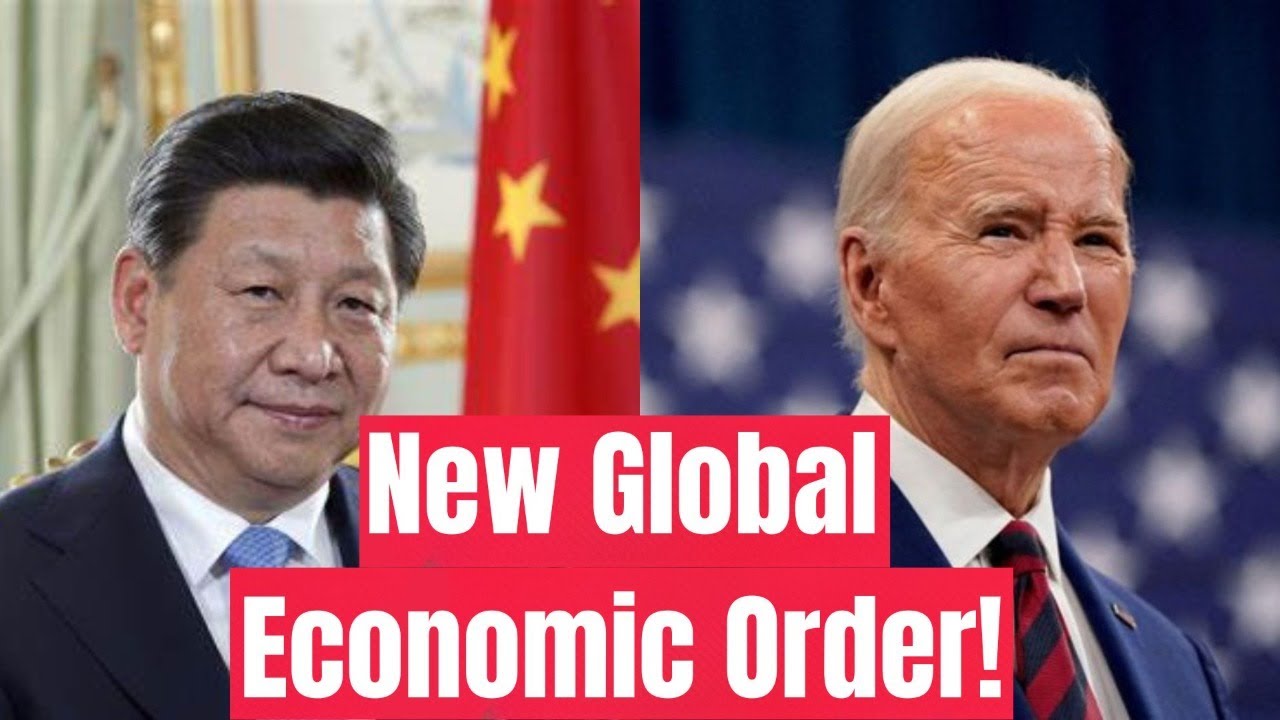
Biden quadrupled tariffs on Chinese EVs, semiconductors, and solar cells claiming job protection, but the host argues this raises consumer prices and fuels inflation. He draws parallels to the 1980s US-Japan trade war and connects tariffs to China dumping US Treasury bonds and shifting global economic power.
Chapters
All right, hello everybody and welcome to Geopolitical Trends, where truth matters. Excited to be with you as always. Uh, this topic I'm going to be talking to you today about, it has to do with the decision by Biden, President Biden that is, to quadruple the percentages of the tariffs on the Chinese. It's ridiculous. But we're gonna, we're gonna delve deeper into really what this is all about. And the reason I wanted to do it, I know I was aware of it a few days ago, but I had, you know, certain topics takes priorities over. But I didn't forget this one because I need you to be aware also on the economic aspects, what lies ahead, especially when it comes, when it comes down to Consumer Pricing Index, like basically what we buy, so the cost of it. And depending again on what, what part of the world you are in, uh, any kind of, uh, tariffs like this on the Chinese, it's going to impact you one way or another. And I'm going to provide you examples and so forth. So before we do this, let me say hi to everybody like I always do. Uh, John Smith, New Zealand, good to see you. Willie Holman, uh, Camila, uh, Ruinska, I hope I pronounce it correctly. Hamed City, as always. Matt Becky, good to see you this time. Truth Seeker, uh, oh, here, look out, good to see you, man. Haven't seen you for a while. Army with Harmony, good to see you. AD Zane, good to see you on I'm glad you caught this, uh, live this time around. So, Dorier, Masian Dorier from Chicago, good to see you. Alice Tarokin, good to see you as always. Uh, Sifami, Ping Yu, good to see you. Phil, as always. Farhad Razavi, as always, good to see you. Wong KC and MMM Nassar, uh, you two. Super Z, super good to see you. Timeline Dunkley, good to see you. We missed you last time. I didn't see your name there. So James, good to see you. Uh, Lily Lemon, good to see you, and hello to you as well. All right, uh, uh, Bobby Ishak, good to see you. Naz and Kara Kulak, here you are. I missed having you, man. Uh, I, I will let Kara Kulak to tell you where he is at. I don't want to disclose it. He shared that with me, but it's his decision to share with you where he's at. So Uh, uh, Boone, here you are! Believe it or not, I was thinking about you today. It's like, where is Boone? I hope he's okay. So good to see you, Boone, uh, Lori, and Hongwan, as always. All right guys, let's get into our tech. There's just a lot to cover on this one here. Before I'll delve deeper, I want to have to— I want to share with you two announcements here. One is that, uh, I am finalizing the timing on May 31st for my interview with Dr. Yan Liang. She's a professor of economics, very, very, very smart lady. I look forward to that conversation with her. Uh, we— she emailed me back and the date is set for the 31st, but we are working on the time of the day, so I gotta work around her schedule. So second thing is, uh, you know, I always do the community conversation with you once a month at the end. Uh, the end of this month is going to be on Friday, so I am thinking about doing the community conversation with you guys on 25th, the last weekend of the month. So, so on 25th, and I will post it for you and so forth. In the meantime, I am gonna reach out to Carl because that's what I do also once every 3 weeks or so, uh, my conversation with him. And to those who've suggested to me to watch his, uh, uh, uh, session with Scott Ritter and Alex, I believe. Yeah, I did. I watched a few clips of it. Yes, I know a lot of people were surprised at Scott, I guess, but, but he's, he's, he's entitled to his opinion. Again, I respect that. And by the way, I've been reaching out to Scott to bring him over here. No answer from him, so it's kind of— it is what it is. So That's to me, I draw a line as far as, uh, you know, the proper etiquette of it. You know, when you send emails and you text twice or three times, you know, just the common courtesy is to send back and say, hey, I'm not available. I understand that. So in any event, uh, I just wanted to share that with you as far as the, uh, community conversation and the, uh, upcoming interview with Professor Dr. With Dr. Yan Lian on May 31st. I'll keep you posted. So, all right, let's, let's get into our topics today here. So, well, of course, it happened a few days ago when Biden, President Biden, announced the tariffs, uh, on the Chinese electric vehicles, semiconductor, batteries, solar cells, and aluminum. Now What Biden arguing is— and by the way, guys, let's, let's, uh, dive into the questions for this because there are key questions into this one. And again, I wanted to share this with you, depending whatever part of the world you live in, you're gonna have to pay close attention to the economic trends going on here. So, so here's the first question: are the tariffs that President Biden now issued are really about protecting American jobs? Let's just be honest about it. Second question is, what can China learn from Japan experience in the '80s? You all remember, because you can't ignore that one, because we don't know what Japan went through from the '70s all the way to the '80s, to the— especially specifically after this, uh, the second term of Ronald Reagan at that time. Third question is, what is the real objective of these tariffs? So besides creating jobs, is there another reason for that? And there is, and I'm gonna, I'm gonna share it with you, but also want to have your input because I like to learn about your input as to why these things happen. And the fourth question is, is this a sign? Yes, this could be a sign for the new Global Economic Order, meaning that capitalism as we know it is, is falling, is failing, the end of it. And another system that is moving in a different direction but is rising. And could it be the alternative? Those are questions worth asking and thinking about as we move forward into the conversation. I had a chance to read, by the way, uh, certain analyses from, uh, uh, different outlets, some of them here in the US, from, for example, Bloomberg. And I do read some of their stuff, uh, from Forbes, but also from Asia Nikkei in, in the East, and some other, uh, alternative or, uh, different outlets. So I'm going to be sharing with you, uh, some articles here that I react— I am reacting to them It's because the language again, and I wanted to, uh, sort of put things on the table for you to see, uh, uh, the difference between, uh, what's been said versus what it is on the ground. So, all right, now anytime you have issue of tariffs, you know, of course the first common word you hear after this is that, well, there is and the, the unfair advantages of the country. In this case, we are saying that the Chinese are being unfair in their trade. Why is that? Is because we are saying— this is the Biden administration, not, not us as citizens, as the government is saying— oh, it's because the Chinese are subsidizing their company. Well, hold on a second, aren't we doing the same for the agricultural industry here? Are we doing the same for the meat industry? Are we doing the same for the, uh, energy industry? We subsidizing other stuff. Heck, we doing even for Harvard University. Yeah, Harvard, it's a private, right? We are subsidizing part of the research by about $128 million a year. That was few years ago. I don't even know where this— when— where that number is today. So the logical question as a citizen whose tax dollars go in there, why are we giving our tax dollars to Harvard? What for? It's a private institution. They charging $60,000, $70,000 a year. So why are we giving them our tax dollars? Same arguments I will make. Now the US is saying, the US administration, Biden, that is, well, the Chinese are subsidizing the EV industry over there. Well, yeah, it's their country. First of all, and they can subsidize whatever they want because we are doing the same. And this is when you hear certain arguments, it just doesn't make sense. Or of course, anytime the tariffs are introduced, that's going to raise friction between countries, whatever they decide, whatever those two countries are, in this case between the United States and China. And it's not gonna bode well for us, the American people. Same thing that is going on in Europe for those who live in Europe. And I, by the way, I am working on a, on a, a recorded video for you. I did an analysis. I am trying to finalize it and work through it and all that to provide you a clear understanding as to why Europe economically is collapsing from within. And part of it believe it or not, has to do with this issue of, well, we're going to have to impose tariffs on the, on the Chinese. Yeah, you can impose all you want. Guess who's going to end up paying the price? I'm going to ask you a question. Who ends up paying the price, guys, if we are to increase tariffs? Let me just see your input here. Uh, I know it takes a while for, uh, it takes a while to— the consumers, straightforward. And that is what's going to happen to us here in the US once we move forward with this. American citizens, that already our taxes are being lost, so, or wasted, that is. Now the Biden administration, or the government that is, is saying, well, wait a minute, The Chinese government is subsidizing, uh, uh, uh, its own companies. Well, well, wait a minute. If they are subsidizing their companies, the argument continues that, well, this is an unfair advantage in global trade. No, no, no, no, because we are doing the same. Europeans are doing the same. How come all of a sudden We are picking on China, and this is why I asked the question about the history of Japan. It's going to come and play a role into this. So here is what it's been— what Biden said, and I quote, and this is according to the article that I read through from the AP, Associated Press. It was written by Josh Book and Fatima Hussein. Then Paul Westman and Didi Tank. Those are the authors, I guess, whatever. So I'm just reacting to this one here. So here's what Biden said, and I quote: American workers can outwork— listen to this, to me it's pathetic, but I'll let you, I'll let you be the judge of this— American worker can outwork and outcompete anyone 'As long as the competition is fair,' end of quote. Biden also added, and I quote, 'But for too long it hasn't been fair. For years, the Chinese government has poured state money into Chinese competition. It's not competition, it's cheating,' end of quote. What do you guys think of these statements like this, those are the words coming out of the horse's mouth. When we saying American worker can outwork and outperform, show me the money. Where is this outperformance is when we couldn't even build an infrastructure that is sustainable, that can sustain at least the changes of time, weather, whatever you want to call it. When we couldn't even have our own energy, that we had to depend on, on, on foreign countries. When we have our own poverty, uh, uh, rates going up, the percentage is going higher. And what is this competition if the American workers are not even benefiting from it? Go back about 20 years and look at the stats for the, uh, the, the cost of living versus the stagnation of wages here in the US. So when you read something like this, this is the reason why I wanted to do this for you guys. I wanted to put the dots on the letter, as we say, for you to understand where the dynamics are, but also to prepare yourself financially because things are changing. So now there is another reason to all this Why the timing of it now? And the timing has to do with the upcoming elections, of course, domestic agenda. So by showing that, oh, Biden is tough on the Chinese, the same argument Trump was made before and he's making it now. As a matter of fact, Trump now is threatening to even sanction allies and put tariffs on allies. No, Trump is— and by the way, I don't know why we keep calling former presidents— we call them president. Once you're done with your presidency, it's over. I call you by your first name or your last name. Why do they keep calling President Trump, President this, President that? If you served, you're done with it. Funny, only two countries that keeps this kind of titles. You know what's the other country? Can you guys guess what is the other country that keeps these titles? Let me see which country you guys— and I'm sure you will guess right about it. Uh, Bobby Ishak, you got it! It's the UK. Yeah. Why? Once you serve your title, you're done, in my opinion. That's the way I look at it. And again, it's just, just an opinion, no more, no less. So, but here is the thing, and of course, because what Biden wants to do is to show, oh, I am very tough on the Chinese and I'm gonna crack down by increasing the tariffs and so forth. Well, as a matter of fact, this increase is quadruple. We moved from 25% all the way to 100%. That's astronomical. So, and like I always say, nothing happens in a vacuum. And what do I mean by this? Because during about this statement by Biden, which was about 3 days prior to a particular event that took place in China. I, I know you guys would not know because it wasn't disclosed openly at that— it's not classified, no, no, it just wasn't, uh, the media didn't address it. And you guys know what it has to do with? It has to do with China dumping— listen carefully— dumping $53 billion of US bond. Why? It's because it was the visit of the Russian president to China. You all remember in their joint statements that they are moving away from the reliance on Western, uh, countries collectively. And during that time, China decided to dump $53.3 billion worth of US bonds. And I will provide you the link for this one so you can read it. And this is even— there is an economist in, in, uh, in Switzerland, so his name is Claudio Grass. He said, and I quote, it is a wise decision to diversify away from the US dollar. Gold has outperformed US dollar bonds by 75% since 2021. In addition, the US dollar has been used for decades already as a political weapon, and with arbitrary confiscation of assets due to pressure from US government, it is obvious that Western civilization is being destroyed by their own corrupted and rotten political system, end of quote. And by the way, I got this through my, my Twitter feed, uh, and I get it from— let me, let me— by Mario Nofal. Uh, Mario Nofal deals with economics and so forth, uh, investments. So I, I do read up some of his postings here. So Mario Nofa, that's what it is. So, uh, it's just very fascinating how everything is connected. So this doesn't happen in a vacuum. So at the same time, the candidate, Trump, that is, he also mentioned that, oh, the Chinese are eating our lunch, per se. It's a, it's a, it's a common saying in the US, you know. And the— his argument is that, well, he's going to put more tariffs on other countries as well, China of course included. But China didn't hesitate to push back, and rightly so, because you have to. And this is where I said last time, being nice, being kind shouldn't be interpreted for being weak. I think, and I believe, the West majority— not all— interpreting, for example, China and Iran, and even to a degree Russia, they, they, they interpreting the, the level of patience as being weak. And sometimes You just have to hit hard. You hit back is the name of the game. That's just how it works. So, so the Chinese was— government, that is— was able, or quickly pushed back against the tariff. And the way you will know that maybe China is going to embark on something different this time around, you listen to the statements issued by its officials. Because those are, uh, uh, the spokespersons for the government. And listen to this, when a statement like this, it says, and I quote, tariffs will seriously affect the atmosphere of bilateral cooperation. The Foreign Ministry used the word bullying, end of quote. That's a sign for me that China is going to push back. And here is where the problem that an average Joe, average Jane here in the US— I'll speak for my country, I can speak for where you are at. So we, when we go to— I was just in a Home Depot yesterday, I had to buy some items. The items were made in China. I was able to afford it. That's the reality of it. By the time we impose tariffs— which, by the way, this tariff is not going to go in effect tomorrow, we're talking about the next year and, and so forth— the prices are already going up, let alone inflation, which, by the way, the government is lying about. Not just here, look no further. Anybody from the UK, please just share with us. And to those who live in Germany, Holland, France, whatever other parts in Europe, You are, you are, you're there. You can see with your own eyes the governments are lying about the numbers of the inflation. So what it's going to do is that once the tariffs are imposed, all China can retaliate with that. And all it is, it can stop. Of course, we can deny the fact that China wanted to have access to the American market because it's a big market, you know, you know, large economy and so forth, consumer base and so forth. But also the purchasing power. However, that purchasing power— the parity, uh, the, the purchasing power for American average American citizens is going down because it can't afford to buy things anymore. The things we used to buy, let's say, 2 years ago for $100 will cost now $200. It doubles almost. And the reason why we were able to afford it at $100, it was because it was made elsewhere in China, and we can afford it because the cost This is what the Europeans also are hiding, and here in the US, hiding from citizens. Another word, not disclosing the truth to the average consumer so he or she can think. I mean, when you get people now in England, and I've been reading in England, but even here in the US, people are struggling. They are struggling. Now you got some cities inside the United States building tents for homelessness. What happened to the richest nation on Earth? Why our dollars just being wasted? And why are we going about these tariffs and all that stuff when instead of figuring out and cooperating and sit down and have a heart-to-heart conversation and resolve the issue, win-win for everybody? It's because the politicians, the corrupted ones They don't understand the daily life of an average citizen, be they here in the US or in Europe. That is where the problem is. So, and of course, when I read the article that it says, well, the tariffs are unlikely to have a broad inflationary impact in the short term, ah I had to— I have to take a step back and rethink about that one. So that's almost like being soft in the language to sort of, uh, what's the word? Yeah, it's almost manipulating the masses. Average Joe, Average Jane here in the US, this language is— will be over— uh, it's, it's kind of, uh, what's the word I'm looking for? It's too much. They need to break it down into the simple language that an average person understands. And that's usually what I like to do here. That's why I wanted to break this down, to assuming there are Americans watching this. And same for you if you are in Europe or Africa, whatever other parts of the world you're in. So, so even they said, well, this tariff is going to take effect in in 2026. However, it's gonna be a price change just because markets react. That's how markets react. The fact that there's tariffs being announced and imposed, the market's gonna react whether we like it or not. And who's gonna end up paying the price is that average citizen. And this is what I always give that example, and I still remember it, and I will always give that example. I always picture this elderly person, an American in this case, elderly person in his or her kitchen standing there at a dinner time, okay, opening the fridge with one hand and holding a bottle of medication with another. There is no dinner inside the fridge and there is no medication, and the person can only afford one. What does the person buy, medication or dinner? Just, just imagine that. And that could be, by the way, that could be your mom, your dad, your grandpa, your grandma, and so forth. That could be me, that could be you. Down the road. We have to think ahead of time. And this is where the economic policies— you know, I'm no economist, that ain't my area, but I understand the basics of it. Because the same like geopolitics, decisions are made at the top, but it trickles down to the average person. Average person doesn't understand that, that language of, of, uh, the economic language and geopolitical whatever. Someone has to break it down to understand the ins and outs of it. So, so when they are saying, well, wait a minute, this tariffs that's going to be, uh, imposed is going to be phased in over the next 3 years— whether next year or next 3 years, the effect's still the same. The average citizen is going to end up paying the price for that. And this, by the way, like I mentioned earlier, is covering the EVs. Let me, let me share some pictures with you here. It's going to be covering the EVs, the electric vehicles. I have the small one. You know this, uh, this Seagull here? They call them Seagull in, in, in China. The US now is saying this is considered the threat to American market. I can see part of that argument. You You know why? Because the cost. You know how much it costs to this car? How much does it cost? Does anybody know? If you will be kind and type in in the chat box, please. I just want to get your involvements here. How much does it cost? Yeah, yeah, you're right, Alis, talking about that price. The way I saw it was about $12,000, but again, $12,000 US or 12,000 yuan. I saw the 12,000. It won't matter, it won't matter. Still affordable for Americans to buy if they want to buy the electric vehicle. This is considered luxury BYD, but it's still no comparison to how much Tesla cost. And now you understand why Elon Musk went to China recently. I ain't gonna go visit Beijing for the sake of it, is the bottom line, because he's— he understands to a degree this kind of stuff. So now it's gonna be on the EVs, solar cells, okay, steel and aluminum, and let alone the big elephant in the room has to do with chips, of course. Well, guess what? China is moving forward. As a matter of fact, I'm going to ask you a question, and I'd like to have your input. In your opinion, in your opinion, which sector do you believe China has a chance to enhance its semiconductor, uh, strength or presence, whatever you want to call it? Which sector of the economy In your opinion, do you believe China has the upper hand or will have the upper hand to enhance its semiconductor industry? Let me see your, uh, let me see your answer in the chat box. Uh, AI to a degree. Okay. Uh, EVs. Hamed Sidi, in general term, automobiles. This is exactly where it's going to be. One of the— yes, AI on a different capacity from the technological aspects of it. And, and you're absolutely correct, robotics also and all that. That is the automobile, because I'm trying to link it to the argument Biden made about, oh, that's going to be a big loss for the American auto industry. No, the CEOs of the auto industry went to China and saw And they are, they are— what's the word, Amla? They are lost at seeing where China is versus where we are here. Those are the CEOs of those companies. And this is why, because, uh, this is why I always find, uh, interesting how mainstream media, whatever that is, when they put information out they put it in a way that an average citizen will have a hard time putting the dots together because it's so overlapping, it's so manipulative, it's so sort of the wording. It's— some of them might not even know what the term means because they're, they're still writing it in some academic tone. Every citizen, not all are educated at the highest level. Not everybody has the same intelligence. Not everybody You know, some people don't even think of this stuff. They only think about, do I have something to eat for dinner or not? And when you come across an article like this, somebody has to break it down to these people to understand. So this is where, uh, the, uh, uh, uh, the arguments from the administration saying that, uh, the officials, the US government people that deals with this, are worrying about the low-price model made possible by Chinese government, uh, as far as the automobiles and so forth? Well, yeah, because one key term that comes to mind is affordability. You only want to buy what you can afford. This is a part of the big problem in our society, and I'm going to share it with you. Do you guys aware that in the United States The massive amount of debt— we're not talking the national debt, that's a separate issue by itself. I'm talking about consumer debt, credit cards. There is over $2.3 trillion in debt, to my knowledge, the last numbers I looked at, with nothing to back it up. So we are living in this society on credit. And that begs the bigger even question, which I couldn't find an answer to. I don't know. That's one of the things I'm gonna talk to, uh, Professor Iana when she gets here on May 31st. If we are the wealthiest— okay, listen carefully, guys, and I'd like to have your feedback on this— if If we are the wealthiest, if we print money, right? We can print, right? Then why are we borrowing money from China? I would love to have your input in this because I am looking for an answer to this. If we print money, if we can print money, why are we borrowing money from China? So, and this is where the big problem is. You got this massive— we're not even talking national debt— over $34 trillion and growing. Someone has to pay that debt. The next generation. Is it fair to them? Second, second part of that is, will they be able to pay it? Because the country— mark my word from this— 10 years from today, America is going to be different. We might not— they might not even be able to afford it. And all this in conjunction with what's going on on a global stage. This is why I put the word New Global Economic Order. China and Russia is moving forward with the idea of you need to get rid of this dollar. And again, to those who say, oh, China wants to have its currency as the, the prime, uh, uh, global China is not after that. China is not after that, to my knowledge. And I asked people in, in this field, is— I asked straightforward, does China want to have the yuan as the global currency dominating the world? And the answers I get is no. What China wants to do is to free itself from the US domination. The financial one, that is. And rightly so, because look at, uh, where other countries now are considering. And that is part of where this is moving forward. The idea of, uh, uh, when we take it back to this EV stuff, whatever, think about in the big term, when you got a vehicle that is at $11,000, $12,000, uh, dollars. No, why would you want to pay $40,000, $50,000 for that? As a matter of fact, as a matter of fact, guys, I just find out that Ford, you know, big company now, Ford is halting— yeah, Ford is halting the, uh, the production now of the, uh, of its SUVs. Yeah, they're just holding that— the electric pickup and the large SUVs. Why? Simple. Nobody's buying electric here, even though the government is saying we will give you incentive, about $7,000 bonus. What? No, because you turn around and you have to pay it in taxes. That's why I always say the system is is, is, is, is done for. So the government— basically what it is in, in a simple language, the government say, I'm gonna give you a $7,000 credit when you get the electric, but I'm gonna take it back here. So what's the point? And that's how our foreign and economic policies— it's just a facade. We have zero competence in diplomacy. We have zero understanding of how to deal with other nations. Why? Because people in charge in Washington are incompetent. You look at, like, what's his name, the, the idiot— I'll call him idiot— Lindsey Graham calling for using nukes. That shows you how insane Some are, but again, for a guy who's been there for over 30 years, what do you expect? The system is, is, is— I don't know what other word besides corrupted— to the core. That's what it is. So, and that's problematic here in the US. It has been, and it's only getting worse. So Then you move into the, uh, uh, semiconductors, or chips, that is. Okay, the idea of understanding that the government— this is in China— has asked big companies, the likes of BYD, okay, ask them, you need to increase the production of local-made chips. And guess what? They put a target number. This is one thing you admire about— uh, I'm not saying about just China, about any country who does something like this— when they set a goal, they set the, the goals that are within reach objectively. In this case, when the Chinese government asked the, the likes of BYD and, uh, uh, and, and SAIC, or SAIC, the companies— those are major companies in, uh, in China— about increasing the production of chips by about 25%. And guess what? They even set the time. Next year. It shows you the strategic thinking. It shows you that the government is not doing this for its own, is doing it for the benefit of the average citizen. And this is something the West, collective West— I won't say just the US— collective West does not want the citizens to know. And be aware of. So what are we left with? We're left with program like this, where I can at least share this with you to the best of my knowledge and ability, because you need to know whether you live in Europe, US, or any other part— those kind of part of the world, that is— any changes in this kind of dynamics is going to impact your pocket. And for me, and my responsibility to you, is to provide you information, to arm you with knowledge. What you do with it, it's your decision, it's your prerogative. Like we always say, you can lead a horse to a lake and make him drink. This is the reality about some of my fellow Americans. I hope they can wake up so them. Now, to go back to my original question, uh, which you— some of you answered, which sector China will have the upper hand and chance to, to sort of improve dramatically. And you all answered about the vehicles and so forth, automobile. That is correct. And the reason being, because if you tie chips to automobile, because when it comes down to automobile, the chips used on automobiles Do not. It's not this high-tech stuff like what you use for computers, for example, or very— some, uh, uh, for space, uh, shuttles and all that stuff. So those are cutting-edge technology that you need specific equipment, you need whatever. For automobile is different, and this is where that difference is, and it's becoming now evident. We imposed sanctions on China's sector of, of chips. It ended up backfiring. It's the same arguments I will make here. We are imposing tariffs. It's gonna end up backfiring on us and only harming the Americans. Now, will Chinese retaliate or not? I don't know at this point. I do not know at this point. So, and this is something I want you to be aware of. Uh, where is the— yeah, regarding this particular, the industry as far as chips. Okay, now I do have one aspect to talk about from a historical perspective to put this in context for you. I mean, can you guys— what can you say about this picture? To me, it's the body language says it all. What do you guys think? So, all right, what I want to talk about here, and I'll close up with this and, uh, answer some of your questions, guys, is the idea of, uh, let me get to it here quickly. As far as the lessons from Japan All right, before, before I'll do this, let me see your answer first because I like to have your input. As always, no sniffing. Oh yeah, that was funny one. No sniffing. Uh, uh, Karakolak, you got a point there. No trust from either side. Absolutely. TC, Biden looks weak. Uh, uh, uh, who else here? Lori, that's a good point. Carrots works always better than, uh, than, than the stick. Absolutely. Farhad, you said no trust. Uh, yeah. Wong KC, I don't trust you. That's what the picture says. Yeah, you guys got it. You know, uh, Tony, you said that China has already started to retaliate. And yes, they did, because China can only be nice to a point, to a degree. But that, it's not out of weakness, it is out of strategic thinking. Patience sometimes pays off, or pays off, that is. And it did for Chinese. Now time comes where they're gonna have to push back hard. Why? It's because it's a reflection of what's taking place around the world on the global stage, both geopolitically and economically. This is what's important. So now we're gonna talk briefly, briefly here about Japan's experience, and you all know what took place, and I'm gonna just take you back quickly to the '70s. Here, uh, as far as where, where Japan was. You know, of course, you have to put— you have to put this within the context of the current, uh, uh, trade tensions between China and the, uh, the US. And I had a chance to read an article that was published back in 2019. It was spot on. And, and the author, uh, by the name, uh, Jang Yoochun, uh, the title— and I put the link for you guys, uh, to read it— What Can We Learn from US-Japan Trade War of the 1980s? Spot on. So, and, uh, the author said, and I quote, it is true that the ongoing trade war between China and the US is different from the one between the US and Japan in the '80s. I agree to that, but the two trade wars do have a lot in common. First, both involve the world's largest and second largest economies. Second, China is the country with the largest trade surplus with the US. So the spot was held by Japan during the '80s. And third, China is highly dependent on the US market. So was Japan. The US approach and the intensity of the trade wars are also more or less the same, end of quote. Now, I am kind of— I don't know how to— let me, let me rephrase this, because because I'm gonna get your input into this, uh, based on the, uh, the author's argument, uh, his third point, which was China is highly dependent on the US market. What do you guys think? Does China— or does China depend mainly on the US market? Because that's That's the content of this particular statement. China is highly dependent on the US market. Let me see your answer because I, I'd like to know your input on this one here. T-Tone, you say no. Muslim Revert, you see, you say yes. You too, Z Super. No. Uh, massive. David King, you say massive. Uh, China has a massive market. So majority of you guys so far, those who answered, saying no. Uh, yeah, 8, 1, 8, 1, 10. Barely 15%. 15% of the, uh, the, the transactions, I'm assuming. That the Chinese, uh, conducts in US market. William N, you say it used to, but now China diversify. I— yeah. Francis Tango, you saying no. Uh, M. Uddin, no. Yeah, most of you guys saying no. So, and this is where I saw something like this. I mean, part of this article, they are spot on. Other parts I kind of personally put question mark in because— question mark on— because I have to challenge this assertion that China is highly dependent. Well, no, not if you have access to the Global South, not if you have access to Russia, not if you have access to, uh, West Asia, not if you have access to ASEAN. Why will the US— because one market like I'm not denying that the size of the, the markets in the US is big, but also I can't deny the sheer size of the Chinese market. That's why no matter how you slice it, you cannot ignore the sheer size of the Chinese market, or Chinese, uh, uh, uh, sort of, uh, uh, a portion of the global economy. Straightforward. So, and this is where this article kind of mentioned it may be helpful for China to look at how Japan reacted to the US during their trade war in the 1980s. Well, right off the bat, I am saying it is not to practice that, but rather to just go through it to understand, because what Japan end up doing, conceding to the US demands because Japan at the time got so weak. We weakened the Japanese because we saw that it was moving up. This is, in my opinion, why these tariffs are all about. It's not about China giving subsidies to its companies. It's about slowing down Chinese economy, slowing down the progress. Because we did it with Japan, and look where Japan is today. I just saw last week that the yen tanked, and you all remember Japan used to have that surplus, the same spot China is getting. But Japan didn't do what China is doing today as far as dumping US bonds. This is why you see in the trips of the likes of, uh, Janet Yellen and the Secretary of State and all the incompetent people. What are they going to China for? Begging for more money, right? Well, if you are printing money, why would you go borrow money? Because you're right there. So, and this is where, if you go back to the '70s, and, and I was spot on on this article as I read it, It was because I was— I read up on it to understand why Japan moved from incentivizing exports but restricting imports. That's what Japan did. Of course, end up shooting itself in the foot to please the US, to the point that, uh, uh, as, as a matter of fact By the time Japan did this, guess what happened to the surplus? It didn't shrink right away, it took time. It's because once the US intensified the trade war, it forced Japan to import more US goods. And this is what the aim of what we're trying to do now. And what did Japan end up doing, for those who are familiar with what happened in the '70s? Yeah, I'm going to ask you guys, what did Japan do at that time? Let me just, uh, see what you guys, uh, your input into this. In the '80s, later on, yes, in the '80s he moved into the '80s, but before, during the '70s Yes, William N, Japan caved in. How did they cave in? You know how? It's by, uh, sort of, uh, responding with more concessions to the US. That's how they cave in. I don't see China doing that because if China does that, it will not bode well for China. And it will send the wrong message on the global stage as far as the strength of Chinese— pardon me— of Chinese economy. And China does not want that. Like I always say, in international relations, context matters. The fact that China will go with concessions to the US, it says right there the US still has the upper hand over China, which you and I know no longer the case. And this what happened in the '80s, 1985, and following Section 301, this is according to the article And, and I was— I read about this part, so I'm, I'm familiar with it. Uh, and what was the, uh, the Section 301 investigation? It was about the Japanese semiconductor and electric electronic products. Yeah, because what the US did— it was the US that launched the investigation and accused Japan of dumping. And that's when they went ahead and the US imposed 100% tariffs. The same scenario we are seeing today with China, and we imposed that on the Japanese computers at that time, so TV and some other electronics. So, and that's my point, guys. I just want you to be aware of understanding, uh, uh, uh, the big picture of it, because by the time Reagan came to Power is already was preconceived notion that the, they administration at that time perceiving Japan as an economic threat to the United States. The same logical argument it's made now about China. That's why you're seeing, oh, the Huawei was banned because of this national security stuff. Uh, uh, uh, even one of you guys made a comment one day about the garlic that the national security saying, oh, it's a, it's a national security threat if you get garlic from China. So, so, and this is why I am trying to bring history into part of this, to understand the similarities, what was going on, uh, uh, for— because what we end up doing back in the '80s, we imposed penalties on Japanese enterprises Yeah, and this was of course under the pretext of being suspected of stealing US technology. Oh, wait a minute, wait a minute, wait a minute. This is why when Biden started his argument— let me go back to that one first and share this with you once again— when Biden said, and I quote, American workers can outwork and outcompete anyone Yeah, so how come we couldn't outperform the Chinese? And this is where I'm, I'm telling you guys, it's the idea of, uh, uh, we want as far as in the '80s to make a point for the Japanese, we want as far as saying Oh, Japan, you are stealing the technology and giving it to the Soviet Union. Back in the '80s, that's what we were saying. And that's why I'm saying, guys, is the same that China has to think now and can learn from what happened to Japan and the mistake Japan made which I hope China doesn't, is that the Japanese caved in by issuing concessions on their own regarding import. Look where Japan is today. I don't see China doing this because China didn't even want to go the same route the Soviet Union did. That's why, uh, but, uh, when, when you can— there are those who compare what the Chinese system to that of Soviet Union. No, no, no, no, no, no. No, no, that has nothing to do with the ideology as far as communism, but as far as how approaching the economy, they were from two different angles. So, so China, on the other hand, will have, uh, uh, uh, uh, to think very, very strategically moving forward, because whatever we are hearing coming out of Washington is politically motivated. I want you guys to understand that. Nonetheless, that doesn't mean this cannot translate to impact you economically, whether you live here in the US or elsewhere. Europe is, is going through the same. As a matter of fact, that's why I decided to make a video for you, especially for my viewers who live in Europe, because I'm going to lay out the argument there. It's different when you do recorded video because I have a chance to, you know, read up more and compose my own analysis and record it for you. So it's because where things are headed, this is why you're seeing European leaders traveling to East, to China. And you will see more of that, by the way. More of them is going to be coming, and especially after the trip of President Xi to Serbia and Hungary. I won't categorize the trip to France as one of those. No, they are on two separate agendas anyway. And European countries, the rest of the others, are seeing now the massive amount of investments and deals that's been struck between China and those two countries, Hungary and Serbia. So, all right guys, I am gonna stop here because I have to, uh, I have an interview in Washington, DC in about minutes, and I have to, uh, uh, deal with that. And, uh, once again, just wanted to let you know I will have, uh, Professor Yang Liang on May 31st, and also we will do the community conversation. Uh, I will be talking about— I don't know what I'm gonna— it's just free conversation, guys. I'm open to your suggestions, of course, but it's, it's, it's your time to ask questions, not geopolitical. We don't deal— I'm geopolitical on this. So, and, and we just go from there. So, uh, uh, I want to mention something about those who buys me coffee. I am gonna do a surprise for those individuals that buys me coffee because, uh, it is so— I think this surprise will be good. So I'm working on putting it together and, and, and you'll find out. But I'll take this opportunity to say thank you to all those who've been really supporting the channel. Uh, TC Quan just buys me coffee. TC Quan is, is like Cyrus and others, you know. I can't forget, uh, uh, uh, Jang. I can't forget, uh, uh, uh, uh, Salim. I can't forget, uh, who else? Yeah, so many of you guys. I, I, I can— I'm very grateful. I'm very thankful to all of you. And without you You all know there will be no channel, simple as that, because you all know I decided not to go back to teach at the university because I wanted to do this, because I believe in this. So your support means a lot to me. All right, let me answer a question or two and, and just go from there. All right, T-Tone, you, you wrote, and I'm going to share screen here. We appreciate you. You're most welcome. Your, your kind words means a lot to me, and I want you to know I do appreciate it. So, uh, Q7E: Doc, in cap— in capitalism, let me see, supply and demand dictates the price of goods and services. Does the US no longer believe in capitalism? What economic system would you say we now living in? I won't even know what to call it. Ah, really? Do not know what to call it anymore. You don't see— you know, by the way, I hardly even noticed now any more competition here in the US, because when they are dry— when there's more competition, prices go down, consumers benefit. We see in a more control of the big corporations. You look at it like the likes of— think of it just from the banking system. The banking system as an example, who controls the The big, you know, Bank of America, Wells Fargo, Chase, uh, what's the other one, uh, you know, Bank of America, Wells Fargo, JP Morgan, and two others. What happened to the small banks in the communities? They wanted to shut them down. And this is why I advise you guys, for those who live in the US, Take your money out of the bank. My advice to you. So, so yeah, I don't know what system we're in because, uh, it's— we're done for. Corruption runs deep now in the system. So that's, that's part of where I see it going. Uh, Taiwan still. Thank you, Dr. O. You're most welcome, most welcome. Uh, let me see. Talk to when you say thank you, thank you. You're most welcome. You guys, your kind words, your kindness means a lot. This is what at least I appreciate about our community here. There's still kind people around. Yes, we come across those with nasty comments and all that, but it's just a reflection of their soul. What you do, you forgive them. They don't know. You forgive because positive energy is always the key. Is always the key. Uh, all right, let me see one more— oh, one more question here before I sign off. And I, I might prepare something for you guys tomorrow. I'm not sure yet, but, uh, I'm gonna read up few things and see what worth your time that you can learn from. No, no more questions, so I'm going to sign off here. All right guys, I hope you find it very informative, and I look forward to seeing you next time. As always, remember, geopolitics impacts your daily life in more ways than one. Till next time, guys, bye-bye.
More from David


Beyond the Single Actor: Why the Gulf Isn't Choosing Between the US and China


Iran, Iraq's Militias, and the Houthis Are Coordinating! This Changes Everything




Who Controls the Next Decade's Resources? Latin America and Africa's Geopolitical Crossroads

The Chokepoint Trap: How Washington's Stupidity Triggered a Cascade That Now Controls the World

Trump Spooked as IRGC Unveiled dual-use SLV, Deployed Ghadir Mini-Subs & Hinted at Tactical Nukes!
