BRICS and the De-Dollarization! Here’s What You Need to Know!
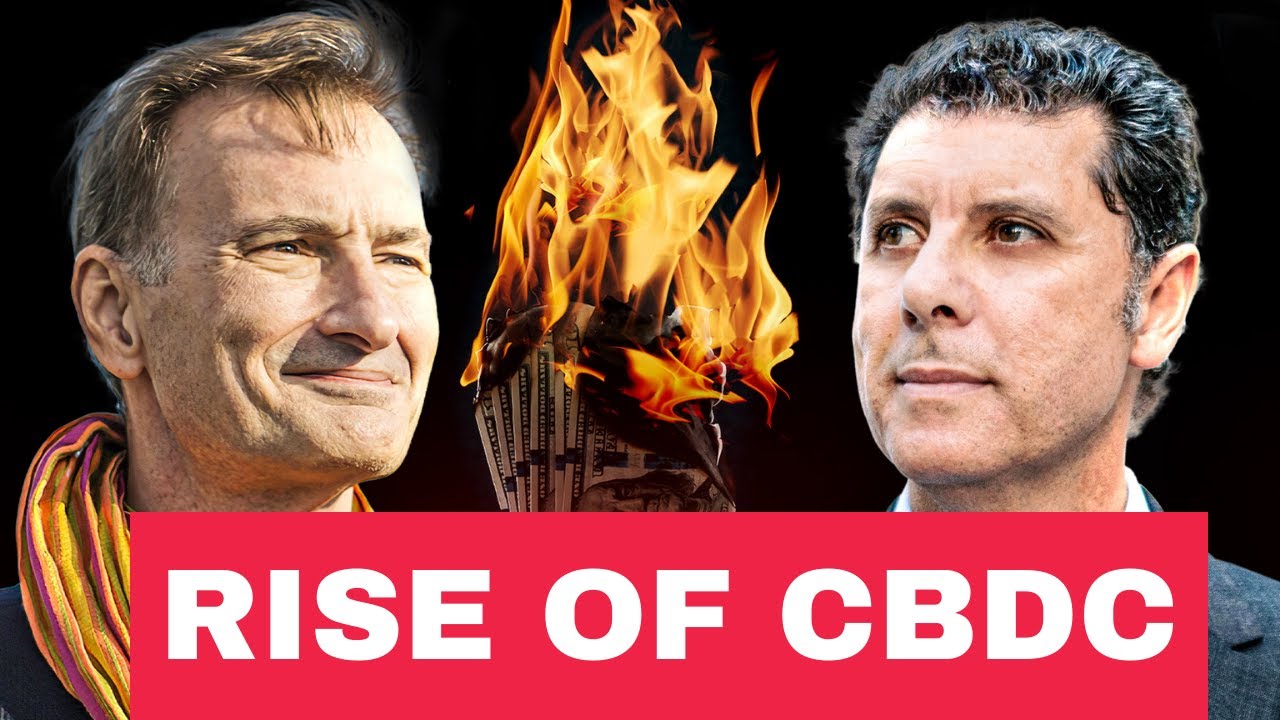
Rick Turan explains how BRICS nations are moving away from the dollar through native currencies and stablecoins, a process that could take a decade. China is rolling out cross-border digital currency in late 2023 or early 2024, while Huawei's new Mate 60 phone shows Chinese chip-making is advancing despite U.S. bans.
Chapters
And I'll bring you in. So right away. All right, hello everybody and welcome to Geopolitical Trends. So excited to be with you now for the second time, except this time is a very, very, very different. So, uh, like I always do, guys, I want to extend my sincere thanks to the channel's members and supporters. And for you, if this is your first time landing here, please make sure to hit that subscribe button. I would really appreciate it. I also would like to give a shout out to two new channel members. It's Tracy Gavin, thank you for becoming a YouTube member, the channel here that is. And I also want to give a shout out to, uh, uh, Binge Binge, thank you for becoming a channel supporter. Truly, truly appreciate it. Quickly guys, here I need to just tell you about what's coming up this weekend. I'm having a guest on the other channel, on the health channel, is a health professional. Uh, it will be at 10:30 Central Standard Time. So I also gonna have Dr. Hammond next week, and I will be also doing some, uh, uh, podcasts on Locals and Rumble. So I will communicate all this with you as I move forward. So for now, let me bring in my guest. You guys have a fun, fun, fun session with this gentleman here. So this is Rick Turan. He's a friend of mine. So excited, so happy to have him. I mean, you guys looking at number 4 in the world. He's ranked number 4 when it comes down to fintech. He is a fintech influencer, someone who's gonna answer some very, very complicated questions about, for example, BRICS currency. What does it mean? He's going to also talk to us about AI, the world of the artificial intelligence, where this is going. So you are in for a ride in this show. So Rick, great to have you on the show as always.
David, it's always a pleasure to be back here chatting with you. And I'd like to give a shout out to all of your subscribers and the people who watch your videos because it's a fabulous community. Whenever I come on your show, I always get messages back saying, hey, we enjoyed, we agree, we disagree. But, um, you've got a great, um, audience of really switched on people. And thank you for having me. And, oh, thank you to them.
Of course, of course, you guys. The, uh, uh, Rick is, is, is, uh, is rich in information. So I put all the descriptions for his, uh, his bio, and I'm gonna share something with you because you need to know. So as I said, I'm gonna give it briefly here, but it's on the description. I put everything there. So Rick is the international best-selling author of Cashless This is China's Digital Currency Revolution, and also is also author of Innovation Lab Excellence. I have the link to his books on Amazon in the description. Like I mentioned earlier, he is number 4 in the world when it comes down to fintech, and this was ranked, by the way, by the prestigious Analytica, which is, uh, it's, it's, uh, it's well known in the world for, for all that. So I have one, uh, one link here. I'm gonna, guys, share it with you just for you to see. And I'm gonna share this quickly here, Rick, so just for them to see what are they looking at here. So here is what you're looking at. I don't know if you can see it, guys. I'll share it. Here we go, it's gonna show up. Yeah, right here. Let me, let me— here it is, guys. So look at number 4 right there. This is Rick right here. So we are so excited to have him here. So anyway, let's dive in into our conversation, Rick. So I would like to start first of all by, if you could please, for just my viewers around the world to have a basic understanding what fintech is. It's such a high word. If you can just break it down for my, for my viewers.
Sure, let's break it down. First of all, let's understand where the word comes from. The Fin part of the word stands for financial, and the Tech obviously from technology, and it's all about the use of technology in finance. So what we're trying to do is use whatever the latest technology is to make our financial universe and our financial world a better one. So that's, that's the basics of what it is, and you use it every day. So every time that your bank app or, um, has something new, a new way to transfer money or a new way to, um, uh, to see your accounts, make it easier, um, that's all part of the financial technology world. So you use it, you use fintech every day. We really do We just don't think about it very much because it's just part of our, mostly part of our mobile world. Wow.
Will it be fair, Rick, to say, for example, fintech does have an influence or plays a part of what the global geopolitical landscape is all about?
Now that's the question I'm looking for, David, because let me explain to folks out here. I started out as a career banker. I spent 18+ years in banking, and that's why, you know, to become a fintech influencer, theoretically, you really have to know something about financial finance and about technology. And when fintech really got started, when the name was born around 2013-14, you know, we looked at fintech as something that was a new way to make your mobile banking app. Wow, 2013, 2014, we were just designing the new mobile banking app. So that's what the extent of fintech was in '13 and '14. Well, what's my bank? You know, how do I access that through my cell phone? And now when we get to today, we look at fintech being things like cryptocurrencies. We, and we look at fintech as being something called central bank digital currencies, which are the digital currencies of central banks, a digital new brand new digital form of money. And instead of being neat applications on your cell phone, we now see that fintech is what I call a pawn in the great geopolitical game. It's a way to change. It has a way to change how the geopolitics between nations, and we see it happening now. And through my book, forgive me, the central bank digital currency of China, which will be a game changer geopolitically someday. So yeah. It's a pawn, maybe even a rook or a knight in the geopolitical game now, David.
Great. Well, this paved the way to the bigger question that many are asking now, especially as the BRICS summit just concluded in South Africa. So the big question that I even— I didn't even talk about this yet, Rick. So You're ahead of me for that, so, because I'm gonna do a show about it later on. The big question, and I was following that on a daily basis, the question that I came up with at the end is this: are we looking, are we looking at a new currency that's gonna emerge through BRICS which will counter the weight of the US dollar on the global stage?
The, the answer is yes, but you must be very patient. It's not going to be coming anytime soon. And that was a big debate actually before the BRICS summit down in South Africa last week, was whether or not a BRICS currency was going to be on the agenda. And it was taken off the agenda, that is building a new currency. And what was what was said in its place was, well, for now we are going to do our best to de-dollarize, meaning reduce usage of the US dollar, by using our own native currencies instead. So for now, we can look to a BRICS currency sometime in the future, but not immediately. And The reason is it takes time to develop and to coordinate. So that's the, that's the short answer. But there's an important connection between your prior question about fintech and the BRICS currency. And that is, years ago, the concept of designing and building a new currency was unheard of, tremendously difficult. Now in the digital age, through the application of fintech, through the application of central bank digital currencies, I won't tell you that it's easy to do, that you can turn the switch like Bitcoin and launch it overnight. That's cryptocurrency, right? But, um, we have the ability now that building a currency, launching a currency digitally is something that is perfectly within the capabilities of the BRICS nations to do. So a major hurdle for launching a currency has been crossed or jumped over by having access to fintech today. And that's an important message for people to understand, that launching a currency now It's just not as hard as it once was.
Yeah, but at the same time, are we looking at a time frame similar to what took place for the euro? Because the euro took about—
to my—
in my research, uh, what I gathered was it took about 9 years for it to come live. Are we looking at the same time frame for the currency?
Yeah, you know, if I was a betting man, yeah, I would say you'd be looking at that sort of— that sort of time frame, that sort of decade. So, um, I think, I think 10 years is, is a great time frame. I think that we may be surprised that it may even come a little bit sooner because the BRICS members are motivated to de-dollarize. They feel that the dollar is not simply not giving them the best deal that they can get in cross-border trade because it's expensive for them to use. So they're highly motivated to find a different means of doing it. And it can be— and this is because of fintech— there are many, many options for them. It's not just that they have to launch a currency, a new BRICS currency. They can launch stablecoins. They can launch commodities-based coins. There's all kinds of new options that didn't exist before. That they can try. So, um, so motivated people can be very creative. So if you've got this BRICS group motivated to de-dollarize, motivated to find a new way to trade among themselves, believe me, with the financial technology that's available to them today, um, they'll find it.
Would it be fair to consider, for example, bond markets might become a one of the obstacles to that?
Not true. I don't see that the bond markets themselves would be an obstacle in the sense that bond markets are essentially debt markets that basically foreign countries hold this debt. The question for a currency is, if I have a barrel of oil, What are you going to give me in exchange? Is it going to be a dollar? Is it going to be a euro? Is it going to be something else where something else is undefined? Now, inasmuch as countries issue currency and devalue their currency, yeah, then it could have issued— impact the bond markets. But that's sort of a step in advance. Let's get the new trading currency, whatever it might be. Be launched first, and then we'll see how it hit— then we'll see how it hits the bond market.
Well, there are already the conversation, at least from some, uh, individuals here in the US that I talk to, that they are like almost seeing the challenge that's going to be for— from within BRICS itself. What am I referring to here? I'm referring to, for example, what's going on right now. You take, uh, China, you take Russia, you take India, and each one is thinking in terms of, well, I gotta trade in my own currency. Okay, then you have, for example, country like India saying, well, we might object to a BRICS currency that means all the countries will be using because India wants to push for rupees, but no one else in the— whomever they're going to be trading with will be accepting rupees. So how would you solve an issue like this?
Oh yeah, look, that's, that's the, that's the fundamental issue that the BRICS nations are struggling with, right? They don't, you know, BRICS nations have difficulty accepting each other's currencies. In fact, Russia right now, um, accepted, uh, many billions of dollars of Indian rupees. Okay, in exchange for oil, they share a border. India has been buying oil from the Russians for years and they're not stopping and it's at a discount now. But the Russians are complaining. They're saying, well, we got the rupee, but we don't know what to do with it. It is a problem for us because it is not usable in trade. So, you know, and this is a real problem for all of the BRICS nations. So, what you end up with is an unusual situation politically, where India recently was asked to purchase oil from Russia using, of all things, the Chinese RMB or the Chinese yuan. And as you know, India and China are not best of friends, so it was a politically difficult solution for India to swallow, but if they wanted to buy the oil from Russia at a discount, sure, they bought it in yuan. Now, why is that? Because simply, once the Russians get yuan, they know they can send that yuan back to China to purchase goods with. So there are real issues. And, you know, so when we talk about going 10 years out, for a BRICS currency. It is precisely because of these fundamental problems that many of the BRICS nations have, which are weak currency. So that, that begs the question for many people, okay, if we don't like the money and many of these nations are commodity-rich, should we be looking instead, instead of a currency solution, a commodity solution where you basically tie a basket of BRICS commodities together. And I'm just throwing that out there as one of the many solutions that people talk about when they talk about what is it exactly that BRICS can do to not use dollar into trade but use something else. And I'm not even going to call it a currency. What is that something else going to be? And we're still years away from knowing, uh, what that is.
Yeah, well, I, I, you know, I, I'm, I'm a student of history, and I tend to do one thing is really pay close attention to trends. And why am I saying all this? I'm saying it because when I realized that Saudi Arabia It's going to be part of BRICS. Okay, well, Saudi Arabia has two main things, or bringing two main things to the table. One of them is the financial aspects for the BRICS Development Bank. Okay, second one, massive reserves of oil. And it becomes the question, could this, uh, just to piggyback on what you just stated, could gold become one of those medium by which certain trades are conducted, at least from within. Is there possibility to something like that?
You know, years ago, I would have told you, what are you, nuts? Today it's not so crazy anymore. So yeah, so look, I'm not, I'm not what is called, what people are affectionately referred to as gold bugs. I'm not a big gold guy. I'm not like, you know, I've got my 'Big part of my portfolio in gold.' I've never been that person, but at least for the BRICS nations, um, it is possible to see gold as part of that future solution. So, you know, you can't rule it out. And, you know, that's why when we talk about these commodities baskets, you know, what's going to be in it? Who knows? But, um, I want to go back to what you said before and I'm going to switch a little bit here so that people can see this graphic, and this is about the BRICS expansion, and really, this is bigger than made out to be in much of the news. Let me say it very clearly, whether you like BRICS nations or dislike BRICS nations, it is not really the issue at this point. The real issue is that they have organized themselves into a rather loose organization with shared economic interests. For the record, they do not have shared political interests. Their politics is all over the place, but they have shared economic and trade interests And that's key. And as you said, we now have Saudi Arabia and UAE and Iran, right? We have these new members. And what's important to understand is that they incorporate now 43% of global oil production. Wow. And, you know, this is a game changer. And, you know, our US society is based on the petrodollar, the ability to basically exchange dollars for oil, and then the dollars eventually rotate back to the United States where they are used to buy US government-issued debt products. Not all of the dollars get recycled in that way, but much of them do. So you've got this circular system: we buy the oil, we give you the dollars, you give us the dollars back by buying our debt. And of course, we have a lot of debt. So, if you start playing with that petrodollar, that mechanism, you potentially make American debt more expensive. In other words, America has to pay more for people to buy its debt, that is, pay more interest. And you start really playing with the— throwing a spanner in the gears of the American system. So it's a real, um, big deal that the BRICS nations have fundamentally changed it— changed, added 11 new, uh, members, and now have this tremendous, uh, tremendously large share of oil. Now, I don't want to scare people. Nothing is happening tomorrow. The world is not, of course, changing overnight. But these are the large-scale geopolitical issues that we have to acknowledge and look at and think about long-term.
Where does the yuan or RMB fit into this equation, in your opinion, Rick?
I am so glad you asked that, you know, because I think that, first of all, I think that the BRICS expansion is net positive for China. It shows in part China's greater influence in organizing, helping to organize a greater geopolitical body than the G7. Okay, by comparison, we're looking at an organization that's bigger in both pop— G7 has 10% of the world population. I laugh because the BRICS countries together have 46% of the global population. So, talk about a an organization that represents, you know, a bigger, a bigger part of the world. But where is this going to take the RMB? And the answer is, I think you're going to look at increased RMB usage because it is likely the best of the BRICS currencies right now, meaning that like the situation I explained between Russia and India, If you want to do trade and you don't want to use the dollar and you really are unhappy with the other trading partner's currency, what are your options? And basically, um, the best of the options within the BRICS community right now is the RMB, because if you accept RMB in trade you know that you can use that currency to buy goods and services from China. And, you know, that leads— I'm going to change the picture here, but this is our— this is the reality of our world. I'm going to change in right now. So this is the countries with— in 1990 that are connected to their major trading partners, and you can see the U.S. is dominant. And this is what that looks like in 2020. And you can see that China is the dominant trading partner for a big part of the majority of the world. So whether you like RMB, whether you think it's the best currency or as good as the dollar, that's really not the issue for the BRICS nations. The issue for the BRICS nations is is the RMB good enough to trade in and then use it to spend, to consume goods and services from China? And the answer is yes. So that's why, um, the BRICS desire to de-dollarize, their desire to use BRICS currencies, will all be net positive for China because they're the best currency, or among the best of the BRICS currencies currently, uh, currently in play.
Wow.
Yeah.
So that means that for the Chinese, will they be thinking in terms of even tying this to CBDC, or it's going to be sort of separated from that? That realm or that aspect?
So that's a wonderful question. And that's really at the heart of my book. And it really raises the fundamental— the bigger question is, so how long will it take for China to start using its central bank digital currency for cross-border trade? And we really— I really don't have— I have a mixed answer for that. So the answer is cross-border trade with Hong Kong, which is China's largest single trading partner, you're going to see that cross-border trade start in late 2023, early 2024. No question about it. And then I think in 2024, we're going to see another, uh, big use. Now I'm going to go back to the BRICS map. Now I want you to look at the original BRICS nations: Russia, China, India, Brazil, South Africa. All of them are launching central bank digital currencies within the next year or two. Russia has just put its new digital currency in trial. India has it in trial. And I think that sometime in 2024, we're going to start to see some amount of cross-border trade between Russia and China, and potentially China-India, done in central bank digital currency. But let me make one last comment on this. Yeah, even without central bank digital currencies, the BRICS nations can use RMB, and they can use RMB independent of the SWIFT transfer system. In other words, they can trade their RMB or trade their commodities back and forth, um, without ever having to interact with SWIFT and/or the sanctions imposed on SWIFT.
Then in that case, Rick, what would be the purpose of why Australia is conducting a pilot test right now on CBDC?
I'm aware of something. Oh well, yeah, Australia just did a wonderful pilot and they did an innovation, uh, test, and they basically said, hey, you know, central bank digital currency is a good thing. And, you know, they're along with 114 other nations and 95% of global GDP that are now investigating central bank digital currency. Now, let's just make sure that everybody understands what exactly is a central bank digital currency. And the most important thing to understand is it's not cryptocurrency, okay? It's not Bitcoin, number one. All right, so a central bank digital currency is a form of digital currency that's issued by the central bank, but it is not crypto. It uses many of the same techniques as crypto, Tokenization may or may not use blockchain. Mostly they don't, but it has many of the characteristics of cryptocurrency. But it's again issued by the central bank, which means there's anti-money laundering, KYC. They have to know who uses it. There's controls on who uses the currency, just as there are controls on who has a bank account and who transfers money between bank accounts. So, um, 95% or this 113 nations are all looking at, uh, central bank digital currency right now. It is a global phenomenon. And what's interesting is it was really kicked off by China because China is the first industrialized nation to pilot in broad scale a central bank digital currency. I say pilot because it hasn't been turned on everywhere in the nation just yet. It's coming. So that's, of course, what I wrote my book about right there. So it's a great topic. And I could go on far too long about it.
But there is a pushback, Rick, on this, at least for some conversations here in the US, that the big concern is now the full control of the central banks. On the financial aspects of citizens. I mean, it's legitimate concern. To me personally, I would say, well, if the central bank has to sort of, uh, have a full control of where I spend money or what I spend money on— in other words, they can turn it on and off as they wish— wouldn't that be sort of problematic down the road? If we are to think in those terms.
Oh, no. So, well, yeah, look, I get this question all day long. So look, central bank digital currencies have elements that make them attractive. It is attractive in the sense that if I can pay you digitally without having to pay a fee to Visa or MasterCard or PayPal or Venmo or whomever, If I can make ultra-low-cost payments that are immediate, that's clearly beneficial to society, and we can go on more about it. The biggest negative that, um, comes up is the constant suggestion that basically central bank digital currencies are a new form of government control. And that's just not true. The first statement that you hear constantly is you will have a bank account with the central bank, which is factually untrue. Central bank digital currencies are not designed that way. You will keep your account with your bank. Okay, so, you know, so that's— so the concept now that the government will be able to control your payment flow is simply not part of modern CBDC design. So if you look at the digital euro because Europe— the Eurozone is looking at rolling out the central bank digital currency in the next, uh, about 4 years, 3 years. Um, and digital pound for UK, they're looking at it, um, probably maybe a little longer time frame, maybe 5 years plus. They started a little later with their research. But if you look at their design, they're designed so that you can't shut the money down. You know, they're designed in the sense that you maintain your relationship with your bank, and then the government is not able to program the money to otherwise turn off, to be programmed so you can't buy firearms. You know, forgive me, but they're coming for my guns. That's the, you know, what's behind this is they're coming for my guns. They're going to prevent you from buying gasoline automobiles and eating beef. You know, I apologize for distilling this down into a set of internet memes, but yeah, that's really what I read when I read a lot of these articles. So, um, CBDC design: number one, you don't have an account with the government. Number two, the government really doesn't know what you're paying For— because the government doesn't know who's doing what. Why? Because it's the bank who is going to be in control of your personal ID and your identification, just as it is today with credit cards. So does the government know what you're spending on credit cards? No. Does the bank know what you're spending on credit cards? Yes. Can the government ask the bank nicely or with a warrant, search warrant, show me what they spent with credit cards? And the answer is yes, they have the right to do that. And yes, I support those who say the government has overstepped and looked without warrant into, you know, credit card and other financial data. I mean, this is one of the things that Edward Snowden talked about. So this isn't new. But will central bank digital currency give governments magical ability to control what you spend? And the answer is the current designs do not allow for that.
Great, great. Let's, uh, let's shift gears to talk about— there are, uh, two major things going on in the world, and I know either people paying attention or not. One of them has to do with microchips, the other one has to do with AI. So, and in the world of fintech, which I do not know a lot about, I can only imagine both chips and AI, how important and crucial that is. Where do you see this race, especially between the United States and China regarding microchips, is headed to? And how that's going to impact.
Yeah, let's, let's talk microchips. They are interrelated subjects, but let's talk microchips first. And, um, there was news out of China in the last few days that is really breathtaking. Um, most of your readers are probably well aware that the United States has banned the export of chips to China. And in fact, they started with the first export bans go all the way back to banning the sale of 5G chips to Huawei, which was designed to cripple Huawei's mobile cell phone business and cellular business. Um, and there was a real, um, breakout news in, uh, China when this, just this, I have to get the picture here, where just this last couple of days, actually perfectly timed to coincide with the arrival of Gina Raimondo from the United States Treasury, Secretary Raimondo.
Secretary of Commerce, yes.
Secretary of Commerce Raimondo. Huawei announced its new, uh, brand new Mate 60, uh, uh, cell phone. And what's really remarkable about this is that from all the latest data, um, it looks like Huawei has succeeded in building its own chips.
Wow.
That support the launch of its new 5G whatever cell phone that has satellite connectivity and whatever. And, you know, it's really showing, um, the futility of these chip bans. Now, am I going to tell you that this new Huawei phone has the greatest chip in the world? Absolutely not. But, um, it is good enough, and it represents a shot across the bow of the United States, which is saying, "Look, we want to reduce your ability to buy chips." China fights back with, "We're putting quite literally trillions of dollars into the investment in how to make chips." And then out of this, You've got Huawei saying, "Oh, by the way, we can do it too. We can build chips." And even if these chips aren't the latest and greatest, that Huawei can do it is really a headline item. And it's showing that the chip bans are significant for China. They do hurt. There's no doubt about it. If you're a proponent of them, fine. But nothing lasts forever. China is a tremendously ingenious country, very innovative. And if you're betting against them being able to manufacture something, that's a very, very bad bet to make. So that's what's going on with chips. And of course, it connects to AI. Yeah. Yeah.
So how— Yeah, go ahead.
Yeah, so how does this all connect? So basically, the US manufactures the top chips for using in AI applications. In fact, the company that manufactures them in Taiwan, of all places, is well known. In fact, they've been in the news recently, and their name is NVIDIA. And the NVIDIA chief has been very, very outspoken saying that the chip bans are going to do enormous damage to the US tech industry, including this quote from just August 24th, where the NVIDIA CEO says it will be a permanent loss for American semiconductor firms in the world's largest market. And China consumes around 50%, if memory serves, of global chip— global chips. So NVIDIA makes these chips. They are the fastest and best way to process data for artificial intelligence use. And all of the highest-grade chips have been banned from sale. Into China, leaving lower-grade chips that China can still buy, and China still is buying these. So what you see is a chip race to produce, of course, the best chips, and China is way behind in that, and they admittedly so, and now they're spending trillions to try to get caught up, right? And Now we see this AI race, and AI race has a chip component in that you need these chips, but the overall race for AI is not just dependent solely on chips. It's dependent on data access. It's dependent on software, building and designing these artificial intelligence models. And it's dependent on another thing, which is the willingness of people to use AI and the companies, of course, to use AI and apply it. So I'll ask your next question for you, Dave. Ready? Yeah. And that is, where does China stand relative to the US in this AI race? If we're looking solely at AI, Wow. And that is where it gets really interesting because clearly the US has the lead for chips, no doubt about it. And it actually has a slight lead in producing AI models. But China's AI models are almost caught up all the way or close enough to it. But where China really leads is the data. You can't use AI unless you use it on data, right? So China has phenomenal access to data. In fact, they realized that long years ago that data is the new oil. And in this last year, China started setting up data markets. Which are literally, you know, you have a stock market, you have a data market in certain cities, and in these markets you can buy traffic data, internet data, types of data that have deemed to be valuable, saleable, and useful. So when it comes to the data race, China's going to beat us on this because they've realized that data is a tradable commodity and can be sold and used on official markets. But there's two other really critical issues. One is that Chinese companies are very welcoming of innovation, and when you see their existing use of AI, it's actually very, very good. So we've been using AI on WeChat and Alipay, on these platforms for years. And arguably so have Americans and Europeans who have credit card security that's based on AI. We have AI for thumbprint analysis when we open our iPhones, maybe. So there's all kinds of ways that are hidden in the background. But Chinese companies are very willing to use it. And then the third, the final, the fifth of these issues is that Chinese people love AI. And here's the funny thing, they did a survey of, do you trust artificial intelligence? And I don't remember the numbers off the top of my head, but for the US, it was something like 30% of the population trusted it, meaning 60, 70%, or 67, I think it was 33, 34, 67% didn't trust AI. And it was almost flipped for China. So when you ask Chinese people, do you trust AI? Do you want to use it? It turned out to be something like 65%+ of the population both trusted it and wanted to use it. So much of the AI battle will not be fought just over chips and who's got the best model. It will be fought over, do people trust it? Do people trust the companies behind it? And there's one thing I left out, and I'm remiss in doing this, is the regulation. China already has regulation for fair use of artificial intelligence, and the United States does not. EU does. It's coming out very soon, the AI Act for the EU. So, you know, in a way, Americans are correct in being skeptical because AI has no regulation, no monitoring. No one to say, hey, this artificial intelligence is treating you fairly, which is unlike AI in China where there are fairness tests. There's the concept that you have to be able to defend your AI when and if it makes errors. So, you know, these are real issues that go far beyond my chip is better than yours. My model is better than yours.
You're right. Well, I do remember Elon Musk when one time he said, if I recall correctly, that he wanted to make algorithm open. And I was like, well, it's the AI machine, is the machine learning. How you gonna do that? And whether the entities within the government is gonna allow that or not. So It's kind of—
it was like, and these, these— look, Musk was right, 100% right on that. And this is why last summer China passed the algorithm law, which basically made companies monitor their algorithms, audit their algorithms, and be responsible for them. Now let me just give you the best example because it's relatable to everybody. We have delivery guys who deliver things, parcels, from one place to another, and they're great. We have almost 24-hour delivery of just about anything, right, in China, and it's really truly a miracle. But these guys' salaries are dependent on an algorithm. And the delivery guys were complaining, and the government heard them, and they said, look, the algorithm is not treating the employees fairly. And, you know, out of this, out of this sense that algorithms can be unfair, came algorithm laws in China that basically try to treat people, employees, customers fairly and mandate that these algorithms be auditable and prove and show that they're fair. So, You know, Musk is right. This is— algorithms are what's behind what you see on Netflix, what you buy on Amazon, what your Facebook and your LinkedIn feed will see. And, you know, this is the very root, you know, in YouTube. You run a YouTube channel, people may or may not see the videos you produced based on YouTube's algorithm decision as to whether or not your content is fit to be seen. And it's at the root of our society, and it's absolutely terrifying that we do not in the US or in the EU have these laws. Although the— again, the EU is getting them. The US is just behind on all this stuff.
Yeah, I wonder if it will ever change. I mean, I noticed this on YouTube Uh, some, some of the videos I release, you know, kind of you wonder, oh, the count or the subscribe. I had some subscribers mentioning to me that why the subscriber account is so low. I was like, well, there's nothing I can do about it. Of course, is the algorithm part of that, but there's nothing I can do about all that one.
So, well, that's very, you know, but it's a, it's a great example for your listeners out there to understand how these algorithmic laws— and look, I'm not telling people that the US should get China's algorithmic laws. I'm not. I'm just saying that perhaps they could watch and see what was in some of these laws, and perhaps there's something in there that is valuable for the US and/or other countries, you know. And this is the same battle that we're going to fight— algorithms, AI, machines that fundamentally impact your life that you have no control over and are basically running around mostly lawless. And I'm sorry to say that. It's— if that sounds bad, it's because it is.
Wow, it's scary and it's very concerning. I will wonder what will become of human relations. Human to human.
I wonder what would become of that.
So, uh, okay, uh, for, for those guys who might not know who Rick Thurn is, Rick, where can they find you? If my viewers, some of them saying, and I read the chat here, uh, this is the first time we noticing this guy. So where can they find you?
Hi, look, if you want to find me, reach out to me on LinkedIn. That's the number one spot. For reading about, you know, for what I write daily, I have a newsletter on Substack. So it's called Cashless. It's the same name as my book. It's called the Cashless newsletter on Substack. I'm of course on Twitter every day. So LinkedIn, Rich Turin, easy to find me. The Substack newsletter, Cashless, called Cashless, also easy. It comes out once a week. I might make it twice a week now. I've got so much stuff to put on. And, um, of course, Twitter. So reach out to any of those. If you want an email, you can go to my website, which has got the— an easy address, richturn.com. Not exactly hard, right? So, uh, if you want, go to richturn.com and you can, you know, click to contact me, an email form. So lots of ways to get in touch. Your members do write to me. Your listeners actually, you know, they come out and they say, hey, what, you know, I disagree, or I agree. They're wonderful. I love the interactions I've had, and I look forward to hearing from you.
Yeah, and they are very— we actually enjoy— I read all the comments from my viewers. Literally all of them. Yes, sometimes you might disagree, whatever, but that's part of the conversation. So by the way, guys, just for you guys to know, I put all the links for, for Rick in the description. So I put everything that he mentioned, it's over there with the links. You just click on it and you get on. I follow him on Twitter, I follow him on LinkedIn, I read his stuff on a daily basis because they come to me directly because I follow him there. So, and I'm very grateful to have somebody like Rick I can reach out to because you're not gonna get this kind of information elsewhere. So you're looking at, uh, number 4 in the world when it comes down to fintech. So you don't get to that level just overnight. So I consider Rick a wealth of information, and that's why I'm very grateful to you, Rick, for any time I reached out to you you make time available for me. I really, really appreciate that a lot, and I look forward to reaching out again. I am sure, uh, my viewers here would love to have you again for another conversation. So, so we appreciate you, and I wish you a good day. I know it's almost, uh, 11 o'clock your time, whatever part of the world you are in, and I wish you a good day, and I look forward to talking with you soon.
Thank you so much for having me.
My pleasure. So, all right guys, here he is. So we are so grateful to have Rick here because it's, it's, uh, he's a tremendous— he's a wealth of information. And I've— I don't say this just to be, uh, uh, Mr. Nice. He knows how I feel about that. And because I had a conversation with him on many occasions, this is not the first time, and I will reach out to him again to have him back on here. And because that's something— you guys, this is how you acquire knowledge. You have to listen to well-informed individuals, people who know what's going on. Rick, it's someone who understands the world of finance on the global level. And given what's coming up down the pipeline with the BRICS, with the changes in the geopolitical landscape and so forth, You can just see there is a need for an understanding, so you be well prepared. But if you don't have the information that you need to base on, which you base decisions, whatever the decisions might be, you're gonna be lost per se. And this is one thing that I decide to do in this channel here, is by reaching out to well-informed individuals, invite them here to have a conversation so we all, as a community, we can learn. So, so I hope you guys find it very informative, and I look forward to seeing you this weekend. I'm going to do another live stream on the weekend. Uh, remember, on Saturday I'm inviting a health professional on the Health Channel. You don't want to miss that. And I look forward to seeing you next time. As always, remember, geopolitics impacts your daily life in more ways than one. Till next time, guys. Bye-bye.
More from David


Beyond the Single Actor: Why the Gulf Isn't Choosing Between the US and China


Iran, Iraq's Militias, and the Houthis Are Coordinating! This Changes Everything




Who Controls the Next Decade's Resources? Latin America and Africa's Geopolitical Crossroads

The Chokepoint Trap: How Washington's Stupidity Triggered a Cascade That Now Controls the World

Trump Spooked as IRGC Unveiled dual-use SLV, Deployed Ghadir Mini-Subs & Hinted at Tactical Nukes!
