Can Iraq Balance its Dangerous Act between Iran & US/Israel?
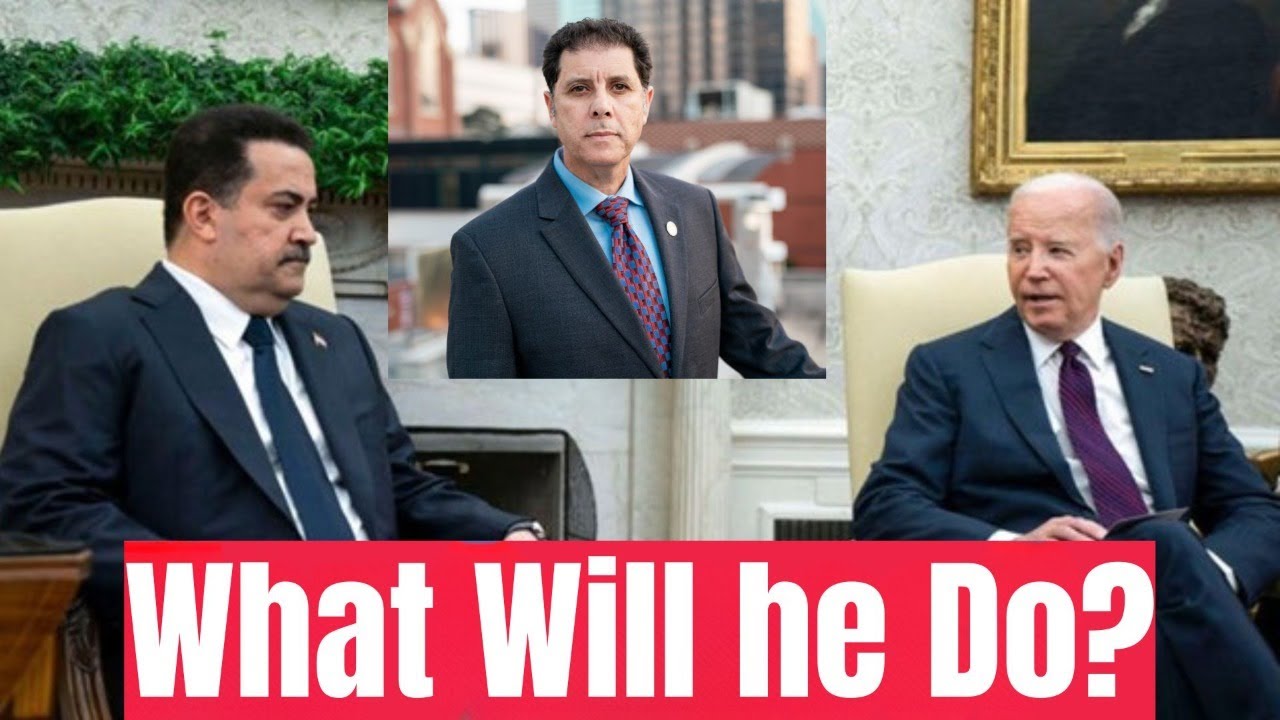
Ruth Matters examines Iraqi PM al-Sudani's White House meeting as a window into Iraq's impossible position between Iran and the U.S./Israel. The U.S. has 2,500-3,000 troops there and wants to keep Iraqi oil dollar-denominated, while China expands its infrastructure deals in the Kurdish north. Iraq's caught between corruption at home and pressure from every direction.
Chapters
All right, hello everybody and welcome to Geopolitical Trends with Ruth Matters. Very excited to be with you as always. Hope you had a, a good weekend, a peaceful one, just chilling out. I did a lot of work in the garden. I had to plant stuff like veggies and all that for— that's the time of the season, you know, you have to prepare all this. So I was doing some yard work a whole weekend working on this. So anyway, very, very excited, uh, to be with you. I was working on, on, on Saturday, yesterday afternoon, spent the whole afternoon working on this topic for you today. I know the meeting took place a few days ago in the White House between the Iraqi Prime Minister Muhammad Shia, uh, and the, uh, president. So this is what I'm going to be talking to you about, but not about Iraq in itself, it's about the big picture. And there is a big picture especially with Iraq being at the crossroads as to what it's going to do. So, so let me first say hi quickly to everybody. Uh, Willie, as always, Homan, YT, good to see you as well. Ramplands, good to see you. John Smith, good to see you. Chanel, Hamad, Sivi, Losio Delgado, Masian, Timeline Dunkley. Oh, Lokel, good to see you, Lokel. I haven't seen you here for a while. I hope all is well. Wong KC, good to see you as always. And MM Nassar from Sri Lanka, Karakula, good to see you. Thank you, good to see you. Anyway, very excited to have you here, guys. As I said, uh, I got an interesting topic because I, I have a lot to say about this one here, and I wanted to share my insights with you, a brief analysis that is. But let's ask the questions, the key questions that we ought to consider, uh, uh, within this. And I wrote them for you guys here, right here. First of all, was the PM summoned? What do you guys think? Was he summoned? Now, some Western, uh, uh, uh, publications saying no, no, no, no, the plan— the, the trip was scheduled. Ah, no, I don't think so, but that's my opinion. What do you think? Was he summoned here? Second thing— oh, I made a typo there— uh, is the US pressuring Iraq financially? Third question, what will Iraq do moving forward? And the fourth one is, is this aimed at China? Now you might ask yourself what this China has to do with all this. A lot. And this is what I'm going to get into in, in my conversation about this one here. Uh, before I forget, let me just share two things with you quickly here. Uh, remember to join me on Friday. I know it's just the beginning of the week, but, uh, I'm gonna have an interview with Dr. Pascal Lottes. He's in the— he's in Tokyo, I believe. Uh, uh, Temple University there, he teaches as an adjunct professor. He deals with international relations, very, very savvy guy. I, I read up his, uh background, his research and all that. Very, very interesting. I look forward to the conversation, uh, with, uh, Dr. Lothars. Also, I sent an email to Do Dissidents, so we're gonna be collaborating. They do have a channel, as you may know. Jimmy Dory will be part of that as well. So I might have them here— not I might, I will have them here on this channel and, and we'll have a conversation with that. I just want to let you know Uh, to those who ask me to reach out to George Yao, I did. He is not in, in the country. Someone informed me that he is elsewhere for, uh, for a trip of some sort. So I'm waiting till he gets back and he'll respond, and would love to have Mr. Yao here on, on the channel for a conversation. So, all right, for today's topic, those who might not be familiar with it, uh, the question that I'm gonna ask you here— not ask you, but rather ask— is Uh, can Iraq balance its path? Because it is a, it's a dangerous path where it is right now, you know, between Iran, which is an ally of Iraq, and US-Israel. It's very, very delicate. Why is this delicate? It's because we have to think about the timing of the trip and what took place before that. It was Iran launching, uh, the, the, uh, hundreds of projectiles over Israel, but it used airspace of Iraq to cross through. This is why it's important to understand, and that's why I'm saying, was he summoned to the Middle East, to, to the White House? Yeah, you decide, guys, on this one here. So Now, uh, I, I read up. Usually I read, I read articles, and sometimes I react to articles, uh, uh, whether they are from here or from overseas, it doesn't matter. But I, you know, I know enough how to differentiate between facts from fiction, or, or to decipher that, that is. So, so I got a chance to read one, uh, uh, written by Greg Wynn. W-E-H-N-E. So I found it very, very interesting how the Republicans right here in the US launched out at the prime minister expressing their concern for, uh, uh, uh, the support or for even the visit. They wrote a letter to President Biden expressing their concern over the hundreds of billions of dollars sent to the country, to Iraq, that is. Well, wait a minute, it's their money. So, and I'm gonna get into the economic aspects of it as well. So, and of course, uh, Republicans now saying, oh, because the Prime Minister Muhammad Shia al-Sudani, uh, he's kind of supporting groups inside Iraq and all that. It's all hype, it's all nonsense, because here is what's at the heart of it. What's at the heart of it is that Mr. Soudani raised the issue of having US troops leave Iraq altogether, and we didn't want to. Well, if we are to say Iraq is a sovereign state, If they ask us to leave, we have to honor that one. So what are we staying, staying there for? It's their country. Once again, we don't have a right to dictate the terms to them. So this is what's at the heart of one of the issues that has to do with that. And the reason being, because, uh, uh, if you all remember, a lot of people were arguing against the US invasion of— I was one of those arguing against it back in 2003. And my argument back then, way, way back then, it was that you have no idea that now you're gonna pave the way. Yeah, you're gonna pave the way, make life— makes it easier for Iran now to get rid of two enemies at that time, back then. Remember, things have changed. Back then. Well, the enemies were— one is Iraq, in, in Iraq, which was Saddam at that time, and the other one was way out in Afghanistan. So, and this is why the US didn't think through in a long term, didn't think through that this will pave the way for Iran, which it did. And I argued this back then, saying it's going to flex its military and economic muscles, not necessarily the ideological one. There were those who saying, oh, Iran's gonna take over the Muslim world. It's nonsense. It is nonsense. Iran has no interest in that. The same argument some in the West are making about, oh, Russia wants to conquer Europe. It's nonsense. I don't know what— you know, that just defies logic. So And this is one of the issues that we didn't count on, we didn't think through when, you know, we embarked on that invasion that ended up destroying the country. And we did have nothing to show for— what have we accomplished for Iraq? Nothing, just massive destruction, you know. Let's say it straightforward. And this is why I brought up the issue of, is this about China? Why is this important? It's because if you think right now, who is building the infrastructure in, uh, in Iraq? Can you guys type in, in the chat box who is building the infrastructure in Iraq? Let me just see your answer here. And we didn't think through. We did not think through. Uh, oh, uh, look, you got it, you got it! It is China, it is China indeed. That's the one. Uh, Bon, good to see you, Bon, and thank you so much for your Super Sticker. Truly appreciate it. You wrote, in Chinese we say it's, it's a way to invite a deity, but it is hard It is hard to send the deity away. Countries should be aware when they are getting the US bases. And I can just see your message to the Philippines, New Zealand, Australia. It's spot on, Boone, spot on. And good to see you as always. Uh, David King, you say China. Jamie Dodger, China. Hamad Sidi, China, of course. Willie Homer, you guys got it. It's the Chinese that building infrastructure. When I was there in Iraq, we going back to 2000, uh, if I recall, 2010, 9 or 10, don't quote me on this exactly. And back then, the Iraqi government made a decision, and that decision was to grant the Chinese access to explore an oil field in the north and asked— meaning the Iraqi government asked Exxon to leave. And we were furious about it. I remember I was at the embassy, the ambassador was pissed and all that stuff. And, and the back of my mind was like, well, it's their country, they can decide whatever they want. Well, we the one who brought the money, we have the troops here, but we're the one who invaded the country. So let's logic prevail here. Common sense will suggest that a host country, whatever, that is going to go with the country that will benefit from economically not being dragged into destruction and so forth. And even back then, from that point forward, the Chinese influence in Iraq start to grow. Why? Because the Iraqi government saw that it will behoove the Iraqi government to embark on economic reconstruction, uh, reconstructions. Even though for us we're saying, well, we're gonna go into, uh, nation buildings and all. No, we didn't build anything in Iraq. They just be honest about it, straightforward. And that is what happened at that time. So, and fast forward to today, this is also— I'm thinking is this has to do with the Chinese presence there. So now here is what the letter from those Republicans to the president saying prior to the visit of the Prime Minister of Sudan. Uh, the letter, according to the author here, uh, what's his name, uh, Greg Wynn— no, the letter notes that the Iraqi joined Iran in the attack on Israel by allowing airspace. Well, wait a minute, wait a minute, wait a minute. What, what these politicians didn't disclose is that Iran informed Iraq ahead of that, which means Iraq could have said, no, we don't want you to use our airspace. But they said, we got no problem with it. Unlike Jordan. Yeah, Jordan shut down the airspace completely. And yet it's Jordan that scream loud about, oh, we need to negotiate for the Palestinians, we need to do this and do that, which is nothing but a lie. Jordan has no interest, even though if you guys know, the majority of Jordanians, the people born in Jordan, whatever, those are of Palestinian ethnicity. They trace back their roots. As a matter of fact, the wife of the king is Jordan— it's a Palestinian, you know. So all this hype about Jordan I mean, I lost faith in that king anyway. It's useless, you know. It's, it's not a puppet, no more, no less, you know. Iraq, in this case, they said no, we can leave our airspace open, and they choose to. But Iran— I did find, uh, uh, uh, correspondence that suggests that Iran reached out to Iraq and other nations letting them know So this is why personally I don't trust Arab countries. Uh, even now find out that Saudis have some talks with Israel behind closed doors. The United Arab Emirates has some talks with the, with the Israelis behind closed doors. You can't trust them. That just, just my, uh, my, uh, my assessment. So now the idea of, uh The letter also saying, well, that's the prime minister, uh, supports terrorism and all that. No, come on, man, come on. This is the failure of our foreign policy. When we have nothing to show for, we start using terminology that just raise hypes, no more, no less, and it has no facts on the reality. This is where the problem that— and that's usually it's a reflection of the, of the, of the failure of our foreign policy. This straightforward, that is what it is. Now here is part of another issue that I am really looking, uh, to address with you, which to me was very, very, very, uh, surprising. The, uh, Iran or Iraq— I'm sorry, not Iran, Iraq, uh, let me, let me, let me get it right here. Federal. All right, the Iraq oil. Do you guys know that Iraq produce a lot of oil? It has a lot of oil, and it's not a full capacity, by the way, you know, massive amount of oil. So did you guys know that the revenues for Iran's oil Iraq— I'm sorry, Iraq oil, which amount to about $100 billion a year. That's surprising, huh? $100 billion a year. And I will provide you the link to this. So because that's where the economy depends on the revenues from it, it pulls in from that oil shipments and so forth as part of OPEC and other countries and so forth. $100 billion. Did you guys know that the— pardon me, there is an account at the Federal Reserve Bank in New York. That's where that Iraq money goes to, which means what? We control Iraq's account at the Federal Reserve. It's their oil, but we are controlling it. So which means we can restrict access to that funding anytime we want to, which to me is problematic, very, very, very, very problematic. And the US is saying, oh, it's because we want to avoid money laundering. Ah, I don't buy that argument. It's a lie. You know, first of all, it's their money, let them decide. And this is the mistake that some countries have made by putting too much gold right here in the US, including Germany, Saudi Arabia. So they are very concerned that they might not have access to them. And that's why you're seeing the Saudis— I bet you this— the Saudis' conversation with Israel was, uh, it was given green light by the US. If you want to keep your gold, is the same arguments I will make about the Philippines. If Marcos Jr. Bon Bon wants to have access to the gold, he had to follow to the line, if I may use the term. So, and this is one of the concerns that I, uh, when I read, uh, uh, an article from overseas, by the way, uh, it was written by Justin Salhani, uh, it was in Arabic language, and I, because I read, I read Arabic, so, uh It became very clear to me, uh, the trip, it's not about being scheduled, whatever. There's a specific, uh, uh, information that the US wants to tell the prime minister face to face, which means to toe the line. But I, I just don't see that. I don't see that happening. It's Iraq is gone, we destroyed it, but it's gone. Because we paved the way for Iran. Iran now has more access into Iraq's government, you know, uh, however you want to categorize this one here. So of course the, the prime minister will have to give the saying that, oh, I went to America to look for investments. No, no, no, no, the Chinese are investing enough in Iraq. So it's not about that, because here is another issue in Iraq that you need to be aware of. Corruption. When I was in Iraq, I was during the time of what's his name, Nouri al-Maliki, a corrupted— as corrupted as anyone else before him or after him, you know. Ayad al-Abadi, corrupted, you know. Corruption runs very deep in Iraq, and Iraqi people are not seeing any. It's, it's no different than other countries, no different than us here, slightly different in the setting of it. So, you know, but the idea that, uh, uh, uh, the US is concerned about, uh, uh, the, uh, the monetary aspects of the revenues from oil— it's not. It is about the concern that the, the, the global landscape, the geopolitical landscape in the Middle East is changing, but not in the favor of the US, that Iran now is flexing its military muscle, that is able to respond to Israel, is changing the status quo. And we wanted to ensure our military presence stays in Iraq, which by the way Iraqis do not want. Iraqi people do not want that. And I don't know what we are— why we are forcing our way on the Iraqis. Because that issue came up. Because here's the thing, following what, 20 years now, since the invasion. You know, we still have about 3,000 US troops, give or take, 2,500 to 3,000 troops are still based in the country. Why? Yeah, you want to have small base with the approval of the host country, be it, but what for? I know it's not the same equivalency to number of troops we have in Germany, or the same number of troops we have in South Korea or Philippines or Australia. But it's still, it's still, it's because we lost, we lost Iraq, politically speaking. And despite what the Americans are saying, oh, we do not want to be dragged into regional war, No, no, no, we are already in it. We are in the middle of it by providing unconditional support, uh, for Israel. I mean, we just voted on Saturday, a non-business day by the way, we just voted for $95 billion aid to three entities: Ukraine, Taiwan, and Israel. I think Israel gets about $25 billion. Taiwan gets about $16 billion, and the other one goes to Ukraine. It just shows you right there. So the visit wasn't about, uh, we wanted to— even from both sides, the Iraqi side and the US side, because the Iraqi side, to me, if the prime minister couldn't take stand and said, hey, US, we want you out for military, then we'll talk. We want to enter into joint venture with Country A, and it's our decision. Till a prime minister takes stand, he or she is useless. No different. And for the US, we have to think about the domestic agenda here, given the upcoming elections, but also the concern over now that, as I said earlier, the status quo in the Middle East has changed. Iran now proves that reaching out to any country in the region or any interests of the US, it's not a problem, or even Israel for that matter. So, and this is why the Prime Minister is calculating on both ends politically, okay, because there is an upcoming elections coming up in 2025, next year that is. In Iraq. So he wants to prepossession himself also. Is— and I'm not judging the guy, but I'm— I spent years in Iraq back and forth, so I'm very aware of how corrupted the system is, you know, very corrupted. And this is where the issue is. And, and regarding that, uh, uh, the financial sector, why are we controlling Iraq's money? It's their oil, you know, and we are there creating tensions. And the tensions we are creating has to do with the north. What's in the north of Iraq? Can anybody tell me what's in the north of Iraq? It's a self-ruled enclave over there. Does anybody know what I'm referring to here, guys? Starts with a K. Oh, Francis Tango, thank you so much for coffee or tea. I'll take it for a tea. You bought me coffee last time, Francis Tango. Thank you so much, truly appreciate you. What's in the north, guys, of Iraq? Oh, why, hey, you got it, Kurdistan. And you know what? Kurdistan is a hot button that we can press the Iraqi government for whatever we want. Let alone we used the Kurds themselves. You all remember when they were attacked back then? We promised them to help them with independence. Where is this independence? We never had the intention to do so. But the reason I'm bringing this up to you is It has to do with oil. There is also a lot of oil in, in, in Kurdistan, and this is why the oil fields in the north were granted to the Chinese for exploration, not Exxon. And that pissed the US administration. On the other hand, it's Iraq's country, they can decide whatever. I went to Kurdistan, I— it's very nice, I'll, I'll, I'll admit it. Little slightly different than Baghdad and all that stuff. Little, uh, sort of upscale, if I may use the term. Uh, but they are Iraqis to me, at least the way I gathered from my conversation with the locals there. And I went to coffee shops and all that stuff. Uh, wonderful people. I mean, uh, uh, it's the Kurds, but the Kurds also had their own calculations because we were the one pushing them one direction or another. And this is one of the things that We didn't think about long-term the impacts when we decided to invade Iraq. And what for? You know, even though back then the US administration was saying, uh, who was the president at that time? Bush. That God told him to do spread democracy. Come on, man, what an idiocy for involving God, however you perceive God to be. Democracy or not. What democracy when we couldn't even have it right here? That, that is just a highlight to you, uh, uh, the, the, it just, it just doesn't make sense. Does not make sense at all. So now, and here is what, uh, someone with the circles of the Prime Minister saying, and I quote, I found the quote very interesting. Quote, his visit to the White House— meaning the prime minister, Sudanese— his visit to the White House is the first step towards building more trust to have American support for his appointments as a prime minister after the next elections, end of quote. This is why I never trusted this guy, this, the Sudanese, when he was elected the first I, I spent time there. I was in the thick of it, so I knew the players and I know how it works. You know, some of those former prime ministers, they have their accounts, bank accounts in England, real estate in England. It's just— while the average Iraqi— and again, those are oil-rich countries. They shouldn't have poverty. They shouldn't have slums in the outskirts of Baghdad. And I used to go to those areas. You know, usually Westerners will not go over there. You know, my lucky because I was speaking the language and, you know, they kind of respected me for that. Yeah, American or not, they can tell the difference also. But I'm seeing, you know, asking myself, a country that is so rich in oil and, and living in a slum like this, this can't be. While the politicians are sort of using money uh, for their own wealth. This is why I believe any, any corrupted politicians needs to be— you all know what I mean, right? Maybe hanged, simple as that. You know, then comes the issue of the Christians in Iraq. What happened to the Christians? They're gone. And if you know the history of Iraq which by the way I shared with you one time. Christians, Christians lived in peace in Iraq. They were protected. So, so now, and the whole reason I want to do this for you guys is because I know how the mainstream media or how, uh, the certain entities will word certain things for you to manipulate your thinking. And I wanted to provide you the counterargument to that But of course, you reach your own decisions. So when you read, in addition to the discussions about US troops, uh, uh, the prime minister hopes to secure financial agreements in, in, uh, uh, for, for Iraq. No, no, no, no, no, no, no. It wasn't about Iraq. It's about his upcoming elections, the upcoming elections. It was about wanted to appease the Americans so they can support his nomination through the intelligence service. You know, we were the one who set up the intelligence service in Iraq. We were the one who disbanded the military. You know, let's, let's call spade a spade, you know. And this is where we decided back then, you know what, since we control the government, we're gonna put an account in New York Stock Exchange— in New York, uh, uh,, yeah, stock exchange there, uh, reserve, the bank, uh, the Federal Reserve— I'm sorry, the Federal Reserve Bank in New York. We decided to open an account, and this is where we're going to be putting the Iraqi oil revenues, because remember, all the transactions we're moving into the dollar. This is where the concern of the US about the dollar being dropped in all oil transactions. And it's just a matter of time. We all know what happened to two countries, Iraq and Libya, because of that. Now you have the Saudis and the Chinese trading in yuan regarding these transactions. So far the US is okay with that. Why? Because it's bilateral between just the two countries, Saudi Arabia and, and China. If OPEC as an entity start trading or, uh, or getting payments in non-US dollar, we'll be looking at a different outcome. We'll be looking at revolutions, we'll be looking at destabilizing regimes and so forth. That's why in the case of Saudi Arabia, they only want that direction. They didn't go further than that because they are also concerned about the gold right here in the US. So, and if you recall, I did a video a few months ago about the US, about Iraq ditching the dollar. You all remember that video, it's, it's there, you can, you guys can look it up, you know. And a lot of people saying, oh, oh, that was because the US requested from, uh, Iraq. No, no, no, no, no, no, no, no, it's because Iraq start to realize we better start moving to the different direction as other countries are kind of ditching the dollar slowly. De-dollarization, that's what it was, and that's what was the whole issue about back then. So, and this is where I'm thinking about the oil in the north, you know, and the, the prime minister will talk about the US, well, we need to cooperate regarding the Erbil. Erbil is the capital of Kurdistan. Why? Because the oil that exists, uh, Kurdistan— I think there is a disagreement between Baghdad and Erbil regarding the share, the revenue, regarding all this. It's been going on for a while, but we are controlling the direction of it. So, but all this has nothing to do with Iraq. It has to do with— now Iran sort of changed the status quo But the— by when it attacked, uh, uh, Israel retaliated— I won't use the term attacked— retaliated, that changed the game completely. This is what it's all about. It is not about investments. It is not about— all that's nothing but a fluff. The whole reason for it is we wanted to ensure that our presence in Iraq will stay, especially with the military. In case. But the Iraqi government already asked the US, we need you to withdraw your troops from Iraq. And the US, the Pentagon, saying, yeah, we can work on a timeline. No, no, no, no, no, you don't work on a timeline. We ask you to pack and leave, that means you pack and leave. Simple as that. It's the same argument I will make in the case of Philippines when they said, well, we only agreed with the US about 4 bases, when it turns out to be 9. Same thing about Australia, you know. That's, that's where the issue is, you know. And also because Iraq is an OPEC member, remember, if this organization, OPEC, that is, uh, moved forward with dropping the dollar, which I don't see anytime happening soon, it will take a while before that happens, uh, but if they do, it's over. It's over for us. But those countries are concerned because their accounts are right here at the Federal Reserve and also their gold. And that is where that concern is. And I don't see, uh, again, to me personally, it's all about the change in, uh, the geopolitical changes, uh, in, in, in the Middle East or West Asia, that is, but also the presence of China inside Iraq. And the US is having a hard time accepting that reality that has been asked— that Iraq asked the Chinese, not the US, to do construction or infrastructure, whatever that is. This is where I see the, the challenge coming in into this one here. So, uh, is the same arguments, uh, that I am noticing now, and I think I might do a video for you guys regarding Niger. I'm seeing— I've been reading in, in French language. They were writing some articles in Le Monde, which is a major paper, uh, and Le Figaro. It's in, in France, uh, they're talking about the US, uh, arrangements now in Niger. Uh, the US is concerned. The US wants to establish a base or, or maintain its presence, or whatever term you want to use. Niger is thinking differently, and the reason being because Russia already sent in special ops to establish a base there. This is not about just a visit, about establishing a Russian base there. Why? Because Russia is also in talks with Eritrea. About a base which will have access to the Red Sea, and that is a game changer, a game changer in that part of the world. So I don't see how far it's going to go. So, uh, all right guys, I am— I'm gonna keep this short because I have to go work on some presentation. You know, as you may know, I am a speaker, so I have to work on certain speaking aspects that I have to prepare. You do a lot of research when you become a speaker. I'm gonna just answer one question or two to remind you on Friday, but I will, I will be talking with you before that. So, so let me once again say thank you to— where is it? Let me— once again, I want to say thank you to Francis Tango. For your, uh, super sticker. Truly appreciate you. And I want to thank Boone also. Let me pull it up here. And much appreciate, uh, please guys, make sure to hit the like button. And also, if you can share, uh, uh, this video later on after we're done. All right guys, let me see. Yeah, here is Boone. I want to say thank you to Boone once again. So appreciate you guys. Uh, should you decide to— here is the link to support the channel if you would like to either buy me coffee, buy me tea, whatever you feel like. Uh, I also have the PayPal. I am on PayPal here, uh, if you want to support the channel for that. So, uh, I need to put 3 of them, all of them together next time. I'll do it next time, but for now just use the, uh, buy me coffee there. So, all right, let me answer a question or two before I take off here. And good to see you all, as always. All right, let me see, let me see. All right, uh, uh, Ramplers01, can Iraq Iraq, can Iraq cancel that deal with the US and keep it in the country? What deal are you referring to? Just if you can explain to me, uh, at least, uh, yeah, which deal you're referring to here, because I don't want to assume and end up answering the wrong way. So if you can, uh, just elaborate more on your question and put it back, uh, and I'll, I'll I'll pick it up again. All right, let me see another question from Army with Harmony. Good to see you, uh, Army with Harmony. You wrote, Dr. O, uh, on Tuesday there is a vote to take money from Russia and give it to Ukraine. Probably will be around the same dollar amount. Yeah, yes, yeah, it's not right. It's Russia's money, whether conflict or not. That money has to be frozen and it belongs to the Russians. But Russia will retaliate. They already have something in place. Here is the shocking news about all this stuff, guys. You know, the IMF yesterday just mentioned, uh, usually before, before the information becomes public, there are certain channels by which the information comes out. And the IMF said that the Russian economy will do far better than the West. Despite the sanctions. That just tells you the story right there. So, so yeah, the, the, yeah, Russia will retaliate to that. So simple as that. They're not gonna— and it's not right, it's not right. So all right, let me see one more question and I'll go back to, uh, uh All right, question, Army with Harmony: What benefits does Iraq receive from Iran by smuggling dollar from Iraq to Iran? Well, of course, yes, there've been some. I was aware of it back then when I was still going to Iraq, and we knew that the central bank in Baghdad transferred some hard currency, uh, to Iraq. Well, what benefit will get? Well, of course, the support When I said the support, I am referring to the intelligence aspects of it, because the intelligence services in Iraq, it's not the way we set it up. It's Iran that is managing that, and for a reason. So because we didn't think through when we invaded Iraq, we didn't think long term. As I said, we eliminated two main enemies for Iran at that time. It was Saddam and it was Afghanistan. So, so, so that's the assistance they're going to get. And, and of course, uh, now that Iran is, is getting, you know, Iran is a strong country. We just don't want to admit it here in the West. This is why Israel had to think twice about retaliating. I know there were some reports saying, well, Israel retaliated, and yeah, they might have to just drop some rocket somewhere in, in some open land, whatever, and call it retaliation. No, no, no. Israel now knew that attacking Iran now will be suicide because Iran has stated that the next retaliation from Iran towards Israel will be very far different from what they experienced last time. And if they don't follow through in that, then they will lose credibility completely. This is why I'm thinking Iran— Israel will have to think twice. Israel already dug itself in a hole. I believe Israel made a strategic mistake, really a big one. There are massive demonstrations, uh, uh, uh, massive demonstrations, uh, inside Israel asking for Netanyahu to resign immediately. So why? Hey, was Saddam good for Iraq? Uh, to a degree, you know, I'm not denying Saddam was brutal, but I gotta give it— but because you give credit where credit is due, during his time You could go out at night peacefully. You can walk. Even females will be able to walk. Christians will live in peace. You know, it was, it was sort of electricity was 24 hours. You know, it's when Saddam mentioned about dropping the dollar in oil, that's where things changed. So, uh, uh, was he brutal? Yes, he was, you know. And not just him, most Arab leaders, you know. What do you think the Saudis or the Jordanians or the Egyptians or Syrians or, or, or Tunisians or whatever— you got the idea, majority. So, so, but as far as the livelihood of the Iraqis, yes, it was different than after the invasion. So, and I walked through the streets. I went to Kadimiyah. I went to certain areas in Fallujah. I went to certain— you know, it's, it's, it's, it's gone. It's gone. Uh, Timeline Dunkley, you said, is Iran going to attack Israel after they got attacked? No, no, because it wasn't a major— I, I think it was just they dumped some, uh, rockets. The Israelis dumped some rockets in some open land because remember the US asked Iran, please just let Israel to save face and all that stuff. That's all it was. So there is nothing, uh, nothing about that one. So, uh, King Chu, I want to say thank you, man, for your super sticker. Truly appreciate you. Thank you so much. All right guys, I'm going to sign off here because I got to go prepare for that speaking part. And, uh, who knows, maybe one day I'll get a, a, an offer to speak in, in some part of the world where you are in. And, and if I am, I would love to meet with you for coffee or tea or a bite to eat, whatever. I'll, I'll post it usually when I do that. So as always guys, uh, hope you find this very informative and I look forward to seeing you next time. As always, remember, geopolitics impacts your daily life in more ways than one. Till next time, bye-bye.
More from David


Beyond the Single Actor: Why the Gulf Isn't Choosing Between the US and China


Iran, Iraq's Militias, and the Houthis Are Coordinating! This Changes Everything




Who Controls the Next Decade's Resources? Latin America and Africa's Geopolitical Crossroads

The Chokepoint Trap: How Washington's Stupidity Triggered a Cascade That Now Controls the World

Trump Spooked as IRGC Unveiled dual-use SLV, Deployed Ghadir Mini-Subs & Hinted at Tactical Nukes!
