China Charts Course for Next Five Years with Tech and Reform Priorities! W/Carl Zha!
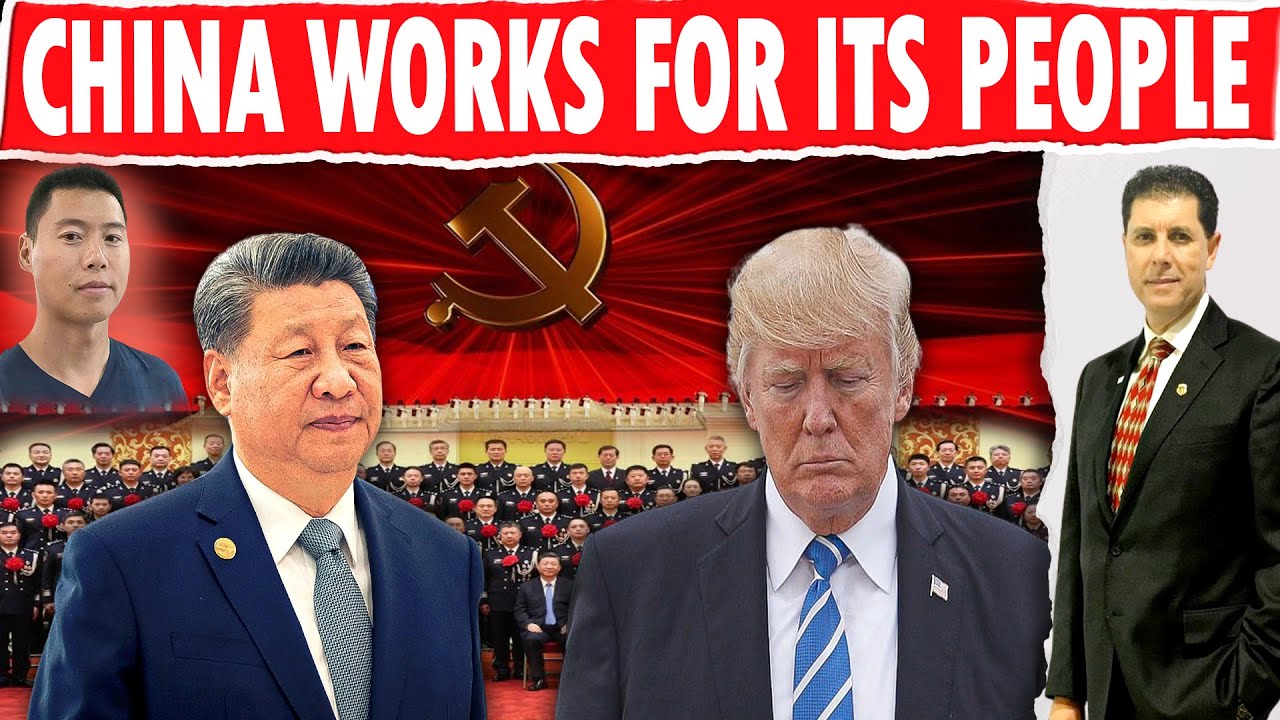
Carl Zha and David Oualaalou discuss China's military capabilities shown at its September parade, US chip sanctions and rare-earth controls, and Beijing's five-year plan priorities in AI, infrastructure, and energy. They examine how supply chain tensions and defense purchases across Asia reshape US-China competition.
Chapters
Hello everybody and welcome to Geopolitical Trends, where truth matters. I'm your host, Dr. Oualaalou, excited to be with you as always. I am waiting on Carl. He did log in, yes, so I'm assuming just matter of time. So, but before I'll do this, uh, before we get into this, by the time Carl gets here, I want to give you some updates regarding what's coming up for next week. For tomorrow, just be aware of my upcoming analysis that I'm going to be releasing for you tomorrow at 07:30. So it's a video regarding rare earth, regarding what's going on between the US and China. So I made an analysis for this. It was requested by an entity that asked me to do this for them. Second thing is on Monday, on the 27th, remember to join me for my conversation with, uh, Ina Tangen and Warwick Powell. It will be at 19:15 Central Standard Time. So, and on the 28th, I would be having a conversation with, uh, uh, James Bradley. So it would be right here at 09:30 on the 28th. So remember, Monday with Ina Tengen and, uh, uh, Warwick Powell, and on Tuesday the 28th would be with James Bradley. And for tomorrow, I will be, as I said, I will be releasing an analysis for you. So, so I'm still waiting on Carl here. Let me first of all say hi to our wonderful community while we're waiting for Carl to get here. So, Leanne, good to see you and good morning to you. Jill Wegg, good to see you. Uh, yeah, well, yeah, Carl is not here yet, so I'm gonna have to wait for him. Otherwise I can start something else. So American Citizens, good to see you. Here is Carl, I'm just seeing him logging in here. Willie Homan, as always. Bacon Baker, good to see you. Say It Like It Is, good to see you. Kevin Good to see you. And Kathy. Oh, here is— I think Carl will be here soon. So, uh, uh, FG, Don, Carl Leon, good to see you as always. And salam to you. So, Derek, good to see you as always from Burkina Faso. Wow, that's very, very interesting. So, all right, let me see. Yeah, Carl will be here soon. Uh, at least he is here. He's here. So, and we're going to get in into our conversation. Hi, Carl. Hi, Carl, can you hear me?
Yeah, I can hear you loud and clear.
There you are. How are you?
Good, how are you?
I didn't talk to you for 2 months, man.
Uh, well, I was, I was in China for 35 days.
I know, I know, we kind of schedules gets overlapped. I, uh, I was really looking forward to link up with you in China, but I just didn't work out this time. Maybe next time. So hopefully I'll be back there next year. Hope you had a good trip in China. So I'm glad.
Yeah, my son already want to go back because I took the last part of my China trip, I took my wife and kids.
Oh great.
And my 4-year-old is asking me, Daddy, why did we come from— why did we come back home from China? He said, I want to go back to China.
Well, I'm sure they will enjoy it. So, and I really look forward to next time when I go. I'll let you know, give you a heads up in case your schedule permits, and look for us to link up with there.
So, sure.
Anyway, very, very excited to have you as always, Carl. Uh, to the community, you don't need me to introduce Carl. Carl doesn't need an introduction. You know who Carl is. So, so, Carl, we're gonna cover up a lot of— a host of issues. And, and I want to get your take because I didn't talk to you for 2 months. So a lot, of course, a lot happened since last time we talked. But I want to start with one thing which I'm sure you were aware of, of course, with the, uh, the, the, the V-Day parade that took place on September 3rd. I was in Beijing, and I'm sure you saw the images. I'm sure you saw the, the display of discipline, weapons, and so forth. What is your over— what, what is your take on, on the message and the significance of that particular event?
Well, um, first of all, it was a very important date, uh, it was 80th anniversary for victory over fascism in Asia. Um, it's, it's actually personal to me as well because my dad was born on July 1945, uh, just one month before the Japanese surrender. I told the story many times on my podcast. Uh, on August, there's a widespread rumor in town that the Japanese troops are coming, so there was a big panic. Everybody is evacuating, and my mom— my dad was like barely a month old because he's a baby. So other people were urging my grandma to ditch my dad because the little baby will cry and draw attention to the people as they try to escape the Japanese advances. But thankfully, my, my grandma refused, you know, she, she held on to my dad. And it turned out, uh, it was sort of a false alarm because the Japanese troops were coming to town, but they were coming to town to board the train so they can head over to the next big city, Hangzhou, for the surrender ceremony. So that's— so this, the impact of World War II, the story is not unique to my family. This is many tens of millions of Chinese families experienced similar trauma. So to celebrate this 80th anniversary, the triumph is also to celebrate how far China has come. And another purpose, of course, is to serve a message to countries like United States that China will no longer be contained. Um, you know, they show many toys on this parade that has never been shown before. And, uh, you know, the Chinese way is they— if they display on public, that means, you know, they don't display their latest greatest most secret weapons on parade like that. If they, if they display in public, that means they, they already have in good quantities, um, at their disposal. And, and, you know, this is actually a big surprise to even many China watchers and then, you know, the, the open source intelligence pros, because they, they just simply did not expect China to make such a progress in such a short time. Uh, but I mean, it's inevitable. The manufacturing power has been shifted to China for so long now. Uh, China is the only economy in the world that can build on such scale. Um, recently after the parade, China has recently just launched their fifth generation fighter, stealth fighter, from an electronic electromagnetic catapult. From their latest aircraft carrier. Now, United States has not been able to do that. The USS Ford has electromagnetic catapult, but up to this day, USS Ford's electronic electromagnetic catapult has been unable to launch F-35s, right? Oh, I mean, you know, whether F-35 is a good plane, that's a whole—
that's another question.
But right now, they can't even launch F-35 from the electro— magnetic catapults of USS Ford, which is the most advanced nuclear, uh, carriers of United States. So in many ways, China are catching up and even surpassing United States in hard power. So this is to send a message to Washington, you know, don't mess with us, we can no longer be contained. And I think that message is well received because shortly after we have that Pentagon leak where they said, uh, maybe we should deprioritize in contain China and focus, focus on the West Hemisphere and Homeland Security. And by which they mean they're going to try to intimidate Venezuela and, and other Latin American countries closer at home. Um, so China is looking pretty unstoppable right now. I mean, that, that's what the parade has shown.
Well, I couldn't agree with you. Well, I couldn't agree more, Carl. I mean, as a matter of fact, I had to respond to a statement by a US ambassador, not to him directly, but to his post on X, when he said, oh, oh, what the Chinese have shown is nothing but thievery. In other words, they stole the tech. I said, no, no, no, no, no, no. Mr. Ambassador, that's not theft, that's innovation. And when I saw, for example, the DF-61 ICBMs, which I found out that they have a range of 15,000 kilometers, no other ICBMs, most of them are at 12,000 range. This one that China developed was about 15,000 kilometer range. And right there it became clear to me that's a message that China was sending.
I mean, China obviously stole the hyper, uh, the hypersonic missiles and the hypersonic gliders because, because China stole it. That's why United States don't have it anymore. You know, all these accusations about China stealing the technology is okay. Why, why, why don't you have it in here in US? I mean, that's a simple question, uh, but it's just copium. This is just copium. This is one area of production where United States is still looking to surpass, far surpass China in the copium production. Um, but it's, it's the economy of scale. China has 4 times the size of the population of United States. And, you know, the, the— in addition, the Wall Street has been pushing to offsource production overseas since 1970s, for the last 40 years. And, and the results is shown. And within the same last 40 years, China has been investing in its own population in terms of education, in terms of infrastructure, while US was squandering resources on waging wars abroad, uh, over the world. I mean, you can see, you can see the result in the kind of— I think that's why a lot of people get triggered when they see these, uh, videos of high-speed trains or infrastructures coming out of China, because they get angry. Because they get angry because they realize, yeah, this is what we could have done. I mean, the, the, the amount that China built, used to build its, uh, high-speed rail system, it still doesn't even come to match the amount U.S. spent on occupation of Iraq and Afghanistan. And, and of course, that, that money was— that was a feature, not a bug. That money was supposed to be recycled back in the pockets of our defense industry, of, of the arms march. And there, there's a lobby they sponsor, all the congressmen they have to pay off. Uh, it's all part of the game, and that's how the system is designed to work. And, and, you know, the, the corporate media in the West, they don't want people to, to, to cap— to arrive at that conclusion. Instead You know, it's much easier to say, oh, China, China is the reason we are doing poorly right now. Of course, that's bogus.
It is. It is bogus. And I saw there, I was there, Carl, and I saw how happy people are. And people are happy because they are content with where the political system is and what it's doing for them. This is, I've always argued this. I know I get some pushback in the US. It's kind of like, no, It's a fact. We're talking facts here. We're talking the facts that the government work for the welfare of its people. Simple as that. The policies they embarked on are meant to serve the people, not the elite within the government. So, so I saw with my own eyes over there, son. And I'm, uh, I just wanted to have your take on this because as I said, I didn't talk to you for a while and I want you to share with the community your input and insights about this parade and what it meant for the bigger picture.
Yeah, well, I mean, another thing I, uh, I noticed when through all my travel to China is how much more convenient it is for a Chinese person, a Chinese citizen or long-term resident of China. Um, you know, they— all they need is their phone. They can go travel anywhere. Um, everything super, super convenient. And their cities not only it's safe, but, uh, it's— there's accessible, uh, I mean, like, there's Metro with— with— if you arm with a map, the Chinese Amap, uh, app, you know, with, uh, with, uh, um, uh, or maybe a rideshare app, and, and you can, you can ride Metro anywhere. They even have those, um, rideshare bicycles and scooters everywhere that you can rent for practically nothing. And, and then, or, or you just call the taxi. I mean, with all these combinations, like, it makes a lot of the metro area completely accessible. And, uh, I— but it does take some onboarding for newcomers to China, tourists to China, because even me, you know, I, I, I thought I would have no problem because I speak Chinese.
Yeah.
Uh, but I, I still had to learn some tricks, you know, like when I went to buy, um Metro tickets, for example. I was still doing the old way. I was doing the way I was doing back in like 2010, uh, uh, you know, 2000, 2008 or something. I thought I was like hip. I was showing my wife, but you see, you just go to the automatic ticketing machine, you, you, you, you click on the rail map, you pick your destination, you show you how much it would cost, then you use your Alipay to Pay them on, and they will get out a plastic card, and then you can use it to swipe in. I was so proud of myself until I met like a local expat, my friend Daniel Dombrio from Chongqing. He's like, what are you doing, man? Here, give me your phone. Here, you have Alipay. Go to this mini map, click on it. It's set up for metro. You just need to select your city. Your current city is Chongqing. And now you will generate a QR code and you just hold up the QR code at the entrance of the, of the, the metro. You automatically scan you in, and when you go out, you scan the QR code again. You automatically calculate the fare. And yeah, the fare is like ridiculous, usually like 2 to 4 RMB. Yeah, it's like 50 cents, you know. Like, everything is super convenient, um, You know, like I, I said, I, I said before, like, uh, 2019, yeah, is why I know, and why I felt like, okay, China now is a place I wouldn't mind living. And yeah, I think 2025, I would say China is a place I want to live. I mean, it's super comfy. Like, my, my wife and kids loved it. Uh, my wife, you know, I took her to see my hometown, right? But she spent most of her time doing like shopping, and she loves grocery shopping. And it's just like, the price is cheaper than Bali, right? Like everything— I'm like, of course, because everything is made in China, you know. To Bali, you still have to pay the transportation costs and tariff and all that, but here you're getting straight from the source. Um, so yeah, and, and that's the thing. China, even though it's, um, you have the first world infrastructure Yeah, it still have very affordable prices. Like a lot of the hotels I stayed in, very nice hotels, uh, you know, they will cost arms and a leg anywhere else in Europe, in United States, but in China it's very, very affordable. Um, you know, a lot of people probably don't even realize this. I, I would highly recommend anybody to just, just travel to China, see for yourself.
Indeed, it's very, very important. Well, this leads us to the, uh, since you talked about the cost of tanks and support, we're gonna dive in into the, the ongoing, of course, trade war. And now we are moving into the rare earth elements. But I also wanted to get your take, uh, Carl, uh, whether the United States is cornered economically speaking.
Well, I mean, this is all US's own doing. All these holes that the US dug for itself. Let's remember, they started this trade war in the first Trump administration back in 2018. And, and, and so from that moment, China have been prepared for the worst case scenario, which is decoupling from the United States. China have been preparing for the last— yeah, what, last 7 years, right, for for this eventuality, whereas Donald Trump just think he will throw tariff and everybody will bend to his will. He does not account for the fact that China can push back. And one of the reason why is maybe because China has been so far very restrained on how, how they react to the U.S. sanctions, because China really do not want to escalate a trade war. They, they made it very clear from the beginning, trade war is bad for everybody all around. We do not want it happen. But United States really just keep on escalating, escalating. They take China's strategic restraint as a sign of weakness.
Weakness.
But in effect, what China is doing in the last 7 years is they're, they're slowly building out their capability to make them less reliant on United States for the eventual possibility that there might— could be a decoupling. So what happened today is now China is at the position to hit back, um, and this took a lot of people by surprise. They did not expect China to retaliate, which is mind-boggling to me. Like, how can you expect that you can just bully a country with 1.4 billion people and expect no response. And, and, and the, the— but, but, but, you know, there's a lot of— the problem is people in Washington, they, they don't really know what's, what's going in China. And now it's a lot of them believe their own propaganda. You know, I just saw Larry Ludlow on Fox News congratulate Scott Bessen on getting, supposedly getting the, the, uh, Chinese trade representative Li Shenggang fired. I mean, that's completely fake news. Like, Li Shenggang was, was, uh, he, he was replaced in his position as WTO envoy, but he is still— that's so he can focus to be the trade negotiator. It was not a He was, he was not fired, it was a promotion. And, and, but, but, but people in United States don't understand this, to the point that they would talk on— well, Fox News is watched by a lot of people. You have Larry Ludlow congratulating Scott Bessant on getting the Chinese negotiator fired, and Scott Bessant was all smile, he's like, oh yeah, yeah, it's a piece of cake. But I can just imagine his face when he goes back to negotiation across the table, it's like You know how— I mean, how out of— uh, I, I, I, I— it's kind of speechless. These are the people who make important decisions in Washington. Yes, they're so far out of the loop, they don't understand how the world is functioning. And, and they— and, and— but anyway, so China has been one of the reasons China, um, held held back from retaliation is because they understand, you know, trade war hurts everybody. So first they want to make sure their bases are covered. If the trade war escalates, they're going to be hurt less. So that's why that for the last 7 years they're doing the groundwork to, to, to insulate themselves. And what, what did US administration do? They've done nothing of that sort. Instead, that just, they just keep on pushing, pushing, pushing. And all for the false premise that they're gonna— they need to do whatever needs to hold back China's technological progress, especially in the form of AI, um, right? That's the whole logic of the chip sanction on China, is to hold back China's AI progress. But China found ways around, like Huawei founder said, look, okay, if we can't buy the latest GPUs, it's fine. We will just improve our software. We will, we will use more hardware. We'll use parallel processing. We, you know, we'll make it work. Uh, you know, like, this is the— we will use less bloatware. That's what Deepseek achieved. Deepseek achieved with more efficient software to get more juice out of existing, uh, you know, their limited computing, uh, capacity. And, you know, which is completely different from the Intel-Microsoft model, which says, oh, we're gonna make bloatware update every few years that will necessitate you to buy the latest Intel chips to support the more bloatware, right? I mean, that's Same, same, uh, sell tactics for this whole AI bubble right now in US. It's just saying, okay, you need to buy shit tons of GPUs, build a lot of data centers. That's how you're going to power your AI revolution. But the problem is, all for all the, the AI hype in United States, yeah, they actually produce very little so far. They, they all that, all this AI investment right now hasn't been justified by any actual return on the investment. And, you know, they— yet they demand continued investment, like $500 million for the Stargate project. Um, that's, that's the $500 million. That's crazy. That's crazy. This is crazy talk. I mean, like, why? And, and nobody— exactly, nobody that question why. They just say, oh, exactly, okay, we have to be China, right? That, that's a whole rationale right now to justify the AI bubble is we gotta beat— we gotta reach AGI before China, you know. As long as we get there first, we're gonna have, you know, Skynet and Terminators, and China will be screwed. That is their whole promise. Whereas in China, they're actually applying AI to useful stuff. Like robotics, advanced manufacturing. That's why China has been moving up in the value chain, like producing EVs, uh, you know, the, their, their latest EV factory, all fully automated, lights off, um, 24/7. This is how they improve their productivity and efficiency. So their, their AI investment is actually seeing immediate application. But here in, in U.S., it's still a lot of vaporware. I mean, it's, it's just people talking. You, you're gonna— you have people like literally standing at empty warehouse and say, oh, we're gonna re-industrialize America, okay, invest in us, right? And then you're like, okay, exactly what do you plan to make? Exactly. What do you— what do you do? I want to be like that consultant guy in the Office Space movie. Exactly. What do you do? But no, everything is a money game. Everything is just like to con investors to pour money into their— it's a big bubble, man. And this is what— after traveling to China, one thing I like to say is there's no real US-China competition. Competing what? I mean, competing in like quality of life, competing in like public infrastructure, competing in, in, uh, in education. What's US competing China with? Um, right now, all— only thing they're thinking in their mind is US got to maintain the hegemonic position in the world at at all costs, right? But what does that mean? What does that translate into average— for average American Joes in, you know, in Michigan or Ohio? Uh, that means very little. Most people just want jobs and, and go through their life. I travel, uh, throughout China this time, and most people in China, they're not bothered by the trade war. They're going through their own, their own business. You know, China has a continental-sized economy. They're, you know, export now comprise of single digit of their percentage of their GDP. So, so China is, is doing fine. China's economy is actually started, started to slowly recovering from their, uh, their, their real estate bubble, uh, bursting. Um, but U.S., man, you are— I don't know what— I don't know what's going on in the U.S. anymore because Now, only thing I have is this— I get is like every day we have these insane announcement coming from like Trump White House, or, uh, you know, the, the Scott Bessin making, making all these shrill threats. Like, the reason why they're being so aggressive verbally is because they're scared. They're really scared about what the Chinese new export control on rare earth will do. You know, you know, I see so many people, Washington officials say, oh look, look, this is not fair, man. Like, our, uh, initial sanction targeting China, that was meant to cripple the entire Chinese economy, but the rare earth is going to cripple the entire American manufacturing. So I reply, oh okay, I'm sorry, I, I, yeah, yeah, it's— you're right, man. You, you are just trying to stab China in the stomach, you know. And, and now they're going hard. It's so unfair, right? This is ridiculous. US has been waging a trade war on China since 2018, for 7 years. This is the first time China have responded in a forceful manner. And, and, you know, and it's over something that US don't have much control over because China has 90% of the rare earth refining capability. US is now trying to assign— sign deals everywhere with Australia, with Congo, to Malaysia, Ukraine, trying to source rare earth supply. Well, that is not a problem. The problem is not actually digging rare earth out of the earth crust. I mean, it— you can't— if you invest 4 to 5 years, you can get a mine going. The problem is what do you do once you dig them out of the earth? Currently, yeah, you still have to send them to China for processing. That's what happened to the mine that they, uh, harvest from the, uh, Mountain Pass mine in California. Up to April this month, this year, they were still sending them to China for processing. And because, because the liberation day of, of Trump, because the sudden jumping tariff, so they finally put a stop to that. But yeah, they're still gonna have a problem refining those rare earths because US simply don't have the refining capability. Um, you know, all the machines, tools that's required is Chinese. Human capital is also Chinese because for the last 40 years, US— top Chinese university, Tsinghua Fudan, they all offer a PhD program in rare earth refining, rare earth chemistry. Uh, they graduate tens of thousands of PhD each year to work in the rare earth industry, whereas that simply does not exist in US university because the whole industry does not exist anymore. So for 40 years, the people who previously, you know, back in the '70s, work in the rare earth industry, they're retired now. They don't have a— and you don't have a new incoming generation of people who have that, who learn that knowledge. Um, and, and so you have a huge human capital gap. That's not something you can fix anytime soon. That's not something you can fix with even within 5 years. So it's going to take— if everything goes perfectly to the plan, you know, maybe in 10 to 15 years you can get some sort of supply chain going. But what are you going to do within that 10 to 15 years, you know, where is your manufacturing, where's your car makers gonna get rare earth? Oh, by the way, China did not put an outright ban on rare earth. They just said, hey, everybody, we put export control. That means anybody who need rare earth needs to go send right application to the Chinese Commerce Ministry.
Yeah.
And say, sir, can I please have some rare earth supply for next 6 months? And guess what? If you're Rithyang Lockheed Martin and you say, oh, I need, sir, I need some rare earths so I can make some F-35s and, uh, Patriot missiles, I'm sorry, tough luck. That is a problem. See, that, that is why Scott Besson is being so shrill right now. Yeah, because they really do not have good answer for that.
Well, Scotty, Scotty, Scotty, Carl, he underestimated China. That is his problem. And for— by the way, what you mentioned earlier about Latnik congratulating Bessant, you know, I talked about that a month and a half ago, about the promotion of that individual to this position of the World Trade, uh, negotiator, because they want him to become the one negotiating with the United States. As a matter of fact, there is an ongoing now that's been between China and the US. They are holding a new round of economic talks that is between October 24th, which was yesterday, all the way to the 27th in Malaysia. So Scott Bessant, he realized he underestimated China, and that's why he's saying what he's saying, Carl.
And Scott, this is not the first time Scott Bessin—
no, no, it's not.
This goes all the way back to 1998 when Scott Bessin was working as the head of MicroStrategy, uh, for George Soros' Quantum Fund. Yeah, so that, that was when they, they started the Asian financial crisis by shorting, uh, uh, all these Asian currencies. And Scott Bessen at that time decided to go after the Hong Kong dollar and, and the Hong Kong stock market. This was 1998. He placed a big bet. He thought, okay, well, all these other Asian economies are already following— South Korea, Thailand, Indonesia, Malaysia. Uh, Hong Kong is easy. It's an easy target and that's easy money. And what he didn't count on was this was 1998. Hong Kong just had just changed to a new landlord, and China at that time said, okay, uh, yeah, China basically told the Hong Kong Monetary Authority, you, you, you do whatever you need to do to stabilize the Hong Kong dollar and Hong Kong stock market. So what the Hong Kong, uh, Monetary Authority did is they raised the interest rate, um, you know, for, for those people who are borrowing money to short the stock market or borrowing money to to, to speculate to like 3,000. They raise it 3,000%, and then they, they, they, they, um, they, they injected $15 billion directly into the, the big blue chip, uh, stocks in the Hong Kong stock market. And because of that, Scott Bessen lost his bet. I mean, they— Quantum Fund lost a lot of money. So this is personal for him. He has a big grudge against the Chinese government because he lost money. He lost money in 1998, uh, betting against the Hong Kong, Hong Kong currency and the Hong Kong stock market. And, and, and now he, you know, he thought he will get his, uh, you know, payback. But, but no, man, China today in 2025 is even more powerful than China in 1998. I mean It's, uh, it's, it's— I— he's gonna have to, you know, like, he's gonna have to go through that 5-step grieving process. Right now, right now they're still bouncing between denial and anger and back and forth, back and forth. But they're gonna have to reach, reach the bargaining stage. They have to reach the bargaining stage. Uh, so we'll have to wait and see how, uh, how they negotiate. Because right now what China is— well, according to supposedly leaks, what China is, uh, driving for is removal of all these trade sanctions, you know, if for China to resume the rare earth supply as before, which what Trump is asking, for China to resume purchasing soybean from United States. Because right now China is purchasing zero soybeans while the soybean harvest is rotting in the fields in United States while China is, is buying soybeans from countries like Argentina, while, while Trump is giving Argentina like $40 billion and bail them out. And, and, and, and the American farmers are literally— oh, they're pissed, they're pissed, Carl, in church because they have no, no, no options. So for China, their their, their demand is, okay, we can resume, we can revert back everything as it's before, but you gotta remove all those sanctions, then we can do business as well. Now that, that, that's an interesting proposal. I mean, that's a reasonable proposal. Yeah, we'll have to remain to be seen whether the US elite will, will take that.
Well, it will remain to be seen. Liking this video so far? Don't just be a watcher. Go ahead and hit the like, share, and subscribe button, and don't forget to tap the bell so you will not miss any of my videos or live streams. This way, you will be supporting a channel that stands for the truth and objective reporting. The choice is yours. Thanks for your support. Indeed, Carl, you brought up an interesting point regarding the time for China now to really gloves off, you know, because they can afford it now. No more being Mr. Nice. And this leads me to— wanted to get your take on the recent, the China Fourth Plenum that just took place in Beijing. It's a closed session between the leadership members of the Chinese government, and the purpose of it is to some sort of strategize or sort of start the plan for the next 5 years, economically speaking. What do you expect will come out of this specific behind closed doors meeting as far as the progress for China?
Well, I mean, China now is promoting their 5-year plan on Twitter. I just, I saw the video and they, they act, you know, the thing is, you know, you, you have a lot of the Western corporate media. Yeah, right. Wall Street Journal or New York Times, they always say according to inside sources, you know, this is what's going on in China. Now China, they actually publish what they're gonna do, you know, that they, they lay out their whole plan if you just bothered to read it. You know, they're, um, and one of the things they, um, they, they're gonna do is they are, they're aiming to raise their life expectancy to 80 years. I mean, for 80 years, right? I mean, currently they— Chinese life expectancy at birth already surpassed the United States, but they intend to keep pushing that up to, to, to, to 80 years. And this is give light to the, uh, claim that somehow China, you know, because, because the aging population, you know, China sees the older generation as a burden and all that. No, no, I mean that, you know, for China, the, the respect for elder is, is a real thing. And, and, and, and when they tell people that we intend to raise our— your make you live longer, you know, that, that will win them support. And, you know, that's not something that, that many, you know, Western leaders can even promise nowadays, you know. Even though they promise a lot, but they— because if they do, if they say something like that, you know, they will be asked, okay, well, what are you gonna— how, how you plan to do that? You're gonna make our medicines cheaper? You know, you're gonna make our medication cheaper? Make our, our, our, uh Uh, there will be a lot of questions that, that will be hard to answer. But what another thing is, uh, you know, China, they continue to invest in their infrastructure. I, I was traveling in Xinjiang, the, the far western region of China. I mean, I— it's very impressive. I was driving there, basically a lot of Xinjiang desert right now is getting paved over with solar panels. Or wind farms. Um, I, I see miles and miles of those solar panels, solar farms, and wind farms. And, uh, and I, I find out Xinjiang is actually one of the cheapest region for electricity in China. Um, so much so that even 10 years ago, before China banned crypto mining, uh, some American entrepreneur from Shanghai I was talking to He said they sent people to Xinjiang to try to set up a crypto mining operation there because electricity is so much cheaper there, because all these, uh, all these, uh, electricity generation, uh, was, was being set up in Xinjiang. And the, the— and we drove across the Taklamakan Desert, which is the world's second largest moving sand desert after Sahara. We drove right across it, um, And the way that China was able to build a highway across this desert is they, they build these, um, these grass, uh, straw grids on both sides of the road to fix the sand. And they, they did it for the entire length of the high, uh, highway. So, so the sand do not come and, and, and cover up the road. And, and that's, that's pretty impressive project.
Impressive.
And they're, they're, they're building even more project because I just saw they, uh, one of the things they, um, they move forward in planning is the Xinjiang-Tibet Railway. Um, so that, you know, that people are saying, oh yeah, yeah, but, but these, these railways offers no return on investment. Yeah, but these are strategic railways. It links very strategic border regions of China. But the fact that China could build it, it's also to, uh, it's a showcase of their technological capability. You know, they said could build a railway from Xinjiang to Tibet, then maybe they could build a railway to Pakistan or even Afghanistan, you know, through the Pamir, you know, very similar terrains. Yeah. And, and that's— and it's currently there is about 1, 2, 3. There are at least 3 concurrent railway projects that's been building toward Tibet right now. There's one railway building from Sichuan Province, uh, and one railway going from Yunnan Province building toward Tibet. And now they just started the building from the direction of Xinjiang. So by now, 2030, 2036, there's gonna be All of China, all connected, fully loop. Oh yeah, you can always loop through China with, with rails. And this is also important, like, people like, why, why China building rails when you have airplanes? Well, first of all, to fly today, the jet fuel is still— you still need petrol, you know, you still need, you still need a hydrocarbon to make the jet fuel. In China, all the trains are electrified now, and electricity— China can very cheaply generate this electricity from solar, from wind, from nuclear. China is doing the fastest nuclear buildout, so they're not putting all the one eggs in one, uh, all the eggs in one basket. They're, they're building solar, wind, nuclear but even more coal stations, but as a backup, um, you know, in the time when there's no sun or no wind. So China is— if you look at the power generation, Chinese electric generation has all— has been going up straight on line in the last 20 years, whereas American electricity generation is just a flat line. And that doesn't make a difference because all our civilization essentially run on energy. And if you look at how that is, you know, right now the all the proponent of AI bubble in United States talk about how we're, how we're going to build so many data centers to support this, uh, AI revolution. Well, guess what? This data center is going to need a lot of electricity. Where's that electricity coming from? Right now, instead of building more electricity generation in the United States, what they're doing is they're cannibalizing the electricity generated from the existing grid. So the direct result is electricity price has been going up in the United States for everybody.
That's true.
They are cannibalizing the electricity that was meant for civilian use, and this is why that's driving the electricity price stuff. And whereas China, they just build more, uh, you know, US, they call that overcapacity, you know, that's just called abundance. It's just called abundance. They're building more, uh, and so, so that's why, you know, I actually, I was surprised a lot of things in China was so affordable. It was more affordable than, than here in Bali. Um, that's a surprising thing. They— because, because they have the economy of scale. And, and another thing about technology, you know, the US keep on saying, oh, we— but we, we innovate, you know, whatever. At the end of the day is how you apply the technology. China right now is the best suited to be able to apply any new technology on an industrial scale. And, and, you know, this has been proven again and again. They— a lot of the technology like, um, uh, that was developed in United States, like solar panels, right? But it was only made possible for widespread adoption because Chinese production made the price calmed down 98%. And, and so that is— China is the future. I mean, and the future is now.
This is—
that's why I say there's no competition between US and China.
You're absolutely correct. I've been arguing that, Carlos, since my first trip. And I was like, you know, I was talking to my son and having a conversation. I said, do you know where the future is? They said no. I said, it's in China. And he didn't get it at first. Uh, we sit down and explain more and, and start to make sense to him. So I, I, I agree with you, uh, Carl, uh, regarding what you just stated. Uh, I want to shift to one other, uh, aspects of our conversation, and this one has to do with your location, of course, where you are in Indonesia. Indonesia recently, uh, signed, uh, some sort of an agreement to purchase Chinese J-10 fighter jets, uh, to my knowledge. And please correct me if I'm wrong, Carl. To my knowledge, uh, they signed up for about 42 fighter jets. Is that correct?
Yeah, yeah, yeah.
Okay, what does it mean on the bigger picture that now— because we all know Indonesia used to purchase the, the weapons from the US except the older model like the F-15s and, and the older stuff What does it mean that now you see, and of course Pakistan is purchasing the, uh, the Chinese weapons. You have some Middle Eastern countries are now taking an interest. You have Egypt that sent its defense minister to China, and now you have Indonesia purchasing.
Yeah.
Now what does it say?
Now, so before the Pakistan, uh, India conflict, conflict Indonesia already had a contract with France to buy the Rafale, which they did make a commitment to, to purchase, right? But now they're also buying J-10C just in case, just in case. We got all the everything covered. So Indonesia right now, they have a United Nation of all the, you know, all the weapons, of all the modern weapons of the world. Um, you know what, I mean, it's probably a logistic nightmare to keep, uh, all the parts, uh, supply and stuff. But on the other hand, Indonesia is not facing a, a acute geopolitical pressure at the moment, right? Indonesia is a war— it's ASEAN's largest country. It has the world's fourth largest population, right? Nobody is going to mess with Indonesia. So when Indonesia right now, when buys jets, like military jets, big budget items, it's more like a political, uh, overture, right? And the fact that for Indonesia to purchase the Chinese jets is to show that, hey, like, we want to be friends with everybody, but also, you know, we, we like to strengthen our ties with China because right now, uh, there's a lot of Chinese investment in Indonesia, particularly in the mining industry, um, because Indonesia stopped, uh, nickel export, um, a few years back because they, they didn't want to be a pure raw commodity exporter. They also want to build refining capabilities. So there's a lot of Chinese investment into nickel refining refineries in Indonesia. And, and, uh, and, and, and this to— and also when a country buys military hardware, it's a relationship-building exercise because that means they have to send people for training. Pilots need to be trained, and that's a long-term project, you know, like, like this build people-to-people exchange between the militaries. So, so this is— this also shows Indonesia, they're trying, um, you know, Indonesia's goals has always been not to be— well, back in 1955, Indonesia was, was, you know, one of the leaders of the Non-Aligned Movement, which was, okay, we don't want to be involved in the Cold War, right? We just a bunch of nations who are newly decolonized, we want to pursue their own, our own independent, uh, foreign policy for our own international interest. And that's what Indonesia is still doing today. And, and it's, it's showing that it's very— it's perfectly happy to work with China. And in the meantime, it still buys Rafale jets, Rafale jets from France, to, you know, to keep the Europeans happy. Because Indonesia want to keep everybody happy, you know. We can be friends with everyone. Friends to all, enemy to none. And but, but, but But this is important because this, you know, after— before, uh, Pakistan was a main customer for export, customer for J-10C.
Yeah.
Now after the Pakistan-India conflict, suddenly there's a lot of interest. You know, the Pakistani Air Force had been the best, uh, marketing team for J-10C. And you know, you have, you have, uh, many countries now showing, showing interest. So Indonesia is just, just one of the latest, and, uh, and it is a big deal because, uh, you know, it shows, it shows that, that Indonesian government is happy to work with China.
Yeah, well, actually, when I, uh, when I, uh, read about it, I was like, very, very interesting, uh, given also to me what, what went through my mind right away, Carl. Had to do with the rare earth elements. Because for example, if I am to think about here in the US for the F-35s, whatever, whatever fighter jets, we need to have access to rare earth. For the French, Rafale will be no exception either. China has an abundance of that. And that's what made me think, it's like, wait a minute, Indonesia is not going to do this just on the whim of its mind. They are thinking strategically. Only to find out, only to find out 2 days later, the White House reached out to Malaysia for rare earth. And I was like, okay, that confirms it to me. That just became clear.
Actually, that, that, that's a very good point. I mean, that, that, because, because China would not, you know, China is restricting rare earth itself, but not that they're not restricting J-10C export. So that thing makes perfect sense.
That's, that's how I read it, and it became clear to me. So this leads me to talk, since we talk about Rafael and all that, about the Europeans. I'm sure you're aware of the events that the foreign minister of Germany had to cancel his trip because there was nobody willing to meet with him in China. What's the deal with that?
Because if you look at the agenda, he wants to talk to China about Taiwan. It's like, for China, it's like, why? You know, Taiwan is none of your business. Why, why you, you're coming here to tell, tell us about Taiwan? This is not none of your business. And, and then he wants to tell China to about how to, you know, uh, uh, put pressure on Russia over Ukraine war. Again, that's not something China is interested in. So why, why you don't need to come, you know, we're not interested. You don't need to just stay home, stay home, save, save some jet fuels. And, and another thing is, uh, he also want to come to talk about the rare earth, uh, issue, um, because now, now Germany actually not only involving the rare earth issue but also in the semiconductor issue as well. Uh, this has to do with the Dutch government seizing of a Chinese company, Nexperia. Um, the Nexperia, they— their original company was going bankrupt in 2020, so it was bought out by a Chinese company, WinTech. And just around 2020, that's when the Chinese EV industry started to take off. So they found a new big market in China to market their semiconductors. And, and so, you know, the huge core part of production is going to China. But now, now that Nexperia became profitable, and, and the US government recently put out a rule, say any like Chinese company, if they, you know, any, any, um, any Chinese company that's even like maybe 50% owned by, by Chinese interest that works in the semiconductor sector will get sanctioned, that including Nexperia. So they informed the Dutch government, if they don't do anything about the Chinese ownership of Nexperia, they're going to be put on the US, um, secondary sanction list, entity list, which means— yeah, which— so for the Dutch, they felt they had to do this, but Did you think about at least consult the Chinese first? You know, like, at least go to China, say, look, you know, United States is holding a gun to our head. Yeah. And forcing us to do this. Can we work out a way that will satisfy, you know, both you and our needs? No, no, they didn't do that. They just went ahead and seized the company, kick out the Chinese CEO, and China said You know what, most of your revenues still come from our market. And not only that, the, the structure of the company is such that the Nexperia parent company, the Dutch company, they used to have, uh, they, they actually moved their semiconductor manufacturing to China. And so what happened when the Chinese company WinTech bought Nexperia in in, in Holland, Netherlands. They also bought their, um, Chinese operating branch, the, the manufacturing arm in China. So what happened is Nexperia is then responsible for design the chips, but the chip actual manufacturing is in China to supply the Chinese EV industry. And so now Chinese government is telling the, the manufacturing arm of Nexperia, you know what, You don't have to listen to your headquarters anymore. They— that was the illegal move. They seized the headquarters. You can remain a Chinese company in China manufacturing for the Chinese auto industry, you know, as long as you remain a Chinese company. So they're like, yeah, yeah, we're happy with that, we're happy making money. And so now it's been reported in the Financial Times as the Chinese employees of Nexperia going rogue you know, defying their orders from the Dutch headquarters. Look, man, you— this is a— who is going rogue? It's a Dutch government that's going rogue, right? So, so now what happened is Chinese government now put restrictions on Nexperia, uh, semiconductors. And the, the, the, the Nexperia headquarters that the Dutch government seized. That was only their design research development operation, you know, the only kind of design part. But the physical manufacturing of chips is still in China. And, and but because this fight, all the contract Nexperia signed to supply all the German automakers with their semiconductors, those orders are not getting fulfilled now because The, the Dutch headquarters cannot command their Chinese, the, the actual Chinese factories in China to, to make those parts and then send it to Germany. So this is why the German automaker is also panicking, because they're, they're, they only have weak supply of semiconductors at this point. Yeah. And, and so this is another reason that the German wants to talk to the Chinese. But for, for the Chinese, again, this is like Why are you talking to us? You know, you, you, you, you tell the Dutch government, you know, to do the right thing. You don't need to tell us what to do. Uh, so, so the problem with the Europeans, both the Dutch and Germany in this case, they still, they still have a weird, uh, mindset.
Yeah, that is weird.
Their mind— that is weird. Their mindset, their mindset still stuck in like last century.
Yeah, that's true.
That's true. Yeah, they still think they can dictate to, you know, China what to do, but the power, the different dynamic has shifted. They need to make that realization and make adjustment, right? But I, I think maybe one reason is China's rise is so rapid. Like the former Czech, uh, Prime Minister Havel said, you know, China's rise is so fast we didn't have time to be astonished. But yeah, a lot of these European leaders, they, um, another problem is they're very deathly afraid of losing the security guarantee from United States. So they were willing to do whatever Washington asked them to do. So right now, what Washington asked them to do, which is to bear the main burden of carrying on the proxy war in Ukraine against Russia, to cut themselves off from their main export market, which is China. This is economic suicide for, for European economy. This is why Germany is deindustrializing right now. The German industrialists are taking their plants, moving them to United States, right? Which benefits the US. Maybe that's a whole plan, you know, it's to cannibalizing all the European quote-unquote partners, uh, to bolster the US economy. But this is bad for Europe. And for whatever reason, the European leaders, none of them have a spine to say no, this is a bad deal for us.
They don't, Carl. They don't have the gut to stand up to the— at least to my knowledge. In China, there was great respect back then for Angela Merkel. You know, they were respecting Angela Merkel. But these new guys, the Olaf Scholz and the Mers and all, The likes of those clowns, they are no, and they are going down. I just spoke to my family, uh, uh, recently on where the conditions are in your UK. You look at the UK now, poverty is going up to the roof and they are not disclosing this truth. So, and this—
David, do you, do you still— we are both old enough to remember back in the Iraq War, France and Germany actually opposed opposed. Remember that? There was a time when, when, when, when, when German and, and French leader actually opposed the Iraq invasion. That's why George Bush have to do this coalition of willing, right, instead of the NATO alliance. But, but, but now they don't even have that kind of pushback anymore. Government, it's very sad.
And what I found out also, part of this tensions, that not the tensions, but the slow collapse in Europe economically tied to this rare earth. Because when I share this with the community, I tell the community always, look at the first 3 countries when it comes down to rare earth, and it gives you the idea right there what everything is. So, and that is one of the reasons why Europe is trying to reach the same thing the United States is doing now, because what we're going to be seeing We're going to be seeing a shift towards Africa, and it's for one reason and one reason only, is to compete with the Chinese, uh, given what China has built. I'll give an example for the community. This is the rail system that China built for Kenya. This is the massive amount of trade with African countries. So the US now wants to go and compete with the, with the Chinese.
But a lot, lot of people in America and in Europe, they still think most Africans live in mud huts, right? I mean, no, no, I don't even realize Nairobi is a bustling metropolis now, uh, but you know, a lot of the— there's a huge transformation in Africa.
That's true.
And a lot of it is because the Chinese investment in the infrastructure in the, in the region. But you know, they— but the, the, the The West call that the 'at what cost' detrap.
That's always the term from Washington, DC. Last thing I want to ask you, Carl, literally I need to get your take into this before I let you go, because I cannot miss the opportunity, because the community will want to hear your perspective on it. You heard about the swap of some BRICS countries are swapping the dollar for the yuan. What does it mean?
Yeah, I think, uh, it's come just a matter of time when yuan became the dominant trading currency, um, because, you know, China is already the largest trading nation in the world. There's, there's no point for using dollar when you're trading with China, and, and especially when You know, like, China has no interest to keep on accumulating dollar reserves when, you know, U.S. can seize your dollar asset anytime. And, and, and China, like I said many times before, China has no interest to necessarily replace U.S. dollar status as a world reserve currency because that would mean, um,, you know, China will have to export currency in exchange for goods to accept a large, uh, trade deficit. But, um, trade currency, yeah, that's, that's— I think that's the, that's the way that yuan is going to be increasingly internationalized as a trade, trade currency. It only makes sense if you're trading with China. You, you, you— it's much easier just to use, use RMB. Um, and you know, it's, uh, it's— I— that's— this is what I'm thinking every time I use Alipay in China, because every time it goes up to a certain amount, I think it's more than, uh, if I spend more than 500 RMB, uh, my— I get charged like a foreign transaction fee because I'm using a foreign bank card. Now if I have the RMB or have a Chinese bank account, that account you want. Yeah, but, uh, you know, I don't know.
Yeah, I, I do know, Carl, WeChat, they will charge that interest if you have over 100 yuan, uh, uh, transaction because of a foreign card. But if you have the card from China, I asked about it and they told me, yeah, if you have a bank here or you use the, uh, the card here in China, you won't be charged for that. So that was very, very interesting. But it was convenient. I'll give, I'll give, I'll give the Chinese credit for this, man. I didn't carry cash on me. That was, that was it. That was it. I just paid with Alipay everywhere I went.
So I was really worried that I'm going to run out of charge for my phone. But thankfully in China they have all these power banks for rent.
Yeah, everyone get this. That's true. They are thinking of everything. I truly, truly enjoy this. Well, Carl, I'll give you a last word, my friend, just for your thinking outside the box. Where do you see things between now and the end of the year? Just a short time frame.
Well, I mean, we can always expect Taco Tuesday.
Of course.
You know, Trump always chicken out. And we have, uh, you know, my sense is that most of the people in China, they're even they're kind of oblivious to, to this kind of trade war business going with United States because, you know, China is large enough to be a continental-sized economy. It, it, it's, its exposure is limited. And, and I, and my, my conclusion is still the Asian century is already here. Um, it's not— the Asian century is not in the future, it's already here with us today. And because when the tide lifts all boats, the rise of China is going to lift the boats of all the surrounding, uh, countries in the regions, um, you know, including, you know, countries like Indonesia, Malaysia, Vietnam, Laos, Thailand. Everybody will benefit, and, and a lot of development is, is coming, provided there's no war. But I think what possible— what there could be some positive some silver lining you will see is US, despite all its rhetorics about pivoting to China, containing China, in real terms there, there's a strategic pullback now from the first island chain to the second island chain, now maybe even third island chain. And now they're saying, okay, we got to focus our homeland and, and, and then, and then dominate the West Hemisphere. And, and I think, uh, that's— they're slowly, slowly come to the realization it may not be realistic to contain China, especially as time goes on, because every year goes by, the relative position of China versus United States grows stronger and stronger. Um, and as for, for Chinese economy, it, it's, it's, it's, uh, it's slowing down. There's some slowdown after I think 2019, I think that was the height of the real estate bubble. And so now it's slowly start to recover from that real estate crash. Because when I travel throughout China, I see a lot of domestic tourists everywhere, from Shanghai to Xinjiang, a lot of domestic tourism, a lot of Chinese with disposable income and time. Willing to spend, and that will help to continue to prop the Chinese economy. And I see— I, I think that the China, uh, the, the key for China right now is to complete its economic transition, which is, uh, it's transitioning to advanced manufacturing. And, uh, that, that it's— China is for already pretty far further along in that process. I think we can probably expect them to break through the bottleneck on semiconductor, advanced semiconductors in the next few years. And in that way, when that do happen, you know, there will be— the sky is the limit. I don't— there are not many fields right now Yeah, see, the thing is, both China and U.S. can coexist, can prosper together. Xi Jinping said that himself. The world is big enough for both U.S. and China. It's just that Washington elites need to come to that realization. I think over the next, next year or year and a half, they're gonna have to come to the bargaining phase of the 5-step grieving process. And they're gonna have eventually move on from, from anger, right? From denial, anger, and to, to at least to bargaining. And, and I think that is my, you know, that's my prediction.
Well, Carl, I can't thank you enough, man. The community is so excited always to have you here, and I know it's been 2 months since we last spoke, but again, we were in different parts of the world. So, uh, I have someone here who puts some super sticker. That's Noel. Thank you very much, Noel, for your super sticker, saying good morning, Dr. O, and good morning, Mr. Zak, greeting from Singapore. Thank you so much. And Say It Like It Is, I want to say thank you so much for your super sticker. Truly, truly appreciate you. And on behalf of the entire community, Carl, I say thank you so much for carving out time for us, and I look forward to seeing you next time. All right, you take care, my friend. All right, guys, hope you all enjoyed it. And, uh, you know, Carl is always nice to have here. You learn a lot from him. You know, someone I trust his judgment, I trust his knowledge. He's savvy enough, knowledgeable about what's going on, and I always look for that monthly conversation with him. So I hope you guys will enjoy it, and I look forward to seeing you, uh, on Monday for my conversation with Ina Tangan and Warwick Powell. But remember, tomorrow I will be releasing the analysis regarding US-China rare earth elements. It will be released at 07:30 in the morning, so make sure to check it out and leave me a comment. As always, remember, geopolitics impacts your daily life in more ways than one. Till next time, bye-bye.
More from David


Beyond the Single Actor: Why the Gulf Isn't Choosing Between the US and China


Iran, Iraq's Militias, and the Houthis Are Coordinating! This Changes Everything




Who Controls the Next Decade's Resources? Latin America and Africa's Geopolitical Crossroads

The Chokepoint Trap: How Washington's Stupidity Triggered a Cascade That Now Controls the World

Trump Spooked as IRGC Unveiled dual-use SLV, Deployed Ghadir Mini-Subs & Hinted at Tactical Nukes!
