China Ignores the US and Rolls out Red Carpet for Putin!!
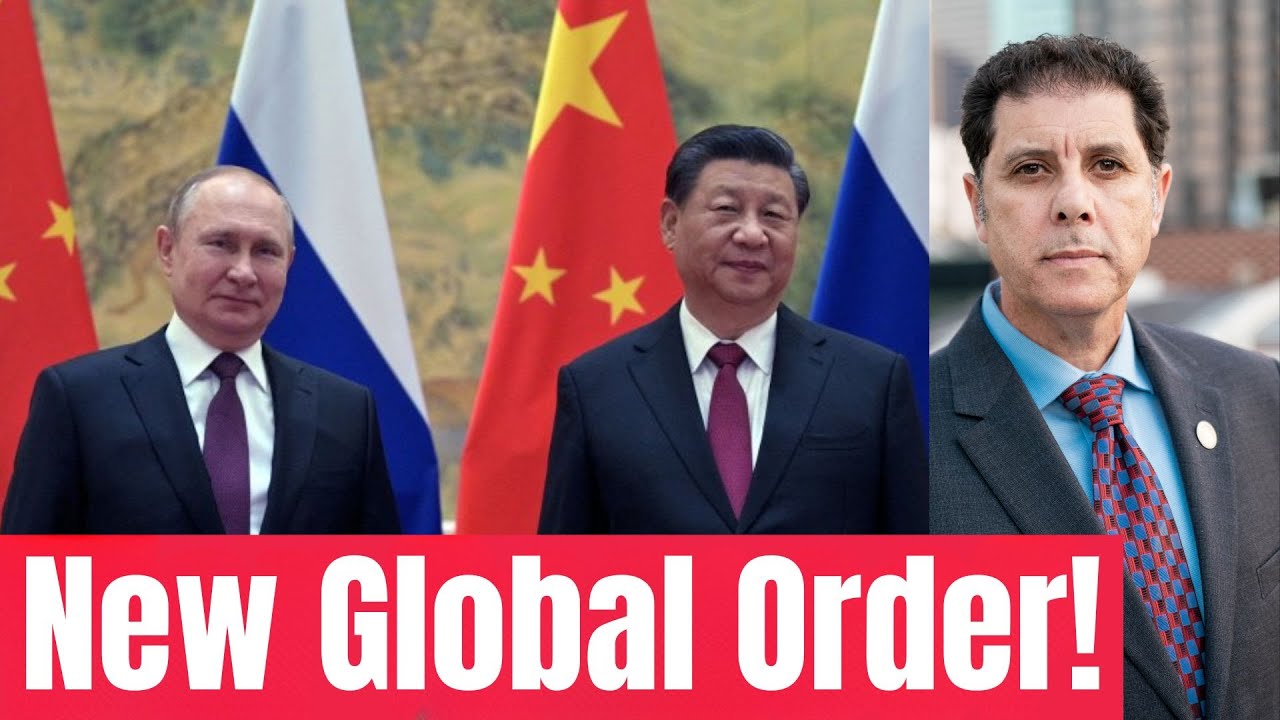
In this livestream-style commentary, the host examines Vladimir Putin’s state visit to China, arguing that it signals a decisive shift toward a multipolar world order driven by a deepening Russia‑China partnership. He frames the trip around three core questions: whether China is defying the United States, how the visit reflects the strength of bilateral ties, and what the broader geopolitical ramifications are. Drawing on his own book about Russia, he outlines the economic dimension (the Belt and Road Initiative, Euro‑Asia Economic Union, a projected $200 billion in Russia‑China trade, and new energy pipelines), the growing but informal military cooperation, and the strategic messaging to Washington. He connects these developments to ongoing conflicts – the Israel‑Hamas war, Iran’s potential involvement, the Ukraine stalemate, and the role of BRICS – and critiques U.S. foreign policy, sanctions, and credibility. The host also mentions upcoming guest Jayant Brahundari, thanks supporters, and answers live‑chat questions about Iran, Turkey, and potential escalations, emphasizing that the Russia‑China axis will continue to reshape global economics, security, and technology over the next decade.
Chapters
Hello everybody and welcome to Geopolitical Trends. So excited to be with you on this Tuesday. Interesting development, a Russian president Vladimir Putin is in China. Where do we start? Because the significance of it, given the what's going on on the global stage Uh, if you put this under the lenses of geopolitics, it's a big, big deal. Of course, in the West they are not talking much about it. Uh, this is why I decided to do this. Uh, I was aware of it yesterday and I made decision this morning to go ahead and do a live stream for you, given my familiarity. In addition to writing a book about, uh, Russia, but mainly I specifically, uh, addressed a chapter about the Russia-China, uh, Russia-China relations, rather. So, and I will be detailing some of that with you, but I'm going to provide you my own assessments about, uh, what is the significance of this trip. That's something you guys need to know, and this is the reason why I wanted to do it. Before I'll delve deeper, I'd like to extend my sincere thanks to you all for your continued support, uh, and please, if this is your first time, uh, landing here, please make sure to subscribe to the channel. I like to give a shout out to two new channel supporters. First person is Henry Q. Thank you very much for becoming a channel supporter, truly appreciate it. The second person is Dragon 52. Much once again appreciate your support. For now we stand at about 91 or so, so I have 9 to go to reach that 100. Members, so I can do specifically for the members only, I will do an exclusive Q&A session for you all. So, and again, if this is your first time, please make sure to subscribe. I would really appreciate it. I got only one announcements for you is I will have a guest. Yeah, some, some of you have asked me to reach out to this guest, and I did. He was kind enough to respond, and I will have him on the show Uh, not sure yet, either Thursday or Friday. I will let you know. His name is Jayant Brahundari. So let me put the link for you guys, or the banner for you to see. This is if you want to check out, uh, his background and so forth, which I will be talking to you about him. So he will be on the, uh, he will be here on the show for an interview within the next few days. So be on the lookout for that, and I will let you know. So, uh, what else do I need to share with you? That's about it. So as far as announcements, so, so let's get in into our topic. So, well, as I said, today I'm going to be talking about the significance of the Russian president trip to China. So, and the three questions, uh, this, since this falls within the realm of really what geopolitics is all about, so the next question we need to ask is Did China defy the US, or is China defying the US? We all know Chuck Schumer was just there. I did the live stream for you about it and condemning China for not standing with Israel and all that. So here it is: China rolls out the red carpet for Vladimir Putin, President Putin. Second question we need to ask is, what about the— is this like a significant or an indication of the strength of the bilateral, bilateral relations between China and Russia. And the third question is, we need to place this trip under the geopolitical lens, because if you don't, then you're missing the big picture as to how much this relationship is reshaping the global order as we speak. And this is what I intend to address with you, given again my familiarity, my publication of, of books and articles about this particular topic. Uh, but first I want to say thank you to Osiris once again. Truly appreciate you, Osiris, for your continued support. It means a lot, and I want you to know I don't take it for granted. Not all of you guys— I appreciate your support. Doesn't, doesn't matter how, doesn't matter on what capacity. Your support means a lot to me, and I want you to know how much I appreciate it. I don't take it for granted. No. All right, yeah, let's go, let's go, Dave Musso. You're what? Let's go, Dave. Yeah, let's go. Why not? All right, guys, let's, let's dive in. Hi, Lucio, good to see you as well. Hi, Athin Wu, good to see you. Uh, Taiwan Steel, good to see you. Pikachu 5M, good to see you. So let's, let's, let's dive in into this, guys, because there is a lot to cover. So if you are to put the Russia-China axis— if we can use the term axis for this, uh, uh, yeah, there are those in the West they call the Axis of Evil. How about we call it the Axis of Friendship, a term you can use or something to understand Because if we are to look at the China-Russia relations, this, you can use the term axis, is strengthening ties at a time of a multipolar global conflicts. You're looking at it from the Ukraine, the, the Arab-Israeli conflict, the tensions in the Middle East, Africa, Latin America, you name it. Pardon me. And this is where Even with this kind of circumstances, the Russian president made the trip to China. First of all, we need to know why he's there for. He's there to celebrate the 10th anniversary of the Belt and Road Initiative, the BRI, you know. But, but to me, it's more than just that. Yes, the Russian president is going there to celebrate with his friend President Xi But this is much more about the global landscape. Why? It's because it is my belief that both Russia and China are reshaping— that's why I use the term in, in, in, in the thumbnail— they are reshaping the global order as we know it. In other words, they are moving it from a unipolar to a multipolar. And like I said in on many occasions, The new multipolar system, it's not going to be based on ideology, but rather on economic blocks. And this is what's important for you to understand. And by the way, uh, President Putin will be meeting with President Xi tomorrow on Wednesday. And, and this, by the way, has been scheduled a month, a month ago. But again, when I talk about the PRI here and all that, we're gonna think about the big picture of all this. As I argued, like I, I said to you, I wrote a book about, uh, yeah, a book about Russia, but I specifically detailed in one chapter the relationship between China and Russia. So the possibility that I've been arguing— I argued before and I still argue today— the possibility of the China-Russia Alliance could provide and will provide both countries the right platform on which their cooperation on all fronts, including the military— there are some analysts who are saying, oh no, they just— the military dimensions might not work. Yes, it might not work if there is, for example, under some sort of treaty. Yeah, they don't have that. Uh, it might not work under some sort of an alliance. They don't have that. But the cooperation on a military level, it's moving up, it's increasing. And that's what I argued back then, that this military dimensions will be included in this cooperation. There is no certainty, as I argued a few years ago, about how the global geopolitical landscape might look like in the next decade. That was during the time when I wrote, uh, the Russia book, which was published in 2021, I believe. But what with certainty, however, one conclude that Russia and China relations will further— this is the keyword, guys— will further contribute to a precipitous shift in the global order and further decline of the US share of global power. We are not surprised. That shift in the global balance of power is already underway. You look at just how the West approached the Ukraine conflict by fomenting tensions. Uh, I've, I've read some articles from some authors, and I will post all this for you. Uh, they still— some of them are arguing that it was Russia's invasion of Ukraine. It's nonsense. Their arguments was some sort of missing the point as to what led to the military operations in the first place. So you can be, as an author, you can be arguing that it was a full invasion without putting it within the context of what led to it. This is what's important to understand. There is another dimension that you need for you guys to put into perspective as to the meaning of this trip. This trip also has to do with Euro-Asia Economic Union. Remember, it was only 3 days ago, I think, or it wasn't— not 3 days, 4, more than 5 days ago, on October 12th, the Russian president made the trip to Kyrgyzstan. What is the purpose of it? To ensure the, the, the strength of the relationship within Euroasia, because Euroasia is going to have the Belt and Road Initiative through it. Because that is one of, uh, Moscow's objective, is to ensure that there is harmony when it comes down to BRI initiative with EuroAsian Economic Union. Because this is where you see that integration, the project sponsored by both Moscow and other former Soviet republics. And this is why I believe tomorrow's meeting— and I'm not— this is not conclusive, of course, but my assumption is that tomorrow's meeting between the Russian president and the Chinese president, presidency, and President Putin It will be mainly about this economic aspects, but there is a reason to why that is. Of course, the, the geopolitical discussions will be part of the conversation as well. Mind you that just as I said earlier, Chuck Schumer was there a few days ago to push China towards condemning, for example, the Palestinian group, but also wanted China to condemn Russia, and China said no. I ain't gonna do that. We decided this is how we're gonna stay. We stay neutral when it comes down to those issues, because to China it would be very, very important to maintain that neutrality. It's so crucial, otherwise it will lose credibility. And China's not— I don't, I don't see China doing that one, uh, anytime. So this is the reason why You have to put this trip within the right context of it, from both economic and geopolitical dimension to that. So Euro-Asia, that's, as I said, it's very, very important. The two countries, both China and Russia, have forced an informal You will be— I agree with some analysts who use the term informal alliance. This is why, even though when I argued about the military dimension being part of that cooperation, I didn't say it was part of the alliance, because if it would be the case, then they will have to be under some form of treaty. But at the same time, there are— there's a lot going on into something like this before you enter into this. But for now, suffice it to say that it is an informal alliance. There are some analysts in the West that they say, well, this is mainly against the United States. You know, others are saying not necessarily, because this is a reaction to the changing global order. And of course, the, the— what's going on on the global stage with now the, uh, Israel-Hamas war and the tensions that's going to create in, in the Middle East with the US deploying aircraft carrier groups, you can just see where, uh, the significance rather of this trip and how we have to put it under the microscope of their global security dimension as well. But do not forget the economic aspects of it. So China looks at this, uh, uh, uh, in a way that is trying to balance It's gonna have to balance many directions here, or many ties, that is. One is its relations with Israel against its relations with Iran and Syria, because there is one major thing that is going on right now, and the question, that is, whether Iran's going to enter into the fight in, in, in Israel. And if it does, that's going to change the dynamics, uh, 180 degrees. We're talking about Iran getting here, getting involved. Not Iran directly, but it's going to be the group in support of Iran, which to me, uh, knowing what I know as far as how the Middle East and so forth operates, uh, yeah, uh, Israel might not, uh, uh, uh, stand a chance alone which means what? The US will have to intervene, the UK will have to intervene, and I won't even be surprised that the Germans and the French will get involved as well. So basically what it's going to become— West against others. Because when you think about the West, who do you think about? Uh, US, UK, France, Germany— that's about it. Australia, New Zealand, those are different, uh, or a separate area. Well, one thing that you need to understand is that as China trying to balance its, its ties with Israel and Syria and Iran, both countries, Russia and China, are strongly supporters of this country, mainly Iran and Syria. Because here's the thing, the Russian president Vladimir Putin already made a call to Israel, to Jordan, and to some Arab countries. It's already there. So why is— because trying to understand, uh, that Washington's approach, which is unilateral and unbalanced, it's tilting the balance towards Israel more so than towards fairness. I didn't say towards Palestine. Towards fairness. This is something we failed to project or play, and this is why many are asking now, what, can China step in to broker a deal between Israel and Palestine? It's, it's very complicated. Don't, don't, don't underestimate the complexity of the issue there. So now let me talk about the economic ties, because you need to understand what is going on right now economically speaking, and I will prove provide you all the link and so forth. Russia expects now that the trade with China, as of now, as at the time of this recording, believe it or not, to reach about $200 billion. And I have the link for all this to provide you so you can see it with your own, uh, uh, see it for yourself, that is. So, so Russian President Vladimir Putin predicts that the trade between his country Russia and China will rise to $200 billion by the end of this year, which is a major growth by about a third in comparison to 2022. There are reasons to this, and this one has to do— and I'm going to give you some numbers just to put this in perspective for you. So In comparison to 2022, the trade between Russia and China will increase by about 32%. That's where they convert that percentage into dollar value of about $200 billion. At the end of this year, trade between Russia and China rose 29.3%— I'm sorry, at the end of last year. 2022 reached about 29.3%, a record of $190.27 billion. This is where that projection of $200 billion will be. And of course, it increased, uh, far better than 2021 and far better than 2020. So you can just see. But there is an— there is a reason for all this one from an economic perspective. And that economic perspective has to do with, uh, Russia's increase of, uh, its natural resources. And this one has to do with the gas field that's going to be now feeding a pipeline to China. It will be coming from what's called Siberian Power. That means China will have more access to Russia's energy. And that's been talked about way back. This is nothing new, but the volume of all this, it's where that indication of, of why it's important for us to understand. On the Euro-Asia part, as I said, the Belt and Road Initiative, it's where it's going to make its landmark. This is why After the G20, recent G20 summit in India, the decision was made that, well, we're going to have to create an alternative to BRI by having India linked to Middle East and so forth, which you and I know, uh, it's nothing but hype. It's not going to work. Uh, and if ever we are to see this, we'll see it about a decade from now. Uh, it's because there is more involved Uh, there's more elements involved into that than just a memorandum of understanding that many of them have signed. This is where I see that difference between why, uh, the BRI, it's on one track, and this corridor that G20 has announced, uh, it's not amount to much. So there is another element that I want you to be aware of also. And this has to do with, uh, Hungary. It was a meeting between Vladimir Putin and, uh, the Prime Minister Orbán. Orbán maintained his support in his bilateral relations with Russia. No, he didn't waver away from that because despite what the West was trying to pressure Hungary from switching sides. Hungary said no, we're not going to do it because the welfare of our country, economically speaking— because they get a lot of energy from Russia— depends a lot on, on, uh, on, on, uh, having access to Russian energy. This is why Orbán disagreed with what the European, uh, are saying and decided, no, we're going to maintain our relationship with Russia whether the EU likes it or not. They just— they didn't care about that one. Let me move this one. And by the way, the Russian president received the honor guard in, in China when he arrived. That tells you the level of the relationship between Russia and China. That's basically, uh, uh, to me it's a clear message to Washington that no matter what you say, no matter what you do, no matter who you send in to China, we're not gonna waver. Beijing is not gonna waver from its policy as far as maintaining close relationship with Russia and moving together towards reshaping the global order. That's the way I read it. And we are seeing those changes taking place. They are taking place. You start with the financial aspects, and this is the reason why I do certain videos for you guys, is to help you see that big picture. You put one piece here, one piece here, one piece here, and it starts to make more sense to you. That is one of the reasons. In the case of Russia, China specifically, that has also the geopolitical dimension to it, which is basically to reshape the global order, try moving it from a unipolar into a multipolar. Because frankly, let's just say it the way it is, the world has enough, has enough of how for us our foreign policy has been a disaster for the last 30 years. I don't shy away from saying this. Yeah, it's my country, but oh, if my country does wrong, you know, I ain't gonna sugarcoat it, you know. And if whomever in my own country doesn't like it, but that's too bad. I'm not gonna be talking about what you want to hear or what sounds good. No, no, it's what's true. The truth, truth matters. The way I see it is that between Russia and China together, they are pushing the world in reshaping it into a multipolar system. Are they going to take over the world? I don't see that happening. What you're going to see is that the economic blocs are the ones going to be maintaining how this new global order is going to be moving forward. In other words, most countries will be thinking in terms of economics. That is what's going to be at the heart of it. Not about military buildup, not about— yes, of course you're going to have to have your military buildup because you need to have a strength, military strength that is, and that is just part of every structure of every government. But when you see how the US foreign policy is not well balanced, you see, for example, in this Arab-Israeli conflict that always been tilted towards one side, but not the other. The issue of fairness was never there. So how would you expect other countries to take your word for what you are saying as credible? The credibility is shattered. You all saw what happened, I'm assuming you do, with the recent trip of the Secretary of State to Egypt, which by the way, the Egyptian president, uh, uh, uh, uh, Abdel Fattah al-Sisi scolded Secretary of State. And that to me right there, it tells me where the, uh, where, where things are, how other countries are perceiving US leadership. Well, what leadership left when we don't have our credibility anymore? We lack that credibility way back when we start to, in case of international conflicts, not to play the role of an honest broker. For fairness and justice. Countries are not blind. They can see. And this is where this relationship, uh, the way I see it, this is where this relationship between Russia and China is moving into that direction. We already saw it right after the sanctions were applied on Russia from the financial perspective, how most countries at least by between the two countries, Russia and China, moved into the financial transactions. Then later on, we start to notice most country— more and more countries are getting involved into bilateral trade in their own currencies, bypassing the US dollar. Those are usually in the world of geopolitics, those are the signs for what lies ahead. Like I always say, this is not going to happen overnight, But that's how it starts. Within a decade, we're going to see a different layout on the global stage. Ukraine thing is already in the back burner anyway. As a matter of fact, the president, comedian Zelensky, asked that he wants to go visit Tel Aviv, and Israel told him, no, you don't need to come here. What for?, you know, useless anyway. Uh, of course, for the comedian, President Zelensky seeing the attention now has shifted from Ukraine all the way to— but on the other hand, even the Russian president mentioned it, that the peace proposal that China proposed was rejected by the West, which tells you right there it was never any intention of reaching a ceasefire or negotiating some, uh, uh, settlement to the Ukrainian conflict. That will be made in, in, in, in good faith. It was never there. And the— I read the proposal that China suggested as far as the Ukraine-Russia conflict. It made sense to me. I read all its clauses and so forth, but the US already rejected that one. So that tells me right there, there is no intention in wanting to resolve that issue. And that's problematic, you know. Oh, I saw one of you wrote this one here, uh, Dr. David should invite Carl on his show. FYI, I did reach out, I haven't heard back. So if you guys are, uh, uh, subscriber on his channel, whatever, let him know. I would love to have him here and we'll have a conversation. But there are certain guests you guys suggest to me, I do reach out, but I don't hear back. There's nothing I can do. I have to move on. So, but I did reach out. I, I saw this as I was looking through the chat box. Now, there is another element, and this one has to do with how I've assessed throughout the years, from way back when I was doing the research for my Russia book, right? This one right there, uh, I've been assessing through the research, of course, about, uh, at that time I used to call it rapprochement, even though I know a little bit about the history of Russia-China back then, the Soviet Union and, and, and the, and the China. It wasn't animosity back then, you know. But I even back then, I argued when I was doing the research, I argued that if, and this is the keyword, I said in some of my writings, it's still there on a record. So I said, if Russia and China are able to put their differences aside and think strategically, they will be able, they will be able to overcome this kind of differences that they had in the past. Then they will forge some sort of rapprochement. And this is exactly what I argued back then. Because I said that the debates at that time, and still till today, were swirling in the West about how China and Russia's rapprochement will— it's not may, but will— impact the global balance of power. Because that's what it's— that's what's at the heart of geopolitics, is the balance of power. Because if you get China and Russia joined Can you just imagine? I'll let you just use your, use your own imagination. Imagine then both Russia and China entered into some military alliance, bringing both their military capabilities. As we say in English here, sky is the limit. So, and what I argued back then is that some were concerned about the seriousness of this rapprochement. While others have suggested in the West that, oh, this is nothing but provisional. I didn't see it as provisional. I saw that the rapprochement will only strengthen over the years. I didn't know, of course, that it will be Ukraine conflict down the road, that the West will create one. What I knew for sure is that the geopolitical landscape will never stay the same within 2, 3, 4, 5, 5 years, things change. Uh, in, in the span of a decade, you'll see a different reality. And that's exactly what happened. So I was— I wasn't among those who said, well, this rapprochement of Russia-China is provisional. It's not. That's how I argue it back then, and I still stand by my position, because the way I looked at it, the China-Russia rapprochement to me personally indicated a much bigger shift that was looming on the horizon at that time. And I argued also that it will be inevitably will alter the global balance of power if both Moscow and Beijing play their strategic cards the right way. And they are, they are. How so, you may ask? It's simple. They're playing the financial card, one. They're playing the security card, second. And they're playing the strategic or the geopolitical card. And the geopolitical one, which part of what we are talking about here, it has to do with how to manage global conflict, including the Arab-Israeli conflict. But before that, you looked at the, uh, uh, uh, the deal that China was able to broker between Iran and Saudi Arabia. Our Chinese— also speaking of Saudi Arabia, uh, it has not been reported openly here in the West that when Secretary of State went to Saudi Arabia, the, uh, the Crown Prince MBS made the secretary wait for few hours And MBS didn't show up till the next morning. Once again, it's not a laughable matter, but it's the message of it. You just can start to see. And again, you don't have to be geopolitical analyst, you don't have to be this whatever, you know, to see the reality on the ground that messages are settled through this diplomatic approach or whatever you want to call it. You are making the Secretary of State of the United States sitting there for hours and waiting. Oh, I don't even need to show up till tomorrow morning. That's what MBS did. And I argued also about this rapprochement between Russia and China, is that this will most likely benefit China more so than it does Russia. Not to a degree, to a degree, because Russia needs China and China needs Russia also. This is why that win-win situation comes in, you know, and that's how I see it playing out economically speaking, financially speaking, and geopolitically speaking. And of course, uh, here in the West, when I see the West, you're looking at Berlin, you're looking at London, you're looking at Paris, you're looking at Washington. The argument has always been, well, we're going to have to look at Russia and China as revisionists or revisionist powers. Eh, not necessarily, you know, just because they are reshaping the global order, does it make them revisionists? Not necessarily. What makes us in this case? When you look at the UK, for example, or Germany or France, uh, which they all are on their way down, meaning that their role on the global stage is diminishing, is waning slowly, gradually, uh, because the arguments has always been in the West, well, they want to challenge the US primacy. Well, a global primacy has not been managed the right way. If I am to give you power and you misplace that power or you misuse that power, why should we trust you? It's the same thing. Because the reality that I've always argued is that, let's not pretend here, the United States has not contributed to this sort of stability in the global order. Because its failed foreign policies vis-à-vis the emergence of this rapprochement between China and Russia, because it was our failed policy that paved the way for this rapprochement to emerge. And now it's moving forward. It's too late. It is too late to go back for Washington now too. It's too late. That trust is gone. Even once the dust settles on this Ukraine conflict, do you ever think that the Russians will ever trust the Americans? Do you ever think the Chinese will ever trust the Americans? You know, we already thinking about the next conflict in Taiwan. Let's not, let's not, uh, uh, pretend that is not the case because we already sent in, uh, our envoy to Taiwan because the upcoming elections over there, and we wanted to make sure. So what makes one think that, oh yeah, once the dust settles, everything's going to go back to normal? It won't. It won't. I think because the position or the posture of Washington towards both Moscow and Beijing is what contributed, uh, to this growing— and I use the term partnership between Moscow and Beijing. So I'm not surprised. I am not surprised. And again, that was my same argument that I made a few years ago, because you will be looking at the expansion of this friendship, partnership, rapprochement, whatever, informal alliance, whatever term you want to use. You're going to have to look at it from 3 aspects. One is energy. Second in military, and third is technology. What makes you think now why Germany now all of a sudden wants to have ties with China vis-à-vis technology? The US is already livid about it, but the German government— when I say German government, I'm referring to, uh, uh, Olaf Scholz, because you have members inside the parliament in Germany that they are saying we done with the US, they pushing east. And the reason why I mentioned those three— energy, military, and technology— specifically when it comes down to energy is because China will benefit more from investing in energy infrastructure pipeline like the one in Siberia. And also, when you think about Siberia and the Arctic and so forth, you think about the untapped natural resources there that is worth about $35 trillion. You heard me correct, $35 trillion. I found the reference. I, I, I checked on this more than one source and confirmed that one. That's why I felt comfortable disclosing this one here. So, and that is where this idea of how, uh, this dynamics now between Russia and China is reshaping the global order, it's fair, complete. I, I feel comfortable saying this one here because China also— China is thinking in terms of economics. Of course it has to, because that's how you maintain the welfare of your country and the prosperity. Because China's concern— why this partnership, partnership with Russia means a lot— it's because China has to think about, uh, how to secure that the route where 30%, 30% of the, uh, of the goods that, that, that crossed especially when it comes out to energy, comes through Malacca Strait and Suez Canal to a degree. But China will have to ensure that nothing is blocked because it will impact China's economic. But I am sure China's already took some, uh, uh, measures to counter that one. This is why the Maldives elections presidential also send an indication And, and there was a reason why I put in the title China In, India Out. That was for a reason. The other aspects that I want you to understand in all this is that the idea of, uh, I have a phone call. I'm not gonna— I can't answer it. I can't answer this one here., the idea of to think in terms of the, the message that this trip is sending. Yes, we all know about the ICC, the International Criminal Court, which in my opinion lacks credibility, lacks legitimacy. I don't even, I don't even believe in because it's tilted one side only. That is the way I see it. Uh, uh, but China is not a member anyway. So, but when President Putin went to Kyrgyzstan despite the ICC, you know, at some point the world, especially the Western world, will have to come to grip with this reality of, uh, because, because to sustain, remember, there's one thing I need you to understand, and this is nothing new, and I did mention this before, how it worked after World War II Well, it was the establishment, especially the bankers behind closed doors. That's why always behind this conflict is the financial gain. That was always about the financial gain. So you create turmoil, conflict, you ruined the lives of civilian people, just average people, in order to make profit. You know, I don't know how those people can live with themselves. But I can't speak for them. They have their own conscience, they have their whatever. It's their life, it's not mine. But, but for me, as an analyst and as an observer, I am seeing the trend that's been trending since 1950s. One conflict, another one conflicts of another to push this towards this outcome. And at some point, some is going to have to push back. And this is exactly what we are witnessing there, uh, in a subtle way, diplomatically, geopolitically. Russia and China decided, hey, maybe it's time to work together to push this forward, you know. And this is where you see in the role, for example, of BRICS coming into the forefront, even though there are those here in the West that, the, the, uh, uh, diminishes The role of BRICS is nothing but hype. Yeah, it will remain hype if they don't move forward with concrete, uh, steps towards increasing bilateral— increasing trades among themselves, but also enlarging that alliance. But at the same time, you got elements inside BRICS that, to me personally, they shouldn't even be there from the get-go. And I let you a guess on that, which country I'm referring to here. So, so this is how I see these changes going on. The one thing that I am certain about is that both Russia and China taking stand on this Arab-Israeli conflict, because both countries, China and Russia, have argued on many occasions for the independence of Palestine as an independent state with representation at the UN. It was, of course, the US. Sometimes when there is a Security Council at the UN, uh, proposal, we tend to veto that at any cost. Even as we speak now, uh, uh, not, not nothing's going to go through the Security Council as far as resolution and so forth because we're going to most likely veto it. And that's one of the, the tools, uh, the 5 permanent members of the UN Security Council have. Then there is another element that I need to bring your attention to briefly here. It has to do with now the movement of US troops to the Middle East and how China and Russia is seeing this. It's very concerning. So we already decided to deploy I don't remember the number of the troops. The troops themselves have no idea what are they going there for. Is this has to do with the interest of the United States? No. So we're fighting on behalf of someone else? Well, you know, it's kind of— I'm sure they'll ask the common question. I didn't join the military to fight on behalf of another country. And all this has to do with, for example, if— this is a big if— if Iran gets involved into this conflict. Because if it does, we're talking about a different conversation here. You know, with Iran's capabilities, that's going to change the dynamics. This is why the Russian president reached out to all parties involved: Israel, Jordan, and some Arab countries, and Iran, by the way. They reached out to all of them. So I do, uh, the one thing I do know for, for fact is that this relationship between, uh, between, uh, China and Russia, it's, it's only going to grow. There is no going back. I, I just don't see that happening. There is no going back. It's because it's now or never. The world is already shifting towards a multipolar. Uh, when you hear the term unipolar, uh, from some analysts, it just doesn't make sense unless they are not coming to grip with the reality, or they just basically they don't understand, because that would be the only explanation to why, uh, any— anyone in a right mind, any, uh, decent analyst in a right mind will be arguing that, oh, still the world is unipolar. Yeah, yeah, don't, don't get me wrong, the US still play a role into that unipolarity, but it's going down. We moving into the multipolar, uh, aspects of it. Uh, I'm just trying to think in terms of what else that will make more sense for you to understand about this, uh, uh, and, and of course Uh, this all comes on the heels of the recent trip by Chuck Schumer, as I mentioned to you earlier, which to me was the humiliation. It really was humiliation. Uh, humiliating himself, humiliating our country. But what they don't care— they don't care about how the country, our country, is perceived on the global stage. Because that era of clear conscience doesn't exist anymore in Washington. You know, you have amateurs and you have corrupted leaders, straightforward, including the president, which I don't shy away from. I'll tell him to his face. It's reality, you know. And also because what contributed to that is we don't have— nobody's being held accountable. This is why we're seeing the massive amount of corruption in, in our system here, and it's only getting worse. Well, all right guys, that's all I have to share with you. I'm gonna look over for a question or two. Uh, once again, please, if this is your first time, please make sure to subscribe and hit the like button because that's the only way, uh, for my kind of videos to, to have a large exposure. It's That's the only way I can do it. I don't know how else to, uh, without your support. And, and please share this with your friends and whomever you know and, and ask them to subscribe to this channel. So let me see if there is any question. Oh, I see one right here in front of me. Uh, I see question. If Israel went too far into Gaza, I am afraid Iran will intervene. Otherwise, Iran will lose its reputation. Conversation in the Muslim world. If Iran got dragged into the conflict, will China and Russia go in? That is an interesting, uh, which means basically, to summarize all this, I think we'll basically, we're looking at enlarging the conflict beyond the borders of, uh, of Israel and Palestine. This is the same arguments I have been making, and I still make it regarding Taiwan. If there is a conflict there, To those who may think, well, it's going to be limited to the geographical areas, they are mistaken. You know, I can just see the role of North Korea into this. I can just see the role of Russia into this. I can even see the role of Russia— of Iran into this to a degree, but Iran is going to be not openly, but rather through some, some its affiliate groups and so forth. The same arguments could be made into this. First of all, Iran will have to— I'm sorry, Israel will have to think twice, and here is why. Israel is committing about 460,000 troops to go in. Into— you know how many Iran is committing? 2.1 million. And I don't think so, after the statements that I heard from the foreign minister, uh, uh, Abdul-Nahyan of Iran. That Iran stated, and I paraphrase here, that we'll be ready to go in if ever Israel crossed into Gaza. And yes, if Iran doesn't act based on what they said, that credibility will be gone. But the Muslim world or the Arab world is already sort of just the talk more than the act. There's one thing about the Arab world that all what Jordan is doing now, Jordan is going to have the summit of the president? Who gives a damn about the president of the United States going there for summit? What are you doing this for? It's because for the survival of the monarchy. I, I lost respect for that guy, King Abdullah. You know, he was educated here in the US, by the way, and he was trained in, uh, in, in, in Midhurst in England, or Hurst rather. I'm sorry, Hurst. Uh, yeah, it's his survival of the monarchy. You know, because now we start to hear the demonstrators in Jordan saying, heck with the, with the kingdom, heck with the Hashemite, whatever. Because the tribes in Jordan now saying, we want to cut off all whatever, whatever ties, we want to cut all that out. So Arabs, they tend to talk more than they can act. And this is why the Egyptian president scolded the Secretary of State, and rightly so. So Israel's going to have to think twice. Israel is under the impression that yes, it has military capabilities and so forth, but the Middle East is not what it was 30 years ago. It's no different than what China is today versus what it was 30 years ago. And Israel doesn't seem to grasp that reality, and I can see why. The reason why? Because it counts on the US, which means we will be dragged into a conflict, another one in the Middle East. And you all know when conflicts in the Middle East start, how long it takes for them to be resolved. So I don't see Israel, you know, despite the hypes, they're gonna think twice. And if they do, it's gonna be on a limited basis. That's so far how I see it. Playing out. And I could be wrong, of course. That is part of why having a conversation, uh, uh, into all this is very, very important. Uh, I see question from Francis Tango. Question: Is it true that the Turk warships are heading towards Gaza in response to US warship? I am not aware of this, uh, so I can confirm something I am not aware of. And second, I don't see why, uh, Turkey will do that. If Turkey does anything, it will be for humanitarian support, because they do support the Palestinian cause. But remember also, Erdoğan, president of Turkey, is not doing it for the goodness of his heart. It's also because of domestic politics. Most the Arabs world— the Arab world and Muslim world does it. So it's a reality. We can't shy away from it. But in response to the US, I don't know. I— and I can't— I can— I'll check on it. I'll take a look, and, and if I find something, I'll post it in the community for you guys. So I look for one more question, uh, uh, and I'll go from there. And I will be, by the way, keeping an eye on the, uh, uh, communiqué or the press release— I'm sorry, press release, not a communique, press release that will be issued tomorrow after the meeting of the Russian president Vladimir Putin and the Chinese president, President Xi. Uh, because to me, anytime— and I like to read those, uh, press releases because it gives me an idea as to, uh, not only what has been discussed, if it's not sensitive of course, but it's an idea of where things are moving forward. Okay, uh, that's it. I don't see any other question, guys, so I'm gonna go sign off here and work on some other stuff for the rest of the week for you guys. And please, I would greatly appreciate it, uh, if you could, uh, uh, just spread the word about the channel. And if this is your first time, please make sure to hit that like button. As always, remember, geopolitics impacts your daily life in more ways than one. Till next time, bye-bye.
More from David


Beyond the Single Actor: Why the Gulf Isn't Choosing Between the US and China


Iran, Iraq's Militias, and the Houthis Are Coordinating! This Changes Everything




Who Controls the Next Decade's Resources? Latin America and Africa's Geopolitical Crossroads

The Chokepoint Trap: How Washington's Stupidity Triggered a Cascade That Now Controls the World

Trump Spooked as IRGC Unveiled dual-use SLV, Deployed Ghadir Mini-Subs & Hinted at Tactical Nukes!
