China Ignores the US & Deepens its Ties with Russia!!
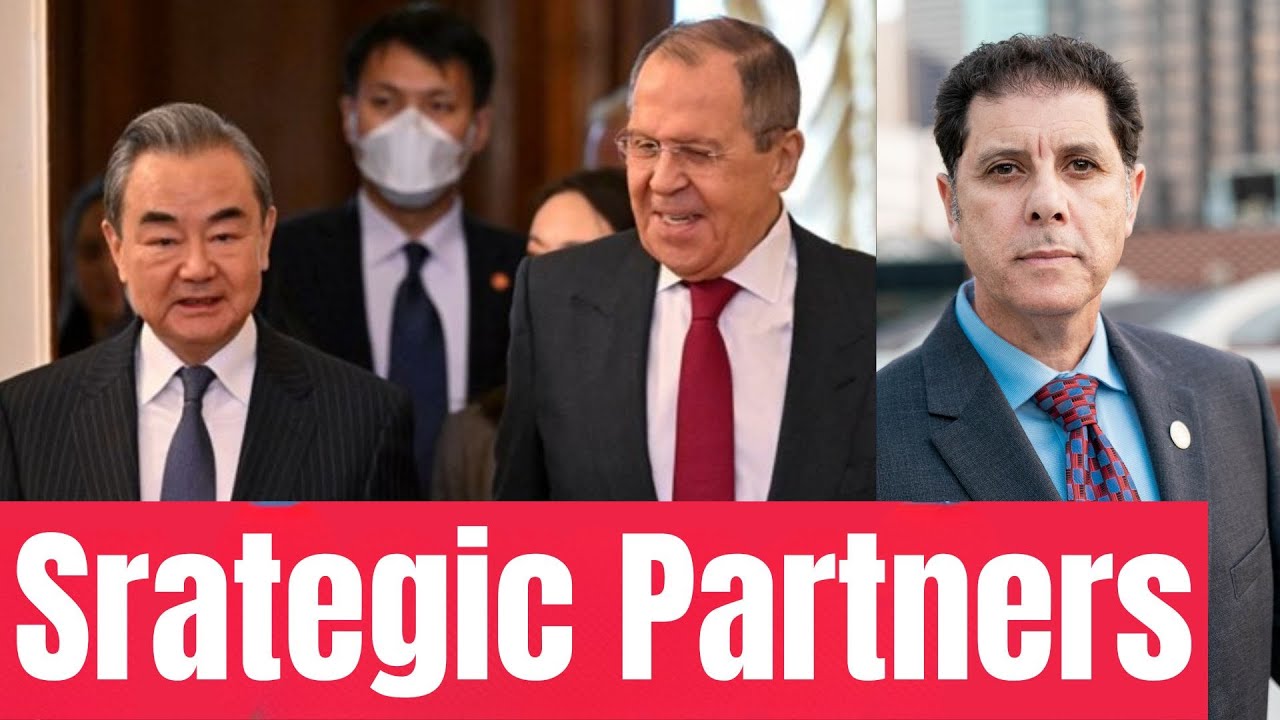
David Oualaalus traces how China and Russia have moved from Cold War enemies to security partners, driven by energy deals, military cooperation, and technology sharing. Wang Yi's recent visit to Moscow signals China's strategy to stay neutral on Ukraine while building a de facto alliance that could reshape global power away from the US.
Chapters
So excited to be with you. Very, very exciting topic. I am going to provide you my own assessment, my own analysis, given my familiarity with both countries. One, Russia, of course, and the other one is China. I wrote a book, it's right there. I wrote a book about Russia, so I kind of know the ins and ins and outs as far as the relationship. I am in the process of writing a book about China, so it makes perfect sense. And that's why I was excited about coming on the air and sharing my insights with you, because you need to understand what this visit entails and why and how it's gonna— it's really contributing to the shifting of the global order, and it's gonna go in a direction that I am not surprised because I spoke about it 5 years ago., and I am seeing now the results of what I talked about back then. So, but before I'll do this, like I always do, and I know there are some already upset that I, I take too long in the introduction— 3 minutes, 4 minutes— couldn't be damn patient, you know. That's something they must have some internal issues they need to deal with. That's straightforward, because if you can show gratitude then, man, what are you, what are you all about? And to me, I will never ever waver away from showing my gratitude to all of you. So that just, that's how I operate. So, so I thank all of you. I thank for your continued support. If this is your first time landing on this channel, please hit that like button and subscribe. I would really appreciate it. So I want to give a shout out to a new channel supporters by the name Salt Thrower, I like the screen name. Thank you so much for becoming a channel supporter. I, I truly appreciate it. So, um, let me just do brief announcements for you here, uh, for the Health Channel. For those who might have missed, uh, my conversation yesterday with Dr. Stewart, it was a very, very interesting topic. It's, uh, it was about, uh Anxiety and stress. So I'm gonna share it with you guys if you want to look it up later on. Uh, a lot to learn about. So that's the whole reason for why I do what I do, is because I wanted to share knowledge with you, and I am very grateful to Dr. Stewart for that. So also, I want to remind you about tomorrow, my conversation with Scott Ritter, and it has to do with whether the US can Two Friend Wars. You know, I've known Scott, we know each other. So tomorrow, uh, I think it's scheduled— it's not I think, it is scheduled for 12:00 Central Standard Time, 13:00 Eastern Standard Time. So I look forward to having you there tomorrow. So then also I want to share with you the link to the course. As a matter of fact, today, this evening At 1900 hours, I will be doing the first chapter of the government course. It's not too late to sign up if you are interested and wanted to learn about the ins and outs of how the government works. So, all right, let's, uh, let's talk about our topic today. So today we're talking about— let me share some, uh, pics, pictures. Right, here we go, finally. Uh, so this is what I'm going to be talking about. So the foreign minister, uh, Mr. Wang Yi, is visiting Russia. Now the conversation is going to be of a strategic nature. What you need to ask yourself is the timing of it, okay? At this time, you take two, two, uh, uh, two topics in mind while you're thinking about this: the recent trip of the North Korean, uh, uh, leader to Russia, and the second one is the upcoming visit of, uh, the Russian president to China. Nothing confirmed yet, but this is why I said the timing is very, very interesting. Then the third question we need to ask ourselves is what is the geopolitical message? And there is a message here that both Russia and China are sending. And when I share with you my own analysis, again, you will see why. So, so this is why we are now thinking in terms of, uh, this pivotal, uh, let me move this picture here. Uh, show you another one for Mr. Wang Yi. Uh, so when we think about the idea of, uh, uh, the idea of this geopolitical developments, so of course the Foreign Minister Wang Yi, that is, he is going to confirm in his bilateral talk with, uh, his counterpart, uh, Sergey Lavrov, that China stands, still maintain its stance, which is neutrality regarding the Ukraine conflict. In other words, they don't— they are not going to change that stance because the United States wants the Chinese to condemn Russia, and they say, you know, we're not going to do it because we're staying neutral on this. So, but at the same time, this will also pave the way for the closer relationship between Russia and China. I've been seeing it coming for the last literally a decade or so. Why? Because the certain type of our foreign policy we were embarking on, on that, we're pushing both Russia and China closer. Of course, we can't forget the history of Russia-China, and I am going to talk to you about that one. But just to provide you an introduction as to understanding, uh, where this, for example, this historical strides— okay, this historical strides, rather, you know, uh, we also need to think in terms of, for example, not only China-Russia relations, but also you think about China's, the Middle East relations. You all know the deal that China brokered between arch enemies Saudi Arabia and Iran that we couldn't, and we never were interested in anyway because we wanted the conflict to maintain between those two arch enemies in the Middle East. China was able to break that through and they were able to bring both parties to the negotiating table and agree on reestablishing their diplomatic ties. As a matter of fact, uh, uh, Iran sent its ambassador to, uh, Saudi Arabia, and Saudis did the same. And they're going to enter into some economic ventures. So whoever thought— and China was able to break that, that rule. So, but here is what is the interesting thing that I want you to get out of this, you know. This, because you have now to think in terms of the strategic security consultation or conversation that's going to take And I can only imagine what the conversation is going to be. I would love to be sitting in that room with both of them, uh, just to be part of that conversation. Because here is why, guys, because whatever they're going to talk about is what's going to shape the global security moving forward. I just can't see the writing on the wall. And again, this is based on my own research, so And this is where you're seeing now the elevation of that relationship to another level, another stage, but is also a reflection of what's going on on the global stage. Because remember, in geopolitics, there is always the events that's taking place, but also the reaction to those global events. This is why you have, for example, some foreign ministers— I'm not going to say names— like Annalena Baerbock in Germany You know, the lady is clueless about what global affairs are all about. You know, I'm sure you guys heard she just called the presidency a dictator. Well, dictator or not, it's irrelevant for even saying something like this, let alone the— she kind of broke the diplomatic protocol. Yeah, you don't say something like coming out of a foreign minister. Our, our, uh, sort of demented president said the same, you know. What for that kind of language in a diplomatic setting? It's not appropriate, you know, whether you are a head of state or a foreign minister or whomever. Now, average citizen, yeah, you can say it. Oh, Xi is dictator, or Russian Vladimir Putin is dictator, or Joe Biden is a dictator, whatever, you know. Citizens, hey, That's part of it. But when you are representing a state, you carry yourself diplomatically, and diplom— diplomacy has a protocol to it. So, so, and this is why I, I, I'd be curious about the consultations, uh, the security conversation, that is. And this, guys, you need to understand, that is paving the way for when the Russian president comes to China, that's to finalize the deals. Whatever this deal is going to be, mainly on the security aspects. This is how I, I, I see it moving forward. But it behooves us to know a little bit about history here, because you can't, uh, move forward in the talking about Russia and China. Even when I wrote my, uh, my Russia book, uh, which by the way, let me share a link with you here, guys, in case you are interested in tracking where that book is. So the idea of, uh, uh, just understanding where this is going, it kind of makes perfect sense because you need to have an understanding, like I always say, of the history. History will give you an idea of where things are. You will not— you know, mark my word on it, guys— you will not have a you will not fully sort of immerse into understanding the, the development of geopolitical events without understanding the historical context of it. And this is why I keep doing just snippets of the history to put it in perspective for you. So that's the whole reason for why I, I do that one. So, so let's talk about a little bit of history here, and, uh, then I'll move into my own analysis, uh, about where I see the relation. So I'm going to start with the map. I'm going to leave it on here This is, uh, uh, to highlight China and, uh, the Russia, the Russian Federation and so forth. But so, so you have to go back a little bit. Where do you go back, or when, as to the time frame you go back to? Well, you go back to the establishment of the, uh, the, the PRC in October 1949, the People's Republic of China in 1949. So the Chinese ruling Communist Party at that time moved quickly to establish official ties with the, uh, the, uh, uh, the Soviet Union at that time. So what you have is that through, throughout the early '50s, you know, and that's usually when the Cold War start to reshape the global order. So the '50s, the two countries, meaning China and, uh, uh, currently Russian Federation or Soviet Union back then, started to enjoy strong ties. And this was founded, by the way, on Sino-Soviet Treaty of Friendship. I think I talked about it in my book when I wrote it. So, and this was a bilateral treaty which established a security alliance. So here is the key. This is why it's important to understand what happened at the beginning of this relationship. The conversation over security has always been there, except now it's going to be materialized to the next level. This is why the foreign minister of China, Wang Yi, is going to focus the conversation on the security consultations. That's what's important about it. So, but of course, back then it was the, the bilateral treaty that were established on security but also facilitated significant economic, military, and technological aid and cooperation. That is what's very important. So of course, we can't forget what took place in the '50s when the relationship soured between the two countries, the Soviet Union at the time and, and China, and was over. That's when an ideological rift emerged between Beijing and Moscow. And this was none other after than, uh, this one here. I'm going to show you, uh, sorry, yeah, right there. It was none other than after Nikita Khrushchev, uh, so assumed the leadership of the Soviet Union back then. So what happened after that? The escalation of tensions resulted in the Sino-Soviet split. So which saw the two countries engage in open hostility. Yes, it did happen, including— and I looked into the archives, guys, and I found one picture that I need to share with you, and it goes back to that time of 1969. Yeah, that's when it was. So military clash in, uh, uh, uh, it's called the, uh, Damanski or Zimbabue, Zimbabue Islands. I even found, uh, an image of the Zimbabue Island currently. So this is the area as to what— where the, uh, fighting took place. So not a fighting, but almost escalated to a full-scale war. So which it did, it's escalated to a war at that time. So the rift between the two countries, China and Russia, at that time was so severe that the Chinese leader Mao Zedong— yeah, at that time it was Mao Zedong that pursued sort of a normalization of relations with this, with, with, with the United States at that time to balance out the perceived Soviet threat, because China at that time had to think about its own interest and security. Here is what's happening now. Move forward 60, 70 years later, the tables are turning around. Now you have Chinese and the Russians talking about security, which the US will have to be concerned about. This is what's interesting. That's why I always use the term, guys— if I'm sure you picked on it, maybe, maybe not— I use always the term geopolitical tables. That is the reason why I say that, because now the chairs on that— at that table are being rearranged, whether the West, the US likes it or not. So, and this is what's, what's very, very important. I'm gonna share, uh, a link with you, or I'll, I'll put it for you guys later in the description. Let's just move on, uh, with all this one here. So So this is what's important to understand about this relationship. So for the fact that, and the Chinese Foreign Ministry, and I read the statement, they already stated this publicly, that what's at the core of this conversation is going to be security consultations. It gives me the impression and the thinking that it will not be far-fetched to say right now that China and Russia are paving the way for a security alliance moving forward. And I can just see adding two other elements, North Korea and Iran. There are even some who might even argue as far as adding another country in Latin America. Can anybody tell me which country is that? I just want to pick your brain on that. Any kind— which country do you— oh, Boon, let me say thank you, Boon. Thank you, thank you, thank you for your continued support. It means a lot, it means a lot to me, Boon. I want you to know this, and I don't take it for granted. You're right, Dr. O put in the geo— in geopolitics. Indeed, indeed. Thank you so much, Boon. Appreciate it. Uh, no, it's not a— it's not a Brazil, Eternal. It's another country. Good try though. It's good try. It's another country. Can anybody guess which one is that? Uh, you're absolutely correct. You absolutely correct. Uh, Venezuela drew that. And yeah, some of you answered that indeed. So it was Venezuela. So why am I saying this? I'm saying this just to understand that if Russia and China made— make the decision to move forward because remember, a military alliance, you can't just say it verbally or orally, you know, they are sort of a treaty. This is what happened back in the, uh, '50s. So it's something that existed, except that when they had the— when the conflict emerged, that, that treaty ceased to exist. So, and this is where I see things moving forward, and that's what's important about understanding this dynamics, and I'm gonna detail my analysis to you for that. Now, there is one question you need to ask yourself. Well, the Russian president, okay, if he's gonna be visiting China, what will happen to the arrest warrant issued in March against him? Well, you don't have to worry about that for a simple reason. Can anybody tell me what the reason is? Why the Russian president shouldn't worry about the ICC when he's— when he goes to, uh, China. And it's also because, uh, China isn't a signatory. That is correct. You're absolutely correct. So I ain't gonna worry about it. Plus, he will be— meaning the Russian president— will be a guest of the Chinese, uh, uh, government. So which means this— his security will fall under the, uh, authority of China, but also the Russians will have its own security. So, but here is an interesting aspect about, uh, uh, and I'm gonna share this picture here, uh, don't mind those individuals because this one was during an ICC conversation. Why is this important? Is because you need to understand China's relationship with the ICC, the International Criminal Court, which stands in contrast. You know, here's the thing, China's dealing with the ICC stands in contrast with its dealing with other international institutions. And this is the reason why it's important to include the history of colonialism and the need to protect its sovereignty why China decided not to sign up for the ICC. That is the reason for it at the heart of it. So, so the ICC, which was established, as you may know, by the Rome Treaty in 2002, is a significant development, as they say, in global governance, which I don't believe in that. I don't buy that. It's as corrupted as any other institution. Simple, straightforward. When it hears about human rights and so forth, no, no, it's a double standard. I don't believe in it, but that's my opinion. So, so this criminal court, of course, it says ensures the protection of human rights and punish the gravest international crimes. Well, I'll let your imagination gets into what other crimes that have not been pursued by the ICC, especially coming out of the Western world. You call a spade a spade. You can't sugarcoat this kind of stuff. So if ICC will have to have credibility, everybody will fall under the same rule. But apparently we are not even a signatory to it. So it shows you right there. So, and this is why China, even though has accepted that the creation of such institution, it might be a positive thing, but it refused to join it, and rightly so. So let me share with you sort of the— say, there are about 6 countries, by the way, 6 countries decided not to sign up. So, so the first one is the United States, and I'm not going to go through the history why and all that. So, so So it's no-brainer. This is why some of our soldiers committed some crimes in Afghanistan and has not been prosecuted. The ICC said, well, we're gonna have to pursue them. The US said no. So where's the credibility of that? And again, I'm a former soldier, I'm a former military guy. So, you know, if you break the rule, the rule or the law, you know, you're gonna have to pay the consequences of it. Simple as it is. Yeah, simple as it is. So, so what makes our soldiers to just do whatever? No, doesn't work that way. Second country is Russia. Third country is Israel. Fourth country— this might shock you or surprise you— is Libya. Yeah. And the fifth country is China, and the sixth is Qatar. Those are the six countries. Let me, you know, again, and I'll put the link for you guys in the description later on. For now, we need to just move on because there's a lot to cover on this. So this is what's important for you to understand about how this is going to be. So, but of course, the trip by the, uh, the Foreign Minister Wang Yi, as I said, it's to pave the way for this security consultation, which to me, in my opinion, it's a major— that's gonna create a seismic change on the global geopolitical landscape and on the global security. You know, I mean, it's no-brainer. You put the capabilities of China and Russia together militarily. This is why I decide to have a conversation tomorrow with Scott Ritter about this, someone who understands quite a lot about this kind of issues. The other thing is this is to pave the way for the upcoming visit by President Putin to China. So, so the interesting aspects of it is that regarding the Ukraine and the Asia-Pacific, so, and I believe that Foreign Minister Wang Yi, part of that conversation, it is on security aspect, but it's going to tackle those two areas. Well, one of them has to do with the Ukraine. Of course, we understand that China is not changing its stance on it. China is not going to condemn Russia. China staying neutral, that's all it's going to be forever. So, but on the, on the Asia Pacific, it's going to be different conversation. And the reason being because we are seeing the dynamics that's taking place in South China Sea, in Philippines Indonesia, Malaysia, Australia, South Korea, Japan, and soon to be New Zealand. We'll see next month. So interesting enough, in South Korea, I just read yesterday from a foreign source that now the South Koreans are lashing out at President Yoon. We call him here in the US the American Pie. So, uh, they're lashing out. Why? Because they're seeing what he's leading their country into. Same arguments going on in Philippines. I just had a visit by a dear friend of mine who just came back from Philippines, and, and so we had a conversations and so forth. So, so there's a lot of, a lot of, a lot of conversations inside these two countries, Philippines and South Korea. So So what this strategic alliance is going to be about? Well, you think about the idea of the strategic, not only from a military perspective, but also, uh, it has to do with the idea of the, uh, maybe Vladimir Putin— President Putin, when he comes over to China, will be attending what is called the Third Belt and Road, uh, uh, Forum. That will be an invitation also. So, and as you may know, uh, uh, last month I recall it was a, a statement, uh, when, uh, when the Chinese Defense Minister Li Chengfu visited Russia and Belarus and called for closer military cooperation. Now, all those statements don't happen in a vacuum. There is always the first step for a major treaty, an alliance, uh, some sort of, uh, uh, uh, the organization, or, or setting up an alliance like this. It will start with those— you issue the statements first because you already have a, a conversation, okay? Then you see whether the other party is willing to, uh, or well receptive to that idea or not. And that's how you move forward with something like this. And this is why it's very, very important to understand. So now let me share with you my own analysis about all this, where I see it going. So, and as I said, I am not surprised at this. Excuse me. I'm not surprised at this. I argued this few years ago. Why? Because back then I was seeing the debate and I had a conversation back then. I was still in Washington, so you kind of near the centers of power where people deals with this kind of issues in addition to my own travels around the world, you get a chance to meet people and talk to people. So, so the debate was then, back then, swirling about this China-Russia rapprochement, which may impact— and that's exactly what I argued in my book. It's— I said back then, it's gonna impact the global balance of power one way or another, no matter how you look at it. So of course, I— when I, when I start writing about all this and all that, I got a pushback. Because some have argued, which I welcome their arguments, you know, there's nothing wrong with saying, hey, I disagree with you, as long as it's done in a civil manner, respectfully, and no name-calling, no name— this nonsense stuff. So what some have said, no, no, no, we raise serious concern about this rapprochement. However, others are saying, well, it's nothing but a provisional So if it is provisional, I said it might be provisional for the next 2, 3, 4, 5 years. And remember, this was 7 or 8 years ago. And I said it won't be in a decade. And the reason, because in a decade we don't know what the geopolitical landscape may look like. And here it is. Now we are already entering or entered into a new multipolar system. Gone. The era where the world used to be the sole property of a sole superpower, that era is gone. So we're entering into a multipolar system now. Now the question that you need to ask yourself: are those conversations between Russia and China about how to manage the multipolar system? This is your keyword there, multipolar. I didn't say how they're going to manage the bipolar. 'Cause it doesn't make any sense to even think like that. 'Cause remember, United States still a power to reckon with, you know, we're not like we went down completely and it will take a while. That's just part of how history goes. So to me at that time was the arguments that China-Russia rapprochement indicates to me a much bigger shift that is looming ahead. And here it is. So one that will inevitably, you know, alter the global balance of power if, as I argued in my book, if Moscow and Beijing play their strategic cards the right way. And to me, it looks like exactly what they are doing. But here is the question that I asked, or actually, I'm going to engage you in this because I need to know your input. You know, hypothetically, let's just move forward with the alliance and that. Who's going to benefit the most? Is it China or is it Russia? Let me know your answer in the chat box, please, because I like to, you know, engage with you here because we are here just to learn, no more, no less. I'm learning from you as we move forward here. So once again, hypothetically, this relationship to move more alliance, rather, You know, who do you think will benefit the most? Is it China or is it Russia? So just leave me, uh, uh, win-win. Dr. O, I see your point. Boone, yes, it is. Uh, Alan Roy saying China. Uh, okay, I'll wait for one more. Eternal saying China. I can see the logic of why it will be more for China than it will be for Russia. Russia will benefit, but it's still more for China than it is— and this has to do with one element, and you know what that element is? Economics. The Chinese share of global economy is far greater than that of the Russian Federation. So yes, it will be a win-win. I am not arguing against it. It will be a win-win for both. It just will benefit a little bit more China than it does Russia. And of course, energy will be at the heart of it as well. So, so, and this is exactly what I argued back then. And I argued that even with this informal alliance back then, I said it will benefit China more so than it does Russia, because it remain true that China, not Russia, encouraged this alliance I'm following. That was a trip that was by President Xi, the first trip, which was back in 2019, if you recall. China also was thinking in terms of the Arctic. It wanted to have a share of the Arctic. Why the Arctic? Because you are looking at about $35 trillion of untapped natural resources under that ice. And the Russians, way back, they went over to the ocean floor there and, and, and planted the titanium— titanium Russian flag. This is why China was thinking ahead. As a matter of fact, it was China that financed the projects for the pipeline coming out of the Arctic. Like I always say, guys, energy If you want to prosper as a country, as an economy, energy. This is exactly what we did to Europe for it not to prosper. And you saw the video I released for you, for you this morning about Germany. Yeah, I was just being nice by saying, uh, actually Germany is in recession. Let's just say it as is. And as a matter of fact, I want to hit and and, and, and, and took the word out and put recession. Straightforward. Because the German, as a powerhouse, used to be economically no more. Why? Lack of access to Russian energy. This is what China was thinking. But China was thinking long term, and China tends to be that way, thinking 25, 30, 40, 50 years down the road. This is what smart strategic thinking is all about. So, and of course, what's interesting about the visit of President Xi back then in 2019, he came during an intense time, and that time was, uh, marred by what? The China-US trade competition. That's one, okay? Tensions over trade. Second one at that time, what was it? It was the banning of Huawei. Which by the way, now we see where Huawei is, especially coming up with their phone Mate 60, which by the way, I just find out yesterday, and I need to confirm it before I'll, I'll do a video on it, that the Saudi— Saudi Arabia banning iPhones and switching to Mate 60. That will be seismic. That will be seismic, son. So the banning of Huawei technology And of course, the issue of always the freedom of navigation in the South China Sea. So then the Taiwan Strait, and of course at that time there were the Hong Kong demonstrations, you all remember, you know, all this, all this. My point in this analysis, all this didn't matter moving forward. Why? It's be— of course it didn't, it didn't help matters when Washington has labeled both Russia and China as revisionist powers. I put this in quote, and I argued this in, in, in, in, in my book. Yeah, you call revisionist power for a reason, because you are seeing the balance of power tilting not to your favor, meaning the West in this case. So because What this means is now it's an open challenge to the US supremacy on the global stage, which is gone, by the way. Our global leadership is gone. As an American, don't get me wrong, guys, it pains me to see where my country is headed, but I won't shy away from saying what needs to be said. We created all this. Our own making. We shouldn't be blaming other countries because we got a poor foreign policy, we got inadequate leaders in Washington, we got an incompetent president, we got an economy that is depending too much on credits. What do you expect? Let alone we have a massive population that is numb to the reality of what's going on. You will think by now they would wake up and say Why the heck we sending billions of dollars to Ukraine for? What this has to do with my well-being? How is that serving me here? But you got a population that is so, you know, out of touch with reality. Why? Because they busy watching the idiot box. And now with the football season, and soon the basketball and baseball, and you got the idea. All by design. That's what it is. So, so this is why Washington at that time called them revisionist powers. No, because they saw that it's gonna be a challenge coming soon, and here we are, you know. So, but let us not pretend, you know, this is where the reality of what geopolitics is all about. Let us not pretend that the US did not contribute through its failed policies, as I said. So because it was the failed policies that led to the emergence of China-Russia alliance, straightforward, you know. So the current posture of the US towards both Moscow and Beijing, in my opinion, has contributed to the rapidly growing partnership. Now it's going to move to the next level. So, so I am not surprised I am not surprised, and I will challenge whomever says otherwise. So that's, that's the way. And again, just to let guys let you know, FYI, I raised this point in 2015 in one of my articles, I think on the Huffington Post, back then when I used to write for the Huffington Post. So, so, and here's the thing, what you need to understand in this analysis, uh, uh, uh, is that Russia and China's expansion of this relationship is going to be— it is already, but it's going to even focus more on 3 main aspects. 3 main— that's the only ones I see because those are the key. Number 1 is energy. Number 2 is military. Number 3 is technology. And when I say technology, I'm not referring just here on Earth, I'm referring to space as well. China and Russia decided they're gonna work together, uh, on a research lab on the moon. So, so I take special interest— for me, I take special interest in China's energy focus. So, and why is this? Because I wanted to highlight to you how Beijing is financing its projects in the Arctic for a reason. So And as I said, you don't ignore $35 trillion worth of natural, uh, resources. And the same thing in Africa. And this is why I think I'm gonna do a video for you guys that China now is gonna lend money for the second decade at a lower rate to African countries. All this happening while there is a meeting at the time of this recording There is a meeting in Morocco of both the IMF and the World Bank. So you're smart enough to read between the lines. So, so here's the thing. One thing is sure, in my opinion, as geopolitical analyst, is sure, is as clear as daylight, you know. One thing is sure is that China will benefit more from joining Russia's Arctic effort. Energy, energy, energy. There is also the other aspects is the melting ice. Why? Because this will allow China to plan accordingly as it forges One Belt One Road initiative, because it makes perfect sense. This is why the G20 call for the corridor, it's nothing but a hoax. It's just an MOU in, in, in a paper. I am yet to see when they put a concrete plan for that to take off. Maybe in 20 years from today. Let alone who's going to finance it. As a matter of fact, India just dumped the US dollar. As a matter— I did find it. Just let me share this with you while I'm thinking about it. Uh, uh, yeah, I got a tweet from, uh, Thomas Hong Nguyen. You know, and it says right here, India is— let me share it with you so you guys see with your own eyes. All right, share screen. There we go, guys. Can you see it? Okay, I'm gonna read it to you because it doesn't look like— India is joining China and Saudi Arabia in dumping the dollar holdings. Russia already finished doing that last year. So this is what's interesting about all this. They already moving forward with this decision here. So, and this— the markets now are watching to see if this is fur— if there is a further selling by India, which holds about $595 billion in US dollar reserve. So this is what's interesting about it. So all this, in my opinion, it shows, it shows how, uh, the, the dynamics are moving forward. So for China, in this case, they seeing the opportunities with the Arctic, it makes more sense. It's an investment, long-term investment. You invest for things that will bring you, uh, uh, uh, you know, good return on investment, of course, but you think long term. That's why sometimes, guys, I do those, uh, yes, it's promotional video for the gold, whatever, but I am also looking at the opportunity down the road. It's because the dollar, no matter how strong it is today, it's going to drop one way or another. And at that time, it will be, do you have a plan in place or not? That's how I look at it. So now here is the thing that I look at it as part of this analysis here for you. So you think about the possibility— and by the way, this analysis that I share with you is the same thing I do for, uh, for consulting when, when some other organizations reach out to me to advise them on certain aspects. This is what they want to know. They want to know the impact of geopolitics on their investments in the whatever part of the world. So, so I'm sharing with you exactly what I do with, uh, companies when I'm called in to do, uh, to provide an assessment for them. So here's the thing, the possibility, the way I see it, the possibility of Russia and China's alliance could provide, and it will provide both countries the right platform, in my opinion, the global stage that is, on which to further this cooperation on all fronts, including the military. Which means what? You basically enter into a military treaty. Yeah, there are those who argue— of course, I heard the argument before. Well, well, Dr. Oualaalou, how can you forget the animosity that existed between the, the, the Soviet Union and China? Yes, I am not denying this, but they are smart enough to turn the page and move forward. This is what I hope India will come to realize and work its differences with China and be done with and move forward. But again, there are domestic politics inside India that preventing that from happening. The same thing we have right here. So, so now the one thing, because I argued this back then, so because I said back then, and I still hold because today we're seeing that, I said back then there is no certainty what the global geopolitical landscape will look like in the next decade, you know, especially now with the Ukraine conflict, the dynamics in the South China Sea, the provisions of weapons to Taiwan, the increase in military presence of the US in Philippines, the presence of nuclear submarines in South Korea, Australia, soon, uh, uh, New Zealand. I hope not. So that's what I was referring to, those dynamics. Yeah, I wasn't certain about all that back then, but back then also I said with certainty one will conclude that the Russia and China alliance will further contribute to precipitous shift in the global order and the decline of the US share of global power. Because that shift in the global balance of power was already underway. And this is one thing Washington was in denial about. And embarking on those failed policies contributed further to the rapprochement between Russia and China. So I'll say now, it's fait accompli. It's too late to even think about, as my friend President Biden now wants to meet with Xi. You know, whomever is advising President Xi, I hope he or she will tell the president, president Chinese, uh, Chinese president, that is, okay, sir, what would you want to meet with, uh, President Biden for? Yeah, but at the same time, you see why President Biden wants to meet with Xi. Not because he cares, it's because the upcoming elections So he was never a good intentions. I understand in geopolitics, I understand in global affairs is all about interest, but come on, man, have a little bit of decency. When you smile with someone, mean it. Don't damn pretend, because that's what hypocrites does. So why will the Chinese president will want to meet with Biden to begin with? And second, why will President, uh, President Xi grant the audience to President Joe— or President Biden, rather? Yeah, I don't see the reason for that. So, and like I argued back then, I said, well, given what lies ahead geopolitically, I said, for now meaning back then, about decades ago or so, I argued that for no surprise, it's to say that China and Russia relations should concern the West, mainly the United States, you know, because what, France would be concerned? Germany? The UK? Those are, those are, those are weak states. They can't do squat, you know. Britain thinking that they still matter on the global stage, they not, they don't. France thinks they still matter on the global stage. They don't. Germany, it's going down. You know, they were mad. The US, that is so. But even back then, I argued that both China and Russia will likely reshape— this is exact my word that I wrote— will reshape the geopolitical landscape, including the Middle East. Remember, I wrote this about 7, 8 years ago. When I was doing the research, I'm used to write. So, and that at the same time will serve one objective, is to push US away from Asia as much, as far, as far as possible, of course. And it was also worth noting at that time, which still, which, which is still applicable today, is that Russia's global strategy, it's not only supported by its military mainly. Because of its nuclear capabilities, but also its role on the UN Security Council. This is why you get the comedian Z, who is now, you know, in New York because there is the UN Assembly and all that. You know what he's calling for? It is dumb. He's stupid. What do you do? Usually I don't like to use this term, but he comedian, he's calling for expelling Russia from the UN Security Council. That just shows me how ill-informed he is. He doesn't understand the dynamics of how the UN Security Council works. You can't just expel a permanent member. That, that, that, that's just dumb and stupid. So this is where I see the, the conversation here between, uh, Lavrov and, uh Foreign Minister Sergey Lavrov and the Foreign Minister Wang Yi, it's gonna pave the way for the leaders of both countries, President Biden and President Xi, when they meet in Beijing, if and when the Russian president makes the trip. They're gonna cement these conversations and put everything in an official setting. And once again, I need to remind you about the timing of the trip. Of course, the trip came 2 days before the UN Security Council, but it's not UN General Assembly. But that's irrelevant because it will be just speeches. What, what's the— it's irrelevant. It's really irrelevant. The UN, in my opinion, is irrelevant. It has no teeth. It's toothless. I think they should just disband the UN. And first of all, why are we controlling the UN in New York? Because now if you have sanctions on, on some country, whatever, their, their leaders, in my— they have to request special permission to come in. So why don't you put the UN in a neutral country? Better yet, why get rid of the UN to begin with? Because it's useless. Because the UN itself is pushing for the agenda of the globalists. Yeah, I'm here to tell you. So, so the idea that, uh, uh, the Russian, uh, president, when he visits China, if and when, they're gonna cement those kind of relationship and move forward. But it will be too late for, uh, the, the US now. So, and again, uh, just to remember my, my, what I was gonna say I was going to say that you take, you take this dynamics within the context of North Korea's recent visit, okay? Then of course the, uh, the relationship between Iran and Saudi Arabia, reestablishments of their diplomatic ties, you know, those are very, very important dynamics to consider. And in my opinion, it will be— should, should the military alliance officially be launched, headed by Russia and China, I can see other countries joining. The bigger thing out of all this, just to summarize it for you guys before I, before I sign off, one thing you need to understand: this meeting, and soon to be, of Russian president and Yeah, we, we kind of disregard— we don't even cover much detail this stuff. It's like what's happening, what just happened in Cuba as far as the G77 plus China. Did we hear much about it here? No, there was zero coverage here in the US, none. So the way I see it is that it's a reflection of— now I feel comfortable saying it's official that the multipolar is upon us. And this multipolar will be headed— I won't use the term managed, I will say headed— by Russia and China on one end, of course the US on the other. But it will never be a bipolar world. I just don't see that happening. The way I see it is, is that this multipolar system will be sort of, uh, what it's at its core is the economic blocks. That's why you're seeing the dynamics taking place in Africa. That's why you're seeing the dynamics with BRICS, the ASEAN, the RCEP, the SCO, all this dynamics. And now you're seeing Europeans are paying the price. So I won't be surprised. Even Italy now, Italy is saying, well, we can decouple from China, whatever. Well, wait a minute, wait a minute, wait a minute. You are being hypocrites here. Uh, Giorgia Meloni, which I lost respect for the woman, she's another clueless, just puppet basically. Uh, she just was pushed into announcing, oh, we're gonna pull out of the BRI. I, I hope China will agree to that and drop them, drop Italy altogether, and they'll see. They're already dealing now with the immigration from Africa. And the EU is saying, well, you're going to have to help the, the refugees and all that stuff. Well, good luck, Italy. It's another lost country, and yet it's a member of G7. Go figure, right? Anyway, guys, uh, that's all I have to share with you. Like I always say, when I have something of substance, I'll talk about it. When I'm done, I They're quiet. Anyway, I hope you guys find this very informative. And by the way, remember to join me tomorrow at 12— yeah, 12 at noon with Scott Ritter. And for those who might be interested in the government course, I said I post the link there for you guys, and I will post it again on the description. If you are interested in, uh, in, in accessing that course, just check it out and see if you're interested. Okay, I hope you guys have a good day, good afternoon, good evening, whatever part of the world. I appreciate you as always, and please make sure to hit the like button. I would really appreciate your support. I look forward to seeing you next time, guys. As always, remember, geopolitics impacts your daily life in more ways than one. Till next time, bye-bye.
More from David


Beyond the Single Actor: Why the Gulf Isn't Choosing Between the US and China


Iran, Iraq's Militias, and the Houthis Are Coordinating! This Changes Everything




Who Controls the Next Decade's Resources? Latin America and Africa's Geopolitical Crossroads

The Chokepoint Trap: How Washington's Stupidity Triggered a Cascade That Now Controls the World

Trump Spooked as IRGC Unveiled dual-use SLV, Deployed Ghadir Mini-Subs & Hinted at Tactical Nukes!
