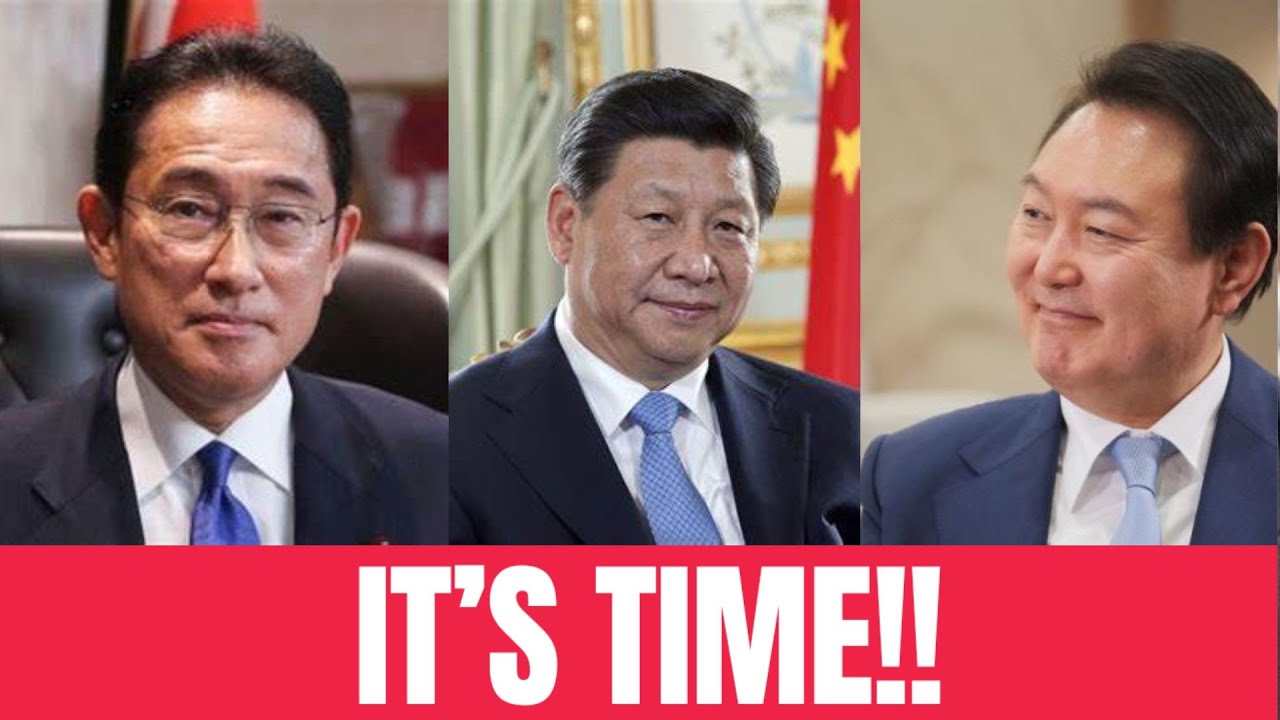
In this video, geopolitical analyst David Oualaalou examines China’s sudden willingness to host a trilateral summit with Japan and South Korea, a move he finds surprising given recent tensions. He outlines the official announcement by Chinese Foreign Ministry spokesperson Wang Wenbin, which plans a foreign‑minister meeting followed by a leaders’ summit, and notes that Beijing frames the talks as serving the common interests of the three nations. Oualaalou argues that the primary driver is China’s concern over expanding U.S. security cooperation with Tokyo and Seoul, including South Korea’s hosting of U.S. nuclear submarines and Japan’s establishment of a NATO office. He highlights an economic dimension that South Korea downplays: Samsung’s chip‑trade difficulties stemming from U.S. pressure on China. The analyst provides historical context, recalling the last leaders’ summit in 2019 and the lingering territorial disputes over islands and the South China Sea that have strained Japan‑South Korea relations. He also references China’s criticism of the recent U.S.–Japan–South Korea Camp David summit, warning against turning the Asia‑Pacific into a geopolitical battleground. Throughout, Oualaalou questions whether the underlying motive is conflict or fear—particularly fear of U.S. influence—and invites viewers to discuss the implications. The video ends with a call for comments, likes, and subscriptions, emphasizing that geopolitics affects everyday life.
Chapters
Hello everyone and welcome to Geopolitical Trends. So excited to be with you. As a geopolitical analyst, I ask, why is China agreeing to hold a trilateral summit with South Korea and Japan? In this video, I'm going to provide you my assessments of these developments and place it for you within the Asian security issues. Let's dive in into this fascinating development. So In a surprise move, China announced recently that it is willing to hold a trilateral summit with Japan and South Korean leaders. You know, that's very, very surprising. So the question we need to ask is, why now? What is prompting this change of event? So because it's major, so of course it's still under the radar, but there's a lot of major issues regarding this. So what we have here basically is one, his name is Wang Wenbin, he's the Chinese Foreign Ministry spokesperson, stated that the 3 countries, China, South Korea, and Japan, agreed to hold a meeting of their foreign ministers first, which will be in the next few months. Then this will encourage further meetings of the leaders as soon as possible, which is thereafter. So he also noted that this serves the common interest of the three countries. Well, you, you think about it. I recall Foreign Minister Mr. Wang Yi once said that Japan, South Korea, and Chinese almost like look like to agree. What he meant by this is culturally closer somehow, and yet he didn't understand Why all of a sudden South Korea and Japan wants to associate with the West? You know, that's, that's, uh, it was a good observation. I remember that one. So, well, what's interesting about this is that the agreements came on the heels of trilateral talks attended by diplomats, lawmakers, and assistant ministers from the three countries Japan, South Korea, and China, and the meetings were held in Seoul recently. So the objective of the meeting was, according to South Koreans saying, that the objective of it was to ease China's concern about Washington's growing security ties with both Tokyo and Seoul. Yet Beijing's security concerns are legitimate, you know, prompting many analysts, at least the geopolitical analyst ones, to ask the question: are Tokyo and Seoul doing Washington's bidding in Asia? Because we all know with South Korea agreeing to host U.S. nuclear submarines and with Japan, Tokyo, allowing the establishment of a NATO office. What is— I mean, it's loud and clear what the message is. I can see the writing on the wall for this. So for them to say, well, it's because we wanted to ease China's security concern as Washington expands its presence, it's no-brainer, and it's almost like an insult, you know. China does understand that it is concerned about what Washington is doing. Here is, here is how Beijing described the trilateral talks as in-depth discussion to encourage the resumption of cooperation. You know, this is what South Korean Foreign Minister also said, and I quote, diplomats agreed to hold the trilateral summit as soon as possible and host a trilateral ministerial meeting to prepare for it. End of quote. Well, there is one thing the South Korean review— not refused— the, the intentionally didn't talk about, which is the economic impact that the big company Samsung is experiencing because of the trade issues between the US and China because the US pressured Samsung not to get the chips. Remember the chips trade and all that? Well, Samsung now is finding out. So I find it interesting that South Korean didn't even want to mention that. So the next question as a geopolitical analyst I ask is, what is at the heart of all this? Literally, yeah, trilateral summits and meetings and all that, great. But what is really at the heart of it? Is it conflict or is it fear? And if it is fear, the latter, is it fear of Japan or fear of South Korea? I don't see China having fear of that. China will deal with it, but more so South Korea and Japan. And here's the— just a brief historical snapshot here. The last The last such summit between the three countries took place in 2019, and no other summit between leaders has been held since, because the diplomatic and historical differences between mainly Seoul and Tokyo, especially the differences are related to the sovereignty of the islands between them, and of course the disputes between the two of them and China in the South China Sea. So, and this one has to do along with the Chinese concerns about US security cooperation with South Korea and Japan and their joint military exercises. This is why I'm saying this can't be happening in a vacuum. And yet I do ask the question, why all of a sudden China agreed to such trilateral meeting, you know. I'm, I'm gonna be digging even further. If you guys would like me to do a live stream on this, I'll be happy to do it. So, so as we all know, last month in late August, China denounced the statements issued at the end of Camp David. You all remember the Camp David Summit that brought together the US, Japan and South Korea. And this was when China issued warning of the repercussions of turning the Asia-Pacific region into a geopolitical arena. I do see it happening on both ends, one in Asia and one in Africa, as we speak. So, so this is what I think China is gonna now have to think strategically as to what it wants to achieve from this potential trilateral summit. So what do you think of these developments? Make sure to leave me your, uh, answers or comments in the comment section. I always like to read your feedback. So if you like the content of this video, please hit that like button and don't forget to subscribe. I would greatly appreciate it. As always, remember, geopolitics impacts your daily life in more ways than one. Till next time, bye-bye.