China just Handed the US a Strategic/Economic Defeat (w/Carl Zha) | Geopolitical Trends
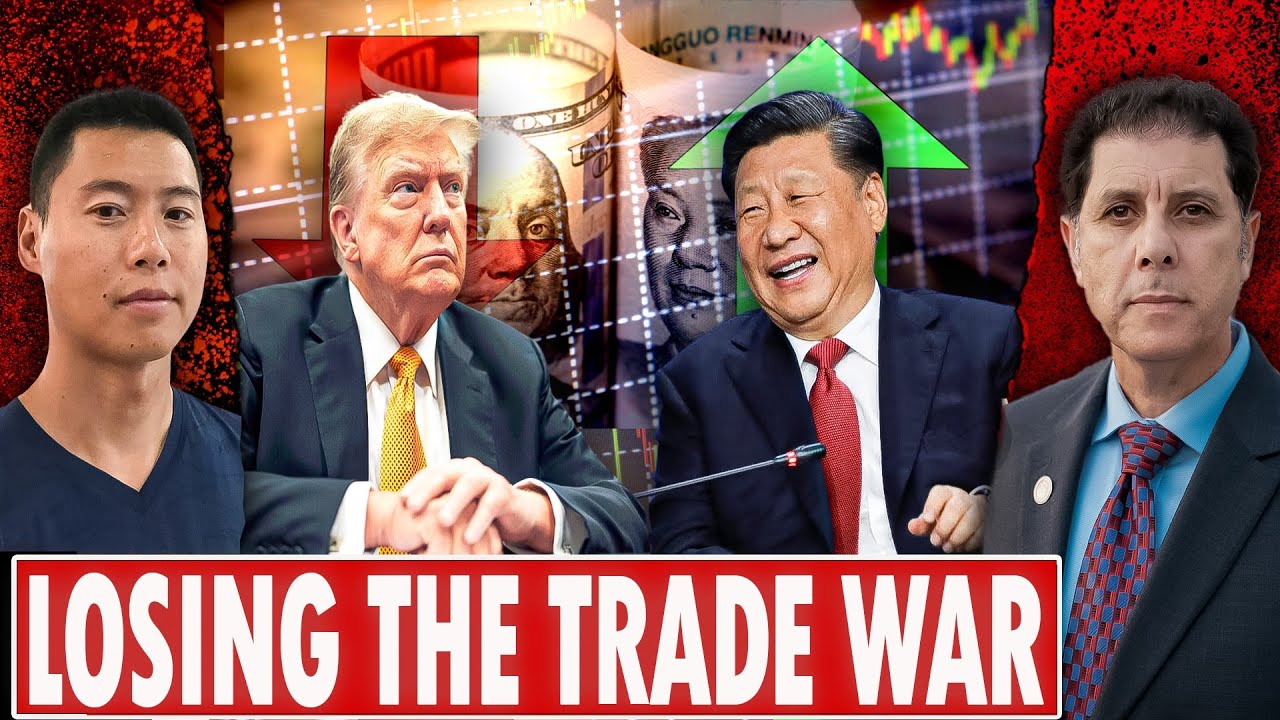
This content was created by David Oualaalou. This content was uploaded by David Oualaalou. This is a YouTube live-stream episode of the Geopolitical Trends show titled "China just Handed the US a Strategic/Economic Defeat (w/Carl Zha)", recorded/published April 26, 2025. It is an English interview-style discussion hosted by David Oualaalou with guest Carl Zha (plus live chat/community interactions). The conversation covers US–China tensions and trade policy (tariffs, bond and currency market effects), supply‑chain vulnerabilities, Xi Jinping’s recent visits to ASEAN countries (Vietnam, Malaysia, Cambodia), China–ASEAN economic and cultural ties, and implications for other regional players such as Indonesia — framed as a broader geopolitical and economic analysis.
Chapters
Hello everybody and welcome to Geopolitical Trends, where truth matters. Excited to be with you as always, uh, and I'm even more excited because of my, uh, guest, which I will introduce in a, in a, in a second here. So I need to talk to you guys first about few things, uh, that's coming up. Uh, remember to join me tomorrow. As a matter of fact, I'm gonna put the link for you, uh, for my conversation tomorrow tomorrow with Jayant Bhandari. Uh, it will be at about 7:30, almost same time, uh, like today with my guest Kaza. And, uh, let me get you guys the link here so you'll have it for tomorrow. I'm gonna put it in the, uh, chat box for you guys. Then on Sunday, remember to join me for, uh, the community conversation, which I will have at about 12:30 Uh, and I'm gonna have Dr. Stewart, uh, join me later on, about like 20 minutes into the live stream, and he's gonna answer some of your health questions. So just prepare some of your health questions, whatever you want to know. Uh, Dr. Stewart will be happy to answer those questions for you. So, and at the beginning of the week, I am, uh, reading some analysis regarding the ongoing talks between the US and Iran. Regarding the nuclear deal, even though this might surprise you, which I will do the update for you next week regarding what's going on as to what the United States has agreed already to. But I still say to the Iranians, be careful, do not trust the US government. Simple as that. So let me quickly say hi to our community, and I'm going to bring in my guest soon here. So Willie Holman, good to see you. Lee Y. Li Yang, I'm sorry, good to see you. Laval, as always, and hello to you. History Discover, will gold, property, etc. be best for investments? I'm not an investor, I'm not a financial advisor, but common sense suggests to me hard assets will make more sense. Gold is one of them. Sarah Carol, good to see you, and you are on time for class. Good to see you, Sarah. As always. Hongwan, good to see you. Phil, as always. And Reza, salam, salam alaykum, uh, how are you? As well, good to see you here. Emerson, good to see you. Saleh, good to see you, sir. Omsi, as always. So, so let me go ahead and bring in my guest, uh, somebody who does not need an introduction. You all know the only one, uh, Karza we're gonna be in for a serious, serious conversation. So let me bring in my dear friend Carl Oualaalou. Hi, Carl! How are you?
Hi, David!
Good to see you, man. How's your day going?
Great, great, great. I just came back from China and it's—
oh yeah, I, I was aware of your trip and I was planning on asking your opinion as well as to where things are. So, well, we are very, very excited to have you here, of course. And once again, thank you, Carl, for carving out time for us here. I know it's our monthly conversation, everybody's waiting for that, and there's a lot to cover. There is a lot to cover in this particular episode that I, uh, even I'm gonna be asking your opinion about the recent trip of President Xi Jinping to the three ASEAN countries— Cambodia, Vietnam, and Malaysia, and your input will be very, very, very insightful to all of us. So let me start first, Carl. I want to start with, uh, first of all, just your assessment, uh, your update, your intake as to where the US-China trade war is going, given what's going on now with Mr. Trump sort of lying about having a conversation with the Chinese. If you allow me first to play a clip, I'm gonna play a clip here. That's something you posted on Twitter because I follow you on Twitter, and I'm gonna share, and I'd like to have your take on, on this one here. This clip, by the way, guys, it was posted by Carl on his account, and I follow him on, on Twitter there, so I, I just kept it here to share it with you. Take a listen here, guys. Wow, wow. I don't speak Chinese, but I can just get a sense of how measured the word and how straightforward. And this one has to do with Mr. Trump lying about, oh, we are having a conversation with the Chinese. What do you think of all this, Carl? Why will Trump lie about something of this magnitude like this?
Well, what Trump administration is trying to do right now is they're trying to calm the market, so to speak, after they have intent— almost intentionally cratered the whole US stock market. Now, if people remember back In the days when Trump first announced his liberation day, tariff on everybody, there are people posting on Twitter saying, oh, this is such a 4-dimensional chess move by the Trump administration because the Treasury Secretary Scott Bessant, yeah, he's a guy from George Soros Quantum Fund. He knows what he's doing. He, you know, he's really— what he's trying to do is he's trying to crater the stock market intentionally. This is when, you know, the stock market was in freefall. Trillion dollars have been wiped out, uh, from the US stock market. They say, oh, oh, it's all part of the plan. He, he did that intentionally in order so that to drive all the money from the US stock market into the US bond market. Because, you know, traditionally US Treasury US dollar are seen as kind of the last resort, the last haven, right? So people understanding is like, when you sell stocks, then you put the stocks— you put the money you get from the selling the stocks into the US bond. And they say it's such a genius move because, um, United States, as we know, we know US is in chronic deficit, uh, currently. I think the national debt is something like north of $36 trillion.
We crossed $37 trillion, Carl, just a few days ago.
So there's no way US can repay that debt anytime soon. So what US government do is they borrow new money to pay off the old debt. So when the old US Treasury became mature and you have to pay down the debt, they go to the market, the bond market, to borrow more money in order to finance the old debt. So that's it. So, you know, what Scott Bessant, the U.S. Treasury Secretary, is trying to do, he's trying to drive all the money into the U.S. bond market. So you will bring the interest rate, the, on the, the bond interest rate low. So when U.S., uh, end of this, by this year, by the way, U.S. have $9 trillion worth of national debt. That's come due. That's, uh, that's correct. So they have to pay that debt, so they have to borrow additional $9 trillion to pay the old debt. So they say such a smart move if Scott Bissett managed to drive the interest rate down, so then U.S. can borrow more money but at a lower interest rate to pay off the old debt. So smart, right? But things didn't go as they planned because after the stock market nosedive, the bond market became broken because everyone— somebody is selling the bonds like crazy, and the bond yield, rather than going down, spiked. So the interest rate is going up. And that's when the— when the Trump administration came, they, they, uh, they came back and announced 90 days, you know, like extension. They say, well, we're just kidding about placing tariffs on the rest of the world. It's really about China. We're just aiming toward China. So because China retaliated, the tariff on China stays. Everybody else get a 90 days reprieve until we figure out what's going on and in which time we can negotiate new deals. Uh, so, so Japan, you know, Japanese representative took the opportunity to meet with them in Washington Yeah, and when the Japanese delegate asked them, okay, so what is it that United States want, they reply, what's your offer?
Which is, which is logical question. Yeah, what do you have to offer?
And, and, and the, the Japanese are like, you know, we're just really coming to Washington to find out what you really wanted out of us and then see how far we can, we can meet down in the middle. At the end of the day, there was no deal. The Japanese came away with the impression that the Trump administration do not know what they really want. And, and this is the case across the board. Um, so now, uh, and the next thing they said was— Bison said, well, actually, Bison spring a trap on China. See, we tell people, don't retaliation, don't retaliate, and you will be rewarded. See, now all these countries are lining up to negotiate with us, and we are giving 90 days reprieve, but the Chinese tariff stays on. But then they say, oh, it's really a, a 3, 4, 4D chess to, to form an anti-China coalition to, to get all these countries on our side. Uh, well, Japan just also just announced that they're not going to go along with that. Japan publicly announced that they will not follow US on implementing anti-China trade measures because for Japan that would be suicide. They're already getting hurt in the US market because of the previous tariff. The thing with Japan is they were— they actually came to US, um, they were ready to come to US before, like, for a previous tariff, for the auto tariff. Because Trump slapped 25% tariff on all foreign imported auto and auto parts. So Japan was already ready to make a concession on that front, and then they get slapped with more tariffs. So from their perspective, the Trump administration not serious. These are not the people they can, can have a deal with because they will just keep on slamming you with tariffs. Um, and so they say, no, we're not going to follow along with, uh, your anti-China initiative. Now, this is Japan, you know, a, a U.S. military occupied country that have traditionally always go along with U.S. no matter what. So if Japan is not going to go along with the U.S. anti-China directive, then yeah, forget about, forget about any other countries, you know, even Europe at this very point. Is negotiating with China, with the Chinese, moving on, removing trade barriers between EU and China. So Trump, in effect, he has made China great again. I mean, he made China even greater. You know, you know, you know, uh, David, I used to come to your show and say we're already in Asian century already.
Yes, I remember that.
Trump administration, Trump administration come along and said You know, F that, F the Asian century. Let's have an Asian millennium, you know, let's the Asian millennium start, because that's what the Trump therapy essentially did. Uh, they all now they're driving everyone to, you know, to, to, to, to, to, to reach trade deal agreement with China because they, they realize, oh my God, China is actually the world's strongest economy because they're actually the ones that produce everything. Unlike what Scott Bison has said, he said, oh, they're the producer, we are the consumer. That means we have the upper hand because they need our money. You know, Chinese need our money. Like, look, money is fungible, right? They can always find new market, they can always create new demand, uh, for consumption. But guess what? You are not gonna recreate a wholesale supply chain within 4 to 5 years. That's just not possible. This is, this is what U.S. is facing right now. They're cutting off the entire Chinese supply chain and there's no replacement for that. You know, when 80% of the antibiotics used in U.S. came from China, majority of the pharmaceutical ingredients come from China.
Yeah.
What are you gonna do in the next, uh, next year and a half, you know, before new supplies can be found, replacement? What are you going to do? You're screwed. This is why the market have reacted very negatively to Trump's tariff and their whole gambit about bringing the interest rate down. Forget about it. That, you know, bond cratered, US dollar dropped, and then they very quickly just backed off. This, you know, there's always people used to say, what is United States? Is it really a country or an economy? It turns out it's neither.
Neither.
It's an interest rate. United States is an interest rate. When the interest rate spiked, the Trump administration panicked and backed off. And that's exactly what happened. And this— the interest— and the interesting thing was it was not China who sold the— sold the U.S. bond, because China, as we remember, they, they are the second largest holder of the U.S. Treasury. Uh, you know, they hold— still have like $700 billion worth of, uh, Treasury. But yeah, look, for now it looks like it's come from, from the Japan side. No, Japan, they've been the number one foreign holder of the U.S. Treasury. And what happened was, uh, for decades, you know, the Japanese government have kept their interest rate low, uh, you know, because they've been printing a lot of yen. Uh, you know, Japan is the one who invented quantitative easing, right? They, they started doing that since '90s after the Japanese asset bubble burst. So they have been printing a lot of money, deliberately keeping the interest rate on, on Japanese yen very low. So what these hedge fund people do, they thought opportunity for arbitrage. They're like, okay, we can get a lot of yen for very low interest rate let's just borrow a shit ton and let's invest in the US dollar-denominated asset where you can get higher return. So this is called the yen carry trade, which can carry on for like over 20 years. And what happened recently is that the Japanese yen has strengthened, the Japanese interest rate is going up, and a lot of these hedge funds find themselves owe more money than they had borrowed. Suddenly, suddenly they have to repay back way more than they have borrowed. So they're, they're panicked. They panic. And what do they do when they panic? They sell. They sell the US Treasury, uh, uh, to, to, to pay back their, uh, the, the, their, their borrowing in Japanese yen. This, this was what caused Trump administration to, to cave. And China, throughout the whole thing, they didn't do anything. They have raised their tariff, matched the Trump tariff up to 125%. And then they say, you know what, anything about 125% is ridiculous. It's meaningless because at this point, essentially, there's been no direct trade between US and China. So Trump administration, you guys do what you want. We're just going to ignore any further raising of tariff on your side. And that has been the Chinese position. And they are— their position have been very clear from the beginning. They said trade war is bad for both sides. There's no winner in trade war. We do not want a trade war. But if it's a war you want, we'll fight you to the end. But our, our door is always open for talks, provided the negotiation must be based on mutual respect. And, and, and, you know, and then the, the, the, the Chinese Commerce Ministry just added that U.S. must first remove unilateral tariff before the talk can begin. So, you know, there is no negotiation, uh, between, between China and U.S. I just saw one of the big accounts, Zero Hedge, on, on Twitter, who was circulating a rumor that somehow the Chinese trade delegations in Washington in secret, blah blah blah. And that, you know, there would be photographs of the Chinese aides outside of the Treasury Department, etc. Well, this is, uh, this is how disinformation plays out on the internet because, you know, right around this time is the regular scheduled meeting of G20. So the, the people are G20 is scheduled to meet at this time, and, and guess what they're discussing? They're discussing the negative impact brought on by, by Trump, uh, tariffs. So this is what the, uh, you know, what's really happening. But, you know, the, all the Trump supporters are posing this as China is finally buckling, bending the knee, you know, so much winning for the Trump, Trump side. There was even a, uh A account, I forgot the name. I, I, I, I quote tweeted it. He basically said, you know, mark my word, China will bend the knee by the end of this month. Uh, bookmark this. So I quote tweeted it. I say, any, any updates? Any updates? There people are like, oh, there's still 6 days left in this month. Hold your horses. Still 6 days left. This, this is where we are. We're, we're in comic hour, David. We're, we're in complete— this is all— this problem is completely self-inflicted. As I said times and again, majority of the US problem is self-inflicted. That's true, that's true. This just epitomizes the whole dysfunction we have right now. Uh, we have this whole You know, but, but, but, but, but you know what? Some people did benefit from this. Yeah, because we have observed a lot of insider trading activity, especially before Trump's announcement on Liberation Day. There's a lot of people who place a lot of calls on the market, you know, like people are selling shorts and those people are making shit tons of money. And I bet those are— I bet they're buddies, buddies, maybe with Scott Bison, maybe they're their buddy buddies with somebody. Some insiders. So the US politicians and their cronies were always going to make, make out like a bandit in this. So, so they're the ones that's benefiting from this, not, not the 360, 70 million Americans or, or, or people around the world. This is how the game is always being played. You just have to understand the US government is, is by the oligarchs for the government, and that's has always been the way it is.
Yeah, that is true, that is true. I want to go back to 3 points before we move into, uh, uh, because I need to have your insights about the, uh, recent trip of President Xi to Cambodia, Vietnam, and Malaysia. I remember, just remind the community, when we had, uh, uh, uh, Einar Tengen He pointed that— he really pointed to the fact that the— like what you explained about the bond markets regarding, uh, exactly what, what the Trump was doing. And that's exactly spot on. Uh, Dr. Warwick Powell also talked about the idea how this is gonna go and makes it hard for the US regarding this supply chain. So, and I remember one of our avid viewers, by the name Lock1970. He did mention, and spot on on that, which was you mentioned, uh, Carl, regarding the, uh, the 9— the refinance of the $9 trillion that is due in June. Because here is the problem. So what will happen if we can't pay that or refinance it? That's going to become a big problem for us. And this is what exactly most Americans have no clue about. Where this is headed. And that's why I believe that Trump is lying about the meeting with the Chinese, uh, we are in talks. That's all lie, because I read the transcript from different locations, uh, because the Chinese never called Trump or never reached out. Because this is why I use the term strategic and economic defeat. I know some people didn't get the the gist of why I titled this interview that way. It's because to me, with what you explained, Carl, is that China has handed now a strategic defeat for the Americans. That's the way I see it. I could be wrong, but the way I see it. Let's talk about President Xi Jinping's recent trip to Vietnam, Malaysia, and Cambodia. I'm going to play a clip for you, please. And for our community also, in both in Chinese and the English version. And I'd like to have your, uh, your take on this one exactly, because I, I sensed that the wording was very, very, very specific for a reason why President Xi mentioned this one. So take a listen, please.
Malaysia, yeah. China and Malaysia are neighbors across the sea. We have a friendship that spans over 1,000 years. A Malay proverb says, "Little by little, it becomes a hill." Over the past 50-plus years since we began formal diplomatic relations, We have worked together and built a relationship as solid as a stone and only getting stronger. We are close friends and partners. Politically, we respect and trust each other. Economically, we enjoy mutually beneficial cooperation. Culturally, we learn from and invigorate each other. This relationship is benefiting our peoples in real ways. In 2023, Prime Minister Anwar and I announced that we would build a China-Malaysia community with a shared future. A new historical chapter in our bilateral relations has since begun.
All right, what do you make of this, Carl? Because the wording, to me, even though this is a presidential visit and so forth, but I noticed that President Xi had to address the social, the cultural ties between the two countries and refer to the historical ties that existed over 1,000 years for this. What is the— what is really the message that President Xi was sending not only to Malaysia but to the whole Asian society, or countries for that matter?
Well, China is right now, you know, not simply rising. China is reemerging as a great power, and it's reemerging— it's re— um, it's, it's, it's coming back to its historical role as an important economic powerhouse for the— for its neighborhood and the rest of the world. I mean, the, the, the BRI, Belt and Road Initiative, if you really think about it, it, it's nothing It's, it's, it's just, it's a restoring of the ancient Maritime Silk Road ties, and that runs through Southeast Asia. You know, Southeast Asia do have thousand years old trade ties with China. There's a lot of cultural, uh, economic ties that goes way back. And, and, you know, even Singapore, even Singapore, who is traditionally like a Chi— a Western outpost in Southeast Asia has come out publicly criticize United States on the, the, the Trump tariff deal. The, the whole of ASEAN is what China has been focused on, because China— people need to remember, China has been preparing for this moment since 2018, the first Trump term, when Trump first level sanction against China. And so, so China has been prepared. While all the US think tanks have been talking about decoupling, we need to de-risk from China, China had been quietly building foundation to decouple and de-risk from United States. And by the one way to do that is reach out to the countries outside the US, outside the so-called international community, which is, you know, US and its vassal states, and, and to branch out to Global South, for example. This is why In last 5 years, what we've seen is ASEAN has surpassed United States as number one trading partner of China. This is why Xi Jinping is going to Southeast Asia right now. This is the most important region economically for China. And, and whereas U.S. has always been the one that's pushing for countries to take a side, you know, either U.S. or China, China's approach is very different. It's, we're here to do business, you know, as long as it benefits both us, we can do a deal. And this is, this is a, this is a preferred method by most of the countries. You know, if you look at all the anti-China sanctions pushed by Trump or Biden administration, you actually require US to coerce, to force its allies to cut off trade ties with China. For example, they did that with the chip sanction under Biden, which means, you know, Taiwan semiconductors can no longer sell to their one's largest market, mainland China. That means ASML, a Dutch, uh, equipment semiconductor equipment maker, can no longer sell to their largest market, China. It means the Korean and the Japanese suppliers are now limited from their largest export market, China. And those are all to the detriment of the US allies, right? Whereas the, whereas the Chinese approach is let's just do business. I mean, the, the contrast couldn't be more starker. It's night and day. And, and what China is doing is also— it's, uh, now the Chinese supply chain chains are branching out. They're branching out, out of China. I already talked about, uh, like, for example, Vietnam. In case of Vietnam, China and Vietnam, they're building railway links. Um, and, and one, one reason Vietnam is gonna Vietnam, you know, benefit greatly from the Chinese supply chain going out is its physical proximity to China. It has all these linkages to China through railway, through ports. But Vietnam also have a very similar government to China. People tend to forget about that. Vietnam is also a communist country ruled by the Communist Party of Vietnam. And, and the two countries share a very close cultural and, and, uh, cultural economic ties. And their, their government structure is also very similar. So even, even though Vietnam and China has some differences, has some historical differences, but the, the, the, the, the governing party of both places are very eager to work together. And to overcome these differences. And, and this is why, you know, US dream of somehow making Vietnam a linchpin of their strategy to contain China is just a fantasy. This is a— because Vietnam actually benefits from its physical proximity to China in terms of get— now getting a lot of the relocation of the Chinese factories to Vietnam. Now, one of— this is why US now is trying to force other countries to give up on their China ties, but that's just impossible because Vietnam, they— yes, they would very much like to continue to export to United States, which is one of their largest export market, but in order to, in order to make that happen, in order to manufacture these goods, they source a lot of components, machines, machine tools, like everything else from China. Like, this is basically Vietnam become an extension of the Chinese supply chain. That's what, what's, what's really happening. And this is, this is, this process is, uh, you know, it's, it's not something that you can be easily roll back at this point. And this is why Xi Jinping received a big welcome in Vietnam. And Vietnam for the first time, they publicly acknowledged the Chinese role in helping Vietnam during the war, during the Vietnam War, to resist American aggression. Uh, you know, this is something that was not talked about before, but 300,000 Chinese PLA soldiers went into Vietnam during the Vietnam War. They acted as the air defense over bridges and railways that linked Vietnam to China. So, so that's why despite American carpet bombing of North Vietnam, the supply— the vital supply lines connecting Vietnam and China was never cut because those Chinese soldiers were there to guard those, uh, guard those bridges and railway from American bombing. And they're also the ones who repair it quickly after the bombing was over. So this is— this helped Vietnam achieved their victory over America. Now Vietnam is publicly acknowledging this, um, you know, this is, this is also another sign they're signaling the changing in the relationship between the two countries. And then Malaysia. Malaysia has been very friendly with China for decades, you know, even though Malaysia also do have, uh, maritime dispute with China in South China seas. But, but Malaysia and China were able to put aside their differences and developing a full-on economic cooperation, and which benefits both countries. And, and, you know, I, I went to Malaysia in 2019 and early 2020. I saw a lot of Chinese investment in the, in the country, um, and, and this— there's gonna even more is coming. There's a lot of tourism. And, and so these, these ties are only going to further develop. This is regardless what, whatever United States does. But, but what, what Trump actually did is pushing these country even further toward, uh, toward the China's camp. And, and, and this is why, rather than picking up the Trump's— rather than picking up the phone and call Washington, Xi Jinping's first priority to is to visit Southeast Asia because now ASEAN is China's number one trading partner, will continue likely to be the case for the coming decades. Uh, this is good for China and this is good for ASEAN because there's, there's going to be a lot of development. And, and if you look at what U.S. is actually trying to impose on the Southeast Asian countries, you know, now some details about the trade negotiation between U.S. and Indonesia are being leaked out. Indonesia was one of the first to send trade delegation to Washington to negotiate a deal because, uh, according to Indonesian Finance Minister, uh, Sri, uh, she, she said, you know, we wanted to be the first, you know, hopefully to get on, get on the good side of United States. But instead, you know, at that time Indonesia pledged to increase their import from United States to $19 billion, which will include buying the US jet fighters, I believe F-15.
And wow, an old one, an older model.
And, and, and, and, and they're gonna buy, uh, they pledge to buy US oil um, uh, liquefied petroleum gas, soybean, and wheat, especially at the time when China had announced— they, you know, they— after China raised 125% tariff on U.S. imports, that means China is not coming to U.S. to buy the liquefied natural gas from U.S. anymore. You know, China is not— is, is gonna go turn to Brazil or Argentina to buy soybean and wheat. So, so Indonesia offered to buy more of those US products, but instead, you know, this is the very initial, the very, very early days of Trump's Liberation Day statement when, when, uh, US announced 35% tariff on Indonesia. But after Indonesia made those offers, US raised the tariff to like 40, like 47% Indonesia. This was after Indonesia was making all these welding concessions. And only later, when the bond market freaked out, did they back off and say, okay, extension on those. So, and in their trade negotiation with Indonesia, they're talking about, uh, so, so first they're talking about the trade deficit, and then they talk about so-called non-tariff trade barriers. Now this is very vague, it could be anything. And one thing that US want Indonesia is to change its, uh, local payment system. You know, Indonesia now has developed a local mobile payment system using QR codes. You know, a lot of the Indonesian vendors, you just scan the QR code with your phone and you can pay. I mean, this is— I, I noticed this when I came to Bali in 2019, you know, before I only saw this China. And then now, now it's very popular in Indonesia. You, when you go to restaurant, whatever, just scan a QR code and you, and you order, you pay. It's very, very simple. But United States Trade Representative said no, no, that's a non-tariff trade barrier to United States because, uh, we want to use MasterCard and Visa instead. Oh, because this, this Indonesian national standard for QR payment is the— is a barrier to entry for the U.S. MasterCard and Visa finance companies. Again, this has nothing to do with the manufacturing— this has nothing to do with bringing manufacturing to United States or re-industrialize United States. It's all about post-imposing control of U.S. finance and U.S. capital over, uh, the Southeast Asian countries. So, you know, why, why would Southeast Asian country accept that? You know why? Whereas China is not coming in and say, you know, we don't like your QR code, you need to switch your Alipay or WeChat Pay. You know, like that, people will, will cause an uproar. And by the way, I, I just came also, uh, recently I was in Thailand, was in Bangkok. The, the QR, the, the mobile payment there is also very popular. Like even street vendors, if you— I was walking along there, like a very busy, uh, like see, like, kind of CPD district of Bangkok. And they have all these, like, street vendors who come out during, uh, breakfast hour to provide, like, quick lunch or breakfast for the office workers. And they all have, like, little QR code, you know, you can scan and scan it on your phone. Everybody has it. Like, it's very simple. It's like US is the one that's kind of, like, stuck in that— stuck in 1999, you know. And everybody has already moved on 21st century. But US is saying, no, no, no, we don't like that. We want you to use Mastercard and Visa so our finance companies can, can, uh, exploit your local market. Market. Like, why would, why would people accept that? And, and especially when now there's alternative, which is China. China, it, it turns out, yes, yes, US has, has money, um, But guess what? Money can be created very easily, very quickly, very easily. And there was a time in, uh, during when, when China's real estate bubble bursted. Yeah, um, you know, with the real grand, uh, and, and a lot of the foreign investors were screaming at the Chinese investment, uh, government for creating new stimulus. You know, you gotta stimulate the economy, you gotta create stimulus. But Chinese government held the line. They did not offer new stimulus back then, which means they have kept their powder dry. Now they have more room. They had— they can, you know, if they want to, to do actual stimulus to the economy, to offer more, uh, and, and, you know, Chinese people, they, they know how to make sacrifices. I mean, I mean, there's a Chinese phrase called which literally means eat bitterness. I mean, the, the eating bitterness is kind of embedded in the Chinese psyche. I have parents who live through famines, right? And I, I would— I grew up in 1980s China. Sometimes we, we have meat maybe like 2 or 3 times a week, right? This was, this was not that long ago, man. 1920s, that's like, uh, 1980s, that's like 40 years ago. Right? And, and so, so there's still generations of Chinese who have me— memories of the past hard time. The, the current hard time, you know, the sacrifice they're going to be asking to make by the Chinese government, guess what it's going to be? Okay, you got to take more vacations, you got to spend more, you got to buy, buy more television, you got to buy more cell phones, right? I mean, that puts Nothing compared to what they have experienced in the past. Yeah, by contrast, it's Americans who are probably not ready for the pain they're about to experience because like I said, China has been preparing this since 2018. They— yeah, United States, they, they really seriously misjudged China because they thought China would just bend the knee. Like they say on social media, they think China would just accede to whatever Trump's demand is. No, that's not going to happen. You know, like, the whole— the, the Communist Party of China's claim to, to legitimacy was ending the century of humiliation. The last thing they want to do is want to see them bend the knee, you know, back like the Qing Dynasty, you know, to, to, to, to, to accede to all the unreasonable foreign demands. And that's not going to happen. So, so Yeah, China would not— will not bend on this. And, and, and anyone who understood China would know this. But of course, a lot of the advisers from, um, Trump administration, apparently they have been imbibing way too much of their own propaganda, right? They, they all— they're, they're all reading from the likes of Gordon Chan, right, and Peter Navarro, and they, they think, oh, Chinese economy is slowing down, it's collapsing, oh, it's gonna collapse. Yeah. They're gonna have to come to us, they need our money. But that, that's, that's just not what I saw when I visited China recently. I mean, this— but anyway, this is, uh, I'm done with my rant.
I know we're gonna talk about your— we're gonna talk about your visit. Actually, I want to go back to one point you mentioned about when the real estate bubble, uh, burst at the time. You know, I made an argument back then, Carl, and it's on the record right there. There is a video out there that I argued back then, and I was in response to a question and I argued and I said, Mike, my word, the Chinese government is not going to bail out those companies. They are not going to do the same mistake we did with the GFC. And everybody was like, why not? They're going to crash the economy. I said, no, they are not going to do that because those companies gonna have to be held accountable and China's government will not want to drag itself into something like this. And here we are. That was, that was bad. And it became clear to me that's, uh, that's what's going to happen. Now let me go back to the point of the visits of the ASEAN countries. I know for Vietnam is a big deal because we're talking about the supply chain. And even I, I heard a briefing by Tim Cook, the head of Apple. Yeah, I heard it. That is like, forget, forget about forgetting about the Chinese market. You guys gonna be out of your mind if we think we're gonna have to move the operations elsewhere. And his argument, Carl, was about China sort of possess the key stuff that Apple needs. For example, the brain power, because when you deal with this chips and all that, this is not for an average Joe. A second thing is the location, the manufacturer where they are. The third thing has to do with the tooling, because you need specific tools for the chips and all that. China has all this in one location, and this is why Apple is saying, no, we are not going anywhere else. And my question to you, Carl, which makes me just think about why did President Xi didn't visit Indonesia part of the trip, knowing that the Indonesian market could also play a role given where ASEAN is moving forward.
Well, Xi Jinping did place a call with the Indonesian president, Prabowo. Um, it's, it is kind of sometimes interesting on the, you know, reading the tea leaves, you know, why, why did Xi Jinping go to Vietnam, Malaysia, but not Indonesia, right? Indonesia is one of the biggest country, yeah, in the ASEAN world's fourth most populous country just after United States. But I think, I mean, it could be many things. I mean, one thing is Indonesia is in the midst of its own negotiation with the United States. You know, this might complicate things if, uh, you know, Xi Jinping was seen visiting Indonesia.
Yeah.
And, uh, you know, so this, this possibly to give Indonesian breathing room. In their, uh, in their own, uh, uh, diplomatic and, and, and trade negotiation with United States. Um, and, uh, I, I mean, because Indonesia definitely is still very important in, um, in terms of, uh, Chinese outward-going investment. Uh, you know, China is still the top foreign direct, uh, investment in Indonesia. Uh, I, I don't know exactly, you know, I don't have a direct line to, uh, so I can't tell you exactly why, but I, I just throw out educated guess here. Um, yeah, you know, like one, you could, you know, you could be like mutually, um, understood by Chinese side and Indonesian sides. Like, okay, Indonesia was kind of cut, caught in a rock and a hard place. Because, you know, they have been under a lot of pressure from United States. Currently Indonesia, they, you know, they depend on United States for a lot of their export, especially in like low-end manufacturing, which is what Indonesia has been working— has been focused on in the, in the recent years. You know, the, the, the— so they really wanted to keep the channel of export to United States open. Um, and, uh, but I mean, that doesn't mean Indonesia is, uh, you know, it's gonna, gonna wall itself off from China, right? Because I, I, that's just— I just don't see that happening. I mean, there's BYD is currently opening a factory here. There's more Chinese, uh, auto manufacturing that's coming to Indonesia, like Geely is already coming, and there's other Chinese manufacturers that looking for possibilities of either entering the Indonesian market or opening, you know, start local production. So Indonesia remain very important, both for its, you know, for the fact that it's the biggest country physically, it's the most populous country, in, in ASEAN, and it's sitting in a very strategic neighborhood. Um, so I, I expect there will be follow-up, uh, of diplomatic, uh, missions to Indonesia later. A lot of these things will happen under the table. Um, you know, like, we, we will, we will only find out, you know, much later. But right now, right now, again, because Indonesia is in the midst of, uh, uh, trying to reach a deal with United States. So I'm just guessing this is probably just to give Indonesia more, more, uh, maneuver room vis-à-vis Washington.
Yeah, well, that's a possibility. To me, it was just one of those thinking outside the box makes me just, okay, maybe there is something there. So I figured just to ask you now, while we're still on ASEAN. There are some conversation right now. I've been talking to some people who, uh, sort of have an understanding of where ASEAN is headed moving forward, economically speaking, and the impact it's going to have, uh, uh, uh, in coordination with the Chinese, uh, regarding the global economy. There is one— yeah, go ahead, Carl, go ahead.
Oh, oh, just so you— because since you bring up part about Uh, Tim Cook and Chinese supply chains. Yeah, there's news that just came out that Apple is gonna move, uh, they're gonna seek to move their iPhone production for United States to India. So India currently already manufactures somewhere between 14 to 20% of the iPhones. Yeah, so what Apple wants to do, because of, because of trade tariffs. So what Apple wants to do is they're gonna— they can't— they understand they can't move all the iPhone production line out of China. That's not possible in the immediate future. So they're gonna try to move just enough to India, so make India supply the U.S. market. So what— which means the everybody in United States, all the Americans will get made in India iPhone. IPhones while everybody else in the world will get regular iPhones made in China, right? So, so because he— because, because the tariffs. And, and, uh, and, and the, the thing is, I don't think, um, in, in terms of manufacturing, uh, you know, there's a lot of talk from particularly Anglo media, like The Economist said, oh, India is going to be the the biggest winner out of this, uh, US-China fight because they're gonna get all these, uh, uh, manufacturing moving there. I will argue ASEAN will be the biggest winner actually because, well, China will win the fight, but ASEAN will, will come out, uh, you know, ahead of India because, because, uh, geopolitical, uh, because the, the geographic proximity to China. And, and, and this is also China— it's not just United States, but it's also China driving kind of the move into, into Southeast Asian countries. The Chinese government is actually encouraging Chinese firms to invest in Southeast Asia, and the Chinese, uh, factories are moving there on their own. So, so, so, so, and, and they will be a lot closer to the Chinese supply chain, whereas There's already report that they said, uh, it seems that Apple's, um, Apple's move to, to, to shift more production to India has made— met some obstacles, uh, according to some report that, that some Chinese suppliers of iPhone, they were told they can't sell their product, they can't sell their product to Fox Foxconn factories to China. So they had to do like roundabout way. They set up an intermediary subsidiary in Southeast Asia to purchase those parts, and then they ship those parts to Foxconn factory in India. So anyway, it's, it's never about bringing manufacturing back to United States, folks. They're not bringing iPhone manufacturing back to United States. So, so we, we're just talking about They're going to ship a portion— Apple is going to ship a portion of manufacturing to India, but even that portion still depends on Chinese machines, Chinese equipment that need to be sourced from China. So this is where ASEAN has a great advantage because they're sitting on China's doorsteps. You don't have to go very far to get those Chinese suppliers and Chinese parts. And this is why I think, you know, countries like Vietnam and even Indonesia will have much, much better chance to move up the ladder in terms of manufacturing than, say, India, because India is just too far. It just— it's just— I mean, just too far from China. And also ASEAN, there's also the closer economic— it's also the cultural factor. ASEAN As Xi Jinping said, there's a thousand-year-old interaction between, you know, maritime Southeast Asia and China. So both for cultural reasons and just geographic proximity, ASEAN is going to come ahead in this game.
Yeah, let alone that the business setting in India, it's not conducive for— I mean, we're on know how it is with the infrastructures. And are you going to trust the Indian government? Because they're going to be hammering the foreign companies with, with some sort of, uh, taxes, whatever way they do it. So that's, uh, interesting enough that tomorrow I'm gonna be having Jayant Bhandari, and I will be, I will be asking him this question specifically about this one.
Let me go back. Great choice. Great choice. Yeah, yeah, yeah, yeah.
He's somebody I trust. Uh, Gian doesn't hold back, so, and that's how he ought to be. He doesn't sugarcoat things that way. So, uh, let me go back quickly to this before we jump to the next segment here, Carl. Uh, while on ASEAN, as I said, there was some conversation regarding whether Philippines needs to step out of ASEAN because it's some sort of dragging ASEAN down. Is there some logical arguments into something like this? What do you think?
Well, Philippines is kind of the sore thumb sticking out of ASEAN at this point because— wow— because ASEAN, um, you know, they have been very— you know, ASEAN is about all about diplomacy, it's about inclusivity, right? Like, ASEAN literally included all the Southeast Asian nations, um, but You know, one of the things, um, you know, for example, regarding the South China Sea dispute, ASEAN has been quietly working with China, you know, to table the dispute, to focus on development. But Philippines, you know, ASEAN has like, um, like a code of conduct regarding South China Sea, um, but Philippines has been bucking the trend, right? They're, they're the ones who are now willing to be the US proxy to stir up a fight with China. And this is not the what the rest of the ASEAN member want. But I, I don't think Philippines will be kicked out of ASEAN. It's just that, uh, this, you know, what Philippines has done, other ASEAN nations are taking notice and they don't like it. And, and I mean, like, not the fact that they they don't like it. They have— now they're barely disguising the fact that they, that they really don't like. Because really, the diplomacy in ASEAN and Southeast Asian countries, they like to keep everything under wraps. They want to like keep it behind door, the talks behind doors, you know. You don't see a lot of the public, uh, you know, the leaders accusing each other in public, uh, because they prefer the quiet democracy, the behind door, uh, a more honest, frank exchange behind the closed door. So don't drag the fight into public. But now, uh, even in more public arenas, the ASEAN countries have— many officials have pointed out, you know, Philippines is, is not— what Philippines has done is not contributing to the stability of the region, right? Which is, uh, you know, like, because The whole South China Sea, uh, conflict has been weaponized by the United States as, uh, now it become a flashpoint. Um, that's not what other ASEAN countries want. They, they, you know, they rather to deal the issue on it, you know, on the, on the, on the merit of, of itself, you know. Do not get entangled with like, uh, uh, definitely not be a proxy for United States. Everyone can see what happened to Ukraine, right? Whole area, the region got wrecked. Um, that's the last thing ASEAN country want to see is, uh, is a war breaking out in the region. Um, but you know, Philippines, it's a, it's a tough case because they have a very entrenched oligarchy class that's been ruling the, the, the Filipino people for their own interest, not, not for the interest of the Filipino people, but for these— but for the interest of these, these oligarchic families who are ruling them. Um, and, and right now, um, you know, the last time we had sort of soft, kind of independent foreign policy was under Duterte, and now, you know, they're putting a kibosh on that. That's why Duterte is is being sent to ICC, and, and the Philippines is trying to impeach the vice president, Duterte's daughter. Um, so, hey, yeah, it's, it's very unfortunate because the Philippines, they have potential, they have great potential. It has 100 million people just like Vietnam, but, but now they're even lagging behind in terms of manufacturing behind Vietnam. Like, oh, they, they have been off offering, um, a role in the US-led globalization as like, uh, you know, call centers and stuff like that. But yeah, AI is going to replace a lot of those call center jobs. And, and, and so, you know, and the Philippine leaders are not farsighted enough to, to really to, to, to try to work for the future. This is very unfortunate.
Yeah. Well, the same argument has been made about India inside BRICS, and I, I'm one of those that been arguing that for the presence of India in BRICS, it's just useless. You know, it was never fit to be as part of BRICS, which we will talk about BRICS as we move forward. We need to— I need to tackle one particular point here, uh, uh, Carl, and this one has to do with China launching the CIPS. You know, the, uh, the China Cross-Border Interbank Payment System, the equivalency of, uh— now I read a little bit on it, I didn't dig deep yet. The one thing that sort of caught my attention was two things: how fast it goes and the cost in comparison to SWIFT. For the SWIFT, it takes about 3 days to clear, but the cost is high. For the SEIBs, it's faster, within few seconds if not a few— within few minutes if not seconds, and the cost is very, very low. How do you see this moving forward in reshaping the global financial system, in your opinion?
This is kind of like just like U.S. and China in general. I mean, like U.S., that there's a lot of legacy ways Uh, you know, in U.S. that has been the norm, established norm, but it's so entrenched, uh, everybody uses, but you know, you had to put up with it, but even though it's really slow. And, and China has been able to leapfrog by adopting latest technology and actually innovate. Um, and so, so this is the story that's rolled across all sectors, not just, yeah, uh, in terms of, uh, finances. I think, you know, since the Chinese system will— has a lot of potential to grow, you know, because, um, you know, the de-dollarization trend is going to continue. Um, you know, it's not going to happen overnight, but it's, it's going to continue because, uh, especially what Trump is doing, it's really accelerating the trend. And now, as we've seen, dollar and US Treasury is no longer the last resort, is no longer the last haven to store your wealth. So while China is not ready to replace the US dollar, as you have Chinese yuan to replace dollar as a reserve currency yet for many reasons. One is, uh, that means that China would have to give up the capital control. This is an area I don't think Chinese government is now willing to concede at this moment because, um, you know, there's a lot of apprehension after the— especially the 1997-1998 Asian financial crisis. That's when, yeah, um, you know, the US capital particularly you know, by people like, uh, Scott Bessin, the current Treasury Secretary of United States, when he was part of George Soros' hedge fund. They preyed on the Asian currencies, you know. At that time, they led attack against the Hong Kong dollar, right? Because they, you know, the Bessin was the one who famously raided the Bank of England, right? And, and, and broke the broke the, the pound sterling. He tried to replicate that in Hong Kong, uh, because at that time Hong Kong was just handed over to China. There's a lot of political uncertainty, and it was in the midst of the Asian financial crisis. So, so Bison and just George Soros found— they thought it was, you know, Hong Kong dollar was ripe for the taking, but they, they kind of underestimate the fact that Hong Kong just had a new landlord, you know, and China didn't want the, the stability of Hong Kong to be harmed in any way. And so in the end, um, you know, China told the Hong Kong Monetary Authority, you know, you got to stop this attack. Uh, and, and, and, and George Soros' fund lost a lot of money, lost a lot of money when they lost the bet. And, and I think that's something that they never truly forgave China for after all these years, um, because this is something they, they bet big and, and, and they, they, they lost. Because, uh, Scott Bison, from my understanding, he's very ideological, you know. He is the one who thought, okay, there's no way authoritarian government, uh, you know, communist government will win against democracies, right? Like uh, even though he had very little understanding of the Chinese market or how the Chinese economy works. So he's just been an ideological guy that he, he was convinced, you know, there's no way the Chinese economy should succeed. Um, so right, right now, we, we, um, I think the, the key point, uh, yeah, I'm trying to driving at is the ASEAN will be fine even with actors like Philippines, because Philippines is kind of outlier at this point.
Yeah.
Um, and, and, and China had plenty of experiences dealing with, um, like financial predators like the Wall Street types. And so this is one reason China is not ready to gave up, um, capital control. And, and which is what basically the only thing stopping China from becoming to replace dollar as a world reserve currency right now is because China don't want to. China don't want that to happen, uh, because also make yuan to become a world reserve currency means you are going to export yuan to the rest of the world and then What happened when you export money? You are getting— you had to import goods, so you are going to have to accept a trade deficit against the rest of the world. And that's a predicament United States is in right now because the US dollar is the world's reserve currency. US have to accept a, a, a trade deficit against the rest of the world because United States is essentially exporting dollars and receiving manufactured goods. And, and, and, and, and this is a, this is a system that Trump administration is trying to change, but they don't actually understand how that works. Unfortunately, their, their solution is worsening the problem. Um, and, and, you know, because, because Trump still want to keep the US dollars US dollar status as a world reserve currency. You have people like, uh, uh, uh, Marco Rubio publicly said, you know, we have to defend the dollar, right? And, and, and, and defending the dollar hegemony, and, and it means you have to accept trade deficits. There's no way around it because they're export— essentially you are exporting dollar, um, and, and what that means, you have to buy goods, right? So, so this is what, what China— this is not where China wants to be. Um, this is why. But because China is the world's largest economy, and because, uh, you know, like now people are just rather directly dealing with China, uh, they— the RMB or yuan will be increasingly important trading currency. So this is why SIS has a great future ahead of it, because, you know, this, this was exemplified during the Ukraine war, you know, when Russia, um, was kicked out of Swiss system. And, you know, that means anybody can kick out of Swiss system. So I think SIS will grow in importance in the coming years. It doesn't mean that, you know, the dollar is going to lose its the status of the world reserve currency, but it just means that yuan will be increasingly more important as a trading currency. This is because just for the simple fact that China is the world's largest trading nation. And, and as people in United States found out on TikTok videos, or, you know, all these luxury brands that have been buying— essentially they're still buying made in China goods that would got slapped with a— you got slapped with a Louis Vuitton sticker, right?
And, and being charged so much.
People are just— you are, you are, you are all buying made in China goods, but when you pay extra, you're just paying for the brand and the, the marketing premium. And that's, that's what people like need to understand. And so, so anyway, so, so, so right now What Trump is doing is he's destroying the brand name of United States. He's destroying the, the whole, whole, whole brand name and the marketing that have been built up over the last couple hundred years. And now, uh, you know, what's left? What is left? Indeed.
Well, I do believe, I do believe, Carl, that also for China, thinking strategically— this is why I use the term strategic defeat in the title, because my thinking is that China's thinking long term, and the CIPS will be one of those sort of, uh, pathways by which now, uh, because the move in my opinion by the Chinese for this one here, it's, it's, it's as clear as daylight. It's its desire sort of to reduce the reliance on the US-dominated financial system. And it makes more sense. And not only is going to do that, but it also is going to strengthen some sort of China's own financial dealings, and even if I may use the term influence within the region. This is why I'm saying ASEAN, it's going to be the, the economic block where everything's going to have to go through. That's becoming clear to me. And this is why, uh, this is going to lead us to talk about the last part of this conversation here regarding BRICS. Because I am thinking of both. I am thinking of BRICS, but I am also thinking of ASEAN, and each one of them has its own sort of shortcomings, if I may use the term. But before I'll ask the question on this, guys, if you have any question for Carl, I'll take 2 or 3 questions, super sticker questions, if you have, uh, 1 or 2. And I'll take this quick here, if you allow me, Carl. I want to say thank you to Soho for the Super Sticker. Thank you very much for this one. So, and if you— this is too funny, time to face reality, USA. That is correct, you're absolutely correct on this. So there is no other way of looking at it. So now we'll tackle our last, uh, as a matter of fact, before we do this, uh, uh, can you share your assessment perception about China? When you visited? What, what, what, what caught your attention? What strikes you as unique there?
So I actually did two trips. I, uh, spent one week in Thailand, in, in Bangkok, and I spent one week in China. And my impression when I went to Bangkok is that, uh, yeah, this is indeed an Asian century, uh, This was before Trump's whole Liberation Day announcement. And this was indeed the Asian century because I saw so much development since the last time I was in Bangkok, which was 2002, 23 years ago. When I was in Bangkok 23 years ago, I still see rats scurrying around the street. I saw elephant. I saw elephant in the streets of Bangkok. At 2 o'clock in the morning when I went downstairs to buy some stuff from the 7-Eleven. And, and, and today Bangkok is almost unrecognizable from, from 23 years ago. There's so much more development. They have a very nice metro, uh, system, which I took to meet with Brian Burladich on the outskirts. And, and it was very, very easy to navigate. It's super clean. Their metro is new, super clean. They have these barriers to prevent people from falling into tracks or people getting pushed into tracks. Case of New York. And they're just— it's just super clean compared to New York and Chicago. And people are super polite. It's just a night and day difference between Bangkok and United States. And things are— I mean, And there's an emerging middle class. Uh, this was very obvious to me in Bangkok. Um, like, uh, you know, they, they just have nice shopping malls like they, they do in United States, and yeah, you know, at a much cheaper price too. And, and, and what I noticed immediately out of the airport, out of Bangkok Airport, is I saw these through 4 or 5 billboard, giant billboard advertising cars, and I noticed they're all Chinese cars. They're all Chinese brands that Americans probably never heard of, you know. The BYD, they don't know BYD, but, but they have, uh, Geely, they have, uh, uh, Great Wall Motors, they have, uh, uh, Deepal, which is made by Changan Motors in my based in my hometown, Chongqing. And, and, and I only— I think I only saw one Jap, like one Toyota, you know, in Bangkok. Like, I saw— and I saw maybe like one Tesla, but I saw a lot of Chinese EV on the streets of Bangkok. So apparently the Chinese EV makers, they're, they're launching a very aggressive marketing campaign. And when I went to see, uh, when I went to, uh, uh, uh, uh, Lupini Stadium to watch Muay Thai fight. Um, uh, uh, and directly outside the stadium I saw two Chinese dealers, car dealerships. One is Deepal, um, which sounds Indian but it's actually Chinese, by, by Chang'an Automatic Motor, uh, Motor from my hometown Chongqing. And the next one is Volvo, which is owned by Geely, by Chinese company Geely. Right? So that's why I call them two Chinese friends. And, and so, so the, the, you know, the, the Japanese automakers, they're getting killed in Southeast Asia. This is, uh, uh, they— this is their traditional stronghold, right? Uh, yeah, because, because before, you know, you rarely see American cars in, in, in Southeast Asia in, whether Bangkok or Indonesia, it's mostly Japanese. You see a couple European cars, but mostly Japanese. But now the Chinese are taking over, and, and this is why a lot of the Japanese automakers are in serious trouble. And then, then they're getting slammed by, by Trump because they're now losing out in the second world— second largest auto market, uh, market, which is United States. The world's largest car market is China, which has sell twice as many cars as United States. Uh, they're already losing out to the Chinese competition in China. They are getting hit with tariff in U.S. and they're losing out in Southeast Asia. So, you know, the, the Chinese, uh, the Japanese brand, uh, days are numbered, uh, and, and the Chinese are taking over. Now, now about my China trip, when I went to China You know, I talk with taxi drivers, normal people. For them, I think the, the hard time was actually the, the, the economic slowdown from the post-COVID hangover and the collapse of the real estate market. That's what they talk about when they talk about a hard time. They talk— that's what they talk about. They, they don't even like think this tariff thing is, is there any out consequence, because people in United States, they don't understand, uh, uh, Chinese economy, 19% of the Chinese economy is export, and out of that 19%, 15% is to the United States. If you do the math, that's only like— so it comes out to 3% of the Chinese economy is directly tied to export to United States. So if you take that, take that out Yeah, it's gonna hurt, but there's also a lot of people who will barely notice. You know, the, the people in the export industry that's specifically catering to U.S. market, yes, those people are going to take a hit. But yeah, you know, the rest, the vast majority of the Chinese economy are composed of the people who will not even barely feel anything from this, uh, from this, this whole tariff war. Because, uh, you know, Chinese economy right now is so large, uh, you know, I don't, I don't buy the, the thing that's, you know, it's smaller than the US or, or even like 1.5 times so large. I think it's far larger because if you look at the electricity consumption, if you look at, uh, the car, car sales, the, the, the number of cars sold in China, it's twice is twice the number of United States. And, you know, for me, my, my estimate just based on these, these figures, I think Chinese economy could easily be twice the size of United States already. And, and, and most people, yeah, they— and, and right, and the mood on the ground is festive. I went to the Bund in Shanghai, which is a tourist touristy area. No locals in Shanghai go there.
Oh yeah.
So, so I know everyone there is local, it's mostly domestic tourists. Uh, you know, they're all there to have a good time. And by evening time, the police will have to, had to come out because the crowd got so large. Because I went on a Friday, Friday night, um, the crowd grows so large at night, the police had to come out to separate the, to guide the crowd so they don't have the crowd crushing incident like they had in South Korea during Halloween. Yeah, but, but, you know, Bund at night was jam-packed. You know, everybody went there to see kind of the light, the light getting switched on, um, across Shanghai, uh, uh, river, uh, riverfront. Uh, so, so everyone seems upbeat, everyone seems, uh, you know, unbothered, uh, going about their lives and And from what I have seen in just one week there, being Beijing and Shanghai, uh, you know, there's a large middle class in China. And sure, people will be shocked, but the size of middle class in China is already larger than the entire population of United States. By some estimate, by some estimate, the, the middle class The population, the, the middle class in China have already reached 400 million people.
Actually, it is true. I, I checked that information, Carl. I checked it the first time I heard it. I checked on it from different sources and it was confirmed. The middle class in China is as big as the, the size of the American population.
And anecdotally from my visual, from what I see on the ground, I think I can confirm that. I mean, like, like everyone seems happy to have, uh, spending money there. Well, the fact that they're on vacation, right? Everyone seems to be on vacation in Shanghai. Um, and, and, and I was walking in the Nanjing Road, which is a busy pedestrian road, uh, next to the Bund, and they have a Huawei store I walk in one side, one half of the store is like Huawei phone, laptop, TV. The other half is Huawei cars, which, sorry folks, you will never see in the United States. Those cars are amazing. And they have— one thing they will have is top-of-the-line Huawei software. But I wish I could But those cars are only available in China right now. They're, they're not, uh, exporting yet. But you know, the Chinese consumers get the best of everything. Not only the economy is growing, but they can get cheaper cars. You know, like, you, you know because you visited BYD factory, they were selling like very nice, nice cars for like $12,000, you know, $16,000.
That's correct.
You know, for, for 20, for somewhere like $22,000, $24,000 in China, you can get very, very nice.
Yeah, the luxury. Yeah, yeah, yeah. As a matter of fact, car— yeah, as a matter of fact, that $24,000 car, $24,000, I asked the, the manager there and he told— I see what makes this car expensive. He said this is considered the luxury And one of the, the key features of this car is it's voice activated and it can self-drive. If you get tired, you just give the command and the car will self-drive. I was like, what, can I take one home? And he said, they're gonna charge you the tariffs.
Yeah, yeah, like, but even, even out, like, even in the countries that doesn't have like tariffs like United States. As soon as a car leaves China, the price doubles, right?
Doubles.
I, you know, like, for, for— I'm, I'm actually about to buy a Chinese car here now in Bali. Um, you know, I think I'm, I'm trying to wait for BYD to bring their, uh, best-selling Seagull to Indonesia, but I can't wait anymore, so I'm gonna buy a Wuling, uh, Bingo. Um, and that car— so the top of, top of the line, uh, of that brand sells for $12,000 in China, but Indonesia it sells for like $25,000. It double— more than double the price. And, and, uh, but I was able to get some discount, and after rebate, you know, I got $5,000 off. So I— yeah, still have to spend $20,000. That's still like $8,000 more than what a Chinese consumer would have spent at home. Um, so yeah, like, the, the Chinese people are, are getting spoiled right now. And, and, and you know what, the sacrifice they're gonna have to make in this tariff war is they're gonna have to buy more cars, find more laptops, more— might buy more iPhone and more shopping bags. Um, and, and I think I, I suspect, I highly suspect that Chinese government now have room to do stimulus. They can, they can, you know, like, money is easy to create, guys. You can just print money. It's, it's a supply chain that's hard to create.
That is true. And, and, and yeah, that's the strategic thinking, something we in the United States didn't consider because we didn't— we don't think in these terms. We think about the next quarter and, and, and so forth. So that is what has been always said. So, uh, let's talk, uh, about my last segment here before I let you go, Carl, because I can't let you go without asking you this question about BRICS. Now I'm having my doubts about BRICS moving forward. So I know on papers, BRICS, some sort of, has the potential to become some sort of a, a major, major geopolitical and geoeconomic, uh, powerhouse. There is that possibility there. So because when you consider the bloc has already— the economic bloc that is— has already about 45%, if I'm not mistaken, of the world population, and also generates more than about 37% of its GDP. And this is measured by the PPP, the purchasing power parity. So, and it also produces about almost 32% of its oil. So, but where the problem is, and, and some analysts have been arguing this as well, that despite this aspiration— and this is what I'd like to have your insights— despite these aspirations to reform some sort of the global system, okay, assuming it can do that. BRICS, in my opinion, lacks the necessary structural power— this is again where I see the problem— to sort of rival, uh, what we call the establishment of, uh, other international order per se. Do you foresee the upcoming summit in Brazil going to lead to some change regarding the structural— because here is, you have India, for example. Why, why can BRICS just ask India to leave? Because there is no mechanism by which they can do that.
Well, I mean, speaking of India, we don't, we don't even know what happens, you know, like in, in next week, uh, there could be a war between India and Pakistan. Pakistan, right now we, we don't even know what's going to happen after that. Uh, but, but, you know, I, I think you're right. You know, BRICS is not a— first, it's not a military alliance. It's not NATO, right? I mean, it started out as an economic forum, uh, literally started out some as a marketing moniker pushed by Wall Street. You know, I believe was Goldman Sachs who came up with—
that's correct—
the terminology in order to sell emerging market stocks in Brazil, Russia, China, India, etc. And, and if you look at these, uh, countries that have very different systems, um, you know, the, the, the, the attractiveness of the BRICS is that it offers alternative because they say, okay, well, it's all about multipolarity, we all respect, uh, sovereignty, you know, we— but at the same time, it's not a really tight-knit group of alliance kind of the way, uh, NATO alliance was, or even G7, right? G7 is another group of economies, but G7, we all know that's just like US and its vassal states, right? Yeah. And, and, and, and, um, and yeah, I mean, and you, as you mentioned, has like half the world population, but mostly that's mostly because BRICS groups China, India, and Brazil together, right? These are the, the world's top— I mean, now Indonesia, you know, you have, you have the world number 1, number 2, number 4, number 5, uh, most populous countries in the grouping. So of course, but, but India is, has, is pursuing its own independent, uh, uh, uh, foreign policy objectives, which at this point seems like It's, um, it's trying— it's kind of like, um, it's trying to lean toward United States or, or the BRICS side depending on, you know, how much, you know, like to maximize the benefit for— which I cannot blame them. I cannot blame— I mean, that's, that's what a, a country leader should do to maximize their own, own national, uh, interest. Uh, by—
yeah, but Carl, Carl, Carl, how can they do that? How can they do that when they couldn't negotiate with the Chinese, for example, instead of imposing 12% tariffs on the Chinese steel? Why don't they get into negotiations with the Chinese and figure it out?
Well, because India always have this, uh, this kind of thing against China. That's, that's one of the biggest problem in the BRICS alliance is India do not see eye to eye with China. Russia has, for its part, trying to bring India and China together for the longest time, uh, because, you know, Russia is friends with both. But it's just that— just, it's just, it just never worked because, um, and India right now rather work with United States. I mean, a lot of things that's happening right now, the timing is rather suspicious, you know, with just when Vance, JD Vance, is visiting India. I, I know there is a joke that JD Vance dies and he visits India and Kashmir. I mean, I mean, like, I mean, I, I know it's a meme, but, but still, you gotta think that the timing is suspicious. As soon as he went to India and now the Kashmir attacks happened, and now, uh, you know of course, uh, India is gearing up for confrontation with Pakistan, right? And, and this is, uh, this all happened. And Pakistan, for people who don't know, uh, you know, the, the, the China-Pakistan Economic Corridor is actually one of the most important, uh, a project in the, in the Belt and Road Initiative project. So China invests a lot of money to stabilize Pakistan and, and, and to build the China-Pakistan Corridor. And if the whole Kashmir issue get blown up, is if turn into a territorial war, uh, there's already talks of India can take over the, the Pakistan side of Kashmir and including Gilgit-Baltistan, that where the China-Pakistan, uh, Friendship Highway go through. So, so basically would literally cut off the link between China and Pakistan, right? And, and, and also by, by extension, China's access to the, to the Arabian Sea, uh, via land. So, so right now everything is in flux, um, and, and I think one of the reasons to keep India in the BRICS alliance is you rather keep India close rather than have have India to be like a full-blown member of the US-led club, right? You, you don't want that to happen. So, so at least you want to keep India close. You have some leverage, you have some, uh, negotiation space by granting India a, a, a, a, a place at the table. Um, and but I, I agree with your analysis that This arrangement will mean the BRICS will not be the most effective, uh, kind of a, a tool for alliance. It's not, it's not, because it's not. It's only a forum, it's an economic forum. And does this serve as the counterbalance to the U.S. hegemony? Well, rhetorically yes, but in if you, you delve into the deep— devil is always in the details. If you're actually looking at into what that actually means, it probably doesn't mean a lot. That's, that's, that's where I think you are, you are correct.
That's how I feel, and I've been starting to be convinced about this outcome. So I shall see when the summit in Brazil takes place. I'll keep my eyes open and see what will happen.
There.
So, well, Carl, I can't thank you enough, man, for really carving out time for us here to share your insights. I have one question from one, an avid supporter for the channel, Truth Seeker, an avid supporter of the channel here. Uh, thank you very much for your Super Sticker. Uh, the question is, is China free trading with their Southeast Asia countries with no tariffs?
Well, um, I, I have to actually have to look up what the— if there is tariffs, what the numbers are, because, um, because China has been negotiating, well, with Southeast Asian countries, uh, in like free trade, uh, as in free trade deal for a long time. There are, you know, China is like the, uh, like ASEAN Plus One, right? And And, uh, and you know, the— there used to be— the funny thing is United States used to have a mechanism for keeping China out by promoting the, the cross— the Trans-Pacific Partnership, TPP.
Remember TPP?
Yes, yes, that was Obama's baby. That was Obama's baby to keep China out, to have like economic forum for all the other Pacific nations, but not China. But then, then it comes to the Republican Congress, and he comes with the— with Trump. So like, Trump's like, no, we're not gonna have that. So, so Trump, China greater, man. That's why the— in the Chinese meme, internet meme, Trump is called Trump the, the, the nation builder, the nation being China. You know, China— Trump is always making China better and better option in the, in the eyes of the world. That's where we are.
He, he miscalculated. I believe he miscalculated. So anyway, my friend, I once again, on behalf of the entire community, I'll say thank you for carving out time for for us and sharing your knowledge and insights. It's always, always a treat, and I look forward to next time. On behalf of the entire community, we say thank you, Carl. Appreciate you, man. So wait for me after I say bye to the community and I'll talk with you. All right, Carl. Hi guys, I hope you enjoyed this. Uh, listening to Carl is always insightful and funny at the same time. That's That's what we call sense of humor. So hope you guys enjoyed it, and remember to join me tomorrow with Jayant Pandhari. Uh, it will be at 19:30 my time here. We'll be talking about India, of course. And, uh, and, uh, on Sunday I will be having the community conversation, uh, along with Dr. Stewart. So as always, appreciate you guys, uh, keep keep in the chat civil. Appreciate the Super Sticker, and I look forward to seeing you next time. As always, remember, geopolitics impacts your daily life in more ways than one. Till next time, bye-bye.
More from David


Beyond the Single Actor: Why the Gulf Isn't Choosing Between the US and China


Iran, Iraq's Militias, and the Houthis Are Coordinating! This Changes Everything




Who Controls the Next Decade's Resources? Latin America and Africa's Geopolitical Crossroads

The Chokepoint Trap: How Washington's Stupidity Triggered a Cascade That Now Controls the World

Trump Spooked as IRGC Unveiled dual-use SLV, Deployed Ghadir Mini-Subs & Hinted at Tactical Nukes!
