China Kicks off Military Drills! What is the Message?
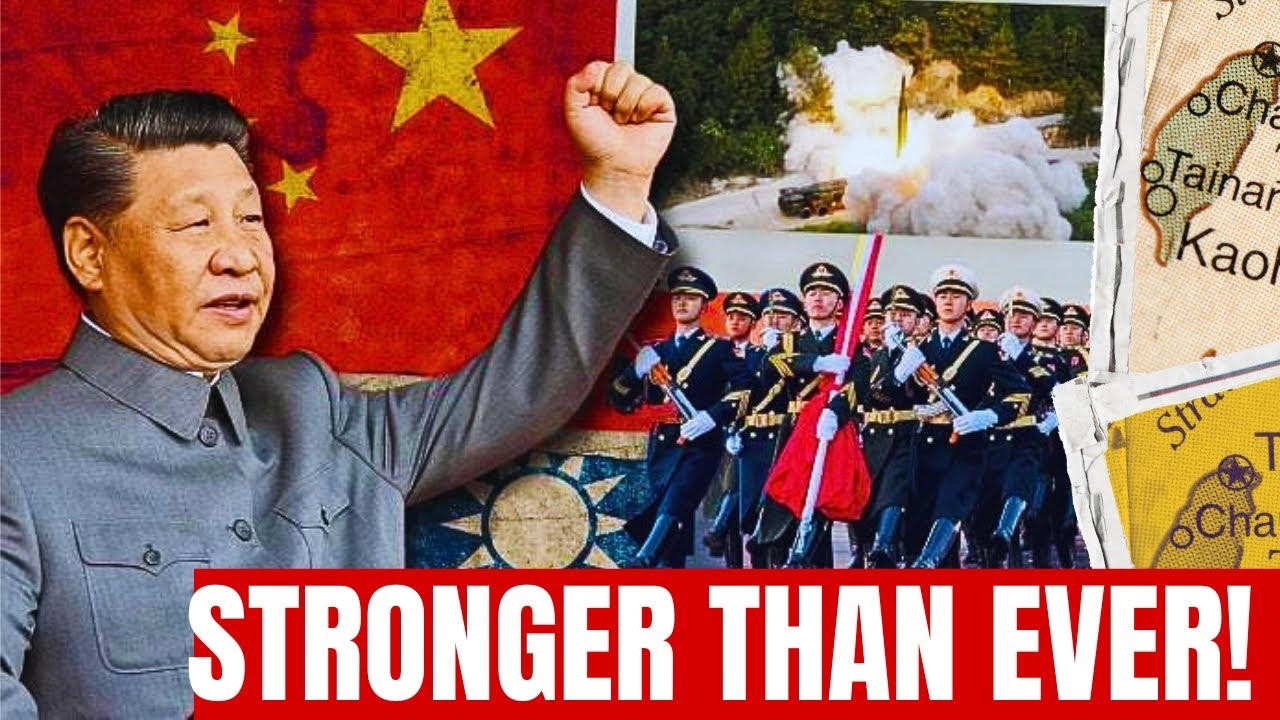
In this livestream, the host (Dr. David Oualaalou) provides a comprehensive analysis of China's recent 48‑hour military drills near Taiwan, focusing on the strategic messages behind the exercises rather than their tactical details. He outlines the operational scale (≈49 aircraft, 19 vessels, live‑fire components) and notes the unusual public disclosure of the drill’s location by China’s Eastern Command. The discussion then expands to three core questions: who the drills are meant to signal (Taiwan separatists, the Philippines, and Australia), what broader geopolitical backdrop they fit into (upcoming multilateral naval exercises, NATO’s Pacific presence, and US‑China tensions), and how the drills relate to a long diplomatic history. The host walks through a chronological diplomatic timeline from 1949 to the present, covering the Chinese Civil War, US‑Taiwan alliance, the 1970s Three Communiqués, and subsequent cross‑strait negotiations. He critiques Western media framing of the drills as “punishment,” highlights linguistic nuances in Taiwan’s identity (e.g., use of “Republic of China,” “Formosa,” “ROC”), and lists the 19 nations that still recognize Taiwan diplomatically. The analysis culminates in a strategic assessment that China’s drills serve as a multi‑target signal to deter separatist moves, warn regional partners, and pre‑empt upcoming joint exercises by Australia and its allies. Throughout, the host engages with live chat, references community contributions, and promotes further discussion in a non‑geopolitical community chat. The video ends with calls for support, gratitude to viewers, and a preview of upcoming content.
Chapters
All right, hello everybody and welcome to Geopolitical Trends, where truth matters. Very excited to be with you because of the topic, uh, I'm doing the writing on the China book, something that I have to keep an eye on on a daily basis. So when this came under my radar, which I was aware of, I just wanted to confirm few things here before I, uh, uh, uh, decide on this based on your survey also. So to all of you, I say thank you for recommending this. So what I'm going to be talking about— the China drills near Taiwan. Of course, I'm gonna be— I'm not going to be talking about the, the technical aspects or the tactical, whatever. I'll mention something, but what I'm gonna be focusing on is the, the analysis is gonna be focused on this security aspect down the road. Because this is the importance of why those drills and the manners by which China decided to do this time in comparison to previous times. So this is what I'm going to be sharing with you. I'm very excited that you all are here, and let me just say hi quickly to some of you guys. Uh, US on a Life Support, that's an interesting screen name. Pro Lem, good to see you. Arthur Lincoln, uh, Free Speech, uh, I have to disagree with you on that statement. Free Palestine from Hamas? That's— no, you don't seem to understand the ins and outs of what— how Palestine is. So I disagree with you on that. So nonetheless, you're free to express your opinion respectfully, of course. Hamad, good to see you. Taiwan still, as always. Uh, YouTube Z Super, hi to you as well. Brianna Olivia, hello to you. Lori, Yan Hakor, Macian Dorcier, Francis Tango, Jane Huang, good to see you. City Rohana, good to see you. Jane Huang, oh, thank you very much for your Super Sticker. Happy Memorial Day weekend. Thank you so much, I really appreciate it. I usually don't celebrate much because I don't drink alcohol, so a lot of celebration about Memorial is all about alcohol and all that. I don't do it, but I do sort of friends and all that. I kind of— but thank you so much, truly appreciate it. Uh, YT, good to see you as always. So let's, let's jump in into this, guys, because there is a lot— I have a lot to cover into this, including the diplomatic history. Yeah, this might surprise you a little bit, and I will explain few things as I move forward. So, uh, housekeeping things is for tomorrow, remember to join me for the community conversation tomorrow at 12:15. So that's when I'll answer your questions, not geopolitical ones, and we're going to be talking about health. There are some, some topics I'd like to share with you, uh, just for you to be aware of. So all right, let's, let's get into this. Well, China kicked off the, the drills because they're going to end today, by the way. It's only 48 hours, you know, the size of it, the what's involved, about 49 aircraft, about 19 vessels and so forth. Uh, yes, it's, it's, it's from an operational and tactical aspect, it's very different. We're talking about live fire also. That's usually— it tells me, it tells me right there, this is slightly different. That goes in parallel where things are headed on the geopolitical landscape, you know. And this is why we're going to ask the questions, uh, uh, that matters with this. For example, What is the message for this? Okay, yeah, we all know about the speech of the, of the, the, uh, uh, Lai Chianti, the, the new guy in Taiwan, and I'm gonna get into that. Uh, still, the message is not just for him or the separatists for that matter. This is far bigger than what you can even imagine, and this is what I'm going to be focusing this analysis on. Second question is, who's the message intended to? There are more than one objective here. So, and third, how this is going to be now reflecting on the regional security landscape. Remember, I didn't say the global, the global security landscape, but rather the regional landscape. So it's very, very important to keep this in mind as we move forward. So as I mentioned, China launched these military drills around Taiwan. What was interesting about it this time, you guys? You know what was interesting is that for the first time China announced the location of where those, uh, I think I have a picture. Yeah, I have a picture. The Eastern Command of China announced, which usually in my record, at least based on what I've been following, China doesn't do that, doesn't disclose exactly. This time it did. For a specific reason. So that's what I found very interesting about it. And of course, this comes, uh, just about 3 days after the new guy in Taiwan. His name is Lai Chang-ki. Now, some of you have said, and I do remember one comment, you know, I was asked whether, uh, he was the CIA point of contact there. In other words, backed by the agency. Maybe, maybe not. We all know how the history is, and I don't shy away from saying it. What I know is based on what I read yesterday as far as his speech. I read it in its entirety. I'm gonna share with you, with you the link, of course, but I'm gonna share some clips. And just the wording of it gives me an idea this was prepared for him. Straightforward. Got nothing against the guy. No, but that's to me became very, very clear. And, uh, before I'll delve deeper— I am gonna delve deeper into this— let me share one clip with you guys quickly here. Uh, okay, where is the share button here? Okay, let me share this with you. Please let me know if you hear the sound because it's through, uh, another clip from Just tell me if you're here, just give me a thumbs up, please. All right, uh, thank you for, for letting me know. By the way, Joy, I just saw your question here and I'm going to put it up for everybody here quickly. It is true, and as a matter of fact, China just added 3 other companies and I'm going to share this with you. So it is true, it's not a lie, it is true. China just, uh, did this one, and rightly so, because of where things are headed. But, uh, I'll, I'll address this later on as I move forward here. So, so here is one thing also I want to draw attention, uh, your attention to. And of course, what the Foreign Ministry in China said, this is aimed at— one aspect of it is to the separatists. But how the Western media took this and manipulated, and it became the word of the day. You know what's the word of the day? And I put it in quote: punishment. So if you look at West, uh, Western media mainstream media, all the articles— I had a chance to look at them yesterday— most of them converge on this terminology, punishment. This is to draw the attention in a negative way, as to look what China is doing and so forth. So beside all this, and let me first get into the geography because it is important, and I'm also going to touch on history but briefly because 5,000 years of history. I'm gonna cover that, but, uh, we're gonna talk about the geography a little bit here because it's very, very important. So let me share first of all, uh, uh, the map of China, because that's what we're talking about here. And I'll show you another map separately, and this one is to put things in perspective for you to see how it is. All right, share screen. Here we go. Okay, let me, let me scroll this one here. All right, China. Oh, we all know where China is, right? East Asian country situated in the north and eastern hemisphere of the Earth. China shares its borders with 14 countries. Now pay attention to what I'm saying. This is the reason why, and I'm gonna provide another one that says differently. And this is what I want you to learn, guys, is the wording. You'll be very, uh, perceptive and very attentive to how the manipulation of the wording, because it can sway your thinking one way or another. So here is what it's— this one here that I checked China shares its borders with 14 countries: Mongolia in the north, Russia and North Korea to the northeast, Vietnam, Laos, Myanmar or Burma, India, Bhutan, and Nepal in the south, Pakistan in the southwest, Afghanistan, Tajikistan, Kyrgyzstan, and Kazakhstan in the west. China is also bounded by the Yellow Sea and the East China Sea in the east and the South China Sea in the southeast. There is no mention of Taiwan as being an independent state. That was one of the, the things I wanted to highlight and put in perspective for those who might not know the geography, uh, of where things are. So now let me share another link here with you from World Atlas, which where I give credit to. It's just with World Atlas you're gonna have to show, uh, both sides of the argument. So, so this is what you're looking at, the map here, as far as when they put it separately, uh, for Taiwan here. That does not suggest that Taiwan is a sovereign state. I want to put this clear from the get-go. This is just geography. However, there are certain loc— certain sites that will mention it differently. This is when you look at a political map, you have to pay close attention to all this one here. So now one thing I want to tell you about, the one thing about Taiwan that I found very interesting— when I say Taiwan, I'm referring China here, but we are talking about Taiwan as island. So Taiwan, which of course in certain locations they don't say the word Taiwan, What do you guys think, uh, uh, they use that? What is the term that you think they use? Can you guys type in that? Is— I, I know this for a fact, some of them do not use the term Taiwan. They're using a different term. If you can type in, in the chat box, what is that term? If you happen to— Formosa, that's one. They don't use that as much as when they're talking about political maps and so forth. I mean, you guys are right. Samosa, that is right. Taipei, no. Yeah, good try, uh, uh, uh, Karakolak. ROC, cheesecake, you got it, you got it. Why am I mentioning this? Just to highlight to you, in certain political maps you're gonna see Taiwan, other ones you're gonna put ROC, otherwise you're gonna see samosa. You don't see that much, mainly for between the two. But one thing I found interesting, even in the language, and I'm going to share it with you here. When it comes down to the language, so in Taiwan there are different languages. Here is where the problem with this first sentence— it says the Republic of China has different languages. Where is the problem there? Can you guys tell me where is the problem with that sentence in itself? It starts with the Republic of China has different languages. Where is the problem there? All right, let me see. I know it takes a while here for this to show up. All right, let's, uh, all Chinese languages. I see your point and you are on the right track. You are on the right track. There is one specific, uh uh, one specific wording I'm looking for here that kind of make perfect sense. Indeed, they are all Taiwanese. Okay, here is one thing, they are manipulating the language here by saying the Republic of China has different languages instead of what it ought to be as different dialects. When you talk about a language, you talk about an establishment language for a sovereign state. For us here in the US, English is our established language. Of course we have Spanish language, we have others, the minorities and all this, but it's because the US is a sovereign state. This is the first one. But in any event, we're gonna move on with this. Now you have what they called Taiwanese Hokkien, which is the most spoken language in Taiwan, with speakers comprising of about 70%. Of the population. That's a dialect, that ain't a language. So about 13% of the citizens of Taiwan, okay, which consists of immigrants from the mainland. So out of the 13% of the population, in which is about what, 23 million people, they're all from the mainland, okay? Which they speak— which language did they speak there? Mandarin. Okay, while the Hakka, who are also about 13%, speak the Hakka language— another word, speak a different dialect. Approximately 2.3% of the island residents are Taiwanese aborigines and Formosans dialect. So all levels of schools in Taiwan teach English, with the official language being standard Chinese. Some words have different meaning, with others having a different pronunciation in China versus the one in Taiwan, which is similar for us here in English. For example, here in the US, for an apartment, we use the term apartment. In England, they use the term flat. The same thing apply to Spanish, the Catalan in, in Spain. There's a different pronunciation for certain words in Latin America, for example. It's no different here. And, and they have an example here, and please correct me for those who are familiar with the Chinese language and so forth. Uh, the word, for example, for potato in China stands for peanut in Taiwan. Is this correct? I just wanted to have your input into all this. So now let's get into the history because it's very important. All I'm gonna do, I'm gonna take you back, but about to, uh, uh, 1949. Why am I taking you to 1949 specifically? Can anybody tell me? Oh, thank you, Bruce. That means it's not the same. Thank you very much, Bruce. All right, why am I taking you guys to 1949 specifically? What is unique about that year? Let me see. Yeah, end of Civil War, that is correct. That is correct. China's independence, that is correct. Revolution, whatever term you used. You know, as I said, I'm only going back to around that time. It's very important to, uh, understand, uh, uh, part of where— how he moved forward, because without understanding the historical timelines, it won't make sense to you, all this. But also, this is important, especially when I touch on the diplomatic history. Yes, there is a discipline in political science that is called diplomatic history. As a matter of fact, a late friend of mine by the name Stan, he passed away. He used to teach diplomatic history. That's what I found very interesting. So this is— I'm going to show you a picture from 2018 before I'll go back. This was a demonstration inside Taiwan. This is so-called the pro-independent demonstrator shout slogans during the 2018 October rally. In Taipei. So, and again, I'm going to show you both sides of the argument because that's what we do, guys. We provide both sides. That's how we learn. We can't just do one— we don't do that here. You all know, you all know, right? Now let's go back to 1949. What happened? As I say, separation. This is when Mao Zedong, uh, uh, take over power in, in Beijing in October '49, right? And this after defeating— who did he defeat at that time, guys? Can you type in, in the chat box? And again, it's just to get you involved in the conversation. Who did, uh, uh, uh, Mao Zedong defeated at that time? Chiang Kai-shek! You got it, you got it. That, that is exactly What happened? Chiang Kai-shek, which is the KMT nationalist, in civil war. So after that, the KMT fled to the island and they decided to establish their own government in Taipei, which was at the same time in December of the same year, you know. And by doing that, they cut off all the contacts with the mainland, uh, China. So, uh, move to 1950. 1950, what happened, which was the turning page in history regarding the relationship between Taiwan and the United States? In 1950, Taiwan became an ally of the United States. Well, actually, it's not an ally. We saw an opportunity because at that time we just came out of World War II. We were the victorious, even though you and I know the truth. We didn't win World War II, it was the Soviet Union. We just took credit for it. In any event, we're gonna keep going with this, uh, became an ally which is— was at war at that time with none other than communist, uh, uh, Soviet Union at that time. So let me— I have some other pictures I, I need to share with you here while I'm talking about this one here. This is the president here, uh, so 1950, uh, move forward to, uh, uh, uh, not only the Soviet Union but also it was another conflict that's going on between the United States and which country, guys? Communist where? Because remember what was happening in the '50s. What kind of war are we talking about? Very, very important also to put things in perspective. You got it, hairless ape, you got it. Korean War. Why? Because China got involved. This is why it's important to understand the historical aspects of it. And this, uh, and what the United States end up doing, it deployed, uh, sort of its fleet to the Taiwan Strait. This is where it became the norm for us to be doing this. And the reason they're saying is we wanted to protect our allies from possible attack from the mainland. That was the argument back then. Fast forward to 1971. And by the way, guys, FYI, it was during the early '50s when the decision was made in Washington, all we need to do— this is where the military, the MIC, industrial complex, took hold of the government. It didn't start 10 years ago or 20. It started back in the '50s. That was then when the decision was made, we need to get involved in conflicts around the world, not necessarily to win a war, but rather just to drag conflicts for years so the military can make Prophets. Because think about it, what war was it in the '50s? I'm gonna, I'm gonna ask you on this. You all mentioned about the '50s in, in the Korea. What about the next decade, the '60s? Which war was it? Okay, I know it takes a while for for here to move. So I'm gonna just keep going, guys. The, uh, Vietnam— what after Vietnam? Gulf War— what after Gulf War? Gulf War II, Afghanistan, and now you have Ukraine, and soon-to-be tensions in Asia. Because the objective was never to win a war. This is what I want you guys to get and understand as to where— when you see the changes in the geopolitical landscape, you have to understand the background as to What's fermenting this and why? This is an example of it. So from, from the '50s back then. So, uh, let's continue with our, uh, timeline here. Move to 1971. This is when, uh, China or Beijing get the nod for the UN seat. On October 1971, China took over, uh, Beijing took over China's seat at that time. United Nations was which was previously held by Taipei, believe it or not. Yeah, 1979 marks the change because what happened during the '70s between the US and China? Let me share a picture. There we go. You all know what this is, right? Can you guys tell me what are you looking at? Indeed, indeed, indeed. H indeed, Nixon. That's correct, Rafael, that was Nixon. So what happened? 1979, the US establishes diplomatic relations with China, but also Here is where the tricky part, but also committed to the defense of Taiwan. Another word, we wanted to have it both ways, you know. And this is where we backed the policy of One China with Beijing as the legitimate government, but established trade and military ties with Taipei. And we're gonna get into this, no, For now, I just want to provide you the time frame of, uh, or the chronological, uh, historical event here. 1987, 2016. All this time here, guys, this is where the so-called fragile reconciliation took place. Why? Because in late 1987, Taiwan residents are for the first time were permitted to visit China. Right, allowing families to reunite. This was a different path than what the North Korean and South Korean after the Korean War. So in other words, they want differently. Well, of course we didn't want to see that happening either. So, and this is what we trying to prevent, you know. Come 1991, what happened? Taiwan left the emergency rule unilaterally, ending the state of war with China. Okay, and the first direct talk between the two sides were held in— which country were they held, guys? Uh, I don't know if you would know or not, but doesn't matter, just guess. I want you to guess which country that's always play a neutral position in Asia. It's an Asian country, of course you don't see that in the West. Which country, in your opinion, where the talks were held? Uh, indeed, Jane, indeed, it was Singapore. Indeed, that's where it was held, 1992. So in 1995, Beijing suspended talks in protest of the visit to Taiwanese President Lee Teng-hui to the US because he is not representing a sovereign state. So now if you go as a private citizen, that's fine, but if you go on an official visit That's like the idiot Pelosi that went over to Taiwan. You know, she— at that time, she was third in line for the presidency, which means the optics of it weren't pretty. But of course, our politicians are incompetent. They won't even understand these dynamics. 1996, China tested the missiles off Taiwan to deter what was going on at that time there. 2000, of course, the election— KMT lose power in Taiwan for the first time. Uh, March 2005, Beijing adopt a law which makes secession by Taiwan illegal. But you need to understand this part here. I'm, I'm getting ahead here, but I'm gonna take you back to understand this particular point. And in April of the same year, 2005, there is the first meeting since 1949 of the leaders of KMT and the PRC, or the party that is in China. So 2008, Taiwan and China resume high-level talks. In 2010, they signed the sweeping economic— at that time, what's— yeah, they signed the sweeping at that time for sort of government-to-government talks. And that's 2015. Of course, the leader of both sides met in Singapore once again, shaking hands. Yeah, what you're looking at is the picture, uh, of, uh, uh, Tsai, uh, during her inauguration 2016. I give credit to picture to Tyrone Stew from Reuters. Now there is a problem was with Tsai, which of course she was in hot water for allegedly forging her doctoral dissertation. Let me share something with you. I went on the record to check on LSE, the London School of Economics, where she said she got her PhD. I did find the paper, but I didn't find who the chair of the committee was. In other words, if there are no chair for the committee, that means you have not earned the PhD till the chair and the committee members, and of course the university and the state approves it. I can't call you a doctor because you haven't earned it yet. So it's been a controversial back then. As a matter of fact, she— to my knowledge, she went after someone who starts digging into this by, uh, filing a lawsuit against the person, which is not right. If you commit fraud, specifically academia, it's a big problem. Uh, LSU— LSE, I'm sorry, London School of Economics said, oh no, she earned the, uh, law degree. It's so confusing. The papers that I saw didn't, didn't indicate specifically that. So 2016 was the end of the honeymoon. Why? Because Tsai, uh, uh, from the traditional so-called pro-independence, won the elections and embarked on a different trajectory, uh, for that. So, and you all know the history for that one. Now, it is what I want to talk to you about, is about from, from a historical perspective, to take you back to the 2005 or even before, into 1990 and so forth. Why? Because it was something major that was done in the '70s between China and the United States, and that one called the Three Communiqués. Okay, I'm gonna show you a picture, uh, when, uh, was the signature. This one here, it was Jimmy Carter. I know the picture is not clear, guys. And, uh, Deng Xiaoping, uh, that was the, uh, let me see here. Yeah, that's the second communiqué. So, but you need to understand the, the, the history of the three communiqués. So I'm gonna do them for all of you guys, all of them to understand. So what, so what are the three communiqué? Just for us to have an understanding of this one here. What are the three communiqué? Well, the three communiqué are a collection of the joint statements made by the governments of the United States and the People's Republic of China, or PRC. It didn't say the communiqué between the United States and and Taiwan, right? So the communiqués played a crucial role in the establishment of relations between the United States and the PRC and continue to be an essential element in dialogue between the two states, meaning the United States and China, along with the six assurances that we signed to the Chinese. Okay, so here is the first communiqué. By the way, what year the first communiqué was signed? Just FYI, in case you know. Let me see what you guys put in, in the chat box. It was back in the '70s. Yeah, Carter the bastard. Uh, yeah, 1972. Indeed, that's when it was signed, and that was known at the time as the Shanghai Communiqué. Basically, what was it? It was to summarize the landmark dialogue that became— that began between, uh, Richard Nixon was at the time and the Premier Zhou Enlai. And this is the picture that I shared with you earlier, uh, Yeah, right here. This is what started that one, okay? And during the February 1972, that's what happened. So now, some of the issues addressed there in this communiqué included the two sides' view on Vietnam, the Korean Peninsula, India, Pakistan, and Kashmir. But of course, it was the conversation also about Taiwan. So that means the political status. But here is what's important that I need you to understand. What was— pardon me— what was written down in that communiqué is that essentially both sides, meaning China and the US, agree to respect each other's national sovereignty and territorial integrity. So if Taiwan is part of China, that is part of China's territorial integrity. The United States formally acknowledged that, and I put this in quotes, "All Chinese on either side of the Taiwan Strait maintain there is, there is, is but one China and that Taiwan is part of China," end of quote. This is what we signed on for the first communiqué. It added also, and I quote, and that the United States government does not challenge that possession, and it reaffirms its interest in a peaceful settlement of the Taiwan question by the Chinese themselves, end of quote. Now here is what I want you to understand. This is where the manipulation comes in. Even back then, there is one word The way it was written, it was meant for specific reason. When it says the United States formally acknowledged that all Chinese on either side of Taiwan Strait maintain there is but one China, well, you know what the keyword there is? Acknowledged. You can tell the— we knew back then that if we use the term accept that will change the geopolitical calculus. So we decided to do— to use the term acknowledge, which means what? Ambiguity. That means, oh, we said we just acknowledging, which doesn't mean we accepted it. See what I'm getting at? That was a political manipulation. So, and this is why it's often regarding the future, uh, uh, uh, relations, between the, the two countries. Fast forward to the second, uh, communiqué, which was at that time— that's the picture you saw between Jimmy Carter and, uh, uh, Mao Zedong, right? Not, uh, uh, Deng Xiaoping, I believe. So the joint communiqué at that time formally announced the commencement of the normal relationship Yeah, is this one right here? Uh, no, the signature right there. And this basically between the, uh, the PRC and the United States. In doing so, the United States recognized that the government of the PRC was the sole legal government of China and acknowledged the PRC's possession that Taiwan is part of China. In addition, the United States government declared that it would end formal political relations with Taiwan while preserving economic and cultural ties. Both sides reaffirmed their wish to reduce the risk of international conflict as well as avoidance of hegemony of any nations in the Asia-Pacific region. Fast forward to the third one, which was signed in— by the way, the second one was signed in 1979. The third one was signed in 1982, also known as the August 17th Communique. This one basically reaffirmed the desires of both sides, that means China and the United States. It was never a conversation with Taiwan, it was always a conversation with China, meaning mainland China. So, uh, uh, the agreement was to further strengthen economic, cultural, educational, scientific, and technological ties. Except now we don't like the fact that is China is moving faster and we are upset about it. So both sides, China and the US, also reaffirmed the statements made about Taiwan issue as they mentioned in their previous communication, although no definitive conclusions were reached on the issue of arms sales of Taiwan. Why do you think that is? Is because we want to keep the door ajar as far as sending more weapons. We knew what we were doing. That's a source of fermenting tensions. So, so, and this is where the United States declared its intention to continue selling arms to Taiwan and to gradually change its level of arms sales consistent with the PRC's militarization of the Taiwan Strait. Another word, we change the horses in the middle of the race. So here is what's important, and I'm going to share with you a declassified document. It's in public domain, so it's kind of, uh, it was declassified anyway. Uh, it was a declassified cable. This is how the communication goes between the embassies and Washington. So it was back in July 10th, 1982, and this was at that time the Secretary of State was Lawrence Eagleburger. That's what it was. So what happened? It was, uh, a letter or cable, email, whatever you want to call it. By the way, email was way back in the '60s. When I was in the military, I worked on a system, uh, that traces back its roots back to 1964 using the email. Uh, Eagleburger to AIT Director James Lely at that time explained that reducing arms sales to Taiwan would be contingent on the commitments of the PRC to a peaceful cross of the Taiwan Strait. Afterwards, the US clarified the third communiqué by issuing the six assurances. Well, here is my thing to you guys. If we are to say we signed the documents, which means we are bound by its content, like in any business contract, when you sign a contract, you You're bound by its clauses, right? How come we signed what's in the paper but we doing the opposite? That just— it shows you that where things are, and it's very important for you to understand this dynamic. So now let's move to the speech by, uh, what's his name? His name is, uh, uh, Lei Chenqi. I don't know, you call him president, I call him governor. To me, it's not a— it's not an independent state. That, that's, you know, it's just the way I see it. And because, uh, even within this, guys, they were only— I think I had a note about it. I put a note somewhere, uh, where, uh, the countries, the, the countries that, uh, recognize Taiwan, you know, there are only about 19 of them. And I have the link and I will share it with you, but let me just disclose this to you briefly here, quickly, uh, as far as the countries. You have Belize, Belize in 1989. El Salvador, Guatemala, Haiti, Honduras, Kiribati, Marshall Islands, Nauru, Nicaragua, uh, uh, Palau, Paraguay, uh, Saint Kitts and Nevis, Saint Lucia, Saint Vincent, uh, Solomon Islands, Swaziland, Tuvalu, and Vatican City. Remember, some of those severed those relations with Taiwan. This is an old record. For that. He just wanted to highlight to you there were some countries in there. But let me just say it, and no offense to any of those, to those who still having those relations with Taiwan, do they matter? Let's just be a little bit honest about it, straightforward. So, and, uh, that's one of the important things that I need you to understand on this. So, so now let's get into the speech of the governor or president, whatever term you want to use. So I read it, as I mentioned. I'm going to put the link for you, the translated, uh, uh, portion of it in English. And what I found very interesting is, is the wording. Again, I'm gonna share one short, short paragraph and let me know your thoughts. It says, and I quote, I also want to call on China to cease their political and military intimidation against Taiwan. Share with Taiwan the global responsibility of maintaining peace and stability in the Taiwan Strait as well as the greater region, and ensure the world is free from the fear of war. End of quote. And of course, he went on to talk about democracy. And, uh, that to me was when I knew, I knew that this was prepared, uh, for the guy. Here is what it says. As for international affairs, we will continue working with the democratic nations to form a democratic community and share our experiences across a range of fields. We will work together to combat disinformation strengthen democratic resilience, address challenges, and allow Taiwan to become the MVP of the democratic world. Yeah, you all can see, right? You can read between the lines where this is all going. And that's why, in my opinion, it was prepared— the speech was prepared for him. Uh, it's because, uh, we want to maintain those tensions over there. That is the bottom line to it. So, uh, by the way, there are some images here of some the hardware that China is using during those drills. Just want to show them with you. And I looked at the original record for this to get these images here. Uh, what else I have? I showed you this one here, the islands where they training. And by the way, it's going to be conclude today. I'm assuming it already concluded. So, uh, this is during the Nixon, of course, that's an old picture. Uh, this one here, President Nixon with the Chairman Mao. And those are the deployment of the aircrafts, I guess. Those are the MiG, I think. Yeah, yeah, those are the MiG, which to me was like, wow, if Taiwan, that is what it has, they stand no chance against Russia— against China. Yeah, if that is what they are using. Yeah. Yeah, those are Mirage, not the MiG. I'm sorry, the Mirage. Yeah, they'll stand no chance. Uh, this is an equivalency, this similar to the US C-130. And that's, that's, uh, all right, let me share with you now my own insights, analysis as to what is going on. No, First of all, what is the message of China? What is China trying to say here? Well, first of all, the message is not just for the separatists in Taipei. No, it goes beyond that, especially when you consider what's coming up in 6 weeks from today, which will be in about July 4th or 5th, one of those two. I haven't get the confirmation yet about the date. What is happening? What's going to be happening 6 weeks from now? And I will do a video for you. Australia is preparing now to hold one of the largest military exercises with 20 countries that will be involved. 21 countries including Philippines. And Italy. So once again, is China getting ahead of all this? Because remember, only a few weeks ago, they were the four countries— the US, Japan, Australia, and Philippines— that conducted the mock drill by which he was sinking a Chinese aircraft carrier and taking over. That was a mock, uh, drills, okay? This is one of the, the one. Second one, could this be a message also for the Philippines? Because Philippines seems to be moving in a different direction that it's not gonna bode well for its security interest moving forward. My reference is also to the USS Carrier Ronald Reagan, which is the CVN-76. I don't have a picture of it here. All I know is that it is currently operating in the waters of Philippines, and now he moved as China launched the 2-day drills, which will end today anyway. So that tells me right there, China is hitting 2 or 3 birds with one stone. One message is for the separatists in Taiwan, second one is for the Philippines, And third one is for Australia. Now, of course, it goes without saying for North Korea— for, uh, South Korea and Japan. But at the same time, the reason being I'm mentioning Japan, because Japan just issued some statements regarding the support for Taiwan. Wait a minute, you are some about 2,000 miles away, whatever that distance is. Why would you worry about Taiwan? And this, in my opinion, where that challenge is. And that is the reason why, in my opinion, in my own analysis, why China decided to do the drills now with the— on, on, on, uh, sort of using live fire. That's one. Operationally increasing the number of aircraft and the, the naval vessels or naval assets into this. 49 aircraft 19, 18 or 19, one of the other vessels, naval vessels. That shows me just in comparison to what happened, for example, when Nancy Pelosi went over to Taiwan, when, uh, when Tsai made a stop in California and met with, uh, at that time it was the Speaker McCarthy, if I remember, which all of them are incompetent anyway. So this time around I am sensing that China is saying, I think we've had it. And I'm not saying China's gonna go in for military. Of course, for us in the West, that's the only way we understand. It's if the government uses the term invasion. Oh, China's gonna invade Taiwan. How can you invade your own country? Let me— I always say this one, you know, that's like us going and invading Hawaii. Even though Hawaii was never wanted to be connected with the US, or Puerto Rico for that matter. Same arguments can be made here. So in my opinion, that China is sending these messages to those three countries, but especially for the Australia one. Australia is because of why it's going into this direction and bringing in more countries. And if you notice I mean, as I mentioned, 21 countries from Philippines to Italy. That means Europeans will be involved in those exercises. And this coincided with what? It coincided with NATO's opening an office in Tokyo. That means more presence of NATO forces in the Asian Pacific theater. And that is why China is sending these messages. To the Philippines is saying, what, are you dumb? Are you this stupid? What, are you risking your security? Because that's exactly what Philippines is doing. Mind you, they are not telling you— when I say they, mainstream media— I'm telling you the demonstrations that's going on inside, uh, uh, Philippines. And same for Taiwan, the demonstrations inside for and against. Of course, there is now some legislations that is going on, and you should— I saw the videos of the fighting, fist fighting inside the legislature. It tells you the story right there. But the message from China overall is more of a strategic— this is not for tomorrow, this is for the next 5, 10 years, 15, whatever that is. Because once the dust settles on Ukraine, you're gonna see the tensions in that part of the world. And this is why I am thinking to myself, do really those in charge in Taipei think that we're gonna send our soldiers to die on behalf of, of, of Taiwan? You will think they will learn from the history of what's going on in Ukraine. And if this is not enough, what happened to the signed communiques between the United States and China? Three communiques. But on the other hand, where is the credibility anyway? We kind of— the collective West lost all that credibility. There's nothing left. And this is the way I see the, the, the scope of those drills, even though 48 hours, but the scope of it, the tactical, uh, uh, uh, assets used in it, the live fire, that just tells me the story right there. And this is what I wanted to share with you guys because I need you to understand the big picture of all this. So once again, just to reiterate all this, the message is meant for 3 in my opinion, to the separatists, of course, to Philippines and to Australia, as a signal for what lies ahead as far as July naval drills that Australia is going to be conducting with 21 countries. I will be curious to see who else besides Philippines in, in the region. I'm not talking about Europeans, are so— they, they just have to follow orders from the US. That's the way it works because they get no independence, they get no sovereignty, they get no political will to say no to the US because they're so weak. China, on the other hand, is left to wonder, how nice, how much nicer can I get? Because that's how I'm starting to feel. At some point, China will have to push back, otherwise this will never end. Because here is the thing, just consider this, guys. What do you think would have happened if the Chinese would have moved a naval unit and put it in, in, in, in Kume Island, or put it somewhere close by? Or even when the US moved the first time under this freedom of navigation and sail through. What do you think would have happened if China took stand back then? Will we be seeing more navigation, freedom of navigation, uh, sailing through, or tensions, or whatever? And like I said before, what I see on the horizon is that the dust, it is getting settled on Ukraine issue. Okay, or Ukraine front rather. And this is where the movement is. We start, uh, preparing the land— the landscape rather— for tensions ahead of time. So Australia getting involved in these drills when its economy is sinking. Its legislature now just passed the regulation to allow digital, uh, uh, CBDC control of the government, of the finances. Another word, now the Australian government will be controlling the citizens' spending. If they don't like you, they'll turn it off. If you don't get in line, they will turn it off. As a matter of fact, I was even surprised yesterday right here in the United States The House of Representatives in Congress passed the legislation against CBDC. They don't want the digital currencies. I'm surprised. Did they win the right thing? But even with that, I won't trust them anyway. I don't trust— I mean, would you trust the US government? Yeah, it's not a laughing matter, it's sadness. As to see where my country— what has become of it. You know, what about that live and let live? Just let people live. Let them live their own democracy or not. Who cares? Who cares? Let them do whatever they want. It's their country. You know, I don't want anybody to come to my house here and dictate to me what to do. So what gives me the right to do that to others. I have no right to do that whatsoever. I have no moral authority whatsoever. You know, as long as you are not harming me, as long as you are not causing destruction to my property, as long as you are not, you know, you kind of being civil and all that, you, you live, you do whatever you want as long as you don't impact me. And I'll do the same. Well, the same thing applies on international law, except when you think on the larger scale, especially now with the shift of the geopolitical landscape, we're not gonna go down quietly. It's because we are going down. We are realizing that. It's just we don't want to admit it. This is where the challenge— and I fear for my fellow citizens here. If you are an American, you are at least listening to this, maybe it makes you think a little bit. Okay, what do I need to do? What do I need to prepare? What do I need to, uh, uh, consider? Majority of Americans are— so, so this is what I wanted to share with you guys. Uh, I am gonna end it here. I'm gonna answer some of your questions. Once again, I want to say thank you all for your support. Please make sure to hit the like button. I would really appreciate it. And if you can share this with others and subscribe if this is your first time here, I will be grateful to you. So, uh, to those who want to support the channel, here is the link for PayPal if you use PayPal, uh, if you could, uh, and the other ones is the link for the, the Buy Me a Coffee, which by the way, I start sending video messaging, uh, to all of you who buys me coffee to say thank you. Gratitude is very, very important. Speaking of gratitude, I am going to read to you two comments that I picked just here. And again, if I came across something bad, I will still share it with you because I'm not gonna be cherry-picking just the good stuff. No, no, if there's— of course, respectfully, otherwise you have no place in this community for that kind of language, whatever that might be. So, uh, this is from, uh, Shirley 7224, you wrote, and I quote, hello Dr. David, I absolutely love your balanced analysis, even your sense of humanity, uh, and thank you for your working so hard to increase my education of global situations. Thanks. End of quote. You're most welcome, you're most welcome. Uh, Edu Utopia, Utopian, wrote, and I quote, this channel is worth global support arguably because the host, a journalist— even though I am not a journalist, I don't have the credentials for journalist, but I know what you meant— because the host journalist has the requisite deep knowledge, independence, passion, commitments to world peace, integrity, etc. And most importantly, he does his homework to synthesize up-to-date information regularly for all of us, end of quote. Well, thank you so much. And yes, I do, I do, because your time means a lot to me. I don't want to waste it. If I don't have something of substance to share with you, then what am I doing, wasting your time and wasting mine? And to me, I won't feel good about that. And, and this is why it's like, even with this, I said what's needed to be said of substance. I ain't gonna stay here ramble for no sense. No, I I don't do that. I'll understand some of your questions, but that's about it. So I do spend time preparing, I do my own research, I do my— it takes me time to put this together, guys, from yesterday. That's why I told you yesterday, by about 15 or 1600 hours, I need to have your answer to the survey. And thank you, all of you did and showed me that you wanted this topic first. Caledonia also, it's important And I'm going to do that probably next week. We see how, how it goes. So this is why your support means a lot to me, and I am very grateful to you all. So, all right, let me answer a few questions here. Uh, oh, Hong Wan. Dr. O, someone asked last time, where is Elizabeth and What happened to the other channel? No, still there. As a matter of fact, you're gonna be looking— you're gonna be seeing a recorded video, which by the way, I hope you guys can help me— help us out all by, you know, just click like on this and share it with others. Someone reached out to us, they wanted to do a specific video for them, and, and we agreed to it. No, no, it's still there. Uh, Elizabeth is busy with some other stuff, but remember, uh, it's not just the channel. In addition to producing and all this She has her own life. She has to live her own life also. So, so I kind of say, you know what, do what you need to do. And but the channel's still there, and, and we will be coming on the air soon. So, so she's still around. So, and thank you for asking, truly appreciate it. And I will let her know. Ace, Ace, Ace 1000, you said thanks for your time, Dr. O. You're most welcome. You are most welcome. Uh, uh, Dave H, my question, uh, what was countries, uh, was those countries have embassies in Taiwan? I don't know. I do not know. I do intend when I head out to Asia, I am considering Taiwan will be one of the my stops because I need to see with my own eyes And I'm going to look into this if there are any embassies there. So, but not to my knowledge. That could be just a formality for, for— I know, because like I said earlier, and no offense to those countries, they really don't matter. I mean, how much do you hear about those countries? So that, that, that's just how I feel. All right, well, thank you so much, Ramplaz. I feel empty when there is no Dr. O video. Thank you so much. And, and, and the feeling is mutual, really. I enjoy being with you guys, the community. It's because now we beyond those formalities of, uh, oh, I want just the viewers, or I want this, or I— or for you just something to look. We beyond that, we pass that. You have gotten into some deep knowledge now that it becomes on you to maintain and sustain that knowledge. You know, I am here today. What if something happens to me tomorrow? You know, I, I just, I don't trust life. That's how it works. People go to bed and they want to wake up. That, that's the way. So my advice to you is you keep digging for knowledge whether I'm here or not. I'm now facilitating this and happy to do it. I don't enjoy doing it. I have the energy, the passion for it. The desire to do so. And yeah, when I don't do a show with you guys for 3 days, well, I feel something missing, and I mean it. You know, I'm not a— I don't sugarcoat things. That ain't my personality. So when I say I care, I mean it. If I didn't, I'll say so. That's, that's how it works. So thank you so much for your kind words. It means a lot to me. All right, let me see a question from you, uh, If there's a question, uh, Francis Tango, what happened to Israeli PM connection with the ICG? And yeah, it's still on the whole— there's now demonstrations inside, uh, uh, Tel Aviv— inside Israel, rather— putting the signs of, uh, Netanyahu behind bars. In other words, they want him to be arrested. So, uh, and for some of our members of, uh, Congress are now threatening the ICG. Well, if you do this, you already discredited yourself. This is what the sign of the end of the American century. We are coming to a close. It's just we don't know how to close the door. That's why when you see this, uh, embarking on this erratic policies and, and, and irrational and ill-conceived and just no direction whatsoever, That's the sign. So because if we punish ICC for doing his job, it's over for democracy. Democracy is already over. I am looking for, uh, to do a video based on, uh, uh, uh, a report I read, an analysis by a professor of communication, Dr. Suleiman. It was very spot on. So I'm going to figure out a way how to do this for you guys because you need to understand. So I don't need to do that. All right, let me see another question here, and I'm scrolling down, guys, just to see. By the way, remember to join me tomorrow for the community conversation. Uh, Kurz Sadiki question: why is Taiwan trust the West so much rather than China? Well, here's the thing. When we say Taiwan, remember, you're referring to a group of people. That's why they call them the separatists. You know, it's not the whole Taiwan. No, this is one of the reasons why I want to go and see with my own eyes. It's not the whole Taiwan to my knowledge. I had some colleagues who've been stationed in Taipei. No, it's not the whole Taiwan. You know, and the reason what you're seeing, uh, with the tensions is because we found the outlet to maintain these tensions. A war with China is going to be devastating for us. Let alone, we're not going to win it anyway. Do you know how bad our military is? Destructed from inside, disintegrating from within. The soldiers of today, the young generation, ain't ready for fight. And second, why would you go fight for something that has nothing to do with our interests? So that's the, uh, yeah, it's just because we are fueling the tensions and we kind of, uh, behind the scenes selecting the individuals Uh, did you know that Tsai, before she became the head of the party there, whatever, took the governorship, and she was here in the United States? She was educated to a degree right here. So we kind of groom— same thing you're seeing right now in Argentina with the, the, this clown Javier Milei. The same thing you saw and you're still seeing with Ukraine. The same thing in Germany, the same thing in, in, in with England. You know, all those leaders are not, uh, they're not qualified for all that stuff. Okay, one last question. All right, let me see here. Okay, I don't see— oh no, there is one. No, it's not. I thought it was a question. Uh, yeah, last question I take from Taiwan Steel, and I don't even know if the question was meant for, for me here or not. Uh, where is it? Yeah, right here. Yeah, where is the Quad? Yeah, it shows, it tells you right there. The Quad was nothing but a just a window dressing. Now you're gonna be hearing about Squad. Oh, it's nothing but hypes. They won't stand a chance. And this is why when I think about the country like the Philippines that is in desperate need of economic incentives, sinking itself into a hole— why? You know, I'm sure the Filipinos are devastated how Marcos Jr. turned out to be. And this is, by the way, it's because the family assets are in the US. It's no different— get this, guys— is no different than other Arab corrupted leaders, Arab or Muslim leaders. They have their assets right here in the United States, so they are afraid of being confiscated. This is why they're doing— I mean, you look at just with this issue of Palestine, Palestine. Where are they? And now they're saying, oh, we are all in support of Muslims. Well, it's nonsense. It is nonsense. So it's the same thing. So that's why the Quad and all that— and, and countries have to think. I'm not saying they can do whatever they want. Uh, I, I take the example of India. India might have seen a strategic interest in being part of the Quad. But what do you think about it? Do you think that the United States is going to share sensitive information with India, even Australia? Remember, I was inside the government. I held one of the highest security clearances out there. And by the way, there are more levels above top secret. Those are classified themselves. The words are classified. So I had one of those. Even Aussies, the ones with security clearance, will not be able to know certain details, especially in a Pine Gap. It's their— you know, it just gives you an idea. Uh, Quad, it's— you— all of them are useless. And this is what Taiwan— just to wrap it up with our topic— Taiwan needs to really think hard. You know, China is already allowing Taiwan to live as it wishes, but Why push it? Why push it? Because once again, China has the means to do whatever he wants to do, both economically and militarily. But also, China strikes me as being wise given its history. This is the importance of history. Go back to Chinese history and tell me whenever China invaded another country. It was the intervention in Vietnam. It was for specific reason. But in modern contemporary history, tell me if there was ever an equivalency to the invasion or the conflicts that we created, or the collective West, in comparison to Chinese history. So China has other means. On the other hand, as I always say, the optics of it will not look good if China sort of put a blockade economic on Taiwan, they'll starve them to death. Then what will become of China known for? This is why I think the pragmatism of the Chinese is holding it from embarking on this route. The same thing with Philippines. I don't see China putting an economic blockade on Philippines. Look just what it did, what China did with few commodities regarding Australia and how the economy sank in. And, and China didn't use a full economic blockade. No, they just reduced the import of certain commodities and the economy went down. Can you imagine a blockade? And this is what I'm saying, just, uh, for Quad and all this is nothing but, uh, useless. So, all right guys, I hope to see you tomorrow at, uh, 12:15 for our community. I'm gonna, uh, get some pictures to share with you for tomorrow, and we'll just have a relaxing conversation. It's our time, mainly your time. So if you have any questions, not geopolitics of course, we'll just answer them and talk, and, and that's it. So as always, remember, geopolitics impact your daily life. In more ways than one. Till next time, guys. Bye-bye.
More from David


Beyond the Single Actor: Why the Gulf Isn't Choosing Between the US and China


Iran, Iraq's Militias, and the Houthis Are Coordinating! This Changes Everything




Who Controls the Next Decade's Resources? Latin America and Africa's Geopolitical Crossroads

The Chokepoint Trap: How Washington's Stupidity Triggered a Cascade That Now Controls the World

Trump Spooked as IRGC Unveiled dual-use SLV, Deployed Ghadir Mini-Subs & Hinted at Tactical Nukes!
