China-Philippine’s Tensions Are on the Rise, Once Again! Why?
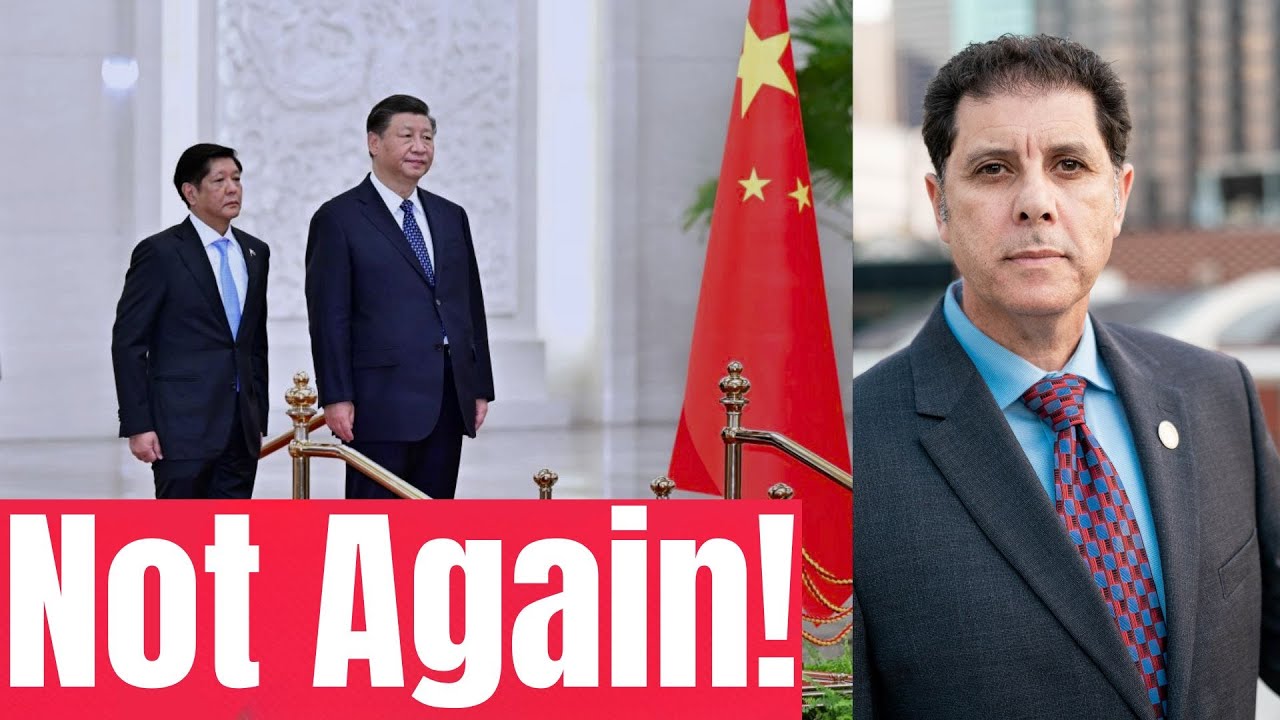
The Philippines removed a Chinese floating barrier at Scarborough Shoal, escalating tensions as the US pledges $200 million in Pacific aid. The dispute hinges on competing claims: China cites Yuan dynasty history, while the Philippines invokes a 2016 arbitral award and international law.
Chapters
Hi everybody and welcome to Geopolitical Trends. So excited to be with you, uh, for this live stream. It's a very, very important topic and I know I've talked about Philippines before, but again, the reason I decided to do this is because to me personally it's nothing but a confirmation as to what I've been thinking about before as to where I see Philippines headed. So this is what I am going to be covering today. But before I'll do this, I like to always extend my sincere thanks to all of you. I appreciate your continued support. But I also like to give a shout out to new channel members, including, uh, Mr. Wai Yin Chin. I hope I pronounced it correctly. What I found very interesting, it's a similar, uh, orders of names to the last person who became a supporter. So, but anyway, I'm so excited for, uh, for Mr. Wai Yin Chin becoming a member of the channel. Appreciate your support. And for you, if this is your first time here, please make sure to subscribe to this channel. I will greatly appreciate it. So it's because of your support, that's how. And as you may know, yeah, I'm sure you guys know now how the algorithm work in YouTube. When you hit the like button, it furthers the the, the video into the algorithm, which means more exposure to other people. And, and as you know, my objective with all this is to raise awareness. Of course, that's the key. So, uh, just few housekeeping stuff here, uh, make sure to join me next Monday at 19:30, uh, for the health conversation with Dr. Stewart if you are interested in learning more about your health and so forth. Uh, be on a lookout for tomorrow's video about the recent visits of the Syrian president to China. Uh, I intend to do a live stream because I know about that part of the world. I wrote a book about US foreign policy in the Middle East, and I did address Syria in great depth. So I intend to do a live stream on it, assuming you guys would like to, uh, learn more about the Middle East. So, all right, let's, let's move on into— and by the way, before I forget, I am in the process of confirming some information regarding the live stream I promised you I will do regarding Kashmir. Yeah, it's a complicated topic, but we can't shy away from it just because it's complicated. And yes, I anticipate the hate mail, hate, uh, comments from, uh, some bots and so forth. All that doesn't matter to me because truth matters, and this is why I don't shy away. And again, I I'm very— I will be very objective in my analysis and assessments regarding the issue of Kashmir. So just be on the lookout for that, but I will post it for you. So, all right, let's, uh, talk about what I'm going to be covering today regarding the Philippines. So here's the key questions to start with, you know. Why all of a sudden tensions are at the forefront? You know, didn't we see this few months ago here and there? Didn't we see the the pivot of Marcos Jr., BonBon, after he visited China, right after it signed a deal with the US, you know, the next question you're gonna ask is, why now? Why is it now? So, and the key question that I am wondering about, and I can't answer this right now because it's just a question that pops in my head, is, and I ask you too, guys, Do you think Filipino people think that the US will come to their defense? So, and the last point in this, you have to put this within— like I always say, see the big picture. What is the big picture here? Is the US allocation of about $200 million to the Pacific. And I'll detail all this as I move forward. So, so it will be a great conversation for us to, to embark on, and I always welcome your inputs, statements, feedbacks, insights. We are all here to learn. So, but let me first say thank you to Osiris. Great, as always. I can't thank you enough, Osiris, for your continued support. You've been steady supporter since the get-go, so I truly, truly appreciate it. And it means a lot. Thank you so much. So, and, uh, as I said again, if this is your first time here, please, uh, uh, uh, make sure to subscribe to this channel. Uh, oh, another— oh, Jo Angelia Jones, she's been— I mean, it's been another supporter, you know. I always see her on all channels, you know, the, the health channels, the Geopolitics in Conflict, and this channel. Thank you so much for your continued support and greatly appreciate your feedback, your, your, your inputs. You know, we're all here to learn, so I greatly appreciate it. Thank you so much for your continued support. So, all right, let me, uh, delve into this because there's a lot to cover, and I'm going to touch on the history a little bit. I provide some maps for you just to see, uh, to put things in perspective. But the last point that I mentioned because it's very important. And by the way, it went under the radar. It's been reported, but not as aggressively as you may think. So, so US spending on Pacific— well, it's because our beloved president, Uncle Joe, pledged to work with Congress now to provide $200 million. Well, wait a minute, where are we getting this money from to begin with? So So what President Biden did, which was on September 25th, as I said, it was not massive coverage on it. So he met with Pacific Islanders. There were about 18 of them or so. This is for the second summit in the White House in just over a year. What does it tell you? So, and why is this? It's nothing but a part of charm, shall we say, to allure some islanders into, hey, you're gonna side with the US. You all remember the video I did for you about PNG, Papua New Guinea, and how all of a sudden we got a military agreement with the island. So, and all this charm by the White House aimed at one thing, is at curbing, uh, sort of, uh, uh, or containment, as the White House puts it, even though you and I know they will never— there will be no containment. It just— it can't happen. It's because that era passed. US would have succeeded in containing China 30 years ago. It's, it's too late for that. So whatever you hear, this containment, it's nothing but hypes. This is to serve the domestic agenda and domestic consumption. No more, no less. So, and this is why Washington is always saying, well, we consider the South China Sea as strategic, uh, or crucial regions. Well, wait a minute, it's not crucial just to the US, it's crucial for everybody when you consider the, the amount of trade that goes through those waters. So, so before welcoming the, the island leaders which gathered under the umbrella of the 18 Nations Pacific Forum, that's what it's known as, PIF, the Pacific Islands Forum. That's if you ever see the acronym PIF, that's where it is for some. Well, here is the interesting thing about it. Within this, the Biden administration recognized the independence of two islands, Cook Islands and Niue. Niue, it's N-I-U-E. I hope I pronounce it correctly. So, so the United States recognition, this is what Biden said, and I quote it here. The United States recognition of the Cook Islands and the establishment of diplomatic relations will not only strengthen— and just listen carefully, guys— will not only strengthen the ties between our nations, it will help ensure that our shared future is more secure, more prosperous, and more free for our people and people around the world. End of quote. Well, this is nothing but a baloney. It's BS. I'm gonna say it straightforward. If you, the President Biden, talk about prosperous other countries, let's look at our prosperity right here at home. If we talk about freedom over there, let's talk about freedom right here. If we talk about the welfare and security of our people, let's talk about the massive illegal immigration that's taking place as we speak, right here in our borders. So how can we say something and do the opposite? That's what hypocrisy is. So I don't put any stock or faith in whatever coming out of Washington establishment altogether, not just the president. Oh, you all heard the story about the senator who just been convicted of bribe— not convicted, accused of bribe, but It's been confirmed that 3 businessmen in New Jersey gave him money and he refused to resign. That just shows you how corrupted the system is. It's corrupted to the core. Why are we wasting taxpayers' money if you are convicted, if you are found guilty? Because proven innocent, uh, it's innocent till proven guilty, okay? That's the law. But if it's been, uh, uh, determined that the senator took a bribe, why are we wasting time? Put his ass in jail, end of story. And if it were up to me, I'd put him for long, long, long time to send the message. This is why our system is corrupted, is because we have no accountability. That is why. So, but that's another topic for another day. I just get a little bit upset about— because to me, where is the fairness? Where is the justice? You know, if an average citizen gets caught in bribe, it will be in jail the next day. So what makes a senator better than an average citizen? That, that's just to me injustice. It doesn't settle well with me. So Pardon me, because here's the thing: if we stand for what's right, that applies to everybody. So, you know, you talk about freedom in other countries, yeah, look at our freedom here before you tell other countries what to do. To me, that's just fairness. So, but if you can't be fair, shut your hole and don't, don't, don't, don't advocate for the ideals of rule of law and all that when we know it's nothing but a lie. So It pains me to say this about my own country, you know. You know, I, I'm very sad that I have to say this about my own country, but again, somebody has to speak up. Somebody has to speak the truth. You know, most Americans are oblivious. Why are we going in far lands seeking more tensions and conflicts? And for what, when we couldn't even deal with our own issues here? So that's the reality of it. So, so in this ever-changing landscape in the South China Sea, because that's where they aim that, you know, so tensions once again between Philippines and the US are once again flaring up. And that's why I said earlier, you're gonna have to ask the timing. Why now? Why now? So recently the Philippines executed what is called a special op. Let me show you guys a picture here because you need to see You need to see a picture of what the Filipino did. And, and this is, you know, right or wrong, no, no, we're not talking about that. Well, you know, let's not judge, okay? Let's first provide the argument objectively, okay? And, and we all can think, and we'll, we'll go from there. So, so, but this is where the issue is. So this special op, removing a floating barrier that was installed by China in the disputed waters, you know, you know. So by now— but, but as I said, why now? Why all of a sudden? What prompt Philippines to go ahead and do this? Why didn't Philippines reached out to China and said, let's talk, you know? And I believe if— and correct me, guys, if I am wrong correct me. Didn't the United— uh, didn't— I'm sorry, didn't China have a conversation with Malaysia regarding some disputes about water and they resolved it? Didn't China had a conversation with, I believe, Singapore and Indonesia? And please, if anybody can put a comment, and if I'm wrong, please let me know so I can— but that's the what I read way back, so So now we ask a question: what does this mean for the region, the future of the region? Allocation of $200 million, pushing for the trilateral between South Korea, Japan, and the US, allocating Australia's defense into— towards this end, pulling in New Zealand. Soon we will find out in few weeks after the prime ministership, uh, elections there. So here is the thing, all this happening with this picture that you are looking at, this incident occurs at a time when the US is escalating, and I'm gonna say it the way it is, is escalating its rhetoric against China, you know, you know. And again, let's be objective here, let's not get, uh, let our emotions get the best out of us. So, so because we need to think logically and pragmatically when assessing this kind of issues. So, and the, the United States, as I said, is also seeking the support of other Asian countries like Japan. Well, Japan and South Korea, we all know, but here is the interesting thing, and I intend to do a, a, a video for you. As a matter of fact, I think I did one. My editor is working on it, which, by the way, I am very grateful for him for all the work he's helping me out with. So China now agreed to a trilateral summit with Japan and South Korea. Yeah, surprising, but also makes me think China wants to approach this, especially in its neighborhood, not through military, not through— rather, diplomacy. And why do you think Japan and South Korea agree I think, and this is my personal opinion, I think because South Korea is realizing the economic downturn it's suffering. You all heard what happened with Samsung, okay, when China shut off the door briefly. We all know what's going on with Japan. So I think that's why they agreed, even though they just signed last month in Camp David, they just signed the trilateral, uh, uh, agreement with the United States. So I hope, I really hope some cool heads will prevail regarding this Philippine-China tensions, you know. So because what lies ahead, as a geopolitical analyst, the way I see it, what lies ahead is potentially dangerous situation that could quickly spiral out of control, and we all know what it means. So this is once again prompt me to ask you the question at the beginning: do you think Filipino people think that the United States will come to their defense? Let me see some of your comments or answer there, uh, because there are some who are thinking, oh, the US will come to our defense. No. Just use history as your guide, and you don't have to go far. Just look what's going on in Ukraine. So, but again, it's not the Filipino people, it's the administration, is Marcos or Bongbong. That is the one that I see, uh, uh, uh, different. So, and that is why we wanted to show. Now remember, there are certain aspects of information, it prompts one to think, you know, will Marcos Jr. be this crazy, be this irrational to just go ahead and give the order for something like this? Or could it be rogue elements inside the military? Because remember Remember, remember, remember, in Philippines, the president is not the one controlling the process, is the military establishment. And the, the, the president of Philippines, in this case, especially with this guy Marcos Jr., he's too weak. He won't be able to stand up to the military. Now, this was different when Duterte was— even with Duterte There are some behind-the-scenes clashes with the military establishments, but Duterte made it clear where he stands on the issue. It's not that he was afraid of China, he was looking at the issue of economic prosperity. That's why the— I know in the West it was misinterpreted as why he, he caved in to China. I don't think so. I don't think so. He gave in to China. What he saw was that win-win for his country, but also to resolve the water issues. That is what I see. I don't see Bongbong doing that because he's not capable of doing that. I mean, I still remember that trip he took to China as soon as he took power, and I was like, hmm, Is he? And I wondered, you know, I didn't reach a conclusion back then. I wondered because the question I asked myself back then is, I said, is he going to follow now the policy of Duterte, or is he going to establish his own credibility by sort of reaching out to China and say, hey, let's sit down and talk? And I didn't, I didn't, because I was surprised. All of a sudden, by me holding that conclusion, it gave me time to see what, what, what just happened. And what happened after was he agreed to sign, uh, the, uh, agreement with the US to extend more bases. And by the way, guys, I'm gonna put all the links for you in the description, so you'll see it after I'm done here. So, so This is where the difference is, and we need to understand, uh, put this within the, the security, the, the, the geography, the, the, the, the, the geopolitical tensions and so forth, to give you an idea how much, for example, South China Sea is a flashpoint. So, and if it's not dealt with in a diplom— in a diplomatic manner, things could escalate. We already seen certain hints as to what could happen, you know. You know, will we see, as an example— and this is just thinking outside the box— could we see all of a sudden North Korea joining hands with Russia and China in that part of the world? I don't see it happening. And if it is, say goodbye to South Korea, say goodbye to Japan. That's how I see it. So, so, and this is why I'm saying, you know, was even President of Philippines aware of this operation to begin with, or was it a rogue state pushed by outside elements to foment more tensions? Because here's the thing, the removal of this barrier, you know, it is clear signal that tensions between both Philippines and China are on the rise once again, and that's the last thing the world needs. Let me share some images with you guys so you can see, because I'm gonna be addressing— here's just a map here for, uh, just to highlight to you. Now, there is one map here which I'll show it later, but the borders on it are different because they were drawn by US Naval Institute. So it's very, very, very different. Check out this one here, guys. Here's that one, and here is the one that was drawn by the US Naval Institute. So And again, just understanding all this, we have to put this within the context of the, uh, uh, uh, the historical aspect. So I'm gonna leave the maps a little bit just to highlight to you, uh, what I'm going to be talking about. So now here's the thing, this current standoff— and by the way, there are different names to places, so there are, of course, for us in English we're going to use the term Scarborough Reef or Shoal. It's a C-H-O-A-L. Uh, in the Mandarin, uh, they pronounce it as, uh, Huan Gyan, H-U-A-N G-Y-A-N Island. That's how it is known in Mandarin. And I looked at it, and, and, and that's what, uh, of course in Philippines they have a different pronunciation for it, and I will get to that. So, so the thing is that this Scarborough Reef Shoal that is between the dispute or the current standoff it concerns the sovereignty of the islands. So we all know this one, you know. And this, the thing is that the Philippines was trying to make this back in 1997, make— meaning makes its possession known back in 1997, because that's why it's saying what is occupies the island because of its claim. Well, Hold on a second, let's take a step back and reconsider that, because the Chinese have the same thing. If you are to go back to 1839, if I'm not mistaken— and this is why I wanted to put the maps for you guys, just to see— this is basically— I'm pointing at it, I know you can't see my, my cursor here, but I'm pointing at the Scarborough Shoal. Uh, little history will help. So the strategic location of the Scarborough Shoal which by the way was named after a British cargo vessel. Yeah, that ran aground back in 18th century, and, uh, believe it or not, it was seized by China in 2012. Yeah, that's how it's maintained its constant presence of a coast guard after— and fishing travels thereafter, since it's been over since that. But the big analysis to all this, which when I dig through it, uh, because I had to do the research for it, remember guys, I have to look into certain academic, uh, uh, centers to get an idea. And I came across something very, very interesting, and we give credit where credit is due. And the credit, uh, to be go, uh, to go to Dr. Ulysses Granados. He's from Mexico. So Dr. Granados is the coordinator of the Asia Pacific Studies program at the Instituto Tecnológico Autónomo de México. So, and by the way, I'll put the link for you guys and all that because it's worth reading. And this, based also on his peer-reviewed books and articles, about the region, and including one particular book I took a look at titled Coexistence and Discord: Analysis of the Dispute of Sovereignty in the South China Sea, 1902-1952. That's how important that is. And the book, by the way, was published in 2010. So, so I dig through the academic archives Uh, uh, uh, just because you have to, uh, uh, uh, sort of look for analysis from different, uh, entities. I don't count on the governments, uh, all the time, of course, because that can be manipulated. So, so let's, let's just go through brief, brief history here, then I'll go back to the analysis part. And by the way, here is the picture of Dr. Uh, uh, Ulysses— or, or Dr. I'm sorry, uh, Granados. Dr. Ulysses Granados. That's his picture, just for you to be aware of him. So, uh, he's well, uh, well-established scholar. Uh, he's solid. So someone that, uh, his analysis and, and, and, and perspective regarding that part of the world is spot on. He's You know, he's been studying this for quite a long time. So what's interesting about all this? So as I said, the historical aspects of it, and I'm going to share again, once again, just put the maps here for you to show. It doesn't matter which one, and I'll keep that on just for you to highlight. So Scarborough Shoal, also known, and here is where it's important, I'm going to try to pronounce, by the way, in Filipino language and Mandarin, and there are different names for it. So it is also known as Panatag Shoal or Bajo de Masinloc in Philippines, Tagalog, and Hanguandiao or Dao in Mandarin Chinese, which is currently subject to dispute, as I said, between China and, believe it or not, Taiwan also, but the Philippines also. So, so being in an area where the Chinese Coast Guard intercepted some Filipino fishermen out in June 2018. That's where things start to get a little bit dicey as to trying to figure out a peaceful solution to all this. So what it caused, because it was under complete Chinese control, that's what it was. So Scarborough Shoal is semi-submerged shoal, were disputed initially, as I said, flared up back in 1997. So, and like I mentioned earlier, the most recent incident was in 2012, and that's what led to China's control over, over, uh, the islands there. So of course, the Filipinos initiated the arbitral proceedings in 2013 at the Permanent Court of Arbitration, known as PCA, against China, even though in 2016— and I was aware of this because when I did the research, I had research for my area Russia book because I had to talk about China at some point— I did refer to a degree about this decision here, Arbitral Tribunal, back in 2016 when it was awarded the related case in favor of Philippines, but China refused it. But there is a historical, uh, reason to why China refused that one. So So in spite the relevance of current international law norms, namely it's called the law of the sea— we hear that term a lot coming out to justify navigations and so forth, which has become almost, uh, accepted norm to regulate international order at sea. But if it is the case, how come when the Russians and Chinese went to the coastline of Alaska which was about 12 nautical miles in international water, we screamed bloody loud about it. So, so where is the law of the sea? That's why I say double standard is not good. So, so one important historical and legal question is when the shore was discovered or otherwise incorporated into the national territory of China or the Philippines. That is very important to understand. So, and this is why I came, uh, to read the analysis of, of, of Dr. Ulises, uh, because in trying to debunk the current crystallized narrative— so basically, the analysis according to that, according to, uh, Dr. Granados, the analysis in itself was like centers at the turn of the 20th century. So why? It's relevant historic period both for the colonial legacy of— in the Philippines and for the end of the Qing Dynasty in China. That is why I said historical record will be important. So was Scarborough shore placed by China or the Philippines as part of their border territory in the South China Sea by the turn of the 20th century? This is the key. Or was it with the change of the regime, or was it before that? So this is what's important to understand. And what's also important to understand in this is that to understand both the Chinese version and the Philippines version, because it's very important. We can't just do one side. We provided both sides of the arguments, and we let— we let the argument lead us to whatever the facts leads us. So this is why I say it's important to have an objective analysis and assessment. So, so let me show this map here. No, no, not this one, this one. Sorry. So, so let's hear, uh, the Chinese narrative about this one. So, as to when the Scarborough Shoal, the Hengyun Dao— I hope I pronounce it correctly. If any person who speaks Mandarin here can help me with this pronunciation, pronunciation, just type it so I make sure I pronounce it correctly— became Chinese territory, their academic historiography places it at the time of Yuan Dynasty during the 13th century. That's how far back it goes. Unfortunately for China, there is a huge span of time, even by the Chinese standards, in which there is no mention to the territory. So in a huge leap forward during the 20th century, the Shoal has been listed 3 times, namely in 1935 under the name of Sikabolo or Scarborough Dari Shoal in 1947 under the name of Minzhou Dao, Democracy Reef Island, and in 1983 as the current name Hongyan Dao. So Chinese narrative goes on claiming the area of Scarborough Shoal was also, as in the case of Spartlys This is why it's important to understand. This is why I had this map here, to highlight to you this one also. I'm pointing at it, I know you guys can see me pointing this. That's why it's important to understand this part. So Spartlis also, okay, then, which was a fishing ground for the Chinese fishermen, so And here's the thing: Wu Skan pointed out in 2012 that there is evidence that the Book of Voyage Routes, known in Chinese— and, and again, pardon my pronunciation here— uh, Ganglu Bu, and other annual, uh, there contains a complete record of the sailing routes of Chinese fishermen there. The claim that, if true, might probably put the Chinese presence by the end of the Ming, early Qing dynasties, in a rebuttal of the Philippines' claim that Scarborough belongs to them during the Spanish colonial period. So the Chinese narrative even points out that by late 19th century, Spain considered as territorial waters only 6 miles from the Philippines mainland. That is very important to understand the historical aspects. And again, I will have the link for you in the description later on when I'm done here for you to see this. And this is why, and again, I find it very ironic, the timing of it. All of a sudden this pops up so quick. Right after the meeting of the White House with the leaders of the islands in Pacific and the allocation of $200 million to the Pacific. Now, all this can't be happening in a vacuum. There is no way. There is no way. And this also happens at the— on the heels of Indonesia confirming that they're gonna dump the US dollar. So, because here's the thing, the agreement between the United States and PNG, Papua New Guinea, also aimed at Indonesia indirectly. So, so let's hear the Philippine side because we need, as I said, to be objective in this. As for the Philippines, and by the way, this is based on the analysis by Dr. Ulysses Granados. So again, I looked— all this is at least as accurate and reflective of the current facts based on historical records. So as for the Philippines' claim over Scarborough Shoal, have been until recently based mainly on contemporary norms That's your keyword right there, contemporary, which means current time. In particular, those emerging from the United Nations Convention on the Law of the Sea. And as a result of state practice, which this is in reference to the Republic Act of, Republic Act in Philippines, number 9522. I'll provide you the link. By the way, this act was, was legislated and approved in 2008, by which it defines the baselines of the Philippines archipelago under the Law of the Sea, United Nations Convention, uh, on the Law of the Seas. And together with the Kalayan Island Group, which is part of the Spartlys Scarborough Shoal, named also Bajo de Masinloc in the bill— that's what the word they put— has been put under the regime of islands as stipulated by Article 121 of the United Nations Convention of the Law of the Sea. So what are we looking at here? It's, it's, you know, this is the side of the Philippines. But again, the keyword that I found— and again, I'm not defending China or providing one over the— no, no, no, no. All I'm providing here is my reaction to the analysis, because the keyword in this part on the Philippines is the word contemporary. If this is contemporary, that means you don't have to— this is where the issue is. But we don't understand it because we don't understand the history. This is why it brings back to the conversation about Taiwan. Well, Taiwan has always been part of China, as an example. Why? Historical record. And that falls for this as well. This is where that challenge is. So it is a picture, by the way, for— of the Filipinos, uh, uh I think the Coast Guard or whatever went to the Chinese vessel there. So where from here? Now at least you heard the arguments, and I'm gonna again provide the links for you to take a look at all that stuff so you can decide for yourself. So, so will it make more sense? And the way I look at it, will it make more sense for the countries to work together, meaning countries Philippines and China, to work together to resolve this issue than flaring it up to some far beyond consequences. What I also found very interesting is how certain articles— because remember, that's the advantage of reading foreign language. Now you see why I wanted to learn the Chinese language, because it's nice to I wish, but it's done. Anyway, is the past. So here's what I'm going to share with you, link here, because I need you to see, and I will read it to you, uh, uh, I read it to you in its own original language, then I'll translate it for you. Just let me get it first here. All right, let me share this with you. Yeah, I don't know why all of a sudden my computer is slowing down. Maybe the government doesn't want me talk. Yeah. All right, let me share this screen with you, and, and, and as I said, I will, uh, I will translate it for you. So let me share the screen here. And don't worry about the language, guys. Don't worry about it. So here's what it says. It says, strong word, which basically translates to the rising tensions in South China Sea. And Philippines president waving force, that is really problematic. Why will Marcos be even waving force when he know he can be swallowed by China in no time? And this is where you need to draw your own conclusion that could it be that he was told to say— that's no different than the president, Kamylen Zelensky, when he, he reads the statements, whatever his provided to him. So this is where I see the concern with something like this. And by the way, as you noticed, it wasn't reported on a news outlet in the US. This was in the Middle East, which is Al Jazeera, and they do have their own, uh, uh, both Arabic and English version of it. So, and again, I will share all the links with you for you, uh, uh, to read up on it, uh, if you feel like it. So another article which highlights, for example, uh, and it says the same thing, uh, is Arabic word for Beijing. Basically what it says is this, in the midst of these tensions in the South China Sea. This is how Washington exploits the Philippines against China or against Beijing. And as you may notice here, I'll share this picture with you. You all remember I did a video for you guys about this when Marcos, uh, uh, Junior this. I don't know why it takes too long. All right, is it somebody messing up with my— used to deal with that. Don't worry about this. So here's the picture here. So that's during his visit, and you can just see the body language here. It tells you what you need to know. So, and this is why I find it ironic that all of a sudden we are hearing and reading this kind of statements. So, so the, the, the idea, the idea now is how far this is gonna go and to what degree. So, because according to some statements here in the US, They're saying that the Philippines now expressed outrage on Sunday and shared images of Chinese Coast Guard policing a long barrier near Scarborough Shoal. You know, well, how come Philippines didn't say that last month? You know, how come Philippines didn't raise this concern when they went to China? So where are all this coming from? You know, and again, the key question is is because the idea of that Philippines thinking— when I say Philippines, I'm referring to the government here, but the people might be misled thinking that if there is a conflict, which I don't foresee, China will think twice. Not out of fear, but think twice about is it worth it. You're gonna fight Philippines? What do they, you know, they can't— they will be wiped out in no time. I'll take no more than one week. Then wipe them out. But China's not going to do that because China is not about that, and it would not be a smart move on China to get involved in any military, uh, confrontations at that part of the world. So, so to me was, why all of a sudden Marcos is raising this issue? And this is why, uh, right after, uh, their national security said, well, we're gonna take action, and apparently It is very surprising that when the National Security in Philippines said this, the, the, uh, what you call it, the, the floating, uh, uh, uh, cord, whatever that is, the metal one, was already cut. And that tells me right there Marcos had no control over all this. It wasn't his decision. That's what I, that's what I believe. So because their arguments— here's the statements from the, the National Security Advisor, which I bet you, I bet you he's been given the talking points. He said, and I quote, the barrier posed a hazard to navigation, a clear violation of international law. It also hinders the conduct of fishing and livelihood activities of Filipino fisherfolk. End of quote. Yeah, to me, this kind of statements It just, no, doesn't— something is not right. Something is not right. So, but again, when you look at it this way, this trading of barbs between Philippines and China, because that's a reflection now of the strain tensions, and that's not gonna bode well, especially when you consider US just signed the agreements with the trilateral, with South Korea and Japan. And as a matter of fact, now Philippines is mentioning that, oh, by the way, we will come to the support of Taiwan. You couldn't defend your own country first and you're gonna go and defend Taiwan? I mean, who's advising Marcos to even understand the ramification of something like this? And this is why Filipinos think, oh, the US will be there for them. They're mistaken because here's the thing, we already knew that if we put our troops in Ukraine, for example, you start seeing body bags coming and we all know what it means. So this is why we didn't. Like I say, fight, fight, fight, we'll fight till the last Ukrainian. And I want to hold back by saying, if it is the possibility of this, we'll fight to the last Filipino, which will not put well because Filipino people deserve better. You know, it's not their fault. This is why I believe, you know, did I agree, uh, with the former President Duterte 100%? No, no. But at least he was smart enough to think in terms of economics, you know, because we even want him to fight the Chinese. And I remember one of the interview that he was saying, nah, what are you crazy, that's a suicide. And he's right, he's right. And again, it's not about fear, that's not what I'm saying. Philippines should be scared of China, that's not what I'm saying. It's because if China was able to resolve the issues of the water with Malaysia, for example, or Indonesia to a degree, what makes the case different with Philippines? But again, you look at the strategic location, and it's always important to understand, you know, South China Sea, the control of the trade, economics, energy, you know. And where, as the world is changing, the global landscape is changing, You can just see why fomenting tensions in that part of the world makes perfect sense, at least for us from a foreign policy, which I believe it's ridiculous. That's why we don't have a foreign policy strategy. We haven't had a foreign policy strategy for the last 4 decades or even 5 decades, you know, because we got amateurs, you know, in, in Washington. You know, Washington is gone. There, there are no leaders. There are no smart diplomats. None. That era is gone. That is gone. So, so, and this is why I am leaning more towards the idea of this, uh, uh, it behooves both countries to really sit down and figure out a way how to manage this. There is that concept of win-win, uh, they just need to figure out Now if Philippines is claiming this on, and I put this in quote, contemporary, it's not gonna cut it. That argument won't cut it. It's because you can ignore the historical facts that goes back to 15th century, 1839, and there is a map over there somewhere. I did, I should have, I should have put that but I have it on the link to, uh, where I did the, uh— darn it, I, I did have it somewhere, the map for that. Let me see, because— yes, I did find it, believe it or not, guys. I'm gonna share it with you, but I already have a link for you, uh, for you to see. Uh, let me share this with you so you'll see it with your own eyes. There it is. And this, by the way, look at the dates— 300 years old map. That's the point in where The location, this is for Chinese. So that is why I'm saying, uh, if, if, uh, let me stop this one. Here we go. If the idea of Philippines basing this on contemporary is not going to cut it. But beside all this aside, this is a reflection of the current geopolitical tensions that exist, and that is reflected because we are fighting by any means for now, not a military one, because we know what the outcome is going to be. Because this is what happened historically. When a major power is descending or declining, it tends to fight back by any means. We're already witnessing how many are now dumping the US dollar moving forward. So I'm gonna be doing an analysis soon. Uh, there is some entity reached out to me to do an analysis about, uh, I think it has to do with the, uh, rare earth mineral stuff and and the control of all that as part of the new geopolitical landscape. So, so that's just part of it. Also, because we are losing, we are losing in every part you can think of the world. So, uh, there is one, uh, and I'll share this quickly with you here as we speak at the moment, the Secretary of Defense, our Secretary of Defense Lloyd Austin, he is in Africa already. So, and he's in Africa because he wants to go to Djibouti, okay? And all this, you all, you all, you all know what just happened with France, right? I just did a video for you guys. What happened? They've been kicked permanently from Niger, right? But what's interesting is that Niger didn't ask other foreign countries to leave. They asked France to leave. Did we say anything? No, because we want to take advantage of it. So we now, you have Secretary, this is with the, I think, Foreign Minister of Djibouti, if I'm not mistaken. And I've been in Djibouti. We have a permanent base there. It's not that huge, but it's small, you know. But what's interesting, the next two countries Secretary of Defense going to is going to Kenya. The last time Defense Secretary went to Kenya was about 30 years ago. And the next country after that is Angola. What does Angola have? Can anybody tell me what is Angola known for? Let me see if anybody can type in the the answer to that. Angola is known for one, one, you know, can anybody tell me, guys, if you get a chance to— gold, beside gold, good try, good try, a good try. Beside gold, what else? Diamond, beside diamond, oil. You're absolutely correct, is an OPEC member. So the idea, you think about it, like I always say, guys, Nothing happened in a vacuum. You think about the visit of Secretary of Defense to Angola, but at the same time we are pushing for military presence in Guyana near Venezuela because of oil. So, and this is why you put the tensions with all of a sudden Philippines and China. This didn't happen just overnight. Or in a vacuum? No, no, it was by design. Of course Marcos Jr. is weak, and again, I have nothing against the guy, but he's so weak. He's the like of Albo, Australia, like of, uh, Prime Minister of England, the incompetent Sunak, the, the weak Chancellor of Germany, which by the way, I am working on story, I need to confirm it Uh, it came to my attention, and I did address it yesterday with Mike Grupa directly from Warsaw, uh, in, in Poland, uh, that Germany is reaching out to China to fix the pipeline, the, the Nord Stream, for about €7 billion. What do you guys think of something like this? You know, I couldn't— I'm not— I'm working on confirming that, and if I do, I'm gonna do a live stream for you because you need to know some very, very important information about that also. So, so this is what I wanted to share with you today, and that's all I have to share with you at this point here. And I hope you find it very informative, and please, please hit that like button. I would really appreciate it because that's how I can move this forward. And subscribe. Uh, yes, you're absolutely correct. Uh, I saw the word Saudi Arabia here, and because, uh, yeah, you're absolutely correct because I wrote a book about Saudi, so I'm very familiar with— you're absolutely correct, defense pact with, uh, for IMEC project. And as a matter of fact, uh, don't, don't get deceived by this. You know why? Because China and Saudi Arabia will be conducting The military drills together because Saudi Arabia just ditched the iPhone, and the Chinese are training the Saudis into understanding about usage of data used through China, through the Huawei and so forth. So even the military, China are— is providing some weapons to the Saudis. The question you need to ask yourself is this: Saudi become nuclear or we work on a nuclear power plant? And if it is, who's gonna build it? That is the key question. So anyway, guys, I hope you find this very informative. Be on a lookout for my video tomorrow. And by the way, if you like me to do a live stream tomorrow about the recent visit of the Syrian president and what does it mean within the global geopolitical landscape, because It is for a reason China rolled out the red carpet for Bashar al-Assad. There is a reason for that. So if you would like to know, let me know and I'll be happy to do a live stream for you. As always, remember, geopolitics impact your daily life in more ways than one. Till next time, bye-bye.
More from David


Beyond the Single Actor: Why the Gulf Isn't Choosing Between the US and China


Iran, Iraq's Militias, and the Houthis Are Coordinating! This Changes Everything




Who Controls the Next Decade's Resources? Latin America and Africa's Geopolitical Crossroads

The Chokepoint Trap: How Washington's Stupidity Triggered a Cascade That Now Controls the World

Trump Spooked as IRGC Unveiled dual-use SLV, Deployed Ghadir Mini-Subs & Hinted at Tactical Nukes!
