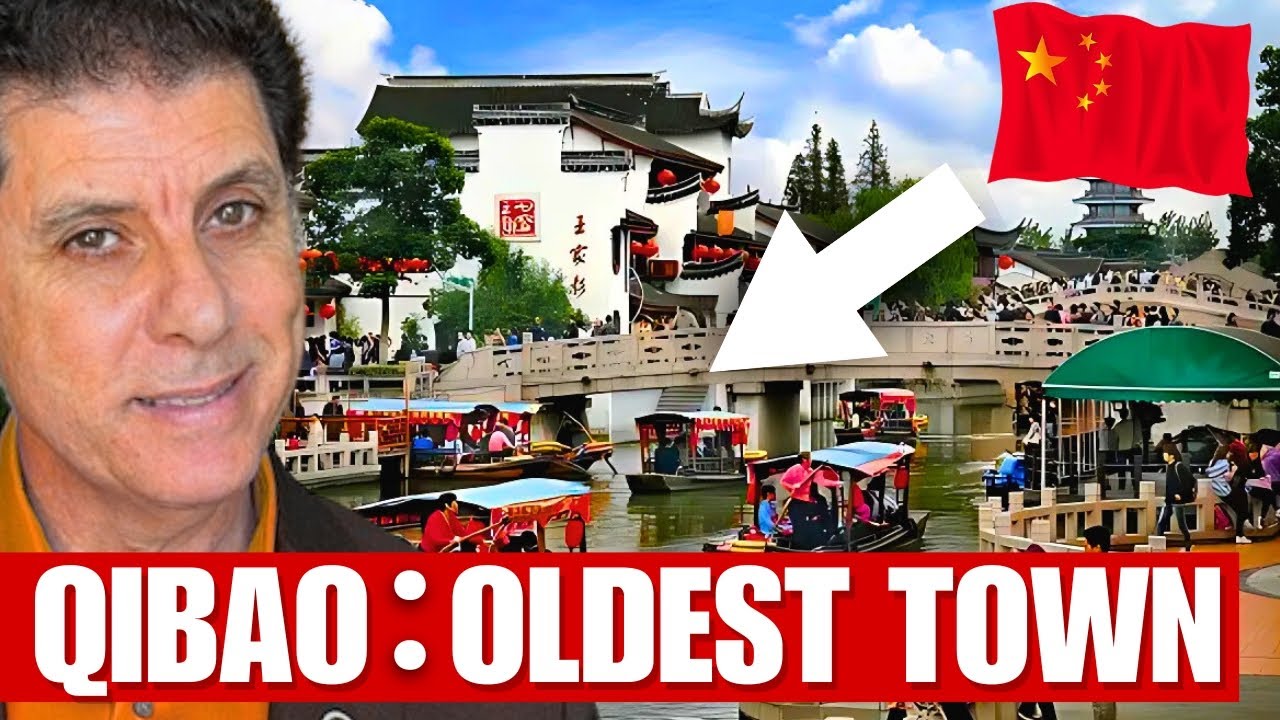
David Oualaalou walks through Qibao, an ancient town outside Shanghai, during Golden Week. He samples local food like stinky tofu and jasmine tea, visits temples and the bell tower, and chats with vendors about Chinese hospitality and culture.
Chapters
Happy to be with you once again. I am right now visiting in an area called Qibao. So this is like I mentioned in the title, it's a window into old China. Very, very interesting. As you notice, there's a lot of, a lot of movements around here because people still celebrating the, the holidays here in China. There's more about 4 more days to celebrate. It's about a week. So this is again why I wanted to do this one for you guys. So what you notice here in the Qibao, which is within the outskirts of Shanghai, you take the metro here for some like 45 minutes to get over here. Very, very interesting. So a reflection again of how the society, the makeup of the structure of the Chinese society. So, so I'm going to be going into the heart of, uh, Qibao. Uh, it's known for as an old, uh, uh, section of the Shanghai, uh, area here. So see the traditional food, a lot, a lot of, a lot of good stuff. That is how it's going here. So, uh, one thing I need to let you know, uh, of course you guys know there is sometimes challenges when it comes down to technology here. So the thanks to all of you who put a comment yesterday as far as how I need to record this and so forth. So I got a mic, a lav here, that hopefully will help with the recording here. So, uh, once again, I appreciate your patience because I am not a videographer, I'm not a professional You guys know, I don't need to beat the dead horse on this. But anyway, what is important to understand now, for me, what this means, this holiday for the Chinese here in the country and how people are sort of reacting and enjoying this holiday, which once again, in my opinion, is a reflection of the love they have for their country. And it makes perfect sense. Because when you think everybody is coming together here and celebrating, they're eating food outside and just bringing their kids and, and people traveling from different parts of China. That to me was the impressive aspects of it. I do believe sometime today or tomorrow before I leave Shanghai, I'm gonna go to the Bund and take again, do some clips for you from there. Because I believe you don't want to see the buildings and all that stuff. All that stuff is irrelevant in my opinion. Yeah, you need to see certain things, but what you need to see is how people live, how the people interact with each other, especially in a holiday like that. So, so most likely you will not be seeing my face on this video here. I'll be just talking as I'm walking here. And people are very respectful of space here. They kind of like, okay, you're recording whatever you're doing. So I'm gonna cross the street here and, uh, I'm gonna visit one area. They have a temple here, sort of a temple. I, I don't know the exact history of it, but it's a very, very interesting to see. And I want you guys, I want you to see this one here. So I'm gonna go into it right here. Let me show you right here, guys. This is very, very interesting. So I'm gonna go into the tiny streets of it, and you will be able to see it. And I don't know if I can get in here or not, but I saw security here. They just for safety and all that, but I think everybody can go in. They maintaining order, which I usually like about this one, right? So yeah, you can walk. If you notice, those are, uh, right here. I wanted to show you guys I'm gonna share personal story with you. When I was a kid, I used to— I did martial arts a little bit, and when I was a kid, I used to watch the martial arts movies. And you know, in this show, the instructor— and I always wished when I grew up if I ever can visit something like this, and now it is. I'm looking at it. Very, very, very, very interesting. This is typical Chinese right here. So, so if you notice, a lot of people around here and some of them taking pictures So I'm gonna walk you through some streets. There is another location right here, guys, if you notice that one. So a lot of people taking pictures and so forth. And so I'm gonna be walking you through these tiny streets here, which is the hallmark of this area of Çibal, the old, old town, if, if I may use the term. And a lot of people sort of appreciate something like this. So, so, so I'm gonna walk through here. You don't see a lot of foreigners here, so I'm— I'm— there are a few. I saw only two so far, but that's beside the point. So if you notice here, there's a lot, a lot of moving parts here. People just walking, enjoying the view here. They're buying stuff, and, and that's what these holidays are all about. So people celebrating, that's why they call it the Golden Week. So it means a lot to the Chinese. And once again, when you think of a holiday, you know, a lot of us, I mean, we do some here in the US as well. But when you think of a holiday when everybody comes together, you know, this to me a reflection of all that here. So let me see what I can show you. This is the, Hello. See, the lady here is asking me to come. She's giving me, uh, to try a tea. Uh, which tea is this? Uh, I can't read Chinese, but, uh, I think is a jasmine tea, if I'm not mistaken. So I'm going to try some tea here. Wow, it's jasmine. Jasmine tea. So this is jasmine tea right here. Can I try some? A little bit. Wow, that is a good tea. So, and I intend to buy some before I leave China back home. So very, very, very interesting. Which one is this? Okay, is that cherry also? Yeah, I couldn't read. If you guys, any of you can read Chinese, if you can type in the chat box what it says right there. So I think it has English on it. Let me see, let me get my reading glasses here and I'll, uh, I think I will be able to read it. Let me see. Oh, oh, it says scrub oil to reduce fat. This is good for sleeping and for stomach. So one thing I need you guys to understand is that tea in China, it's not about just tea, it's about health. So a lot of people drink tea here in China because of health reasons, and that is the reason why.
Xixi.
So this is what I need you to understand, how it works in China here. So tea is part of the culture and the makeup of the, of the society. I mean, you don't see— they do drink coffee, of course, once in a while, but, but tea is a big deal. Since I got here, I've been having tea most of the time. So yesterday, when I ate some home sort of— the lady made me some dumpling without pork because I don't eat pork, and I had tea with it. So, so if you notice, there's a lot of people moving, moving around here, and everybody's, you know, kind of just enjoying the view and buying stuff, whatever they need. And so, go ahead, sir. And they are very, very— what I found about the Chinese so far, they're— oh, sorry— they're very helpful. I needed help on a subway and just asked someone and walked me through the stations and so forth, and it was fine. So, so they're very, very helpful regardless of who you are. To me, that just shows humility, and that is very, very important. One thing I've learned, and I asked someone here, and I was informed that Chinese don't like to show off. They don't like to brag. They don't like to— it's just that's part of how the culture has always been. And interesting enough, guys, you see this reflected in the leadership. You never hear the leadership bragging about, "We did this and did that." You all remember it was China that brokered the deal between Iran and Saudi Arabia, and yet They never bragged about it, so, because that's part of how the culture is. So, uh, let me show you something else. Yeah, so I'm gonna raise this just for you guys to see how many people around here. So, and again, everybody's moving, no issues there. So I'm gonna get to the end and make a left because that's where they have all the type of food. Uh, they have something called the— I was told to try it, I did not. It's called the stinky tofu. So I have not tried that one yet, so I might give it a shot in, in few days. But so far that's, uh, and as you know guys, I don't eat much, and but I'm trying. I, I've tried some dishes including types of dumpling that's going on here. So, so a lot of music, traditional music, the Chinese music here. A lot of people visiting from different parts of the country, a lot of families here with their kids, a lot of elderly, and just people enjoying, uh, the holidays, enjoying the celebrations, cuz it's once a year and, and, and, and that's what it's all about. But one thing I can't stress enough, guys, is the idea that how much unity this celebration represents for the Chinese society. That's, that's to me was what I found fascinating. Every, like I said yesterday, everybody's rallying around the flag, the Chinese flag that is. And, and I saw people with flags and they put stickers on their faces with the flag of China, and just part of how, how, how they celebrate here. So I'm getting closer to the end here of the alley here, and of course, if you notice, there are a lot of cameras around. There is nothing wrong with that. Actually, I prefer that one because now you know you are being protected, even though one of you put a comment about England making a comment about how many cameras in China. What does England forget, that it has more cameras than China? So what makes it right for the UK but not right for China? And right there is the kind of the double standard. But we all know where UK is, and I'm not going to be talking about that because this is about understanding the culture right here in China. So, uh, So when you look at even the structure of the buildings, guys, look at that, this one here. So, and, and by the way, I was told that at night the lights comes on on all this, this here. So, so am I, am I, uh, ride the subway again and come over here at night at some point. Uh, I'm going to show you this building right here again. Look at this one here, guys, and it's a restaurant at the top. So very, very impressive. And, and, uh, and again, people just enjoying. So I'm going to get on the bridge, the famous bridge. There is a famous bridge here in, in, uh, in, uh, Chibaou, uh, I was told that it reflects the old town, uh, or, or the old China. That is, that's why I put the title A Window into Old China. It's very, very important to understand this one here. So I'm going to show you, uh, I'm going to show you right here. So you can just see, here's the bridge. I'm standing on a bridge, but there is another one there, the rivers. And you see the buildings, the structure. There are restaurants around. There's one that says some coffee and tea. Tea is a big, big, big deal here in China, and I can see why. You know, a lot of— I drank tea as soon as I got here, so it was no issue, no problems, and it was very, very, very nice. So, and once again, you see a lot of people. I see it, I see a tourist here. There's the first European tourist, I'm assuming. European, maybe, maybe not. Uh, and it's just for you guys to see the diversity that exists in, in this country. People coming from different parts of China, uh, be they from the south and the, the north, the west, it's a variety. I would not know exactly where some— what I can tell based again, I asked people, is that there are a lot of outsiders visiting Shanghai. So some of them, it's the first time being in Shanghai, which is a big city, as you guys know. It was the financial hub of back then of the Qin Dynasty, based on what I found. So the expansion of Shanghai is— it's very, very major. And it goes as back as 1920. That's how far back it goes. So Shanghai in itself is like sort of the nerve center, if I may use the term, for China. So look at here. I'm gonna go back up here just to show you. This is the alley where people from all walks of life, just you see a sea of people just moving seamlessly, no issues whatsoever. So, and people visiting from different parts of China. So unfortunately, not everybody speaks English here, and of course I don't speak Chinese, uh, so except for the basic of saying hello and saying thank you, that's, that's about it. Uh, I might have to live in China for a few years to acquire the language, so, but nonetheless, that's the important things about it. So, so I'm gonna be showing you guys some stands for food just to see the type of food they have. Hi! So, hello! There are some Chinese that speak English here, so I want to show you some stand here. So the type of food they prepare— and by the way, all this food is prepared as people standing to purchase and eat some of this stuff. It's not like it's been sitting there forever. So, so I'm going to show you again. Here is another one here. So all the type of meat, pork, which is a big, big, uh, that's just part of the, of the Chinese culture here. So, uh, what else, uh, what else I need to show you guys? Yeah, different tradition stuff. Uh, you see something like this, guys, I'm going to show you here. I don't even know what it is, uh, but just to highlight to you, this is like a traditional— some, some type of dish that is traditional here, and the lady is making it fresh. So that's why people buy here. So, so, uh, this is for for candies. If you notice, they even have that one there. It's a big deal. So flavor for everybody, so nobody will be left out. Uh, this one here is very, very popular in China. I've noticed in Shanghai, so they make fresh ones. I believe they put veggies in it inside. That's usually what they have. I think they mix it with eggs, if I'm not mistaken. And this is the one, this is the one here. Show you guys. What is the name of this in Chinese?
Yeah, uh, toi.
Toi. So there's a lady here who speak English, she told me the name of it.
Yeah, it's special food in Shanghai.
Oh my God, did you hear it? So this is special for just Shanghai. So What's in it? Sorry, what's in it? Um, veggies, eggs.
Yeah, eggs.
Uh, they do put pork in it? No meat? Uh, no meat. No meat, just vegetables. Yeah, did you hear, guys? Only veggies on this, that's all. There is no meat on it. Thank you very much. What, what a wonderful lady here. So I don't know her and she talks to me, explain to me. That's what I told you guys about how nice the Chinese are. The media is kind of, you know, they are not disclosing, oh, you gotta be scared of the Chinese. Come on, here is a lady with her daughter and she explained to me. I don't even know her and she was kind. So do you want to say hi to my community? Hold on, look at her. She's happy. No, I want you to say— hold on, I'm gonna have to turn this on. Hold on, hold on, because we're gonna turn this one here. Here.
Hi!
You know, she's saying hi to you guys. This is the lady I don't know. She just helped me out by explaining this in English. So, so thank you so much. As they say in Chinese, uh, xie xie. Okay. And once again, guys, that's what I told you about how nice— you know, she's saying bye to all of us. This is what I told you about how nice Chinese are. They are very, very kind. Thank you again. It is a lady here with a small doggy. No, here is a puppy.
Hello!
Oh my God, yeah, here we go! Oh my God, oh puppy! Oh my gosh, look at this, guys! He's being— that was waving, saying hi to me. Yeah, yeah, that's a little doggy. She has a doggy here. Look at him, he's waving, saying thank you. Oh, thank you. So like I said again, guys, yeah, you know, this is the beauty of meeting, of being in a different culture, of learning about other traditions. Of meeting new people. And to me, the way I look at it, the way I look at this, it represents— this is what I wish governments will operate like this. Here is that lady, helps me out. She doesn't know me, but because I'm another human being, she didn't care where I'm from, she didn't care, except to help. And this is why, because we got one world here, one world, and we hope to have peace for everybody. So, because it is in prosperity, it is in cooperation where the world moves forward, not in confrontations. And to me, what I am looking at here in this, uh, festivities is a reflection of that reality. So here is the dumpling. I want to show you guys some specific dishes here. You know, I'm sorry, I don't know the names, all of them. Uh, what I was told is that they can be in pork, they can be in, uh, meat. When they say meat, they're referring to beef. They can be in a variety of things to put on. So another street here, if you notice, and it's starting to sprinkle here in my The weather is a little bit, uh, it's a little bit, uh, cloudy, so it's starting to rain here. So, and once again, this is the beauty of it. So I want you guys to see this, you know. Nice. Here I am walking here, you know, stranger in a strange land, and I'm very, very excited to be here because I've always wished— yeah, it's raining, guys, so, but doesn't matter. I'm gonna keep walking. It's just water. As I said, I've always wished to visit China. It was always one of my dreams. And thanks to the community, thanks to all of you, because without you, I would have not been able to make it here. It's straightforward. A word of thanks to all of you, and I am very, very grateful. Once again, it just— Yeah, I'm gonna take you to this sweet shop just for you to see. Look at all this type of sweets here.
Yeah.
Oh, look at all this. This is part of the celebration as to the type of sweets they have. So this is what's at the heart of it. Yeah, uh, they do have— they put samples here. I'm going to try one of the tea because I like tea.
Jasmine tea.
China jasmine tea. Alcohol? No alcohol. This one is a Chinese alcohol. They mix it with something, so I thought it was tea. So thank you. Uh, this is again traditional, uh, as they prepare all this stuff here. That's one of the traditions here, very, very popular. So you're seeing, uh, I've seen a lot of kids eating this one here. I don't know, I think it's some type of fruit, but it has some sugar on it. That's usually what they do. Those are the skewers here. This is pork, I believe, because it's very, very popular right here and it's common. Everybody walks around with a skewer just eating that and moving around, so there is nothing wrong with that. Hello! There is another lady here just smiling. She's waving to you guys. She doesn't know me and she's so kind and nice. And so you're saying hi to my community, my people. Way out. Yeah, so she's waving to you guys. So thank you very much. And this is the beauty of what this is all about. Really, really, you'll experience what it's like to be just another human being meeting someone else you don't know, someone else you don't know about his or her culture. Someone else you don't know about his or her traditions, values, and so forth. And yet there is that common bond that we all share this planet. We all have a common objective to be happy, to have our families live in peace, not in confrontation, not fermenting tensions, not— I can't stress this enough, guys, because what this shows, it shows how important. How important to seek peace around the world. And it's the voices of you, individuals like you, what's gonna prompt all this happiness to exist around the world. Uh, okay, I'm gonna show you one more here, guys. So I can smell the, the stinky tofu. That's what they have here. So it's very, very, very popular. So once again, there are a lot of— let me show you the street right here. And that's what— this is the, the old, old streets in town here. So I'm gonna move into this direction here and, uh, show you the other side and see if I can answer a question or two from you. So once again, to those who just came to join me here, I am coming live to you from Qibao. It's pronounced Qibao, it's spelled Q-I-B-A-O, but it's pronounced Qibao. That's, that's what it is. So once again, look at this one here, the traditional, and all this At night they turn them on, so it's a nice, uh, nice scenery to see around here. A lot of motorbikes, guys. There are so many of them here, but everybody— you don't see accidents so far. They're paying attention, of course. You know, here's someone who's saying hello. So, and again, that's how friendly Nice meeting you. Thank you very much. Did you guys hear what he said? Welcome to Shanghai. That's how Chinese people are. Thank you. Thank you very much. Thank you very much. So he wishes me to have a good day here in Shanghai. And again, this is— guys, I can't stress this enough— this means a lot to me. Another human being, he doesn't know me, he doesn't know who I am, I don't know him, and yet with a smile on his face and saying, "Welcome to Shanghai." You know, that just means a lot to me. It means a lot to me because he's not judging. He's not judging. So, and I tend to talk to people a lot. So that's just my nature also. And that's the whole reason for all this. So this is what I wanted to share with you guys. I am moving away from the area where there are, uh, a lot, a lot, a lot of people, uh, eating lunch, shopping, and so forth. I'm moving to a quieter area outside a little bit of that. There is might be another street to, uh, uh, and once again, guys, just to just look at the street, just look at the street here. Look how clean, look how clean this is. So And again, I'm sure there are some parts or whatever that might be, but just to highlight to you, because the, the, this, the, this part of the city, you know, it's going to have a lot of tourists and Chinese coming from different parts of the country, and they had to keep it very, very clean and organized. So yeah, Shibao, I just learned about it. I didn't know about it till yesterday. Someone told me, hey, you need to go to Shibao and check it, check it out. You take the metro, I think, from where I'm staying in, in town, about 9 stations or so, Line 9, for those who know the subway here in Shanghai. So here's a traditional food. Somebody's preparing something. I'm gonna show you guys. You know, he's preparing eggs. That's what it is. And they make you— hello! So that's how they make the dish. I think, uh, I think it's this one right here. I'll show you the picture, guys, right here. That's the one. Do you speak English? You do? Oh my gosh, see? Yeah, I wanted to ask, what is this one here?
Eggs?
Yes, eggs. And you mix it.
But these things don't have the English name.
Oh, there is no English English version name for it. What do they call it in Chinese? Can you repeat that please? See, see, and here is again another example, guys. Uh, here's the lady, I don't know her, she's been so friendly, smiling, and it's just positive energy. That's, that's one. So that is the beauty of And again, I get touched by gestures like this from strangers. They just— they don't know you. Hello. Oh, look at— look at these guys. They don't know me. They waving to me already. You speak Chinese? You speak English? Little bit. So she's— huh? Oh, that's their restaurant. That's your restaurant here? That's your mom? Oh, look at this, guys. This is the mother. She's a chef here, and this is her daughter, and they have a restaurant here. I'm talking to my community from far away. It's my first time in China. Did you hear that? There is another person welcoming me here. So that's how, that's how wonderful Chinese people are. So something the media in the West is not allowing people to see. So So thank you so much. You want to see yourself here?
Yeah, sure, sure.
Here, there we go.
Yeah. So, okay, okay, okay.
Thank you very much. So, and as I said, it's my first time here in China, in Shanghai. Yeah, my first time, and I, I enjoy it. I like it. Yeah, and people are very kind. Yeah, very kind, very helpful. Yeah, and, and they are not judging. They don't judge you because you are a foreigner. They're just kind and nice. So, so thank you very much. Okay, you too. Bye-bye. See, once again, guys, an example. And this is again, I just keep coming to this theme of the importance of understanding. Uh, uh, uh, I'm going to walk around here. Maybe let me see. Oh, I need to show you something else again, just another view, right? That's the bridge I was on last time when I'm on the other side. So that's just another view here just for you to see the tradition. And like I said, I keep coming back to this theme of how wonderful people are. They are not passing judgment. They're just like, yeah, we don't care. It's just another— here's another one. He doesn't know me saying, you want to see yourself here? Okay, here's a person. You speak English? A little bit. Bye-bye. Now some of them are shy. They don't want to— they don't want to kind of— cameras can be intimidating. I'll admit it, I was too when I started way back. If I am in front of a camera, I kind of, uh, get, get like, oh my gosh, you get a little bit intimidated by it because you are now on the camera. Of course it takes time. And once you— this section here is very quiet. So till you get into the main road. So now I'm walking through. The reason I want to walk here is because I want you to see the structure of the buildings right here. So, and I think tomorrow I'm gonna take you guys to the area near the Bond where there are streets packed with people celebrating the holidays. So that's what I'm gonna be doing tomorrow. So yeah, I'm getting to the busy section here, and that's where I'm going to, uh, finish up the tour because I walked around the whole area here. And I'll finish it up and go back to where I started this recording from. So Yeah, once again, this is the street I was on. If you see the sea of people moving around here, everybody's minding their own business. So, so, and that's it. So I'm gonna get up here in the steps here and finish. I want you once again, I want you guys once again to see this one here. Part of the celebrations here in Chiba. Very, very, very interesting, very interactive people. They interact with each other, uh, everybody's kind of respectful of each other. Uh, no, like I said, no judgment, no, there, there's none of that. None of that. But again, because it's a reflection of the society itself, the culture, the history, the, the traditions, the values, uh, because it has always been known, at least based on what I've been reading, that humility is part of the Chinese, uh, sort of, uh, not a tradition, uh, DNA, if I'm gonna use the term. You know, I am yet to come across someone from Asia that is bragging about, I have this and I have that. So far I haven't, I haven't seen that. All I'm seeing is people with humility just moving around. And kind of, I want to show you guys here, right here, this is the windows, the tradition. Those are the security right here, and they just keeping, uh, here, guys, look at this one. That's a restaurant over there. So with the traditional, yeah, yeah. So I'm going to be going back the same direction I came in.
Hello!
So this is the— a lot of people sometimes laugh at me when I say hello because I surprise them. They kind of like, who's this guy. But, but this— their smile is, is kind of welcoming. It's not like— it's almost like telling me, you know, you're no threat and we're not scared of you and we welcome you. That's the way I— that's the way I read it. So, so I am walking backward here from the same street, I think, or another one. And you can, you can, you notice there's lot— there are less people here than it was on the other side. So that's the— and if you notice the street, it's like narrow and everybody walking peacefully with no issue. Look, look at that. I don't know her, she's saying hello to me. Hello to you.
Bye-bye.
Bye-bye. See, once again they just People are so kind, so nice. Wow, wow, wow, what an experience, guys. Really, really, it's, uh, that's why I'm hoping, uh, I will be back to China once again for sure. There is no doubt. But I also want to visit other countries in the region, uh, down the road. Uh, I'm already starting to think about Indonesia and Malaysia, and the reason being because of the history of those two countries and also the changes that they have experienced over time. And I would like to see that transition of those two countries in addition to China right here. So I told you yesterday, guys, I'm gonna make a trip to Fudan University. I have not yet. It's because I'm trying to find out, remember, the system here in China is different than for us. In the US. What do I mean by this? In the US, you can go to a university and get into the campus. Right here is slightly different. You can't just walk in, and rightly so, I can understand. So I want to make sure before I'll, I'll get on a subway and ride all the way to— I want to make sure that I am allowed to visit. And if they do, I can always make it. I'm still here a few more days.
The—
as far as the Shanghai port, the main port where you get the big, big freight and all that, that one, I looked at it on the map, it's almost like an island by itself. But that one is for the crew. So there is nothing I was gonna go see, just see the sheer size of the freight and so forth, but uh, it's too big. So I decided to hold off on that. I might do it, I might not. Look at doggies playing, they're just enjoying each other, having fun.
Look at that.
So, and those are belong to someone, those are not street dogs. Yeah, I want to show you guys someone who works about silver or work on silver. This is how they make it. They make the silver and they do some, uh, very, very, very interesting. So very interesting. So as I said, uh, uh, I'm going to find out about Fujian, uh, University University, uh, and I'm still gonna be back to Shanghai, uh, before I return back to the US. So I'm still gonna have, uh, 2 more days later on. For now, uh, I have only a few more days left for me before I move to the next location. I don't want to spoil it for you guys, that's why I'm not disclosing my next location. I want to surprise you once I get there. I'll a live stream for you because— and I'm gonna, by the way guys, I'm going to be doing this in parts. So you'll see part 1, which was the live stream I did yesterday, part 2, this one, part 3, part 4. And this way, if you want to look at that chronologically, just go by the part. I might keep the same title, have not decided yet. Uh, I'm gonna reach out to Elizabeth to help me out because I can access my internet from the computer here. It's slightly different. So Elizabeth is going to help me out by putting a thumbnail there. Please hit that like button and don't forget to share that video with your friends, uh, because to me this is a big deal. It is a big deal coming over here. So, so I am back to square one where I started the tour here and, uh, show you one more time the building here. And, uh, it's right here, guys. Very, very, very ancient, very old here, I was told. And they have the history of— so it's written in Chinese right here. So I can— you know, guys, I don't read Chinese here, but, but, uh, there is an explanation at the front. Let me show you guys. Here. So, uh, maybe they have an English version at some point, but I didn't see it. So let me see here. Oh, actually it does, guys. They do, right there. Located in Bell Tower Square. Qibao Bell Tower is the landmark building of Qibao Ancient Town. This is an ancient town— ancient town, rather. There is a saying that goes, Qibao owns 7 treasures: gold script, Lotus Sutra, Tunlei Bell, Flying Buddha, mysterious tree, golden rooster, jade chopsticks, and jade axe. The Tunlei Bell is hidden in the Qibao Bell Tower and has history of more than 600 years. In Buddhism, striking the bell has the meaning of clearing troubles, increasing wisdom, and ensuring the safety. Every year on New Year's Eve, of ringing out the old year and ringing in the new one. The bell rings praying for people of Chebao. Wow, very, very, very interesting. So, and this is why I want you guys to know the history as part of what this is, is all about. So very— and they have them here, I think, in, in— I don't know, please correct me, guys. I don't know if this is Mandarin or Cantonese. What is it? Oh, Japanese. This one is the Chinese. So the top one is Chinese. So someone corrected me here. This top one here, guys, is Chinese. This is English. And the bottom is Japanese. And I wonder why Japanese have the language here. Probably they own— they were in town. Because Japanese, we hear, right? Yeah, there's some history into this. So English and Japanese. So this is a translation of that one in Japanese language. Okay, okay. Thank you very much for explaining that to me. So there's a gentleman here He just want to explain this to me. That's how they do. So, all right guys, I'm going to move on here. And, uh, this is if you want to— it opens up right here. This is the open time at 9:00, 0900 hours till about 1800 hours. That's when it's open. So here's the square one more time. I'll give you a shot of this. Here's the square right here, as you notice. And people walk, they this side. And of course, you go through the streets and you get into the middle of it. So that's just, uh, that's just the tradition right here as part of celebration of the Golden Week. All right, let me see if there's any comments from you guys. And before I sign off, I don't And once again, just remember please to hit that like button and, uh, remember to subscribe if you have not done so. And make sure to share this video, guys. All right, it was very, very enjoyable, exciting to be with you guys, and I look forward to seeing you next time. As always, remember— let me turn this one back in so you can see me. As always, remember, geopolitics impacts your daily life in more ways than one. Till next time, guys. Bye-bye.
More from David


Beyond the Single Actor: Why the Gulf Isn't Choosing Between the US and China


Iran, Iraq's Militias, and the Houthis Are Coordinating! This Changes Everything




Who Controls the Next Decade's Resources? Latin America and Africa's Geopolitical Crossroads

The Chokepoint Trap: How Washington's Stupidity Triggered a Cascade That Now Controls the World

Trump Spooked as IRGC Unveiled dual-use SLV, Deployed Ghadir Mini-Subs & Hinted at Tactical Nukes!
