China & Russia's Shocking Plan to Redefine the Global Power Structure!
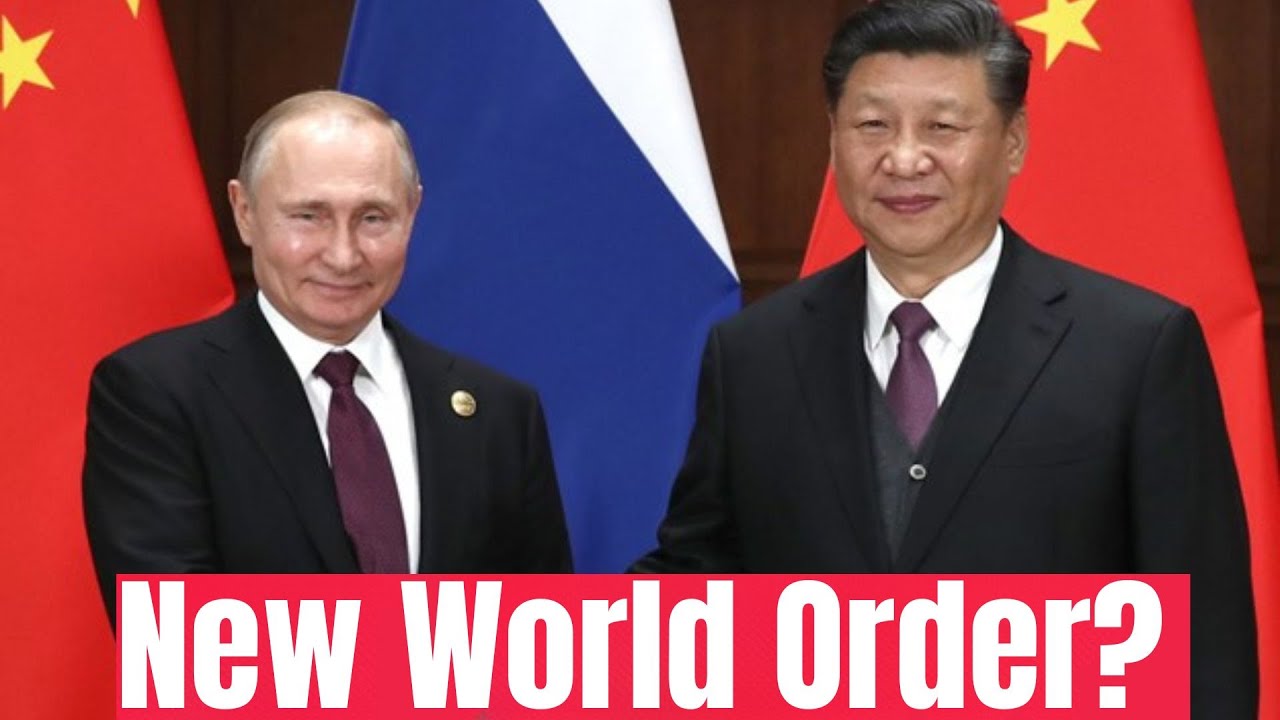
In this Geopolitical Trends video, host David Oualaalou analyses President Xi's visit to Russia, arguing that the summit’s primary focus will be reshaping the global financial order rather than merely discussing the Ukraine war. He highlights recent moves by Saudi Arabia, Iraq, Iran, Turkey and others to adopt the Chinese yuan, suggesting a coordinated effort to back future trade currencies with gold, rare‑earth minerals or other assets, thereby challenging US dollar dominance. Oualaalu critiques the United States for opposing any Chinese‑mediated peace, claiming the West prefers a prolonged conflict for political optics. He explores China’s potential leverage, including the possibility of supplying arms to Russia, which could force the US to choose between supporting Ukraine or Taiwan. Throughout, he interweaves personal assessments, references to his upcoming book on China, and calls for audience engagement, concluding with a cautious hope for a peaceful resolution while acknowledging the entrenched realities on the ground.
Chapters
Hello everybody and welcome to Geopolitical Trends. My name is David Oualaalou, so good to be with you as always. Chinese president, President Xi that is, visits to Russia may determine the future of the Ukrainian war, or is it about something else? In this video, I'm going to provide you my brief assessments of how this visit, yeah, could shape the direction of the global order moving forward. Before I do all this, I like always, I like to extend my sincere thanks to the channel's, uh, members and for their continued support, and for you as a subscriber. And if you happen to be the first time landing on this channel, please make sure to subscribe so you can support this channel and smash that notification button so you will be notified every time I upload a new video. And thank you all for your support. Let's dive in into this. No doubt, no doubt in my mind, this will be the most difficult challenge facing Chinese President Xi. But he doesn't shy away from challenges. So it's because he is hoping to end the conflict in Ukraine. Of course, he's going to have a conversation with his, with his friend and counterpart President Putin. But there is a lot into it than just what meets the eye, because China— here's the thing— China has a lot to offer when it comes down to this issue. You know, we all saw what happened with the, uh, when China brokered the deal between arch enemies Saudi Arabia and Iran, and I've talked about this enough. So now here's the thing, the cooperation between these two countries China and Russia in the economic field, because they are, they are, their economic strength, it's growing together in a sense of a partnership. It largely exists and the West cannot ignore that. Why politically, sort of much will be determined by the sort of a direct personal dialogue that's going to be taking place or that already took place by the time you watch this video. Between President Xi and President Putin. A lot of Western analysts thinking that the conversation is going to be about Ukraine completely. No. Yeah, to a degree they're going to talk about Ukraine, but it's not about that. And this is why I decided to get this, make this video for you guys to provide you a different perspective, because you need to consider what if another scenario, another perspective. And the one I'm thinking about, it has to do, yes, the Ukraine war, they're going to talk about this one, the Ukraine conflict and and so forth. But there is another element that they're going to be discussing is how to move forward with the financial aspect, because the financial aspect is what's going to determine the direction of the global order moving forward. We all saw what just happened with now Saudis accepting the Chinese yuan, renminbi. We also saw that Iraq announced it's gonna be trading in the Chinese yuan. Iran, Turkey, uh, you— some countries in, in, in the southern hemisphere. All this is an indication for where things are headed. So could it be— and again, putting my geopolitical analyst hat on, I will be thinking in terms— because if I were advising either president, I would say, well, you might want to talk about how you're gonna ensure that the currency you're gonna be using for future trade will be either backed to the, to the gold Or it's gonna be back to the rare earth minerals or some sort of asset of sort, but not of course to the US dollar. That will be where I am gonna be advising either president to consider as part of the conversation. Nobody is denying it, nobody's denying, and I'm not denying that the conversation part of it is going to be about Ukraine, but it's already been clear The United States made its position clear that it will oppose any peaceful initiative coming from China, and for one reason and one reason only: the United States and collective West does not want— does not want, or do not want to see a peaceful resolution to the Ukraine war, Ukraine conflict, because it will look bad, the optics of it, internationally. It will look bad for the West that a non-Western country, China in this case, was able to achieve a peaceful resolution to the Ukrainian conflict. You know, the other, the other thinking in the West is that when I say the West, I'm referring to the US. There is no other West. You know, Germany, what is that? Australia, UK, France, all of them, they can't make a decision anyway. They are too weak. Canada, they all cannot do, cannot make a decision. So, so the US probably will be thinking in terms of prolonging the conflict even longer, you know, and that's not going to work. This is where I see the challenge for President Xi, even though his intentions are good, because we want to end a conflict, to put an end to the conflict, because there is also something in it for China. But at the same time, sort of the conflict to run its course. And this is how they are seeing it. So, so based on the current research for my next project that I'm working on, you know, usually the Chinese president never submits to pressure from adversaries. I had to do some digging into, and again, you guys know by now, I did mention it, that I'm in process of writing a book about China. And I have to do my own due diligence research about it. So, and I'm finding out. So, and I don't mind sharing this with you guys. So that's part of President Xi's personality. And here's the thing, the more the pressure is on him, the more he shows signs that this pressure has not and will not work. And this is exactly, you know, to give you an example, this is exactly what just happened with President Xi appointing General Li Shangfu, you know, as the China new defense minister. Well, you all know who he is. He is on the blacklist, subject to U.S. sanctions. He didn't— President Xi didn't care, and despite the pressures, he went ahead and appointed him as Secretary of Defense in China. So the issue of Ukraine, as I said, will inevitably be raised during the discussions of the two leaders, President Putin and President Xi. But it's not all about that. The West, the West is getting it backward, thinking that's the whole reason why President Xi is going to Moscow or has gone to Moscow. No, no, no, no. They're thinking about the big picture. China thinking about the next 25 years. They are not looking at the end of their nose. That is the reason. And my assessment— and again, this is my personal assessment. If I am wrong, I bear the responsibility for it. It's my opinion. My assessment is that is the financial structure. That's what they're going to be focusing on. And that's where the change is going to be sort of emerging through. And again, you've seen there's evidence, there are signs out there. You know, as I mentioned in the live stream that I did a few days ago about the Saudis agreeing now to accepting loans, this is not about just paying for their transaction with China. It's accepting loans from China in the Chinese yuan or renminbi. That's seismic. That's big. So the question becomes, even with this conversation between President Xi and President Putin, is that is it time for us now to ensure the stability of which currency we're going to be using moving forward and what we're going to be backing it to— the, the, uh, the gold, rare earth minerals, some sort of asset. You know, that's to me where the conversation is going to be. So, and the thing is that China also has always been prepared to increase its role sort of finding a way to end the conflict. Now, there is, of course, like what the CIA disclosed— the intelligence agency in the United States claimed without evidence that Beijing will be sending military supplies to Moscow. As of today, they didn't. They could down the road, I don't know. But here is the thing, again, putting my geopolitical analyst hat on, is that China could play that card as a pressure point on Ukraine or the West for that matter. But China has also a different calculation to all that. If China embarks on this, okay, and end up providing a sort of supplying Moscow with weapons, that's a way for China to say to Moscow, hey, we are helping you during this conflict. We need you to be there for us if tensions in the Taiwan Strait flares up. That's the way I see it. So China wants to pave the way ahead of— ahead on. If it works out, it works out. If it doesn't, it doesn't, you know. And, and usually this is why the United States is already objecting to any initiative from China regarding the Ukrainian conflict, you know. It's because China proved And you call a spade a spade. And again, I'm not defending China. I don't speak on behalf of China or any country for that matter. I speak on behalf of what's right, what's factual. Of course, my country is the US, but I'll criticize it if it does wrong, and it is doing wrong. Let's just say it straightforward. So China's desire to become a mediator, or peacemaker that is, has been proven. You look at again the, the, uh, and I did ask you guys a question in one of those live streams, uh, whether the US can play a role of an honest broker. Most of you, most of you's answer was a big no. Yeah, it's sad. It is sad. I'm not laughing out of laughing. I'm laughing out of because what has become of us. We've been granted that ability to be the global leader and so forth after World War II. But we kind of abuse it. So we didn't use it wisely. And this is one thing dangerous about power. We humans, if I give you more power, if you are not watching yourself, you will abuse it. This is why it's always, you have to keep an eye on yourself. You know, you feel like now I have power, I can do whatever. That's where the danger is. And for us, We've done it because after the fall of the Soviet Union in 1991, we became the sole superpower in the world, basically. And we ensured that the dollar, which was after World War II, the decision was made that the dollar is going to become the, uh, means by which all the transactions around the world taking place. But we end up abusing it, and that is the reason why I am leaning more towards part of the conversation that, that's gonna, or that took place, or that will take place between President Xi and President Putin will have to do with the financial aspects, you know. And, and again, this is no different than what other countries are doing, like for example Saudi Arabia, Iran, Turkey, Egypt, uh, uh, India, and, and some others. So now the question becomes is Are there any new opportunities to resolve this issue? Well, the Chinese president can offer a different alternative, you know, that will be, for example, different guarantees to ensure that the conflict will stop, you know. But this initiative is a new opportunity to achieve peace, provided that, for example, Ukraine will recognize it. But Ukraine is in no position to make any decision whatsoever. It's a fact, it's the truth. It's not been sort of disclosed openly by the, the West, Western media, that is. I'm here to tell you guys, Ukraine is in no position to make decisions, and this is based on fact. So, you know, and, and this is where the idea of Ukraine needs to come to grips with the reality that Russia's expansion, they are after taking over the, the, the, uh, uh, certain territories. Even if, uh, even if a deal is reached, mark my word on it, and I could be wrong again, but I don't see it. I don't see Russia returning that gained ground back to Ukraine. It's gone. Mind you that on the western side of Ukraine, Poland is eyeing— it's having its eyes on the western part of Ukraine because historically some of that land belonged to Poland back then. So, and this is why the West is already objecting to it, but, uh, we'll see how it is going to move forward. By the way, guys, if you like this video, please hit that like button and subscribe if you have not done so. And I truly appreciate your support, it means a lot. So here's the thing, President Xi has some weapons of pressure to use. Yeah, because don't think, don't ever think in, in global affairs or global geopolitics and so forth, every country will have to think about its own interest but also has to ensure that it has the means by which to secure those interests or defend those interests. China is no different, especially in this case. As I said, it has some weapons of pressure on the Ukrainian side, foremost of which is a prospect of, as I said earlier, supplying arms to Russia if they want to. I don't see them doing it yet. But it might. So, so Chinese, even Chinese officials have recently begun to wonder why the West, because that's logical, why the West can arm Taiwan but China cannot supply Russia with weapons. That's like to me double standard. So if we are supplying weapons to a sovereign state, isn't China a sovereign state and it wants to supply weapons to another sovereign state? You know, who are we to dictate? That era is gone. And this is where I believe the West is in denial about the reality of our geopolitical realities of today. That is the key question. If we can supply weapons to Ukraine, why not— why? So why? But China cannot supply Russia with weapons, which doesn't make any sense whatsoever. So, so now let's go with this scenario. Again, as an analyst, you always have to think of scenarios. Let's go with this scenario. If China decided to supply weapons to Russia, it would be bad news for Ukraine. You know, you know why? You want— you know why it would be bad news for Ukraine? It's because the United States will have to choose between either supporting Kiev or Taipei. And if it is, the decision will be made. If I am to be sitting in the National Security Council, which is usually, that's where in Washington, that's where decisions are made, pardon me, about foreign policy initiative or suggestions before they are sent to the White House. So this is why I said it will be a nightmare for Ukraine, not because China is providing weapon, it's because Washington now has to choose between supporting Kiev or supporting Taipei. That is what I say, what I see going. And the Americans, guess what? Guess what? Guess what, guys? You know, the US government, Biden administration in this case, will support Taipei over Kiev. Mark my word on it, you know, because it is a much older and more important story for the White House or the US government, that is. So, and this is just one of those hypotheticals, but scenarios that the possibility of it is there. So, so this is where I see, because again, Ukraine will have to come to reality, to reality with what the reality on the ground is. Russia already took certain areas on the east side. Near its border on the east side of Ukraine. And, and it's, it's a fait accompli. There is nothing they can do. There's nothing the West or US can do. So, and this is, well, basically the reality of it. It's, uh, that, that is a severe blow, blow to the West and its policies because the policies have been failing from the get-go. So So, uh, this is what I, uh, I, I think, uh, uh, I hope peaceful, uh, uh, deal will, will be reached. I'm sure China is going to talk to Russia to figure out if there's possibility. But at the same time, I remain hopeful, you know, I remain hopeful. It's just I don't see it happening. So, so let me know what you think. If you can leave me some questions and we can further this conversation in a live stream this coming weekend, so, or maybe even sooner than that. So as always, remember, geopolitics impacts your daily life in more ways than one. Till next time, guys. Bye-bye.
More from David


Beyond the Single Actor: Why the Gulf Isn't Choosing Between the US and China


Iran, Iraq's Militias, and the Houthis Are Coordinating! This Changes Everything




Who Controls the Next Decade's Resources? Latin America and Africa's Geopolitical Crossroads

The Chokepoint Trap: How Washington's Stupidity Triggered a Cascade That Now Controls the World

Trump Spooked as IRGC Unveiled dual-use SLV, Deployed Ghadir Mini-Subs & Hinted at Tactical Nukes!
