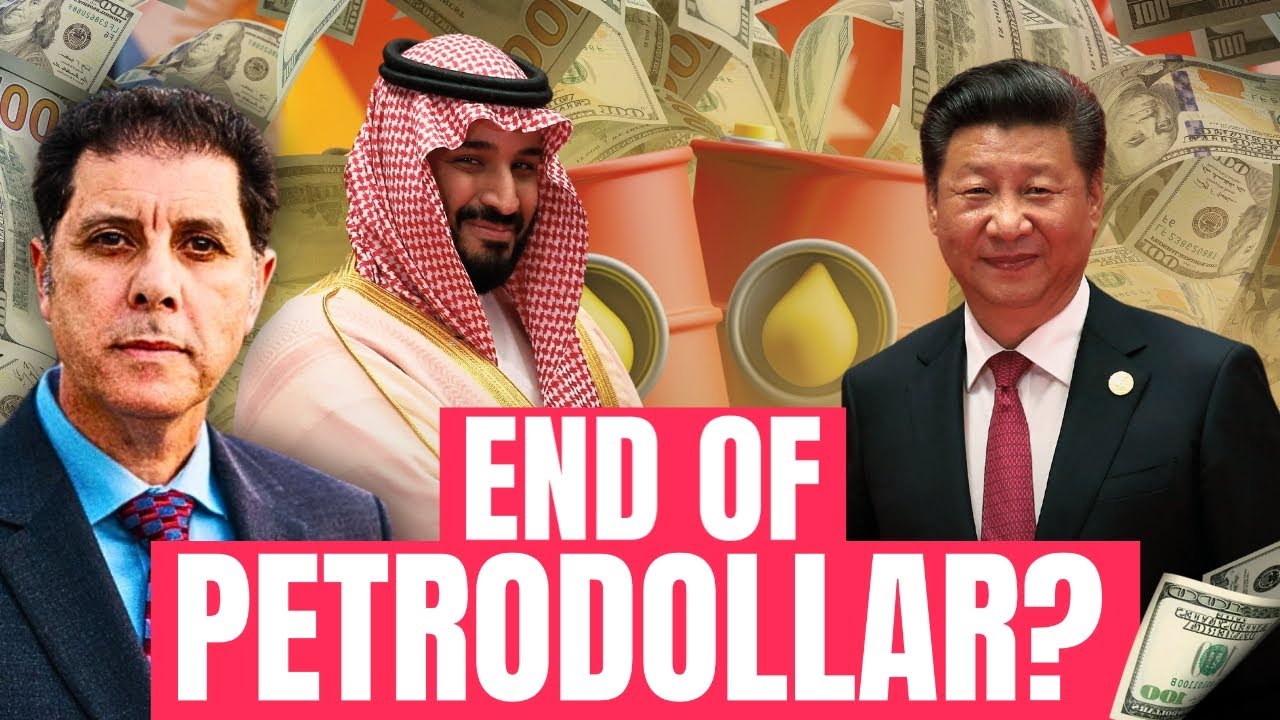
In this video, the presenter analyzes the recent agreement between China’s central bank and Saudi Arabia’s central bank to swap 50 billion yuan (about US$7 billion) for 26 billion Saudi riyals over a three‑year period. He explains how the swap deepens financial cooperation, promotes trade and investment, and serves as a test of the United States’ reaction to a potential shift away from the petrodollar system. The discussion places the deal within the broader context of China’s expanding network of currency‑swap arrangements (over 40 countries), the yuan’s push for greater international use, Saudi Arabia’s pending BRICS membership, and the evolving China‑Saudi geopolitical partnership that now includes security and technology. The presenter cites recent oil‑trade data (China imported $65 billion of Saudi crude in 2022, 83 % of Saudi exports to China) and notes the opening of a Bank of China branch in Riyadh as evidence of growing economic ties. He concludes that the swap is a strategic move to ensure liquidity, reduce currency‑risk for traders, and signal a gradual diversification away from the US dollar, while inviting viewers to comment on the implications.
Chapters
Hello everyone and welcome to Geopolitical Trends. So excited to be with you as always. As an analyst, I ask, what should we make out of the recent developments or agreements that is between Saudi Arabia and China to swap the yuan for the riyal? Interesting development. In this video, I'm going to provide you a brief analysis about the economic implications of this agreement and place this analysis for you within the context of the changes taking place on the global geopolitical landscape. So let's dive in. China and Saudi Arabia recently agreed to swap the yuan and the riyal, or the yuan for the riyal, that is. So the central bank of China and Saudi Arabia announced that they have now agreed to swap local currencies worth about 50 billion yuan, the equivalency of $7 billion, or 26 billion Saudi riyal, as relations between the two countries, China and Saudi Arabia, sort of continue to improve. Saudis, as you know, Saudi Arabia, that is the world top oil exporter to China And China is the world's largest energy consumers. So both of them have worked out now, uh, sort of they've been working out for, for a few years now, and they're expanding their relations beyond just the hydrocarbon cooperation or the petrochemical industry and so forth, to include now security and technology. Major, major developments. You know, China's central bank said in a statement, and I quote, that the agreement will be valid for 3 years, expendable with the consent of both parties, end of quote. So as an analyst, how do I read this? Well, this basically for— it will have so many implications in a good, in a good way, that is. One, it will strengthen the financial cooperation between the two countries, Saudi Arabia and China as they expand, uh, sort of the use of the local currency. And second, it will only promote trade and investments beyond what is currently at, because it is the, the trade between the two countries, it's not bad, it's very good. And this is where I see that then there is a third element to all this, the reason why they wanted to decide only on 3 years. They wanted to see the reaction, of course, of the United States, what it will be. Remember, all the petrodollar transactions are conducted in the US dollar. And the second aspect to do has to do with the reaction of the global market. This is the way I read it. Mind you that Saudi Arabia has been already invited to join the BRICS, and this is like the beginning of what lies ahead or what's coming soon. So the move, in my opinion, aims to ensure, of course, beside ensuring liquidity and exchange rate stability. And, and if that happens, of course, it will reduce the risk of currency fluctuation, uh, for importers, exporters, and the financial market dealers at large. That's the way I see it. Mind you, just to give you a, a reminder about the economic ties between Saudi Arabia and China, well, according to Chinese customs data China imports about $65 billion worth of crude oil from Saudi Arabia in 2022, just last year, which, which accounts for about 83% of the Kingdom of Saudi Arabia, that is, total export to the Asian giant, to China, that is. But at the same time, we should remember that Russia remained China's biggest oil supplier as of October last month. So despite, uh, higher Russian crude prices, Saudi's imports fell about 2.5% from the previous month as the— as the Saudi Arabia continued to cut supplies. Because remember, and I did a video for you guys, uh, both countries, Saudi Arabia and Iran decided to cut about, I think, about 3 million barrels or so, if my memory serves me well. That's from the overall production until the end of the year. So all this has to be put within the micro— under the microscope, rather, not within— under the microscopes of the really international relations, especially the bilateral relations between China and Saudi Arabia. Well, the Chinese president, President Xi, told the Gulf leaders, leaders of the Gulf states, in December, which is last, uh, uh, the last meeting they had, that China will buy oil and gas in yuan. That's what the presidency told the leaders of the Gulf. But China has not yet used the local currency to buy the Saudi oil. Now, could this agreement mean between the swapping of the yuan for the riyal meant for the payments for the oil? What do you think? So, so Beijing is believed to have the world's largest network of currency swap arrangements with at least 40 countries. Yes, you heard me, 40 countries that China has the arrangements with, but rarely disclose the, the, the broader terms of the arrangements, which is— it's entitled to that if they don't want to disclose that. As long as it's done bilateral and the other country agreed to it, there is no harm done. So, but, but there is a reason to all this, why China's going with 40 countries as far as swapping the currency, because China is trying for— has been for some times now to strengthen the yuan, not to make it to the point of replacing the US dollar. There are those in the West that are saying, oh, China wants to replace the dollar. No, China is not interested in that, but that does not mean China is not interested in strengthening the circulation of the yuan. So this is what the Chinese have been doing, uh, because the yuan's role in the international trade has become some sort of, uh, two-point dependent. Because remember, in 2016 the Chinese yuan has been added to the basket of currencies, but the reality suggested from that time forward that the dependency on the yuan was far less than what the Chinese expected. So, and this is one of the reasons why China is thinking in these terms, because he wanted to become less dependent on the US dollar. So because we all know with the sanctions US impose on countries, so now China is thinking differently. And this agreement between China and Saudi Arabia, it only indicates where the thinking in both Riyadh and Beijing is. This is the way I see it. And also China wanted to ensure that the energy supply is one of the reasons for the currency swaps because China needs a lot of energy. But more than about 2 months ago, I believe, if I am to remember, uh, the Bank of China— because I do remember this one, I read an article about it— the Bank of China— and I will, uh, post, uh, the links of the articles for you guys— opened its first branch in Saudi Arabia, in Riyadh. This is a move to expand the use of the yuan aimed growing economic deals between China and Saudi Arabia. It makes perfect sense. So, and this is what was about more than 2 years or so after receiving the approval from the Saudi government that they will be willing to move forward with this. So, so here is my final note because I want to keep this short for you. And by the way, guys, if you would like me to expand on this on a live stream just leave me a comment, let me know that you are interested, and I will be happy to do it. So, so here is the way I see it, a brief conclusion here. The move is part of a growing series of economic activities between China and Saudi Arabia. We've all been hearing how the relationship is strengthened. You all remember when President Xi visited Saudi Arabia and they rolled the red, the red carpet for President Xi, in comparison to when Biden one over to Saudi Arabia, and he has the fist bump with the— between Biden and MBS, which was very sort of bad optically when you look at it. So the bilateral relations between Saudi Arabia and China is described as their best— are in the best stage ever. And I can testify to this because as one who spent time in the Middle East, I was aware of the relations at that time. That wasn't openly between China and Saudi Arabia, and we were wondering at that time. That was during my days when I was still working for the government. But all this has to do with after the visit of President Xi, who had a state visit, which means an official one, last December. Well, that's what I said. You all remember when they rolled the red carpet for President Xi. So what do you think of all these developments? So make sure to leave me your comments because I always like to read your feedback. And by the way, guys, if you like the content of this video, please hit that like button and don't forget to subscribe. I will greatly appreciate it. As always, remember, geopolitics impact your daily life in more ways than one. Till next time, bye-bye.