China: Standing on the Right Side of History Regarding Gaza! W/Dr. Kenneth Hammond
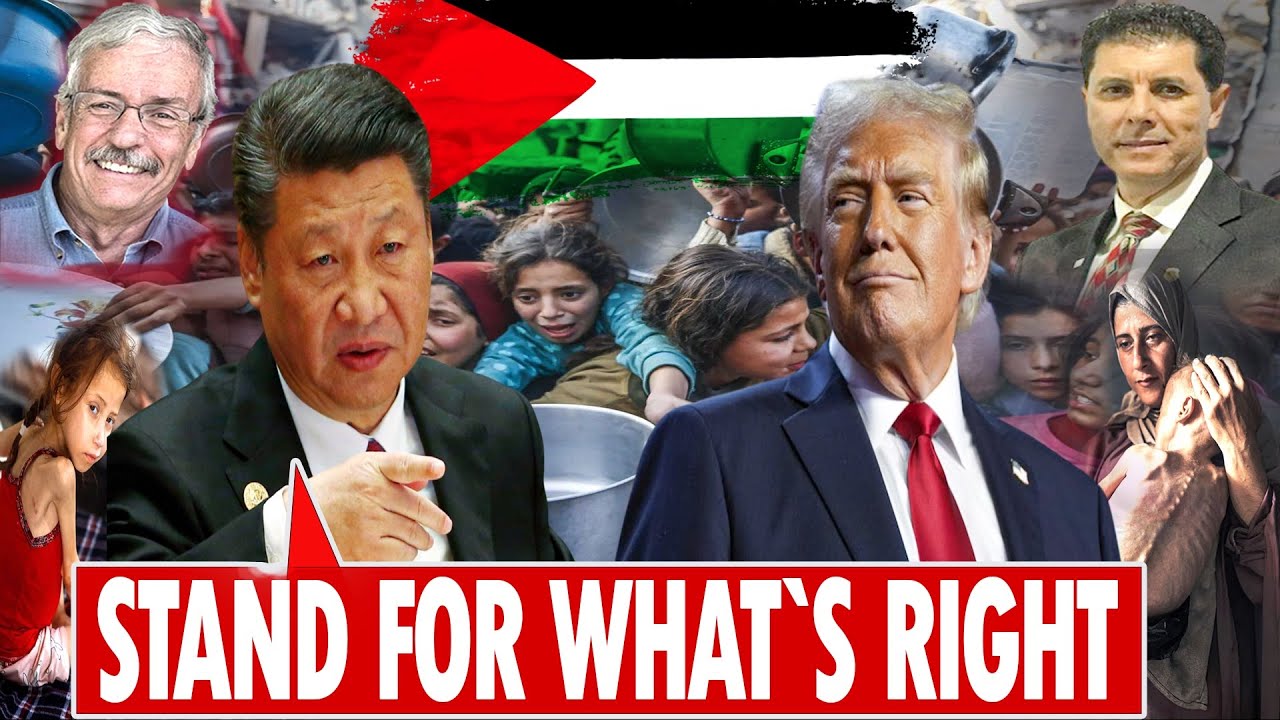
Dr. Kenneth Hammond, a Chinese history specialist, argues that China's Gaza stance reflects its 1950s anti-colonial principles and respect for sovereignty. He contrasts China's infrastructure development and anti-corruption efforts with U.S. political dysfunction, and discusses whether rising powers like China inevitably clash with declining ones.
Chapters
Hello everybody and welcome to Geopolitical Trends, where truth matters. Excited to be with you as always. I'm even more excited today because I have a, a good friend of mine, uh, Dr. Ken Hammond. So I'm gonna bring him in immediately, guys, and we're gonna launch in into some conversations. Hi Ken.
Hi David, how you doing?
Good, good to have you here and thank you for carving out time for our community here.
Always, always to learn from your knowledge.
So to those, uh, to those who do not know who Dr. Ken Hammond is, he is a historian with expertise in Asia and the cultural and intellectual history of China. So in other words, he is a Chinese specialist when it comes down to history. As a professor at New Mexico State University, he also teaches courses on the history of Central Asia and the Silk Road, and has also taught at China Studies program in Beijing. Make sure you guys take a look at the full bio that I put in the description. And I'll just add one more sentence here, uh, Ken has a breadth and depth knowledge as reflected in his 36 lecture series. It's called The Great Courses. You guys might want to check this, and I'm going to put the link for you. And this one is entitled From Yao to Mao: 5,000 Years of Chinese History. So once again, thank you very much, Ken, for being here. Uh, we're gonna get into it right away because we got a lot to cover. But before I'll do this, I'd like you to just let, uh, uh, some members of our community who are not familiar with you regarding your academic background.
Sure. Uh, well, I, uh, I actually, I, I just retired after 31 years teaching here at New Mexico State. Uh, I'm a historian of China primarily, but, uh, as you mentioned, I teach Central Asia, Southeast Asia as well, Silk Road especially. Uh, so it's, you know, it's, it's been a, a wide-ranging career. Um, I got my doctorate in history and East Asian languages from Harvard back in 1994. And I've been here at New Mexico State ever since. I primarily have worked in the history of the Ming Dynasty and especially in the 16th century, looking at the intersections between intellectual and political culture, things like that. More recently, I've been working on historical political economy in China and how that relates to urban history, the development of commercial markets, urban spaces, things like that. So a variety of, of interests. But I've spent a lot of time in China, lived in Beijing from 1982 to 1987, and traveled there pretty much every year until 2019. The last time I had been in China was in November of 2019 until 3 weeks ago. I was lucky enough to go over this summer, and I spent about a week in Beijing, and then I taught for a week at a summer school at Shandong University, uh, down in, in Jinan, the capital of Shandong Province. So, you know, that's, that's just sort of a general, uh, a general intro. I've, uh, written a lot of books and articles and things like that, and, uh, I've also been involved, especially in recent years, um, in, uh, in sort of activism to try to promote better understanding between the United States and China. Obviously, we live in a time where the relationship between China and the United States has become rather, rather tense and contentious. And I, I think that it's important that Americans have a better understanding of, of the realities of China and, and, you know, the ways in which it would be good for us, uh, to be working collaboratively and cooperatively rather than in a kind of adversarial relationship. So that's just putting both the academic and other cards on the table. And, uh, yeah, so let's, let's just take it from there.
Well, great. So to those who first time meeting Dr. Ken Hammond here, you heard it from him directly as to his background. So things will make sense to you when we talk about the issues we're going to talk about. Speaking of, you mentioned, Ken, your books, by the way, which I have a picture here of some of your books you published. Guys, you might want to really, if you get a chance, if you want to be sort of well-versed into the Chinese history, you might want to take a look at some of, uh, Dr. Hammond's, uh, publications right here. So, and I will— I think I already put the link in the description, uh, where you can get this book. So this is if you want to increase your knowledge regarding this. So, all right, Ken, uh, I would like— and by the way, guys, Ken and I, we call each other on a first name basis. So just for you to know, uh, that's how we, we communicate. So I would like to start, Ken, with the idea of, uh, just the— where I'm very surprised in a good way that the Chinese literally took stand regarding what's going on in Gaza. And this one was, in my opinion, a powerful display of how China wanted to sort of bring justice, fairness, equity. But on the other hand, it exposed the US double standards regarding human rights and freedom and democracy when we see a massive starvation in— what prompts China, in your opinion, given its history, to really move forward with taking a stand now? Because that's the only country that is now calling for the arrest of the Prime Minister of Israel.
Well, I think China's position on Palestine and of course on the terrible things happening in Gaza right now is very consistent with their overall sort of foreign policy guidelines that have really been in place since the early 1950s. Prime Minister, Foreign Minister Zhou Enlai back in those days enunciated a series of sort of principles that should underpin China's relationship with other countries. And, and of course, at the heart of that was the, the feeling that, that, uh, people, especially at that time in, in the colonial world, who were struggling for independence, who were trying to, to regain control over their own countries, their own governments from, from European colonial powers, uh, that people had, had the right to, to live the way that they wanted to live, to choose the kind of government they wanted to have. To go about their business without the interference of outside forces and without being dominated by other people. And I think that for the most part, that, you know, those struggles were fairly straightforward. And of course, now we live in a world in which many former colonies are— I mean, there are very few places left that we would consider colonies, direct political colonies. But the situation in Palestine, the situation in Gaza, is one in which the Palestinian people have long been systematically denied their rights of self-determination and now are being threatened literally with extermination, you know, with losing their land, their livelihoods, and for tens of thousands, their very lives in a situation in which the state of Israel is unleashing just this terrible, terrible, you know, campaign of genocidal destruction. And I think that China's position is to stand up and say, this is not right. This is against the principles of the United Nations. This is against simple basic human rights and human decency, and they condemn it. And, uh, and, and that's part of what has been an ongoing effort, uh, diplomatically by China to try to bring peace and progress to the whole region. You know, they, they brokered a relationship between Saudi Arabia and Iran that reduced the tensions there. They had a meeting about a year ago in Beijing of 17 different groups, political groups active within Palestine, to try to bring them together into a possible post-war, post-invasion kind of political alliance where they wouldn't be contending with one another, but trying to serve the real interests of the Palestinian people. So China has been dedicated to promoting the interests of the Palestinian people and trying to, you know, protect them or defend them, you know, politically from the devastations being inflicted upon them. So I think this is a position that's on the one hand very consistent with, with China's overall diplomatic approach, but also, as you, as you, I think quite correctly note, it stands out in the world today, uh, where, where governments have, have been very, uh, very weak, I think, and very soft, certainly in Europe, and especially here in the United States, where, you know, our government is actively facilitating the Israeli activities, uh, the Israeli invasion and all that. So China's position, China's commitment to the rights of the Palestinian people, I think, is certainly admirable and hopefully will be an inspiration and perhaps give other countries a greater willingness to step forward and say this has got to stop. And, you know, this is only the right way to approach things.
Well, you're absolutely correct, Ken, in the keyword you used as far as other countries being weak. Because that's the only other way to look at it. So, so I, as I said earlier, I read this morning that China stated, and I quote here, and that's to me was the nail on the coffin for us here. It is what the Chinese through its president, President Xi Jinping, stated, and I quote, US has no right to preach morality when it's actively supporting genocide in Gaza, end of quote. And, and this can, uh, aligned with what you said earlier regarding that is calling for, uh, the, the rest of the world to step in, that is calling for, uh, the Israelis to stop this kind of atrocities. And this was, uh, disclosed through the press release by the, uh, I think it was the Chinese mission at the United Nations when he stated, and I quote, we strongly call for an immediate and lasting ceasefire in Gaza. Military means cannot achieve a lasting peace. So guys, I'm going to put the link for you in the chat box. You can read up this later on because I need to keep my conversation with Ken regarding other aspects here. So now with this statement, uh, again What message is China sending, not just regarding the lack of fairness, lack of justice within the international organizations? What I'm focusing on here is what message is China sending regarding the new multipolar order?
Yes, well, I think this is, you know, this is— we've talked about this before, David, in some other contexts, but You know, what's happening in the world today is a truly world historical process of global reconfiguration. You know, for 150 years plus, the world had been put into a system, a kind of arrangement in which, you know, the advanced industrial capitalist economies of Western Europe and North America, you know, really dominated everyplace else, either directly through colonial rule or indirectly through economic and financial manipulation and exploitation. And for a long time, of course, you know, especially here in the United States, people had come to assume that that was just the natural order of things, that that was sort of the logical culmination of a long process of historical development. And what we're seeing now is that, in fact, that's going to, in retrospect, historians of the future will look back and see that that era of European domination or Euro-American domination was a passing, a passing moment, that it was based upon the outcome of the Industrial Revolution. It was based upon the ability of the Western powers to maintain a monopoly on modern industrial production technologies, and once that monopoly was broken, which began, you know, maybe 100 years ago with Soviet industrialization and then post-colonial development in different countries, and most particularly with the incredible rapid development of China since the 1980s, you know, we find ourselves in a world now where there's no longer not just a single center, but there's now many, many, many centers. China's certainly very important, India, Brazil, you know, the countries that, that they call the BRICS countries. And that's a growing group. Vietnam is the most recent country to join. Certainly Indonesia, Malaysia in Asia, these have become very powerful productive centers. Countries in Africa, countries in Latin America, developing their economies, becoming centers of productivity, centers of innovation, not just in the old industrial capitalist core, but all around the world. And that's something, you know, that process of global reconfiguration is something which is very uncomfortable for those who had been at the heart of the old system. They wanted to hang on. They want to hang on to the power, the privileges that they've enjoyed for a long time. And that, that puts this into both— that puts us into a situation that's both very positive in the sense that more and more people around the world are seeing their lives improved, seeing their economies grow, seeing their personal livelihoods, you know, benefiting, but also the threat, the danger that these formerly powerful states, especially at this point the United States, the danger that they pose because they don't want to relinquish their leading role. They don't want to relinquish the perks that they've enjoyed, and that makes for a very volatile and dangerous set of conditions.
Well, you're absolutely correct on this regarding the center powers, and so because What I'm noticing is, and I'm sure you are aware of it, Ken, that yesterday was a meeting between the EU and who— a delegation went over to China, meeting with the Chinese. Is this a concern for the Europeans that, you know what, the US is going down and we better start to think about Plan B? But on the other hand, should China trust the EU?
Well, those are two very good questions. I think yes, that the European Union and certainly individual governments in the more prominent European states are very concerned about what's happening with the United States. Both in terms of these sort of long-term historical trends, the erosion of productive capabilities in the United States, the financialization of the American economy and the Western European economies where a lot of money is being generated not through the actual production of real value but through various kinds of financial manipulations. And they're worried, I think, and reasonably so, that the United States is in an increasingly fragile position, that, you know, that's a long-term historical trend, but they're also particularly concerned at the moment with the sort of reckless and unpredictable behavior of our government right now, you know, with Donald Trump at the heart of that, you know, where you don't know from one day to the next what's going to be happening. You don't know what he's going to say or do. And you don't know whether what he says and does then will have any meaning or consequence, you know, down the road a little bit. So much of the present political situation in America is kind of a political theater, a sort of performative playing out of rhetorical issues that, you know, he created in his campaigns that are very much disconnected from the economic realities of the country as a whole and certainly from the lives of ordinary Americans. And I think the Europeans look at the United States today— I just spent earlier this year a month in Paris, and, and, you know, the feeling in, in, in France, and I think in much of Europe, is, is just one of people kind of scratching their heads and saying, what the heck's going on? So I think that, that they're very worried about the, the future course of, of action of the United States. But there's also, as I say, a recognition of these long-term trends where America is no longer going to be the sole dominating power in global affairs. So they look look at China and, and they see that, you know, China is expanding its economic, uh, influence and, and is actively working with countries in, in Asia, Africa, Latin America to create new relationships, new infrastructure for economic activity, uh, that's outside the sphere of American domination. And so European leaders, I think, that are, that are farsighted and pragmatic are looking at that and saying You know, we don't want to, we don't want to put all our, all our, all our eggs in the American basket anymore. You know, we want to, we want to find, in a sense, as, as the economic advisors always say, diversify. So they're looking to maintain and develop better relationships with China. Whether China should, you know, sort of rely on that, I think, also remains an issue because there's disunity within the European Union. You know, Germany has one sort of position. France has a little bit different position. Some other countries, you know, go off on their own. Uh, it's, it's hard to know exactly even what, what Europe's going to do. And I think the Chinese, the Chinese, if nothing else, are, are super consistent. Uh, you know, not just, uh, like as we talked about with their sort of diplomatic policies, but they're very clear. They have these long-term perspectives. Uh, you know, they still produce these, these what they call their 5-year plans. They're working on the the 15th Five-Year Plan right now. And, you know, they just have a whole different approach to these things that's much more reliable, much more predictable. And I think that many, many countries around the world look at China now as a force for a stable and prosperous future in a way that America and even Europe no longer are.
Well, for sure, Ken, because when you see both conflicts, the one in Ukraine between Russia and Ukraine. And of course, what's going on in Gaza, uh, the Europeans are kind of, uh, uh, weak. That's the only term I can, I can use. Uh, they look so pathetic because they couldn't take stand. And now, to me personally, the way I look at it is this pivot towards China is just because they want to save their economies. They know they are going down the drain. As the US imposed the tariffs. And that's what I'm saying. Why should China trust them?
Yeah, well, I think China will conduct itself vis-à-vis Europe in a way that I think is based upon certainly their own historical experience. They certainly don't have any sense of a long-term sort of debt or obligation to the Europeans, given the way that Europeans, European powers exploited China, uh, you know, during, during the Century of Humiliation and the sort of semi-colonial era. Uh, so, you know, there's no— it's not that, that, uh, that there's a, a really close, uh, emotional relationship, but China, you know, China wants to develop its economy and China wants to trade with Europe, and I think that they will, they will engage with Europe to the extent to which Europe is going to play it straight, but they don't want to be, you know, sort of— they don't want Europe to cop an attitude with them. They don't want Europe to be sort of taking a position of, we're going to tell you what to do, we're going to tell you how you should conduct your internal affairs. You know, people should let China be China and let Europe be Europe, and if to the degree to which they can find common ground to work together, That's great, but I don't think China is going to, you know, be like, oh, now Europe's going to be our best buddy. China identifies with the developing world. It identifies with people, other countries, other peoples that experienced that period of humiliation and exploitation and colonial domination. That's a shared historical experience with the Chinese people. And so they feel a much greater degree of solidarity, of empathy, of commonality with, with countries in the developing world than they do certainly with the former colonial powers.
Well, let's hope the European will negotiate with, in an honest faith with the Chinese. We'll see how that's going to develop. Yeah. Let's go back to our standing of China regarding Gaza, because I want to touch on some historical aspects of this. The first one is, is China standing, taking this stand sort of because of what happened to China itself, what with what the Japanese have done to the Chinese?
That's sure. I think, I think, you know, that, that China's historical experience of being dominated and exploited by, by foreign powers. Of course, they see that as analogous to this, you know. I mean, you have the Palestinian people living in their homeland when newcomers are arriving, backed up by the power of the West. And, you know, the United States has been deeply involved with the state of Israel since its creation in the late 1940s. And, you know, this situation where they They've been— they've had their land taken from them. They've been reduced to a subject population. They've been confined in territories that are, that are, you know, marginal, shall we say the least, to their traditions. And now they're being systematically, you know, almost exterminated. And so I think that China looks at that and sees some of the ways in which, certainly during the Second World War era, the Pacific War era, uh, you know, Japanese imperialism inflicted terrible things on Chinese people. And, and, and, you know, that, that historical memory is not lost, uh, in China. And so there's, there's a, there's a sense of, of a shared, uh, subjectivity, a shared experiential, uh, awareness, just, just, I think, at a very gut level. And, and, and people that I've spoken with in China, you know, looking at that situation, they feel very strongly about it. And I think that that's reflected in the sharpness of the language, which remains, you know, within sort of diplomatic parameters, but is, you know, pretty stark and pretty straightforward and not, you know, framed in any kind of ambiguous way. As in contrast with the efforts of other governments to sort of try to sound like they're taking a stance. You know, we're not— this is unacceptable, they'll say, or, you know, this can't go on, but there's nothing there to sort of back that up. There's nothing there. There's no position of outright condemnation, of calling it, you know, a genocide, of calling it what it is and saying that, you know, this has simply got to stop. And of pursuing that, You know, through the Security Council at the United Nations, China has voted, you know, in support of the Palestinian people every single time things have come up. As you know, the United States continues to veto resolution after resolution simply calling for a ceasefire, simply calling for a halt to the daily murder of Palestinian people by Israeli forces. You know, I think that that's based in large part on that sense of a shared historical experience. That the Chinese have, certainly at the hands of Japanese imperialism.
But if we are to go back, Ken, if we are to go back in the Chinese history, way back, let's go to the 16th century, that's your era of concentration. Was there a similar incident or events that took place, whether with the end of the dynasty, which I do not know how the end of that dynasty was, Was it a peaceful transition or was it a chaotic one?
It was very chaotic.
Was it chaotic?
Yeah, yeah. You know, there's not really— it would be hard to identify a situation that quite paralleled what's going on, you know, with Gaza today or the Palestinian people today in the sense of China expressing a kind of— the Chinese state or the Chinese people expressing a kind of solidarity. With a, with a land far away. It is true certainly that, uh, that in Chinese history there are a number of instances in which China went to the aid of, of its neighboring countries. Uh, in the 16th century, uh, you mentioned that there's, there's something called in Korea called the Imjin War, which was a war to resist invasion by Japan. Uh, Japanese forces invaded Korea in, in around 1590 and there was a war there for the next 8 years, and, and China sent forces to, to support, uh, the Koreans, uh, you know, to fight side by side with the Koreans, uh, and to help them to, to resist, uh, the presence of the Japanese. In the 17th century, uh, there were, there were invasions, uh, of, of the Tibetan region, uh, by forces from Nepal, uh, and again, the Qing Dynasty at that point, not the Ming Dynasty in the 16th century, but but the Qing Dynasty in the late 17th century sent military forces up to help support the local authorities in Tibet in resisting an invasion from, you know, from outsiders there. So there were, you know, there are certainly instances in which throughout Chinese history, I mean, those are just instances that I'm more familiar with, but even in other periods where Chinese governments did take direct action to try to support people, you know, with whom they had a sense of solidarity, identity, you know, shared responsibilities, things like that, but nothing quite as sort of straightforward in terms of people far away expressing that kind of solidarity. But I think it grows out of that same historical period of trying to uphold you know, just sort of basic, basic standards of sovereignty and respect for the integrity of a distinct people, a distinct population.
And this is why I'm always confused as to why the US— of course, we, we are not old enough to understand this old history. 260 years since the foundation of the US, it's not long enough to understand. And this brings me to that point regarding Taiwan. Why are we still pushing a narrative that is not true regarding— if we go back into the history and understand the links, I went to Taipei and I asked some locals there just out of curiosity, of course, to those who were able to speak English with me. And they're like, "We are— the ancestors are tied to the Chinese history." And to me, the US is still pushing this narrative of the Taiwan is separate from China. It just doesn't make sense to me. So why are we pushing this narrative that we know it's not right and it's not correct?
Well, of course, it's only one of a number of such narratives about different issues around China that are, you know, quite frankly, they're designed, they're intended uh, I think quite consciously by, by American political elites to demonize China, to, to, to create an atmosphere in which the kind of actions that the American government has been taking in terms of, of not just tariffs but sanctions, um, embargoes on certain commodities, both things like, like, like chips, you know, that have been talked about, things that we, we won't let the Chinese buy from us but also things that the Chinese have, like electric vehicles, solar panels that are, that are highly effective, highly efficient, and low cost, that Americans are not allowed to buy from China, you know. Uh, you know, all as part of an effort to try to at least slow down, if not derail, China's development. Because again, as, as we talked about a little bit earlier, as a, as a really central part, a really significant component of this process of global reconfiguration. You know, China obviously is, is a very important, uh, force emerging in the world. And, and really, you know, we're returning now to a kind of decentralized, multi-centric world order that's, that's— people 200 years ago or 250 years ago would have found quite familiar. You know, the world in the, in the 18th century and, and for 1,000 years before that was not a place where there was one single center of economic or political power. There were many. China was a very important one then. Chinese goods were valued all over the world. Merchants came to China. Chinese merchants went out into the world, you know, for, for all kinds of things— tea and silk and ceramics and all kinds of products, uh, you know. So, so that, that's a, that's a normal, uh, if we look at it in terms of larger historical frameworks, that's a more normal pattern. This, this idea of the domination of the West and all that, it's just— that's just— that in the long run will just be a blip. But again, America's not comfortable with that change. And so if they can— they see China as at the forefront of that. And so if they can slow that down or derail that, then that may give America a chance to, to hang on to its It's, it's power, you know. But, but I, you know, personally, I think they're, they're on a fool's errand with that. And I think that, you know, they're trying to hold back the tide of history, and that's, that's just not going to be happening. Yeah.
And that's usually the, the shortfall of our lack of understanding, because we don't— I mean, whether you agree with me on this, Ken, or not, but I feel that we, and I speak or, you know, some of us, I shall not generalize, we are poor readers of history. We don't read. We don't read much. That's why we are not understanding what's going on in the world. And we think that the world will have to think the way we do, which I don't think so.
That's very true. And, you know, the American government in particular has been working very hard to control the narrative. Yeah, not just around China, but about, you know, the world at large, but especially around China, shutting down things like the Confucius Institutes that used to bring people to America to teach the language so that Americans would, you know, be able to perhaps, you know, read or watch Chinese TV or get on the internet with Chinese people. They've shut all that down. They don't want Americans. To, to know about China, to know about the realities of China. Uh, when I was in, in Beijing recently, um, I stayed at a very nice hotel, Crown Plaza Hotel, up in the university district in Beijing. And, and, and rooms there, you know, that, that 15 years ago when I used to go to China a lot with, uh, with American, uh, educational groups, uh, rooms there would cost $300 or $400 a night. Now they're about $120 $20 a night because so few Westerners are going to China. Uh, you know, the— America has generated this, this scare narrative, this rhetoric of, of fear and, and, and concern, you know, uh, that, that tourism and, and educational exchanges and all this, they're, they're way, way, way down. And, and that's part, I think, of a very conscious effort uh, not just under Trump, but, but, you know, under the Democrats as well, to, to curtail, uh, a direct experience, direct encounters between Americans, uh, and Chinese. And of course, you know, most Americans, the vast majority of Americans, they can't read Chinese, uh, so they're not going to be looking at newspapers or magazines or anything like that coming out of China. And of course, there's this mythology that, oh, everything is censored and everything is very, very narrow and limited. But, but, you know, that's— you go to China and you go to a bookstore or a newsstand and it's obviously just completely nonsense. So I think that, that, uh, yeah, it's, it's not just the, the, the— that Americans don't read history, although certainly we live in an increasingly anti-intellectual culture and a culture in which, uh, uh, you know, simple, you know, the, the, the, the the narrative attention span of many Americans has been drastically curtailed. So sitting down and reading an in-depth historical analysis, something most people simply don't do. They get their knowledge, their information from fragmented sources without much verification on the internet or from mass media or things like that. It's not a situation in which we have what I think we would like to think of,, as an informed, a well-informed electorate. You know, we find ourselves with a citizenry that has been made vulnerable to a variety of manipulations that are carried out, you know, not just by sort of weird actors out in the environment, but by our government, uh, and, and, and powerful information producers, uh, you know, within American elites.
Well, I was in China last year, Ken, and I tell you What I experienced was incredible, and I could also reach the conclusion as to why, why the US government will not want the masses here to know what's going on in China as far as the developments. I'll give you just quick example. I got on a maglev to get to the airport in Shanghai. You know how long it took me? 8 minutes. Yeah, I timed it. 8 minutes. And I asked, I asked the basic question because I did a short video on it and I said, why don't we have a speed train like this in the US? We are the richest nation on Earth. Why aren't we having this? And to me, I drive to Houston, takes me 4 hours to just get to Houston. Yeah, 4 hours to get back. So here is my day, just go in and went on, on a highway basically.
Yeah, I mean, the things that China has achieved, yeah, what you, what you see and what you feel, you know, on, on the streets of, of Chinese cities, and it's not just like, like Beijing or Shanghai. I mean, I just spent some time in Jinan, which is, you know, it's, it's, it's a big city by American standards, but in China it's a pretty average kind of, kind of town, uh, and yet, you know, it's, it's It has amazing infrastructure and services, and it's just, you know, the livelihoods of the people. You see people on the street and they're healthy and happy and well-cleant. I mean, everything. It's just this fantasy of China as this land of oppression and fear, and it's nonsense. But unless Americans have the experience of going there and seeing that, or at least having an open and honest flow of information, uh, you know, Americans are very vulnerable to the narratives that are, that are foisted upon them. And I think that, I think that's very dangerous, uh, because it gives American politicians kind of a free hand. You know, you were talking about the Taiwan issue, and certainly that's a situation in which no, nobody, nobody in Taiwan, nobody on the mainland you know, wants a war over Taiwan, that would be terrible. It'd be destructive for everybody. It wouldn't be in anybody's interest. The only people, the only people who think that stirring things up, trying to, you know, foment some kind of independence movement in Taiwan would be a good thing are American politicians. And it's shortsighted, it's dangerous, it's reckless, it's just— it's irresponsible. But they don't care about that because they can use that both to sort of promote their, their campaigns of China bashing and also as part of their domestic electoral strategies. Look how tough I am. Look, you know, you know how belligerent I am. I'm such a, I'm such a, a powerful figure, you know. You want to vote for me and you want to take, you know, keep me, keep me in Congress or keep me in the Senate or whatever. It's, it's in many ways it's quite pathetic But it also, it just reflects the realities of our, of, you know, the sort of degraded political system that we, that we have in this country today.
Well, it's becoming very evident as to where our system is. I've, excuse me, I've always said, Ken, that our system is corrupted to its core. Because again, when I went to China, I saw with my own eyes, and I saw that a system that is working for the benefit of citizens. You know, when I was walking in, in, in Shanghai, I hardly ever seen anybody who looks angry or look tense, whatever. Everybody just relaxed and kind of like they just going about their day and living it. Some, some even Westerners were saying, oh no, no, no, they are afraid. And I say, afraid of what? They are not afraid. What they are doing is the people are letting the politicians manage whatever needs to be managed to the point that the government is doing what it's supposed to do for the benefit of the citizens. We don't have that here. And I said to this individual, that is the difference between what you are being fed versus what the facts are on the ground.
So, and no, I, I, I, you know, I, I think that, that, that, that experience of, of being on the streets, being in town in China, it's just so radically different than the mythology that's promoted here. You know, which is not to say that there aren't problems in China, that people have their concerns, their anxieties, especially young people, about, you know, their futures and work and all that. I mean, China is still— it's still a developing country. It's still a work in progress that, you know, they have a lot of challenges ahead of them, but it's a, it's a country in which they're facing those challenges in a way exactly as you say, where, where, uh, you know, they, they at least try very hard to put the interests of the people first. Of course. Uh, and, and everybody here knows that that's not, that's not what happens here, you know, that, that, uh, uh, the elites take care of themselves and, and, you know, there's a little bit of of crumbs from the table that are, you know, passed along, but fewer and fewer these days, you know, as our economy heads deeper and deeper into trouble. The kinds of benefits, the kinds of trickle-down that used to, you know, keep Americans sort of basically content, those have eroded. And I think a lot of the frustration that we hear in American politics today, although it isn't articulated in terms of those economic issues, issues. It's articulated in terms of, you know, immigration or, uh, you know, gender issues or, or, you know, what the so-called culture wars, all that stuff. But a lot of that is, is, is because of the erosion of the quality of life and the economic pressures that Americans are feeling. And, and you look at China, and, and of course it's because China is a rising, dynamic, expanding, growing economy, and America is a declining and increasingly inequitable. China, you know, certainly has inequities in its economy. The distribution of wealth is not as equitable as people would like it to be and as their own rhetoric suggests that they want it to be, but they know that they're working to improve things, and they know that there are massive efforts at redistribution of wealth, making sure that where wealth is generated, at least significant portions of it are dedicated to promoting the interests of ordinary people. And here we know that the vast majority of wealth that gets produced simply gets siphoned up to this Elon Musk elite that, you know, that doesn't really give a damn about, you know, how ordinary people are doing. And the contrast, I mean, you just, you do, you just feel it, as well as obviously being able to observe it, you know, sort of materially around you.
You're absolutely correct, Ken, because I look at it as an average citizen, you know, look at it just where the prices of goods are with the inflation going up, with these ill-conceived policies of Donald Trump regarding tariffs that end up backfiring on us. It's not the Chinese. The Chinese GDP, by the way, rose to about 5.4%, you know, despite the tariffs. And makes you just wonder, why are we getting into some failed policies? Why are we even voting for unqualified, unfit individuals for office? Because it became clear to me we are having— I won't say just we, the collective West. Is having a leadership deficiency across the board. That's the way I see it.
No, absolutely, absolutely. I think that, yeah, I mean, it's ironic because of course what people who, you know, voted for Trump because they were fed up with the Democrats, now they're hopefully seeing that, you know, Trump too is serving the interests of the billionaires and You know, putting into place policies which are hurting ordinary people and are going to hurt them a lot more in the months and years to come. You know, and but they— that makes them— that makes many people very cynical and it makes people withdraw from politics, you know, simply not— let's just not vote. You know, what difference does it make? And that leaves the field to the most self-interested, the most corrupt, the most power-hungry people, uh, in the country, uh, who then use the government to benefit themselves and their cronies. Uh, and because people have become so cynical and so passive, uh, they can get away with that. They just go on looting us in ways that, uh, that are shameful. But again, in China, you know, people are, you know, it's not that it's a society where everybody is actively out there doing politics.
No, of course.
They have so many mechanisms by which people can express themselves through, you know, through hotlines and through internet and through, you know, their community meetings and things like that. It's just, it's a sort of feedback loop, if you will, between the people and the leadership. Is so much more active and so much more dynamic than here, where people just feel totally cut off and abandoned by the people who theoretically, you know, make all these promises to us and then simply walk away from them. It's kind of— it's a challenge, to say the least.
Well, at least for the Chinese, because to me, I was I did share it with the community when the Chinese court sentenced Zhang Zilin, who was a former vice governor of Southwest China's Yunnan Province. They sentenced him to life imprisonment. And why? Because for accepting bribes worth almost ¥122 million, the equivalent of about $17 or $18 million. So, yeah, so to me was clear that, you know, just because he was in possession of power doesn't give him the right to just get involved in whatever. They end up sending the guy to prison for life, something we don't see in our system.
Yeah, no, no, no, the anti-corruption campaigns in China that have been going on really for a dozen years now.
Yeah.
They remain very, very intense, and, and they've taken down people at very, very high levels. Uh, you know, no one, uh, is, is above the law in a sense, in that sense, certainly in China. And, uh, and, and again, yeah, the contrast, uh, where, you know, the, the kind of cronyism and, and abuse of, of economic power in this country It's so shameless now. I mean, Trump, of course, is the worst, but it's hardly limited to him and his crew. You know, it's just, again, it's such a stark contrast. But people have been made so cynical that they shrug it off and they say, well, what can you do about it? Well, you know, you can change it. You can make people be responsible for their actions. You can transform the relationships of power that we have and make it into a system that's going to serve ordinary people's needs. You know, but people don't believe, a lot of people don't believe that that's possible. And I think that for those of us who do, for those of us who think that we need that kind of change, that's the biggest challenge is to get people to overcome that sense of cynicism and passivity. But again, that's drilled into us every single day through media and through, you know, the rhetoric of politicians and all that, that you have to rely on us, we'll take care of you, take care of it, where they're just taking care of themselves.
If I were in charge, Ken, the things I will do, I'm not going to say it here on a live TV, on a live show, you know what I mean?
That's how I would handle that.
There is no prison for a year or 10 or whatever. I'll take care of it the next day once it's proved that you, the person, did get involved in. But on a, on a different point, Ken, while we're talking about the justice and fairness and so forth, I've had a chance to read some white paper coming out of some think tanks in Washington. Of course, the arguments regarding China wants to take over the world. That is the argument. So however, I kind of just thought about what if asking the question differently? What if China has like some sort of a different vision for how to shape the world that is sort of more just, that is more fair, that is more equitable, that has some sort of human dignity and so forth? Will I be wrong in this assessment if I am to say that China does have some sort of a sweeping vision I think they very much do.
I think that, you know, the Chinese leadership has developed a series of sort of global initiatives, I suppose you could call them, and some of those are very straightforward economic campaigns, something like the Belt and Road Initiative, you know, this massive program of infrastructure investment to promote uh, you know, trade and exchange and communication, uh, you know, uh, between China and developing countries and amongst those developing countries themselves. Port facilities, railways, pipelines, all kinds of things that are going to give developing countries in, in different parts of the world the ability to, to enhance their own economies and improve the livelihoods of their own people. Without being centered on, on, you know, the, on the West and on some, uh, some, uh, power that's trying to simply dominate and extract from them. Those are benefits of mutual, or relationships of mutual benefit. China's not doing it as a philanthropy. China's doing it, you know, to invest and to improve their own future economic situation as well. But it's, it's what the Chinese like to call win-win kind of kind of stuff. So you have some of— some things like that that are direct, just basic economic development. But they also have— and actually, when I was in China this time, there was a lot of discussion about this— something that they're calling the World Cultural Initiative, which is designed to promote cultural diversity and respect. Uh, and, and they're very clear about this. They just had a big conference about this in Beijing. A few weeks ago, where people, I think, from 140 different countries came and, you know, talked about a range of issues. But the idea is the sort of— the terminology, I guess, at the heart of it is that, you know, the strength of the world is in the range and variation of cultures and that different cultures bring different strengths to the global system, to the, to the sort of world culture, if you will. And the idea isn't to develop a single unified sort of monolithic world culture that's consistent everywhere, but instead to embrace the diversity of cultures, to respect, you know, local traditions, languages, all this kind of stuff, uh, in a way that, that both strengthens those distinct cultural identities but also strengthens their cooperation and collaboration in shared development for the future. And that's a— it's a complex process which, you know, needs to be thought about in, as the Chinese like to say, in a dialectical way.
Yeah.
But it's that kind of vision I think is just what you're talking about, that that it is, it's a global vision, not of domination. Dominance, yeah. The Americans, we've always thought, I certainly in my lifetime, the mythology has been everybody in the world wants to be American, like an American. They want American culture, they want American things, they want, you know, we want to export our culture everywhere because everybody should be just like us. It's almost the total opposite of that. That what's going to make the future viable, successful, strong is the diversity of cultures that then can come together and collaborate and cooperate with one another without losing that which gives each of them their distinctive qualities and strengths.
Well, that's for sure. It's more evident now than ever, at least for the last 40 years, in my opinion, watching how things evolved. And as one who was inside the government in Washington for quite a while, it's becoming more evident now. We kind of— you mentioned the US overseas, people just shrug their shoulders because they're saying, how can we— what credibility the US has anymore? Yeah, it's sad to say, but it's also a fact. You look at exactly what's going on in Gaza or other places, whatever. Why are we turning a blind eye on what's right? You know, and this is what now made me surprised about the, the stance of the Chinese that they take in this position at this time. And this will lead me to my next question, Ken, and this one has to do with the role of China in the new multipolar order. How do you see it?
Well, obviously they're going to have a prominent role. Yeah, you know, just economically, but also I think what China says these days I think is very interesting in terms of, of their, their sense of, of that role, which is that they're not trying to— they're not trying to impose their model, if you will, their system, their way of doing things on other countries. They're very clear, and this again, this is one of the fundamental principles of their foreign policy that goes back to the 1950s. They talk about the respect for sovereignty and the integrity of other countries and non-interference in their internal affairs, okay? And so what that means is, you know, they're not telling a country, if you want assistance from us, you have to reshape your government, you have to adopt policies which are consistent with what we want you to do. You know, that's been the model in the West, you know, forever, it seems, in some ways, certainly, uh, since World War II, imposing conditions. The IMF or the World Bank, if they're going to go in and loan money, they say, well, you have to have these austerity programs, you have to cut back on social spending, you have to do this, that, and the other thing. China doesn't do that. Now, ironically, or perhaps it's not ironic but intentional, uh, China gets criticized for that, uh, you know, because it's, oh well, they, they coddle dictators and things like that because they won't go in and say, you know, we're gonna— we'll be happy to help you with, with economic development, but you have to, you know, get rid of your form of government and adopt one that's more to our liking. They simply don't do that, uh, and, and, you know, so sometimes I think that, that they do wind up, uh, engaged in development projects in countries where the governments are not perhaps, uh, the most, uh, the most desirable from certain points of view. But China's, China's position is, look at how— look at the successes we've had, look at the kind of system we have, look at how it works, look at what we've achieved. If you think, in, in wherever you are, whatever country you're in, if you look at that and you think, huh, look what China's accomplished, maybe that would work for us, or maybe aspects of that work for us, great, we'd be happy to, to, you know, provide advice, or, you know, to, you know, you can learn from our experience, but we're not going to require that. We're not going to say, you know, it's our way or, or forget about it, right? Uh, and I think that, that that's the role that China is going to play in, in this emerging multi, multipolar world. You look at an organization like, like BRICS, uh, you know, and China was one of the, the original 5 members of that Uh, but, uh, but China doesn't dominate that. Uh, China's not, you know, telling the other countries, well, this is what you're going to do. China's one country, uh, among others, and, and it plays its role, and, and that's great. Uh, and I think that that's, that's the kind of conduct, uh, that, that we're going to see from them, uh, in, in, in— and we see it already, and we're going to continue to see that in years going forward. One of, of offering a model but not imposing requirements. And I think that that's, uh, that personally, obviously, I think that that's a great way to operate.
Very interesting. We come in at the top of the hour here, and I am mindful of your schedule, Ken, so I'm making sure of that. So I have one last thing to address with you here before I let you go. Uh, yesterday or the day before I did this survey for our community right here, and one of the questions I asked was, given the chaotic and the failed policies of the US, will America allow China to surpass it economically? Yesterday, believe it or not, Ken, it was 48% said no, 48% said yes, and I think about 8% said I don't know. This morning I checked it. 45% said yes, 49% said no. And I'll ask you the same question, Ken. How do you see it moving forward? Will we engage in a military based on the, uh, uh, uh, Thucydides, uh, trap theory? In other words, we will end up in a conflict, or we'll be sort of accepting and admitting that, you know what, time for another power to rise. And we have reached the end of the journey for us.
Well, I don't think we can expect American politicians to be quite so pragmatic, but—
I was hoping.
Well, we can keep our fingers crossed, but I think that— I don't think that military conflict with China is inevitable. I don't think it would be in anybody's interest. I don't think it would— I don't think it would benefit the United States. I don't think it would— certainly, obviously, it would be a bad thing for China. Uh, I, I think that, I think that at this point, yeah, if, if military analysts in the Pentagon are paying any attention, they have to realize that a war with China, a serious war with China at this point, not some proxy thing somewhere but a serious war with China, uh, is unwinnable, uh, for the United States. Uh, you know, we could inflict a lot of damage on China, and if that's the objective, uh, you know, some sort of nihilistic, you know, if we can't run things, we're, you know, we're not going to let anybody else do it, uh, you know, it's, it's not, it's not impossible, but I, I would hope that cooler heads would prevail. Uh, but I do think that, that policies the United States has pursued now are quite provocative and, and quite dangerous, uh, because, uh, you know, wars don't always break out because countries choose to have them. All we have to do is look back at the history of the First World War and the way in which that simply spun out of control. Uh, so I think that China has been remarkably restrained in its responses to American provocations, uh, but I think that that, you know, things can, things can go off the rails in unanticipated ways. And I think that, that the current, uh, the current posture of the United States is a very dangerous one. So I don't think that war is inevitable, and I certainly hope that it will not take place because it'll be devastating for all of us if it does. Uh, but I can't, I can't rule it out as something that, oh no, I don't think that's ever going to happen. I think it could. I think that some of the work that we as citizens need to do in this country is to try to prevent that from happening, to try to keep our leaders, if we call them that, the people who hold power, from embarking on that kind of reckless and doomed kind of adventure. Uh, so I think that the U.S. will, will hope, will wish to do whatever it can to support China's rise, to prevent China, uh, surpassing the United States economically, although in many ways they actually already have. Uh, but, uh, you know, uh, I think that, that, that moment has passed in many ways. Yeah, 20 years ago, sure, maybe they could have done something that would have thwarted China's development, but not now. Truly, you know, that, that train has left the station. Uh, the, the dynamics of world history, this process of global reconfiguration that we've talked about in the course of the hour, that is a, that is a deep structural change that it's not just a matter of China and the United States, it's a change in global relationships. You're not putting that genie back in the bottle. This is something that's happening It's going to continue to happen, and trying to stop it is— it's, it's like, uh, you— who— I forget, the King Canute or somebody in British— oh yes, trying to hold back the tides, you know. It's just not gonna— it's just not gonna happen, you know. So what the United States hopefully will recognize is that the path forward that would be of most benefit, not just, you know, what would be great for the American people, but even for the elites, even for their own narrow little self-interested brains, yeah, uh, would be to cooperate with China, to collaborate with China, to seek the common ground in which we can share, uh, in, in development, we can share, share in, in future, uh, uh, growth in ways that are, you know, going to benefit people at the top and at the bottom and, and maybe even be sustainable and help to, to save the planet. Because otherwise It's going to get, it's going to get super ugly for everybody.
Well, on that note, Ken, I am hoping that some politician in Washington is watching this video, at least this part of it, to hear what you had to say. So thank you so much for sharing your knowledge with us. We truly, truly appreciate you. On behalf of the entire community, I say thank you again, and we look forward to having you next time.
Well, it's, it's always a pleasure to have these conversations, and I look forward to our, our next round.
Thank you very much, my friend.
Okay, bye-bye now.
Bye-bye. All right, guys, hope you all enjoyed listening to Dr. Ken Hammond. He's a wealth of information. Once again, just make sure you go to the description of the video, and I put a full bio there along with the books and everything. Uh, Dr. Hammond is someone you truly want to listen to what he has to say. Uh, remember to join me tonight at 1900 hours for my conversation with Carl Zah. I'm going to put the link for you in the, uh, I'm sorry, I'm going to put the link in the chat box here for you guys. And I look forward to seeing you at 7 PM, 1900 hours Central Standard Time. So as always, remember, geopolitics impacts your daily life. Till next time, bye-bye.
More from David


Beyond the Single Actor: Why the Gulf Isn't Choosing Between the US and China


Iran, Iraq's Militias, and the Houthis Are Coordinating! This Changes Everything




Who Controls the Next Decade's Resources? Latin America and Africa's Geopolitical Crossroads

The Chokepoint Trap: How Washington's Stupidity Triggered a Cascade That Now Controls the World

Trump Spooked as IRGC Unveiled dual-use SLV, Deployed Ghadir Mini-Subs & Hinted at Tactical Nukes!
