China: The Key to Saving Iran's Nuclear Deal? | Geopolitical Trends
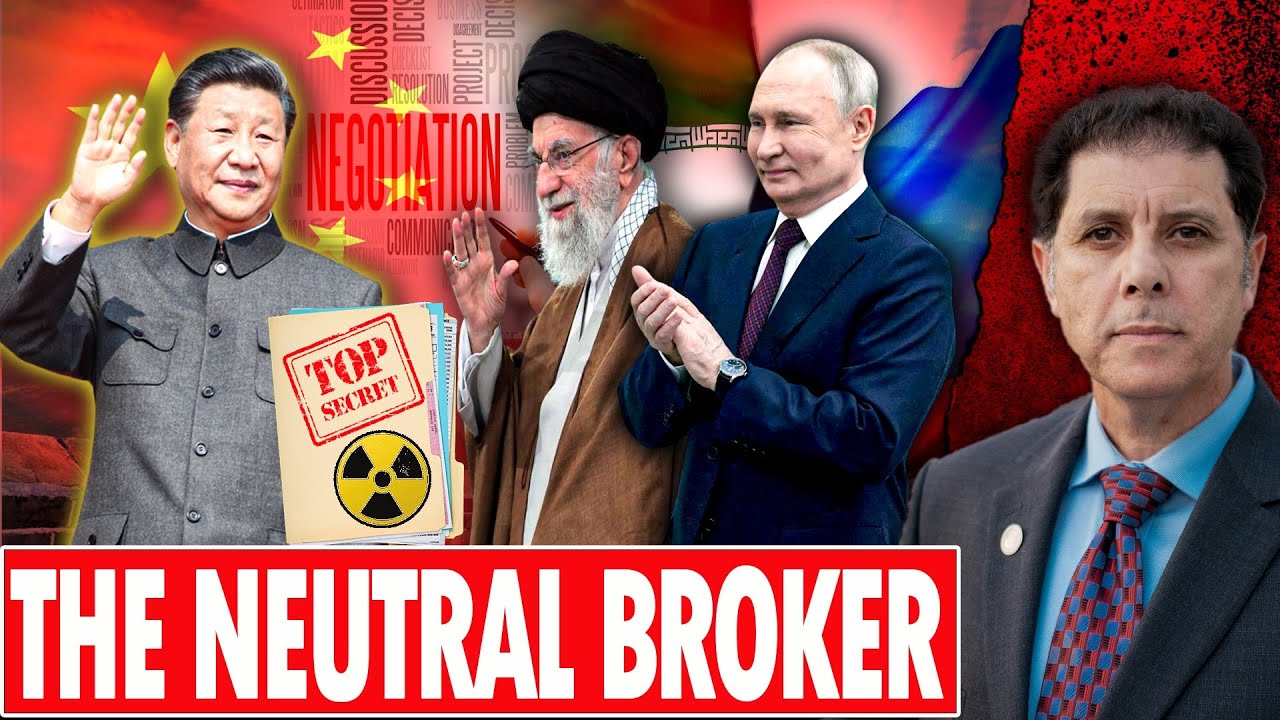
Dr. Oualaalou examines China's role in brokering talks between Russia and Iran over the nuclear deal, arguing China seeks stability while the U.S. withdrawal and sanctions destabilized the region. He reviews the China-Russia-Iran joint communiqué and explains why Iran demands negotiations on equal footing.
Chapters
Hello everybody and welcome to Geopolitical Trends, where truth matters. Good to be with you on this Friday, the March 14th. Excuse me. So, uh, I have an interesting topic I wanted to talk to you about, provide you my own insights, uh, something I wrote about in my Iran book. This is about the, uh, GCPOA, the Joint Comprehensive Plan of Action, but it is about China playing a role into this, and you will know why, uh, you— why I decided to do, uh, this live stream for you. So first, before I'll do anything, let me, uh, I gotta silence this one here, but I want to make sure— if you will be kind, please give me a thumbs up. I want to make sure you can hear me sound-wise. In the meantime, I'm gonna say hi to our wonderful community. Hang in, G! Good to see you. Uh, Trump won, the US walked away from the JCPOA. Uh, that is correct, and I'm gonna be touching on that one. Willie Holman, good to see you. Koicho, uh, good to see you back, and thank you for, uh, once again becoming a member of the channel. I'm very, very grateful for your support. Uh, Truth Seeker, good to see you. Amanda, good to see you. Uh, guys, I need to share with you something about Amanda, uh, posted something on my Twitter feed me. So, uh, here is what she wrote, and I quote, uh, unbelievable, unbelievable. This man— it is in reference to me here— this man doesn't have a large, larger audience. His method of making his viewers think instead of just telling them what to think is invaluable. I learn something new every time. Hate to miss the live lessons. And chat with this, with his devoted community of followers. Thank you so much, Amanda, for your kindness. It really means a lot. And for you guys also, for the community, this is not just about me, it's about us, because this is the type of the community members we have here. This is why I, I, I get frustrated sometimes if somebody insult the community or get into whatever. So, so thank you so much, Amanda. Appreciate it. Wonky C, good to see you from Malaysia as always. Tom Saya Wires, good to see you. And Mark, uh, Marco W, good to see you as always. Army with Harmony, good to see you. Phil, as always. Uh, Alistair O'Kane, good to see you here. And, uh, good to see you here. So, all right guys, let's get into our conversation here. Uh, before I'll do this, I need to let you know some housekeeping thing. Uh, I will be joining Dr. Wilmer Leon. You guys know who he is. He's been on the, uh, uh, my guest here on this channel here and on the other channel. So I will be on his channel in about, uh, an hour and a half or so, and I'm gonna provide you guys the link should you decide to, uh, take a listen or listen to what we're gonna be talking about. So I'm gonna put it in the chat box for you guys, and, uh, it's right there on his YouTube channel. So make sure to check it out if you are interested in listening to what we're going to be talking about. Uh, so like I always do, guys, before I'll dive into this, I'm gonna do some headlines for you because it's very interesting to know what's going on around. The media tends to be very manipulative, and you all know this by now. So So, all right, the first one I need to start with, it has to do with, uh, uh, this individual on the, on the left of your screen. That's Mark Roth. He's the new Secretary General of NATO. Useless, uh, uh, position anyway. It's because it's the US that dictates. So the reason that Donald Trump invited him is to pressure him Why? Because Trump— here is what Trump said— he expressed his confidence. That's, to me, arrogance, not confidence. He expressed his confidence that he will eventually annex Greenland to the United States. And this remark was made during his reception of the NATO Secretary General Mark Rutte. Why is this? It's because he wants to pave the way to push NATO into doing the US bidding. So here is what Donald Trump said, and I quote: I think it will happen. Oh, let me silence this one here. Uh, I think it will happen. Okay, uh, uh, I think it will happen, uh, uh, Trump said, noting that NATO Secretary General could be very effective in achieving this goal. You all see what it means. You all see what Trump is doing. So we have— so we need this for international security. See how they playing with— you're gonna annex Greenland for international security? That just doesn't make any sense. So, uh, and Trump continues, we have many of our preferred actors roaming the coast and we have to be careful. Rod told him, told Donald Trump, because Rod— the reason, by the way, guys, FYI, just to let you know, the reason he got that position is because we know we could pressure him to do our bidding. Simple as that. So, uh, next one has to do with the US, uh, intelligence community. A very interesting, uh, aspect here. This is a picture I'm gonna share with you. And this one has to do with the Russian president's recent visit to Kursk Oblast on Wednesday. And, and the picture, it's from Al Jazeera, and, uh, give credit to Anadolu Agency. So here is the picture here. So what this— what, what's this is about? Uh, what did you notice, guys? What did you notice from that picture? Let me just see what you, your observant mind, eyes saw. What did you notice on the picture? Oh, oh, Hanging G, you got it! Military fatigue. You absolutely— there is a reason for that. So, so here is what the intelligence report said: Putin will not relinquish control over Ukraine. So, so where is the misleading aspects into this? They didn't say, for example, uh, Putin will not relinquish control over the eastern part of Ukraine because that's where the most Russian-speaking, uh, uh, population is. So this is what the Washington Post reported, that classified US intelligence report cast doubt about the Russian President Putin intentions to end the war, uh, uh, in, in Ukraine, and that he has not deviated from his goal of immediate and direct control control over, over the Western neighbor. See how it's vague? That is, everything is vague. So a person familiar with classified report distributed to the policymakers, usually that person is from the intelligence community, and they leak the information. So, so I counter this by saying, uh, let me remove the picture. I counter this by saying, wasn't that the same approach we did for Iraq? Claiming that it has, uh, uh, weapons of mass destruction, and it was none of that. So anytime you hear something, a report coming out of the intelligence community, that's a leak. So an intent to just deceive, no more, no less. And the last thing I share with you guys before I'll jump into— I know, actually, I'm sorry, I have two more things. Uh, one of them has to do with Africa, and one of them has to do with MIT, believe it or not. So I give the credit to this picture to Al Jazeera Shutterstock. That's, that's what I get it in Al Jazeera. This is China and Africa, uh, China and the US. Why is this important? And as a matter of fact, probably next week, guys, I'm gonna do a deep dive into this because I'm aware of an upcoming trip by some US officials to some locations in Africa, and we will, we will talk about this one. But I want to give you a heads up here. So Here is where the issue is. Railway projects in Africa represent now a new facet of the power struggle between China and the United States. So as you know, there is tensions, geopolitical tensions in Africa behind closed doors, if I'm— or behind the scenes between China and the United States. So, so the rivalry that exists between the US and China in Africa is evident in one and one specific domain or sector, and that is infrastructure projects. Why? Because Beijing is seeking to revive what is called a Freedom Railway, while at the same time Washington trying to throw money at the Lubido Corridor projects. You know, we all know how this is going to end, especially if the US is involved. No offense to my country, I'll criticize when criticism is warranted, but we all know that funding is going to come through the IMF, okay, because the US is going to push for that. And we all know when countries are involved in taking loans from IMF, you know where it's going to end. So here is the thing, what they are trying to do, to counter rather, meaning the US counter China, because China This concept of the Freedom Railway is linking Zambia and Tanzania, okay, specifically during the era of Chairman Mao. That's how old this one here, Freedom Railway, back then. So now China— listen carefully, guys— provided interest-free loans worth about 1 billion yuan. What is the key word there? Interest-free. And a thousand of Chinese workers work alongside there. So, so you see where this is headed, uh, because of what China is achieving. I mean, like I always say, when a US delegate goes to Africa, that airport they land on, uh, it's built by the Chinese. That highway they drive on is built by the Chinese. That bridge they cross over is built by the Chinese. So, so just something I want you to be aware of, and I'm gonna dig deep, deep dive, uh, into it next week. So the last thing I want to share with you has to do with MIT, and I give credit of this picture to, uh, Al Jazeera once again and to Reuters. Uh, this is a special drone. Yes, MIT is involved. Why? It's because Israel has recruited MIT researchers for its military projects. So basically, the scientists in MIT are building military hardware for Israel. And by the way, some of these institutions receive tax dollars for research. Like I always say, institutions in America are as corrupted as it can get. If you only know the dark side of Columbia and Vanderbilt and Stanford, and you got the idea, MIT and Harvard and all that. So that's a conversation for another day. Maybe we'll do this during the community conversation. So all right guys, let's get into our topic. What I'm going to be, as once again, just to talk about the recent meeting that took place today, as a matter of fact, because it's Next day in, in, uh, in China right now. So the meeting that took place regarding China's calling for a diplomatic solution to the JCPOA, the Iran nuclear issue, you know, that's what the Chinese is calling for. So, uh, so like I mentioned, uh, uh, uh, what China wants to achieve— this is now the talks, just to clear this up for you guys— the talks are only between The Russians and the Iranians. But you have to understand the angle as to why that is, because China didn't invite the US, didn't invite the other signatory to the party, P5+1. Remember, P5, all those are the permanent members of the UN Security Council, plus one, that was Germany, that represent European to them. But China did not invite France, UK, or the US. There is a reason for that. So, uh, before I'll, I'll delve deeper, please make sure to sign, uh, to subscribe rather, uh, to the channel if this is your first time. I will greatly appreciate it because like I always say, and I'm proud of it, the analysis you are hearing on this channel here is unique to this channel. So your support means a lot and I'm very, very grateful. And here is the link to those, uh, Oh, might be for the first time here. I type it there for you. So, all right, like as I said, so let's get into— dive in into this. So China called in on this particular, uh, meeting for the diplomatic, uh, uh, the diplomats from Russia and Iran to meet in China. So why? It's because they want to work out the differences. So this way, Iran and Russia will be on the same page. China, of course, will. And, and we will get into this one, how it's, it's going to work. So, and the reason for all this— and I have a picture, uh, for you here, guys. Yeah, this is the representatives. Not— no foreign ministers, no— those are just representative, uh, uh, from the both countries, uh, Russia and Iran, uh, that attended in, uh in, in, in China. So, and of course, this comes aimed at the statements by Iran Foreign Minister, uh, Mr. Abbas, uh, Ara— Aragchi. So my apologies, last time I mispronounced it. So I have a, uh, yeah, Aragchi, Abbas Aragchi, Saeed Abbas Aragchi. That's his picture. His— so it came on the heels of his statements, and his statements is that He does not rule out talks with Washington. Yeah, don't be surprised there, but there is a condition, and that condition is it will be on a basis of equality. That's the same argument I've made anytime when the Chinese, if they decide to enter into talks with the US, the US never consider China on an equal footing. We think we are up here and everybody is down. So for Iran, they made it clear from the head, from the get-go that we will consider, that doesn't mean they agree, but it will have to be on an equal footing. So, and this is, as I said, the meeting took place, is taking place today, but it's already took place because it is Saturday in China. And the, the, the attendees there are the Deputy ministers— of foreign ministers, rather, rather, from Iran and, uh, uh, Russia. Now here is where the, the, the catch is. This is why China— China doesn't do things randomly. If you know the history of China, you will understand how it, it, how it evolved over Millennia. So, and all the internal dynamics that have shaped that society came to sort of reflect on its foreign policy strategy. You know, there are those who saying, well, yeah, China is nice when it does that, but it doesn't have a beef into— in other words, it doesn't put boots on the ground or whatever. Why will China do that? Because that will be stupid, because China will get entangled into the conflict. This is why China takes a step back and just watch the show. And that show is the US is entangled in different parts of the world, draining our own resources at the expense of our citizens. China doesn't want to go that route. So to those who might think, well, China just doesn't have the will to do— no, it's not about that. It's about how it has always managed its internal dynamics. Because if you know the history of China, they went through some internal, uh, challenges, chaos, you know, but they always handled that one differently than other, other countries. So, and this is where the idea of, uh, China holding the talks at this time, because right after it was a UN Security Council meeting in New York behind closed doors. So, so here is the Russia-China— I'm sorry, Russia-Iran meeting in China regarding JCPOA. Right after it, right after it, the meeting was followed by a closed-door Security Council meeting in New York the same day. Yeah, this is what happened. You have to understand these dynamics to make sense to you. Most average people is not going to even understand this kind of dynamics. But I wrote about all this in my RAND book. I detailed a few things and as to what might lie ahead moving forward, given that I don't trust the IAEA, the International Energy Atomic Agency. Oh, I can't trust those. Can't trust those. So here's the thing, because as you know, uh, uh, Iran has increased its stockpile of uranium. There's no doubt about it. It's nothing secret about that. But the question is why they did that. Well, of course they did that because we in 2015 decided to pull out of the JCPOA unilaterally. I'm sorry, not 2015, 2018. So in 2018, during President Trump's first term, the United States withdrew from the 2015 nuclear agreement between Iran and the world powers, the P5+1, but reimposed unilateral sanctions. So, and that's— this is the moment Just for you guys to know why Iran has increased its stockpile of uranium. It was the moment in 2018 when the US violated the, the, the, the, the clauses of the JCPOA. Iran said, why should we? Why should we? Why should, why should we abide by the, the, the, the sort of the spirit of that agreement? When you couldn't honor it, the United States by itself. So what Iran end up doing? Tehran responded a year later, one year later after 2018, by violating that agreement. Well, I won't use the term violating. It's because we gave them no choice. We broke the deal first. So, and this is where this conversation is gonna be headed. I had a chance to read that, to read the draft that came out of the meeting in Beijing between, uh, Russia and Iran, uh, hosted by the Chinese. And the spokesperson, uh, for the Foreign Ministry, uh, Mao Ning— I have a picture of her here, very eloquent lady, I mean, well spoken. So, and here is what she said, and I quote: In the current situation, we believe all parties should maintain calm and exercise restraint to avoid escalating the Iranian nuclear situation or even moving towards confrontation and conflict, end of quote. And that was the statement by the Chinese Foreign Ministry spokeswoman Mao Ning. So very, very interesting. So, and, and, and again, you have to understand all these dynamics. So it's because when it comes down to the, uh, uh, developments related to the nuclear issue and the lifting of sanctions, because those are the two, especially the latter one, the key factor that Iran is like, why should we sit down with you, meaning the US in this case? So, and this is why when the Security Council had that meeting behind closed doors Makes you just wonder. Remember, the Russian representative was there, the Chinese representative was, was there as well. So, however, and, and this is the whole idea of why China decided to do this. Remember, China was able to broker a deal between two arch enemies in the Middle East. Can you name which countries are, you know, and, and again, not to insult your intelligence here, guys, it's just I, you know, as an educator, you always want to make sure your audience understands. So which two countries was China able to broker the deal between? Iran. Hang in there, you got it. Iran and Saudi Arabia. That is correct. It will never— it would have never happened, mark my word, had not China got involved into that, because for us, We were never interested in brokering a deal between— because we wanted to maintain the two parties at odds. So, so this is why I'm saying what I'm saying to you as far as the culture of the Chinese, how they think. So China wanted to have the talks aiming at something, and what is that? Is to enhance communication and the coordination between all parties to resume that dialogue and negotiations moving forward. Because China, and this is again statement by Mao Ning, the Foreign Ministry, she quoted the responsible person for the negotiation saying, and I quote, China sincerely hopes that all parties can work together to continuously increase mutual trust, dispel fears and turn the momentum of relaunching dialogue and negotiations into reality at an early date. So all this is very, very crucial to understand. China is not going to do this just because it feel like it. China doesn't seek the spotlight. China doesn't want, uh, recognition from the rest of the world to say, whoa, great China. China doesn't care for that I mean, I know this for a fact, for fact, that for example, the economic aspect, China will never, never issue a statement that says we are a great economic power. China will always use the term developing economies. There is a reason for that. You know, they don't like to brag. That's just how the culture The same thing applies to this. China is not seeking recognition from the rest of the world, whatever. No, this is about ensuring stability and world peace. That international security we're talking about, that is what China is aiming at, in my opinion. So that's how I see it. So now when you take into consideration what the Iran Supreme Leader Ali Khamenei is thinking, So, and I give credit to the picture to Anadolu Agency here. Ali Khamenei has stressed that Tehran will not, will not negotiate under pressure from American bullying, end of quote. So I see the arguments, I see the logic of it. You know, as I said, you criticize when criticism is warranted. But you give credit when credit is due. I see the logic. You know, we tend to attend certain, uh, uh, dealings with other countries with that mindset of we are up here and everybody is low. Yeah, that might be okay 40 years ago. The global order has changed, the landscape has changed, and we are in a multipolar system right now. Yeah, we still have some advantages here and there, but the system writ large has changed from a unipolar into a multipolar. And this is where, uh, uh, the Supreme Leader Ali Khamenei is coming from, from that aspect. So, uh, because it has to be— the negotiations will have to be on the basis of equality. So because when you read the language that Mr. Trump uses, for example, Trump has called for a new nuclear agreement with Tehran while reimposing a maximum pressure policy of sanctions. You know, I don't think so. I don't think so that Iranians gonna care about negotiating with you. Why would Iran? You know, they've been under sanctions forever, and I talked about this before, guys. I don't like to be repeating myself, uh, uh, too much here. We did talk about this one, that they've been under sanctions since, uh, what year? When was the sanctions— where were— when was the sanction on Iran imposed? Does anybody know the year? If you can type in, in the chat box, the year when the sanctions were, uh, imposed. And again, I just wanted— I like to engage the community in our conversation. Nightshade, you got it, 1979. Uh, Chad Franklin, yeah, you were off by one year, but 1970. Jack, you got it. Uh, the, uh, uh, Kurt Boss, the 1953, that has to do with the coup against Muhammad Mossadegh. Yeah, that was 1978, '79 for when we imposed, and it's still till today, and Iran is standing on its feet. Yes, the economy is struggling a little bit here and there, but you know, can we attack Iran? Can Israel attack Iran? I don't think so. So yeah, and this is why, uh, when Mr. Trump said, oh, I did send a letter to the Iranian government and telling them— I sent a letter to the leader of Iran's Ali Khamenei proposing talks on the nuclear issue. But I also warned that there are two ways to deal with this. I quote, quote, there are two ways to deal with this, Iran, either military or reach a deal, end of quote. That's like, that's like a threat, first of all, and that's condescending, and that's kind of like you don't even think of sitting on an equal footing with the, uh, the other party, whatever that might be. And this is where I need you to understand why China did the same time, uh, the meeting that was followed by, as I mentioned earlier, by the UN Security Council. And you all know the permanent members, and it's something about this permanent thing. And I'm going to ask you a question, guys. Do you think, based on what you know, is it time to get rid of the permanent members of the UN Security Council? In other words, it should be no permanent members. Yes or no? I know some of you might say, well, it's obvious question, Dr. O, but still, nonetheless, we're still going to ask. Uh, Kurt Boss, you say yes, get rid of it. Uh, Alistair, no veto power. Okay, world majority, you say yes, get rid of it. Amanda, that is correct. Time to— because UN is toothless and is outdated. So Dave H, you say yes. Nightshade, yes. Francis Tango, yes. Truth Seeker, yes. So I couldn't agree more with your assertion, guys. I agree with you. There needs to be a major reform. And when I say reform, personally, the way I see it is the restructuring of the UN Security Council. Even Russia and China are in favor of changing that. But the US, Britain, France are not. You all know why. So to me, get rid of that. And this is why that meeting, that meeting that took place behind, uh, right after the summit in Beijing, it took a place behind closed doors. It is reason for it. Okay, so the meeting, uh, this is why Washington went ahead and mobilized UN against Iran nuclear program. And of course, our subservient, uh, state— I use that term— Britain, UK. UK subservient to the US. No matter what you saw last time from, uh, uh, uh, uh, Starmer about we're gonna support Ukraine and all that, all that stuff is a facade. Trust me, guys, I used to work in Washington. And we had our own dealings with the Brits. So inside, deep down in the government, they will always have to have the green light from the US to do whatever. They can't do anything on their own. They can't. You all remember the fiasco of the, the Falkland War, you know, or in Afghanistan. They couldn't, they couldn't conduct an op on, on their own in Afghanistan, and I was there, you know, they couldn't. We have to, they have to get, they have to get behind us because they're not be able to do it. But anyway, here is what Britain is saying. Britain, while the US is mobilizing the UN, and you know what they mean by mobilizing, which means that our representative in the UN will reach out to certain countries pressuring them to vote yes in support of this, uh, uh, uh, resolution regarding the UN or this dossier that they want to bring into the table and so forth. That's what we mean by mobilizing the UN. So the UK threatened to use— to restore sanctions, you know. So that just shows you, we just follow through. And I'm gonna remind you of something that happened about— almost 6 months ago. Yeah, 6 or 5, it doesn't matter. You'll remember the, the, uh, the vote that was at the UN regarding the ceasefire in Gaza? Okay, and the vote that was at the UN Security Council, who, who didn't vote? You know, who didn't vote? Let me see. Yeah, it was great. Yeah, I, I don't know if you guys, uh, UK. UK didn't. UK abstained because we rejected it. No, no, I'm talking within the Security Council, within the security. The rest of that, I mean, uh, uh, which was, uh, Kurt, boss, Solomon Island, you, you're talking about the whole UN. I'm talking about the UN Security Council specifically. It was the— of course, for the UN General, most countries agreed for ceasefire except the United States. But inside the Security Council, it was the UK that abstained. Of course, the US said no, we're not going to even vote. So it's just, just my point is to highlight to you, if the Brit— Britain is saying we're going to restore sanctions, no, they're just following orders from the US. So, and this is where that UN Security Council held that closed door sessions on Wednesday, because that was the next day for for, uh, for China there regarding Iran's nuclear dossier. So the United States subsequently accusing Iran of violating its commitments, but they never said— they meaning US— never said why the violation occurred to begin with. Because we violated the JCPOA agreement. So, and of view of reimposing sanctions on Iran. Now here is what Tehran has to think about it, because Tehran has to think about it differently. And by the way, and I'm gonna share with you 4 countries that they were also, uh, supported this request that the US had mobilized for. And the countries are— beside US and Britain was France, it was Greece, Panama, and South Korea. Just take a step back and think about the other countries, those ones here: France, Greece, Panama, and South Korea. They all were in support of Washington calling for this. Security Council meeting. So, and of course they brought up the issue of the, uh, IAEA, the International Atomic Energy Agency, which saying that, oh, we are deeply worried about Iran increasing its uranium, uh, threshold. Abir, are you going to trust what the IAEA is, is saying? I, I don't. So I don't. So let's talk about the Iranian positions regarding this. So Iran's representative in the UN, Samir Saeed Arabani, he accused— and I agree with him on that— he accused the US of seeking to use the UN Security Council as a weapon. Why? To escalate the economic war against Iran. I, I, I see the logic of that argument. And this leads me to take you back to China, because I have to— when I address issues from multiple directions, they all converge on one particular aspect, and the aspect is, has to do with China's proposal How this Iran nuclear deal or file or JCPOA can be resolved. So pay close attention with me, guys. So China issued its, its final communiqué, and I read it. I read the— and I'm going to share it with you here, guys. Got the translated version, so I'm assuming it will be as close to accuracy as it can be. I don't speak Chinese. So, so the 3 countries, meaning Iran, Russia, and China issued a joint statement that tells you right there, when you see that word, the joint statements, meaning that they all agreed on the language of that particular draft. So affirming their unified position on Iran nuclear crisis, and I'm gonna share with you the key points. So, but there is one thing you need to know. And I disclosed this in my— I think I did. I don't have the excerpt from it, but I did disclose this one in my Iran book when I said that the Iran deal has been achieved not because the U.S., it's because what China and Russia did behind closed doors, behind the scenes with Iran. What they did is they convinced Iran that this is the right path. To take moving forward, because also both Russia and China have a strategic interest into that. Because if that deal is reached, Russia and China will be rewarded later on with economic ventures. Of course, that was one of the reason why we pulled the plug in 2018. We didn't want to move forward. Why? Because many that now the deal has been reached back in 2018, many countries from around the world were interested in investing inside Iran because Iran is a big country inside the region. You can't ignore 80 million plus consumer markets. It will be foolish of you if you are a CEO of a company, you're gonna forget that. You just can't do that. So, and this is where I am thinking in terms of how this is going to be moving forward. So, so here is what China is saying in that draft. One, rejecting unilateral sanctions, considering them illegal measures that contravene international law. Spot on, you know, without detailing much into this unilateral sanctions, who are we referring to? The United States, you know, illegal measures because he's taken against international law. 2, emphasizing that diplomacy and dialogue are the only means to resolve the disputes over the Iranian nuclear issue. So because Mr. Trump, that's why I said when he sent, so-called sent that letter, excuse me, language of threat, either military or else. What kind of language? So the Chinese, the, the, the communiqué, final communiqué emphasizes that only diplomacy and dialogue. And by the way, just to let you guys know, it was China that proposed similar deal regarding the Russia-Ukraine conflict, and we rejected it right away because they were calling on the same aspects. 3, calling on all concerned parties to refrain from threatening to use force or imposing new sanctions, as this would have negative impact on regional stability. 4, pointing out the importance of the UN Security Council Resolution 2231, which is what— this is pertaining to the timetable for the party's commitments to the nuclear deal. The deal was for about 10, or I think 10 or 15 years, whatever. That was the time frame because I couldn't remember exact number. It was a duration by which Iran we not, we not enrich uranium at a high level. Okay. But on the other hand, the agreements of the JCPOA will have to be honored by the other member. We didn't. I mean, did you see France saying to America, no, you can't do that? Did you see UK saying to America, no, you can't do that? Pulling out of the JCPOA unilaterally? They can't. They can't. Next one is emphasizing the need to respect the treaty of the NPT as a legal framework, uh, uh, uh, governing the use of nuclear energy for peaceful purposes. Next one, affirming respect for Iran's right to the peaceful use of nuclear energy as a legitimate right guaranteed by international law, not by the United States. And the last one, warning against any attempt to undermine the neutral technical activity of the IAEA and the need to preserve its oversight and inspection role without political reference. That's to me where— what you need to understand about all these aspects here, because it makes perfect sense to understand. Excuse me. The wording is very, very measured and specific. So, and even for me back then when I wrote the book about Iran, and, and I had to, uh, address GCPUA, and I'm going to share an excerpt with you if you allow me, guys. I wrote back then, in addition to their established economic and business ties, Iran and South Korea, for example, are also beginning to explore potential cooperation in formally off-limits sector, which is energy, nuclear energy. Following the 2015 nuclear deal, the Joint Comprehensive Plan of Action, or JCPOA, Iran is now seeking to expand its peaceful nuclear energy ties with other countries. Meanwhile, advances made by the South Korean nuclear industry, which makes both small modular, uh, uh, reactors and large nuclear power plants, have made it an attractive— have made it an attractive supplier in recent years, I wrote back then. But Iran, forgotten all that. Why? Because they got a deal with Russia. Russia's gonna now be doing— taking care of the nuclear aspects of it. So this is what, what's very, very important. So we have to understand that for, uh, For, for China, and this is where that comes in, China has affirmed its commitment to continue to coordinate with Moscow and Tehran to find a diplomatic solution that ensures all parties return to the nuclear deal. In other words, China wants to make sure that the three countries are on the same page prior to sitting down with the— if they there will ever be renegotiations. And I don't see Iran doing this under pressure from the US because the US wants to do two things, wants to talk about JCPOA and wanted to add to the table the missile technology of Iran, which is what its butter and bread, if I may use the term. This is why we and the Israelis couldn't attack Iran. So that's in my opinion, that's how I see it. So, uh, so, excuse me, diplomatic solution is better than these military threats and all that stuff. That's, that's not going to lead to anything, in, in, in, in my opinion. So, and this is why Ali Khamenei, uh, the Iranian, uh, Supreme Leader— let me get you his picture— Ali Khamenei, that's why he stated once again that negotiating with President Trump is gonna only lead to continued sanctions and increased pressure on Iran. So, and that's why he's saying we are not going to negotiate under pressure from American bullying. It's just common sense, common sense. So, uh, that was my notification for my upcoming a conversation with Dr. Wilmer Leon, so in 1 hour from now. So anyway, suffice it to say, guys, you need to understand why China did this. Once again, just to summarize all this, that's all I have to share because I don't— if I don't have anything of substance, I stop. So I just wanted to make sure that you understand China did this not because it seeks recognition from the rest of the world. China doesn't care for that. That stuff. What China cares about, first of all, global stability, global security, but also the welfare of its own citizens and its own country. So like I said, look what China's investments in, in, in, in not only in its own countries, and I was there, I saw with my own eyes, but look what the investments is doing in Africa or some other parts even within Asia with, with some, uh, very, very major developments projects from high-speed rail to bridges to you name it. So this is a— yeah, this is like the developments of ports. All this makes it— this one here is in Singapore, but China can be involved in this one. The high-speed trains that China did with Thailand, for example, you know, that's my point. China sees the big picture and China wants to do this to pave the way should there be any negotiations they all come to an agreement. So of course the US is going to try to reject all this because the US doesn't want China to be the one initiating something that can be beneficial. Look what happened between Iran and Saudi Arabia, and China was able to broker that deal. The US was furious about that. We blocked China's proposal for ending the war between Ukraine and, uh, uh, uh, Russia. And that, that's what it is. Uh, that's all I have to share with you guys. Uh, I am very, very grateful that you are here. Once again, I want to give just a shout out to Koi Choi Hoi for becoming again a new YouTube member. Thank you so much for becoming a member. Truly appreciate your support. And for those who want to support the channel for— or support my upcoming Asia trip which I intend to do that one once we reach that deal. Here is the link, uh, for, for that one. We're still at the, uh, I was gonna share with you an update, uh, and there is an update by about $10 or so. I didn't update it yet. So far that's what we have, uh, for, uh, what we are. We are about 8, maybe about 10%. So just remember, guys, I plan on doing the trip, uh, either the end of July, mid-August, somewhere around that time. So, so I hope we can raise enough funds for this because it's gonna be to, I think, 1, 2, 3, 4, 5 locations. That is, uh, and there is something also that I'm gonna be, uh, doing in one of those countries that will require funding for it. So anyway, I am grateful for your support. Should you decide to support this, my, uh, second trip to Asia. And again, I don't go for tourism because you're my— you are funding this trip, guys. It's my responsibility that I bring you information that you need to know that is not disclosed or reported here, because they just don't want to disclose this one here. Before I sign off here, I want to share one quote from another supporter of the channel who wrote this in a comment to me. And I was so touched by this, and I, I wanted to— this is from Lita B5JT. He wrote, and I quote, thank you, Dr. Oualaalou, for all your hard work in disseminating truth and shedding light on geopolitical current events and politics. Without your dedication to truth dissemination, many of us will be groping our way through this dark, dark time due to the malevolent machination of mainstream legacy media. Please take care of yourself and don't let your workload get the better of your body and spirit, nor allow those who resent your benevolence to wear you down. Keep the faith, and me— your— and, and may your bene— 'Your benevolent commitment to spreading truth be amply rewarded with blessings for you and yours.' And of course, I was, I was, I was so touched by that. Just want you to know, a kind word can go very, very, very far. And I'm a believer of karma. Like that saying goes, what you do in life echoes in eternity. That is true. I pay it forward in my own way. I don't disclose that stuff because there's no need for that. But that's to me because of the kindness of some of you guys. There are good human beings out there. There are good people right here in our community, and I am very, very grateful. And I just want you to know, a kind word is— can be good. And it can be rewarding. So, so that's what— that's why I enjoy doing this with you guys, because you mean a lot to me and I want you to know this. So anyway, guys, uh, once again, let me share that link for, uh, my upcoming conversation with Dr. Wilmer Leon. I'm gonna put in chat box for you, and I can't thank you enough for your support. It means a lot to me. So here is the link once again, and I'll see you in 1 hour should you make it over there. So take care, guys. As always, remember, geopolitics impacts your daily life in more ways than one. Till next time, bye-bye.
More from David


Beyond the Single Actor: Why the Gulf Isn't Choosing Between the US and China


Iran, Iraq's Militias, and the Houthis Are Coordinating! This Changes Everything




Who Controls the Next Decade's Resources? Latin America and Africa's Geopolitical Crossroads

The Chokepoint Trap: How Washington's Stupidity Triggered a Cascade That Now Controls the World

Trump Spooked as IRGC Unveiled dual-use SLV, Deployed Ghadir Mini-Subs & Hinted at Tactical Nukes!
