China's $1 Trillion Trade Surplus: Geopolitical & Economic Implications!
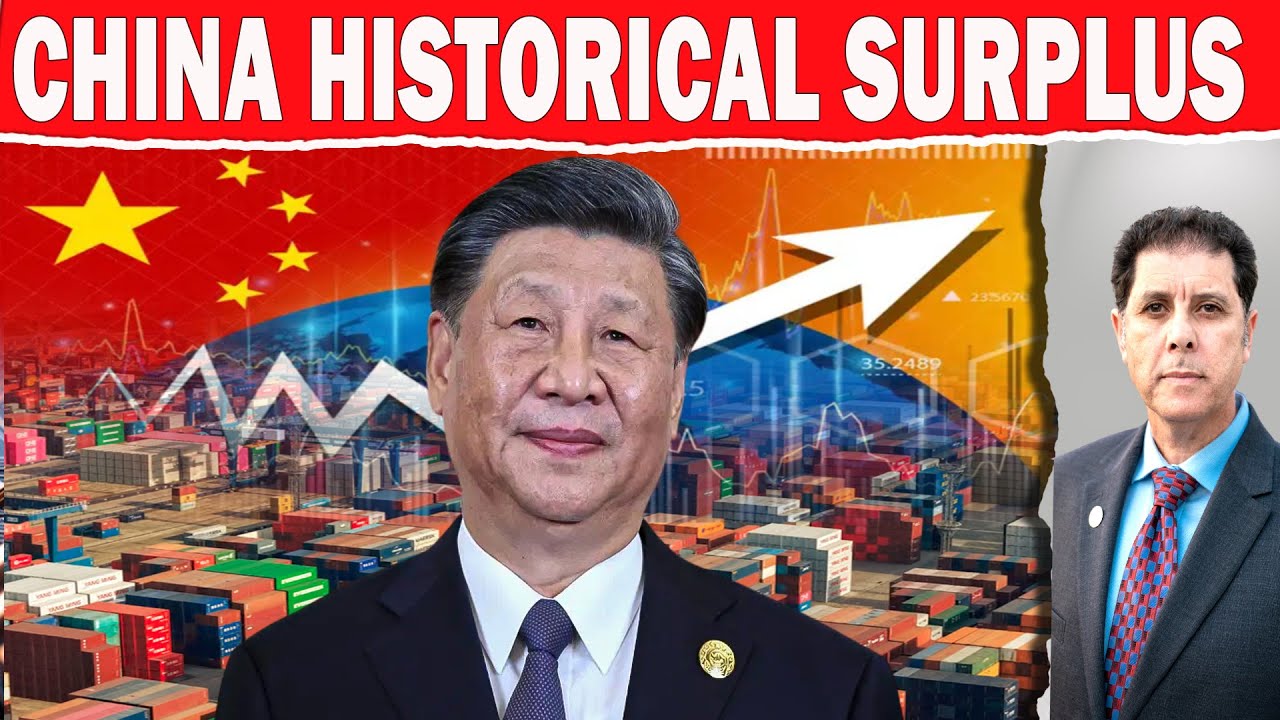
This content was created by David Oualaalou. This content was uploaded by David Oualaalou. This is a YouTube live-stream presentation titled "China's $1 Trillion Trade Surplus: Geopolitical & Economic Implications!" (published 2025-12-22) hosted by Dr. Oualaalou. The host delivers a solo, opinionated geopolitical and economic analysis of China’s reported $1.08 trillion trade surplus and its implications for US–China relations, Europe, BRICS, ASEAN and the Global South. The stream also includes brief headlines (Iran drone and missile drills, a controversial Syria map, and a San Francisco self-driving car outage), on-screen audience interaction (super stickers, chat shout-outs), mentions of upcoming guest interviews and fundraising for an Asia trip. The excerpt is a monologue/presentation rather than a multi‑speaker, diarized conversation.
Chapters
Hello everyone and welcome to Geopolitical Trends, where truth matters. I'm your host, Dr. Oualaalou, excited to be with you as always. Today's live stream analysis will be about China's $1.08 trillion surplus. Now, yes, some might say wow, but at the same time, there are some issues that might end up coming up to the surface regarding this. So in this analysis, or regarding this surplus— regarding this analysis, this is what I'm going to be providing you my insights about and highlight to you the importance of how, despite US tariffs and so forth, China was able to pull this off. Very, very, very interesting, which is historical, by the way. So, so before I'll delve deeper into all this, I hope you had a good weekend, of course. And let me say hi to our wonderful community. Uh, I'm gonna start with this super sticker right away. Say It Like It Is, another avid supporter of the channel. And by the way, Say It Like It Is, I want to say not only thank you for your super sticker, but thank you for your contribution to the conversation. So, and to all of you guys, this is what I, I read your, your interaction on the chat box later on. And I'm, I'm so grateful to all of you for really maintaining a civil discourse on the, on the, uh, on the chat box here. So thank you very much. Say It Like It Is, truly appreciate you for that. So, uh, Leanne, good to see you as always. Uh, Aliami Toure from Spain, where my ancestors are from, good to see you here. And hello to you as well, Truth Seeker, as always. Say It Like It Is, here you are. Phil, as always. Uh, Kevin Baptist, as always, good to see you here. Uh, Sarah Carroll, good to see you. And Saleh, salam alaikum. Hello to you as well, good to see you. Willie Holman, as always, good to see you. All right, let me get into some housekeeping items here. Remember to join me this evening at PM Central Standard Time for my conversation with Anna Tengen. And, uh, no, this is a— this is today's topic. Sorry, I got the wrong thumbnail for that. This is our conversation for today, uh, for my conversation with Anna Tengen and, uh, Warwick Pao. So we will be talking not only about AI revolution and the Manhattan Project that China just accomplished You are in for a good, good, good conversation to hear from, from Ina Tangen and Awarik Pao. Also on the 26th, I will be having my conversation with the author and historian James Bradley. We already confirmed it. It's gonna be at 09:30 AM Central Standard Time on the 26th. And on the 27th, We'll be having my conversation with Carl Zah, which is going to be at 1900 hours. So remember to join me for those upcoming interviews and so forth. So, so it's going to be like a busy, busy Christmas week anyway. So, all right, let's do some headlines here. Before I launch into headlines, I want to share this picture with you, and if you can tell me who is the individual in black t-shirt or black shirt, whatever that is. You all know this is Epstein, but who is this guy? Does anybody know? And he's from, I think, India. So yeah, whoever thought, right? So very disturbing. So all right, the first headline that I'm going to share with you has to do with Iran drone. So what the picture you're looking at is that it's an Iran drone, that is And this because it was reported in the National Interest magazine that the US stole Iran's Shahed drone and is copying it. Yes, the United States has always prided itself of being the most technologically advanced country in the world, which everyone imitates. This is what they are saying. But recent shifts in drone technology have revealed An unexpected gap that exists. So basically, the report published by the American magazine National Interest confirmed that the situation has been reversed today in several areas, meaning that the US is copying other countries. And this applies particularly to the drone industry and specifically to the Iran drone you are looking at. So by the way, last time I made a, a mistake in pronunciation, and I have to thank Matt Bakke for correcting me. I mentioned that the term Shahid for a drone, it's not Shahid, is Shahid, because when I read the, the Arabic translation, it was spelled as the word Shahid, which means martyr, and that's not the same as Shahid. To those who under— to To those who speak Arabic, you know what I'm talking about, the difference between shaheed and Shahid. So, so thank you, Matt, for that. And speaking of the drone, it's going to lead me to my second headline here, and this has to do with Iran missile drills. Yes, Iran is conducting several missile drills in several different Iranian cities. So Iranian state media quoted eyewitnesses and sources are saying that missile drills were taking place in a number of Iranian cities as of Monday, today. So, so the Iranian state broadcast Telegram channel and the semi-official Noor News Network broadcast videos of what appears to be missile launches without specifying their locations. And the question we— that, that comes to mind right away is Is Iran preparing for something? It's worth asking. Third headline has to do with Syria. It's not shocking to me. And the important thing is when you look at the map, it is the map of Syria. What are you noticing here? Uh, sorry, it's in Arabic here, so, but I'm gonna, uh, explain to you what's going on. This bottom part on the lower left hand, what that is supposed to say? It's supposed to say Golan Heights, which is usually belong to Syria, but it is under the, the Israeli occupation. So, so here's the thing. This new map doesn't show the Golan Heights at all, at all. So the map of Syria without the Golan Heights is sparking a widespread controversy, controversy on social media. So the Syrian, this is broadcasted by the Syrian Foreign Ministry post sparked widespread controversy on social media platforms after the ministry— it's the ministry itself of Syria— published the map of the country entitled Syria Without the Caesar Act following US President Donald Trump's signing of a decision to cancel the sanctions stipulated by the law. Which means what, guys, in a simple language? Syria under Zulani, the terrorist now who is the interim president, gave up the Golan Heights to the Israelis. So why do you— this is why you have to think in terms why Zulani was placed in that position. So, so, and the last one I'm going to share with you has to do with a massive breakdown of self-driving vehicles. Yes, in the United States, this is in San Francisco. So, and this sparks another controversy. So what happened? It was witnessed in San Francisco, unprecedented chaos after widespread power outage, which caused, by the way, self-driving cars to stop and traffic lights to malfunction, and that led to a major traffic jam and disruption of transportation in San Francisco. So the power outage, which plunged some 130,000 homes and businesses, uh, sort of, uh, threw the city into darkness, uh, as of this past weekend, and leaving a large swath of northern part of San Francisco in darkness. But the worst is these self-driving cars. As you notice, this is much chaos. So, all right. Oh, oh, oh, oh, I remembered something I need to share with you. You all remember when I shared with you, uh, last time about this nuclear— uh, I'm sorry, plasma physicist, uh, Nuno Loureiro, who was assassinated? Why do you think he was assassinated? Put the two and two together and think about it. He's in the business— he is in the business of physics, and physics, part of it has to do with some sort of a form of energy. So think about what happened to Tesla. Think about what happened to him. So I'll let you reach your own conclusion on that. Yeah, the death of this scientist It wasn't an accident. So, all right, let's get into our topic here, analysis about China's achieving a historical surplus of $1.08 trillion. Oh man, man, man. And by the way, China achieved this, uh, a record-breaking trade surplus in the first 11th month of this year, which means We're not even closing the year yet and they already achieved that. And this in itself was driven by surging exports to the world despite the US tariffs signaling some sort of— and I'm going to talk to my two guests this evening in detail about this. For this analysis, I want to just provide you the geopolitical and the economic implications of this surplus. Yes, they will be. So, but this at the same time also signal the strong manufacturing, uh, that exist within the Chinese system. And of course, raising global concerns because you have a pushback from Europe, you have pushback from the US, and some analysts want— as far as saying there is also pushback from ASEAN. And I'm going to break all this down for you. So, and the reason there is this pushback, because they're saying, oh, this created an and some sort of an economic imbalance and unfair trade practices. I'll be the first one to push against this narrative. Why? Because to me, when China pushed back against the US tariffs, it showed its resiliency. This is why the US didn't think. That's why the Europeans didn't think. And now the Europeans are so concerned about, oh, we got so much competition from the Chinese, especially in the auto industry. Well, yeah, because the Chinese auto industry is selling cars at an affordable cost. So, and that's why you're seeing, for example, German Volkswagen shut down. I don't know what's going to be happening to the BMW. I'm gonna— I don't know what's gonna happen to Mercedes as well. So, and this to me, what it highlights is the Chinese, this surplus, this $1 trillion, $1+ trillion dollar. What it shows, in my opinion, is it reflects and shows that China's robust, robust export-driven growth, because basically it sells more goods than it buys. Well, yeah, duh, because the affordability. So the US now realizing, oh, we've been selling or giving the technology to the Chinese, whatever, now we want it back. No, it doesn't work that way. It's too, too late for that. This is why you have the Europeans now seeking other markets, and they won't be able to. This is why you have the farm demonstrations in Europe. You know why? It's because Europe wants to go and import the, the agricultural products from Latin America, so shooting the European farmers in the foot. I ain't gonna work. So what Europe wants to do, wanted to have it both ways. They want to find new markets in Asia, they want to find new markets in Africa and Latin America. So because they are realizing the trade with the US is slowing down, but China is staying at the top. I, uh, I wrote an article on LinkedIn. I'm gonna put the link for you if you really want to read the article I, I wrote. Just go and read the link on the— read the link on the LinkedIn. I posted for you in the community, for the community right there in the chat box. You can read it later on should you decide to do that. So what are we looking at here? The China $1 trillion trade surplus. What are we looking at here? We're looking at a geopolitical and the economic implications. So of course, it goes without saying Because those are facts that China has achieved now this historical milestone. It's a historical milestone. I mean, since when any other country had a trillion dollar surplus? Not to my knowledge since I was born. So, and I'm old enough now, I'm entering the category of the old people. So, uh, recording trade surplus of this $1.08 trillion for the first 11 months of this 2025. And that's making, making it the first country in recorded history to reach the $1 trillion mark milestone. Because this, to me, and, and you call a spade a spade, unprecedented achievement reflects not only the Chinese manufacturing dominance but also revealed the underlying strength of the economy within China. And some have argued the fundamental imbalances that exist. Well, wait a minute, wait a minute, you know, to those who argue— I'm not defending China here, I am speaking facts to the best of my abilities, the way I know them. What I'm speaking of, I'm speaking about when China gets extra profits, they don't go and open a base somewhere else, they go ahead and reinvest the money into the economy. So, and this is why there are some analysts— I really, I'm one of those looking at this, the significant implications. We're looking at both global economy but also international relations or geopolitical landscape, that is. So, but make no, no mistake about it, because this reflects the manufacturing dominance and the technological ascendancy of China. So this so-called Manhattan Project that China has been working, which by the way was classified, it's no different than what we did. And I'm gonna be detailing this with my two guests, Ina Tengen and Warwick Powell, this evening. So in my opinion, this particular dominance and the technological advancements, you know, it highlights that trillion-dollar surplus It came also because China exported massive electronic goods. You know, like I always say, who's gonna go and build factories in India? Doesn't matter whether you do it in electronics, whether you do it in armaments, whether you do it in defense. You know, India stands no chance for this. This trillion-dollar surplus reflects the infrastructure that exists in China. So because the electronic goods, for example, and I meant, I kept track of all this, you know, dominated the world in 2024. So, and from there, some sort of China moved forward into more complex, uh, industrialized sectors. You're looking at quantum computing, which they've been working on. You're looking at therium energy, You're looking at a solar, you know, you know how many solar panels, uh, wind turbine China is building? That gives you an idea. So the composition of China's exports reveal this upward climb in technological, the sort of, we call it sophistication. You look at, for example, auto industry, just say I was there. Now I have— I feel comfortable saying when I talk about auto industry, I can say I was there, I saw it with my own eyes, I sat on those cars. You know, you feel like you're in a spaceship with the, the, the, the, the, the technologically— the technological whistles that's inside the car, you know, from the mirror to the camera to the sound to you. Everything you can think of, especially when it comes down to the electric vehicles. This is why the Europeans end up shooting themselves in the foot, because they were counting on the US. This is why the US never wanted to allow the Chinese vehicles enter here, because Americans will buy those cars in no time. This is why we are pressuring Mexico. So, and this is why the Chinese manufacturer, some sort of grab the global market share, even from Japanese or the European competitors. That's why Japan now shot itself in the foot, especially with the recent provocation. And that is why China becoming the world's biggest car exporter. Once again, when I was in China twice, I did see some, some European vehicles, but not in comparison to what we see here in America. What I saw on the roads in China from Shenzhen to Guangzhou to Hong Kong to Taiwan to Macau, I saw more— to Shanghai, to Beijing, I saw more of Chinese vehicles, the likes BYD and the likes. So then you move into the semiconductor and semiconductor, the shipbuilding sectors. All of them are demonstrating this rapid growth. And this rapid growth is translating into technological or increasing technological advancements. And this is where the geopolitical realignment comes in. What do I mean by that? I mean the trade friction that's going to be leading into. And this is what's going to pave the way for 2026. I am going to do a video for the community. You know, I don't know the date yet. I'm sure I'm going to do it before the end of the year. Where I will provide you my own analysis about where I see 2026 moving forward. So I'm going to share some numbers here. China exports to the United States, even though they fell by about 29% compared to a previous year, its total, its total exports increased by 5%, almost 6%, to be exact, 5.9%. So, and the largest surge in Chinese exports were directed towards the EU. This is why we're seeing the increase in prices here. Then despite what Trump is saying, you know, Trump is lying to the American people. Oh, the prices are going down. They are not. You know, I'm an average citizen. I go to grocery store every other day. I see, I keep track of the prices. So what Trump is saying has nothing to do with the reality. It's because Trump didn't want the American people to understand and know the truth. I mean, look at this now, this trillion dollars. Do you think it's covered here in the US aggressively? No, they don't want the American people to know. And same apply to the Europeans, which look where they are right now. So yeah, by the way, the Chinese export to the Europeans increased by about 15%. But also Chinese were smart about diversifying. Why? Because they're saying to themselves, we can't count on the US market anymore. Yes, it's large market, whatever, but we have too many problems. We come with the baggage of problems. The Chinese are looking at that and saying, ah, It's time to diversify. And that's what exactly they did, which means dramatically expanding into Southeast Asia, into Africa, into Latin America, and to a degree, West Asia or the Middle East. And this is why if you look at the, the, the supply chain, for example, or you look at the sources of new production, hubs. Where are they? They're outside China for a low tariff access, of course. So China, we're thinking ahead. That's why the tariffs of the US didn't mean a thing to the Chinese. So, and this will— this pivoting, in my opinion, will create some new tensions, if I may use the term. Because you have to look at it. What is the US right now, the administration? What is the US administration thinking at this time? A trillion dollar surplus. China's full year trade is saying it's, it's ranked, is set to rank as the largest, largest as a, as a, as a percentage of the global GDP. So it's because in recent history there were never, never something similar to this. This is an extraordinary surplus. So that's been at least in the historical record, been recorded from the end of World War II all the way today. So, and by the way, Even the IMF, the International Monetary Fund director or managing director, they call them that. So he warned, she warned that China is too big to grow by exports. Because here's the thing, this is where I push back against that narrative for India. It's going to be a global superpower. Nonsense. Because when you look at China here, China currently represents 17% of the global GDP. So, and it is account for its surplus to project to reach 1% of the global GDP by 2029, a level that is unprecedented for any single country since 1940s. And this is why you're going to have the pushback from some corners of the world. Why? Because they're talking about more the sustainability questions. So because the surplus has already triggered a global pushback. Well, global pushback because you didn't like seeing China succeed. Simple as that. I mean, Europeans were crying fowls, the Americans crying fowls. Well, they are crying fowls because they created the problems themselves. Have we invested in our own economy instead of sending our tax dollars to corrupt Ukraine? You know, has the Europeans really invested in their own economy when they were getting, uh, cheap energy from Russia instead of following the US blindly? All of a sudden you are crying foul against China. It's because what China did— anytime they get an extra money or profit every year, they reinvested into the economy, their own domestic economy. So here is what the Europeans are— they are using a specific term for this surplus. You know what it is? And I put it in quotes because I read the analysis coming out of Belgium, especially from the European Parliament. They're using the term 'unbearable,' in quotes. Unbearable. That's to me— you wanted to create You, meaning European Parliament, wanted to create how bad China is because of the surplus. Well, wait a minute. You, the European Union, caused that for yourself. And this is why the European Union as of now are launching the anti-subsidy probes into the Chinese EVs. So, and as a matter of fact, they are not limiting it only to Europe. They want to push it on other 160 countries. They want them to launch this investigation against the Chinese products. Yeah, it just shows you, it shows you. And all this happening while China is facing, or has been facing and still faced mounting tariffs from the US or some even trading partners like Mexico, like France, like the EU. It shows you right there. So this in itself will give you an idea, an outlook of sort, and the implications of what lies ahead. So moving forward, in my opinion, China surplus appears— of course, I am not denying There are some issues within the Chinese economy, you know, and I'm not a— my specialty is not economy to be talking details. All I know is there are some, but that doesn't mean they cannot be managed. And despite those issues, as a matter of fact, the government went ahead and tackled these issues. For example, the real estate. You all remember, right? You remember when the government launched an investigation and arrested The head of Evergreen, remember all this? You know, it didn't go ahead and bail them out like what we did here in the US. This is one of the ideas of why the Chinese economy is succeeding despite. So, so this is now you're going to be seeing the comparative in the manufacturing systems, but China has an edge over that. Why? Because they invested into this. As a matter of fact, what I'm noticing here in the US, there is now a massive brain drain from US academia or academic institutions of Chinese ethnic scientists. They are going back to China. So, and this is where you're gonna know, of course, they're gonna be, you're gonna be hearing the word protectionism, rise in protectionism. You're going to be hearing the word of sort of the clash of, of, of mercantilism. All this terminology, it's because the Europeans and the Americans are not willing to face the issues as they are. They're playing games with the reality. That is what's at the heart of it. Liking this video so far? Don't just be a watcher. Go ahead and hit the like, share, and subscribe button, and don't forget to tap the bell so you will not miss any of my videos or live streams. This way, you will be supporting a channel that stands for the truth and objective reporting. The choice is yours. Thanks for your support. And this leads us to talk about some sort of How this $1 trillion surplus is going to impact the US-China relations moving forward? Once again, it's legitimate questions. You have to ask that question because this, meaning the surplus, it's gonna— it's already representing a major and a fundamental shift in the global trade dynamics. So, and especially when it comes down to the US China relations. So here is one thing you need to consider. You need to consider the declining of the US leverage. As I said, US exports to China fell 19% from the previous year, while the Chinese exports to the US dropped about 28%, 28.6% to be exact, in November. So And yet, despite all this, China's overall export or growth remains strong at about almost 6%, 5.9% to be exact. And that, it demonstrates that the Chinese has strategically diversified its export market. So why? Because they don't want to depend heavily on the US traditional per se, because they wanted to diversify it, different areas. European Union, maybe to a degree. ASEAN, Africa, Latin America. So, so, and by the way, the US once held some sort of substantial leverage in trade negotiations at some point. Not anymore. So why, why the US held that? It's because it represented China's largest consumer market at that point. Not anymore. China doesn't worry about that anymore. So because this has eroded significantly now, because now China can absorb and already absorbed the tariff, and all it did, redirected the shipments to willing markets, and that diminishing Washington's negotiating power. This paved the way to what's called the fragile truce that exists already between the US and China. You all remember, so the US and China truce regarding the tariffs, there is a halt until all this, you know, which by the way could be, I am not certain, but it could be sustain itself in 2026 despite being fragile. So I'm not ruling out that the trade tensions could reemerge when it's already reemerging with other players like France, like Mexico. So, and this is why in October of this year, remember the trade deal between Trump and Xi, which by the way, Trump, he calls it a deal. The Chinese didn't see it that way, by the way. But suffice it to say, at least so far, it appears to— whatever they come to an agreement about, it seems to be holding so far. But this accommodation is conditional, and it could unravel, in my opinion. Then there is the major element, and the major element into all this is geography, believe it or not. Now, you might ask yourself how this has to do anything with what's going on. Rather than resolving the US-China tensions, the massive surplus is redirecting the trade tensions or the trade frictions between the US and China into other areas altogether. This is why the French president, when, when he went to China, as soon as he came back to Paris, stabbed China in the back. With additional tariffs. This is why Claudia Sheinbaum of Mexico went ahead and stabbed China with tariffs up to 50%. So, and here is the thing, the US is already— this is what I'm saying, what the media is not disclosing, and that's why I'm doing the analysis for you, because I want you to be aware. The US is already saying, well, we're going to have to impose more tariffs. On Beijing if the surplus will not reduce in coming months. So, and this, in my opinion, looking from outside in, it creates some sort of a dangerous dynamics where the US and China relations could at the same time stabilize at the expense of the relationship with Europe. Than other countries. And that, if that is happened, or if that is, that is, yeah, if that happens, what it's going to do, because when you look at it with the European and some other emerging markets or developing countries, what it's going to do potentially is going to be fragmenting the global trading system into competing blocs. And that's what I always said about the multipolar order It's not going to be managed by singular or two governments or three or four. No, no, no. It's going to be managed by economic blocs. So, so now, are there issues with the Chinese economy? Yes, they are. So because there are those who are saying, well, wait a minute, despite this, this is what the analysts here in Washington are saying. I don't know about those in Brussels. I didn't see the European literature pertained to this, mentioning that I saw it coming out of the US. So what the US is saying, oh, this surplus masks some sort of domestic vulnerabilities that could destabilize the relationship. Haven't we heard before for the last few months about the Chinese economy is going to collapse? No. Oh, the weak, the weak domestic consumption in China. That is not what I saw when I was there. I want to— I went to those flea markets, I went to the regular grocery store. I didn't go to these high-end stores which they exist in China. I want to where average citizen Chinese can afford stuff, and I didn't see any sign of weakening domestic consumption. So, and this is where You have this analyst in this kind of seeds of doubts. Oh, this surplus, this surplus is fake. No, it is not. It is not. So this is where that difference is. And this leads us to talk about BRICS, where BRICS will be, where ASEAN is going to be, and where the Global South is going to be. So How are they going to react to all this, especially when it comes down to BRICS? Consider how the deadweight India is the one dragging BRICS down. So, and this is to me, in my opinion, is, is, is an important question. Is because the Global South, and I say Global South, I'm referring also to ASEAN and to BRICS and so forth, because This will ultimately determine how this is going to go move forward, meaning how China's surplus is going to either strengthen or is going to fracture its influence. I go with the former. It will strengthen, except that you're going to have elements inside BRICS like India, and I say it straightforward, that's going to try to undermine that by any means. So, so the same could apply in Philippines, to ASEAN with Philippines. You know, I also have to think about Japan. So all this, they're gonna see the growth, but they also have resentment towards China, because when you consider the China-ASEAN trade, and this is where economies or economics interacts with geopolitical dimensions. So when you consider China-ASEAN trade, which by the way reached a record of $694 billion for the first 8 months of 2025— this is recent, and I'm going to provide you the link from Global Edge, by the way. So I'm going to send you the link or post it rather in the chat box so you can read this recent analysis there. Yeah, that represents 9.7% year-on-year increase. And that in itself puts ASEAN as the remaining largest, the Chinese largest trading partner for 5 consecutive years. Is the European playing around to that? No. Is BRICS? No. So, and of course there are those, as I said again, they're saying no, no, no, no, there are tensions into all this. China's trade surplus with ASEAN ballooned to $278 billion in 2025 with Vietnam and Thailand and Singapore and Philippines. Malaysia and Indonesia is fueling sort of about these imbalances. Well, wait a minute, if you look at the Philippines, you know, it's the Philippines that is end up shooting itself in the foot by not allowing foreign investment, foreign investment, foreign direct investments into their countries because of the corruption that exists. Massive corruption in Philippines. Why do you think Philippines is not moving up the ladder economically speaking? So the pattern is clear. ASEAN countries are importing far more from China than they are exporting. Well, of course, because China is the largest market. So, oh, nobody's denying that the surplus could pave the way for China sort of to enhance its economic leverage. Well, isn't there any country on Earth will pursue its own strategic interests? You know, won't be any other country that will want to have the same possession so they can influence the negotiations, trade negotiations, geopolitical balances. So why is it bad if China does it, but it's good if other countries do it? So, and to those who argue, because now I'm seeing the argument in Washington. Is coming out, which is in coordination with what's coming out of Tokyo. Now they're saying, oh, the Chinese capital— meaning funding or investments— is displacing existing local and Japanese industries. Well, wait a minute, you are the one following what the US wants you to do. Japan in this case. So of course, with this recent provocation by the Japanese, the Chinese decided, okay, We're gonna have to put some barriers, economically speaking, especially when it comes down to regional supply chain, like when it comes down to the rare earth elements. So, and that is why what you're gonna be reading is that all this surplus is nothing but a hollow victory. No, no, no, no, no, no, it's the reality. They just don't want to accept it. Simple as that. So, and this is why you have this resentment is already emerging to the surface. So, and, and this, by the way, didn't happen just because of this. It's been in the works for a few months. So this is why you are seeing, for example, ASEAN coordinating with CCG. Or GCC. I'm sorry, the Gulf Cooperation Council. So why is this? Because it's pushback. They want to push back against China. And this is why for an element like BRICS, I'm going to have to have my doubts. Yeah, because BRICS, as of today, while it has the potential, I'm sad to say, it's when you still have India inside the BRICS, BRICS is not going to live up to its potentials. Get rid of India and move on. As long as India is there, BRICS will be always hindered because India, it's not a team player. India will be, will be hindering the progress of BRICS from beneath the surface. That's why the story of BRICS is so complicated. You know, and of course India won't want one of the already, you know, look what happened between '22 and 2024. How India undermined certain approaches, especially when it comes down to the collective currency that was introduced at that time. India, the only country that objected to that. So this is why BRICS members are not unified, especially when it comes down to India. I can see Brazil and South Africa will mend their position, but India, no. And I am not talking about not pursuing your own interest. That is not what I'm talking about. Why especially India? Because mainly India is always in conflict with China's economic trajectory. Why? Because they saw the Chinese export surge and they didn't like it. So India in particular wants to compete with China in manufacturing. How? How? Doesn't have the means, doesn't have the infrastructure. How are they going to compete with China? And that's why I don't understand the logic, the rationale, the reasoning of Modi's government. They looking through some fogs of sorts and trying to come up with some narrative that has nothing to do with the facts on the ground, with the reality, the economic conditions of the country. I mean, every citizens in India deserve some, you know, sort of adequate economic conditions. But the Indian government is not pushing for that. So because India has structural problems, that is what's weakening its position economically and politically. So, and, and when India saying, well, we're going to become the leader of the Global South, No, no, no, no, no, no, you can't first of all. And second, Global South will find its own way. It's because to the Global South, the Chinese investments offer access to tangible benefits— infrastructure, physical concrete bridges, airports, railways, water treatments. You name it. So, and this is what you're going to be seeing moving forward. And, and that, that's, that's just how I see it moving forward, especially when it comes down to BRICS, ASEAN, and the Global South. So here is my conclusion for you. It's because I do see this create the surplus, creating more problems, you know, and think about just, for example, what China just achieved regarding the EUV, the extreme ultraviolet lithography, you know, the machine to create chips, which I'll be talking to my guests tonight about the detail of it. And I'm going to do a special analysis for you about that one. So, so all this now, it's creating some sort of a different direct— it's going to push not only China or the, the rest of the world into a different direction altogether. The question will become is how the countries is going to be dealing with that new change in the trajectory, and that remains to be seen as we're getting closer to welcoming 2026. All right, that's all I have for you. Let me see, uh, oh, AFU, another avid supporter of the channel. Thank you so much for your continued support, and I mean it when I say I am grateful and appreciative of your contribution to the channel. So, uh, once again, Say It Like It Is, thank you again. And, uh, AFU, thank you for your Super Sticker. Uh, to those who wants to support the channel— speaking of channel, I need to talk to you about my upcoming Asia trip. Uh, if you want to support the upcoming trip, uh, I'm going to put the link for you in the chat box. I will be grateful to you. Of course, I haven't decided on the date yet. I will keep you posted into this, but, uh, I want you just to be aware that I did launch this particular, uh, uh, fundraising for this trip. We are so far at about 4% of, of, uh, there, there are already some supporters and members of the channel that have donated for this cause here. So I would greatly appreciate if you decide to support my upcoming Asia trip. For the channel, if you want to support the channel because you are getting— I hope you are getting the value of what I'm sharing with you as far as the analysis and so forth. So here is the link for the, uh, if you want to support the channel here, if you want to buy me coffee in support of the channel, I would greatly appreciate it. So hope you enjoyed listening to this analysis or learn from it, at least not enjoy it. You don't enjoy it, but you have to learn something from it. So, and, uh, and I will look forward to seeing you next time at 19:00 hours for my conversation with Anna Tengen and Warwick Bao. As always, remember, geopolitics impacts your daily life in more ways than one. Till next time, bye-bye.
More from David


Beyond the Single Actor: Why the Gulf Isn't Choosing Between the US and China


Iran, Iraq's Militias, and the Houthis Are Coordinating! This Changes Everything




Who Controls the Next Decade's Resources? Latin America and Africa's Geopolitical Crossroads

The Chokepoint Trap: How Washington's Stupidity Triggered a Cascade That Now Controls the World

Trump Spooked as IRGC Unveiled dual-use SLV, Deployed Ghadir Mini-Subs & Hinted at Tactical Nukes!
