China’s $1T Surplus| Indonesia’s BRICS membership! Conversation w/Carl Zha!
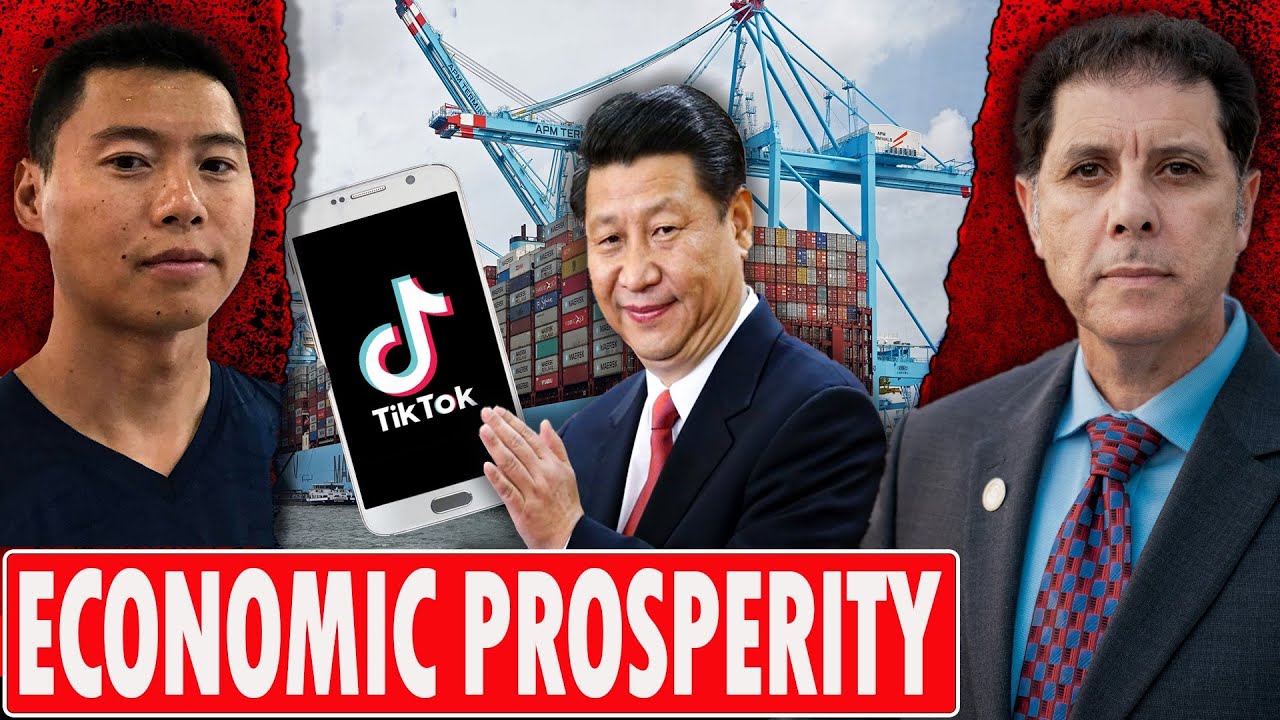
In this live‑stream of the Geopolitical Trends channel, host David Oualaalou welcomes podcast host Carl Zha for a wide‑ranging discussion on current Sino‑American and regional dynamics. The conversation begins with China’s reported near‑$1 trillion 2024 trade surplus, which the hosts argue is misleading due to modern global supply‑chain structures and profit‑capture by multinational firms. They debunk the notion of a U.S.‑China “decoupling,” describing how China is deepening trade ties with the Global South while the United States builds protective walls. The dialogue moves to the recent inclusion of Indonesia in BRICS and Cambodia’s pending application, linking these moves to China‑led infrastructure projects such as the China‑Laos high‑speed rail, Vietnam‑China rail upgrades, and BYD factories across Southeast Asia. The hosts then examine the U.S. technology war: Huawei’s Ascend chips, U.S. AI‑chip export bans, and China’s response with the open‑source Deepseek model, which they claim undercuts the U.S. AI bubble. They discuss the “brain‑drain” of Chinese scientists returning home after U.S. policies like the China Initiative, noting the strategic advantage this gives China in pharmaceuticals and AI. A large portion of the stream is devoted to the TikTok/RedNote controversy. They argue the U.S. ban is driven less by data‑security concerns and more by competitive motives from Big Tech, the Israeli lobby, and a broader U.S. desire to prevent a soft‑power win for China. They describe the migration of American users to the Chinese platform RedNote as a “digital Berlin Wall” coming down, and cite Chinese official rhetoric that people‑to‑people contact is the foundation of U.S.–China relations. The conversation also touches on European economic policy: German automakers’ opposition to EU EV tariffs, China’s interest in acquiring struggling German car factories, and the strategic use of Chinese parts in European EVs. They critique U.S. geopolitical overreach (e.g., ambitions toward Greenland, Canada, and the Quad) and warn that U.S. missteps are fueling China’s steady rise. Finally, they reference a European Council on Foreign Relations poll showing a near‑even split in the United States on whether China will surpass the U.S. in 20 years, and they conclude with a call for a less confrontational U.S. approach.
Chapters
All right, hello everybody and welcome to Geopolitical Trends, where truth matters. Excited to be with you as always. I'm even more excited because of the monthly conversation we have with none other than Carl Zah, and I'm gonna bring him in quickly here. Let me first— I have just quick housekeeping stuff. Be on the lookout tomorrow for my analysis vid that I'm going to be releasing at 0700 hours in the morning. And second thing, I want to say thank you to 3 individuals during last live stream with Professor Anna Malindog who posted some super sticker and I kind of overlooked it. So I want to just give a shout out quickly here. I want to say thank you to Francis Tango, to Lolly Pilton, and to Noel. Thank you so much for your super sticker, truly, truly appreciate you. And of course, I can't miss this opportunity by telling you that the analysis you hear from the guests that I bring in here, you're not gonna hear it, uh, uh, elsewhere. So let me be straightforward about this one. So make sure that if you are learning and enjoying these free episodes, make sure to subscribe to the channel so other people can also get an opportunity to hear the truth like you do. And thank you very much for your support. Let me bring in my guest here. And first of all, to those who do not know who Carl Zai is, you are missing a lot in life. Carl is the host of the Silk and Steel podcast, and I do have the link here for you guys. I'm going to put it up quickly on the chat box for those who do not know. I am a subscriber to the channel. Make sure you go and check it out. So that's where Carl is. So, and he also focuses on his channel on China history, culture, and politics. Let's bring in Carl here. Hello, dear friend.
Hi, David, how are you?
Good, Carl, how are you? How's the family?
Great. I, I, I, I'm very, uh, busy right now. As you know, I have two kids. I have a, a newborn. And so I just, I just locked my door, told my babysitter to keep my, my I'm busy for hours so I can talk to you guys.
Well, we are so excited to have you. And once again, you know me, Carl, I'm straightforward. I say thank you on behalf of the entire community for really locking this time for us. So we got a lot to cover, and there are some topics that even my community were asking. I said, don't worry, I will address that with Carl when we are on, uh, the live stream. So, so let me start from the get-go, uh, Carl. I would like to start with the posting of China of one— almost $1 trillion surplus, which to me, because China just dropped this $1 trillion bombshell on the global economy, and this is like the size of its trade, uh, surplus for 2024, which was a jaw-dropping number that everyone from Washington all the way to Jakarta, where like as many countries want to apply for joining BRICS. So what do you make out of this? How can we quantify this surplus on the global stage?
Well, David, decoupling is not happening. Decoupling is not happening, and China is not collapsing. Uh, sorry to inform all these propagandists from Washington because, uh, you know, China is deepening its trade relationship with the rest of the world, uh, but particularly the world outside of the US, Europe, uh, Japan, Korea bubble. Because, you know, right now United States government is trying to build a wall around it, its vassal states, trying to keep the Chinese out because they're— they realize they can't compete. And what it does is actually handing over all the rest of the world on a silver platter to China. Uh, and this, this is what we're seeing. But I do want to caution about the $1 trillion trade figure because this is, uh, it could be a little misleading to see such a large number, um, because the, because the nature of globalization, the, the trade has fundamentally changed. Back in the 19th century, it's very easy to calculate import-export you know, and you just look at the custom numbers and then you get the trade— you figure out the trade deficit and trade surplus. But today you have multinationals who are in China, have Chinese factories making goods, and then ship them back to the US. That, because it goes through custom, it counts as China export to US, but most of the profit are still being captured by the multinationals. You know, I'm talking about Apple, right? Apple still make 90% of its iPhones in China. Those iPhone, when they exported to US, that counts as Chinese export to US, but 90% of the profit is actually captured by Apple. And, and, and it doesn't also count— account for Apple for iPhone sold in China. China is Apple's the second largest market after United States. And, and they, they sell like somewhere around like $300 billion figure. I may be wrong, people can check the numbers, but those numbers are not reflected in the custom data because those iPhone never left China. They just went straight from the Chinese factory to the hands of Chinese consumers, and Chinese people are paying big bucks for that. Again, 90% of Apple profit goes to Apple. Uh, so, so it's not— so, so if you simply look at the trade data, you are not, uh, looking at the reality of how the profit is being distributed. But what you— a lot of the American companies are, are, are scared right now is rather just be a, a, a, a cheap labor force for Western multinationals, China is now developing its own brand and very competitive brands like Huawei. This is why US want to kill Huawei. And, and, and, and, and, and China is now getting moving a big way in electric vehicle, EVs. This is why US levy 100% tariff on Chinese EVs because they cannot compete. Uh, but this is, uh, this is the, the one of the nature of the US-China trade friction is it's really about— it's not so much about trade deficit. I mean, Trump says he cares about trade deficit But if US really care about trade deficit, then just sell more to China. And what do China want? China wanted to import high-end chips. United States said no, you cannot spend your dollars buying stuff from us. The only thing we allow you to buy is US Treasuries, our debts. And this why China says no, no, no. You know, you want me to keep on getting IOUs? I'm going to invest those dollars into Belt and Road Project. We're going to build ports, infrastructure, we're going to build airports, we're going to build, uh, uh, we're going to build railroads, we're going to build roads, we're going to build factories, power plants all over Africa, Southeast Asia, Latin America. That builds global interconnectivity. Again, this benefits China because China is the world's largest trading nation. Uh, you know, people say, oh, China is not doing this for altruistic, selfless reasons? Well, of course not. Of course not. Win-win. China maybe win a little more, but countries still benefit from that, you know, compared to their alternative, which is World Bank and IMF, which is a very exploitative relationship. And this is what US and, and, and, and, uh, and its allies, the so-called allies, vassal states really, are afraid of. They're afraid now Um, now the, the finally the Western dominance of the world for the last 500 years is coming to an end, spearheaded by China but also rest of the world. This is why many other Global South nations are eager to join BRICS because they see a new future opening ahead of them, whereas the US is trying to put walls, should try to build barriers. You know, Biden on its last days of, of his presidency, he signed into this deal where US will prohibit high-end AI chips export to rest of the world. They separate the world into 3 tiers. The top tier is US and so-called trusted partners, and, and who will have unrestricted access to the NVIDIA AI chips. And they have Russia and China at the bottom tier, which is no-go, no, no export to those countries. But they, interestingly, they create a second tier of restriction, and that included a country like Portugal, Austria, Poland, the Baltic countries, you know, Saudi Arabia, and, and a whole, whole list of other supposedly US partners. You know, these— because you're probably wondering, what the hell did we do to piss off United States to be not be on the trusted list? Only 11 countries from EU are on the trusted list. So what US is essentially doing is cutting off these countries from future AI development, and that opened a whole brand new market for the Chinese company, for Huawei, because Huawei, they just came out with Ascend chips, which many people say just as good as NVIDIA. And, and, and, and, and now those people can't get their hands on NVIDIA chips, they have no choice but to turn to the Huawei chips. This, this is just Biden, Trump, they're just handing wins after wins to China. It's like that meme, you know, the meme with a picture of Xi Jinping, and then he's— it's like, do nothing, win. Because a lot of these problems are created by United States government itself. Wow.
Well, that's, you know, speaking of BRICS, while we are— you mentioned about BRICS here, you get like now you have, uh, uh, Indonesia becoming a full member. And you have now even— I saw a comment by Hang Ng, uh, where are you? You put about Cambodia, uh, uh, I think there is, uh, Cambodia applied for BRICS membership for 2025. And, uh, uh, I saw this comment here from Hang Ng. He's a— he's an avid supporter. There's the other one about the, uh, speed train that was built in Laos that China has invested into all this. The same thing that happened in Thailand. So where, where do you see now, uh, will, will it be fair to say, Carl, about the, the tensions that exist or escalating or escalated but still going on between the Philippines and China was because in the area, the disputed area over the, the Sabah Is this has to do with Malaysia showing interest in joining BRICS? Because Indonesia is already a full member.
Yeah, this is interesting because both Malaysia and the Philippines are ASEAN members, you know, they're supposed to be bubut buddy buddies. You know, there has been territorial dispute over Sabah. This is again a legacy from colonization, you know, because British that the whole area of Sabah used to be, uh, part of the Sudan Sultanate, which is based in the southern Philippines. And the British quote-unquote lease that territory, lease the territory of Sabah. And, and later, uh, when British Malaya became independent, the, the Sabah joined the Malaysian Federation, Federation of Malaysia. And, and, and the Philippines like, oh wait, wait, wait a minute, that land was on lease. But so this is again, you know, British colonization in East Asia, in around the world actually, created a lot of these legacy issues. But these, these are issues are not like deal breakers. I mean, the, the Asian countries still find ways to work around it, to still have trade despite differences, despite disputes. This is how it's worked out between Malaysia and China. You know, Malaysia and China have dispute over South China Sea. They have different claims, yet Malaysia and China maintains a very good working relationship. They, um, they have, uh, they, they, you know, they, they decided, you know what, let's not fight about what's what. Let's continue the beneficial relationship while we can maintain our differences. This is not how Philippines pursues the strategy, and this is obviously at the behest of the United States. Because during Philippines, during Duterte's time, yeah, it was completely different because Duterte actually tried to pilot an independent, uh, foreign policy stance, which led him to seek ties with Russia and China. But with election of Bongbong— well, when Bongbong Marcos first got elected, he pledged to continue the legacy of Duterte. He visited China, he got warmly received. And then when he went to Washington, suddenly he changed his tune because, as we said many times, his daddy Marcos Sr. stashed billions, tens of billions in the US banks that was frozen by the US government. And so this is the big leverage the US held over Bongbong Marcos. You know, if you want your dad's corrupt money— it's not even his dad's money, it's really the corrupt money his dad kind of squirreled away from the Filipino people. And he said, if you want your dad's corrupt money, you know, you have to work with us. And this is what we saw, the 180-degree turn of Bongbong Marcos Philippines. And, and this is why we see the increasing confrontation in South China Sea with China, despite the 2014 gentlemen agreement between the two countries where China says you know what, we will allow you to continue to supply your Marines on the, on the Second Thomas Shaw, provided you don't bring building material trying to build a fortified base. That was a modus operandi throughout, even before Duterte's term and during Duterte's term. But Bongbong Marcos reversed that decision. Now they try to deliberately trying to build, bring building material, trying to build up the, the dilapidated Sierra Madre that was stranded on Second Thomas Shaw. And this led to the, the increasing of tensions. This again was a way for US to bring more military hardware into Philippines. So US gained access to 9 Filipino bases, and they brought the Typhoon medium-range missiles to, to be stationed in the Philippines. Originally they said, oh, we just brought this for a, a military exercise with the Filipino forces, which by the way was a large biggest joint exercise between U.S. and the Filipino forces. Yeah, in recent memory. And, and after that, they didn't take away the, the missiles. They say, oh, you know, we're gonna take them away, they're just going to be there for a few more months. And later, you know, end of last year, the Filipino government said, well, uh, we're thinking about acquiring those missiles. Okay, first of all, we know how these things work, you know, just like in the Ukraine war. The, the, the, all the, all the missiles in Ukraine, the ATACMS and HIMARS, they're not being operated by Ukrainian military personnel. They're being operated by US American military personnel. They're being supplied with US-supplied satellite intelligence by US intelligence services. So similar thing, the Typhoon missiles are not going to be operated by Filipino, uh, personnel. They're going to be operated by Americans. The Americans are just gonna station more hardware in the Philippines and make Philippines pay for it. You know, they're gonna have to pay for that missile. And this is how— this is the same deal that United States pulled with AUKUS, by the way, with Australia. Because US says, okay, you're gonna pay us like tens of billions of dollars, we will give you a nuclear submarine eventually, you know, in like 20 years. Yeah, maybe, maybe you will get one.
Maybe you'll get one in 24.
Early, but, but, but in the meantime, you've got to build us a nuclear submarine capable base in Perth. So, so to host that submarine— oh, by the way, we get to use it. Americans and British, there's nuclear submarine fleet get to dock at, in, at Perth, Australia. And you— so they're making the Australian pay for the privilege of hosting U.S. nuclear submarine force. Basically, this is how US work all around the globe. And Bongbong Marcos, you know, he's, he, he's not dumb. He's just doing it because for his own, own personal reason, because he— that's a lot of corrupt money that he's stashed away, and you, you really like to get access to them. Uh, and then he had to be on America's good side to be able to do that. Yeah, but this is really bad for the Philippines because Philippines is one country in ASEAN, in Southeast Asia, that's been left out of the Chinese investment. You know, the current Chinese investment in the Philippines basically frozen, um, whereas countries— China is deepening its engagement with countries all over East Asia, with Indonesia, with Thailand, with Vietnam, with Malaysia, with Cambodia, with Laos. And, and there's, in fact, like almost the rest of, all the rest of Southeast Asia, China remains the largest direct foreign investor. Um, and, and that's this, uh, this we saw the, the high, the, this, the, the new railway they built to connect China and Laos. And China and Vietnam just signed a deal to connect, to upgrade their rail links because the Chinese And Vietnamese rail was built like 100 years ago by the colonial French government. You know, it was on a narrow 1-meter gauge. So they're going to build a standard gauge railway connecting China and Vietnam. We're going to upgrade it to the Chinese standards. And Vietnam itself is also committed to build its own domestic high-speed rail connecting the north, Hanoi, to, uh, to Ho Chi Minh City in the south. So once that's completed, get connected to the Chinese network. And, and, and the next step will build a rail through Cambodia to connect from Cambodia to Vietnam and Cambodia to Thailand. This is all part of the Pan-Asian rail network that's envisioned. One day you can ride a train from Shanghai all the way to Singapore. And, and, and, and so far, you know, Thailand on on the Thailand side, they're also building out their own high-speed rail network from Bangkok northward. One day it will connect with the Laos border, connect to the China-Laos rail line. So, so all these pieces are slowly falling into place. And, and by— and BYD, their first overseas factory was in Thailand, you know. And, and they are basically putting heavy pressure on the Japanese automakers right now because Japanese automaker traditionally had dominated the car market in Southeast Asia, um, but they already— now the Japanese auto market already— automakers are already getting their ass kicked in China because they didn't catch the transition to the electric train. And now they're facing pressure in Southeast Asia, you know, their traditional stronghold. This is why Japanese automaker Honda, Nissan, Mitsubishi, they're all in trouble. This is why there's a talk of a big merger of the three to form a, a, a mega company. But I don't think that's going to work out because you have three troubled car companies, you're just going to make one giant troubled car company. I mean, the only Japanese carmaker right now that's still holding ground is Toyota. Toyota is still holding ground in South— but the other Japanese carmakers, they're, they're— they saw their, their, their, their share getting decimated, you know. Both in China and Southeast Asia. And, and, and, and, and BYD, they're going to open another factory at the end, end of this year in Indonesia, their second factory in Southeast Asia that's going to make 150,000 cars a year. And, and this is, this is also, you know, this is concrete result of, I would say, of Indonesia joining the BRICS. Now BRICS contains— you think about it, the number— the, the top 5 most populous countries in the world— China, India, United States, Indonesia, Brazil— 4 of them are now in BRICS. And, and, and, and majority of the world's population are in BRICS. And the, and the BRICS far outnumbers G7 now in GDP., in purchase power, uh, purchase power. And, and, and, and they— these countries also not, you know, BRICS, you have China, which is the giant manufacturing power, and you have countries with lots of resources like Russia, like Indonesia. And, and, and this, this, this why United States really scared of BRICS, even though BRICS is just an economic It's an economic organization. It's not even a military alliance. But the US is so scared because they, they see they're increasingly uncompetitive. This is why US continue to build walls. They're trying to, you know, the whole idea of chip sanction against China was to slow China's AI development, and that did not work. Because what happened was when China couldn't get access to all the latest um, uh, NVIDIA AI chips, they try to work around it. The way they work around is like, okay, if we cannot get our hands on the best latest hardware, we will improve our software and we will make our code more efficient. And this is how China just came out with Deepseek, which shocked the AI world because Deepseek was much cheaper It's like, like not so much cheaper than, than the OpenAI, which is super expensive. And, you know, you can train like 6 million tokens on DeepSeq for like 5 cents. It's practically free. And then China made it open source so everybody can use it. And this is, this is major. And China did this with, with access to Nvidia chips getting cut off because The US model, you know, ever since the Windows-Intel duopoly, the work— how it works is Windows keep on coming out with those giant bloat— Microsoft bloatware, bloatware, which necessitate you buy more powerful machines, more powerful chips from Intel. That goes hand in hand. And, and, and Chinese engineer look at this, okay, why don't we just optimize our software so it doesn't depend heavily on the hardware to, to to, to, to, to, to power it. That, that's what they did. Um, and, but, but this is kind of— this is— we're now going to see a lot of— we already seeing a lot of copying from American tech bros because their livelihood depending on the anti-China bandwagon, because many of them have contract with Pentagon, you know, to develop AI, AI machines for war. And so China is convenient boogeyman. And, and, and also they need a lot of investment into America. I mean, the American AI now is developing more like a financial scam. They, they claim, okay, we got to— there, there's a plan under the new Trump administration together with the head of SoftBank, Musashi-san. They said they're going to plow $500 billion investment into United States. I was like, whoa, $500 billion? I didn't know SoftBank— I didn't know Musashi-san has $500 billion. Where is he going to get that money? Well, he's probably going to try to get that money from the Saudis. But, um, but how— what are they going to invest $500 billion in? I dig in a little deeper. Oh, they're gonna— they're planning to invest it into the OpenAI Stargate project. And what it is, they're gonna build giant data centers with a lot of servers to power the, the OpenAI's, uh, to, to power the, uh, OpenAI. Which, you know, basically, which require a lot of GPUs from NVIDIA. You know, this is all good for stocks, very good for NVIDIA stocks because they're selling more. It's very good for the people who hosting data centers. It's very good for all this AI companies. By the way, they're not making any profit. Most of those AI companies are making like negligible profit. Instead, they are burning through tons of money, investors' money, other people's money, by claiming they're this close to achieve AGI, which is, uh, artificial general intelligence, which is about the same, uh, it's on parity with human mind or even surpass human mind. They claim if we have AGI, it's gonna, it's gonna be like the next Industrial Revolution, you know, like it's gonna, you know, we don't need workers anymore, you know, we're just gonna have like all these like AI Terminator clones that's, that's gonna like do everything for us. Yeah, and we're nowhere close to that. And this is all big scam to draw more money, more venture capital, or into their own pocket, you know. All these AI guys, AI tech bros, they're all billionaires, you know. What have they produced so far? I mean, chat, GPT is, is useful, okay, I give them that, but it's nowhere close to AGI, nowhere close to artificial general intelligence. And, and, and China just show, you know what, hey, we have Deepseek, we developed with like $6 million budget, we developed as a side, side job, like it's literally a side project for a Chinese, uh, uh, uh, like, like their, like a financial firm because they, uh, yeah, uh, and, and this is a huge blow both to like their, uh, the hubris of American tech bros who have been like on this anti-China bandwagon, you know, after, uh, Eric, former Google CEO Eric Schmidt, you know, people like Peter Thiel, they're, they all, they all kind of blowing up this AI bubble. So there's more money coming in, more investment other people's money for them to spend on this, this AI bubble. And, and China is just about to pop this AI bubble because China make it so cheap. This is what— why they're afraid of China. Whenever China enters a field, they make the product so cheap, basically become commodities. They can no longer to squeeze out high margin profit from this. This is what Wall Street type really hate about China. And, but this is why they call China is exporting deflation to the world. And to that, Xi Jinping responded, I thought people like things cheaper. Cheaper, which is true.
I like it. I like things cheaper. So, but speaking of this, uh, Carl, as a matter of fact, Elon Musk just responded back to Donald Trump when he mentioned about the $500 billion investment in AI, and he's like, what are you talking about? Because Elon understands we don't have the infrastructure for it, and this is way above our head. That's just what I'm gonna say. And I do have, uh, first, before I need to mention this one, share with you guys on the screen, uh, back to your comment, uh, uh, Karza, about the Hanoi project. Uh, here is what Hang Enji wrote: Vietnam has numerous projects under the BRI Hanoi to Ninh Ninh, Cumin high-speed railways, which what you mentioned, Carl, that's exactly— I can't pronounce the last name here— to Ho Chi Minh City. What is that?
Oh, that's Saigon. Well, US, in America we call it Saigon, but Vietnamese renamed Saigon to Ho Chi Minh City after liberation in 1975.
Yeah, perfect. Perfect. I just want to share this with community, uh, regarding— to go back to your AI thing, uh, some major development just happened, and I'm going to share a picture with the community, with you guys. I know you are not going to know who this person is. Now, this is, uh, Shen Jin. Now, Shen Jin is award-winning computer scientist and blockchain expert. Guess what just happened with her? She left the US and went back to China to Tsingtao University in Beijing. This guy is— she's a specialist in computational economics. There is— this is major. Why am I highlighting this? It's just to— for you guys, the community, to see the brain drain that is taking place as we speak. This is a major problem here in the US.
Then this is all brought up by US government policy, you know. They started the China Initiative under the first Trump term, and they started purging Chinese scientists, researchers from the US institutions. You know, this is not just, not just AI, but they also, uh, went after Chinese researchers working on cancer drugs. And there was a, uh, you know, they, they reported a purge of Chinese cancer researchers in top US institutions. Guess what? They went back to China, and now China is the top, the world's leading developer of pharmaceuticals, like a bio, bio research. And this is a result of US actively pushing ethnic Chinese and Chinese origin scientists back to China. And, and again, it's like, go back to that meme, Xi Jinping didn't even have to do anything. Do nothing and win. It's because US keep on making stupid mistakes. They, they keep on shooting itself in the foot. Um, and, and because, you know, you have Tom Cotton saying like, oh, Chinese students coming to US, we shouldn't allow them to study science and, and STEM. They should only study humanities. You know, because they're scared of somehow, oh, that China is going to steal our trade secret. What he doesn't understand is the, the, the, the development and progress in science depends on collaboration. And US-Chi— American and US West and Chinese and Western collaboration in science brought out so much progress in the last 4 decades, you know, since, uh, since Nixon visited China. They're trying to redo— they're trying to reverse the trend. All he does is driving all these Chinese researchers and scientists who gain years of experience working at the top, uh, research institutions back to China, bring their expertise back to China, and make China great again. This, this is Trump's greatest gift to China, is she's making China great again. And, and, and, and the about, um, I mean Same thing is happening in Southeast Asia. You know, the one of the reason— well, China was already trying to economically integrate with its neighbors, but when United States is trying to decouple from China, forcing all the multinationals to uproot their supply chain from China, a lot of them went to, you know, next door to Vietnam, uh, because the, the advantage of Vietnam is. He also has a, a well-educated, um, a cheap labor force, but it's right next door to China. It's connected by rail to China. It has ports very close to China, so all it's— it can easily be integrated into the Chinese existing Chinese supply chain. So rather than decoupling from China, they are making the Chinese supply chain to go outward. Now China is is, is achieving even deeper economic integration with the rest of Southeast Asia. And, and this is, you know, why, why we're seeing like BYD, uh, opening factories in Thailand and they're opening factories in Indonesia. And this is what I'm looking forward to because I want to get a BYD. I'm waiting for January 2026 when the BYD factory in Indonesia start producing because then the price will come down. You know, again, the Chinese manufacturers make the price go down because, because, you know, they will be manufacturing Indonesia, so it doesn't have to pay as high tariffs. So, so the price will come down. You know, after China opened— after BYD opened their factory in Thailand, the, the price of BYD Southeast Asia already went down because, because the new factory. And this, this new factory in Indonesia will make price go down as well. And I mean, this is one reason, uh, Indonesia just joined BRICS as a full member. You know, for a while Indonesia was trying to sit on— sitting on the fence because they know like United States really allergic to BRICS membership. And so Indonesia is like, well, we're already in the neighborhood of China, we already have a fruitful relationship, economic relationship with China, you know, we don't want to rock the boat with United States by overtly join the BRICS. Um, and so, so for a while Indonesia was sitting on the fence, but, but now Indonesia is like, you know what, screw it, we're BRICS now because we want to be a full member of the BRICS in order to participate in making the new rules for the new international organization.
You know, like, um, basically, Carl, Carl, they were giving the middle finger to Washington. That's basically what it is. You know what, it's the same way now that Singapore had just passed legislation regarding taking away the IMF. I just read about it yesterday. So you notice in countries in, in that part of the world are moving a different direction. And given what just took place between— in the phone call between Mr. Wang Yi and the, the new Secretary of State, Marco Rubio, which we will talk about in a minute after we cover, because we want to move on to the next topic I would like to address with you. And this one, Carl, that's what I promised one of our, uh, our viewers. By the way, guys, regarding, uh, this Chinese scientist, I put the link in the description, so just check out, read that article, uh, that was published in, uh, South China Sea by, I believe his name is, uh Yen Lin, or Ling, Ling Jin, that was the author of this. So, uh, next one, Carl, is we— I cannot ask— I cannot let you go, man, without talking about TikTok. We're gonna have to address this one. And the reason why I wanted to talk about this, first of all, how the refugees of the TikTok went over to Red Note. So, so what I would like to do, Carl, quickly here, I'm gonna share a clip with the community, and I would like to have your take into why the US government was so scared about having Americans going into the Red Note. So let's play the clip first, then I'll, uh, and I'll share it, and I'll share it, uh, then I'll take your take on it. So I'm gonna share the screen here. Americans on a Red Note. All right, take a listen, guys. And I know some of you heard this before.
Don't know how to start, but, um, I've been on your app for 2 days and seen the videos. Inda. I can't believe it.
I'm starting to think that we're the bad guys and like we're the oppressed ones. Red Note's starting to make it look like communist China is like way better than capitalist America.
So this is my dinner in the United States. Cheap ramen. I have to eat this because I'm broke from paying all my bills. I'm so sick of fucking grocery store prices. I'm so sick of it. I have stopped eating. I am at a calorie deficit at this point so that my child can eat. A wave of emotional breakdowns has swept across American users on Chinese RedNote app. A platform that allows users to explore life in China through unfiltered stories and connections.
Uh, I, I, I'm gonna put the link for you guys later on, but for now, uh, let, let me have, uh, Carl give us his take on this. Uh, and I am looking at the big picture here, Carl. Why the US government? And first of all, guys, to those who might think I am not— I'm putting down my country— I am exposing the truth. Simple as that. It's because the fear of the government, in my opinion, US government that is, was— did not want Americans to find out the truth about how life is in China. That's why I went to China, guys. I went because I will see with my own eyes. No one else is gonna tell me. I was there on the ground and I was shocked at the progress that country, China has achieved in comparison to what we have. Your take on this, Carl, as far as the TikTok saga and why the government wanted to— even Supreme Court stepped in— and whether the government made the mistake, the US government made the mistake now by having now more Americans are exposed to the real image of what China is all about.
This is another case of US government policy back fire on them spectacularly. I mean, TikTok is never— it's, it's not about— it's not, it, it's not even about China have your data, because all the American user data are kept on servers in America. This is how people found out when, uh, TikTok had an outage, uh, the Sunday before Trump's inauguration. And not only Americans users got the message TikTok was not available, but Also Canadian users, because let's face it, Canadians' user data are not stored in Canada. Hello, they don't have server farms in Canada to store Canadian users. So the Canadian user data were also stored in America, in the United States. And there are even some, some users from Thailand and Europe got reported outage. It turns out their data is also stored in Texas. And, and, you know, because TikTok initiated the Project Texas to store American user data in U.S., I mean, I, I think that's, that's, that, that's a fair, uh, regulation because a lot of the countries are concerned about digital sovereignty. So to request their own citizens' data stored on-site in their own country, I mean, that's, that's a reasonable request. And, and, and ByteDance TikTok, they have complied. They comply with the regulation. Now, a lot of people compare TikTok with this, like, Facebook, Google in China, say, oh, why is Google, YouTube, Facebook banned in China, but not— but why should we allow TikTok? Well, first of all, China did not enshrine the freedom of speech in their constitution. United States did. But second of all, Second of all, China did not ban Google. China— Google was available, freely available in China up to 2009. China just have required any foreign companies operating in China, any foreign social media company, to comply with Chinese laws, which include Chinese censorship laws. And, and Google said, you know what, because we don't do evil, so we're not going to comply. We'd rather leave Chinese market. Because at that time, Baidu was also beating Google in the Chinese search market. You know, Baidu have about like 85% of the market, Google has 15%. So Google did some calculation. You know what, leaving China, we are not losing too much money, uh, leaving China. And also we're going to score a publicity stunt with the rest of our, uh, you know, with the Western governments and others. So we will, we will uproot ourselves and leave China. Google left China. They were banned. They, they left because they didn't want to comply with Chinese regulations. TikTok, on the other hand, they have complied with US regulation every step of the way. So the only— the reason they, they said was a national security threat. In the congressional report that they, they cited all the proofs, all the evidence was redacted, blacked out. So they didn't give any reasons why, because you can't— it's not for your eyes, it's not for your eyes, it's too sensitive. Uh, so they never give a convincing, uh, evidence why it's a national security.
Security.
Oh, it's really about— there's a confluence of 3 factors that led to the TikTok ban. One, you have companies like TikTok, like Google and Meta. You know, Facebook and Google, they really hate TikTok because TikTok is eating their lunch. Young, young people rather be on TikTok than, than Instagram. That's true. Um, and, and TikTok has much better algorithm than YouTube Shorts. So young people prefer TikTok. That's why it has 170 million American subscribers. That's almost half of the US population. So Facebook and Google, they spend a lot of money lobbying the congressmen to ban TikTok. That's, that's one, they're trying to kill their competitor. Yeah. Two, you have all this national security freaks, you know, they all, they always had a hard boners for China. They, they seize this opportunity trying to shut down anything Chinese. This is, you know, the, this Number 3, you have the Israeli lobby. You have, you have the, you have, you have the president of ADL, Anti-Defamation League, public stating, oh, TikTok is like Al Jazeera on drugs, you know. This is a battle, this is a battle we must win to control TikTok, because TikTok is one platform that was relatively free for Americans to express their sympathies, to stand with Palestine. TikTok. And, and, and, and ADL and AIPAC, they saw this was unacceptable. So you have these organizations, the Israeli lobbies, who are lobbying also to, to, to ban TikTok. And then it's a confluence of all these three factors that led to the TikTok ban. And then, then Biden, he decided to sign it into law, um, you know, literally on his last days, he thought he was kicking this hot political football to Trump, you know, because it leaves the implementation to the, the presidential power. But stupidly, the Democrats really just handed a big victory to Trump because Trump comes on and say, I saved TikTok, I brought the TikTok back. But which is not true because all Trump did was to sign a 75 days waiver, 75 days extension for the enforcement of the ban, which is either TikTok have to be sold for sale of TikTok to American companies, or it'd be banned in the United States. So, so Trump, Trump said is 75, uh, days extension, but they're still members of his own party. You have Tom Cotton saying, oh, uh, We don't even know if the— if there's any legality to, to any kind of waiver to a law passed by the U.S. Congress. This is why we applaud the decision by Apple and Google to suspend, to take off this app from their app store. So Apple and Google decide to abide by the ban, by the way. So that means right now, if you lost your phone, if you bought a new phone, if somehow you deleted the app, you're not getting TikTok back in the United States. Because they took it off the App Store. Uh, like, the ban is still in place. This is just, uh, Trump just give you a 75 days waiver so you can continue to use TikTok app if you already have it on your phone. Yeah. Um, and but come April, this is, this is another thing Trump said he wants, um, to be— she wants United States to own 50% of TikTok. Now what does that mean? Because TikTok currently, the ByteDance, it's 20% owned by the owner, by the founder of the company, 20% owned by its employee, and 60% is owned by big institutional investors, which is predominantly American. So most of the TikTok is already owned by, you know, more than 50% is already owned by American investment funds. So what, what does you— Trump mean he want 50% owned by United States? Does he mean United States government? Because he said, he said, without me, my signing my presidential executive order, TikTok is worthless, you know. Or I sign it, you can make a trillion dollars. So he said, we don't have to put anything down, guys. Just by me signing, you give TikTok value. So United States should have 50% stake in TikTok. So is he saying the US Government is gonna own TikTok, like half of the TikTok ownership. I mean, this is really talking about controlling the media platform.
Exactly.
It's making a, a literally organ of, of, of US, uh, uh, propaganda mouthpiece. And people already seen changes in TikTok after he came back on outage. Apparently now Free Palestine is a hate word, it triggers community standards. And then they will remove comments like 'Free Palestine.' And, and this is a big change. I mean, it's like, looks like TikTok is bending the knee to, to, to Trump, to, to, or to the Israel lobby, demand for them to, to carry out censorship. But this, you know, if anything about Americans, you know, I, I, I, I owe apology to, to many Americans because I used to say, you know, Americans don't know what freedom is. They talk about freedom and they, they, they, they, they, they, they, they, they just say freedom, freedom. Don't understand what they mean. No, actually I'm wrong. A lot of Americans do understand what freedom means. They understand it's in the nature of Americans to rebel against tyranny of the government, and they will not stand for their rights of free speech being taken away from them. This is why they started a protest movement to migrate to Red Note, AKA Xiao Hong Su, which is a Chinese social— a real Chinese social media app that lives in a Chinese, wholly Chinese ecosystem. So they say, you know what, you said because China is stealing, is trying to get control over data, guess what, we're gonna voluntarily give our data to China as a gift because we hate you American government for doing this to us. So they, they would— this started as a protest movement, but it turns out into something more, much more beautiful. Beautiful and even magical, because now for the first time, Americans are coming face to face with real Chinese people inside a Chinese social media space, and on such a mass scale. This is like the digital Berlin Wall coming down moment that they are now interacting with ordinary Chinese freely on internet. And, and this is— this reminds me of like right after, uh, US and China normalized relationship in 1979. And they both— a lot of, you know, cross-cultural exchange, a lot of people-to-people exchange. And people realize, oh my God, they're human beings, you know, they're not the demons portrayed in the propaganda. I mean, this— it really speaks to how bad the propaganda has gotten in United States in the past 10 years. And Americans now surprised to find that Chinese people are human beings. They all, you know, they also want the same thing in this, in life. And, but it's, it's like, but it's beautiful. It's like the $1.6 billion that the US spent on anti-China propaganda just melted away as Americans come face to face with real Chinese people. Like, I'm here on YouTube, I've been screaming on top of my lungs for the past many years about how great China is, how friendly Chinese people are. But, you know, I, I don't get as much traction, you know, because, because, you know, I don't— the algorithm in my favor. But now the, the Americans are now seeing with their own eyes and hearing with their own ears what, what the real Chinese people have to to say, it, it's an eye-opening moment. A lot of the, a lot of propaganda just peels apart. Also, it's so beautiful. I love it. I love it. I hope this really lasts.
I think the government here, the U.S. government, uh, the, the fear it has mainly, it's because if American people became aware of the development that China has achieved, the next question is going to be that some of us Americans will be asking is how did China achieve this particular progress or developments. They're gonna realize that the policies that the government, Chinese in this case, implementing is what led to that outcome. And they're gonna start asking themselves, how come our government is not doing the same thing when they're just wasting our money and so forth. And I think, and I could be wrong, but I think that is what was going on inside Washington to prevent this issue of giving another platform or controlling TikTok. It's about preventing Americans from finding out the truth. I'm gonna ask the community this question, but I'll ask you also, because, uh, by the way, to those who just came in joining me, I'm having my conversation with my friend, and I'm honored to call you a friend because it's not a term I use loosely, Carl, and you know me by now. So, uh, uh, I'm having my conversation with Carl Zahir. So the question for you guys, and I'm gonna ask Carl later, uh, the question for you: should China sell TikTok to America? Just in the chat box, answer yes or no, because I like to have your input. And for you, Carl, I will ask: if the Chinese decide to sell it, which I am— don't think so they will— the Americans are saying, well, it is worth $100 million. Which I don't think so. I read and I looked at the value of TikTok, what it's worth. Even this guy, Zhan— his name is Zhang Yimin, he's one of the co-founders of TikTok. So, and the value of TikTok, some have said it goes beyond $200 billion. What's your take on the question?
What Trump himself said in public, he said TikTok is worth a trillion dollars. So 50% of TikTok, it's going to be $500 billion. I don't know how they're going to find $500 billion to pay for it. But, uh, the thing is, the American politicians, they act like ByteDance cannot live without TikTok USA. But the fact is, the TikTok USA only composed of 10 to 15% of the ByteDance global market. ByteDance— TikTok's biggest market is not US, guys, is Indonesia. And, and, and TikTok can live without United States. They can live without United— I mean, it's gonna hurt, it's gonna hurt them, you know, of course, you to give up 170 million users. Um, but they, they, they— it's not gonna— it's not gonna be like— okay, my, my internet I think is conking out. So it's not going to be a deal breaker, it's not going to be a death row for, for TikTok. Now what Americans really want is they want control. You know, we already know it's not about data. What they really want is they want to have the algorithm. That's the key. That's the key of ByteDance's success, is ByteDance have a very successful AI algorithm. And, and I— ByteDance is not going to give that up. ByteDance is not going to give up with their AI algorithm. Now let's say ByteDance did, did decide to sell TikTok, you know, this— let's say they sell TikTok to Meta. You know, so they swap out, they're gonna— if they do that, they're gonna take their algorithm with them. They're not gonna give the algorithm, the secret algorithm away. So that means TikTok is just another Instagram. Who is gonna, you know, like, what's the point? People come to TikTok because TikTok recommendation engine is really great. Their AI is really great. Yeah, uh, you know, much better than Instagram and YouTube Shorts. And if, if TikTok just become another, uh, another Instagram clone. Who's gonna use it? I mean, no one. America— today's social media users, they are, they're much more picky, you know. Remember MySpace? Does anybody still remember MySpace? I mean, people, people can just get up and move to a different platform.
Platform.
I mean, this This is why, uh, this is why now Congress people are now talking about possibly banning Redditt. Yeah, you know, because they saw these Americans going to Redditt, interacting with Chinese people. But this is what happened when you fail to compete. That's why they're trying to put up a wall right now. Now it's not the Chinese firewall separating American and Chinese people anymore, it's the US trying to erect this digital wall because they realize increasingly they cannot compete. Um, and, and, and, and there's— in contrast to the official Chinese stance, you know, the, the, the official Chinese state media People's Daily made a commentary about all these TikTok refugees coming to right now. It says— he quoted President Xi Jinping— he says President Xi Jinping said the base, the foundation of US China relationship lies within people. And then he goes on to say, this, the— in our increasingly globalized world, the internet has brought everyone closer and closer together. We, rather than calling these people refugees, we should call them villagers in a global village. I mean, it's a beautiful message. This is a beautiful message in sharp contrast to what American politicians are saying. And, and so, so, I mean, like, this is, uh, this is the stuff that, that United States is desperately trying to prevent right now. They, they, they are desperately trying to prevent to give China a soft power win, but yet the more they struggle, the more they make China look good. And which—
what's happening?
This is why I say all, all these problems US is facing is self-inflicted. You know, China literally just sitting back and do nothing and win because they, they are not— they're focusing on their own internal development. They're focusing on providing better life for the Chinese citizens, um, you know, than worry about, you know, what, what United States, uh, is doing. Whereas US now, everything is about China, competing with China. We have to compete with China.
And I saw, and I saw there when I was there, Carl, I saw, I mean, I've been around long enough to know how I can gauge the either the development or the underdevelopment of a country. And I would know what to look for and all that. And all the, all I saw is telling me they're moving forward.
They're moving forward.
It's just the way it is. By the way, everybody, majority who answered the question said no. To China selling TikTok to the US. And I just wanted to have that intro. Uh, I, I have two more questions, uh, Carl, before I let you go. Those are the two key things, actually two or three. One of them has to do with China now plan to purchase German struggling car factories. We all know what it means. That means the Germans have shut themselves in the foot, economically speaking, by following the US policies blindly. So now Chinese officials and automakers are eyeing German factories slated for closure, and they are particularly interested in Volkswagen. What does it mean? How do you see, uh, this, uh, this, this approach to China? What is the strategic angle here? And how this is going to now pave the way for the tariffs that Europe plans to put on China. If China end up buying the factory and building the cars in Europe, there will be no tariffs.
Yes. Now, the German automakers are actually the ones who are against EU voting to impose high tariffs on Chinese EV entering Europe because the German automaker, they want to collaborate with the Chinese. They are, you know, they're already doing that in China. A lot of the, you know, uh, Volkswagen EVs, they use Chinese parts, particularly Chinese battery, because China dominate the, the, the, the field of batteries. So they want to work with the with the Chinese to, um, to, to, to, to, to, to, to, to better their own product. They wanted— they want partnerships. And, and this is why German— Germany voted no on, on raising tariffs on Chinese EVs, whereas France and Italy voted yes. And, and this is what— this is why, um, I, I think that the— this is a case where German business community are more farsighted than the European political leader. You know, I'm really shocked how much European political leader have no backbone when it comes to United States. I mean, right now, right now Denmark is shocked that, that Trump is serious about grabbing Greenland, and they're panicking because there's nothing they can do. And Denmark was one of those European government that was on the forefront of America's, uh, anti-China bandwagon. You know, he did all these— performed this great service for United States, and all he got rewarded for having Greenland taken away from them. I, I just can't believe how stupid they are. I mean, what did they expect? You know, because right now, U.S. also realizes it's increasingly difficult for them to go head-on with Russia or with China. So they're focusing on, you know, let's pick on a smaller target, let's pick on easy pickings, the low-hanging fruit. Hey, how about we grab Canada and Greenland and nobody's gonna stop us? You know, what's Denmark gonna do? They're gonna call NATO for support. Well, who's NATO? United States controls NATO. Like, they— there's really nothing the Europeans can do, and they yet still so, uh, slavishly follow the US Washington dictate. It's, it's really amazing. I mean, like, uh, China, for if anything, China would love to see EU gain a political backbone and achieve real political independence, uh, to be the third pole, um, or the fourth pole in the, in the multipolar world. But, but the unfortunately all the EU leaders, they have been groomed for such a young age in all the Atlantic institutions to be cute puppy dogs for Washington. And that's what they've been trained for, and that's what, you know, they're now just doing their job they're trained for. And, and, and, and Germany, they could profit. This is, you know, China always find a way. You, you know, Chinese people are very practical. They have been living with a centralized bureaucracy for 2,000 years, so they know how to go around work, work, find their workaround. And, and when, when you slap tariffs and stuff, China's like, okay, factories in— we're gonna build our factories in Serbia, we're gonna build our factories in Hungary, right? And, and, and, and especially Hungary is a member of EU. And, and this is why Germany, they, they see that, that trend. They don't want to get left behind. They don't want like a Chinese gaining a foothold without their participation. So they want to be part of the new world. I, I mean, this is, you know, German business community making, uh, a sensitive, uh, making, making a sensible choice here.
Well, that's why it's too late for Europe, because when you think about it, even in terms of weaponry, Serbia just now deployed the— what was it— FK-3, which is the same system as the 22, I believe, the Chinese anti-missile system. They're deployed now in Serbia, so which means they can now— Serbian will be able to protect their skies, unlike what happened back in Yugoslavia. And we all know the history when the Chinese embassy was sort of precisely targeted specifically by the agency, because that was the agency's dealing for that. So that's another topic for another day. We can, we can cover that one. This leads me to talk to, uh, you, Carl, about this knucklehead here. Narco, Narco Rubio, that's what I call him. So now he's already categorizing China as a threat because he's advocating for two things. One is to impose sanctions, you know, on China. And second, during his phone call yesterday with Mr. Wang Yi, they clashed in, in a phone call over— guess what? Taiwan. This guy has no understanding of diplomacy. You just took over And this is how you address a statesman, because if you compare— I mean, we can compare Narco Rubio to Mr. Wang Yi or Mr. Lavrov. The two, in my opinion, those are statesmen. They've been around diplomacy for so long. Where do you see things going forward? Because he is a hawkish and he is pushing hard as far as US policy towards China. What are we looking at? Can you hear me, Carl?
Okay, uh, the, the voice is a little bit choppy because my internet is, uh, is really slow right now, but I, I got most of it. So, uh, remember, Trump made a call to Xi Jinping, and Trump was very positive about the calls. Trump says we pledge to work together over, uh, issues, you know, over the trade, fentanyl, TikTok, and we had a great fruitful conversation. So Trump is very positive on cooperation with China.
Yeah.
And Rubio, he has to come to— he was— he has to be brought in line, you know, he has to do what the boss says. And, and, uh, it's interesting, you know, because he Recently, until last year, Rubio would still say we gotta support Taiwan independence, and now he has to— he's forced to publicly announce that U.S. will stick by One China principle and U.S. will not support Taiwan independence. Whereas Wang Yi gave him a very stark warning. Yeah, this is probably not translated into English. Wang Yi use a Chinese phrase, which like roughly translates to like, you know, behave yourself, behave yourself. And yes, it's a warning, it's a warning, it's a stark warning because, you know, China still knows what Rubio has been up to, and it was caution Rubio to be on his best behavior. And so far Rubio has been restrained because, you know, his boss Trump said he's looking forward to a good working relationship with President Xi Jinping, you know. And, uh, but this is US politicians, they, they bend whichever way the wind blows, you know. They're very flexible, they have no principles. Don't expect them to uphold any kind of principle, which is bad to be expected.
Yeah, it's very bad. It's the idea that I don't trust this guy I don't trust him because here is why, Carl. They— he already sent the team to Australia and already now pushing for— you know what they're pushing for? For the Quad, the Quad Summit. They want them to— so when you look at India being dragged into this, Modi couldn't take stand. Modi will not take stand. You know, Australia, it's useless, and Japan is useless for that matter. So To me, that just signifies or tells me exactly what are they aiming at. It's tensions in the South China Sea for one purpose, and one purpose only, is to slow down China's progress. But at the same time, how much China can be patient? There are those who are saying, and I've been talking to some people, they are saying maybe China needs to take the gloves off. Enough of being Mr.
Nice, you know. Don't, uh, you, you don't need to, you don't, you, you don't need to do anything when you, when your opponent is making all the mistakes. Don't stop them. Just don't stop them where they're making all these mistakes right now. US has been making mistakes left and right, and, and let's face it, the Trump administration is going to have their plateful, you know. They want to annex Canada, they want to annex Greenland, they want to invade Mexico, Mexico, America, they want to invade Panama. I mean, there's a lot of wishlists. So I mean, uh, like, like some of them are still pushing Trump to go to war with Iran. I mean, it's like, that's just a wishlist and I think the deep state will still do what the deep state always do, which is going to continue to ratchet up tension. Yeah, remember, Blinken also pledged one, you know, America stick to one China principle, but he turns around and have all these weapon sales to Taiwan. Taiwan, that's likely going to happen. You know, there's still going to be frictions over Taiwan. There's— they're still going to push Philippines to to, to create trouble in South China Sea. They're still gonna get Australia to pay for the US presence in Australia. And, and, but in the meantime, the, the US Empire is really overstretched at this point, and, and Trump is putting a lot on its plate right now. So we're just gonna have to wait and see. I mean, like, what I, I— my hunch is they're gonna over-prioritize West Hemisphere first. They're gonna try to get Greenland first. Greenland is gonna go. There's nothing Denmark can do about it. Greenland— United States is going to make a grab for Greenland, and that's going to cause some major diplomatic ripples through Europe and, and, and maybe Canada as well. You know, Canadians, uh, Canadians should be afraid right now. And, and, and It's a little bit lag, but China is not worried. China is not waiting to take it global. China is developing. China just unveiled its, uh, 6th generation fighter. China just came up with this great AI tool, Deepseek. I mean, China is winning in every front. Time is on China's side. China can always afford to sit back, relax, and win. Sit, just do nothing and win, but not really do nothing. China is focusing on, on develop China's own capabilities. They're, they're gonna, uh, they're gonna build another aircraft carrier, nuclear power probably, and, and they're gonna, uh, continue to work on their, uh, a weapon system. You know, one, one area they're still behind the US is underwater capability, submarines, but that area China is also catching up. So they're gonna work on, you know, further develop their commercial aviation industry, um, to replace all the Boeing. I, I can see in next 20 years, Boeing is not going to get too many orders from China. So, so, so China is, is, is firing on all cylinders right now, and, and they, they're not really worried about United States. You know, many people who have went to China, had contact with Chinese officials and in— and captain of industry all came back and said, you know, the Chinese have acquired confidence. They have acquired confidence. So, so, you know, because they, they, they know they have this thing handled. Nothing United States can do right now can fundamentally stop China's continual rise.
It's a fair complaint. Before I ask the last question, Carl, I want just to let the community— if you have any question for Carl, I will only answer the, uh, Super Sticker questions, uh, for Carl if you have any. So, and I will, I will give my thanks to those who already posted Super Stickers. I saw that one. So, uh, the last thing I want to ask, uh, uh, your take on, Carl, is something you, you posted on Twitter, which, by the way, guys, uh, here is— I'm gonna share screen with you. It has Carl's, uh, Twitter handler or X handle there. You can follow him on Twitter. I follow him there. I read his stuff over there, it's very, very insightful as always. So take a look at this screen, guys, and I'm gonna have Carl share with us his take on this particular screen. Now this one pertains to the— when we talk about the Trump administration's tariff on China, you know, is it just a bravado when we considered, according to this graph here, when you look at the numbers, uh, looking ahead How likely do you think it is that in the next 20 years China will be the strongest power in the world, stronger than the United States? And you have the graph here, Carl, by percentages. So what's, what's, uh, what can you elaborate on this for us, please?
Yes, and this is by European Council on Foreign Relations, right? This is not Communist China propaganda. Right, nobody's gonna accuse, yeah, GCFR of being CCP mouthpiece here. And, and what's impressive is you see even United States, even in the US itself, is almost 50-50 split. You know, 41% of the Americans think yes, China will be stronger than United States, whereas 41% didn't think so, with 18% don't know or, or no answer. So, so even in US is almost 50-50% divide. That's, that's crazy. That's, that's pretty impressive. And if you look at the rest, I mean, Chinese people are very confident. Russia, very similar numbers. Saudi Arabia, Turkey, Indonesia, uh, South Africa— these are all BRICS nations now, by the way— and, and, and, and, and Brazil. And, and even UK, you have 52% think yes, only 29% think no. So this— we're talking about the majority of the world population right now. They see it more clearly than, I say, all these US politicians and all these tech bros that's trying to start a, a US-China confrontation.
Wow, wow, very, very interesting. And that is the reason why I wanted to conclude with this one with everybody here. So I'll take quickly, guys, and say thank you first of all to Stephen Hayes for your Super Sticker. US Hatchet through updates. Oh my gosh, who is that? Oh my gosh, now tell me your name. What's your name? We can hear I can't hear. Ah, we lost— here we go.
Muted my mic. There we go. I can hear you. You want to show everybody?
Oh my gosh, what's your name? What's your name, man?
I'm using headphones.
Okay. Oh my God, how old is he?
Hello, hello, hello to you, our community. He's 3, he's 3 and a half.
Oh, good to see you, man. Good to see you. So, so let me continue here quickly. Say thank you to Stephen Hayes. I appreciate you. You say, no looking over the back throw, America is ready for the 14th century. Ah, that's spot on. Thank you very much, Stephen. Uh, Another super sticker from Hayes again. The Dems decide paper match cars powered by potato aluminum thin foil batteries in pickle jars are the way to go. That's an interesting one. Thank you so much for your super sticker. Here is another one. I remember back, it may be 2010, when Lockheed Martin claimed to have cold fusion in tractor trailer Says package. Whoa, man, man, thank you so much for your super sticker. Chinese rare earth elements and China and Russia same, plus titanium. US too. Ban, baby, ban. Thank you so much, Noel. I want to say thank you for your super sticker, truly appreciate you. And once again, Stephen Hayes, US Colonial Policy 25, you grab them. By the Greenland and by the Gaza, by grabbing the Ukrainian, not a first date and maybe never. Wow, wow, man, that's so many super stickers from you, Stephen. Army with Harmony, thank you so much for your super sticker. What advice would Carl offer Trump on China policy? Yeah, that's good for you, Carl. What advice would you give Trump on China policy?
I mean, just follow through on his own statement on working with, with President Xi Jinping on a more productive relationship between China and, and US. There's no, there's no need for, um, there's no need for confrontation. Xi Jinping said himself, he said the world is large enough for both US and, and China. The Pacific is large enough to host two countries And, and, and China has repeatedly extended olive branch. Just take it. It's simple. Just, just, just, just don't do stupid things. I mean, like, uh, by— but, and also, Trump, you know, you are very busy right now trying to get Greenland and Canada. Just focus on that. Just get Greenland and Canada. Go for it.
That's a good one. That is a good one. Juniper Lee, thank you so much for your super sticker. Truly, truly appreciate you. To all of you guys, really, to all of you, I see— thank you for keeping the chat civil. Thanks for the contribution into the conversation. I read some of your comments here, but for all of us, we're gonna have to say thank you to Carl for carving out time for us here to share his knowledge. So I can't thank you enough, my friend, and I look forward to having you again next month for our monthly conversation. You take care, Carl!
Okay, say bye-bye, Kachin! Bye-bye!
So hey guys, I hope you enjoyed listening to this because Carl is a wealth of information. So he always— and gracious enough to allocate time for us here like I said once a month he comes over, share his knowledge with us. So remember, tomorrow I will be releasing a video, uh, an analysis that I did regarding 2025, what to expect. Because believe it or not, don't think— once again, and I did say this before— don't think that events geopolitical do not impact you. They have an impact on you one way or another. So be on the lookout for that, and I wish you a good weekend. But I will see you on Sunday for our community conversation. So till then, as always, remember, geopolitics impact your daily life in more ways than one. Till next time, guys. Bye-bye.
More from David


Beyond the Single Actor: Why the Gulf Isn't Choosing Between the US and China


Iran, Iraq's Militias, and the Houthis Are Coordinating! This Changes Everything




Who Controls the Next Decade's Resources? Latin America and Africa's Geopolitical Crossroads

The Chokepoint Trap: How Washington's Stupidity Triggered a Cascade That Now Controls the World

Trump Spooked as IRGC Unveiled dual-use SLV, Deployed Ghadir Mini-Subs & Hinted at Tactical Nukes!
