China’s Silent Stranglehold: Restricting Antimony to the U.S. | Geopolitical Trends
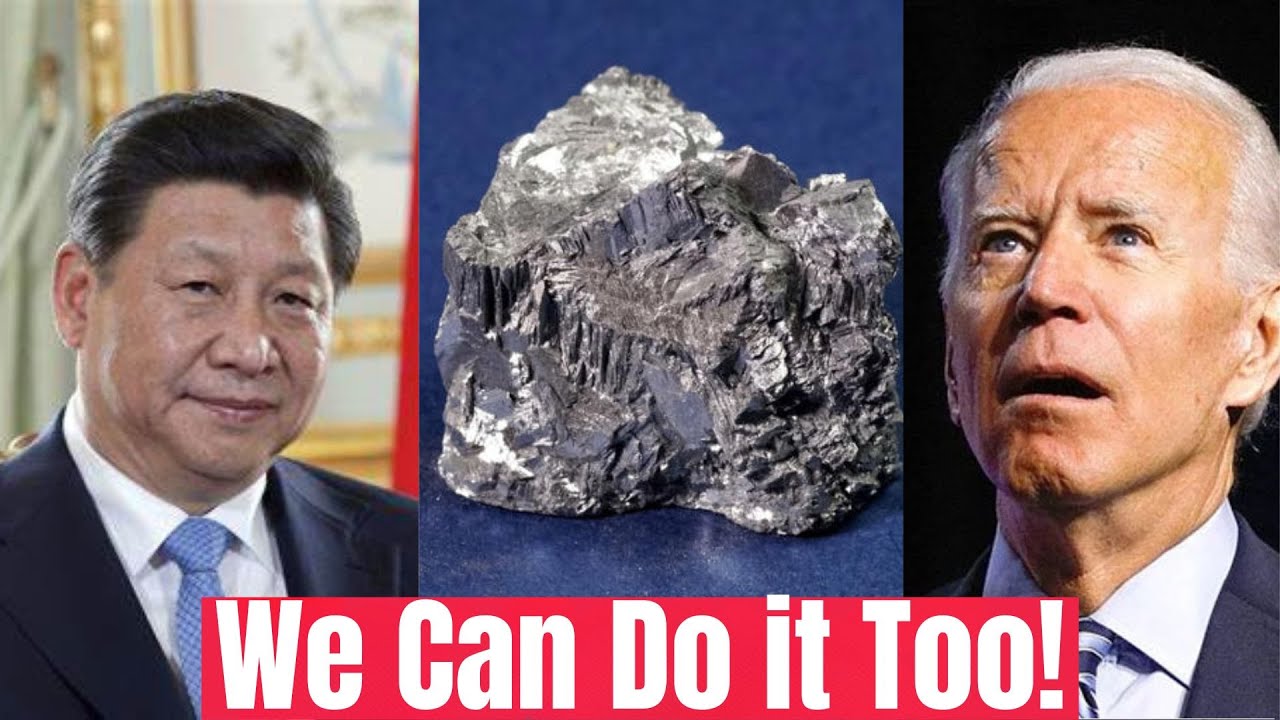
China has restricted antimony exports, a mineral critical to U.S. military applications. The move exposes American supply-chain vulnerability and highlights the need for domestic production and sourcing from allies like Australia and Canada.
Chapters
Hello everyone and welcome to Geopolitical Trends, where truth matters. In a calculated yet quiet move, China has significantly tightened its control over the global supply of antimony, a critical mineral indispensable to the production of modern weaponry. Antimony is an essential component in the manufacturing of ammunition, night vision goggles, bullets, and other key military equipment necessary for national security. By restricting exports of this mineral, China has effectively placed the United States military and its defense industry in a precarious position, highlighting the fragile nature of the US-China relations and the growing tensions between these two giants. As geopolitical tensions between the two superpowers continue to escalate, China's decision underscores the delicate nature of global supply chains and the strategic importance of minerals like antimony. Despite possessing significant antimony reserves, the United States has been unable to tap into them due to bureaucratic red tape and environmental regulations, leaving the country vulnerable to foreign influence. China's tightening grip on this mineral is not just a challenge to America's military capabilities but a broader wake-up call about the risks of resource dependence in an increasingly multipolar world. The Silent Backbone of an Anti-Money is the silent backbone of a national defense. Antimony may not be a household name, but it is one of the most critical minerals in modern warfare. Used as an alloy to harden lead in bullets and ammunition, semiconductors, and night vision technology, antimony is integral to the effective operation of the U.S. military, according to the Center for Strategic and International Studies. Antimony's role in the production of key defense technologies makes it a strategic asset. A shortage could directly compromise the operational readiness of U.S. forces and impair the country's ability to defend itself or project power abroad. Now a word from today's video sponsor. Leviva Foods. Leviva transform the way you think about food. The latest breakthrough in dry shirataki pasta and instant rice has only about 5 to 6 net carbs and about 80% fewer calories than traditional brands. Leviva Foods, how it's all started? Well, it was founded in 2018 by Lan and Laura. Together, they created delicious low-carb pasta, rice, and other foods to help people with diabetes and reduced-carb diets. Laura's personal experience with diabetes inspired her to assist others in adopting a low-carb lifestyle that could help reduce or eliminate medication. Their goal is to make eating low-carb food enjoyable for everyone. Leviva's mission is threefold: 1. To help people live a happier and healthier life by incorporating a low-carb diet. 2. To promote and encourage the consumption of healthy low-carb food as an alternative to medication. And 3, to create nutrient-dense, delicious low-carb food options that makes it easier to sustain a low-carb lifestyle. Today, Leviva Foods is a thriving company. Lan and Laura are proud of the impact they've had on people from around the world. With amazing innovation, they have helped thousands of people manage their diabetes through lifestyle changes, one low-carb meal at a time. Leviva is certified non-GMO, gluten-free, halal, vegan, plant-based, kosher, keto, and soy-free. And by the way, Leviva offers 20% discount at the checkout in addition to free shipping on an order over $70. Please use the code you see on your screen right here and remember to get the 20% off during checkout. Back to our topic. To put this in perspective for you, China controls over 80% of the world's antimony supply and has long been the leading producer of this vital mineral. With its decision to restrict exports, China can now exert immense pressure on nations reliant on its supply chain, particularly the United States. This move represents a form of economic and strategic leverage that could significantly alter the balance of power in global arms race. In essence, China is not just asserting control over a valuable commodity, but weaponizing its position as the dominant supplier of a material crucial to military operations. Similar arguments could be made about the United States weaponizing the dollar. The US response: red tapes and missed opportunities. Ironically, while China's dominance in antimoney is being felt across the globe, the United States sits atop its own substantial antimoney reserves, buried under layers of regulatory hurdles. According to various reports, America's untapped reserves could provide an alternative to Chinese imports. However, stringent environmental regulations and the slow-moving process of federal approvals have hindered efforts to develop domestic mining operations. As a result, America remains highly dependent on foreign sources for critical minerals, leaving its defense industry vulnerable to supply disruptions. This bureaucratic bottleneck has frustrated many within the US defense and energy sectors, who argue that the nation's failure to develop its own resources undermines national security. As China cuts off access to its antimoney, the US finds itself scrambling to secure alternative supplies, whether through new trade partnerships or expedited domestic mining initiatives. However, the time and infrastructure required to develop new sources could take years, putting the country—US, that is—at a disadvantage in the near term. The United States government has taken some steps to address this issue. Let's hope it works. The Department of Defense and other agencies have recognized the need to secure supply chains for critical minerals, but progress has been slow. What's new there? The global race for minerals like antimony highlights a key strategic oversight: While the United States has focused on technological superiority, it has neglected the supply chains that underpin its military strength. Antimony and the Broader US-China Rivalry. China's decision to restrict antimony exports is part of a broader strategy of resource nationalism that reflects its rising geopolitical ambitions. By asserting control over the global supply of critical minerals, China is strengthening its hands in the US-China rivalry. The timing of this decision aimed— heightened the tensions over Taiwan, trade, and technological competition suggests that China is increasingly willing to use its economic leverage as a geopolitical tool. For years, the United States has been wary of China's dominance in the rare earth mineral markets, which includes not only antimony but also other critical elements used in everything from smartphones to guided missiles. This latest move has sent alarm bells ringing in Washington, where policymakers are beginning to realize that the dangers of allowing China to monopolize key resources that are vital to national security. The situation has drawn parallels to the oil crisis of the 1970s, where resources dependence left the United States vulnerable to foreign influence and economic instability. China's action also serves as a reminder that economic and technological cooperation is just one front in a broader struggle for global influence. By controlling critical mineral supplies, Beijing can exert influence not only on the United States but also on its allies, many of whom rely on Chinese resources for their own defense industry. What about the global implications? Well, a shift in power dynamics. As a geopolitical analyst, the way I see it is that the restrictions of anti-money exports is more than just an economic decision. It is a strategic maneuver that could reshape global power dynamics. For decades, China has quietly built its dominance in the mining and refining of critical minerals, and now it is beginning to cash in on that investment. Smart move, I say. What are the potential consequences? The potential consequences, however, are far-reaching. Not only for the United States but for global defense industry. In the short term, China's dominance in the antimoney markets may lead to price hikes and supply shortages, disrupting industries ranging from defense to consumer electronics. But the longer-term implications are even worth addressing. If China continues to restrict exports of critical minerals, it could lead to a broader reordering of global trade relationships, with countries increasingly seeking to decouple from China's supply chain and form new alliances centered around resource security. Yet, reality suggests otherwise. Decoupling from China is wishful thinking. How many times we've heard the Americans The Europeans screaming bloody murder about decoupling. Yet they didn't do it. Or they couldn't do it. The path forward: Reducing dependence on China. In response to China's tightening grip on anti-money, the United States and its allies are faced with an urgent question: How can we reduce our dependence on Chinese resources? One solution lies in developing alternative sources of critical minerals. Countries like Australia and Canada, which have significant mineral reserves, could become key partners in efforts to diversify supply chains. Additionally, the United States must prioritize the development of its own domestic mining industry, cutting through the regulatory red tape that has delayed progress for years. Here is my conclusion for you: China's decision to restrict exports of antimony is a stark reminder of the strategic vulnerabilities facing the United States in its reliance on foreign minerals. As China asserts its dominance in the global supply of critical minerals, the United States must confront the reality that its defense and technology sectors are deeply intertwined with Chinese supply chains. Without immediate action to secure alternative sources of antimony and other critical minerals, the United States risks falling further behind in the global arms race and ceding more power to its chief geopolitical rival. The US-China relationship, already fraught with tensions, is entering a new phase. This phase is defined not only by technological competition and military posturing but also by the control of resources that are essential to modern warfare. China's chokehold on antimony may be the first of many steps it takes to assert its influence on the global stage, forcing the United States and its allies to rethink their approach to resource security and strategic independence. In a world where minerals are as valuable as weapons, the race for control over these critical resources may shape the future of global power. As always, remember, geopolitics impacts your daily life in more ways than one. Till next time, thank you.
More from David


Beyond the Single Actor: Why the Gulf Isn't Choosing Between the US and China


Iran, Iraq's Militias, and the Houthis Are Coordinating! This Changes Everything




Who Controls the Next Decade's Resources? Latin America and Africa's Geopolitical Crossroads

The Chokepoint Trap: How Washington's Stupidity Triggered a Cascade That Now Controls the World

Trump Spooked as IRGC Unveiled dual-use SLV, Deployed Ghadir Mini-Subs & Hinted at Tactical Nukes!
