China’s ‘Soft Power’ on Display as it Hosts Arab Leaders!!
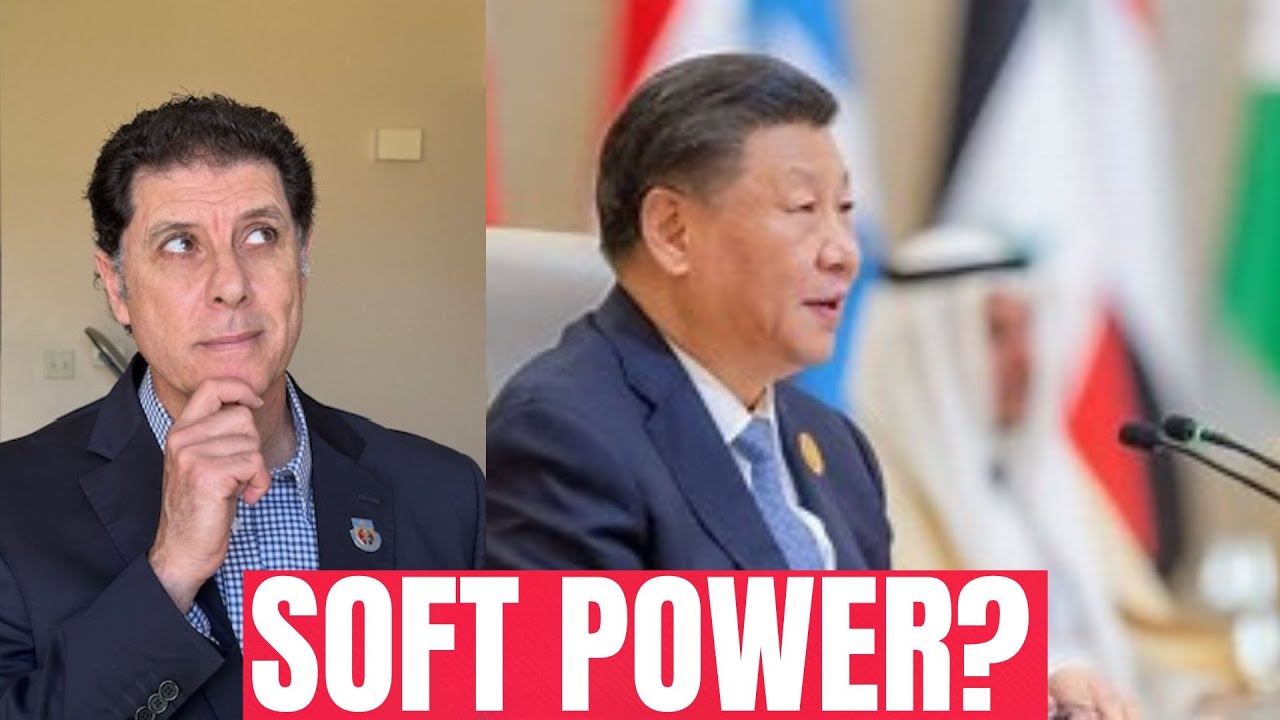
In this live‑style Geopolitical Trends episode, the host walks the audience through the ongoing China‑Arab summit in Beijing, where leaders from Egypt, the United Arab Emirates, Bahrain and Tunisia are meeting Chinese officials. The discussion weaves together four strands: (1) the immediate diplomatic agenda – symbolic flag displays, joint statements on a West‑Asia peace conference and a call for a Palestinian state; (2) the deep historical relationship between China and the Arab world, from the Silk Road and Tang‑Dynasty exchanges to modern‑day religious tolerance; (3) the economic dimension, highlighting the surge in China‑Arab trade (from $36.7 bn in 2004 to $398 bn in 2023), Belt‑and‑Road projects, Chinese brand penetration, and specific deals such as a $2 bn convertible‑bond issuance to a Saudi sovereign‑wealth fund; and (4) the geopolitical implications, arguing that Arab states are pivoting toward China as U.S. influence wanes, and that China’s soft‑power strategy—already demonstrated by brokering the Iran‑Saudi deal—is being leveraged to reshape West‑Asia politics. The host also references personal anecdotes, community chat interactions, and upcoming interviews, reinforcing a conversational yet analytical tone.
Chapters
All right, hello everybody and welcome to Geopolitical Trends. Excited to be with you as always, and also because the nature of the topics. There is one thing about geopolitics, you know, there will always be something. It's just part of— that's how it is. So, uh, and, and as I always say, consider yourself lucky to be alive to witness the changes on the global stage. Yeah, because, you know, I wasn't born during World War II, witnessed that kind of stuff, whatever. But now I, I'm seeing it. I, I, I feel excited to be part of contributing to the conversation. So are you, regarding the changes in the geopolitical landscape. So anyway, so this is what I'm excited for. So, uh, today's topic is about this meeting that is taking place right now in Beijing between presidency and, uh, uh, the Arab leaders of 4 countries. I'm going to detail actually is Egypt, United Arab Emirates, Bahrain, and, uh, Tunisia out of all, uh, so how important that is, this is what we're gonna get into all this. But quick, let me, let me just see who's here. Say hi, Paul, uh, good to see you, Naz, good to see you, Stephanie, see you, YT, as always. Bob Carr, good to see you. Coach Ahoy, the Wacky Monkey, that's a nice screen name. So Willie Holman, as always. Cosmin, uh, you too, super. And, uh, uh, who's Truth Seeker, as always. All right guys, let me, let me get into this because I got a lot to cover on this one here. But before I'll do any of this, I need to let you know about to join me tomorrow at 12:30 for my conversation with, uh, Dr. Yan Liang. So I look forward to that conversation. And by the way, I just heard back from Carl Zah. We will be talking on the 1st, June 1st, which will be a Saturday my time. It will be Sunday for him, so in the morning. So, uh, so Carl Zah will be here this weekend as well. So Just get some cup of coffee and get ready for some interesting conversation I'm gonna have also with Carlza. So remember, Friday, tomorrow, 12:30 with Dr. Yan Liang, and on, on the 1st, June 1st, uh, my conversation, our monthly conversation with, uh, Carlza. So, all right, let's talk about— well, let's talk about the, the questions. We'll start with the questions first, as always, because it's very, very important. And this falls within my wheelhouse, if I'm use the term, uh, something I'm very, very, very, very familiar with. So, so the question is now, and, and we could ask the question directly, and please respond should you decide to do so: are Arab, uh, leaders, and especially Gulf leaders, the one in Gulf, uh, are they pivoting, uh, to China officially? You know, they've been pivoting for, for few, for the past few years. I was aware of certain dynamics taking place, but they were very sort of, uh, uh, uh, uh, uh, reserved about it. Because here's the question we all can think is, how come they are going to China but not to the US? That's usually the sign pivoting is. So second question is, how significant is this shift? Sometimes when you have geopolitical shifts, ain't about just we're gonna announce this, announce that. Is the— they have— does it have any substance to it? How significant is this shift? So third question here is, what are the geopolitical implications for this shift? Once again, any, any major action on the, on the, on the global landscape tends to reverberate or echo or reflect or whatever term you want to use in other parts of the world through policies? This one will be more pertaining to the geopolitical landscape. And the fourth question is, where does the US, or where do the US and collective West go from here? It's because to me it's clear, if now you noticed, there were European leaders going to China, uh, even the foreign minister, I think, yeah, the foreign minister of Argentina one back to China. You look at what visited China, of course, Olaf Scholz, Macron, all those. And now you have Arab leaders heading out to China. Nobody's going the other direction. That tells you right there, because it's, it's, it's evident and it's clear. Let me— I gotta move my, my, uh, there we go, perfect. That's what I can see. So this is now the, uh, uh what I'm going to be delving deeper into. It's, it's not about just the how symbolic— of course it's symbolic— but the idea of the deals that been, uh, agreed upon and all that stuff. No, no, no, this goes far, far beyond. And this is why China is not only seeking, uh, deeper ties with the Arab world, it is also a reflection of its soft power. That's what I put in the title soft power on display. I disagree with some Western analysts who are saying, and I quote here, 'Oh, China is developing soft power.' No, no, no, no, no, no, it's not develop— China has already developed soft power because that soft power was exemplified when it brokered a deal between Iran and, uh, Saudi Arabia. Of course, it's a diplomatic aspects of it, but that is part also of soft power. So when they using the term developing, ah, you have to disagree with that. It is already developed. So this is where I see the difference is. Uh, before I'll get into all the depth, it behooves us to understand, which is, uh, many in the West have no clue about the long history of China and the Arab world. Yeah, many have no idea about how long this history it's been. So of course, this is— I'm going to share images with you quickly here. This is about the visit by the leaders, this display of the flags. You're looking at United Arab Emirates, Bahrain, uh, Egypt, and Tunisia. So, uh, this image here, this is from previous summit which took place last in 2022, if I'm not mistaken. And I'll, I'll share all this with you. So, but this is what's important for us to understand also is the history of where, uh, uh, uh, the, the sort of the, uh, the China-Arab relations. Uh, I've read few things, uh, of course part of my research, uh, and, and, and I do save those references because I'm gonna use them in my China book. Part of that and give credit to the individuals. So I have two articles. Those are academic. This is not Wikipedia stuff, uh, academia. Uh, one is from Ramakrishna Pradhan. Yeah, Ramakrishna. I'm sorry, Ramakrishna Pradhan. He's the— he's in the political science department, uh, in, in India. So I came across his reference for what he wrote about, and, and he's spot on, uh, uh, so as far as the relationship between, uh, China and the Arab world, which is very, very old. A lot of people do not know. Here is, here is the thing: China and the Arab world, or Arab nations, whatever, have been linked to each other, uh, throughout the trade. You all remember the land and also through the maritime And this reflective of what was it back then? What was China was known for back then? Can you guys type in in the chat box what was it known for back then? Oh, you got it already, Ninja, you got it! Silk Road, spot on, because that's what it was. It was the Silk Road since the last 2,000 years. So the long history wasn't about just trade, It was also about friendship. It was also about cooperation and relationship that it was categorized by peace and openness and friendliness. That's what was different about it. And why? Because it enabled both the, the Chinese and the Arab world to establish this cordial friendship and diplomatic ties. This is why China has good relationship with the Arab League, which contains about 22 nations. And almost for the last, what, 80 years or so, uh, especially specifically after, uh, uh, uh, World War II, the diplomatic ties, uh, further strengthened between the Arab world and China. And this one is an example now for those Arab leaders. Yes, there was only 4 of them going. Like I always say, guys, optics matter. So So this is what's important to understand, because here is the thing: China understands the role of the Arab world when it comes down to geopolitics, okay? And this is the reason why I believe China was smart enough to move strategically. And my reference here is to the, uh, uh, uh, uh, a conversation it had with GCC in '22 when he went— the Gulf Cooperation Council. And this was about the partnership that was created for the strategic, uh, partnership between the two. And, and, and that strategic partnership was with, with the main 8 Arab countries in the Gulf or Middle East or West Asia, that is. So, so this is why today China is considered like the biggest importer of oil from the region. Is considered also the 7th biggest overall trading partner. And I will get later on into talking about the BRI, the Belt and Road Initiative. So, and this is why it's important— let me, uh, take this up. It's— so this is why it's, it is important to understand, uh, what is this meaning of this Arab-China summit. You know, uh, it's very, very important. Let's talk about the first one, the first China-Arab Summit, which took place, as I mentioned earlier, in 2022. Uh, this topic that I am, as I said, very familiar with because that's part of what I have to keep my knowledge on, uh, given the changes in the region. So, and also because China is involved into that. And here is what happened during that first summit. You know, both countries, both, uh, both entities, China and the Arab world for that matter. So, uh, they kind of committed themselves to building sort of a strong and long and lasting partnership for the future. Now once again, you see why I put the word on the thumbnail for the, uh, King of Bahrain's visit to Russia when I put for a better future. That's usually, as I mentioned to you guys, I don't do random. There is a reason to why I do certain things. So now, what was one of the key thing about that relationship, that, uh, first summit? Okay, has to do with economics, prosperity, always. Like I mentioned to you previously when we share, uh, clips from history and so forth, Economy, prosperity is always the driving force. It's not the military, it's not— the economy. So this is exactly what the first summit happens to create. The bilateral trade between China and the Arab world in this part of the world has skyrocketed, skyrocketed rather, from— get this, guys— from $36.7 billion in 2004 to a staggering $398 billion in 2023. And I'll provide you the link for all this. And this is why it's very important to understand this background. And I didn't even get to the history yet of China because we're gonna get into it briefly here. But you need to understand the significance of something like this as to why it makes more sense to think strategically and say, well, apparently West Asia doesn't want to be left behind, so they are going to China. This is what's important to understand. Now, one thing that during the visit of 2022— and I have a picture— your— I don't know if you guys remember the reception President Xi received in China, it was, it was a major one, you know, no matter what, what Western media said. It was on display given how was the meeting between Prince MBS and Biden, which I will show you. So one thing is sure is that during that time during that meeting, or rather not that time, that meeting, the China-Arab Summit, the first one that is, it created a new path, a new era in the relationship between the two, uh, because of the historical ties. As I said, a lot of people in the West do not understand the relationship that exists between the Arabs, Muslims, whatever you want to call them, and China from way back. So there is also the strength of friendship. There is the common action among all of them. So because the benefits, win-win situation that is. And of course, when you read the summit communiqué, that always tells you something. And in that summit, and I remember reading the communiqué, it affirmed the commitments of both sides, China and the Muslim world, or the Arab world, that is, for building, sorry, their relationship. So this is why it's very, very important to understand. But at the same time, the relationship between, uh, uh, uh, China and the Muslim world go way, way back. So I'm gonna share with you something goes back to Tang Dynasty, okay? Some of you might not, might not even heard the term before, but— and I'm gonna share some pictures that I came across. All right, let me start with this, and, and we just go as I share the pictures with you, as you see, uh, what this is all about. Okay, now Tang Dynasty, which is China's golden age at that time. The Tang Dynasty was a golden age of China that lasted from 618 to 907 CE, and this succeeding the short-lived dynasty— which dynasty came after the Tang Dynasty? Anybody knows, guys? If you know, just share it with the community. I just wanted to see if, uh, uh, because remember, I am also learning here with you guys. Which dynasty came after the Tang Dynasty? And by the way, it's known for reunifying the country at that time. Let me just see in the chat box here. Uh, the Song? No. The Ming? No, good try, good try. One more try, one more try. And maybe, maybe actually, maybe the song was right, except that certain records, the one I found, is spelled S-U-I. Is that correct? Because I don't speak Chinese, so, so maybe that's, that's what it is. So, but that's what it was. So it was, uh, at that time it was succeeded, uh, by the Sui dynasty that reunified the country. What came after that? The Tang Emperor. And I have a picture for him right here. This is Tang Gaozu, or Gaozu, that's pronounced. The Tang Emperors developed a successful form of government and administration based on the previous one, the Sewell model, that promoted— here is the thing— promoted meritocracy, that's one, stability, that's two, and cultural diversity, that's three. This is why I feel comfortable saying now— one of you asked the question— is Do you think the system in the US does have nepotism? Of course. You all know what nepotism is, right? Of course. It's because the, the people who merit and deserve to be in certain positions are not. China doesn't have that. You look at the background of President Xi Jinping, where he came from, and I read about his biography. You know, he wasn't like from this well-to-do family and so forth. And that, when you go back to the history, you see during this era of how it was at that time. So now, what came after this one? It came the, uh, 668. What this era is known for? This one is known for the Tang Dynasty expanded its territory through military conquest. Let's make that clear. Now, some Western records I looked at, they use the term imperialism, but they didn't use the term invasions. Other records, it's using the term military conquests. Depends how you look at it. So I am just sharing with you what I found from the historical record. You decide yourself. Okay, but here's the thing. The Tang Dynasty expanded its territory through military conquest, diplomatic relations, both. And that helped them reaching Asia, Korea— because at that time it was one Korea— Vietnam. And guess which country was the fourth? Can anybody guess? In Asia, in Asia, which country was the fourth? That the Tang Dynasty reached out to back then? I want you guys to give me a guess here because I was surprised. I was surprised, didn't expect it. Which country? No, no, no, no, no, not Russia. We're staying in Asia. We're staying in Asia. Not Cambodia. Good try. Uh, Vietnam is already— I mentioned that. It was already there. Nepal? No, no, not the US. In Asia, staying in Asia, we stay in Asia. Uh, no, no, I'm gonna answer it. It's Japan. And that's— to me, I was really shocked and surprised. I didn't expect it. I didn't expect it. So, uh, this is why at that time the Tang Dynasty reached out to— you know, we stay within Asia, Korea, Vietnam. And Japan. And of course, one of the major things is that they controlled the Silk Road routes. Once again, why am I saying all this? Because you have to tie the Silk Road path that goes through Central Asia through West Asia. This is why it's important. And right after that one, and all this, as you see on the map, uh, 600, uh, 668. And after it, what came is that the flourishing— and I'm gonna share a picture here with you, uh, this is an expression of the art that, uh, uh, let me see this one here. There we go. Uh, that they, uh, they reached out at that time because Uh, it flourished. The, the Tang Dynasty witnessed a flourishing art and culture with innovations in poetry, painting, calligraphy, music, ceramic, and printing. It also fostered— here is the key, here is the key— it also fostered religious tolerance and exchange especially Buddhism, Taoism, and Islam. Why am I highlighting this? Is to mention to you when there were the lies by mainstream media about Xinjiang, you know, the oppression and, and the, the, uh, what was going on to the Muslim community there. You all know it was a lie, turns out to be a lie anyway. But here is the historical record in indicates that even as far back as 668, the Tang Dynasty tolerated— had religious tolerance, including Buddhism, Taoism, and Islam. Now, this didn't last forever. And again, why is this important? It is important because every empire will have to come to an end. Exactly what we are experiencing in modern day with the American Century Empire, whatever you want to call it. The Tang Dynasty faced several challenges at that time and crisis for that matter. For example, there were one particular rebellion based on what I found is the An Lushan Rebellion. There was another one, the Hong Chao or the Huang Chao Rebellion. Then you got the Zhen Yu incident, and of course all this created power struggle that weakened its authority and prestige. Once again, why is this important to understand? When you create rebellions inside, tensions inside, the system collapse. You all— you know what I'm referring to here, right? Fomenting more tensions in other parts of the world because you want to weaken the foundation. This is exactly where, when I look over the horizon as to what I see coming in Asia after the dust settles on Ukraine, here it is in history. It shows that, that there is the case for that as well. So, and right after that one, uh, I think there is one more picture here. I'll show it to you. Is this one right here, guys? Right after that, the dynasty, the Tang, collapsed in 907 CE after a series of rebellion by regional warlords at that time. And the, uh, Yeah, the warlords ushering in a period of fragmentation and chaos known as the Five Dynasties and Ten Kingdoms in the Chinese history, to those who know. You know, I know I'm not touching on the Han Dynasty because it's, it's a long history. I just wanted to highlight to you specifically the idea of the religious tolerance, and now you're understanding why In addition to being a soft power move, it's, uh, it has its historical record. It goes back, and I'm a student of history, you know. I always use history as my guide to learn, and this is where I see moving forward. So like I mentioned earlier, you all remember the visit of President Xi to China. You remember the reception that back then, you know. And here is the meeting between— look at just the fist pump, or the pump fist, whatever that is. This is like, in a diplomatic, uh, protocol, this is very bad. Very, very, very bad. I don't care who initiated whatever, it's bad. The optics of it. Look at that picture. Look at this one and look at this one. This is King Salman, by the way, and it shows you right there where the difference is. So, so, so now the idea that, uh, uh, this meeting of course is going to focus on the business aspects, but there is a geopolitical dimension to it. And this one has to do with one particular aspect that China is calling for. I am waiting for the release of the final communiqué of this summit. Of course, I want to read it later once it's translated. But the key to this is this, is that China is calling now for a summit about West Asia, about peace in West Asia, that includes the establishment of a Palestinian state. It's not coming from the US, it's coming from the other side of the world, from China. And right there, like I said last time when I did the video for you, uh, about livestream about the sanctions that China imposed, the optics of it— you lay it out on the geopolitical table and let the rest of the world See that one? And this is exactly what China is doing. It is a strategic move. It is a strategic move. So, and you have of course the four countries: Egypt, United Arab Emirates, Bahrain, and Tunisia. If you ask me personally, do I trust them? No, I don't trust the Arab world leaders. That is not the people, of course. China is not looking at it that way. China's looking at it strategically because those four countries, the locations are very crucial. Two of them have— actually, not two, all of them have to do with the BRI, but also the strategic relations of those countries with the US. You're gonna have to balance out. In geopolitics, you have to. It's not about just, I gotta get it all. Doesn't work that way. It will backfire on you. Is exactly what we are doing. Like, for example, uh, we wanted to— we are already controlling Europe, but we wanted to push it even further because we wanted to have, uh, all by imposing the sanctions on Russia. And look what I end up having, uh, uh, what, what, what happened. So here is the interesting thing that I found, what President Xi stated during the first, uh, uh, uh, presentation he did, with the Arab leaders. He said, and I quote, President, uh, uh, the tremendous suffering in the Middle East as I call for international peace conference as leaders from the Arab nations, all of them are here in Beijing. Why? It's because the mounting global concern. And to me, this is a historical moment. Because here is the tank, and this is going to move forward, mark my word on it. And you know who's going to have the credit, take credit for it? It's China. Because for us, the US, we done for. Sad to say, it's my country, I understand, but I don't shy away from speaking the truth. We have no credibility, we have no standing on a global stage, and we couldn't negotiate and be an honest broker and neutral. It became evident how biased we were and are and we will be. This is what is very, very important. And that's another joint statements that I'm waiting for is on the Palestinian issue that going to be issued by, uh, Mr. Wang Yi, the foreign minister, along with his counterparts, because those head of states from the Arab world that went in. Their foreign ministers also are in China, and this is what's important to understand. Of course, we all know this comes onto the optics of the US backing Israel in crimes, breaking the law, international law, disregarding the norms, and behaving like we can't be held accountable. This is the optics of all that. You look at this on this side, and you look at the meeting in Beijing and what China's offering, and this is why it's important. It's because China sees eye to eye with the Arab nations, especially now, for calling on the, uh, uh, establishment of the Palestinian state. Now don't get me wrong, guys, a lot of people do not know the dynamics inside the Palestinian government. It's as corrupted as it can be. You know, this is the reason why Hamas exists. It's because they are not— they don't want to be part of the Palestinian Authority, the PA. Majority of Palestinians do not want that. They wanted to be with— that's why they voted for Hamas back in 2006. We didn't like the outcome. China doesn't see it that way. All China is saying is independence for State of Palestine. They are not saying the Palestinian Authority. And a lot of people, if they don't know the dynamics of it, they're not going to understand. And of course, to China, it's a strategic move. Yes, he's doing it for a good cause, for stability, for peace. But is also for influence, political one, that is, as the region West Asia is shifting, whether we like it or not, but not to the liking of the US. China wants to take advantage of this gap. In geopolitics, like I always say, interests matter. Strategic national interest matters. This is what China is saying, is seeing moving forward. Let alone, as I mentioned earlier, China imports most of its oil from, uh, from the region. China is also looking at it from an economic perspective, not only the BRI but the ventures. Like I mentioned earlier, they moved from— what was it— $23 billion to $398 billion from 2004 to 2023. That just tells you right there. And this is why the whole summit that took place back in 2022 with the visit of President Xi, that one was held as a landmark visit by the Chinese leader. So, and of course, that comes on the— in the wake of, or against the background of China brokering the deal between Iran and Saudi Arabia. This is what's very, very, very important. So now on Wednesday during the meeting, it was, uh, I looked at some, some economic data stuff, whatever, and I found that there is a company in China called the Lenovo Group Ltd., which is based in Beijing, that is mentioned the deal that they just struck, and that deal will take about $2 billion of convertible bonds to Saudi Arabia, uh, uh, uh, Sovereign Wealth Fund. That's what it is. So it's because they're going to be building, you infrastructure. All of this economics. All of this economics. So, and this is the key to all this. That's why I'm saying, even now they are thinking reaching about $400 billion for energy by 2030. So it became clear as to where everything is. So, and that's why I said earlier, I disagree with those analysts who are saying Oh, China is developing soft power. China has already developed soft power, and because it has, she, it has been working on it for the last 20, 15 to 20 years. To my knowledge, I was aware of certain dynamics, like for example, it's not classified, uh, that the Chinese went ahead and, and, and, and sold certain type of missiles to Saudi Arabia. Even the Saudis didn't even tell the Americans. And to me, that shows me right there, that was back then. I was in one of those areas where those bases were in Saudi Arabia during my time when I used to travel to the kingdom at that time. Yeah, that was somewhere in the desert, some la la land there. It's one of the pictures over there that I took. I have one here with the camel. So, so it, it, it just was one of this idea that, that soft power has been built, it's been developed for a while. But again, I respect those analysts that saying it is developing. Maybe they don't know too much about the long history of the Arab and the Chinese, uh, uh, relations. So Here is what's important to understand. So the massive amount of economic ventures between, uh, uh, uh, the Middle East, West Asia, and, and China. But also this has to do with the BRI, Belt and Road Initiative, especially those countries. What does Egypt have? Can anybody tell me what is Egypt does have? Don't think about just military, whatever. Why is Egypt will be of interest to China? If anybody can tell me why. Uh, no, no, Egypt doesn't have oil much. No, Suez Canal, that's one. Access to Red Sea, you guys got it. Access to Red Sea. The IMF, yes, they're gonna give Egypt money now. Which is problematic, very, very, very, very problematic. But, but again, it's the country, they can decide. Uh, so Egypt, that's one. Bahrain, because they wanted to develop. Bahrain doesn't have the same wealth as much as Saudi Arabia or United Arab Emirates or Qatar regarding the natural resources. Doesn't have much. Bahrain is the size of a city for us here, or not even a state. Maybe our smallest states will fit in. In Saudi Arabia is very, very, very small, but it's the geography. It's closer to the Persian Gulf. Why do you think we convinced them to have the Fifth Fleet there? So if China can develop this relationship, you don't know what it means. Tunisia, North Africa, easy access through the Mediterranean Sea, access to Europe, especially now that Italy decided to withdraw from the BRI. Pressured by the US. This is one of the reasons also why, uh, Meloni is going— the Prime Minister, she's going to be traveling, I think, in June, to my knowledge, uh, in June or early July. The dates have not been confirmed. The word I got was around that time, uh, to figure out if there will be another way instead of being just part of the BRICS. Well, you can have it both ways. You either in or out, simple as that. That, that's just the way I look at it. So when you look at those, uh, four countries, uh, thinking in terms of, uh, United Arab Emirates, of course you all know it has, uh, it has natural resources. But for United Arab Emirates, I just don't trust them. You all know how it is. They want to head and establish relations with Israel. As far as Jordan and Morocco And I think there is another Arab country. There were 4 of them. I couldn't remember the 4th one. Uh, anyway, but again, all this China doesn't care for. That's because even China itself has relations with Israel. But at the same time, things are changing. And this is why the visit in itself is very, very symbolic. Very, very, very symbolic. And the idea of how, when you look at it from an economic perspective— and I got a chart for you guys here, I'm going to share with you because you need to see. I got a chart that you need to see, and I give credit to Bloomberg because that's their chart here, and the source, General Administration of Customs. And this is from the GCC, okay? You look at just the numbers, it shows you right there, China's thinking business here. So, and why United Arab Emirates, you may ask, is because the BRI, very, very important. So, because here is the thing, mind you, that China has about almost over 6,000— yeah, get this, guys— over 6,000 Chinese brands registered in the country, in other words, in United Arab Emirates. And this according to Bloomberg Intelligence. That just tells you the volume is going up over, uh, above $12 billion. All this doesn't happen in a vacuum. And because the Gulf region, the whole region, is, is, is thinking strategically, they seeing where things are headed. And they are wanted to be part of that trend. Now the BRI, where the challenge is going to be, I believe so, it's because, yeah, yeah, they just don't have other alternative to that. This is where I see the challenge for them. And, uh, when you think about the, uh, the Silk Road from the impact of the medieval era at that time It just— it's almost like, uh, China's reviving that in a different setting and a different, uh, uh, with a different strategy. That's to me the way I see it, because they just understand. They understand where this particular aspect is. Uh, this is the recent that just, uh a part of the conversation or presentation that President Xi did during his visit. This is an old one, not the recent one. What I was interested in is a picture that I came across from a historical record, and I'm going to share it with you right here. Can anybody tell me who those gentlemen are, or were, because they passed away? Let me just see in the chat box if you guys, if you will be kind and just type in, in chat box. Oh, indeed, John, that's Jamal Abd al-Nasser on the right. Now it's not said that, that Jamal Abd al-Nasser on the right and Zuhri Allah on the left. That is correct. Uh, this one, guys, this picture was taken in 1955. And what happened in 1955? What was happening in the Arab world at that time? Does anybody know? Because that's when it started. Yeah, it starts with an N. Which transformed, uh, the whole West Asia, certain countries, the like of Iraq, Syria, Lebanon, Jordan, and all that. Uh, the three countries invasion. No, no. Uh, okay, it's nationalism. That's when it starts, because the Arab national— oh, you got it, you got it, David K. David King. That was the nationalizing of the Suez Canal. But I'm talking about the ideology itself. So it was Jamal Abdel Nasser that launched that particular aspect of it. So, and this is why, uh, it's— this is why you have to understand how these dynamics evolve. I remember, uh, reading somewhere that this development, uh, really was, was very, very crucial in understanding where the, uh, where the relationship between, uh, China and the Arab world is going. And, and China is, uh, realizing that the standing of the US is, is going down. There is no— because there is no credibility, there is no trust. Once you lose trust, uh, yeah, you can rebuild it, whatever, but where, where, where you, you don't know, you You don't know what I mean by this. So, and this is where the challenge that the US has been having is because, and it got worse. I mean, if I am to go back to the '70s, especially after the 1973 with the oil embargo, and you will think we will learn something from that because what led to that is because of what we did for Israel at that time. So, and it became the Arabs. Now also, I'm not just looking at the US, I'm looking also the Arabs as well. The Arab, Arab leaders today are far weaker, and I'll say it, far weaker. No exception. I mean, you take the likes of, uh, differences between Iran, for example, uh, some countries that they are not considered, uh, the Turks for that matter. Even the Turks are not Arabs, they are Turks, but it's just the idea of it. So, and you look at, this is why China's seeing it as a, a perfect historical opportunity, you know, and they ought to take advantage of it. What's— why not? We did after World War II. And for this push towards the peace conference about stability and peace in West Asia, but also the call for the state of Palestine, like I mentioned earlier, three countries in Europe— Spain, Norway, and Ireland— have already declared that. So, and, uh, it's just a matter of time. So I think China's being very smart, is being very strategic, and how this is gonna evolve into what the next phase is, not clear yet, because the focus still on ensuring the, the strength of the relationship between China and the Arab world, and also the economic strength between the two. And once that is firmed and confirmed Then comes the next phase, and the next phase, which we already, already seen China calling now on the peace conference or peace summit, wasn't the US. Those kind of stuff to some might not mean much, but in the world of geopolitics, those are seismic change or seismic, uh, sort of undertaking that can reshape the trajectory of history moving forward. Work. And that's why I always say, consider yourself lucky to be alive to witness this one himself. All right guys, I am going to stop right here. That's all I have to share with you, because like I always say, if I don't have anything of value, I stop. So, uh, as I just to mention to you once again, remember to join me tomorrow for my conversation with Dr. Yan Liang. And also my conversation with Carlza on the 1st. And I'll post it for you, uh, as far as Carlza's conversation, I will post it, uh, this afternoon or tomorrow. So, uh, once again, thank you all for your kind support for the channel. It means a lot. And I'll— I'm gonna take a question or two and go from there. All right, let me see a question or two. Oh, Wong KC, non-alignment movements. That is correct, that's true, that is correct. And by the way, I think I forget to mention to you, uh, that, uh, what was the two other countries being invited to BRICS? Does anybody know among those, those four countries that are going over there? Yeah, does anybody know? Can you type in, in chat box? The PRI. Let me see the chat box if you guys type in which countries that is, uh, from those from those— no, no, no, no, no, no, no, no, from those 4 countries, the 2 that have already been invited. And, and, and it's been, it's been, uh, uh, uh, uh, sort of, uh, uh, confirmed because China, being a co-founder of BRICS, uh, already, uh, uh, made the mention of it. And those 2 countries have joined, uh, uh, this year. Which ones are they? I just want to see your knowledge here. United Arab Emirates and Saudi Arabia. Saudi Arabia is already there. I'm talking about two among the four countries attending the summit in China. Yeah, let me see. Uh, uh, Serbia. No, no, no, no, no, no, it's United Arab Emirates and Egypt. Yeah, United Arab Emirates. I said two from the four countries attending. So, so those— that also highlight to you that China's looking at it from a win-win aspect, both economically and politically. So, all right, let me take a question from you guys, and, uh, I'm gonna sign off after this. I still have very, very serious doubts about BRICS moving forward because of what I see coming and, and how, uh, yeah, it's, it's very, very concerning. Uh, oh, Jin, you joined me from Sweden. By the way, since you're in Sweden, are they truly having demonstrations? Things are chaotic in Sweden, it's just we don't hear much about. Would you please just type in, in the chat box so for the community to know? Because I, I've, I've been hearing, couldn't confirm yet, but I— if it is, I'm gonna do a live stream for the community here about that because they need to know. And I've marked my word, if it is the case, this will be tied to Sweden joining NATO, because now things are getting into a different level right now. So, uh, let me see any question from you guys. Uh, and by the way, by the way, by the way, by the way, I need to share with you a comment from one of our viewers, like I always do. And, and this ain't about me. I, I never like that stuff. So especially in the community, you always think about the welfare of the community first. And this is why I read your comments and I respond. I spend a lot of time reading stuff. So because to me that's, uh, that's a commitment to And I followed the conversation between two viewers or subscribers or supporters, whatever you want to call them. One of them is by the name Chong CK, uh, or, or CK, and the other one by the name Vincent Chen. So Chong CK responded to Vincent Chen. This is regarding the, uh, uh, the, uh, the the video right here that we did when I posted on the community. Uh, Chung wrote, and I quote, partially agree, you need both soft and hard power. The world views soft power— the world views soft power or humility and kindness as weakness, not knowing that it takes more strength to be humble and kind. Sometimes we need to stand firm and take evil on and see if they are willing to pay the ultimate price as we do. These evils and their vassals are pariah dogs. We need to stand firm and inflict pain. End of quote. So I find it very interesting because to me that's the conversation That's a reflection of the quality, the thinking, because this is not about name-calling and this nonsense. This is why I'm saying, you know, the community where we are at, we have to preserve it. Your understanding of what's going on, your ability to articulate those problems, your ability to explain it to someone else who doesn't We serve humanity one way or another. You don't have to be a president, you don't have to be a foreign minister. You can be an average Joe, but armed with knowledge. This is what the government fear, at least for my government here. I speak for my country, I can't speak for others. Once you start questioning— this is why, you know, sometimes, you know, I— that's why I read your stuff, because I am also learning from you. So I thank you very much, John Casey, or CK rather, for sharing that knowledge with all of us here. Greatly appreciate it. Uh, okay, let me see. Oh, Farhad Razabi, you mentioning about camels. Is that the picture I had with the camel there? Because I did the right one. So I haven't drunk camel milk when I was in Saudi Arabia. And you have to be very wealthy in that country to buy many camels and so forth. So that's just part of how— and this is nothing but, you know, they call this the empty quarters. In Arabic, it's pronounced— it's ar-rob al-khali. It's just desert, no more, no less. Rocks and mountains, whatever. So that's the— and I, we were there, me and my colleagues. And so it was, it was very interesting. So I decided just to— one of them thought I was out of my mind. I'm like, on sitting there, I was like, so what? You got only one life to live, so you live it according to your wishes. You know, you never allow others to dictate to you how you live your life. That's my key word to you guys. All right, let me see a question here before I sign off, because I'm gonna have to go prepare some other stuff. And also, uh, let's see here. David King: Will US threaten China oil tankers? No. Here is why. Great question, by the way, David. Here is why China ain't your average country. Why do you think China went ahead and developed the sonar system that is far advanced and can detect any submarine? It's not about just, uh, protecting China mainland over there. It can be deployed whatever they want it, and they will be able to Why do you think they developed certain torpedoes? Why do you think they developed this, uh, supersonic, uh, that can sink in an aircraft carrier? And this is why. And I am gonna do this, uh, for you guys, for the community. I'm gonna, uh, uh, think about a specific topic. I don't want to disclose it yet, uh, because sometimes you have to keep things closer to yourself first till you figure out how you're gonna approach it. A topic pertaining to something like this, very from someone who knows about this. I even bring him on, on the show here for you guys. So the short answer is no, because we know what the consequences will be. I was aware of back in 2016, and I even wrote an article about that one, when China developed one particular type of torpedoes. I forget the name, pardon me here. And that, when I found that, dig into the research and find out the specifics, of course, what the Chinese government was allowed to share. And they allowed one particular information. You know what that information was? Is that if they deploy this particular torpedo, they can launch it from the middle of the Pacific and end up here in Hawaii. And that tells me what I need to know. So that's why I don't think so, David. They are not gonna— US will not, uh, be— but again, we got crazies in Washington nowadays. You just never know. You never know. All right, let me see another question. And, uh, okay, I don't see any. I'm gonna sign off, guys, here, because I don't want to waste your time. And, uh, And, uh, I look forward to seeing you tomorrow at 12:30 with Professor, uh, Yan Liang. So I look forward to that conversation. Uh, as always, guys, remember, geopolitics impact your daily life in more ways than one. Till next time, guys. Bye-bye.
More from David


Beyond the Single Actor: Why the Gulf Isn't Choosing Between the US and China


Iran, Iraq's Militias, and the Houthis Are Coordinating! This Changes Everything




Who Controls the Next Decade's Resources? Latin America and Africa's Geopolitical Crossroads

The Chokepoint Trap: How Washington's Stupidity Triggered a Cascade That Now Controls the World

Trump Spooked as IRGC Unveiled dual-use SLV, Deployed Ghadir Mini-Subs & Hinted at Tactical Nukes!
