China’s Two Sessions as the World Watches What Benjin Does!
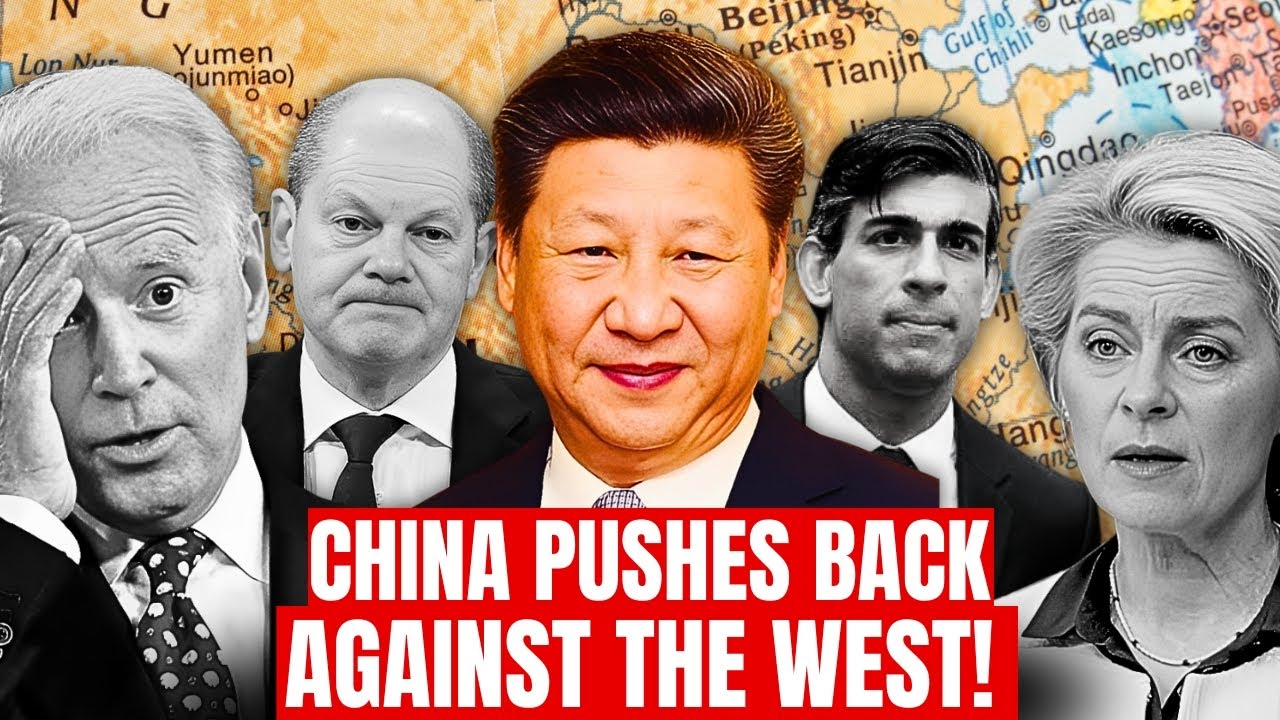
David Oualaalou breaks down China's Two Sessions, the annual political meetings where Beijing sets its economic and policy direction. The world is watching closely to see what China signals about growth, trade, and its global role.
Chapters
All right, hello everybody and welcome to Geopolitical Trends, where truth matters. Very excited to be with you. I have missed you guys. I know I've been off the air, at least on this channel here, since last Friday when we had our community conversation. Yeah, that's the— for the, for the month. So anyway, very, very, very excited to be with you here. Uh, I got an interesting topic uh, uh, uh, about the ongoing two sessions that is taking place right now in Beijing. This has to do with the Chinese government, uh, which I found very fascinating. And again, here is why I find it fascinating. And again, guys, you know me by now, I don't advocate for any country whatsoever. I don't advocate for— I advocate for what is right, what is objective, and what we can learn from What I found very fascinating about this one here, at least someone who's been watching this over the years, not in as much depth as I do now, is the idea of that here is where people— this is the, the, the, the, uh, the citizens have to see what their government has achieved for the past year. And it is the right thing to do. I wish we had something like that here in the US. At least our Congress will be— will have the gut enough to put on the table what his achievements throughout the past year have been. Unfortunately, we don't. So, so this is what I found very, very interesting. But before I'll get into all this, first of all, I want to say— I want to see, uh, who's joining us. From Pony, uh, Po Yon, too, good to see you as always. Willie Holman, Hamad Sivi, good evening Dr. O and friends from the United Kingdom. Good to see you. Gina from Edinburgh, good to have you here. Francis Tango, good to see you as always. Masian Dorcier, good to see you. Uh, Nassar from Sri Lanka, good to see you. MMM Nassar, good to see you as always. Phil from my neighbor to the north, good to see you. John Smith from New Zealand, good to see you. And here is my man, Osiris the Great, is the one again, guys, that been buying me coffee every day since I launched this in, uh, when was it, November? Every day. Thank you so much, Osiris. I am very, very grateful and I appreciate you for that. So, Karakula, good to see you. Yanas, good. Yanas Demisi from Seattle, good to see you. Wong KC from Malaysia, good to see you. And here is one that I'm very familiar with, Lucio Delgado. I'm sorry, where is that one here? Lucio from Montreal. Good. I gotta have to go answer the door here quickly. All right, my apologies, my apologies, guys. I had to— somebody about the door. There's nobody inside here except me. So anyway, very, very excited to be with you guys, and let's get in into our topic. Again, as I mentioned today, for those, uh, who might be just joining us right now, I will be addressing the two sessions that is taking place right now in Beijing. And again, I'm not going to be addressing the legislative process, whatever. No, no, no, no. We're gonna be talking about what the world should be expecting once the sessions ends, which usually takes about 2 weeks or so. So, so, like, I— the argument is, what will the world be anticipating? Yeah, because we all know you're gonna be hearing different arguments, like, for example, the Chinese economy is gonna collapse. I've been hearing this a lot for the last few months, which you and I know it's nothing but a farce. What I'm gonna be sharing with you here is my insights into where I see things going. And again, these are just a conversation we're gonna have. Uh, here are the questions that we need to ask ourselves, because it's worth asking. You have to think about the big picture of it. What will the focus be on Are we talking economy? Are we talking geopolitics? Are we talking energy? Finance? Then if you do that, what about defense? Where is defense going to be? And I have something to share with you about that one. I will even go as far as space. Yeah, this is why we need to put this within the context of a much bigger picture. So, and that is the importance of it. So Before I'll do this, I'm going to get into some headlines that you need to know about, then we'll get into our own conversation. So here are some pictures here I'm going to be sharing with you. You all know who this guy is, you know, uh, you know, someone I don't see qualified for being president anyway. But well, what happened with, with Trump? Trump announces now his support for Israel war on Gaza. Yeah, that's why meet the new boss as the old one. The system in America is corrupted to its core, so it won't matter Republican or Democrat, they both the same, two faces of the same coin. That's the way I see it. Uh, Trump is a showman, you know, he's not a— he's not a— he's not— he's not equipped to understand the geopolitical landscape and so forth. Uh, but again, speaking loud or talking loud doesn't qualify you. Uh, a lot of Americans will look at him as an alternative to the current president. Yes, I can see that given the, the, the, the cognitive decline of the current president and so forth. But that's beside all point. Right off the bat, he's already coming up with that idea of continuing the support for Israel. We all know what it means. So, um, that's why last time I was asked, who do you see will be the good president for the US? None. We have none. So Uh, this one here has to do with India and China, but before we jump into this, remember it's not confirmed. The article that I read from a Russian, uh, Nezavisimaya newspapers, you know, and I've been reading some of their, uh, uh, uh, articles or publications, they weren't an in-depth analysis. There were some sort of almost equivalency of white papers. But I can see also the arguments for raising the question, and this one has to do with, as the article puts it, and I quote here, India wants to cut off Arab oil from China, but can it? Will it be able to do so? End of quote. I don't see how. First of all, I don't see why India will even do that. That's one. Second, uh, why will India do that? To sort of target China for that. I've always believed that India and China needs to work out their differences regarding the border once for all. Why? Because that issue is the wild card that we can play each one against the other. If that issue is not resolved, I don't see how they're going to move forward, let alone both of them are in the same club. BRICS. So if BRICS now is expanding, you don't want to have an inter— your house is not in order. That's to me where the problem is. So, but anyway, the article went ahead and said, and I quote here, that New Delhi, it, uh, said it wants to boost security in the region and help Indian ships conduct operations against pirates and drug trafficking. Usually I find it very absurd and ludicrous that India will spend its resources on this versus building its own infrastructure. Uh, the article continues, India, which is locked in a border dispute with China in the Himalayas, will be able to influence the transfer of Arab oil mainly across the Indian Ocean. The move— and actually, to me, as a As an analyst, I will be thinking, uh, this hasn't— it has nothing to do with just oil or China. Can anybody guess what it really has to do with? Let me see what your answer is. Just think, uh, just keep the options open. Just whatever comes to your mind, put it down in the chat box before I'll give you my answer or my own insights into why do you think this has to do with Uh, oh, I see a question here from Cyrus. Uh, you put, is Trump have dementia? Uh, not to my knowledge, but I do know he's a showman, so he's not— he's not qualified for the presidency, whatever. Uh, Francis Tango, India is going to, uh betray BRICS, I think. No, no, no, no, no. This one has to do with one specific issue. Uh, the question is, why do you think if India is not— is doing this, which I believe it's not about this, is about something else in the region. That is, can you guys guess what that thing is? Let me just see if it will come to you. Energy to the great Yeah, no, no, no, here is, here is what, here is what's going on. All this, and this is based again what the article, uh, published by the Russian newspaper, but also bring us a valid point. And the argument that I see is that the move that India now is saying all this is related to one particular base that India had in Maldives. What happened to Maldives recently? Again, can you guys type in what happened recently in the Maldives? And thank, thank again bilateral relations. What did the Maldives agree to as soon as the new president won the election? Is to strengthen the ties with China economically. But this issue of why India is doing this is because the decision of the Maldives government to expel India, because India has about 89 military personnel or experts in the Maldives. Why? They working sort of in, in one particular, uh, uh, base to maintain the boats, plane, one plane and two helicopters that India had previously transported to the island. So the Maldives are asking the, the Indian to leave, take their helicopters and plane and get out. So is this why probably India is retaliating? Maybe that's just something to think about. So I just want you to think outside the box. Uh, my third headline has to do with Iran. Iran recently executed an Israeli Mossad agent, another word, Iranian, who was working on behalf of the Mossad. So the Iranian judiciary, that's usually how they deal with it, they don't put them in prison forever, they just execute them, end of story. Maybe some will agree, some won't, but that's how it is. So the Iranian judiciary has indeed executed a spy in connection with a drone attack on a Defense Ministry facility in central Iran last year. That's what it's just, uh, it just happened and it came to my, uh, attention here. And the last thing I'll share with you has to do with this person here. You all know who he is, right? By the way, I did send him an email a way a few months ago inviting him to the show but never received the response. So maybe the email went to his spam box, whatever. So But again, I don't take it personally. So he's busy and all that stuff. Well, here is why I'm sharing this with you. It's because now the Prime Minister of England, you all know the incompetent Sunak, is calling Galloway's election victory troubling. And it's going to be now very disturbing for Britain. This is what the incompetent Sunak is saying. Well, wait a minute, who the heck are you? This is Sunak, to even be qualified to even say something like this when he himself is not even qualified for the position. So the incompetent Prime Minister Sunak described the victory of veteran politician George Galloway in the parliamentary election as worrying and warned against efforts to undermine democracy in the United Kingdom, end of quote. You know, I'm laughing because that term again, undermining democracy, it's became now clear and open. All this, this, uh, hype from the West is nothing but a, but, but a farce. Straightforward. We, we need more of Galloways. To change the direction where things are headed. So anyway, let's get on into our topic here today. Let me share a picture with you. And you all know, as I said again, I am not gonna get in into the legislative procedures of, uh, what's going on and all that. You all know it takes like the, the two sessions, uh, uh, that China always conducts on a yearly basis, for, for, uh, disclosure of what it has achieved during the past year. It's accountable. The way I look at it is an accountability procedure, and rightly so. And by the way, I came across an article which I will share with you because that's part of what I'm gonna be discussing here, based on this article written by the China Bureau Chief Tan Dongwei. And by the way, that's the one I give credit to regarding this picture that you are looking at. So, well, well, here is the thing. A lot of stuff is going on. You have about, uh, uh, sort of what, 3,000 people descending to Beijing now, uh, to, uh, attend, uh, uh, these meetings, which started, by the way, on the 4th. Uh, there is, uh uh, was about— because last 2 years I think things have been, uh, postponed because of the, the pandemic at that time. So, so what you have now is about 3,000 journalists also have registered to cover this year's, uh, it's called Langui, I hope I pronounce it correctly, uh, which is the, the two, the two sessions, uh, that includes more than 1,000 And listen, 1,000 journalists from Hong Kong, Macau, Taiwan, and other parts of the world, all of them are reporting there. So, so, and again, I am not going to get into the details of the legislative, but we're going to get into right away into talking about, uh, there is one particular event that— not event, but decision Beijing or Chinese government made is that it banned the drones, the use of drones, uh, uh, from March 1st all the way to the 12th. Uh, if you know about some people use drones, like, like professional photographers, they use drones to take some photos. So China banned that one just for this part, for this time frame, and they will allow it after that one. So, so what was interesting, already the first statements that came out from Uh, the, uh, the, the Premier Li Qiang— I hope I pronounce— I'm sorry if I mispronounce the names, uh, of the Chinese, uh, individuals here. So, um, because here is what, what, what's going on. Observers will be like watching for the signals because in the arguments or the, the preparation of this is going to give you a hint as to where things will be headed. So I'm gonna be tackling the economy, one aspect of it, defense, and I might even touch on space. Mainly the economy and the defense, uh, especially the economy. Economy was addressed into the— which I will provide you a link of the 40-page statement by the premier, because I had, uh, someone send it to me via Twitter, and I'll give credit where credit is due. I even saved it uh, right here on my, uh, let me, let me get to it here quickly, guys. And, uh, by Joe Rao. So, and I will share with you the link, uh, the, the link to that, uh, the, the full text. That's the one I'm going to be sharing with you. And let me, let, let me share with you on the screen just for you to see, uh, here. And I will put a link for you guys, uh, regarding this, but if you want to read it later on, 40 pages, not that long, and you can, uh, take a look at it. Okay, let me see what it is here. All right, there is the link right here. Let me see if you can see it. Uh, I'm gonna make, uh, I'm gonna click on the, the link for it so you can get— you guys can see it right there. Oh, it's not gonna show up. It's not gonna show. Okay, yeah, I'm gonna post the link for you on the— in the description, guys, and in the chat box. So you guys can read it later on because I'll be referring to it in, in some aspects so you can see, uh, what, what's going on with all this. So, uh, for now, suffice it to say that what, uh, the observers will be looking for is, is really, uh, what they gonna be taking away from the statements that was issued by Li Qiang. I— my apologies, guys. If you can help me out how to pronounce this, that would be great. Let me type in the name for you, and, uh, this way I'll make sure I'm pronouncing it correctly. So here is the name for those who speak, uh, who speak, uh Yeah, who speaks the Chinese language, if you, if you can help me out pronounce this one, that, that would be great. But I gotta move on with all this. So here is one thing that I found very, very interesting, and, and this has to do with the economy. Why is this, guys? The reason being because most of majority of think tanks, Western analysts, some of them, not all, as you know, been arguing that the Chinese economy is going to collapse. Some of them have saying the Chinese economy is going to come to a halt. Now, when you listen to the statements by, by, by Mr. Li, even it goes into, uh, parallel with what some economists are saying. The, those economists at least that I came across, not here in the US from overseas. What they're saying is that the economy, the Chinese that is, has put a target of about 5% for next year. This is similar to what it had for 2023, even though Bloomberg— I remember, no, not Bloomberg, I'm sorry, not Bloomberg, IMF said that, or the World Bank, one of the others said that, oh, China's economy only going to grow by about 3.7% or something like that. And it turns out that the Chinese economy grew by about 4.9%. This one here, China setting it for 5.2%, because that's what it, uh, 5%, because in, in 2023 was 5.2%, you And of course the skeptics were, oh no, no, no, no, that ain't gonna happen. Because the skeptics were arguing, and I read it in some places where they said, oh, Chinese economy will go only as far as 1.5%. Turns out to be not true. And this is where the arguments— the— even now the International Monetary Fund and analysts from within have projected that China's economy will grow by about 4% to 4.8% in 2024. So it's just back and forth for a reason. But also, if you look at the document, the one I sent you— let me get into my notes here— because if you look, and I took a look at it, by the way, and thanks to Joe who sent me this via my, my, my Twitter account, so So if you look at page 9, you can do it later, or— so I'm going to just share with you the stuff that I need to share with you right here. So what they are arguing is that for the Chinese economy, the arguments that the government is making is that the achievements will have to be reorganizing. So because the Chinese government is saying that we— and I quote here Mr. Li, what he said is that he said, unquote, we are keenly aware of problems and challenges that confront us. Global economic growth lacks steam and regional hotspot issues keep erupting. This has made China's external environments more complex, severe an uncertain end of quote. I see the logic into this argument. Why is this? Is because China is not denying the challenges that we are fa— that they are facing. Now compare that to us here in the US, and I speak for my country, I can't speak for Europe, I speak for my country. My country is saying that our economy has performed well at 4.9% when it turns out to be a lie. The number of jobs have increased, which turns out to be a lie. We are not even acknowledging that we do have major challenges here, let alone the national debt. So you admire the politicians, at least in China, for being honest and coming straightforward by saying, we are— we, in this case the Chinese government— aware of the challenges that and the problems that confront us. I wish my government will come straightforward and say this to us, that we do have a problem here with the national debt, that we are wasting our tax dollars on conflicts that have nothing to do with our welfare. So now if you go to later on, guys, when you look, when you look at that document, it's 40 pages. If you go to page 15, I had a chance, as I said, to read up through this briefly. If you look at the, uh, the page 15, on page 15 is talking about the major tasks, tasks for 2024. In other words, what the CPC Central Committee is planning on doing so the Chinese citizens will know what to expect from their government. And the way they're gonna do it is they put in guidelines for how things gonna work for 2024. And Mr. Lee argued that we must fully carry them, stay focused on principal issues, and work to remove development bottlenecks so as to deliver a good performance. It's, it's, uh, to me it's, it's interesting. Because I have to understand what are the plans. In other words, China has a strategy in place, and we are witnessing it in, in, in war— in the works. So, and I'm gonna share with you just 2 or 3 subheadlines of this. For example, number 1 on page 16, it mentioned that striving to modernize the industrial system and developing new quality productive forces at a faster pace. Why is this important? It is important because the idea of how the need for China to ensure its progress, technological progress, is moving forward, its industrial base is moving forward. This is what I'm saying, because China has always invested in its, its money, its funding, whatever doesn't go in support of conflicts in some far lands It goes into rebuilding the Chinese country, into rebuilding infrastructure, something we lack in here. And again, I'm gonna compare because I am seeing a real example. And once again, guys, I am not speaking on behalf of a Chinese government or China for that matter. You all know I don't do that. But what's objective and what's right ought to be mentioned. You know, you seeing, for example, here is what they said, and I know those are not just words, they follow through, because I've been witnessing what China's been doing for the last 30 years. So here's what they said, and I quote: We should give full rein to the leading role of innovation, spur industrial innovation by making innovations in science and technology and press ahead with a new industrialization so as to raise total factor productivity, steadily foster new growth drivers and strength, and promote a new leap forward in the productive forces. End of quote. It, it gives you an idea about really what drives economic prosperity. This is what it does. You invest in your science, you invest in your infrastructure, you invest in your technology. You don't go spend money in some far lands creating more conflicts and wasting tax dollars. This is where the difference— it added, and I said, and I quote, we will work to upgrade industrial and supply chains. Upgrade— that's the key word. Another word, there is already a foundation there, but that's not enough. So what the Chinese government wants to do is want to upgrade it, raise the stake, up your game. That's what they do, because that's what is expected of a politician to work on behalf of the citizen. Once again, I found this— I know some people will find this very dry. What's important about two sessions, whatever? They're missing the point. This is why the coverage right here in the US about this, it's all about, oh no, no, no, no, no, no, no, Chinese big political show, it's all about show. It's like, no, no, no, it's in the content. It's because he will expose our shortcomings. We calling ourselves the wealthy nations, but you look at our own infrastructure. Poverty went up by 12.4% in America. National debt is about $34 trillion. And when you— and I am sure I will be in Asia, and I am gonna follow up on certain statements here. I already made my own plans as far as what I'm gonna be looking at. They're not just saying this. This is, to me, a strategy. It's been planned out. It's now on the table for everybody to see. But the citizens going to be holding the government accountable to deliver on this. And this is where, when you look at this, that's why I took a look. And I thank— I can't thank enough, uh, Joe Rao. I can't thank him enough for forwarding this to me because it's a learning process for me to learn through this. So when you read, for example, the, the, the, uh, Mr. Lee saying we will ensure the stable performance of the industrial sector, it gives you an idea where the focus is going to be, where the strength of the economy is going to be depending on. It's like what they said in the sub-headlines about We will work to upgrade industrial and supply chain. Supply chain, you all know why, is because the raw materials. This is where the BRI comes in, this is where BRICS comes in, this is where Africa comes in, Latin America, you name it. You all got the idea. Then he moves on into talking about technology. Why is this? It's because it's an integral part of moving the economy forward. It says, and I quote, we will carry out technology transformation and upgrading into the manufacturing sector, foster and build up advanced manufacturing clusters, and develop national demonstration zones for a new industrialization to make traditional industries higher end. Smarter and more efficient. It shows you right there. And the way to understand this, guys, is you look at, for example, the EV, the electronic vehicle, in, in, uh, industry. That is, why do you think the European Union now is putting, uh, uh, not a tariff but barriers to prevent Chinese EV from getting to the market? Why are we saying in the US, according to the White House statements, that no, no, no, no, no, the EVs, Chinese EVs, are a national security, uh, threat? What the heck? National security threat? How? It's because we can compete, and we found out that the EVs that the Chinese providing through BYD or whatever other entities, Neon and all that turns out to be out of good quality and affordable. I give you— I gave you that example before, guys. You have a Tesla at $75,000 and you have a BYD at about $24,000, whatever that price is. Which ones you gonna pick? Choice is clear. Even if you have money, it will be smart of you to go ahead and buy the $24,000 and invest the rest. And this is why the— the same approach— I, I go back few years ago, the same approach was with the cell phone produced by Huawei. We prevented it here in the US. And of course, because Apple had to convince the White House to step in. So what we end up saying, oh, it's spying, we can't allow the Chinese. But It wasn't about that. It was about the cost. That phone that China produced at that time, I remember it because it was at $125. The phone, the iPhone, it was at the time iPhone 4 or 5, somewhere around that, was about $500-$600. Choice was clear. And this is what I'm saying, you look at when you read through, this is why I had to look at this, uh, a draft, or statements that is, because this is official, and to see what's in it. The other one that they are talking about is, uh, it was another key point that I— yeah, the one has to do with R&D, research and development. Well, just get this, guys. It says, Mr. Lee mentioned, we will set up R&D and application of big data because the data is very, very crucial. AI launch and AI+ initiatives and build the digital industry clusters with international competitiveness. It just shows you where things are headed and becoming more evident for us. I— we ain't gonna compete with this because we don't produce scientists and so forth. I read one, I don't remember what page was it, I'm— I read it about the, the, uh, the Chinese producing more scientists. It will be like in a cluster of teams so they can work together for innovation. So yeah, right here, it's number 2, sub-headlines on page 17 when you get to it. Uh, invigorating China through science and education and consolidating the foundations for high-quality development. It says, we will make— and I quote here, guys— we will make holistic and coordinated effort to strengthen China's education, science, and technology and workforce, integrate planning and policy implementation for innovation, industrial capital and talents claim, and deepen comprehensive reform of education, science, and technology, and so forth. Very, very, very, very, very, very interesting. It's— I found it. That is why when I came across of— I was aware of this is going to take place and I was debating, do I do a live stream for you guys or not? But I said no, you guys need to understand it because here it's gonna be, uh, it's just gonna be— let me— I'm gonna share titles with you quickly here. Two Sessions in China. See what, what the headlines are saying. Uh, Two Sessions: China Scraps a Decade-Long Political— you know, uh, uh, The Guardian is saying, what is China's Two Sessions gathering all about and what does it do? The other one is saying, uh, uh, China critical 2 sessions, you know, there is nothing, there is nothing about mentioning the economy, how the focus is on the economy to move the country forward. It's all about the criticism, a negative one. And usually when that happens, you all know why. It's like when somebody criticize you, when somebody talks negative to you, why are they doing that? For two things: either they can't compete with you, or they are not at your level, whatever that is, intellectually or otherwise. So what they end up with? With the easy, easy way out. And the easy way out is criticism. To those who speak French, you will understand if I say the, the well-known saying about this, when it says, "L'art est difficile, mais le critique est facile." It's so easy to criticize, but it's very difficult to perform art because art requires thinking and all. Same concept. And this is what I wanted to— that's what prompts me to share this with you, because I, I needed you to understand. Uh, I, I, I liked one here. Just listen to this. It says, pursuing higher standards, opening up and promoting mutual benefits. It's not one category in society that benefits— the elites, the politicians— it's the whole society. I wish our Congress will do something like this on a yearly basis that is open to everybody to see and know, not behind closed doors, because we don't know what our Congress doing behind closed doors, cutting up deals This is why corruption is, is, is run high in our system. That's what I found very, very interesting. And, and documents is long, as I said, is 40, 40 pages. Uh, you can check it out later. And I want just to touch, uh, on the last part of it. Uh, yeah, they even talk about religion, that, that they will sort of the adherence to the Chinese traditions and so forth. So, so this is not just about the economy, uh, it's thinking about the big picture. Uh, they're talking about supporting the economies of Hong Kong, the economies of Macau. So because they are growing, so that's— it's the thinking about the big picture. So to those who argued that, well, Hong Kong turns into— no, no, no, no, no, no, it was a plan for what took place in Hong Kong, which you all know how it's all started and by whom. So that is where I see the challenges, uh, that we couldn't understand those kind of dynamics. So So now let me get into one particular aspect of it, and the aspects I want to get into, it has to do with something I didn't read through this because he wasn't there. That's based on what I read, and this is where I want to put my geopolitical analyst hat on and share this with you, is the idea of where did the defense of China stand. Because remember, this is a yearly projections for what they're going to do. And when you do the yearly— when the government thinks, it has to think about every aspect of governing a nation. Defense is part of it because it's nothing, uh, sort of new on this realm. So the idea of it is that, um, China's defense budget, where it's going to be next year. Can anybody guess what percentage of China's defense is going to be spending? If you can type that in, in the chat box, I, I would, I would love to read your, uh, your, uh, your answer, your feedback. So where do you think, uh— oh, Cyrus, you, you wrote, thank you, thank you, Dr. David, for your hard work. You're most welcome, Cyrus. I truly, truly appreciate it. Thank you so much for your kind word. Yeah, if you guys can give me, uh, if you can give me, uh, a percentage, where do you think Chinese defense budget is going to be for next 2024, for this year? I just want to see your answer here. And okay, Hushia say 20%, Aziz 10%, Hong Wong 10-15, uh, Jamie Dodger 2.5, YT 8%, myself it says 0.6, Fight Back 5%, 2.0. Ah, you guys on, on, on the both— on the end of the spectrum, on both ends. Yeah, it won't go as low as 2% or so, it won't go as high as 20%, but you are, guys, in between that. The ballpark, at least for what China plans on, on doing this, is about 7.2%. That means there will be an increase of about $231 billion. Still, still a fraction. Yeah, a fraction of what we are spending. Because what is our budget? Does anybody know what US budget, uh, how much we spend on defense? Let me just again see your, your answer about, uh, the US. What do you think, how much we spend? I mean, most American— some majority of Americans do not even know. Eating up a big chunk of the US GDP. 90%. Yeah, yeah, in, in, in, uh, in billions. Uh, uh, 80 billions. Omsee, 900 billion. Uh, Namandi, 1 trillion. Uh, Farhad Razavi, 850. In the ballpark. It's about $856 billion. But here is the thing, guys, this is without the supplemental bill. And the supplemental bill, or the spending, will put the defense budget over $1 trillion. And most Americans have no clue. So why are we spending— so whatever China is increasing by 7.2%, still it's a drop in the bucket in comparison to what we do. But the question isn't about that. The question is about why. That is the key. And why China is increasing its defense budget— this is in anticipation of what might be happening or might be coming down the road. You all know about what's taking place right now in that part of the world. When I say that part, I'm referring to the whole region— South China Sea, You're talking the area of Southeast Asia, you're talking about the, uh, the Malacca Strait, all the whole Asia for that matter. So we all know what we're doing. As a matter of fact, it came to my attention, which I, by the way, I might do a video for you about it, haven't decided yet, uh, that now Australia, Australia is reaching out to ASEAN, wanted to talk economy. Makes you wonder why the heck would Australia be reaching out to ASEAN. We all know why. It's because where Australia's economy is after China stopped certain exports to Australia, China stopped certain imports— I'm sorry, exports to Australia, and China stopped certain imports from Australia. That sinks in the economy of Australia. So now Australia is reaching out to ASEAN. The question also we need to ask is who they gonna talk to in ASEAN, because they didn't say specific, uh, countries. They said ASEAN in general. Well, will Australia be talking to Philippines? Are you gonna trust the Philippines in that matter? Okay, what about Singapore? Okay, how Indonesia will respond? How Malaysia will respond? Oh, Mr. Iman, thank you very much for becoming a channel member. Truly appreciate your support. Thank you so much for that. So all this raised the question, but for China, they have to think also when it comes down to security and defense. That is why you're seeing the increase in the 7— by 7.2%. It goes parallel with the increase of China's status on the global stage. So this is how it works. There is also a concern on our part, is because the idea of what the United States is thinking of the wind. As far as later on building certain naval assets, for example, I don't know how many of you are familiar with what's called the Multi-Mission Affordable Capacity Factor, known as MAICE, which usually— that's like some sort of, uh, uh, uh, what do you call them? Let me show you a picture of it. So I'll share a picture with you just to bring this into, uh, understanding. It's called Maze. This is the picture. It can be carried on either individually or it can be on, uh, on a certain, uh, F-18s maybe. The— yeah, they can do that one. So, so the idea is that because, uh, the US Navy now is looking for industry's assistance regarding this prototype, they want— another word, they want a company here in the US that can build this prototype as soon as possible, as early as 2027, which I don't see that happening because the US Navy wants to have this deployed by 2030. Which I don't see that happening either because they're gonna start cutting corners. And if you got corner— you start cutting corners, ain't gonna be the quality of the work. China, on the other hand, is thinking far ahead because they're thinking hypothetically, should there be a conflict, it's not going to be based on land, it's going to be based on the sea. So what China wanted to make sure is that they increase in its defense budget mainly was going to be focused on naval assets. That is where it's going to be. Remember, China has already developed some advanced technologies regarding some sonar detection in, in the submarines. In other words, China can deploy this kind of submarines with this advanced sonars that can detect any other type of submarines in the area, whatever that might be. Including our Virginia class, the nuclear sub Virginia class. So that gives you an idea right there to where the focus is. It's going to be because China will have to think far ahead because we are not— we, the United States, are not going to stop fomenting tensions regarding Taiwan. And now what makes it even more concerning is that New Zealand has been pulled into AUKUS directly or indirectly. I hope New Zealand has always been this neutral, but now they're going to be sucked in into the AUKUS orbit, and we all know what it means. We all know what it means. So this is why the defense budget for China falls within this realm of these two sessions, except it won't be discussed in detail here. So that, that's just my opinion regarding that one. So then it becomes the third element, uh, and I'll answer— I'll take this one quickly here before I'll answer your questions. The third element has to do where all this going to fall within the BRI, the Belt and Road Initiative, because remember, this is about China, not about the the, uh, what you call them, BRICS and so forth, because the tensions in BRICS— and again, to me, the key that I see, and again, my opinion as someone looking from outside in— till China and India works out their differences, there will always be this rupture inside the entity that's going to hinder its progress from moving forward. I've been saying this forever and I will maintain some alarm of sort. You all heard what happened in Texas, guys, with the wildfire and all that, which was questionable anyway. I'll tell you this, I'll share it with you here. I wake up the night before because it was some blue light that hit so bright to the point of me waking up. It was 4 o'clock in the morning. So yeah, makes you just wonder, because if you think about— I'm not going to talk about this here, we'll talk about it some other time in a different, uh, platform. But you have to consider what took place in, in Maui, in Hawaii. Similar thing that just happened here in Texas. So anyway, this is what I'm saying. Till they work out their differences, India and China, it will be better. Otherwise, we will always look at those tensions between India and China as the wild card, because we can play both on each other. So, and to me, that's, uh, it defeats the point for all that. So, all right, uh, All right, let me first of all extend again my sincere thanks to all the supporters and so forth. I want to provide you the link to where you can support the channel. Uh, you all know that without your support there will be no channel. I mean, I have to do this to me like a full-time because that's what I do now. So I decided not even teach this semester just to do this one. Your support means a lot to me. They are already, uh, you know, the likes of Hossein is great, which I'm very grateful for. I don't take your support for granted, guys. I want you to know this, no matter what. So, so if you want to support the channel, the first link is for the channel, the second one is for my Asia trip. And yes, I am still planning on going to Asia. I am working, by the way, on a certain administrative with some countries. You can't just show up, there's something called a visa and all that. So I'm working through this stuff here, and I hope to hear from them soon. I hope they grant me the visa because it will be a problem if they don't. I will have to let you know, and we'll see what we do. If you want me to refund you for the money, I'll be happy to do it. So anyway, this is where you can support the channel. You can do it on this, or you can do it on PayPal. I do have the link in the description, uh, and thank you very much. So, all right, let me see some questions from you here. I did see something from someone by the name Lori. Yeah, right there. I remember seeing that. Lori, you wrote, Doctor, I have a question. Do you think BRICS will be on World Council? No, no, I don't think so, and I don't see that happening. So, uh, if it does, then it's going to take a different trajectory, and, uh, BRICS will lose. We lose. BRICS now is, is— it's getting there still. A lot, a lot of Western entities do not buy the argument that BRICS will amount to something. I think it will, but again, they have to sort out their, their house first before they project, because they're not projecting that what they need to project on the global stage till they do that. But I don't see them doing this one here. So all right, let me go back to the top, all the way to the top. Check that out, and, and we just go from there. Uh, and by the way, I came across a great article by, uh, none other than Einar Tengen. So I'm, I'm, I'm gonna reach out to him, invite him on the show if he's available. Uh, we love to have his insights, but it was a great article, uh, from, from him on LinkedIn. I do follow him on LinkedIn and and very, very insightful regarding the economic growth of China as far as the 5.2%, if I'm not mistaken. So, so I'm gonna reach out to him, extend an invitation, and invite him over to show, uh, Karakulak. Uh, you, you said— I don't know what you mean by that. I mean, I'm very familiar with Stratford, but I also know the dark side of Stratford. There is a dark side to Stratford. So, all right, let me take a look at your questions. And thank you all for contributing to the conversation here. So I, I truly, truly appreciate you. You know, good to see you, Chanel. Good to see you, Franny, as always. Southside Mike, P, cool space, D-man. Good to see you guys, all of you. So let me see if there's a question from you. And I'll answer. Oh, oh, oh my gosh, my gosh, my gosh, I forgot to mention the third element: space. Oh my gosh, so I'm glad I remembered. So I'm going to do it briefly here. Space— why is this important? China is going to allocate the surveillance cameras all the way to space. Why is this? This is not for— for— this is for specific reason, and the specific reason is that Russia and China are gonna coordinate their efforts regarding the research lab on the surface of the moon. China wants to make sure nothing will get sort of, uh, compromised or undermined, because now you're talking about the space race, space race between the US and China, not US and Russia. Russia has some expertise, but also this has to do with other aspects of the space militarization. There is the possibility of, uh, sort of, uh, uh, having some nuclear technology on the surface of the Moon. Well, surveillance is going to be a crucial part of it. And this is something completely separate. You don't hear much about— China doesn't talk much about this, but there are some major progress that China has achieved already regarding its presence on the Moon and its space station. So I'd be happy one day, if you guys like it, I'll be happy to do video, uh, live stream specifically about China's space program. So, so let me know down the road. All right, let me see a question from you here quickly and, uh, then go from there. All right, I see question. Hong Wong, I see question here. Dr. O, the EU recently sanctioned India and some of its companies. How will this impact the EU relations with India, and is this all smoke and mirrors? I will go with the latter. It's because EU— what does India has to offer, uh, uh, the EU? You ask yourself that. No, then what would be the question? Why would you sanction India for? I mean, you have some companies International corporations are leaving India already, so sanction India for what? That will be just sort of the question is, no, it won't make any, any sense for that. So, so it's just smokescreen. That's usually how, uh, uh, the way I see it is, uh, no, there's nothing there, nothing there into that. So, uh, Mr., you wrote, I would love to see Dr. O and Carl's, uh, journey through the city series of the Ancient Silk Road. I intend to invite Carl back on the show. I will be happy to have him again, of course, and we'll talk about some part of the history, including, including this one here. So I'll be happy to do that. Uh, you guys remind me of something quickly here, uh, about India. Uh, there is a soldier, he's an Indian soldier that just died in Israel in southern Lebanon. Yeah, just recently. Makes you just wonder, what is an Indian soldier doing in southern Lebanon? So let me share a picture with you guys. I tend to find this stuff very interesting. How, uh, why, why will, uh, an individual— is this one right there. Uh, sorry, let me see. Uh, his name is, is Patna Bin Maxwell, an Indian who was killed yesterday on the Lebanese border by anti-tank missile, was in fact, in fact, in ranks of the Israeli Army. So what would he be doing in Israeli Army? Again, I just wanted to share this with you because I remember India, something like that. All right guys, I hope you find, uh, this very, uh, informative, uh, and I look forward to seeing you next time. I'll be preparing some stuff for you guys, and, uh, then we'll just go from there. Now, as always, once again, thank you for your kind support for the channel. I'm very grateful, and I look forward to seeing you next time. As always, remember, geopolitics impact your daily life in more ways than one. Till next time, guys, bye-bye.
More from David


Beyond the Single Actor: Why the Gulf Isn't Choosing Between the US and China


Iran, Iraq's Militias, and the Houthis Are Coordinating! This Changes Everything




Who Controls the Next Decade's Resources? Latin America and Africa's Geopolitical Crossroads

The Chokepoint Trap: How Washington's Stupidity Triggered a Cascade That Now Controls the World

Trump Spooked as IRGC Unveiled dual-use SLV, Deployed Ghadir Mini-Subs & Hinted at Tactical Nukes!
