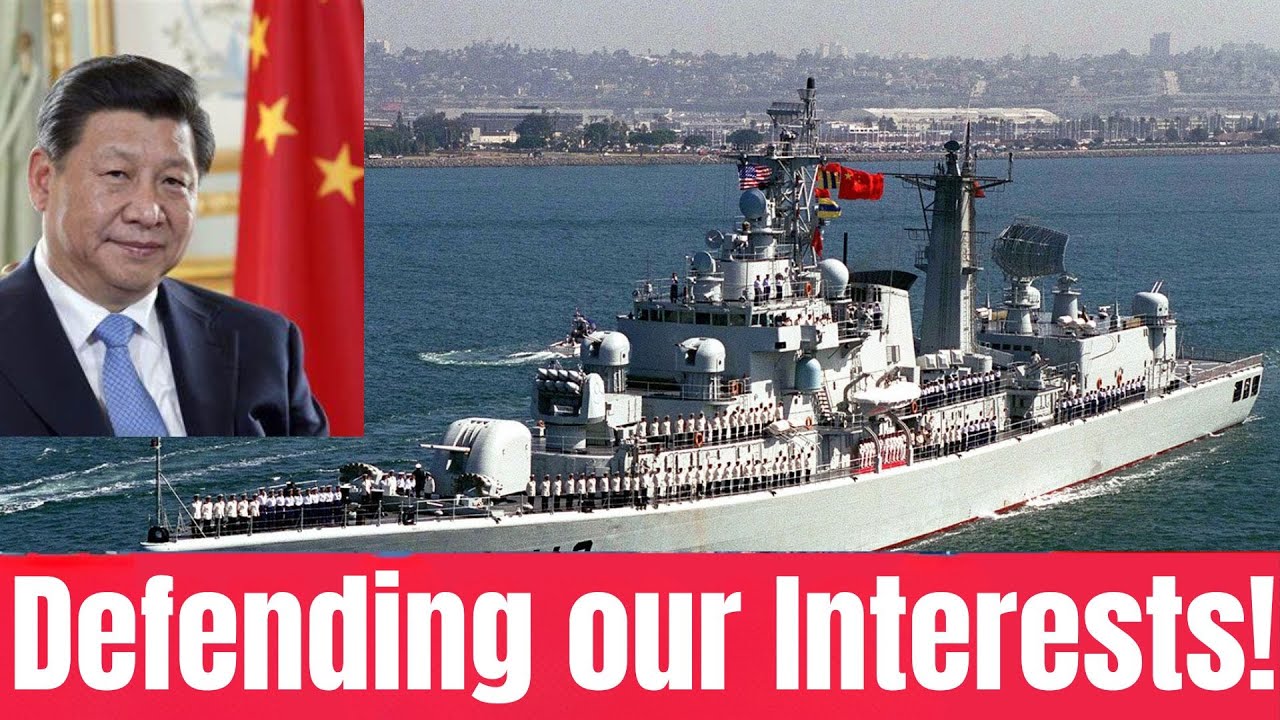
In this extensive live‑stream, the host—an experienced international‑security analyst with a background in Washington, Arabic language skills, and decades of field work—examines China’s recent deployment of six People’s Liberation Army Navy (PLAN) warships to the Middle East, primarily to the Omani port of Muscat. He outlines the historical context of China’s naval presence (Gulf of Aden anti‑piracy missions, a logistics hub in Djibouti) and explains why the current move is different: the ships are equipped with guided‑missile systems and are positioned near critical chokepoints such as the Strait of Hormuz and the Bab‑el‑Mandeb. The analysis links the deployment to China’s energy security needs, citing oil‑flow percentages (17 % through Hormuz, 2 % through Suez) and recent energy contracts (China‑Iran oil imports, a $40 billion Gazprom‑NIOC natural‑gas memorandum, Saudi‑China petrochemical deals). He argues that the deployment signals a broader geopolitical shift: the United States’ influence in the region is waning, while China, Russia, and Iran are deepening military‑economic ties, potentially forming a new multipolar order. The host discusses possible future scenarios, including Chinese or Russian naval bases in Iran or Turkey, the role of hypersonic weapons, and the risk of a wider conflict that could be interpreted as a prelude to a larger war. Throughout, he critiques US foreign‑policy incoherence, highlights the erosion of the “American Century,” and urges viewers to consider the strategic calculations behind China’s actions. The stream also contains audience interaction, channel announcements, and a brief Q&A segment, but the core content is the strategic assessment of China’s naval move and its implications for global power dynamics.
Chapters
Hello everybody and welcome to Geopolitical Trends. So excited to be with you. I got a great topic for you on this show because it's something that falls within my wheelhouse academically and professionally, and I will give you a little bit of, uh, some sort of a snapshot about my background as to what qualifies me to talk about this. Uh, it, it, it is major if you think about the implications geopolitically, what it means for now China to be sending the, uh, 6 warships. Now don't be surprised if I tell you that China already had some, uh, presence naval-wise, and I'm gonna get into the details of all this because we're gonna have a great, great conversation in this. I'm very, very excited about it because it's, it's my area, it's my academic background that I am so excited to talk about. But before I'll do this, like I always do, guys, I like to always express my sincere thanks and appreciations to all of you subscribers of the channel. I also like to give a shout out to the new channel members. Now I'm gonna give a shout out to 3 new supporters. Uh, the first one by the name, uh, Aline Emseen. Thank you so much for becoming a channel supporter. Second person is Sorat, uh, Pongdipatpan. Hope I pronounce it correctly. Thank you so much for becoming a, a supporter of the channel, Sorat. And the third person is _v2. Is that a victory sign? So thank you for becoming a channel supporter. So I'm gonna also give a shout out to super sticker givers here. I'll start with Josiah's Great. Thank you so much, Josiah, for your continued support. It truly, truly means a lot. I mean, you've been an avid supporter with the super sticker since, since you came on board here, so I can't thank you enough, man. I truly appreciate it. I also want to give a shout out to, uh, Pingu, I hope I pronounce it correctly. Thank you so much for your Super Sticker and truly appreciate it. It means a lot and I want you to know this. So, uh, Haiti, here is another supporter, uh, another channel members. Haiti has been, has been a channel members for, for a while. So Haiti, just in and out, whenever he is available, he attends the, uh, the live stream. So thank you so much, Haiti, for your support, truly. It means a lot. And to all of you, once again I say thank you. And by the way, speaking, speaking of the channel members and supporters, I promised you I will do a live Q&A for you, for the members and the supporters. That's one time I'm gonna do it for both, but later on I'm gonna have something specific for members. I am working on the details right now because in on a StreamYard it will not let me show the comments where you're gonna have your questions. So I'm gonna have to go through the YouTube live stream that way, and I'm gonna play with both to see which one works the best. So give me a couple days, I'm working on it from a technological aspects of it to make sure, because I'm gonna be answering your questions because that's what the whole exclusive session is all about. So, so I can't thank you enough. So I have just few announcements and we'll dive in into our topic. Uh, first of all, do not forget to join me tonight, uh, for my conversation with Robbie Barwick from Australia. You do not want to miss that. And there is a— let me show you guys here the link for it so you can see that. And, uh, I'm gonna have a conversation with Robbie, uh, to address. It's right here. Here's the link, guys, to— I'm not— I— it's already posted for you guys, just a reminder. We're going to be talking about really, is Australia doomed? And you don't want to miss that, assuming your schedule permits for that. I also want to share with you, uh, a link to some of my articles. You're gonna find out about the Middle East because I wrote over 146 articles about the Middle East. So You'll, uh, this is on, and I'll post all this for you guys. I don't want you to worry about all this one here. All right, let's, uh, let's get into our conversation here. So we'll start with the key questions, and the key question, or key question or questions, is why is China sending warships? That's one. Second, what's the message? There is no way this is especially when it comes down to Middle East, is happening in vacuum. I'll challenge whomever. So, and third, uh, question, you just— we need to think out there. Doesn't mean it's going to happen, but we have to think about it. Is this preparation for World War III? Because you think about it, if you take step back and see who the parties involved— and, and I can see it right, right in front of me thinking about it. If you are to think about the US and Israel on one end, okay, you're going to think on the other end there will be three countries: Iran, Lebanon, and Syria. What do all three countries have in common? They are also clients of Russia and China. Do you think Russia and China will be just sitting behind and watching? I don't think so. This is what I'm saying. This is nothing but just hypothetical thinking because We have to think. You can assume it's same thing. We can say, well, will the establishment in Washington ever thought that China will do this? And here it is. That's why I said, what is the message for this? But before I'll delve deeper, for those who are the first time here on this channel, please make sure to, uh, uh, subscribe and hit the notification button. And I am going to share with you, uh, what qualifies me, uh, to talk about this kind of topic. So before I'll dive deeper into this major developments, allow me to share with you— and I'm not bragging, I don't like that kind of stuff, but I have to let some people know because I can read the comments. So this way you can think twice before you put some stupid comments. Okay, let me share with you some of what qualifies me, uh, uh, to talk about these topics, uh, and geopolitics at large. So My academic and tactical experience consists of many, many years, over 20 years or so, been working in Washington as an international security and geopolitical analyst, in addition to being a published author, award-winning educator, a global speaker, and a veteran. I wrote extensively about the Middle East. It's a region I am very familiar with, given that I not only speak the language, MS, Modern Standard Arabic, but I am also familiar and understand the culture and political setting of many countries in the region. And as I said, I've worked there for many years. So I just want to put this out there for those who might think that I've just, uh, this, uh, whatever, just came to talk about geopolitics with no credentials. All right, let's put that to rest and let's move on. The first thing I want to share with you, at the time of this recording, the foreign minister of China, Mr. Wang Yi, is in Washington, and I'm gonna do a live stream for you because there is something into that. And by the way, Mr. Wang Yi gets here because he was invited by the United States government. You can read between the two. And I would like you to answer this question, not now, towards the end after I give you my own analysis. Why did Mr. Wang Yi, or China for that matter, accepted the invitation? So if you will, and by the way, I will be taking some of your questions. So, so let's dive in into this. As the tensions in the Middle East, you know, continue to rise, we were kind of surprised to see that China has taken definitive, and I use the term I'm going to be using some terminology. You guys pay close attention. Definitive step to deploy the 6 warships to the region. So reports have confirmed, and it is confirmed. As a matter of fact, I do have, uh, uh, some pictures I'm going to share with you. Uh, there is the first one here. There is another one. Those are, by the way, uh, uh what's the word, that's the one I used on my thumbnail, uh, and those have guided missiles, they carry guided missiles in them, uh, this is the D, I think D-52 type, and I'm gonna share briefly about this, but, but for now, suffice it to say that the confirmation has been made that a 40th, the, the 44th, uh, naval escort task force, uh, from the, uh, Liberation Army the People's Liberation Army, that is, arrived in Oman. Well, let's take a look at the map because you need to understand, anytime you deal with geopolitics, you have to take a look at the map to have a better understanding. So let me share, uh, the pictures with— not a picture here, I'm gonna, uh, share the screen with you just for you to see why the map matters. And it will make more sense to— for you to, to see this one here. All right, I'm— it's, it's uploading here, uh, and don't worry about it, it's written in Arabic. I'm gonna explain everything here since I speak the language. All right, let's share the screen. Share screen right there. Mas'ab. Okay, what are we looking at here? And I'm going to make this a little bigger so you guys can see full screen. Muscat, this is where the capital of Oman, Muscat, as close as it is to the Strait of Hormuz when I'm— where I am, uh, pointing my cursor here. So now why is this important? You think about 1/4, 1 over 4 of the world oil goes through this narrow strait of 1.6 miles or so. It's very, very narrow. So take a step back and think, if there is a war, United States and Israel against Iran, what is the first thing Iran's going to do? If you can leave me the answer on, on the chat box, I would take a look at that. You go from there. Let me exit out of this full screen. I'll share another one with you. There are so many, so many things to share with you guys here. Uh, uh, the other thing we need to take, uh, into consideration, which I will detail as I move forward, because here's the thing, uh, to think about this this, uh, warships just going to the Middle East in, in, in a vacuum, it doesn't make any sense. You have to look at it from both angles, the economic one and the geopolitical one. And what I'm going to share with you here gives you one of the ideas as to why China is doing what it's doing. I'm not surprised at all. Take a look at this here. I'm gonna— okay, make the screen bigger for for you guys to see. There we go. Now there's some percentages here. This is about production of oil. Just look at the numbers. I'll let you, uh, see yourself. You got Iran 3.6, Iraq 3.4, Saudi Arabia 12.9, Sudan 0.3, Libya 1.1, Egypt 0.8, United Arab Emirates 3.6, Kuwait 3.1, Syria 1.1%, and the Suez Canal 2.0%. The key that I would like you to know, it's not about these countries, but rather what I'm pointing at. Those are the straits. This is the Strait of Hormuz, and look what the percentage is— 17%. Look at the Suez Canal— 2.2%. That's important to understand, okay? Let me exit this screen here. Stop sharing here. The one thing that you need to know is when you look at the, uh, you look at this map here, once again I'm going to share, uh, this screen with you because it's so important for you guys to see it. Some of us here in the US, we are very poor readers of geography. In addition to history. It's sad to say, but that's the reality of it. Uh, why is this important? Because you need to see the location of where things are. And if you look at this, I'm pointing here, this is where the naval ships that left Muscat from, from this location right here to undisclosed one. Why am I pointing this out? Because you look at this here, this area and you go all the way to the Red Sea right here. And what did we say about the straits, both of them? The oil transportation. So China is thinking in terms of its strategic interest, meaning what? Access to oil and the protection of those assets. Now, I saw a comment somebody put, uh, well, this, uh, yeah, the term the person put, which I don't He's right, he's right to put whatever as long as he's respectful. But he put, if I recall, if my memory serves me well, he said, well, China sending this junk ship, but they didn't send them to the Mediterranean because that's where the US two aircraft carriers are. That is true, but at the same time, those are not junk warships. That's an anti-missile carrier. If you know what a destroyer is, you will think twice about putting that term. Because you can't just throw words out there. And second thing, China is sending the ships as an indication for, okay, we have a different objectives here. Nobody knows. This is the whole idea of what I'm doing this analysis for you, because I'm gonna provide you the scenarios and you reach your own conclusion. What's important to see in this is that these locations, and that shows you why it's volatile, this region of the world is so volatile that any time a conflict happens there, it'll impact, uh, it'll impact the rest of the global economy. That is one. Now let us think about, as I mentioned, China's decision to deploy these naval assets into the Middle East. To me, it signals a significant shift in the global geopolitical landscape. Since when we ever saw, uh, that China will go this openly? Now, it does not mean that China never had something. I was— as I told you, I spend a lot of time in the Middle East. I was very familiar with the dynamics back in 2008. You know, China had some naval task force known as the, the NATO And it was in the Gulf of Aden. That was the, the what I showed you. Actually, you need to see this because it's important. You have to see, uh, uh, where that is because it'll, it'll, it'll put things in perspective for you guys. If I am not to point this out, then, uh, it's, it's just gonna keep you in the dark, and I don't like that. I want you to see the big picture here. All right, full screen. So this is where the Gulf of Aden— why the Gulf of Aden? Because you have access to the Arabian Sea, and from there you have access to the Indian Ocean. China has been expanding because what comes onto this, really, there is another narrow strait here. It's called— does anybody know what the name of it? If you will be kind and type it on the chat box. I would truly appreciate it because I would like you to engage you into this. We are here to learn from each other, guys. You know, there is another narrow strait, and there is one reason why China went ahead and established a small— I repeat, small, and it's only for logistics— naval presence in Djibouti. I was there, but the time when I was in Djibouti, that logistic wasn't there. China at that time, because I went before. It was after I left, then China, uh, and you have in that Djibouti location, you have the United States, Japan, and China. So this is why it's important for you guys to see, uh, that's the whole reason why I am mentioning this. So China had the presence in 2008, but China has also been steadily growing its naval footprints in the Middle East. This is why now I ask the question, what is the message? China is not doing this in a vacuum either. China, in my opinion, and I could be wrong, and if I am wrong, I'll, I'll, I'll accept that responsibility, but I don't see it. What I do see is that China now is confident. It's confident enough to come forward and said to the US, there is a new sheriff in town. That's how I see it. And basically what China's saying, we can go about it any way you want, the nicer way or the ugly way. To those who think like that person who put the comment, junk, uh, warships, I respectfully disagree with that categorization because It's wrong if you know what a destroyer and what it has. It's this particular, uh, I even wrote the name if I can get to it, the picture of it. Naval China destroyer is this one right here. Those are— they carry some anti-ship, uh, uh, missiles in them. So those are not junk warships. So this is why we have to learn how to weigh our words, because when you start saying nonsense, it reflects on your ability to understand what the real issues are or how to even categorize this. Suffice it to say for now is that we understand that the presence of China back then was to counter piracy But it has moved into a different level when China warned that now it has put the roots in the Middle East to protect its assets, strategic assets. What are we talking about? We're talking about access to oil. And this is why I'm saying this is a major signal shift in the geopolitical landscape. You know, it reflects, in my opinion, China's increasing military prowess and carries a message to the United States that its era of dominance, it's coming to an end. I won't use the term like some analysts in Washington are saying, maybe coming to an end. No, it is coming to an end. That is a big difference right there. When you start to embark on irrational foreign policies like what we are doing, it shows you that we are losing control. Losing control means you're lacking domin— uh, dominance. Yeah, your, your, your leadership in the Middle East is waning down. That is the truth of it. So of course the conflict between Israel and Hamas came to the fore and has now set off alarm bells across the world. Like I told you, if you shut down the Strait of Hormuz, if you shut down the Strait, uh, the Bab-el-Mandeb, If you shut down the Suez Canal, which by the way all of them will be impacted, the rest of the world will suffer economically speaking. We already suffering now from the hypocrisy that exists in the Western world when we say we stand for the rule of law and democracy and human rights and so forth, and we see in the images, you know, I don't shy away from speaking the truth. That I will not waver on no matter what the cost is. And if somebody thinks that I'm just saying this, try me. Now here is the other thing you need to think about. Could China doing this, yes, to protect its, uh, strategic interest, but also an anticipation of the expansion of the conflict, and they want to be ready? Then there is the third element, and the third, which, uh, I'm, I'm going to mention it now, but I will detail it. It has to do with two countries, Russia and China. And this third element has to do with the geopolitics, by ensuring that the United States get back down, it get buckled down in the Middle East, so it stays away from the East. The possibility is there. But here is whatever the, the, the case may be, because now there is fear that this crisis in the Middle East between Israel and Hamas could go beyond the borders of Gaza, which I do foresee if even if Israel goes in, which I think they're going to have to think twice. What they're finding out now is that the Israeli military is not ready for the street fighting. We have now a 3-star general— I forgot his name— US. He's now leading the effort for the Israeli forces. We got a problem with that. Why a US general is doing the work for Israelis? It's worth, worth asking. As a matter of fact, even the new speaker of the US Speaker of the House, his first order of business was to issue, uh, uh, uh, legislation to support Israel. It tells you the system is corrupted anyway. But we're not here to talk about that. We're here to talk about China's warships. So, so the presence of the Chinese, uh, uh, uh, warships in the region serves as visible— yeah, visible reminder of the gravity of this situation. Because here is the thing, these warships stand ready. This is what I'm saying, you have to look at it from all angles, emphasizing— because he will emphasize two things: commitments of China to maintain stability in the Middle East during these uncertain times, and also securing its own interest. Well, if you do two, that means what? When you interpret that on the global stage, That means you wield a lot of power and influence on the global stage, which means what? That the era of the unipolarity is gone. We are now dealing with a multipolar system. That's all the interpretations of all this. So, and, and, and it makes perfect sense. It doesn't take genius to figure out that this— as tensions mount and global dynamics continue to shift Because they are shifting, but not to the favor of, of the US. The world watches as China naval assets or deployments in the Middle East unfold. All this sends a message, in my opinion. So, so this is one of the reasons why I decided to do this live stream instead of talking about, uh, Mr. Wang Yi trip to Washington, which I will do in a later date. It doesn't matter even— will be 3 or 4 days later. But because I wanted to provide you my own analysis about this latest development here about China's significant naval deployment to the Middle East, because it's significant. So, and this is what I found, uh, very, very interesting. The other aspect that I found very interesting as to where those navals left from, which is in Muscat. Muscat is the capital by the way, of, uh, Amman. I draw a blank on that. Uh, is, is the capital of Amman. And Masjid has a lot of history, by the way, guys. FYI, just brief, brief history about Masjid or Amman in general. So Masjid, uh, uh, in, in Arabic is pronounced Masjid. Uh, in English we pronounce Masjid. Depends, uh, uh, how, what part of the country you're from to pronounce this one. So Mascot and Oman was affected by an unrest that was erupted after the death of the Imam back in 1679. That's how far back it goes. So the Persians then invaded Mascot in 1737, okay? And later on in 1803 The Wahhabis, who is now, you know, you heard the, the Wahhabism ideology in Saudi Arabia, which adhere to some very radical interpretation of Islam. That's when you have to— women don't go to school and all that, which is nonsense. I, I don't, I don't buy that arguments at all. I disclosed that in my Saudi book, that I said this is nothing but a way of controlling the masses. You know, Islam in the religion itself didn't call for this. Nonsense, because it is nonsense anyway. But that's their religion, they can decide whatever they want. So the Wahhabis of Saudi Arabia who tried to attack Amman were revolted by none other than Sayyid bin Sultan at that time. That's why it's history, it's a long time. What's important about Mas'ad, or Amman in general, he works behind closed doors in dealing with issues of the Persian Gulf with the United States. Believe it or not, even a part of the negotiations regarding the Iran nuclear deal, some of that has to go through Muscat. So of course, the late King, uh, King Qaboos— Sultan Qaboos, they don't call him king, they call him Sultan— uh, Qaboos died, and I think his son took over. So this is just a brief, brief history about that one. So, well, here is what I found also Uh, interesting. To go back to our topic here, with the strategic naval deployments here now to the Middle East, to me China is clearly now showcasing its military capabilities. We're not talking even some advanced stuff yet. I don't know if you guys heard or saw the images of the latest missile, hypersonic, that China just, uh, tested. I don't think so we have anything to counter that. We do have, however, some very advanced aircraft that have not been brought to the fore. I can share one with you. Uh, it's, it's, it's, it's, it's not classified, but the word is out there if you know where to look. It's called the Pegasus. If you can take a look at that aircraft later on, you're— you, of course, you are— you can read the specs of that aircraft. I can share this with you, that it can take about 38 minutes to fly from a location in the west side of the United States all the way to Afghanistan, or about 40 minutes or so. It's because this aircraft, Pegasus, doesn't fly— it fly this way. And if you know the law of physics, if you go up, you cut the, the distance short. So it goes up all the way and straight down to whatever. So this is what the US has in some of its arsenal. That's what we have. So, but to me, China's— this is a showcase for its military capability and to demonstrate— to me, demonstrates its increasing influence as a major influence. By the way, not through coercion, not through creating conflict. Its influence as a major player in international affairs, major player that could at least be an honest broker. We all saw the outcome of Iran-Saudi Arabia rapprochement or reestablishment of diplomatic ties. It was the Saudi— it was China that brokered that. No, even China will want to get involved, for example, which I— I— it's too, it's too complicated. But we— if China gets involved in the Arab-Israeli conflict We will undermine that from behind the scenes, the same thing we did in Ukraine. Did you guys know, did you know that Ukraine was willing to sign some security deal with the Russians back in 2022? We pressured Ukraine not to do it. China proposed, uh, the, the, the peace deal between Russia and Ukraine. I read it, it was logical, it was pragmatic. We undermined it right away before it was even made public. We condemned it. I see the same regarding the Arab-Israeli conflict, and the— we will undermine that from— because it will send the signal, gone the era of the United States where it was sort of dominant and so forth. Now you get, as I said, a new sheriff in town, but the new sheriff will be fair, will be just. This is how I see it. And to me, as a geopolitical analyst, as one who deals with international security and so forth, this to me, it signals or sends a clear, clear message to the United States that its longstanding dominance in the Middle East is coming to an end. There is no other way around it. Most of other countries are moving east. Are pivoting east. There is another strategic aspect you guys need to consider when we— as we— as I move forward in this conversation. And this particular has to do with, uh, actually I'm gonna, I'm gonna put it for you as a question. Do you think that this Gaza War, what is really the objective? Of it. If you guys can type in on the chat box to tell me what is really the objective of this Gaza War, because all of a sudden it pops up, no? And I'm gonna wait a little bit before I share with you my own thoughts as to why that is, you know. But I want to, I want to engage you, uh, I want to engage you into this conversation here, guys, because your, your, your opinion matters to me. It matters to me. So, and all you have to think about this is to think about the setup of the Cold War between the West, uh, uh, that was led by the, the, the West and the former Soviet Union. Because back then it was mainly an ideological one, but it was also strategic struggle. We can't ignore that one. So can you see, if you are to take step back, just take step back and base it on all the conversations that I've been having with you all these months. If you just think what could be the motives for all of a sudden this Gaza erupted and the US getting involved, uh, okay, let me see. Jack, you put keep the Middle East unstable and stop BRICS, uh, uh Okay, you are on the right path, but it's not completely that. But I agree with you, Jack, regarding the instability in the Middle East. Resources, for sure, for sure. We're talking about strategic, strategic aspects here. When you think about strategic, what do you think about? You think about also the alliances, because an alliance, if it becomes strong, it can redirect the direction of global order. Yeah, Jack was right to a degree as far as BRICS, but this one is— because BRICS, not all of it is in the Middle East. We're talking about 3 countries here. I'm giving you a hint here, 3 countries that if we are creating this, it's because we want to prevent this from happening. That is the object. BRI, that's part of it also, but I'm talking about 3 countries. Can anybody, uh, tell me 3 countries to, to break Iran-Saudi alliance? For sure, we were never happy about the— China was able to broker a deal between Iran and Saudi Arabia, between Iran and Saudi Arabia in the first place, because we wanted to maintain that division. And now we, we feel like, no, we're screwed. That's what it is. So, so let me answer this one for you, uh, US, UK, France. Yeah, but that's on the, on, on the wrong direction, which, which, you know, France and Germany and all those UK, they, you know, here is what it is, guys. Here is what it is, because I don't want to— we want to— we don't want to waste too much time because I got a lot to cover. We talking about strategically here, and when I say strategic, think long term. We're talking about abstracting, abstracting China-Russia-Iran alliance. That's what's at the heart of it. This is what I'm saying, why I put at the beginning, is this signal for World War III? Because the— if Israel goes into Gaza, which Israel, by the way, cannot do it alone. Israel doesn't have the capability to do it alone. No matter what you hear, guys, about it has this defense missile shield and all this, they, they can't. They just can't. Their own military high-ranking officials are saying to the Prime Minister Netanyahu, we can't go in, we are not ready. They, they are not ready for this. So this is where the US is going to come in. But the US also looking at it as an opportunity. If we can get in to slow down this arrangements between those three countries— China, Iran, and Russia— and I'm gonna talk about this within this context of China. Remember last time I told you, can you imagine adding a fourth country? You all know what's the— which country. If it can be added to this, it will make it a very, very, very capable military alliance? Can you guys type, type that in please? Another country. And I did mention it before, I'll hold you responsible to what I'm talking about. No, it was— if you add another country to that. No, not Turkey. Yes, you got it, you got it, you got it, you got it. Uh, uh, uh, Nusrat Anwar, you're absolutely correct, sir. It's the, it's the, uh, uh, North Korea. Easy, you're absolutely correct. Yeah, Alex, you're absolutely correct. Where is Alex? Here, here. Well, I'm sorry, Wong, you're absolutely correct. Taiwan still, you're absolutely correct. Yeah, North Korea. So you guys got the idea. This is just one aspect to think about it. Of course, I am convinced Israelis won't be able to go alone, but China also doesn't want to take chance. And here is why, and I'm gonna break it down into one economic and one, uh, geopolitical. Yeah, we didn't get into the depth yet. I get excited about this because that's my area. That's my academic and professional background. I can talk to you guys for hours and hours about this one here, but we're not gonna— we're gonna focus on one specific aspect now. Now, from an economic perspective, you're gonna have to look at it also from another aspect that is behind the scenes, and this one has to do between Russia and Iran, and this one is to create a global natural gas Yeah, it's a $40 billion deal. That's this $40 billion. It was a memorandum of understanding, an MOU, that was signed, uh, just last, uh, in October— in August, I'm sorry, in August— between, between Gazprom. You don't hear much about this. I had to dig into this, knowing where I can get the information. And I'll provide you the link, by the way. Of course, it was a deal between Gazprom and the National Iranian Oil Company, known as NIOC, a $40 billion, which is, to me, it's a stepping stone in enabling now Russia and Iran to implement their long-term plan. And what is the long-term plan? Is to be the core participants in a global Energy. When I say global energy, mainly global gas. We can use the term cartel because we say the same about the OPEC, you know. And why is this important? Because when you consider how much Russia produces of, of, uh, uh, of gas, Russia produces about 48 trillion cubic, uh, uh, meters Iran produces about 34 trillion cubic meters. So the two of them are in the ideal position to do this, you know. And mark my word on it, if they do that— and it seems to me they're gonna do it because they already agreed to memorandum of understanding— yeah, sometimes you can back down from it. I don't see that happening. When they do that, I can guess that Qatar who is another top producer, is going to join in. That is the key to all this. Remember, at the time of this live stream here, you got Italy and France signing a deal independently, not under the EU auspices. No, no, no, they care for their own country. France did it independently for about 27 years. They signed the deal with Qatar, that Qatar will provide them. And Italy now reaching out to Qatar to do the same. And mind you, Qatar already signed the contract with China to provide China with gas for 25 years, in addition to what already China is getting from Russia. So you can all see, nothing happens in a vacuum. And this is again where that analysis about geopolitics comes in. You have to possess the depth in understanding what these dynamics mean and how will it impact the trajectory of the global, uh, uh, uh, order, that is. So now let's, let's talk— tackle one more aspect on the economic and then move into the geopolitical aspect for China. You remember the map I showed you about the, uh, number of how many countries produces oil and so forth? Well, I'll go back to 2018 and I'll provide you the link for this because I also have it in my book. Uh, the, uh, China— China at that time brought about, if I am not mistaken, uh, 3 3.4 to 4 million barrels from Iran. That's, that's how important that is. I'm, I'm trying to locate one particular, uh, link to share with you here so you can, you can see for yourself certain aspects of what I'm talking about here. If I can get to it here. Sometimes I don't like to spend too much time looking because I don't like to waste, uh, my momentum. And, and I'm gonna leave it. Let's move on, let's move on. So, so China has to think in terms of securing access to energy. And this is why, again, the 6 ships that went in, yes, they do have the protection of, uh, China's energy coming into Beijing. But also, if you send the 6 ships and among them is one that carries anti-missile, uh, uh, uh, uh, uh, anti-missile, anti-ship missiles, or anti-aircraft missiles, or air-to-surface missiles, that tells me a different story. So you, at the same time, you China in this case, protecting your asset, but but also you showing your military capabilities. And this is how it's going to be understood in the West. The West, you're going to have to show— it's almost like the saying goes, you're going to have to show force for the West to get it. You getting into diplomacy too much, they'll think you're weak. If you show force, you'll see a reverse into the conversation. So And I think I get the, uh, I get the picture of this particular, uh, naval— let me, let me share it with you here, guys, because it's very, very important to understand this. They, uh, they detailed exactly what this particular ship does and its capabilities. Even though the Pentagon tends to inflate the report, because like the one they issued in 2026— in 2022, I'm sorry, 2026 is not here yet— uh, in 2022, saying that China's military deployment forecast that China's fleet will reach about 400 ships by 2025 and 440 ships by 2030. You know, I can see why the Pentagon always say that. They saying that because they needed to ensure— here is the ship here, guys, is this one right here, uh, they wanted to ensure the budget for, uh, the Navy. That is the reason for it. This is the anti-ship missile, anti-air, I believe. Uh, I think it's the 5D520, something like that. All right, so this is the reason for why China is doing what is doing. Now, if we are to move into the geopolitical aspects of it, so the way I see it Excuse me. The way I see it, and I, I wrote about this, so it's kind of— I'm, I'm sharing with you what I thought about few years ago that ain't gonna happen, that will happen, and here it is. So I argued back then that this approach of China to the Middle East, it's China's long-term strategy that will focus back then when I argued, I said it will focus on some key aspects, and one of them has to do, uh, uh, uh, vis-à-vis, of course, the relationship with the United States, more complementary than it is acrimonious. Because when it comes to the Middle East, that's how it will be, because the US will not want to lose its leadership in the Middle East. But it's seen that the Middle East is slipping away. You look at now the key pillars in the Middle East. Saudi Arabia and Iran are pivoting, have already pivoted east. You're looking GCC now, possibly the consideration of entering into free agreements with ASEAN, a $3.2 trillion economy. So, and this is why I'm saying China was thinking, and I remember, guys, I argued this few years ago Because when you do geopolitical analysis, you have to think about the next decade, next 15, 20 years. And I tend, I tend to think long term. So I argued back then that if China embarks on this policy, it will be— China will be able to achieve two objectives. One is to shift the US attention from the Pacific region, and two, China will secure more economic, uh, venture with key regional players including Iran and Saudi Arabia and Turkey. This is what I argued back then, and we are living this as we speak. So, so the question becomes, will the Middle East become a hot zone where the US and China interests collide? This is the question I asked in 200 16. What do you guys think? Will the US and China's interest in the Middle East collide? Because there's one thing I've learned over the years, is that major powers, they will try to avoid conflict But if one of them trying to exert more power, especially when it comes down to dominating, uh, access to other resources of some other, uh, uh, global power, this will lead to conflict. Conflict over access to resources. Why? Because one power didn't consider the interest of others, other major powers. We're talking about major power. We're not talking about, let's say, India. You know, who's gonna care about India? Speaking of India, by the way, India now— I just find out, which was shocking to me, I gotta confirm this— India now is gonna join the West in sanctioning Russia. Would you believe that? I just couldn't believe it when I read it. I was like, no, there is no way, no way. India is buying oil from Russia at a discount price. But on the other hand, I won't be surprised. I'm going to find out and I'll give you— I'll do a live stream for you. So, so back then I argued the, the answer is possible with this collision between US and China's interest in the Middle East. We're not even talking about Russia yet. No. So, and this is because the— and why all this? Because the lifting of sanctions on Iran after the nuclear, uh, uh, deal sort of compelled now China to move quickly towards securing economic, uh, contracts, mainly in the energy sector, which they did starting in 2018. China secured some energy deals with, uh, with Iran. So China and Iran, I argued back then, may also enter into a military treaty of sort. And why? Clearing the way for the former— the former meaning, uh, uh, Iran in this case— I'm sorry, China in this case, uh, clearing the way for the former to establish a military and naval base or bases on Iranian soil, similar to the arrangements the United States has with Bahrain. This is how I see it. So, so to me, at that time I said China will be wise not to rush into this. What China's going to do is going to have to wait till the dust settles before embarking. And that's exactly what I wrote back then. I wrote that China, uh, China does not strike me as a wise policy for China to embark on at this time, meaning at the time when I was writing the book back in 2016, and argued that rather— I, I wrote, or I argued rather— China should wait until the dust settles in this latest major shift, because that was a shift in regional geopolitics, to better assess the situation and execute its next calculated move. This is exactly what we're saying. The same argument made militarily, that both China and Iran interest could merge in an unexpected way. And we're already seeing it because China is providing certain military technologies to, uh, Iran. China's gonna— is allowing Iran to use Beidou instead of— there is no— for— because Iran has no access to GPS because GPS is controlled by the US. China, what I end up doing is allowing Iran to use, uh, Beidou, uh, system navigation system, which means most of the weapons Iran is going to be used will be guided by Beidou. So with China advanced military technology, one assumes after the lifting of sanctions on Iran, this will allow China to sell its military systems to many countries in the region. And as a matter of fact, China is doing that to both Saudi Arabia and Iran and some other countries. So despite the much anticipated geopolitical shift in the Middle East following the Iran-US nuclear deal at that time, as I argued, I am— I was convinced back then, and I'm still convinced, that China will proceed cautiously. This is the way I see the movement of these 6 warships. China is increasing its footprint steadily in the Middle East, which is a smart move, smart strategy. You don't want to bring in your all, you know, naval fleets to the Middle East. It won't be perceived very well in the Middle East. Doesn't matter, friends or not. Look what— how it's perceived, not for the US sending two aircraft carriers. How do you think it's perceived in the Middle East? Same thing. But China said, no, no, no, no, they're gonna have to think differently. And but China has also another reason for that, and the reason for it is at that time China did not want to upset the balance of power, or balance of the world order for that matter, because remember at that time the US still had some influence in the Middle East because Saudi Arabia and Iran were still enemies. Now no more. So that balance of power, or balance of of world order has shifted. China did that. And this one also, because that system paved the way for China to move to where it is today, on both aspects, economically, strategically, you know. So this is why I always said, uh, that China strikes me as pragmatic when it comes down to thinking in these terms of calculations., uh, uh, whether to, uh, like for example, to get engaged in the Arab-Israeli conflict. You know, China's gonna have to think very, very, uh, twice about that. Speaking of that, while I'm thinking about it, Russia and China just vetoed a US proposal in the UN Security Council because we all know what the US did with 3 other countries. And I know now the 4th country is France. So it was the US France, UK, and Japan. Those four countries, uh, uh, turned down the proposal by Russia to allow humanitarian aid to people in Gaza, civilians. Yeah, we objected to that. You believe that? So did France, so did the UK, so did Japan. Shame on them all, including my own country. Because it's the government. And once again, guys, I want you always to remember this, please. You know, when we say a country, we are referring to the government, not its people. I want, I want to put this on the record here. So I'll criticize my country, the government. So this is where I see, uh, that, uh to me, China understands the stakes. If it goes ahead and flex its military and economic muscles, it won't be a smart move. Yeah, it won't be a smart move. That was back then the argument I made. But at the same time, I said don't count on it forever, because it will come time when China has to make sure that there is a new sheriff in town. And that's exactly what we're seeing in the Middle East. Ask any Middle Eastern— ask any Middle Eastern country about where they see the United States today in the Middle East. You got the idea. So this is how I see it. It was the same argument I made about when King Salman went to Saudi— to— I'm sorry, went to China in 2017. I argued it was right there, the writing on the wall for me, because it was just right as soon as I finished my Saudi book and I disclosed that. And I said in the book that Saudi King trip to China, it's a signal saying to the Chinese, we are coming in because we want to get involved in ventures with you. Economically, and we want to purchase some military hardware from you. We don't want to maintain its— our reliance strictly on the United States. That's how I interpreted the trip of King Salman back in 2017, and turns out to be true because later on Saudis enter into some major— as a matter of fact, the latest one, the latest deal as of a month and a half ago, that Huawei now is going to be in Saudi Arabia, and the Saudi government asked its employees to ditch Apple altogether. So to me, I saw the writing. That is just a matter of time. Even back then, I said within a decade, we might not see the Middle East as is, and I think we are seeing this. So because I argued that we could be seeing Saudis becoming a strategic ally of China, and it turns out to be because Saudis grant China the status of its global strategic ally. It's fascinating, it's really fascinating if you take a step back and have a clear pragmatic read of of the geopolitical landscape, you will be able to see where things are headed. So, and why is this? Is because Saudis at that time start to think about the United States leadership is becoming more and more irrelevant. I argued about this one in, in some of the, uh, uh, articles that I, I'm going to publish for you right here. Here is a link for if you want to check them out. I wrote this, uh, on many articles, uh, on Huffington Post at that time when I used to write for them for free. I never get compensated for that, guys. I wrote it for free because I wanted to share the knowledge. If you get a chance, I know I'll post this for you in the description. Go there and take a look. And there's articles from that, that time, 2016, 2017, '18. That's So I argued back then that the idea of, uh, Saudis are seeing the US leadership in the Middle East declining, declining faster than the US could, could handle. So, and also the displacements on, on the global stage. You look at now, even I read yesterday some analysis about people in Taiwan. They are now seeing the dynamics taking place. And I intend to do an update about Taiwan because the person who's running, I think, for the presidency would support the same, uh, what's her name? Uh, I draw a blank on her name. I don't remember. Anyway, it'll come to me. So, uh, they saying Taiwan is saying no, no, no, no, no, no, no, we don't want to go that route. Maybe we shouldn't even be voting for this altogether. We want to maintain the status quo, end of story. This scene was going. So the argument for me back then was it will be a matter of time as the Saudis were thinking that the US displacement on the global stage is becoming clear. That means less influence. Our credibility has been shattered now beyond repair after what we are doing, closing our eyes on atrocities committed. You know, it's not right. It's just not right. And you say, oh, we are there to defend the rule of law. What rule of law are we talking about? You know, and this is why I'm curious as to why the foreign minister of China, Mr. Wang Yi, accepted the invitation. And I bet you, I bet you, I bet you the US wanted to have a face-to-face conversation asking China, we don't want you to worry about your strategic interest, uh, we're just gonna let us, let us do this. And in other words, they want to buy the Chinese for some favor in something, return, whatever. It will be who of China? I will be very, very surprised. But if it is, it will surprise me that China has to cave in for the US bribe, diplomatically speaking. I don't see China doing that, but I am curious about why Mr. Wang Yi accepted the invitation. I understand in diplomacy, I understand the international protocol, I understand that China, no matter what, will still abide by those protocols because that's just part of the culture. For example, when, uh, the idiot Chuck Schumer, one over there. China didn't reject the guy. Even heck, he had a— Chuck Schumer had an audience with President Xi. If I were advising President Xi, I always said, heck no, what would you give him an audience for after what he's doing, supporting whatever in Taiwan? Again, you know, why would I even do that? And yet even with that, Chinese president went forward with that because it shows how graceful the society is, which is a reflection of its culture. So the hard truth, the hard truth is that the United States government, because it's not willing to inform citizens about the realities of the new geopolitical landscape, that we are losing steam. This is why the president, uh, our incompetent president, saying, oh, we are the United States and we need to change the world order according to US a rule of law. What a hypocrite! What a hypocrite! You know, who's gonna buy these arguments anymore? Enough of embarrassment. That is embarrassing. You know, that president doesn't speak for me. You know, I don't recognize that guy. You don't represent me. You know, when you embark on policies overseas, that ain't me. So this is why I'm saying, when I saw that trip of the king, Saudi king, to China back then, I said to myself, there is no way Saudis are seeing the trend and realizing that pivoting and engaging with China, for instance, in a major energy deal including petrochemical— I was very familiar with this is economically beneficial and the right course of action for both countries. And my assertion, my analysis turns out to be correct. This is from one end. Let's talk about it from another end. As far as what about Russia into this mix, we're both Russia and China, it's gonna come to the aid of certain allies in the Middle East because Russia and China are seeing where the change is. Russia and China also the one were behind the deal that the P5, the 5 permanent members of the UN Security Council plus Germany, known as P5+1, have reached with Iran regarding the nuclear dossier? It wasn't the US, even though all they say the US reached the deal. No, no, no, it wasn't the US. It was the P5, the 5 permanent members of the UN Security Council, and Germany. So why aren't we taking credit for ourselves? But who was really behind all this? It was Russia and China behind the scenes, convincing Iran to move forward with the, with the proposals that been suggested at that time. And Iran did, because also China and Russia had calculations that they knew that if the deal is reached, Iran is not going to forget about them by opening their market, Iran's market. And you can't ignore Iran market— Iran's market of almost 85 to 100 million, uh, give or take, about 90— about 90 million consumers in a market. Yeah, it's not comparison to China, of course, but still, it's a big market. So this is how I see it, or how I saw it back then, and still, still arguing, even though I argued back then with now the upheavals in the Middle East, with more on the horizon. Because to me back then, it was the argument, oh, this is not the end, because nothing will ever be settle in the Middle East till we are out completely. And it looks like slowly more and more countries are coming to realize time has come. No more US presence in the Middle East because we haven't brought any economic ventures, any sort of— you look or now just what we're doing with supporting this the, the atrocities. What else would you call it when you bomb civilians? What else would you call it? There is no other way. You can't sugarcoat this. And we are allowing this. We are— as a matter of fact, now we are part of it. So where is the ICC? Where is the rule of law? So the argument has always been, for me at least, politically, geopolitically speaking, that the geopolitical order of which the US has been the principal architect and guardian, if I may use the term, is faltering, has been faltering. You know, gone the era that most historians used to call the American Century. That era is gone. In which the US managed the global order and was accustomed to its place at the top of every fucking order. That era is gone. Gone the era where the Earth used to be the sole property of a sole superpower. That era is gone. Let's just come to grip with it. I did. I can't speak for the idiot politicians in Washington. So, so this is how I see, uh, and, and to me it was nothing but— it's too late now to point fingers because that's what we're doing, knowing how ambiguous our foreign policy has been and is and it will continue to be. Yeah, it is too late to point fingers. So American foreign policy, this is why I always say there is no strategy. American foreign policy is usually— here is how it works in a nutshell: it's very heavy on rhetoric and empty on substance, dependent on dysfunctional US Congress, you know, which is poisoned by this tribal, tribal politics. So look no further how every president in our system turned a blind eye on human rights atrocities that were committed. You know, you said to yourself, what have we witnessed? More genocide, more political oppression during the last century. You know, where was— where is this rule of law? Where is this? And we're still doing it. We're still contributing to all this. And this is when I hear this, uh, arguments about, well, we praise ourselves for democracy, uh, we kind of principles of this, principle of that. It's nothing. It is nothing but a consumption of ink, no more, no less. So if you happen to be an American watching this, I hope you come to realize the reality of where we are, you know, because as I always say, sadly today, you know, because we created that, maybe we shouldn't feel sad because when you, you have to be responsible for your own action. So, so we're barely that shadow of the, the true what America was about back in the '50s. We used to stand for something because it was the beginning at that time. That was, we represented the world at some point. You know, so the way I look at it, both Republicans and Democrats and any president from any— doesn't matter. You know, I've spoken of as if the America is all knowing and it's in its moral authority per se, which the US has failed to preserve and even defend now a basic human rights and dignity for people, civilians, whatever they might be. We look in the images in Gaza. Well, I'm not talking about just Gaza, everywhere in the world, you know. Where is this dignity? You couldn't even respect that. So, because I'm going to summarize this, guys, for you, and I'll take a question or two here. Here is the thing, the way I summarize this for you guys: the time in which the United States could operate with favorable odds for high success rate with such— whatever case they might be in the Middle East, in Europe, in Asia— has ended. I feel comfortable saying this. And this is where I see China and Russia's involvements in the Middle East is changing the international order. So scenarios that I've thought about, remember What I'm sharing with you guys, yes, is my assessment about what China, uh, what the, the 6 warships, uh, deployment to the Middle East mean also. But also it's my assessment that I did few years ago when I argued about here is what I see coming. So, so I even at that time I had scenarios in my head that, that I thought, oh, it's unlikely a year or two from today, now it has become a reality in the Middle East. And one of the scenarios that I argued back then, it was that, for instance, Russia and China establishing a naval base in Iran or even Turkey, respectively. I won't be surprised. I'm sure you've heard what the president of Turkey has been saying now, that they will engage if Israel goes into Gaza. This is how I see it. And you don't have to realize that, oh no, this won't be— because that's what the American mindset in Washington is. Oh no, we will still— the— yes, we still a military power. Yes, we still will some influence here and there, but only if we exert pressure on, like for example Australia, which what I'm going to be talking with my guest tonight, uh, Robbie Barwick. So I hope you join me for that. So, uh, the way I see it is, is the Middle East is done with the US, and this is what I anticipate the changes that's going to be happening. All right guys, I'm gonna take a question or two. I want just to remind you Uh, make sure to join me tonight if your schedule permits, uh, for my interview with Robbie Barwick. I also want to let you know I am working on having that exclusive Q&A with the members and supporters of the channel. I'll do this once, then I'll do stuff for members on a regular basis, and I'll figure all that out. I am now working on figuring out the technical aspects of it because I need to see your questions for for me to answer. Uh, so this is what I am going to do. Uh, if you wanted to support the channel, by the way, I'm gonna create a PayPal account, uh, if you feel like supporting the channel. I decided not to do the Patreon. I'm not gonna do it. Uh, PayPal will be the way to go. I'm working on it. Once I create it and so forth, I will let you know. Uh, I'm, I'm, I'm that type that You support the channel according to what you want. It's your decision, whatever. The one thing I want you always to know, guys, I will never ever ask you for money, your information, or any of that kind. You know, I'm aware of what's going on with the internet and so forth. If you ever come across with a request like that, do not respond to that because I will never ask you for that. I am gonna have the PayPal, the PayPal, uh, for you if you want to support the channel. Like I always say, the information that I provide you here, it's not something you can just found on TV or even on some other YouTube channels, you know. No offense to any, I respect all of them. They do what they do, I do what I do. But I am bringing over to the table over almost 30 years of experience combining between my military, my academic, my tactical, and my professional, uh, uh, uh, experience. So let alone my travel around the world, which I've been on over almost 28 to 30 countries, something like that. So this is what I'm bringing you guys. So I spent time doing the research. I gave up a full-time position for this. Uh, if, if this is how you wanted to support the channel, I am very grateful. And please spread the word about the channel And if this is your first time here, I would greatly appreciate if you hit that like button and also make sure to subscribe. I do notice that sometimes we do the live stream and we'll have about 6,000 or whatever, uh, but it doesn't reflect on the likes. So please guys, hit the like— because the like button— because the algorithm, that's how we push the video forward. So, uh, Let me just show— oh, Athin Wu. David, I admire your honesty and how you care for your country. I hope the US will come to its senses and become great again. Uh, sad to say, uh, Athin Wu, I, I, I don't see that. I am saddened to say it, but I can't— under no circumstances I can sugarcoat that, or I gotta be, uh, you know, because I don't talk emotions, I talk logic. I, I, the system is corrupted. Till we take down that system and rebuild it, nothing is going to change. I just don't, don't see it. Uh, quickly here, I see, uh, Oualaalou, but David, do you think Israel, uh, uh, America and Israel will attack Iran? No, no, they can't. They know what the consequences will be, you know. And if we think we are here protected by waters, that, that era is gone, you You know, Iran has developed hypersonic. I am aware of it. It's been confirmed, by the way. You know, uh, don't even underestimate what China and Russia will do in support of Iran. As I always say, if Iran is attacked, Tel Aviv, Tel Aviv and other cities will be showered with missiles from all directions. That's why I don't see that. I don't see that happening. All right, I'm gonna scroll this here. Uh, I see I'm starting from the bottom here and I'll go up quickly here. Uh, question, uh, the Emancipator. I remember seeing you before, thank you for being here. Question: is it safe to say that the US dethroned itself from the global supremacy throne and destroyed it in the process? Uh, a great analogy. I would agree with you. And if you ask how, it's through our ill-conceived policies, our fragmented foreign policies, our thinking that we can coerce other countries into adopting policies we want, you know, the neutrality we never exercised anyway, and thinking about sanctioning because of the US dollar. Yeah, we created our own But again, if you look at history, there is an end for every empire. That's just part of a reality of life. Like, uh, I remember I used to read up about— you're all familiar with Marcus Aurelius, right? You all know who Marcus Aurelius is. Uh, not— he was just an emperor, but he was a philosopher, somebody who really had a wisdom about life. Used to always say, if it ain't true, don't say it, and if it's not right, don't do it. We know, for us, we were doing things that we know it's not right, and this is what we end up, uh, dethroning ourselves. So we shouldn't blame anyone outside. It's us. It's us. Thank you for your question. So, uh, Question YT, does Iran have hypersonic missiles? Yes, it does, to my knowledge. So, and again, the ones I see might not be in the same scale as the one that Russia and China have, because remember, Iran is building its own missile technology. And now with the rapprochement between those three countries I'm sure they're going to share the technology. And it's nothing sensitive too much because Russia has its own advance. This is why when, when Russian President Vladimir Putin ordered the Air Force to patrol Black Sea, he asked them to carry Kinzhal. If you know Kinzhal, type of hypersonic, you know, it just, it will, it will hit target in no time. You won't even have time to react to it. So, and we don't have anything to counter that. Stop that. So I believe Iran— and this is why Israel has to think twice about attacking Iran, and the US has to think also twice about attacking Iran, because most of the missiles, to my knowledge, in Iran are within reach of, of every military installation in the Middle East. So, okay, let me go back. Up here and see. And once again, I thank you all for being here. Truly, I, I appreciate you guys. Okay, let me see. It's hard to see some time here. There are so many comments. I don't know, there are so many people here, so I'm, I'm, I'm excited that you guys join me here. Uh, you guys tell me, what would you like to have next? Would you like to have a conversation about Mr. Wang Yi in Washington, or would you like to have a, a live stream about India joining the West in sanctioning Russia? So leave me a comment, not on the live stream here because we're going to sign off soon. Just leave it on the comment section and I will read it and we'll do that one. And I'm just looking, guys, in— once again, I want to thank all of you I want to thank those who provided the Super Sticker. It means a lot, and thank you so much. Uh, and to all of you, I appreciate you being here, so, and I look forward to seeing you again. All right, I don't see any. I think, uh, that's all I had to answer. Uh, just a reminder to remind you, I'm going to be working on setting up the private, uh, uh, live stream for the members, and I will let you know on the community post for the members and supporters, because I promised you, I gave you my word, I follow through. Uh, then I'll do the answer your questions, then I'll share a surprise with you. All right guys, I'm gonna have to sign off here. I hope you find this informative, uh, important, uh, educative, or educational rather. And I look forward to seeing you next time. As always, remember, geopolitics impact your daily life in more ways than one. Till next time, bye-bye.
More from David


Beyond the Single Actor: Why the Gulf Isn't Choosing Between the US and China


Iran, Iraq's Militias, and the Houthis Are Coordinating! This Changes Everything




Who Controls the Next Decade's Resources? Latin America and Africa's Geopolitical Crossroads

The Chokepoint Trap: How Washington's Stupidity Triggered a Cascade That Now Controls the World

Trump Spooked as IRGC Unveiled dual-use SLV, Deployed Ghadir Mini-Subs & Hinted at Tactical Nukes!
