China's Yuan Strategy| Economic & Geopolitical New Trajectory! W/Prof. Yan Liang
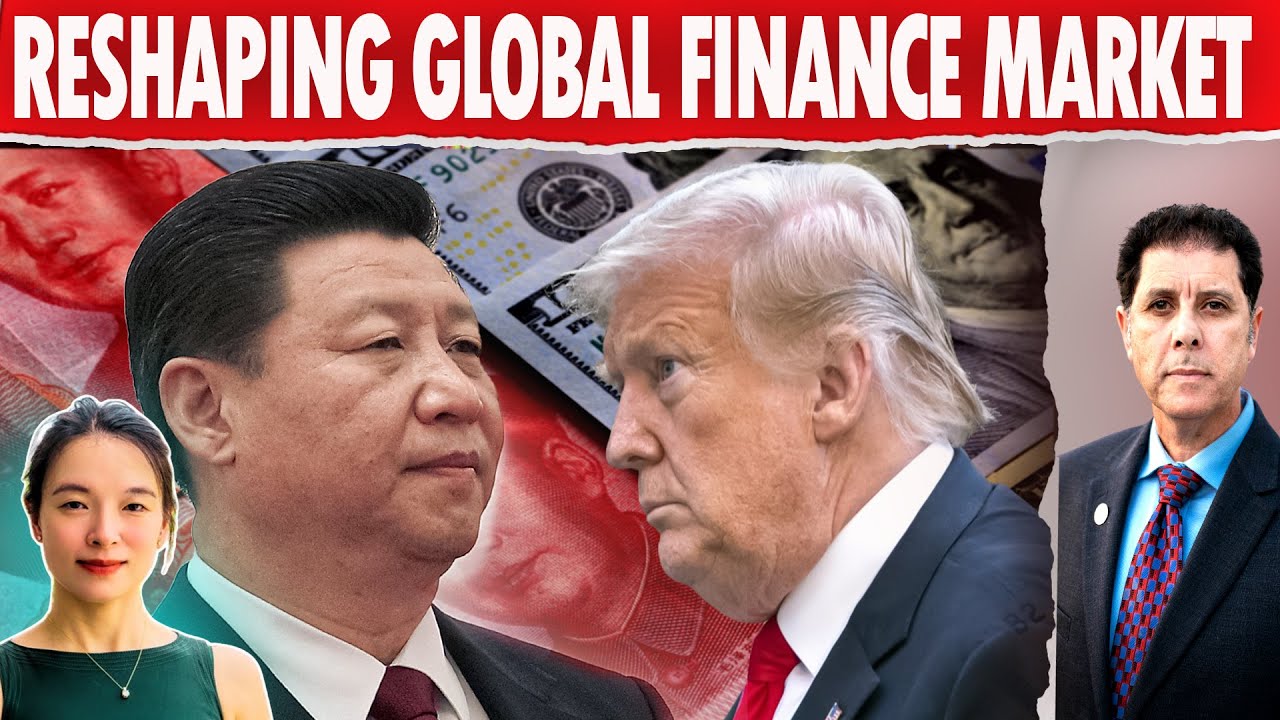
In this Geopolitical Trends interview, host Dr. David Oualaalou (Speaker A) engages Professor Yan Liang, a Peter and Bonnie S. Kramer Chair Professor of Economics at William & Mary, on the state of the world economy, China’s monetary strategy, and the broader geopolitical implications. The conversation begins with an IMF‑based outlook that projects global real GDP growth at 3% for 2025, noting that China is expected to grow around 5% while the United States lags near 1.8%. Professor Liang critiques the narrative of a looming Chinese economic collapse, attributing it to ignorance, political hubris, and a deliberate U.S. effort to dampen market expectations. She then explains China’s extensive network of over 40 bilateral currency‑swap lines, positioning them as a Global Financial Safety Net that offers an alternative to IMF emergency lending and reserve‑building. The discussion moves to yuan‑denominated financing—panda and dim‑sum bonds, lower Chinese sovereign yields (≈1.8% vs. U.S. 10‑year Treasury ≈4.2%)—and how these cheaper, stable loans are reshaping trade settlements, especially with BRICS and ASEAN partners via the Cross‑Border Interbank Payment System (CIPS). Professor Liang assesses the impact on the U.S. dollar, arguing that while the dollar will remain dominant, a multipolar currency system is emerging. She also addresses the role of the digital yuan and China’s cautious, state‑led approach to capital‑account liberalization, emphasizing regulated channels such as Stock Connect, Bond Connect, and QFII/RQFII. The interview concludes with analysis of rising U.S.–China trade tensions, a truce‑like outlook, and the strategic importance of Asia—particularly ASEAN’s upgraded free‑trade agreement and the geopolitical fallout from Japan’s recent “reckless” statements on Taiwan, which could trigger economic retaliation through rare‑earth restrictions and tourism bans. Throughout, Professor Liang underscores China’s strategic use of financial tools to bolster its geopolitical standing while maintaining economic stability.
Chapters
Hello everybody and welcome to Geopolitical Trends, where truth matters. Excited to be with you. I'm even more excited because I have a, a good friend of mine and also an interesting guest. And I know some of you have been asking me, can you, Dr. O, can you reach out to Professor Lien? Well, she is right here. Let me bring her in right away. Hello, Professor. How are you?
Oh, good, good. Yeah, good to be with you again, Dr. Oh.
Of course, of course. We are so excited. The community is so excited to have you and listen to your insights about what we're going to be talking about. Uh, just a brief intro for those who do not know who Professor Yanlian is. She's a Peter and Bonnie S. Kramer Chair Professor of Economics at William Mary University. She's also a research associate at the Levy Economics Institute and a research scholar of the Global Institute for Sustainable Prosperity. She specializes in MMT, Modern Monetary Theory, in addition to economic developments, international economics, and political economy of China. She published numerous articles. I put for the community, I put the full bio for Professor Lien in the description. You might want to take a look at that one. So, so let's get into this, Professor. We got a lot to cover. So I want to start first of all with the state of the economy of the world. How do you see it? Of course, with the tariffs and what's going on between the US mainly and China, the main, uh, larger economies of the world. What is your overall assessment of the current global economy?
Right. Well, let's start with the global economy. So, you know, the IMF in October issued a new World Economic Outlook, the WEO. What they show is that the global GDP, right, real growth rate is forecast at 3%. So this is better than what they expected back in April, right, when Trump single-handedly, right, pretty much rattled the entire international trading system. So at that point, they were much more pessimistic about the global economy this year. But it turned out, as we know, Trump has played the tackle card, right, that he has chickened out in many of these so-called tariff, reciprocal tariffs. So by September, by October, you know, IMF had a better outlook of the global economy. But still, this growth rate is much lower than the pre-pandemic, you know, medium, long-term projection. So that means, you know, we're growing then better than feared, as the IMF managing director said. But it is not good enough to promote economic prosperity, especially in the developing world. Right. And also try to fight against climate change and many other global challenges. We need healthy growth. Right. So that is pretty much the global outlook. Now, when it comes to the US and China, I think China has actually weathered quite well this year amid external risks and shocks, as well as domestic continuous, you know, transition out of the real estate-driven economy. So as you know, the first 3 quarters, the growth rate was 5.2%, and it slowed down a little bit in October. But I think October is a quite unusual month, right, when the trade tension really reached the peak and so on. So I think China is on the way to wrap up the growth rate to around 5% this year. I think it's quite, I think, within the reach, right, to reach the growth rate. Now for the US, the economy, you know, really contracted in the first quarter, largely because, you know, front-loading of imports, right, for the fear of the tariffs. Then things got a little better in the second quarter, but still, I think overall this year's growth rate was forecasted at around 1.8%. So it's below the US's own potential growth rate. And I think what is more concerning is, of course, again, IMF also sounded the alarm, right? One is the overreliance on AI. So you looked at AI added more than half percentage points to the US's growth. And AI, it's basically what drives the stock market rallies and generate positive wealth effect for the wealthy individual who will continue to consume. But again, there is always a question about, are we seeing this? As if, you know, as the same as back in 2000s when we had the dot-com bubble, right? This overinvestment in AI sector. The other one, of course, has to do with this trade war that lifted inflation and how this is going to affect the Fed and the US shutdown. And so we don't really have the October job numbers. Right. And so that, I think, made the Fed's policy difficult to make, whether they cut interest rates or not. So overall, I think, you know, In terms of the US, I think it is suffering from the self-inflicting wound in terms of deglobalization, you know, tariff, restricted immigration policy, and so on and so forth. Whereas China, I think it is growing in a steady way and continue with economic transition, right, into the high-quality development.
Yeah, I'm glad you, you explained this one, Professor, because there are those, and I've been reading some white papers coming out of Washington here suggesting that, well, now we're looking at the Chinese economy being slowing down, whatever, just because they didn't see the same growth that it was for the 7, 8, almost 8.5%. And as you mentioned, it was, it was a slow sort of a reduced from the normal peak for what the Chinese economy. But I don't understand why are they, they meaning the individuals who did the analysis, all of them moving into the direction of the— well, the Chinese economy is not doing well, it might end up collapsing. I'm hearing this word of collapse being used so loosely, and I was there in China and I saw— I would have seen the signs of the collapse if it was in a collapse. Why do you, why do you think these people are pushing this narrative for? What is the objective of this particular narrative, in your opinion, Professor?
Well, I think there are maybe multiple reasons behind, right? So one, I would say some either scholars or laymen or politicians, right, they're simply saying these kinds of things out of ignorance. They've never been to China, they have never even seen China, and they just rely on some kinds of, you know, not even news, right? So it's entertainment news that just portray the picture that China is collapsing. So it's completely just out of ignorance and also hubris, right? That how can China continue to grow? How can China overtake the US? How can China be so dynamic under sort of communism rule? Right. So there is the kinds of ignorance, hubris, and just sort of made-beliefs that would believe in that kind of narrative that China's economy is collapsing. On the other hand, I also believe that there are people who kind of understand that China is growing in such a steady and sustainable way. It's been decades that China has maintained both high-speed growth and now recently moved on to more high-quality growth. And we can talk about what that means, right? It means more sustainable, more inclusive, and more productivity-driven. But I think they want to talk down on China because that would help them to, in a way, move the market expectations a little bit. Right. If you remember, the US government, the Congress, basically authorized $1.6 billion to basically demonize China. And so demonize China's economy is part of that scheme because once you make it sound like China is collapsing, the market is not investable, that could shape expectations and do some damage to the actual growth. But again, I think for those who are informed, who are really seeing China as it is, and they would not be bought into this kind of narrative that China is collapsing. I mean, China definitely has its own challenges, right? I mean, every country does. But I think China is managing it quite well. And in terms of big direction, I do think that China is on a sustainable and productive trajectory.
Well, I am one of those who do not buy these arguments that they're saying about the collapse. I was there, I saw. So I would have seen the sign, as I mentioned, uh, if, if it were the case. Uh, and I just wanted the community to hear it from you. You are in academia, your background is in economics. So this is what I always say to the community: be careful what you are listening to. Everybody will just be spewing nonsense. So, and I want him— I wanted the community to hear it from you, uh, from an expert in, in, in this context. So I want to move into talking about, uh, some recent developments in the financial market. And as you know, and I'm sure the community understand, there is always that link between the global finance and the geopolitical trajectory. I've always believed in that. So, and one of the things I want to ask your opinion on is the idea of the significance of China's bilateral currency swaps and the trade settlements that have been taking place recently with certain members of BRICS. How do you see it moving forward and what is the significance of it in your opinion?
Yeah, well, I think that's an excellent question, and also I think many people don't really realize the significance, right, of China's sort of financial statecraft, right? How China positions itself in the global financial architecture and how China positions itself, right, to fend off any sort of external financial risks and threats. So when it comes to the so-called bilateral currency swap, that is basically China's central bank, the PBOC, sets up these currency swaps with other countries' central banks. So right now there are over 40 countries that have the kinds of swap lines with the PBOC. So what these swap lines work is in the global sort of financial, the so-called GFN, right? So the financial sort of cushion, right? It's a protection kind of scheme where if a country is encountering some balance of payment difficulties, they could draw on these swap lines. So for example, Argentina is a salient example that China and Argentinian government has about $18 billion of swap line where Argentina is able to tap on the swap line if they are having difficulties to pay for their imports. For example, they could convert the Argentinian peso into the Chinese yuan using that kind of swap line. So that's what Argentina has been doing. They actually also tap the swap line to pay for IMF loans using the Chinese yuan. So this is a great contribution, I think, for China to provide a financial safety net. Yeah, that's the word that I was trying to come to. So the Global Financial Safety Net, GFSN, this is what China is doing, right? Try to help to stabilize the payment system, the global payment system in the world. And I think that is very important because right now countries have only— most of the countries have only two ways to safeguard themselves. One is going through the IMF. To draw on the IMF sort of lending, emergency lending when they encounter financial difficulties. So Argentina, of course, has done this and it's owing over $40 billion to the IMF as emergency loans. That's one way to do it. But we know this is not a desirable solution because IMF typically will impose structural adjustment programs. So there are conditions attached. And most of the time they ask you for fiscal spending cuts and so on and so forth. And so that usually adds fuel to fire to these countries that already suffer from a lot of economic woes. The other way the countries protect themselves is to usually build up their own foreign exchange reserves. And for some of the lucky ones, they're also at the regional sort of safety net. So like the Chiang Mai, where many of the South Asian economies are part of, they get this regional sort of pot of money that they could utilize to cope with the balance of payment difficulties. So those are usually the two ways that countries can protect themselves. And so now China is stepping in and providing the swap lines to other countries that also help to provide additional safety net. Now, the United States only has the swap lines with 5 central banks, right? Those are all developed countries, ECBs, you know, and UK and so on. None of them are from developing countries. Very only briefly during pandemic years where, you know, Mexico and Brazil enjoy that kind of swap line with the US. So the United United States is not really helping, right, the great majority of the countries. So that's about the swap line. And then in terms of the trade settlements, there are many reasons for why China wants to, you know, establish its own trade settlement using Chinese yuan, using the, you know, Chinese financial institutions-centered kind of payment system, right? Because we know that the dollar settlement is costly, there is the exchange rate risks, and also subject to US financial institutions. You know, their regulations is subject to the US law and so on and so forth. And not to mention, you know, the US can weaponize that payment system. So that's why China has been developing its own, you know, cross-border payment system, the so-called CIPS, right, the Cross-Border Interbank Payment System that China introduced back in 2015. And now I think the the cross-border payments in China, including trade and also financial transactions, over half of these transactions are done in the RMB. And the CIPS pretty much established the links with 189 countries now. So they're able to connect directly to many of the BRICS countries, as we talked about. Right. So you have UPI in India, you have Pix in Brazil. So these interbanking clearing system or payment system are connected. So that allows China to settle trade payments with all these partner countries and also using RMB increasingly.
And I'm even noticing that this increase in this swap or settlement this way is also being conducted with members of ASEAN countries. So that tells me This is where I saw the link between the financial aspects and the geopolitical trajectory. So it's, it's gonna be moving into that direction. This leads me, as a matter of fact, uh, uh, uh, to ask this specific question. Uh, it's about the idea of if we are to think in terms of the yuan, uh, being sort of the, uh, denominated for the loans. How will this impact the dollar moving forward? Because most countries gonna move with a much sort of efficient, effective, and easy way to deal with the loans and so forth versus the IMF and so forth. So if we have yuan-denominated loans, how in your opinion will it impact the US dollar moving forward?
Yeah, I think that's an excellent question. I think, you know, there are a lot of advantages now, I think, from developing countries' perspective, right, to tap into the yuan financing. For one is that China has been the major trading partners for the great majority of the Global South countries.. And so if you're trading with China, you're buying and selling with China, then why do you want to use non-yuan or not your local currency, currency, right, to settle this debt? So I think increasingly countries see it's better, right, that when you directly trade with the biggest trading partner, you want to use the country's currency. I mean, this is the same thing with when China buys oil from Saudis or from UAE. It kind of really stirred some kind of geopolitical sensation, right? This idea that, you know, petrodollar is maybe no longer the case going forward. Right. And China is creating this yuan-denominated petrol trade and not to mention renewable energies. And we can talk about that later. But I think for one is that, yes, when your big trading partner is China, you have the benefit of using yuan or your local currency for the trade settlements. That's number one. Number two is when it comes to the cost of financing, right? China's loans are much, much cheaper these days, right? And it's been a while compared to the US. You know, the US 10-year Treasury bond now is around 4.18% or 4.20%. So even the so-called risk-free, right, the US Treasury, the loans, is still charging you over 4%, whereas China, its 10-year government bond yield is now 1.8%. So it's a much, much cheaper financing. And that's why I think countries— this year we have seen a lot of countries issue the so-called panda bonds and so-called dim sum bonds. So these are RMB-denominated debt instruments, right? So this is essentially countries are borrowing by selling these bonds. So we see record issuance of these instruments back in 2024. And this year, I think we're likely to see another record, right? So far in this year, there's about over $20-some billion issuance. And that includes both private entities and also NGOs, as well as countries like Slovenia and Hungary and others that have issued these bonds. Indonesia as well. So it's cheaper. And also the RMB has been stable over the years, right? It doesn't have fluctuations like the US dollar that depreciated by 10% this year so far. So the stable RMB coupled with the low cost of financing, I think, has prompted countries to borrow in yuan. And we also saw the recent news where Kenya has converted its $3.5 billion dollar-denominated loans with China now to yuan-denominated loans, and that saved them over $200 million in interest costs. So I think that's going to be the trend going forward, that China is going to provide more development financing in its own currency. And we see this in the BRI lending as well, that back in the starting days in 2013, RMB lending is about only 10-15% of the in finance through BRI. Now it's over 50%. So we're likely to see that trend. So going back to your question, how does that do to the dollar, right? I mean, dollar is still the hedge bond currency. I mean, no doubt about it. If you look at, you know, it is still close to 60% of foreign exchange reserves. It still accounts for, you know, 80%, 90% of global payments and exchange rate transactions and so on, so exchange transactions and so on and so forth. But the trend is clear that we're moving towards this more multipolar kind of system where, you know, countries don't just settle their trade in dollars alone. Now they're seeking for local currency trade settlements. They're using the yuan and so on and so forth. So I think, you know, we're not talking about the yuan deplacing the dollar as a hegemon currency. But what we are likely to see is much more diversified uses of currencies. And this kind of multipolarity in the currency space, in the payment system, would really mirror the kind of multipolar system, right, in a geopolitical sense.
Yeah, this is where I see, uh, this is where I see the, the sort of why I wanted to ask you these questions, because I, I am thinking in terms of if we are to see where the trend is headed, uh, the logical question we're gonna be asking is what is the role is going to be of the digital yuan into all this. And, and with this one, I want to ask the question of, in your opinion, moving forward in this, in this, in this, uh, path, will having the role of the yuan on the global market, or global financial market that is, will be much easier to have a capital market access using the yuan instead of the dollar?
Yeah, well, I mean, China's way of promoting the so-called RMB internationalization or the international uses of RMB is couched against this idea that China needs to maintain its financial stability and avoid over-financialization. China does not want to repeat the same kind of path the US has been embarking on. So in other words, China will gradually open up for capital accounts, allow foreigners to invest in China's equity and bonds and other instruments, financial assets, right, or real assets for that matter. But China is going to do it in a regulated way. Even when you look at the most recent, right, the 15th Five-Year Plan, they talked about to promote RMB internationalization and pursue growth, greater openness of the capital account. But the way that this has been done, it's not the sort of free market that let's just deregulate, let the market take care of things kind of approach. It is still very much a state-led infrastructure or institutional building approach. So what that means is that, you know, now for foreign investors who want to invest in China, they could go through, you know, the so-called Stock Connect and the Bond Connect that China has introduced, you know, in the 2010s. And they could also go through the so-called qualified foreign institutional investors and RMB-qualified foreign institutional investors, that kind of channel to invest in China. And China is gradually expand and reduce the limitations of foreign investors to invest in China's stock markets and bonds market. But again, this is done in a gradual, also regulated way. So regulation means you still need to provide transparent information. You still need to disclose what you are investing in and how do you utilize the funds and so on and so forth. So I see that this is a way as, yes, there is opportunity for foreign investors to invest in the Chinese market, but it's not going to be completely deregulated fashion, right? And I think, again, China's point is not to really be a sort of a place where you can have a lot of speculation, speculative financial investments, right? China still focus on RMB. To be more used in the real productive way. So facilitate trade, facilitate infrastructure constructions, facilitate foreign direct investments, and so on and so forth. But I don't see where China is going to develop a financial market as deep, as large as the United States, and as unregulated as the United States, right, to simply promote the kind of financialization. You know, the US's its Treasury market or its bonds market, its stock market are oversized. Right. And so a lot of times these kinds of financial investment doesn't translate into actual production or trade. Right. So I think China, it's not going to emulate the United States to be a highly financialized economy. So if you have the yuan, right, and thinking about you can speculate on China's you know, financial instruments, well, I don't think that's a right strategy, right? But if you want to trade with China, if you wanted to, you know, conduct real productive businesses with China, then I think, you know, that you've got all these channels to do that.
Yeah, well, it makes more sense, Professor, especially when I, at least from me, looking outside in, Uh, what, what, when I see the trend where it is headed, for example, for— I, I had a chance to read some stats, and I'm gonna share with the community right here. This is for 2026, uh, as far as— and I give credit, by the way, to Capitalist. That's their, their, uh, slide here, uh, the, the projection of the $124 trillion world economy in 2026. And when we look at the size of China portion of the, of, of this pie. So it's, it's a major one when you consider the idea that if, if we are to look at the projection here like this, and the question that I want to ask you, Professor, just to, to, for my community to understand, can we expect now the growth of the yuan use in global payments, uh, systems moving forward? Like, is it, is it a foregone conclusion that the growth of the yuan use in the global payments is going to be happening?
Well, I think so. I think that it's again for multiple reasons. So as I mentioned earlier, because China is again, it's the second largest economy, one of the largest, actually it's the largest trading nation in the world. And also because all these, the Chinese financing is It's stable, it's cost-effective, and China is promoting, you know, cross-border payments in its own currency with partner countries, you know, 189 countries in the world that now are connected to the CIPS. So I think for all these reasons, we're likely to see the upward trajectory of the RMB uses in the global economy, especially when it comes to facilitate trade and also for real investments. Now, I also think that for the rest of the world, they also have the interest of diversifying away from the dollar. For multiple reasons, right? For economic reasons, using the dollar system settlements, this whole current, the SWIFT system, using the so-called correspondent banks. I know that goes into a lot more technical issues, so maybe we won't cover in detail here. But just suffice to say, the current cross-border payment system, the dominant one, the dollar-centered one, was built in the 1970s. They're still using phone messaging. They're still using all these very archaic ways of transacting. There's no 24/7 unstopped kind of payment facilities. And there's a lot of currency risk as well. Because when you think about this, in the current system, let's say if a Thai businessperson wants to pay a Malaysian business, the Thai businessperson would have to contact his bank, and his bank would have to find a correspondent bank bank, most likely in the United States, convert the baht into the dollar, go through this correspondent bank, and this correspondent bank will then connect with this Malaysian bank and convert the dollar into rupiah. And then that bank would then connect with this Malaysian recipient. So it's a much, much more costly, slow process, right? And when also all these payments are intermediated or going through the correspondent bank of, let's say, JP Morgan, right? It is within the US jurisdiction, is subject to the US law. So if the US law says, hey, somehow you're being sanctioned, but then you're going through my bank, well, sorry, right? Your money is going to be confiscated or whatever, right? Or seized. I mean, there are just a lot of both in terms of economic costs, but also geopolitical risks. For countries trying to diversify away from the dollar-centered financial system. And that goes the same way with your financing, right? The dollar is expensive. The currency could be volatile in terms of exchange rates. And also the investments, again, most investors these days— or not most, but a lot of advanced economies investors, they are overweighted in the US market. Right. And so where do you find growth? Asia. So I think there is this conscious sort of diversification that we already see. And so I think that is where we could see that yuan plays more role. So is, you know, other currency in the developing countries. Yeah.
Well, I'm glad you mentioned the Asia, Professor, because I can tell where the concern in Washington is coming from regarding these economic developments in that part of the world. Because that's where the engine, in my opinion, of the economy, of the global economy, it's not the US anymore. Yes, we still play a role on the global stage. But when we compare, once again, when I look at the numbers here, the share of the Chinese market for the global economy or the world economy in next year, it's very, very, very big, per se. So, and since you mentioned Asia, I, I have to ask you this question about— I know it's more of a geopolitical, but we're going to look at it from the economic aspect, which by the way, I have been mentioning that there is an economic wild card that China can play vis-à-vis tension with Japan. First of all, I want to ask your opinion. How do you assess this recklessness coming out of Tokyo towards China?
Right. Well, I think that's exactly what you said, right? Reckless. I think the Chinese official pronouncement is calling this really military adventurism and also very reckless gambit. So this referred to Takashi, the newly elected prime minister of Japan, who said if China use force against Taiwan, then this will be considered as existential threat to Japan, and therefore Japan will send their troops to sort of meddle in this kind of use of force. It is very reckless, and it's also very unfounded because this is the first time actually ever that a prime minister of Japan would make this kind of sort of declaration, right? And Takahashi, as we know, she represents the ultra-right and very nationalist populist sort of electoral base in Japan. So, and she had the same kind of narrative for a long time in her political career, but this time is different because now she's the prime minister, so it carries much, much weighty, much, much more weight, right, when she said that. So I think, you know, China clearly indicates that this is crossing the red line, and of course they very quickly trying to do some damage control. They send their high ranking official, you know, foreign minister, ministry official to China and trying to amend this. But I think, you know, the Chinese, uh, uh, the, the sort of— that's not the spokesperson, but the person, um, that sort of received this, uh, foreign official basically said, you know, we're not satisfied, right? We're still not satisfied because, um, you know, the Prime Minister still didn't, uh, retract, right, her, her, her statement. And when the Chinese counterpart was asked about what was the atmosphere like, he went, "Serious." So it is a serious matter, both in terms of the historical perspective. We all know China's invasion in China and the massacre and all this horrendous crimes that Japan has committed. And now, and going back to the kind of militarism and this kind of very, very jingoistic kind of language, right, the statement, I think it really crossed the line. And so I think that is what China is very, very firm, right, in condemning and also taking actual actions. As a matter of fact, you know, over 400,000 flights have been canceled from China to Japan, and many of the travelers' groups, even with also student exchange programs, they were on the And so that is, I think, a clear indication, right? Enough is enough. And again, this is not the first time. I think back in 2012, we have seen this very strong, you know, protest from China. And so many Chinese people actually boycott Japanese products. And actually, you know, the municipal government of Beijing, I think they just recently, maybe yesterday, issued an announcement that they're going to pause the imports of seafood from Japan. So I think this is a self-inflicted wound. I think Japan relies very much on Chinese tourism. China's tourists account for about one quarter of the total, you know, the foreign visitors to Japan. And so that is going to be a substantial economic loss in Japan, especially given the current juncture that, you know, Japan's economy was contracting in the third quarter, and they, you know, as you know, they're trading Yeah, tariffs, you know, to foes and, and allies alike. Um, so I think Japan's economy is in a very, you know, precarious and in very bad shape. But now they're again doing something completely out of line and Oh, we're back. Okay, looks like there was some connection problem.
No, it was a connection on my end too. So, uh, okay, let's see here. Okay, at stage. Okay, all right, here you are. All right, sorry for this, uh, folks. Yeah, yeah, yeah, the last, uh, the last word you mentioned about, uh, the economic aspects of of where it's going. My big concern— it's not a concern in the sense of concern for why— for the Japanese people, of course, when the prime minister made whatever statement she made. So the way I see it is that Japan, for example, we think about rare earth elements. So Japan doesn't produce rare earth elements. It depends on China. China— I've argued this last week. By saying that China holds the wild card economically speaking. It can really sink the Japanese economy if it wants to. So in, in your opinion, where do you see it moving forward now? Because the diplomatic side or the diplomatic track, it's going to be on its own, but from the economic— and I'm using an examples of Australia, it's exact issue that happened between China and Australia, and all China needed to do is stop certain products from being exported to Australia, and we saw the economy of Australia went down. Do you foresee the same happening with Japan?
I think so. I mean, for one is, I think this really, as I said, it crossed the red line, and many Chinese people, as a matter of fact, right, I follow a lot of Chinese social media, and I can see how people are so outraged. As a matter of fact, I think the Chinese government is behaving in a very restrained way already. So I think, again, this is something really, I think, consequential. Right. From China's perspective, this crossed the line and China has to respond in a way that would deter other countries or Japan itself. Right. From further aggression. Right. And so I think, yes, the economic cards China does have, both the rare earths, but also, again, with all these trading relationships including services, right? So this tourism, I do think that China could, you know, incur, right, could exert some economic pressures and create some economic harms to the Japanese economy. And again, China did that back in 2012 when there was these, you know, aggressions of Japan when it comes to the Diaoyidao, the— I can't remember the English name for that, but Senkaku Islands. Yeah, yes, yes. And so that was actually the first time China restricted the export of rare earths directly to Japan, right? So I think, yes, there are still many other options that China could use. So I think, you know, it's difficult to really separate, you know, when it comes to diplomatic channels from economic relationships because there's the trust issue there, right? So I think that's why China was very active in trying to promote the more trilateral trading relationships with Japan, South Korea, and China. But I think Japan's reckless act has really put that in jeopardy. And I think, again, we all saw who was the aggressor, who started this whole spat, right? And so then Japan would need to be really correct its own action, its course of action, in order to regain the kind of trust and to restore some kinds of normal trading relationships. And I think even, you know, Korea was really criticizing Japan for those kinds of statements. And so that says a lot, right, in terms of Japan's behavior in the region. Going back to what you said, you know, Asia accounts for 60% of the global growth. And what this region has done well is through regional integration, through peace and development. Even there are some smaller border spats between different countries, they try to keep them under control. But I think this act of Japan is really destabilizing the regional peace and security and development. So I think really the responsibility falls on Japan, and they need to make course correction if they wanted to continue to enjoy the beneficial cooperative relationships with China and other countries in the region as well.
Well, I am certain the Chinese will never forget what happened to their ancestors with the historical atrocities. So that's what makes it even worse for Japan. You will think they will sort of think before they'll embark on this. I also see another thing that it is unlikely, at least for the time being, I don't see ever President Xi Jinping granting an audience to this prime minister. I just don't think so it will ever happen. So I just don't see it. So, so I want to give you a last word. I know you're busy, Professor, and I want to be mindful and considerate of your time here. I want to give you a last word for how, first of all, how do we see the tensions between the US and China regarding economic trade that is moving forward, given now that the US realized you know, it's holding the end of the stick. And second thing, where do you see the future of Asia moving forward economically when considering the role of ASEAN and of course BRICS into this matter?
Yeah, great questions, and again, it's always a pleasure to talk to you. So for the US-China relationship, as we know now, you know, Trump really backed down, right, from the earlier really aggressive, you know, trade and also technological restrictions to China. And, you know, in the recent Busan talk between Xi and Trump, Trump actually named, you know, this, this relationship as G2, right? So you can see this implication of coexistence and equal power in that sort of connotation. So I think the U.S., you know, as you know, both sides de-escalate. China is going to postpone the rare earth restrictions control, you know, for a year. And the U.S. would also back down from, you know, both tariffs but also the so-called affiliation rule, 50% rule, and so on and so forth. So, so there is a kind of a truce. And of course, this is just a truce, right? A temporary kind of cease, you know, of that kind of trade escalation. But it doesn't resolve, right, all the tensions or all the structural differences and so on and so forth. So it's likely that, you know, both presidents will meet again in the coming year. So hopefully that would continue to push forward some kind of framework to resolve some of these trade tensions. But I think, I think the structural difference will continue to remain, right? The US will still see China as a competitor and they still have every interest to slow down, if not derail China's technological development. But they also realize that China has the cards, that they cannot just push the button without being pushed back. China is not like other countries. Most of the other countries have been really compliant. They didn't fight back on the tariffs. But China stood out and fought back. And so the United States realized that decoupling is impossible and they can't just keep pushing China without suffering the consequences. So I think they will be very careful with their next move. But that said, I think there's still a lot of indications that the US is not going to be all of a sudden be a very sort of cooperative country and not seeing China as a rivalry. Right. We know the recent accusation of Alibaba's connections with the military and also GM and Tesla said they want to cut China parts out of their automaking. I think all these are indications of the continued trade and investment and technological competition, you know, are going to stay, right? The question is, can both countries manage these kinds of differences and just, you know, to keep the relationships forward, right? And then when it comes to the role of Asia, especially ASEAN countries, as we know, you know, this is 10 ASEAN middle powers that join together and, you know, form this sort of economic coalition, right? And I think they will continue to play a very important role. As we know that China has just upgraded the China-ASEAN Free Trade Agreement, now it's 3.0, and it adds a lot more in terms of e-commerce, in terms of AI governance and service, and also facilitating trade, connecting the infrastructure, and so on and so forth. So I think, you know, the region has really strong cooperation in the global supply chain, in the regional supply chain, and they are all very innovative and dynamic, right? They wanted to continue to invest in technologies like AI, autonomous, sorry, and EVs, and digital economies. And so I think, as you know, that this region has been really very much sort of innovative and integrated, so I can see that the cooperation will strengthen, and that would help to drive this region's economy forward. And again, some of these other countries, right? South Korea, Japan, of course, India. If they cooperate, if they get their act together, meaning that they both innovate and strengthen the economy from within, but also have the bigger picture, right, the regional stability and development in mind, and cooperate with each other, then I think this will really help to move this region forward. There's so much dynamic and vitality in this region. So I definitely see, compared to the United States and Europe, I think Asia is really going to be the driving force in years to come.
And that's exactly what the world needs right now. We don't need any more conflicts and so forth. We've had enough.
Absolutely.
Europeans are living the consequences of their decisions, while at the same time you look at the progress and prosperity in Asia. I remember my last trip to China and I saw the developments that took place in that country. It's magnificent. So I don't know. I am so glad you had time for us here. You carve out time for us. Professor, really, uh, to listen to your insights and learn from your, uh, perspectives here. On behalf of the entire community, I'll say thank you so much for carving out time for us, and we look forward to seeing you next time.
Yeah, it's my pleasure. Good to talk to you again today.
My pleasure. Thank you. Uh, for you, the community, uh, I hope you enjoyed. Of course, anytime we have Professor Liang here, and I'm sure I will reach out to her some other time. She's busy, uh, she is also a professor, so you know how it is when you teach in a semester, you are very, very, very, uh, busy with the, with the, uh, exams and so forth. So we will have her back here in the channel, and always nice to have her here to listen to her insights and learn from her. So, uh, remember to join me at, uh, I think in about 30 minutes I will be on the other channel. I'm gonna put the link link for you in the, uh, this chat box here. That's for about 13:30. I'll be talking with Elizabeth on about some, uh, the national debt here in the US. And also remember to join me tonight at 1900 hours for my conversation with Jayant Bhandari, where we'll be talking about India and how it caved in to the United States. So hope you all enjoyed listening to Professor Yan Lian, and I look forward to seeing you next time. As always, remember, geopolitics impacts your daily life in more ways than one. Till next time, bye-bye.
More from David


Beyond the Single Actor: Why the Gulf Isn't Choosing Between the US and China


Iran, Iraq's Militias, and the Houthis Are Coordinating! This Changes Everything




Who Controls the Next Decade's Resources? Latin America and Africa's Geopolitical Crossroads

The Chokepoint Trap: How Washington's Stupidity Triggered a Cascade That Now Controls the World

Trump Spooked as IRGC Unveiled dual-use SLV, Deployed Ghadir Mini-Subs & Hinted at Tactical Nukes!
