Chinese FM, Wang Yi's Surprise Visit to Russia! What’s the Plan?
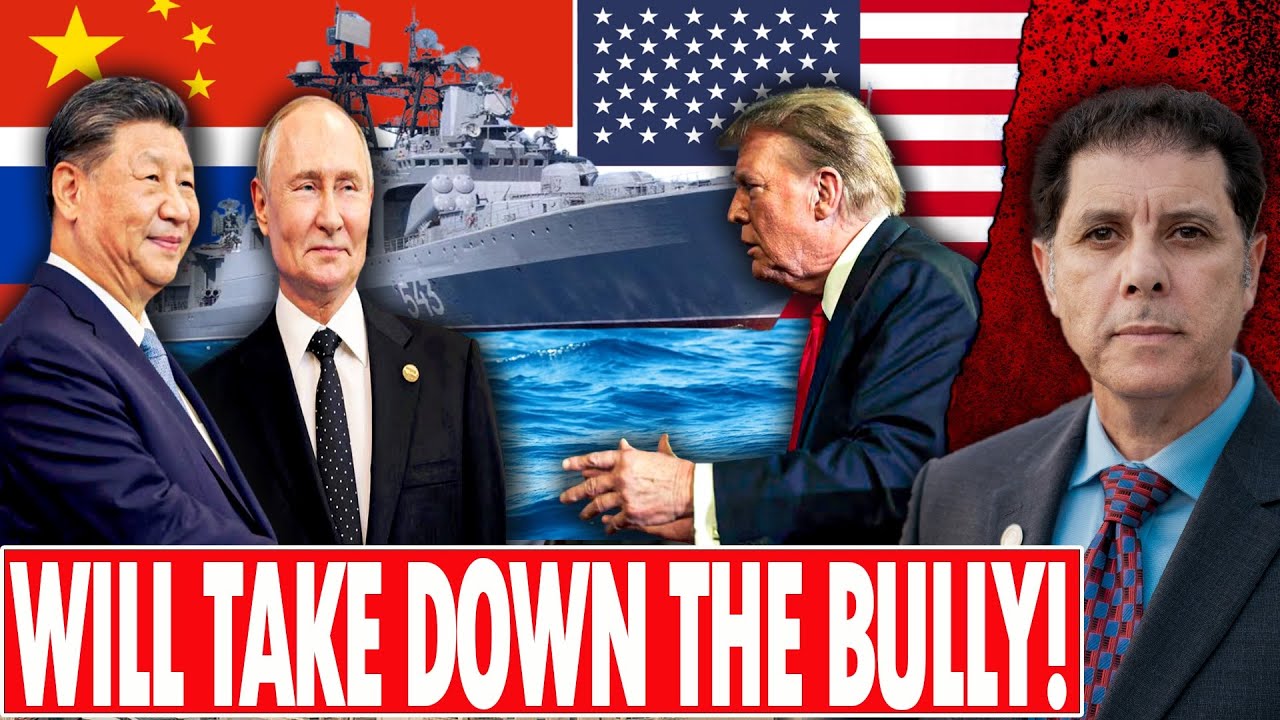
In this live‑stream, the host (Speaker A) provides a deep‑dive analysis of Chinese Foreign Minister Wang Yi’s unexpected two‑day trip to Moscow, where he met President Vladimir Putin and Foreign Minister Sergey Lavrov. The commentary links the visit to a broader pattern of Sino‑Russian coordination across diplomatic, economic, and security domains. Key points include: the joint messaging on BRICS, the United Nations, and a reported $1.2 trillion bypass of the SWIFT system; China’s claim to play a constructive role in ending the Ukraine war while supporting Moscow’s interests; speculation that the meeting foreshadows a formal treaty marking a “new era” of comprehensive cooperation; the timing of the visit alongside Chinese military drills near Taiwan and heightened tensions in the South China Sea; the strategic relevance of regional actors such as the Philippines, Japan, Iran, and North Korea; historical context of Sino‑Russian ties dating back to the 1970s; the host’s broader geopolitical lens that portrays a declining U.S. hegemony and an emerging multipolar order. Throughout, the host engages the live chat, polls viewers on treaty speculation, references past research and a forthcoming book excerpt, and solicits support for an upcoming Asia trip. The tone is conversational yet analytical, with a critical stance toward U.S. policy and a cautiously optimistic view of the China‑Russia partnership.
Chapters
All right, hello everybody and welcome to Geopolitical Trends, where truth matters. Excited to be with you as always. I know you've been seeing my face now almost every day for the last week and a half, so, but again, that's my commitment to our community, uh, that, that, that's usually what I promised you is, you know, I'll give it 110%, whatever I have. So, so anyway, Very excited to be with you. Uh, I have an interesting topic, or interesting developments, that is, and this has to do with the unexpected surprise visit of Mr. Wang Yi, the Chinese foreign minister, to Russia. And he met with both the Russian President Vladimir Putin and his counterpart, Mr. Sergey Lavrov. So today I'm going to be providing you my insights, analysis about what's in this trip, why all of a sudden Mr. Wang Yi is in, in, uh, in Moscow. As a matter of fact, he is there today, and the trip— his trip, or his visit rather— will end tomorrow. So, so before I do this, please make sure to subscribe to the channel if this is your first time here. I will greatly appreciate it. Here is the link on the chat box, and thank you for your support. So Say hi quickly to our community. Willie Holman, Francis Tango, Taiwan Steel, uh, Rafael, good to see you. YT, as always. Amanda, good to see you. Matt Becky, Andrew, Alex Talokin, Juan KC, good to see you here. And Cobra Magnus, good to see you. Immersion, good to see you. I know, by the way, guys, somebody made a comment about I take too long before I'll get into the topic. So now, I, I don't know, what do you guys— you want me just cut directly into the topic? I won't do the, the, the, the headlines around the world. I won't share anything else. So please just— and I'm gonna put a vote for you in the community button right here on the chat box. Please just answer yes or no. Would you like me to cut off everything and get into the topic right away without saying hi to the community at all. So anyway, I, I, I quite didn't understand why somebody will be so upset about me taking an extra minute or two just saying hi to our community. So that's, to me, it's kind of— anyway, anyway, let's think positive, let's think positive. Uh, Zan, you say no, meaning we keep it. Uh, Karakulak, you say keep saying hi to us, then Uh, Alistair looking— no, meaning keep, keep it in. Andrew, no, keep it that way. Francis Tango, uh, say hi. Yeah, then, then I will. It's because if somebody doesn't like it, I'm sorry, you can take off or fast forward for the next 3 or 4 minutes, uh, because to me, I, I don't want to cut corners, you know. That, that's, that's part of my community here, and I will say hi. And, and, and that's it, case is closed. I will keep this the way we do it. Now, if somebody doesn't like it, don't subscribe, don't attend this, don't listen to what I have to say. Good luck to you with listening somewhere else. So, so anyway, we're going to keep our things as they are. So thank you for your answer to this one here, guys. So, uh, just quick headline, uh, quick, uh, housekeeping item here, uh, I am still waiting on Professor Anna Malindog to get back to me regarding the interview we had scheduled on Sunday, last Sunday, but she couldn't make it. So it will be either on the 3rd or the 4th of April. I will let you know. So, all right, let's get into our topic here. I don't have the headlines today. I didn't do it because I had to do a lot of reading last night and I didn't have enough time to. So I'm gonna get into the topic right away. And here's the question we need to ask ourselves. So is Mr. Wani— and I have the pictures here for you guys— is Mr. Rani's visit to Russia unexpectedly sort of carries a message in it. And I bet you it does. I bet you it does. And this is what I'm going to get into the detail of this one here. So, so you, you, you think about all of a sudden Mr. Rani is heading out to Russia for 2 days. And of course, to the message, there's a lot to unpack into this. And I can look at it from a different angles. You all remember my conversation yesterday Uh, when I, uh, when I joined Garland and Brian Berletic, we talked about China, uh, a situation regarding Taiwan, right? We talked about the US fomenting tensions in South China Sea using the Philippines. Uh, of course, reached out to Japan for that. We all know what's going on in West Asia or, or Middle East with Iran and all that. So all of a sudden, I find myself saying or thinking, I bet you Mr. Wang Yi's visit to Russia is to coordinate whatever strategy, whatever plan that is. This to me suggests that Russia and China are coordinating their strategy. Of course, they'll hammer out the details later on, but this is like the first step. Of course, they do have a partnership They do have a strong friendship, which by the way we do not like, but too bad. It's almost like saying to the Americans, go take a hike if you don't like it. So, and this is why, if you remember, uh, and, and by the way, right after the meeting between the Russian President Vladimir Putin and Mr. Wang Yi, the Chinese Foreign Minister, the, uh, the Russian president stated that, you know, this cooperation between our two nations has nothing to do with the third party. Rather, it is aiming at strengthening the kind of, uh, uh, relations or cooperation between the two countries. Because why? Because they have a common interest. And I found it very, very interesting And here is the thing, Mr. Putin also stated— and, and I'm gonna get ahead of myself here, but no problem— is that next month, okay, you're gonna have, uh, uh, we're gonna have President Xi Jinping visiting Russia. And I'm gonna, I'm gonna cover this for you, of course. Mr. Putin already— that's, that's the subtle message he's sending to the United States. This is specifically for the United States. Mr. Putin said that his country look forward to the Chinese visit of, uh, Chinese president's, uh, uh, visits, uh, next month, adding— and here is, and I put it in quotes because word for word it is what Mr. Putin said— we are successfully cooperating with China through international platforms including the United Nations and the BRICS bloc. Very inter— end of quote. Very interesting, uh, and well-measured, uh, statement. And there is a reason for that. You mentioned the United Nations is because you wanna show that you adhere to international law as you're supposed to, or regulations, whatever. Then you mention also BRICS because this is also aiming at where you wanna take BRICS moving forward. And we all know what it means, especially when it comes down to the BRICS, uh, block, that it's already moving forward. It's, it's a fait accompli. I read an article, and I am yet to confirm certain aspects of it, that China has moved now with about $1.2 trillion bypassing the SWIFT system altogether. Of course, the Russians were the one initiating the bypassing of the SWIFT following the sanctions. And for Mr. Putin to state this, once again I'm going to repeat the quote: we are successfully cooperating with China through international platforms including the United Nations and the BRICS bloc. End of quote. So, and that's what I found very, very, very interesting regarding the meeting, uh, between Mr. Uh, Wang Yi and the Russian president Vladimir Putin. It's because the argument is that Mr. Wang Yi, on behalf of his country, stated that China is ready to play, and I put this in quote, constructive role, end of quote. Very, once again, very measured. You have to put this in the context of two things. One is the geopolitical landscape. Second one is the security, the global security landscape. So what's interesting about the statement of Mr. Wang Yi is to reinforce the idea, or restate the idea, that China is willing to end the war in Ukraine while supporting Moscow in defending its interest. I found this very, very interesting You may ask yourself, why? Why now? It's because so far there is roadblocks between what Mr. Trump is trying to achieve regarding the ending of the war in Ukraine versus what the Chinese wants to do. Mr. Putin is not agreeing to everything Mr. Trump is talking about. Well, Trump, you know how Trump is, you know, the guy is considering a third term, uh, in, in, in, in here in the US. So that, that's pathetic and ridiculous. But for Trump to say, I'm gonna end the war in one phone call, turns out to be— he realizes that it's more complicated than he even anticipated. Later along, the Russians just gave him lip service, meaning to Trump, because they understand that Mr. Trump doesn't understand geopolitics, doesn't have great depth or understanding of what international security and international affairs is all about. And of course, it goes without saying that the Russians is not going to end the, the war on Donald Trump's terms, but rather it's going to be on the Russians' terms. Because here is the thing, if there is one thing the Russians know, and I bet you this, I, I bet my credibility on it, if you ask anybody in the government, you know, in, in, in Russia, would you ever trust the Americans no matter what they do? They're gonna say, forget about it, it's over. And this is why, again, you have to consider the statements of how it was put. Constructive role in— and regarding China, constructive role in ending the war in Ukraine while supporting Moscow, Moscow in defending its interest. You know, remember, the Chinese already proposed sort of, uh, a proposal to end the conflict, and we rejected it. Of course we were not going to accept it coming from Chinese. Who the heck are they to propose a ceasefire, uh, or, or an alternative to peace in Ukraine? It has to come from us, the Americans. That's just— to me, it's hubris and the arrogance. And the Chinese plan, I had a chance to read it. I read the English version of it that was translated from the Foreign Ministry. It made sense to me, right on point, right on point. And yet we rejected it. So, so the same thing, Mr. Wani, after meeting, meeting with the Russian president, he met with his counterpart, Mr. Sergey Lavrov. And this is where you're gonna have to really pay attention to what their joint statements concluded. And here is what it says, and I'm just going to put brief, brief sentences here. It says that Mr. Wang Yi affirmed that China will work, or would work, with Russia— and I put this in quote— to make new contributions to the cause of peace and development of humanity, end of quote. The timing of it couldn't be better Given the fact of what the United States is doing on the global stage, we already got problems in West Asia, Middle East. We already ratcheting up tensions against Iran. We already targeting the Houthis in Yemen. We already fermenting tensions in the Philippines now because we're going to be pushing Philippines, uh, towards sort of entanglement with the Chinese on the South China Sea. And we are already pushing behind the scenes, the Taiwanese to increase their defense spending. Of course, media is staying silent about this. And I remember I mentioned something about it yesterday during the panel discussions with Garland and Brian when we talked yesterday about the Taiwan Strait issue. When you take that into consideration and consider what the Chinese are saying, once again, and I repeat this, making your contribution to the cause of peace and development of humanity. You want to have world peace, but you want to have also develop humanity in a sense of infrastructure and so forth. And this is where you put that distinctions between what the Chinese offering to the global stage versus what the US, my country, is offering to the global stage. And again, I am being fair. I am always being fair and objective in my assessments. I criticize when criticism is due, I give credit where credit is due. So, and to me it's, it's kind of, it's no-brainer, it's as clear as it can be. You look at now countries, the likes, like we mentioned yesterday, uh, the likes of Vietnam, Laos, Cambodia, Thailand, and so forth, Malaysia, Indonesia, all of them with this, uh, increase in economic outputs. You will think the Philippines will learn something from this. And apparently I am big— I became convinced that Philippines is the weak link in ASEAN, the same way I still stand by my position regarding India being the weak link in BRICS. No, I don't waver from those because it's the truth, it's a fact. So Now here is what I found very interesting about Mr. Wang Yi's statements, uh, after his meeting with Mr. Lavrov— not the president, President Putin, but Mr. Lavrov. He said, and I quote, the comprehensive— once again, I— diplomacy, guys, literally, if there is something to learn about the world of politics, global affairs, international security, geopolitics, and so forth, is how measured the words are. And those are usually a reflection of a well-seasoned diplomat, people who went through the ranks over experience of decades. That's what I found on these statements, and that's why I wanted to share them with you. Here is what Mr. Wang Yi said, and I quote: The comprehensive cooperation between China and Russia in the new era will certainly be renewed, gain a new vitality, and advance to a new stage. End of quote. Just this statement, guys, is so packed. You start with the first word, comprehensive. This is not off-the-cuff, off-the-cuff cooperation. This is not a spur-of-the-moment cooperation, but rather is methodical, is strategically well-coordinated. Cooperation between China and Russia in the new era. What is he referring to here? He's referring to the new multipolar order that is already here. Whether the US is kidding itself in an illusion of thinking that we still dominating the world— no, that era is gone. Look no further than now, how the Houthis, as an example, are challenging the Americans. Look at the statements by Iran regarding the targeting of Garcia— Diego Garcia base, that is, which is British but it's being leased by the US. So, and this is what he meant by a new era will certainly be renewed, gain a new vitality, which means it will have a different dynamics to its course. In a simple language, and I'm gonna break it in a simple language is that it won't be dominated just by the Russians or the Chinese. No. Remember the first statements, uh, Mr. Wang Yi, uh, the first statements from the Russian president after meeting with Wang Yi? For the sake of humanity. This is exactly a reflection of that. And the last part, and advance to a new stage. What he's mean— what he meant by this The new stage of the global peace, the new stage of the multipolar, uh, order, the new, the new stage of having the entire Global South have an alternative. Now, this is why this is packed, and I'm going to repeat it one more time. Quote, the comprehensive cooperation between China and Russia in the new era will certainly be renewed gain a new vitality and advance to a new stage. End of quote. And this is where both ministers— now it became clear because I, I read up on, on these statements released— both of them are very, uh, sort of, uh, convinced and have already expressed their satisfactions with what? With the advancements of their relationship. You all know the history of the Russia-China, uh, the, the Russian-Sino relations back then. It was a war there. We created the wedge back in the 1970s, to be exact in '72. Now we are trying to do the same this time around. Is not gonna succeed because both countries, Russia and China, have made commitments to move their relationship in a strategic fashion. That is where the difference is. So, and that's why when they use the term satisfaction, and with the advancement of the relationship between these two countries to a new level, and you know what that level is? That's the strategic aspects of it. I am yet— I, I can't say this now because I am not certain of it yet. Whether this is a hint— and again, just my own reading, if I'm wrong, I'm wrong— so it's just my own reading, is that the new level is the reference to not only how both countries intend to help manage the new global order, but there is something specific. It has to do with a treaty between the two countries. I don't know if this is just a hint What do you guys think? Do— will I be wrong in this, or do you think, in your opinion, when Mr.— when the two ministers agreed, meaning Lavrov and Mr. Wang Yi, agreed that this, uh, uh, when they expressed their satisfaction with the advancements of the relationship between the two countries to a new level, do you think, in your opinion, yes or no, that they are referring to the possibility of an upcoming treaty between Russia and China? Let me just see in the chat box, guys. Oh, by the way, by the way, guys, and I wouldn't— I wouldn't hide it from you— by the way, this person who made a comment about me not talking didn't like the fact that I ask you questions. That's how pathetic that is. So, so, but anyway, you know, as I said, think positive. Stay positive. So, oh, Fighter AK-47, salam alaykum. He's saying salam alaykum, greetings be upon you. So, uh, okay, let me see what your answer is, guys, because this is very, very important. I am going to be sharing with you later on an excerpt from my book, and I wrote about it back then, and, and, and I am so excited. You know why? Because I see it now manifesting in, in, in, in our time right here. So let me go back to your, uh, let me see here in the, in the chat bar. Multi Tom Tom, you say yes. Uh, uh, A, you say most likely. That's just the screen name there. Uh, uh, who else? Mind Over Matter, you say no. Amanda, you say yes. Uh, who else? Let me just see. Seymour, you say yes. Alistair, okay. Uh, okay, I couldn't read this one. Alistair, okay, you know, I couldn't. Uh, Hong Wong, you say yes. So, uh, Mind Over Matter, you say no. Yeah, it's, it's kind of, it goes both directions. So it's hard. That's why I am not, uh, certainly, uh, I didn't want to say it because I am still looking for signs. I'm reading through different things, uh, and, and I'm looking at that, you know. Even when I wrote the book about Russia, I didn't— I wasn't comfortable enough disclosing the term, uh, the possibility of a treaty that is going to be a fait accompli. So, so, but here is also how you understand this relationship, because I'm gonna take you back to, uh, uh, uh, how things have evolved even more. Especially after 2022. This is where Russia and China have strengthened not only their trade ties but also their military. It's very, very important. I'm going to take you back to December 2024, and this is when the Chinese have hosted— uh, I think I have a picture right there. This is on, uh, I think September or October. Anyway, one of those last year. This is when the Chinese hosted, uh, the Russian Security Council Secretary Sergey Lavrov— uh, I'm sorry, Sergey Shoigu— when he was the head of the military, uh, the Security Council, uh, when he visited, uh, uh, Beijing. For what? He visited Beijing for security consultations. Very, very important. Very important. And that's why at that time, and I remember this, and I believe I have a— I, I made a video, uh, for the community about this one way back. If you go back and check it out, you might find it. And I, at that time, I remember arguing that the visit, uh, for, uh, uh, uh, Mr. Shoigu at that time to Russia— to China was for strategic security consultation, because that's what the Chinese have disclosed. Why is this? Is because both sides, meaning the Chinese and the Russians, the conversation over major issues concerning the two countries' strategic security interest and enhancing mutual trust. This is in quote. Once again, think about this. I'm going to share it with you here. Major— the quote is major issues concerning the two countries' strategic security interests and enhancing mutual trust, end of quote. Now you fast forward to today. What is now the thing we are doing in the East South China Sea? We're trying to create tensions, you know. Why do you think the North Koreans went ahead when Kim Jong-un visited Moscow? You remember that visit? What did the Russians show him at that time? They took him to an aerospace location. That's why they shared the information at that time with the North Koreans. Because remember, you're going to be looking at 3 countries in the region: China, Russia, and North Korea. Now forget about the others. No, none of them anyway. They're all— I mean, Philippines, South Korea, uh, and Australia, even New Zealand. Now I'm starting to put it in the same basket. So, but when you think about, uh, the statements that I mentioned, uh, or the quote, major issues concerning the two countries' strategic security interests because they are concerned and they are taking the proactive steps before we get into that level. Because they know— both Russia and China understand how Trump thinks. And Trump doesn't think to begin with, you know, when it comes down to global politics. That's what I'm referring to. He might think on other stuff. So, and this is what that keyword, the regional security, the two countries' strategic interest comes, uh, comes in. Because you have to understand that one. And this falls within the realm of both countries, Russia and China, understanding the decline of the United States. This is why I believe they are moving into this direction with strengthening this relationship, this partnerships, this strategic a, a relations that's gonna move to the next level. And the new level that I am thinking about is the idea of a treaty between the two. They might not do it, but you never know. But to me, the fact that they are moving to this direction, uh, now, they have been for the last few years, but a gradual, very, very gradual— why gradually, rather? Why? Because the dynamics on the global stage were different back then than what they are today. I mean, I go back even to October of last year when a statement was made by none other than this guy. Can you guys tell me who this guy is? You should know. Uh, if I get his picture— hold on a second, let me, let me upload. I forgot to, to get it. Right here. Can you guys type in, in a chat box who this person is? You, you should know who that is. Here we go. And I just want you to be part of the conversation once again. Let me see who gets it. Yeah, there is no way you will not know this one here, guys. You will. Uh, it wasn't a colonel, it was general. Oh, oh, B, you got it! Wesley Clark, right there. Wesley Clark, that is correct. I ran into him one day in Amsterdam, believe it or not. At Schiphol Airport. That's where I run to. So anyway, yeah, so Clark, General Clark— General, no, he's retired now, so I call him Clark. Uh, uh, Wesley Clark, uh, did, uh, state back then, because remember, during his career when he was the Supreme Allied Commander, like I always say, remember one thing, always remember this: The commander, the military commander of NATO is always a US four-star general. That's a fait accompli. The Secretary General of NATO, which is the civilian aspect of it, is always, most of the time, if not all the time, is a European. So the same argument is made about the World Bank and the IMF. IMF is always an American, World Bank is always a European. So Supreme Commander— so when he was back then, uh, here is what I remember his argument, which is makes sense, because when you go back to the Cold War era, what happened at that time? The United States was, was dealing with one entity, the Soviet Union. The landscape today is is different from what it was back then. Even though those who say, oh, we are back to the Cold War between the US and China— no, it's wrong. There is no Cold War because Chinese don't need it. So the, the arguments coming from the West mainly push this narrative of we are in a new Cold War. No. And the reason, because the United States today it faces much more powerful adversaries and larger adversaries than it did before, let alone— and I couldn't agree more with Wesley Clark about the sort of the broader front, which means we're dealing with multiple fronts. And I remember asking this, that the US cannot fight two-front wars. We couldn't even fight one. Let alone fighting too. So, so let me play a clip for you guys here, and I am going to, uh, uh, translate for you just the titles. Then, then you take a lesson here. All right, bear with me here. By the way, I give credit to this one to Al Jazeera because that's their video and the soundtrack is theirs. So I, just for the record here, because YouTube gets a little bit, uh, upset about this. But I'm, I'm staying in that one. I can either silence the, the sound or I can play it. So, so I'm gonna silence it just to be on the safe side. So, all right, and please give me a thumbs up if you can hear on you. Well, you can hear because I'm silencing it. So it is what it says, and I'm gonna play it, uh, I'm gonna play it slowly for you to uh, as I translate. Then when we get to the English version, I'll let you guys, uh, uh, uh, listen to that. So here is what it says. Uh, sorry, sorry guys, I'm, I'm gonna have to start over. Here's what it says: a major military challenge is on the horizon facing the American— facing Washington, that is. And the Pentagon is warning in his report, in its report, and this report is referring to, to 2022 report. I remember reading that one. And what he's reporting about is that the Chinese arsenal, the nuclear arsenal, will increase threefold. Threefold. And this will be in, in 2035, that will reach 1,500 nuclear warheads. The, uh, US— this is a reference to the Pentagon— without a defense, the Pentagon considered that that's the, uh, storage for the Chinese nuclear warhead has already crossed 400, and this is according to the Pentagon. And that the military, the Chinese military, has advanced on both levels, the nuclear one and the conventional one, and its air power its capabilities have been strengthened. And the reason, as a result, Washington is seeing Beijing as the major challenge for it. The challenge here is the more proliferation there is, the more concerning it is, the more destabilizing to the region it is. So certainly we would want to ensure from a regional, global and regional stability standpoint that we can maintain an open dialogue to ensure there's transparency and that we understand what the intent is behind this. And, you know, in the meantime, I'll refer you back to the report. And I think it's okay. I'm going to stop it right there, guys. It's because that's all it was regarding that aspect. So my point to highlight to you this is because of— to put this within the context of the visit of Mr. Wang Yi. They are— they, the Russians and Chinese— and it's becoming clear to everybody. You look at now in Ukraine what the, the American weapons didn't took a— didn't stand a chance against the Russians, you know. And this is why I think now Mr. Trump is a little upset. Well, who gives a damn about Mr. Trump if he's upset or not? He's upset because the Russians didn't agree to what he's saying. Well, of course they're not going to agree. How delusional. Part of, uh, Mr. Trump just like to wave his finger and everybody's gonna bow. It doesn't work that way. The Russians having their own calculations, but also became clear as to the performance of the Western weapons that didn't stand a chance against the Russians. The same argument I made for for you guys two days ago when I talked about Iran issuing the statements as far as targeting Diego Garcia. It's the arsenal that they have in possession. And we are not even talking about the Russians or the Chinese supporting the Iranians, which is another point that I am going to be addressing briefly here, is that I am— I bet you this, guys— part of the conversation regarding this strategic dialogue between the Russians and the Chinese is to coordinate their assistance to Iran should it come under attack. Because this is an opportunity. Yeah, it's a horrible one as far as war conflicts, whatever, but this is also an opportunity. If you want to wipe out your enemy, you do it once, once for all. That's the way I see it. And like I mentioned, uh, before, if you add North Korea to the mix Then you got the four: China, Russia, North Korea, and Iran. Just imagine and think about the military power they all bring to bear. So here is what I wrote, uh, back in my, uh, when I did the Russian book. I'm gonna share an excerpt with you quickly here. So it is what I wrote: debates, debates are swirling in the West about how the China-Russia rapprochement may, may impact the global balance of power. Some are concerned about the seriousness of this rapprochement, while others suggest that it is provisional. Whatever the case may be, China-Russia rapprochement indicates a much bigger shift looming one that will be inevitably— one that will inevitably alter the global balance of power if Moscow and Beijing play their cards right. That's what I argued back then, and I am now seeing it manifesting itself. And this is why you have to understand, of course, there is always that argument, who's benefiting more Russia or China? Well, in my arguments, and I argued this before, is that, uh, sort of with this rapprochement that was in the works at that time, I argued, and I still stand by this one, benefits China more so than it does Russia. It's because, remember, the economy of China is different than that of Russia. But it's remained true that China not. Uh, Russia encouraged this alliance following the Chinese President Xi Jinping's trip to Russia back— if you remember this, because that was same time when I was doing the research in, in 2019. So, because interesting I found is that during that time, that visit came during a time, very, very, uh, temptuous, uh, time with the problems between China and the United States on multiple fronts. So we're talking about the escalation tensions at that time. Remember trade, which what we are seeing today. Back then, you remember the banning of Huawei technology from the US, which we all know what happened with one man, Zhou, which was detained illegally, uh, under the orders of the US. She was detained by the Canadian government. Then of course the issue of the freedom, so-called freedom of navigation in South China Sea and of the Taiwan Strait. And of course, the recent, at that time, was the Hong Kong demonstrations. All of that, that's what prompted me to say what I said about how this rapprochement between these two is gonna alter the global balance of power. And here we are. And this is what I believe part of what that trip of Mr. Wang Yi, the current trip that is, he's still there till tomorrow, uh, to Russia, is meant to not only strengthen this alliance or this relationship, is to put the dots on the letters regarding the strategy how to move forward. So this is how I see it, uh, um, this is how I see it moving forward. Now here is an interesting dynamics that I need you to understand. All this happens at the same time the Chinese— this today— just launched some maneuvers on the Taiwan Strait. What you're looking at, this is the Taiwan Mirage 2000, a fighter jet. That's not a Chinese plane, that's the Taiwanese plane, the Mirage. So what's this important about it? The important aspect of it is that the, uh, China launched the warning drills against the Taiwan independence. It's because they want to— China wants to get ahead of the curve because we have been, we the Americans, have been talking to Taiwanese behind closed doors. I was aware of talks last week, and in which, by the way, it was a leaked document inside the Pentagon. So, and this is why Chinese decided to do this, uh, this drill followed by a large-scale military maneuvers which began today. Uh, well, today is— what time is it now? It's almost midnight in, uh, Wednesday, the next day. So that's when it starts. And the reason for it, why is this? Because China once again sending a warning to the renegade island, or, or, or state, whatever you want to call it, uh, against any attempt for declaring independence. Because, you know, with what's going on, the craziness in Washington, you won't, you won't be surprised that if we will push Taiwan over the cliff, and we will if the administration get the opportunity to do so. We're already doing it with the Philippines. It's a done deal because for the Philippines now, they are— the population will have to decide what they want. You either force— and again, I am an outsider, I have to respect the sovereignty of the Philippines, it's their country, they can decide what I want— but as an observer, the only thing I can see happening is how they can resolve that issue. If Marcos is not willing to step down, then you're gonna have to force the issue to the— on the streets and, and, and go from there in order to save the country. The same arguments I can make about Taiwan, except the difference in Philippines, we already pushed that envelope very far. We have not done so in Taipei, uh, so far. So, and this is why the Chinese are saying any attempt for this so-called independence or the influence by the US will fail. So, and I think those in charge in Taipei are playing with fires. That's just my opinion, the way I see it. So, and that is the reason why you have to understand why the Chinese went ahead and conduct the drills in Taiwan at the same time Mr. Wang Yi is visiting Russia. Could it be also part of that conversation between Mr. Wang Yi and his counterpart in Russia has to do with Taiwan also, just in case? There's a possibility there because the way, uh, it leads me to ask this question is the trip of the former secretary— not the former, the current Secretary of Defense Pete Hegseth to Philippines. And which other country did he go to? Does anybody know? Do you guys know what's the second country, uh, uh, Pete Hegseth visited during his last trip? You know, after Philippines, do you know which country he went to? And it's very important for you to know this, and I want to see your answer. Uh, Dave H, you got it. Dave H, you got it. Japan. It is Japan. Uh, which one? Uh, Mind Over Body Greenland. That was the JD Vance, the vice president. I'm talking about Japan. Army with Harmony. No, it was Japan. It was Japan. Uh, Karakulak, you got it. Japan. Why is this important? Because we wanted to solicit Japan, sort of seal the deal that in case— and it's not in case To me, we did this because we already calculated we're gonna move forward with the push regarding the Taiwan Strait tensions or issue, whatever term you want to use. We already got Philippines, it's done deal. Now we're working on Japan. That is the way I, I, I, I see it, uh, moving forward. Because you all need to remember when the Russians and the Chinese conducted some maneuvers, uh, few, few, few, few— that, yeah, that was few months ago, a few months ago. And I said at that time, I think I remember I did a video for you guys, I did a video for you, and I argued at that time that this is not about piracy, this is not about— this is about addressing the security threat threats. That was the reason why the Chinese went ahead and conducted the naval drills with the Russians. So let me silence this one, the computer here, because as the Russians and the Chinese moves forward to deepen, uh, their, their cooperation— and this is where, if you remember, what did NATO call China? He called it enabler. We all know, you and I know, and I remember arguing this in the video, that, that NATO wants now to put China at a crosshair. It's because— and right there, back then, it became clear to me as to where the next conflict is headed. I was looking over the horizon. It's coming, it's coming, and we're going to start paving the way, especially when I got the confirmation that NATO wants to open an office in Tokyo. Now that explains to you why Big Head said Secretary of Defense went to Japan after his visit to the Philippines. So even back then, the Chinese and the Russians made it clear that these maneuvers, the naval maneuvers that they did, it's because they wanted to address the security threats. That is what it is at, at that time. Because if you remember and go back to the record. There is a public record out there about the, the, the exercises. They both include— included both the Air and Navy, uh, uh, forces. Uh, it was called the North Joint 2024 exercises. And later along, where it was conducted, it was conducted around the Sea of Japan and the Sea of, of, uh, Oks, which is off the Russian coast. So the reason of around the Sea of Japan, it gives you an idea that the Chinese were thinking ahead. So is the Russians, as far as the security interest, that it's a foregone conclusion that the Japanese won't be able to say no to the Americans. South Koreans won't be able to, Philippines won't be able to, Australia is a lost cause anyway, uh, and New Zealand to a degree, give or take. This is why I am, I am convinced, uh, the idea of why now we are pushing into this direction and the trip of Mr. Wang Yi to Russia unexpectedly for for 2 days, to me it's— it's— I see the writing on the wall. And like I said to you last time, uh, there was a declassified— because now it's declassified, but it was classified at the time— a document that was signed by the Secretary of Defense back then. So really, really putting the concept for preparing, uh, and potentially prevailing. Well, good luck with that. Prevailing in a war against China. So, which you, you and I know ain't gonna be happening. So what I found very interesting, guys, regarding what the, the Taipei is doing right now— Taipei, as I mentioned yesterday, has increased its budget from 2.5% to 3%. Why they did that? They did that to reassure Washington. And it tells me right there the pressure is on. The Trump administration is not for peace as he claimed to be. This is where the next problem is going to be. Of course, JD Vance is in Greenland pushing against that, and Secretary of Defense is in, uh, after his recent visit, uh, to, to, to the East to push for this. Taiwanese went ahead and increased their defense over to over 3% of its GDP for one purpose only, to reassure Washington. And that is one of the reasons why China went ahead also and deploys its fighter jets, because usually that's how China deals with it. I still do not believe— I was there when I went to Taipei, and of course people The younger generation, this don't seems to be— they are respectfully, and I usually respect cultures and so forth, but not all. I shall not generalize, but they were clueless. They were clueless. I think they were brainwashed. That's the only, uh, of course I couldn't— I didn't have the right setting to interview somebody from their governments. Uh, it just— I'm just visiting for my own to see, uh, on my own. That will be for a different setting, per se. Uh, but it will be interesting to ask somebody in that government, say, okay, do you realize what you're doing? Do you have any idea what are you leading the, the, the island into? And do you think we're going to come to your defense? So, and this is why, if you look at— just take step back and think about the globe, think about the whole world, and tie it to what we are doing. You got Greenland, got Philippines, visit to Japan, tensions in Taiwan, Panama Canal, Africa. So you got the idea. So, and this is why even for Mr. Trump, and I was thinking about the expanding the dome per se, the Iron Dome system, uh, to protect against the long-range missiles. Now it tells you right there where the thinking is and where we are headed. So anyway, this is what I wanted to just share with you guys. That's all I have to share with you. And, uh, because I figured you need to understand and to put this visit within the right context, that will make more sense to you as to why all of a sudden Mr. Wang Yi is visiting, uh, Russia. And of course, it comes on the heel— on the, on the background, against the background of what's really, really going on right now. So anyway, guys, uh, hope you enjoyed, uh, listening to what I have to share with you. And, uh, once again, I can't thank you enough for your support, should you decide to support the channel. Please, please hit the like button, I would greatly appreciate it, and share the channel with others and ask them to subscribe. I would greatly appreciate it because that's how it works, you know. I am going to be, uh, starting to do appearances on other people's, uh, YouTube channels. Usually I don't do that, but again, to me, if you are wanted to spread the truth, uh, you know, I have to do my part. So, and I'm— I decided to do this. So, uh, of course I will gauge which channels I am gonna be on. I'm not— not, not just every channel I'm gonna show up on. Uh, that's the way it works because my credibility is in line here. So, so I will greatly appreciate if you can support the channel, guys. And this is for my upcoming, uh, Asia trip. I am very grateful if you could support it. As I said, We crossed over the first $1,000 of the fundraising, uh, and I'm gonna share the, uh, with you so you can see it right there. We crossed the first one here, so I would greatly appreciate if you can, uh, support the funding for this upcoming trip. It will be interesting time when I'm gonna be going to that part of the world because who knows what will happen between now and then. And if we, if we reach the goal, I am going whether there is a conflict or not. That, that's my commitment to you guys. So, uh, so, so please consider, uh, supporting the upcoming Asia trip, and I will be very, very, very grateful to you. All right, guys, uh, I will be working on some other stories for you, and, uh, if I have, uh, anything of importance, I will, uh, make an announcement and do a live stream for you. As always, remember, geopolitics impact your daily life in more ways than one. Till next time, guys. Bye-bye.
More from David


Beyond the Single Actor: Why the Gulf Isn't Choosing Between the US and China


Iran, Iraq's Militias, and the Houthis Are Coordinating! This Changes Everything




Who Controls the Next Decade's Resources? Latin America and Africa's Geopolitical Crossroads

The Chokepoint Trap: How Washington's Stupidity Triggered a Cascade That Now Controls the World

Trump Spooked as IRGC Unveiled dual-use SLV, Deployed Ghadir Mini-Subs & Hinted at Tactical Nukes!
