Cuba is Breaking Free from US Sanctions by Joining BRICS?
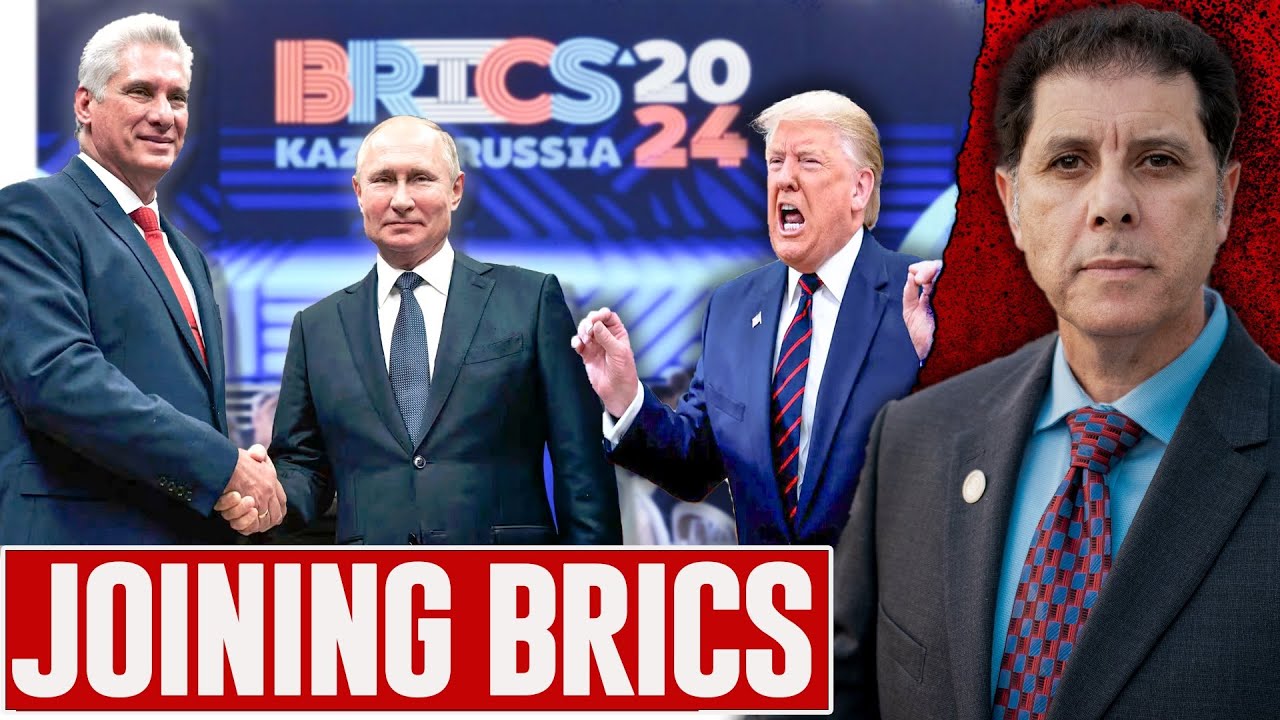
In this live YouTube episode (January 27, 2025) the host greets his community, reviews recent headlines, and then devotes the bulk of the program to a deep dive on Cuba’s invitation to become a partner of the BRICS grouping. He outlines how the invitation was championed by Russian President Vladimir Putin at the 2024 Kazan summit, explains Cuba’s strategic geography (proximity to the US, Caribbean sea lanes, and key maritime borders), and provides a concise chronological history of Cuba from Columbus’s 1492 sighting through Spanish colonisation, the 19th‑century wars of independence, the 1959 revolution, the Bay of Pigs, the Cuban Missile Crisis, and the decades‑long US embargo. The host argues that US sanctions have failed, costing Cuba roughly a trillion dollars, and that BRICS partnership offers a geopolitical “path to freedom” by granting access to the New Development Bank, low‑cost financing, and trade outside the dollar. He discusses the economic, geopolitical and regional‑security implications, including potential Russian or Chinese military cooperation, the impact on US‑Latin‑America strategy, and the broader shift toward a multipolar world order. Throughout, he intersperses community interaction, personal anecdotes, and calls for support, while critiquing US foreign‑policy, expressing cautious optimism for Cuba’s future, and inviting further discussion.
Chapters
All right, hello everybody and welcome to Geopolitical Trends, where truth matters. Let me get my, my reading glasses here. All right, good to be with you on this January 27th. Almost January is gone. So by the way, guys, we had a great— I truly enjoyed our conversation yesterday with the community. So that just freestyle conversation, just to chat on on, on basically nothing and everything. So anyway, very, very excited to be with you. Please, please give me a thumbs up if you can hear me. I want to make sure, like, uh, so to avoid what happened yesterday during the community conversation. So, so if you would be kind, then just give me a thumbs up. So I want to make sure. Let me, let me check the chat box here if you guys can hear me. Okay, you're giving me thumbs up, that's great. So good to hear. So anyway, got a great, great and interesting, uh, thank you, thank you, Partha. Thank you very much. Uh, good to see you. I'm gonna say hi to the community once I mention at least what we're gonna be talking about today. Very interesting developments. Now this is not new, guys. What's new about it It came onto the surface officially. This has to do with Cuba being now invited as a partner for BRICS. You all know the seismic change that's going to create for Cuba. Cuba, it's not this major economic global— no, no, no, no, it's not about that. Sometimes it's the strategic move and how this particular, uh, uh, uh, uh, sort of invitation or joining BRICS is gonna— it's a path to freedom for Cuba. We all know the history, which I'm gonna be tackling as I move forward with that. Well, first let me say hi to our community quickly. Willie Homan, good to see you. Francis Tango, as always. Liang, thank you. Uh, Divine Created for Him, good to see you. Interesting screen name, divinely created. So, uh, Caracola, good to see you. Uh, Cyborg Ninja, good to see you. Uh, Partha, as always. Flat Earth Hangouts, good to see you. Hairy Lookout, I haven't seen you for a while and I hope everything is okay. I did notice you last time, didn't get a chance to say hi because I was talking and I kind of got sidetracked. So good to see you, Hairy Lookout, as always an avid supporter of the channel. I'm very, very grateful. One Horn, good to see you. Peace Lover, good to see you. Susan Jansen, good to see you. Uh, and who else? Musa Sal, good to see you. All right guys, let's get into our, uh, conversation here. I do have some housekeeping item for you. When I say housekeeping, I'm referring to usually when I schedule interviews and so forth, but also highlight to you what's going on around the world because you need to know what's going on around the world. Well, I'm going to start with this first one here. Uh, and these are just brief headline, uh, headlines, uh, uh, or head— yeah, headlines. What am I— I'm like a first day of the week. I'm still like disoriented somehow. So now this one has to do with the— what is the picture right here? Uh, Mr. Trump, we're saying now, you all remember when he came to office last time, he said, I'm gonna break this deal between the Arab Israelis the century. And now, because that's what he did after he won the election in 2016, you know, he was pledging to achieve this eternal peace in West Asia, saying, and I quote, because I had to dig the quote for— he said that this is the deal of the century, and I, as a dealmaker, may want to make this deal that has been difficult for everyone for all humanity, end of quote. Well, guess what happened just like a week after he took over, uh, in his second term, which means last week. Now he is almost shoving down the throat of the Jordanian king and the Egyptian president to say that they're gonna need to accept Gaza. In other words, they want to clean up, really ethnic cleansing of Gaza, basically get rid of the people. Of Gaza. Wow. So this is like the American president that is advocating for global peace. So, so shame. What a shame. What a shame. So, uh, that's why I told you last time, guys, don't buy into this, uh, ceasefire agreements and all that. The US went ahead and sent the bombs that's going to be dropped on, on, on, on Gazans. So second thing has to do with this one here, a major development. Again, it's not covered here in the West. I might do a live stream on it, not sure yet. But for now, suffice it to say that Iran announced now that it has officially purchased the Sukhoi-35 jets from Russia. Now, if you know anything about this type of weapons, there is one thing that is the Sukhoi-35s are known for, is that this kind of aircraft can track 30 targets and attack 8 air targets simultaneously. Yeah, that's what, what this aircraft can do. Let me put the picture again for you guys to know. This is the Sukhoi 35, the Russian Sukhoi. It can track 30 targets simultaneously and, uh, 30 targets and attack 8 air targets simultaneously. So, so which means what? Basically, just, uh, it's in the message. That they're sending to the West, to the US, especially now that Trump is pushing for that narrative along with his Secretary of State who wants a war with Iran. So the timing of it is very, very important. So this is what's important for you guys to understand. All right, let's, let's— and, and of course the last thing has to do with TikTok, that now Trump is saying, oh, it's worth almost a trillion dollars only. Because TikTok will be worthless if only it's permitted to operate by the US government. Yeah, baloney, nonsense, you know, because the government is going to take over that. And I don't think so, Chinese. And you already, guys, expressed your opinion about China shouldn't sell TikTok to the US. So, so what Trump is saying is somebody should buy TikTok, somebody here in the US, and give half to the US government. He's— Trump is Trump. So, but again, that's what people voted for. I didn't vote for him. I won't vote for anybody in America. I say straightforward on the record, till I see somebody who's qualified and understand the geopolitical landscape, then I will consider. But for now, they are all useless. That's what I'm gonna say. All right, let's get into our topic. Is Cuba breaking free from the US sanctions by joining BRICS? A major, major issue here— development, not an issue, development, that is. So I'm going to share some questions with you here. Uh, oh, believe it or not, I didn't put the questions on. Uh, here, I have them right here for you guys. That's one thing easy about technology now. You just— because I usually write my own questions, but I have to cut and paste one. Anyway, how significant is this development? Because it's not a minor— as I said, Cuba is not this huge major economic power on the global stage, but it has some other things that really cannot be measured in terms of material, including geography, which we will tackle. Second question: another Bay of Pigs operation on the horizon? You all know what happened back in the '60s, so we'll be looking at another one. And the third question is: what are the geopolitical implications to this development? And this is what I intend to provide you, my analysis about all this. So But before I'll do this, make sure guys to subscribe to the channel here because the analysis, as I said, like I always say, the one that I am providing you and you are hearing on this platform, you are not going to be able to hear it elsewhere. Yes, you can hear some narrative, whatever, and again, more power to other people, I don't care. So the only thing that I care about is that if you are learning and enjoying these free episodes here. So make sure please to hit the like button and subscribe for this channel so other people can get a chance to hear the, the truth that you are hearing. So here is the link to those who might be just joining us here for, for the first time. So I will greatly appreciate your support and thank you for that. All right, let's get into the conversation, the inclusion now of Cuba. How this happened to be— to begin with. So, because here's the thing, the Cuba's membership was championed by none other than— I'm gonna share a picture, uh, with you here. Oh, before I'll do that, I see a Super Sticker. I gotta say thank you. You know, guys, when I do this by myself, uh, Fernanda, thank you so much for your Super Sticker. I'm very, very grateful for your support. For the channel. So once again, appreciate it. Um, like I said last time, uh, here's the picture, because this, uh, uh, uh, sort of, uh, uh, membership was championed by none other than the Russian President Vladimir Putin. And this one was during the summit of Kazan that took place in Kazan in Russia in 2024. You all remember, and I covered that one for you guys. Well, that's when the Russians have sort of suggested that, uh, uh, Cuba could be considered. As a matter of fact, there were two countries, it was Cuba and Bolivia, as partners, not as a full member yet. So because that's how it works. So, and this is why the idea that, uh, uh, President, the Cuban President, uh, Miguel Díaz-Canel You know, he is a very shrewd man, thinking in terms of strategic. And that's how, uh, this idea of, uh, Cuba in BRICS came about. Very, very, very interesting. And I'm gonna detail stuff once I talk to you about geography and history. So let's do some geography, guys, like we always do. Uh, and I'm gonna share a screen, uh, with you here. Just bear with me, and I give credit to World Atlas as always. Screen— here we go. Very interesting. Here is Cuba as far as, as far as the location. So, so Cuba is considered the largest island country located in the northwestern Caribbean at the confluence of the Atlantic Ocean, Caribbean Sea, and the Gulf of Mexico. Yeah, not the Gulf of America, the Gulf of Mexico. So it is positioned in the northern and western hemispheres of the Earth. Cuba is situated in the east of Yucatan Peninsula, which is Yucatan on the eastern part of Mexico, to the south of Florida and the Bahamas, to the west of Hispaniola, which is Haiti and the Dominican Republic, and to the north of Jamaica and Cayman Islands. So it is surrounded by the Atlantic Ocean, Cayman Trench, Gulf of Mexico, Straits of Florida, and the Caribbean Sea. Cuba shares its maritime borders with the US, Haiti, Honduras, the Bahamas, Jamaica, Jamaica, and Mexico. And if you look at the map here, guys, uh, uh, if you are— I don't know if you can see it— as far as, uh, uh, the, the Key West, this is the southern tip of Florida, Key West. It's only 90 miles. So, and as a matter of fact, to those who do not know, we do have a military installation. It's not classified. I'm sharing with you what is not classified. It just The base is not known to many. We do have a military presence in Key West, believe it or not. That's where— because the purpose was to keep an eye and ears on Cuba. So very, very interesting. So, uh, and that's what you need to understand, the geography, why this geography is very, very important. Now, when it comes down to history You're gonna have to understand the recorded history of Cuba. When did it begin? It went all the way back to about 1492. That's when it starts. And as a matter of fact, I found in the historical record the exact date, which was October 28th, 1492. And this is, of course, when— what's his name— Christopher Columbus sighted the island. He didn't discover America. He ended up in America by mistake because he got He got like, uh, sort of sidetracked, you know, to those who saying that this, the, that is the guy who discovers America. No, I didn't. So sighted the islands during his first voyage of discovery and claimed it for Spain. So, and of course, since the establishment of the occupation, that is the settlement, that is why was in 15 11. So, so I'm gonna now share just few images I get, uh, and I provide you the link, of course. Got some images from the historical record that I think it will make more sense to you to understand who those individuals is. So the first one I'm going to share with you is none other than— and this is a portrait, picture portrait, it's not the real image— but it's Diego Velázquez. Now, Diego Velázquez, if you know anything about the history of Cuba, it will have to come to your mind because it was in, uh, it was in 1511. But before that, 1492. 1492, that's when Christopher Columbus was the first European to arrive to Cuba, and that's where he explored the northern part of Cuba and claimed it. This is what I don't get. He claimed it for Spain. So anyway, 1511, this is where I'd like to start my, my brief history synopsis about Cuba. Velázquez establishes Baracoa, which is the first Spanish settlement in Cuba, and he begins the conquest of Cuba for Spain. And this is why a large portion of the native Tiano population. And Tiano population, those by the way were the natives, the Tiano one were the natives of Cuba. So the population, and what happened to them? They were killed. They were killed over the next several years, meaning after 1511. So, and how did they killed? Were they slaughtered? No, they were killed by a disease That was smallpox at that time. You're all familiar with all that. So fast forward to 1514, that's when the settlement that will later become the city of— and is— can you guys tell me which city is that? And I'm going to share a picture with you here. Which city is this? If you can type in, in the chat box, because I like you to be part of the conversation. Let me see in the chat box what you guys put. Put it— oh, you got, you got it! Army with Harmony, you got it! Francis Tango, you got it! It's Havana, that's what it is. So the important thing, the important thing about Havana is that in 1415— I'm sorry, in 1514, that settlement has changed and became what is known today as Havana. That's why I'm saying 1526. What happened? Slaves were imported from Africa to work on the tobacco fields. This is why, uh, I wish I still have— I think I do, but I don't remember if it— I had a cigar that was given to me from Cuba. I don't smoke, but I kept That's why tobacco was a major industry in, in Cuba, and eventually sugar would become an important crop, the good, good sugar that is, not the processed one. So 19— uh, 1526, that's where again— 15— I'm sorry, 1589, the Morro Castle is built to guard the entrance of the Havana Bay. And of course, fast forward to 1607. Well, what happened in 1607? That was— 7 is the imperialist British sailed over to Cuba. So 1762, uh, and by the way, 1607, that's the official year when Havana became the official capital of Cuba. And in 1762, the British attacked Havana and took control, uh, part of the Seven Years' War. Yeah, yeah, that's what the British did. The, the picture you're looking at, guys, that's the British fleet in Havana. So, and this is where, uh, all the way to, uh, 1763, the British returned control of Cuba to Spain with the end of the Seven Years' War. 1791, the start of the Haitian Revolution on the nearby islands of Hispaniola. Thousands of refugees flee to Cuba. 1868 is the first war of independence, which ends 10 years later with Spain promising changes in the government. So And that's where slavery was abolished in Cuba in 1886. And of course, right after that, in 1895, that's when the Cuban War of Independence began, led by the revolutionary and poet José Martí and military leader Máximo Gómez. Those dates are very important, guys, to understand. And, and this of course makes more sense for us to have an understanding of this historical chronological historical events that shape Cuba to where it is. 1898, that's when the United States goes to war with— who did we fight in 1898? To my, uh, followers who are a little familiar with history, who did we fought in 1898? A major war. At that time? Spain! Rafael, you got it. Rafael, you got it. It was the Spaniards. Yeah, so the US went into a war with Spain in the Spanish-American War when the USS Maine is sunk in Havana Harbor. So, uh, 1898, that's when the US and Cuba defeat the Spanish in the Battle of San Juan. Hell. And the long history, so, and I'm just trying to provide you brief stuff here. Uh, the US wins the war and become a protectorate of Cuba. 1902, Cuba gains independence. Guantanamo Bay is leased to the United States for 100 years. I don't think so. I have— let me see if I have something here that I might show you. Actually, I do, and I don't, I don't hide, as you know. I went to Cuba. There's my picture, was crossing the island there at the time on a naval— that was back in the day. So, so, and if that— during my time over there, that's when the lease was— the, the, uh, the lease was resigned for another 100 years. And why is this? Is because we had to install There's some— I don't know if you can see it from this picture here. See this one here? If you look at the background, there's some satellite stuff. That was back in the day. So, so what happened in 1906? A rebellion led by José Gómez, and that's when the United States intervened to take control. No, uh, 1924 It marked the establishment of none other than the dictatorship, or the government style, whatever term you want to use, by none other than Geraldo Machado. Machado, that was the one that took over. And that's in 1925, the Socialist Party was established, who still hold till today. So, uh, 1933, Machado was overthrown and a new government reform were included. Uh, fast forward to 1940s with Batista is elected as president, and that one of course was supported by the Communist Party at that time. Uh, I'm gonna move forward to the Cuban Revolution that starts in 19— what, what year did it start and by whom? Before I put the picture for you guys. What year did the, uh, uh, what year did the, uh, Cuban Revolution start? Let me see in the chat box. 1954. You're close, you're close. You're off by one year, 1953. And who did it start? Who was the leader of that revolution? Well known in history. Before I put the picture. Jose Mati, no, no, no, no, 1950. Uh, Hang, you got it, you got it. It was those two right there. And Hang already— Hang NG already answered that one right there. Fidel Castro and Chuca Vera. Yep, that's what it is. Very, very important to understand this dynamic. So, so fast forward to Uh, uh, of course, uh, there were some issues there with the guerrilla war from the Sierra Madre Mountains. Fidel Castro, uh, took control of Havana. Batista flee— fled at the time the country, and Castro became prime minister. Fast forward to the 1960s, and this is where the change of history came in into Cuba. And this one had to do with, of course, 1960, the institution of the, uh, oh, that's when Castro reinstitutes communism and nationalizes all businesses in Cuba, including US businesses. And, and Cuba, of course, at that time established, uh, alliance with the Soviet Union. And 1961 marks the major invasion. Which one I'm talking about here? A major one to overthrow Fidel Castro, which was failed anyway. So let me see, guys, what you write down. 1961, remember 1961, uh, the Bay of Pigs. Rafael, you got it, the Bay of Pigs, a major one, uh, operation conducted by the CIA, but it was butchered. So to overthrow Castro. And then, and then 1962 came after right away, which of course deals with this picture. I'm gonna just put the picture for you and you will know exactly what I'm referring to here. Right there, this is the UN, uh, uh, session of the UN Security Council regarding the Missile Crisis. That's what it was, because 1962 marks the Cuban Crisis occurred when the Soviet installed nuclear missiles in Cuba. So, and the rest is history, as they said. But you need to understand one aspect: when the US went ahead with the establishment of the sanctions— because remember, even till today, Cuba still under sanctions, but they never back down. They never— they're still standing. They're still standing. This is why I'm saying that the two key things is it Cuba's path to freedom forever by joining BRICS, or you can think of it the other way around, that the US sanctions for over 60 years have failed miserably. Which other country was sanctioned by the US for a long time, still till today, and the sanctions have failed? Can you name the other country? When? Now. It's only one country actually beside Cuba. Oh, Rafael, you got it! Iran. So very, very important to understand. This is why I think, guys, without understanding this history, things will not make sense to you. Uh, and, and, and like I said Uh, without history, it's not gonna, it's not gonna make any sense for us. So, and of course, uh, and I'm gonna put the link for you to go through all the details if you are interested in learning more about it. So, all right, let's get in into our analysis. I like, I like history because you get to learn a little bit more about that, just what the, uh, certain entities trying to portray history, because There have been some manipulation, and I looked at it when I was teaching the government, uh, uh, for my, uh, for my dual credit, uh, at the, uh, institution at that time. And it came to my attention that some books have been altered. The history in some books have been altered regarding the history of the Spanish-American War, you know, because if you all know, I live in Texas, I'm a Texan. You know, Texas never belonged to the United States. Texas was always part of Mexico. So, but the books that were published have been altering history. So when the, the students read history, they think, oh, Texas is American. No, it was never. The same thing about history of Cuba. And this is why I wanted to do this for you to understand. So the way I'm gonna do this, guys, I'm gonna divide it into 3 aspects. One is geopolitical, the other one is economic, and the third one might have to do also with the military dimension, uh, to it. Or I could think of it about the regional security aspects. So, and, uh, but before I'll do this, I did see, uh, because as I told you guys, when I do this by myself, I did see a super sticker from Rafael. So I want I want to say, uh, say thank you to Rafael. As always, you wrote, my only problem is if Putin were in charge of China and Russia back in the '50s and '70s, North Korea and Vietnam would not exist now. Putin is too pacific— pacifist, you mean. Yeah, yeah, I see the argument, uh, Rafael. I also see the counterargument to that is that Putin is thinking strategically, you know. Do you want to go and really flame the world into a major global war, because that will be the end for everybody. And, and to me, that's the approach. And I could be wrong, and I really appreciate you sharing your opinion, because that's how we learn from each other, guys. Because— and, and please respond to Rafael if you disagree or agree, whatever you could think of. So that's just how we do the things here in this community. So once again, Fernanda, I want to say thank you for your Super Sticker, and of course for Seaborg Ninja, thanks for becoming a channel member, and I appreciate your support. So, so let's talk about the, the, uh, the geopolitical significance of this. So, of course, this development, you have to think about it from a geopolitical aspect, which means what? You think about the 60 years of economic blockade that we have imposed on Cuba because they never wanted to affiliate with us. They never wanted to follow the US, uh, directing directives and so forth. They just wanted to have their own system. We didn't like it. We went ahead and put a blockade on the country for almost 60 years. My big concern now, you know what's my big concern now, guys? Even more than you can even imagine is this guy right here. You know, he's a— he's from origin— his ethnicity is from Cuba. His dad, whatever. I mean, he was born in Florida, but his closer family were from Cuba. They left Cuba, and he is as hawkish as he can get when it comes down to Cuba. So that is when my big concern is with this guy here, let alone now what he's saying about China. We need to sanction China. Only surprising that during his phone call with Mr. Wang Yi, he said, oh, by the way, we the United States recognize— we do not— I'm sorry, I'm sorry, I'm paraphrasing here— we the United States do not support the independence of Taiwan. It's so funny that he flipped in one week. Only a week before was saying, oh, Taiwan needs to be independent from China. And when he got on the phone with Mr. Juaní, I think Mr. Juaní had sort of put him in his place. That's why the narco Rubio had to change course. So, but when it comes down to Cuba, he is as hawkish as you can get. Sanction them more. So, and this is where that problem is. But the US has failed regarding this, uh, uh, these sanctions. Because now with BRICS, because this is going to be offering— like I said earlier, and I'm going to repeat it here— Cuba is not your major economic powerhouse, but it's not about that. Because now this opportunity for Cuba to join BRICS is going to offer it an opportunity to finally crush this economic and financial isolation that's been put on it by the United States. And even with that, we couldn't break down Cuba, because if you know anything about Cuba, think about their medical, uh, field for healthcare and other— did you guys know that the healthcare in Cuba is far better than the US? So Now you need to understand how far back this blockade has been imposed in Cuba. It goes all the way back to the '60s, and this was aimed for one thing and one thing only, is to cripple the, uh, the Cuban economy and sovereignty for that matter. Why? Because they choose at that time to affiliate themselves with the Soviet Union. So, and of course we wanted to restrict their economic development. Because geographically where they are, it's in a very, very strategic location. So, so, and of course, the— there's some estimates by the UN suggesting that this blockade has cost now, uh, sort of Cuba about over a trillion dollars, which is major, major. So of course We, uh, there are only one, I think two presidents that they thought about changing the policy and so forth, but it was just a window dressing. They never cared. It was the minor adjustments that were made during the Clinton administration and the Obama administration. So however, when Trump took over in 2016, what did he do? He reimposed harsh anti-Cuban measures. So that's why I'm saying to those who think that Mr. Trump is— Trump is for Trump. Trump doesn't care what Trump is doing. And again, you can disagree with me if you are a supporter of Trump, and more power to you for that. Trump is really tapping into the anger of the American people to fuel whatever, but he's still pushing his agenda behind the scenes. Like, for example, now lifting the, uh, the restrictions on sending those bombs, uh, to, uh, uh, to Israel. And I posted this for you guys in the community. Let me see if I can find it. Uh, yeah, right here. Yeah. Mr. Trump now instructed the Department of Defense to end the suspension imposed by Biden to— on the supply of 2,000 pound, about a ton, bombs to Israel. What for? You don't know what it's for. And that's what I'm saying. So I, I just never believe that the guy is, is, is qualified for that. But anyway, let's move on with our conversation. So Cuba's inclusion now in BRICS is more about than just economics. Yeah, because you have to think about it geopolitically, that— sorry, I hit the type— that Cuba is saying to the world out there, despite our size, despite us being near our, our, uh, huge neighbor But we were not intimidated. We didn't cave in. So, and we take pride in what we are doing. That's basically what the message is. Because if you look at American so-called foreign policy regarding Cuba, what was it marked by? It was marked by nothing but coercion, sanctions. What kind of policy is that? So, and when you try to impose economic and political control over countries that refuse to sort of comply with US demand, what kind of approach is that? So you couldn't face with that, you couldn't face them and deal with them directly in, in a more rule-based approach, so you end up sanctioning. That's like exactly what's happening now, regarding the AI with China. You heard the narrative that's coming out of Washington now, but China has moved forward. Remember what Carl Zah disclosed about the, uh, the, the, the Deep Sea, uh, AI? But now they're saying here in the US, oh, that's bad, that's nothing, it's not gonna be— no, no, it's because we can't compete. That is where the issue is. So, and this is why we were trying to ensure the political instability, the economic downgrading of, of Cuba. That's why we intended to do this, because that's what we offer. But when you look at what BRICS offers and on what kind of principle does BRICS, uh, operate— do I agree with all members in BRICS? No. You know, because if it were up to me, I would request the removal of India, and I don't shy away from this. I've already expressed this on many occasions because I am seeing what many do not see— how much India is undermining BRICS, and it will be undermining BRICS moving forward as BRICS enlarges. That's where my concern is. So when you think about BRICS operating on principle of mutual respect for that matter. So, and of course, there is one key element regarding this approach to BRICS is that non-interference, the same approach that China is, is doing. Does China interfere in people's, uh, uh, into domestic affairs? Tell me if I'm wrong. Please prove me wrong by telling me which country China has been involved in. I do know one, but there were circumstances different which has to do with Vietnam. Back in the '60s. Even now, to those who are saying— and I have to thank Hangin' G for this one here, because you made a comment regarding how Vietnam is saying they wanted to go with China for projects, but no, no, Vietnam needs to pay first before China invest anything. That's the same thing with BYD and India. You all remember when China wanted to buy the electric buses from BYD, and this— yeah, just, uh, deliver that to us, we will pay you later. No, I don't think so. I don't think so. And, and BYD end up making the right decision by saying to India, no, which basically translates to, we can't trust you, India, in this case. So, and that is why I'm saying this idea of, uh, for the geopolitical trajectory of where BRICS is going versus now what Cuba is going to embark on. So it's because BRICS does push to promote a more equitable global order. That's what this new geopolitical landscape is going to be about. And this is why, at least for me here as an American, my fellow Americans do not understand. They don't understand what lies ahead, what's coming. They just don't see because they've been fed a narrative either by the president. Yeah, president will embark on, like, for example, immigration issue, whatever. There are much more complex issues than— when I say this, I say to the American administration, what about Social Security? What about those people that they've spent and paid all their taxes and now they can't get Social Security because the system is broke? Well, why is it broke? Because we've been sending billions and billions of dollars to Ukraine and Israel instead of paying Social Security, the people that deserves it. That's just one example I am sharing here. So when Cuba, the like of country that's been under sanctions for over 60 years, now get this opportunity to join BRICS, you know, what is Cuba is going to offer BRICS? You will be surprised. They don't have much. But there are some stuff that Cuba will be able to contribute. And you think about the idea of the expansion of what's going on in Latin America. Why do you think we are concerned about Latin America? It's because China is investing, expanding the economic aspects of it. You remember the recent Chang'e Port in Peru? And how that's going to revolutionize where things are regarding, uh, uh, uh, regarding, uh, trade. You think about the Panama Canal, so, and you think about the even the infrastructure that China has been involved in Asia, they could replicate that, and they are replicating those in, uh, uh, uh, Latin America, and now it's going to be Central America. And as a matter of fact, I am aware, I am aware that China has purchased the old satellites, uh, those are listening devices, uh, for the Soviet Union. The Soviets weren't using them. The Russian— the Chinese went ahead and purchased those. If during my days when I went to, uh, to the island back then in Guantanamo Bay, so I was aware of this, but But we're talking about infrastructure because China also has upgraded the telecommunications for Cuba. This is what I'm saying. Geopolitically, it makes more, more sense that now Cuba's membership in BRICS— remember, they just partner right now, they are not a full member yet, you know, because this from a geopolitical, if you put it from a geopolitical angle, This one means that Cuba now is challenging the longstanding belief about the so-called American exceptionalism. That's what this is about. Because here is the thing, if we are to think about this exceptionalism, it's my country and I do not shy away from disclosing the truth. I know there are those, uh, who will be putting comments while you don't like America. I don't— it's nonsense. That's the weakest argument one can ever say when they have not enough substance to counter-argue. Oh, you hate America, you do this, you do this. That's nonsense. Because to me, this idea of Cuba going into this direction, as I said, challenging the longstanding American so-called exceptionalism— because when you look at it, what do you look at? This exceptionalism is limited to two things: One is imposing, and I use the term carefully, imposing so-called democracy, and the other one is capitalism on poor nations of the world. And how do you do that? Through military. This is why you are hearing now the new administration, peace through strength. That's what they're referring to. And I don't think so the world can buy that anymore, except for the weak states. The like of India, the like of Australia, the like of South Korea, Philippines with its current, uh, uh, uh, Marcos Jr., even Japan, Germany, France, Italy, even Argentina. I will go as far as that. You remember when Argentina pulled out of BRICS? Why? And now they want to go back? What for? Same with Italy when he pulled out of the BRI. It's because some— but of course you can't trust those countries anyways. So let's move to the economic aspects of this. What does this potential and the possibility of Cuba becoming a BRICS member a BRICS member means. It means one thing: this is like a major and important shift, not just for the island, it's— but it's for the entire region. Let me put the, the map again just for you guys to see, because it makes more sense once you see geography. And since we are— some of us, I shall not generalize— we are poor readers of, uh, of geography here in the US. I don't mean it in a derogatory way, but we are— we poor reader, we don't know. So when you look at, uh, uh, when you look at the island, why is this important from an economic perspective? That's why I'm saying this is not about just Cuba by itself. It will be about the broader, the broader region, including the Caribbean and Latin American region. So why is this? Because now Cuba has access to the New Development Bank, which is BRICS Bank, and this will enable it to secure low-cost loans which will be used into assistance for developments and so forth. That. And, and by doing this, just by doing this, when you look at the region, by the way, look at all the Cayman Islands, the, the, the, uh, Jamaica, uh, what else they have all in the region. Let me see here. Yeah, they didn't disclose Jamaica here, Port-au-Prince, Haiti, the whole region, the whole region. So, and because with now Cuba having that access to this World Bank, that means they can overcome now the US financial stronghold, or stranglehold, that is, because we can dictate to them. This is why IMF, the International Monetary Fund, comes in. This is where the World Bank— so Cuba now has an opportunity. This is where the problem— mark my word on this, Mike Myward, the Secretary of State, narco. I don't mean it indirectly, it's just so. I, I, I don't, I don't approve of the guy because I know where he stands on issues, in the wrong direction. He is a warmonger. Let me just tell you this, a neocon and a warmonger. A warmonger doesn't see opportunity in economic prosperity. A warmonger does see the opportunity in creating tensions, in creating wars, in destruction. So how can he live with himself? It's not up to me to decide. Uh, or not just him, all of them. So, so, and this is why I'm saying you think about it from that economic, uh, perspective. So, so it's a I feel comfortable saying it is a true game changer. So because now Cuba will have an opportunity to diversify its economy with other members, how it's going to interact with the likes of India and so forth, that's up to them to decide. But I can see for sure the two main players in BRICS, China and Russia, and even to a degree South Africa. So I can see, uh, uh, how BRICS is gonna now move forward. And this within the economic lenses, you're gonna have to consider where BRICS is moving towards to, or towards rather. So because recently you all know that BRICS has grown powerful global force, there are those still in the West that criticize it and said it doesn't amount to too much. And there is some reality into that. But you can't, you can't, you can't— what's the word— dismiss the entire progress of BRICS. Because when you consider that BRICS now account for over 36.7% of the world GDP, surpassing the G7 nations in economic output. Those are not small things that you can just overlook. Over 36% of the world GDP, global domestic product, that's not a, that's not a, a minor thing. So because when you look at even the US, for us, which again our government doesn't disclose this kind of stuff, we are facing economic stagnation Despite what you hear, oh, we— I'm gonna— we're gonna be bringing jobs back home and we're gonna have manufacturer here, we're gonna give tax incentives. Who do you think is going to trust us to come over all the way down here? Because we could turn on them in a flip and sanction them. So no, it's not going to work. Because now what you're looking at, you're looking at the big picture of BRICS, providing that viable alternative. That's what it is, it's an alternative. Like I always said before, and I argue this so many times, BRICS is not about taking over the world. BRICS is about providing an alternative for countries to choose. If they don't want to use the US dollar, they have other alternative to use something else. That's what BRICS is about, in my opinion. The third element I'll talk about is the regional security. And what does it mean when you consider the statements by none other— by, of course, uh, where is he? Of course, this, this idiot guy right here. As far as, uh, tensions, when you think about the President Trump's tensions with China Or even his statements regarding taking over by military force Greenland and Panama and renaming the Gulf of Mexico to the Gulf of America by force, and taking over Canada by force economically, making it or rendering it the 51st state. All those statements gives you an idea about when it comes down, at least to Cuba, about the regional security. Because here is the way I see it playing out in international security. When you consider the dimensions of the military, uh, uh, uh, operations, but even before you get into that, you think in terms of the security aspects. And when I say security, that's what I did during my, uh, uh, uh, uh, graduate program, both in the master's degree and the PhD. My focus was international security. That's, that's part of what my academic background is. And when we used to study regional security issues, we'll take every region of the world, and I even did the Asia security issues, and I still have my writings and all that stuff about that part. And I always used to argue that one of the, the dimensions of what we need to look over or to look at, it has to do with the development of these security measures. And at that time, I was referring to the increasing, uh, uh, apparatus of the US military hardware in Asia Pacific. And I came to the conclusion, this is the layout for what lies ahead within the next 10, 15 years from the time that I was doing my program at the time. And here we are. This is exactly what we are now. You think about the Typhoon missile systems in Philippines. Which by the way has been moved from its original location from within Philippines to another location still inside Philippines. There is a reason for that. It's because remember, China has its own Beidou, the equivalency of GPS, which means they can track because most of the other countries has to fall under GPS, which means we control the information. We will let you see what we want you to see. So the thinking in the US that they forced Marcos to go ahead— Marcos Jr., president of Philippines— to go ahead and move the Typhoon from the location where they are. So this way they give the impression, oh, Philippines doesn't have US missile systems. No, it does. It just moved it to a different location. That's all it is. But if we are thinking that we're gonna hide from the Chinese satellites, we are mistaken, because China developed two main things. One is space, one is underwater. Their radar, their, uh, sonar systems, they are as developed. I had a chance to read the recent development of them, not the classified version because I don't have access to that, but I read some major developments the characteristics of this Chinese sonar systems, which means it will be able to detect the most silent submarines emerging underwater, which usually we have one, the Russians have one as well. So, and this is what I'm saying, the idea when you think about regional security, so you'll think about one aspect, it has to do with either China or Russia or both. Or Iran at the equation now, they could just send some hardware, military hardware, to the island as part of bilateral relations. Who are we to dictate to them? I mean, just imagine for a second if the Russians or the Chinese will go ahead and install some missile system. It's part of training with Cubans. How the US will, will be freaking out, will be freaking out. So, so, and I'll say, what makes it right for us to go ahead and install missile system near other countries but not in near, near, uh, our borders? So, and this is where that regional security aspect comes in. And you take this in conjunction with where Latin America is moving forward economically speaking and how that's going to translate down the road into some military dimensions to it. It's, it's a norm. If you look at the history of the development of countries, uh, from a geopolitical perspective, the moment they develop strongly economically, the military might comes right after it, because it's the military that's going to play a role in ensuring the security of that economic development. The best example I can give you right now is China. This has nothing to do with taking over the world, as we have been— the collective West have been claiming. So China has no interest in that. And I talked to people who know great deal about this domain, and they told me no, they have none. I even had a chance one day to talk to an admiral. I, I just run to him, I met him in an event, and, and he didn't know They found out that I wrote a book, uh, about Iran at that time, and I disclosed some stuff about, uh, the Indian Ocean. And I mentioned about how China is expanding its military apparatus. And his argument was, well, it's because you're going to want to take over, uh, uh, uh, the South China Sea and all that. I said, you know, respectfully, I disagree with you. That is not the point. The point is they want to secure the transit route for to ensure their economy has enough resources that they need. So what makes that different than what we did after World War II? Well, I see your point, Mr. O. And, uh, and I said, well, respectfully, Admiral, you know, sometimes things are clear. We're just trying to portray it in a different— under different lenses because we want to justify a specific narrative, you know. I, I didn't care whether the guy liked what I said or not, because I didn't care. I don't work for anybody, so I don't have to worry about the sensitivities. And this is what happened even with politicians now, you know. This is why, uh, those who are advising now Trump, they're not going to be able to tell him to his face, because the concern is about the political career and position, not about the truth. So, you know, because a good leader, a good leader will always listen to the opposite ideas, the one that challenges his or her notion. If a leader surround himself or herself with yes ma'am, yes sir people, that's it. This is what I see this particular development is going, and that makes more sense as to why now you think in terms about, uh, uh, uh, where Cuba is moving forward, it's because simply the American sanctions have failed. Let me just say it straightforward. I had a chance to— and I'm gonna put the link for you, uh, for a great, great article that I read by Norris MacDonald. As a matter of fact, I'm gonna reach out to him. I might invite him here, guys, because you want to hear from— he's, he's, he's a savvy guy. He's a political analyst and also an economic journalist. So it's not somebody who just talk on the top of his head. So, so I read his article, very, very, very spot on, and I'm going to put the link for you. So the argument becomes that, and I concur with him regarding the failure of the American sanctions the same way we did for Iran, it didn't happen. So And like what he wrote, and I quote, Cuba's membership in BRICS signals the dawn of a new era, the dawn, I'm sorry, the dawn of a new era of international relations. It is a direct challenge to the outdated policies of American imperialism and offers a vision for a more just and balanced world order, end of quote. So I couldn't agree more. I couldn't agree more. So, and this is why, because here is the thing, what has not been reported here for us, at least, no. And I know people who travel to Cuba. We are not authorized to go Cuba. As a matter of fact, we could if we go, for example, on academic trip, a cultural exchange, whatever, we will be able. I know someone who went to Iran, an American who went to Iran, and he was allowed to. He's a professor and he was allowed to go in there. So here's one thing we don't disclose much here in the US about Cuba. Cuba has developed a very, very successful— I say successful, remarkably successful medical and biopharmaceutical sector. Yeah, Cuba, you know, ask, ask people who know about the healthcare system in Cuba, you know, and they'll tell you it's because Cuba doesn't, doesn't deal with or count on whatever, anything Americans regarding, uh, medications and so forth, because they know, they know. And, and Cuba has a lot of patents regarding the medical field, uh, uh, because those are the developed certain types of, uh, uh, uh, medicine pertaining to some key aspects here. I'm not gonna mention the name here, so But, but if you get a chance, and I'm gonna put the link for you guys to read more, uh, and more. Here is, here is the other thing, and I'm gonna conclude with this, guys, and, and just see if there is any, uh, questions and I'll answer them for you. Here's the thing, now that Cuba, it's, it's a partner for BRICS, which means the next step is, is a membership. So now that Cuba will be able, or is in a position now to kind of get in into trade, engage in trade with, uh, with the outside dominance of the dollar, which means now they can— pardon me— they can trade with Iran, they can trade with China, they can trade with Russia, they can trade with South Africa, they can even trade with India, except I don't know how they're gonna figure out with India because rupees because you can't compare rupees to the yuan. That's just a big difference. So suffice it to say that now Cuba is in a position to conduct trades outside the U.S. financial control. So, and this, with this, what becomes, comes an opportunity to enlarge and expand its economy to other international partners. That's what the BRICS is going to provide Cuba. So, so, so I look at it like it's a very promising— as I mentioned at the beginning of the, of this, uh, live, uh, Cuba is not your powerhouse economic. It's not about that. As a matter of fact, for Cuba, in my opinion, it's more of a geopolitical symbol than anything else, because that's a loud, clear, and loud message here. Despite your sanctions, US that is, you have failed. We are still engaged with the rest of the world. That's to me what it is. And of course, trading in a different denomination, uh, currency beside the dollar, which by the way, more and more countries are moving into this direction. So, so I'll say it's a victory for the people in Cuba because they're suffering. I, I don't believe in, in, in, in— yeah, you can deal with countries, but not suffering, imposing suffering on people. That, that just— it's inhumane. It's inhumane. That's just the way I see it. So Anyway guys, I hope you did find this informative, and let me see some of your, uh, uh, comments here. And thank you guys for keeping the conversation civil here. I greatly appreciate it. Uh, there is a lot of conversation, by the way, about North Korea, and I am debating whether you guys want me to address that issue. There's a lot of conversation regarding what's going on, even to the point that the removal of the South Korean president has to do, has to do with the possibility of some tensions with North Korea. I don't know, I'm just thinking out loud right now. So, and also because I saw here, Loke put North Korea here, so I kind of triggered my memory into all that. So, uh, Rafael, once again you put another Super Sticker. Thank you. Russia uses our satellites in Cuba to spy on us. Uh, that is correct, we spy on them as well, but those satellites have been there. The Chinese bought others. This, this, uh, spying aspects, it's normal. I mean, we spy on our own allies. Can you imagine what we're going to do to the Russians or the Chinese? This is why the arguments, uh, has always been about, uh, uh, or we like TikTok, it's about selling the data and spying and all that stuff. Uh, it's nonsense. It's nonsense. It is another super sticker from you. Cuba is also the reason why Mandela was freed after the war in Angola. They demanded for Mandela to be freed as part of the settlements. Indeed. So, so Cuba play a major role in really— I, I think it's going to be a major development. That's the way I can see. Thank you so much, uh, Rafael. Truly, uh, appreciate your kind support, and I'm very, very grateful, uh, to all of you guys. And those who wants to, uh, uh, by the way, support my upcoming Asia trip, here is the link here, and I'm gonna share it with you, uh, in case— yeah, because you can click on that, so I'm gonna share it with you in, uh, I'm going to share it with you in a chat box, uh, to those who wants to support my upcoming Asia trip. Yes, I am planning on Asia trip. Uh, have not disclosed the date yet because within about a month and a half I should— or 2 months max— I should finalize, uh, the, the, the itinerary for all that, and I will calculate every everything regarding the funding, then I will let you know. If we get the funding, I will go. If I don't get the funding, I'm not going. Simple as that, straightforward. So, and, uh, I'm very, very grateful for your support on that. And I'm seeing, can't thank you enough for your support, man. Truly appreciate you. And I know, guys, I know the economic things have changed for people, and I truly understand. And I'm, uh, I am not a millionaire. I tell you, if I were, I wouldn't even ask you for any support whatsoever. I'll do it myself, and I will still come and do livestream with you because to me this is more than just a— it's, it's, it's a, it's a responsibility. And I care for you guys. I care for you to know. That's why yesterday I enjoyed our conversation talking about the health aspects of it, and I wanted to share as much as I know with you. You know, I, I live the day as it is. I don't guarantee tomorrow. No. And I don't live in the future too much. I live in the day. That, that's the only thing I can think of. So, so that's what I care about our community here, because it means a lot to me. And I mean it when I say it. All right guys, I am gonna go and work on some other stuff for the rest of the week, reach out to some people that I have in mind., uh, uh, to, uh, join me here for some, uh, interviews. Uh, there's somebody's been asking me about, uh, uh, inviting the former Attorney General of Philippines. Uh, here is the thing, guys, I'm trying to reach out. I don't have a direct contact. If you happen to know or have an email address where I can reach out to this individual I will be happy to do it if you can share it with me after you ask them first about putting their email address, uh, in a public domain. So, so, uh, but I am gonna be looking forward to trying to reach out to this individual and, uh, invite him for, uh, an interview. I'll have other individuals as well. So, all right guys, hope you find this very informative and I look forward to seeing you next time. As always, remember, geopolitics impact your daily life in more ways than one. Till next time, guys. Bye-bye.
More from David


Beyond the Single Actor: Why the Gulf Isn't Choosing Between the US and China


Iran, Iraq's Militias, and the Houthis Are Coordinating! This Changes Everything




Who Controls the Next Decade's Resources? Latin America and Africa's Geopolitical Crossroads

The Chokepoint Trap: How Washington's Stupidity Triggered a Cascade That Now Controls the World

Trump Spooked as IRGC Unveiled dual-use SLV, Deployed Ghadir Mini-Subs & Hinted at Tactical Nukes!
