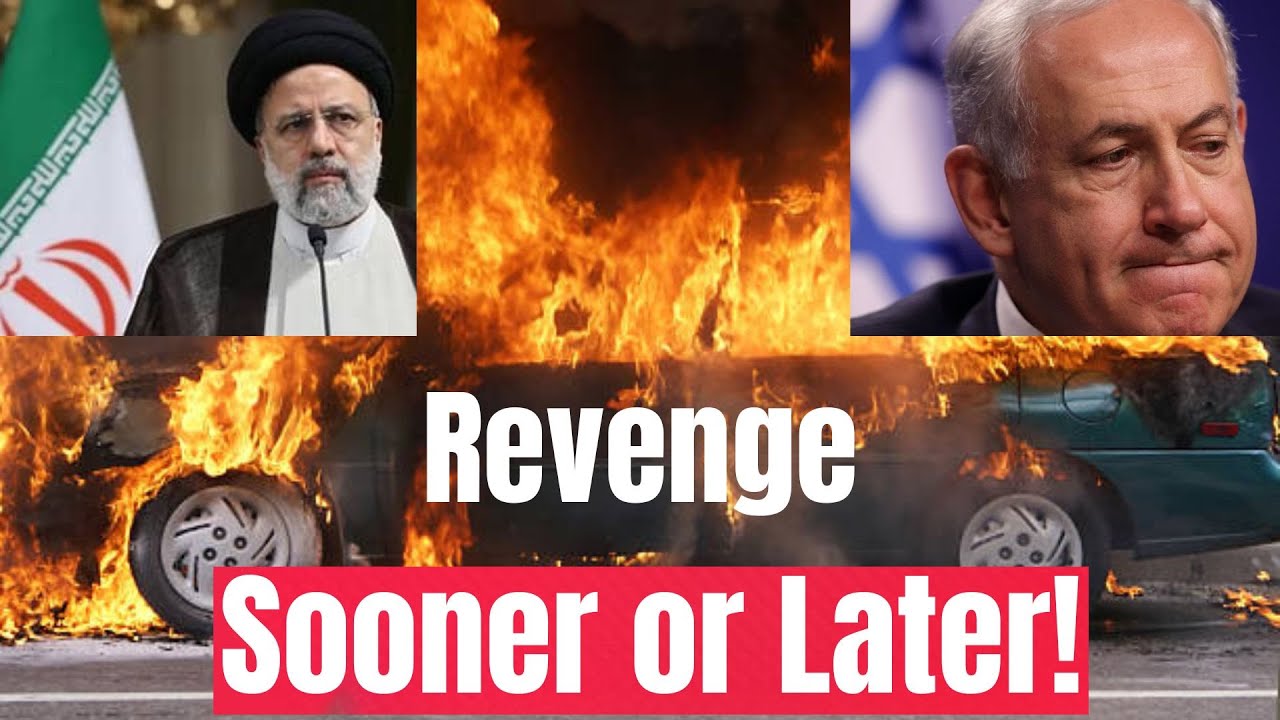
David Oualaalou analyzes the January 2024 bombing in Kerman that killed over 110 people during the anniversary of Qasem Soleimani's death. He examines who might be behind the attack, what it signals, and whether Iran will retaliate, weighing the risks of escalation against regional restraint.
Chapters
Hello everybody and welcome to Geopolitical Trends. So excited to be with you on this January 5th. Where time goes, guys, really time flies. Anyway, very, very, very excited to be with you here today. Uh, I have an interesting topic, uh, to share with you some insights about, uh, given again my background, especially when it comes down to both not only on the academic side but also on the operational side. This one is much more tied to the intelligence services. So, so we'll be, be providing you some insights and also share some questions with you and all that, and we just go from there. So let me first see who is joining me today. Coach, oh, from Malaysia, good to have you here. Oh, my neighbor Willie, Willie Homan from Arkansas. Good to have you from West Memphis here. Julien couldn't, couldn't join us because of the time, time lapse, you know. He's probably in bed by now, so, uh, he'll watch it later on. He put this, Dr. O, I will watch the replay by the time this live show comes on. So, uh, Full Tilt Boogie also couldn't make it because it has to be at work. It's understood, guys. I truly understand that. Phil, good to have you from Ottawa. Uh, Alex, good to see you. Francis Tango, good to see you. Macian Dorosier, good to see you from Chicago. Great Chicago. Oh, Rahan Samal from India, good to see you. Uh, uh, Fari from Kuala Lumpur in Malaysia, good to see you. Robert Gibson, happy New Year to you too, sir. And Canadian Girl, good to see you. What part in Canada are you from? So if you would like to share that one. Uh, uh, Nassar from Sri Lanka, good to see you. I wonder, I need to do an update about, about, uh, Sri Lanka so we all know what happened. Our heart goes to the Sri Lankan people because that's always the sad part. Uh, Zeus from Mississippi, good to see you here. Uh, Alan Tan from Melbourne, Australia. Oh my gosh, are you staying, staying up late here? So KL, as always, my man from Singapore, good to see you. Muhammad Ali from Tanzania, so great, great to have you guys here. Truly, truly very exciting. Uh, last one I see here, Ari Mogul from Maryland, good to see you. And I will circle back to this one here. So let me first of all, uh, uh, like I always do, guys, I'll save my thanks for the channel new members and so forth for the end. Then, uh, then we'll just go from there. So first of all, uh, be on the lookout for a video that I'll be releasing tomorrow. It's in a new format, so— and I'm gonna put a poll or questions for you guys, for the community, to get your feedback. If you like this new format, I'm gonna keep it. If you don't, well, we'll change it. So I'm here to also get your feedback because you are helping me here. You're part of this community here, guys. This is not just about me. Your feedback means a lot to me. Like, for example, the stuff that I get from Jules, I mean, very pointing, very helpful insights and so forth. And many others of you guys, it just— that's what came to mind right away. So, so just be on a lookout for that video tomorrow. All right, today's topic, I'm gonna be addressing the deadly bombing in Kerman in Iran. So why is this significant, the timing of it, and so forth? And, and we'll get into a few details about, you know, how many people died and all that, but that is not what I am going to focus on. I'm going to focus about the implication of such an act and how will that be, uh, uh, sort of interpreted when it comes down to the global geopolitical landscape, because there is something specific to this. And the way you understand this is by the 3 questions that I've already put, and I'm going to share with you because last time I forgot to share this with you about the questions. So here are the questions: who's behind the bombing in Kerman? No, no, no, don't, don't jump yet. Yeah, we might be thinking we all know, right? We don't know for sure. And this is what I wanted to do this because I want you guys not to get into that habit of what— just because of this, we assume is this country or that country. Let's just hold till we go through the analysis, and I will ask you towards the end what your insights are. Second question is, what is the message of it? Okay, why this didn't happen, let's say, a month ago? Let's say whatever time. And the third one, which is very crucial in my opinion as geopolitical analyst Excuse me. Is this a bait for Iran? Remember, and here is how I'm gonna provide you a comparison of sort. I'm gonna take you to South China Sea, okay? I'm gonna take you to the provocations that's been sort of fomented by the US. I'm gonna take you to the Taiwan issue, okay? At all this for China to take the bait. But China is smart enough how to respond. This is the reason why I'm asking this question, and you need to think about it from that perspective. So, uh, I will be sharing geography and history about Kerman briefly because I already did a video, I recall, about Iran, and I detailed the entire history, geography of Iran. In addition to me, I wrote a book right there about Iran, volatile state Iran in the nuclear age. So before I do this, let's get into some headlines because it's very, very important. So, so let me share some images with you guys, and, uh, and I am gonna— where are the images? Oh, I got them confused here. There we go. Let's start with the first one here. What you're looking at, you're looking at images that the media reports uh, uh, coming out of Israel. And here is what I'm going to do. I'm going to provide you with two sides of the argument, and I have a link which I will post for you after I'm done. Usually the way I do it, guys, I keep these articles here till I'm done with the conversation or the analysis, then I'll post them for you in the link. But there is an article that I found overseas which challenged the notion of what Israel is saying regarding the number of its, uh, wounded soldiers. So what the media in Israel said, reports recently signals that the number of troops injured in Gaza was much higher, with some suggestions up to 5,000 that had been wounded since the start of the conflict, including 2,000 classified as disabled. Well, hold on a second. This is what Israel is saying. The truth is something else. And once again, I can't say definitively this is this or that. The reason being, I'm seeing three different numbers. I've seen one with this, the 5,000, which is from Israel. I've seen one with 3,000, and I've seen one with 12,500. And that's the one I'm going to provide you, uh, a link to I'll let you read it and you reach your own conclusion. So, so here's the thing. There was a, a sort of a reporting coming from that region suggesting that there are about 12,500 Israeli soldiers are disabled since the start of the conflict. And again, we just sharing information here. I'll put the link for you and you can decide yourself. Second one has to do with our incompetent Secretary of State, uh, Tony Blinken. He's gonna begin now a tour of 5 Arab countries. What for? It will be pathetic. I don't even know why those Arab countries gonna even spend time talking to the Secretary of State. What for? When the US couldn't even vote like the rest of the world to— for a ceasefire. Now the secretary going for what? Well, guess why he's going for— according now to the statements by, uh, the State Department, of course, the 5 other countries in addition to West Bank. Why do you think West Bank for? Because West Bank is under the authority of the Palestinian Authority, Mahmoud Abbas. Mahmoud Abbas is so weak that they playing him like a pharaoh. Israel's doing that, we doing that. So that's why he's going there. Then the third country he's going there after the 5 Arab countries on West Bank is Israel. So, so the State Department announced that the Secretary of State Tony Blinken is gonna be leaving. As a matter of fact, uh, uh, he left last night. So today is— that's right, so it's about the afternoon or evening in the Middle East. That's where he's already there. Start a tour of 5 Arab countries, including also Turkey and Greece, in addition to Israel. So, and this is where, uh, the State Department is saying the objective of the trip is to discuss— and I put this in quotes because that's the statements from the Department of State— immediate measures to significantly increase humanitarian aid to Gaza Strip. End of quote. What a bunch of baloney. They couldn't take— they, our, my country couldn't take stand when it matters. Now they're seeing where things are headed. Now let's, let's go with the humanitarian. What a shame. What a shame. So, uh, next story, it's a very, very interesting— you really— I might even do an episode for you guys What do you guys think? Should I do an episode on this? But it will not be on this platform here. You will all know why. So here's the next story. You all know who this guy is, right? So what happened now? The documents, which by the way have been unsealed by order of the court, it reveals now head of states Yes, head of states, businessmen, and lawyers implicated in sex cases or sex trafficking, whatever you want to call it, you know. And I'm also going to share with you a tweet about one particular individual here. So the raft of documents related to the network of American billionaires and businessmen— Jeffrey Epstein, who committed suicide in prison in 2009, No, he didn't commit suicide. He was taken out. Yeah, he didn't commit suicide, you know, and the reason being is simple, and it's not a secret. It's the information is out there. So, uh, it's because the cameras in the hallway were turned off. So how could he commit suicide and turn the cameras off himself? That just— it's baloney anyway. So, and this is where they've been tried. He was tried for sex crimes. And have revealed the involvement of prominent figures, including women believed to be his victims and others suspected of colluding with him. Including, you know, even Oprah was involved. There's a, there's a video on YouTube about Oprah which gets scolded by Mel Gibson and Denzel Washington after they found out the sex trafficking she was involved in, you know. And yet she's showing up with The Rock. You all know that Iraq from Hawaii, whatever, asking for donations. So this is why you always be careful, guys, with donations. So here's the tweet that I want to share with you because is— and the guy now, this guy is just pathetic. Is, is— he was a prominent lawyer here in America, and of course, uh was involved also with, uh, Harvard. Uh, let me see. Oh, I didn't put it here. Is Alan Dershowitz, but that's not the one I want to talk about here. The one I want to talk about is a former Israel Prime Minister. So let me share the, uh, uh, the screen with you so you'll see it with your own eyes, guys. It's disturbing, very disturbing. There we go, guys. And, and, and, and this is where I will appreciate YouTube allowing this information because there is nothing, you know, secret about it, whatever. That's what people need to know. And they reach their own conclusions. This is not about swaying one, one side of the arguments over another, whatever. You present the facts as we know them and people reach their own conclusions. So, so what are you looking at here? You're looking at the, uh, let me see my, my note here. Yeah, that's, uh, as it says on the, uh, Twit— on the Twitter here, on the tweet rather. Massive revelation: it's now fair to assume that an Israeli prime minister has been involved in trafficking underage girls with Epstein. So, and this one here is the photo of Ehud Barak, is the former prime minister, former Israeli prime minister. He has seemingly enters and leaves Jeffrey Epstein's Manhattan mansion in 2016. It was the same location where Prince Andrew of England was involved. And once again, this is just the information. You guys reach your own conclusion for this. So, and to me, that's where the truth matters. That's where objective reporting matters, you know. That, that's to me the idea of why we have all this. So, so I don't see any justification for why YouTube will, will not allow this one because doesn't make any sense. But I will make a special episode about this kind of topics on the other location. You all know what I mean by that. And the last thing I share with you is this one right here. What you're looking at is the, uh, former Harvard president. Her name is Claudine Gay. So because of— now there are two stories to this. One is saying because of the issue of Gaza, Others are saying because of plagiarism, which I don't buy that argument. What you need to know about Harvard, especially with the likes of Alan Dershowitz, because he was from Harvard, that's why they push him. Or the dark side of Harvard. You're all familiar with MK Ultra and so forth, without beating the dead horse here. But that is what the dark side of university is. Do you guys know that even Texas A&M, where I used to teach— that's why I never mentioned that I used to teach— it turns out to be owned by a foundation in Qatar. Yeah, same thing. There is Saudi money being invested in Harvard. There's a lot of dark money going on into these prestigious universities like Harvard, Princeton, Yale, Columbia, Vanderbilt, you name it. Those, the elite, let alone the secret societies that exist within that. I might do something about this elsewhere, but not here. Anyway, Harvard boss, meaning the president, a former, uh, admits she resigned after death threat. She, she's been receiving death threat, so that's what she said, because she launched— now that she's out, she launched scathing attack on those behind forcing her to step down, calling them demagogues and opportunists. So she published an article in New York Times. Uh, it's just common sense because that's how it works in this, our system, the corruption. If you don't toe the line, they'll, they'll, they'll assassinate your character. Assassination here, that's what I'm referring to when I referring at the, you know, taking you out, even though they could, but you have to be way up there to, to do that. So, so that's what happened. Uh, it has nothing to do— just because the students inside Harvard were demonstrating against what was committed in Gaza by the Israeli government, but Harvard, all the backers, you know, Jewish lobby plays a role into all this. So it's a big— I will do an episode for you about that one. All right, let me take a look one more time here just to see who just— Alim, good to see you. Alim, too, good to see you. Yeah, let me just, uh, I always like to know who's here. Uh, yeah, you're right, you're right. And I'm gonna just— I'm not gonna say it here, but you guys can read that one. You are absolutely correct. That's exactly what's going on. So, all right guys, let's move on to our topics today. So, so for those who might not know the background, as, uh, as, uh, happened yesterday, uh, Kerman, there was an explosion in Kerman. And by the way, part of this, what I'm going to be based this on, is on, on an article from Al Jazeera by Rasul Alhaei. He's the author of this., and I give credit where credit is due. So this is where I'm not, I'm not counting on New York Times or, or— no, you all know. So anyway, two Iranian, uh, there are two bombings rather, or two explosions took place, uh, in, in, in Kerman. And all this happened, uh, during the commemoration, the 4th anniversary of the commemoration of the assassination of the former Quds Force commander General Qasem Soleimani. Now, people were going there for the anniversary. It's a tradition in that part of the world. In some— same thing in the Arab world and all that, uh, a high figure, whatever, there's a commemoration once a year for all that. Well, it turns out that this, uh, the gathering has turned now into some sort of massacre because due to the double, bombing. And I have some images here. It's not, it's not very disturbing thing. I just looked at basic, uh, because I'm not going to show some images that no need. But this is just an example of this one in the city of, of, of Kerman. Well, first of all, let, let us briefly talk about who's Qasem Soleimani, who was taken out 4 years ago by the United States in 2020 in Iraq. Then I'm gonna tie all this to the— to what took place, but also what took place in two other locations, one in Beirut and one in Syria. So for you to understand, uh, the big picture here. So here's an image of the former, uh, Quds commander, uh, Qassem Soleimani. So who is he? He's a former, of course, a military officer. I was born in 1957. Uh, what's important about, uh, to understand about, uh, General Soleimani, or the late General Soleimani, is that he played a major role when it comes out to the expansion of Iran external influence in the region and elsewhere. You know, making no secret about it, he was very involved. This is why I've always said the investments that Iran has put into some groups after the 1979 Revolution is paying off. And because the likes of somebody like the former, uh, uh, General Soleimani, because he was a part of the revolution that took place at that time. So, so what happened, and because after his day was considered by his country or in his country as a national hero, this is why they doing the big contribution to him and so forth. So, so he served as a commander of the Quds Force Now Quds Force is, is part— how do you classify Quds Force? Uh, Quds means Jerusalem. That's what the translation, the word for it. Uh, you, you think of it like an entity within an entity. In other words, the military wing inside the military apparatus, uh, that deals with foreign arms, is the foreign arm of Iran's IRGC, Iran Revolutionary Guard Corps. So, and he was responsible for the foreign policy aspects in a number of regional countries. Yeah, he wasn't a diplomat. We do the same. Every country has an element that deals with the equivalency of paramilitary stuff. The, the— it's just the norm in every country, they have that. He was overseeing some hot spots conflicts, uh, uh, like the ones— he was in Iraq, in Lebanon, in Syria, Palestine, Yemen, and even in Afghanistan. Now, now, would you guys be surprised to learn that even with all that, it was some sort of a cooperation between, uh, uh, Iran and In Afghanistan, I, I can't even say this word here. I'm going to type it for you guys and you'll see what I'm referring to here. What a pathetic— I have to type in the word. Oh, I can't even type that in. It says an error happened. I can't even type that in. Yeah, anyway, that's the one there. I don't know if you can see it or not, but it says an error. You can't. Anyway, moving on. And the whole reason for that is because the influence was very, very— like I always said, it's, it's a network that is very, very wired. Uh, and that was the reason why the whole bombing took place. But that's beside all this, that is not the focus of why these particular, uh, events took place. So, well, before I move forward, let's do a little bit of geography, shall we? All right, let's, uh, let me, let me remove this because I'm going to share another picture with you. And this has to do with the geography of Kerman, so you'll have an idea where it is. Of course, it's in Iran, but where exactly, it'll give you a, a clear understanding and perspective as to where things are. All right, let me share screen with you. There we go. Let me make this full screen layout. Okay, that is the one here. That's Kerman. So now Kerman— so I'm not gonna get into, uh, the, the, uh, the altitude and all. It's not important for us. It's what's important to understand is that Kerman which the population is mostly Persian-speaking Muslims with Zoroastrian minorities. Zoroastrians is a type of religion also. It's well known in that part of the world, especially in the Persian— it was throughout the Persian history. So, so Kerman is the largest carpet exporting center of Iran. And if you know anything, among other things Iran is known for is knitted carpeting. And the way you know, because if you look— when I remember when I used to travel to the, to the region, I will buy some carpets, small pieces of carpets. Those are hand knitted and they are double knitted. If you know about carpets, you will realize the difference between why the Persian carpets is like a good quality That's the reason why. So, so Kerman, it was known for that, for almost, uh, uh, the center, exporting center for Iran when it comes down to carpets. So the city formerly owed its industrial rep— uh, reputation to its shawl making. You know, the shawl that you see women wearing, it's because it was made over there. But that industry was surpassed by carpet making. Particularly in Mahani suburb. So, and in the mid-1970s, an industrial center was established that included a cement plant, a textile factory, and a cold storage plant. This is what's, what's basically so far known about, uh, about Qumran. When you look at the locations right here, what I'm pointing out That's, that's, it's almost at, uh, uh, I mean, closer to Bushehr. This is the Bushehr, one of the, uh, uh, the nuclear power plant. Some activities there in, in Bushehr. I'm very familiar with this because I did the research on, on Iran when I was, before I wrote the book and so forth. Then you have Shiraz right here, another very big city and important city. Those are the city of Qom right here, which is closer to where I believe General— former General Soleimani was born, in city of Qom. That's what it is. Now what's important also to understand about Kerman from a historical perspective— so I'm gonna switch from geography to history briefly here, because one thing that's gonna catch your attention It has to do with the history of, uh, Qajar era in, in, in, in Iran, or Persia at the time. So because you cannot sidestep, uh, Kerman without talking about the Qajar period in the history of the Persian Gulf Zone. So we go back to between 1795 to 1925. Okay, now despite Kerman was geographically on the periphery of the Qajar Iran at the time, it was the center of numerous significant developments in, in, in this transitional period because this period between 1795 and 1925 was a transitional period in Iran's history. So politically, Kerman was never well integrated into Qajar Empire. This is what I found very surprising on the record. I did talk about it in my book about the Qajar, but I did not see this one here, didn't come across it, so I couldn't speculate at that time. Now it's, it's clear to me, and I have the sources for all this. So he wasn't— was never well integrated into the Qajar Empire. But locally, because it was rooted, elite household dominated the province administration, the tax collection there, the landholding, the trade, and the religious institutions. So it was almost enclosed, but through its own elites, if I say, if I may say so. At the same time, those elites were monopolizing access to Qajar appointees there. So the history goes way back, even economically. When you think economically, Kerman was on the front lines of changes connected to Iran's absorption into the global economic structures. Very interesting. Kermani elites greatly intensified their community connection to foreign trade, particularly through investments in commercial agriculture, and carpet manufacturing. And all these economic changes, along with the expansion of the landholding and administrative control over rural areas by urban elites, helped consolidate an integrated regional economy around Kerman city. Fast forward to, uh, uh, 1890 In the 1900s, Kerman became a hotbed for some nationalist and constitutionalist agitation, with Kermani intellectuals and activists playing critical role in bringing together revolution coalition against the Qajar. That is what was interesting, and it was the buildup of, of this in the Constitutional Revolution of 1323 to 29, and also from 1905 to 1911. This is why it's very important to understand the importance of this. Of course, fast forward to when the Brits' sphere of influence was growing, it became why the whole idea of the nationalization, of the oil in Iran and so forth, and the toppling of, uh, uh, Dr. Mohammad Mosaddegh. And so you all know that part of the history. And this is what's very, very important in understanding about the history of Kerman for one particular reason: to ask yourself why this particular attacks took place in that part of the country and not elsewhere. Not Tehran, not Asfahan, not Shiraz, not whatever other location. That's why I said in the question, what is the message? So I want you to be aware of that as we move forward. So, so, so far, the death toll of these two bombings took, uh, it passed, I think, 110, the last numbers I saw, uh, after this one here. And, uh, And, and I'm sorry, I'm not going to be talking about the wounded and all because that's where the focus— it needs to understand the long, long impact of something like this one. So, well, why is this important? It's because the event itself came just about a week or so after Israel assassinated another Iran top military advisers in Syria. His name is General, uh, uh, Madhi Musavi. I have a picture of him. Is this guy right here. This one was taken out in Syria. That's very important. Then you add to this the guy who was taken out in Beirut, this gentleman here, Al-Auri. He was the head of the of the Hamas political circle. He was taken out along with two of his military advisers. So, and, uh, one of those military advisers, Israel's been after the guy for a long, long time, and they got both of them in a house, used the missile, uh, through it. So, so again, the importance of all this, and as I said, for the guy who was taken out in Syria, Riz al-Musavi, was the commander of Iran IRGC, uh, uh, uh, was taken out at his home. He has a home in Damascus. So, and the reason I'm saying this, you, you, because you have to think about it. You think, you take Syria, the event in Syria, you take the event in Beirut, and you take now the event in Kerman, all three. That's why this is not about just— it's an intelligence operation also. But what is the key to all this to understand? As one who works in Washington, and yes, I was part of the intelligence apparatus in Washington, part of my military background. I was in the military intelligence, uh, my, uh, my background back then. So you start to think in terms of how this can be structured, because you, you start to realize somebody's feeding the information. Same thing with General Qasem, the late Qasem Soleimani, when we took him out in Baghdad. How did the US get the information? Was leaked somehow. So when you look at what took place in Beirut, and in Beirut, as you know, Lebanon is not all Muslims. There are Christians, there are the Druze, there are Maronites, there are the Sunnis, the Shiites, the Alawites, you name it. It's 17 sects. There are the Druze and whatever that might be. There might be some elements in society that is sort of sympathize with Israel, for that matter. There could be agents for Israel working there, feeding the information. How else would you explain this if Israel didn't have a hand on the information like this? That's one thing, one thing to think about. So because to me, the taking out, for example, Saleh al-Auri Uh, this, this gentleman here, uh, taking him out in Beirut, uh, that tells me personally, uh, tells me that insiders inside the country that been feeding the information, those inside the country have links of sort to those groups where, where the individual is coming from. Be they in IRGC, be they in Hamas, be they in whatever. That's the only explanation I see, because, uh, in addition to— of course you're gonna have to consider the Mossad, you're gonna have to consider the CIA. And this is what I'm saying, guys, do not jump quickly till we go through this, and, and, and you reach your own conclusion for all this one here. So the idea of thinking in terms of, uh, so far no one No one has claimed the responsibility, you know, even though I have read somewhere where another group— let me see if I can type it for you because I think you can't say it down here. This is why I'm gonna, I'm gonna do, I'm gonna do this one on the other location. Yeah, you can even type in this one also. So you guys see it when, when it comes up. Yeah, you got it. Maybe I shouldn't type in the whole word. You got it, you got that. So it claimed that it was this group. This is what, uh, yeah, right here. What, Prada? Absolutely correct, absolutely correct. Uh, what, uh, when I read, I read that declaimed, which I don't buy it. The reason why is because it says, uh, uh, based on an article and based on their statements, they claim that they used one verse from the Quran, the holy book of the Muslim world, and it reads in Arabic. And I read the language, it says— and I'm gonna translate to you here— it says, target them or kill them wherever you find them. Well, this one, anytime is used, it's not against Muslims, is used against so-called the infidels. That's why it didn't make sense to me personally, and I knew it wasn't this group that did it. So what it becomes the possibility is that these groups could be hired by entities, you know what I mean, right? That's the norm. We've done it, we've done it before. How do you think those events that took place before 9/11 and so forth, how all that happened? We created all that. So, and this is where, so far, you have to think about it from different angles because it will be more than one element involved in this. Then what you add to all this is the statement that was just released on Wednesday by the new foreign minister. Here is a picture, the new foreign minister right here, and you on your right is this guy, right? I'm pointing, not the left. The left is Cohen, the right one is the new minister. His name is, uh, Yisrael Katz. Or cats. Cats. That's why. Is because the statement, that's what led certain, uh, authorities inside Iran to point fingers at Israel because of the position of the new foreign minister. So because he said, and I quote, on Wednesday he said, and I quote, We were fighting what is called, and I put this in quote, a Third World War against Iran, end of quote. That's to me very hinting as to why this is all about. And this is why I asked you the question, and I'm going to go back to my question, and I would like you guys to put in the answer in the chat box if you, if you, if you know, or if you feel like it. So So will Iran take the bait? That's my question. Let me put it back up here so you guys can see it. Right here is this last part here. Is this a bait? Will Iran take the bait? So make sure you leave me answer in the chat box because I like to read up your, uh, your, your answer to this. It's because more and more I am leaning more towards seeing where this is going. And again, I wouldn't want to jump to the conclusion that, uh, well, yeah, it might be this entity or that entity, but it might be more than one, because you're gonna have to think about it. You, you don't react emotionally, that is. Of course, the US State Department denying our country's involvement, which I will take as a sort of a assault on our intelligence. Why am I saying this? You know, not only as one who works in Washington and know how the government thinks, but also I'll take you to the event of the explosion of the, uh, section of the North Stream 2. We all know who did that, and it was, as a matter of fact, the— and I did a video on it, and it's nothing secret, or we all know it was the, the, the agency involved with Norway special naval group that they took that. And of course, what did we say? We have nothing to do with it. The same arguments about this. So when State Department saying, ah, I gotta take step back and let me think about that one. So of course they're gonna have to say this one because, uh, uh, and, and what— and here is what shocked me the most. The The statement from State Department wasn't about just our country. We have to be protecting Israel. And listen to what they said. The statement, uh, of the spokesperson from the State Department said, and I quote, it has, uh, it has no reason to believe that Israel was involved in the attack. Why would you even mention that if you are saying your country meaning the United States is not involved. What are you bringing Israel for? And this is where you guys have to think in terms of really analyzing and thinking clearly before you jump to the conclusions. I'm not saying, uh, your conclusion is wrong. All I'm saying is you want to reach your conclusion convincingly, absolutely, with evidence and so forth. So let me see your answer because I like to see your answer, guys. Uh, plausible deniability, that, that is true, that is true. That's one. Uh, I will have to disagree with this person. Look what this guy wrote here, you know, it's ridiculous. You know, I'm not funded by anybody. Yeah, and, and to me, this is a poor, a poor judgment, poor arguments, poor, uh, I think this person doesn't belong here. You don't belong into this community. So I am gonna have to do one thing here by moving you out because, because you don't belong here. So let me, uh There we go. Yeah, that, that's ridiculous. But, but anyway, this is what we're going to be seeing. Uh, yeah, here's another one. So yeah, I know, is this— this guy doesn't even know. The one who wrote earlier didn't know what he was saying anyways. But just be, guys, aware, if you see something like this, please respond directly. And, and I can't see everything But they are, and now you see why they wanted to suppress this channel. So this is why I'm gonna move this conversation later on, not today, but I'm gonna do it on the other— but I will put things on the table even openly. So, so let me see your answer here, guys, uh, just to the first, uh, what I answered, uh, will Iran take the bait, yes or no? In your opinion? Oh, I also want to say thank you. I will say thank you to Mellow Sounds Entertainment. Thank you so much for your Super Sticker, truly appreciate it. It means a lot, I want you to know that. Uh, and, and this is one thing that I am thinking as, as geopolitical analyst, I'll be thinking about. I am, I'm— are we doing this to entice or trigger a reaction, because a reaction will give us a justification by saying, see, we told you, if we don't deal with Iran or any other country for that matter, this is what's going to happen. Second aspect to all this is that this will achieve another goal for Israel that wants to drag us into a conflict with Iran, because Israel cannot fight Iran on its own. David Oualaalou, It'll be— Israel will be devastated. Yeah, if Iran takes on Israel, Israel will be done for. I'm telling you this based on my knowledge. But this is why they wanted to push the US. And as a matter of fact, I'm even thinking, uh, about, uh, and I'm gonna put, put, uh, a poll question for you. I can't say it here, but I'll, I'll write it later on, so Now, if we are to think about, uh, uh, let's just think outside the box. And as I said, I read this article here, uh, from Al Jazeera by, uh, Mr. What's-his-name, because I gotta give credit where credit is due. Yeah, by Mr. Rasul Alhaik is the one who wrote this article here. And, and I did see the logic in this argument here. And again, and once again, for us to think in terms of, uh, why it's been said what it said as far as, uh, what Iran's going to do. And that becomes the key question now. What will he do? This is the Iran president, Ebrahim Raisi. What will he do now? Because Iran is in a very, very, very delicate position right now. If they retaliate, it's going to trigger more conflicts, more tensions, more so. If they don't, they're going to be perceived as weak which means they just talk like the Arab countries. They just talk, they don't act. It's very delicate, very, very, very delicate. So, and this is why I am thinking in terms of— we have to think in terms of how many entities could be involved. Well, uh, there is one thing that, uh, has been mentioned, and again, based on the Uh, on, on the, uh, article that I read is that, and I quote here, Iranian circles have gone during the past 3 months by talking about what's called the unity of squares. It's very interesting, uh, uh, physiology or term of the word. And the newspaper inside Iran have returned to talk again about this unity of squares Except that this time in targeting the security breaches, starting with Syria, Lebanon, and now Kerman in Iran. This is why I go back earlier and I said, was this also an intelligence failures on part of Iran? Because it's fair question. Because if you don't know what's going on inside your country, that means your intelligence services is not up to, to the task. Now, this is different than what took place on October 7th. There is a slight difference there, but it's worth qu— it's worth asking because this is not the first time such an event took place inside Iran. You all remember the nuclear scientist who was taken out, and how was he taken out? Does anybody know? Do you guys know how the, uh, the former scientist Uh, I think his name— don't quote me on this— Farhadi, if I don't remember. If I remember, uh, do you remember how he was taken out? Does anybody know? Just briefly here, what, what, what was used to take him out? Uh, no, No, Rafael, it wasn't a car explosion. It wasn't. That one was for someone else, uh, that was in, in Damascus that we've been looking for for 25 years. I might do one day, uh, no, no, it was used, uh, uh, it was, it was used through remote, uh, rifle. It was a rifle from a vehicle but it was remotely managed and so forth. It was, it was very, you know, the upscale of it, it was quite surprising, at least for that. Now you think in terms of what will be now those three elements that could be involved in this. One, it will be the Mossad. Two will be the CIA. And the third, who the third will be? It's what's called wage earners, those who move in exchange for money. In other words, you hire spotter for money and they provide you information. That spotter will have to be inside some entities with access to information. And why you could consider the possibility of this? Because you go back to what took place with the, uh, Stuxnet. You guys know the Stuxnet, right? You You're familiar with it. Who was involved in that? Can anybody tell me? Stuxnet, that targeted the architectures for the nuclear facilities of Iran. I'll see briefly if you guys can— it was just in addition to, in addition to this country. It wasn't just this country alone. Yeah, in addition, in addition to that country, that was both. That is correct, that is correct. Trigger warning, absolutely correct. And, and it's not a secret, it's known. It's just to highlight to you, for some event like this that has happened, there could be more than one element you have to consider and think And, and it will become evident because they're gonna— they— Iran's gonna conduct investigations, the same procedure they did for when the nuclear scientist was targeted. They did the investigation and it came out that it was, uh, Israel behind it. Now on this one here becomes the question of how will Iran respond. And like I said, for now emotions are running high. Everybody's angry and so forth and all that, which, yeah, civilians, once civilians start to be targeted, it's always problematic, you know. But it's also an embarrassment for the Iranian government as far as its intelligence apparatus, you know. It's almost like you feel like they are not able to spot all the double agents that exist within that country. And I know they just— I know because on a record, uh, just executed, uh, someone who was spying on behalf of, uh, Israel, actually, about a month ago or so. So how Iran's going to respond? Well, if I am to think, and this is my personal opinion, I don't see them reacting in any way openly at this time. Why? It's because they won't want to trigger. It's the same approach China will do when it comes down to the South China Sea. Is that China can't do it? No, China can. So is Iran. But sometimes you have to think strategically, long term. Where will things be 5, 10, 15 years from today when you move into this direction because you reacted emotionally? To it. And I see the same thing Iran will be thinking about. Are they gonna, uh, not retaliate? I don't know. They could, they could not. So far I have not seen anything regarding when the late General Soleimani was taken out, what was the reaction. So sometimes it will become, uh, almost like a cliché of sort, you know. Oh, they just barking, they're not going to do anything. And once you become known for just talking, nobody will take you seriously ever, you know. I'll give you a quick example for this. Go and take the example with North Korea or Russia. Russia before the military operations in Ukraine and North Korea with the South Korean-US military drills near North Korea. What did North Korea say? You do that over here, we will target your troops. End of story. No ifs and buts. What did South Korea and US do? They end up not conducting the joint military, uh, exercise. So because we know that North Korea is not going to be bluffing. Now in the case of Iran, but Iran's going to have to think strategically about this. Could this also mean why they moved the destroyer to the Red Sea? Could this also mean that the US knew something about to happen and moved its aircraft carrier out of the Mediterranean area altogether? I don't know at this point. All I know is that for something like this to happen, it is more than one entity to do this. And when you look at the locations— Syria, Lebanon, and Iran— what they all share in common, they're all managed by Iran. So it's worth to just think about, to consider the possibility, uh, that what if, you know, uh, could Iran retaliate by targeting, let's say, some Israeli diplomats elsewhere in the world. Possibly, possibly not. No, but again, because I'm, I'm aware of one event that was going to take place way back, uh, when Iran was supposed to target an Israeli official, but that failed. Uh, it, it's, it's a challenging proposition. And they're gonna have to think twice about how to proceed with something like this because it's not an easy— it's not an easy task to just embark on. And, and you have to think of the ramifications. The last thing you want is, uh, more conflict because that is the whole objective for why Israel wants to pull the US into— allies into And that will certainly widen the conflict beyond the region. Mike, my word on it. So it's not going to be pretty. So this is where I see, uh, uh, and this is why I see, uh, the possibility if this will keep going at this pace, you'll be looking at a wider conflict in, in West Asia altogether. So, and like I said earlier, Iran is in an awkward position, very, very awkward position. Pointing fingers ain't gonna cut it. You know, they can blame whomever all they want, but when you don't react or act on your statements, nobody will take you seriously anymore. That's usually how, how it works for this one here. And, uh, the reaction also will have to be considered with what the outcome is going to be. And, and that requires some level-headed individuals to think about the consequences of any reaction, uh, to something like that. So anyway, guys, uh, let me, uh, and again, I'm gonna do, uh, I'm gonna do something about this on the other Uh, because I can't even type in, uh, that, that word. But so funny how, how they— but it is what it is, life goes on. All right, let me just remind you guys, I'll be releasing a video tomorrow. It's worth watching, this one about the United States, uh, uh, that was working on something behind closed doors while the world was celebrating the New Year. We were planning, plotting something else. Unbelievable, unbelievable. And, and the format and all that, and I'm gonna seek your feedback and opinion on it, because if you like that format, we're gonna keep it that way. So, all right, let me take a question or two here before— oh, before I'll do this, let me say thank you to the channel members and supporters, because that's very important. Um, and by the way, I did post the, uh the new video for the members. Uh, I always— because that's something you all know, guys, it's common sense to do something for the members. They have access to the videos before they become public. So I released it, but I am releasing that to everyone tomorrow. So I hope they can watch it. If you really care to support the channel, here is the link here. I would greatly appreciate your support for my work, for my content. Uh, this is something that takes me time to find the information, to collaborate the information, to confirm the, the information, uh, because I want you to be very, very sharp in your thinking when it comes down to global geopolitics. So, and that requires resources, time, and, and you all know how it is. So your support will mean a great deal to me, and I appreciate you for that. All right, let me say thank you to the new channel members. Yeah, those are new channel members. Uh, Army with Harmony became a channel, uh, member. Thank you so much for your support. I've always seen you. Uh, I didn't see you today, maybe you're busy, maybe whatever, and I always appreciate your contribution to the conversation here. So second person is Agricola Urbanus. I've seen you before, I've seen your support, it means a lot to me. And now I truly appreciate you for becoming a channel member. So thank you so much. Another person who's been with me here for quite a while, Jesus Aguilar. Thank you so much for becoming a channel member. I truly, truly appreciate it. As to those who bought me coffee recently, I'll thank, uh, Drag88. Thank you very much. Drag88 buys me coffee every day. No, I, I'm, I'm very grateful. I will be caffeinated for life. So I thank you for that, and I hope one day— who's to say— one day I'll, I'll, I'll do the same for you, maybe in person, if we ever met one day. So I'd be happy to do that. So the next person I want to say thank you who bought me coffee recently is Peng Yu. Thank you so much for buying me coffee. Truly, truly appreciate it. So, okay guys, let me take a question from you here, a question or two here. Uh, and once again, I want to express my thanks to, uh, Mellow Sound Entertainment for your Super Sticker. Thank you so much once again. All right, let me take a question or two here from you, and we'll just go from there. And thank you guys for keeping the conversation civil. And once again, if you see anything that is not in line here, please either respond to it or give me a heads up. I can't see everything, and I would not allow that on my, on my platform here. That, that's, uh, if this individual criticize me, I'm fine with it, but when they start saying nonsense, I won't, I won't, I won't tolerate it. I have no tolerance for that because that's stupidity. That's what it is. If they can't contribute to the conversation, please Just remove yourself and go watch silly stuff and, uh, stagnate your intellectual brain if you have one. Straightforward. All right, let me take a question from, uh, uh, Partha. Question: if it is true that that term there wants to sell some of the nukes to Saudi and Iran, is trying to be a broker? No, no, no, no, no, no, no. This is something I'm very familiar with. Saudis have another source for that. Yeah, this is why I didn't buy the arguments that it was that entity, the I, the S, and the other one that did. No, that's why no. And Saudis, as I said, and Saudis now, they won't need that anymore. You know why? Because China was able to broker a deal between the two arch enemies, Saudi Arabia and Iran. So Saudi doesn't need that anymore. All right, let me see another question here. And, uh, oh, that's an interesting one. Play Simple, it's very interesting. It seems like Ethiopia— Israel vessel is trying to access port in Somaliland in order to protect Red Sea from the— yeah, but it ain't gonna work. Not going to work because those— the Ethiopians, they can't. They won't— they will take— they will stand no chance against the Houthis. Yeah, they won't, no matter what they do. But yet you're right, because if you only, guys, know the history of Ethiopia and Israel and all that, it'll make perfect sense. Thank you for sharing that. Uh, uh, yes, I agree with you, Muslim Revert. I agree with you on this. Yeah, they just talk. That's why I lost— I lost, uh, I, I— once, once, if you don't follow on what you said, don't say it. Simple as that. But to just bark with whatever, it's, uh, to me it just doesn't make any sense. Doesn't make any sense. Okay, one last question and I am gonna sign off. KL, of course. Here is KL. Thank you so much for your continued support, uh, continued support, uh, KL. Truly appreciate it. And I hope you watched the video yesterday that was sent for the members. So, uh, right, okay guys, I'm gonna sign off here and I'll be working on something else for you for next week. We might do this topic elsewhere, uh, we, we'll just go from there. Uh, Kate, good to see you, Kate. Uh, I hope you didn't buy the book at $130. That's quite expensive. So by the way, speaking of books, I am thinking of one, especially the last one. Once the contract expired— I have to wait till the contract is expired— I will own the rights. Then I'm gonna just upload them for you for, for a price. We'll, we'll decide, but it ain't gonna be $130. So sometimes, because I have to, uh, manage certain things for, uh, marketing for that and, and, uh, mailing the books and so forth, there will be some cost involved into that. We'll talk about that when that time comes. So, all right guys, I hope you find this video informative, and I look forward to seeing you next time. As always, geopolitics impacts your daily life in more ways than one. Till next time, bye-bye.
More from David


Beyond the Single Actor: Why the Gulf Isn't Choosing Between the US and China


Iran, Iraq's Militias, and the Houthis Are Coordinating! This Changes Everything




Who Controls the Next Decade's Resources? Latin America and Africa's Geopolitical Crossroads

The Chokepoint Trap: How Washington's Stupidity Triggered a Cascade That Now Controls the World

Trump Spooked as IRGC Unveiled dual-use SLV, Deployed Ghadir Mini-Subs & Hinted at Tactical Nukes!
