Did President Xi Refuse to Meet with the German Foreign Minister? Geopolitical Trends
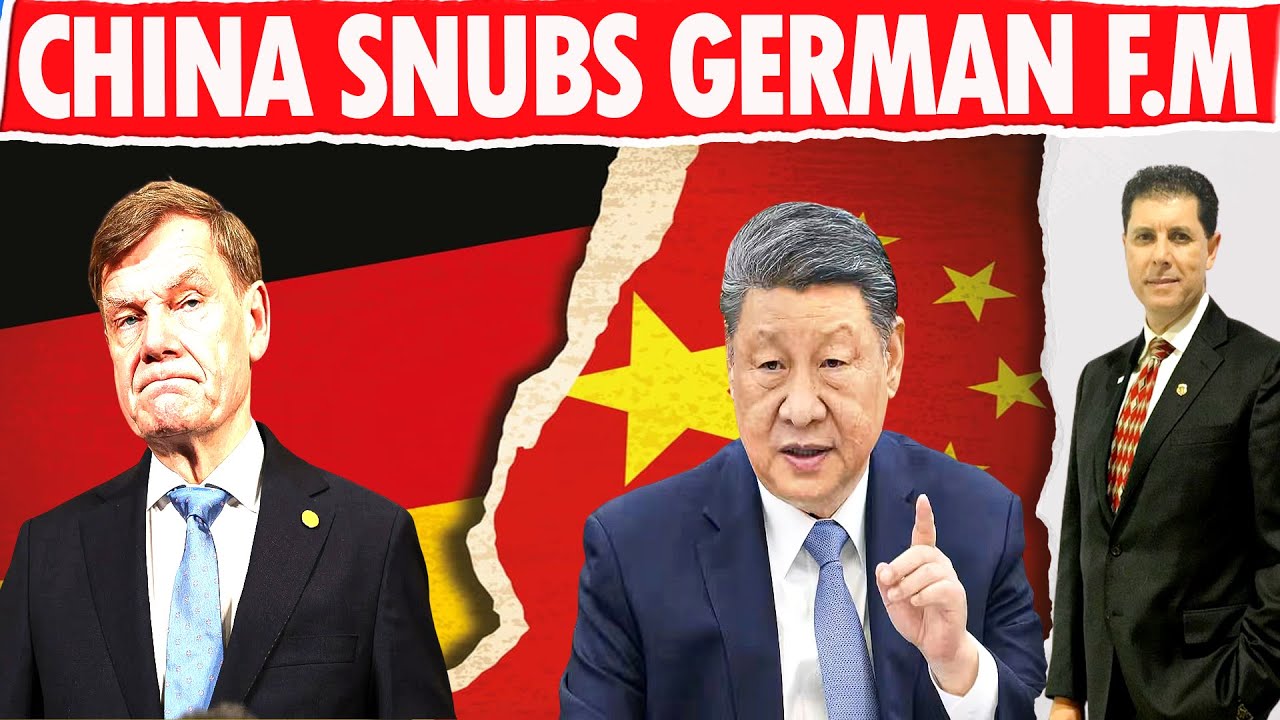
In this extensive livestream, host Dr. David Oualaalou opens with community greetings and housekeeping, then reviews several current geopolitical headlines—including East Timor’s entry into ASEAN, a US‑Malaysia rare‑earth agreement, a Chinese‑Cambodian cyber‑fraud case, and US‑Russia nuclear tensions. The core analysis focuses on the reported cancellation or postponement of German Foreign Minister Johann Wadephul’s planned visit to China. Oualaalou argues the Chinese side likely rejected the trip because Germany’s public stance on Taiwan and its push for rare‑earth/semiconductor access conflict with Beijing’s interests. He details how Germany’s economic reliance on Chinese markets—particularly in automotive and machinery sectors—makes the diplomatic fallout especially damaging, citing export declines, price differentials between German and Chinese vehicles, and a broader German recession. To contextualize the dispute, Oualaalou provides a comprehensive geographic and historical overview of China, covering borders, special administrative regions, and a dynastic timeline from the Xia to the People’s Republic. He links China’s “Made in China 2025” industrial push and the “China shock” to the erosion of Germany’s comparative advantage, arguing that continued decoupling will hurt Europe more than China. The livestream concludes with calls for audience interaction, promotion of upcoming guest discussions, and a reminder that geopolitics affect daily life.
Chapters
Hello everybody and welcome to Geopolitical Trends, where truth matters. I'm your host, Dr. Oualaalou. Very, very excited to be with you. Hope you had a, a relaxing weekend and you are gearing up for the new week. So I got an interesting topic I'm going to be talking to you about, and this has to do with German Foreign Minister, so they say, and canceling his trip There is more into it than just what the media is saying in, in Berlin. So I'm going to be detailing a few things for you, but one of the key things I'm going to be addressing in this live stream here, which I really hope you won't miss it, is the history of China. I decided to do in this live stream the geography and history of China, and next time when I talk about Germany, I will do the geography and history of Germany. So, but for in this live stream, I'm going to be talking about the history of China. So, but first, let me say hi quickly to our wonderful community. As always, Leanne, good to see you. Willie Holman, Taiwan Steel, as always. Uh, uh, good to see you. Keep me waiting. China is my, my third trap news. Good to see you here. Casey Wong, as always. Alex Talokin, Zhaoyang, good to see you, and hello to you as well. Francis Tango, good to see you. Uh, who else is here? Masian Dorier, good to see you. John Dutchman, good to see you here. And Mr. White, Jim Pasarotti, good to see you. Haven't seen you for a while. I hope all is well. And Say It Like It Is, as always, good to see you, and thank you for your, uh, support for the channel. Thank you very much for that. So, uh, I have some housekeeping items for you. I'll do headlines, then I'll move into the conversation regarding really what's behind the, uh, the so-called the cancellation of the German, uh, uh, foreign minister, uh, uh, to, to China, his— the cancellation of his trip. So we're going to be detailing more about this one. So the housekeeping I have for you is remember to join me this evening at 7:15 or 7:30. I think 7:30 for my conversation with both my dear friends Ayna Tengen and Dr. Warwick Pao. So you don't want to miss this conversation. So I look forward to having, uh, uh, our live stream with them at 7:30 PM Central Standard Time here. So the second one has to do with my upcoming conversation with none other than James Bradley on Tuesday at 8:30 AM Central Standard Time. So I look forward to this conversation with James Bradley as well. So, uh, let's do some headlines here quickly, and I'm gonna jump into my analysis. The reason I wanted to do headlines for you, because there are some really key aspects, uh, let me silence my phone here, uh, so I wanted to do this because it's very, very important to understand. So we're going to start with the first one. Here. And what you're looking at, you're looking at East Timor becoming now ASEAN's 11th member. It is official now. So East Timor has joined the Association of Southeast Asian Nations, or ASEAN as it is known, as the bloc's 11th member state in a move Prime Minister Xana Kusmau held as a dream realized, and I put this in quote. Very interesting. Of course, uh, next time I will talk to you about the history of East Timor. It's a small country, 1.4 million. Its GDP is about $2 billion. That's about it. But its location, it's the significance of it. It has some other strategic meaning to it. So, uh, second headline has to do with Uh, which be to me is a troubling, but I did ask you in a survey, uh, let me share the, uh, outcome of that survey with you because you need to know, uh, and also for the community to know. When I asked you the question, uh, the US-Malaysia agreement allows access to rare minerals, meaning the US will have access to rare, uh, rare metals in Malaysia. And I asked you the question, in your opinion, did Malaysia cave in to the US? 68% of you said yes, 23% said no, and 8% said I don't know. So it's a very— to me, it was all of a sudden that we— Malaysia's cutting a deal in this manner with the US. Yeah, maybe it's business, maybe not. So I know what, what we have done for the Malaysian government over decades, the long dark history that we have. So I don't know, I'm not jumping into that. I just, uh, suffice it to say that the United States signed a series of trade and mineral agreements with 4 Southeast Asian nation partners on Sunday. This is because Trump is already in, in, in, in Southeast Asia there for a for a trip which he's supposed to meet— I don't know yet, is not confirmed— meeting with President Xi Jinping. I don't know if it is even wise for the Chinese president to even meet with Trump. What do you think? Should President Xi meet with Donald Trump, yes or no? If you can answer in the chat box, I will greatly appreciate it. So what Trump is saying regarding these agreements, he wanted to address the trade imbalances and diversify supply chains and China's tightening export restrictions on rare earth minerals. Well, well, it's good, but at the same time, is the US gonna allow Malaysia to benefit from its own rare earth elements, or the US gonna take control of it? That's why I don't see this agreement as a win-win for both. So that just my opinion. So, uh, we shall see as we move forward. Uh, the third item has to do with, uh, with a 37-year-old Chinese-Cambodian businessman. His name is Chen, Chen Qi. I have a picture of him. So, so he has, I think, a dual citizenship, Chinese and Cambodians, or maybe— I'm not sure yet. All I know, the, the, the source that I checked was he has— he's known for as a Chinese Cambodian. So, so, uh, Chen is behind now a massive cyber fraud network described as a criminal empire built on human suffering. What's in this? According to a recent report which was published at least by the State Department, and the State Department of Justice, uh, has just charged, uh, Chen with running fraudulent complexes in Cambodia that stole billions of dollars in cryptocurrency from victims around the world. The Treasury— the US Treasury Department also announced the confiscation of about $14 billion worth in Bitcoin associated with him. So I, I don't know, it's kind of, uh makes you— I know it was a recent raid in, uh, in I think Myanmar and Cambodia, one of those, that had to do with some financial transactions. Whether this is part of it or not, uh, I do not know and I cannot confirm that one. So, and the last one has to do with what's going on between the US and Russia. Of course, as you know, the future of nuclear arsenal between Russia and US is now very, very— there is a big question mark. So of course, on his way to Asia, Donald Trump said that he would reschedule his meeting with the Russian President Vladimir Putin. As you know, the meeting was supposed to be taking place in Budapest, Hungary, that is. So this came after this cancellation of the trip. Which now put things in perspective as far as what the cancellation means. So in my opinion, and again, I— that's the way I read it, uh, this, this, uh, this cancellation by Donald Trump was not merely a postponement of a diplomatic meeting. Rather, to me, it's a political message that Donald Trump is sending to Mr. Putin. Well, Mr. Putin is not going to care what Donald Trump thinks or wants or whatever. Care? They don't care. They don't care. The big issue all this has to do with how Europe is pushing now for wanting the US to provide Tomahawk missiles to Ukraine so they can strike inside Russia. Russia also responded by— and I'm going to do a short video for you later on about what the Russian response is. You will be surprised and amazed to know. So suffice it to say, one of the key aspects to all this now has to do with the fear that are now growing regarding the START III treaty, the strategic, uh, talks, the Strategic Reduction, uh, uh, uh, treaty that, that deals with the nuclear arsenals for both countries, known as START. And what is the concern about this one here? It's because this strategic arms control systems between Moscow and Washington is approaching its— the end of its deadline, which is in 2026. So, and it's sort of the Russians might not be interested in sort of updating or sort of extending this treaty because of what we're doing. So it's— I just wanted to bring this up to your attention to have an idea of what's going on. All right, let's get into our analysis about how the German Foreign Minister, Johann Wadephul, postponed— they're saying he postponed his China trip, aimed tensions. I don't think so he postponed it. I think it's the Chinese told him, you know what, no need for you to come in here because first of all, you're not going to be meeting with President Xi Jinping. And second, the only meeting, should you ever make it to China, is going to be with Mr. Wang Yi. That's about it. He's hoping for something else because he wanted to always bring a delegation with him to talk about what is going on regarding the German economy that is taking a hit, especially for not having access to the Chinese market. So the German foreign minister, Johann Wadephul, as I mentioned, the media in Germany saying that he's postponed the trip after Beijing confirmed only one meeting for him. So, so here is what the spokesperson said: the Chinese side was ultima— and I quote— the Chinese side was ultimately able to confirm only the appointment with the Chinese foreign minister and could not confirm any other additional appointments, end of quote. So of course, the, the, the visit was scheduled last week, but of course, which by the way, should that have happened, it would have marked the first, uh, trip by a German foreign minister chancellor, uh, in the current administration of the Chancellor Friedrich Merz's conservative-led government. So, so, but there are numerous issues that, uh, of course the Germans were hoping to discuss with the Chinese. But how can you do that when you meet with the Chinese, the moment you leave you say, you know what, we're gonna have to support Taiwan, or the moment you leave Beijing you say, well, we're gonna— the, the Americans will have to put more restrictions or more tariffs on the Chinese. That just doesn't make any sense whatsoever. So, and this is where the Germans are sort of saying, oh, we didn't cancel and we couldn't confirm if the Chinese canceled the trip as well. So they kind of going back and forth. So, and all this has to do with what's at the heart of it regarding Taiwan, and I'm going to get into that. So, but first let's do geography, and let's do history. Then we're gonna go into more analysis about this. China is in— is an East Asian nation. It's the biggest of them all, situated in the northern and the eastern hemisphere of the Earth. China shares its borders with 14 countries. So pay attention to what I'm gonna be sharing with you here. Those countries include Mongolia in the north, Russia and North Korea in the northeast, Vietnam, Laos, Myanmar or Burma, India, Bhutan, and Nepal in the south, Pakistan in the southwest, Afghanistan, Tajikistan, Kyrgyzstan, and Kazakhstan in the west. China is also bound by the Yellow Sea and the East China Sea in the east and the South China Sea in the southeast. What's interesting about what I just stated with you? When you look at some other geographical maps, okay, they include Taiwan as a sovereign state. Which you and I know has nothing to do with, with the reality of it, given the history of China. And like you— like I said before, you have to always pay attention to what the maps are stating vis-à-vis— or the political map, that is— vis-à-vis what the reality it is. Suffice it to say, and I'm going to share this with you because you need to understand about China, one thing is that for First of all, as it is known, the PRC, not CCP. They still in the West, some they don't understand, but again, you forgive their ignorance. It's the People's Republic of China, known as PRC. It is divided into 22 administrative provinces, they known also as sheng. There are also 5 autonomous regions There are also 4 municipalities, which known as chè or chai, and there are 2 administrative regions. The 2— there are those who say there are 3, and there are those who say there are 2. Suffice it to say, for now I'm gonna share with you about the 2 special administrative regions known as SARs. I've been in both of them. One of them is Hong Kong, and the other one is Macau. For Taiwan, it is a province of the motherland China, and they have the same sort of status like Hong Kong as far as managing and administrating their own affair. And for the two SARs, Hong Kong and Macau both operate under, and I quote here, "one country, two systems," end of quote. It's no different than what Taiwan's status is under one country, two systems, you know, principle, which allows them basically a high degree of autonomy in their economic and administrative affairs. However, the mainland, meaning China, is responsible for the defense and the foreign policy of those locations. So as you know, Hong Kong became a SAR, Special Administrative Region, in 1997 after being a British colony, which by the way, if you only see the development that's taking place now in Hong Kong versus how it was 15, 20 years ago, there were none. So it is a major global financial hub with its own legal system and yes, currency. Macau is also another SAR, or Special Administrative Region, which took place in— which became a SAR in 1999 after being a Portuguese colony. I had a chance to visit, uh, Macau during my first trip, uh, that the community supported here. It's incredible. It is incredible what I saw, and from the cultural aspect, from the structural aspects and the architecture and so forth. So. And it still have that distinction of the Portuguese colonialism in there. So it has a distinct culture. I, I can guarantee you this if you ever get a chance to visit Macau. And it's a world-renowned center for, of course, tourism. And there is also gambling is part of, like, like what we have here in Vegas. So then comes the issue of Taiwan, and this is again where you have some maps indicating one thing and other maps is indicating otherwise. Suffice it to say that Taiwan, it is part of China. So it is a sort of the— it has its own administrative division. It's the same, almost same status that I see that Hong Kong enjoys and Macau enjoys. So, but they are part of the PRC, the People's Republic of China. So, and of course there is that issue that is going on, and this is part of why I wanted to share this with you. It's because of what Germany statements as far as the status quo— that's exact word what the Foreign Ministry of Germany stated vis-à-vis Taiwan. They know the history and yet they are ignoring it. So, but again, it's on them. So This is what I wanted just to share this with you on this aspect of, uh, of, uh, of the Chinese geography. So now let me move into some history here. And what I have, I have some pictures for you. I'm gonna say, and I give credit, by the way, all this picture to the, uh, there is one particular name, uh, it's called the China Highlights. That's the website that I'm going to show you on the screen. But suffice it to say, uh, what you need to understand, uh, there is one major picture, and I have to— I will share it with you as I move forward here. Let me see what it is. Uh, image. So I didn't upload it, but I'm gonna, I'm gonna share it on the screen. Let me just, uh, start the history of China. Of course, there is no way, guys, we're gonna cover everything regarding, uh, the, the timeline summary or the dynasties of, of China. Remember, I didn't say dynasty, I used the plural dynasties, because when you look at the timeline of Chinese history, of course you have to go all the way to 2100 to 16 BC, and this is where, uh, Xia Dynasty started at that time. And I have some maps I'm going to be sharing with you. Uh, so let me— I have to, because I have to organize them, uh, based on— I'm going to share on the screen here first, but let me just move on into the conversation here. And what I wanted to share with you is this particular, uh, picture here. Let me share the screen, then, then you'll see, because I'm going to make it bigger for you. Just bear with me here, guys. All right, Chinese dynasties. Now let's look at this picture here, and I'm going to show you what I'm referring to here. So I'm going to enlarge this picture right here. Okay, we're going to start from this side here. And just bear with me here. So, uh, why, why I found this very important is because it highlights to you the timeline. Of course, they say in the world cultures because they're talking about China here, Europe, and Americas, but also they are missing on one aspect of it has to do with the Arab or the Muslim or the Persian civilization because the Persian Empire is also as long as in history as, as, as the Chinese to a degree. But for now, we're going to focus on where China is. So, so you're looking at the picture here of the First Emperor, which is linked to the Great Wall. So, and I'm not going to be reading all this to you, you just want it— I'm going to be providing you the link, but I just want you to see the timeline of where things are regarding the Chinese history. So you talk— you go about 1.7 million years ago, which is the prehistoric time. This is the first dynasty, the Xia Dynasty, which is 2070 through 1600. Okay, then after it came the Shang Dynasty, then the Zhou Dynasty. And I have maps of all this. For example, uh, here is the, uh, here is the Zhou Dynasty. This is the area where it was. At that time. Okay, and the other one is— let me, let me go back here to the screen and we'll see what are we looking at here. Then you have the, uh, the, uh, the Han Dynasty, which goes all the way now into the eastern, eastern side. The Han Dynasty And I have a map for it right here for you to see. Here is the Han Dynasty. So it was at that time, because when you look at the timing here, land under the rule of the Western Han Dynasty, 206 to 9 BC. This is the Han Dynasty's, uh, the areas that they have ruled. So it's, it's, again, it's, it's a big, uh, uh, uh, uh big dynasty at that time. Then when you move the timeline here, you go into the Western Qin, 265 to 300. Then you go into the Northern Dynasties here. And all this, that includes later on in time, and I'm gonna share them, uh, one by one. I'm gonna have to, uh, just stop this one here because you won't be able to see the pull. Let me extend this one here as we move into the Tang Dynasty. This is 618 to 907, and this is one of the most prosperous dynasties that China has experienced here. So why it's important also, because that's the only time China had an empress region at that time. And what's important about this time of the Sui Dynasty— the Sui Dynasty is, uh, I have the picture of it. I thought I did have the Sui Dynasty. I guess they didn't show the picture of it here, so I don't— I thought I did. I don't have the picture of it. Uh, suffice it to say, what I'm going to show you right here is the Yuan Dynasty. I have a picture of that, uh, of course. What's important about this, if you recall when I was in Beijing, and I remember I did a live stream from a street which was at that time a part of the Yuan Dynasty back then. So But look at again, this is the time frame from 1279 to 1368 AD. This is the land under the rule of the Yuan Dynasty. Very, very important to understand this one here. Going back to my timeline, then you have the Ming Dynasty, uh, 1368 to 1644. And I'm going to show you the land mass that the, the Ming Dynasty had. It is— and you can see the extension here on the left— 1368 to 1644 AD. So very, very interesting, uh, and understanding the part of it. Then after the Ming, of course, you have the the, the Qin Dynasty. Here is what I found very interesting. There are two names. One of them is Qin, is Q-I-N, and one of them is Qing, Q-I-N-G. So I'm going to show you both. Here is the, the Qing. Look how big that is. And again, 1644 to 1911 AD. Look how big this dynasty This is Hangzhou, Guangzhou, Nanjing, Beijing, and of course Tianjin. So, and, uh, as it says right here, when you see these circles here, that's the capital. Even for the Qin Dynasty was in Beijing at that time. So this is what's important to understand. Then the other one, as I mentioned, is is the Qin, Q-I-N. This goes back to 222 to 206 BC. So always please make a— because I, I just learned these distinctions myself between the Qing with the G and the Qin with just Q-I-N. So that's what's important to understand. And and moving forward here till you enter into modern-day China. And I'm gonna be detailing some of this. I'm gonna stop this one here. We go back to our, uh, and that's where, uh, when, when you get back into the, uh, historical. Now, the dynasties of China, as I mentioned, I could— I didn't put them in order, but if I am to put them in order, that starts with the first one, the, what's known as the Cha Dynasty. That is the first one according to the historical record here. So, and this was considered one of the first dynasties in ancient, of ancient China. And again, this between 1600 and 1046, that's what it was known. So then you move into what's after it, the Shang Dynasty. Once again, the Chang Dynasty was the earliest from the Chinese writing, and this were because they found some sort of oracle bones were found to tally with later accounts of the Shang Dynasty. S-H-A-N-G Dynasty. I don't know if I have the map of the Shang Dynasty. Oh yes, I do, right here. And again, this is very important to really understand the, the, this history. Then you go to Zhou Dynasty, Z-H-O-U Dynasty, which is 1045 to 2021 BC. Uh, the Zhou, the Zhou Dynasty is right here. All of them were centered in certain specific areas. So now One thing you need to understand, that during these areas, uh, that's when you start to see some developments taking place inside China. So because, uh, among this, uh, for example, in this case, uh, when you compare it with the peace and prosperity in Western Zhou at that time, so the eastern part of the, of, of, of the dynasty was a period of great division. That's what happened at that time. And the Zhou King at that time lost his authority, and 7 prominent states emerged in, in during that conflict. Yeah, when you look at the, the, uh, let me put this back up here, the, the Zhou Dynasty. During this division, 7 states emerged. That's what you need to understand. The tensions that existed during that time. Then come the Qin Dynasty, Q-I-N, 221 to 206 BC. So now what's important at the Qin— yes, I do have it right here. What's important about this is that the Qin Dynasty was the first to unite China as a country under the emperor instead of the ruling clan. Which meant what? That meant the beginning of the Chinese feudal era. That's how it began, during this dynasty, the Qin Dynasty. Very important to understand. And of course, this dynasty lasted— it was the shortest, by the way, in the Chinese history. It lasted only 15 years, which is a very, very short time frame, uh, by, uh— and the first emperor His name is Qin Shi Huang. It's H-U, uh, let me put it in a— I'm gonna put it in the chat box for my Chinese speakers, uh, who knows how to pronounce it correctly. That's his name. Uh, it was under his ruling, uh, where China used the first time used the title of emperor. Is during the Qin Dynasty, right? So, but what's important about this dynasty, by the way, because you need to understand the evolvements of how things evolve— during this dynasty, the Qin Dynasty, that's when they standardized units of weight and measurements, as well as the writing system. That tells you how old the development of the writing style, because it was the Chinese that developed the paper to write on, and it was the main unit, the, the units of measurements. Remember, some of the first coins happens to be in China. And of course, during that, that dynasty time or that era, there were some major projects in comparison to today's, uh, or contemporary time. One of them You guys know what it was? It was the Great Wall. That's the major project that starts, because the building of the wall took centuries. So, so that's— I just want you to know about this one. After that came the Han Dynasty. Let me see on the map here. The Han Dynasty, look at how it starts to expand. The Han Dynasty, 206 BC 220 AD. So what is important about the Han Dynasty? It was one of the most powerful, prosperous, and important dynasties in China's history. Why is this important also to understand? Because there are some in Taiwan that descend from the Han ancestors. Not all of them, of course, but there are some. I asked when I was in Taiwan last time. So, and what is important also about the Han Dynasty is that it existed during the same time as the Roman Empire. That's what I found very, very interesting, and interesting about it on the economic aspects and the development that the Han Dynasty has created at that time. It was known in history, there is a historical record for it, that it was the Han Dynasty that started the Silk Road, uh, trade. And he was the one that was connecting China with Central Asia and Europe. This is why when you have to think about, is China today— and I'm just thinking outside the box here— is China today coming full circle? You know what I mean by full circle? Because it has a history of innovation. It has a history of— this is why I had to respond to that ambassador, US ambassador, who said when he saw the— during the V-Day parade of the Chinese military, was saying, oh, they stole the technology, whatever. No, it's the innovation, and history proves it. But it was during the Han Dynasty also when Confucianism was officially elevated to the orthodox statute and was to shape the subsequent Chinese civilization. Of course, during that time, it was also the introduction of Buddhism, which we all know it was originated— or yes, originated in ancient India. So then you have the Hou Tao, which is invited the first anesthetic during that time. So, and it was during the Han Dynasty, of course, where, uh, for example, let me put the map again. Uh, the Han Dynasty, it's where, um, hold on, let me see something here. Yes, during the Han Dynasty, it's when the, the sort of the paper making was, it was invented. Yeah. And, and you know what else, which I was, I was surprised to find out and learned about it during this, this dynasty here. It was an individual by the name Zhang Heng, H-E-N-G. Zhang Heng. Why is this guy well known in Chinese history? I did not know. I'll admit it. Because he was the one who invited the seismograph. And what is seismograph used for? That's the one that measures earthquakes. It was this guy, Zhang Heng, that created that. Very, very interesting. So, and of course, what happened after this, you have the 220 to 581, that's when you have the Wei, Jin, and the Southern and other dynasties emerged, and that's what creates some sort of regime change, because that's also shaped the trajectory for the Chinese history. So, and when the Han Dynasty fell into decline, it fractured to three kingdom periods: 220 to 265, which known by the Qin Dynasty, uh, is, uh, J-I-N. Then came after it the Three Kingdoms period, with the partial unification. So however, suffice it to say that historical record proved that during that time and after it, China again fractured, this time into the Southern and Northern Dynasties, which was between 420 to 589. What's— it's important to understand these phases and stages that China went through, because this is when you have— during this period, other ethnicities in the north established political power and moved to the center or central plains, and that's where they start gradually accepting the Han culture. This is why you have in Taiwan some Han ancestors there. So Then the Sui Dynasty. This is an interesting one because what I learned from it— and I didn't have the map of that, my apologies, because there's no map for it, uh, from— I didn't find the map. What's important about it, because it was short-lived, but it did, did build canals and contributed to the Great Wall. That is what's important about this. So you need to understand this part of it. Then you have the Tang Dynasty, T-A-N-G, 618 to 907, uh, the Tang Dynasty. Let me see if I have a map of it. No, there's no map on that. No worries. The Tang Dynasty Now, why is this important? It's because this one had one of the largest cities in the world, and that city was named at that time Chang'an, which is now— is Xi'an. It's, uh, it's X-I apostrophe A-N. Was, and then, the largest city in the world at the So the— as I mentioned earlier, the Tang Dynasty produced the only female emperors in the Chinese history. Her name was Wu Zetian. What, what's important to understand, during this era, it— China also, uh, sort of experienced what's known as the Golden Age during the Tang Dynasty. Why? Is because this era was known for poetry, was known for painting, and was known also for pottery. The woodblock printing all happened during this particular era or the— or this dynasty. Then come the Song Dynasty. The Song Dynasty, um, I think I have a map. Yes, right here. That's the Song Dynasty. The Song Dynasty saw some high level of growth in commodities economy, in culture, in education, and yes, scientific innovation in Chinese history. Here is what's important to understand, and I'm going to give you some figures and we can translate them to modern-day numbers. Some estimates according to the historical records, China's GDP in the 100— in the 1,000 years. Listen, I didn't say 100— 1,000 years. What was about $26.5 billion US dollars of today's numbers, which accounting for 22.7% of the world total, which means it has about $450 per capita. It's higher than the United States and Western Europe at the time because Western Europe and the US had only $400 per capita. China 1,000 years ago had about $450 per capita. This dynasty was also known for shipbuilding industry because that's when it was developed. It was also known for overseas trading, which was prosperous. Because that's an important thing when you think about it. The, the one thing you need to understand is the idea of the Four. There are four key sort of inventions that took place during this dynasty. You have paper, which, which, uh, important in our modern-day life. You have printing Okay, you have the compass, we see the directions, and you have the gunpowder. That's, that's during this dynasty's era when it was developed. And of course, this will further developed during the Song Dynasty. So, and the earliest paper money in the world was found in Sichuan Province. And that in itself was dated back to the Song Dynasty, S-O-N-G Dynasty. So that's what happened. Then comes after it the Yuan Dynasty, which I remember, I remember when I was in Beijing, I did that live stream for you. I shared some information about it, the Yuan Dynasty. So very, very important. So Why? Because China's first foreign-led dynasty ruled by Mongol tribes at that time. And of course, that's when you have Marco Polo, who was from Venice, that traveled extensively in China and later described China's culture and marvels in his famous book, The Travels of Marco Polo. Then after that, came the Ming Dynasty. I'm sorry it's taking a little longer, but we have to do this because you have to understand this one here. The founder of the Ming Dynasty is that Zhu, uh, uh, Yuanzhang, who was ousted the waning Mongol Empire in China, and that's when he began the Ming Dynasty. It was the last dynasty ruled by the Han people, for the record, city. What is known about the Han Dynasty— uh, well, I'm sorry, what is known about this particular dynasty is the Forbidden City. You all remember I did a video for you. And by the way, I still remember I made the mistake, and I, I'm not shy of saying I made the mistake. I made a mistake by saying when I did the live stream for you for the for the, uh, the Forbidden City, I, I stated the wrong number. It's my mistake. I said about 200 rooms. Actually, there were 9,000 rooms in the Forbidden City. So I got an opportunity to correct the record here. So the Forbidden City was built and became the residence of the emperor for the remainder of the Imperial Era at that time. So And of course, that's when you had the construction of the Great Wall contributed to it, and the maritime trade took place till you have the Qing Dynasty, 1644 to 1912. Uh, the Qing— right here, look how big it became. The Qing Dynasty was the last imperial dynasty in China's history and was ruled by Manchu people in the northeast. The two most famous emperors of the Qing Dynasty were Emperor Kangxi. It's K-A-N-G-X-I, who ruled from 1661 to 1772. And you have Emperor Qianlong, who ruled from 1735 to 1796, and their reigns were known as Golden Age of prosperity. So, and that is what leads us to talk about modern-day China, because it led to the Republic of China era, 1912 to 1949. And that's where the revolution took place. What year, by the way, the revolution took place inside China? Just for my community, it's not a popcorn, is I just wanted you to be part of the conversation. What year did the first revolution took place after this, this time here, the, the Republican Revolution? What year in China, if you happen to know? Uh, let me see. It takes a while to this to show up. Okay, I don't see an answer here. I'm gonna have to move on here because Let me see. No, I need the year, specific year. Oh, oh, Taiwan still, you got it. Taiwan still, it was 1911. 1911, that's when that happened. So 1911, and that's where, uh, some sort of, uh, and then the revolution was led by Sun Yat-sen, which ended the rule of the Qing Dynasty. However, the Republic of China could not be firmly established across the entire China, with civil war ensuing every decade. So you had to wait till you move into 1949, and that's where the official start— the official, uh, uh, uh, uh, modern-day history of the, the, the, the, uh, the People's Republic of China, PRC, started from 1949 all the way to today's. So since the founding of the PRC in 1949, China has entered some sort of— that's when it became the Communist era of stability, with the reform of opening up policy in 1978, as you know, bringing China phenomenon economic growth. And that is where you have to understand where things moved on regarding China till what we have today. And I'm not going to detail much of this because that's the extent of what I'm going to cover regarding history. So let me move now into my own analysis and I'll see if there are any questions towards the end. Liking this video so far? Don't just be a watcher. Go ahead and hit the like, share, and subscribe button. And don't forget to tap the bell so you will not miss any of my videos or live streams. This way you will be supporting a channel that stands for the truth and objective reporting. The choice is yours. Thanks for your support. Yeah, please subscribe if you have not. If this is your first time coming to join our community, I would greatly appreciate if you can subscribe. So, all right, let's, uh, let's move into our analysis. As I said, the German media, and most of them here in the US, are stating that the German Foreign Minister, Johann, uh, uh, uh, Wadephul, canceled or postponed his planned visit to China after Beijing confirmed only one substantive meeting with the Chinese Foreign Ministry— uh, Foreign Minister, I'm sorry, Mr. Wang Yi and could not confirm any other additional appointments. This leads me to ask the question, is this has to do with Xi, President Xi refusing to meet with him? And in return, the guy said, I'm not coming. Well, you know, you know, it's your issue, not ours. You know, it makes more sense for why, why, why should President Xi met with him to begin with? Shouldn't. Shouldn't after what usually the Germans have been saying and doing. There are two main things you need to understand. One of them has to do with the statements of the Germans, a minute, foreign, foreign affairs ministry regarding Taiwan. And the second one has to do with the push on China to cut its support for Russia. You all see what it means. But in my opinion, Germany has no standing, has no, no, no, no courage to take it to the United States and say, you know what, you shouldn't blow up the Nord Stream 2 because that's where we get our gas from Russia. You shouldn't get involved in fomenting tensions regarding Ukraine. Instead, Germany, even before when Olaf Scholz was in charge, It's the same policy. You'll remember last year, most of the Europeans were traveling to China trying to convince Chinese to sort of invest and so forth. Why? Because they are seeing what was happening inside, uh, the European old continent. That is, this is no different here. So it's because China had to respond to Germany because China criticized Germany's stance on Taiwan. Why? For a simple reason, and rightly so, and I will do the same if I were China. Why? Is because to China, it is interpreting Germany's statements regarding Taiwan as maintaining the status quo in the Taiwan Strait as a tacit support for Taiwanese independence. That's how Chinese are interpreting that. And rightly so. So what does it mean when the Germans are saying, oh, we have to maintain the status quo? You know, what happened to the three communiqués that the, the China— that the United States has, has signed with the Chinese recognizing One China policy, two systems, which means Taiwan can manage its own affairs but is still under One China policy, no different than Hong Kong no different than Macau. So for Germany to come forward and state what he's stating— we have to maintain the status quo of Taiwan— why, why do you think that the Chinese will want to even sit down and negotiate with you or enter into a trade with you? So the other thing has to do with what Carl mentioned. You guys remember when he talked about the company of rare earth that, that is processing rare earth in China but is now, is taken control, is controlled by a Dutch company. What Germany wanted to have a deal, it's almost arguing with the Chinese over the rare earth and semiconductor, because what the media did not disclose is that Germany went ahead and launched a diplomatic protest against Beijing for blocking semiconductor shipment. It never came up to the surface. So basically, Germany wants to sit down with the, with the Chinese while at the same time stabbing them in the back. So the Chinese said, why should we meet with you? So, and this is again where you have to consider the idea of where the German economy is. To put this in perspective, you have the critical rare earth minerals, which is crucial for the development of the auto industry in Germany. So, and this is why the Germans now— economy is not having as much access to the Chinese market as it used to be. Why? Because the Chinese are developing their own I remember I had a picture of, uh, uh, let me see if I can get it for you. And it's just to highlight few things for you because you need to see what's going on with, with this particular, uh, industry here. There is one here, and I have another, a picture, if I can get to it. Yes, I do. Okay, let me upload this picture for you to see. And I took this picture when I was in my recent trip, uh, to, uh, to China to show you about, uh, what's going on with these pictures. Open. Okay, I— it's not coming up. Image. Okay. I got it. Just bear with me, guys. Image— I forgot to upload this earlier. Usually I had them, I had them ready for you, but somehow I forgot. My apologies. And, and just to highlight to you the idea of why now Germany is screwed, economically speaking. Here's the first picture. This is a, this is a vehicle developed inside China. I went inside, took a look at it, and I'm going to show you the exterior of it. When you look at the developments of the Chinese vehicles, because what I found out, and I asked, you know, it's still the percentage, and I ask, is there the percentage of, for example, BMW or Mercedes in the Chinese market? They said no, less and less Chinese are purchasing the Mercedes and purchasing the BMWs. Why? Because China is developing much better products at a lower cost. The BMW is going to cost the Chinese the equivalency— and I'm just giving an equivalency here— of $50,000 versus buying a Chinese manufactured or produced vehicle for half of the price that is top-notch technologically. Here is the same This is the same, uh, the same vehicle from outside, or this is the inside of it. And I asked how much this vehicle cost. It was about $36,000. So why will the Chinese pay $50,000 for a vehicle because it's produced in Germany? And that is where the concern of the Germans from the economy because you have now some manufacturing in Germany are shutting down because they don't have access to certain elements and they don't have access to the Chinese market. So there is a significant risk in the, in the China, in the German economy for lacking access to the Chinese market. So, and those represent some sort of key economic vulnerabilities for the German economy and for the European economy writ large. Because when you think about the European economy, which country do you think about? Mainly Germany, because Germany is the heart of the economic engine for Europe. France to a degree, Italy to a degree, England— well, England, you know the poverty where it's going. England is a mess. Because when you think about the manufacturing in Germany, which is account by to about 18%, to my knowledge, of the entire Germany's GDP. And compare that to only about 10% for the US, making, uh, Germany far more exporting dependent and vulnerable to disruption in key markets. That's how we messed up Germany and European economies. So German export to China has declined by about almost 9%, and I'm going to provide you the link where I get the stats for— it was 9, almost 9% in 2023, and it was about 8% in 2024. So which means what? You don't have to be a genius to figure this out. It means it's signal for declining and weakening economy. This is why the German economy— I'm going to provide you the link for this and you can, uh, read the article yourself later on— the German economy is in recession. They just don't want to admit it because, and again, if German had the gut, they would have took stand against the US for allowing them to blow up the Nord Stream 2. But they couldn't. All the European leaders, all of them, no exceptions, they just like— I, I may use the term pathetic because I don't know how else to describe it. You know, they're just pathetic economically speaking. And the problem is, is that the average citizen in Europe is paying the price. You know, I was in Europe recently, I compared prices in in comparison to, let's say, year before, they were going up. The energy bill going up. It's no different than what we have here in the US. In China, they don't have this problem because an average citizen in China— and I was there and I saw and I asked, this is not me just talking on the top of my head— I was able to ask some people who were comfortable enough to talk to me about something like that. He said, no, the tariffs, this tariffs craziness, whatever, doesn't affect us. Why? And I said, why not? He said, because we can afford to go to the supermarket and buy whatever we need for our daily life. When I looked at the price, I remember when I met, uh, Warek in Beijing and I asked him, can you please show me— since he speaks Chinese— can you please show me the grocery store here? I want to go inside, see with my own eyes the price of meat, how much they cost. And I saw it, $5 a pound. Yesterday I was at the grocery store looking for some steak, whatever, just to get an idea. $27 a pound for grass-fed. An average citizen here is not going to be able to afford the $27 a pound for meat. I'm telling you, I live here. This is again part of where this problem is. And what makes it even worse now for the Germans, if they only can understand the history a little bit, so they will refrain from issuing this nonsense statements about, oh, Taiwan needs to have independence. What, what for? What is even your problem with that? You got your own problems to deal with and you're worrying about China and Taiwan? That just doesn't make any sense. What makes it even worse for Germany now that the trip is— Chinese said basically, in my opinion, Chinese snob the German, or any European for that matter. And even if any European leaders end up going to China, it is unlikely, unlikely they will meet with President Xi Jinping. And even if they meet with President Xi Jinping, it's gonna be very short meeting. I'm even wondering, and I'm gonna ask you the question, because it is supposedly that Trump's gonna meet with President Xi Jinping next week, possibly. In your opinion, should President Xi Jinping grant Donald Trump an audience? Yes or no? Let me see in the chat box. Yeah, it's because in— in— I understand about diplomacy, but sometimes you have to take a stand. And what the US didn't count on, they didn't count on China taking stand regarding these tariffs. That is why where we are, we are where we are. Macian Dorsier, you say no. Luck, good to see you. Luck is saying no. Uh, who else is answering here? Yeah, if, if Donald Trump should meet with Xi Jinping, two of you said no so far. Uh, let me see. Yeah, I, I agree with you, I agree with you, shouldn't. But even, uh, Kevin Kevin James, you say no. I agree, I agree with the answer for this. Kevin Baptist, hell no. I agree, it's because what Trump is doing, he leaves you no room for wanting to sit down and have an honest discussion with the guy. So, so it is my opinion, and again, I speak for myself, uh, luckily that majority of you, if not all of you so far who answered saying no. And I don't see the rationale for why President Xi Jinping should meet with— yes, the foreign— the Treasury Secretary of the US and his counterpart, the— for Commerce Minister, have come sort of to an agreement regarding framework, but that's all it's going to be. Why? Because you can't trust the Americans. Simple as that. So, and, and as you're right in this question What for? Yeah, what for should, should Donald Trump meet, or President Xi Jinping meet with Trump? And that is again where I see why Germany now is holding the end of the stick very bad, and that makes it even worse for them. There is the other thing, is that the China shock. And what is that China shock, if you know what I'm referring to here? I am referring to the statement that China made way back by Made in China by 2025. So, so China has gone some sort of a dramatic transformation since it established that particular policy of Made in China 2025 initiative, because now it's producing world-class electric vehicles. It's leading in lithium-ion batteries and solar panels and competing head-on with Germany in industrial machinery, because Germans are known for that, but not anymore. And this, in my opinion, represents a fundamental shift from this sort of the complementary relationship that was between Germany and, and China that benefited mainly Germany, more so than the Chinese. Remember, China had a good relationship— I still have diplomatic relations, but it's different than when China had a relationship during Angela Merkel. The Chinese liked the former Chancellor Angela Merkel. Why? Because Angela Merkel was pragmatic. To my knowledge, and I am aware of certain things that took place behind the scenes regarding the German government when I was in Washington. German Chancellor, the former one, Angela Merkel, was the only Chancellor to tell the Americans to their face, no, we don't agree with you on this or that. The current ones and the previous one, like Olaf Scholz, all of them— and the Chinese are seeing the same pattern. So, and this is where the Chi— the Germans. And now very concerned, like as I said, they are shutting down manufacturing. The, the sales of Mercedes in China dropped by double digit, to my knowledge. The last time I saw the number, and don't quote me on this because I don't remember exactly, it was between 23 and 25%. If anybody knows, please share it with the community. A drop, 25%, meaning Chinese are not buying. When I was in China, I didn't see the Mercedes and BMW. I saw the Chinese vehicles made in China, BYDs and the like. So, and this is where the risk for Germany is. Why? Because you have the two main factors. Those are the machinery and the automotive sectors. They are now vulnerable. As a matter of fact, Some sectors, some manufacturing are shutting down. So because the Chinese have increased the production capacity, so, and the production for not just this but other goods as well. So, and specifically the items that China used to import from Germany, no more, because the Chinese are producing that. And again, go back to the example of the Chinese electric vehicles and the machinery. There's two, because you have now, you have now the Chinese cars competing. I saw last time, I don't know if I have a picture, I hope I do. Uh, usually I keep pictures for you to see, but, uh, No, I don't. It's the fast electric cars by BYD, which rivals Porsche. Whoever thought? Whoever thought? So you think about— now here is, here is one stat, and I'm gonna send you the link. About 80% of German exporters anticipate further declines in sales in this year, 2025, which will lead to mass layoffs in Germany. So, and when you take into consideration all this, the impact on the German GDP, which by the way, Germany is in recession, they just don't want to admit it. We are in a recession, we just don't want to admit it. So, and this is why you have some media inside, uh, uh, both sides of the Atlantic are saying, oh, there might be an economic crisis in China. It's nonsense. It is nonsense. And even if that happens, it's not going to impact China more so than it will impact Germany. You know why? Because it will— Germany's GDP will decline by about, to my— based on the readings that I did, to about 1%. If anything happened to Chinese economy, which it won't— remember, I'm going to be discussing with my guests tonight, Anna Tengen and Warwick Powell, this particular aspect, especially given the recent Four Platinum— uh, Plenum, I'm sorry, Plenum meeting that took place in which China already charted the 5-year plan for next 5 years and 10 years and so forth. So you will hope that the US and Europe will learn something from China's model. So, and this is, this is the way I see it, uh, moving forward. So when the Chinese— when the Germans saying, well, what are we left with, to decouple from China? Well, yeah, go ahead and do it. De-risk from China, go ahead and do it, you know. Because when you consider also the geopolitical tensions that's going on. So it's going to be a far heavier blow for Germany, more so than, than China. Why? Because China produces itself, and the consumption inside China is growing. Once again, what I saw when I was there, I saw a lot of Chinese traveling. I asked some, where are you from? If they happen to speak Chinese, sometimes I translate. They said, yeah, we are from some other state. We just visiting Shanghai because we wanted to see. That in itself helps the economy from within. So, and this is why you have especially the, the German entities, meaning the, the economic entities that are heavily involved with the direct investments in China, is going to be suffering big time. So, and that is where you have the problem in, in, in, in China— in, I'm sorry, in Germany— why this decision is, was like a big blow to them. And rightly so, till they get their act together. For now, in my opinion, I don't see why President Xi should even consider meeting with the German foreign minister. No, let them deal with it themselves. So it's because when you consider what we are doing in Asia So, and that's why even for Donald Trump, why should President Xi Jinping grant him an audience? You know, are you going to trust what Trump is saying? Most likely not the case, and you shouldn't. You know better. If there is a head of state listening to our live stream here, you can't, you can't trust the, uh, the Americans. So, and Trump now is, even though he would not admit it, he's realizing his failed policies have backfired big time for one reason and one reason only: they underestimated China. That is the way I see it. And, uh, all right guys, that's all I have to share with you. Uh, and again, here is the collapse of the Europeans. You know, it's done for. But again, it's their decision. They're the ones who decided to follow blindly the United States. So, all right, I hope you guys enjoyed listening to this. Let me give a thank you to Kevin Baptist for your Super Sticker. Thank you so much, Kevin, not just for this one here but for every time you, you, you support the channel through the Super Stickers. I'm very grateful to you. I want you to know this, and I don't take it for granted. I want you to know, Kevin. Thank you. Dr. Ho, given current geopolitical policy by US, should any sovereign nation consider diplomacy as a reasonable tool with the US? That is a great question, and the answer is no. Is no. Is no till you have, till you have honest individuals in the US government that can deal with other people honestly. I'm not against you advocating for your interests. I'm not adv— you know, every country should do that, but we can't be doing it the way we're doing it. We talk, we sit down with the country, then we turn around and stab them in the back. That is not a way of doing business, diplomatically or otherwise. So thank you very much, Kevin, truly appreciate you. Uh, for those who wants to support the channel, you know, here is the link for the if I can get to it. I don't know what it is. Uh, yeah, I don't have the link. No, I have the link here. So I would greatly appreciate if you could support the channel. I'm gonna put the link in the chat box for you. This way you can, uh, buy me coffee if you feel like it. So, and I'm also going to share the link if you want to, uh, uh, no, that's the only link I have. Anyway, just a reminder, remember to join me at 19:30 for my con— tonight with— for my conversation with Ayna Tangan and Warwick Powell. We'll be having a very, very interesting conversation, uh, regarding a host of issues. We're not going to be talking just about one specific domain, we'll be talking about a host of issues. I look forward to having you join us there. So as always, remember, geopolitics impact your daily life in more ways than one. Till next time, bye-bye.
More from David


Beyond the Single Actor: Why the Gulf Isn't Choosing Between the US and China


Iran, Iraq's Militias, and the Houthis Are Coordinating! This Changes Everything




Who Controls the Next Decade's Resources? Latin America and Africa's Geopolitical Crossroads

The Chokepoint Trap: How Washington's Stupidity Triggered a Cascade That Now Controls the World

Trump Spooked as IRGC Unveiled dual-use SLV, Deployed Ghadir Mini-Subs & Hinted at Tactical Nukes!
