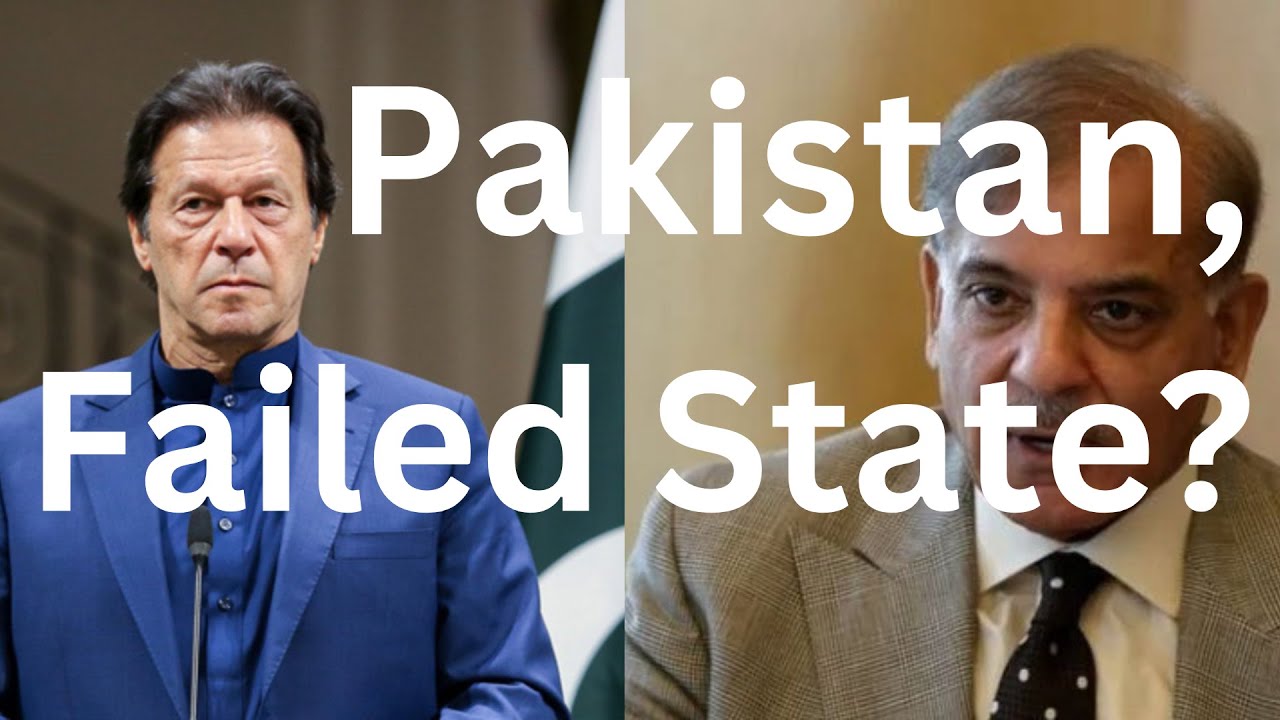
In this video, geopolitical analyst David Oualaalou examines Pakistan’s recent $1 billion loan from the IMF’s Extended Fund Facility (EFF) and questions whether the arrangement will alleviate the country’s deepening economic crisis or further entrench it in debt. He outlines the background of the $6 billion bailout package signed in 2019, the political friction that stalled earlier disbursements—particularly Pakistan’s refusal to allow a U.S. drone base and Saudi Arabia’s cessation of “blank‑check” aid—and the broader history of IMF engagement, noting that this is the 23rd IMF program since 1958. Oualaalou presents stark debt forecasts: national debt projected to rise from $126 billion in 2022 to $363.8 billion by 2027, a 58.9 % increase, and highlights the limited impact of a $1 billion tranche on a $350 billion economy. He attributes chronic fiscal problems to systemic corruption, mismanagement, and reliance on conditional foreign assistance, citing examples from past governments. Demographic pressures are emphasized, with a 1.9 % annual population growth rate, a youth bulge (60 % under 23), low school attendance, and gender‑based literacy gaps, all of which strain public services. The analyst then explores the geopolitical dimension, arguing that Pakistan will become an intensified arena for U.S.–China competition, with the U.S. seeking stability to avoid chaos on its western flank and China protecting its Belt and Road investments (CPEC). He concludes that the IMF loan is a drop in the bucket, unlikely to reverse Pakistan’s fiscal trajectory, and may instead deepen its dependence on external powers while the country grapples with mounting debt, governance failures, and demographic challenges.
Chapters
Hello everybody and welcome to Geopolitical Trends. My name is David Oualaalou. So good to be with you as always. Well, well, well, well, Pakistan finally got a financial relief from the IMF. Or did it? In this video, I am going to provide you insights into whether IMF wants to sink Pakistan into more debt. Impacting its future economic and geopolitical landscape. But before I'll delve into this, first of all, I want to extend my sincere thanks to the channel's members and supporters, and I want to give a shout out to the latest supporter, uh, Filippo H. Thank you very much for becoming a channel supporter. And for you, if this is your first time landing on this channel, make sure to, uh, subscribe and hit the notification button so you will be notified every time I upload a new video. And thank you all for your support. So let's dive in into this because it's fascinating topic, and Pakistan is a fascinating country. As one who spent time in a neighboring country, and I'm very familiar with the Islamabad and Rawalpindi and, and all other areas, Pakistan is one of those very, very interesting countries to study and learn about. So, so in a major breakthrough, Pakistan and IMF have reached now an arrangement unlocking about $1 billion. Yeah, $1 billion loan. And this one falls under what's called the, the EFF, which stands for the Extended Fund Facility. So the thing about this It has been stalled for the last 5 or 6 months, basically. So Pakistan has been wondering how we're gonna get money. As a matter of fact, there were some trips from some Pakistani officials quietly to Saudi Arabia because Saudi Arabia usually used to write blank check to Pakistan for a specific reason, and this one tied to the nukes. This time around, the Saudis said, no, we can't write any more blank checks. So, but anyway, They have received now the $1 billion. So this loan, as I said earlier, is part of a $6 billion bailout package which the former Pakistani Prime Minister Imran Khan signed in, I think, 2019, if I'm not mistaken. So, and of course, I will provide you the link for all this. So the multi-billion dollar bailout package was signed And the purpose for it was to help Pakistan's crippling economy, you know. However, since then, the package has been sort of delayed after the controversy over, I think, $1.5 billion subsidy package which was announced by Imran Khan back then. Well, it was announced, but the IMF asked Pakistani government how they're gonna intend to fund this subsidy package. That's what the IMF saying. But the truth is not that, it's different. The truth is the reason why Pakistan didn't get all the loans that was supposed to get is because Imran Khan refused to allow the United States to operate a drone base on the Pakistani territory. That was the reason for why the loan stopped. You know, Pakistan top leadership, including back then the previous prime minister, uh, his name is Shah Mahmood Qureshi, you know, have stated categorically— and I remember reading his statements— that categorically that Islamabad has refused access of its bases to Americans. And as a matter of fact, it was another official which I couldn't get his name, but it was and they're anonymous. So he said, and I quote, "No base will be allowed to the US by Prime Minister Imran Khan so long as he is in power," end of quote. That was a senior Pakistani cabinet minister. So, but here's the thing, beside all this, the economic situation in Pakistan is very, very concerning. Why? Because Pakistan's economic state continues to remain, and I'll use the term, in a grim state. Yeah, because you have some issues like, for example, high-end inflation, okay, currency depreciation, okay. You have declining of a foreign exchange, which in exchange reserves, that is, which by now it is about 2.9 $1 billion. That's it. So now that Pakistan has got this so-called the good news of the $1 billion loan, uh, I don't know how much it's gonna help with given that its economy is about $350 billion economy. Uh, yeah, at least he can take a breath of relief, but it's not enough. $1 billion is not gonna do much, you know. Because here's the reality, which, uh, by the way, I had to dig into this. The national debt of Pakistan is forecasted to continue to increase between last year, 2022, till 2027. And I will provide you a link, of course, to all this for you to see. So in total, it's going to be about $126 billion. That's an increase of 58.9%. That is a lot for a country like Pakistan. So the national debt in Pakistan, that is, is estimated to amount to about, get this, $363.8 billion in 2027. You can just see the problem here. And I compare this to Argentina. Argentina is in, in a sinkhole for about $44 billion. Because of the IMF loan. So I was surprised to find out that they've reached an agreement. They, Pakistani government, the current government, reached an agreement with the IMF for another loan. And that's why I said what I said at the beginning: is the IMF helping Pakistan or is it? But let me give you a brief history about Pakistan's relations with the IMF. So, so Islamabad has been struggling to finalize this deal, the recent deal. Well, this recent deal is considered the 23rd— yes, you got it— the 23rd IMF arrangement since its first— since Pakistan first knocked on IMF door in 1958. That's how far back it goes. So you look at the current government Pakistan, and of course under the, the, uh, the party that's called the Pakistani Muslim League Nawaz, known as PML-N party, which heads currently is leading a really fragile and increasing unpopular coalition government. Because remember, they toppled Imran Khan, you know, or this current government has a lot to lose by agreeing to the IMF terms that are bound to— and I will use the term— exacerbate harsh economic conditions for our already poor economy in Pakistan. So as it is, the PML-N and its allies are now facing an uphill electoral battle against the populist opposition, Pakistani Tehreek-e-Insaf, known as PTI, which is the party of the former Prime Minister Imran Khan. And this leads us to the key question— that's something you need to think about— will Imran Khan be back in power? I'll let you think about this one here. So now a similar situation is emerging on the economic fronts in Pakistan, and this one has always had a financial problem because Pakistan has always had those financial problems which over decades, you know, starting from 1958, over decades continue to worsen. Why? Because corruption, mismanagement of funding. And I don't shy away from saying it. You get members of the government in Pakistan, they are like Nawaz Sharif. Before him, he was tried for, uh, corruption. Zardari was into corruption, you name it. Even the members of the ISI like General Bajwa, you know, all of the— it's the system that is corrupted. What do you expect? And who end up suffering is the Pakistani people. You know, I have Pakistani friends right here in the US, you know, close friends of mine. They are very wonderful people, smart people. There are potentials with Pakistan. But it's the corruption that is ruining the country, you know, and this is why the financial problems for Pakistan will continue to grow, you know, sad to say it so. And the only reason why the country got by, it's because of the periodic influx of the assistance from the United States, which by the way had always strings attached to it. We never gave the Pakistanis money without a reason, just because we want to help them. We always put conditions. The last time I was around that part of the world, I remember we allowed about $10 billion to be given to the Pakistani government. That was during the time when the late president, who just died by the way 2 days ago, Pervez Musharraf, you know, but the government there, they end up, you know, funneling money to their private accounts and That's how it's always been. So, and of course, those, uh, the periodic influx of the assistance made possible by the broader, rather, global geopolitical problems of the time, because each time Pakistan plays a major role. They all remember the War on Terror, how much Pakistan played a role into this. So, but here is the nightmare scenario that I see coming forward for Pakistan. And again, I'm basing all this based on my research, based on my academic background, and based also on being on the ground. So I kind of saw with my own eyes and talked to people that at that time provided me some information exactly of how or what's going on inside the government. So without major reform process, which is unlikely, I just don't see that. The country is corrupted. Given the acute state of social and the political is likely to worsen. That, that's how I see it. And there is no other way of saying it. We can't— you guys know me by now, I don't sugarcoat things, you know. So, and here is the reason why, because you're gonna have to think also about— this is not about just geopolitics or economics or politics in general term, but also demographics. Here's the thing. Its annual population growth rate is about 1.9%, which is— get this, guys— 237 times that of the global rate. Yeah, and its fertility rate exceeds the global rate by about 1,575. Those are astronomical numbers, and they will impact the government ability to provide. So, and here is the thing, at this pace, within a decade, in 10 years, within a decade, Pakistan will have added about 50 million people, increasing its population to about 275 million people. So you can just see the problem, I hope, you know. So there is already a massive youth population about 60%, yeah, 60% of Pakistanis are under the age of 23. No, as many as 4% of all Pakistani children between the age of 5 and 16 do not even attend school, which is another concern and problem. It's like a ticking bomb about to go off. Socially speaking. So females in Pakistan make up almost half of the population, and literacy among these females is about 48%. So the society itself is not well balanced. That's almost same problem in Germany. You got Germany, 3 females for 1 male. Uh, Japan has the same problems, Australia has the same problems, and that's usually not good. It's not good in Pakistan because its economic situation makes it even worse. So, so here's my conclusion for you, as I always do. I keep this concise and short for you to have at least an understanding. In this sort of a nightmare scenario, yes, Pakistan got a loan now from IMF for $1 billion, but that's a drop in a bucket. It's not going to do much, you know. The cash-strapped Pakistani state whose security, in my opinion, is compromised on its western flank. Yeah, you aren't gonna hear this much, but it is compromised, you know, and that will eventually result in so many geopolitical shifts. I'm talking about the Arab Gulf states, China, the US gaining greater influence in the country, in Pakistan, that is. So the way I see it, if I am to put my geopolitical analyst hat, Washington cannot allow Pakistan to descend into chaos, especially with Afghanistan under the current regime of the Taliban. Likewise, China, of course, which has pumped billions of dollars in its Belt and Road funds initiative, that is, into the what is called the, the CPEC, which is the China-Pakistan Economic Corridor. It's not going— China's not going to go with— it's not going to sit idle by and watch its investments being sunk in. So that leaves me with the possibility of what's going to be happening. So, well, I believe Pakistan is going to become an even bigger arena for the United States and China geopolitical competitions, which means Pakistan itself won't benefit much. You already look at the tensions that exist within the government. You know, they got the military that controls certain aspects, the ISI, You know, and I'm very, very familiar with how that entity works. You know, when I was in Washington, we used to deal with them, so you kind of have an understanding of how it works. So this is where I see the problems for Pakistan moving forward, and that's what prompts me to come on the air here and share this with you, because you need to know, you need to understand. All of a sudden you're going to be reading IMF reached a deal with Pakistan. Well, I IMF is sinking Pakistan even further in the hole because, as I said earlier, within 5 years from now, 4 years from now, Pakistan's debt is going to reach $363 billion, and that debt will have to be paid one way or another. So, well, I hope you find this very informative, and as always, remember, geopolitics impacts your daily life in more ways than one. Till next time, guys, bye-bye.