This content was created by David Oualaalou. This content was uploaded by David Oualaalou. This is a YouTube geopolitical commentary titled "ECOWAS Will be Defeated Militarily! Here’s Why!" (published 2023-08-26). The main presenter (identified in the audio as a former military member and former Washington insider) leads a long-form analysis of whether ECOWAS could militarily intervene in Niger, reviewing scenarios (special forces raids, airdrops/airfield seizures, and overland invasions), regional military capacities (Nigeria, Ivory Coast, Senegal, Ghana, Niger), logistical and legal/political obstacles (AU, UN Security Council, potential vetoes), popular resistance, roles of external actors (AFRICOM, France, Wagner, Russia/China), and estimated costs. The recording includes brief exchanges with a second speaker and audience callers/comments interspersed, plus references to related upcoming videos and other geopolitical examples.
Chapters
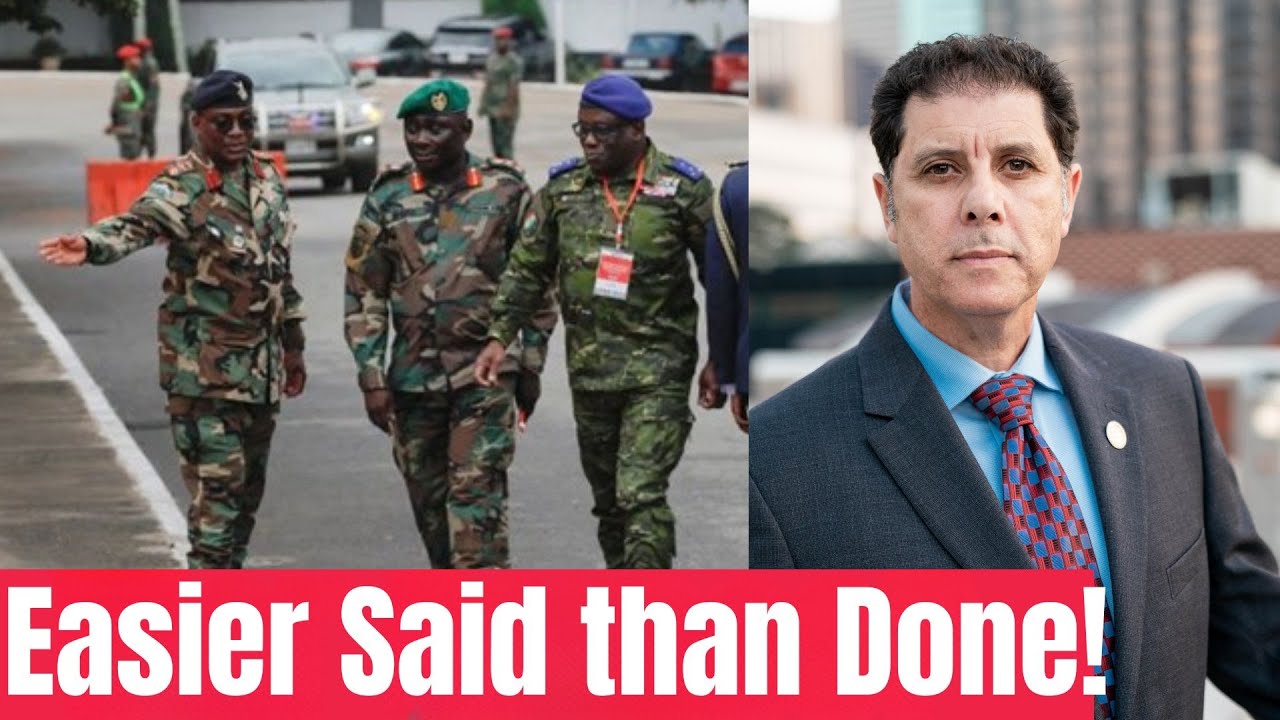
Oh everybody, and welcome to Geopolitical Trends. So excited to be with you on this Saturday here, the last weekend of month of August. So summer is almost over. So anyway, so excited to be here because I wanted to share with you some insights regarding where the ECOWAS, the, uh, Economic Community of Western African States, stands regarding its military intervention in Niger. I know there's a lot of, a lot of back and forth conversations regarding whether ECOWAS is going to launch a military, uh, intervention in Niger. So in other words, whether it will invade Niger. So, and this is what I'm going to be talking to you about. And by the way, just to put this on record here, I usually read through so many, uh, sort of, uh, white papers, analysis, and so forth. And I'm trying just to sometimes to make sense out of what's been written. Everybody is entitled to write his or her opinion. I always learned something as a former Washington insider is that analysis tends to be steered or geared towards one specific objective. And if I need to call it out, I will do so. I don't give a damn how the author or authors of whatever feel about it, because truth matters. So just for me to put this on the record so everybody will not get the wrong perception here. So it's like what I'm going to be doing for you guys tomorrow. I will be releasing Uh, be on the lookout for a video about Germany, what's going on. Not a lot has been said about what's going on, especially when it comes down to economics. And but there is some specific thing with China. And again, this based on my own research that I looked into different analysis regarding that, except that the analysis was skewed towards one specific objective. I see it differently. And again, this is my opinion. You know, I respect other people's or authors or whomever, that's— they're entitled to their opinion. But just, I wanted to put this on the record for you to know. So, uh, first, as always, I like to extend my thanks to the channel's members, supporters, subscribers. And for you, if this is your first time here, please hit that like button and don't forget to subscribe. I would truly appreciate it. So, uh, as far as the membership, we are about 75, uh, we have to go for about 20 more 25 more for us to reach that 100 level that I promised you to do a special Q&A for the members. So as to the, uh, those who might not be aware of my health channel, check it out. Uh, let me, let me share the link with you here, guys, just in case. And by the way, I will have a special guest next week. I will post it for you guys. That's going to address the health, uh, stuff. You, you don't want to miss it. And I'm not saying it just to sort of as a bait. I don't do that kind of nonsense. You all know this by now. But it's really the knowledge you need to know about health, because like I always say, your health is your best asset. So what are we going to be talking about today? Well, we're going to be talking about— like I always do, I'll start with the question for you to trigger your thinking per se, and, and, and for you to put things in perspective. Can ECOWAS win a military confrontation in Niger? So because they're going to be invading per se, and I will use the term, uh, uh, invasion in this context, uh, it's because it's very different than a military operation in this context here, but can they win a military confrontation there, you know? And second, now, a second question to that: how this decision could lead or could turn Africa against ECOWAS? Because remember, not everybody is on board for that. This is different than, for example, what's going on right now in Europe. Europe European countries been forced to toe the line regarding the conflict in Ukraine. That would be the same outcome in Africa, except that we know ahead of time that most Africans are not in support of this. And the third question, which I did a video for you and I will mention it again, on whose behalf or whose interests ECOWAS is serving? Because you can't deny this, and I will be sharing with you some insights from, for example, AFRICOM, the, uh, the Central Command for Africa. That is, uh, as I said, I used to travel to that part of the world. I'm very familiar with our military presence back there. So, so, so, would it be fair to say— this, I know it might be, might be provocative question— say, will ECOWAS be defeated? Militarily. So, and again, once I share with you, based again on the research that I did, the— and, and, and my understanding of how military— I'm a former military, but there are certain tactical aspects when it comes down to a military operation. We're not talking special ops here, we're talking about, uh, just a regular army conducting a military operation in, in whatever specific location. And that's what I'm going to be sharing with you. And of course, I let you reach your own conclusion. So, so there are about 3, I think 2, 3, or even 4 scenarios that I'm gonna go through, okay? But before I'll do this, it behooves us to understand at least the strength briefly about each, uh, location around or near Niger, that is. So So here's the thing, within this context you have to think about, for first of all, the Nigerian Army, you know. Why is that? Because of course ECOWAS now is the chairperson for the president of Nigeria. He's the head of the— or the chair of the ECOWAS is the one calling for the military intervention. The senators inside Nigeria are against it. Uh, the military just standing waiting for orders. Military don't get involved in politics, of of course. But one thing we can deny, and this is what I'm going to share with you, we have to put into context the size of the Nigerian army is the largest in the, in the continent with about 230,000+ soldiers in addition of tens of thousands of reserve forces. Nigeria, based again the research that I found, has about give or take between 140 to 150 tanks and about 3 military aircraft. So, and its budget, when you look at their, uh, their GDP and you look at the spending, it's about $3.3 or $3.1, between $3.3 and $3.5 billion. You look at the next country, that is because I'm going to share with you just few countries that's going to be involved. Ivory Coast, Ivory Coast, and I've been in that country. Ivory Coast army is considered the second largest in, in of the ECOWAS, uh, armies and ranked about the, uh, I think 17 or 19, somewhere around that, uh, in Africa. It has about a total of 40,000, uh, troops. That's another country you have to consider is Senegal. Senegal's army ranks about the 30th in Africa with about, uh, 17,000 forces and has about 27 aircraft and 1,100 military armored vehicle. And the last country I will share here with you are actually the last two. First one is Ghana, or Ghanaian Army. Ghanaian Army include about, uh, 15,000 personnel, and it has about 20 military aircraft. Now, when they say military aircraft, they're not specifying what type, because you can have 20 military aircraft, but they might not be of use when it comes down to a case like this military confrontation. And it has about, uh, over 1,600 military vehicles, and its annual budget is about $220 uh, between $220 and $227 million. That's it. Then you get the Niger— Niger Army has about 30,000, including within that 30, 11,000 deployed on the battlefield. That's now— especially now, they are already dispersed out of certain locations just in case. Which means huge superiority in numbers and equipment for the ECOWAS. So this is why I want you to keep this in mind as I detail, as I move forward. Of course, you have to think about Burkina Faso, you have to think about Mali, Algeria, and those are not small sizable force to consider. So let me share first of all a picture with you. Then we'll, uh, I'll move on into detailing, uh, exactly where— this is what we're going to be talking about today for those who just joining us. And this is the head of the ECOWAS military commander. So this is following their meeting that just took place about a week and a half ago, uh, and still till today no decision has been made yet. So, uh, this is where they stand as far as whether they're gonna move in militarily or not. But here is the thing where I see the challenges. And again, for the record, this is based on the research, on the reading that I've done, and I kind of see what makes sense and what does not. And I will call on both what does make sense and what doesn't. So, but you reach your own conclusion for that. That's like what I said about— and I'm going to be releasing a video for you about Indonesia, why I'm starting to have my doubts about, uh, Indonesia, but also the whole ASEAN, give or take only one or two countries that can really take stand. The rest of them I'm starting to put question mark, really, you know, especially with Indonesia recently, not only because of the purchase of the military hardware that they, they just, uh, they just did. And I'm gonna release a video for you about this one here. So this is what Indonesia just did. They just purchased F-15s here. Makes me wonder, and I will share with you when I do that video on it. So, so here's the thing, they're about— as I said, uh, the options for ECOWAS are very, very limited when it comes down to I can use the term— I feel comfortable using the term vague intervention because so far, yes, they talked about it. So, so, and even if ECOWAS is able to overcome the political and organizational obstacles, because remember, ECOWAS cannot just say, hey, let's launch into Niger and they're gonna happen. No, no, no, you are gonna have to go through the international forums, including the UN Security Council, including African Union, includ— there are so many other steps on the military fronts, you know. And even for now, I have my doubts that the African Union will allow ECOWAS to go forward because African Union authority supersedes that of the ECOWAS, which means in a simple language, if AU, the AU, AU, yes, African Union said you can go, that means they can go. So this is why I'm saying they are the obstacle, the, the political obstacle, that is, that will stand in a way, uh, uh, for such sort of a military intervention, you know. And we're looking at it from all angles— the timing, the, the, the, the nature of this intervention, what it's going to be, okay. And this is where understanding those dynamics is going to make perfect sense to you. So then, because there's what I call the practical obstacles for— if you are to go for invasion like that, you're gonna have to consider, uh, uh, and this is why, for example, media is up and down about it, because remember, media always has to serve a purpose. But on whose behalf? Look no further than Australia, for example. I can think of Australia's think tanks You know, when they issue policies, you know, those policies have to be geared towards the specific objective that fit the narrative of the government. Same thing with universities everywhere around the world, not just in Australia. We have it right here in the US. We have think tanks here in the US that can just alter, uh, that can, uh, provide an analysis that is geared towards specific, uh, objective. It's no different for ECOWAS here. So So when you look at it now, observers have pointed out, and among those observers there are those with military background. This is what made me read through all that before I decided to come on the air and share this with you. I usually read before to make sure. So, so there are those observers pointing out some obstacles. They are prominent, you know, and those are kind of scenarios, and I'm going to share about 3 or 4 with you. So let's start with the first one, which is ground operation. This is just hypothetical scenarios, okay, based on the reality of what's on the ground. Let's say ECOWAS decided to go for a ground operation. So this option is to sort of to wage the operation with a smaller special ops, okay, special forces. Don't ever confuse special ops— those are separate from the standard military. So, so why? Because this one can be faster, that's one. Faster to assemble, that's two. And likely to focus on specific key security and administrative positions, meaning they can go and take over the presidential palace, they can go and take over the parliament they can go and take over the TV stations or whomever, you know. You think about strategic, uh, locations for this. So like in this case, because we have to tie it to reality, what it will be the focus of special ops in this is to go to the presidential palace so they can free Bazoum from house arrest, you know. Well, here it is again, the counterargument to that. As a former military, I will think in terms What makes me think, if I am to be part of that team going there, what makes me think that they gonna keep Bazoum in that location? They'll move him elsewhere, which is a normal practice to happen, so the special ops can go and find nothing there. So, so this is why I'm saying, yeah, they could move Bazoum, the, the, uh, the president of Niger, because he's still under the title of president as of today, uh, to undisclosed location. So that's one which is not going to work. No, we'll go to second option. Second option will be about an airdrop. And this— what do I mean by this? This has to do with the establishment of a military aviation bridge. Think of it like what took place in Iraq with the Kurds, no-fly zone, okay? The limitations of certain, uh, movements in space. So in, in, uh, in airspace rather. So, so this is, for example, in addition to that, to do this you're going to have to occupy the airport. You're going to have to occupy the any airport closer to the capital, Niamey, okay? And the rest of other airports, because you don't want to leave any location airport-wise from being, uh, not under the control so the other forces can move in. So then you move from there towards vital and basic institutions, like I said earlier, the parliament, the, the presidential palace, the, the, uh, TV stations and so forth. Now there is one thing about this. Once again, if they are thinking— and again, this is what the scenario is thinking— that this is what ECOWAS wants to do so they can liberate Bazoum and restore him as the democratically elected president. Well, good luck with that, because that will be short-sighted of ECOWAS to be thinking that Niger will not be prepared for that. And this is why this option will undoubtedly face serious obstacles. Here is why. Niger air defense system has been strengthened over a period of time. We're talking about a decade. And I'm going to share with you an image here, uh, for you to see exactly why that is. This is during the, uh, the AFRICOM, the, uh, the US African Command Center. So But this is not what I wanted to share with you. What I wanted to share with you is this one here. I'm gonna— and I'm gonna share it in, uh, right here. Take a look. And this is from the United States African Command. I don't know if you guys can see. Yeah, here it is. So you can see that one there. So, so this is the, uh, this is the Major General uh, uh, Kane Claxton. So, and what I wanted to show you is this paragraph here. I don't know if I'm gonna read it to you guys, so this way you don't worry about it. And I quote, because it's quote here: on any given day across Africa, more than 2,000 soldiers— those are US— are supporting US strategic and security interests along uh, alongside like-minded partners, said Cashman, who is the major general. No, he added, alongside our Nigerian partner, this is, our soldiers and other US service members are enabling a joint and multinational effort to counter violent extremist organization and improve the capabilities of the, the, uh, of the FAN. No, This work is critical to keeping America safe, whether in Africa, in the US, or around the world. End of quote. Now, the reason I'm sharing this with you guys is because you need to understand we have upgraded the air defense, both we, the United States, and France. So if ECO was thinking they can just go, no, no. And this is why to put it within that context of the fight against ECOWAS. ECOWAS is not going to be able to make it. So then there is another option within this option here that Niger could play, and that is using civilians, which I can see that happening. So you turn civilians into human shields. How do you do that? You move all the civilians, because remember, most of the country is in support of the military leaders who, uh, uh, removed Bazoum from, from power. So they have the popular support. And like, you know, as you know, anything for any country to succeed, if you don't have the popular support, you have nothing. You look at it now for us, for example, in Vietnam, what happened? You know, you look at it now for Afghanistan, or you look at for Australia now, you know, how many people now are against this AUKUS, uh, deal between Australia and, and the US? Because the popular support is growing, but you don't hear about it. It's the same thing in Japan, same thing in South Korea, same thing in Philippines. In Niger, it will be the same. So, so ECOWAS, in this case, if they are to drop bombs, they're gonna see people walking on the airfields. You can't be bombing civilians because that's a violation of international law, if we are to really talk about the rule of international law and so forth. So And this is why Niger could deploy the civilians by controlling the runways of the airport and turning it into mobilizing, uh, or civilian protest, that is. And this is what will make bombing impossible, no matter how you look at it. Then you have the third option. What is the third option? Excuse me. Third option, uh, third option is a land invasion. This is when an open— like what we did in Gulf War I. We send in all— actually, my former unit, part of my former unit, uh, 1st Cav, uh, went to Kuwait at that time. It was part of armored division. So land invasion. So this one is tricky also. Any, any overland intervention will have to pass through Niger. Here's the thing, look at this map, and I'm going to leave it here for you guys as I explain, so you'll see the landscape because it will make more sense to you. So any intervention will have to pass through Niger's border with Nigeria. Benin, or both, and move via either highway, because that's the only way you get to Niamey, the capital of Niger. So this option is the most difficult in practice. Why? Is because the distance. ECOWAS army must cross— yeah, cross the border exclusively from Nigeria or Benin which requires it to travel hundreds of kilometers. As a matter of fact, I looked at the geography of it. For them to reach the capital in Niger, Niamey, the Nigerian border is about 260 kilometers, or about 161 miles— just think about it— away from Niamey, while the distance between the two capitals Abuja in Nigeria and Niamey in Niger is about 922 kilometers or 520 miles, or 570 miles, I'm sorry, 570 or 572 miles. So you can just see it's a long march. You know, we used to do in the military, we do the road march. You walk for about, you know, 5 hours or 6 hours but, but not that kind of distance. There is no way, let alone you carrying your gear of about 70 pounds over your back. It's just not feasible. It's not feasible. You'll, you'll, uh, you'll wear out your, your soldiers in this case. So the borders of Benin and its capital are similar distance from Niamey, which adds more obstacles to this option. As a result, it it will require a huge mobilization on the border. So, well, think about it. The number of ECOWAS army prepared to intervene in Niger is, is expected to be in the thousands, if not tens of thousands. So the mobilization of this number with its men, equipment, in such a short time is very— in, in a limited area from several countries, it requires a lot. It requires time, requires great effort, and perhaps even foreign assistance. Yeah, there is no way they can do it on their own. So here's the reality of this particular option, the land invasion, that is a long-term march of any, uh, army of thousands of soldiers with their multiple means and capabilities, meaning equipments, which could make this army vulnerable to multiple ambush, or ambushes, that is, from armed groups, popular resistance battalions, and mainly from the Niger army. So because If there is one thing to learn about the military strategies that at least for us we don't have anymore, it's cohesion. Any military unit, for those of you guys who been in the military, I am sure you've learned and you've trained on how much important cohesion in within unit, be it a company, be it a battalion or a brigade or, or a division, it's important. Any, any, any top-ranking officers, we know the importance of it. We don't have that in ours. So do you think that will exist in the case of ECOWAS? That's why it makes this very, very problematic for them. So, and when you look at the map once again, it's a vast border. No, because even with this, if you combine, you merge all those options together, it is, it's, it's, you know, it, it just embarking on a, for example, a surprise, uh, airstrike, or even a lightning ground invasion with quick and specific operations. No, no. All those options will not be sort of a picnic, if I may use the term, because their implementation will be very expensive and their consequences are even likely painful for everybody. Because what do you think, what do you think of the resistance inside Niger? Are they gonna welcome ECOWAS with flowers and roses? No, it's the reality of it. And if you think that the conflict is going to be limited only within the border of Niger, you know, I'm not saying you, you, but whomever's thinking that way is mistaken. No conflict ever stays within. Just, just look from history. Just look from history. Even those countries that think, oh, we are neutral and we can, you know, look at what happened with Belgium, World War I. What happened in Cambodia, you know, during Vietnam War? What happened even in Southeast Asia during Afghan— our intervention in Afghan? What happened in Iraq, in its neighbor? You know, Africa would be no exception to that. And this is where that challenge is. So if there are, uh, ECOWAS thinking in terms of what they're going to be welcomed—
no.
No, no, because, uh, the, the military junta in, uh, in Niger, it's— they're gonna be receiving this ECOWAS or perceiving them already as invaders. You know, they already feel the heat about being taken advantage of by Western powers, and now you have an African unity or African entity that is invading their country. So that's why I said they're not going to welcome them with flowers. So yeah, this is why the talk about military— that's why I put on the thumbnail, guys, uh, it's easier said than done. So there is no way. Just the resistance in itself will, will, will, will give Eco was, uh, sort of a nightmare, will be a nightmare for them. Because with this, it can take, it can take a long time to prepare. Then, because you cannot ignore the popular support when it comes down to operations like this, popular support has always been the key factor in either direction. So this is why now you are starting to hear, for example, in the case of Europe Uh, it's still— Europeans are clueless, uh, not all of them of course, but you start— at least for us in the US, you start having conversation on a national level that, you know, maybe this about supporting and sending this money to Ukraine and all that will have to stop. So it's no different in Niger. The popular support will be a big, big, big help. To the military junta there. So, so, and this is what the, the coup, uh, the coup leader— because by the way, do we call what took place— here's a question for you guys while I'm thinking about it— do we call what took place in Niger, do we call it a coup or do we call it a revolution? What do you think? I used to call it coup at the beginning, and I changed the terminology. I changed my mind on that because now I— and I read enough on it. That's why I decided to do this for you guys. It didn't appear to me like a coup. It's a revolution. That's how I see it. So what do you guys think? Because still, sir, depend again where you are reading the analysis from. Some will read it as a coup. You're absolutely correct, Tracy. Indeed, Bobo. Yeah, they are calling it revolution. That's what they are calling it. So I, I feel comfortable calling it too. If you have the people supporting you Yes, it had to change through that way, otherwise it would never happen. So that will become a revolution. So, and the popular support will become very crucial in fending off ECOWAS because they're gonna be saying— this popular support, they're gonna be saying to these ECOWAS soldiers, are you sure you want to fight your, your brothers? Literally, your neighbors. Is this what you are signed up for? Because here's the thing, the one thing that we don't hear much about— there is a popular battalion now in Niger volunteering to bear arms and defend Niger. So, and this in itself, it could turn into sort of a massive strength because it could become very sort of another support mechanisms for the, the patricians, the ones that conducted the revolution inside. So, and, and after all this, you cannot forget the role of Mali, Burkina Faso, Algeria, Guinea, and of course the Wagner. Cannot ignore this because this will play a major role in, in defeating, in fighting and defeating ECOWAS. This is why I'm saying the African Union is going to be thinking twice about allowing this forward because it's going to go out of the borders of, of Niger and it could destabilize the whole region. Once again, just take a look at this map here. So that's what I'm saying, it's easier said than done. So let me share one more thing that I have here with you guys, and I kept it here. And this one was from way back, just to highlight to you, uh, how long we have been, uh, in operating in Niger. I was familiar with it. As I said, I used to travel to that part of the world.
Uh, it is—
just look, look at this one here. And this goes back— this article, by the way, was in 2017. Uh, that's when it was, and it was released by Special Forces. So here's the thing, just look at this first paragraph and I'm going to share it with you. US Army Special Forces in Niger have been working with host nation security forces to help counter the activities of several terrorist and insurgent groups operating in the region. It didn't say operating in the country. So the, the most well-known of this group is, you know, Boko Haram. It was, it was then. So my point is to highlight to you the location of where this used to be. Of course, Niger, as we all know, it was a former French colony. So, and here is some, uh, images, uh, yeah, you can see that because I'm scrolling on the other screen. That was the training by US forces in the, in the region. So that is why it's important. And here is again what I mentioned to you guys last time. We do have a drone base over there. So, uh, it is still— this is why you hear— you don't hear the, uh, the, uh, General Abd al-Rahim, I think, or I forgot his first name, but Tiani, he's not, he's not pushing against the US, he's pushing against France. And that's why we didn't say anything. So we let— we threw France under the bus because we do have our assets inside Niger. And Niger made it clear that they are not targeting that, they have no issue with that. So this is why we in the United States would never call it a coup. At the beginning. So, so this is what I wanted to, uh, share with you, just to highlight to you the idea of why is this important to understand. So, and this is why, uh, uh, sort of, uh, uh, the reluctance that exists right now within ECOWAS. There is a reluctance internally. It's no different than what I said last time, comparing it to NATO. Division exists from within because there's fear and there is also opposition. And ECOWAS is all about talks because now the head of ECOWAS, the chairman, uh, uh, Binoko, the president— I did a video for you guys— he's getting pushback domestically, you know, from not only from politicians in, in Nigeria, in the Senate, the senators, but also the, uh, the population.
No.
And if you know anything about Nigeria, or Nigeria, that is, it's very rich in natural resources. So, and almost same arguments can be made, you know, are the Nigerian people benefiting from, or that's just the elite class in society benefiting from that because they're allowing foreigners, foreign entities to mine the country and take its resources and so It's no different than what is happening in Niger, that was happening in Mali. It's, it's across the board, not just— so even though we're hearing that ECOWAS is issuing an ultimatum, yeah, it's all bravado, no more, no less. Yeah, they could launch a surprise attack, but the Niger patriots first. Have already put things in motion. There are already plans that, based on what I read from sources outside the United States, they're ready. So, so this is why, uh, you're hearing this drum of war, you know, keep in the drums of war, where Ecuador is going to launch military, ah, you know, the obstacles that it's facing. Will be, will be tremendous. That's why I don't see them. And again, we're only talking about the tactical side, but also you have to think about the political and legal. And because like anything else in other parts of the world, even though there are some, some cases where we have never declared the war, for example, like in Iraq, we never declared that a war. So Basically, it was illegal. You can't go to a war without declaring it, at least in our system. In our system, it's not the president that decides, it's Congress that declares war, and that's its constitutional duty. So, so I compare it to other countries, for example, Philippines, Indonesia, Australia, or Canada, whatever, when the head of states making decisions militarily related, are the people have a say into that or not? So, because in this case there's also the legal aspect, and any military intervention requires, according to customs, according to authorizations from, in this case in, in, in Niger, African Union, and you're looking also the approval from the, the UN Security Council. So And if ECOWAS doesn't have that, it can't move an inch. There is no way, because in— I can tell you based on what I know, in the UN Security Council, I can just say Russia and China boycott, uh, applying their veto power, and once a member veto, uh, a proposal, it's over. That's just how it works. That's how it works. So, so this is why intervention in Niger, it's, uh, it's, it, it just hypes, no more, no less. And let alone now for how, uh, for example, uh, the tensions between, uh, Algeria and France, especially when, uh, Algeria rejected, you know, rejected, uh, the request from France. Even France saying, oh no, we never asked them for that. Of course they're gonna deny. They're gonna deny. So then you have to think about smaller countries like Mauritania and Chad, what they're going to be doing. So, and this is what I'm talking about, that, that, uh, uh, the cohesion even with small countries like that, because what they're gonna be doing. And this is why, why I said last time, few weeks ago, NATO is seeing Mauritania as the weak link in the region. Once again, let me, let me put up the map here. Uh, they seeing right here in this area here, seeing it as the weak part, and that's where they're gonna try to get in. And they already got in. Uh, they signed some agreements between Mauritania and NATO for training of sort. No, it's not about training. We don't know it. So, so, and this is why, again, and, and did I mention the cost, by the way? What are we looking at? Can anybody, uh, of you give me an estimate for, for example, if ECHO was to conduct this, what are we looking at cost-wise? Let me just see what you guys can, uh, suggest. Just an estimation. I always, like I said, I always like to engage you guys, you know, in, in a conversation here. So what are we looking at cost-wise? Because it's no easy task. It's no easy task. And for those, uh, uh, $115 billion, Phil, that's quite a lot. A lot. Some estimations have given it at about $3 to $4 billion, but that's reserved or on the conservative side. I won't be surprised it could reach that, that level, because remember, always guys, remember who benefits from military conflicts. So you look at it for us, the cost in Afghanistan, how much did it cost? Most Americans don't even know. Or the, or the, uh, the, uh, intervention in, uh, not intervention, but the, the invasion, I should say, of Iraq. How much did it cost? You know, the government said, well, we spend about $1.2 trillion. No, that's not true. I read in some, some, uh, some, uh, uh, estimates that it reached about between $4.6 and $6.1 trillion and was conducted on credit. In other words, we had to borrow money from China to conduct an invasion in Iraq. So, so, so, a good assessment, uh, Phil. Uh, I see your point there. It's not a— and, and here is, here is the sad part about that. So if I am to go with Phil's assessment or estimates here, hypothetically $15 billion. Let's put it just at $10. So, so, wouldn't it make more sense— wouldn't it make more sense to use that money for the region that is unable to secure, for example, uh, food security, health services, infrastructure, you know, uh, uh, portable water, you know, schools? Yeah, and this is again why you have to unders— to put this within the context of when ECOWAS echoed that sentiment of we're gonna get a military. It's on— like I asked at the beginning, it's on whose behalf or whose interest ECOWAS is serving? So Now you think about the, the political or the military leaders in Niger so far. They are presenting another challenge for ECOWAS not to conduct the military. Why? Because they are saying that one of the plan is to return— listen carefully— is to return to constitutional life which will include transitional period of 3 years. What do you make of that? Could that work? It's because they wanted to see and ensure that at least the government is properly set to serve the people. I mean, we're not seeing this, at least in my country here, and I don't shy away from saying it. You know, I see the, uh, I'll, I'll share it with you here because you need to see what happened in Maui in Hawaii. Shame on our government saying that we're giving $700, uh, uh, dollars. And by the way, somebody tweeted me saying, oh, you, you're wrong, don't, don't put misinformation. Stop this nonsense because he said that the $700 for firefighters. It wasn't for firefighters, it was for the resident. And I had a proof for that, and I'm going to share it with you guys. Just for the record, some people seems to be, uh, here, I'm gonna share it and I'm gonna play it for you. Okay, let me share this. Present, share it with you. So listen carefully, guys.
Can you hear? We're not getting anything till today. I still didn't get my meds. I cannot get my meds yet. My medicine was all burnt in my house.
Can you guys hear it?
Money was all burnt in my— $700 and get back on the fucking plane and go home. That's what I think. The $700 compared to all the millions he's giving to Ukraine. Why we— that's what we understand. Why citizens and we cannot get money, but if they're not citizens They get gazillions of dollars from the USA. Where's our government? Fix your house before you fix somebody else's house.
Is this how like your community, other Hawaiians, you know, locals, indigenous people, is that how they feel? Pretty much how you feel?
Everybody feels that way. Come on. That's why the local people stick together and we help our own people because we know the outside people not gonna do it.
All right, so So you got the idea, guys. And this is where, this is where, uh, what happened? Oh, I lost Oh, I lost connection. Hmm, there we go. I thought I lost connection here. Okay, you're all back here, so good. Joseph, Joe, uh, Joseph, where are you? I hit the wrong button here. There we go. So, so, and, and this is where, you know, I've, I've been noticing these guys. I get this hate, this nasty comments, this, uh, hate. Uh, people are having a hard time accepting the truth, you know. It's kind of like, uh, here is the thing, here is another thing, and, and I don't shy away, and I will not I said I will not shy away from speaking what matters. So I'm going to share a quick video here from— if you're from India, what just happened in India, you know, and I'll let you just see it, read the comment by yourself, and you see what I'm referring to here. Share the video. Yeah, just read the title, guys. Look at the title here. It's heartbreaking, heartbreaking to see a teacher that is encouraging this kind of behavior. Yeah, the student didn't know the answer, so why target him because of his religion or ethnicity, whatever, you know? Why not just say, hey, why didn't you know the answer, for example, or did you study, whatever? Not to humiliate him because he happens to be a Muslim. And again, if I am not to say the truth, then who will? Yeah, some others will, and this is why anytime I mention something like this, I get this hate. I can take it. I've been around long enough, and I don't shy away, and I don't fear humans. I will challenge whomever, but I won't shy away from speaking the truth because some behavior like this, it's not right. So, and this was on Twitter. I'm not making this up here. Because I have no benefit to sort of— why, uh, sort of there is no need, no need for that. But because truth matters, so it is so sad. And I kind of like— you don't want to, you know, it's almost like I feel why you, you only have to say what people wants to hear. I refuse that. That's the whole reason why I left Washington. I wasn't willing anymore to do what they just want to hear or they don't just what they expect. When I see something wrong and I said, no, it's wrong. So it becomes on me to make my own decisions, not them. I either stay or leave. I did the same thing with Texas A&M University. You know, when they try to impose their way on me how to teach, I said, heck no, ain't gonna happen, because I will not, and I was not willing to sacrifice the welfare of my students. Those were my responsibility, and I would— they come first. Their welfare come first. Their well-being come first. And if they— this university was thinking, you know, I'll be worried about a paycheck, damn it, you can have it, but I will not sacrifice the welfare of my students.
It's the same thing.
So I wish people, those individuals that carry this kind of negative emotions, kind of move on in life. Life is too short to live. Why carry that kind of stuff? You know, we don't live here long. But if they think they're gonna try to intimidate me, whatever, you barking at the wrong tree. So if you happen to be watching this video I don't shy away. So this is why I'm bringing up issues about Canada, about Germany, about Japan, about Indonesia, about Philippines, about Australia, about the US. You name it, whatever there is wrong, I can cover all. Or those damn analysts that they call themselves analysts for no reason. It's because Spion thinks that they have been ordered to write. I know how it works. I went through the process and I had to challenge one of the members in my committee because I pushed back, who happens to be— it was a former NSA, National Security Agency, you know, and I pushed back against because I wasn't willing to go with that. So you want to do— you fail me for this because I didn't pass the oral exam or oral defense of my thesis? You know, let's talk. So if someone makes a wrong call— what, what, we're not putting down anybody, we're not pointing fingers at anybody. It just— we want just, at least for me with you, is to provide you the best type of information. And I learned throughout the years how to read between the lines. If I am to see an analysis coming out of an entity that I know it's receiving funding from some other entities that I know what they do, then I will— I will know what that analysis is going to be about at the end, the final product. Well, it becomes on me. Do I want to take on and challenge that or just let it go? That depends again on the nature of the topic. Like I always say, your time means a lot to me. I ain't gonna waste it. Because I'm not into that. So be on the lookout, guys, for a video tomorrow. As I said, I looked into some very specific information about Germany. Uh, there's another one about Indonesia, and I'm gonna do a live stream on Indonesia because there's a lot going on in Indonesia. One thing that a lot of people are not paying attention to is how much Australia is very concerned about Indonesia. What way, you may ask, is from an economic perspective, given Indonesia and China relations? So that's— pay attention to the, uh, uh, I can use the term analysis, or I can use the term of white paper, whatever term coming out of Australia. You all remember my conversation with Robbie. So, so let me see if there's one question here, and, uh, then I'm going to sign off here. Oh, thank you, Arita. I really appreciate it. Thank you very much, much appreciated. Thank you all. So they are— that's just how it is in life. Uh, like I always say, you look at your hand, look at your hand, are all your fingerprints the same? They're not, even though they belong to the same hand, right? It's same with us humans. We all belong to the human race, but each one of us is different than the other. So you got bad apples like every other thing in every country, in every city. It's just part of it. It's just how you deal with it, how you manage it. And, uh, you know, do you guys think that I didn't expect this the day I made decision to get into this YouTube? I know there will be some hate comments there, and I will know that there will be haters there, and I will know that there will be those that trying to, to send this negative energy. But that stuff is not gonna work with me. I'm a pragmatic guy, you know. I'll challenge you if there is to be a challenge on whatever, you know. There is nothing wrong with admitting when one is wrong, you know. As a matter of fact, admitting that if some— something is wrong, it's, it's— to me, I look at it as a sign of strength. That doesn't mean you weak. It means you just stood your ground. You made a bad call, you made a misjudgment, you misread this. Oh, this is normal. Otherwise, life will never develop if we all know it all. That's the whole point of why I decided to do YouTube. So, so, but I did process in my head the other side of, you know, those nasty individuals, uh, wasting their time and energy. And, and I know about the bot there, and it just— it is what it is. But life goes on, and I am moving on with this. So, so anyway, guys, I truly enjoy conversing with you. Uh, a question, Mickey: why Kenyan troops in Haiti? I do not know. I can take a look at that, and I know, I know, uh, a person I trust from that, from that part of the world, uh, and I think she's a journalist. And, uh, and by the way, I did see— because you all know, guys, I share things with you, uh, and whether I do analysis of somebody or, or some institution, whatever, uh I get this, uh, comment that I wanted to share with you because it's very important for you to just to be aware. Uh, this one has to do with— where is that one? Not this one. Sometimes I keep them all together to make sure I have access to them, but oh well, life goes on. Anyway, what it was about, it was, it was about somebody made a comment and asking me if it's okay for him to use the videos that I have on their TV channel. I have no problem with that. No, it's kind of— yeah, that's, uh, no, there is no, no problem with that at all. You know, I, I don't claim the royalty on this now. You know, even my books, you know, I found them somewhere else. As a matter of fact, I found even someone created a channel with the same name. Like the other ones, you know. I, I got no problem with that, you know, as long as they share the knowledge with others, because that's the whole objective of it. And, and I have no problem with that. So the— if they can use, uh, if, if they can use this for, for, for, for good. Yeah, right here, guys. I want to share it with you. Let me just quickly— it says, it says, uh, uh, permission to transmit your videos to our global News TV show. You are doing great job and saying it as it is.
Bravo.
Yeah, I said no problem. So to me, that's how I look at it, you know. I don't claim, uh, uh, sort of I got a the right to this. No, no, no, no, it's knowledge. Any of you guys want to use the video for something else, feel free. You have my permission. So, all right guys, I hope you find it very informative. As I said, be on a lookout tomorrow for for the, the, the video. Thank you all for your support, of course. And also, I would greatly appreciate if you can just take a look at that health channel. Please subscribe to that. I will have a health professional next week. It will be a surprise person. Trust me, trust me on this. And I am also coordinating with two other guests that I'm going to have either next week or the following week. So as always, guys, I truly appreciate you. And remember, geopolitics impact your daily life. In more ways than one. Till next time, bye-bye.
More from David


Beyond the Single Actor: Why the Gulf Isn't Choosing Between the US and China


Iran, Iraq's Militias, and the Houthis Are Coordinating! This Changes Everything




Who Controls the Next Decade's Resources? Latin America and Africa's Geopolitical Crossroads

The Chokepoint Trap: How Washington's Stupidity Triggered a Cascade That Now Controls the World

Trump Spooked as IRGC Unveiled dual-use SLV, Deployed Ghadir Mini-Subs & Hinted at Tactical Nukes!
