Encircling China Militarily Will Not End Well for the US! W/James Bradley
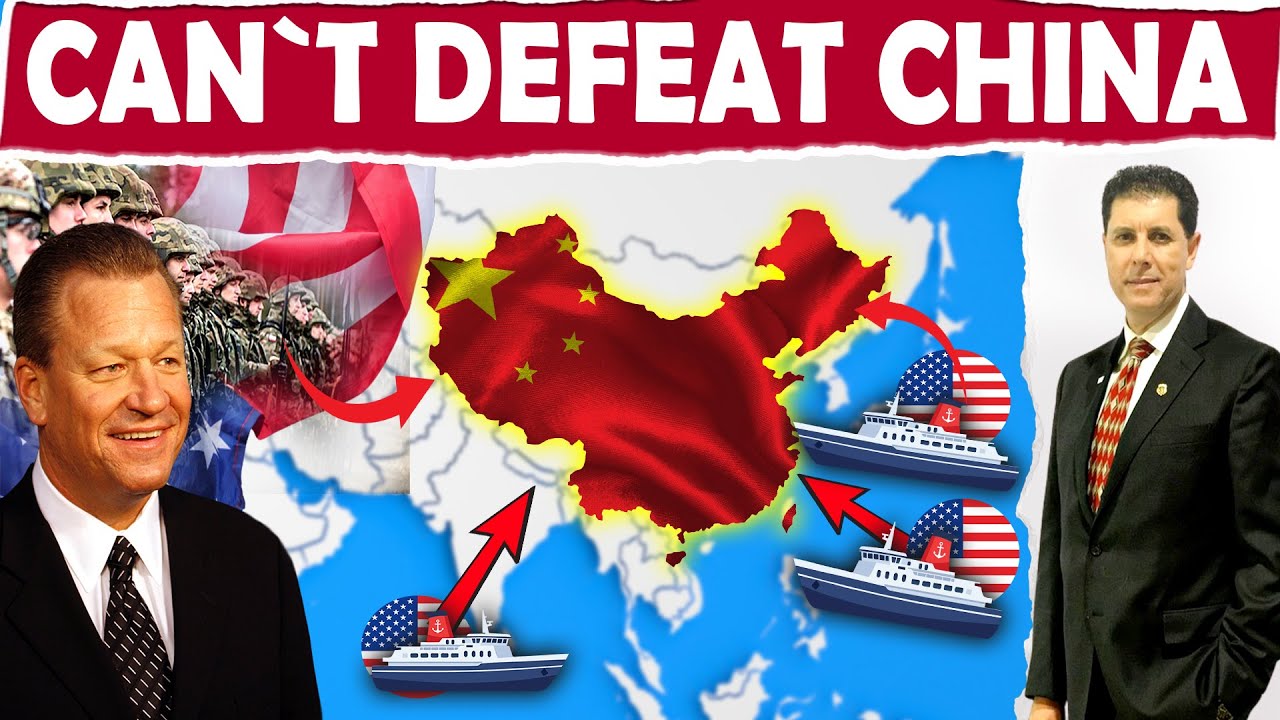
In this livestream, Dr. David Oualaalou opens with a solo monologue that frames the central premise of the show: the United States’ strategy of “encircling” China through a network of military bases (e.g., Subic Bay) is misguided and dangerous. He draws historical parallels to Vietnam, critiques the U.S. defense‑budget focus on forward bases rather than domestic resilience, and highlights China’s rapid economic and infrastructural development (high‑speed rail, low consumer prices) as evidence of a different development model. After a long wait, historian James Bradley joins the conversation. Bradley, author of several best‑sellers (Flags of Our Fathers, The China Mirage, Precious Freedom), recounts his personal journey to Asia, explains how Vietnam actually defeated the United States, and argues that U.S. narratives about Asian wars have been manipulated for decades. He also discusses the legacy of his father, John Bradley, the misuse of the Iwo Jima flag‑raising image, and how the U.S. military‑industrial complex profits from wars. Both hosts then return to the theme of China’s encirclement, debating the strategic value of bases in the Philippines, the Indo‑Pacific shift, and the potential costs of a future conflict. The dialogue is interspersed with personal anecdotes, price‑comparisons (U.S. meat vs. Chinese meat), references to documentaries (John Pilger’s “The Coming War with China”), and a critique of U.S. political figures (Halliburton, Dick Cheney). The session ends with a promise of a future, more detailed interview and a call for the community to stay informed.
Chapters
Hello everybody and welcome to Geopolitical Trends, where truth matters. I'm your host, Dr. David Oualaalou. Very, very excited to be with you. Uh, I am waiting for my guest, author James Bradley. Uh, I don't know whether it is, uh, some technical difficulties in connecting. He is in the Pacific part of the world, in some islands there. So, uh, we'll give it about, uh, probably 10-15 minutes. He might come, might come on after that. But in the meantime, uh, I'm gonna keep you, uh, informed as to what's coming up. Uh, I do have an interview with— that's already set up for the 26th, and that's going to be with Dr. Yasser Massoud. So I look forward to that conversation. Very, very interesting fellow, uh, qualified to talk about geopolitics and and all other economic issues and so forth. So I look forward to that conversation. I am also reaching out to another, uh, guest and have not heard back yet. So to those of you— and I read some comments regarding the last video I did about Iran, uh, some of you have asked if I could reach out to Professor Marandi. I did send an email. I have not received any response from him. So if you have access to him, let him know that he is welcome on my channel here anytime he is available. So I look forward to having a conversation with Professor Morandi. So let me— I'm gonna be talking briefly before James gets here, if he gets here. We'll just talk in a general term as to what I was gonna be addressing with him in this interview here. So hopefully he'll show up, and if he doesn't, we will reschedule it. So, and one of the key aspects that I wanted to address with him, since he's been living in Asia for over, you know, 15 years or so, I mean, quite a long time, and one of his books that I sort of research has to do with when he did about Vietnam. Why really? How Vietnam defeated the United States. And this brings me to my point about, uh, what makes us think we're going to be encircling, or we are encircling China, and we're going to defeat China. That's like hubris. And this is where American leaders, either military or civilians, have not learned from the, uh, lessons of history. You know, if Vietnam was able to defeat the US back then, and remember, technology today is far different than what it was back then, and China of today is very, very different from China of that time in the '60s and so forth. So, and this is again one of the issue that I felt very compelled to address with someone that, uh, usually when you write books, you do enough research to learn about the history of events as, as it evolved. And is the idea, when you consider the more actions we are taking regarding the establishments of more military bases in Asia, I think of the— you all recall my conversation with Professor Anna Malendog about the Subic Bay, which is going to be reactivated. That's what the US is going to do. And if you think about what is the aim for that, it's nothing but to encircle China. And at some point, this, uh, you know, encircling China is not going to end up well, not for the Chinese, but for the Americans. It's because China has the means to, you know, fight back, first of all, and even win a war. Their preparation for the last— and I've been following this closely, uh, for the last 15 years or so, uh, even I go as far as winning. Uh, the, the proper— the preparation and the increase in military defense spending, it's not aimed at, you know, establishing military bases around the world. No, it's aimed at winning the war. Simple as that. So that's why China was very shrewd and smart when it comes down to its military budgets, or defense budget, that is. It didn't aim at at spending money in far, far-off bases around the world, but rather in really integrating the technology into the types of weapons that's going to secure the victory for the Chinese. That's to me how I saw that development. And, you know, I've noticed it, as I said, about 15 years ago when I was still in Washington, used to read up certain things and and do the research, and it became evident to me their aim is not about expanding else. It's— their aim is about winning war. And the US, I'm gonna say it, stands no chance, you know, unless of course we resolve to using nukes, which by the way, the Chinese are not going to hesitate to use theirs as well. And this is again one of those, uh, very key issues that we need to understand these developments as to where, where things are headed. And that is one of the whole reason as to why when I started this channel, uh, I did sort of think about the, uh, geography. This is why I do geography for you guys, just because it's very important to understand, looking over the horizon to see where the serious tensions might rise, where it's going to come from. So, and when you start to consider all those sort of developments that are taking place, you start to ask the questions, and that matters. So, and this is why when you think about the arguments the US is making, it just doesn't make any sense. You know, you have analysts in think tanks, analysts inside the Pentagon, State Department, the CIA, the, the, uh, who else will be even academia some, some academics, you know, their argument is that the US wants to sustain engagement in the Pacific because it desires both regional stability and American interest. Well, if he wants to secure that, that regional stability is not going to be, uh, sustained or achieved by you having, uh, locating military, uh, presence. How is that going to be for the regional stability when you are introducing, you know, forces. You look at South Korea, how many do we have over there? Over 30,000. You look at Japan, Philippines, and now soon to be Australia, you know, how is that going to benefit the regional stability? And this is why the arguments coming out of Washington and some think tank circles, it has nothing to do— American interest. Okay, what are our interests in Asia? Let's really break it down. What are our interests? So, so, and, and I don't see any except to ensure that we wanted to halt by any means the progress of China. I don't think it's gonna work. It's not gonna work. I've been arguing this for years, you know, when the word of containment started to circulate back in my day in 2002. I remember a conversation in the office back then, and the word containment started to circulate. I was like, what are you guys saying? You know, are you going to contain China?
How? How?
You can't be using old tricks because we did that against the Soviet Union. The conditions— geopolitical, economic, and financial— were very different back then than what they were for China. Second, As I argued in my Russia book, I remember I did a section— I recall I did an entire section about China vis-à-vis the developments that's going on with the Russian developments and so forth. And I argued that China has learned a lesson from what happened with the Russians, the Soviet Union at that time. Of course, Mikhail Gorbachev, you know, embarked on some— it was an illusion to— in my opinion, he made a mistake by trusting the West, you know. And again, and even I was aware of Professor Sachs at that time was providing certain ideas to help that transition in, in, in the, in the era after the fall of the Soviet Union, you know. He tried to do the same in Poland, but he was sort of pushed back by the White House. In other words, the White House never wanted to really allow the Russians to move into the new phase peacefully per se. So, and that was my argument why I am saying what the Americans are saying, think tanks, analysts, and so forth, uh, is, is that, uh, Washington claims, uh, it's not going to stand for, uh— oh, thank you very much. I just have my morning coffee. So thank you. Uh, so the idea of that, this, you know, there are geopolitical analysts who argue that the presence of the US in the Pacific is to counter China's expanding military. Well, I, I understand the argument. I understand the argument where they coming from, but also they didn't elaborate on the specific assertion that why is the, the Chinese expanding military? It's because of our presence there, for the tensions we're creating, be they in the Philippines, be they in the Taiwan Strait, South China Sea, or even pushing now Australia, which by the way, Australia now is reversing its course gradually and sort of quietly vis-à-vis China, wanted to go back to the old days. So, so this is what these geopolitical analysts are arguing, but they are dismissing the other part of the argument. So when you say— when they are saying that, well, we argue that US presence in the Pacific is to counter China's military expansion, well, you have to expand on that argument as to, okay, Why is this military expansion taking place to begin with? It's because of what we are doing. And they want, as far as— and I read some white papers regarding this— they want, as far as saying, oh, this is not only about China's military expansion, it's also about its diplomatic outreach to other countries and economic influence in the region. Well, what do you expect? They are realizing, they, Chinese in this case, realizing that it makes more sense more sense to engage with the region in an economic ventures that's going to prosper and win-win for everybody. But of course, to achieve all that, you have to have the military strength to back it up. And one of the reasons for this, and I, you know, sort of thought about it way back, and it became the idea of the Malacca Strait. You all know we do have the possibility of choke point of, of choking that particular, uh, narrow strait. And to the Chinese, they have already figured that out back then, thinking in terms— as they grow economically, technologically, and militarily, one of the ideas has to do with Malacca, uh, the Strait of Malacca. And of course, this is what I'm saying when some geopolitical analysts right here in Washington And I'm not talking about those in London, those in Brussels and Paris and Berlin and so forth. I'm talking about here in the US. When they sense these arguments, it becomes the question of, okay, why don't you present the whole argument for the viewers or listeners and present the fact and let them decide? You can't be tilting towards one side of the argument or another. Because if you do that, then your analysis becomes sort of flawed and tilted towards pushing the agenda one direction or another. And this is why, of course, with this it leads to the key question. And the key question is, which, uh, which I, I, you know, I, I cannot deny the fact that such question exists. On many levels, which has to do with the military, uh, confrontation between US and China. The possibility— I'm not saying it's going to happen— the possibility of it, because we all know what it means. That's an absolute destruction, you know. So who's going to have the upper hand?
I don't know.
I do know about the US military strength. I do know about the Chinese military strength. But I do know also that both countries have nuclear weapons, and if nukes are used, there is no winner. And this is why, to those who argue, oh, we're gonna be moving towards a military conflict— as a matter of fact, uh, one of the documentaries, uh, I remember by, uh, what's his name, uh, Sean— he's from Australia— yeah, uh, John Peljors. Uh, he did a documentary about the coming war on China. Did you guys know that that documentary was based or inspired by, uh, James Bradley's book The China Mirage? Because, uh, James wrote about this one, I believe. Yeah, let me show you right there.
The—
yeah, The China Mirage. It was based on that. Uh, that's, uh— so James told me, I talked to him about it. Well, apparently James is not coming, so I'm going to continue the conversation and we'll reschedule with him some other time. Suffice it to say it works out. It works out anyway. So, uh, and that is again where I am, uh, uh, getting into the idea of, uh, uh, sort of, okay, what are the odds of a military conflict between the two superpowers? You know, I'm not denying the possibility is there, but I am also thinking there will be some level heads I hope at least in Washington, you know, the Chinese, I don't see the Chinese eager for something like that because it's not part of their history. You know, when you look at the history, as someone made a comment, it is known in Chinese culture, when you realize your enemy is making a mistake, just let them. And that's exactly what Chinese are doing, which is smart move. But again, this is why we made reading, uh, Sun Tzu book, you know, uh, uh, at the military academy a require— a requirement. So this is exactly what, uh, and this leads me to talk about again this encirclement of China. You know, what for? It's because we want— we don't know how to react to the idea of China's military, rather China's progress economically speaking. And I now, I am in a position to speak based on facts because I was on the ground. I was right there in China thanks to the community, because that's the community that supported that trip. So I'm able to now confidently and unequivocally, you know, state the facts as I saw them. I saw where that development is. The simple fact, like I always mention about the high-speed train, when you think about the rail system in China, where it is today, and I rode on one that went about 349 kilometers. I even have a picture, I'll share it with you later on. I saved it for you to see, uh, the idea that, uh, which is about 200 miles. The idea that this progress has translated into the, uh, the economic aspects of every citizen in China. So this is why I noticed the Chinese people were so happy. Like, when you walk around, everybody's just relaxed, chilling out, and, and their needs are met, the basics one. And for reason, because of— I didn't see homeless people, I didn't see addicts in the street, Uh, when I compare that to what's going on in San Francisco, for example, and how much— how many millions of dollars San Francisco is spending on a yearly basis out of tax dollars, it makes you just beg the question, wait, what are we doing wrong? And we are definitely doing something wrong. And this is again leads to that question of just to tie it back to why we are keeping the, the, the, the, the uptick of tensions in the region in Asia. And like I said, encircling China, it's not going to end up well for the Americans. Remember, and I was going to ask James this question, and hopefully I will ask him, I was ask— going to ask him to share with us how did the Vietnamese defeated the Americans. The history has been manipulated here, and for somebody like him given his father John, uh, actually I have a picture of his father here, I'm gonna share it with you, uh, yeah, that's his father, that's John Bradley, that's James' father. So, and, and what you're looking at is the Iwo Jima, uh, island. So you all remember the famous picture of the flag, that's what it was, the Iwo Jima, uh, island there. So, so the idea that, uh, The idea that, uh, uh, the history has been manipulated. Most Americans have no clue that we didn't withdraw from Vietnam because we did. We withdrew because we were defeated. And the same arguments I can make about Afghanistan, the same arguments I can make about Iraq, especially Afghanistan, now that Trump is asking for Bagram Air Base to be back under control, under US control. Good luck with that. You know, Afghan government, especially the, the, the T group— I know YouTube doesn't like that term, but okay— uh, they're gonna give that up. It's of a strategic importance. Why will they do that? Why will they do that to begin with and going knowing? And you know why? It's because of now there are major developments between China and Afghanistan are in the works. Economics, it's always fall back to that point. And this is the whole idea of, you know, we keep foment— we keep sort of getting ourselves into more attentions while disregarding what's going on right here at home when the infrastructure is crumbling. You know, you're seeing all this, uh, you're seeing all these developments that's taking place. And I saw in China I saw, I mean, the highways, how they are, the bridges, how they are, the high-speed trains, the, uh, the, the, the structure of the buildings. You know, it's not something you're gonna worry about crumbling like what happened in Florida, you know, when a building just collapsed because they were— the engineer cut corners for all that. It's because they're driven. And again, I am not speaking on behalf of China here. I am speaking on behalf of the facts. You know, I don't shy away from speaking the truth because that's what, that's what is this is all about. And if I need to criticize my country for it to get its, its behind together, so that's what I will do. I know there are those who say, well, you are not, you know, American. It's nonsense. This is not a weak argument to begin with. So we're there. And when you think considerably, as of, you know, a few months ago, we went ahead now and reactivated the Suvik. Uh, it wasn't our— it wasn't an article for that one that I, I think I digged it up. Yeah, the ex-US Navy base revived in China's backyard. I mean, just think about it. How do you think Beijing is going to perceive that? And that is my argument. So why does it matter? Why does it matter? Well, it does, especially if you are in China. You're gonna have to think in terms of the Subic Bay reopening as a shipyard and logistics hub. You know, this one comes almost— what, uh, if I am to recall, because I do remember one particular event that I had to deal with Philippines back about 15 years, 13 or about— I'm sorry, about almost 3 decades. So that's when the US withdrew from the base. So why all of a sudden we are worrying about going back? And if you only know the cost associated with managing, you know, I'm aware of that. We spend— here is how much we spend on electricity to keep the bases around the world running. $1 million a month, a month, just electricity. And by the way, if you are to think in terms of, uh, what's going on right now, right here in the US with the electricity consumption, to my American viewer, I am sure you have noticed that you, your utility bill one up. Live it. Why that is, all this will be tied to AI consumption of energy, because that's what you need. AI, that's another domain we'll, uh, we'll address at some point, especially from the military aspects of it. So becomes the idea of this, this particular decision by the Pentagon to go ahead You know, and of course, when you have the South Koreans and the Americans deciding on investment in shipyard, they're gonna even pull the Philippines into it. So, and that in itself, as a geopolitical analyst, will tell me what am I looking at. I am looking at a regional security signal that is potentially— and this is where the keyword could lead to that particular location, Subic Bay, becoming a staging ground for whatever allies they're gonna be sending their forces there. And all this aimed at the South China Sea. You all see how this is moving forward, and this is again where you have to understand where this, these developments are moving forward. And I kind of think in terms what lies ahead. I always like to look over the horizon. I, uh, it's because I want you, the community, I want the community to, to have a better understanding of what lies ahead so you won't be bombarded by just whatever statements that are being, uh, uh, repeated there or stated because of— we all know, I, I am getting concerned now. With one particular thing, especially with YouTube, you know. Is YouTube now the platform in itself is going to become just for whatever? And, and so you start to think in terms of, are the viewers and listeners getting the quality information, or is it just about entertainment, if I may use the term? So, because when I start to, for the last year and a half, hearing some really, uh, some nonsense stuff makes me just start to shake my head. But again, be free to do whatever. To me, I just worry about the community and ensure it's my responsibility to ensure that you are getting quality information. So the idea of where this is going to lead to, and that is why China will have to move forward in its military procurements. You know, like I remember, and I did mention this, the, the V-Day parade that took place in Beijing. I'm lucky I was there, uh, not, not, not on, uh, on, uh, on the square, because that was, you know, that was— you can't get in at that time, they closed everything. So, but suffice it to say, and I knew it's gonna happen. I know I had a conversation with someone and, uh, the person mentioned to me, well, it's not— I said, I bet you this, they're gonna need to showcase some of the military hardware. It's because it's now or never as far as sending the message in a subtle way. And, you know, sort of my prediction turns out to be, uh, uh, uh, right. The Chinese end up displaying certain advanced systems. The ones that I took— got my attention was the ICBMs. Those are 15,000 kilometers. Usually the range runs around between 11,000-20,000 to 12,000. The North Korean ones that I'm familiar with, uh, this one is about 12,000, which means it can hit the US. You know, the Chinese one, as far as having 15,000. So anywhere, anywhere. And again, it's— to me makes perfect sense that the Chinese decided to display that, you know. And this is what the ambassador, US ambassador I forgot to which country he is ambassador, said, oh, all the Chinese doing is stealing, they displaying what they have stolen. I was like, hold on a second, Mr. Ambassador, you know, that's not theft, that's innovation, you know. And again, why am I saying this? I am saying this to reflect of that development not only on the military apparatus but also in infrastructure, but also on the social setting, but also on the economic aspects of what's going on inside China. When I was— when I met Dr. Warwick Bao in Beijing, we walked together. I said, Warwick, I'd like to go inside some grocery store or something just to see the prices, because I see with my own eyes. So he walked me through, since Warwick speaks fluent Chinese, and, and it was kind enough to help with the translation for that. So, and, and I said, let me convert this price. And the price I was looking at as meat, you know, in the, in the supermarket there, in a market, regular market. It was in the, in the where I did the live, uh, that short video there. And you know what I found the price when I calculated everything and convert the currency? It was $5 a pound for meat.
$5.
You know how much a pound here? A minimum of $26, $25, $26, up to $32 if you get the grass-fed and all that stuff. $32 a pound. $5 a pound over in China. So to me, the argument was, uh, oh, here's James.
Hi, James. Hello, hello, how are you? So we'll see.
Okay, well, you are live already because we're supposed to start at 9:30. Yeah, no worries, no worries, no worries. We're supposed to start at 9:30. No worries, no worries, James.
Oh no, I'm sorry, I thought I was going for 7 PM.
Don't you worry, don't you worry. By the way, uh, I've already talked to the community for a while. But I'm glad you're here. I'm glad you're here. Don't worry, we're gonna—
we're gonna get on our time.
Yes, we still— yeah, we still— because the community is waiting, was waiting for you. So, so anyway, let me finish. Let me finish. Don't you worry. Let me finish my conversation quickly. Give me 2 minutes and I bring you back in. So stay, stay close by. By the way, I just wanted to, uh, uh, summarize my conversation regarding what I was talking to you about. And I will be addressing this with James here. So it's just for you to understand the big picture as to why is this important, because you are living literally, historically speaking, consider yourself lucky to be alive because you are witnessing the changes in history before your own eyes. You know, the demise of, of an empire, the US, the rise of another one, China, the changes in the geopolitical landscape, be they in Europe Middle East or Latin America or Africa for that matter. So, and that is why it's very important, uh, for me at least to provide you the framework. Of course, you reach your own conclusions to all this. So, all right, let me now, since James is here, let me, uh, bring James in. And I'm gonna do an introduction first of all, uh, to those who do not know who James is. So James Bradley is an American Pacific historian. He is the author of 5 books about America's involvements in Hawaii, the Philippines, Guam, Japan, Taiwan, Korea, China, and Vietnam. He is also the number 1 New York Times bestselling author of Flags of Our Fathers. I have that picture right here, right there. This is the other one. So, but here are the books here. Flag of Our Fathers was the number one New York Times bestselling author. So there's also the other book, Fly Boys, which is a very, very important book. If you ever guys get a chance to read it, that really disclose the truth that is not been known to most of us Americans. So, and, uh, so, and of course the other book, The Imperial Cruise, and China's Mirage. So, uh, James spent over 10 years living in Vietnam researching his latest book, Precious Freedom. That is the one I showed you earlier, right here. So very, very interesting, uh, book, uh, and the idea, to those who are, uh, familiar with the US history, James is the son of the Iwo Jima hero John Bradley. Yes, he was a hero for that, and James gonna explain to us why that is. So, and by the way, to those who do not know about the Iwo Jima, uh, uh, battle, the Iwo Jima was a major battle in which the United States Marine Corps and the US Navy landed on and eventually captured the island of Iwo Jima from the Imperial, Imperial Japanese Army during World War II. So this is what's important about it. I'm gonna tell you only two more things about James' bio, but if you want a full bio, go to the description. I put everything there. Here are the two things I need you to know about James. James spent two days unconscious in the American Embassy clinic in Kabul, Afghanistan. And the second one, James spent three days in solitary confinement in an underground U.S. military prison in West Berlin, Germany. So let me bring in James. Hi, James.
Hello, doctor.
Oh, it's pleasure, pleasure to have you here. The community is so excited. We are— it's an honor and privilege. And let me just tell you this straightforward. So let me tell you this. So, uh, now, James, I would like for you to just share with the community, how did you end up in Asia?
I got lost. I was born in Wisconsin. My dad fought on Iwo Jima. The point of the book Flags of Our Fathers is that we didn't know anything about my dad. And the battle. So, uh, my dad died and I went and researched. I told my mother, who slept with my dad for 47 years, what happened, okay? So it was all unknown. But I was a kid growing up and, you know, World War II, what was that? That was a long time ago. I went to the University of Notre Dame And a guy tapped me on the shoulder and said, "You should go to Tokyo. Notre Dame has a program there." Well, I was president of my freshman class and I thought I'd stay in Notre Dame, but he said, "Go to Tokyo." So, you know, Japan in 1973, I thought that was China, but I knew it was in the Pacific. And I'm a beach boy. I grew up on a lake and I thought, "It's in the Pacific, I'll go swimming." So I signed up. And then I'm in Tokyo and I danced with Tina Turner, had a lot of fun in Japan. But I really admired how the Japanese organized their society. And I had a company in Tokyo for 10 years. And then when my dad died, you know, he fought in Japan. That was the invasion of Japan, the Battle of Iwo Jima, Guam, Tinian, Saipan. That was not Japan. But Iwo Jima was Japan, and my dad invaded Japan. And so I did a lot of research in Japan, and then a guy called me and said President George Bush was going to get his head cut off by these Japanese, but he didn't know it. And I'm like, this is impossible. President George Herbert Walker Bush is the former president, former head of the CIA. But I went down to Texas And I told him what I had found, and he said, James, take me back to Chichi-jima. So Chichi-jima was where George Bush was bombing when he was 21 years old. He got shot down and he was rescued by a submarine. 8 guys got their heads cut off. The guy who gets away becomes President of the United States. You can't make it up. So then I thought, why was my dad from Wisconsin and George Bush from Connecticut out in the Pacific. So I did the research and I published two more books about how we got out into the Pacific: The Imperial Cruise about Teddy Roosevelt, and then The China Mirage about Franklin Roosevelt. Those two Roosevelts are the ones that pushed America into the Pacific. And then, as you said, I spent 10 years finishing up my, uh, Pacific run with this book Precious Freedom about Vietnam.
Very, very, very interesting. And, and how this, uh, how this living in Asia, James, shaped your perspective? How did it, did it change your thinking? Did it give you not only about the geopolitical landscape on a global stage, but also how the US was misleading its citizens regarding the truth vis-à-vis the, the conflicts in that part of the world?
See, I hope I don't offend anybody. Look, I could, you know, I could keep my American hat on, you know, and just tell the American propaganda. But I lived in Vietnam and China and Japan and the Philippines, and, you know, I've got to tell the truth. I'm a historian. I'm not a, I'm not a guy who takes sides. And I'm just trying to tell, like, sorry, a light went out here. I'm just trying to tell what really happened. And the version we get about Asia in America has been skewed for 200 years. So in a nutshell, the Chinese came to America to mine gold. Well, you know what? They did it better than the Europeans, so we passed laws And then after they built the railroad, the Chinese went through the Sierra Nevadas in, uh, in California. The Europeans couldn't, but the Chinese had built the Great Wall. They knew how to do it. Well, then after the railroads, the Americans thought, well, get rid of these Chinese, they'll go back home. So the Chinese spread out west, and they're brilliant. And if you looked at a realistic movie with John Wayne or Clint Eastwood They would be staying in a Chinese hotel, going to a Chinese bar and drinking, you know, and going to a Chinese store. But you know what Americans did? Instead of competing with the Chinese, we got the rifles and we shoved them out and we made laws against them. We said the Chinese, you know, they can't get democracy in their brains. They were the America was an open immigrant country until the Chinese Exclusion Act. We said, we'll accept everybody in the world except those Chinese, and we cut them out. So we're doing the same thing now. We don't understand Asia, and Asia is going up. So how did it affect me? I, I lived in the future, doctor. I've seen your videos. Go to China. The future of transportation, the future of delivery, the future of high-quality life. It's, it's like futuristic to go to Asia. And then I hate to say, but America has become, you know, the land of the Flintstones going backwards. And I've been talking about this for 20, 30 years, not because I love Asia and don't like America. But I wanted my— I want my America to be great like it was when I was a kid, but it's not. We're sending trillions of dollars to go into the military to fight everywhere. China spends trillions of dollars on the quality of life for its own people. So does Vietnam. Vietnam doesn't invade anybody, and their economy's going up 8 to 10%. So I think I answered your question.
You are absolutely correct, and thank you for that, James. And that was one of the reasons why my community here supported my trips to Asia twice. I went last year and I went this year, and what I saw— it's, it's, it's the community, literally. Nobody funds my trip except my community here, and I'm very grateful to that. And the reason being because I wanted to see the developments with my own eyes, and I saw the truth. You mentioned Vietnam, uh, James, and I'd like to really, uh, for you, because I'll trust your judgment, first of all, because you are on the ground. Second, you did the research for your book about the Vietnam War. I would like to know your perspective, how Vietnam defeated the United States. Most Americans do not know.
Okay, so we have about 2 and a half hours for the— no, I'm kidding.
Why not? Why not?
I'll do it. I'll try to do it in like 8 minutes, okay? But it took me over 10 years, more like 15 years, to figure out the answer. So to make it simple, let me tell you 3 stories. So I go to Vietnam and I'm all marinated in the Walter Cronkite, Ken Burns American version. It was confusing. We won every battle, you know, the Vietnam, that jump, we don't really know, you know, it's all— no, no, no, no, no. I went to Vietnam and I went into a guy's house. He was 80 years old. He sat down and he said, Mr. Bradley, look at your feet. Well, I had socks on, you know, I took my shoes off. I looked at my feet. I said, what, what do you mean look at my feet? He said, your feet are on top of the American base that your brother served in, Mr. Bradley, and your brother was told that was American territory. But you know, he got it wrong. This is Vietnam. I broke up that base with my bare hands and built this house, Mr. Bradley. You Americans had such big imaginations. See, Mr. Bradley, the New York Times put a line across Vietnam. Mr. Bradley, there's one Vietnam. There's only one Vietnam. But you put a label, North Vietnam and South Vietnam, and then you put a bunch of traitors and paid them in South Vietnam. And then you told the Americans, we're fighting for democracy in South Vietnam. He said, that was ridiculous. I never thought I needed a visa to visit my uncle in North Vietnam. There was one Vietnam. So, Doctor, this took me— I was shocked. I had to go back to my hotel room and like, oh my God, I read 100 books and watched, you know, and there was a North Vietnam that invaded South Vietnam and South Vietnam was fighting No, no, no, no, no. There was one Vietnam in the Vietnamese mind. Now, if I go to Texas— you're in Dallas— if I go to Texas and I, you know, am the Argentinian army and I invade and I cut a line across Texas, there's two countries: North Texas, South Texas. South Texas is the good guys. And I propagandize all the Argentinians that there's a North and South Texas. You wouldn't believe it. You wouldn't believe it. And they didn't believe it. So another story is I, I get out on Route 9 with the Tiger of Route 9. What's Route 9? It was the road that cut it near the DMZ. I'll go fast if you don't understand the Demilitarized Zone, folks. You know, you can read it in the book, but there was a route that went like Highway 80 all across the United States There was a route that cut from the sea to the Laos, Route 9. Well, I watched Route 9 when I was a 13-year-old on TV because my brother was a Marine serving there, and I could see the tanks and the armored carriers. You know, we dominated Route 9. So I go out with this Vietnamese guy, he's the Tiger of Route 9, and I said, yeah, I saw news clips of this. And he said, well, you didn't see me in the clips. I said, why not? He said, because we didn't come out in the day. I said, what do you mean? He said, Uncle Ho told us not to fight in the day. America had airplanes and you were powerful in the day. So we were sleeping, doing our medical thing, you know, sleeping, kissing the girls. And then we came out at night. We— he said it's easy to be brave at night. They laid mines, they attacked the bases. My brother couldn't sleep. And then when my brother woke up with the sunrise, the Vietnamese were all gone. They didn't fight during the day. Wow. So one more story. They say to me, Mr.— you know, this is after like 6 months of getting into the society drinking tea. I mean, you know, they finally opened up the veil and they said, Mr. Bradley, you want to meet the famous sniper here? Meet a famous sniper? Yeah. So I'm thinking grizzled, whiskey-drinking, you know, gray-haired guy. I walk in and it's a 65-year-old, uh, schoolteacher, a female. Wow. She's the heroine of the book. Her name is May, and I'm like, you're the famous sniper? She said, yeah, here's my medals. I killed 5 Marines. You killed 5? She said, yeah, when I was 15, I was in our yard and I saw a Marine blow the head off my dad, and I said, I'm gonna kill every American I ever see. So she's looking at me. I said, how did you do? She said, if you're quiet and sit in a tree I was barefoot, I was a young girl, I killed 5 Marines. She said, you think I'm proud of that? No, but you kicked in my door, you shot my father in the head, so we had to fight for, uh, Uncle Ho in Vietnam. So it's opposite the way we see it. So how did they win? There's this guy called Ho Chi Minh, which we only know in a negative light. Okay, so for the doctors community, let me ask you, what's Ho Chi Minh's number one, uh, really skill? He was a teacher. He taught the Vietnamese how to beat the French and the Americans. So Ho Chi Minh is young. Go back to 1910, okay, 1911. He's a young kid. And he's looking around and the French control the country. Well, he's smart and his seniors say, ho, go to Japan and study. Why? Because Japan is the only Asian country that beat the white Western Christian country Russia in the Russo-Japanese War. So Japan knows how to beat these white guys. Go to Japan. So Ho Chi Minh reads Sun Tzu's Art of War. Folks, you won't understand how Vietnam won unless you read Sun Tzu's Art of War. Ho Chi Minh translated it twice. So he reads it, and the number one rule is know your enemy. So Ho Chi Minh, other— nobody else gets on a ship and he goes to Boston. New York, London, Paris. 30 years he studies the enemy. But what did he study? The media. He was a writer and he understood we're not going to win in Vietnam, we're going to win in Paris and New York and Washington. Because when you get imagery of a French soldier with a steel helmet and a rifle, or an American Marine pointing a rifle at a Vietnamese woman with a baby, the people back home aren't going to support that. He said, we will just tangle their ankles and feet long enough until they give up and they go bankrupt. He— Ho Chi Minh was teaching for years, over a decade in Hong Kong. Vietnamese would sneak up to Hong Kong, go to his classes, Some of them would get caught by the French and killed, but he taught. Okay, so if you know anything about Vietnam community, let me ask you a question. Who's the number one most successful general of the 20th century? No context. I'm not making a contest here. Who's number one? Uh, General MacArthur? No, General Eisenhower. No, no, no, no. Hey folks, it's General Giap. It's spelled G-I-A-P. General Giap, chosen by Ho Chi Minh. He beat the Japanese, then he beat the French, then he beat the Americans, then he beat the Chinese. General Giap beat 4 countries. He beat 3 of the members of the UN Security Council. He's the number one general of the 20th century, but you can't hear about that in America. You can in my book, but you know, let's not— okay, so Ho Chi Minh is so brilliant, he chooses one guy. They don't have any arms, they're in sandals living in a cave. And Ho Chi Minh, you know, brilliant genius, says, hey, Jap, you be my general, win the war. 30 years, Giap, the general, builds the number one army in the world and beats everybody. But you can't hear about that. Okay, so he chooses the best general. Now folks, you, you know, you, we, you all know about this guy, right? I'll bet nobody can name his name. That is Pham Van Dong, the prime minister who ran the country. So Ho Chi Minh does what? He says, General Diệp, you win the wars, and then Phạm Bằng Đống, you run the country. And Phạm Bằng Đống becomes the number one longest-serving prime minister of the 20th century. Nobody knows in America. Just a minute, what did I say? Ho Chi Minh gets a general and a prime minister. They stay together for 30 years. The, the 20th century's number one ruling stool, you know, three-legged stool, and they beat everybody, but we can't know about. So I want to say something about chicks. Why are girls on the front of this book? Because I met so many girls who who beat the Americans and the French. Vauti Sal, this is her, 19 years old. I dedicated the book to her. She got shot in the head just before they shot her in the head at 19. A Catholic priest said, do you want to— I'll save your soul. And she looked at the priest and said, you're the one going to hell. They shot her. She's a heroine. People come to her grave. See this little girl? She doesn't have any fingers and toes. That's Thuong, my adopted Vietnamese daughter. Why doesn't she have any fingers and toes? Because her mother swam in the Agent Orange water that my dad's taxes paid for. Lyndon Johnson, John Kennedy took the taxes from my dad who raised the flag on Iwo Jima and then made Agent Orange. And it hurt, you know, this, this poor little girl. By the way, she's getting straight A's and she's going to college. So, you know, I don't have the book yet, it's not out, but see, that's the front cover. I'm not trying to sell a book, I'm trying to tell us See the woman on the back cover? Chicks beat the Marines. Chicks pushed the Marines out. Why? Because Ho Chi Minh had a plan. He was the man with the plan. So I hope I summarized why Vietnam won, Doctor.
Yeah, I truly, truly appreciate that. I know you and I, we're gonna be doing another live where you're gonna disclose some information for the community something you have never shared with anyone else yet. So we will be honored and very look forward to that time. And by the way, community, I will coordinate with James regarding this particular information. It's going to be in few weeks and I will let you know. So, James, I want to touch on one very sensitive aspect of this. And this has to do with the legacy of your father. You know, it's just the way how things have been portrayed. And my reference here is to what President Trump is using the picture of your father, but not in the right way. So, and, and I'm going to share this with the community just for them to see, uh This is you, and this is the image of, uh, uh, what Trump— that's what you wrote, uh, is Trump trying to bomb Bradley into silence about precious freedom? So what can you share with the community regarding the depiction of the legacy of your father that's been misused and abused for political reasons?
Well, thank you for asking. And the story I'm going to release next month is called James Bradley— that's me— Challenges the United States Marine Corps, because they have been fibbing for a long time and they hurt a lot of people. Not me, but mothers and brothers. So here's Donald Trump, and you can see that he's using my dad in the statue. Now, this statue you see in the Oval Office, that used to be outside the Oval Office. I've been in the Oval Office a lot, and this statue used to be outside. Donald Trump put it behind his head. So whenever you see Donald Trump, you see my dad there. Now, just a minute. Donald Trump has his own father who helped him, you know, avoid service in Vietnam. Why doesn't he have Donald Trump So people get confused with the photo and the statue. Here's my— here's my dad. Yeah, here's Trump. So here's my dad. Go ahead.
Yeah, no, go ahead, John— uh, James, you show that one please.
So here's my dad, John Bradley, posing for the sculptor, right? The government made him do this. That's the sculptor making the acne of my dad. The body up there is John Bradley. And, you know, John Bradley was just a nice small-town guy, but they made him into a hero and he didn't want to be. Now, the core of the, of the story that we'll tell next month is this. This is a photo of my dad raising the first flag on Iwo Jima, and the United States Marines covered this up for almost 50 years. The photo I just showed you that would have saved my dad from being a hero and being pestered all his life is this. And the Marines covered it up because they made mistakes. They made mistakes when they first identified the flag raisers. The mothers cried. They were writing the government about the truth, and the government wouldn't tell the truth because it was a big deal for Harry Truman. Can you see Harry Truman? Yeah, my dad's on crutches near my finger. So this poster— who's the official next to the poster? That's Secretary of Treasury Morgenthau. They took my dad and they transferred him from the War Department to the Treasury Department because they wanted to make money. So, you know, here's the movie Flags of Our Fathers, Clint Eastwood and Steven Spielberg, and you can see the actors portraying my dad and the other guys And they're with Harry Truman, and they had to do what the president said. Here they are in Times Square. We'll have all these photos professional next month, but that's 100,000 people with my dad raising the flag. So, you know, my dad was just an ordinary businessman in Wisconsin, nice guy, and the government made him be in the movie. Sands of Iwo Jima. Here's my dad with Ira Hayes, the great Pima Indian, and Rene Gaynon. And that's Sands of Iwo Jima. Well, Sands of Iwo Jima became the number one recruiting tool for the Marine Corps in Vietnam. And guess what? John Bradley's in there. So my dad got used and misused because the Marines fibbed for all these years. And we'll tell you the whole story next month.
Yeah, yeah, I look forward, I look forward to that one, uh, James, when we talk next month. Because, uh, by the way, community, uh, James will have some slides for you to see beside what he just shared with us here. There are some other, based on what he told me, that information he never shared with others. So, uh, consider yourself lucky to be, uh, hearing that. And I look forward, forward to that one. So, uh, let's shift to— I'm gonna have to think about the big elephant in a room, and the big elephant in a room is China and the whole idea of encircling China. You know, uh, you had a chance to— as a matter of fact, John Pelger, his argument about the coming war with China was inspired by your book The China Mirage. So to those who do not know, so, uh, how do you see it playing out, James? Uh, this encirclement of China, where will it end and how it's going to end and who's going to be paying the price in your opinion?
Oh my goodness, I hate to answer that question because it— the guys, you know, Who's going to pay the price? Uh, people who hold passports like you and me. And you know, I'd say to the community, if you want to know about the encirclement of China, what's going on, you're talking to the right guy, Dr. David here. And just listen to him, he knows what's happening. I follow him, and you know, that whole story on the Pacific Like, you know, we're going back into the Philippines. Well, if you want to read about how we got in the Philippines, my third book, The Imperial Cruise, tells how Teddy Roosevelt shoved us in there. It was America's first Vietnam quagmire in the Philippines, but you can't know about it because it's Teddy Roosevelt. But read the book. So do I know something about the Philippines? Here's a bad picture of me with President Aquino of the Philippines at a private birthday party. Uh, my godfather got me in there. So when the press left, the press took pictures of President Aquino and me. Then who came out of a back room? Imelda Marcos. There's Imelda Marcos saluting me. I don't know if you can see the photo.
Yeah, yeah, I can see it.
You know, so the Philippines, it's not what it appears to be. And I'd like to leave the Pacific with Dr. David. He's taken you with the— and then look at the John Pilger documentary, The Coming War with China. He'll show you the maps. He'll take you to Guam, Korea, Okinawa. He'll show you how we're surrounding China. But John Pilger did that with me in 2016. And now I'd like to touch on the new story. Where is James Bradley? I'm in Mauritius. I'm on the island of Mauritius. Why? Because the military— U.S. military changed the Pacific term to the Indo-Pacific. Now there's the Indian— oh, so I came out in the Indian Ocean. And if you look where I am in Mauritius on a map You'll see I got Iran up here, we're bombing, and Pakistan is doing something. And then Qatar we just bombed, and Israel's bombing Syria. And then Diego Garcia, where we have all these B-2 bombers, that's right over here. We're building a $500 million embassy, a U.S. embassy here in Mauritius, so that we can fight war. And Americans don't know about it. Well, folks, anybody wants to email me, james@jamesbradley.com, james@jamesbradley.com. My website contact isn't up yet, but my website is jamesbradley.com. So anyway, email me. I'll put you on my list and I'll tell you the story. Trump is telling Americans that we just beat the Houthis. The US Navy slapped the Houthis and we got them. And then, you know, but let me show you what the Houthis— look at this, that's the Houthis slapping Donald Trump. Folks, I'm not against America. My dad was in the Navy. I'm just saying we— that they are beating up American aircraft carriers with lawnmowers out here in the Indian Ocean. Now I want to bring up something that's not being covered by the press. The Pakistanis are right over here, over my head, and they flew over my head to the Indian Ocean. And where did they go? They went to Saudi Arabia. Well, Saudi Arabia, every American knows. Okay, there's the picture. What were they doing, the Pakistanis, in Saudi Arabia? They were signing a defense pact. Just a minute. Saudi Arabia is dumping the US dollar. They're going like this with China with the gold. Pakistan is the only nuclear-armed Muslim country. They just did a pact with Saudi Arabia. So right above my head You know, we say, oh, America is the nuclear umbrella over Japan and Taiwan and the Phil— no, Pakistan just put a nuclear umbrella. Saudi Arabia said, geez, Trump bombed Qatar, we don't trust you Americans. They're dumping the dollars, they're going with the Chinese gold. There's a long story here, but folks, send me an email, james@jamesrowley.com. I'll connect you up with what's happening right here in the Indo-Pacific right now. And we're going to war, and it's going to start either up in Ukraine with a false flag or right around me. I can almost feel all the American arms coming out here to the Mauritius area, to Diego Garcia. Yeah, and there's another story with the internet, the cables underneath the Indian Ocean. America and China are fighting over them. And I'd suggest that after you watch Dr. David, you go to the Caspian Report. Caspian Report is a great source, my number one source for what's happening in my neighborhood. So stick with Dr. David, he's going to tell you what's happening, and it's my honor to be here.
Oh, my pleasure, my pleasure, James. Uh, regarding, uh, and we'll finish up with this before I'll give you the floor, uh, to say whatever you would like to say as to— I'd like to touch on the— you sent me an article regarding the, uh, US— the ex-US Navy base, uh, in, in Philippines, the Subic. So what do you think the Subic Bay, it's gonna be used for specifically? And, and my reference to this, James, is, in your opinion, do you think certain types of weapons is going to be stored in that base?
Oh, 100%. We're Subic Bay. We're moving back into Subic. What is Subic Bay? For you veterans of Vietnam, you all know the Battle of Khe Sanh, the number one battle that America fought up on that lonely mountain. They were flying in water from Subic Bay, from the Philippines. The Philippines was a main support for the Vietnam War, you know, airplane, blah blah blah, the Navy going to Subic Bay. So we're gearing up there. We just put in 3 airfields in the northern Philippines that can go and bomb China and Taiwan and all this stuff. There's internet cables. There's a story here that's not being touched on. We can cut the cables going right near the Philippines to cut off communication for China. There's so many stories about what we are doing. Let me tell one story. Um, you know, I was out Micronesia and Guam recently, and we are building a cement maginot line from Hawaii to the Philippines. Americans, you are dumping tax money in there like you can't believe, but you can't see it on the press. We are dumping money in a marginal line. Listen to me, I've been to Tinian. What's Tinian? It's the island that where Paul Tibbets, who piloted the Enola Gay to bomb Hiroshima— Paul Tibbets took off from Tinian. He circled Mount Suribachi where my dad raised the flag, and then he went to Hiroshima, dropped the first atomic bomb, and came back to Tinian. Well, when I went to Tinian a few years ago, you know, the airfield was full of grass and the cement was cracked. No, no, no, no, not now, because you, the American taxpayer, sent the U.S. military back there and we cut all the trees and grass, and we are repaving that. Why? To bomb China. Hey, we are moving blood. You're donating blood at your local blood bank. The US military is taking some of that and moving it out to the Pacific. Why? Because you're going to war with China. We can't compete with China, so we're going to go to war. And, you know, and Lockheed and everybody is going to make a lot of money. So you might think, oh, I wonder if that's true. Well, watch Dr. David, listen to what he's saying, take some notes, and enjoy World War III.
Well, one thing for sure is that the— and I've been arguing that the idea of the, uh, the containment for China to slow it down, it wasn't, wasn't gonna work. I argued this back in 2003 when the word started to get out in the office. At that time I was still in Washington and I was like, it's not gonna work. And second, there is no other way around this. The facts remains, historically speaking, using history as my guide, uh, when you have a rise in power, of course the sitting power is not gonna like that, and we don't know how to handle that transition. And if the US is thinking that because of our military might we're gonna defeat the Chinese, we are mistaken. We are mistaken. So that's my concern. I'm gonna be, of course, keeping my eyes open. I want to ask you one more thing before I give you the floor for your last word, James. And this one, uh, when I read your background, you know, regarding America's involvement in Hawaii in Hawaii. What most Americans do not know, that Hawaii used to be a kingdom. And, uh, what can you say about this briefly for the community, for those who do not know the history of Hawaii?
Well, let me touch on Hawaii and then comment on some— a couple things you said. Sure. Hawaii was an independent country. The Hawaiian royalty in the palace, Iolani Palace in Honolulu, they had electricity before the White House. Wow. The White House wasn't electrified, and the Hawaiian royalty had what? So give me a break. But we needed Hawaii to go to get to China. Why? Britain was making money on the opium trade So Warren Delano, the grandfather of Franklin Delano Roosevelt, had to get to China to go make money. Warren Delano was the opium king of— American opium king of China. He's the grandfather of Franklin Roosevelt. We needed Hawaii, so we took it, and we took Guam and the Philippines and then Cuba and Panama Canal to get the riches of China. That's why— read about it in my third book. The other thing I want to say to the community is I, I hope you back up this broadcast and listen to what Dr. David told you about encirclement of China, because what he said is 100% true. Now, I'd like to comment on one small thing, is the good doctor said there's no way this can be successful, folks. The game is not for it to be successful. The game is to do it. Vietnam was not a tragedy, folks. It was a profit center. I didn't know that. I went to Vietnam and I met all these Americans. Oh, I was water skiing with two girlfriends on the Saigon River. And you know, my friend, if you had the contract to ship pencils— pencils, not arms— from San Diego to Vietnam, there were 500,000 troops. It was the number one construction site in the history of the world. Americans in Vietnam, they were making buku money. Lyndon Johnson's number one financial supporter was Brown and Rood. What's the name of Brown and Rood now? It's called Halliburton. We didn't win in Iraq, but Halliburton won in Iraq. We didn't win in Afghanistan, but Halliburton won in Afghanistan. So this China deal, win or lose, man, buy some stock in Lockheed. Look, you're gonna make money. That's what it's about. It's a profit center.
You are absolutely correct, James, about Halliburton. Especially, I was very familiar when I was in Iraq, I was very, very, very familiar with what Halliburton was doing behind closed doors. And this pertained to bringing oil from Kuwait, charging the government 5 or 6 times the price. And was at that time, and you know who was the head of Halliburton at that time? It was none other than Dick Cheney, and it was Dick Cheney that pushed. Yeah, Dick Cheney, that's the one who was and pushed this. You're absolutely correct for this. Uh, just to go back quickly to this Asia part regarding vis-à-vis China, the only way I see it going certain directions, if you have nations in that part of the world that it could be almost like, uh, like what, a sellout. Which we already have. You're like the likes of Philippines, the like of Australia, South Korea, Japan. To me, that's where I see the US might succeed, like you mentioned, not in the fight, but succeed in fomenting the tension using those countries for that. So, and, and I hope— I don't know, I'm gonna keep my eyes open on this. So, James, I want to give you the last word as to where do you see this going, given now that you've been in the region for a long time, you've seen the ups and downs, you've seen the changes geopolitically and otherwise. What, what, what is your assessments for the future?
I'm not smart enough, so I want to go back to some smart guys. We had two generals, not, not these TV generals. General Petraeus, General John Allen were winning in Afghanistan, but not these jokers that should be in jail. Yeah, there was a general and his first name was George and his second name was Washington. There's a monument somewhere in, in, uh, they— yeah, Washington. That I guess they named it after this guy. And there's a big monument called the Washington Monument. And George Washington wins the Revolutionary War. George Washington becomes president. George Washington says, I'm not going to be a king, I'll cut it off after two, uh, services. George Washington thinks, "What am I going to say in my farewell speech?" And George Washington said, "Don't get involved with other countries. Take care of the American kids. Educate the Americans. Build American roads." The military is going to want to go and find devils all over the world. But don't do that. He called it entangling alliances. He said, don't get involved. Okay. Now there's another general. See, I'm not smart enough to come up with this, but I read about another general. Now this guy's name was Dwight D. Eisenhower. Well, he was a politician. What did he know? Now just a minute. He was a 5-star general, 5-star general. He won the war in Europe. His name is Dwight D. Eisenhower. And then afterwards, he's elected twice as president. For 3 years— there's a book about this— for 3 years, he thinks What should my final message be? I'm Dwight Eisenhower. I won World War II in Europe. I'm the President of the United States. We're really doing well. The economy's going well. Every American can barbecue, buy things at the store. You know, we don't have this— there was no gun violence back then. Everybody I knew in my hometown had a rifle to kill deer. We didn't call it gun— there was no gun violence, there wasn't all this stuff. Dwight D. Eisenhower works 3 years on a speech. He gets his brother involved. He looks at every word. He goes on TV, his final speech, and he says, America, watch out, the military is so powerful that that money can seep into the mayor's, offices in your hometown. That military money, I call it the military-industrial complex. That's not James Bradley, that's President Eisenhower saying, I got one thing to say: watch out for the military-industrial complex. Just like George Washington said, don't go overseas looking for devils. So John Kennedy, young, 45, good-looking, he's got chicks in the swimming pool. He says no Vietnam. No, no, no, no, we're not going to go. Hey, hey, hey, hey, hey, hey, hey, hey, military, you screwed up on this Cuban invasion. The CIA, you embarrass me. You're a bunch of doles. You, you have all these strange plans. And now you want to go into Vietnam? No, you're not going to Vietnam. Well, guess what? Kennedy got a bullet right here. And then I was 13, and I go to my front porch and I pick up the newspaper, and it said he got it from behind with Oswald. No, he went into a U.S. shooting gallery where they shot him right through the head and it blew out here all over Jackie because he wouldn't go to Vietnam. Well, what happened the day after Kennedy gets shot? Lyndon Johnson is meeting— guess who? Why would they bring the ambassador from South Vietnam back, the U.S. ambassador, on that day? Why would Lyndon Johnson go into a meeting and almost tremble and say, hey, you can trust me. I'm not going to be the president who loses in Southeast Asia. Yeah, I'll give you anything you want. And at a Christmas party, he says to the Joint Chiefs of Staff— he's got a drink in his hand, his number one supporter is what would become Alibert— says to the Joint Chiefs of Staff, You give me my election and I'll give you your war. So guess what? We elected Lyndon Johnson because he was for peace. As soon as he got elected, I'm sorry to say that Vietnamese, we gotta go to war. And you know, we're forced to. Tonkin Gulf. Tonkin Gulf. Nothing happened in Tonkin Gulf. Folks, there's Tonkin Gulf false flags being planned right now. Look at my article, How to Navigate the Media Madness. It's at covertaction.com. I show you Bobby Kennedy's in there. That's— I, I show you how the, uh, our government is using the media to bombard us with this anti-Russian, anti-China. Have you been to Russia, folks? I went to Moscow to check this stuff out. Read my article, How to Navigate Media Madness, at covertactionmagazine.com. I went to Moscow. Jeez, I wish an American city looked like Moscow. I couldn't find any potholes. I wrote an editorial that got on the front page of Pravda. The name of it was, Where Are Moscow's Potholes? I was paying thousands of dollars to redo the wheels on my Mercedes going to JFK and LaGuardia, avoiding potholes. Moscow, smooth. You walk around Moscow, wow, the side of the building, it's artwork and statues and clean. And, you know, so China, go with Dr. David to China. I'm not pro-Russia. I'm not pro-China, I'm not anti-American. I'm just saying, folks, let's look at what's happening. Follow Dr. David Oualaalou. Take a look at some of my articles and writings, and let's get America back. America first. I'll leave you with the words of my mother. My mother said to me, all war is civil war. Because we are fighting each other.
Indeed, indeed. Words of wisdom and words of wisdom. Well, James, on behalf of my entire community, I will say thank you so much for carving out time for us. It's really an honor and privilege to have you here, to learn from you, and I look forward to next time. In few weeks, uh, we're gonna do another episode here where you share with, uh, with the community some other information that have not been released anywhere else. So I look forward to that, to that. And personally, I say thank you. You take care. Yeah, okay.
But I know one thing. Yes, I know why you have a smart community. You know why? Why? Because they follow you.
Uh, it's a responsibility. It's a responsibility. So Wait for me, James. Don't go. I'm going to just move you over the studio. I'll talk to you privately. So, ah, guys, I hope you enjoyed listening to James. He's going to be here. I'm going to coordinate with him again in few weeks. Uh, uh, he'll share with us. I will do slides and like I did with Dr. Postol, you remember, uh, James has some slides and some information that he never shared with anyone else. As a matter of fact, some have been reaching out to him for that and So you will be the first to hear about it. So I'll coordinate with him. Hope you enjoyed it, and I look forward to seeing you next time. As always, remember, geopolitics impacts your daily life in more ways than one. Till next time, bye-bye.
More from David


Beyond the Single Actor: Why the Gulf Isn't Choosing Between the US and China


Iran, Iraq's Militias, and the Houthis Are Coordinating! This Changes Everything




Who Controls the Next Decade's Resources? Latin America and Africa's Geopolitical Crossroads

The Chokepoint Trap: How Washington's Stupidity Triggered a Cascade That Now Controls the World

Trump Spooked as IRGC Unveiled dual-use SLV, Deployed Ghadir Mini-Subs & Hinted at Tactical Nukes!
