Europe Ditches the US & Buys Weapons from S Korea!!!
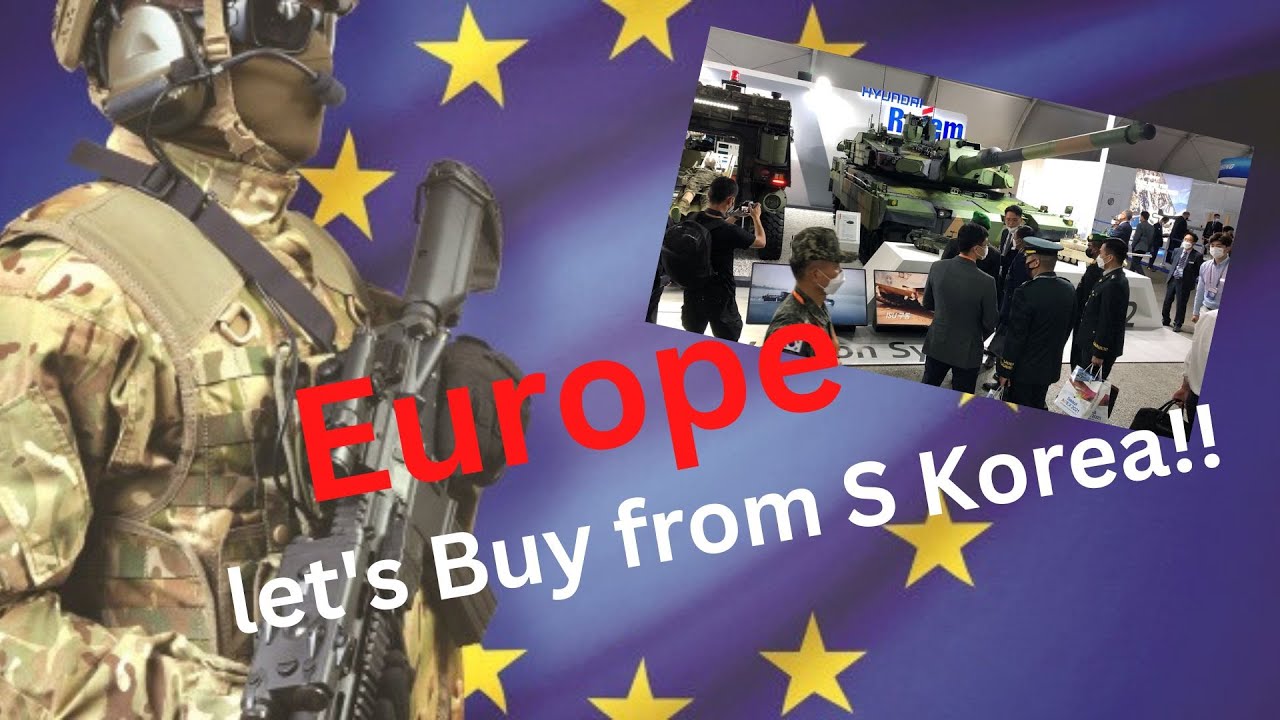
In this live‑stream, host David Oualaalou examines the emerging trend of European nations purchasing military equipment from South Korea instead of the United States. He argues that the shift is driven by Europe’s urgent need to restock depleted weapon stockpiles, the faster delivery times and lower prices offered by South Korean firms, and a strategic desire to diversify away from a single supplier. Poland is highlighted as a flagship case, with a $5.8 billion deal for high‑mobility artillery and other systems, illustrating a broader move toward procurement diversification. Oualaalou outlines South Korea’s explicit policy goal—set by President Yoon Suk‑yeol—to become one of the world’s top‑four arms exporters, citing a 177 % sales increase from 2016‑2021 and projected 2023 exports of $10 billion. He details the U.S. defense industry’s alarm over losing market share, the higher cost and longer lead‑times of U.S. contracts, and the potential fracture in trans‑Atlantic relations, drawing parallels to NATO’s reaction to Turkey’s S‑400 purchase. The discussion expands to regional security, linking the European procurement shift to heightened tensions on the Korean Peninsula, where North Korea’s recent missile launch is framed as a response to the U.S. carrier‑deployment. Oualaalou also touches on ASEAN’s neutral stance amid U.S.–China rivalry, the broader re‑balancing of global power, and the role of his channel as an open forum for geopolitical education. The session concludes with audience Q&A, reflections on future live‑stream scheduling, and a call for community‑driven topic suggestions.
Chapters
Hello everybody and welcome to Geopolitical Trends. My name is David Oualaalou. So good to be with you. We are going to be doing this live this time around here. So, uh, before I get into the topic of today, which is the surprise that Europe is buying weapons from South Korea, not the United States, and I will tell you why, I would like just to touch on a few admin stuff just to let you know. I intend to do these live sessions here either once or twice a month. I will wait for your feedback. Let me know what would you prefer. Is it once a month or is it twice a month? Uh, maybe the first week and the last week of the month. Uh, and, and the purpose of this is just for me to have an opportunity to answer your questions because it will be an open forum for you to sort of, if you have questions and, and, and I'll answer them and we just exchange ideas. I also take this opportunity to say thank you for your support as you help me outgrow this channel. So I truly, truly appreciate it a lot. Um, well, let's, let's talk about this topic here because, you know, uh, Washington— there is a lot going on in Washington right now as we speak. The reason being because, uh, policymakers, uh, military, uh, uh, industrial complex and the weapon sales. And all those people said, you better call Seoul and find out what's going on with South Korea selling weapons to Europe. But the question is not about that one specifically. The question is why Europe is turning over to South Korea and ditching the US, uh, weapon manufacturers. And there is a lot to cover into this one. This not a simple matter because a lot of issues have been going on regarding the transatlantic relations between the US and Europe. And it's not surprising. You look no further than what's taking place right now in Ukraine and how the European economy, it's going down because it's collapsing, you know, due to their own decisions, because Europeans— nobody put some sort of force them to embark on these policies. They decide to do that. Yes, it might be pressure from the US to a degree, but they still, if they want to stand on their feet— as one who've always said, and I will continue to say this today, Europe is like a child that never grows up, sad to say, and it is always in constant need of guidance and discipline. That's how I see Europe. Europe basically has no standing foreign policy. Europe has no standing security apparatus. They depends on the US. They have been depending on, on the US since World War II, and they still continue. I don't see any signs that Europe will stand on its feet. Well, this, uh, decision of the Europeans now buying weapons from from, uh, South Korea could be an indication, but that's not the whole picture. It just— there are few countries, and, uh, I did look into this, uh, uh, topic as far as understanding exactly what's going on with all this. Well, you look at, for example, Poland, okay? Well, Poland is spending billions and billions of dollars, uh, acquiring this kind of weapons from, uh, South Korea. You know, and, and why? It's because Poland doesn't want to depend too much on just one source of, of weapon, which is the US in this case. So as this happening, South Korea is racking up billions and billions of dollars in defense deals in Europe, you know. But there's also reason for why South Korea wants to do this, because he wants to move up the rank as far as the weapon sales. Why is this important to understand? Is because this is what explains to you why we are witnessing one conflict after another, one conflict after another. Because if there are no conflicts, nobody will be able to sell weapons. Sad to say, because that's a reality. So, you know, and now this, uh, uh, uh, move by South Korea is causing some jitters in US defense industry., in, in Washington. And I've reached out to some of my contacts, and they are like, okay, we don't know what's going on with all this. And here, I am not here to talk about like what type of weapons. Well, yeah, it include tanks, fighter jets, uh, and, and rocket launchers, you know. But, but the point is not about that. The point is about why, why. And the reason why, first of all, is because there is a faster delivery from, uh, uh, South Korea, uh, vis-à-vis the US. So, and all this happens, uh, uh, like for example the contracts that South Korea signed with the European, or vice versa, the Europeans signed with South Korea. It all happened within the last 3 months. This is the surprising part. And, and 3 months, what happens is because Europeans are running short now on, uh, on, on, on on their warehouses as far as supply, weapon supplies. They need to restock. It's like the gas in Europe that they need to have the gas reserves. Well, guess what? They won't be able to meet the quota for that even though European Union— and I did a video on this, guys, regarding that— Europeans saying, uh, well, we have enough gas, uh, uh, uh, storage and all. It's a lie. They don't. They don't because they couldn't meet that quota of 90% they want. Why is the same thing now happening in Europe? Because Europe decided, okay, we need to restock our weapons because they've been sending weapons to Ukraine. And you all know where that weapons end up— in black market. Yeah, as a matter of fact, uh, I did research one thing and I found out that some French weapons, you know, end up being sold, for about— and, and French— France, rather, France spent millions of dollars developing that kind of weapon and end up being sold on the black market for $130,000. That is one of my, uh, uh, the information that I found, which was never ever disclosed, by the way, in, in, in Western media. So the point is to why Europeans are going with this is because the shortage they having. And that is the reason why. The other two reasons also is because the weapons from South Korea is faster as far as delivery and also cheaper. The US charges so much. This is why other countries— and as a matter of fact, South Korea now wants to move up the rank by being the fourth or third in the world when it comes down to selling weapons. You know, I just can see them moving into that direction, and the US is not liking it anyway. But who cares, they're moving forward. So, and once again, uh, just to put some numbers in perspective for you as far as stats, and, and I did look into all this, you know, here is the thing. South Korea sales, you know, uh, moved from about, uh, in the case of Poland, for example, it moved about to $5.8 billion. That just with Poland, which is a blockbuster. Poland has always bought weapons from the US. They are looking elsewhere now. And Poland, even personally, and this is my personal opinion, and I'm very familiar with Poland, I spent time in Poland, and so it strikes me how their president Duda, that is embarking on some policies that have nothing to do with the welfare of Polish people, like another European leader, since the EU is, since Poland is part of the EU. It just doesn't make any sense. Whatsoever. So the question becomes, is what's going on with those leaders? They— are they like blind that they can't see the reality for how it is? Or you need to ask yourself, is this by design? Is it planned? Because we need to think outside the box. You know, all of a sudden this craziness that's going on around the world happened all at once. No, there might be something else to that, you know. And, uh, and I intend to address that topic in due time because usually, just for to let you guys know how I do things as far as videos and all that, I have to confirm the information. And I have my ways, I have my contact, I have my sources to ensure that before I'll come on the air that the information is as accurate to the best of my abilities. And again, I check and double-check to make sure because I don't want to waste your time. Okay, that's, that's the bottom line too. I am not a news outlet, so I don't have a rating. I am not after rating. I'm not after anything. All I'm after is growing the channel because we, you and I and all of us, we wanted to sort of further the conversation forward for the betterment of our world. Because you're in it as well. Just because you're sitting on the other side doesn't mean— your opinion matters. And this is why I, I welcome all the feedbacks, guys, you know. And don't ever, ever say, sorry, Dr. O, I didn't mean— no, no, no, no, don't be sorry, because your opinion matters, you know. And that's how we learn from each other. That's the whole point of all this. So that is the reason why, uh, I— that's usually how I do, uh, check on on, on, on sort of topics before I'll come on the air and share them with you. So now you're looking at Poland with the, with South Korea deal, just to go back to that point. Could they reach as far as $15 billion in the coming year, in 2023? And just last month, you know, Poland signed the contract, uh, with the, uh, with the South Korea regarding some high mobility artillery and all that. And again, this is not about the weapons itself, but rather the significance as to why all of a sudden Europe is— I won't use the term ditching the US, you know, because most of the NATO members will have to depend on how, what type of system, weapon system that is. This is why NATO frowned at Turkey when Turkey made the decision to purchase the S-400 missile systems from Russia. And NATO's argument was that, well, the weapon is not compatible to— well, Turkey didn't care. It's because that system is cheaper. First, it's very, very reliable, and I read enough technical stuff. I won't bore you with that, but I read enough about the S-400 missile systems. How accurate that is. And the ability that S-400 missile systems have is that they are able to track the radars that tracking them, and NATO doesn't want that. So this is why it makes you wonder now why all of a sudden Poland is moving forward with this purchase of this type of weapons from, uh, South Korea but not the US. So, and again They're looking at it— they, Europeans, the ones who agree to do this— they're looking at it at a fast turnaround from South Korea because they are reliable. And it's like you, when you go, uh, when you purchase something, okay, hypothetically you purchase something, you wouldn't be expected that the delivery will be in, in, in, in a reasonable time, within 3 days, 2 days, assuming you're local. But if you order it from somewhere else, it will be within a week. You're not going to get your merchandise, whatever you ordered, a year from now. That's the same concept or approach, that is. So that's how they are approaching, uh, the European, that is, approaching these particular aspects. And it's raising a red flag in Washington, DC, because most of our, uh, uh, defense, uh, uh, uh, budget or profits rather depends on selling weapons to others, which means you have to have conflicts. That's the sad part of it. So, and this is why this turnaround now is attracting the, uh, attention of many other European countries who wants to, uh, jump on that train by start ordering from South Korea and not from the United States. Of course, uh, uh, the concern in the US is that this is not going to stop just with Poland. It's gonna go across the board. But here is the thing, in Europe you get countries like France. France produces weapons, so why aren't Europeans buying from within? And again, it just confirms my point that Europeans themselves don't have the leg to stand on, uh, uh, uh, uh, from a security perspective, because they depend on the US for defense. And also economically speaking, because they couldn't make their own decisions for that one. And that is the reason why you are looking now at probably a fracture. And I'll use the term fracture. Usually I don't use that term loosely, but you are looking at fractured transatlantic relations. It's, as I said, there is a lot of concerns in Washington right now because they don't understand. All of a sudden Europeans are dumping. Well, the United States shouldn't be even surprised that Olaf Scholz just made a trip to China. So he didn't care what the Americans think or the European Union for that matter. And like I argued in the video, which was released, what, 2 days ago, yesterday, whatever, and the idea that he's not gonna care, he's gonna be caring now about, of course, his political career. And second, he's realizing that the tensions inside Germany are rising. There are massive, uh, uh, uh, discontentment in Germany that we don't hear about. Like I said to you guys last time, I, I had a, a phone call with some of my contacts in a neighboring country, the, the Netherlands, and they told me what's going on, which we don't hear about here. So, and this is what I want you to understand. Why now South Korea is finding it— hey, it's business, you know. I know the sale of weapons and all that, but look at it as a business. You're gonna have to do what benefits you. That's the bottom line to it. So South Korea is doing it this way. So, and this is why I see this moving even further now with Europe, by selling more weapons to Europe while dumping the US, for that matter. So, and, uh, it's gonna be now putting sort of South Korea in a different limelight because all you remember the, the discontent or the tensions in the Korean Peninsula, especially with what just, uh, North Korea just did about few days ago by launching more than 25 missiles. That's unheard of, and I'll tell you why in a second, why that has happened. So I want just to finish up with this part here first, then I move on into the tensions that's going on in the Korean Peninsula. So, so what to expect is that, uh, uh, I mean, from within the US they are saying, well, we shouldn't be concerned. Well, that's a lie. You know, they are concerned here in the US why all of a sudden Europe is moving to purchase from South Korea but not the United States. So you're going to be either reading or hearing, uh, that, well, American defense industry is not concerned. No, they are very concerned. I, I, I was a former military myself. I worked in Washington, so I kind of understand how the system works. So, you know, and, uh, The one reality that is, which, you know, some would not want to admit to it, is that some, some voices inside the defense industry, what they're saying is that the US, they acknowledge that US-made equipment and the years-long supply chain guarantees that come along with the contract is more expensive and takes longer to arrive. So like I said, when you look at it, when you're buying an item, what do you do? You want whatever you, you paid for to be delivered to you in due time. You know, you order things, you don't expect it to arrive next year. This is the same arguments that it's making up for why Europeans wants to go that way, and, and they don't care. So From Korea, from South Korea's perspective, President Yoon Suk-yeol, you know, he's saying that his goal— and by the way, he stated this, there is a record for it, there's a public record for it in August, if I'm not mistaken, because I was reading up something about a tech company, part of Samsung, they have some affiliates with, with the China that deals with some trade and all that stuff. Around that time in August, you know, the president of South Korea, Yoon Seok-yeol, I hope I pronounced it correctly, he said that what he wants, he wants his country, South Korea, to be among the top 4 in the global weapon supplies, which is basically, you know what it means, meaning is that he wants to challenge the US, Russia, and France for contract across the globe. That is a major statement. It's major undertaking. But nonetheless, it looks like South Koreans are following through with that because Europeans are buying from South Korea. So that's just, uh, uh, simple as it is. So, and even the Stockholm International Peace Research Institute, and I'm familiar with this, that usually track the weapon sales What they expecting is that the South Korean weapon sales shot up by about 177% between 2016 and 2021. Yeah, let that sink in, guys. 177%. And it tells you right there, because Korea— as South Korea, as of today, it ranked about, uh, 7th or 8th in the world Well, now they want to move to the fourth. Well, the top four, those the one that control the global market when it comes down to weapon sales. So, and the, uh, the report that, uh, and I will put a link for you guys so you'll have it just for your own curiosity if you want it. The report that was, uh, uh, uh, released in July, no, uh, from the Bank of South Korea revealed that defense exports increased from $3 billion in 2020 to $7 billion in 2021. And guess what? Will likely this year, by the end of the year, which is what, next month, will reach about $10 billion. What does it tell you? You know, those numbers don't lie, and numbers usually tell a story. And what the story is, is that Europeans are intending to move forward with the purchase and signing of a contract for, uh, uh, South Korean weapons. That's what those numbers tell you. So even, even you look at countries like Estonia, the Balkans, Estonia, Estonia's top general, he went to Seoul to attend the— there is in South Korea, they do the, the, the trade show for the military weaponry and so forth. He went over there because they are looking at purchasing weapon from South Korea but not the United States. So, and this will be, uh, like other countries like Turkey, Poland, Finland, and Norway. Those are buying weapons from South Korea. Yeah, because Norway is moving on buying some tanks, uh, based on the research that I found out, you know. And again, I'm not going to detail the the type of weapons, because we're looking at the big picture here. And to me, this is really, really an indication of a major shift that is underway for how the transatlantic relations, let alone how this is going to be perceived in Asia, if when South Korea moves up the rank as far as the weapon supply. And, uh, and again, and I am gonna provide you my brief analysis as to How I tie all this with, for example, North Korea's, uh, uh, the launch of the missiles, 25 missiles, never did that before, with the, uh, the possible of the deployment of the 6, uh, B-52s, you know, with the ongoing military exercises right now in the, uh, Korean, uh, Peninsula, including the aircraft carrier Reagan, and I will talk about it soon. So you put all this within the context with Olaf Scholz's trip to China because that one— believe it or not— at some point of that conversation between the two leaders I am sure he will have to include the military dimension to it at some point so and this is where when you think in terms of the big picture this is what it means you're gonna— you can't look at it just from weapons no no no no no no no you don't have to you have to include other aspects as part of that puzzle for us to have a better, better understanding, uh, of it. So, but the thing that I found very interesting, again, it has to do with the reaction of North Korea. North Korea might have nothing to do with the sale of weapons from South Korea to Europe, but it has to do with something else, and it has to do with the deployment. As I told you earlier, I will provide you a brief analysis on it. It's the deployment of the US aircraft carrier you know, to the, to the Korean Peninsula. So basically what North Korea is doing today— well, actually it is Sunday today in, in, in Korea. So what, what they did on Saturday, you know, is that they warned— the launching of those missiles are warning. That's message how it is in, uh, in, uh, international diplomacy, especially when it comes down to South— North Korea. North Korea, because there are no diplomatic relations of course, between the US and North Korea, except that that's how they communicate. No, well, North Korea is communicating by launching those missiles. And by the way, one of those missiles is nuclear capable. It's a reaction to the US redeployment of the aircraft carrier to the peninsula, which is causing considerable, uh, huge negative splash in the regional security. No, because North Korea has looked at it from a perspective of, hey, it's our prerogative to do whatever, so we're going to defend our test by— we're looking at it like, we want to do this because we want to send a message, you know. And this is not about intimidation or— no, they just— that's how they communicate. When anytime the US conducted military drills with South Korea, you know. And as you know, the DMZ, the demilitarized zone, which is only 50, 56 miles to, uh, uh, Seoul, which means every— and I'll tell you this, you know, I'm not going to sugarcoat it— every weapon in the arsenal of North Korea is within reach. Of course, we're talking about those just short-range missiles. We're not talking the long-range missile, which by the way they tested, which they do have, that means they will be able to reach the United States. But just to let you know how fluid the situation is, you know, we have about 50,000 troops in South Korea, stationed in South Korea. Now what I do not know for a fact is that whether the 50,000 troops are imposed on South Korea to accept, or they were there by invitation of South Korean government. You know, I usually do not see South Korea as a standing nation on its feet because that's like Japan, in my opinion, and I don't shy away from saying this. They have to bow to US pressure, like Australia, like New Zealand. You get the idea. The Philippines is pushing back. Indonesia is pushing back. Uh, most of the ASEAN countries, I am noticing, and I've been following this, most of the ASEAN countries is kind of like they seeing what, what's coming, and they know that the tension between United States and China will eventually, uh, open up to the, uh, or, or come up to the surface. And what they are saying, they ASEAN members, they're saying, hey, we don't want to be part of this. We are not favoring China. We are not favoring the US. We want to be neutral. Because remember, back in 1965 or '67, if I'm not mistaken, they signed the treaty by which, by the way, they will never acquire nuclear weapons. So, and this is why I do not see how the United States will be able to convince ASEAN countries to deploy US military on their soil. It's because if they do China is going to look at that as a hostile nation. You are allowing American forces because those American forces in that country, because that country is going to become a launching pad. This is exactly why Australia couldn't say no. Australia cannot say no. Australia is under the thumb of the US. Let's just say it straightforward because it's the truth, you know. I mean, I looked at it just with detention. Between Australia and China, which emerged from nowhere. You know, Australia was doing fine. We trade with China. It was— till it was pressured by the United States to change course, and we all know what happened. China shut down the delivery of the exports to Australia. Australia's economy went down, even though at that time Morrison, you know, was saying it was basically spewing lies because he wasn't telling the truth to the Aussies. And, and I had a chance to meet Australian people, wonderful, wonderful people. Sadly enough that they kind of didn't have a say into what their country is embarking on without their consent. Well, then what happened to democracy? So that's, that's kind of, uh, so, so this is just to go back to the North Korea. As I said, because of the deployments of the nuclear-powered aircraft carrier USS Ronald Reagan, because he started to some new rounds of naval drills with South Korea. North Korea perceives that as a threat. And this is why, just FYI, to let you know, uh, this is why we, the United States, uh, couldn't attack North Korea, because it will be a suicide, because we know what's going to happen. And North Korea does have a nuclear weapon. It's not disclosed, but it does, to my knowledge, and I happen to know. So that's the whole idea why we are refraining from attacking North Korea. We won't. I'll tell you this right now. We won't and we can't. We can't because we know what's going to happen. You got two main targets, you know. You got US troops in Seoul because they will wipe out Seoul. Then you got the ICBMs, the intercontinental ballistic missiles will be fired over here. And the, the, the, the worst is when you start having body bags, uh, coming over to the US. And, and so we decided, no, we can't get in. You know, we all know what happened. You all remember the story of the Kim Jong-un half brother who was, uh, neutralized at an airport in Malaysia, if I'm not mistaken. You know, so that's why we couldn't— the US couldn't infiltrate South Korea. There is no way. They just leave it at that. So, you know, and this is why North Korea fired the powerful missiles. And by the way, one of those missiles went over Japan. Yeah, yeah, that was earlier this week. So, so the big concern for where this is going is the idea of understanding Okay, why all of a sudden Europe is pitching or moving towards purchasing from South Korea but not the US? You know, are they, Europeans, sending a signal to the US, we sort of want to reduce your influence on us? Are they sending a message like, uh, we want to stand alone, we want to stand on our feet, we want to conduct our own foreign policy? Those are messages that a possibility, but I don't see it happening because for Europe to untangle itself from the US, it won't be easy. You know, we kind of wired— we, the US, wired in Europe. You look at just by the number of troops in Germany, and that should give you an idea because the same concept applies to the number of troops in South Korea. You know, there's usually an indication for how, how things are. So So this is what I wanted to— let me see, uh, this is what I wanted to bring to your attention today. Uh, I wanted to address this topic with you. I decided to do it in a live instead of just a recorded video. And like, for those who missed the beginning, uh, uh, I'd like to have your feedback whether you prefer to have one live stream once a month or twice a month, the first week of the month and last week of the month. So, and usually that will be a way for us to, you know, converse, shall we say. I, I bring my coffee in the morning because usually in the morning for me around 11 o'clock my time here, so it might be evening for you, whatever part of the world. Speaking of part of the world, if you will be kind and just type what part of the world you are joining me from, so I would like to take a look at that as you put that in. Oh, somebody from— does anyone know where the Belgorod? Belgorod is in the, uh, northeastern part of, uh, Russia. I wrote about it. So Belgorod, it has a lot of history when it comes down to, uh, uh, the history of Russia and Europe and all that stuff. Belgorod— oh, you're talking about Belgorod submarine. You know, I'll post something for you later on. So, all right. Wow, we got somebody from Australia. Good to see you, uh, Nika Demas, Australia. Tanzania, Gabriel, but from Tanzania, uh, Ro Benhort from Philippines, Kang Day from Romania, uh, Albeck from Canada, and, uh, Doggy Five, and in the US, originally from Singapore, uh, who's from— Michael, Michael Comet from England, you know, uh, Big Nono, that's from— I'm I'm sorry, I couldn't pronounce this name here. You know, can you let me know which— is that a city or a country? Yeah, I couldn't tell. Boycott, if I'm not mistaken. You know, Hamed Sethi, good to see you, Hamed, from England. And I do appreciate you, by the way, for all your comments that you put. Czech Republic, we get Big Nuno from Czech Republic. Uh, Joanna from New York. You know, I used to live near New York. I went to school in Pennsylvania, so it was only an hour and a half for me, uh, drive to, uh, Little Italy. I used to hang out a lot in New York, so back then, uh, but New York sadly has changed now. It's not the same used to be. Uh, California, we have Marshall Topla from California, born, uh, born in Poland. What part in Poland? I'm a little bit familiar with Krakow and, uh, Szczechnica and Warsaw, of course, and I spent time in Poland By the way, uh, Charlie Toa Munez in Dallas, Texas, but originally from the Philippines. Good to have you. That's great. It's so great to have you guys from different parts of the world. It means a lot to me. The reason being, again, uh, just not to beat the dead horse here, but I truly wanted to help create some sort of a forum community for us where we can exchange ideas because differences of opinions, you know. That's where creativity comes in. We don't have all of us to think alike. You don't have to agree with me. You don't have to disagree with me forever, you know. And if you disagree, be it. That's your opinion. Your opinion matters and ought to be respected, you know. You know, this is why I kind of don't— I don't understand when those that lash out in the comments in some nasty way. Why? Why? Just because somebody disagreed with you? You don't need to get nasty like that, because the purpose is not about your ego. The purpose is about furthering the understanding so we can at least move our world in the right direction, because what lies ahead is not pretty. I'm sure some of you have kids. You know what kind of future you want to live for your kids? You know, I get concerned you know, for all humanity, not just my kids. Because what about those kids in Yemen, for example? What about those kids in some forgotten places in Africa or Latin America? And there's a lot. I had a chance to travel around the world and I saw with my own eyes. And that was the whole idea for why I prefer to sort of, uh, uh, move away from this kind of nastiness. No need for all that. Let's just think positive and think about what's good. That can help all of us as humans, all of us move forward, because that is the key. You know, we all know how politicians are, you know, and if you depend on a government to do the right thing, you are mistaken. So you don't misplace your, uh, sort of, uh, uh, faith, uh, in, in, in a government like that. So yeah, Shiro from Indonesia, Solid from Serbia, good to see you as well. Uh, Serbia. I've never been in Serbia, by the way. I hope one day to get a chance to visit. So, uh, it's, it's so nice. It's so nice to have this because, again, uh, my objective— and let me— it's just we want to create an environment where everybody's opinion, it matters. It matters. That's the bottom line. I keep telling my students, you guys need to understand the big picture. It's because you are the leaders in the near future. Some of you might become whatever, so you have to have a better understanding, not only about our country here, but you have to understand about how other cultures, how other countries operate and think. And behave, you know, because what might appear to you, oh, they doing this, that's wrong. No, no, no, it's not wrong in their culture because they could be saying the same about you. So, and, and all this stems from, and I'll say it, from ignorance. This is why we, some of us, not all, some of us in, in the administration, you know, they don't understand how other cultures operate, so they're quick to jump to conclusions. And that's not good because once you start jumping to conclusions, you're going to start forming policies based on false assumptions. And that's not a good way of how you manage international affairs or relations with other countries. So, all right, let me see if you have any questions here before I sign off because I told you I will answer some of your questions here. Yes, indeed, Robin Hood. Geopolitics does in fact affect our daily life. When I was young, back in my 20s, I didn't even think about all that. As I grew older, you know, I got involved in the field. It's my academic background, you know, part of the military, part of being in Washington, or was in Washington. You start to understand how the decisions really trickle down from the higher echelon of a government and impacting an average citizen. The sad part is that that average citizen does not understand how those dynamics works at the top. And truly, we wanted to create this forum to be the voice for those individuals who do not understand it by simplifying it. So, uh, Yanho Kor, good to see you as always. Uh, Yanho Kor, by the way guys, just to let you know, he's been with us, with me in this channel, but on the other channel since the beginning. You're talking about almost 2 years now. So I truly appreciate your unwavering support. It means a lot to me. So, and to the whole team at the Geopolitics in Conflict show. So, all right, let me see. Here's a question from Doggy 5: What do you have to say about Singapore signing multi, uh, multiple business agreements with China last week despite US pressure? Yeah, it's like what I said about ASEAN. You know, mark my word on this, guys. ASEAN countries gonna be looking at their own interest, the interest of their people, and it's rightly so. They're not gonna bow to US pressure. But also, this gives you an indication about the changing dynamics within the global order. Gone the era where the United States used to say, and others will bow. Sad to say, No more. That era is gone. So, and yeah, Indonesia, uh, Singapore rather, will move— is moving away with that because they also realize where the next economic hub is going to be. We already seen— there are those even on Twitter, and I saw it and I kind of just shook my head. There are those who saying, what, the Chinese economy is going to collapse? What are you talking about? You know, to, to me, this is where I draw the line as far as Are you saying this just to attract, you know, viewers? Because that's, that's poor judgment. You can't be saying things that are not there. Yeah, I agree with you if you say something that is there, there are evidence for it. To those who are saying, what, the Chinese economy is collapsing? It's nonsense. It's nonsense. It might be slowing down, but ain't gonna collapse. You're talking about a global market. Most of the world produces stuff in China. What are you talking about? So, so Singapore is looking at it that way. So, uh, Doggy 5 saying you should interview Kishore Mahbubani on your channel. We did send— believe it or not, we did contact his office about a few months ago, but we never heard back. Now there is one thing I don't do. I don't chase after people because to me that's degrading. You know, it's enough that if I reach out to you the first time Maybe you're busy, maybe whatever, but that's about it because we're all busy. But at the same time, it's some— that's how I look at it. So I don't chase after people. Uh, yeah, I'll be happy to reach out one more time, but that's about it. So, uh, here is question from Big Nono: Do you think that we can avoid World War III? Yes, we can, and it will be no World War III. You know, let's just, uh, let me just say this, at least in my opinion. World War III will only ignite— okay, will only ignite if you corner certain nuclear powers like China, like Russia. If you corner those countries, which I don't see how any other country can corner those, uh, that's why it will be no World War III. Second thing is World War III, it will be no winner. I guarantee you this. You know, the stuff that I can talk about, for example, the— if we are to talk about hydrogen bomb, for example, what, you know, there are certain weapons out there that, you know, I can't talk much about, uh, that will be complete destruction for everybody, you know. That's why it would be no winner. So it makes— this is why I kind of shook my head when the former UK PM, what's her name, that clown, uh, Liz Truss She said, I'm gonna press the button. She, she, what you do? You forgive her ignorance. She didn't understand, and she still doesn't understand the dynamics of how global order operates. You press that button, by the time you're done pressing that button, London will be also wiped out because you have the other countries, mainly Russia, with the hyper supersonic, which will arrive in London in no time. That's why she kind of, uh, no, it will be no World War III. So, uh, uh, let me see another question here. Uh, uh, okay, Kishore, where, where does, uh, Al Babak, where does Afghanistan stand presently with respect to BRI? You know Uh, by the way, Afghanistan this morning, believe it or not, I just read the transcript issued by the spokesperson of the government that they are willing to start a new page with the United States. Now whether the US will do it or not, I don't know. Uh, but, uh, uh, the BRI, yes, uh, uh, Afghanistan will think in terms of economics where the challenge is going to be for China. Is that China will have to make sure do not get involved in the cultural dynamics because Afghanistan is a tribal society, you know, is tribes. That's why central government has no power. Now it's different, of course, with— but even with the, the Taliban at the helm of power, still there are certain key pockets in Afghanistan. I remember back then when I used to travel to Afghanistan At that time used to be, what's his name, Hamid Karzai. We put him in power. Hamid Karzai used to stay in Kabul. We used to call him, the joke was among the specialists, we used to call him the president of Kabul, the capital, because he couldn't get out. And he would never travel with the Afghan bodyguards because he won't trust them. So he would have to go with the Americans. So yeah, if China plays its card right, it will be good for Afghanistan. By the way, has a lot of underground minerals. A lot. So maybe one day I'll do a video about all that. Uh, Shiro, question: are average Australians welcome to— welcome the B-52? Is there anyone in their right mind that is against it? It is showing hostility not only towards China but as well, as well to ASEAN, I believe. That's a good question. No, I don't think so. The Aussies have a say into, because it's the government that controls the, the Albanese. Albo, it turns out to be a weak leader. I really, I was hoping he will come up with some policies. I'm not saying, you know, you still cooperate with other countries, whatever, but he didn't put the— he's not putting the welfare of the Aussies first. Why? Because he's under the thumb. And I'll share quickly with you here about the location of Pine Gap. I'm sure you heard of Pine Gap and you know about Pine Gap. Well, Pine Gap is an intelligence center that exists in Australia out the back there. And even in Pine Gap, there are certain sections inside the base that even Australians themselves, national Aussies, cannot go in. They're not authorized, only Americans. And it tells you right there who manages the, uh, the, the base. Uh, yeah, you're absolutely correct, Hank. To— uh, Aussies had no say. They have no saying to this. Uh, yeah, China, uh, China just signed a comprehensive agreement with Afghan 2 days ago. Yeah, there is a deal for them to work, uh, and I'm sure they can if they really, really play their cards right. Uh, for us, the problem is when we go to countries, we impose our will It doesn't work that way. It doesn't work that way. So let me see who's— oh, Martin, Martin Magnili from Stockholm, Sweden. You know, good to have you here from Sweden. I remember my days in, in Stockholm when I visited. That was a way back. So I'm sure Sweden has changed, even though I was shocked and surprised that both Sweden and Finland, you know, wanted to join NATO. That's a big mistake. You know, here is why, and I— something I'm very, very familiar with. Finland and Sweden lived with Russia for over 50 years in peace, you know, since the height of the Cold War, okay? The height of the Cold War. It was never an issue between Finland, Sweden, and Russia, you know. And Russia had nothing back then. Soviet Union said to Finland and Russia and Sweden, we're fine, there's nothing, as long as there's no advanced weapons. This is why I said earlier about Poland, the, the President Duda is kind of— didn't understand, didn't weigh his options when he was calling for probably allowing US nuclear weapons on Polish territories. That means you turning Poland into a target. That's what it means, you know. And, and by the way, I did find out that Polish people are not in favor of President Duda. So All right, let me do 2 more questions and I'm gonna sign off here, uh, because I have, I have to go play a round of golf, then I have to do something else for weekend before I'll gear up again for tomorrow, for the week, preparing some videos. And by the way, I welcome your suggestions, your topics. Some of you mentioned to me, one of my viewers from England, I remember way back a few 2 weeks ago, I mentioned if I can do a video about, uh, China-Pakistan Corridor, you know, and I will in due time. Someone also mentioned about Africa. This is another one mentioned about the situation in South Korea because there are some demonstrations in South Korea, but those are pertaining to the union stuff. So, and I will, it's just in, in, in matter of time because I do prioritize on Sunday that's when I create the list of topics that I feel will be of use to you just to understand the dynamics. But we will do that. So, all right, let's see if there are any other questions that I may have missed. Uh, uh, okay, I want to say once a month live stream is good, but please put the central topic up for for discussion first to center the live stream. Great suggestion, and thank you for that. Yeah, I am for it. You know, once, once a month we can gather, either at the beginning of the week, the beginning of the month, or the end of the month, one weekend. And also because the timing— I just did this today, uh, 11:00 hours, uh, it will be now— that is going to be a challenge because you, you guys are at different parts of the world. So, uh, I don't know how to sort of resolve that one. So, and let me see one more question if there is one here. No, there are— no, there are not. So, okay, well, I just want to say thank you so much for your support. Once again, it's really, uh, uh, it's your support that I'm here. Otherwise, how this is going to work? It won't. You know, to those who think, well, I can do it by myself— no, you can't, you know, without the help of others. So, and your assistance and support means a lot to me. So, uh, yeah, for now that's how it is, the channel. Yeah, down the road, of course, once, you know, build the— or get a new equipment, new stuff, that's down the road. For now, let's just move on with the what's very important. And what's important is to bring the truth to you, to understand what's going on so you won't be deceived by the media or the government for that matter. So, well, I look forward to seeing you guys next time. And as I always say, remember, geopolitics impact your daily life in more ways than one. Till next time, guys. Bye-bye.
More from David


Beyond the Single Actor: Why the Gulf Isn't Choosing Between the US and China


Iran, Iraq's Militias, and the Houthis Are Coordinating! This Changes Everything




Who Controls the Next Decade's Resources? Latin America and Africa's Geopolitical Crossroads

The Chokepoint Trap: How Washington's Stupidity Triggered a Cascade That Now Controls the World

Trump Spooked as IRGC Unveiled dual-use SLV, Deployed Ghadir Mini-Subs & Hinted at Tactical Nukes!
